







 تكلم مع الذكاء الاصطناعي


Deck 23: The Urinary System
ملء الشاشة (f)

سؤال

سؤال
سؤال
سؤال
سؤال
سؤال
سؤال
سؤال
سؤال
سؤال
سؤال
سؤال
سؤال
سؤال
سؤال
سؤال
سؤال
سؤال
سؤال
سؤال
سؤال
سؤال
سؤال
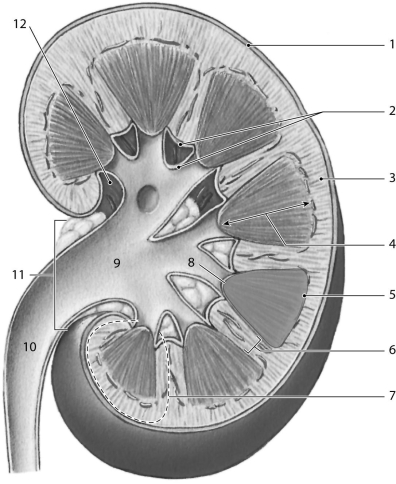
Figure 23-1
Use Figure 23-1 to answer the following questions:
Identify the structure labeled "10."
A) renal pelvis
B) minor calyx
C) ureter
D) major calyx
E) renal column
سؤال
Figure 23-1
Use Figure 23-1 to answer the following questions:
Identify the structure labeled "6."
A) renal pelvis
B) minor calyx
C) ureter
D) major calyx
E) renal column
سؤال
سؤال
سؤال
سؤال
سؤال
سؤال
سؤال
سؤال
Figure 23-1
Use Figure 23-1 to answer the following questions:
Identify the structure labeled "5."
A) renal sinus
B) fibrous capsule
C) renal pyramid
D) renal papilla
E) renal column
سؤال
سؤال
سؤال
سؤال
Figure 23-1
Use Figure 23-1 to answer the following questions:
Identify the structure labeled "8."
A) renal sinus
B) fibrous capsule
C) renal pyramid
D) renal papilla
E) renal column
سؤال
سؤال
سؤال
Figure 23-1
Use Figure 23-1 to answer the following questions:
Identify the structure labeled "9."
A) renal pelvis
B) minor calyx
C) ureter
D) major calyx
E) renal column
سؤال
سؤال
سؤال
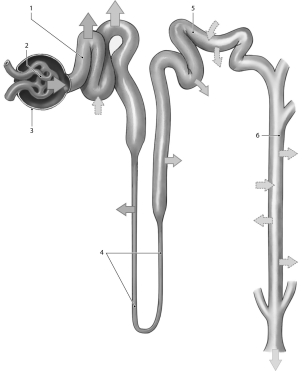
Figure 23-2
Use Figure 23-2 to answer the following questions:
What physiological process occurs at the structure labeled "2"?
A) reabsorption
B) excretion
C) secretion
D) filtration
E) micturition
سؤال
سؤال
سؤال
سؤال
سؤال
Figure 23-2
Use Figure 23-2 to answer the following questions:
Which area is sensitive to the hormone ADH?
A) 1
B) 3
C) 4
D) 5 and 6
E) 4, 5, and 6
سؤال
سؤال
سؤال
Figure 23-2
Use Figure 23-2 to answer the following questions:
Where does most nutrient reabsorption occur?
A) 2
B) 1
C) 4
D) 5
E) 6
سؤال
سؤال
سؤال
سؤال
سؤال
سؤال
سؤال
سؤال
سؤال
Figure 23-2
Use Figure 23-2 to answer the following questions:
Where does countercurrent multiplication occur?
A) 6
B) 5
C) 4
D) 3
E) 2
سؤال
سؤال
سؤال
سؤال
سؤال
سؤال
سؤال
سؤال
سؤال
سؤال
سؤال
سؤال
سؤال
سؤال
سؤال
سؤال
سؤال
سؤال
سؤال
سؤال
سؤال

فتح الحزمة
قم بالتسجيل لفتح البطاقات في هذه المجموعة!
Unlock Deck
Unlock Deck
1/90

العب

ملء الشاشة (f)
Deck 23: The Urinary System
1
The expanded beginning of the ureter connects to the
A) renal sinus.
B) renal pelvis.
C) renal calyx.
D) renal hilum.
E) renal corpuscle.
A) renal sinus.
B) renal pelvis.
C) renal calyx.
D) renal hilum.
E) renal corpuscle.
B
2
Major calyces are
A) large tributaries of the renal pelvis.
B) expanded ends of nephrons.
C) basic functional layers of the kidney.
D) conical structures that are located in the renal medulla.
E) the expanded ends of renal pyramids.
A) large tributaries of the renal pelvis.
B) expanded ends of nephrons.
C) basic functional layers of the kidney.
D) conical structures that are located in the renal medulla.
E) the expanded ends of renal pyramids.
A
3
Typical renal blood flow is about ________ percent of cardiac output under resting conditions.
A) 5
B) 10
C) 25
D) 40
E) 50
A) 5
B) 10
C) 25
D) 40
E) 50
C
4
Which of the following descriptions best matches the term calyx?
A) releases renin
B) creates high interstitial NaCl concentration
C) final urine enters here
D) initial filtrate enters here
E) tip of the medullary pyramid
A) releases renin
B) creates high interstitial NaCl concentration
C) final urine enters here
D) initial filtrate enters here
E) tip of the medullary pyramid
فتح الحزمة
افتح القفل للوصول البطاقات البالغ عددها 90 في هذه المجموعة.
فتح الحزمة
k this deck
5
Which of the following descriptions best matches the term renal papilla?
A) releases renin
B) creates high interstitial NaCl concentration
C) final urine enters here
D) initial filtrate enters here
E) tip of the medullary pyramid
A) releases renin
B) creates high interstitial NaCl concentration
C) final urine enters here
D) initial filtrate enters here
E) tip of the medullary pyramid
فتح الحزمة
افتح القفل للوصول البطاقات البالغ عددها 90 في هذه المجموعة.
فتح الحزمة
k this deck
6
The outermost layer of the kidney is the
A) renal cortex.
B) renal medulla.
C) major calyx.
D) fibrous capsule.
E) renal pelvis.
A) renal cortex.
B) renal medulla.
C) major calyx.
D) fibrous capsule.
E) renal pelvis.
فتح الحزمة
افتح القفل للوصول البطاقات البالغ عددها 90 في هذه المجموعة.
فتح الحزمة
k this deck
7
The left kidney lies ________ to the right kidney.
A) slightly inferior
B) slightly superior
C) slightly posterior
D) slightly transverse
E) slightly ipsilateral
A) slightly inferior
B) slightly superior
C) slightly posterior
D) slightly transverse
E) slightly ipsilateral
فتح الحزمة
افتح القفل للوصول البطاقات البالغ عددها 90 في هذه المجموعة.
فتح الحزمة
k this deck
8
Which of the following is not a function of the urinary system?
A) excretes excess albumin molecules
B) regulates blood volume
C) contributes to stabilizing blood pH
D) eliminates organic waste products
E) regulates plasma concentrations of electrolytes
A) excretes excess albumin molecules
B) regulates blood volume
C) contributes to stabilizing blood pH
D) eliminates organic waste products
E) regulates plasma concentrations of electrolytes
فتح الحزمة
افتح القفل للوصول البطاقات البالغ عددها 90 في هذه المجموعة.
فتح الحزمة
k this deck
9
Each of the following organs is part of the urinary system, except the
A) kidney.
B) urinary bladder.
C) rectum.
D) ureter.
E) urethra.
A) kidney.
B) urinary bladder.
C) rectum.
D) ureter.
E) urethra.
فتح الحزمة
افتح القفل للوصول البطاقات البالغ عددها 90 في هذه المجموعة.
فتح الحزمة
k this deck
10
Urine is carried to the urinary bladder by
A) blood vessels.
B) lymphatics.
C) the ureters.
D) the urethra.
E) the calyces.
A) blood vessels.
B) lymphatics.
C) the ureters.
D) the urethra.
E) the calyces.
فتح الحزمة
افتح القفل للوصول البطاقات البالغ عددها 90 في هذه المجموعة.
فتح الحزمة
k this deck
11
Which of the following is not an important function of the kidney?
A) control of total body water
B) control of the electrolyte composition of the blood
C) excretion of excess albumen
D) control of production of red blood cells by bone marrow
E) regulation of blood pressure
A) control of total body water
B) control of the electrolyte composition of the blood
C) excretion of excess albumen
D) control of production of red blood cells by bone marrow
E) regulation of blood pressure
فتح الحزمة
افتح القفل للوصول البطاقات البالغ عددها 90 في هذه المجموعة.
فتح الحزمة
k this deck
12
Urine is eliminated through the
A) liver.
B) urinary bladder.
C) kidney.
D) ureter.
E) urethra.
A) liver.
B) urinary bladder.
C) kidney.
D) ureter.
E) urethra.
فتح الحزمة
افتح القفل للوصول البطاقات البالغ عددها 90 في هذه المجموعة.
فتح الحزمة
k this deck
13
The position of the kidneys in the abdominal cavity is stabilized by
A) the overlying peritoneum.
B) contact with adjacent visceral organs.
C) supporting connective tissues.
D) all of the above
E) none of the above
A) the overlying peritoneum.
B) contact with adjacent visceral organs.
C) supporting connective tissues.
D) all of the above
E) none of the above
فتح الحزمة
افتح القفل للوصول البطاقات البالغ عددها 90 في هذه المجموعة.
فتح الحزمة
k this deck
14
All of the following are True of the kidneys, except that they are
A) located in a position that is retroperitoneal.
B) surrounded by a fibrous capsule.
C) located partly within the pelvic cavity.
D) held in place by the renal fascia.
E) covered by peritoneum.
A) located in a position that is retroperitoneal.
B) surrounded by a fibrous capsule.
C) located partly within the pelvic cavity.
D) held in place by the renal fascia.
E) covered by peritoneum.
فتح الحزمة
افتح القفل للوصول البطاقات البالغ عددها 90 في هذه المجموعة.
فتح الحزمة
k this deck
15
Functions of the urinary system include
A) regulation of blood volume and blood pressure.
B) regulation of plasma concentration of certain ions.
C) helping to stabilize blood pH.
D) conservation of valuable nutrients.
E) all of the above
A) regulation of blood volume and blood pressure.
B) regulation of plasma concentration of certain ions.
C) helping to stabilize blood pH.
D) conservation of valuable nutrients.
E) all of the above
فتح الحزمة
افتح القفل للوصول البطاقات البالغ عددها 90 في هذه المجموعة.
فتح الحزمة
k this deck
16
The prominent indentation on the medial surface of the kidney is the
A) calyx.
B) pelvis.
C) ureter.
D) hilum.
E) pyramid.
A) calyx.
B) pelvis.
C) ureter.
D) hilum.
E) pyramid.
فتح الحزمة
افتح القفل للوصول البطاقات البالغ عددها 90 في هذه المجموعة.
فتح الحزمة
k this deck
17
Renal columns are
A) internal cavities lined by the fibrous capsule.
B) expanded ends of the ureters.
C) the basic functional units of the kidney.
D) bundles of tissue that extend between pyramids from the cortex.
E) conical structures that are located in the renal medulla.
A) internal cavities lined by the fibrous capsule.
B) expanded ends of the ureters.
C) the basic functional units of the kidney.
D) bundles of tissue that extend between pyramids from the cortex.
E) conical structures that are located in the renal medulla.
فتح الحزمة
افتح القفل للوصول البطاقات البالغ عددها 90 في هذه المجموعة.
فتح الحزمة
k this deck
18
Triangular or conical structures located in the renal medulla are called
A) pyramids.
B) renal columns.
C) renal pelvises.
D) nephrons.
E) calyces.
A) pyramids.
B) renal columns.
C) renal pelvises.
D) nephrons.
E) calyces.
فتح الحزمة
افتح القفل للوصول البطاقات البالغ عددها 90 في هذه المجموعة.
فتح الحزمة
k this deck
19
The renal sinus is
A) the innermost layer of kidney tissue.
B) part of a renal pyramid.
C) an internal cavity lined by the fibrous capsule.
D) a large branch of the renal pelvis.
E) a renal corpuscle.
A) the innermost layer of kidney tissue.
B) part of a renal pyramid.
C) an internal cavity lined by the fibrous capsule.
D) a large branch of the renal pelvis.
E) a renal corpuscle.
فتح الحزمة
افتح القفل للوصول البطاقات البالغ عددها 90 في هذه المجموعة.
فتح الحزمة
k this deck
20
The cavity of the kidney that receives urine from the calyces is called the
A) renal papilla.
B) renal pelvis.
C) renal medulla.
D) renal cortex.
E) renal sinus.
A) renal papilla.
B) renal pelvis.
C) renal medulla.
D) renal cortex.
E) renal sinus.
فتح الحزمة
افتح القفل للوصول البطاقات البالغ عددها 90 في هذه المجموعة.
فتح الحزمة
k this deck
21
A glomerulus is
A) the expanded end of a nephron.
B) a knot of capillaries within the renal corpuscle.
C) the source of erythropoietin.
D) attached to the collecting duct.
E) the horseshoe-shaped segment of the nephron.
A) the expanded end of a nephron.
B) a knot of capillaries within the renal corpuscle.
C) the source of erythropoietin.
D) attached to the collecting duct.
E) the horseshoe-shaped segment of the nephron.
فتح الحزمة
افتح القفل للوصول البطاقات البالغ عددها 90 في هذه المجموعة.
فتح الحزمة
k this deck
22
The majority of glomeruli are located in the ________ of the kidney.
A) vasa recta
B) medulla
C) cortex
D) pelvis
E) calyces
A) vasa recta
B) medulla
C) cortex
D) pelvis
E) calyces
فتح الحزمة
افتح القفل للوصول البطاقات البالغ عددها 90 في هذه المجموعة.
فتح الحزمة
k this deck
23
Figure 23-1
Use Figure 23-1 to answer the following questions:
Identify the structure labeled "10."
A) renal pelvis
B) minor calyx
C) ureter
D) major calyx
E) renal column
فتح الحزمة
افتح القفل للوصول البطاقات البالغ عددها 90 في هذه المجموعة.
فتح الحزمة
k this deck
24
Figure 23-1
Use Figure 23-1 to answer the following questions:
Identify the structure labeled "6."
A) renal pelvis
B) minor calyx
C) ureter
D) major calyx
E) renal column
فتح الحزمة
افتح القفل للوصول البطاقات البالغ عددها 90 في هذه المجموعة.
فتح الحزمة
k this deck
25
Which of these components of the nephron is largely confined to the renal medulla?
A) glomerular (Bowman's) capsule
B) distal convoluted tubule
C) collecting ducts
D) proximal convoluted tubule
E) glomerulus
A) glomerular (Bowman's) capsule
B) distal convoluted tubule
C) collecting ducts
D) proximal convoluted tubule
E) glomerulus
فتح الحزمة
افتح القفل للوصول البطاقات البالغ عددها 90 في هذه المجموعة.
فتح الحزمة
k this deck
26
The ________ delivers urine to a minor calyx.
A) nephron loop (loop of Henle)
B) distal convoluted tubule
C) papillary duct
D) renal corpuscle
E) ureter
A) nephron loop (loop of Henle)
B) distal convoluted tubule
C) papillary duct
D) renal corpuscle
E) ureter
فتح الحزمة
افتح القفل للوصول البطاقات البالغ عددها 90 في هذه المجموعة.
فتح الحزمة
k this deck
27
Substances secreted by the distal convoluted tubule include
A) hydrogen.
B) penicillin.
C) creatinine.
D) potassium ions.
E) all of the above
A) hydrogen.
B) penicillin.
C) creatinine.
D) potassium ions.
E) all of the above
فتح الحزمة
افتح القفل للوصول البطاقات البالغ عددها 90 في هذه المجموعة.
فتح الحزمة
k this deck
28
The following is a list of the blood vessels that carry blood to the kidney.
1) afferent arteriole
2) arcuate artery
3) interlobar artery
4) renal artery
5) glomerulus
6) cortical radiate artery
7) efferent arteriole
8) peritubular capillary
The proper order in which blood passes through these vessels is
A) 4, 6, 2, 3, 1, 5, 7, 8.
B) 4, 3, 2, 6, 1, 5, 7, 8.
C) 4, 3, 2, 6, 7, 5, 1, 8.
D) 4, 6, 2, 3, 7, 5, 1, 8.
E) 4, 3, 6, 2, 1, 5, 7, 8.
1) afferent arteriole
2) arcuate artery
3) interlobar artery
4) renal artery
5) glomerulus
6) cortical radiate artery
7) efferent arteriole
8) peritubular capillary
The proper order in which blood passes through these vessels is
A) 4, 6, 2, 3, 1, 5, 7, 8.
B) 4, 3, 2, 6, 1, 5, 7, 8.
C) 4, 3, 2, 6, 7, 5, 1, 8.
D) 4, 6, 2, 3, 7, 5, 1, 8.
E) 4, 3, 6, 2, 1, 5, 7, 8.
فتح الحزمة
افتح القفل للوصول البطاقات البالغ عددها 90 في هذه المجموعة.
فتح الحزمة
k this deck
29
The U-shaped segment of the nephron is the
A) nephron loop (loop of Henle).
B) proximal convoluted tubule.
C) distal convoluted tubule.
D) collecting loop.
E) minor calyx.
A) nephron loop (loop of Henle).
B) proximal convoluted tubule.
C) distal convoluted tubule.
D) collecting loop.
E) minor calyx.
فتح الحزمة
افتح القفل للوصول البطاقات البالغ عددها 90 في هذه المجموعة.
فتح الحزمة
k this deck
30
The portion of the nephron that empties into the collecting duct is the
A) nephron loop (loop of Henle).
B) proximal convoluted tubule.
C) distal convoluted tubule.
D) papillary tubule.
E) calyx.
A) nephron loop (loop of Henle).
B) proximal convoluted tubule.
C) distal convoluted tubule.
D) papillary tubule.
E) calyx.
فتح الحزمة
افتح القفل للوصول البطاقات البالغ عددها 90 في هذه المجموعة.
فتح الحزمة
k this deck
31
The efferent arteriole of a nephron divides to form a network of capillaries within the cortex called the ________ capillaries.
A) peritubular
B) glomerular
C) vasa recta
D) cortical
E) efferent
A) peritubular
B) glomerular
C) vasa recta
D) cortical
E) efferent
فتح الحزمة
افتح القفل للوصول البطاقات البالغ عددها 90 في هذه المجموعة.
فتح الحزمة
k this deck
32
Figure 23-1
Use Figure 23-1 to answer the following questions:
Identify the structure labeled "5."
A) renal sinus
B) fibrous capsule
C) renal pyramid
D) renal papilla
E) renal column
فتح الحزمة
افتح القفل للوصول البطاقات البالغ عددها 90 في هذه المجموعة.
فتح الحزمة
k this deck
33
Each of the following is a normal constituent of urine, except
A) hydrogen ions.
B) urea.
C) proteins.
D) amino acids.
E) creatinine.
A) hydrogen ions.
B) urea.
C) proteins.
D) amino acids.
E) creatinine.
فتح الحزمة
افتح القفل للوصول البطاقات البالغ عددها 90 في هذه المجموعة.
فتح الحزمة
k this deck
34
Glomerular (Bowman's) capsule and the glomerulus make up the
A) renal pyramid.
B) nephron loop (loop of Henle).
C) renal corpuscle.
D) renal papilla.
E) collecting tubule system.
A) renal pyramid.
B) nephron loop (loop of Henle).
C) renal corpuscle.
D) renal papilla.
E) collecting tubule system.
فتح الحزمة
افتح القفل للوصول البطاقات البالغ عددها 90 في هذه المجموعة.
فتح الحزمة
k this deck
35
Blood leaves the glomerulus through a blood vessel called the
A) afferent arteriole.
B) efferent arteriole.
C) vasa recta.
D) cortical radiate artery.
E) renal vein.
A) afferent arteriole.
B) efferent arteriole.
C) vasa recta.
D) cortical radiate artery.
E) renal vein.
فتح الحزمة
افتح القفل للوصول البطاقات البالغ عددها 90 في هذه المجموعة.
فتح الحزمة
k this deck
36
Figure 23-1
Use Figure 23-1 to answer the following questions:
Identify the structure labeled "8."
A) renal sinus
B) fibrous capsule
C) renal pyramid
D) renal papilla
E) renal column
فتح الحزمة
افتح القفل للوصول البطاقات البالغ عددها 90 في هذه المجموعة.
فتح الحزمة
k this deck
37
The glomeruli are best described as being tufts of
A) arteries.
B) veins.
C) venules.
D) capillaries.
E) arterioles.
A) arteries.
B) veins.
C) venules.
D) capillaries.
E) arterioles.
فتح الحزمة
افتح القفل للوصول البطاقات البالغ عددها 90 في هذه المجموعة.
فتح الحزمة
k this deck
38
The filtrate first passes from the glomerular capsule to the
A) nephron loop (loop of Henle).
B) proximal convoluted tubule.
C) distal convoluted tubule.
D) collecting duct.
E) minor calyx.
A) nephron loop (loop of Henle).
B) proximal convoluted tubule.
C) distal convoluted tubule.
D) collecting duct.
E) minor calyx.
فتح الحزمة
افتح القفل للوصول البطاقات البالغ عددها 90 في هذه المجموعة.
فتح الحزمة
k this deck
39
Figure 23-1
Use Figure 23-1 to answer the following questions:
Identify the structure labeled "9."
A) renal pelvis
B) minor calyx
C) ureter
D) major calyx
E) renal column
فتح الحزمة
افتح القفل للوصول البطاقات البالغ عددها 90 في هذه المجموعة.
فتح الحزمة
k this deck
40
The primary function of the proximal convoluted tubule is
A) filtration.
B) reabsorbing nutrients.
C) secretion of acids and ammonia.
D) secretion of drugs.
E) adjusting the urine volume.
A) filtration.
B) reabsorbing nutrients.
C) secretion of acids and ammonia.
D) secretion of drugs.
E) adjusting the urine volume.
فتح الحزمة
افتح القفل للوصول البطاقات البالغ عددها 90 في هذه المجموعة.
فتح الحزمة
k this deck
41
The filtration barrier in the renal corpuscle consists of three layers:
A) filtration slits, foot processes, and slit pores.
B) fenestrations, matrix, and foot processes.
C) endothelium of glomerulus, dense layer of glomerulus, and podocyte filtration slits.
D) dense layer of glomerulus, foot processes, and fenestrations in the capsule.
E) podocyte filtration slits, matrix cells in the glomerulus, and endothelium of glomerulus.
A) filtration slits, foot processes, and slit pores.
B) fenestrations, matrix, and foot processes.
C) endothelium of glomerulus, dense layer of glomerulus, and podocyte filtration slits.
D) dense layer of glomerulus, foot processes, and fenestrations in the capsule.
E) podocyte filtration slits, matrix cells in the glomerulus, and endothelium of glomerulus.
فتح الحزمة
افتح القفل للوصول البطاقات البالغ عددها 90 في هذه المجموعة.
فتح الحزمة
k this deck
42
Figure 23-2
Use Figure 23-2 to answer the following questions:
What physiological process occurs at the structure labeled "2"?
A) reabsorption
B) excretion
C) secretion
D) filtration
E) micturition
فتح الحزمة
افتح القفل للوصول البطاقات البالغ عددها 90 في هذه المجموعة.
فتح الحزمة
k this deck
43
Secretion of hydrogen ion by the DCT is by the process of
A) diffusion.
B) facilitated diffusion.
C) active transport.
D) cotransport.
E) countertransport.
A) diffusion.
B) facilitated diffusion.
C) active transport.
D) cotransport.
E) countertransport.
فتح الحزمة
افتح القفل للوصول البطاقات البالغ عددها 90 في هذه المجموعة.
فتح الحزمة
k this deck
44
Increased sympathetic tone can do all of the following, except
A) produce venoconstriction of blood reservoirs.
B) increase the glomerular filtration rate.
C) increase cardiac output.
D) stimulate peripheral vasoconstriction.
E) increase systemic blood pressure.
A) produce venoconstriction of blood reservoirs.
B) increase the glomerular filtration rate.
C) increase cardiac output.
D) stimulate peripheral vasoconstriction.
E) increase systemic blood pressure.
فتح الحزمة
افتح القفل للوصول البطاقات البالغ عددها 90 في هذه المجموعة.
فتح الحزمة
k this deck
45
As the filtrate passes through the renal tubules, approximately what percentage is reabsorbed and returned to the circulation?
A) 1
B) 38
C) 63
D) 74
E) 99
A) 1
B) 38
C) 63
D) 74
E) 99
فتح الحزمة
افتح القفل للوصول البطاقات البالغ عددها 90 في هذه المجموعة.
فتح الحزمة
k this deck
46
The structure known as the juxtaglomerular apparatus is located near the
A) the proximal convoluted tubule.
B) glomerulus.
C) the collecting duct.
D) the nephron loop (loop of Henle).
E) renal papilla.
A) the proximal convoluted tubule.
B) glomerulus.
C) the collecting duct.
D) the nephron loop (loop of Henle).
E) renal papilla.
فتح الحزمة
افتح القفل للوصول البطاقات البالغ عددها 90 في هذه المجموعة.
فتح الحزمة
k this deck
47
Figure 23-2
Use Figure 23-2 to answer the following questions:
Which area is sensitive to the hormone ADH?
A) 1
B) 3
C) 4
D) 5 and 6
E) 4, 5, and 6
فتح الحزمة
افتح القفل للوصول البطاقات البالغ عددها 90 في هذه المجموعة.
فتح الحزمة
k this deck
48
Under normal conditions, glomerular filtration depends on three main pressures. Which of those pressures is a pressure that favors the filtration pressure?
A) glomerular hydrostatic pressure
B) capsular hydrostatic pressure
C) capsular colloid osmotic pressure
D) blood colloid osmotic pressure
E) urinary bladder hydrostatic pressure
A) glomerular hydrostatic pressure
B) capsular hydrostatic pressure
C) capsular colloid osmotic pressure
D) blood colloid osmotic pressure
E) urinary bladder hydrostatic pressure
فتح الحزمة
افتح القفل للوصول البطاقات البالغ عددها 90 في هذه المجموعة.
فتح الحزمة
k this deck
49
In response to increased levels of aldosterone, the kidneys produce
A) a larger volume of urine.
B) urine with a higher concentration of sodium ions.
C) urine with a lower concentration of potassium ions.
D) urine with a lower concentration of sodium ions.
E) urine with less glucose.
A) a larger volume of urine.
B) urine with a higher concentration of sodium ions.
C) urine with a lower concentration of potassium ions.
D) urine with a lower concentration of sodium ions.
E) urine with less glucose.
فتح الحزمة
افتح القفل للوصول البطاقات البالغ عددها 90 في هذه المجموعة.
فتح الحزمة
k this deck
50
Figure 23-2
Use Figure 23-2 to answer the following questions:
Where does most nutrient reabsorption occur?
A) 2
B) 1
C) 4
D) 5
E) 6
فتح الحزمة
افتح القفل للوصول البطاقات البالغ عددها 90 في هذه المجموعة.
فتح الحزمة
k this deck
51
One mechanism the kidney uses to raise systemic blood pressure is to
A) increase secretion of renin by the juxtaglomerular complex.
B) decrease secretion of aldosterone.
C) increase release of angiotensin II by the suprarenal glands.
D) increase filtration into glomerular (Bowman's) capsule.
E) decrease urinary albumin concentration.
A) increase secretion of renin by the juxtaglomerular complex.
B) decrease secretion of aldosterone.
C) increase release of angiotensin II by the suprarenal glands.
D) increase filtration into glomerular (Bowman's) capsule.
E) decrease urinary albumin concentration.
فتح الحزمة
افتح القفل للوصول البطاقات البالغ عددها 90 في هذه المجموعة.
فتح الحزمة
k this deck
52
The process of filtration occurs at
A) the proximal convoluted tubule.
B) the distal convoluted tubule.
C) the collecting duct.
D) the nephron loop (loop of Henle).
E) the glomerular (Bowman's) capsule.
A) the proximal convoluted tubule.
B) the distal convoluted tubule.
C) the collecting duct.
D) the nephron loop (loop of Henle).
E) the glomerular (Bowman's) capsule.
فتح الحزمة
افتح القفل للوصول البطاقات البالغ عددها 90 في هذه المجموعة.
فتح الحزمة
k this deck
53
Which of the following formulas will allow you to calculate the net filtration pressure (FP)? (Hint: GHP = glomerular hydrostatic pressure, BCOP = blood colloidal osmotic pressure, CsHP = capsular hydrostatic pressure.)
A) FP = GHP + CsHP - BCOP
B) FP = GHP - (CsHP + BCOP)
C) FP = CsHP + GHP - BCOP
D) FP = BCOP - GHP + CsHP
E) FP = BCOP + (GHP - CsHP)
A) FP = GHP + CsHP - BCOP
B) FP = GHP - (CsHP + BCOP)
C) FP = CsHP + GHP - BCOP
D) FP = BCOP - GHP + CsHP
E) FP = BCOP + (GHP - CsHP)
فتح الحزمة
افتح القفل للوصول البطاقات البالغ عددها 90 في هذه المجموعة.
فتح الحزمة
k this deck
54
Substances larger than ________ do not pass through the filtration membrane.
A) sodium ions
B) glucose
C) albumin
D) amino acids
E) urea
A) sodium ions
B) glucose
C) albumin
D) amino acids
E) urea
فتح الحزمة
افتح القفل للوصول البطاقات البالغ عددها 90 في هذه المجموعة.
فتح الحزمة
k this deck
55
Tubular reabsorption involves all of the following, except
A) active transport.
B) facilitated diffusion.
C) secondary active transport.
D) osmosis.
E) stem cell movements.
A) active transport.
B) facilitated diffusion.
C) secondary active transport.
D) osmosis.
E) stem cell movements.
فتح الحزمة
افتح القفل للوصول البطاقات البالغ عددها 90 في هذه المجموعة.
فتح الحزمة
k this deck
56
Approximately ________ liters of glomerular filtrate enter glomerular capsules each day.
A) 480
B) 180
C) 125
D) 18
E) 1.8
A) 480
B) 180
C) 125
D) 18
E) 1.8
فتح الحزمة
افتح القفل للوصول البطاقات البالغ عددها 90 في هذه المجموعة.
فتح الحزمة
k this deck
57
The process of filtration is driven by
A) active transport.
B) blood osmotic pressure.
C) blood hydrostatic pressure.
D) renal pumping.
E) solvent drag.
A) active transport.
B) blood osmotic pressure.
C) blood hydrostatic pressure.
D) renal pumping.
E) solvent drag.
فتح الحزمة
افتح القفل للوصول البطاقات البالغ عددها 90 في هذه المجموعة.
فتح الحزمة
k this deck
58
What percentage of nutrients (glucose, amino acids, etc) are reabsorbed in the PCT?
A) 50
B) 90
C) 25
D) 75
A) 50
B) 90
C) 25
D) 75
فتح الحزمة
افتح القفل للوصول البطاقات البالغ عددها 90 في هذه المجموعة.
فتح الحزمة
k this deck
59
Figure 23-2
Use Figure 23-2 to answer the following questions:
Where does countercurrent multiplication occur?
A) 6
B) 5
C) 4
D) 3
E) 2
فتح الحزمة
افتح القفل للوصول البطاقات البالغ عددها 90 في هذه المجموعة.
فتح الحزمة
k this deck
60
Autoregulation of the rate of glomerular filtration has which of the following properties?
A) depends on changes in the afferent arteriole
B) depends on changes in the mesangial cells
C) depends on changes in the efferent arteriole
D) all of the above
E) none of the above
A) depends on changes in the afferent arteriole
B) depends on changes in the mesangial cells
C) depends on changes in the efferent arteriole
D) all of the above
E) none of the above
فتح الحزمة
افتح القفل للوصول البطاقات البالغ عددها 90 في هذه المجموعة.
فتح الحزمة
k this deck
61
A patient excretes a large volume of very dilute urine on a continuing basis. This is may be due to
A) excessive ADH secretion.
B) absence of ADH.
C) hematuric oliguria.
D) overproduction of aldosterone.
E) dilation of the afferent arterioles.
A) excessive ADH secretion.
B) absence of ADH.
C) hematuric oliguria.
D) overproduction of aldosterone.
E) dilation of the afferent arterioles.
فتح الحزمة
افتح القفل للوصول البطاقات البالغ عددها 90 في هذه المجموعة.
فتح الحزمة
k this deck
62
Urine passes, in the order given, through which of the following structures?
A) collecting duct, renal pelvis, urethra, bladder, ureter
B) renal pelvis, collecting duct, bladder, ureter, urethra
C) collecting duct, renal pelvis, ureter, bladder, urethra
D) renal pelvis, urethra, bladder, ureter, collecting duct
E) collecting duct, ureter, renal pelvis, urethra, bladder
A) collecting duct, renal pelvis, urethra, bladder, ureter
B) renal pelvis, collecting duct, bladder, ureter, urethra
C) collecting duct, renal pelvis, ureter, bladder, urethra
D) renal pelvis, urethra, bladder, ureter, collecting duct
E) collecting duct, ureter, renal pelvis, urethra, bladder
فتح الحزمة
افتح القفل للوصول البطاقات البالغ عددها 90 في هذه المجموعة.
فتح الحزمة
k this deck
63
The condition called ________ is characterized by painful or difficult urination. This condition can be due to pathologic or benign causes.
A) incontinence
B) dysuria
C) pyelonephritis
D) renal calculi
E) urinary retention
A) incontinence
B) dysuria
C) pyelonephritis
D) renal calculi
E) urinary retention
فتح الحزمة
افتح القفل للوصول البطاقات البالغ عددها 90 في هذه المجموعة.
فتح الحزمة
k this deck
64
________ is (are) an immediately life-threatening condition, however, if an individual survives the incident, full recovery is often possible.
A) Acute renal failure
B) Chronic renal failure
C) Dysuria
D) Prostate enlargement
E) Kidney stones
A) Acute renal failure
B) Chronic renal failure
C) Dysuria
D) Prostate enlargement
E) Kidney stones
فتح الحزمة
افتح القفل للوصول البطاقات البالغ عددها 90 في هذه المجموعة.
فتح الحزمة
k this deck
65
Which of the following is characterized as a slowly progressing disease that is irreversible?
A) acute renal failure
B) chronic renal failure
C) dysuria
D) prostate enlargement
E) kidney stones
A) acute renal failure
B) chronic renal failure
C) dysuria
D) prostate enlargement
E) kidney stones
فتح الحزمة
افتح القفل للوصول البطاقات البالغ عددها 90 في هذه المجموعة.
فتح الحزمة
k this deck
66
The ability to form concentrated urine depends on the functions of
A) the proximal convoluted tubule.
B) the distal convoluted tubule.
C) the collecting duct.
D) the nephron loop (loop of Henle).
E) both the collecting duct and the nephron loop (loop of Henle).
A) the proximal convoluted tubule.
B) the distal convoluted tubule.
C) the collecting duct.
D) the nephron loop (loop of Henle).
E) both the collecting duct and the nephron loop (loop of Henle).
فتح الحزمة
افتح القفل للوصول البطاقات البالغ عددها 90 في هذه المجموعة.
فتح الحزمة
k this deck
67
Chloride ion is reabsorbed in the thick ascending limb by
A) simple diffusion.
B) facilitated diffusion.
C) active transport.
D) cotransport with Na ions.
E) countertransport for bicarbonate ion.
A) simple diffusion.
B) facilitated diffusion.
C) active transport.
D) cotransport with Na ions.
E) countertransport for bicarbonate ion.
فتح الحزمة
افتح القفل للوصول البطاقات البالغ عددها 90 في هذه المجموعة.
فتح الحزمة
k this deck
68
The mechanism for producing concentrated urine involves
A) the secretion of antidiuretic hormone (ADH).
B) aquaporins being inserted into the membranes of the collecting duct cells.
C) a high concentration of NaCl in the interstitial fluid that surrounds the collecting ducts.
D) a properly functioning nephron loop (loop of Henle).
E) all of the above
A) the secretion of antidiuretic hormone (ADH).
B) aquaporins being inserted into the membranes of the collecting duct cells.
C) a high concentration of NaCl in the interstitial fluid that surrounds the collecting ducts.
D) a properly functioning nephron loop (loop of Henle).
E) all of the above
فتح الحزمة
افتح القفل للوصول البطاقات البالغ عددها 90 في هذه المجموعة.
فتح الحزمة
k this deck
69
When the level of ADH (antidiuretic hormone) decreases,
A) more urine is produced.
B) less urine is produced.
C) the osmolarity of the urine decreases.
D) more urine is produced and the osmolarity of the urine decreases.
E) none of the above occurs.
A) more urine is produced.
B) less urine is produced.
C) the osmolarity of the urine decreases.
D) more urine is produced and the osmolarity of the urine decreases.
E) none of the above occurs.
فتح الحزمة
افتح القفل للوصول البطاقات البالغ عددها 90 في هذه المجموعة.
فتح الحزمة
k this deck
70
Urine is carried from the urinary bladder to the outside of the body by the ________.
فتح الحزمة
افتح القفل للوصول البطاقات البالغ عددها 90 في هذه المجموعة.
فتح الحزمة
k this deck
71
During the micturition reflex,
A) stimulation of stretch receptors in the bladder wall sends impulses to the sacral cord.
B) sympathetic motor neurons that control the detrusor muscle become active.
C) the internal sphincter is consciously relaxed.
D) all of the above
E) none of the above
A) stimulation of stretch receptors in the bladder wall sends impulses to the sacral cord.
B) sympathetic motor neurons that control the detrusor muscle become active.
C) the internal sphincter is consciously relaxed.
D) all of the above
E) none of the above
فتح الحزمة
افتح القفل للوصول البطاقات البالغ عددها 90 في هذه المجموعة.
فتح الحزمة
k this deck
72
The micturition reflex is controlled by the parasympathetic nervous system.
فتح الحزمة
افتح القفل للوصول البطاقات البالغ عددها 90 في هذه المجموعة.
فتح الحزمة
k this deck
73
The glomerular hydrostatic pressure is significantly higher than the capsular hydrostatic pressure.
فتح الحزمة
افتح القفل للوصول البطاقات البالغ عددها 90 في هذه المجموعة.
فتح الحزمة
k this deck
74
Urine is temporarily stored in the ________.
فتح الحزمة
افتح القفل للوصول البطاقات البالغ عددها 90 في هذه المجموعة.
فتح الحزمة
k this deck
75
Which of the following is greater?
A) the concentration of solute in the filtrate at the beginning of the nephron loop (loop of Henle)
B) the concentration of solute in the filtrate at the bottom of the nephron loop (loop of Henle)
C) The concentrations at the top and bottom are identical.
A) the concentration of solute in the filtrate at the beginning of the nephron loop (loop of Henle)
B) the concentration of solute in the filtrate at the bottom of the nephron loop (loop of Henle)
C) The concentrations at the top and bottom are identical.
فتح الحزمة
افتح القفل للوصول البطاقات البالغ عددها 90 في هذه المجموعة.
فتح الحزمة
k this deck
76
An inability of the kidneys to excrete adequately to maintain homeostasis is
A) glomerulonephritis.
B) polycystic kidney disease.
C) calculi.
D) renal failure.
E) hematuria.
A) glomerulonephritis.
B) polycystic kidney disease.
C) calculi.
D) renal failure.
E) hematuria.
فتح الحزمة
افتح القفل للوصول البطاقات البالغ عددها 90 في هذه المجموعة.
فتح الحزمة
k this deck
77
Which of the following descriptions best matches the term nephron loop (loop of Henle)?
A) relies on countercurrent multiplication
B) creates high interstitial NaCl concentration in the renal medulla
C) enables production of hypertonic urine
D) all of the above
E) none of the above
A) relies on countercurrent multiplication
B) creates high interstitial NaCl concentration in the renal medulla
C) enables production of hypertonic urine
D) all of the above
E) none of the above
فتح الحزمة
افتح القفل للوصول البطاقات البالغ عددها 90 في هذه المجموعة.
فتح الحزمة
k this deck
78
Antidiuretic hormone
A) increases the permeability of the collecting ducts to water.
B) is secreted in response to low potassium ion in the blood.
C) causes the kidneys to produce a larger volume of very dilute urine.
D) is secreted by the anterior pituitary.
E) release is insensitive to the osmolarity of interstitial fluid.
A) increases the permeability of the collecting ducts to water.
B) is secreted in response to low potassium ion in the blood.
C) causes the kidneys to produce a larger volume of very dilute urine.
D) is secreted by the anterior pituitary.
E) release is insensitive to the osmolarity of interstitial fluid.
فتح الحزمة
افتح القفل للوصول البطاقات البالغ عددها 90 في هذه المجموعة.
فتح الحزمة
k this deck
79
The detrusor muscle
A) moves urine along the ureters by peristalsis.
B) compresses the urinary bladder and expels urine through the urethra.
C) functions as the internal urinary sphincter.
D) functions as the external urinary sphincter.
E) surrounds the renal pelvis.
A) moves urine along the ureters by peristalsis.
B) compresses the urinary bladder and expels urine through the urethra.
C) functions as the internal urinary sphincter.
D) functions as the external urinary sphincter.
E) surrounds the renal pelvis.
فتح الحزمة
افتح القفل للوصول البطاقات البالغ عددها 90 في هذه المجموعة.
فتح الحزمة
k this deck
80
The ureters and urinary bladder are lined by ________ epithelium.
A) stratified squamous
B) pseudostratified columnar
C) simple cuboidal
D) transitional
E) simple columnar
A) stratified squamous
B) pseudostratified columnar
C) simple cuboidal
D) transitional
E) simple columnar
فتح الحزمة
افتح القفل للوصول البطاقات البالغ عددها 90 في هذه المجموعة.
فتح الحزمة
k this deck
فتح الحزمة
افتح القفل للوصول البطاقات البالغ عددها 90 في هذه المجموعة.






