







 تكلم مع الذكاء الاصطناعي


Deck 2: Where Do We Come From and Where Do We Fit
ملء الشاشة (f)

سؤال

سؤال
سؤال
سؤال
سؤال
Where do humans fit into the ecosystem? 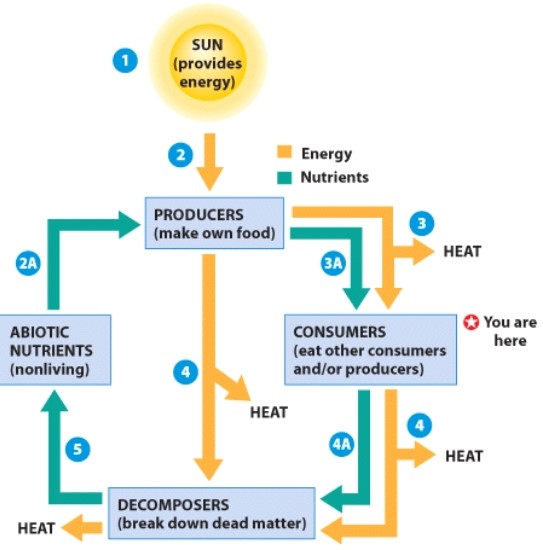
A)Abiotic nutrients
B)Consumer
C)Producers
D)Decomposers
A)Abiotic nutrients
B)Consumer
C)Producers
D)Decomposers
سؤال
سؤال
Which level in the process diagram represents chemical cycling only? 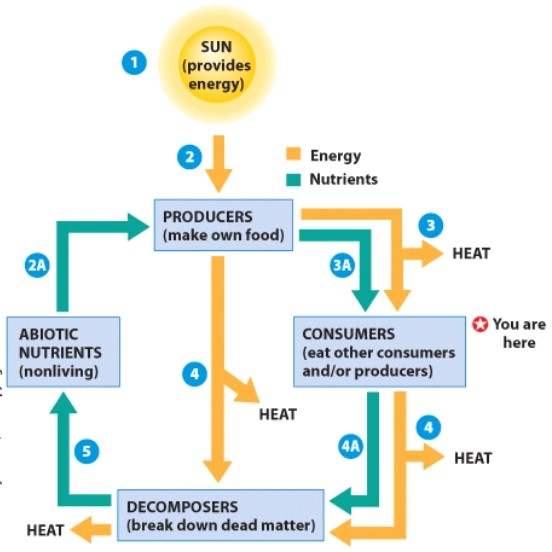
A)Consumer
B)Producer
C)Decomposer
D)Abiotic Nutrients
A)Consumer
B)Producer
C)Decomposer
D)Abiotic Nutrients
سؤال
سؤال
سؤال
سؤال
What is occurring at step 2? 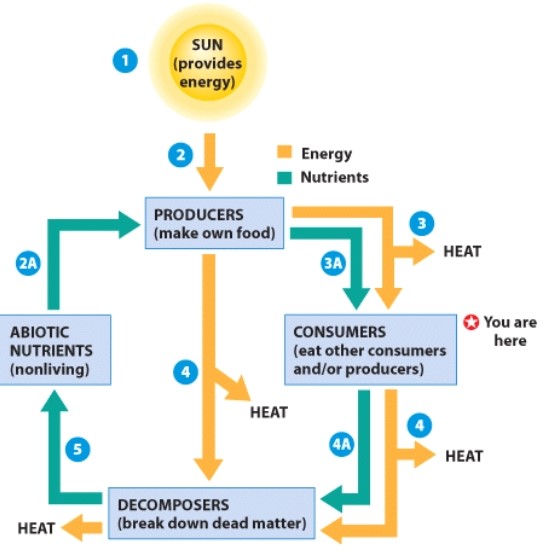
A)Sunlight is providing energy to the ecosystem.
B)Heat is being recycled by the ecosystem.
C)Non living factors are obtaining chemicals.
D)Producers are decomposing.
A)Sunlight is providing energy to the ecosystem.
B)Heat is being recycled by the ecosystem.
C)Non living factors are obtaining chemicals.
D)Producers are decomposing.
سؤال
Identify the main function of the system in the photo. 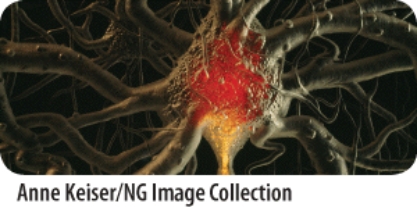
A)Barrier and thermal regulation
B)Protection and support
C)Information processing
D)Regulation of long-term changes
A)Barrier and thermal regulation
B)Protection and support
C)Information processing
D)Regulation of long-term changes
سؤال
سؤال
The system in the illustration functions to: 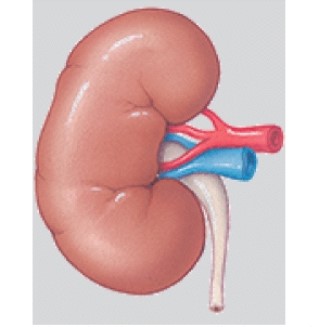
A)receive and process information.
B)regulate long term changes.
C)cycle nutrients through the body.
D)maintain fluid balance and purification.
A)receive and process information.
B)regulate long term changes.
C)cycle nutrients through the body.
D)maintain fluid balance and purification.
سؤال
The fossil record shows that the common ancestor of H.erectus and H.habilis is: 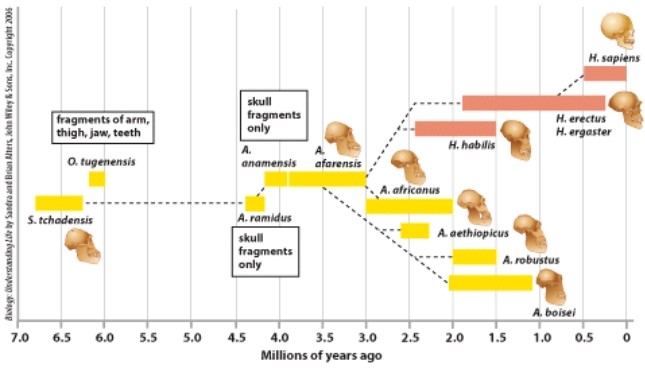
A)A. africanus.
B)H. sapien.
C)A. afarensis.
D)A. robustus.
A)A. africanus.
B)H. sapien.
C)A. afarensis.
D)A. robustus.
سؤال
سؤال
سؤال
سؤال
سؤال
سؤال
سؤال
سؤال
سؤال
سؤال
سؤال
سؤال
سؤال
سؤال
سؤال
سؤال
سؤال
سؤال
سؤال
سؤال
The system in the illustration functions to: 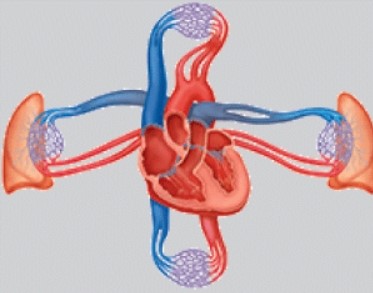
A)provide support and movement.
B)perpetuate the species.
C)pump nutrients, oxygen, carbon dioxide, and chemical messengers throughout the body.
D)cycle gases into and out of the body.
A)provide support and movement.
B)perpetuate the species.
C)pump nutrients, oxygen, carbon dioxide, and chemical messengers throughout the body.
D)cycle gases into and out of the body.
سؤال
In this picture the animal with the largest biogeographic range is the: 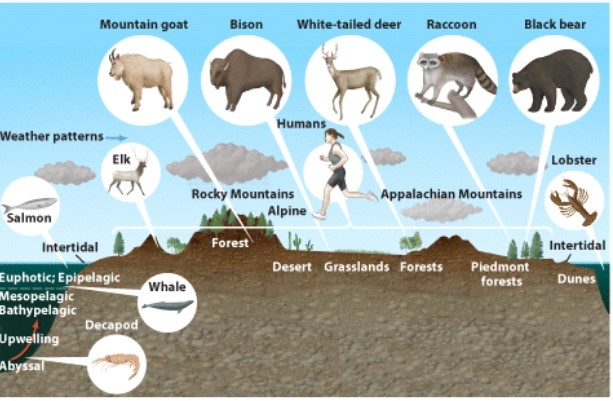
A)white tailed deer.
B)mountain goat.
C)human.
D)elk.
A)white tailed deer.
B)mountain goat.
C)human.
D)elk.
سؤال
سؤال
سؤال
سؤال
The system in the illustration functions to: 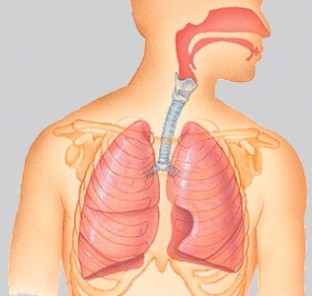
A)provide support and movement.
B)perpetuate the species.
C)pump nutrients, oxygen, carbon dioxide, and chemical messengers throughout the body.
D)cycle gases into and out of the body.
A)provide support and movement.
B)perpetuate the species.
C)pump nutrients, oxygen, carbon dioxide, and chemical messengers throughout the body.
D)cycle gases into and out of the body.

فتح الحزمة
قم بالتسجيل لفتح البطاقات في هذه المجموعة!
Unlock Deck
Unlock Deck
1/40

العب

ملء الشاشة (f)
Deck 2: Where Do We Come From and Where Do We Fit
1
Similar to ecosystems,the skeleto-muscular system cycles:
A)calcium.
B)oxygen and carbon dioxide.
C)water.
D)energy.
A)calcium.
B)oxygen and carbon dioxide.
C)water.
D)energy.
A
2
The order into which humans are classified is called:
A)mammalia.
B)primate.
C)hominid.
D)Homo.
A)mammalia.
B)primate.
C)hominid.
D)Homo.
B
3
In the human body,food is ultimately stored in what form in cells?
A)Fructose
B)Heat
C)ATP
D)Oxygen
A)Fructose
B)Heat
C)ATP
D)Oxygen
C
4
The common ancestor of Primates lived about:
A)3 million years ago.
B)2 million years ago.
C)60 million years ago.
D)195,000 years ago.
A)3 million years ago.
B)2 million years ago.
C)60 million years ago.
D)195,000 years ago.
فتح الحزمة
افتح القفل للوصول البطاقات البالغ عددها 40 في هذه المجموعة.
فتح الحزمة
k this deck
5
Where do humans fit into the ecosystem?
A)Abiotic nutrients
B)Consumer
C)Producers
D)Decomposers
A)Abiotic nutrients
B)Consumer
C)Producers
D)Decomposers
فتح الحزمة
افتح القفل للوصول البطاقات البالغ عددها 40 في هذه المجموعة.
فتح الحزمة
k this deck
6
Humans and primates share which of the following?
A)Brain size
B)Upright bipedal stance
C)Tail length
D)Opposable thumb
A)Brain size
B)Upright bipedal stance
C)Tail length
D)Opposable thumb
فتح الحزمة
افتح القفل للوصول البطاقات البالغ عددها 40 في هذه المجموعة.
فتح الحزمة
k this deck
7
Which level in the process diagram represents chemical cycling only?
A)Consumer
B)Producer
C)Decomposer
D)Abiotic Nutrients
A)Consumer
B)Producer
C)Decomposer
D)Abiotic Nutrients
فتح الحزمة
افتح القفل للوصول البطاقات البالغ عددها 40 في هذه المجموعة.
فتح الحزمة
k this deck
8
[Insert bottom part of family tree illustration in figure 2.1 (full family tree,but not pictures on top).]?Using the illustration of the human family tree,we see that humans are most closely related to:
A)new world monkeys.
B)orangutans.
C)old world monkeys.
D)lemurs.
A)new world monkeys.
B)orangutans.
C)old world monkeys.
D)lemurs.
فتح الحزمة
افتح القفل للوصول البطاقات البالغ عددها 40 في هذه المجموعة.
فتح الحزمة
k this deck
9
Primates are characterized by:
A)an opposable thumb.
B)bipedal stance.
C)complex speech communication.
D)enlarged brain case.
A)an opposable thumb.
B)bipedal stance.
C)complex speech communication.
D)enlarged brain case.
فتح الحزمة
افتح القفل للوصول البطاقات البالغ عددها 40 في هذه المجموعة.
فتح الحزمة
k this deck
10
The emergence of modern humans in Africa occurred about:
A)195,000 years ago.
B)1 million years ago.
C)130,000 years ago.
D)Modern humans emerged in Asia.
A)195,000 years ago.
B)1 million years ago.
C)130,000 years ago.
D)Modern humans emerged in Asia.
فتح الحزمة
افتح القفل للوصول البطاقات البالغ عددها 40 في هذه المجموعة.
فتح الحزمة
k this deck
11
What is occurring at step 2?
A)Sunlight is providing energy to the ecosystem.
B)Heat is being recycled by the ecosystem.
C)Non living factors are obtaining chemicals.
D)Producers are decomposing.
A)Sunlight is providing energy to the ecosystem.
B)Heat is being recycled by the ecosystem.
C)Non living factors are obtaining chemicals.
D)Producers are decomposing.
فتح الحزمة
افتح القفل للوصول البطاقات البالغ عددها 40 في هذه المجموعة.
فتح الحزمة
k this deck
12
Identify the main function of the system in the photo.
A)Barrier and thermal regulation
B)Protection and support
C)Information processing
D)Regulation of long-term changes
A)Barrier and thermal regulation
B)Protection and support
C)Information processing
D)Regulation of long-term changes
فتح الحزمة
افتح القفل للوصول البطاقات البالغ عددها 40 في هذه المجموعة.
فتح الحزمة
k this deck
13
Which of the following led to the genetic variation of humans?
A)Eugenics
B)Natural selection
C)Race
D)Dietary changes
A)Eugenics
B)Natural selection
C)Race
D)Dietary changes
فتح الحزمة
افتح القفل للوصول البطاقات البالغ عددها 40 في هذه المجموعة.
فتح الحزمة
k this deck
14
The system in the illustration functions to:
A)receive and process information.
B)regulate long term changes.
C)cycle nutrients through the body.
D)maintain fluid balance and purification.
A)receive and process information.
B)regulate long term changes.
C)cycle nutrients through the body.
D)maintain fluid balance and purification.
فتح الحزمة
افتح القفل للوصول البطاقات البالغ عددها 40 في هذه المجموعة.
فتح الحزمة
k this deck
15
The fossil record shows that the common ancestor of H.erectus and H.habilis is:
A)A. africanus.
B)H. sapien.
C)A. afarensis.
D)A. robustus.
A)A. africanus.
B)H. sapien.
C)A. afarensis.
D)A. robustus.
فتح الحزمة
افتح القفل للوصول البطاقات البالغ عددها 40 في هذه المجموعة.
فتح الحزمة
k this deck
16
The study of interactions between the living and non-living components of a defined area is called:
A)ecosystem.
B)ecology.
C)environment.
D)habitat.
A)ecosystem.
B)ecology.
C)environment.
D)habitat.
فتح الحزمة
افتح القفل للوصول البطاقات البالغ عددها 40 في هذه المجموعة.
فتح الحزمة
k this deck
17
Currently,the only remaining hominids on earth are:
A)Homo sapiens.
B)Homo erectus.
C)Homo neanderthalensis.
D)Australopithicus.
A)Homo sapiens.
B)Homo erectus.
C)Homo neanderthalensis.
D)Australopithicus.
فتح الحزمة
افتح القفل للوصول البطاقات البالغ عددها 40 في هذه المجموعة.
فتح الحزمة
k this deck
18
Homo habilis can be distinguished from A.afarensis due to:
A)a swift gait.
B)the ability to make and use tools.
C)narrow hips.
D)extended infant development.
A)a swift gait.
B)the ability to make and use tools.
C)narrow hips.
D)extended infant development.
فتح الحزمة
افتح القفل للوصول البطاقات البالغ عددها 40 في هذه المجموعة.
فتح الحزمة
k this deck
19
Australopithecus can be differentiated from A.afarensis by:
A)bipedalism.
B)stereoscopic vision.
C)sexual dimorphism.
D)dentition.
A)bipedalism.
B)stereoscopic vision.
C)sexual dimorphism.
D)dentition.
فتح الحزمة
افتح القفل للوصول البطاقات البالغ عددها 40 في هذه المجموعة.
فتح الحزمة
k this deck
20
It is believed that H.erectus migrated out of Africa one million years ago because:
A)the more aggressive Neanderthals took over their habitat.
B)to escape disease.
C)the appearance of upright posture allowed for more efficient walking.
D)of environmental changes.
A)the more aggressive Neanderthals took over their habitat.
B)to escape disease.
C)the appearance of upright posture allowed for more efficient walking.
D)of environmental changes.
فتح الحزمة
افتح القفل للوصول البطاقات البالغ عددها 40 في هذه المجموعة.
فتح الحزمة
k this deck
21
Autotrophs:
A)must eat other organisms to obtain nutrients.
B)are also called consumers.
C)make food for themselves by photosynthesis or chemosynthesis.
D)are found on land.
A)must eat other organisms to obtain nutrients.
B)are also called consumers.
C)make food for themselves by photosynthesis or chemosynthesis.
D)are found on land.
فتح الحزمة
افتح القفل للوصول البطاقات البالغ عددها 40 في هذه المجموعة.
فتح الحزمة
k this deck
22
No two organisms can occupy the same niche in the same habitat at a time.
فتح الحزمة
افتح القفل للوصول البطاقات البالغ عددها 40 في هذه المجموعة.
فتح الحزمة
k this deck
23
Asthma is clearly linked to higher levels of air pollution in our environment.
فتح الحزمة
افتح القفل للوصول البطاقات البالغ عددها 40 في هذه المجموعة.
فتح الحزمة
k this deck
24
The biogeographic range of an organism is defined by:
A)ecological requirements.
B)chemical cycling.
C)energy flow.
D)radiation.
A)ecological requirements.
B)chemical cycling.
C)energy flow.
D)radiation.
فتح الحزمة
افتح القفل للوصول البطاقات البالغ عددها 40 في هذه المجموعة.
فتح الحزمة
k this deck
25
Humans are considered to be producers.
فتح الحزمة
افتح القفل للوصول البطاقات البالغ عددها 40 في هذه المجموعة.
فتح الحزمة
k this deck
26
A niche is described as an organism's:
A)location.
B)range.
C)habitat.
D)"job" in a community.
A)location.
B)range.
C)habitat.
D)"job" in a community.
فتح الحزمة
افتح القفل للوصول البطاقات البالغ عددها 40 في هذه المجموعة.
فتح الحزمة
k this deck
27
In an ecosystem,energy can be recycled and nutrients cannot.
فتح الحزمة
افتح القفل للوصول البطاقات البالغ عددها 40 في هذه المجموعة.
فتح الحزمة
k this deck
28
Humans and apes share a common ancestor.
فتح الحزمة
افتح القفل للوصول البطاقات البالغ عددها 40 في هذه المجموعة.
فتح الحزمة
k this deck
29
Homo sapiens evolved from chimpanzees.
فتح الحزمة
افتح القفل للوصول البطاقات البالغ عددها 40 في هذه المجموعة.
فتح الحزمة
k this deck
30
Herbivores fix the organic compounds used by the producers and carnivores.
فتح الحزمة
افتح القفل للوصول البطاقات البالغ عددها 40 في هذه المجموعة.
فتح الحزمة
k this deck
31
Homo erectus and Homo ergaster belong to the same genus.
فتح الحزمة
افتح القفل للوصول البطاقات البالغ عددها 40 في هذه المجموعة.
فتح الحزمة
k this deck
32
A fiddler crab feeds on dead or decaying matter which makes it:
A)a carnivore.
B)a detritivore.
C)an omnivore.
D)a herbivore.
A)a carnivore.
B)a detritivore.
C)an omnivore.
D)a herbivore.
فتح الحزمة
افتح القفل للوصول البطاقات البالغ عددها 40 في هذه المجموعة.
فتح الحزمة
k this deck
33
Achieving a balance within our bodies and in our environment is called:
A)biogeographic range.
B)pollution.
C)homeostasis.
D)our niche.
A)biogeographic range.
B)pollution.
C)homeostasis.
D)our niche.
فتح الحزمة
افتح القفل للوصول البطاقات البالغ عددها 40 في هذه المجموعة.
فتح الحزمة
k this deck
34
Habitat limits result in a population's:
A)salinity.
B)temperature.
C)physical obstacles.
D)biogeographic range.
A)salinity.
B)temperature.
C)physical obstacles.
D)biogeographic range.
فتح الحزمة
افتح القفل للوصول البطاقات البالغ عددها 40 في هذه المجموعة.
فتح الحزمة
k this deck
35
The system in the illustration functions to:
A)provide support and movement.
B)perpetuate the species.
C)pump nutrients, oxygen, carbon dioxide, and chemical messengers throughout the body.
D)cycle gases into and out of the body.
A)provide support and movement.
B)perpetuate the species.
C)pump nutrients, oxygen, carbon dioxide, and chemical messengers throughout the body.
D)cycle gases into and out of the body.
فتح الحزمة
افتح القفل للوصول البطاقات البالغ عددها 40 في هذه المجموعة.
فتح الحزمة
k this deck
36
In this picture the animal with the largest biogeographic range is the:
A)white tailed deer.
B)mountain goat.
C)human.
D)elk.
A)white tailed deer.
B)mountain goat.
C)human.
D)elk.
فتح الحزمة
افتح القفل للوصول البطاقات البالغ عددها 40 في هذه المجموعة.
فتح الحزمة
k this deck
37
A niche describes the area where an organism lives.
فتح الحزمة
افتح القفل للوصول البطاقات البالغ عددها 40 في هذه المجموعة.
فتح الحزمة
k this deck
38
Homo erectus and Homo ergaster are currently classified as the same species.
فتح الحزمة
افتح القفل للوصول البطاقات البالغ عددها 40 في هذه المجموعة.
فتح الحزمة
k this deck
39
The largest cause of outdoor air pollution is:
A)pesticide use.
B)burning of fossil fuels.
C)smoking.
D)radon.
A)pesticide use.
B)burning of fossil fuels.
C)smoking.
D)radon.
فتح الحزمة
افتح القفل للوصول البطاقات البالغ عددها 40 في هذه المجموعة.
فتح الحزمة
k this deck
40
The system in the illustration functions to:
A)provide support and movement.
B)perpetuate the species.
C)pump nutrients, oxygen, carbon dioxide, and chemical messengers throughout the body.
D)cycle gases into and out of the body.
A)provide support and movement.
B)perpetuate the species.
C)pump nutrients, oxygen, carbon dioxide, and chemical messengers throughout the body.
D)cycle gases into and out of the body.
فتح الحزمة
افتح القفل للوصول البطاقات البالغ عددها 40 في هذه المجموعة.
فتح الحزمة
k this deck
فتح الحزمة
افتح القفل للوصول البطاقات البالغ عددها 40 في هذه المجموعة.






