







 تكلم مع الذكاء الاصطناعي


Deck 13: The Peripheral Nervous System and Reflex Activity
ملء الشاشة (f)

سؤال
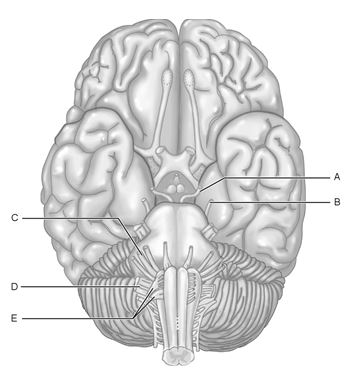
Figure 13.1
Using Figure 13.1, match the following:
Damage to this nerve would cause dizziness, nausea, and loss of balance.

سؤال
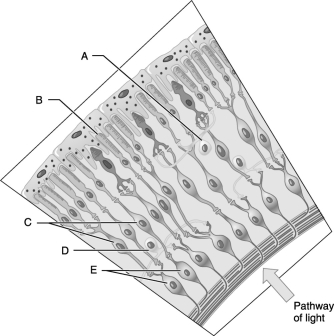
Figure 13.3
Using Figure 13.3, match the following:
Amacrine cell.
سؤال

Figure 13.2
Using Figure 13.2, identify the following components of the reflex arc:
Receptor.
سؤال
Figure 13.1
Using Figure 13.1, match the following:
Involved in movement of the digestive tract.
سؤال
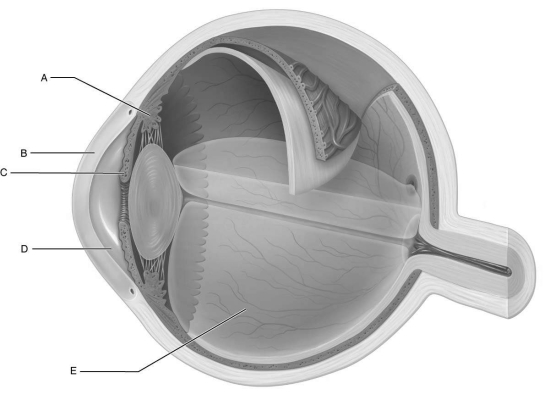
Figure 13.4
Using Figure 13.4, match the following:
The only tissue in the body that can be transplanted from one person to another with little or no rejection.
سؤال
Figure 13.4
Using Figure 13.4, match the following:
Holds the retina firmly against the pigmented layer.
سؤال
Figure 13.4
Using Figure 13.4, match the following:
Controls lens shape.
سؤال
Figure 13.1
Using Figure 13.1, match the following:
Damage to this nerve would keep the eye from rotating inferolaterally.
سؤال
Figure 13.3
Using Figure 13.3, match the following:
Horizontal cell.
سؤال
Figure 13.2
Using Figure 13.2, identify the following components of the reflex arc:
Effector.
سؤال
Figure 13.4
Using Figure 13.4, match the following:
Acts as a reflexively activated diaphragm to vary pupil size.
سؤال
Figure 13.3
Using Figure 13.3, match the following:
Rod.
سؤال
Figure 13.3
Using Figure 13.3, match the following:
Bipolar cells.
سؤال
Figure 13.1
Using Figure 13.1, match the following:
Innervates the superior oblique muscle.
سؤال
Figure 13.2
Using Figure 13.2, identify the following components of the reflex arc:
Integration center.
سؤال
Figure 13.2
Using Figure 13.2, identify the following components of the reflex arc:
Sensory neuron.
سؤال
Figure 13.3
Using Figure 13.3, match the following:
Ganglion cells.
سؤال
Figure 13.1
Using Figure 13.1, match the following:
Longest cranial nerve.
سؤال
Figure 13.1
Using Figure 13.1, match the following:
Damage to this nerve would cause difficulty in speech and swallowing, but no effect on visceral organs.
سؤال
Figure 13.2
Using Figure 13.2, identify the following components of the reflex arc:
Motor neuron.
سؤال
سؤال
سؤال
سؤال
سؤال
سؤال
سؤال
Figure 13.4
Using Figure 13.4, match the following:
Fluid blockages cause glaucoma.
سؤال
سؤال
سؤال
سؤال
سؤال
سؤال
سؤال
سؤال
سؤال
سؤال
سؤال
سؤال
سؤال
سؤال
سؤال
سؤال
سؤال
سؤال
سؤال
سؤال
سؤال
سؤال
سؤال
سؤال
سؤال
سؤال
سؤال
سؤال
سؤال
سؤال
سؤال
سؤال
سؤال
سؤال
سؤال
سؤال
سؤال
سؤال
سؤال
سؤال
سؤال
سؤال
سؤال
سؤال
سؤال
سؤال
سؤال
سؤال
سؤال
سؤال
سؤال
سؤال
سؤال

فتح الحزمة
قم بالتسجيل لفتح البطاقات في هذه المجموعة!
Unlock Deck
Unlock Deck
1/175

العب

ملء الشاشة (f)
Deck 13: The Peripheral Nervous System and Reflex Activity
1
Figure 13.1
Using Figure 13.1, match the following:
Damage to this nerve would cause dizziness, nausea, and loss of balance.
C
2
Figure 13.3
Using Figure 13.3, match the following:
Amacrine cell.
D
3
Figure 13.2
Using Figure 13.2, identify the following components of the reflex arc:
Receptor.
A
4
Figure 13.1
Using Figure 13.1, match the following:
Involved in movement of the digestive tract.
فتح الحزمة
افتح القفل للوصول البطاقات البالغ عددها 175 في هذه المجموعة.
فتح الحزمة
k this deck
5
Figure 13.4
Using Figure 13.4, match the following:
The only tissue in the body that can be transplanted from one person to another with little or no rejection.
فتح الحزمة
افتح القفل للوصول البطاقات البالغ عددها 175 في هذه المجموعة.
فتح الحزمة
k this deck
6
Figure 13.4
Using Figure 13.4, match the following:
Holds the retina firmly against the pigmented layer.
فتح الحزمة
افتح القفل للوصول البطاقات البالغ عددها 175 في هذه المجموعة.
فتح الحزمة
k this deck
7
Figure 13.4
Using Figure 13.4, match the following:
Controls lens shape.
فتح الحزمة
افتح القفل للوصول البطاقات البالغ عددها 175 في هذه المجموعة.
فتح الحزمة
k this deck
8
Figure 13.1
Using Figure 13.1, match the following:
Damage to this nerve would keep the eye from rotating inferolaterally.
فتح الحزمة
افتح القفل للوصول البطاقات البالغ عددها 175 في هذه المجموعة.
فتح الحزمة
k this deck
9
Figure 13.3
Using Figure 13.3, match the following:
Horizontal cell.
فتح الحزمة
افتح القفل للوصول البطاقات البالغ عددها 175 في هذه المجموعة.
فتح الحزمة
k this deck
10
Figure 13.2
Using Figure 13.2, identify the following components of the reflex arc:
Effector.
فتح الحزمة
افتح القفل للوصول البطاقات البالغ عددها 175 في هذه المجموعة.
فتح الحزمة
k this deck
11
Figure 13.4
Using Figure 13.4, match the following:
Acts as a reflexively activated diaphragm to vary pupil size.
فتح الحزمة
افتح القفل للوصول البطاقات البالغ عددها 175 في هذه المجموعة.
فتح الحزمة
k this deck
12
Figure 13.3
Using Figure 13.3, match the following:
Rod.
فتح الحزمة
افتح القفل للوصول البطاقات البالغ عددها 175 في هذه المجموعة.
فتح الحزمة
k this deck
13
Figure 13.3
Using Figure 13.3, match the following:
Bipolar cells.
فتح الحزمة
افتح القفل للوصول البطاقات البالغ عددها 175 في هذه المجموعة.
فتح الحزمة
k this deck
14
Figure 13.1
Using Figure 13.1, match the following:
Innervates the superior oblique muscle.
فتح الحزمة
افتح القفل للوصول البطاقات البالغ عددها 175 في هذه المجموعة.
فتح الحزمة
k this deck
15
Figure 13.2
Using Figure 13.2, identify the following components of the reflex arc:
Integration center.
فتح الحزمة
افتح القفل للوصول البطاقات البالغ عددها 175 في هذه المجموعة.
فتح الحزمة
k this deck
16
Figure 13.2
Using Figure 13.2, identify the following components of the reflex arc:
Sensory neuron.
فتح الحزمة
افتح القفل للوصول البطاقات البالغ عددها 175 في هذه المجموعة.
فتح الحزمة
k this deck
17
Figure 13.3
Using Figure 13.3, match the following:
Ganglion cells.
فتح الحزمة
افتح القفل للوصول البطاقات البالغ عددها 175 في هذه المجموعة.
فتح الحزمة
k this deck
18
Figure 13.1
Using Figure 13.1, match the following:
Longest cranial nerve.
فتح الحزمة
افتح القفل للوصول البطاقات البالغ عددها 175 في هذه المجموعة.
فتح الحزمة
k this deck
19
Figure 13.1
Using Figure 13.1, match the following:
Damage to this nerve would cause difficulty in speech and swallowing, but no effect on visceral organs.
فتح الحزمة
افتح القفل للوصول البطاقات البالغ عددها 175 في هذه المجموعة.
فتح الحزمة
k this deck
20
Figure 13.2
Using Figure 13.2, identify the following components of the reflex arc:
Motor neuron.
فتح الحزمة
افتح القفل للوصول البطاقات البالغ عددها 175 في هذه المجموعة.
فتح الحزمة
k this deck
21
Match the following:
A) Otoliths
B) Vestibule
C) Pharyngotympanic tube
D) Tympanic membrane
Contains utricle and saccule.
A) Otoliths
B) Vestibule
C) Pharyngotympanic tube
D) Tympanic membrane
Contains utricle and saccule.
فتح الحزمة
افتح القفل للوصول البطاقات البالغ عددها 175 في هذه المجموعة.
فتح الحزمة
k this deck
22
Match the following reflexes to their function:
A) Tendon
B) Flexor
C) Plantar
D) Stretch
E) Crossed-extensor
Prevents muscle overstretching and maintains muscle tone.
A) Tendon
B) Flexor
C) Plantar
D) Stretch
E) Crossed-extensor
Prevents muscle overstretching and maintains muscle tone.
فتح الحزمة
افتح القفل للوصول البطاقات البالغ عددها 175 في هذه المجموعة.
فتح الحزمة
k this deck
23
Match the following:
A) Abducens
B) Olfactory
C) Vestibulocochlear
D) Vagus
E) Accessory
Serves the senses of hearing and equilibrium.
A) Abducens
B) Olfactory
C) Vestibulocochlear
D) Vagus
E) Accessory
Serves the senses of hearing and equilibrium.
فتح الحزمة
افتح القفل للوصول البطاقات البالغ عددها 175 في هذه المجموعة.
فتح الحزمة
k this deck
24
Match the following:
A) Abducens
B) Olfactory
C) Vestibulocochlear
D) Vagus
E) Accessory
Receptors located in epithelium of the nasal cavity.
A) Abducens
B) Olfactory
C) Vestibulocochlear
D) Vagus
E) Accessory
Receptors located in epithelium of the nasal cavity.
فتح الحزمة
افتح القفل للوصول البطاقات البالغ عددها 175 في هذه المجموعة.
فتح الحزمة
k this deck
25
Match the following:
A) Otoliths
B) Vestibule
C) Pharyngotympanic tube
D) Tympanic membrane
Detects linear acceleration.
A) Otoliths
B) Vestibule
C) Pharyngotympanic tube
D) Tympanic membrane
Detects linear acceleration.
فتح الحزمة
افتح القفل للوصول البطاقات البالغ عددها 175 في هذه المجموعة.
فتح الحزمة
k this deck
26
Match the following reflexes to their function:
A) Tendon
B) Flexor
C) Plantar
D) Stretch
E) Crossed-extensor
Consists of an ipsilateral withdrawal reflex and a contralateral extensor reflex; important in maintaining balance.
A) Tendon
B) Flexor
C) Plantar
D) Stretch
E) Crossed-extensor
Consists of an ipsilateral withdrawal reflex and a contralateral extensor reflex; important in maintaining balance.
فتح الحزمة
افتح القفل للوصول البطاقات البالغ عددها 175 في هذه المجموعة.
فتح الحزمة
k this deck
27
Figure 13.4
Using Figure 13.4, match the following:
Fluid blockages cause glaucoma.
فتح الحزمة
افتح القفل للوصول البطاقات البالغ عددها 175 في هذه المجموعة.
فتح الحزمة
k this deck
28
Match the following:
A) Abducens
B) Olfactory
C) Vestibulocochlear
D) Vagus
E) Accessory
Formed by the union of a cranial and a spinal root.
A) Abducens
B) Olfactory
C) Vestibulocochlear
D) Vagus
E) Accessory
Formed by the union of a cranial and a spinal root.
فتح الحزمة
افتح القفل للوصول البطاقات البالغ عددها 175 في هذه المجموعة.
فتح الحزمة
k this deck
29
Match the following:
A) Lens
B) Fovea centralis
C) Aqueous humor
D) Retina
The sensory layer of the eye.
A) Lens
B) Fovea centralis
C) Aqueous humor
D) Retina
The sensory layer of the eye.
فتح الحزمة
افتح القفل للوصول البطاقات البالغ عددها 175 في هذه المجموعة.
فتح الحزمة
k this deck
30
Match the following reflexes to their function:
A) Tendon
B) Flexor
C) Plantar
D) Stretch
E) Crossed-extensor
Tests both upper and lower motor pathways. The sole of the foot is stimulated with a dull instrument.
A) Tendon
B) Flexor
C) Plantar
D) Stretch
E) Crossed-extensor
Tests both upper and lower motor pathways. The sole of the foot is stimulated with a dull instrument.
فتح الحزمة
افتح القفل للوصول البطاقات البالغ عددها 175 في هذه المجموعة.
فتح الحزمة
k this deck
31
Match the following reflexes to their function:
A) Tendon
B) Flexor
C) Plantar
D) Stretch
E) Crossed-extensor
Produces a rapid withdrawal of the body part from a painful stimulus; ipsilateral.
A) Tendon
B) Flexor
C) Plantar
D) Stretch
E) Crossed-extensor
Produces a rapid withdrawal of the body part from a painful stimulus; ipsilateral.
فتح الحزمة
افتح القفل للوصول البطاقات البالغ عددها 175 في هذه المجموعة.
فتح الحزمة
k this deck
32
Match the following:
A) Otoliths
B) Vestibule
C) Pharyngotympanic tube
D) Tympanic membrane
Separates external acoustic meatus from the middle ear.
A) Otoliths
B) Vestibule
C) Pharyngotympanic tube
D) Tympanic membrane
Separates external acoustic meatus from the middle ear.
فتح الحزمة
افتح القفل للوصول البطاقات البالغ عددها 175 في هذه المجموعة.
فتح الحزمة
k this deck
33
Match the following:
A) Otoliths
B) Vestibule
C) Pharyngotympanic tube
D) Tympanic membrane
Connects the middle ear with the nasopharynx.
A) Otoliths
B) Vestibule
C) Pharyngotympanic tube
D) Tympanic membrane
Connects the middle ear with the nasopharynx.
فتح الحزمة
افتح القفل للوصول البطاقات البالغ عددها 175 في هذه المجموعة.
فتح الحزمة
k this deck
34
Match the following:
A) Lens
B) Fovea centralis
C) Aqueous humor
D) Retina
Helps maintain the intraocular pressure; located in the anterior part of the eye.
A) Lens
B) Fovea centralis
C) Aqueous humor
D) Retina
Helps maintain the intraocular pressure; located in the anterior part of the eye.
فتح الحزمة
افتح القفل للوصول البطاقات البالغ عددها 175 في هذه المجموعة.
فتح الحزمة
k this deck
35
Match the following:
A) Otoliths
B) Vestibule
C) Pharyngotympanic tube
D) Tympanic membrane
Ear stones.
A) Otoliths
B) Vestibule
C) Pharyngotympanic tube
D) Tympanic membrane
Ear stones.
فتح الحزمة
افتح القفل للوصول البطاقات البالغ عددها 175 في هذه المجموعة.
فتح الحزمة
k this deck
36
Match the following:
A) Lens
B) Fovea centralis
C) Aqueous humor
D) Retina
The structure most responsible for focusing light rays that enter the eye.
A) Lens
B) Fovea centralis
C) Aqueous humor
D) Retina
The structure most responsible for focusing light rays that enter the eye.
فتح الحزمة
افتح القفل للوصول البطاقات البالغ عددها 175 في هذه المجموعة.
فتح الحزمة
k this deck
37
Match the following:
A) Abducens
B) Olfactory
C) Vestibulocochlear
D) Vagus
E) Accessory
Turns the eyeball laterally.
A) Abducens
B) Olfactory
C) Vestibulocochlear
D) Vagus
E) Accessory
Turns the eyeball laterally.
فتح الحزمة
افتح القفل للوصول البطاقات البالغ عددها 175 في هذه المجموعة.
فتح الحزمة
k this deck
38
Match the following:
A) Abducens
B) Olfactory
C) Vestibulocochlear
D) Vagus
E) Accessory
Helps to regulate blood pressure and digestion.
A) Abducens
B) Olfactory
C) Vestibulocochlear
D) Vagus
E) Accessory
Helps to regulate blood pressure and digestion.
فتح الحزمة
افتح القفل للوصول البطاقات البالغ عددها 175 في هذه المجموعة.
فتح الحزمة
k this deck
39
Match the following:
A) Lens
B) Fovea centralis
C) Aqueous humor
D) Retina
Area of greatest visual acuity.
A) Lens
B) Fovea centralis
C) Aqueous humor
D) Retina
Area of greatest visual acuity.
فتح الحزمة
افتح القفل للوصول البطاقات البالغ عددها 175 في هذه المجموعة.
فتح الحزمة
k this deck
40
Match the following reflexes to their function:
A) Tendon
B) Flexor
C) Plantar
D) Stretch
E) Crossed-extensor
Produces muscle relaxation and lengthening in response to tension; the contracting muscle relaxes as its antagonist is activated.
A) Tendon
B) Flexor
C) Plantar
D) Stretch
E) Crossed-extensor
Produces muscle relaxation and lengthening in response to tension; the contracting muscle relaxes as its antagonist is activated.
فتح الحزمة
افتح القفل للوصول البطاقات البالغ عددها 175 في هذه المجموعة.
فتح الحزمة
k this deck
41
Match the following:
A) Lumbar plexus
B) Brachial plexus
C) Cervical plexus
D) Sacral plexus
The obturator and femoral nerves branch from this plexus.
A) Lumbar plexus
B) Brachial plexus
C) Cervical plexus
D) Sacral plexus
The obturator and femoral nerves branch from this plexus.
فتح الحزمة
افتح القفل للوصول البطاقات البالغ عددها 175 في هذه المجموعة.
فتح الحزمة
k this deck
42
Match the following:
A) Precommand level
B) Segmental level
C) Projection level
Controls the outputs of the cortex and regulates motor activity.
A) Precommand level
B) Segmental level
C) Projection level
Controls the outputs of the cortex and regulates motor activity.
فتح الحزمة
افتح القفل للوصول البطاقات البالغ عددها 175 في هذه المجموعة.
فتح الحزمة
k this deck
43
Match the following:
A) Conduction deafness
B) Sensorineural deafness
C) Tinnitus
Loss of hearing resulting from prolonged exposure to high-intensity sounds.
A) Conduction deafness
B) Sensorineural deafness
C) Tinnitus
Loss of hearing resulting from prolonged exposure to high-intensity sounds.
فتح الحزمة
افتح القفل للوصول البطاقات البالغ عددها 175 في هذه المجموعة.
فتح الحزمة
k this deck
44
Match the following:
A) Vestibule
B) Tympanic membrane
C) Cochlear duct
D) Spiral organ (of Corti)
A membrane that transmits sound vibrations to the auditory ossicles.
A) Vestibule
B) Tympanic membrane
C) Cochlear duct
D) Spiral organ (of Corti)
A membrane that transmits sound vibrations to the auditory ossicles.
فتح الحزمة
افتح القفل للوصول البطاقات البالغ عددها 175 في هذه المجموعة.
فتح الحزمة
k this deck
45
Match the following:
A) Conduction deafness
B) Sensorineural deafness
C) Tinnitus
Can result from impacted cerumen.
A) Conduction deafness
B) Sensorineural deafness
C) Tinnitus
Can result from impacted cerumen.
فتح الحزمة
افتح القفل للوصول البطاقات البالغ عددها 175 في هذه المجموعة.
فتح الحزمة
k this deck
46
Match the following:
A) Vestibule
B) Tympanic membrane
C) Cochlear duct
D) Spiral organ (of Corti)
Houses the spiral organ (of Corti.)
A) Vestibule
B) Tympanic membrane
C) Cochlear duct
D) Spiral organ (of Corti)
Houses the spiral organ (of Corti.)
فتح الحزمة
افتح القفل للوصول البطاقات البالغ عددها 175 في هذه المجموعة.
فتح الحزمة
k this deck
47
Match the following:
A) Conduction deafness
B) Sensorineural deafness
C) Tinnitus
A possible side effect of medications such as aspirin.
A) Conduction deafness
B) Sensorineural deafness
C) Tinnitus
A possible side effect of medications such as aspirin.
فتح الحزمة
افتح القفل للوصول البطاقات البالغ عددها 175 في هذه المجموعة.
فتح الحزمة
k this deck
48
Match the following:
A) Precommand level
B) Segmental level
C) Projection level
The cerebellum and basal nuclei.
A) Precommand level
B) Segmental level
C) Projection level
The cerebellum and basal nuclei.
فتح الحزمة
افتح القفل للوصول البطاقات البالغ عددها 175 في هذه المجموعة.
فتح الحزمة
k this deck
49
Match the following:
A) Lumbar plexus
B) Brachial plexus
C) Cervical plexus
D) Sacral plexus
Trauma to a nerve of this plexus may cause wrist drop.
A) Lumbar plexus
B) Brachial plexus
C) Cervical plexus
D) Sacral plexus
Trauma to a nerve of this plexus may cause wrist drop.
فتح الحزمة
افتح القفل للوصول البطاقات البالغ عددها 175 في هذه المجموعة.
فتح الحزمة
k this deck
50
Match the following:
A) Precommand level
B) Segmental level
C) Projection level
Intermediate relay for incoming and outgoing neurons.
A) Precommand level
B) Segmental level
C) Projection level
Intermediate relay for incoming and outgoing neurons.
فتح الحزمة
افتح القفل للوصول البطاقات البالغ عددها 175 في هذه المجموعة.
فتح الحزمة
k this deck
51
Match the following:
A) Lumbar plexus
B) Brachial plexus
C) Cervical plexus
D) Sacral plexus
The phrenic nerve branches from this plexus.
A) Lumbar plexus
B) Brachial plexus
C) Cervical plexus
D) Sacral plexus
The phrenic nerve branches from this plexus.
فتح الحزمة
افتح القفل للوصول البطاقات البالغ عددها 175 في هذه المجموعة.
فتح الحزمة
k this deck
52
Match the following:
A) Conduction deafness
B) Sensorineural deafness
C) Tinnitus
One of the most common results of otitis media.
A) Conduction deafness
B) Sensorineural deafness
C) Tinnitus
One of the most common results of otitis media.
فتح الحزمة
افتح القفل للوصول البطاقات البالغ عددها 175 في هذه المجموعة.
فتح الحزمة
k this deck
53
Match the following:
A) Lumbar plexus
B) Brachial plexus
C) Cervical plexus
D) Sacral plexus
Striking the "funny bone" (ulnar nerve) may cause injury to a nerve of this plexus.
A) Lumbar plexus
B) Brachial plexus
C) Cervical plexus
D) Sacral plexus
Striking the "funny bone" (ulnar nerve) may cause injury to a nerve of this plexus.
فتح الحزمة
افتح القفل للوصول البطاقات البالغ عددها 175 في هذه المجموعة.
فتح الحزمة
k this deck
54
Match the following:
A) Vestibule
B) Tympanic membrane
C) Cochlear duct
D) Spiral organ (of Corti)
The receptor organ for hearing.
A) Vestibule
B) Tympanic membrane
C) Cochlear duct
D) Spiral organ (of Corti)
The receptor organ for hearing.
فتح الحزمة
افتح القفل للوصول البطاقات البالغ عددها 175 في هذه المجموعة.
فتح الحزمة
k this deck
55
Match the following:
A) Precommand level
B) Segmental level
C) Projection level
Central pattern generators.
A) Precommand level
B) Segmental level
C) Projection level
Central pattern generators.
فتح الحزمة
افتح القفل للوصول البطاقات البالغ عددها 175 في هذه المجموعة.
فتح الحزمة
k this deck
56
Match the following:
A) Precommand level
B) Segmental level
C) Projection level
The neural machinery of the spinal cord, including spinal cord circuits.
A) Precommand level
B) Segmental level
C) Projection level
The neural machinery of the spinal cord, including spinal cord circuits.
فتح الحزمة
افتح القفل للوصول البطاقات البالغ عددها 175 في هذه المجموعة.
فتح الحزمة
k this deck
57
Match the following:
A) Precommand level
B) Segmental level
C) Projection level
Includes cortical and brain stem motor areas.
A) Precommand level
B) Segmental level
C) Projection level
Includes cortical and brain stem motor areas.
فتح الحزمة
افتح القفل للوصول البطاقات البالغ عددها 175 في هذه المجموعة.
فتح الحزمة
k this deck
58
Match the following:
A) Conduction deafness
B) Sensorineural deafness
C) Tinnitus
Can result from the fusion of the auditory ossicles.
A) Conduction deafness
B) Sensorineural deafness
C) Tinnitus
Can result from the fusion of the auditory ossicles.
فتح الحزمة
افتح القفل للوصول البطاقات البالغ عددها 175 في هذه المجموعة.
فتح الحزمة
k this deck
59
Match the following:
A) Lumbar plexus
B) Brachial plexus
C) Cervical plexus
D) Sacral plexus
A fall or improper administration of an injection to the buttocks may injure a nerve of this plexus.
A) Lumbar plexus
B) Brachial plexus
C) Cervical plexus
D) Sacral plexus
A fall or improper administration of an injection to the buttocks may injure a nerve of this plexus.
فتح الحزمة
افتح القفل للوصول البطاقات البالغ عددها 175 في هذه المجموعة.
فتح الحزمة
k this deck
60
Match the following:
A) Vestibule
B) Tympanic membrane
C) Cochlear duct
D) Spiral organ (of Corti)
The central part of the bony labyrinth.
A) Vestibule
B) Tympanic membrane
C) Cochlear duct
D) Spiral organ (of Corti)
The central part of the bony labyrinth.
فتح الحزمة
افتح القفل للوصول البطاقات البالغ عددها 175 في هذه المجموعة.
فتح الحزمة
k this deck
61
Dermatomes are skin segments that relate to sensory innervation regions of the spinal nerves.
فتح الحزمة
افتح القفل للوصول البطاقات البالغ عددها 175 في هذه المجموعة.
فتح الحزمة
k this deck
62
Match the following:
A) Macula
B) Crista ampullaris
C) Taste buds
Chemically sensitive cilia are found in this structure.
A) Macula
B) Crista ampullaris
C) Taste buds
Chemically sensitive cilia are found in this structure.
فتح الحزمة
افتح القفل للوصول البطاقات البالغ عددها 175 في هذه المجموعة.
فتح الحزمة
k this deck
63
Match the following:
A) Night blindness
B) Otitis media
C) Glaucoma
D) Conduction deafness
A condition that can result from a deficiency of vitamin A.
A) Night blindness
B) Otitis media
C) Glaucoma
D) Conduction deafness
A condition that can result from a deficiency of vitamin A.
فتح الحزمة
افتح القفل للوصول البطاقات البالغ عددها 175 في هذه المجموعة.
فتح الحزمة
k this deck
64
Match the following:
A) Night blindness
B) Otitis media
C) Glaucoma
D) Conduction deafness
An inflammation of the lining of the middle ear.
A) Night blindness
B) Otitis media
C) Glaucoma
D) Conduction deafness
An inflammation of the lining of the middle ear.
فتح الحزمة
افتح القفل للوصول البطاقات البالغ عددها 175 في هذه المجموعة.
فتح الحزمة
k this deck
65
In the somatosensory system there are no third-order neurons in the cerebellum.
فتح الحزمة
افتح القفل للوصول البطاقات البالغ عددها 175 في هذه المجموعة.
فتح الحزمة
k this deck
66
Dorsal and ventral rami are similar in that they both contain sensory and motor fibers.
فتح الحزمة
افتح القفل للوصول البطاقات البالغ عددها 175 في هذه المجموعة.
فتح الحزمة
k this deck
67
Match the following:
A) Macula
B) Crista ampullaris
C) Taste buds
Hair cells receptive to changes in dynamic equilibrium are found in this structure.
A) Macula
B) Crista ampullaris
C) Taste buds
Hair cells receptive to changes in dynamic equilibrium are found in this structure.
فتح الحزمة
افتح القفل للوصول البطاقات البالغ عددها 175 في هذه المجموعة.
فتح الحزمة
k this deck
68
Pacinian corpuscles can be exteroceptors, interoceptors, or proprioceptor.
فتح الحزمة
افتح القفل للوصول البطاقات البالغ عددها 175 في هذه المجموعة.
فتح الحزمة
k this deck
69
Match the following:
A) Macula
B) Crista ampullaris
C) Taste buds
Chemically sensitive microvilli found in this structure.
D) Olfactory epithelium
A) Macula
B) Crista ampullaris
C) Taste buds
Chemically sensitive microvilli found in this structure.
D) Olfactory epithelium
فتح الحزمة
افتح القفل للوصول البطاقات البالغ عددها 175 في هذه المجموعة.
فتح الحزمة
k this deck
70
Irritation of the phrenic nerve may cause diaphragm spasms called hiccups.
فتح الحزمة
افتح القفل للوصول البطاقات البالغ عددها 175 في هذه المجموعة.
فتح الحزمة
k this deck
71
The only cranial nerves to extend beyond the head and neck region are the vagus nerves.
فتح الحزمة
افتح القفل للوصول البطاقات البالغ عددها 175 في هذه المجموعة.
فتح الحزمة
k this deck
72
Match the following:
A) Night blindness
B) Otitis media
C) Glaucoma
D) Conduction deafness
A condition of deafness that may result from otosclerosis.
A) Night blindness
B) Otitis media
C) Glaucoma
D) Conduction deafness
A condition of deafness that may result from otosclerosis.
فتح الحزمة
افتح القفل للوصول البطاقات البالغ عددها 175 في هذه المجموعة.
فتح الحزمة
k this deck
73
Match the following:
A) Macula
B) Crista ampullaris
C) Taste buds
Hair cells receptive to changes in static equilibrium are found in this structure.
A) Macula
B) Crista ampullaris
C) Taste buds
Hair cells receptive to changes in static equilibrium are found in this structure.
فتح الحزمة
افتح القفل للوصول البطاقات البالغ عددها 175 في هذه المجموعة.
فتح الحزمة
k this deck
74
The dorsal ramus consists only of motor fibers bringing information to the spinal cord.
فتح الحزمة
افتح القفل للوصول البطاقات البالغ عددها 175 في هذه المجموعة.
فتح الحزمة
k this deck
75
The musculocutaneous nerve is a major nerve of the brachial plexus.
فتح الحزمة
افتح القفل للوصول البطاقات البالغ عددها 175 في هذه المجموعة.
فتح الحزمة
k this deck
76
The obturator nerve branches from the sacral plexus.
فتح الحزمة
افتح القفل للوصول البطاقات البالغ عددها 175 في هذه المجموعة.
فتح الحزمة
k this deck
77
Match the following:
A) Night blindness
B) Otitis media
C) Glaucoma
D) Conduction deafness
A condition often leading to blindness due to increased intraocular pressure.
A) Night blindness
B) Otitis media
C) Glaucoma
D) Conduction deafness
A condition often leading to blindness due to increased intraocular pressure.
فتح الحزمة
افتح القفل للوصول البطاقات البالغ عددها 175 في هذه المجموعة.
فتح الحزمة
k this deck
78
The second cranial nerve forms a chiasma at the base of the brain for partial crossover of neural fibers.
فتح الحزمة
افتح القفل للوصول البطاقات البالغ عددها 175 في هذه المجموعة.
فتح الحزمة
k this deck
79
The meningeal branch of a spinal nerve actually reenters the vertebral canal to innervate the meninges and blood vessels.
فتح الحزمة
افتح القفل للوصول البطاقات البالغ عددها 175 في هذه المجموعة.
فتح الحزمة
k this deck
80
The glossopharyngeal nerve is the only cranial nerve that contains sensory fibers.
فتح الحزمة
افتح القفل للوصول البطاقات البالغ عددها 175 في هذه المجموعة.
فتح الحزمة
k this deck
فتح الحزمة
افتح القفل للوصول البطاقات البالغ عددها 175 في هذه المجموعة.






