







 تكلم مع الذكاء الاصطناعي


Deck 17: The Special Senses
ملء الشاشة (f)

سؤال

سؤال
سؤال
سؤال
سؤال
سؤال
سؤال
سؤال
سؤال
سؤال
سؤال
سؤال
سؤال
سؤال
سؤال
سؤال
سؤال
سؤال
سؤال
سؤال
سؤال
سؤال
سؤال
سؤال
سؤال
سؤال
سؤال
سؤال
سؤال
سؤال
سؤال
سؤال
سؤال
سؤال
سؤال
سؤال
سؤال
سؤال
سؤال
سؤال
سؤال
سؤال
سؤال
سؤال
سؤال
سؤال
سؤال
سؤال
سؤال
سؤال
سؤال
سؤال
سؤال
سؤال
سؤال
سؤال
سؤال
سؤال
سؤال
سؤال
سؤال
سؤال
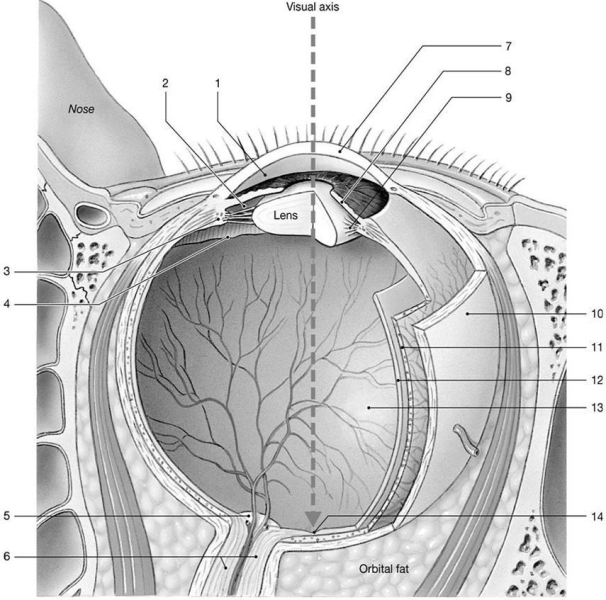
Figure 17-1 The Sectional Anatomy of the Eye
Use Figure 17-1 to answer the following questions:
Identify the structure labeled "12."
A) pupil
B) optic disc
C) sclera
D) fovea
E) retina
سؤال
سؤال
سؤال
سؤال
سؤال
Figure 17-1 The Sectional Anatomy of the Eye
Use Figure 17-1 to answer the following questions:
Which structure is commonly called the blind spot?
A) 4
B) 10
C) 14
D) 5
E) 6
سؤال
سؤال
سؤال
سؤال
سؤال
سؤال
سؤال
سؤال
سؤال
Figure 17-1 The Sectional Anatomy of the Eye
Use Figure 17-1 to answer the following questions:
Identify the structure labeled "7."
A) choroid
B) optic disc
C) sclera
D) retina
E) cornea
سؤال
سؤال
Figure 17-1 The Sectional Anatomy of the Eye
Use Figure 17-1 to answer the following questions:
Identify the structure labeled "14."
A) pupil
B) optic disc
C) sclera
D) fovea
E) suspensory ligaments
سؤال
سؤال
Figure 17-1 The Sectional Anatomy of the Eye
Use Figure 17-1 to answer the following questions:
Identify the space labeled "1."
A) posterior cavity
B) posterior chamber
C) pupil
D) anterior chamber
E) vitreous chamber

فتح الحزمة
قم بالتسجيل لفتح البطاقات في هذه المجموعة!
Unlock Deck
Unlock Deck
1/170

العب

ملء الشاشة (f)
Deck 17: The Special Senses
1
The olfactory organ consists of the ________ and the lamina propria.
A) gustatory cells
B) basilar membrane
C) olfactory epithelium
D) hippocampus
E) ethmoid bone
A) gustatory cells
B) basilar membrane
C) olfactory epithelium
D) hippocampus
E) ethmoid bone
C
2
Our taste buds are most receptive to which of the following types of compounds?
A) sweet
B) salty
C) sweet and salty
D) bitter
E) umami
A) sweet
B) salty
C) sweet and salty
D) bitter
E) umami
D
3
Anormal, relaxed inhalation carries about ________ of the inhaled air to the olfactory organs.
A) 50 percent
B) 8 percent
C) 2 percent
D) 35 percent
E) 10 percent
A) 50 percent
B) 8 percent
C) 2 percent
D) 35 percent
E) 10 percent
C
4
Olfactory receptors send axons through the cribriform plate. They synapse on neurons in the
A) medulla oblongata.
B) medial geniculate.
C) cerebral cortex.
D) olfactory bulb.
E) olfactory tract.
A) medulla oblongata.
B) medial geniculate.
C) cerebral cortex.
D) olfactory bulb.
E) olfactory tract.
فتح الحزمة
افتح القفل للوصول البطاقات البالغ عددها 170 في هذه المجموعة.
فتح الحزمة
k this deck
5
Which of the following correctly states how a gustatory receptor will be stimulated by an acidic or sourcompound?
A) G proteins will be activated.
B) Hydrogen ions will diffuse into the receptor cell causing depolarization.
C) Sodium ions will diffuse into the receptor cell causing depolarization.
D) Second messengers will be activated.
E) Adenylate cyclase will be activated.
A) G proteins will be activated.
B) Hydrogen ions will diffuse into the receptor cell causing depolarization.
C) Sodium ions will diffuse into the receptor cell causing depolarization.
D) Second messengers will be activated.
E) Adenylate cyclase will be activated.
فتح الحزمة
افتح القفل للوصول البطاقات البالغ عددها 170 في هذه المجموعة.
فتح الحزمة
k this deck
6
Which of the following is true of olfactory discrimination?
A) There are 6 primary smells known.
B) The number of olfactory receptors decline as we age.
C) All odorants require the same concentration to activate an olfactory receptor.
D) There are different types of olfactory receptor cells to detect each type of odorant.
E) The olfactory receptor population does not divide.
A) There are 6 primary smells known.
B) The number of olfactory receptors decline as we age.
C) All odorants require the same concentration to activate an olfactory receptor.
D) There are different types of olfactory receptor cells to detect each type of odorant.
E) The olfactory receptor population does not divide.
فتح الحزمة
افتح القفل للوصول البطاقات البالغ عددها 170 في هذه المجموعة.
فتح الحزمة
k this deck
7
Which of the following lingual papillae has the largest number of taste buds?
A) pharynx
B) foliate papillae
C) filiform papillae
D) fungiform papillae
E) vallate papillae
A) pharynx
B) foliate papillae
C) filiform papillae
D) fungiform papillae
E) vallate papillae
فتح الحزمة
افتح القفل للوصول البطاقات البالغ عددها 170 في هذه المجموعة.
فتح الحزمة
k this deck
8
Which of the following types of sensory information reaches the cerebral cortex directly?
A) visual
B) hearing
C) equilibrium
D) olfactory
E) gustatory
A) visual
B) hearing
C) equilibrium
D) olfactory
E) gustatory
فتح الحزمة
افتح القفل للوصول البطاقات البالغ عددها 170 في هذه المجموعة.
فتح الحزمة
k this deck
9
Some neural tissues retain stem cells and thus the capacity to divide and replace lost neurons. Which ofthese special senses can replace its damaged neural receptors?
A) olfaction
B) hearing
C) equilibrium
D) proprioception
E) vision
A) olfaction
B) hearing
C) equilibrium
D) proprioception
E) vision
فتح الحزمة
افتح القفل للوصول البطاقات البالغ عددها 170 في هذه المجموعة.
فتح الحزمة
k this deck
10
Olfactory glands
A) house the sense of smell.
B) regenerate to form new olfactory epithelium.
C) react to aromatic molecules.
D) coat the olfactory epithelium with a pigmented mucus.
E) group as olfactory bulbs.
A) house the sense of smell.
B) regenerate to form new olfactory epithelium.
C) react to aromatic molecules.
D) coat the olfactory epithelium with a pigmented mucus.
E) group as olfactory bulbs.
فتح الحزمة
افتح القفل للوصول البطاقات البالغ عددها 170 في هذه المجموعة.
فتح الحزمة
k this deck
11
During a sinus infection it is difficult to smell because
A) basal cell division decreases.
B) olfactory glands stop producing mucus.
C) olfactory supporting cells block odorant molecules from reaching the receptors.
D) the hypothalamus stops responding to olfactory stimulation.
E) excess mucus blocks odorant molecules from reaching the receptors.
A) basal cell division decreases.
B) olfactory glands stop producing mucus.
C) olfactory supporting cells block odorant molecules from reaching the receptors.
D) the hypothalamus stops responding to olfactory stimulation.
E) excess mucus blocks odorant molecules from reaching the receptors.
فتح الحزمة
افتح القفل للوصول البطاقات البالغ عددها 170 في هذه المجموعة.
فتح الحزمة
k this deck
12
Olfactory information is first received by which part of the brain?
A) pons
B) cerebellum
C) thalamus
D) cerebrum
E) medulla oblongata
A) pons
B) cerebellum
C) thalamus
D) cerebrum
E) medulla oblongata
فتح الحزمة
افتح القفل للوصول البطاقات البالغ عددها 170 في هذه المجموعة.
فتح الحزمة
k this deck
13
All of the following are true of olfactory pathways except which one?
A) They project first to the occipital lobes and then to the thalamus.
B) Neurons from the olfactory epithelium synapse in the olfactory bulb.
C) Information flows to the olfactory cortex, hypothalamus, and limbic system.
D) They reach the forebrain without first synapsing in the thalamus.
E) The limbic system-olfactory pathway connection means that there are close ties between experiences and memories with smell.
A) They project first to the occipital lobes and then to the thalamus.
B) Neurons from the olfactory epithelium synapse in the olfactory bulb.
C) Information flows to the olfactory cortex, hypothalamus, and limbic system.
D) They reach the forebrain without first synapsing in the thalamus.
E) The limbic system-olfactory pathway connection means that there are close ties between experiences and memories with smell.
فتح الحزمة
افتح القفل للوصول البطاقات البالغ عددها 170 في هذه المجموعة.
فتح الحزمة
k this deck
14
As we age
A) taste bud sensitivity increases.
B) taste bud sensitivity doubles.
C) the number of taste buds increases.
D) the number of taste buds decreases.
E) the number of taste buds decreases but the number of olfactory receptors increases to compensate.
A) taste bud sensitivity increases.
B) taste bud sensitivity doubles.
C) the number of taste buds increases.
D) the number of taste buds decreases.
E) the number of taste buds decreases but the number of olfactory receptors increases to compensate.
فتح الحزمة
افتح القفل للوصول البطاقات البالغ عددها 170 في هذه المجموعة.
فتح الحزمة
k this deck
15
Olfactory organs are located in the nasal cavity inferior to the perforated bony structure known as the
A) cribriform plate.
B) sphenoid bone.
C) sella turcica.
D) vomer.
E) zygomatic process.
A) cribriform plate.
B) sphenoid bone.
C) sella turcica.
D) vomer.
E) zygomatic process.
فتح الحزمة
افتح القفل للوصول البطاقات البالغ عددها 170 في هذه المجموعة.
فتح الحزمة
k this deck
16
The function of gustatory receptors parallels that of
A) photoreceptors in the eye.
B) mechanoreceptors in the ear.
C) olfactory receptors.
D) lamellar corpuscles.
E) proprioceptors.
A) photoreceptors in the eye.
B) mechanoreceptors in the ear.
C) olfactory receptors.
D) lamellar corpuscles.
E) proprioceptors.
فتح الحزمة
افتح القفل للوصول البطاقات البالغ عددها 170 في هذه المجموعة.
فتح الحزمة
k this deck
17
When odorant molecules contact the dendritic processes of olfactory receptors the initial response is
A) an action potential.
B) activation of a kinase.
C) a generator potential.
D) a hyperpolarization potential.
E) a conversion of 11-trans retinal to 11-cis retinal.
A) an action potential.
B) activation of a kinase.
C) a generator potential.
D) a hyperpolarization potential.
E) a conversion of 11-trans retinal to 11-cis retinal.
فتح الحزمة
افتح القفل للوصول البطاقات البالغ عددها 170 في هذه المجموعة.
فتح الحزمة
k this deck
18
The olfactory receptors are highly modified
A) epithelial cells.
B) interneurons.
C) sensory neurons.
D) motor neurons.
E) neuroglial cells.
A) epithelial cells.
B) interneurons.
C) sensory neurons.
D) motor neurons.
E) neuroglial cells.
فتح الحزمة
افتح القفل للوصول البطاقات البالغ عددها 170 في هذه المجموعة.
فتح الحزمة
k this deck
19
Damage to the insula is most likely to affect which of the following senses?
A) olfaction
B) gustation
C) vision
D) hearing
E) equilibrium
A) olfaction
B) gustation
C) vision
D) hearing
E) equilibrium
فتح الحزمة
افتح القفل للوصول البطاقات البالغ عددها 170 في هذه المجموعة.
فتح الحزمة
k this deck
20
Before an olfactory receptor can detect an odorant, it has to
A) contact a basal cell.
B) bind to receptors on olfactory dendrites.
C) open ion channels.
D) respond to applied pressure.
E) be transported to the olfactory bulbs.
A) contact a basal cell.
B) bind to receptors on olfactory dendrites.
C) open ion channels.
D) respond to applied pressure.
E) be transported to the olfactory bulbs.
فتح الحزمة
افتح القفل للوصول البطاقات البالغ عددها 170 في هذه المجموعة.
فتح الحزمة
k this deck
21
Which of the following is not one of the six primary taste sensations?
A) sweet
B) peppery
C) sour
D) salty
E) umami
A) sweet
B) peppery
C) sour
D) salty
E) umami
فتح الحزمة
افتح القفل للوصول البطاقات البالغ عددها 170 في هذه المجموعة.
فتح الحزمة
k this deck
22
Taste buds are clusters of individual
A) vallate papillae.
B) gustatory hairs.
C) epithelial cells.
D) olfactory receptors.
E) gustatory receptors.
A) vallate papillae.
B) gustatory hairs.
C) epithelial cells.
D) olfactory receptors.
E) gustatory receptors.
فتح الحزمة
افتح القفل للوصول البطاقات البالغ عددها 170 في هذه المجموعة.
فتح الحزمة
k this deck
23
An adult has approximately ________ taste buds.
A) 100
B) 10,000
C) 4,000,000
D) 500
E) 50,000
A) 100
B) 10,000
C) 4,000,000
D) 500
E) 50,000
فتح الحزمة
افتح القفل للوصول البطاقات البالغ عددها 170 في هذه المجموعة.
فتح الحزمة
k this deck
24
Which structure of the eye is the most sensitive but contains no blood vessels?
A) iris
B) choroid
C) retina
D) sclera
E) cornea
A) iris
B) choroid
C) retina
D) sclera
E) cornea
فتح الحزمة
افتح القفل للوصول البطاقات البالغ عددها 170 في هذه المجموعة.
فتح الحزمة
k this deck
25
Taste buds on the tongue are often associated with epithelial projections called
A) macula.
B) lingual papillae.
C) ganglion cells.
D) pharyngeal papillae.
E) ampulla.
A) macula.
B) lingual papillae.
C) ganglion cells.
D) pharyngeal papillae.
E) ampulla.
فتح الحزمة
افتح القفل للوصول البطاقات البالغ عددها 170 في هذه المجموعة.
فتح الحزمة
k this deck
26
A typical gustatory cell survives for only about ________ day(s) before it is replaced.
A) 10
B) 1
C) 60
D) 30
E) 365
A) 10
B) 1
C) 60
D) 30
E) 365
فتح الحزمة
افتح القفل للوصول البطاقات البالغ عددها 170 في هذه المجموعة.
فتح الحزمة
k this deck
27
A patient who experienced head trauma has lost the ability to taste spicy food. You should expect damagetocranial nerve
A) VII.
B) III.
C) IX.
D) V.
E) XII.
A) VII.
B) III.
C) IX.
D) V.
E) XII.
فتح الحزمة
افتح القفل للوصول البطاقات البالغ عددها 170 في هذه المجموعة.
فتح الحزمة
k this deck
28
Each gustatory cell extends ________ (called taste hairs) into the surrounding fluids through a narrow taste pore.
A) microvilli
B) villi
C) papillae
D) palpebra
E) G proteins
A) microvilli
B) villi
C) papillae
D) palpebra
E) G proteins
فتح الحزمة
افتح القفل للوصول البطاقات البالغ عددها 170 في هذه المجموعة.
فتح الحزمة
k this deck
29
The primary cause of blindness in the United States is
A) cataracts.
B) diabetic retinopathy.
C) glaucoma.
D) retinal detachment.
E) retinopathy of prematurity.
A) cataracts.
B) diabetic retinopathy.
C) glaucoma.
D) retinal detachment.
E) retinopathy of prematurity.
فتح الحزمة
افتح القفل للوصول البطاقات البالغ عددها 170 في هذه المجموعة.
فتح الحزمة
k this deck
30
The purpose of the intrinsically photosensitive retinal ganglion cell (ipRGC) photoreceptors are
A) to give clear sharp vision.
B) to allow us to see in dim light.
C) to replace rods as we age.
D) influence the circadian rhythm.
E) to provide color vision.
A) to give clear sharp vision.
B) to allow us to see in dim light.
C) to replace rods as we age.
D) influence the circadian rhythm.
E) to provide color vision.
فتح الحزمة
افتح القفل للوصول البطاقات البالغ عددها 170 في هذه المجموعة.
فتح الحزمة
k this deck
31
Stimulation of receptors within the trigeminal nerve might produce a perception of
A) intensely sweet.
B) intensely sour.
C) quite salty.
D) peppery hot.
E) bitter.
A) intensely sweet.
B) intensely sour.
C) quite salty.
D) peppery hot.
E) bitter.
فتح الحزمة
افتح القفل للوصول البطاقات البالغ عددها 170 في هذه المجموعة.
فتح الحزمة
k this deck
32
Which of the following is false concerning lacrimal glands?
A) They produce a strongly hypertonic fluid.
B) They produce most of the volume of tears.
C) They produce lysozyme.
D) They produce watery, slightly alkaline secretions.
E) They are located in recesses in the frontal bones.
A) They produce a strongly hypertonic fluid.
B) They produce most of the volume of tears.
C) They produce lysozyme.
D) They produce watery, slightly alkaline secretions.
E) They are located in recesses in the frontal bones.
فتح الحزمة
افتح القفل للوصول البطاقات البالغ عددها 170 في هذه المجموعة.
فتح الحزمة
k this deck
33
Destruction to your left glossopharyngeal nerve would result in
A) inability to sense sweetness at the tip of your tongue.
B) inability to identify sour and bitter foods at the posterior one-third of the tongue.
C) inability to smell.
D) inability to see.
E) inability to hear.
A) inability to sense sweetness at the tip of your tongue.
B) inability to identify sour and bitter foods at the posterior one-third of the tongue.
C) inability to smell.
D) inability to see.
E) inability to hear.
فتح الحزمة
افتح القفل للوصول البطاقات البالغ عددها 170 في هذه المجموعة.
فتح الحزمة
k this deck
34
Which of the following is incorrectly matched?
A) anterior chamber: between the cornea and the iris
B) posterior chamber: between the iris and the lens
C) ciliary body: site of extrinsic eye muscle attachment
D) retina: consists of a pigmented layer and a neural layer
E) sclera: covers most of the ocular surface
A) anterior chamber: between the cornea and the iris
B) posterior chamber: between the iris and the lens
C) ciliary body: site of extrinsic eye muscle attachment
D) retina: consists of a pigmented layer and a neural layer
E) sclera: covers most of the ocular surface
فتح الحزمة
افتح القفل للوصول البطاقات البالغ عددها 170 في هذه المجموعة.
فتح الحزمة
k this deck
35
Which of the following is a function of the pigmented layer of the retina?
A) provide eye color
B) house the photoreceptors
C) secrete vitreous humor
D) absorb light passing through the neural layer
E) refract light onto the photoreceptors
A) provide eye color
B) house the photoreceptors
C) secrete vitreous humor
D) absorb light passing through the neural layer
E) refract light onto the photoreceptors
فتح الحزمة
افتح القفل للوصول البطاقات البالغ عددها 170 في هذه المجموعة.
فتح الحزمة
k this deck
36
The taste sensation that is triggered by the amino acid glutamate is known as
A) sweet.
B) umami.
C) salty.
D) peppery.
E) sour.
A) sweet.
B) umami.
C) salty.
D) peppery.
E) sour.
فتح الحزمة
افتح القفل للوصول البطاقات البالغ عددها 170 في هذه المجموعة.
فتح الحزمة
k this deck
37
The sense of taste is also known as
A) proprioception.
B) maculation.
C) gustation.
D) olfaction.
E) sublation.
A) proprioception.
B) maculation.
C) gustation.
D) olfaction.
E) sublation.
فتح الحزمة
افتح القفل للوصول البطاقات البالغ عددها 170 في هذه المجموعة.
فتح الحزمة
k this deck
38
The membrane structures that respond to chemical stimuli to produce sweet, bitter, and umami sensationsarecalled
A) gustatory hairs.
B) chemically-gated ion channels.
C) voltage-regulated ion channels.
D) G proteins.
E) papillae.
A) gustatory hairs.
B) chemically-gated ion channels.
C) voltage-regulated ion channels.
D) G proteins.
E) papillae.
فتح الحزمة
افتح القفل للوصول البطاقات البالغ عددها 170 في هذه المجموعة.
فتح الحزمة
k this deck
39
Jonathan received a strong blow to the eye. The eyeball remained intact but he suddenly could not see. Thishas likely caused
A) development of cataracts.
B) a detached retina.
C) development of glaucoma.
D) astigmatism.
E) myopia.
A) development of cataracts.
B) a detached retina.
C) development of glaucoma.
D) astigmatism.
E) myopia.
فتح الحزمة
افتح القفل للوصول البطاقات البالغ عددها 170 في هذه المجموعة.
فتح الحزمة
k this deck
40
Tears pass through which of the following structures before emptying into the nasal cavity?
A) anterior chamber
B) posterior chamber
C) nasolacrimal duct
D) scleral venous sinus
E) corneoscleral junction
A) anterior chamber
B) posterior chamber
C) nasolacrimal duct
D) scleral venous sinus
E) corneoscleral junction
فتح الحزمة
افتح القفل للوصول البطاقات البالغ عددها 170 في هذه المجموعة.
فتح الحزمة
k this deck
41
An area of the retina that contains only cones and is the site of sharpest vision is the
A) outer segment.
B) inner segment.
C) fovea.
D) optic disc.
E) tapetum lucidum.
A) outer segment.
B) inner segment.
C) fovea.
D) optic disc.
E) tapetum lucidum.
فتح الحزمة
افتح القفل للوصول البطاقات البالغ عددها 170 في هذه المجموعة.
فتح الحزمة
k this deck
42
The human lens focuses light on the photoreceptor cells by
A) moving up and down.
B) moving in and out.
C) changing shape.
D) opening and closing.
E) dilating and constricting.
A) moving up and down.
B) moving in and out.
C) changing shape.
D) opening and closing.
E) dilating and constricting.
فتح الحزمة
افتح القفل للوصول البطاقات البالغ عددها 170 في هذه المجموعة.
فتح الحزمة
k this deck
43
The vitreous body
A) fills the anterior chamber.
B) helps to stabilize the eye and holds the retina up against the eyewall.
C) is replaced at the rate of 20 percent per year until middle age.
D) circulates through the pupil.
E) holds the retina against the lens for proper refraction.
A) fills the anterior chamber.
B) helps to stabilize the eye and holds the retina up against the eyewall.
C) is replaced at the rate of 20 percent per year until middle age.
D) circulates through the pupil.
E) holds the retina against the lens for proper refraction.
فتح الحزمة
افتح القفل للوصول البطاقات البالغ عددها 170 في هذه المجموعة.
فتح الحزمة
k this deck
44
Pupillary muscle groups are controlled by the ANS. Parasympathetic activation causes pupillary ________,and sympathetic activation causes ________.
A) dilation; constriction
B) dilation; dilation
C) constriction; dilation
D) constriction; constriction
E) vasoconstriction; vasoconstriction
A) dilation; constriction
B) dilation; dilation
C) constriction; dilation
D) constriction; constriction
E) vasoconstriction; vasoconstriction
فتح الحزمة
افتح القفل للوصول البطاقات البالغ عددها 170 في هذه المجموعة.
فتح الحزمة
k this deck
45
The shape of the lens is controlled by the
A) pupillary sphincter muscles.
B) pupillary radial muscles.
C) ciliary muscles.
D) iris.
E) cornea.
A) pupillary sphincter muscles.
B) pupillary radial muscles.
C) ciliary muscles.
D) iris.
E) cornea.
فتح الحزمة
افتح القفل للوصول البطاقات البالغ عددها 170 في هذه المجموعة.
فتح الحزمة
k this deck
46
The ________ covers most of the exposed surface of the eye.
A) conjunctiva
B) cornea
C) iris
D) anterior chamber
E) caruncle
A) conjunctiva
B) cornea
C) iris
D) anterior chamber
E) caruncle
فتح الحزمة
افتح القفل للوصول البطاقات البالغ عددها 170 في هذه المجموعة.
فتح الحزمة
k this deck
47
The opening in the iris through which light passes is the
A) conjunctiva.
B) cornea.
C) pupil.
D) anterior chamber.
E) posterior chamber.
A) conjunctiva.
B) cornea.
C) pupil.
D) anterior chamber.
E) posterior chamber.
فتح الحزمة
افتح القفل للوصول البطاقات البالغ عددها 170 في هذه المجموعة.
فتح الحزمة
k this deck
48
A ray of light entering the eye will encounter the following structures in which order?
A) conjunctiva ? cornea ? aqueous humor ? lens ? vitreous body ? retina
B) vitreous body ? retina ? choroids ? aqueous humor ? lens ? conjunctiva ? cornea
C) cornea ? aqueous humor ? vitreous body ? lens ? conjunctiva ? choroids ? retina
D) conjunctiva ? cornea ? lens ? aqueous humor ? vitreous body ? retina
E) cornea ? aqueous humor ? conjunctiva ? lens ? vitreous body ? retina ? choroid
A) conjunctiva ? cornea ? aqueous humor ? lens ? vitreous body ? retina
B) vitreous body ? retina ? choroids ? aqueous humor ? lens ? conjunctiva ? cornea
C) cornea ? aqueous humor ? vitreous body ? lens ? conjunctiva ? choroids ? retina
D) conjunctiva ? cornea ? lens ? aqueous humor ? vitreous body ? retina
E) cornea ? aqueous humor ? conjunctiva ? lens ? vitreous body ? retina ? choroid
فتح الحزمة
افتح القفل للوصول البطاقات البالغ عددها 170 في هذه المجموعة.
فتح الحزمة
k this deck
49
A structure that is located at the medial angle and contains glands that contribute to a gritty depositisthe
A) palpebra.
B) lacrimal caruncle.
C) chalazion.
D) tarsal gland.
E) conjunctiva.
A) palpebra.
B) lacrimal caruncle.
C) chalazion.
D) tarsal gland.
E) conjunctiva.
فتح الحزمة
افتح القفل للوصول البطاقات البالغ عددها 170 في هذه المجموعة.
فتح الحزمة
k this deck
50
What structure changes the shape of the lens for far and near vision?
A) aqueous humor
B) ciliary body
C) iris
D) extrinsic eye muscles
E) macula
A) aqueous humor
B) ciliary body
C) iris
D) extrinsic eye muscles
E) macula
فتح الحزمة
افتح القفل للوصول البطاقات البالغ عددها 170 في هذه المجموعة.
فتح الحزمة
k this deck
51
All of the following are true of the fibrous layer of the eye except that it
A) consists of the sclera and cornea.
B) provides mechanical support and some protection for the eye.
C) produces aqueous humor.
D) contributes substantial focusing power.
E) is where extrinsic eye muscles insert.
A) consists of the sclera and cornea.
B) provides mechanical support and some protection for the eye.
C) produces aqueous humor.
D) contributes substantial focusing power.
E) is where extrinsic eye muscles insert.
فتح الحزمة
افتح القفل للوصول البطاقات البالغ عددها 170 في هذه المجموعة.
فتح الحزمة
k this deck
52
All of the following are true of the neural layer of the eye except that it
A) contains ganglion cells.
B) contains the photoreceptor cells.
C) contains bipolar cells.
D) is the innermost layer of the eyeball.
E) consists of dense fibrous connective tissue.
A) contains ganglion cells.
B) contains the photoreceptor cells.
C) contains bipolar cells.
D) is the innermost layer of the eyeball.
E) consists of dense fibrous connective tissue.
فتح الحزمة
افتح القفل للوصول البطاقات البالغ عددها 170 في هذه المجموعة.
فتح الحزمة
k this deck
53
The eyelids are connected at the
A) palpebral fissure.
B) medial and lateral angles.
C) lacrimal caruncle.
D) chalazion.
E) conjunctiva.
A) palpebral fissure.
B) medial and lateral angles.
C) lacrimal caruncle.
D) chalazion.
E) conjunctiva.
فتح الحزمة
افتح القفل للوصول البطاقات البالغ عددها 170 في هذه المجموعة.
فتح الحزمة
k this deck
54
The transparent portion of the fibrous layer is the
A) conjunctiva.
B) cornea.
C) iris.
D) pupil.
E) angle.
A) conjunctiva.
B) cornea.
C) iris.
D) pupil.
E) angle.
فتح الحزمة
افتح القفل للوصول البطاقات البالغ عددها 170 في هذه المجموعة.
فتح الحزمة
k this deck
55
The space between the cornea and the iris is the
A) anterior chamber.
B) posterior chamber.
C) scleral venous sinus.
D) aqueous humor.
E) pupil.
A) anterior chamber.
B) posterior chamber.
C) scleral venous sinus.
D) aqueous humor.
E) pupil.
فتح الحزمة
افتح القفل للوصول البطاقات البالغ عددها 170 في هذه المجموعة.
فتح الحزمة
k this deck
56
The gelatinous material that gives the eyeball its basic shape is the
A) vitreous humor.
B) aqueous humor.
C) ora serrata.
D) perilymph.
E) posterior cavity.
A) vitreous humor.
B) aqueous humor.
C) ora serrata.
D) perilymph.
E) posterior cavity.
فتح الحزمة
افتح القفل للوصول البطاقات البالغ عددها 170 في هذه المجموعة.
فتح الحزمة
k this deck
57
The cornea is part of the
A) iris.
B) fibrous layer.
C) neural layer.
D) uvea.
E) choroid.
A) iris.
B) fibrous layer.
C) neural layer.
D) uvea.
E) choroid.
فتح الحزمة
افتح القفل للوصول البطاقات البالغ عددها 170 في هذه المجموعة.
فتح الحزمة
k this deck
58
The part of the eye that determines eye color is the
A) conjunctiva.
B) cornea.
C) iris.
D) pupil.
E) scleral venous sinus.
A) conjunctiva.
B) cornea.
C) iris.
D) pupil.
E) scleral venous sinus.
فتح الحزمة
افتح القفل للوصول البطاقات البالغ عددها 170 في هذه المجموعة.
فتح الحزمة
k this deck
59
Which of the following produces a lipid-rich secretion that prevents the upper and lower eyelids from sticking together at their edges?
A) palpebra
B) lacrimal caruncle
C) chalazion
D) tarsal gland
E) conjunctiva
A) palpebra
B) lacrimal caruncle
C) chalazion
D) tarsal gland
E) conjunctiva
فتح الحزمة
افتح القفل للوصول البطاقات البالغ عددها 170 في هذه المجموعة.
فتح الحزمة
k this deck
60
The space between the iris and the lens is the
A) anterior chamber.
B) posterior chamber.
C) pupil.
D) scleral venous sinus.
E) vitreous body.
A) anterior chamber.
B) posterior chamber.
C) pupil.
D) scleral venous sinus.
E) vitreous body.
فتح الحزمة
افتح القفل للوصول البطاقات البالغ عددها 170 في هذه المجموعة.
فتح الحزمة
k this deck
61
Trace the circulation of aqueous humor from the site of production to the site of where it is reabsorbed.
1) posterior chamber
2) anterior chamber
3) ciliary body
4) scleral venous sinus
5) pupil
A) 4, 3, 1, 5, 2
B) 2, 1, 5, 3, 4
C) 1, 3, 4, 5, 2
D) 3, 1, 5, 2, 4
E) 5, 2, 4, 1, 3
1) posterior chamber
2) anterior chamber
3) ciliary body
4) scleral venous sinus
5) pupil
A) 4, 3, 1, 5, 2
B) 2, 1, 5, 3, 4
C) 1, 3, 4, 5, 2
D) 3, 1, 5, 2, 4
E) 5, 2, 4, 1, 3
فتح الحزمة
افتح القفل للوصول البطاقات البالغ عددها 170 في هذه المجموعة.
فتح الحزمة
k this deck
62
Figure 17-1 The Sectional Anatomy of the Eye
Use Figure 17-1 to answer the following questions:
Identify the structure labeled "12."
A) pupil
B) optic disc
C) sclera
D) fovea
E) retina
فتح الحزمة
افتح القفل للوصول البطاقات البالغ عددها 170 في هذه المجموعة.
فتح الحزمة
k this deck
63
Amacrine and ________ cells facilitate or inhibit communication between photoreceptors and ganglion cells.
A) bipolar
B) ganglion
C) nuclear
D) hair
E) horizontal
A) bipolar
B) ganglion
C) nuclear
D) hair
E) horizontal
فتح الحزمة
افتح القفل للوصول البطاقات البالغ عددها 170 في هذه المجموعة.
فتح الحزمة
k this deck
64
The ciliary muscle contracts to
A) control the amount of light reaching the retina.
B) adjust the shape of the lens for distant vision.
C) adjust the shape of the lens for near vision.
D) control the production of aqueous humor.
E) adjust the shape of the cornea.
A) control the amount of light reaching the retina.
B) adjust the shape of the lens for distant vision.
C) adjust the shape of the lens for near vision.
D) control the production of aqueous humor.
E) adjust the shape of the cornea.
فتح الحزمة
افتح القفل للوصول البطاقات البالغ عددها 170 في هذه المجموعة.
فتح الحزمة
k this deck
65
Light refraction takes place at the
A) cornea and lens.
B) lens only.
C) optic disc.
D) cornea and optic disc.
E) cornea only.
A) cornea and lens.
B) lens only.
C) optic disc.
D) cornea and optic disc.
E) cornea only.
فتح الحزمة
افتح القفل للوصول البطاقات البالغ عددها 170 في هذه المجموعة.
فتح الحزمة
k this deck
66
________ is an infection in one of the glands on the eyelids.
A) sty
B) furuncle
C) abscess
D) lesion
E) carbuncle
A) sty
B) furuncle
C) abscess
D) lesion
E) carbuncle
فتح الحزمة
افتح القفل للوصول البطاقات البالغ عددها 170 في هذه المجموعة.
فتح الحزمة
k this deck
67
Figure 17-1 The Sectional Anatomy of the Eye
Use Figure 17-1 to answer the following questions:
Which structure is commonly called the blind spot?
A) 4
B) 10
C) 14
D) 5
E) 6
فتح الحزمة
افتح القفل للوصول البطاقات البالغ عددها 170 في هذه المجموعة.
فتح الحزمة
k this deck
68
Which of the following is not true regarding image formation?
A) The greatest amount of refraction occurs at the cornea.
B) The focal distance must equal the distance between the center of the lens and the retina to form a sharp image.
C) A round lens has a short focal distance.
D) Images arrive at the retina upside down and reversed.
E) To view a distant object the lens will become rounder.
A) The greatest amount of refraction occurs at the cornea.
B) The focal distance must equal the distance between the center of the lens and the retina to form a sharp image.
C) A round lens has a short focal distance.
D) Images arrive at the retina upside down and reversed.
E) To view a distant object the lens will become rounder.
فتح الحزمة
افتح القفل للوصول البطاقات البالغ عددها 170 في هذه المجموعة.
فتح الحزمة
k this deck
69
An abnormal blind spot appearing in vision is called a(n)
A) astigmatism.
B) cataract.
C) scotoma.
D) chalazion.
E) sty.
A) astigmatism.
B) cataract.
C) scotoma.
D) chalazion.
E) sty.
فتح الحزمة
افتح القفل للوصول البطاقات البالغ عددها 170 في هذه المجموعة.
فتح الحزمة
k this deck
70
Modified sebaceous glands located along the margin of the eyelid that secrete a lipid-rich product are called ________ glands.
A) carpal
B) mucous
C) optic
D) ocular
E) tarsal
A) carpal
B) mucous
C) optic
D) ocular
E) tarsal
فتح الحزمة
افتح القفل للوصول البطاقات البالغ عددها 170 في هذه المجموعة.
فتح الحزمة
k this deck
71
________, or pinkeye, results from damage to or irritation of the conjunctival surface.
A) Fuch's dystrophy
B) Conjunctivitis
C) Glaucoma
D) Myopia
E) Uveitis
A) Fuch's dystrophy
B) Conjunctivitis
C) Glaucoma
D) Myopia
E) Uveitis
فتح الحزمة
افتح القفل للوصول البطاقات البالغ عددها 170 في هذه المجموعة.
فتح الحزمة
k this deck
72
What structure regulates the amount of light that passes to the photoreceptors of the eye?
A) vitreous body
B) cornea
C) ciliary muscle
D) iris
E) lens
A) vitreous body
B) cornea
C) ciliary muscle
D) iris
E) lens
فتح الحزمة
افتح القفل للوصول البطاقات البالغ عددها 170 في هذه المجموعة.
فتح الحزمة
k this deck
73
The visible spectrum for humans extends between a wavelength of
A) 100 and 200 nm.
A) 700 and 1000 nm.
B) 200 and 400 nm.
D) 2000 and 2500 nm.
E) 400 and 700 nm.
A) 100 and 200 nm.
A) 700 and 1000 nm.
B) 200 and 400 nm.
D) 2000 and 2500 nm.
E) 400 and 700 nm.
فتح الحزمة
افتح القفل للوصول البطاقات البالغ عددها 170 في هذه المجموعة.
فتح الحزمة
k this deck
74
The optic disc is a blind spot because
A) there are no photoreceptors in that area.
B) the retina lacks nerves in the optic disc.
C) humans are unable to focus light on that area of the retina.
D) the vitreous body is too thick in this area for the passage of light.
E) the fovea prevents light from striking the optic disc.
A) there are no photoreceptors in that area.
B) the retina lacks nerves in the optic disc.
C) humans are unable to focus light on that area of the retina.
D) the vitreous body is too thick in this area for the passage of light.
E) the fovea prevents light from striking the optic disc.
فتح الحزمة
افتح القفل للوصول البطاقات البالغ عددها 170 في هذه المجموعة.
فتح الحزمة
k this deck
75
The abnormality that develops when a lens loses its transparency is known as
A) glaucoma.
B) myopia.
C) macular degeneration.
D) a cataract.
E) Fuch's dystrophy.
A) glaucoma.
B) myopia.
C) macular degeneration.
D) a cataract.
E) Fuch's dystrophy.
فتح الحزمة
افتح القفل للوصول البطاقات البالغ عددها 170 في هذه المجموعة.
فتح الحزمة
k this deck
76
Figure 17-1 The Sectional Anatomy of the Eye
Use Figure 17-1 to answer the following questions:
Identify the structure labeled "7."
A) choroid
B) optic disc
C) sclera
D) retina
E) cornea
فتح الحزمة
افتح القفل للوصول البطاقات البالغ عددها 170 في هذه المجموعة.
فتح الحزمة
k this deck
77
In the human eye, most refraction occurs when light passes through the
A) iris.
B) cornea.
C) lens.
D) aqueous humor.
E) vitreous humor.
A) iris.
B) cornea.
C) lens.
D) aqueous humor.
E) vitreous humor.
فتح الحزمة
افتح القفل للوصول البطاقات البالغ عددها 170 في هذه المجموعة.
فتح الحزمة
k this deck
78
Figure 17-1 The Sectional Anatomy of the Eye
Use Figure 17-1 to answer the following questions:
Identify the structure labeled "14."
A) pupil
B) optic disc
C) sclera
D) fovea
E) suspensory ligaments
فتح الحزمة
افتح القفل للوصول البطاقات البالغ عددها 170 في هذه المجموعة.
فتح الحزمة
k this deck
79
________ cells connect photoreceptors to ganglion cells.
A) Bipolar
B) Ganglion
C) Amacrine
D) Cone
E) Rod
A) Bipolar
B) Ganglion
C) Amacrine
D) Cone
E) Rod
فتح الحزمة
افتح القفل للوصول البطاقات البالغ عددها 170 في هذه المجموعة.
فتح الحزمة
k this deck
80
Figure 17-1 The Sectional Anatomy of the Eye
Use Figure 17-1 to answer the following questions:
Identify the space labeled "1."
A) posterior cavity
B) posterior chamber
C) pupil
D) anterior chamber
E) vitreous chamber
فتح الحزمة
افتح القفل للوصول البطاقات البالغ عددها 170 في هذه المجموعة.
فتح الحزمة
k this deck
فتح الحزمة
افتح القفل للوصول البطاقات البالغ عددها 170 في هذه المجموعة.






