Deck 19: Radicals

ملء الشاشة (f)
exit full mode
سؤال
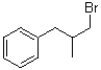
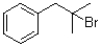
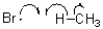
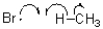
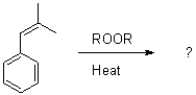
What is the major product of the reaction shown below? <strong>What is the major product of the reaction shown below?  </strong> A)   B)   C)   D)   <div style=padding-top: 35px>
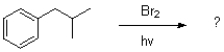
A) <strong>What is the major product of the reaction shown below?  </strong> A)   B)   C)   D)   <div style=padding-top: 35px>
B) <strong>What is the major product of the reaction shown below?  </strong> A)   B)   C)   D)   <div style=padding-top: 35px>
C) <strong>What is the major product of the reaction shown below?  </strong> A)   B)   C)   D)   <div style=padding-top: 35px>
D) <strong>What is the major product of the reaction shown below?  </strong> A)   B)   C)   D)   <div style=padding-top: 35px>
استخدم زر المسافة أو
up arrow
down arrow
لقلب البطاقة.
سؤال
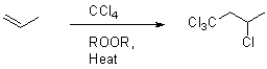
What reagent or condition is missing in the following reaction scheme? <strong>What reagent or condition is missing in the following reaction scheme?  </strong> A)ROOR B)H<sub>3</sub>O<sup>+</sup> C)Heat D)hv <div style=padding-top: 35px>
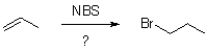
A)ROOR
B)H3O+
C)Heat
D)hv
سؤال
What accounts for the regioselectivity of radical halogen?

A)More substituted carbons have lower C-H bond disassociation energies than less substituted carbons.
B)More substituted carbons have higher C-H bond disassociation energies than less substituted carbons.
C)More substituted carbons have lower C-X bond disassociation energies than less substituted carbons,where X represents a halide.
D)More substituted carbons have higher C-X bond disassociation energies than less substituted carbons,where X represents a halide.
سؤال
What kind of polymerization reaction is shown below? <strong>What kind of polymerization reaction is shown below?  </strong> A)alkenyl B)polar C)addition D)condensation <div style=padding-top: 35px>
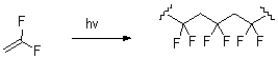
A)alkenyl
B)polar
C)addition
D)condensation
سؤال
Which of the following terms best describes radical bond breakage?

A)homolytic cleavage
B)heterolytic cleavage
C)polar cleavage
D)non-polar cleavage
سؤال
What monomer subunit would form the addition polymer shown below? <strong>What monomer subunit would form the addition polymer shown below?  </strong> A)   B)   C)   D)   <div style=padding-top: 35px>
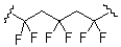
A) <strong>What monomer subunit would form the addition polymer shown below?  </strong> A)   B)   C)   D)   <div style=padding-top: 35px>
B) <strong>What monomer subunit would form the addition polymer shown below?  </strong> A)   B)   C)   D)   <div style=padding-top: 35px>
C) <strong>What monomer subunit would form the addition polymer shown below?  </strong> A)   B)   C)   D)   <div style=padding-top: 35px>
D) <strong>What monomer subunit would form the addition polymer shown below?  </strong> A)   B)   C)   D)   <div style=padding-top: 35px>
سؤال
Which of the following conditions would accomplish the transformation shown below? <strong>Which of the following conditions would accomplish the transformation shown below?  </strong> A)Zn/Hg,HCl B)Zn/Hg,NaOH C)1)LiAlH4,2)H<sub>3</sub>O<sup>+</sup> D)1)LiAlH4,2)NaOH <div style=padding-top: 35px>

A)Zn/Hg,HCl
B)Zn/Hg,NaOH
C)1)LiAlH4,2)H3O+
D)1)LiAlH4,2)NaOH
سؤال
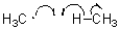
Which of the following represents a radical propagation step?

A) <strong>Which of the following represents a radical propagation step?</strong> A)   B)   C)   D)   <div style=padding-top: 35px>
B) <strong>Which of the following represents a radical propagation step?</strong> A)   B)   C)   D)   <div style=padding-top: 35px>
C) <strong>Which of the following represents a radical propagation step?</strong> A)   B)   C)   D)   <div style=padding-top: 35px>
D) <strong>Which of the following represents a radical propagation step?</strong> A)   B)   C)   D)   <div style=padding-top: 35px>
سؤال
What is the major product of the transformation shown below? <strong>What is the major product of the transformation shown below?  </strong> A)   B)   C)   D)   <div style=padding-top: 35px>
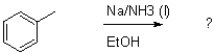
A) <strong>What is the major product of the transformation shown below?  </strong> A)   B)   C)   D)   <div style=padding-top: 35px>
B) <strong>What is the major product of the transformation shown below?  </strong> A)   B)   C)   D)   <div style=padding-top: 35px>
C) <strong>What is the major product of the transformation shown below?  </strong> A)   B)   C)   D)   <div style=padding-top: 35px>
D) <strong>What is the major product of the transformation shown below?  </strong> A)   B)   C)   D)   <div style=padding-top: 35px>
سؤال
Which of the following represents a radical termination step?

A) <strong>Which of the following represents a radical termination step?</strong> A)   B)   C)   D)   <div style=padding-top: 35px>
B) <strong>Which of the following represents a radical termination step?</strong> A)   B)   C)   D)   <div style=padding-top: 35px>
C) <strong>Which of the following represents a radical termination step?</strong> A)   B)   C)   D)   <div style=padding-top: 35px>
D) <strong>Which of the following represents a radical termination step?</strong> A)   B)   C)   D)   <div style=padding-top: 35px>
سؤال
Which of the following represents a radical initiation step?

A) <strong>Which of the following represents a radical initiation step?</strong> A)   B)   C)   D)   <div style=padding-top: 35px>
B) <strong>Which of the following represents a radical initiation step?</strong> A)   B)   C)   D)   <div style=padding-top: 35px>
C) <strong>Which of the following represents a radical initiation step?</strong> A)   B)   C)   D)   <div style=padding-top: 35px>
D) <strong>Which of the following represents a radical initiation step?</strong> A)   B)   C)   D)   <div style=padding-top: 35px>
سؤال
What is the major product of the transformation shown below? <strong>What is the major product of the transformation shown below?  </strong> A)   B)   C)   D)   <div style=padding-top: 35px>
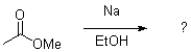
A) <strong>What is the major product of the transformation shown below?  </strong> A)   B)   C)   D)   <div style=padding-top: 35px>
B) <strong>What is the major product of the transformation shown below?  </strong> A)   B)   C)   D)   <div style=padding-top: 35px>
C) <strong>What is the major product of the transformation shown below?  </strong> A)   B)   C)   D)   <div style=padding-top: 35px>
D) <strong>What is the major product of the transformation shown below?  </strong> A)   B)   C)   D)   <div style=padding-top: 35px>
سؤال
What is the product of the reaction shown below? <strong>What is the product of the reaction shown below?  </strong> A)   B)   C)   D)   <div style=padding-top: 35px>
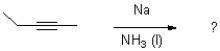
A) <strong>What is the product of the reaction shown below?  </strong> A)   B)   C)   D)   <div style=padding-top: 35px>
B) <strong>What is the product of the reaction shown below?  </strong> A)   B)   C)   D)   <div style=padding-top: 35px>
C) <strong>What is the product of the reaction shown below?  </strong> A)   B)   C)   D)   <div style=padding-top: 35px>
D) <strong>What is the product of the reaction shown below?  </strong> A)   B)   C)   D)   <div style=padding-top: 35px>
سؤال
What is the major product of the transformation shown below? <strong>What is the major product of the transformation shown below?  </strong> A)   B)   C)   D)   <div style=padding-top: 35px>
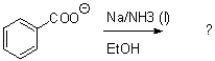
A) <strong>What is the major product of the transformation shown below?  </strong> A)   B)   C)   D)   <div style=padding-top: 35px>
B) <strong>What is the major product of the transformation shown below?  </strong> A)   B)   C)   D)   <div style=padding-top: 35px>
C) <strong>What is the major product of the transformation shown below?  </strong> A)   B)   C)   D)   <div style=padding-top: 35px>
D) <strong>What is the major product of the transformation shown below?  </strong> A)   B)   C)   D)   <div style=padding-top: 35px>
سؤال
Which of the following best describes a radical bromination reaction?

A)Markovnikov regiochemistry
B)anti-Markovnikov regiochemistry
C)Markovnikov stereochemistry
D)anti-Markovnikov stereochemistry
سؤال
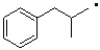
Which of the following represents the most stable radical?

A) <strong>Which of the following represents the most stable radical?</strong> A)   B)   C)   D)   <div style=padding-top: 35px>
B) <strong>Which of the following represents the most stable radical?</strong> A)   B)   C)   D)   <div style=padding-top: 35px>
C) <strong>Which of the following represents the most stable radical?</strong> A)   B)   C)   D)   <div style=padding-top: 35px>
D) <strong>Which of the following represents the most stable radical?</strong> A)   B)   C)   D)   <div style=padding-top: 35px>
سؤال
Which of the following represents the most stable radical?

A) <strong>Which of the following represents the most stable radical?</strong> A)   B)   C)   D)   <div style=padding-top: 35px>
B) <strong>Which of the following represents the most stable radical?</strong> A)   B)   C)   D)   <div style=padding-top: 35px>
C) <strong>Which of the following represents the most stable radical?</strong> A)   B)   C)   D)   <div style=padding-top: 35px>
D) <strong>Which of the following represents the most stable radical?</strong> A)   B)   C)   D)   <div style=padding-top: 35px>
سؤال
Which of the following represents the most stable radical?

A) <strong>Which of the following represents the most stable radical?</strong> A)   B)   C)   D)   <div style=padding-top: 35px>
B) <strong>Which of the following represents the most stable radical?</strong> A)   B)   C)   D)   <div style=padding-top: 35px>
C) <strong>Which of the following represents the most stable radical?</strong> A)   B)   C)   D)   <div style=padding-top: 35px>
D) <strong>Which of the following represents the most stable radical?</strong> A)   B)   C)   D)   <div style=padding-top: 35px>
سؤال
What is the major product of the reaction shown below? <strong>What is the major product of the reaction shown below?  </strong> A)   B)   C)   D)   <div style=padding-top: 35px>

A) <strong>What is the major product of the reaction shown below?  </strong> A)   B)   C)   D)   <div style=padding-top: 35px>
B) <strong>What is the major product of the reaction shown below?  </strong> A)   B)   C)   D)   <div style=padding-top: 35px>
C) <strong>What is the major product of the reaction shown below?  </strong> A)   B)   C)   D)   <div style=padding-top: 35px>
D) <strong>What is the major product of the reaction shown below?  </strong> A)   B)   C)   D)   <div style=padding-top: 35px>
سؤال
What is the role of ammonia in the mechanism of the Birch reduction shown below? <strong>What is the role of ammonia in the mechanism of the Birch reduction shown below?  </strong> A)stoichiometric acid B)stoichiometric base C)catalytic acid D)catalytic base <div style=padding-top: 35px>
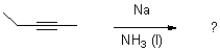
A)stoichiometric acid
B)stoichiometric base
C)catalytic acid
D)catalytic base
سؤال
Birch reduction of an alkyne results in a cis-alkene.
سؤال
Which of the following would produce the least stable radical?

A) <strong>Which of the following would produce the least stable radical?</strong> A)   B)   C)   D)   <div style=padding-top: 35px>
B) <strong>Which of the following would produce the least stable radical?</strong> A)   B)   C)   D)   <div style=padding-top: 35px>
C) <strong>Which of the following would produce the least stable radical?</strong> A)   B)   C)   D)   <div style=padding-top: 35px>
D) <strong>Which of the following would produce the least stable radical?</strong> A)   B)   C)   D)   <div style=padding-top: 35px>
سؤال
Which of the following hydrocarbons would produce the most stable radical?

A) <strong>Which of the following hydrocarbons would produce the most stable radical?</strong> A)   B)   C)   D)   <div style=padding-top: 35px>
B) <strong>Which of the following hydrocarbons would produce the most stable radical?</strong> A)   B)   C)   D)   <div style=padding-top: 35px>
C) <strong>Which of the following hydrocarbons would produce the most stable radical?</strong> A)   B)   C)   D)   <div style=padding-top: 35px>
D) <strong>Which of the following hydrocarbons would produce the most stable radical?</strong> A)   B)   C)   D)   <div style=padding-top: 35px>
سؤال
Which of the following reagents would achieve the transformation shown below? <strong>Which of the following reagents would achieve the transformation shown below?  </strong> A)Na/NH<sub>3</sub> (l) B)AlBN,HSnBu<sub>3</sub> C)Zn/Hg,HCl D)hv ROOR <div style=padding-top: 35px>
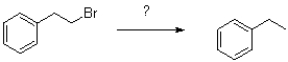
A)Na/NH3 (l)
B)AlBN,HSnBu3
C)Zn/Hg,HCl
D)hv ROOR
سؤال
What role do radicals play in a radical initiation reaction?

A)They are reactants only.
B)They are products only.
C)They are both reactants and products.
D)They are neither reactants nor products.
سؤال
Which of the following would produce the most stable radical?

A) <strong>Which of the following would produce the most stable radical?</strong> A)   B)   C)   D)   <div style=padding-top: 35px>
B) <strong>Which of the following would produce the most stable radical?</strong> A)   B)   C)   D)   <div style=padding-top: 35px>
C) <strong>Which of the following would produce the most stable radical?</strong> A)   B)   C)   D)   <div style=padding-top: 35px>
D) <strong>Which of the following would produce the most stable radical?</strong> A)   B)   C)   D)   <div style=padding-top: 35px>
سؤال
What monomer subunit would form the addition polymer shown below? <strong>What monomer subunit would form the addition polymer shown below?  </strong> A)   B)   C)   D)   <div style=padding-top: 35px>
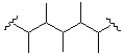
A) <strong>What monomer subunit would form the addition polymer shown below?  </strong> A)   B)   C)   D)   <div style=padding-top: 35px>
B) <strong>What monomer subunit would form the addition polymer shown below?  </strong> A)   B)   C)   D)   <div style=padding-top: 35px>
C) <strong>What monomer subunit would form the addition polymer shown below?  </strong> A)   B)   C)   D)   <div style=padding-top: 35px>
D) <strong>What monomer subunit would form the addition polymer shown below?  </strong> A)   B)   C)   D)   <div style=padding-top: 35px>
سؤال
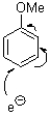
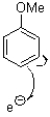
Which of the following represents the first mechanistic step of the aromatic reduction shown below? <strong>Which of the following represents the first mechanistic step of the aromatic reduction shown below?  </strong> A)   B)   C)   D)   <div style=padding-top: 35px>
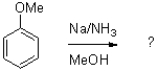
A) <strong>Which of the following represents the first mechanistic step of the aromatic reduction shown below?  </strong> A)   B)   C)   D)   <div style=padding-top: 35px>
B) <strong>Which of the following represents the first mechanistic step of the aromatic reduction shown below?  </strong> A)   B)   C)   D)   <div style=padding-top: 35px>
C) <strong>Which of the following represents the first mechanistic step of the aromatic reduction shown below?  </strong> A)   B)   C)   D)   <div style=padding-top: 35px>
D) <strong>Which of the following represents the first mechanistic step of the aromatic reduction shown below?  </strong> A)   B)   C)   D)   <div style=padding-top: 35px>
سؤال
Which of the following reagents would achieve the transformation shown below? <strong>Which of the following reagents would achieve the transformation shown below?  </strong> A)Na/NH<sub>3</sub> (l) B)AlBN,HSnBu<sub>3</sub> C)Zn/Hg,HCl D)hv,ROOR <div style=padding-top: 35px>
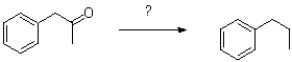
A)Na/NH3 (l)
B)AlBN,HSnBu3
C)Zn/Hg,HCl
D)hv,ROOR
سؤال
What monomer subunit would form the addition polymer shown below? <strong>What monomer subunit would form the addition polymer shown below?  </strong> A)   B)   C)   D)   <div style=padding-top: 35px>
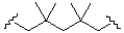
A) <strong>What monomer subunit would form the addition polymer shown below?  </strong> A)   B)   C)   D)   <div style=padding-top: 35px>
B) <strong>What monomer subunit would form the addition polymer shown below?  </strong> A)   B)   C)   D)   <div style=padding-top: 35px>
C) <strong>What monomer subunit would form the addition polymer shown below?  </strong> A)   B)   C)   D)   <div style=padding-top: 35px>
D) <strong>What monomer subunit would form the addition polymer shown below?  </strong> A)   B)   C)   D)   <div style=padding-top: 35px>
سؤال
Radical propagation reactions involve radical reactants and products.
سؤال
What role do radicals play in a radical termination reaction?

A)They are reactants only.
B)They are products only.
C)They are both reactants and products.
D)They are neither reactants nor products.
سؤال
Termination of a radical cycle involves a bond being formed from two radicals.
سؤال
What role do radicals play in a radical propagation reaction?

A)They are reactants only.
B)They are products only.
C)They are both reactants and products.
D)They are neither reactants nor products.
سؤال
Radical chlorination is more regioselective than radical bromination.
سؤال
Which of the following best describes the conditions required to generate radicals?

A)heat
B)UV light
C)rigorous mixing
D)both heat and UV light
سؤال
Tertiary radicals are less stable than secondary radicals.
سؤال
Which of the following best describes stabilization of radicals?

A)Radicals are stabilized by electron delocalization but not hyperconjugation.
B)Radicals are stabilized by hyperconjugation but not electron delocalization.
C)Radicals are stabilized by both electron delocalization and hyperconjugation.
D)Radicals are stabilized by neither electron delocalization nor hyperconjugation.
سؤال
A stochiometric amount of radical imitator is required for radical reactions.
سؤال
Adjacent electronegative atom with lone pair electrons help stabilize radicals.
سؤال
Electron-withdrawing groups affect the regiochemistry of the Birch reduction.
سؤال
The Birch reduction involves the transformation of aromatic species into a 1,3-cyclohexadienes.
سؤال
Radical bromination has _______________ regiochemistry
سؤال
In radical additions of HBr with alkenes,peroxides act as a radical initiator
سؤال
Secondary alkyl halides are formed preferentially over primary alkyl halides in radical halogenations.
سؤال
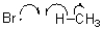
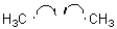
Fishhook arrows are representative of homolytic cleavage.
سؤال
Electrons solvated in ammonia have a characteristic blue colour.
سؤال
In the Birch reduction,magnesium metal is oxidized to produce solvated electrons.
سؤال
Carbon radicals are sp2 hybridized.
سؤال
Radicals are stabilized by delocalization.
سؤال
AIBN is used as a radical initiator in dehalogenation of alkyl halides.
سؤال
Reduction of an alkyne with dissolved sodium metal in ammonia results in a(n)_______________ geometry alkene
سؤال
A zinc/mercury alloy is used in the reduction of carbonyls.
سؤال
Electrons are solvated in aqueous solutions for their use in metal reduction reactions.
سؤال
The Clemmensen reduction results in the reduction of a ketone to an alcohol.
سؤال
Dissolving metal reduction of alkynes results in a trans alkene.
سؤال
Primary radicals are less stable than tertiary radicals.
سؤال
Radical addition of hydrogen bromide to an alkene leads to a Markovnikov product.
سؤال
NBS is used for allylic halogenation.
سؤال
Tributyl tin hydride is used as a radical initiator in dehalogenation of alkyl halides.
سؤال
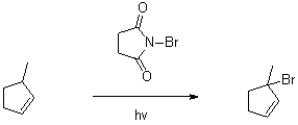
Show the mechanism for the three stages (initiation,propagation,and termination)of the following radical reaction. Show the mechanism for the three stages (initiation,propagation,and termination)of the following radical reaction.  <div style=padding-top: 35px>
سؤال
Fishhook arrows are involved in _______________ cleavage.
سؤال
In radical reactions,peroxides tend to act as _______________ .
سؤال
What is the major product of the reaction shown below? What is the major product of the reaction shown below?  <div style=padding-top: 35px>
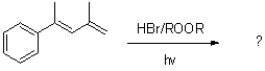
سؤال
In the radical addition of HBr to an alkene,a peroxide acts as a(n)_______________ .
سؤال
Draw the mechanism of the following dissolving metal transformation. Draw the mechanism of the following dissolving metal transformation.  <div style=padding-top: 35px>
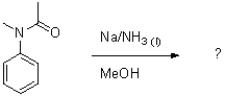
سؤال
What is the product of the following reaction? What is the product of the following reaction?  <div style=padding-top: 35px>
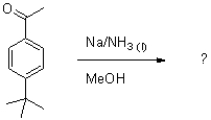
سؤال
_______________ cleavage represents a bond-breaking reaction where both electrons migrate to one atom.
سؤال
The formation of a sigma bond from two radicals represents a(n)_______________ step in a radical chain reaction.
سؤال
Predict the product of the following addition polymerization reaction. Predict the product of the following addition polymerization reaction.  <div style=padding-top: 35px>
سؤال
Propose a mechanism for the following transformation. Propose a mechanism for the following transformation.  <div style=padding-top: 35px>
سؤال
The Birch reduction involves transforming a(n)_______________ into a 1,4-cyclohexadiene.
سؤال
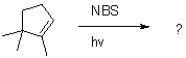
Draw the possible products of the reaction shown below.Indicate the major product. Draw the possible products of the reaction shown below.Indicate the major product.  <div style=padding-top: 35px>
سؤال
Solvated electrons in ammonia result in a deep _______________ colour.
سؤال
The three phases of a radical chain reaction are initiation,_______________ ,and termination.
سؤال
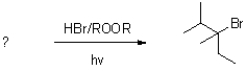
What reactant would form the product shown below? What reactant would form the product shown below?  <div style=padding-top: 35px>
فتح الحزمة
قم بالتسجيل لفتح البطاقات في هذه المجموعة!
Unlock Deck
Unlock Deck
1/76
auto play flashcards
العب
simple tutorial
ملء الشاشة (f)
exit full mode
Deck 19: Radicals
1
What is the major product of the reaction shown below? <strong>What is the major product of the reaction shown below?  </strong> A)   B)   C)   D)

A) <strong>What is the major product of the reaction shown below?  </strong> A)   B)   C)   D)
B) <strong>What is the major product of the reaction shown below?  </strong> A)   B)   C)   D)
C) <strong>What is the major product of the reaction shown below?  </strong> A)   B)   C)   D)
D) <strong>What is the major product of the reaction shown below?  </strong> A)   B)   C)   D)
2
What reagent or condition is missing in the following reaction scheme? <strong>What reagent or condition is missing in the following reaction scheme?  </strong> A)ROOR B)H<sub>3</sub>O<sup>+</sup> C)Heat D)hv

A)ROOR
B)H3O+
C)Heat
D)hv
hv
3
What accounts for the regioselectivity of radical halogen?

A)More substituted carbons have lower C-H bond disassociation energies than less substituted carbons.
B)More substituted carbons have higher C-H bond disassociation energies than less substituted carbons.
C)More substituted carbons have lower C-X bond disassociation energies than less substituted carbons,where X represents a halide.
D)More substituted carbons have higher C-X bond disassociation energies than less substituted carbons,where X represents a halide.
More substituted carbons have lower C-H bond disassociation energies than less substituted carbons.
4
What kind of polymerization reaction is shown below? <strong>What kind of polymerization reaction is shown below?  </strong> A)alkenyl B)polar C)addition D)condensation

A)alkenyl
B)polar
C)addition
D)condensation
فتح الحزمة
افتح القفل للوصول البطاقات البالغ عددها 76 في هذه المجموعة.
فتح الحزمة
k this deck
5
Which of the following terms best describes radical bond breakage?

A)homolytic cleavage
B)heterolytic cleavage
C)polar cleavage
D)non-polar cleavage
فتح الحزمة
افتح القفل للوصول البطاقات البالغ عددها 76 في هذه المجموعة.
فتح الحزمة
k this deck
6
What monomer subunit would form the addition polymer shown below? <strong>What monomer subunit would form the addition polymer shown below?  </strong> A)   B)   C)   D)

A) <strong>What monomer subunit would form the addition polymer shown below?  </strong> A)   B)   C)   D)
B) <strong>What monomer subunit would form the addition polymer shown below?  </strong> A)   B)   C)   D)
C) <strong>What monomer subunit would form the addition polymer shown below?  </strong> A)   B)   C)   D)
D) <strong>What monomer subunit would form the addition polymer shown below?  </strong> A)   B)   C)   D)
فتح الحزمة
افتح القفل للوصول البطاقات البالغ عددها 76 في هذه المجموعة.
فتح الحزمة
k this deck
7
Which of the following conditions would accomplish the transformation shown below? <strong>Which of the following conditions would accomplish the transformation shown below?  </strong> A)Zn/Hg,HCl B)Zn/Hg,NaOH C)1)LiAlH4,2)H<sub>3</sub>O<sup>+</sup> D)1)LiAlH4,2)NaOH

A)Zn/Hg,HCl
B)Zn/Hg,NaOH
C)1)LiAlH4,2)H3O+
D)1)LiAlH4,2)NaOH
فتح الحزمة
افتح القفل للوصول البطاقات البالغ عددها 76 في هذه المجموعة.

فتح الحزمة
k this deck
8
Which of the following represents a radical propagation step?

A) <strong>Which of the following represents a radical propagation step?</strong> A)   B)   C)   D)
B) <strong>Which of the following represents a radical propagation step?</strong> A)   B)   C)   D)
C) <strong>Which of the following represents a radical propagation step?</strong> A)   B)   C)   D)
D) <strong>Which of the following represents a radical propagation step?</strong> A)   B)   C)   D)
فتح الحزمة
افتح القفل للوصول البطاقات البالغ عددها 76 في هذه المجموعة.

فتح الحزمة
k this deck
9
What is the major product of the transformation shown below? <strong>What is the major product of the transformation shown below?  </strong> A)   B)   C)   D)

A) <strong>What is the major product of the transformation shown below?  </strong> A)   B)   C)   D)
B) <strong>What is the major product of the transformation shown below?  </strong> A)   B)   C)   D)
C) <strong>What is the major product of the transformation shown below?  </strong> A)   B)   C)   D)
D) <strong>What is the major product of the transformation shown below?  </strong> A)   B)   C)   D)
فتح الحزمة
افتح القفل للوصول البطاقات البالغ عددها 76 في هذه المجموعة.
فتح الحزمة
k this deck
10
Which of the following represents a radical termination step?

A) <strong>Which of the following represents a radical termination step?</strong> A)   B)   C)   D)
B) <strong>Which of the following represents a radical termination step?</strong> A)   B)   C)   D)
C) <strong>Which of the following represents a radical termination step?</strong> A)   B)   C)   D)
D) <strong>Which of the following represents a radical termination step?</strong> A)   B)   C)   D)
فتح الحزمة
افتح القفل للوصول البطاقات البالغ عددها 76 في هذه المجموعة.
فتح الحزمة
k this deck
11
Which of the following represents a radical initiation step?

A) <strong>Which of the following represents a radical initiation step?</strong> A)   B)   C)   D)
B) <strong>Which of the following represents a radical initiation step?</strong> A)   B)   C)   D)
C) <strong>Which of the following represents a radical initiation step?</strong> A)   B)   C)   D)
D) <strong>Which of the following represents a radical initiation step?</strong> A)   B)   C)   D)
فتح الحزمة
افتح القفل للوصول البطاقات البالغ عددها 76 في هذه المجموعة.
فتح الحزمة
k this deck
12
What is the major product of the transformation shown below? <strong>What is the major product of the transformation shown below?  </strong> A)   B)   C)   D)

A) <strong>What is the major product of the transformation shown below?  </strong> A)   B)   C)   D)
B) <strong>What is the major product of the transformation shown below?  </strong> A)   B)   C)   D)
C) <strong>What is the major product of the transformation shown below?  </strong> A)   B)   C)   D)
D) <strong>What is the major product of the transformation shown below?  </strong> A)   B)   C)   D)
فتح الحزمة
افتح القفل للوصول البطاقات البالغ عددها 76 في هذه المجموعة.
فتح الحزمة
k this deck
13
What is the product of the reaction shown below? <strong>What is the product of the reaction shown below?  </strong> A)   B)   C)   D)

A) <strong>What is the product of the reaction shown below?  </strong> A)   B)   C)   D)
B) <strong>What is the product of the reaction shown below?  </strong> A)   B)   C)   D)
C) <strong>What is the product of the reaction shown below?  </strong> A)   B)   C)   D)
D) <strong>What is the product of the reaction shown below?  </strong> A)   B)   C)   D)
فتح الحزمة
افتح القفل للوصول البطاقات البالغ عددها 76 في هذه المجموعة.
فتح الحزمة
k this deck
14
What is the major product of the transformation shown below? <strong>What is the major product of the transformation shown below?  </strong> A)   B)   C)   D)

A) <strong>What is the major product of the transformation shown below?  </strong> A)   B)   C)   D)
B) <strong>What is the major product of the transformation shown below?  </strong> A)   B)   C)   D)
C) <strong>What is the major product of the transformation shown below?  </strong> A)   B)   C)   D)
D) <strong>What is the major product of the transformation shown below?  </strong> A)   B)   C)   D)
فتح الحزمة
افتح القفل للوصول البطاقات البالغ عددها 76 في هذه المجموعة.
فتح الحزمة
k this deck
15
Which of the following best describes a radical bromination reaction?

A)Markovnikov regiochemistry
B)anti-Markovnikov regiochemistry
C)Markovnikov stereochemistry
D)anti-Markovnikov stereochemistry
فتح الحزمة
افتح القفل للوصول البطاقات البالغ عددها 76 في هذه المجموعة.
فتح الحزمة
k this deck
16
Which of the following represents the most stable radical?

A) <strong>Which of the following represents the most stable radical?</strong> A)   B)   C)   D)
B) <strong>Which of the following represents the most stable radical?</strong> A)   B)   C)   D)
C) <strong>Which of the following represents the most stable radical?</strong> A)   B)   C)   D)
D) <strong>Which of the following represents the most stable radical?</strong> A)   B)   C)   D)
فتح الحزمة
افتح القفل للوصول البطاقات البالغ عددها 76 في هذه المجموعة.
فتح الحزمة
k this deck
17
Which of the following represents the most stable radical?

A) <strong>Which of the following represents the most stable radical?</strong> A)   B)   C)   D)
B) <strong>Which of the following represents the most stable radical?</strong> A)   B)   C)   D)
C) <strong>Which of the following represents the most stable radical?</strong> A)   B)   C)   D)
D) <strong>Which of the following represents the most stable radical?</strong> A)   B)   C)   D)
فتح الحزمة
افتح القفل للوصول البطاقات البالغ عددها 76 في هذه المجموعة.
فتح الحزمة
k this deck
18
Which of the following represents the most stable radical?

A) <strong>Which of the following represents the most stable radical?</strong> A)   B)   C)   D)
B) <strong>Which of the following represents the most stable radical?</strong> A)   B)   C)   D)
C) <strong>Which of the following represents the most stable radical?</strong> A)   B)   C)   D)
D) <strong>Which of the following represents the most stable radical?</strong> A)   B)   C)   D)
فتح الحزمة
افتح القفل للوصول البطاقات البالغ عددها 76 في هذه المجموعة.
فتح الحزمة
k this deck
19
What is the major product of the reaction shown below? <strong>What is the major product of the reaction shown below?  </strong> A)   B)   C)   D)

A) <strong>What is the major product of the reaction shown below?  </strong> A)   B)   C)   D)
B) <strong>What is the major product of the reaction shown below?  </strong> A)   B)   C)   D)
C) <strong>What is the major product of the reaction shown below?  </strong> A)   B)   C)   D)
D) <strong>What is the major product of the reaction shown below?  </strong> A)   B)   C)   D)
فتح الحزمة
افتح القفل للوصول البطاقات البالغ عددها 76 في هذه المجموعة.
فتح الحزمة
k this deck
20
What is the role of ammonia in the mechanism of the Birch reduction shown below? <strong>What is the role of ammonia in the mechanism of the Birch reduction shown below?  </strong> A)stoichiometric acid B)stoichiometric base C)catalytic acid D)catalytic base

A)stoichiometric acid
B)stoichiometric base
C)catalytic acid
D)catalytic base
فتح الحزمة
افتح القفل للوصول البطاقات البالغ عددها 76 في هذه المجموعة.
فتح الحزمة
k this deck
21
Birch reduction of an alkyne results in a cis-alkene.
فتح الحزمة
افتح القفل للوصول البطاقات البالغ عددها 76 في هذه المجموعة.
فتح الحزمة
k this deck
22
Which of the following would produce the least stable radical?

A) <strong>Which of the following would produce the least stable radical?</strong> A)   B)   C)   D)
B) <strong>Which of the following would produce the least stable radical?</strong> A)   B)   C)   D)
C) <strong>Which of the following would produce the least stable radical?</strong> A)   B)   C)   D)
D) <strong>Which of the following would produce the least stable radical?</strong> A)   B)   C)   D)
فتح الحزمة
افتح القفل للوصول البطاقات البالغ عددها 76 في هذه المجموعة.
فتح الحزمة
k this deck
23
Which of the following hydrocarbons would produce the most stable radical?

A) <strong>Which of the following hydrocarbons would produce the most stable radical?</strong> A)   B)   C)   D)
B) <strong>Which of the following hydrocarbons would produce the most stable radical?</strong> A)   B)   C)   D)
C) <strong>Which of the following hydrocarbons would produce the most stable radical?</strong> A)   B)   C)   D)
D) <strong>Which of the following hydrocarbons would produce the most stable radical?</strong> A)   B)   C)   D)
فتح الحزمة
افتح القفل للوصول البطاقات البالغ عددها 76 في هذه المجموعة.
فتح الحزمة
k this deck
24
Which of the following reagents would achieve the transformation shown below? <strong>Which of the following reagents would achieve the transformation shown below?  </strong> A)Na/NH<sub>3</sub> (l) B)AlBN,HSnBu<sub>3</sub> C)Zn/Hg,HCl D)hv ROOR

A)Na/NH3 (l)
B)AlBN,HSnBu3
C)Zn/Hg,HCl
D)hv ROOR
فتح الحزمة
افتح القفل للوصول البطاقات البالغ عددها 76 في هذه المجموعة.
فتح الحزمة
k this deck
25
What role do radicals play in a radical initiation reaction?

A)They are reactants only.
B)They are products only.
C)They are both reactants and products.
D)They are neither reactants nor products.
فتح الحزمة
افتح القفل للوصول البطاقات البالغ عددها 76 في هذه المجموعة.
فتح الحزمة
k this deck
26
Which of the following would produce the most stable radical?

A) <strong>Which of the following would produce the most stable radical?</strong> A)   B)   C)   D)
B) <strong>Which of the following would produce the most stable radical?</strong> A)   B)   C)   D)
C) <strong>Which of the following would produce the most stable radical?</strong> A)   B)   C)   D)
D) <strong>Which of the following would produce the most stable radical?</strong> A)   B)   C)   D)
فتح الحزمة
افتح القفل للوصول البطاقات البالغ عددها 76 في هذه المجموعة.
فتح الحزمة
k this deck
27
What monomer subunit would form the addition polymer shown below? <strong>What monomer subunit would form the addition polymer shown below?  </strong> A)   B)   C)   D)

A) <strong>What monomer subunit would form the addition polymer shown below?  </strong> A)   B)   C)   D)
B) <strong>What monomer subunit would form the addition polymer shown below?  </strong> A)   B)   C)   D)
C) <strong>What monomer subunit would form the addition polymer shown below?  </strong> A)   B)   C)   D)
D) <strong>What monomer subunit would form the addition polymer shown below?  </strong> A)   B)   C)   D)
فتح الحزمة
افتح القفل للوصول البطاقات البالغ عددها 76 في هذه المجموعة.
فتح الحزمة
k this deck
28
Which of the following represents the first mechanistic step of the aromatic reduction shown below? <strong>Which of the following represents the first mechanistic step of the aromatic reduction shown below?  </strong> A)   B)   C)   D)

A) <strong>Which of the following represents the first mechanistic step of the aromatic reduction shown below?  </strong> A)   B)   C)   D)
B) <strong>Which of the following represents the first mechanistic step of the aromatic reduction shown below?  </strong> A)   B)   C)   D)
C) <strong>Which of the following represents the first mechanistic step of the aromatic reduction shown below?  </strong> A)   B)   C)   D)
D) <strong>Which of the following represents the first mechanistic step of the aromatic reduction shown below?  </strong> A)   B)   C)   D)
فتح الحزمة
افتح القفل للوصول البطاقات البالغ عددها 76 في هذه المجموعة.
فتح الحزمة
k this deck
29
Which of the following reagents would achieve the transformation shown below? <strong>Which of the following reagents would achieve the transformation shown below?  </strong> A)Na/NH<sub>3</sub> (l) B)AlBN,HSnBu<sub>3</sub> C)Zn/Hg,HCl D)hv,ROOR

A)Na/NH3 (l)
B)AlBN,HSnBu3
C)Zn/Hg,HCl
D)hv,ROOR
فتح الحزمة
افتح القفل للوصول البطاقات البالغ عددها 76 في هذه المجموعة.
فتح الحزمة
k this deck
30
What monomer subunit would form the addition polymer shown below? <strong>What monomer subunit would form the addition polymer shown below?  </strong> A)   B)   C)   D)

A) <strong>What monomer subunit would form the addition polymer shown below?  </strong> A)   B)   C)   D)
B) <strong>What monomer subunit would form the addition polymer shown below?  </strong> A)   B)   C)   D)
C) <strong>What monomer subunit would form the addition polymer shown below?  </strong> A)   B)   C)   D)
D) <strong>What monomer subunit would form the addition polymer shown below?  </strong> A)   B)   C)   D)
فتح الحزمة
افتح القفل للوصول البطاقات البالغ عددها 76 في هذه المجموعة.
فتح الحزمة
k this deck
31
Radical propagation reactions involve radical reactants and products.
فتح الحزمة
افتح القفل للوصول البطاقات البالغ عددها 76 في هذه المجموعة.
فتح الحزمة
k this deck
32
What role do radicals play in a radical termination reaction?

A)They are reactants only.
B)They are products only.
C)They are both reactants and products.
D)They are neither reactants nor products.
فتح الحزمة
افتح القفل للوصول البطاقات البالغ عددها 76 في هذه المجموعة.
فتح الحزمة
k this deck
33
Termination of a radical cycle involves a bond being formed from two radicals.
فتح الحزمة
افتح القفل للوصول البطاقات البالغ عددها 76 في هذه المجموعة.
فتح الحزمة
k this deck
34
What role do radicals play in a radical propagation reaction?

A)They are reactants only.
B)They are products only.
C)They are both reactants and products.
D)They are neither reactants nor products.
فتح الحزمة
افتح القفل للوصول البطاقات البالغ عددها 76 في هذه المجموعة.
فتح الحزمة
k this deck
35
Radical chlorination is more regioselective than radical bromination.
فتح الحزمة
افتح القفل للوصول البطاقات البالغ عددها 76 في هذه المجموعة.
فتح الحزمة
k this deck
36
Which of the following best describes the conditions required to generate radicals?

A)heat
B)UV light
C)rigorous mixing
D)both heat and UV light
فتح الحزمة
افتح القفل للوصول البطاقات البالغ عددها 76 في هذه المجموعة.
فتح الحزمة
k this deck
37
Tertiary radicals are less stable than secondary radicals.
فتح الحزمة
افتح القفل للوصول البطاقات البالغ عددها 76 في هذه المجموعة.
فتح الحزمة
k this deck
38
Which of the following best describes stabilization of radicals?

A)Radicals are stabilized by electron delocalization but not hyperconjugation.
B)Radicals are stabilized by hyperconjugation but not electron delocalization.
C)Radicals are stabilized by both electron delocalization and hyperconjugation.
D)Radicals are stabilized by neither electron delocalization nor hyperconjugation.
فتح الحزمة
افتح القفل للوصول البطاقات البالغ عددها 76 في هذه المجموعة.
فتح الحزمة
k this deck
39
A stochiometric amount of radical imitator is required for radical reactions.
فتح الحزمة
افتح القفل للوصول البطاقات البالغ عددها 76 في هذه المجموعة.
فتح الحزمة
k this deck
40
Adjacent electronegative atom with lone pair electrons help stabilize radicals.
فتح الحزمة
افتح القفل للوصول البطاقات البالغ عددها 76 في هذه المجموعة.
فتح الحزمة
k this deck
41
Electron-withdrawing groups affect the regiochemistry of the Birch reduction.
فتح الحزمة
افتح القفل للوصول البطاقات البالغ عددها 76 في هذه المجموعة.
فتح الحزمة
k this deck
42
The Birch reduction involves the transformation of aromatic species into a 1,3-cyclohexadienes.
فتح الحزمة
افتح القفل للوصول البطاقات البالغ عددها 76 في هذه المجموعة.
فتح الحزمة
k this deck
43
Radical bromination has _______________ regiochemistry
فتح الحزمة
افتح القفل للوصول البطاقات البالغ عددها 76 في هذه المجموعة.
فتح الحزمة
k this deck
44
In radical additions of HBr with alkenes,peroxides act as a radical initiator
فتح الحزمة
افتح القفل للوصول البطاقات البالغ عددها 76 في هذه المجموعة.
فتح الحزمة
k this deck
45
Secondary alkyl halides are formed preferentially over primary alkyl halides in radical halogenations.
فتح الحزمة
افتح القفل للوصول البطاقات البالغ عددها 76 في هذه المجموعة.
فتح الحزمة
k this deck
46
Fishhook arrows are representative of homolytic cleavage.
فتح الحزمة
افتح القفل للوصول البطاقات البالغ عددها 76 في هذه المجموعة.
فتح الحزمة
k this deck
47
Electrons solvated in ammonia have a characteristic blue colour.
فتح الحزمة
افتح القفل للوصول البطاقات البالغ عددها 76 في هذه المجموعة.
فتح الحزمة
k this deck
48
In the Birch reduction,magnesium metal is oxidized to produce solvated electrons.
فتح الحزمة
افتح القفل للوصول البطاقات البالغ عددها 76 في هذه المجموعة.
فتح الحزمة
k this deck
49
Carbon radicals are sp2 hybridized.
فتح الحزمة
افتح القفل للوصول البطاقات البالغ عددها 76 في هذه المجموعة.
فتح الحزمة
k this deck
50
Radicals are stabilized by delocalization.
فتح الحزمة
افتح القفل للوصول البطاقات البالغ عددها 76 في هذه المجموعة.
فتح الحزمة
k this deck
51
AIBN is used as a radical initiator in dehalogenation of alkyl halides.
فتح الحزمة
افتح القفل للوصول البطاقات البالغ عددها 76 في هذه المجموعة.
فتح الحزمة
k this deck
52
Reduction of an alkyne with dissolved sodium metal in ammonia results in a(n)_______________ geometry alkene
فتح الحزمة
افتح القفل للوصول البطاقات البالغ عددها 76 في هذه المجموعة.
فتح الحزمة
k this deck
53
A zinc/mercury alloy is used in the reduction of carbonyls.
فتح الحزمة
افتح القفل للوصول البطاقات البالغ عددها 76 في هذه المجموعة.
فتح الحزمة
k this deck
54
Electrons are solvated in aqueous solutions for their use in metal reduction reactions.
فتح الحزمة
افتح القفل للوصول البطاقات البالغ عددها 76 في هذه المجموعة.
فتح الحزمة
k this deck
55
The Clemmensen reduction results in the reduction of a ketone to an alcohol.
فتح الحزمة
افتح القفل للوصول البطاقات البالغ عددها 76 في هذه المجموعة.
فتح الحزمة
k this deck
56
Dissolving metal reduction of alkynes results in a trans alkene.
فتح الحزمة
افتح القفل للوصول البطاقات البالغ عددها 76 في هذه المجموعة.
فتح الحزمة
k this deck
57
Primary radicals are less stable than tertiary radicals.
فتح الحزمة
افتح القفل للوصول البطاقات البالغ عددها 76 في هذه المجموعة.
فتح الحزمة
k this deck
58
Radical addition of hydrogen bromide to an alkene leads to a Markovnikov product.
فتح الحزمة
افتح القفل للوصول البطاقات البالغ عددها 76 في هذه المجموعة.
فتح الحزمة
k this deck
59
NBS is used for allylic halogenation.
فتح الحزمة
افتح القفل للوصول البطاقات البالغ عددها 76 في هذه المجموعة.
فتح الحزمة
k this deck
60
Tributyl tin hydride is used as a radical initiator in dehalogenation of alkyl halides.
فتح الحزمة
افتح القفل للوصول البطاقات البالغ عددها 76 في هذه المجموعة.
فتح الحزمة
k this deck
61
Show the mechanism for the three stages (initiation,propagation,and termination)of the following radical reaction. Show the mechanism for the three stages (initiation,propagation,and termination)of the following radical reaction.
فتح الحزمة
افتح القفل للوصول البطاقات البالغ عددها 76 في هذه المجموعة.
فتح الحزمة
k this deck
62
Fishhook arrows are involved in _______________ cleavage.
فتح الحزمة
افتح القفل للوصول البطاقات البالغ عددها 76 في هذه المجموعة.
فتح الحزمة
k this deck
63
In radical reactions,peroxides tend to act as _______________ .
فتح الحزمة
افتح القفل للوصول البطاقات البالغ عددها 76 في هذه المجموعة.
فتح الحزمة
k this deck
64
What is the major product of the reaction shown below? What is the major product of the reaction shown below?
فتح الحزمة
افتح القفل للوصول البطاقات البالغ عددها 76 في هذه المجموعة.
فتح الحزمة
k this deck
65
In the radical addition of HBr to an alkene,a peroxide acts as a(n)_______________ .
فتح الحزمة
افتح القفل للوصول البطاقات البالغ عددها 76 في هذه المجموعة.
فتح الحزمة
k this deck
66
Draw the mechanism of the following dissolving metal transformation. Draw the mechanism of the following dissolving metal transformation.
فتح الحزمة
افتح القفل للوصول البطاقات البالغ عددها 76 في هذه المجموعة.
فتح الحزمة
k this deck
67
What is the product of the following reaction? What is the product of the following reaction?
فتح الحزمة
افتح القفل للوصول البطاقات البالغ عددها 76 في هذه المجموعة.
فتح الحزمة
k this deck
68
_______________ cleavage represents a bond-breaking reaction where both electrons migrate to one atom.
فتح الحزمة
افتح القفل للوصول البطاقات البالغ عددها 76 في هذه المجموعة.
فتح الحزمة
k this deck
69
The formation of a sigma bond from two radicals represents a(n)_______________ step in a radical chain reaction.
فتح الحزمة
افتح القفل للوصول البطاقات البالغ عددها 76 في هذه المجموعة.
فتح الحزمة
k this deck
70
Predict the product of the following addition polymerization reaction. Predict the product of the following addition polymerization reaction.
فتح الحزمة
افتح القفل للوصول البطاقات البالغ عددها 76 في هذه المجموعة.
فتح الحزمة
k this deck
71
Propose a mechanism for the following transformation. Propose a mechanism for the following transformation.
فتح الحزمة
افتح القفل للوصول البطاقات البالغ عددها 76 في هذه المجموعة.
فتح الحزمة
k this deck
72
The Birch reduction involves transforming a(n)_______________ into a 1,4-cyclohexadiene.
فتح الحزمة
افتح القفل للوصول البطاقات البالغ عددها 76 في هذه المجموعة.
فتح الحزمة
k this deck
73
Draw the possible products of the reaction shown below.Indicate the major product. Draw the possible products of the reaction shown below.Indicate the major product.
فتح الحزمة
افتح القفل للوصول البطاقات البالغ عددها 76 في هذه المجموعة.
فتح الحزمة
k this deck
74
Solvated electrons in ammonia result in a deep _______________ colour.
فتح الحزمة
افتح القفل للوصول البطاقات البالغ عددها 76 في هذه المجموعة.
فتح الحزمة
k this deck
75
The three phases of a radical chain reaction are initiation,_______________ ,and termination.
فتح الحزمة
افتح القفل للوصول البطاقات البالغ عددها 76 في هذه المجموعة.
فتح الحزمة
k this deck
76
What reactant would form the product shown below? What reactant would form the product shown below?
فتح الحزمة
افتح القفل للوصول البطاقات البالغ عددها 76 في هذه المجموعة.
فتح الحزمة
k this deck
locked card icon
فتح الحزمة
افتح القفل للوصول البطاقات البالغ عددها 76 في هذه المجموعة.