Deck 9: Demand for Goods and Supply of Labor and Capital

ملء الشاشة (f)
exit full mode
سؤال
Holding all prices fixed, income-demand curves relate changes in exogenous income to changes in the quantity of a good demanded.
استخدم زر المسافة أو
up arrow
down arrow
لقلب البطاقة.
سؤال
Since income and substitution effects point in the same direction for normal goods, the leisure demand curve will be shallower if leisure is a normal good than if leisure is an inferior good.
سؤال
If future consumption is a normal good, the interest rate/borrowing relationship cannot be upward sloping.
سؤال
The empirically observed backward-bending labor supply curve cannot arise from homothetic tastes.
سؤال
Leisure being an inferior good is necessary but not sufficient for labor supply to slope up.
سؤال
A downward sloping income-demand curve indicates that the good is a necessity.
سؤال
Assuming the same sized substitution effect, normal goods have steeper cross-price demand curves than inferior goods.
سؤال
Saving is equivalent to withdrawing financial capital from the market.
سؤال
Leisure being a normal good is neither necessary nor sufficient for labor supply to slope up.
سؤال
If a good is quasilinear, its own-price demand curve is vertical.
سؤال
The cross-price demand curve for Cobb-Douglas tastes is perfectly vertical.
سؤال
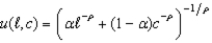
Suppose that utility over consumption and leisure takes the constant elasticity of substitution form Suppose that utility over consumption and leisure takes the constant elasticity of substitution form   .If   falls between 0 and -1, then the labor supply curve is backward bending.<div style=padding-top: 35px> .If Suppose that utility over consumption and leisure takes the constant elasticity of substitution form   .If   falls between 0 and -1, then the labor supply curve is backward bending.<div style=padding-top: 35px> falls between 0 and -1, then the labor supply curve is backward bending.
سؤال
If tastes are homothetic in leisure and consumption, labor supply curves slope up.
سؤال
For the same sized substitution effect, own-price demand curves for inferior goods are steeper than own price demand curves for normal goods.
سؤال
An increase in the price of good 2 will cause the demand curve for good 1 to shift out.
سؤال
Suppose your tastes over consumption and leisure have constant elasticity of substitution.I observe that, when your wage went up, you continued to work the same number of hours.From this, I can conclude that you have Cobb-Douglas tastes.
سؤال
Unless a good is a Giffen good, the demand curve shifts to the right as income rises.
سؤال
When tastes are quasilinear in leisure, the labor supply curve is vertical.
سؤال
In order for someone to switch from borrowing to saving when the interest rate falls, it must be that current consumption is an inferior good.
سؤال
Goods like exclusive designer clothes carry with them prestige value linked to their price.As a result, some people demand more of such goods as the price increases.For those people, such goods are Giffen goods.
سؤال
Suppose your utility function is given by Suppose your utility function is given by   .What is your demand function for   ?<div style=padding-top: 35px> .What is your demand function for Suppose your utility function is given by   .What is your demand function for   ?<div style=padding-top: 35px> ?

سؤال
Suppose your tastes can be represented by the utility function <strong>Suppose your tastes can be represented by the utility function   .Your demand for   is</strong> A)   . B)   . C)   D)   E)None of the above <div style=padding-top: 35px> .Your demand for <strong>Suppose your tastes can be represented by the utility function   .Your demand for   is</strong> A)   . B)   . C)   D)   E)None of the above <div style=padding-top: 35px> is
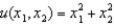
A) <strong>Suppose your tastes can be represented by the utility function   .Your demand for   is</strong> A)   . B)   . C)   D)   E)None of the above <div style=padding-top: 35px> .
B) <strong>Suppose your tastes can be represented by the utility function   .Your demand for   is</strong> A)   . B)   . C)   D)   E)None of the above <div style=padding-top: 35px> .
C) <strong>Suppose your tastes can be represented by the utility function   .Your demand for   is</strong> A)   . B)   . C)   D)   E)None of the above <div style=padding-top: 35px>
D) <strong>Suppose your tastes can be represented by the utility function   .Your demand for   is</strong> A)   . B)   . C)   D)   E)None of the above <div style=padding-top: 35px>
E)None of the above
سؤال
Consider a consumer who consumes only Consider a consumer who consumes only   and   .The price of   falls. a.On a graph with   on the horizontal and   on the vertical axis, illustrate the change in this consumer's budget constraint assuming exogenous income I. b.Illustrate income and substitution effects for   assuming that both goods are normal. c.Can you tell whether the cross-price demand curve for   is upward or downward sloping? d.Suppose   is leisure hours and   is a composite consumption good.Consider an increase in the wage assuming a fixed endowment of leisure (and no exogenous source of income).How is your graph similar and how is it different from what you graphed in (a) through (c)? e.Is the leisure-demand curve a cross-price demand curve? Why or why not?<div style=padding-top: 35px> and Consider a consumer who consumes only   and   .The price of   falls. a.On a graph with   on the horizontal and   on the vertical axis, illustrate the change in this consumer's budget constraint assuming exogenous income I. b.Illustrate income and substitution effects for   assuming that both goods are normal. c.Can you tell whether the cross-price demand curve for   is upward or downward sloping? d.Suppose   is leisure hours and   is a composite consumption good.Consider an increase in the wage assuming a fixed endowment of leisure (and no exogenous source of income).How is your graph similar and how is it different from what you graphed in (a) through (c)? e.Is the leisure-demand curve a cross-price demand curve? Why or why not?<div style=padding-top: 35px> .The price of Consider a consumer who consumes only   and   .The price of   falls. a.On a graph with   on the horizontal and   on the vertical axis, illustrate the change in this consumer's budget constraint assuming exogenous income I. b.Illustrate income and substitution effects for   assuming that both goods are normal. c.Can you tell whether the cross-price demand curve for   is upward or downward sloping? d.Suppose   is leisure hours and   is a composite consumption good.Consider an increase in the wage assuming a fixed endowment of leisure (and no exogenous source of income).How is your graph similar and how is it different from what you graphed in (a) through (c)? e.Is the leisure-demand curve a cross-price demand curve? Why or why not?<div style=padding-top: 35px> falls.
a.On a graph with Consider a consumer who consumes only   and   .The price of   falls. a.On a graph with   on the horizontal and   on the vertical axis, illustrate the change in this consumer's budget constraint assuming exogenous income I. b.Illustrate income and substitution effects for   assuming that both goods are normal. c.Can you tell whether the cross-price demand curve for   is upward or downward sloping? d.Suppose   is leisure hours and   is a composite consumption good.Consider an increase in the wage assuming a fixed endowment of leisure (and no exogenous source of income).How is your graph similar and how is it different from what you graphed in (a) through (c)? e.Is the leisure-demand curve a cross-price demand curve? Why or why not?<div style=padding-top: 35px> on the horizontal and Consider a consumer who consumes only   and   .The price of   falls. a.On a graph with   on the horizontal and   on the vertical axis, illustrate the change in this consumer's budget constraint assuming exogenous income I. b.Illustrate income and substitution effects for   assuming that both goods are normal. c.Can you tell whether the cross-price demand curve for   is upward or downward sloping? d.Suppose   is leisure hours and   is a composite consumption good.Consider an increase in the wage assuming a fixed endowment of leisure (and no exogenous source of income).How is your graph similar and how is it different from what you graphed in (a) through (c)? e.Is the leisure-demand curve a cross-price demand curve? Why or why not?<div style=padding-top: 35px> on the vertical axis, illustrate the change in this consumer's budget constraint assuming exogenous income I.
b.Illustrate income and substitution effects for Consider a consumer who consumes only   and   .The price of   falls. a.On a graph with   on the horizontal and   on the vertical axis, illustrate the change in this consumer's budget constraint assuming exogenous income I. b.Illustrate income and substitution effects for   assuming that both goods are normal. c.Can you tell whether the cross-price demand curve for   is upward or downward sloping? d.Suppose   is leisure hours and   is a composite consumption good.Consider an increase in the wage assuming a fixed endowment of leisure (and no exogenous source of income).How is your graph similar and how is it different from what you graphed in (a) through (c)? e.Is the leisure-demand curve a cross-price demand curve? Why or why not?<div style=padding-top: 35px> assuming that both goods are normal.
c.Can you tell whether the cross-price demand curve for Consider a consumer who consumes only   and   .The price of   falls. a.On a graph with   on the horizontal and   on the vertical axis, illustrate the change in this consumer's budget constraint assuming exogenous income I. b.Illustrate income and substitution effects for   assuming that both goods are normal. c.Can you tell whether the cross-price demand curve for   is upward or downward sloping? d.Suppose   is leisure hours and   is a composite consumption good.Consider an increase in the wage assuming a fixed endowment of leisure (and no exogenous source of income).How is your graph similar and how is it different from what you graphed in (a) through (c)? e.Is the leisure-demand curve a cross-price demand curve? Why or why not?<div style=padding-top: 35px> is upward or downward sloping?
d.Suppose Consider a consumer who consumes only   and   .The price of   falls. a.On a graph with   on the horizontal and   on the vertical axis, illustrate the change in this consumer's budget constraint assuming exogenous income I. b.Illustrate income and substitution effects for   assuming that both goods are normal. c.Can you tell whether the cross-price demand curve for   is upward or downward sloping? d.Suppose   is leisure hours and   is a composite consumption good.Consider an increase in the wage assuming a fixed endowment of leisure (and no exogenous source of income).How is your graph similar and how is it different from what you graphed in (a) through (c)? e.Is the leisure-demand curve a cross-price demand curve? Why or why not?<div style=padding-top: 35px> is leisure hours and Consider a consumer who consumes only   and   .The price of   falls. a.On a graph with   on the horizontal and   on the vertical axis, illustrate the change in this consumer's budget constraint assuming exogenous income I. b.Illustrate income and substitution effects for   assuming that both goods are normal. c.Can you tell whether the cross-price demand curve for   is upward or downward sloping? d.Suppose   is leisure hours and   is a composite consumption good.Consider an increase in the wage assuming a fixed endowment of leisure (and no exogenous source of income).How is your graph similar and how is it different from what you graphed in (a) through (c)? e.Is the leisure-demand curve a cross-price demand curve? Why or why not?<div style=padding-top: 35px> is a composite consumption good.Consider an increase in the wage assuming a fixed endowment of leisure (and no exogenous source of income).How is your graph similar and how is it different from what you graphed in (a) through (c)?
e.Is the leisure-demand curve a cross-price demand curve? Why or why not?
سؤال
Suppose your tastes can be represented by the utility function <strong>Suppose your tastes can be represented by the utility function   .Your demand function for   is</strong> A)   . B)   . C)   D)   <div style=padding-top: 35px> .Your demand function for <strong>Suppose your tastes can be represented by the utility function   .Your demand function for   is</strong> A)   . B)   . C)   D)   <div style=padding-top: 35px> is

A) <strong>Suppose your tastes can be represented by the utility function   .Your demand function for   is</strong> A)   . B)   . C)   D)   <div style=padding-top: 35px> .
B) <strong>Suppose your tastes can be represented by the utility function   .Your demand function for   is</strong> A)   . B)   . C)   D)   <div style=padding-top: 35px> .
C) <strong>Suppose your tastes can be represented by the utility function   .Your demand function for   is</strong> A)   . B)   . C)   D)   <div style=padding-top: 35px>
D) <strong>Suppose your tastes can be represented by the utility function   .Your demand function for   is</strong> A)   . B)   . C)   D)   <div style=padding-top: 35px>
فتح الحزمة
قم بالتسجيل لفتح البطاقات في هذه المجموعة!
Unlock Deck
Unlock Deck
1/24
auto play flashcards
العب
simple tutorial
ملء الشاشة (f)
exit full mode
Deck 9: Demand for Goods and Supply of Labor and Capital
1
Holding all prices fixed, income-demand curves relate changes in exogenous income to changes in the quantity of a good demanded.
True
2
Since income and substitution effects point in the same direction for normal goods, the leisure demand curve will be shallower if leisure is a normal good than if leisure is an inferior good.
False
3
If future consumption is a normal good, the interest rate/borrowing relationship cannot be upward sloping.
True
4
The empirically observed backward-bending labor supply curve cannot arise from homothetic tastes.
فتح الحزمة
افتح القفل للوصول البطاقات البالغ عددها 24 في هذه المجموعة.
فتح الحزمة
k this deck
5
Leisure being an inferior good is necessary but not sufficient for labor supply to slope up.
فتح الحزمة
افتح القفل للوصول البطاقات البالغ عددها 24 في هذه المجموعة.
فتح الحزمة
k this deck
6
A downward sloping income-demand curve indicates that the good is a necessity.
فتح الحزمة
افتح القفل للوصول البطاقات البالغ عددها 24 في هذه المجموعة.
فتح الحزمة
k this deck
7
Assuming the same sized substitution effect, normal goods have steeper cross-price demand curves than inferior goods.
فتح الحزمة
افتح القفل للوصول البطاقات البالغ عددها 24 في هذه المجموعة.

فتح الحزمة
k this deck
8
Saving is equivalent to withdrawing financial capital from the market.
فتح الحزمة
افتح القفل للوصول البطاقات البالغ عددها 24 في هذه المجموعة.

فتح الحزمة
k this deck
9
Leisure being a normal good is neither necessary nor sufficient for labor supply to slope up.
فتح الحزمة
افتح القفل للوصول البطاقات البالغ عددها 24 في هذه المجموعة.
فتح الحزمة
k this deck
10
If a good is quasilinear, its own-price demand curve is vertical.
فتح الحزمة
افتح القفل للوصول البطاقات البالغ عددها 24 في هذه المجموعة.
فتح الحزمة
k this deck
11
The cross-price demand curve for Cobb-Douglas tastes is perfectly vertical.
فتح الحزمة
افتح القفل للوصول البطاقات البالغ عددها 24 في هذه المجموعة.
فتح الحزمة
k this deck
12
Suppose that utility over consumption and leisure takes the constant elasticity of substitution form Suppose that utility over consumption and leisure takes the constant elasticity of substitution form   .If   falls between 0 and -1, then the labor supply curve is backward bending. .If Suppose that utility over consumption and leisure takes the constant elasticity of substitution form   .If   falls between 0 and -1, then the labor supply curve is backward bending. falls between 0 and -1, then the labor supply curve is backward bending.
فتح الحزمة
افتح القفل للوصول البطاقات البالغ عددها 24 في هذه المجموعة.
فتح الحزمة
k this deck
13
If tastes are homothetic in leisure and consumption, labor supply curves slope up.
فتح الحزمة
افتح القفل للوصول البطاقات البالغ عددها 24 في هذه المجموعة.
فتح الحزمة
k this deck
14
For the same sized substitution effect, own-price demand curves for inferior goods are steeper than own price demand curves for normal goods.
فتح الحزمة
افتح القفل للوصول البطاقات البالغ عددها 24 في هذه المجموعة.
فتح الحزمة
k this deck
15
An increase in the price of good 2 will cause the demand curve for good 1 to shift out.
فتح الحزمة
افتح القفل للوصول البطاقات البالغ عددها 24 في هذه المجموعة.
فتح الحزمة
k this deck
16
Suppose your tastes over consumption and leisure have constant elasticity of substitution.I observe that, when your wage went up, you continued to work the same number of hours.From this, I can conclude that you have Cobb-Douglas tastes.
فتح الحزمة
افتح القفل للوصول البطاقات البالغ عددها 24 في هذه المجموعة.
فتح الحزمة
k this deck
17
Unless a good is a Giffen good, the demand curve shifts to the right as income rises.
فتح الحزمة
افتح القفل للوصول البطاقات البالغ عددها 24 في هذه المجموعة.
فتح الحزمة
k this deck
18
When tastes are quasilinear in leisure, the labor supply curve is vertical.
فتح الحزمة
افتح القفل للوصول البطاقات البالغ عددها 24 في هذه المجموعة.
فتح الحزمة
k this deck
19
In order for someone to switch from borrowing to saving when the interest rate falls, it must be that current consumption is an inferior good.
فتح الحزمة
افتح القفل للوصول البطاقات البالغ عددها 24 في هذه المجموعة.
فتح الحزمة
k this deck
20
Goods like exclusive designer clothes carry with them prestige value linked to their price.As a result, some people demand more of such goods as the price increases.For those people, such goods are Giffen goods.
فتح الحزمة
افتح القفل للوصول البطاقات البالغ عددها 24 في هذه المجموعة.
فتح الحزمة
k this deck
21
Suppose your utility function is given by Suppose your utility function is given by   .What is your demand function for   ? .What is your demand function for Suppose your utility function is given by   .What is your demand function for   ? ?
فتح الحزمة
افتح القفل للوصول البطاقات البالغ عددها 24 في هذه المجموعة.
فتح الحزمة
k this deck
22
Suppose your tastes can be represented by the utility function <strong>Suppose your tastes can be represented by the utility function   .Your demand for   is</strong> A)   . B)   . C)   D)   E)None of the above .Your demand for <strong>Suppose your tastes can be represented by the utility function   .Your demand for   is</strong> A)   . B)   . C)   D)   E)None of the above is

A) <strong>Suppose your tastes can be represented by the utility function   .Your demand for   is</strong> A)   . B)   . C)   D)   E)None of the above .
B) <strong>Suppose your tastes can be represented by the utility function   .Your demand for   is</strong> A)   . B)   . C)   D)   E)None of the above .
C) <strong>Suppose your tastes can be represented by the utility function   .Your demand for   is</strong> A)   . B)   . C)   D)   E)None of the above
D) <strong>Suppose your tastes can be represented by the utility function   .Your demand for   is</strong> A)   . B)   . C)   D)   E)None of the above
E)None of the above
فتح الحزمة
افتح القفل للوصول البطاقات البالغ عددها 24 في هذه المجموعة.
فتح الحزمة
k this deck
23
Consider a consumer who consumes only Consider a consumer who consumes only   and   .The price of   falls. a.On a graph with   on the horizontal and   on the vertical axis, illustrate the change in this consumer's budget constraint assuming exogenous income I. b.Illustrate income and substitution effects for   assuming that both goods are normal. c.Can you tell whether the cross-price demand curve for   is upward or downward sloping? d.Suppose   is leisure hours and   is a composite consumption good.Consider an increase in the wage assuming a fixed endowment of leisure (and no exogenous source of income).How is your graph similar and how is it different from what you graphed in (a) through (c)? e.Is the leisure-demand curve a cross-price demand curve? Why or why not? and Consider a consumer who consumes only   and   .The price of   falls. a.On a graph with   on the horizontal and   on the vertical axis, illustrate the change in this consumer's budget constraint assuming exogenous income I. b.Illustrate income and substitution effects for   assuming that both goods are normal. c.Can you tell whether the cross-price demand curve for   is upward or downward sloping? d.Suppose   is leisure hours and   is a composite consumption good.Consider an increase in the wage assuming a fixed endowment of leisure (and no exogenous source of income).How is your graph similar and how is it different from what you graphed in (a) through (c)? e.Is the leisure-demand curve a cross-price demand curve? Why or why not? .The price of Consider a consumer who consumes only   and   .The price of   falls. a.On a graph with   on the horizontal and   on the vertical axis, illustrate the change in this consumer's budget constraint assuming exogenous income I. b.Illustrate income and substitution effects for   assuming that both goods are normal. c.Can you tell whether the cross-price demand curve for   is upward or downward sloping? d.Suppose   is leisure hours and   is a composite consumption good.Consider an increase in the wage assuming a fixed endowment of leisure (and no exogenous source of income).How is your graph similar and how is it different from what you graphed in (a) through (c)? e.Is the leisure-demand curve a cross-price demand curve? Why or why not? falls.
a.On a graph with Consider a consumer who consumes only   and   .The price of   falls. a.On a graph with   on the horizontal and   on the vertical axis, illustrate the change in this consumer's budget constraint assuming exogenous income I. b.Illustrate income and substitution effects for   assuming that both goods are normal. c.Can you tell whether the cross-price demand curve for   is upward or downward sloping? d.Suppose   is leisure hours and   is a composite consumption good.Consider an increase in the wage assuming a fixed endowment of leisure (and no exogenous source of income).How is your graph similar and how is it different from what you graphed in (a) through (c)? e.Is the leisure-demand curve a cross-price demand curve? Why or why not? on the horizontal and Consider a consumer who consumes only   and   .The price of   falls. a.On a graph with   on the horizontal and   on the vertical axis, illustrate the change in this consumer's budget constraint assuming exogenous income I. b.Illustrate income and substitution effects for   assuming that both goods are normal. c.Can you tell whether the cross-price demand curve for   is upward or downward sloping? d.Suppose   is leisure hours and   is a composite consumption good.Consider an increase in the wage assuming a fixed endowment of leisure (and no exogenous source of income).How is your graph similar and how is it different from what you graphed in (a) through (c)? e.Is the leisure-demand curve a cross-price demand curve? Why or why not? on the vertical axis, illustrate the change in this consumer's budget constraint assuming exogenous income I.
b.Illustrate income and substitution effects for Consider a consumer who consumes only   and   .The price of   falls. a.On a graph with   on the horizontal and   on the vertical axis, illustrate the change in this consumer's budget constraint assuming exogenous income I. b.Illustrate income and substitution effects for   assuming that both goods are normal. c.Can you tell whether the cross-price demand curve for   is upward or downward sloping? d.Suppose   is leisure hours and   is a composite consumption good.Consider an increase in the wage assuming a fixed endowment of leisure (and no exogenous source of income).How is your graph similar and how is it different from what you graphed in (a) through (c)? e.Is the leisure-demand curve a cross-price demand curve? Why or why not? assuming that both goods are normal.
c.Can you tell whether the cross-price demand curve for Consider a consumer who consumes only   and   .The price of   falls. a.On a graph with   on the horizontal and   on the vertical axis, illustrate the change in this consumer's budget constraint assuming exogenous income I. b.Illustrate income and substitution effects for   assuming that both goods are normal. c.Can you tell whether the cross-price demand curve for   is upward or downward sloping? d.Suppose   is leisure hours and   is a composite consumption good.Consider an increase in the wage assuming a fixed endowment of leisure (and no exogenous source of income).How is your graph similar and how is it different from what you graphed in (a) through (c)? e.Is the leisure-demand curve a cross-price demand curve? Why or why not? is upward or downward sloping?
d.Suppose Consider a consumer who consumes only   and   .The price of   falls. a.On a graph with   on the horizontal and   on the vertical axis, illustrate the change in this consumer's budget constraint assuming exogenous income I. b.Illustrate income and substitution effects for   assuming that both goods are normal. c.Can you tell whether the cross-price demand curve for   is upward or downward sloping? d.Suppose   is leisure hours and   is a composite consumption good.Consider an increase in the wage assuming a fixed endowment of leisure (and no exogenous source of income).How is your graph similar and how is it different from what you graphed in (a) through (c)? e.Is the leisure-demand curve a cross-price demand curve? Why or why not? is leisure hours and Consider a consumer who consumes only   and   .The price of   falls. a.On a graph with   on the horizontal and   on the vertical axis, illustrate the change in this consumer's budget constraint assuming exogenous income I. b.Illustrate income and substitution effects for   assuming that both goods are normal. c.Can you tell whether the cross-price demand curve for   is upward or downward sloping? d.Suppose   is leisure hours and   is a composite consumption good.Consider an increase in the wage assuming a fixed endowment of leisure (and no exogenous source of income).How is your graph similar and how is it different from what you graphed in (a) through (c)? e.Is the leisure-demand curve a cross-price demand curve? Why or why not? is a composite consumption good.Consider an increase in the wage assuming a fixed endowment of leisure (and no exogenous source of income).How is your graph similar and how is it different from what you graphed in (a) through (c)?
e.Is the leisure-demand curve a cross-price demand curve? Why or why not?
فتح الحزمة
افتح القفل للوصول البطاقات البالغ عددها 24 في هذه المجموعة.
فتح الحزمة
k this deck
24
Suppose your tastes can be represented by the utility function <strong>Suppose your tastes can be represented by the utility function   .Your demand function for   is</strong> A)   . B)   . C)   D)   .Your demand function for <strong>Suppose your tastes can be represented by the utility function   .Your demand function for   is</strong> A)   . B)   . C)   D)   is

A) <strong>Suppose your tastes can be represented by the utility function   .Your demand function for   is</strong> A)   . B)   . C)   D)   .
B) <strong>Suppose your tastes can be represented by the utility function   .Your demand function for   is</strong> A)   . B)   . C)   D)   .
C) <strong>Suppose your tastes can be represented by the utility function   .Your demand function for   is</strong> A)   . B)   . C)   D)
D) <strong>Suppose your tastes can be represented by the utility function   .Your demand function for   is</strong> A)   . B)   . C)   D)
فتح الحزمة
افتح القفل للوصول البطاقات البالغ عددها 24 في هذه المجموعة.
فتح الحزمة
k this deck
locked card icon
فتح الحزمة
افتح القفل للوصول البطاقات البالغ عددها 24 في هذه المجموعة.