







 تكلم مع الذكاء الاصطناعي


Deck 11: General Equilibrium and Welfare
ملء الشاشة (f)

سؤال

سؤال
سؤال
سؤال
سؤال
سؤال
سؤال
سؤال
سؤال
سؤال
سؤال
سؤال
سؤال
سؤال
سؤال
سؤال
سؤال
سؤال
سؤال
سؤال
سؤال
سؤال
Suppose two individuals in an exchange economy have identical utility functions given by 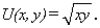 Person A has an endowment of x = 9 y = 8,person B has one of x = 16 y = 2.The price ratio that will prevail in equilibrium is:
A)px / py= 2.5.
B)px / py = 1.0.
C)px / py = 0.4.
D)px / py = 0.125.
Person A has an endowment of x = 9 y = 8,person B has one of x = 16 y = 2.The price ratio that will prevail in equilibrium is:A)px / py= 2.5.
B)px / py = 1.0.
C)px / py = 0.4.
D)px / py = 0.125.
سؤال
Suppose that the two persons in an exchange economy (A and B)have utility functions given by  Along the contract curve,B's ratio of Y to X will be:
A)2:1.
B)1:1.
C)1:2
D)between 1:1 and 1:2.
Along the contract curve,B's ratio of Y to X will be:A)2:1.
B)1:1.
C)1:2
D)between 1:1 and 1:2.
سؤال
In a two-good exchange economy,A's utility is given by  And B's utility by
  Along the contract curve,x/y for B will be times x/y for A.
A)4
B)3
C)2
D)1
And B's utility by Along the contract curve,x/y for B will be times x/y for A.A)4
B)3
C)2
D)1

فتح الحزمة
قم بالتسجيل لفتح البطاقات في هذه المجموعة!
Unlock Deck
Unlock Deck
1/24

العب

ملء الشاشة (f)
Deck 11: General Equilibrium and Welfare
1
Suppose two goods (x and y)are being produced efficiently and that the production of x is always more labor intensive than the production of y.Production depends only on two factors (capital and labor);these may be smoothly substituted for each other.The total quantities of these inputs are fixed.An increase in the production of x and a decrease in the production of y will:
A)increase the capital-labor ratio in each firm.
B)decrease the capital-labor ratio in each firm.
C)leave the capital-labor ratio for each firm unchanged.
D)increase the capital-labor ratio in y production and decrease the capital-labor ratio in x production.
A)increase the capital-labor ratio in each firm.
B)decrease the capital-labor ratio in each firm.
C)leave the capital-labor ratio for each firm unchanged.
D)increase the capital-labor ratio in y production and decrease the capital-labor ratio in x production.
increase the capital-labor ratio in each firm.
2
In volatile markets,"speculators" would be expected to provide some stability because:
A)they will be required to do so by the government.
B)they will use current price moves to predict future moves.
C)they will buy when price is below equilibrium and sell when it is above equilibrium.
D)they will buy when price is above equilibrium and sell when it is below equilibrium.
A)they will be required to do so by the government.
B)they will use current price moves to predict future moves.
C)they will buy when price is below equilibrium and sell when it is above equilibrium.
D)they will buy when price is above equilibrium and sell when it is below equilibrium.
they will buy when price is below equilibrium and sell when it is above equilibrium.
3
The First Theorem of Welfare Economics states that:
A)only Walrasian equilibria can be Pareto optimal.
B)all Walrasian equilibria are Pareto optimal.
C)a Walrasian equilibrium price vector can always be found.
D)some Walrasian equilibria may be unfair.
A)only Walrasian equilibria can be Pareto optimal.
B)all Walrasian equilibria are Pareto optimal.
C)a Walrasian equilibrium price vector can always be found.
D)some Walrasian equilibria may be unfair.
all Walrasian equilibria are Pareto optimal.
4
The slope of the production possibility frontier shows:
A)the marginal rate of substitution between the two goods.
B)the relative marginal costs of the two goods.
C)the efficient combination of outputs possible using fixed amounts of input.
D)the relative marginal productivities of the two goods.
A)the marginal rate of substitution between the two goods.
B)the relative marginal costs of the two goods.
C)the efficient combination of outputs possible using fixed amounts of input.
D)the relative marginal productivities of the two goods.
فتح الحزمة
افتح القفل للوصول البطاقات البالغ عددها 24 في هذه المجموعة.
فتح الحزمة
k this deck
5
The reason externalities distort the allocation of resources is that:
A)too few goods are usually produced.
B)firms often go out of business because of the externality.
C)a firm's private costs do not reflect the social cost of production.
D)regulating externalities uses scarce resources.
A)too few goods are usually produced.
B)firms often go out of business because of the externality.
C)a firm's private costs do not reflect the social cost of production.
D)regulating externalities uses scarce resources.
فتح الحزمة
افتح القفل للوصول البطاقات البالغ عددها 24 في هذه المجموعة.
فتح الحزمة
k this deck
6
The rate of product transformation (RPT)measures the ability of:
A)a consumer to trade one good for another while still maximizing his or her utility.
B)a firm to substitute one input for another and still maintain the same production level.
C)society to substitute the production of one good for another while still using a fixed supply of inputs efficiently.
D)a firm to produce a final good while starting with only natural resources.
A)a consumer to trade one good for another while still maximizing his or her utility.
B)a firm to substitute one input for another and still maintain the same production level.
C)society to substitute the production of one good for another while still using a fixed supply of inputs efficiently.
D)a firm to produce a final good while starting with only natural resources.
فتح الحزمة
افتح القفل للوصول البطاقات البالغ عددها 24 في هذه المجموعة.
فتح الحزمة
k this deck
7
Consider a two-good production economy in which both goods are produced with fixed proportions production functions.Then,some efficient allocations will exhibit unemployment of some factor providing:
A)the firms use the inputs in different proportions.
B)the firms exhibit diminishing returns to scale.
C)the firms exhibit increasing returns to scale.
D)production can never be efficient if there are unemployed inputs.
A)the firms use the inputs in different proportions.
B)the firms exhibit diminishing returns to scale.
C)the firms exhibit increasing returns to scale.
D)production can never be efficient if there are unemployed inputs.
فتح الحزمة
افتح القفل للوصول البطاقات البالغ عددها 24 في هذه المجموعة.
فتح الحزمة
k this deck
8
An efficient allocation of productive inputs requires that:
A)each output has the same rate of technical substitution among inputs used.
B)each output has the same marginal rate of substitution for consumers.
C)each pair of outputs has the same rate of product transformation.
D)each individual has the same marginal rate of substitution between outputs.
A)each output has the same rate of technical substitution among inputs used.
B)each output has the same marginal rate of substitution for consumers.
C)each pair of outputs has the same rate of product transformation.
D)each individual has the same marginal rate of substitution between outputs.
فتح الحزمة
افتح القفل للوصول البطاقات البالغ عددها 24 في هذه المجموعة.
فتح الحزمة
k this deck
9
In a two-good world,every allocation would be efficient only if:
A)both individuals were identical.
B)both individuals regard the two goods as perfect substitutes.
C)both individuals were identical and regard the two goods as perfect complements.
D)both individuals were identical and regard the two goods as perfect substitutes.
A)both individuals were identical.
B)both individuals regard the two goods as perfect substitutes.
C)both individuals were identical and regard the two goods as perfect complements.
D)both individuals were identical and regard the two goods as perfect substitutes.
فتح الحزمة
افتح القفل للوصول البطاقات البالغ عددها 24 في هذه المجموعة.
فتح الحزمة
k this deck
10
Each of the following factors might interfere with the efficiency of perfect competition except:
A)increasing returns to scale.
B)imperfect price information.
C)externalities.
D)diminishing returns to scale.
A)increasing returns to scale.
B)imperfect price information.
C)externalities.
D)diminishing returns to scale.
فتح الحزمة
افتح القفل للوصول البطاقات البالغ عددها 24 في هذه المجموعة.
فتح الحزمة
k this deck
11
In order to assure allocative efficiency:
A)people's marginal rate of substitution must equal the economy's rate of product transformation.
B)people's marginal rate of substitution must equal the firm's rate of technical substitution among inputs.
C)a firm's rate of technical substitution must equal the economy's rate of product transformation.
D)all of the above.
A)people's marginal rate of substitution must equal the economy's rate of product transformation.
B)people's marginal rate of substitution must equal the firm's rate of technical substitution among inputs.
C)a firm's rate of technical substitution must equal the economy's rate of product transformation.
D)all of the above.
فتح الحزمة
افتح القفل للوصول البطاقات البالغ عددها 24 في هذه المجموعة.
فتح الحزمة
k this deck
12
The "Classical Dichotomy" refers to:
A)a distinction between "value in use" and "value in exchange."
B)separate theories of demand and supply.
C)the possibility of Giffen's Paradox.
D)determination of relative prices independent of the nominal price level.
A)a distinction between "value in use" and "value in exchange."
B)separate theories of demand and supply.
C)the possibility of Giffen's Paradox.
D)determination of relative prices independent of the nominal price level.
فتح الحزمة
افتح القفل للوصول البطاقات البالغ عددها 24 في هذه المجموعة.
فتح الحزمة
k this deck
13
If,in a given economy,production is taking place at a point inside the production possibility frontier:
A)resource allocation is technically and allocatively efficient.
B)resource allocation is technically efficient but allocatively inefficient.
C)resource allocation is technically inefficient and allocatively efficient.
D)resource allocation is technically and allocatively inefficient.
A)resource allocation is technically and allocatively efficient.
B)resource allocation is technically efficient but allocatively inefficient.
C)resource allocation is technically inefficient and allocatively efficient.
D)resource allocation is technically and allocatively inefficient.
فتح الحزمة
افتح القفل للوصول البطاقات البالغ عددها 24 في هذه المجموعة.
فتح الحزمة
k this deck
14
The Second Theorem of Welfare Economics states that:
A)all Walrasian equilibria are also social welfare maxima.
B)social welfare maxima will usually be Pareto inefficient.
C)any social welfare maximum can be a Walrasian equilibrium with suitable transfers of initial endowments.
D)all Pareto optimal allocations are social welfare maxima.
A)all Walrasian equilibria are also social welfare maxima.
B)social welfare maxima will usually be Pareto inefficient.
C)any social welfare maximum can be a Walrasian equilibrium with suitable transfers of initial endowments.
D)all Pareto optimal allocations are social welfare maxima.
فتح الحزمة
افتح القفل للوصول البطاقات البالغ عددها 24 في هذه المجموعة.
فتح الحزمة
k this deck
15
In an economy consisting of only two goods,corn and cloth,the amount of extra cloth that can be produced efficiently if corn output is reduced by one unit is equal to:
A)the rate of technical substitution for corn divided by the rate of technical substitution for cloth.
B)the rate of technical substitution for cloth divided by the rate of technical substitution for corn.
C)the marginal cost of producing cloth divided by the marginal cost of producing corn.
D)the marginal cost of producing corn divided by the marginal cost of producing cloth.
A)the rate of technical substitution for corn divided by the rate of technical substitution for cloth.
B)the rate of technical substitution for cloth divided by the rate of technical substitution for corn.
C)the marginal cost of producing cloth divided by the marginal cost of producing corn.
D)the marginal cost of producing corn divided by the marginal cost of producing cloth.
فتح الحزمة
افتح القفل للوصول البطاقات البالغ عددها 24 في هذه المجموعة.
فتح الحزمة
k this deck
16
In general,non-equilibrium prices occur because:
A)information is imperfect and adjustment is costly.
B)supply curves shift along stationary demand curves.
C)demand curves shift along stationary supply curves.
D)monopolists charge prices above marginal cost.
A)information is imperfect and adjustment is costly.
B)supply curves shift along stationary demand curves.
C)demand curves shift along stationary supply curves.
D)monopolists charge prices above marginal cost.
فتح الحزمة
افتح القفل للوصول البطاقات البالغ عددها 24 في هذه المجموعة.
فتح الحزمة
k this deck
17
An allocation of resources is technically efficient if:
A)it is impossible to increase the output of a particular good.
B)it is possible to increase the output of all goods.
C)it is impossible to increase the output of one good without cutting back on the production of something else.
D)it is possible to increase the output of one good.
A)it is impossible to increase the output of a particular good.
B)it is possible to increase the output of all goods.
C)it is impossible to increase the output of one good without cutting back on the production of something else.
D)it is possible to increase the output of one good.
فتح الحزمة
افتح القفل للوصول البطاقات البالغ عددها 24 في هذه المجموعة.
فتح الحزمة
k this deck
18
Every allocation of goods in a one good world is efficient because:
A)MRSs are equalized.
B)there is enough to go around for everyone.
C)no one can be made better off without making someone else worse off.
D)it doesn't matter to whom an extra unit of the good is given.
A)MRSs are equalized.
B)there is enough to go around for everyone.
C)no one can be made better off without making someone else worse off.
D)it doesn't matter to whom an extra unit of the good is given.
فتح الحزمة
افتح القفل للوصول البطاقات البالغ عددها 24 في هذه المجموعة.
فتح الحزمة
k this deck
19
Consider three ways of allocating two goods in a two-person exchange economy.
I.Both individuals take prices as given and equilibrium prices are established by an impartial auctioneer.
II.One individual can act as a perfect price discriminator and force the other individual to pay a different price for each unit of a good that is traded.
III.One individual is a monopolist and can charge the other individual a single,utility-maximizing price.
Which of these situations is efficient?
A)None of them.
B)Only I.
C)I and II,but not III.
D)I and III,but not II.
I.Both individuals take prices as given and equilibrium prices are established by an impartial auctioneer.
II.One individual can act as a perfect price discriminator and force the other individual to pay a different price for each unit of a good that is traded.
III.One individual is a monopolist and can charge the other individual a single,utility-maximizing price.
Which of these situations is efficient?
A)None of them.
B)Only I.
C)I and II,but not III.
D)I and III,but not II.
فتح الحزمة
افتح القفل للوصول البطاقات البالغ عددها 24 في هذه المجموعة.
فتح الحزمة
k this deck
20
Under a perfectly competitive price system:
A)an equitable allocation of the available resources will always result.
B)there is no opportunity for individuals to trade amongst themselves.
C)there is no reason to expect that voluntary trading will result in an equitable allocation of the available resources.
D)none of the above.
A)an equitable allocation of the available resources will always result.
B)there is no opportunity for individuals to trade amongst themselves.
C)there is no reason to expect that voluntary trading will result in an equitable allocation of the available resources.
D)none of the above.
فتح الحزمة
افتح القفل للوصول البطاقات البالغ عددها 24 في هذه المجموعة.
فتح الحزمة
k this deck
21
In an exchange economy A's utility is given by UA = x + y and B's by UB = min[x,2y].The initial endowment for A is x = 10,y = 8 and for B,x = 8,y = 4.To reach the contact curve,these individuals must:
A)trade 1x for 1y.
B)trade 2x for 1y.
C)trade 1x for 2y.
D)do nothing,since they are already on the contract curve.
A)trade 1x for 1y.
B)trade 2x for 1y.
C)trade 1x for 2y.
D)do nothing,since they are already on the contract curve.
فتح الحزمة
افتح القفل للوصول البطاقات البالغ عددها 24 في هذه المجموعة.
فتح الحزمة
k this deck
22
Suppose two individuals in an exchange economy have identical utility functions given by Person A has an endowment of x = 9 y = 8,person B has one of x = 16 y = 2.The price ratio that will prevail in equilibrium is:
A)px / py= 2.5.
B)px / py = 1.0.
C)px / py = 0.4.
D)px / py = 0.125.
Person A has an endowment of x = 9 y = 8,person B has one of x = 16 y = 2.The price ratio that will prevail in equilibrium is:A)px / py= 2.5.
B)px / py = 1.0.
C)px / py = 0.4.
D)px / py = 0.125.
فتح الحزمة
افتح القفل للوصول البطاقات البالغ عددها 24 في هذه المجموعة.
فتح الحزمة
k this deck
23
Suppose that the two persons in an exchange economy (A and B)have utility functions given by Along the contract curve,B's ratio of Y to X will be:
A)2:1.
B)1:1.
C)1:2
D)between 1:1 and 1:2.
Along the contract curve,B's ratio of Y to X will be:A)2:1.
B)1:1.
C)1:2
D)between 1:1 and 1:2.
فتح الحزمة
افتح القفل للوصول البطاقات البالغ عددها 24 في هذه المجموعة.
فتح الحزمة
k this deck
24
In a two-good exchange economy,A's utility is given by And B's utility by Along the contract curve,x/y for B will be times x/y for A.
A)4
B)3
C)2
D)1
And B's utility by Along the contract curve,x/y for B will be times x/y for A.A)4
B)3
C)2
D)1
فتح الحزمة
افتح القفل للوصول البطاقات البالغ عددها 24 في هذه المجموعة.
فتح الحزمة
k this deck
فتح الحزمة
افتح القفل للوصول البطاقات البالغ عددها 24 في هذه المجموعة.






