







 تكلم مع الذكاء الاصطناعي


Deck 15: The Immune Response in Infectious Diseases
ملء الشاشة (f)

سؤال

سؤال
سؤال
سؤال
سؤال
سؤال
سؤال
سؤال
سؤال
سؤال
سؤال
سؤال
سؤال
سؤال
سؤال
سؤال
سؤال
سؤال
سؤال
سؤال
سؤال
سؤال
سؤال
سؤال
MATCHING
Match the microorganism with the appropriate procedural method (use an answer only once).
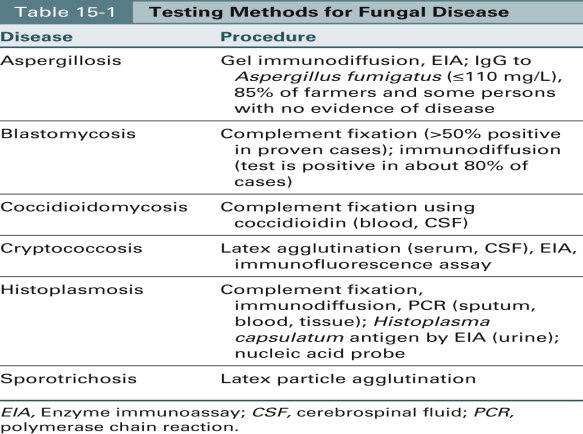
Aspergillosis
A)Latex particle agglutination
B)ImmunoCAP system
C)Fungus media nucleic acid probe
Match the microorganism with the appropriate procedural method (use an answer only once).
Aspergillosis
A)Latex particle agglutination
B)ImmunoCAP system
C)Fungus media nucleic acid probe
سؤال
سؤال
سؤال
MATCHING
Match the microorganism with the appropriate procedural method (use an answer only once).
Histoplasmosis
A)Latex particle agglutination
B)ImmunoCAP system
C)Fungus media nucleic acid probe
Match the microorganism with the appropriate procedural method (use an answer only once).
Histoplasmosis
A)Latex particle agglutination
B)ImmunoCAP system
C)Fungus media nucleic acid probe
سؤال
سؤال
MATCHING
Match the microorganism with the appropriate procedural method (use an answer only once).
Sporotrichosis
A)Latex particle agglutination
B)ImmunoCAP system
C)Fungus media nucleic acid probe
Match the microorganism with the appropriate procedural method (use an answer only once).
Sporotrichosis
A)Latex particle agglutination
B)ImmunoCAP system
C)Fungus media nucleic acid probe

فتح الحزمة
قم بالتسجيل لفتح البطاقات في هذه المجموعة!
Unlock Deck
Unlock Deck
1/29

العب

ملء الشاشة (f)
Deck 15: The Immune Response in Infectious Diseases
1
Parasites can avoid being phagocytized because of:
A) their ability to migrate away from an inflamed area.
B) their size.
C) the presence of a body (cell)wall.
D) a coating of exterior IgM antibody.
A) their ability to migrate away from an inflamed area.
B) their size.
C) the presence of a body (cell)wall.
D) a coating of exterior IgM antibody.
their ability to migrate away from an inflamed area.
2
Members of human herpesviruses include:
A) cytomegalovirus (CMV).
B) Epstein-Barr virus (EBV).
C) varicella-zoster virus (VZV).
D) all of the above.
A) cytomegalovirus (CMV).
B) Epstein-Barr virus (EBV).
C) varicella-zoster virus (VZV).
D) all of the above.
all of the above.
3
Antibodies associated with body defenses against parasites include _______-type antibodies.
A) IgM
B) IgG
C) IgE
D) both b and c
A) IgM
B) IgG
C) IgE
D) both b and c
both b and c
4
Antibody and cell-mediated responses to an infectious agent become activated in a few ___________ in immunocompetent individuals.
A) minutes
B) hours
C) days
D) weeks
A) minutes
B) hours
C) days
D) weeks
فتح الحزمة
افتح القفل للوصول البطاقات البالغ عددها 29 في هذه المجموعة.
فتح الحزمة
k this deck
5
Fungal infections can be opportunistic infections in patients who:
A) have AIDS.
B) are immunosuppressed with medications.
C) are transplant patients receiving antirejection medicines.
D) all of the above.
A) have AIDS.
B) are immunosuppressed with medications.
C) are transplant patients receiving antirejection medicines.
D) all of the above.
فتح الحزمة
افتح القفل للوصول البطاقات البالغ عددها 29 في هذه المجموعة.
فتح الحزمة
k this deck
6
The most frequent manifestation of herpes simplex virus (HSV)is:
A) a cold sore
B) genital warts
C) hives
D) pimples
A) a cold sore
B) genital warts
C) hives
D) pimples
فتح الحزمة
افتح القفل للوصول البطاقات البالغ عددها 29 في هذه المجموعة.
فتح الحزمة
k this deck
7
High levels of circulating ________ may cause hypersensitivity reactions in helminth and cestode infections.
A) IgM
B) IgG
C) IgD
D) IgE
A) IgM
B) IgG
C) IgD
D) IgE
فتح الحزمة
افتح القفل للوصول البطاقات البالغ عددها 29 في هذه المجموعة.
فتح الحزمة
k this deck
8
Survival mechanisms of fungi that successfully invade the body include:
A) the presence of an antiphagocytic capsule.
B) resistance to digestion within macrophages.
C) destruction of phagocytes (e.g. ,neutrophils).
D) all of the above.
A) the presence of an antiphagocytic capsule.
B) resistance to digestion within macrophages.
C) destruction of phagocytes (e.g. ,neutrophils).
D) all of the above.
فتح الحزمة
افتح القفل للوصول البطاقات البالغ عددها 29 في هذه المجموعة.
فتح الحزمة
k this deck
9
A key immunologic substance against bacteria is:
A) complement.
B) interferon.
C) lysozyme.
D) interleukin.
A) complement.
B) interferon.
C) lysozyme.
D) interleukin.
فتح الحزمة
افتح القفل للوصول البطاقات البالغ عددها 29 في هذه المجموعة.
فتح الحزمة
k this deck
10
Fungal infections are increasing worldwide because of:
A) an aging population.
B) use of immunosuppressive drugs.
C) development of diseases that produce an immunocompromised state.
D) both b and c
A) an aging population.
B) use of immunosuppressive drugs.
C) development of diseases that produce an immunocompromised state.
D) both b and c
فتح الحزمة
افتح القفل للوصول البطاقات البالغ عددها 29 في هذه المجموعة.
فتح الحزمة
k this deck
11
A zoonosis is any infectious disease that can be:
A) transmitted (by a vector)from humans to wild and domestic animals.
B) transmitted (by a vector)from other animals,both wild and domestic,to humans.
C) transmitted from birds to humans.
D) transmitted from humans to gorillas.
A) transmitted (by a vector)from humans to wild and domestic animals.
B) transmitted (by a vector)from other animals,both wild and domestic,to humans.
C) transmitted from birds to humans.
D) transmitted from humans to gorillas.
فتح الحزمة
افتح القفل للوصول البطاقات البالغ عددها 29 في هذه المجموعة.
فتح الحزمة
k this deck
12
All the following are fungal diseases except:
A) histoplasmosis.
B) aspergillosis.
C) toxoplasmosis.
D) coccidioidomycosis.
A) histoplasmosis.
B) aspergillosis.
C) toxoplasmosis.
D) coccidioidomycosis.
فتح الحزمة
افتح القفل للوصول البطاقات البالغ عددها 29 في هذه المجموعة.
فتح الحزمة
k this deck
13
The incidence of antibody to herpes simplex virus (HSV)is __________ in adults of higher socioeconomic class compared with those in lower socioeconomic classes.
A) higher
B) equal
C) lower
A) higher
B) equal
C) lower
فتح الحزمة
افتح القفل للوصول البطاقات البالغ عددها 29 في هذه المجموعة.
فتح الحزمة
k this deck
14
The burden of adaptive immunity in preventing the spread of viruses rests on:
A) macrophages.
B) B lymphocytes.
C) T lymphocytes.
D) segmented polymorphonuclear neutrophils (PMNs).
A) macrophages.
B) B lymphocytes.
C) T lymphocytes.
D) segmented polymorphonuclear neutrophils (PMNs).
فتح الحزمة
افتح القفل للوصول البطاقات البالغ عددها 29 في هذه المجموعة.
فتح الحزمة
k this deck
15
The TORCH immunoglobulin M (IgM)and IgG assay includes detection of all the following except:
A) cytomegalovirus (CMV).
B) Epstein-Barr virus.
C) rubella.
D) infectious mononucleosis.
A) cytomegalovirus (CMV).
B) Epstein-Barr virus.
C) rubella.
D) infectious mononucleosis.
فتح الحزمة
افتح القفل للوصول البطاقات البالغ عددها 29 في هذه المجموعة.
فتح الحزمة
k this deck
16
Immune responses to parasitic infection include:
A) immunoglobulin production.
B) antibody-dependent,cell-mediated cytotoxicity.
C) cell defenses,such as eosinophils and T lymphocytes.
D) all of the above.
A) immunoglobulin production.
B) antibody-dependent,cell-mediated cytotoxicity.
C) cell defenses,such as eosinophils and T lymphocytes.
D) all of the above.
فتح الحزمة
افتح القفل للوصول البطاقات البالغ عددها 29 في هذه المجموعة.
فتح الحزمة
k this deck
17
A microorganism can survive phagocytosis if it possesses a:
A) cell membrane.
B) capsule.
C) slime layer.
D) flagellum.
A) cell membrane.
B) capsule.
C) slime layer.
D) flagellum.
فتح الحزمة
افتح القفل للوصول البطاقات البالغ عددها 29 في هذه المجموعة.
فتح الحزمة
k this deck
18
Major immunologic defense mechanisms against bacteria include:
A) lysozyme.
B) phagocytosis.
C) interferon production.
D) both a and b
A) lysozyme.
B) phagocytosis.
C) interferon production.
D) both a and b
فتح الحزمة
افتح القفل للوصول البطاقات البالغ عددها 29 في هذه المجموعة.
فتح الحزمة
k this deck
19
For an infectious disease actually to develop in a host,a microorganism must:
A) penetrate the skin or mucous membrane barrier (first line of defense).
B) survive natural body defense mechanisms.
C) survive adaptive body defense mechanisms.
D) all of the above.
A) penetrate the skin or mucous membrane barrier (first line of defense).
B) survive natural body defense mechanisms.
C) survive adaptive body defense mechanisms.
D) all of the above.
فتح الحزمة
افتح القفل للوصول البطاقات البالغ عددها 29 في هذه المجموعة.
فتح الحزمة
k this deck
20
Factors that can influence exposure to,or actual development of,an infectious disease include all the following factors except the:
A) immune status of an individual.
B) pathogenicity of the microbial agent.
C) season of the year.
D) appropriate portal of entry.
A) immune status of an individual.
B) pathogenicity of the microbial agent.
C) season of the year.
D) appropriate portal of entry.
فتح الحزمة
افتح القفل للوصول البطاقات البالغ عددها 29 في هذه المجموعة.
فتح الحزمة
k this deck
21
Varicella-zoster virus (VZV)is the cause of two different types of clinical diseases resulting from the same viral infection.
Primary infection with the virus results in the clinical manifestations of __________.
A)Shingles
B)Chickenpox
Primary infection with the virus results in the clinical manifestations of __________.
A)Shingles
B)Chickenpox
فتح الحزمة
افتح القفل للوصول البطاقات البالغ عددها 29 في هذه المجموعة.
فتح الحزمة
k this deck
22
Varicella-zoster virus (VZV)is the cause of two different types of clinical diseases resulting from the same viral infection.
Reactivation of the virus results in the characteristic clinical manifestation of __________.
A)Shingles
B)Chickenpox
Reactivation of the virus results in the characteristic clinical manifestation of __________.
A)Shingles
B)Chickenpox
فتح الحزمة
افتح القفل للوصول البطاقات البالغ عددها 29 في هذه المجموعة.
فتح الحزمة
k this deck
23
Match the infectious diseases with the appropriate description.
Cytomegalovirus (CMV)
A)The most common congenital virus infection
B)A spectrum of congenital defects
C)Hydrocephalus,intracranial calcification,and retinochoroiditis-the most common manifestations of tissue damage
D)Sequelae of virus infection (include three distinct neurologic syndromes)
Cytomegalovirus (CMV)
A)The most common congenital virus infection
B)A spectrum of congenital defects
C)Hydrocephalus,intracranial calcification,and retinochoroiditis-the most common manifestations of tissue damage
D)Sequelae of virus infection (include three distinct neurologic syndromes)
فتح الحزمة
افتح القفل للوصول البطاقات البالغ عددها 29 في هذه المجموعة.
فتح الحزمة
k this deck
24
MATCHING
Match the microorganism with the appropriate procedural method (use an answer only once).
Aspergillosis
A)Latex particle agglutination
B)ImmunoCAP system
C)Fungus media nucleic acid probe
Match the microorganism with the appropriate procedural method (use an answer only once).
Aspergillosis
A)Latex particle agglutination
B)ImmunoCAP system
C)Fungus media nucleic acid probe
فتح الحزمة
افتح القفل للوصول البطاقات البالغ عددها 29 في هذه المجموعة.
فتح الحزمة
k this deck
25
Match the infectious diseases with the appropriate description.
TORCH syndrome
A)The most common congenital virus infection
B)A spectrum of congenital defects
C)Hydrocephalus,intracranial calcification,and retinochoroiditis-the most common manifestations of tissue damage
D)Sequelae of virus infection (include three distinct neurologic syndromes)
TORCH syndrome
A)The most common congenital virus infection
B)A spectrum of congenital defects
C)Hydrocephalus,intracranial calcification,and retinochoroiditis-the most common manifestations of tissue damage
D)Sequelae of virus infection (include three distinct neurologic syndromes)
فتح الحزمة
افتح القفل للوصول البطاقات البالغ عددها 29 في هذه المجموعة.
فتح الحزمة
k this deck
26
Match the infectious diseases with the appropriate description.
Toxoplasmosis
A)The most common congenital virus infection
B)A spectrum of congenital defects
C)Hydrocephalus,intracranial calcification,and retinochoroiditis-the most common manifestations of tissue damage
D)Sequelae of virus infection (include three distinct neurologic syndromes)
Toxoplasmosis
A)The most common congenital virus infection
B)A spectrum of congenital defects
C)Hydrocephalus,intracranial calcification,and retinochoroiditis-the most common manifestations of tissue damage
D)Sequelae of virus infection (include three distinct neurologic syndromes)
فتح الحزمة
افتح القفل للوصول البطاقات البالغ عددها 29 في هذه المجموعة.
فتح الحزمة
k this deck
27
MATCHING
Match the microorganism with the appropriate procedural method (use an answer only once).
Histoplasmosis
A)Latex particle agglutination
B)ImmunoCAP system
C)Fungus media nucleic acid probe
Match the microorganism with the appropriate procedural method (use an answer only once).
Histoplasmosis
A)Latex particle agglutination
B)ImmunoCAP system
C)Fungus media nucleic acid probe
فتح الحزمة
افتح القفل للوصول البطاقات البالغ عددها 29 في هذه المجموعة.
فتح الحزمة
k this deck
28
Match the infectious diseases with the appropriate description.
Rubella
A)The most common congenital virus infection
B)A spectrum of congenital defects
C)Hydrocephalus,intracranial calcification,and retinochoroiditis-the most common manifestations of tissue damage
D)Sequelae of virus infection (include three distinct neurologic syndromes)
Rubella
A)The most common congenital virus infection
B)A spectrum of congenital defects
C)Hydrocephalus,intracranial calcification,and retinochoroiditis-the most common manifestations of tissue damage
D)Sequelae of virus infection (include three distinct neurologic syndromes)
فتح الحزمة
افتح القفل للوصول البطاقات البالغ عددها 29 في هذه المجموعة.
فتح الحزمة
k this deck
29
MATCHING
Match the microorganism with the appropriate procedural method (use an answer only once).
Sporotrichosis
A)Latex particle agglutination
B)ImmunoCAP system
C)Fungus media nucleic acid probe
Match the microorganism with the appropriate procedural method (use an answer only once).
Sporotrichosis
A)Latex particle agglutination
B)ImmunoCAP system
C)Fungus media nucleic acid probe
فتح الحزمة
افتح القفل للوصول البطاقات البالغ عددها 29 في هذه المجموعة.
فتح الحزمة
k this deck
فتح الحزمة
افتح القفل للوصول البطاقات البالغ عددها 29 في هذه المجموعة.






