



Deck 19: Oxidationreduction Electron Transferreactions

ملء الشاشة (f)
exit full mode
سؤال
Identify the oxidation half-reaction in the redox equation:
Cu(s)+ Cl2(g) <strong>Identify the oxidation half-reaction in the redox equation: Cu(s)+ Cl<sub>2</sub>(g)   Cu<sup>2+</sup> + 2 Cl<sup>-</sup></strong> A)Cl<sub>2</sub>   2 Cl<sup>-</sup> + 2 e<sup>-</sup> B)Cl<sub>2</sub> + 2 e<sup>-</sup>   2 Cl<sup>-</sup> C)Cu   Cu<sup>2+</sup> + 2 e<sup>-</sup> D)Cu + 2 e<sup>-</sup>   Cu<sup>2+</sup> E)Cu + Cl<sub>2</sub> + 2 e<sup>-</sup>   Cu<sup>2+</sup> + 2 Cl<sup>-</sup> + 2 e<sup>-</sup> <div style=padding-top: 35px> Cu2+ + 2 Cl-

A)Cl2 <strong>Identify the oxidation half-reaction in the redox equation: Cu(s)+ Cl<sub>2</sub>(g)   Cu<sup>2+</sup> + 2 Cl<sup>-</sup></strong> A)Cl<sub>2</sub>   2 Cl<sup>-</sup> + 2 e<sup>-</sup> B)Cl<sub>2</sub> + 2 e<sup>-</sup>   2 Cl<sup>-</sup> C)Cu   Cu<sup>2+</sup> + 2 e<sup>-</sup> D)Cu + 2 e<sup>-</sup>   Cu<sup>2+</sup> E)Cu + Cl<sub>2</sub> + 2 e<sup>-</sup>   Cu<sup>2+</sup> + 2 Cl<sup>-</sup> + 2 e<sup>-</sup> <div style=padding-top: 35px> 2 Cl- + 2 e-
B)Cl2 + 2 e- <strong>Identify the oxidation half-reaction in the redox equation: Cu(s)+ Cl<sub>2</sub>(g)   Cu<sup>2+</sup> + 2 Cl<sup>-</sup></strong> A)Cl<sub>2</sub>   2 Cl<sup>-</sup> + 2 e<sup>-</sup> B)Cl<sub>2</sub> + 2 e<sup>-</sup>   2 Cl<sup>-</sup> C)Cu   Cu<sup>2+</sup> + 2 e<sup>-</sup> D)Cu + 2 e<sup>-</sup>   Cu<sup>2+</sup> E)Cu + Cl<sub>2</sub> + 2 e<sup>-</sup>   Cu<sup>2+</sup> + 2 Cl<sup>-</sup> + 2 e<sup>-</sup> <div style=padding-top: 35px> 2 Cl-
C)Cu <strong>Identify the oxidation half-reaction in the redox equation: Cu(s)+ Cl<sub>2</sub>(g)   Cu<sup>2+</sup> + 2 Cl<sup>-</sup></strong> A)Cl<sub>2</sub>   2 Cl<sup>-</sup> + 2 e<sup>-</sup> B)Cl<sub>2</sub> + 2 e<sup>-</sup>   2 Cl<sup>-</sup> C)Cu   Cu<sup>2+</sup> + 2 e<sup>-</sup> D)Cu + 2 e<sup>-</sup>   Cu<sup>2+</sup> E)Cu + Cl<sub>2</sub> + 2 e<sup>-</sup>   Cu<sup>2+</sup> + 2 Cl<sup>-</sup> + 2 e<sup>-</sup> <div style=padding-top: 35px> Cu2+ + 2 e-
D)Cu + 2 e- <strong>Identify the oxidation half-reaction in the redox equation: Cu(s)+ Cl<sub>2</sub>(g)   Cu<sup>2+</sup> + 2 Cl<sup>-</sup></strong> A)Cl<sub>2</sub>   2 Cl<sup>-</sup> + 2 e<sup>-</sup> B)Cl<sub>2</sub> + 2 e<sup>-</sup>   2 Cl<sup>-</sup> C)Cu   Cu<sup>2+</sup> + 2 e<sup>-</sup> D)Cu + 2 e<sup>-</sup>   Cu<sup>2+</sup> E)Cu + Cl<sub>2</sub> + 2 e<sup>-</sup>   Cu<sup>2+</sup> + 2 Cl<sup>-</sup> + 2 e<sup>-</sup> <div style=padding-top: 35px> Cu2+
E)Cu + Cl2 + 2 e- <strong>Identify the oxidation half-reaction in the redox equation: Cu(s)+ Cl<sub>2</sub>(g)   Cu<sup>2+</sup> + 2 Cl<sup>-</sup></strong> A)Cl<sub>2</sub>   2 Cl<sup>-</sup> + 2 e<sup>-</sup> B)Cl<sub>2</sub> + 2 e<sup>-</sup>   2 Cl<sup>-</sup> C)Cu   Cu<sup>2+</sup> + 2 e<sup>-</sup> D)Cu + 2 e<sup>-</sup>   Cu<sup>2+</sup> E)Cu + Cl<sub>2</sub> + 2 e<sup>-</sup>   Cu<sup>2+</sup> + 2 Cl<sup>-</sup> + 2 e<sup>-</sup> <div style=padding-top: 35px> Cu2+ + 2 Cl- + 2 e-
استخدم زر المسافة أو
up arrow
down arrow
لقلب البطاقة.
سؤال
What is the oxidation number of Cl in Cl2?

A)-1
B)-2
C)+2
D)0
E)One atom is +1 and the other is -1.
سؤال
Identify the reduction half-reaction in the redox equation:
4 Ag + O2(g)+ 2 H2O <strong>Identify the reduction half-reaction in the redox equation: 4 Ag + O<sub>2</sub>(g)+ 2 H<sub>2</sub>O   4 Ag<sup>+</sup> + 4 OH<sup>-</sup></strong> A)Ag   Ag + e<sup>-</sup> B)4 Ag + 4 e<sup>-</sup>   4 Ag<sup>+</sup> C)2 H<sub>2</sub>O + 2e<sup>-</sup>   4 OH<sup>-</sup> D)O<sub>2</sub>(g) + 2 H<sub>2</sub>O + 4 e<sup>-</sup>   4 OH<sup>-</sup> E)2 H<sub>2</sub>O + 2 e<sup>-</sup>   H<sub>2</sub> + 2 OH<sup>-</sup> <div style=padding-top: 35px> 4 Ag+ + 4 OH-

A)Ag <strong>Identify the reduction half-reaction in the redox equation: 4 Ag + O<sub>2</sub>(g)+ 2 H<sub>2</sub>O   4 Ag<sup>+</sup> + 4 OH<sup>-</sup></strong> A)Ag   Ag + e<sup>-</sup> B)4 Ag + 4 e<sup>-</sup>   4 Ag<sup>+</sup> C)2 H<sub>2</sub>O + 2e<sup>-</sup>   4 OH<sup>-</sup> D)O<sub>2</sub>(g) + 2 H<sub>2</sub>O + 4 e<sup>-</sup>   4 OH<sup>-</sup> E)2 H<sub>2</sub>O + 2 e<sup>-</sup>   H<sub>2</sub> + 2 OH<sup>-</sup> <div style=padding-top: 35px> Ag + e-
B)4 Ag + 4 e- <strong>Identify the reduction half-reaction in the redox equation: 4 Ag + O<sub>2</sub>(g)+ 2 H<sub>2</sub>O   4 Ag<sup>+</sup> + 4 OH<sup>-</sup></strong> A)Ag   Ag + e<sup>-</sup> B)4 Ag + 4 e<sup>-</sup>   4 Ag<sup>+</sup> C)2 H<sub>2</sub>O + 2e<sup>-</sup>   4 OH<sup>-</sup> D)O<sub>2</sub>(g) + 2 H<sub>2</sub>O + 4 e<sup>-</sup>   4 OH<sup>-</sup> E)2 H<sub>2</sub>O + 2 e<sup>-</sup>   H<sub>2</sub> + 2 OH<sup>-</sup> <div style=padding-top: 35px> 4 Ag+
C)2 H2O + 2e- <strong>Identify the reduction half-reaction in the redox equation: 4 Ag + O<sub>2</sub>(g)+ 2 H<sub>2</sub>O   4 Ag<sup>+</sup> + 4 OH<sup>-</sup></strong> A)Ag   Ag + e<sup>-</sup> B)4 Ag + 4 e<sup>-</sup>   4 Ag<sup>+</sup> C)2 H<sub>2</sub>O + 2e<sup>-</sup>   4 OH<sup>-</sup> D)O<sub>2</sub>(g) + 2 H<sub>2</sub>O + 4 e<sup>-</sup>   4 OH<sup>-</sup> E)2 H<sub>2</sub>O + 2 e<sup>-</sup>   H<sub>2</sub> + 2 OH<sup>-</sup> <div style=padding-top: 35px> 4 OH-
D)O2(g) + 2 H2O + 4 e- <strong>Identify the reduction half-reaction in the redox equation: 4 Ag + O<sub>2</sub>(g)+ 2 H<sub>2</sub>O   4 Ag<sup>+</sup> + 4 OH<sup>-</sup></strong> A)Ag   Ag + e<sup>-</sup> B)4 Ag + 4 e<sup>-</sup>   4 Ag<sup>+</sup> C)2 H<sub>2</sub>O + 2e<sup>-</sup>   4 OH<sup>-</sup> D)O<sub>2</sub>(g) + 2 H<sub>2</sub>O + 4 e<sup>-</sup>   4 OH<sup>-</sup> E)2 H<sub>2</sub>O + 2 e<sup>-</sup>   H<sub>2</sub> + 2 OH<sup>-</sup> <div style=padding-top: 35px> 4 OH-
E)2 H2O + 2 e- <strong>Identify the reduction half-reaction in the redox equation: 4 Ag + O<sub>2</sub>(g)+ 2 H<sub>2</sub>O   4 Ag<sup>+</sup> + 4 OH<sup>-</sup></strong> A)Ag   Ag + e<sup>-</sup> B)4 Ag + 4 e<sup>-</sup>   4 Ag<sup>+</sup> C)2 H<sub>2</sub>O + 2e<sup>-</sup>   4 OH<sup>-</sup> D)O<sub>2</sub>(g) + 2 H<sub>2</sub>O + 4 e<sup>-</sup>   4 OH<sup>-</sup> E)2 H<sub>2</sub>O + 2 e<sup>-</sup>   H<sub>2</sub> + 2 OH<sup>-</sup> <div style=padding-top: 35px> H2 + 2 OH-
سؤال
What happens in a galvanic cell?

A)Cations are changed into ions
B)Chemical energy is converted to electrical energy
C)Anions combine with cations to produce electricity
D)Less reactive metals are turned into more reactive metals by the action of an electric current
E)Matter is changed into energy
سؤال
Examine the two beakers shown below. <strong>Examine the two beakers shown below.   If the metals were connected by a wire containing a meter and the two solutions by a salt bridge,the meter shows are reading of 0.95 V.Which of the following is correct?</strong> A)A spontaneous reaction occurs. B)A voltaic cell has been constructed. C)Electrons flow from the anode to the cathode. D)Reduction occurs at the cathode. E)All of the above are correct in this situation. <div style=padding-top: 35px>
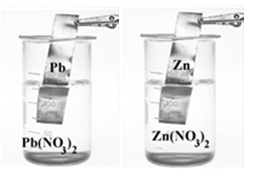
If the metals were connected by a wire containing a meter and the two solutions by a salt bridge,the meter shows are reading of 0.95 V.Which of the following is correct?

A)A spontaneous reaction occurs.
B)A voltaic cell has been constructed.
C)Electrons flow from the anode to the cathode.
D)Reduction occurs at the cathode.
E)All of the above are correct in this situation.
سؤال
What is the half-reaction for the oxidation of sulfide ions in aqueous solution?

A)S2-(aq) <strong>What is the half-reaction for the oxidation of sulfide ions in aqueous solution?</strong> A)S<sup>2-</sup>(aq)   S(s) + 2 e<sup>-</sup> B)S-(aq) + e<sup>-</sup>   S<sup>2-</sup>(aq) C)S(s) + 2 e<sup>-</sup>   S<sup>2-</sup>(aq) D)SO<sub>3</sub><sup>2-</sup>(aq) + 6 H<sup>+</sup>(aq)   S(s) + 3 H<sub>2</sub>O(   ) + 4 e<sup>-</sup> E)SO<sub>4</sub><sup>2-</sup>(aq) + 8 H<sup>+</sup>(aq)   S(s) + 4 H<sub>2</sub>O(   ) + 6 e<sup>-</sup> <div style=padding-top: 35px> S(s) + 2 e-
B)S-(aq) + e- <strong>What is the half-reaction for the oxidation of sulfide ions in aqueous solution?</strong> A)S<sup>2-</sup>(aq)   S(s) + 2 e<sup>-</sup> B)S-(aq) + e<sup>-</sup>   S<sup>2-</sup>(aq) C)S(s) + 2 e<sup>-</sup>   S<sup>2-</sup>(aq) D)SO<sub>3</sub><sup>2-</sup>(aq) + 6 H<sup>+</sup>(aq)   S(s) + 3 H<sub>2</sub>O(   ) + 4 e<sup>-</sup> E)SO<sub>4</sub><sup>2-</sup>(aq) + 8 H<sup>+</sup>(aq)   S(s) + 4 H<sub>2</sub>O(   ) + 6 e<sup>-</sup> <div style=padding-top: 35px> S2-(aq)
C)S(s) + 2 e- <strong>What is the half-reaction for the oxidation of sulfide ions in aqueous solution?</strong> A)S<sup>2-</sup>(aq)   S(s) + 2 e<sup>-</sup> B)S-(aq) + e<sup>-</sup>   S<sup>2-</sup>(aq) C)S(s) + 2 e<sup>-</sup>   S<sup>2-</sup>(aq) D)SO<sub>3</sub><sup>2-</sup>(aq) + 6 H<sup>+</sup>(aq)   S(s) + 3 H<sub>2</sub>O(   ) + 4 e<sup>-</sup> E)SO<sub>4</sub><sup>2-</sup>(aq) + 8 H<sup>+</sup>(aq)   S(s) + 4 H<sub>2</sub>O(   ) + 6 e<sup>-</sup> <div style=padding-top: 35px> S2-(aq)
D)SO32-(aq) + 6 H+(aq) <strong>What is the half-reaction for the oxidation of sulfide ions in aqueous solution?</strong> A)S<sup>2-</sup>(aq)   S(s) + 2 e<sup>-</sup> B)S-(aq) + e<sup>-</sup>   S<sup>2-</sup>(aq) C)S(s) + 2 e<sup>-</sup>   S<sup>2-</sup>(aq) D)SO<sub>3</sub><sup>2-</sup>(aq) + 6 H<sup>+</sup>(aq)   S(s) + 3 H<sub>2</sub>O(   ) + 4 e<sup>-</sup> E)SO<sub>4</sub><sup>2-</sup>(aq) + 8 H<sup>+</sup>(aq)   S(s) + 4 H<sub>2</sub>O(   ) + 6 e<sup>-</sup> <div style=padding-top: 35px> S(s) + 3 H2O( <strong>What is the half-reaction for the oxidation of sulfide ions in aqueous solution?</strong> A)S<sup>2-</sup>(aq)   S(s) + 2 e<sup>-</sup> B)S-(aq) + e<sup>-</sup>   S<sup>2-</sup>(aq) C)S(s) + 2 e<sup>-</sup>   S<sup>2-</sup>(aq) D)SO<sub>3</sub><sup>2-</sup>(aq) + 6 H<sup>+</sup>(aq)   S(s) + 3 H<sub>2</sub>O(   ) + 4 e<sup>-</sup> E)SO<sub>4</sub><sup>2-</sup>(aq) + 8 H<sup>+</sup>(aq)   S(s) + 4 H<sub>2</sub>O(   ) + 6 e<sup>-</sup> <div style=padding-top: 35px> ) + 4 e-
E)SO42-(aq) + 8 H+(aq) <strong>What is the half-reaction for the oxidation of sulfide ions in aqueous solution?</strong> A)S<sup>2-</sup>(aq)   S(s) + 2 e<sup>-</sup> B)S-(aq) + e<sup>-</sup>   S<sup>2-</sup>(aq) C)S(s) + 2 e<sup>-</sup>   S<sup>2-</sup>(aq) D)SO<sub>3</sub><sup>2-</sup>(aq) + 6 H<sup>+</sup>(aq)   S(s) + 3 H<sub>2</sub>O(   ) + 4 e<sup>-</sup> E)SO<sub>4</sub><sup>2-</sup>(aq) + 8 H<sup>+</sup>(aq)   S(s) + 4 H<sub>2</sub>O(   ) + 6 e<sup>-</sup> <div style=padding-top: 35px> S(s) + 4 H2O( <strong>What is the half-reaction for the oxidation of sulfide ions in aqueous solution?</strong> A)S<sup>2-</sup>(aq)   S(s) + 2 e<sup>-</sup> B)S-(aq) + e<sup>-</sup>   S<sup>2-</sup>(aq) C)S(s) + 2 e<sup>-</sup>   S<sup>2-</sup>(aq) D)SO<sub>3</sub><sup>2-</sup>(aq) + 6 H<sup>+</sup>(aq)   S(s) + 3 H<sub>2</sub>O(   ) + 4 e<sup>-</sup> E)SO<sub>4</sub><sup>2-</sup>(aq) + 8 H<sup>+</sup>(aq)   S(s) + 4 H<sub>2</sub>O(   ) + 6 e<sup>-</sup> <div style=padding-top: 35px> ) + 6 e-
سؤال
Consider the following beakers.In the beaker on the left copper metal is placed in a solution of silver nitrate.The reaction is allowed to run for 60 minutes producing the products shown on the right.
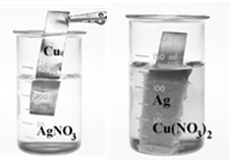
<strong>Consider the following beakers.In the beaker on the left copper metal is placed in a solution of silver nitrate.The reaction is allowed to run for 60 minutes producing the products shown on the right.   The equation for the oxidation half-reaction would be:</strong> A)   B)   C)   D)   <div style=padding-top: 35px>
The equation for the oxidation half-reaction would be:

A) <strong>Consider the following beakers.In the beaker on the left copper metal is placed in a solution of silver nitrate.The reaction is allowed to run for 60 minutes producing the products shown on the right.   The equation for the oxidation half-reaction would be:</strong> A)   B)   C)   D)   <div style=padding-top: 35px>

B) <strong>Consider the following beakers.In the beaker on the left copper metal is placed in a solution of silver nitrate.The reaction is allowed to run for 60 minutes producing the products shown on the right.   The equation for the oxidation half-reaction would be:</strong> A)   B)   C)   D)   <div style=padding-top: 35px>
C) <strong>Consider the following beakers.In the beaker on the left copper metal is placed in a solution of silver nitrate.The reaction is allowed to run for 60 minutes producing the products shown on the right.   The equation for the oxidation half-reaction would be:</strong> A)   B)   C)   D)   <div style=padding-top: 35px>
D) <strong>Consider the following beakers.In the beaker on the left copper metal is placed in a solution of silver nitrate.The reaction is allowed to run for 60 minutes producing the products shown on the right.   The equation for the oxidation half-reaction would be:</strong> A)   B)   C)   D)   <div style=padding-top: 35px>
سؤال
What is the oxidation number of sulfur in sulfite ion,SO32-?

A)+6
B)+4
C)-2
D)+2
E)-4
سؤال
What is the oxidation number of titanium in TiO2?

A)+4
B)+2
C)+6
D)-4
E)zero
سؤال
Reduction can be defined as...

A)a increase in oxidation number
B)the gain of protons
C)the loss of protons
D)a gain of electrons
E)a loss of electrons
سؤال
Which of the following is a reduction reaction?

A)Conversion of 2 Cl- to Cl2
B)Conversion of copper(I) ions into copper(II) ions
C)Conversion of Ag+ into Ag
D)Conversion of Al3+ to Al
E)Conversion of plutonium into uranium
سؤال
Consider the following images.The reactions occurring in each are shown in the choices. <strong>Consider the following images.The reactions occurring in each are shown in the choices.   Which of the following is an example of an electron transfer reaction?</strong> A)Pb(NO<sub>3</sub>)<sub>2</sub>(aq) + Na<sub>2</sub>SO<sub>4</sub>(aq)   2 NaNO<sub>3</sub>(aq) + PbSO<sub>4</sub>(s) B)H<sub>2</sub>CO<sub>3</sub>(aq)   H<sub>2</sub>O(l) + CO<sub>2</sub>(g) C)Ca(s) + 2HCl(aq)   CaCl<sub>2</sub>(aq) + H<sub>2</sub>(g) D)Zn(s) + Cu<sup>2+</sup>(aq)   Zn<sup>2+</sup>(aq) + Cu(s) E)Both c and d are electron transfer reactions. <div style=padding-top: 35px>
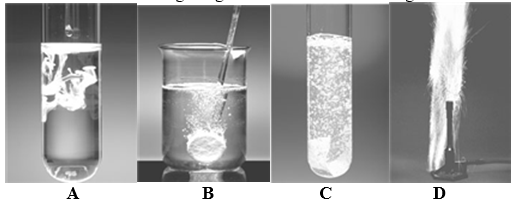
Which of the following is an example of an electron transfer reaction?

A)Pb(NO3)2(aq) + Na2SO4(aq) <strong>Consider the following images.The reactions occurring in each are shown in the choices.   Which of the following is an example of an electron transfer reaction?</strong> A)Pb(NO<sub>3</sub>)<sub>2</sub>(aq) + Na<sub>2</sub>SO<sub>4</sub>(aq)   2 NaNO<sub>3</sub>(aq) + PbSO<sub>4</sub>(s) B)H<sub>2</sub>CO<sub>3</sub>(aq)   H<sub>2</sub>O(l) + CO<sub>2</sub>(g) C)Ca(s) + 2HCl(aq)   CaCl<sub>2</sub>(aq) + H<sub>2</sub>(g) D)Zn(s) + Cu<sup>2+</sup>(aq)   Zn<sup>2+</sup>(aq) + Cu(s) E)Both c and d are electron transfer reactions. <div style=padding-top: 35px> 2 NaNO3(aq) + PbSO4(s)
B)H2CO3(aq) <strong>Consider the following images.The reactions occurring in each are shown in the choices.   Which of the following is an example of an electron transfer reaction?</strong> A)Pb(NO<sub>3</sub>)<sub>2</sub>(aq) + Na<sub>2</sub>SO<sub>4</sub>(aq)   2 NaNO<sub>3</sub>(aq) + PbSO<sub>4</sub>(s) B)H<sub>2</sub>CO<sub>3</sub>(aq)   H<sub>2</sub>O(l) + CO<sub>2</sub>(g) C)Ca(s) + 2HCl(aq)   CaCl<sub>2</sub>(aq) + H<sub>2</sub>(g) D)Zn(s) + Cu<sup>2+</sup>(aq)   Zn<sup>2+</sup>(aq) + Cu(s) E)Both c and d are electron transfer reactions. <div style=padding-top: 35px> H2O(l) + CO2(g)
C)Ca(s) + 2HCl(aq) <strong>Consider the following images.The reactions occurring in each are shown in the choices.   Which of the following is an example of an electron transfer reaction?</strong> A)Pb(NO<sub>3</sub>)<sub>2</sub>(aq) + Na<sub>2</sub>SO<sub>4</sub>(aq)   2 NaNO<sub>3</sub>(aq) + PbSO<sub>4</sub>(s) B)H<sub>2</sub>CO<sub>3</sub>(aq)   H<sub>2</sub>O(l) + CO<sub>2</sub>(g) C)Ca(s) + 2HCl(aq)   CaCl<sub>2</sub>(aq) + H<sub>2</sub>(g) D)Zn(s) + Cu<sup>2+</sup>(aq)   Zn<sup>2+</sup>(aq) + Cu(s) E)Both c and d are electron transfer reactions. <div style=padding-top: 35px> CaCl2(aq) + H2(g)
D)Zn(s) + Cu2+(aq) <strong>Consider the following images.The reactions occurring in each are shown in the choices.   Which of the following is an example of an electron transfer reaction?</strong> A)Pb(NO<sub>3</sub>)<sub>2</sub>(aq) + Na<sub>2</sub>SO<sub>4</sub>(aq)   2 NaNO<sub>3</sub>(aq) + PbSO<sub>4</sub>(s) B)H<sub>2</sub>CO<sub>3</sub>(aq)   H<sub>2</sub>O(l) + CO<sub>2</sub>(g) C)Ca(s) + 2HCl(aq)   CaCl<sub>2</sub>(aq) + H<sub>2</sub>(g) D)Zn(s) + Cu<sup>2+</sup>(aq)   Zn<sup>2+</sup>(aq) + Cu(s) E)Both c and d are electron transfer reactions. <div style=padding-top: 35px> Zn2+(aq) + Cu(s)
E)Both c and d are electron transfer reactions.
سؤال
Which among the following are the parts that comprise an electrolytic cell?
i.Two electrodes
ii.A molecular liquid
iii.A salt bridge
iv.An ionic solution

A)i and ii
B)i and iv
C)ii, iii, and iv
D)i, ii, and iii
E)i, iii, and iv
سؤال
How many electrons are transferred in the balanced redox equation that results from combining these two half-reactions on a molar scale?
Al <strong>How many electrons are transferred in the balanced redox equation that results from combining these two half-reactions on a molar scale? Al   Al<sup>3+</sup> + 3e<sup>-</sup> and Cu<sup>2+</sup> + 2 e<sup>-</sup>   Cu</strong> A)6 B)5 C)3 D)2 E)1 <div style=padding-top: 35px> Al3+ + 3e- and Cu2+ + 2 e- <strong>How many electrons are transferred in the balanced redox equation that results from combining these two half-reactions on a molar scale? Al   Al<sup>3+</sup> + 3e<sup>-</sup> and Cu<sup>2+</sup> + 2 e<sup>-</sup>   Cu</strong> A)6 B)5 C)3 D)2 E)1 <div style=padding-top: 35px> Cu

A)6
B)5
C)3
D)2
E)1
سؤال
Which of the following statements is correct for an electrolytic cell?

A)Electrons flow through the external circuit from the anode to the cathode
B)The electrode at which oxidation occurs is the cathode
C)The reaction occurring in the cell can be used to generate an electric current.
D)Charge is carried through the solution by electrons in one direction and by protons in the other direction
E)None of the statements above is correct
سؤال
Which of the following is the half-reaction for reduction of chlorine to chloride ions in water?

A)Cl2(aq) <strong>Which of the following is the half-reaction for reduction of chlorine to chloride ions in water?</strong> A)Cl<sub>2</sub>(aq)   Cl<sup>-</sup>(aq) + Cl<sup>+</sup>(aq) B)Cl<sup>-</sup>(aq) + H<sup>+</sup>(aq)   HCl(aq) C)2 Cl<sup>-</sup>(aq) + 2 e<sup>-</sup>   Cl<sub>2</sub>(aq) D)Cl<sub>2</sub>(aq) + 2 e<sup>-</sup>   2 Cl<sup>-</sup>(aq) E)2 Cl<sup>-</sup>(aq)   Cl<sub>2</sub>(aq) + 2 e<sup>-</sup> <div style=padding-top: 35px> Cl-(aq) + Cl+(aq)
B)Cl-(aq) + H+(aq) <strong>Which of the following is the half-reaction for reduction of chlorine to chloride ions in water?</strong> A)Cl<sub>2</sub>(aq)   Cl<sup>-</sup>(aq) + Cl<sup>+</sup>(aq) B)Cl<sup>-</sup>(aq) + H<sup>+</sup>(aq)   HCl(aq) C)2 Cl<sup>-</sup>(aq) + 2 e<sup>-</sup>   Cl<sub>2</sub>(aq) D)Cl<sub>2</sub>(aq) + 2 e<sup>-</sup>   2 Cl<sup>-</sup>(aq) E)2 Cl<sup>-</sup>(aq)   Cl<sub>2</sub>(aq) + 2 e<sup>-</sup> <div style=padding-top: 35px> HCl(aq)
C)2 Cl-(aq) + 2 e- <strong>Which of the following is the half-reaction for reduction of chlorine to chloride ions in water?</strong> A)Cl<sub>2</sub>(aq)   Cl<sup>-</sup>(aq) + Cl<sup>+</sup>(aq) B)Cl<sup>-</sup>(aq) + H<sup>+</sup>(aq)   HCl(aq) C)2 Cl<sup>-</sup>(aq) + 2 e<sup>-</sup>   Cl<sub>2</sub>(aq) D)Cl<sub>2</sub>(aq) + 2 e<sup>-</sup>   2 Cl<sup>-</sup>(aq) E)2 Cl<sup>-</sup>(aq)   Cl<sub>2</sub>(aq) + 2 e<sup>-</sup> <div style=padding-top: 35px> Cl2(aq)
D)Cl2(aq) + 2 e- <strong>Which of the following is the half-reaction for reduction of chlorine to chloride ions in water?</strong> A)Cl<sub>2</sub>(aq)   Cl<sup>-</sup>(aq) + Cl<sup>+</sup>(aq) B)Cl<sup>-</sup>(aq) + H<sup>+</sup>(aq)   HCl(aq) C)2 Cl<sup>-</sup>(aq) + 2 e<sup>-</sup>   Cl<sub>2</sub>(aq) D)Cl<sub>2</sub>(aq) + 2 e<sup>-</sup>   2 Cl<sup>-</sup>(aq) E)2 Cl<sup>-</sup>(aq)   Cl<sub>2</sub>(aq) + 2 e<sup>-</sup> <div style=padding-top: 35px> 2 Cl-(aq)
E)2 Cl-(aq) <strong>Which of the following is the half-reaction for reduction of chlorine to chloride ions in water?</strong> A)Cl<sub>2</sub>(aq)   Cl<sup>-</sup>(aq) + Cl<sup>+</sup>(aq) B)Cl<sup>-</sup>(aq) + H<sup>+</sup>(aq)   HCl(aq) C)2 Cl<sup>-</sup>(aq) + 2 e<sup>-</sup>   Cl<sub>2</sub>(aq) D)Cl<sub>2</sub>(aq) + 2 e<sup>-</sup>   2 Cl<sup>-</sup>(aq) E)2 Cl<sup>-</sup>(aq)   Cl<sub>2</sub>(aq) + 2 e<sup>-</sup> <div style=padding-top: 35px> Cl2(aq) + 2 e-
سؤال
What is the balanced redox equation that results from the combination of the following half-reactions?
Cr3+ + 3e- <strong>What is the balanced redox equation that results from the combination of the following half-reactions? Cr<sup>3+</sup> + 3e<sup>-</sup>   Cr and 2 Cl<sup>-</sup>   Cl<sub>2</sub> + 2 e<sup>-</sup></strong> A)CrCl<sub>2</sub><sup>+</sup> + e<sup>-</sup>   Cr + Cl<sub>2</sub> B)Cr<sup>3+</sup> + 2 Cl<sup>-</sup> + e<sup>-</sup>   Cr + Cl<sub>2</sub> C)Cr<sup>3+</sup> + 3 Cl<sup>-</sup>   CrCl<sub>3</sub> D)2 Cr<sup>3+</sup> + 6 Cl<sup>-</sup> + 3 e<sup>-</sup>   3 Cl<sub>2</sub> + 2 Cr + 2 e<sup>-</sup> E)2 Cr<sup>3+</sup> + 6 Cl<sup>-</sup>   3 Cl<sub>2</sub> + 2 Cr <div style=padding-top: 35px> Cr and 2 Cl- <strong>What is the balanced redox equation that results from the combination of the following half-reactions? Cr<sup>3+</sup> + 3e<sup>-</sup>   Cr and 2 Cl<sup>-</sup>   Cl<sub>2</sub> + 2 e<sup>-</sup></strong> A)CrCl<sub>2</sub><sup>+</sup> + e<sup>-</sup>   Cr + Cl<sub>2</sub> B)Cr<sup>3+</sup> + 2 Cl<sup>-</sup> + e<sup>-</sup>   Cr + Cl<sub>2</sub> C)Cr<sup>3+</sup> + 3 Cl<sup>-</sup>   CrCl<sub>3</sub> D)2 Cr<sup>3+</sup> + 6 Cl<sup>-</sup> + 3 e<sup>-</sup>   3 Cl<sub>2</sub> + 2 Cr + 2 e<sup>-</sup> E)2 Cr<sup>3+</sup> + 6 Cl<sup>-</sup>   3 Cl<sub>2</sub> + 2 Cr <div style=padding-top: 35px> Cl2 + 2 e-

A)CrCl2+ + e- <strong>What is the balanced redox equation that results from the combination of the following half-reactions? Cr<sup>3+</sup> + 3e<sup>-</sup>   Cr and 2 Cl<sup>-</sup>   Cl<sub>2</sub> + 2 e<sup>-</sup></strong> A)CrCl<sub>2</sub><sup>+</sup> + e<sup>-</sup>   Cr + Cl<sub>2</sub> B)Cr<sup>3+</sup> + 2 Cl<sup>-</sup> + e<sup>-</sup>   Cr + Cl<sub>2</sub> C)Cr<sup>3+</sup> + 3 Cl<sup>-</sup>   CrCl<sub>3</sub> D)2 Cr<sup>3+</sup> + 6 Cl<sup>-</sup> + 3 e<sup>-</sup>   3 Cl<sub>2</sub> + 2 Cr + 2 e<sup>-</sup> E)2 Cr<sup>3+</sup> + 6 Cl<sup>-</sup>   3 Cl<sub>2</sub> + 2 Cr <div style=padding-top: 35px> Cr + Cl2
B)Cr3+ + 2 Cl- + e- <strong>What is the balanced redox equation that results from the combination of the following half-reactions? Cr<sup>3+</sup> + 3e<sup>-</sup>   Cr and 2 Cl<sup>-</sup>   Cl<sub>2</sub> + 2 e<sup>-</sup></strong> A)CrCl<sub>2</sub><sup>+</sup> + e<sup>-</sup>   Cr + Cl<sub>2</sub> B)Cr<sup>3+</sup> + 2 Cl<sup>-</sup> + e<sup>-</sup>   Cr + Cl<sub>2</sub> C)Cr<sup>3+</sup> + 3 Cl<sup>-</sup>   CrCl<sub>3</sub> D)2 Cr<sup>3+</sup> + 6 Cl<sup>-</sup> + 3 e<sup>-</sup>   3 Cl<sub>2</sub> + 2 Cr + 2 e<sup>-</sup> E)2 Cr<sup>3+</sup> + 6 Cl<sup>-</sup>   3 Cl<sub>2</sub> + 2 Cr <div style=padding-top: 35px> Cr + Cl2
C)Cr3+ + 3 Cl- <strong>What is the balanced redox equation that results from the combination of the following half-reactions? Cr<sup>3+</sup> + 3e<sup>-</sup>   Cr and 2 Cl<sup>-</sup>   Cl<sub>2</sub> + 2 e<sup>-</sup></strong> A)CrCl<sub>2</sub><sup>+</sup> + e<sup>-</sup>   Cr + Cl<sub>2</sub> B)Cr<sup>3+</sup> + 2 Cl<sup>-</sup> + e<sup>-</sup>   Cr + Cl<sub>2</sub> C)Cr<sup>3+</sup> + 3 Cl<sup>-</sup>   CrCl<sub>3</sub> D)2 Cr<sup>3+</sup> + 6 Cl<sup>-</sup> + 3 e<sup>-</sup>   3 Cl<sub>2</sub> + 2 Cr + 2 e<sup>-</sup> E)2 Cr<sup>3+</sup> + 6 Cl<sup>-</sup>   3 Cl<sub>2</sub> + 2 Cr <div style=padding-top: 35px> CrCl3
D)2 Cr3+ + 6 Cl- + 3 e- <strong>What is the balanced redox equation that results from the combination of the following half-reactions? Cr<sup>3+</sup> + 3e<sup>-</sup>   Cr and 2 Cl<sup>-</sup>   Cl<sub>2</sub> + 2 e<sup>-</sup></strong> A)CrCl<sub>2</sub><sup>+</sup> + e<sup>-</sup>   Cr + Cl<sub>2</sub> B)Cr<sup>3+</sup> + 2 Cl<sup>-</sup> + e<sup>-</sup>   Cr + Cl<sub>2</sub> C)Cr<sup>3+</sup> + 3 Cl<sup>-</sup>   CrCl<sub>3</sub> D)2 Cr<sup>3+</sup> + 6 Cl<sup>-</sup> + 3 e<sup>-</sup>   3 Cl<sub>2</sub> + 2 Cr + 2 e<sup>-</sup> E)2 Cr<sup>3+</sup> + 6 Cl<sup>-</sup>   3 Cl<sub>2</sub> + 2 Cr <div style=padding-top: 35px> 3 Cl2 + 2 Cr + 2 e-
E)2 Cr3+ + 6 Cl- <strong>What is the balanced redox equation that results from the combination of the following half-reactions? Cr<sup>3+</sup> + 3e<sup>-</sup>   Cr and 2 Cl<sup>-</sup>   Cl<sub>2</sub> + 2 e<sup>-</sup></strong> A)CrCl<sub>2</sub><sup>+</sup> + e<sup>-</sup>   Cr + Cl<sub>2</sub> B)Cr<sup>3+</sup> + 2 Cl<sup>-</sup> + e<sup>-</sup>   Cr + Cl<sub>2</sub> C)Cr<sup>3+</sup> + 3 Cl<sup>-</sup>   CrCl<sub>3</sub> D)2 Cr<sup>3+</sup> + 6 Cl<sup>-</sup> + 3 e<sup>-</sup>   3 Cl<sub>2</sub> + 2 Cr + 2 e<sup>-</sup> E)2 Cr<sup>3+</sup> + 6 Cl<sup>-</sup>   3 Cl<sub>2</sub> + 2 Cr <div style=padding-top: 35px> 3 Cl2 + 2 Cr
سؤال
Identify the oxidation half-reaction in the following group.

A)Ag(NH3)2 + e- <strong>Identify the oxidation half-reaction in the following group.</strong> A)Ag(NH<sub>3</sub>)<sub>2</sub> + e<sup>-</sup>   Ag + 2 NH<sub>3</sub> B)Ag + Cl<sup>-</sup>   AgCl + e<sup>-</sup> C)PbSO<sub>4</sub>(s) + 2 e<sup>-</sup>   Pb(s) + SO<sub>4</sub><sup>2-</sup> D)Ag(CN)<sub>2</sub> + e<sup>-</sup>   Ag + 2 CN<sup>-</sup> E)Cr<sub>2</sub>O<sub>7</sub><sup>2-</sup> + H<sub>2</sub>O   2 CrO<sub>4</sub><sup>2-</sup> + 2 H<sup>+</sup> <div style=padding-top: 35px> Ag + 2 NH3
B)Ag + Cl- <strong>Identify the oxidation half-reaction in the following group.</strong> A)Ag(NH<sub>3</sub>)<sub>2</sub> + e<sup>-</sup>   Ag + 2 NH<sub>3</sub> B)Ag + Cl<sup>-</sup>   AgCl + e<sup>-</sup> C)PbSO<sub>4</sub>(s) + 2 e<sup>-</sup>   Pb(s) + SO<sub>4</sub><sup>2-</sup> D)Ag(CN)<sub>2</sub> + e<sup>-</sup>   Ag + 2 CN<sup>-</sup> E)Cr<sub>2</sub>O<sub>7</sub><sup>2-</sup> + H<sub>2</sub>O   2 CrO<sub>4</sub><sup>2-</sup> + 2 H<sup>+</sup> <div style=padding-top: 35px> AgCl + e-
C)PbSO4(s) + 2 e- <strong>Identify the oxidation half-reaction in the following group.</strong> A)Ag(NH<sub>3</sub>)<sub>2</sub> + e<sup>-</sup>   Ag + 2 NH<sub>3</sub> B)Ag + Cl<sup>-</sup>   AgCl + e<sup>-</sup> C)PbSO<sub>4</sub>(s) + 2 e<sup>-</sup>   Pb(s) + SO<sub>4</sub><sup>2-</sup> D)Ag(CN)<sub>2</sub> + e<sup>-</sup>   Ag + 2 CN<sup>-</sup> E)Cr<sub>2</sub>O<sub>7</sub><sup>2-</sup> + H<sub>2</sub>O   2 CrO<sub>4</sub><sup>2-</sup> + 2 H<sup>+</sup> <div style=padding-top: 35px> Pb(s) + SO42-
D)Ag(CN)2 + e- <strong>Identify the oxidation half-reaction in the following group.</strong> A)Ag(NH<sub>3</sub>)<sub>2</sub> + e<sup>-</sup>   Ag + 2 NH<sub>3</sub> B)Ag + Cl<sup>-</sup>   AgCl + e<sup>-</sup> C)PbSO<sub>4</sub>(s) + 2 e<sup>-</sup>   Pb(s) + SO<sub>4</sub><sup>2-</sup> D)Ag(CN)<sub>2</sub> + e<sup>-</sup>   Ag + 2 CN<sup>-</sup> E)Cr<sub>2</sub>O<sub>7</sub><sup>2-</sup> + H<sub>2</sub>O   2 CrO<sub>4</sub><sup>2-</sup> + 2 H<sup>+</sup> <div style=padding-top: 35px> Ag + 2 CN-
E)Cr2O72- + H2O <strong>Identify the oxidation half-reaction in the following group.</strong> A)Ag(NH<sub>3</sub>)<sub>2</sub> + e<sup>-</sup>   Ag + 2 NH<sub>3</sub> B)Ag + Cl<sup>-</sup>   AgCl + e<sup>-</sup> C)PbSO<sub>4</sub>(s) + 2 e<sup>-</sup>   Pb(s) + SO<sub>4</sub><sup>2-</sup> D)Ag(CN)<sub>2</sub> + e<sup>-</sup>   Ag + 2 CN<sup>-</sup> E)Cr<sub>2</sub>O<sub>7</sub><sup>2-</sup> + H<sub>2</sub>O   2 CrO<sub>4</sub><sup>2-</sup> + 2 H<sup>+</sup> <div style=padding-top: 35px> 2 CrO42- + 2 H+
سؤال
Oxidation-reduction reactions are also known as...

A)electron-transfer reactions
B)proton-transfer reactions
C)neutron bombardment reactions
D)neutralization reactions
E)double displacement reactions
سؤال
Which of the following processes is a reduction reaction?

A)2 Br- becoming Br2
B)Ni2+ becoming Ni3+
C)Hg22+ becoming 2 Hg
D)Tin(II) becoming tin(IV)
E)Iron(II) becoming iron(III)
سؤال
Consider the following table of relative strengths of oxidizing and reducing agents:

<strong>Consider the following table of relative strengths of oxidizing and reducing agents:  </strong> A)A < B < C B)C < B < A C)A<sup>+</sup> < B<sup>2+</sup> < C<sup>3+</sup> D)B<sup>2+</sup> < A<sup>+</sup> < C<sup>3+</sup> E)C<sup>3+</sup> < B<sup>2+</sup> < A<sup>+</sup> <div style=padding-top: 35px>

A)A < B < C
B)C < B < A
C)A+ < B2+ < C3+
D)B2+ < A+ < C3+
E)C3+ < B2+ < A+
سؤال
What is the oxidation number of chromium in Cr2O72-?

A)+12
B)+3
C)+6
D)-2
E)-1
سؤال
What role does the reducing agent play in a redox reaction?

A)It catalyzes the reaction
B)It picks up electrons
C)It picks up protons from the oxidizing agent
D)It donates protons to the oxidizing agent
E)It donates some of its electrons
سؤال
What evidence suggests that Na+ ions are very weak oxidizing agents?

A)NaCl is a strong electrolyte
B)Na metal does not occur in the Earth's crust
C)NaOH is a strong base
D)Na metal is soft and can be cut with a knife
E)Na+ ions are a component of table salt
سؤال
Which of the following cannot be a reducing agent?

A)H+(aq)
B)H2(g)
C)H2O2( <strong>Which of the following cannot be a reducing agent?</strong> A)H<sup>+</sup>(aq) B)H<sub>2</sub>(g) C)H<sub>2</sub>O<sub>2</sub>(   ) D)CH<sub>4</sub>(g) E)All of the above can be a reducing agent <div style=padding-top: 35px> )
D)CH4(g)
E)All of the above can be a reducing agent
سؤال
Examine the two beakers shown below. <strong>Examine the two beakers shown below.   If the metals were connected by a wire containing a meter and the two solutions by a salt bridge,the electrons flow from the Zn half-cell to the Pb half-cell.Which of the following is correct?</strong> A)Zinc is a stronger oxidizing agent than lead. B)Lead is a stronger oxidizing agent than zinc. C)Zinc is a stronger reducing agent than lead. D)Lead is a stronger reducing agent than zinc. E)Both a and d are correct. F)Both b and c are correct. <div style=padding-top: 35px>
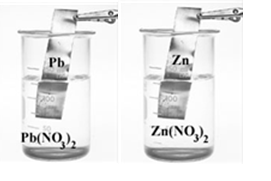
If the metals were connected by a wire containing a meter and the two solutions by a salt bridge,the electrons flow from the Zn half-cell to the Pb half-cell.Which of the following is correct?

A)Zinc is a stronger oxidizing agent than lead.
B)Lead is a stronger oxidizing agent than zinc.
C)Zinc is a stronger reducing agent than lead.
D)Lead is a stronger reducing agent than zinc.
E)Both a and d are correct.
F)Both b and c are correct.
سؤال
Which of the following substances is most likely to be a reducing agent?

A)NH4+
B)S2-
C)Mg2+
D)KMnO4
E)Cl2
سؤال
Which substance gets reduced in this redox reaction?
Pb(s)+ PbO2(s)+ 2 H2SO4(aq) <strong>Which substance gets reduced in this redox reaction? Pb(s)+ PbO<sub>2</sub>(s)+ 2 H<sub>2</sub>SO<sub>4</sub>(aq)   2 PbSO<sub>4</sub>(s)+ 2 H<sub>2</sub>O(   )</strong> A)H<sub>2</sub>SO<sub>4</sub>(s) B)Pb(s) C)PbO<sub>2</sub>(s) D)PbSO<sub>4</sub>(s) E)No substance is reduced in this reaction <div style=padding-top: 35px> 2 PbSO4(s)+ 2 H2O( <strong>Which substance gets reduced in this redox reaction? Pb(s)+ PbO<sub>2</sub>(s)+ 2 H<sub>2</sub>SO<sub>4</sub>(aq)   2 PbSO<sub>4</sub>(s)+ 2 H<sub>2</sub>O(   )</strong> A)H<sub>2</sub>SO<sub>4</sub>(s) B)Pb(s) C)PbO<sub>2</sub>(s) D)PbSO<sub>4</sub>(s) E)No substance is reduced in this reaction <div style=padding-top: 35px> )

A)H2SO4(s)
B)Pb(s)
C)PbO2(s)
D)PbSO4(s)
E)No substance is reduced in this reaction
سؤال
Which of the following is the correct net ionic equation for the redox reaction between nickel ion and metallic silver and the correct direction that is favored? The half reactions are:
Ag+ + e- <strong>Which of the following is the correct net ionic equation for the redox reaction between nickel ion and metallic silver and the correct direction that is favored? The half reactions are: Ag<sup>+</sup> + e<sup>-</sup>   Ag(s) Ni<sup>2+</sup> + 2e<sup>-</sup>   Ni(s) Ag<sup>+</sup> is a stronger oxidizing agent than Ni<sup>2+</sup>.</strong> A)Ni<sup>2+</sup>(aq) + Ag(s) + e<sup>-</sup>   Ni(s) + Ag<sup>+</sup> (aq) forward B)Ni<sup>2+</sup>(aq) + Ag(s) + e<sup>-</sup>   Ni(s) + Ag<sup>+</sup>(aq) reverse C)Ni<sup>2+</sup>(aq) + Ag(s)   Ni(s) + 2 Ag<sup>+</sup>(aq) reverse D)Ni<sup>2+</sup>(aq) + 2 Ag(s)   Ni(s) + 2 Ag<sup>+</sup>(aq) forward E)Ni<sup>2+</sup>(aq) + 2 Ag(s)   Ni(s) + 2 Ag<sup>+</sup>(aq) reverse <div style=padding-top: 35px> Ag(s)
Ni2+ + 2e- <strong>Which of the following is the correct net ionic equation for the redox reaction between nickel ion and metallic silver and the correct direction that is favored? The half reactions are: Ag<sup>+</sup> + e<sup>-</sup>   Ag(s) Ni<sup>2+</sup> + 2e<sup>-</sup>   Ni(s) Ag<sup>+</sup> is a stronger oxidizing agent than Ni<sup>2+</sup>.</strong> A)Ni<sup>2+</sup>(aq) + Ag(s) + e<sup>-</sup>   Ni(s) + Ag<sup>+</sup> (aq) forward B)Ni<sup>2+</sup>(aq) + Ag(s) + e<sup>-</sup>   Ni(s) + Ag<sup>+</sup>(aq) reverse C)Ni<sup>2+</sup>(aq) + Ag(s)   Ni(s) + 2 Ag<sup>+</sup>(aq) reverse D)Ni<sup>2+</sup>(aq) + 2 Ag(s)   Ni(s) + 2 Ag<sup>+</sup>(aq) forward E)Ni<sup>2+</sup>(aq) + 2 Ag(s)   Ni(s) + 2 Ag<sup>+</sup>(aq) reverse <div style=padding-top: 35px> Ni(s)
Ag+ is a stronger oxidizing agent than Ni2+.

A)Ni2+(aq) + Ag(s) + e- <strong>Which of the following is the correct net ionic equation for the redox reaction between nickel ion and metallic silver and the correct direction that is favored? The half reactions are: Ag<sup>+</sup> + e<sup>-</sup>   Ag(s) Ni<sup>2+</sup> + 2e<sup>-</sup>   Ni(s) Ag<sup>+</sup> is a stronger oxidizing agent than Ni<sup>2+</sup>.</strong> A)Ni<sup>2+</sup>(aq) + Ag(s) + e<sup>-</sup>   Ni(s) + Ag<sup>+</sup> (aq) forward B)Ni<sup>2+</sup>(aq) + Ag(s) + e<sup>-</sup>   Ni(s) + Ag<sup>+</sup>(aq) reverse C)Ni<sup>2+</sup>(aq) + Ag(s)   Ni(s) + 2 Ag<sup>+</sup>(aq) reverse D)Ni<sup>2+</sup>(aq) + 2 Ag(s)   Ni(s) + 2 Ag<sup>+</sup>(aq) forward E)Ni<sup>2+</sup>(aq) + 2 Ag(s)   Ni(s) + 2 Ag<sup>+</sup>(aq) reverse <div style=padding-top: 35px> Ni(s) + Ag+ (aq) forward
B)Ni2+(aq) + Ag(s) + e- <strong>Which of the following is the correct net ionic equation for the redox reaction between nickel ion and metallic silver and the correct direction that is favored? The half reactions are: Ag<sup>+</sup> + e<sup>-</sup>   Ag(s) Ni<sup>2+</sup> + 2e<sup>-</sup>   Ni(s) Ag<sup>+</sup> is a stronger oxidizing agent than Ni<sup>2+</sup>.</strong> A)Ni<sup>2+</sup>(aq) + Ag(s) + e<sup>-</sup>   Ni(s) + Ag<sup>+</sup> (aq) forward B)Ni<sup>2+</sup>(aq) + Ag(s) + e<sup>-</sup>   Ni(s) + Ag<sup>+</sup>(aq) reverse C)Ni<sup>2+</sup>(aq) + Ag(s)   Ni(s) + 2 Ag<sup>+</sup>(aq) reverse D)Ni<sup>2+</sup>(aq) + 2 Ag(s)   Ni(s) + 2 Ag<sup>+</sup>(aq) forward E)Ni<sup>2+</sup>(aq) + 2 Ag(s)   Ni(s) + 2 Ag<sup>+</sup>(aq) reverse <div style=padding-top: 35px> Ni(s) + Ag+(aq) reverse
C)Ni2+(aq) + Ag(s) <strong>Which of the following is the correct net ionic equation for the redox reaction between nickel ion and metallic silver and the correct direction that is favored? The half reactions are: Ag<sup>+</sup> + e<sup>-</sup>   Ag(s) Ni<sup>2+</sup> + 2e<sup>-</sup>   Ni(s) Ag<sup>+</sup> is a stronger oxidizing agent than Ni<sup>2+</sup>.</strong> A)Ni<sup>2+</sup>(aq) + Ag(s) + e<sup>-</sup>   Ni(s) + Ag<sup>+</sup> (aq) forward B)Ni<sup>2+</sup>(aq) + Ag(s) + e<sup>-</sup>   Ni(s) + Ag<sup>+</sup>(aq) reverse C)Ni<sup>2+</sup>(aq) + Ag(s)   Ni(s) + 2 Ag<sup>+</sup>(aq) reverse D)Ni<sup>2+</sup>(aq) + 2 Ag(s)   Ni(s) + 2 Ag<sup>+</sup>(aq) forward E)Ni<sup>2+</sup>(aq) + 2 Ag(s)   Ni(s) + 2 Ag<sup>+</sup>(aq) reverse <div style=padding-top: 35px> Ni(s) + 2 Ag+(aq) reverse
D)Ni2+(aq) + 2 Ag(s) <strong>Which of the following is the correct net ionic equation for the redox reaction between nickel ion and metallic silver and the correct direction that is favored? The half reactions are: Ag<sup>+</sup> + e<sup>-</sup>   Ag(s) Ni<sup>2+</sup> + 2e<sup>-</sup>   Ni(s) Ag<sup>+</sup> is a stronger oxidizing agent than Ni<sup>2+</sup>.</strong> A)Ni<sup>2+</sup>(aq) + Ag(s) + e<sup>-</sup>   Ni(s) + Ag<sup>+</sup> (aq) forward B)Ni<sup>2+</sup>(aq) + Ag(s) + e<sup>-</sup>   Ni(s) + Ag<sup>+</sup>(aq) reverse C)Ni<sup>2+</sup>(aq) + Ag(s)   Ni(s) + 2 Ag<sup>+</sup>(aq) reverse D)Ni<sup>2+</sup>(aq) + 2 Ag(s)   Ni(s) + 2 Ag<sup>+</sup>(aq) forward E)Ni<sup>2+</sup>(aq) + 2 Ag(s)   Ni(s) + 2 Ag<sup>+</sup>(aq) reverse <div style=padding-top: 35px> Ni(s) + 2 Ag+(aq) forward
E)Ni2+(aq) + 2 Ag(s) <strong>Which of the following is the correct net ionic equation for the redox reaction between nickel ion and metallic silver and the correct direction that is favored? The half reactions are: Ag<sup>+</sup> + e<sup>-</sup>   Ag(s) Ni<sup>2+</sup> + 2e<sup>-</sup>   Ni(s) Ag<sup>+</sup> is a stronger oxidizing agent than Ni<sup>2+</sup>.</strong> A)Ni<sup>2+</sup>(aq) + Ag(s) + e<sup>-</sup>   Ni(s) + Ag<sup>+</sup> (aq) forward B)Ni<sup>2+</sup>(aq) + Ag(s) + e<sup>-</sup>   Ni(s) + Ag<sup>+</sup>(aq) reverse C)Ni<sup>2+</sup>(aq) + Ag(s)   Ni(s) + 2 Ag<sup>+</sup>(aq) reverse D)Ni<sup>2+</sup>(aq) + 2 Ag(s)   Ni(s) + 2 Ag<sup>+</sup>(aq) forward E)Ni<sup>2+</sup>(aq) + 2 Ag(s)   Ni(s) + 2 Ag<sup>+</sup>(aq) reverse <div style=padding-top: 35px> Ni(s) + 2 Ag+(aq) reverse
سؤال
When zinc is plated to iron,the zinc corrodes rather than the iron.Which statement is true?

A)Zinc is less reactive than iron
B)Zinc is more active metal than iron
C)Zinc is a better oxidizing agent than iron
D)Iron is a better reducing agent than zinc
E)Both metals are Lewis metals
سؤال
Which of the following statements is incorrect?

A)Acid-base reactions involve a transfer of protons; redox reactions, a transfer of electrons
B)In both redox and acid-base reactions, the reactants are given special names to indicate their roles in the transfer process
C)Just as certain species can either donate or accept protons and thereby behave as an acid in one reaction and a base in another, certain species can either accept or donate electrons, acting as an oxidizing agent in one reaction and a reducing agent in another
D)Just as acids and bases may be classified as "strong" or "weak" depending on how readily they donate or accept protons, the strengths of oxidizing and reducing agents may be compared according to their tendencies to attract or release electrons
E)Unlike most acid-base reactions in aqueous solution, which reach a state of equilibrium, most aqueous redox reactions do not reach a state of equilibrium and proceed entirely in either the forward or reverse direction
سؤال
What happens to an elemental oxidizing agent in a redox reaction?

A)It speeds the rate of the reaction although it doesn't actually participate in the reaction
B)It gives up some of its electrons
C)It increases the oxidation number
D)It gets oxidized
E)It gets reduced
سؤال
Silver metal will not react with hydrochloric acid.What does this suggest about silver and hydrochloric acid?

A)HCl is a weak acid
B)HCl is a strong acid
C)Ag is a weaker reducing agent than H+ in HCl(aq)
D)Ag is a stronger oxidizing agent than HCl
E)No conclusion can be made based on this information
سؤال
In comparing acid-base neutralization reactions and redox reactions,which of the following is correct?

A)A strong acid readily gains protons while a strong oxidizing agent readily gains electrons.
B)A strong acid readily provides protons while a strong reducing agent readily gains electrons.
C)A strong base readily gains protons while a strong oxidizing agent readily gains electrons.
D)A strong base readily provides protons while a strong reducing agent readily loses electrons.
سؤال
In the reaction of carbon with oxygen,which substance is oxidized? The equation for the reaction is
C(s)+ O2(g) <strong>In the reaction of carbon with oxygen,which substance is oxidized? The equation for the reaction is C(s)+ O<sub>2</sub>(g)   CO<sub>2</sub>(g).</strong> A)O<sub>2</sub>(g) B)CO<sub>2</sub>(g) C)No substance is oxidized in this reaction D)C(s) E)Both C(s) and O<sub>2</sub>(g) <div style=padding-top: 35px> CO2(g).

A)O2(g)
B)CO2(g)
C)No substance is oxidized in this reaction
D)C(s)
E)Both C(s) and O2(g)
سؤال
Consider the following table of relative strengths of oxidizing and reducing agents:

<strong>Consider the following table of relative strengths of oxidizing and reducing agents:   Which of the following is the correct net ionic equation for the redox reaction between A<sup>+</sup> and C and the correct direction that is favored?</strong> A)A<sup>+</sup> + C   A + C<sup>3+</sup> forward B)A<sup>+</sup> + C   A + C<sup>3+</sup> reverse C)3 A<sup>+</sup> + C   3 A + C<sup>3+</sup> forward D)3 A<sup>+</sup> + C   3 A + C<sup>3+</sup> reverse E)A<sup>+</sup> + C + e<sup>-</sup>   A + C<sup>3+</sup> + 3 e<sup>-</sup> forward <div style=padding-top: 35px>
Which of the following is the correct net ionic equation for the redox reaction between A+ and C and the correct direction that is favored?

A)A+ + C <strong>Consider the following table of relative strengths of oxidizing and reducing agents:   Which of the following is the correct net ionic equation for the redox reaction between A<sup>+</sup> and C and the correct direction that is favored?</strong> A)A<sup>+</sup> + C   A + C<sup>3+</sup> forward B)A<sup>+</sup> + C   A + C<sup>3+</sup> reverse C)3 A<sup>+</sup> + C   3 A + C<sup>3+</sup> forward D)3 A<sup>+</sup> + C   3 A + C<sup>3+</sup> reverse E)A<sup>+</sup> + C + e<sup>-</sup>   A + C<sup>3+</sup> + 3 e<sup>-</sup> forward <div style=padding-top: 35px> A + C3+ forward
B)A+ + C <strong>Consider the following table of relative strengths of oxidizing and reducing agents:   Which of the following is the correct net ionic equation for the redox reaction between A<sup>+</sup> and C and the correct direction that is favored?</strong> A)A<sup>+</sup> + C   A + C<sup>3+</sup> forward B)A<sup>+</sup> + C   A + C<sup>3+</sup> reverse C)3 A<sup>+</sup> + C   3 A + C<sup>3+</sup> forward D)3 A<sup>+</sup> + C   3 A + C<sup>3+</sup> reverse E)A<sup>+</sup> + C + e<sup>-</sup>   A + C<sup>3+</sup> + 3 e<sup>-</sup> forward <div style=padding-top: 35px> A + C3+ reverse
C)3 A+ + C <strong>Consider the following table of relative strengths of oxidizing and reducing agents:   Which of the following is the correct net ionic equation for the redox reaction between A<sup>+</sup> and C and the correct direction that is favored?</strong> A)A<sup>+</sup> + C   A + C<sup>3+</sup> forward B)A<sup>+</sup> + C   A + C<sup>3+</sup> reverse C)3 A<sup>+</sup> + C   3 A + C<sup>3+</sup> forward D)3 A<sup>+</sup> + C   3 A + C<sup>3+</sup> reverse E)A<sup>+</sup> + C + e<sup>-</sup>   A + C<sup>3+</sup> + 3 e<sup>-</sup> forward <div style=padding-top: 35px> 3 A + C3+ forward
D)3 A+ + C <strong>Consider the following table of relative strengths of oxidizing and reducing agents:   Which of the following is the correct net ionic equation for the redox reaction between A<sup>+</sup> and C and the correct direction that is favored?</strong> A)A<sup>+</sup> + C   A + C<sup>3+</sup> forward B)A<sup>+</sup> + C   A + C<sup>3+</sup> reverse C)3 A<sup>+</sup> + C   3 A + C<sup>3+</sup> forward D)3 A<sup>+</sup> + C   3 A + C<sup>3+</sup> reverse E)A<sup>+</sup> + C + e<sup>-</sup>   A + C<sup>3+</sup> + 3 e<sup>-</sup> forward <div style=padding-top: 35px> 3 A + C3+ reverse
E)A+ + C + e- <strong>Consider the following table of relative strengths of oxidizing and reducing agents:   Which of the following is the correct net ionic equation for the redox reaction between A<sup>+</sup> and C and the correct direction that is favored?</strong> A)A<sup>+</sup> + C   A + C<sup>3+</sup> forward B)A<sup>+</sup> + C   A + C<sup>3+</sup> reverse C)3 A<sup>+</sup> + C   3 A + C<sup>3+</sup> forward D)3 A<sup>+</sup> + C   3 A + C<sup>3+</sup> reverse E)A<sup>+</sup> + C + e<sup>-</sup>   A + C<sup>3+</sup> + 3 e<sup>-</sup> forward <div style=padding-top: 35px> A + C3+ + 3 e- forward
سؤال
Match each term with its correct classification:
Proton Donor Proton Acceptor Electron Donor Electron Acceptor

A)Reducing Agent Oxidizing Agent Acid Base
B)Base Acid Reducing Agent Oxidizing Agent
C)Base Acid Oxidizing Agent Reducing Agent
D)Acid Base Reducing Agent Oxidizing Agent
E)Acid Base Oxidizing Agent Reducing Agent
سؤال
What is the oxidizing agent in this redox reaction?
2 MnO2(s)+ 2 NH4Cl(s)+ Zn(s) <strong>What is the oxidizing agent in this redox reaction? 2 MnO<sub>2</sub>(s)+ 2 NH<sub>4</sub>Cl(s)+ Zn(s)   Zn(NH<sub>3</sub>)<sub>2</sub>Cl<sub>2</sub>(s)+ Mn<sub>2</sub>O<sub>3</sub>(s)+ H<sub>2</sub>O(   )</strong> A)NH<sub>4</sub>Cl B)MnO<sub>2</sub> C)Zn D)Zn(NH<sub>3</sub>)<sub>2</sub>Cl<sub>2</sub> E)Mn<sub>2</sub>O<sub>3</sub> <div style=padding-top: 35px> Zn(NH3)2Cl2(s)+ Mn2O3(s)+ H2O( <strong>What is the oxidizing agent in this redox reaction? 2 MnO<sub>2</sub>(s)+ 2 NH<sub>4</sub>Cl(s)+ Zn(s)   Zn(NH<sub>3</sub>)<sub>2</sub>Cl<sub>2</sub>(s)+ Mn<sub>2</sub>O<sub>3</sub>(s)+ H<sub>2</sub>O(   )</strong> A)NH<sub>4</sub>Cl B)MnO<sub>2</sub> C)Zn D)Zn(NH<sub>3</sub>)<sub>2</sub>Cl<sub>2</sub> E)Mn<sub>2</sub>O<sub>3</sub> <div style=padding-top: 35px> )

A)NH4Cl
B)MnO2
C)Zn
D)Zn(NH3)2Cl2
E)Mn2O3
سؤال
What is the reducing agent in the reaction of hydrazine as a rocket fuel: N2H4( <strong>What is the reducing agent in the reaction of hydrazine as a rocket fuel: N<sub>2</sub>H<sub>4</sub>(   )+ O<sub>2</sub>(g)   N<sub>2</sub>(g)+ 2 H<sub>2</sub>O(   )?</strong> A)N<sub>2</sub>H<sub>4</sub> B)O<sub>2</sub> C)N<sub>2</sub> D)H<sub>2</sub>O E)There is no reducing agent in this reaction <div style=padding-top: 35px> )+ O2(g) <strong>What is the reducing agent in the reaction of hydrazine as a rocket fuel: N<sub>2</sub>H<sub>4</sub>(   )+ O<sub>2</sub>(g)   N<sub>2</sub>(g)+ 2 H<sub>2</sub>O(   )?</strong> A)N<sub>2</sub>H<sub>4</sub> B)O<sub>2</sub> C)N<sub>2</sub> D)H<sub>2</sub>O E)There is no reducing agent in this reaction <div style=padding-top: 35px> N2(g)+ 2 H2O( <strong>What is the reducing agent in the reaction of hydrazine as a rocket fuel: N<sub>2</sub>H<sub>4</sub>(   )+ O<sub>2</sub>(g)   N<sub>2</sub>(g)+ 2 H<sub>2</sub>O(   )?</strong> A)N<sub>2</sub>H<sub>4</sub> B)O<sub>2</sub> C)N<sub>2</sub> D)H<sub>2</sub>O E)There is no reducing agent in this reaction <div style=padding-top: 35px> )?

A)N2H4
B)O2
C)N2
D)H2O
E)There is no reducing agent in this reaction
سؤال
Which of the following is the correct net ionic equation for the redox reaction between zinc and the copper(II)ion and the correct direction that is favored? The half-reactions are:
Cu2+ + 2 e- <strong>Which of the following is the correct net ionic equation for the redox reaction between zinc and the copper(II)ion and the correct direction that is favored? The half-reactions are: Cu<sup>2+</sup> + 2 e<sup>-</sup>   Cu(s) Zn<sup>2+</sup> + 2 e<sup>-</sup>   Zn(s) Cu<sup>2+</sup> is a stronger oxidizing agent than Zn<sup>2+</sup>.</strong> A)Cu<sup>2+</sup>(aq) + Zn(s)   Cu(s) + Zn<sup>2+</sup>(aq) reverse B)Cu<sup>2+</sup>(aq) + Zn(s)   Cu(s) + Zn<sup>2+</sup>(aq) forward C)Cu<sup>2+</sup>(aq) + Zn<sup>2+</sup>(s)   Cu(s) + Zn(s) reverse D)Cu<sup>2+</sup>(aq) + Zn<sup>2+</sup>(s)   Cu(s) + Zn(s) forward E)Zn(s) + Cu<sup>2+</sup>(aq)   Zn<sup>+</sup>(aq) + Cu<sup>+</sup>(aq) forward <div style=padding-top: 35px> Cu(s)
Zn2+ + 2 e- <strong>Which of the following is the correct net ionic equation for the redox reaction between zinc and the copper(II)ion and the correct direction that is favored? The half-reactions are: Cu<sup>2+</sup> + 2 e<sup>-</sup>   Cu(s) Zn<sup>2+</sup> + 2 e<sup>-</sup>   Zn(s) Cu<sup>2+</sup> is a stronger oxidizing agent than Zn<sup>2+</sup>.</strong> A)Cu<sup>2+</sup>(aq) + Zn(s)   Cu(s) + Zn<sup>2+</sup>(aq) reverse B)Cu<sup>2+</sup>(aq) + Zn(s)   Cu(s) + Zn<sup>2+</sup>(aq) forward C)Cu<sup>2+</sup>(aq) + Zn<sup>2+</sup>(s)   Cu(s) + Zn(s) reverse D)Cu<sup>2+</sup>(aq) + Zn<sup>2+</sup>(s)   Cu(s) + Zn(s) forward E)Zn(s) + Cu<sup>2+</sup>(aq)   Zn<sup>+</sup>(aq) + Cu<sup>+</sup>(aq) forward <div style=padding-top: 35px> Zn(s)
Cu2+ is a stronger oxidizing agent than Zn2+.

A)Cu2+(aq) + Zn(s) <strong>Which of the following is the correct net ionic equation for the redox reaction between zinc and the copper(II)ion and the correct direction that is favored? The half-reactions are: Cu<sup>2+</sup> + 2 e<sup>-</sup>   Cu(s) Zn<sup>2+</sup> + 2 e<sup>-</sup>   Zn(s) Cu<sup>2+</sup> is a stronger oxidizing agent than Zn<sup>2+</sup>.</strong> A)Cu<sup>2+</sup>(aq) + Zn(s)   Cu(s) + Zn<sup>2+</sup>(aq) reverse B)Cu<sup>2+</sup>(aq) + Zn(s)   Cu(s) + Zn<sup>2+</sup>(aq) forward C)Cu<sup>2+</sup>(aq) + Zn<sup>2+</sup>(s)   Cu(s) + Zn(s) reverse D)Cu<sup>2+</sup>(aq) + Zn<sup>2+</sup>(s)   Cu(s) + Zn(s) forward E)Zn(s) + Cu<sup>2+</sup>(aq)   Zn<sup>+</sup>(aq) + Cu<sup>+</sup>(aq) forward <div style=padding-top: 35px> Cu(s) + Zn2+(aq) reverse
B)Cu2+(aq) + Zn(s) <strong>Which of the following is the correct net ionic equation for the redox reaction between zinc and the copper(II)ion and the correct direction that is favored? The half-reactions are: Cu<sup>2+</sup> + 2 e<sup>-</sup>   Cu(s) Zn<sup>2+</sup> + 2 e<sup>-</sup>   Zn(s) Cu<sup>2+</sup> is a stronger oxidizing agent than Zn<sup>2+</sup>.</strong> A)Cu<sup>2+</sup>(aq) + Zn(s)   Cu(s) + Zn<sup>2+</sup>(aq) reverse B)Cu<sup>2+</sup>(aq) + Zn(s)   Cu(s) + Zn<sup>2+</sup>(aq) forward C)Cu<sup>2+</sup>(aq) + Zn<sup>2+</sup>(s)   Cu(s) + Zn(s) reverse D)Cu<sup>2+</sup>(aq) + Zn<sup>2+</sup>(s)   Cu(s) + Zn(s) forward E)Zn(s) + Cu<sup>2+</sup>(aq)   Zn<sup>+</sup>(aq) + Cu<sup>+</sup>(aq) forward <div style=padding-top: 35px> Cu(s) + Zn2+(aq) forward
C)Cu2+(aq) + Zn2+(s) <strong>Which of the following is the correct net ionic equation for the redox reaction between zinc and the copper(II)ion and the correct direction that is favored? The half-reactions are: Cu<sup>2+</sup> + 2 e<sup>-</sup>   Cu(s) Zn<sup>2+</sup> + 2 e<sup>-</sup>   Zn(s) Cu<sup>2+</sup> is a stronger oxidizing agent than Zn<sup>2+</sup>.</strong> A)Cu<sup>2+</sup>(aq) + Zn(s)   Cu(s) + Zn<sup>2+</sup>(aq) reverse B)Cu<sup>2+</sup>(aq) + Zn(s)   Cu(s) + Zn<sup>2+</sup>(aq) forward C)Cu<sup>2+</sup>(aq) + Zn<sup>2+</sup>(s)   Cu(s) + Zn(s) reverse D)Cu<sup>2+</sup>(aq) + Zn<sup>2+</sup>(s)   Cu(s) + Zn(s) forward E)Zn(s) + Cu<sup>2+</sup>(aq)   Zn<sup>+</sup>(aq) + Cu<sup>+</sup>(aq) forward <div style=padding-top: 35px> Cu(s) + Zn(s) reverse
D)Cu2+(aq) + Zn2+(s) <strong>Which of the following is the correct net ionic equation for the redox reaction between zinc and the copper(II)ion and the correct direction that is favored? The half-reactions are: Cu<sup>2+</sup> + 2 e<sup>-</sup>   Cu(s) Zn<sup>2+</sup> + 2 e<sup>-</sup>   Zn(s) Cu<sup>2+</sup> is a stronger oxidizing agent than Zn<sup>2+</sup>.</strong> A)Cu<sup>2+</sup>(aq) + Zn(s)   Cu(s) + Zn<sup>2+</sup>(aq) reverse B)Cu<sup>2+</sup>(aq) + Zn(s)   Cu(s) + Zn<sup>2+</sup>(aq) forward C)Cu<sup>2+</sup>(aq) + Zn<sup>2+</sup>(s)   Cu(s) + Zn(s) reverse D)Cu<sup>2+</sup>(aq) + Zn<sup>2+</sup>(s)   Cu(s) + Zn(s) forward E)Zn(s) + Cu<sup>2+</sup>(aq)   Zn<sup>+</sup>(aq) + Cu<sup>+</sup>(aq) forward <div style=padding-top: 35px> Cu(s) + Zn(s) forward
E)Zn(s) + Cu2+(aq) <strong>Which of the following is the correct net ionic equation for the redox reaction between zinc and the copper(II)ion and the correct direction that is favored? The half-reactions are: Cu<sup>2+</sup> + 2 e<sup>-</sup>   Cu(s) Zn<sup>2+</sup> + 2 e<sup>-</sup>   Zn(s) Cu<sup>2+</sup> is a stronger oxidizing agent than Zn<sup>2+</sup>.</strong> A)Cu<sup>2+</sup>(aq) + Zn(s)   Cu(s) + Zn<sup>2+</sup>(aq) reverse B)Cu<sup>2+</sup>(aq) + Zn(s)   Cu(s) + Zn<sup>2+</sup>(aq) forward C)Cu<sup>2+</sup>(aq) + Zn<sup>2+</sup>(s)   Cu(s) + Zn(s) reverse D)Cu<sup>2+</sup>(aq) + Zn<sup>2+</sup>(s)   Cu(s) + Zn(s) forward E)Zn(s) + Cu<sup>2+</sup>(aq)   Zn<sup>+</sup>(aq) + Cu<sup>+</sup>(aq) forward <div style=padding-top: 35px> Zn+(aq) + Cu+(aq) forward
سؤال
In balancing the half-reaction NO(g) <strong>In balancing the half-reaction NO(g)   NO<sub>3</sub><sup>-</sup>(aq) In acidic solution,how many electrons are added,and to which side?</strong> A)1 electron to the right side B)3 electrons to the left side C)5 electrons to the left side D)5 electrons to the right side E)3 electrons to the right side <div style=padding-top: 35px> NO3-(aq)
In acidic solution,how many electrons are added,and to which side?

A)1 electron to the right side
B)3 electrons to the left side
C)5 electrons to the left side
D)5 electrons to the right side
E)3 electrons to the right side
سؤال
Balance the following redox equation in acidic solution and determine the coefficient placed in front of H2O: ___ Cu + ___ NO3- + ___ H+ <strong>Balance the following redox equation in acidic solution and determine the coefficient placed in front of H<sub>2</sub>O: ___ Cu + ___ NO<sub>3</sub><sup>-</sup> + ___ H<sup>+</sup>   ___ Cu<sup>2+</sup> + ___ NO + ___ H<sub>2</sub>O</strong> A)1 B)2 C)3 D)4 E)6 <div style=padding-top: 35px> ___ Cu2+ + ___ NO + ___ H2O

A)1
B)2
C)3
D)4
E)6
سؤال
In balancing the half-reaction SO42-(aq) <strong>In balancing the half-reaction SO<sub>4</sub><sup>2-</sup>(aq)   S(s) How many H<sup>+</sup> ions are added to which side?</strong> A)4 H<sup>+</sup> to the left side B)8 H<sup>+</sup> to the right side C)4 H<sup>+</sup> to the right side D)8 H<sup>+</sup> to the left side E)6 H<sup>+</sup> to the left side <div style=padding-top: 35px> S(s)
How many H+ ions are added to which side?

A)4 H+ to the left side
B)8 H+ to the right side
C)4 H+ to the right side
D)8 H+ to the left side
E)6 H+ to the left side
سؤال
Balance the half-reaction in acidic solution and determine the coefficient for hydrogen ion:
___ Cr3+ + ___ H2O <strong>Balance the half-reaction in acidic solution and determine the coefficient for hydrogen ion: ___ Cr<sup>3+</sup> + ___ H<sub>2</sub>O   ___ Cr<sub>2</sub>O<sub>7</sub><sup>2-</sup> + ___ H<sup>+</sup></strong> A)2 B)5 C)8 D)11 E)14 <div style=padding-top: 35px> ___ Cr2O72- + ___ H+

A)2
B)5
C)8
D)11
E)14
سؤال
Balance the following redox reaction in acidic solution and determine how many water molecules are in the equation.MnO4- + ClO- <strong>Balance the following redox reaction in acidic solution and determine how many water molecules are in the equation.MnO<sub>4</sub><sup>-</sup> + ClO<sup>-</sup>   ClO<sub>3</sub><sup>-</sup> + Mn<sup>2+</sup> + H<sub>2</sub>O</strong> A)8 B)2 C)6 D)5 E)4 <div style=padding-top: 35px> ClO3- + Mn2+ + H2O

A)8
B)2
C)6
D)5
E)4
فتح الحزمة
قم بالتسجيل لفتح البطاقات في هذه المجموعة!
Unlock Deck
Unlock Deck
1/45
auto play flashcards
العب
simple tutorial
ملء الشاشة (f)
exit full mode
Deck 19: Oxidationreduction Electron Transferreactions
1
Identify the oxidation half-reaction in the redox equation:
Cu(s)+ Cl2(g) <strong>Identify the oxidation half-reaction in the redox equation: Cu(s)+ Cl<sub>2</sub>(g)   Cu<sup>2+</sup> + 2 Cl<sup>-</sup></strong> A)Cl<sub>2</sub>   2 Cl<sup>-</sup> + 2 e<sup>-</sup> B)Cl<sub>2</sub> + 2 e<sup>-</sup>   2 Cl<sup>-</sup> C)Cu   Cu<sup>2+</sup> + 2 e<sup>-</sup> D)Cu + 2 e<sup>-</sup>   Cu<sup>2+</sup> E)Cu + Cl<sub>2</sub> + 2 e<sup>-</sup>   Cu<sup>2+</sup> + 2 Cl<sup>-</sup> + 2 e<sup>-</sup> Cu2+ + 2 Cl-

A)Cl2 <strong>Identify the oxidation half-reaction in the redox equation: Cu(s)+ Cl<sub>2</sub>(g)   Cu<sup>2+</sup> + 2 Cl<sup>-</sup></strong> A)Cl<sub>2</sub>   2 Cl<sup>-</sup> + 2 e<sup>-</sup> B)Cl<sub>2</sub> + 2 e<sup>-</sup>   2 Cl<sup>-</sup> C)Cu   Cu<sup>2+</sup> + 2 e<sup>-</sup> D)Cu + 2 e<sup>-</sup>   Cu<sup>2+</sup> E)Cu + Cl<sub>2</sub> + 2 e<sup>-</sup>   Cu<sup>2+</sup> + 2 Cl<sup>-</sup> + 2 e<sup>-</sup> 2 Cl- + 2 e-
B)Cl2 + 2 e- <strong>Identify the oxidation half-reaction in the redox equation: Cu(s)+ Cl<sub>2</sub>(g)   Cu<sup>2+</sup> + 2 Cl<sup>-</sup></strong> A)Cl<sub>2</sub>   2 Cl<sup>-</sup> + 2 e<sup>-</sup> B)Cl<sub>2</sub> + 2 e<sup>-</sup>   2 Cl<sup>-</sup> C)Cu   Cu<sup>2+</sup> + 2 e<sup>-</sup> D)Cu + 2 e<sup>-</sup>   Cu<sup>2+</sup> E)Cu + Cl<sub>2</sub> + 2 e<sup>-</sup>   Cu<sup>2+</sup> + 2 Cl<sup>-</sup> + 2 e<sup>-</sup> 2 Cl-
C)Cu <strong>Identify the oxidation half-reaction in the redox equation: Cu(s)+ Cl<sub>2</sub>(g)   Cu<sup>2+</sup> + 2 Cl<sup>-</sup></strong> A)Cl<sub>2</sub>   2 Cl<sup>-</sup> + 2 e<sup>-</sup> B)Cl<sub>2</sub> + 2 e<sup>-</sup>   2 Cl<sup>-</sup> C)Cu   Cu<sup>2+</sup> + 2 e<sup>-</sup> D)Cu + 2 e<sup>-</sup>   Cu<sup>2+</sup> E)Cu + Cl<sub>2</sub> + 2 e<sup>-</sup>   Cu<sup>2+</sup> + 2 Cl<sup>-</sup> + 2 e<sup>-</sup> Cu2+ + 2 e-
D)Cu + 2 e- <strong>Identify the oxidation half-reaction in the redox equation: Cu(s)+ Cl<sub>2</sub>(g)   Cu<sup>2+</sup> + 2 Cl<sup>-</sup></strong> A)Cl<sub>2</sub>   2 Cl<sup>-</sup> + 2 e<sup>-</sup> B)Cl<sub>2</sub> + 2 e<sup>-</sup>   2 Cl<sup>-</sup> C)Cu   Cu<sup>2+</sup> + 2 e<sup>-</sup> D)Cu + 2 e<sup>-</sup>   Cu<sup>2+</sup> E)Cu + Cl<sub>2</sub> + 2 e<sup>-</sup>   Cu<sup>2+</sup> + 2 Cl<sup>-</sup> + 2 e<sup>-</sup> Cu2+
E)Cu + Cl2 + 2 e- <strong>Identify the oxidation half-reaction in the redox equation: Cu(s)+ Cl<sub>2</sub>(g)   Cu<sup>2+</sup> + 2 Cl<sup>-</sup></strong> A)Cl<sub>2</sub>   2 Cl<sup>-</sup> + 2 e<sup>-</sup> B)Cl<sub>2</sub> + 2 e<sup>-</sup>   2 Cl<sup>-</sup> C)Cu   Cu<sup>2+</sup> + 2 e<sup>-</sup> D)Cu + 2 e<sup>-</sup>   Cu<sup>2+</sup> E)Cu + Cl<sub>2</sub> + 2 e<sup>-</sup>   Cu<sup>2+</sup> + 2 Cl<sup>-</sup> + 2 e<sup>-</sup> Cu2+ + 2 Cl- + 2 e-
Cu Cu   Cu<sup>2+</sup> + 2 e<sup>-</sup> Cu2+ + 2 e-
2
What is the oxidation number of Cl in Cl2?

A)-1
B)-2
C)+2
D)0
E)One atom is +1 and the other is -1.
0
3
Identify the reduction half-reaction in the redox equation:
4 Ag + O2(g)+ 2 H2O <strong>Identify the reduction half-reaction in the redox equation: 4 Ag + O<sub>2</sub>(g)+ 2 H<sub>2</sub>O   4 Ag<sup>+</sup> + 4 OH<sup>-</sup></strong> A)Ag   Ag + e<sup>-</sup> B)4 Ag + 4 e<sup>-</sup>   4 Ag<sup>+</sup> C)2 H<sub>2</sub>O + 2e<sup>-</sup>   4 OH<sup>-</sup> D)O<sub>2</sub>(g) + 2 H<sub>2</sub>O + 4 e<sup>-</sup>   4 OH<sup>-</sup> E)2 H<sub>2</sub>O + 2 e<sup>-</sup>   H<sub>2</sub> + 2 OH<sup>-</sup> 4 Ag+ + 4 OH-

A)Ag <strong>Identify the reduction half-reaction in the redox equation: 4 Ag + O<sub>2</sub>(g)+ 2 H<sub>2</sub>O   4 Ag<sup>+</sup> + 4 OH<sup>-</sup></strong> A)Ag   Ag + e<sup>-</sup> B)4 Ag + 4 e<sup>-</sup>   4 Ag<sup>+</sup> C)2 H<sub>2</sub>O + 2e<sup>-</sup>   4 OH<sup>-</sup> D)O<sub>2</sub>(g) + 2 H<sub>2</sub>O + 4 e<sup>-</sup>   4 OH<sup>-</sup> E)2 H<sub>2</sub>O + 2 e<sup>-</sup>   H<sub>2</sub> + 2 OH<sup>-</sup> Ag + e-
B)4 Ag + 4 e- <strong>Identify the reduction half-reaction in the redox equation: 4 Ag + O<sub>2</sub>(g)+ 2 H<sub>2</sub>O   4 Ag<sup>+</sup> + 4 OH<sup>-</sup></strong> A)Ag   Ag + e<sup>-</sup> B)4 Ag + 4 e<sup>-</sup>   4 Ag<sup>+</sup> C)2 H<sub>2</sub>O + 2e<sup>-</sup>   4 OH<sup>-</sup> D)O<sub>2</sub>(g) + 2 H<sub>2</sub>O + 4 e<sup>-</sup>   4 OH<sup>-</sup> E)2 H<sub>2</sub>O + 2 e<sup>-</sup>   H<sub>2</sub> + 2 OH<sup>-</sup> 4 Ag+
C)2 H2O + 2e- <strong>Identify the reduction half-reaction in the redox equation: 4 Ag + O<sub>2</sub>(g)+ 2 H<sub>2</sub>O   4 Ag<sup>+</sup> + 4 OH<sup>-</sup></strong> A)Ag   Ag + e<sup>-</sup> B)4 Ag + 4 e<sup>-</sup>   4 Ag<sup>+</sup> C)2 H<sub>2</sub>O + 2e<sup>-</sup>   4 OH<sup>-</sup> D)O<sub>2</sub>(g) + 2 H<sub>2</sub>O + 4 e<sup>-</sup>   4 OH<sup>-</sup> E)2 H<sub>2</sub>O + 2 e<sup>-</sup>   H<sub>2</sub> + 2 OH<sup>-</sup> 4 OH-
D)O2(g) + 2 H2O + 4 e- <strong>Identify the reduction half-reaction in the redox equation: 4 Ag + O<sub>2</sub>(g)+ 2 H<sub>2</sub>O   4 Ag<sup>+</sup> + 4 OH<sup>-</sup></strong> A)Ag   Ag + e<sup>-</sup> B)4 Ag + 4 e<sup>-</sup>   4 Ag<sup>+</sup> C)2 H<sub>2</sub>O + 2e<sup>-</sup>   4 OH<sup>-</sup> D)O<sub>2</sub>(g) + 2 H<sub>2</sub>O + 4 e<sup>-</sup>   4 OH<sup>-</sup> E)2 H<sub>2</sub>O + 2 e<sup>-</sup>   H<sub>2</sub> + 2 OH<sup>-</sup> 4 OH-
E)2 H2O + 2 e- <strong>Identify the reduction half-reaction in the redox equation: 4 Ag + O<sub>2</sub>(g)+ 2 H<sub>2</sub>O   4 Ag<sup>+</sup> + 4 OH<sup>-</sup></strong> A)Ag   Ag + e<sup>-</sup> B)4 Ag + 4 e<sup>-</sup>   4 Ag<sup>+</sup> C)2 H<sub>2</sub>O + 2e<sup>-</sup>   4 OH<sup>-</sup> D)O<sub>2</sub>(g) + 2 H<sub>2</sub>O + 4 e<sup>-</sup>   4 OH<sup>-</sup> E)2 H<sub>2</sub>O + 2 e<sup>-</sup>   H<sub>2</sub> + 2 OH<sup>-</sup> H2 + 2 OH-
O2(g) + 2 H2O + 4 e- O<sub>2</sub>(g) + 2 H<sub>2</sub>O + 4 e<sup>-</sup>   4 OH<sup>-</sup> 4 OH-
4
What happens in a galvanic cell?

A)Cations are changed into ions
B)Chemical energy is converted to electrical energy
C)Anions combine with cations to produce electricity
D)Less reactive metals are turned into more reactive metals by the action of an electric current
E)Matter is changed into energy
فتح الحزمة
افتح القفل للوصول البطاقات البالغ عددها 45 في هذه المجموعة.
فتح الحزمة
k this deck
5
Examine the two beakers shown below. <strong>Examine the two beakers shown below.   If the metals were connected by a wire containing a meter and the two solutions by a salt bridge,the meter shows are reading of 0.95 V.Which of the following is correct?</strong> A)A spontaneous reaction occurs. B)A voltaic cell has been constructed. C)Electrons flow from the anode to the cathode. D)Reduction occurs at the cathode. E)All of the above are correct in this situation.
If the metals were connected by a wire containing a meter and the two solutions by a salt bridge,the meter shows are reading of 0.95 V.Which of the following is correct?

A)A spontaneous reaction occurs.
B)A voltaic cell has been constructed.
C)Electrons flow from the anode to the cathode.
D)Reduction occurs at the cathode.
E)All of the above are correct in this situation.
فتح الحزمة
افتح القفل للوصول البطاقات البالغ عددها 45 في هذه المجموعة.
فتح الحزمة
k this deck
6
What is the half-reaction for the oxidation of sulfide ions in aqueous solution?

A)S2-(aq) <strong>What is the half-reaction for the oxidation of sulfide ions in aqueous solution?</strong> A)S<sup>2-</sup>(aq)   S(s) + 2 e<sup>-</sup> B)S-(aq) + e<sup>-</sup>   S<sup>2-</sup>(aq) C)S(s) + 2 e<sup>-</sup>   S<sup>2-</sup>(aq) D)SO<sub>3</sub><sup>2-</sup>(aq) + 6 H<sup>+</sup>(aq)   S(s) + 3 H<sub>2</sub>O(   ) + 4 e<sup>-</sup> E)SO<sub>4</sub><sup>2-</sup>(aq) + 8 H<sup>+</sup>(aq)   S(s) + 4 H<sub>2</sub>O(   ) + 6 e<sup>-</sup> S(s) + 2 e-
B)S-(aq) + e- <strong>What is the half-reaction for the oxidation of sulfide ions in aqueous solution?</strong> A)S<sup>2-</sup>(aq)   S(s) + 2 e<sup>-</sup> B)S-(aq) + e<sup>-</sup>   S<sup>2-</sup>(aq) C)S(s) + 2 e<sup>-</sup>   S<sup>2-</sup>(aq) D)SO<sub>3</sub><sup>2-</sup>(aq) + 6 H<sup>+</sup>(aq)   S(s) + 3 H<sub>2</sub>O(   ) + 4 e<sup>-</sup> E)SO<sub>4</sub><sup>2-</sup>(aq) + 8 H<sup>+</sup>(aq)   S(s) + 4 H<sub>2</sub>O(   ) + 6 e<sup>-</sup> S2-(aq)
C)S(s) + 2 e- <strong>What is the half-reaction for the oxidation of sulfide ions in aqueous solution?</strong> A)S<sup>2-</sup>(aq)   S(s) + 2 e<sup>-</sup> B)S-(aq) + e<sup>-</sup>   S<sup>2-</sup>(aq) C)S(s) + 2 e<sup>-</sup>   S<sup>2-</sup>(aq) D)SO<sub>3</sub><sup>2-</sup>(aq) + 6 H<sup>+</sup>(aq)   S(s) + 3 H<sub>2</sub>O(   ) + 4 e<sup>-</sup> E)SO<sub>4</sub><sup>2-</sup>(aq) + 8 H<sup>+</sup>(aq)   S(s) + 4 H<sub>2</sub>O(   ) + 6 e<sup>-</sup> S2-(aq)
D)SO32-(aq) + 6 H+(aq) <strong>What is the half-reaction for the oxidation of sulfide ions in aqueous solution?</strong> A)S<sup>2-</sup>(aq)   S(s) + 2 e<sup>-</sup> B)S-(aq) + e<sup>-</sup>   S<sup>2-</sup>(aq) C)S(s) + 2 e<sup>-</sup>   S<sup>2-</sup>(aq) D)SO<sub>3</sub><sup>2-</sup>(aq) + 6 H<sup>+</sup>(aq)   S(s) + 3 H<sub>2</sub>O(   ) + 4 e<sup>-</sup> E)SO<sub>4</sub><sup>2-</sup>(aq) + 8 H<sup>+</sup>(aq)   S(s) + 4 H<sub>2</sub>O(   ) + 6 e<sup>-</sup> S(s) + 3 H2O( <strong>What is the half-reaction for the oxidation of sulfide ions in aqueous solution?</strong> A)S<sup>2-</sup>(aq)   S(s) + 2 e<sup>-</sup> B)S-(aq) + e<sup>-</sup>   S<sup>2-</sup>(aq) C)S(s) + 2 e<sup>-</sup>   S<sup>2-</sup>(aq) D)SO<sub>3</sub><sup>2-</sup>(aq) + 6 H<sup>+</sup>(aq)   S(s) + 3 H<sub>2</sub>O(   ) + 4 e<sup>-</sup> E)SO<sub>4</sub><sup>2-</sup>(aq) + 8 H<sup>+</sup>(aq)   S(s) + 4 H<sub>2</sub>O(   ) + 6 e<sup>-</sup> ) + 4 e-
E)SO42-(aq) + 8 H+(aq) <strong>What is the half-reaction for the oxidation of sulfide ions in aqueous solution?</strong> A)S<sup>2-</sup>(aq)   S(s) + 2 e<sup>-</sup> B)S-(aq) + e<sup>-</sup>   S<sup>2-</sup>(aq) C)S(s) + 2 e<sup>-</sup>   S<sup>2-</sup>(aq) D)SO<sub>3</sub><sup>2-</sup>(aq) + 6 H<sup>+</sup>(aq)   S(s) + 3 H<sub>2</sub>O(   ) + 4 e<sup>-</sup> E)SO<sub>4</sub><sup>2-</sup>(aq) + 8 H<sup>+</sup>(aq)   S(s) + 4 H<sub>2</sub>O(   ) + 6 e<sup>-</sup> S(s) + 4 H2O( <strong>What is the half-reaction for the oxidation of sulfide ions in aqueous solution?</strong> A)S<sup>2-</sup>(aq)   S(s) + 2 e<sup>-</sup> B)S-(aq) + e<sup>-</sup>   S<sup>2-</sup>(aq) C)S(s) + 2 e<sup>-</sup>   S<sup>2-</sup>(aq) D)SO<sub>3</sub><sup>2-</sup>(aq) + 6 H<sup>+</sup>(aq)   S(s) + 3 H<sub>2</sub>O(   ) + 4 e<sup>-</sup> E)SO<sub>4</sub><sup>2-</sup>(aq) + 8 H<sup>+</sup>(aq)   S(s) + 4 H<sub>2</sub>O(   ) + 6 e<sup>-</sup> ) + 6 e-
فتح الحزمة
افتح القفل للوصول البطاقات البالغ عددها 45 في هذه المجموعة.
فتح الحزمة
k this deck
7
Consider the following beakers.In the beaker on the left copper metal is placed in a solution of silver nitrate.The reaction is allowed to run for 60 minutes producing the products shown on the right.
<strong>Consider the following beakers.In the beaker on the left copper metal is placed in a solution of silver nitrate.The reaction is allowed to run for 60 minutes producing the products shown on the right.   The equation for the oxidation half-reaction would be:</strong> A)   B)   C)   D)
The equation for the oxidation half-reaction would be:

A) <strong>Consider the following beakers.In the beaker on the left copper metal is placed in a solution of silver nitrate.The reaction is allowed to run for 60 minutes producing the products shown on the right.   The equation for the oxidation half-reaction would be:</strong> A)   B)   C)   D)
B) <strong>Consider the following beakers.In the beaker on the left copper metal is placed in a solution of silver nitrate.The reaction is allowed to run for 60 minutes producing the products shown on the right.   The equation for the oxidation half-reaction would be:</strong> A)   B)   C)   D)
C) <strong>Consider the following beakers.In the beaker on the left copper metal is placed in a solution of silver nitrate.The reaction is allowed to run for 60 minutes producing the products shown on the right.   The equation for the oxidation half-reaction would be:</strong> A)   B)   C)   D)
D) <strong>Consider the following beakers.In the beaker on the left copper metal is placed in a solution of silver nitrate.The reaction is allowed to run for 60 minutes producing the products shown on the right.   The equation for the oxidation half-reaction would be:</strong> A)   B)   C)   D)
فتح الحزمة
افتح القفل للوصول البطاقات البالغ عددها 45 في هذه المجموعة.

فتح الحزمة
k this deck
8
What is the oxidation number of sulfur in sulfite ion,SO32-?

A)+6
B)+4
C)-2
D)+2
E)-4
فتح الحزمة
افتح القفل للوصول البطاقات البالغ عددها 45 في هذه المجموعة.

فتح الحزمة
k this deck
9
What is the oxidation number of titanium in TiO2?

A)+4
B)+2
C)+6
D)-4
E)zero
فتح الحزمة
افتح القفل للوصول البطاقات البالغ عددها 45 في هذه المجموعة.
فتح الحزمة
k this deck
10
Reduction can be defined as...

A)a increase in oxidation number
B)the gain of protons
C)the loss of protons
D)a gain of electrons
E)a loss of electrons
فتح الحزمة
افتح القفل للوصول البطاقات البالغ عددها 45 في هذه المجموعة.
فتح الحزمة
k this deck
11
Which of the following is a reduction reaction?

A)Conversion of 2 Cl- to Cl2
B)Conversion of copper(I) ions into copper(II) ions
C)Conversion of Ag+ into Ag
D)Conversion of Al3+ to Al
E)Conversion of plutonium into uranium
فتح الحزمة
افتح القفل للوصول البطاقات البالغ عددها 45 في هذه المجموعة.
فتح الحزمة
k this deck
12
Consider the following images.The reactions occurring in each are shown in the choices. <strong>Consider the following images.The reactions occurring in each are shown in the choices.   Which of the following is an example of an electron transfer reaction?</strong> A)Pb(NO<sub>3</sub>)<sub>2</sub>(aq) + Na<sub>2</sub>SO<sub>4</sub>(aq)   2 NaNO<sub>3</sub>(aq) + PbSO<sub>4</sub>(s) B)H<sub>2</sub>CO<sub>3</sub>(aq)   H<sub>2</sub>O(l) + CO<sub>2</sub>(g) C)Ca(s) + 2HCl(aq)   CaCl<sub>2</sub>(aq) + H<sub>2</sub>(g) D)Zn(s) + Cu<sup>2+</sup>(aq)   Zn<sup>2+</sup>(aq) + Cu(s) E)Both c and d are electron transfer reactions.
Which of the following is an example of an electron transfer reaction?

A)Pb(NO3)2(aq) + Na2SO4(aq) <strong>Consider the following images.The reactions occurring in each are shown in the choices.   Which of the following is an example of an electron transfer reaction?</strong> A)Pb(NO<sub>3</sub>)<sub>2</sub>(aq) + Na<sub>2</sub>SO<sub>4</sub>(aq)   2 NaNO<sub>3</sub>(aq) + PbSO<sub>4</sub>(s) B)H<sub>2</sub>CO<sub>3</sub>(aq)   H<sub>2</sub>O(l) + CO<sub>2</sub>(g) C)Ca(s) + 2HCl(aq)   CaCl<sub>2</sub>(aq) + H<sub>2</sub>(g) D)Zn(s) + Cu<sup>2+</sup>(aq)   Zn<sup>2+</sup>(aq) + Cu(s) E)Both c and d are electron transfer reactions. 2 NaNO3(aq) + PbSO4(s)
B)H2CO3(aq) <strong>Consider the following images.The reactions occurring in each are shown in the choices.   Which of the following is an example of an electron transfer reaction?</strong> A)Pb(NO<sub>3</sub>)<sub>2</sub>(aq) + Na<sub>2</sub>SO<sub>4</sub>(aq)   2 NaNO<sub>3</sub>(aq) + PbSO<sub>4</sub>(s) B)H<sub>2</sub>CO<sub>3</sub>(aq)   H<sub>2</sub>O(l) + CO<sub>2</sub>(g) C)Ca(s) + 2HCl(aq)   CaCl<sub>2</sub>(aq) + H<sub>2</sub>(g) D)Zn(s) + Cu<sup>2+</sup>(aq)   Zn<sup>2+</sup>(aq) + Cu(s) E)Both c and d are electron transfer reactions. H2O(l) + CO2(g)
C)Ca(s) + 2HCl(aq) <strong>Consider the following images.The reactions occurring in each are shown in the choices.   Which of the following is an example of an electron transfer reaction?</strong> A)Pb(NO<sub>3</sub>)<sub>2</sub>(aq) + Na<sub>2</sub>SO<sub>4</sub>(aq)   2 NaNO<sub>3</sub>(aq) + PbSO<sub>4</sub>(s) B)H<sub>2</sub>CO<sub>3</sub>(aq)   H<sub>2</sub>O(l) + CO<sub>2</sub>(g) C)Ca(s) + 2HCl(aq)   CaCl<sub>2</sub>(aq) + H<sub>2</sub>(g) D)Zn(s) + Cu<sup>2+</sup>(aq)   Zn<sup>2+</sup>(aq) + Cu(s) E)Both c and d are electron transfer reactions. CaCl2(aq) + H2(g)
D)Zn(s) + Cu2+(aq) <strong>Consider the following images.The reactions occurring in each are shown in the choices.   Which of the following is an example of an electron transfer reaction?</strong> A)Pb(NO<sub>3</sub>)<sub>2</sub>(aq) + Na<sub>2</sub>SO<sub>4</sub>(aq)   2 NaNO<sub>3</sub>(aq) + PbSO<sub>4</sub>(s) B)H<sub>2</sub>CO<sub>3</sub>(aq)   H<sub>2</sub>O(l) + CO<sub>2</sub>(g) C)Ca(s) + 2HCl(aq)   CaCl<sub>2</sub>(aq) + H<sub>2</sub>(g) D)Zn(s) + Cu<sup>2+</sup>(aq)   Zn<sup>2+</sup>(aq) + Cu(s) E)Both c and d are electron transfer reactions. Zn2+(aq) + Cu(s)
E)Both c and d are electron transfer reactions.
فتح الحزمة
افتح القفل للوصول البطاقات البالغ عددها 45 في هذه المجموعة.
فتح الحزمة
k this deck
13
Which among the following are the parts that comprise an electrolytic cell?
i.Two electrodes
ii.A molecular liquid
iii.A salt bridge
iv.An ionic solution

A)i and ii
B)i and iv
C)ii, iii, and iv
D)i, ii, and iii
E)i, iii, and iv
فتح الحزمة
افتح القفل للوصول البطاقات البالغ عددها 45 في هذه المجموعة.
فتح الحزمة
k this deck
14
How many electrons are transferred in the balanced redox equation that results from combining these two half-reactions on a molar scale?
Al <strong>How many electrons are transferred in the balanced redox equation that results from combining these two half-reactions on a molar scale? Al   Al<sup>3+</sup> + 3e<sup>-</sup> and Cu<sup>2+</sup> + 2 e<sup>-</sup>   Cu</strong> A)6 B)5 C)3 D)2 E)1 Al3+ + 3e- and Cu2+ + 2 e- <strong>How many electrons are transferred in the balanced redox equation that results from combining these two half-reactions on a molar scale? Al   Al<sup>3+</sup> + 3e<sup>-</sup> and Cu<sup>2+</sup> + 2 e<sup>-</sup>   Cu</strong> A)6 B)5 C)3 D)2 E)1 Cu

A)6
B)5
C)3
D)2
E)1
فتح الحزمة
افتح القفل للوصول البطاقات البالغ عددها 45 في هذه المجموعة.
فتح الحزمة
k this deck
15
Which of the following statements is correct for an electrolytic cell?

A)Electrons flow through the external circuit from the anode to the cathode
B)The electrode at which oxidation occurs is the cathode
C)The reaction occurring in the cell can be used to generate an electric current.
D)Charge is carried through the solution by electrons in one direction and by protons in the other direction
E)None of the statements above is correct
فتح الحزمة
افتح القفل للوصول البطاقات البالغ عددها 45 في هذه المجموعة.
فتح الحزمة
k this deck
16
Which of the following is the half-reaction for reduction of chlorine to chloride ions in water?

A)Cl2(aq) <strong>Which of the following is the half-reaction for reduction of chlorine to chloride ions in water?</strong> A)Cl<sub>2</sub>(aq)   Cl<sup>-</sup>(aq) + Cl<sup>+</sup>(aq) B)Cl<sup>-</sup>(aq) + H<sup>+</sup>(aq)   HCl(aq) C)2 Cl<sup>-</sup>(aq) + 2 e<sup>-</sup>   Cl<sub>2</sub>(aq) D)Cl<sub>2</sub>(aq) + 2 e<sup>-</sup>   2 Cl<sup>-</sup>(aq) E)2 Cl<sup>-</sup>(aq)   Cl<sub>2</sub>(aq) + 2 e<sup>-</sup> Cl-(aq) + Cl+(aq)
B)Cl-(aq) + H+(aq) <strong>Which of the following is the half-reaction for reduction of chlorine to chloride ions in water?</strong> A)Cl<sub>2</sub>(aq)   Cl<sup>-</sup>(aq) + Cl<sup>+</sup>(aq) B)Cl<sup>-</sup>(aq) + H<sup>+</sup>(aq)   HCl(aq) C)2 Cl<sup>-</sup>(aq) + 2 e<sup>-</sup>   Cl<sub>2</sub>(aq) D)Cl<sub>2</sub>(aq) + 2 e<sup>-</sup>   2 Cl<sup>-</sup>(aq) E)2 Cl<sup>-</sup>(aq)   Cl<sub>2</sub>(aq) + 2 e<sup>-</sup> HCl(aq)
C)2 Cl-(aq) + 2 e- <strong>Which of the following is the half-reaction for reduction of chlorine to chloride ions in water?</strong> A)Cl<sub>2</sub>(aq)   Cl<sup>-</sup>(aq) + Cl<sup>+</sup>(aq) B)Cl<sup>-</sup>(aq) + H<sup>+</sup>(aq)   HCl(aq) C)2 Cl<sup>-</sup>(aq) + 2 e<sup>-</sup>   Cl<sub>2</sub>(aq) D)Cl<sub>2</sub>(aq) + 2 e<sup>-</sup>   2 Cl<sup>-</sup>(aq) E)2 Cl<sup>-</sup>(aq)   Cl<sub>2</sub>(aq) + 2 e<sup>-</sup> Cl2(aq)
D)Cl2(aq) + 2 e- <strong>Which of the following is the half-reaction for reduction of chlorine to chloride ions in water?</strong> A)Cl<sub>2</sub>(aq)   Cl<sup>-</sup>(aq) + Cl<sup>+</sup>(aq) B)Cl<sup>-</sup>(aq) + H<sup>+</sup>(aq)   HCl(aq) C)2 Cl<sup>-</sup>(aq) + 2 e<sup>-</sup>   Cl<sub>2</sub>(aq) D)Cl<sub>2</sub>(aq) + 2 e<sup>-</sup>   2 Cl<sup>-</sup>(aq) E)2 Cl<sup>-</sup>(aq)   Cl<sub>2</sub>(aq) + 2 e<sup>-</sup> 2 Cl-(aq)
E)2 Cl-(aq) <strong>Which of the following is the half-reaction for reduction of chlorine to chloride ions in water?</strong> A)Cl<sub>2</sub>(aq)   Cl<sup>-</sup>(aq) + Cl<sup>+</sup>(aq) B)Cl<sup>-</sup>(aq) + H<sup>+</sup>(aq)   HCl(aq) C)2 Cl<sup>-</sup>(aq) + 2 e<sup>-</sup>   Cl<sub>2</sub>(aq) D)Cl<sub>2</sub>(aq) + 2 e<sup>-</sup>   2 Cl<sup>-</sup>(aq) E)2 Cl<sup>-</sup>(aq)   Cl<sub>2</sub>(aq) + 2 e<sup>-</sup> Cl2(aq) + 2 e-
فتح الحزمة
افتح القفل للوصول البطاقات البالغ عددها 45 في هذه المجموعة.
فتح الحزمة
k this deck
17
What is the balanced redox equation that results from the combination of the following half-reactions?
Cr3+ + 3e- <strong>What is the balanced redox equation that results from the combination of the following half-reactions? Cr<sup>3+</sup> + 3e<sup>-</sup>   Cr and 2 Cl<sup>-</sup>   Cl<sub>2</sub> + 2 e<sup>-</sup></strong> A)CrCl<sub>2</sub><sup>+</sup> + e<sup>-</sup>   Cr + Cl<sub>2</sub> B)Cr<sup>3+</sup> + 2 Cl<sup>-</sup> + e<sup>-</sup>   Cr + Cl<sub>2</sub> C)Cr<sup>3+</sup> + 3 Cl<sup>-</sup>   CrCl<sub>3</sub> D)2 Cr<sup>3+</sup> + 6 Cl<sup>-</sup> + 3 e<sup>-</sup>   3 Cl<sub>2</sub> + 2 Cr + 2 e<sup>-</sup> E)2 Cr<sup>3+</sup> + 6 Cl<sup>-</sup>   3 Cl<sub>2</sub> + 2 Cr Cr and 2 Cl- <strong>What is the balanced redox equation that results from the combination of the following half-reactions? Cr<sup>3+</sup> + 3e<sup>-</sup>   Cr and 2 Cl<sup>-</sup>   Cl<sub>2</sub> + 2 e<sup>-</sup></strong> A)CrCl<sub>2</sub><sup>+</sup> + e<sup>-</sup>   Cr + Cl<sub>2</sub> B)Cr<sup>3+</sup> + 2 Cl<sup>-</sup> + e<sup>-</sup>   Cr + Cl<sub>2</sub> C)Cr<sup>3+</sup> + 3 Cl<sup>-</sup>   CrCl<sub>3</sub> D)2 Cr<sup>3+</sup> + 6 Cl<sup>-</sup> + 3 e<sup>-</sup>   3 Cl<sub>2</sub> + 2 Cr + 2 e<sup>-</sup> E)2 Cr<sup>3+</sup> + 6 Cl<sup>-</sup>   3 Cl<sub>2</sub> + 2 Cr Cl2 + 2 e-

A)CrCl2+ + e- <strong>What is the balanced redox equation that results from the combination of the following half-reactions? Cr<sup>3+</sup> + 3e<sup>-</sup>   Cr and 2 Cl<sup>-</sup>   Cl<sub>2</sub> + 2 e<sup>-</sup></strong> A)CrCl<sub>2</sub><sup>+</sup> + e<sup>-</sup>   Cr + Cl<sub>2</sub> B)Cr<sup>3+</sup> + 2 Cl<sup>-</sup> + e<sup>-</sup>   Cr + Cl<sub>2</sub> C)Cr<sup>3+</sup> + 3 Cl<sup>-</sup>   CrCl<sub>3</sub> D)2 Cr<sup>3+</sup> + 6 Cl<sup>-</sup> + 3 e<sup>-</sup>   3 Cl<sub>2</sub> + 2 Cr + 2 e<sup>-</sup> E)2 Cr<sup>3+</sup> + 6 Cl<sup>-</sup>   3 Cl<sub>2</sub> + 2 Cr Cr + Cl2
B)Cr3+ + 2 Cl- + e- <strong>What is the balanced redox equation that results from the combination of the following half-reactions? Cr<sup>3+</sup> + 3e<sup>-</sup>   Cr and 2 Cl<sup>-</sup>   Cl<sub>2</sub> + 2 e<sup>-</sup></strong> A)CrCl<sub>2</sub><sup>+</sup> + e<sup>-</sup>   Cr + Cl<sub>2</sub> B)Cr<sup>3+</sup> + 2 Cl<sup>-</sup> + e<sup>-</sup>   Cr + Cl<sub>2</sub> C)Cr<sup>3+</sup> + 3 Cl<sup>-</sup>   CrCl<sub>3</sub> D)2 Cr<sup>3+</sup> + 6 Cl<sup>-</sup> + 3 e<sup>-</sup>   3 Cl<sub>2</sub> + 2 Cr + 2 e<sup>-</sup> E)2 Cr<sup>3+</sup> + 6 Cl<sup>-</sup>   3 Cl<sub>2</sub> + 2 Cr Cr + Cl2
C)Cr3+ + 3 Cl- <strong>What is the balanced redox equation that results from the combination of the following half-reactions? Cr<sup>3+</sup> + 3e<sup>-</sup>   Cr and 2 Cl<sup>-</sup>   Cl<sub>2</sub> + 2 e<sup>-</sup></strong> A)CrCl<sub>2</sub><sup>+</sup> + e<sup>-</sup>   Cr + Cl<sub>2</sub> B)Cr<sup>3+</sup> + 2 Cl<sup>-</sup> + e<sup>-</sup>   Cr + Cl<sub>2</sub> C)Cr<sup>3+</sup> + 3 Cl<sup>-</sup>   CrCl<sub>3</sub> D)2 Cr<sup>3+</sup> + 6 Cl<sup>-</sup> + 3 e<sup>-</sup>   3 Cl<sub>2</sub> + 2 Cr + 2 e<sup>-</sup> E)2 Cr<sup>3+</sup> + 6 Cl<sup>-</sup>   3 Cl<sub>2</sub> + 2 Cr CrCl3
D)2 Cr3+ + 6 Cl- + 3 e- <strong>What is the balanced redox equation that results from the combination of the following half-reactions? Cr<sup>3+</sup> + 3e<sup>-</sup>   Cr and 2 Cl<sup>-</sup>   Cl<sub>2</sub> + 2 e<sup>-</sup></strong> A)CrCl<sub>2</sub><sup>+</sup> + e<sup>-</sup>   Cr + Cl<sub>2</sub> B)Cr<sup>3+</sup> + 2 Cl<sup>-</sup> + e<sup>-</sup>   Cr + Cl<sub>2</sub> C)Cr<sup>3+</sup> + 3 Cl<sup>-</sup>   CrCl<sub>3</sub> D)2 Cr<sup>3+</sup> + 6 Cl<sup>-</sup> + 3 e<sup>-</sup>   3 Cl<sub>2</sub> + 2 Cr + 2 e<sup>-</sup> E)2 Cr<sup>3+</sup> + 6 Cl<sup>-</sup>   3 Cl<sub>2</sub> + 2 Cr 3 Cl2 + 2 Cr + 2 e-
E)2 Cr3+ + 6 Cl- <strong>What is the balanced redox equation that results from the combination of the following half-reactions? Cr<sup>3+</sup> + 3e<sup>-</sup>   Cr and 2 Cl<sup>-</sup>   Cl<sub>2</sub> + 2 e<sup>-</sup></strong> A)CrCl<sub>2</sub><sup>+</sup> + e<sup>-</sup>   Cr + Cl<sub>2</sub> B)Cr<sup>3+</sup> + 2 Cl<sup>-</sup> + e<sup>-</sup>   Cr + Cl<sub>2</sub> C)Cr<sup>3+</sup> + 3 Cl<sup>-</sup>   CrCl<sub>3</sub> D)2 Cr<sup>3+</sup> + 6 Cl<sup>-</sup> + 3 e<sup>-</sup>   3 Cl<sub>2</sub> + 2 Cr + 2 e<sup>-</sup> E)2 Cr<sup>3+</sup> + 6 Cl<sup>-</sup>   3 Cl<sub>2</sub> + 2 Cr 3 Cl2 + 2 Cr
فتح الحزمة
افتح القفل للوصول البطاقات البالغ عددها 45 في هذه المجموعة.
فتح الحزمة
k this deck
18
Identify the oxidation half-reaction in the following group.

A)Ag(NH3)2 + e- <strong>Identify the oxidation half-reaction in the following group.</strong> A)Ag(NH<sub>3</sub>)<sub>2</sub> + e<sup>-</sup>   Ag + 2 NH<sub>3</sub> B)Ag + Cl<sup>-</sup>   AgCl + e<sup>-</sup> C)PbSO<sub>4</sub>(s) + 2 e<sup>-</sup>   Pb(s) + SO<sub>4</sub><sup>2-</sup> D)Ag(CN)<sub>2</sub> + e<sup>-</sup>   Ag + 2 CN<sup>-</sup> E)Cr<sub>2</sub>O<sub>7</sub><sup>2-</sup> + H<sub>2</sub>O   2 CrO<sub>4</sub><sup>2-</sup> + 2 H<sup>+</sup> Ag + 2 NH3
B)Ag + Cl- <strong>Identify the oxidation half-reaction in the following group.</strong> A)Ag(NH<sub>3</sub>)<sub>2</sub> + e<sup>-</sup>   Ag + 2 NH<sub>3</sub> B)Ag + Cl<sup>-</sup>   AgCl + e<sup>-</sup> C)PbSO<sub>4</sub>(s) + 2 e<sup>-</sup>   Pb(s) + SO<sub>4</sub><sup>2-</sup> D)Ag(CN)<sub>2</sub> + e<sup>-</sup>   Ag + 2 CN<sup>-</sup> E)Cr<sub>2</sub>O<sub>7</sub><sup>2-</sup> + H<sub>2</sub>O   2 CrO<sub>4</sub><sup>2-</sup> + 2 H<sup>+</sup> AgCl + e-
C)PbSO4(s) + 2 e- <strong>Identify the oxidation half-reaction in the following group.</strong> A)Ag(NH<sub>3</sub>)<sub>2</sub> + e<sup>-</sup>   Ag + 2 NH<sub>3</sub> B)Ag + Cl<sup>-</sup>   AgCl + e<sup>-</sup> C)PbSO<sub>4</sub>(s) + 2 e<sup>-</sup>   Pb(s) + SO<sub>4</sub><sup>2-</sup> D)Ag(CN)<sub>2</sub> + e<sup>-</sup>   Ag + 2 CN<sup>-</sup> E)Cr<sub>2</sub>O<sub>7</sub><sup>2-</sup> + H<sub>2</sub>O   2 CrO<sub>4</sub><sup>2-</sup> + 2 H<sup>+</sup> Pb(s) + SO42-
D)Ag(CN)2 + e- <strong>Identify the oxidation half-reaction in the following group.</strong> A)Ag(NH<sub>3</sub>)<sub>2</sub> + e<sup>-</sup>   Ag + 2 NH<sub>3</sub> B)Ag + Cl<sup>-</sup>   AgCl + e<sup>-</sup> C)PbSO<sub>4</sub>(s) + 2 e<sup>-</sup>   Pb(s) + SO<sub>4</sub><sup>2-</sup> D)Ag(CN)<sub>2</sub> + e<sup>-</sup>   Ag + 2 CN<sup>-</sup> E)Cr<sub>2</sub>O<sub>7</sub><sup>2-</sup> + H<sub>2</sub>O   2 CrO<sub>4</sub><sup>2-</sup> + 2 H<sup>+</sup> Ag + 2 CN-
E)Cr2O72- + H2O <strong>Identify the oxidation half-reaction in the following group.</strong> A)Ag(NH<sub>3</sub>)<sub>2</sub> + e<sup>-</sup>   Ag + 2 NH<sub>3</sub> B)Ag + Cl<sup>-</sup>   AgCl + e<sup>-</sup> C)PbSO<sub>4</sub>(s) + 2 e<sup>-</sup>   Pb(s) + SO<sub>4</sub><sup>2-</sup> D)Ag(CN)<sub>2</sub> + e<sup>-</sup>   Ag + 2 CN<sup>-</sup> E)Cr<sub>2</sub>O<sub>7</sub><sup>2-</sup> + H<sub>2</sub>O   2 CrO<sub>4</sub><sup>2-</sup> + 2 H<sup>+</sup> 2 CrO42- + 2 H+
فتح الحزمة
افتح القفل للوصول البطاقات البالغ عددها 45 في هذه المجموعة.
فتح الحزمة
k this deck
19
Oxidation-reduction reactions are also known as...

A)electron-transfer reactions
B)proton-transfer reactions
C)neutron bombardment reactions
D)neutralization reactions
E)double displacement reactions
فتح الحزمة
افتح القفل للوصول البطاقات البالغ عددها 45 في هذه المجموعة.
فتح الحزمة
k this deck
20
Which of the following processes is a reduction reaction?

A)2 Br- becoming Br2
B)Ni2+ becoming Ni3+
C)Hg22+ becoming 2 Hg
D)Tin(II) becoming tin(IV)
E)Iron(II) becoming iron(III)
فتح الحزمة
افتح القفل للوصول البطاقات البالغ عددها 45 في هذه المجموعة.
فتح الحزمة
k this deck
21
Consider the following table of relative strengths of oxidizing and reducing agents:
<strong>Consider the following table of relative strengths of oxidizing and reducing agents:  </strong> A)A < B < C B)C < B < A C)A<sup>+</sup> < B<sup>2+</sup> < C<sup>3+</sup> D)B<sup>2+</sup> < A<sup>+</sup> < C<sup>3+</sup> E)C<sup>3+</sup> < B<sup>2+</sup> < A<sup>+</sup>

A)A < B < C
B)C < B < A
C)A+ < B2+ < C3+
D)B2+ < A+ < C3+
E)C3+ < B2+ < A+
فتح الحزمة
افتح القفل للوصول البطاقات البالغ عددها 45 في هذه المجموعة.
فتح الحزمة
k this deck
22
What is the oxidation number of chromium in Cr2O72-?

A)+12
B)+3
C)+6
D)-2
E)-1
فتح الحزمة
افتح القفل للوصول البطاقات البالغ عددها 45 في هذه المجموعة.
فتح الحزمة
k this deck
23
What role does the reducing agent play in a redox reaction?

A)It catalyzes the reaction
B)It picks up electrons
C)It picks up protons from the oxidizing agent
D)It donates protons to the oxidizing agent
E)It donates some of its electrons
فتح الحزمة
افتح القفل للوصول البطاقات البالغ عددها 45 في هذه المجموعة.
فتح الحزمة
k this deck
24
What evidence suggests that Na+ ions are very weak oxidizing agents?

A)NaCl is a strong electrolyte
B)Na metal does not occur in the Earth's crust
C)NaOH is a strong base
D)Na metal is soft and can be cut with a knife
E)Na+ ions are a component of table salt
فتح الحزمة
افتح القفل للوصول البطاقات البالغ عددها 45 في هذه المجموعة.
فتح الحزمة
k this deck
25
Which of the following cannot be a reducing agent?

A)H+(aq)
B)H2(g)
C)H2O2( <strong>Which of the following cannot be a reducing agent?</strong> A)H<sup>+</sup>(aq) B)H<sub>2</sub>(g) C)H<sub>2</sub>O<sub>2</sub>(   ) D)CH<sub>4</sub>(g) E)All of the above can be a reducing agent )
D)CH4(g)
E)All of the above can be a reducing agent
فتح الحزمة
افتح القفل للوصول البطاقات البالغ عددها 45 في هذه المجموعة.
فتح الحزمة
k this deck
26
Examine the two beakers shown below. <strong>Examine the two beakers shown below.   If the metals were connected by a wire containing a meter and the two solutions by a salt bridge,the electrons flow from the Zn half-cell to the Pb half-cell.Which of the following is correct?</strong> A)Zinc is a stronger oxidizing agent than lead. B)Lead is a stronger oxidizing agent than zinc. C)Zinc is a stronger reducing agent than lead. D)Lead is a stronger reducing agent than zinc. E)Both a and d are correct. F)Both b and c are correct.
If the metals were connected by a wire containing a meter and the two solutions by a salt bridge,the electrons flow from the Zn half-cell to the Pb half-cell.Which of the following is correct?

A)Zinc is a stronger oxidizing agent than lead.
B)Lead is a stronger oxidizing agent than zinc.
C)Zinc is a stronger reducing agent than lead.
D)Lead is a stronger reducing agent than zinc.
E)Both a and d are correct.
F)Both b and c are correct.
فتح الحزمة
افتح القفل للوصول البطاقات البالغ عددها 45 في هذه المجموعة.
فتح الحزمة
k this deck
27
Which of the following substances is most likely to be a reducing agent?

A)NH4+
B)S2-
C)Mg2+
D)KMnO4
E)Cl2
فتح الحزمة
افتح القفل للوصول البطاقات البالغ عددها 45 في هذه المجموعة.
فتح الحزمة
k this deck
28
Which substance gets reduced in this redox reaction?
Pb(s)+ PbO2(s)+ 2 H2SO4(aq) <strong>Which substance gets reduced in this redox reaction? Pb(s)+ PbO<sub>2</sub>(s)+ 2 H<sub>2</sub>SO<sub>4</sub>(aq)   2 PbSO<sub>4</sub>(s)+ 2 H<sub>2</sub>O(   )</strong> A)H<sub>2</sub>SO<sub>4</sub>(s) B)Pb(s) C)PbO<sub>2</sub>(s) D)PbSO<sub>4</sub>(s) E)No substance is reduced in this reaction 2 PbSO4(s)+ 2 H2O( <strong>Which substance gets reduced in this redox reaction? Pb(s)+ PbO<sub>2</sub>(s)+ 2 H<sub>2</sub>SO<sub>4</sub>(aq)   2 PbSO<sub>4</sub>(s)+ 2 H<sub>2</sub>O(   )</strong> A)H<sub>2</sub>SO<sub>4</sub>(s) B)Pb(s) C)PbO<sub>2</sub>(s) D)PbSO<sub>4</sub>(s) E)No substance is reduced in this reaction )

A)H2SO4(s)
B)Pb(s)
C)PbO2(s)
D)PbSO4(s)
E)No substance is reduced in this reaction
فتح الحزمة
افتح القفل للوصول البطاقات البالغ عددها 45 في هذه المجموعة.
فتح الحزمة
k this deck
29
Which of the following is the correct net ionic equation for the redox reaction between nickel ion and metallic silver and the correct direction that is favored? The half reactions are:
Ag+ + e- <strong>Which of the following is the correct net ionic equation for the redox reaction between nickel ion and metallic silver and the correct direction that is favored? The half reactions are: Ag<sup>+</sup> + e<sup>-</sup>   Ag(s) Ni<sup>2+</sup> + 2e<sup>-</sup>   Ni(s) Ag<sup>+</sup> is a stronger oxidizing agent than Ni<sup>2+</sup>.</strong> A)Ni<sup>2+</sup>(aq) + Ag(s) + e<sup>-</sup>   Ni(s) + Ag<sup>+</sup> (aq) forward B)Ni<sup>2+</sup>(aq) + Ag(s) + e<sup>-</sup>   Ni(s) + Ag<sup>+</sup>(aq) reverse C)Ni<sup>2+</sup>(aq) + Ag(s)   Ni(s) + 2 Ag<sup>+</sup>(aq) reverse D)Ni<sup>2+</sup>(aq) + 2 Ag(s)   Ni(s) + 2 Ag<sup>+</sup>(aq) forward E)Ni<sup>2+</sup>(aq) + 2 Ag(s)   Ni(s) + 2 Ag<sup>+</sup>(aq) reverse Ag(s)
Ni2+ + 2e- <strong>Which of the following is the correct net ionic equation for the redox reaction between nickel ion and metallic silver and the correct direction that is favored? The half reactions are: Ag<sup>+</sup> + e<sup>-</sup>   Ag(s) Ni<sup>2+</sup> + 2e<sup>-</sup>   Ni(s) Ag<sup>+</sup> is a stronger oxidizing agent than Ni<sup>2+</sup>.</strong> A)Ni<sup>2+</sup>(aq) + Ag(s) + e<sup>-</sup>   Ni(s) + Ag<sup>+</sup> (aq) forward B)Ni<sup>2+</sup>(aq) + Ag(s) + e<sup>-</sup>   Ni(s) + Ag<sup>+</sup>(aq) reverse C)Ni<sup>2+</sup>(aq) + Ag(s)   Ni(s) + 2 Ag<sup>+</sup>(aq) reverse D)Ni<sup>2+</sup>(aq) + 2 Ag(s)   Ni(s) + 2 Ag<sup>+</sup>(aq) forward E)Ni<sup>2+</sup>(aq) + 2 Ag(s)   Ni(s) + 2 Ag<sup>+</sup>(aq) reverse Ni(s)
Ag+ is a stronger oxidizing agent than Ni2+.

A)Ni2+(aq) + Ag(s) + e- <strong>Which of the following is the correct net ionic equation for the redox reaction between nickel ion and metallic silver and the correct direction that is favored? The half reactions are: Ag<sup>+</sup> + e<sup>-</sup>   Ag(s) Ni<sup>2+</sup> + 2e<sup>-</sup>   Ni(s) Ag<sup>+</sup> is a stronger oxidizing agent than Ni<sup>2+</sup>.</strong> A)Ni<sup>2+</sup>(aq) + Ag(s) + e<sup>-</sup>   Ni(s) + Ag<sup>+</sup> (aq) forward B)Ni<sup>2+</sup>(aq) + Ag(s) + e<sup>-</sup>   Ni(s) + Ag<sup>+</sup>(aq) reverse C)Ni<sup>2+</sup>(aq) + Ag(s)   Ni(s) + 2 Ag<sup>+</sup>(aq) reverse D)Ni<sup>2+</sup>(aq) + 2 Ag(s)   Ni(s) + 2 Ag<sup>+</sup>(aq) forward E)Ni<sup>2+</sup>(aq) + 2 Ag(s)   Ni(s) + 2 Ag<sup>+</sup>(aq) reverse Ni(s) + Ag+ (aq) forward
B)Ni2+(aq) + Ag(s) + e- <strong>Which of the following is the correct net ionic equation for the redox reaction between nickel ion and metallic silver and the correct direction that is favored? The half reactions are: Ag<sup>+</sup> + e<sup>-</sup>   Ag(s) Ni<sup>2+</sup> + 2e<sup>-</sup>   Ni(s) Ag<sup>+</sup> is a stronger oxidizing agent than Ni<sup>2+</sup>.</strong> A)Ni<sup>2+</sup>(aq) + Ag(s) + e<sup>-</sup>   Ni(s) + Ag<sup>+</sup> (aq) forward B)Ni<sup>2+</sup>(aq) + Ag(s) + e<sup>-</sup>   Ni(s) + Ag<sup>+</sup>(aq) reverse C)Ni<sup>2+</sup>(aq) + Ag(s)   Ni(s) + 2 Ag<sup>+</sup>(aq) reverse D)Ni<sup>2+</sup>(aq) + 2 Ag(s)   Ni(s) + 2 Ag<sup>+</sup>(aq) forward E)Ni<sup>2+</sup>(aq) + 2 Ag(s)   Ni(s) + 2 Ag<sup>+</sup>(aq) reverse Ni(s) + Ag+(aq) reverse
C)Ni2+(aq) + Ag(s) <strong>Which of the following is the correct net ionic equation for the redox reaction between nickel ion and metallic silver and the correct direction that is favored? The half reactions are: Ag<sup>+</sup> + e<sup>-</sup>   Ag(s) Ni<sup>2+</sup> + 2e<sup>-</sup>   Ni(s) Ag<sup>+</sup> is a stronger oxidizing agent than Ni<sup>2+</sup>.</strong> A)Ni<sup>2+</sup>(aq) + Ag(s) + e<sup>-</sup>   Ni(s) + Ag<sup>+</sup> (aq) forward B)Ni<sup>2+</sup>(aq) + Ag(s) + e<sup>-</sup>   Ni(s) + Ag<sup>+</sup>(aq) reverse C)Ni<sup>2+</sup>(aq) + Ag(s)   Ni(s) + 2 Ag<sup>+</sup>(aq) reverse D)Ni<sup>2+</sup>(aq) + 2 Ag(s)   Ni(s) + 2 Ag<sup>+</sup>(aq) forward E)Ni<sup>2+</sup>(aq) + 2 Ag(s)   Ni(s) + 2 Ag<sup>+</sup>(aq) reverse Ni(s) + 2 Ag+(aq) reverse
D)Ni2+(aq) + 2 Ag(s) <strong>Which of the following is the correct net ionic equation for the redox reaction between nickel ion and metallic silver and the correct direction that is favored? The half reactions are: Ag<sup>+</sup> + e<sup>-</sup>   Ag(s) Ni<sup>2+</sup> + 2e<sup>-</sup>   Ni(s) Ag<sup>+</sup> is a stronger oxidizing agent than Ni<sup>2+</sup>.</strong> A)Ni<sup>2+</sup>(aq) + Ag(s) + e<sup>-</sup>   Ni(s) + Ag<sup>+</sup> (aq) forward B)Ni<sup>2+</sup>(aq) + Ag(s) + e<sup>-</sup>   Ni(s) + Ag<sup>+</sup>(aq) reverse C)Ni<sup>2+</sup>(aq) + Ag(s)   Ni(s) + 2 Ag<sup>+</sup>(aq) reverse D)Ni<sup>2+</sup>(aq) + 2 Ag(s)   Ni(s) + 2 Ag<sup>+</sup>(aq) forward E)Ni<sup>2+</sup>(aq) + 2 Ag(s)   Ni(s) + 2 Ag<sup>+</sup>(aq) reverse Ni(s) + 2 Ag+(aq) forward
E)Ni2+(aq) + 2 Ag(s) <strong>Which of the following is the correct net ionic equation for the redox reaction between nickel ion and metallic silver and the correct direction that is favored? The half reactions are: Ag<sup>+</sup> + e<sup>-</sup>   Ag(s) Ni<sup>2+</sup> + 2e<sup>-</sup>   Ni(s) Ag<sup>+</sup> is a stronger oxidizing agent than Ni<sup>2+</sup>.</strong> A)Ni<sup>2+</sup>(aq) + Ag(s) + e<sup>-</sup>   Ni(s) + Ag<sup>+</sup> (aq) forward B)Ni<sup>2+</sup>(aq) + Ag(s) + e<sup>-</sup>   Ni(s) + Ag<sup>+</sup>(aq) reverse C)Ni<sup>2+</sup>(aq) + Ag(s)   Ni(s) + 2 Ag<sup>+</sup>(aq) reverse D)Ni<sup>2+</sup>(aq) + 2 Ag(s)   Ni(s) + 2 Ag<sup>+</sup>(aq) forward E)Ni<sup>2+</sup>(aq) + 2 Ag(s)   Ni(s) + 2 Ag<sup>+</sup>(aq) reverse Ni(s) + 2 Ag+(aq) reverse
فتح الحزمة
افتح القفل للوصول البطاقات البالغ عددها 45 في هذه المجموعة.
فتح الحزمة
k this deck
30
When zinc is plated to iron,the zinc corrodes rather than the iron.Which statement is true?

A)Zinc is less reactive than iron
B)Zinc is more active metal than iron
C)Zinc is a better oxidizing agent than iron
D)Iron is a better reducing agent than zinc
E)Both metals are Lewis metals
فتح الحزمة
افتح القفل للوصول البطاقات البالغ عددها 45 في هذه المجموعة.
فتح الحزمة
k this deck
31
Which of the following statements is incorrect?

A)Acid-base reactions involve a transfer of protons; redox reactions, a transfer of electrons
B)In both redox and acid-base reactions, the reactants are given special names to indicate their roles in the transfer process
C)Just as certain species can either donate or accept protons and thereby behave as an acid in one reaction and a base in another, certain species can either accept or donate electrons, acting as an oxidizing agent in one reaction and a reducing agent in another
D)Just as acids and bases may be classified as "strong" or "weak" depending on how readily they donate or accept protons, the strengths of oxidizing and reducing agents may be compared according to their tendencies to attract or release electrons
E)Unlike most acid-base reactions in aqueous solution, which reach a state of equilibrium, most aqueous redox reactions do not reach a state of equilibrium and proceed entirely in either the forward or reverse direction
فتح الحزمة
افتح القفل للوصول البطاقات البالغ عددها 45 في هذه المجموعة.
فتح الحزمة
k this deck
32
What happens to an elemental oxidizing agent in a redox reaction?

A)It speeds the rate of the reaction although it doesn't actually participate in the reaction
B)It gives up some of its electrons
C)It increases the oxidation number
D)It gets oxidized
E)It gets reduced
فتح الحزمة
افتح القفل للوصول البطاقات البالغ عددها 45 في هذه المجموعة.
فتح الحزمة
k this deck
33
Silver metal will not react with hydrochloric acid.What does this suggest about silver and hydrochloric acid?

A)HCl is a weak acid
B)HCl is a strong acid
C)Ag is a weaker reducing agent than H+ in HCl(aq)
D)Ag is a stronger oxidizing agent than HCl
E)No conclusion can be made based on this information
فتح الحزمة
افتح القفل للوصول البطاقات البالغ عددها 45 في هذه المجموعة.
فتح الحزمة
k this deck
34
In comparing acid-base neutralization reactions and redox reactions,which of the following is correct?

A)A strong acid readily gains protons while a strong oxidizing agent readily gains electrons.
B)A strong acid readily provides protons while a strong reducing agent readily gains electrons.
C)A strong base readily gains protons while a strong oxidizing agent readily gains electrons.
D)A strong base readily provides protons while a strong reducing agent readily loses electrons.
فتح الحزمة
افتح القفل للوصول البطاقات البالغ عددها 45 في هذه المجموعة.
فتح الحزمة
k this deck
35
In the reaction of carbon with oxygen,which substance is oxidized? The equation for the reaction is
C(s)+ O2(g) <strong>In the reaction of carbon with oxygen,which substance is oxidized? The equation for the reaction is C(s)+ O<sub>2</sub>(g)   CO<sub>2</sub>(g).</strong> A)O<sub>2</sub>(g) B)CO<sub>2</sub>(g) C)No substance is oxidized in this reaction D)C(s) E)Both C(s) and O<sub>2</sub>(g) CO2(g).

A)O2(g)
B)CO2(g)
C)No substance is oxidized in this reaction
D)C(s)
E)Both C(s) and O2(g)
فتح الحزمة
افتح القفل للوصول البطاقات البالغ عددها 45 في هذه المجموعة.
فتح الحزمة
k this deck
36
Consider the following table of relative strengths of oxidizing and reducing agents:
<strong>Consider the following table of relative strengths of oxidizing and reducing agents:   Which of the following is the correct net ionic equation for the redox reaction between A<sup>+</sup> and C and the correct direction that is favored?</strong> A)A<sup>+</sup> + C   A + C<sup>3+</sup> forward B)A<sup>+</sup> + C   A + C<sup>3+</sup> reverse C)3 A<sup>+</sup> + C   3 A + C<sup>3+</sup> forward D)3 A<sup>+</sup> + C   3 A + C<sup>3+</sup> reverse E)A<sup>+</sup> + C + e<sup>-</sup>   A + C<sup>3+</sup> + 3 e<sup>-</sup> forward
Which of the following is the correct net ionic equation for the redox reaction between A+ and C and the correct direction that is favored?

A)A+ + C <strong>Consider the following table of relative strengths of oxidizing and reducing agents:   Which of the following is the correct net ionic equation for the redox reaction between A<sup>+</sup> and C and the correct direction that is favored?</strong> A)A<sup>+</sup> + C   A + C<sup>3+</sup> forward B)A<sup>+</sup> + C   A + C<sup>3+</sup> reverse C)3 A<sup>+</sup> + C   3 A + C<sup>3+</sup> forward D)3 A<sup>+</sup> + C   3 A + C<sup>3+</sup> reverse E)A<sup>+</sup> + C + e<sup>-</sup>   A + C<sup>3+</sup> + 3 e<sup>-</sup> forward A + C3+ forward
B)A+ + C <strong>Consider the following table of relative strengths of oxidizing and reducing agents:   Which of the following is the correct net ionic equation for the redox reaction between A<sup>+</sup> and C and the correct direction that is favored?</strong> A)A<sup>+</sup> + C   A + C<sup>3+</sup> forward B)A<sup>+</sup> + C   A + C<sup>3+</sup> reverse C)3 A<sup>+</sup> + C   3 A + C<sup>3+</sup> forward D)3 A<sup>+</sup> + C   3 A + C<sup>3+</sup> reverse E)A<sup>+</sup> + C + e<sup>-</sup>   A + C<sup>3+</sup> + 3 e<sup>-</sup> forward A + C3+ reverse
C)3 A+ + C <strong>Consider the following table of relative strengths of oxidizing and reducing agents:   Which of the following is the correct net ionic equation for the redox reaction between A<sup>+</sup> and C and the correct direction that is favored?</strong> A)A<sup>+</sup> + C   A + C<sup>3+</sup> forward B)A<sup>+</sup> + C   A + C<sup>3+</sup> reverse C)3 A<sup>+</sup> + C   3 A + C<sup>3+</sup> forward D)3 A<sup>+</sup> + C   3 A + C<sup>3+</sup> reverse E)A<sup>+</sup> + C + e<sup>-</sup>   A + C<sup>3+</sup> + 3 e<sup>-</sup> forward 3 A + C3+ forward
D)3 A+ + C <strong>Consider the following table of relative strengths of oxidizing and reducing agents:   Which of the following is the correct net ionic equation for the redox reaction between A<sup>+</sup> and C and the correct direction that is favored?</strong> A)A<sup>+</sup> + C   A + C<sup>3+</sup> forward B)A<sup>+</sup> + C   A + C<sup>3+</sup> reverse C)3 A<sup>+</sup> + C   3 A + C<sup>3+</sup> forward D)3 A<sup>+</sup> + C   3 A + C<sup>3+</sup> reverse E)A<sup>+</sup> + C + e<sup>-</sup>   A + C<sup>3+</sup> + 3 e<sup>-</sup> forward 3 A + C3+ reverse
E)A+ + C + e- <strong>Consider the following table of relative strengths of oxidizing and reducing agents:   Which of the following is the correct net ionic equation for the redox reaction between A<sup>+</sup> and C and the correct direction that is favored?</strong> A)A<sup>+</sup> + C   A + C<sup>3+</sup> forward B)A<sup>+</sup> + C   A + C<sup>3+</sup> reverse C)3 A<sup>+</sup> + C   3 A + C<sup>3+</sup> forward D)3 A<sup>+</sup> + C   3 A + C<sup>3+</sup> reverse E)A<sup>+</sup> + C + e<sup>-</sup>   A + C<sup>3+</sup> + 3 e<sup>-</sup> forward A + C3+ + 3 e- forward
فتح الحزمة
افتح القفل للوصول البطاقات البالغ عددها 45 في هذه المجموعة.
فتح الحزمة
k this deck
37
Match each term with its correct classification:
Proton Donor Proton Acceptor Electron Donor Electron Acceptor

A)Reducing Agent Oxidizing Agent Acid Base
B)Base Acid Reducing Agent Oxidizing Agent
C)Base Acid Oxidizing Agent Reducing Agent
D)Acid Base Reducing Agent Oxidizing Agent
E)Acid Base Oxidizing Agent Reducing Agent
فتح الحزمة
افتح القفل للوصول البطاقات البالغ عددها 45 في هذه المجموعة.
فتح الحزمة
k this deck
38
What is the oxidizing agent in this redox reaction?
2 MnO2(s)+ 2 NH4Cl(s)+ Zn(s) <strong>What is the oxidizing agent in this redox reaction? 2 MnO<sub>2</sub>(s)+ 2 NH<sub>4</sub>Cl(s)+ Zn(s)   Zn(NH<sub>3</sub>)<sub>2</sub>Cl<sub>2</sub>(s)+ Mn<sub>2</sub>O<sub>3</sub>(s)+ H<sub>2</sub>O(   )</strong> A)NH<sub>4</sub>Cl B)MnO<sub>2</sub> C)Zn D)Zn(NH<sub>3</sub>)<sub>2</sub>Cl<sub>2</sub> E)Mn<sub>2</sub>O<sub>3</sub> Zn(NH3)2Cl2(s)+ Mn2O3(s)+ H2O( <strong>What is the oxidizing agent in this redox reaction? 2 MnO<sub>2</sub>(s)+ 2 NH<sub>4</sub>Cl(s)+ Zn(s)   Zn(NH<sub>3</sub>)<sub>2</sub>Cl<sub>2</sub>(s)+ Mn<sub>2</sub>O<sub>3</sub>(s)+ H<sub>2</sub>O(   )</strong> A)NH<sub>4</sub>Cl B)MnO<sub>2</sub> C)Zn D)Zn(NH<sub>3</sub>)<sub>2</sub>Cl<sub>2</sub> E)Mn<sub>2</sub>O<sub>3</sub> )

A)NH4Cl
B)MnO2
C)Zn
D)Zn(NH3)2Cl2
E)Mn2O3
فتح الحزمة
افتح القفل للوصول البطاقات البالغ عددها 45 في هذه المجموعة.
فتح الحزمة
k this deck
39
What is the reducing agent in the reaction of hydrazine as a rocket fuel: N2H4( <strong>What is the reducing agent in the reaction of hydrazine as a rocket fuel: N<sub>2</sub>H<sub>4</sub>(   )+ O<sub>2</sub>(g)   N<sub>2</sub>(g)+ 2 H<sub>2</sub>O(   )?</strong> A)N<sub>2</sub>H<sub>4</sub> B)O<sub>2</sub> C)N<sub>2</sub> D)H<sub>2</sub>O E)There is no reducing agent in this reaction )+ O2(g) <strong>What is the reducing agent in the reaction of hydrazine as a rocket fuel: N<sub>2</sub>H<sub>4</sub>(   )+ O<sub>2</sub>(g)   N<sub>2</sub>(g)+ 2 H<sub>2</sub>O(   )?</strong> A)N<sub>2</sub>H<sub>4</sub> B)O<sub>2</sub> C)N<sub>2</sub> D)H<sub>2</sub>O E)There is no reducing agent in this reaction N2(g)+ 2 H2O( <strong>What is the reducing agent in the reaction of hydrazine as a rocket fuel: N<sub>2</sub>H<sub>4</sub>(   )+ O<sub>2</sub>(g)   N<sub>2</sub>(g)+ 2 H<sub>2</sub>O(   )?</strong> A)N<sub>2</sub>H<sub>4</sub> B)O<sub>2</sub> C)N<sub>2</sub> D)H<sub>2</sub>O E)There is no reducing agent in this reaction )?

A)N2H4
B)O2
C)N2
D)H2O
E)There is no reducing agent in this reaction
فتح الحزمة
افتح القفل للوصول البطاقات البالغ عددها 45 في هذه المجموعة.
فتح الحزمة
k this deck
40
Which of the following is the correct net ionic equation for the redox reaction between zinc and the copper(II)ion and the correct direction that is favored? The half-reactions are:
Cu2+ + 2 e- <strong>Which of the following is the correct net ionic equation for the redox reaction between zinc and the copper(II)ion and the correct direction that is favored? The half-reactions are: Cu<sup>2+</sup> + 2 e<sup>-</sup>   Cu(s) Zn<sup>2+</sup> + 2 e<sup>-</sup>   Zn(s) Cu<sup>2+</sup> is a stronger oxidizing agent than Zn<sup>2+</sup>.</strong> A)Cu<sup>2+</sup>(aq) + Zn(s)   Cu(s) + Zn<sup>2+</sup>(aq) reverse B)Cu<sup>2+</sup>(aq) + Zn(s)   Cu(s) + Zn<sup>2+</sup>(aq) forward C)Cu<sup>2+</sup>(aq) + Zn<sup>2+</sup>(s)   Cu(s) + Zn(s) reverse D)Cu<sup>2+</sup>(aq) + Zn<sup>2+</sup>(s)   Cu(s) + Zn(s) forward E)Zn(s) + Cu<sup>2+</sup>(aq)   Zn<sup>+</sup>(aq) + Cu<sup>+</sup>(aq) forward Cu(s)
Zn2+ + 2 e- <strong>Which of the following is the correct net ionic equation for the redox reaction between zinc and the copper(II)ion and the correct direction that is favored? The half-reactions are: Cu<sup>2+</sup> + 2 e<sup>-</sup>   Cu(s) Zn<sup>2+</sup> + 2 e<sup>-</sup>   Zn(s) Cu<sup>2+</sup> is a stronger oxidizing agent than Zn<sup>2+</sup>.</strong> A)Cu<sup>2+</sup>(aq) + Zn(s)   Cu(s) + Zn<sup>2+</sup>(aq) reverse B)Cu<sup>2+</sup>(aq) + Zn(s)   Cu(s) + Zn<sup>2+</sup>(aq) forward C)Cu<sup>2+</sup>(aq) + Zn<sup>2+</sup>(s)   Cu(s) + Zn(s) reverse D)Cu<sup>2+</sup>(aq) + Zn<sup>2+</sup>(s)   Cu(s) + Zn(s) forward E)Zn(s) + Cu<sup>2+</sup>(aq)   Zn<sup>+</sup>(aq) + Cu<sup>+</sup>(aq) forward Zn(s)
Cu2+ is a stronger oxidizing agent than Zn2+.

A)Cu2+(aq) + Zn(s) <strong>Which of the following is the correct net ionic equation for the redox reaction between zinc and the copper(II)ion and the correct direction that is favored? The half-reactions are: Cu<sup>2+</sup> + 2 e<sup>-</sup>   Cu(s) Zn<sup>2+</sup> + 2 e<sup>-</sup>   Zn(s) Cu<sup>2+</sup> is a stronger oxidizing agent than Zn<sup>2+</sup>.</strong> A)Cu<sup>2+</sup>(aq) + Zn(s)   Cu(s) + Zn<sup>2+</sup>(aq) reverse B)Cu<sup>2+</sup>(aq) + Zn(s)   Cu(s) + Zn<sup>2+</sup>(aq) forward C)Cu<sup>2+</sup>(aq) + Zn<sup>2+</sup>(s)   Cu(s) + Zn(s) reverse D)Cu<sup>2+</sup>(aq) + Zn<sup>2+</sup>(s)   Cu(s) + Zn(s) forward E)Zn(s) + Cu<sup>2+</sup>(aq)   Zn<sup>+</sup>(aq) + Cu<sup>+</sup>(aq) forward Cu(s) + Zn2+(aq) reverse
B)Cu2+(aq) + Zn(s) <strong>Which of the following is the correct net ionic equation for the redox reaction between zinc and the copper(II)ion and the correct direction that is favored? The half-reactions are: Cu<sup>2+</sup> + 2 e<sup>-</sup>   Cu(s) Zn<sup>2+</sup> + 2 e<sup>-</sup>   Zn(s) Cu<sup>2+</sup> is a stronger oxidizing agent than Zn<sup>2+</sup>.</strong> A)Cu<sup>2+</sup>(aq) + Zn(s)   Cu(s) + Zn<sup>2+</sup>(aq) reverse B)Cu<sup>2+</sup>(aq) + Zn(s)   Cu(s) + Zn<sup>2+</sup>(aq) forward C)Cu<sup>2+</sup>(aq) + Zn<sup>2+</sup>(s)   Cu(s) + Zn(s) reverse D)Cu<sup>2+</sup>(aq) + Zn<sup>2+</sup>(s)   Cu(s) + Zn(s) forward E)Zn(s) + Cu<sup>2+</sup>(aq)   Zn<sup>+</sup>(aq) + Cu<sup>+</sup>(aq) forward Cu(s) + Zn2+(aq) forward
C)Cu2+(aq) + Zn2+(s) <strong>Which of the following is the correct net ionic equation for the redox reaction between zinc and the copper(II)ion and the correct direction that is favored? The half-reactions are: Cu<sup>2+</sup> + 2 e<sup>-</sup>   Cu(s) Zn<sup>2+</sup> + 2 e<sup>-</sup>   Zn(s) Cu<sup>2+</sup> is a stronger oxidizing agent than Zn<sup>2+</sup>.</strong> A)Cu<sup>2+</sup>(aq) + Zn(s)   Cu(s) + Zn<sup>2+</sup>(aq) reverse B)Cu<sup>2+</sup>(aq) + Zn(s)   Cu(s) + Zn<sup>2+</sup>(aq) forward C)Cu<sup>2+</sup>(aq) + Zn<sup>2+</sup>(s)   Cu(s) + Zn(s) reverse D)Cu<sup>2+</sup>(aq) + Zn<sup>2+</sup>(s)   Cu(s) + Zn(s) forward E)Zn(s) + Cu<sup>2+</sup>(aq)   Zn<sup>+</sup>(aq) + Cu<sup>+</sup>(aq) forward Cu(s) + Zn(s) reverse
D)Cu2+(aq) + Zn2+(s) <strong>Which of the following is the correct net ionic equation for the redox reaction between zinc and the copper(II)ion and the correct direction that is favored? The half-reactions are: Cu<sup>2+</sup> + 2 e<sup>-</sup>   Cu(s) Zn<sup>2+</sup> + 2 e<sup>-</sup>   Zn(s) Cu<sup>2+</sup> is a stronger oxidizing agent than Zn<sup>2+</sup>.</strong> A)Cu<sup>2+</sup>(aq) + Zn(s)   Cu(s) + Zn<sup>2+</sup>(aq) reverse B)Cu<sup>2+</sup>(aq) + Zn(s)   Cu(s) + Zn<sup>2+</sup>(aq) forward C)Cu<sup>2+</sup>(aq) + Zn<sup>2+</sup>(s)   Cu(s) + Zn(s) reverse D)Cu<sup>2+</sup>(aq) + Zn<sup>2+</sup>(s)   Cu(s) + Zn(s) forward E)Zn(s) + Cu<sup>2+</sup>(aq)   Zn<sup>+</sup>(aq) + Cu<sup>+</sup>(aq) forward Cu(s) + Zn(s) forward
E)Zn(s) + Cu2+(aq) <strong>Which of the following is the correct net ionic equation for the redox reaction between zinc and the copper(II)ion and the correct direction that is favored? The half-reactions are: Cu<sup>2+</sup> + 2 e<sup>-</sup>   Cu(s) Zn<sup>2+</sup> + 2 e<sup>-</sup>   Zn(s) Cu<sup>2+</sup> is a stronger oxidizing agent than Zn<sup>2+</sup>.</strong> A)Cu<sup>2+</sup>(aq) + Zn(s)   Cu(s) + Zn<sup>2+</sup>(aq) reverse B)Cu<sup>2+</sup>(aq) + Zn(s)   Cu(s) + Zn<sup>2+</sup>(aq) forward C)Cu<sup>2+</sup>(aq) + Zn<sup>2+</sup>(s)   Cu(s) + Zn(s) reverse D)Cu<sup>2+</sup>(aq) + Zn<sup>2+</sup>(s)   Cu(s) + Zn(s) forward E)Zn(s) + Cu<sup>2+</sup>(aq)   Zn<sup>+</sup>(aq) + Cu<sup>+</sup>(aq) forward Zn+(aq) + Cu+(aq) forward
فتح الحزمة
افتح القفل للوصول البطاقات البالغ عددها 45 في هذه المجموعة.
فتح الحزمة
k this deck
41
In balancing the half-reaction NO(g) <strong>In balancing the half-reaction NO(g)   NO<sub>3</sub><sup>-</sup>(aq) In acidic solution,how many electrons are added,and to which side?</strong> A)1 electron to the right side B)3 electrons to the left side C)5 electrons to the left side D)5 electrons to the right side E)3 electrons to the right side NO3-(aq)
In acidic solution,how many electrons are added,and to which side?

A)1 electron to the right side
B)3 electrons to the left side
C)5 electrons to the left side
D)5 electrons to the right side
E)3 electrons to the right side
فتح الحزمة
افتح القفل للوصول البطاقات البالغ عددها 45 في هذه المجموعة.
فتح الحزمة
k this deck
42
Balance the following redox equation in acidic solution and determine the coefficient placed in front of H2O: ___ Cu + ___ NO3- + ___ H+ <strong>Balance the following redox equation in acidic solution and determine the coefficient placed in front of H<sub>2</sub>O: ___ Cu + ___ NO<sub>3</sub><sup>-</sup> + ___ H<sup>+</sup>   ___ Cu<sup>2+</sup> + ___ NO + ___ H<sub>2</sub>O</strong> A)1 B)2 C)3 D)4 E)6 ___ Cu2+ + ___ NO + ___ H2O

A)1
B)2
C)3
D)4
E)6
فتح الحزمة
افتح القفل للوصول البطاقات البالغ عددها 45 في هذه المجموعة.
فتح الحزمة
k this deck
43
In balancing the half-reaction SO42-(aq) <strong>In balancing the half-reaction SO<sub>4</sub><sup>2-</sup>(aq)   S(s) How many H<sup>+</sup> ions are added to which side?</strong> A)4 H<sup>+</sup> to the left side B)8 H<sup>+</sup> to the right side C)4 H<sup>+</sup> to the right side D)8 H<sup>+</sup> to the left side E)6 H<sup>+</sup> to the left side S(s)
How many H+ ions are added to which side?

A)4 H+ to the left side
B)8 H+ to the right side
C)4 H+ to the right side
D)8 H+ to the left side
E)6 H+ to the left side
فتح الحزمة
افتح القفل للوصول البطاقات البالغ عددها 45 في هذه المجموعة.
فتح الحزمة
k this deck
44
Balance the half-reaction in acidic solution and determine the coefficient for hydrogen ion:
___ Cr3+ + ___ H2O <strong>Balance the half-reaction in acidic solution and determine the coefficient for hydrogen ion: ___ Cr<sup>3+</sup> + ___ H<sub>2</sub>O   ___ Cr<sub>2</sub>O<sub>7</sub><sup>2-</sup> + ___ H<sup>+</sup></strong> A)2 B)5 C)8 D)11 E)14 ___ Cr2O72- + ___ H+

A)2
B)5
C)8
D)11
E)14
فتح الحزمة
افتح القفل للوصول البطاقات البالغ عددها 45 في هذه المجموعة.
فتح الحزمة
k this deck
45
Balance the following redox reaction in acidic solution and determine how many water molecules are in the equation.MnO4- + ClO- <strong>Balance the following redox reaction in acidic solution and determine how many water molecules are in the equation.MnO<sub>4</sub><sup>-</sup> + ClO<sup>-</sup>   ClO<sub>3</sub><sup>-</sup> + Mn<sup>2+</sup> + H<sub>2</sub>O</strong> A)8 B)2 C)6 D)5 E)4 ClO3- + Mn2+ + H2O

A)8
B)2
C)6
D)5
E)4
فتح الحزمة
افتح القفل للوصول البطاقات البالغ عددها 45 في هذه المجموعة.
فتح الحزمة
k this deck
locked card icon
فتح الحزمة
افتح القفل للوصول البطاقات البالغ عددها 45 في هذه المجموعة.


