







 تكلم مع الذكاء الاصطناعي


Deck 13: Chemical Kinetics
ملء الشاشة (f)

سؤال
Write a balanced reaction for which the following rate relationships are true.
Rate =
 =
=  = -
= -

A) N2 + O2 →
  N2O
N2O
B)2 N2O → 2 N2 + O2
C)N2O → N2 + 2 O2
D) N2O →
N2O → N2 + O2
E)2 N2 + O2 → 2 N2O
Rate =
= = - A)
N2 + O2 → N2OB)2 N2O → 2 N2 + O2
C)N2O → N2 + 2 O2
D)
N2O →N2 + O2E)2 N2 + O2 → 2 N2O

سؤال
سؤال
What are the units of k in a first order reaction?
A)
B)M∙s
C)M-1s-1
D)
E)
A)
B)M∙s
C)M-1s-1
D)
E)
سؤال
Given the following balanced equation,determine the rate of reaction with respect to [SO2].
2 SO2(g)+ O2(g)→ 2 SO3(g)
A)Rate =-![<strong>Given the following balanced equation,determine the rate of reaction with respect to [SO<sub>2</sub>]. 2 SO<sub>2</sub>(g)+ O<sub>2</sub>(g)→ 2 SO<sub>3</sub>(g)</strong> A)Rate =- B)Rate = + C)Rate = - D)Rate = + E)It is not possible to determine without more information. <div style=padding-top: 35px>](https://d2lvgg3v3hfg70.cloudfront.net/TB6106/11ea6c49_d53f_76e8_9875_8d138925434c_TB6106_11.jpg)
![<strong>Given the following balanced equation,determine the rate of reaction with respect to [SO<sub>2</sub>]. 2 SO<sub>2</sub>(g)+ O<sub>2</sub>(g)→ 2 SO<sub>3</sub>(g)</strong> A)Rate =- B)Rate = + C)Rate = - D)Rate = + E)It is not possible to determine without more information. <div style=padding-top: 35px>](https://d2lvgg3v3hfg70.cloudfront.net/TB6106/11ea6c49_d53f_76e9_9875_49f9d9ec51e4_TB6106_11.jpg)
B)Rate = +![<strong>Given the following balanced equation,determine the rate of reaction with respect to [SO<sub>2</sub>]. 2 SO<sub>2</sub>(g)+ O<sub>2</sub>(g)→ 2 SO<sub>3</sub>(g)</strong> A)Rate =- B)Rate = + C)Rate = - D)Rate = + E)It is not possible to determine without more information. <div style=padding-top: 35px>](https://d2lvgg3v3hfg70.cloudfront.net/TB6106/11ea6c49_d53f_76ea_9875_eb133572789a_TB6106_11.jpg)
![<strong>Given the following balanced equation,determine the rate of reaction with respect to [SO<sub>2</sub>]. 2 SO<sub>2</sub>(g)+ O<sub>2</sub>(g)→ 2 SO<sub>3</sub>(g)</strong> A)Rate =- B)Rate = + C)Rate = - D)Rate = + E)It is not possible to determine without more information. <div style=padding-top: 35px>](https://d2lvgg3v3hfg70.cloudfront.net/TB6106/11ea6c49_d53f_76eb_9875_9da1c8a7852e_TB6106_11.jpg)
C)Rate = -![<strong>Given the following balanced equation,determine the rate of reaction with respect to [SO<sub>2</sub>]. 2 SO<sub>2</sub>(g)+ O<sub>2</sub>(g)→ 2 SO<sub>3</sub>(g)</strong> A)Rate =- B)Rate = + C)Rate = - D)Rate = + E)It is not possible to determine without more information. <div style=padding-top: 35px>](https://d2lvgg3v3hfg70.cloudfront.net/TB6106/11ea6c49_d53f_76ec_9875_b79374b0763a_TB6106_11.jpg)
D)Rate = +![<strong>Given the following balanced equation,determine the rate of reaction with respect to [SO<sub>2</sub>]. 2 SO<sub>2</sub>(g)+ O<sub>2</sub>(g)→ 2 SO<sub>3</sub>(g)</strong> A)Rate =- B)Rate = + C)Rate = - D)Rate = + E)It is not possible to determine without more information. <div style=padding-top: 35px>](https://d2lvgg3v3hfg70.cloudfront.net/TB6106/11ea6c49_d53f_9dfd_9875_8569d5159b7f_TB6106_11.jpg)
E)It is not possible to determine without more information.
2 SO2(g)+ O2(g)→ 2 SO3(g)
A)Rate =-
B)Rate = +
C)Rate = -
D)Rate = +
E)It is not possible to determine without more information.
سؤال
سؤال
Given the following balanced equation,determine the rate of reaction with respect to [O2].
2 O3(g)→ 3 O2(g)
A)Rate = -![<strong>Given the following balanced equation,determine the rate of reaction with respect to [O<sub>2</sub>]. 2 O<sub>3</sub>(g)→ 3 O<sub>2</sub>(g)</strong> A)Rate = - B)Rate = - C)Rate = + D)Rate = + E)It is not possible to determine without more information. <div style=padding-top: 35px>](https://d2lvgg3v3hfg70.cloudfront.net/TB6106/11ea6c49_d53f_c515_9875_13430293d9bc_TB6106_11.jpg)
B)Rate = -![<strong>Given the following balanced equation,determine the rate of reaction with respect to [O<sub>2</sub>]. 2 O<sub>3</sub>(g)→ 3 O<sub>2</sub>(g)</strong> A)Rate = - B)Rate = - C)Rate = + D)Rate = + E)It is not possible to determine without more information. <div style=padding-top: 35px>](https://d2lvgg3v3hfg70.cloudfront.net/TB6106/11ea6c49_d53f_ec26_9875_ef43dfa46da9_TB6106_11.jpg)
![<strong>Given the following balanced equation,determine the rate of reaction with respect to [O<sub>2</sub>]. 2 O<sub>3</sub>(g)→ 3 O<sub>2</sub>(g)</strong> A)Rate = - B)Rate = - C)Rate = + D)Rate = + E)It is not possible to determine without more information. <div style=padding-top: 35px>](https://d2lvgg3v3hfg70.cloudfront.net/TB6106/11ea6c49_d53f_ec27_9875_09fbf6d27212_TB6106_11.jpg)
C)Rate = +![<strong>Given the following balanced equation,determine the rate of reaction with respect to [O<sub>2</sub>]. 2 O<sub>3</sub>(g)→ 3 O<sub>2</sub>(g)</strong> A)Rate = - B)Rate = - C)Rate = + D)Rate = + E)It is not possible to determine without more information. <div style=padding-top: 35px>](https://d2lvgg3v3hfg70.cloudfront.net/TB6106/11ea6c49_d53f_ec28_9875_dba00706ca15_TB6106_11.jpg)
![<strong>Given the following balanced equation,determine the rate of reaction with respect to [O<sub>2</sub>]. 2 O<sub>3</sub>(g)→ 3 O<sub>2</sub>(g)</strong> A)Rate = - B)Rate = - C)Rate = + D)Rate = + E)It is not possible to determine without more information. <div style=padding-top: 35px>](https://d2lvgg3v3hfg70.cloudfront.net/TB6106/11ea6c49_d53f_ec29_9875_8b1cea0c1e65_TB6106_11.jpg)
D)Rate = +![<strong>Given the following balanced equation,determine the rate of reaction with respect to [O<sub>2</sub>]. 2 O<sub>3</sub>(g)→ 3 O<sub>2</sub>(g)</strong> A)Rate = - B)Rate = - C)Rate = + D)Rate = + E)It is not possible to determine without more information. <div style=padding-top: 35px>](https://d2lvgg3v3hfg70.cloudfront.net/TB6106/11ea6c49_d53f_ec2a_9875_3b78a4c57f53_TB6106_11.jpg)
E)It is not possible to determine without more information.
2 O3(g)→ 3 O2(g)
A)Rate = -
B)Rate = -
C)Rate = +
D)Rate = +
E)It is not possible to determine without more information.
سؤال
What are the units of k in the following rate law?
Rate = k[X][Y]2
A)![<strong>What are the units of k in the following rate law? Rate = k[X][Y]<sup>2</sup></strong> A) B) C)M<sup>2</sup> s D) E) <div style=padding-top: 35px>](https://d2lvgg3v3hfg70.cloudfront.net/TB6106/11ea6c49_d541_24c5_9875_8d3356dd6ff9_TB6106_11.jpg)
B)![<strong>What are the units of k in the following rate law? Rate = k[X][Y]<sup>2</sup></strong> A) B) C)M<sup>2</sup> s D) E) <div style=padding-top: 35px>](https://d2lvgg3v3hfg70.cloudfront.net/TB6106/11ea6c49_d541_24c6_9875_055ab0c5a7eb_TB6106_11.jpg)
C)M2 s
D)![<strong>What are the units of k in the following rate law? Rate = k[X][Y]<sup>2</sup></strong> A) B) C)M<sup>2</sup> s D) E) <div style=padding-top: 35px>](https://d2lvgg3v3hfg70.cloudfront.net/TB6106/11ea6c49_d541_4bd7_9875_ebb7b82cd5a7_TB6106_11.jpg)
E)![<strong>What are the units of k in the following rate law? Rate = k[X][Y]<sup>2</sup></strong> A) B) C)M<sup>2</sup> s D) E) <div style=padding-top: 35px>](https://d2lvgg3v3hfg70.cloudfront.net/TB6106/11ea6c49_d541_4bd8_9875_2d4889249a61_TB6106_11.jpg)
Rate = k[X][Y]2
A)
B)
C)M2 s
D)
E)
سؤال
Given the following balanced equation,determine the rate of reaction with respect to [H2].
N2(g)+ 3 H2(g)→ 2 NH3(g)
A)Rate = +![<strong>Given the following balanced equation,determine the rate of reaction with respect to [H<sub>2</sub>]. N<sub>2</sub>(g)+ 3 H<sub>2</sub>(g)→ 2 NH<sub>3</sub>(g)</strong> A)Rate = + B)Rate = - C)Rate = + D)Rate = - E)It is not possible to determine without more information. <div style=padding-top: 35px>](https://d2lvgg3v3hfg70.cloudfront.net/TB6106/11ea6c49_d540_133b_9875_db25a05b0517_TB6106_11.jpg)
B)Rate = -![<strong>Given the following balanced equation,determine the rate of reaction with respect to [H<sub>2</sub>]. N<sub>2</sub>(g)+ 3 H<sub>2</sub>(g)→ 2 NH<sub>3</sub>(g)</strong> A)Rate = + B)Rate = - C)Rate = + D)Rate = - E)It is not possible to determine without more information. <div style=padding-top: 35px>](https://d2lvgg3v3hfg70.cloudfront.net/TB6106/11ea6c49_d540_133c_9875_377d15c833fe_TB6106_11.jpg)
![<strong>Given the following balanced equation,determine the rate of reaction with respect to [H<sub>2</sub>]. N<sub>2</sub>(g)+ 3 H<sub>2</sub>(g)→ 2 NH<sub>3</sub>(g)</strong> A)Rate = + B)Rate = - C)Rate = + D)Rate = - E)It is not possible to determine without more information. <div style=padding-top: 35px>](https://d2lvgg3v3hfg70.cloudfront.net/TB6106/11ea6c49_d540_133d_9875_498a48f7fabf_TB6106_11.jpg)
C)Rate = +![<strong>Given the following balanced equation,determine the rate of reaction with respect to [H<sub>2</sub>]. N<sub>2</sub>(g)+ 3 H<sub>2</sub>(g)→ 2 NH<sub>3</sub>(g)</strong> A)Rate = + B)Rate = - C)Rate = + D)Rate = - E)It is not possible to determine without more information. <div style=padding-top: 35px>](https://d2lvgg3v3hfg70.cloudfront.net/TB6106/11ea6c49_d540_133e_9875_d16ea47c9665_TB6106_11.jpg)
![<strong>Given the following balanced equation,determine the rate of reaction with respect to [H<sub>2</sub>]. N<sub>2</sub>(g)+ 3 H<sub>2</sub>(g)→ 2 NH<sub>3</sub>(g)</strong> A)Rate = + B)Rate = - C)Rate = + D)Rate = - E)It is not possible to determine without more information. <div style=padding-top: 35px>](https://d2lvgg3v3hfg70.cloudfront.net/TB6106/11ea6c49_d540_3a4f_9875_cf4f264a19e2_TB6106_11.jpg)
D)Rate = -![<strong>Given the following balanced equation,determine the rate of reaction with respect to [H<sub>2</sub>]. N<sub>2</sub>(g)+ 3 H<sub>2</sub>(g)→ 2 NH<sub>3</sub>(g)</strong> A)Rate = + B)Rate = - C)Rate = + D)Rate = - E)It is not possible to determine without more information. <div style=padding-top: 35px>](https://d2lvgg3v3hfg70.cloudfront.net/TB6106/11ea6c49_d540_3a50_9875_93b1f9615340_TB6106_11.jpg)
![<strong>Given the following balanced equation,determine the rate of reaction with respect to [H<sub>2</sub>]. N<sub>2</sub>(g)+ 3 H<sub>2</sub>(g)→ 2 NH<sub>3</sub>(g)</strong> A)Rate = + B)Rate = - C)Rate = + D)Rate = - E)It is not possible to determine without more information. <div style=padding-top: 35px>](https://d2lvgg3v3hfg70.cloudfront.net/TB6106/11ea6c49_d540_3a51_9875_c7ab447a847c_TB6106_11.jpg)
E)It is not possible to determine without more information.
N2(g)+ 3 H2(g)→ 2 NH3(g)
A)Rate = +
B)Rate = -
C)Rate = +
D)Rate = -
E)It is not possible to determine without more information.
سؤال
What are the units of k in the following rate law?
Rate = k[X][Y]
A)![<strong>What are the units of k in the following rate law? Rate = k[X][Y]</strong> A) B)Ms C)M<sup>-1</sup>s<sup>-1</sup> D) E) <div style=padding-top: 35px>](https://d2lvgg3v3hfg70.cloudfront.net/TB6106/11ea6c49_d541_4bd9_9875_75f25bd30cee_TB6106_11.jpg)
B)Ms
C)M-1s-1
D)![<strong>What are the units of k in the following rate law? Rate = k[X][Y]</strong> A) B)Ms C)M<sup>-1</sup>s<sup>-1</sup> D) E) <div style=padding-top: 35px>](https://d2lvgg3v3hfg70.cloudfront.net/TB6106/11ea6c49_d541_4bda_9875_5fd6dc500f62_TB6106_11.jpg)
E)![<strong>What are the units of k in the following rate law? Rate = k[X][Y]</strong> A) B)Ms C)M<sup>-1</sup>s<sup>-1</sup> D) E) <div style=padding-top: 35px>](https://d2lvgg3v3hfg70.cloudfront.net/TB6106/11ea6c49_d541_4bdb_9875_c5107459d591_TB6106_11.jpg)
Rate = k[X][Y]
A)
B)Ms
C)M-1s-1
D)
E)
سؤال
What is the overall order of the following reaction,given the rate law?
NO(g)+ O3(g)→ NO2(g)+ O2(g)Rate = k[NO][O3]
A)1st order
B)2nd order
C)3rd order
D)1![<strong>What is the overall order of the following reaction,given the rate law? NO(g)+ O<sub>3</sub>(g)→ NO<sub>2</sub>(g)+ O<sub>2</sub>(g)Rate = k[NO][O<sub>3</sub>]</strong> A)1st order B)2nd order C)3rd order D)1 Order E)0th order <div style=padding-top: 35px>](https://d2lvgg3v3hfg70.cloudfront.net/TB6106/11ea6c49_d541_24c4_9875_5da4aaf5df66_TB6106_11.jpg) Order
Order
E)0th order
NO(g)+ O3(g)→ NO2(g)+ O2(g)Rate = k[NO][O3]
A)1st order
B)2nd order
C)3rd order
D)1
OrderE)0th order
سؤال
سؤال
سؤال
سؤال
سؤال
سؤال
سؤال
Write a balanced reaction for which the following rate relationships are true.
Rate = -
 =
= 
 =
= 
A)2 N2O5 → 4 NO2 + O2
B)4 NO2 + O2 → 2 N2O5
C)2 N2O5 → NO2 + 4 O2
D) NO2 + O2 →
 N2O5
N2O5
E) N2O5 →
  NO2 + O2
Rate = -
= = A)2 N2O5 → 4 NO2 + O2
B)4 NO2 + O2 → 2 N2O5
C)2 N2O5 → NO2 + 4 O2
D)
NO2 + O2 →N2O5E)
N2O5 → NO2 + O2 سؤال
Given the following balanced equation,determine the rate of reaction with respect to [NOCl].
2 NO(g)+ Cl2(g)→ 2 NOCl(g)
A)Rate = -![<strong>Given the following balanced equation,determine the rate of reaction with respect to [NOCl]. 2 NO(g)+ Cl<sub>2</sub>(g)→ 2 NOCl(g)</strong> A)Rate = - B)Rate = + C)Rate = - D)Rate = - E)It is not possible to determine without more information. <div style=padding-top: 35px>](https://d2lvgg3v3hfg70.cloudfront.net/TB6106/11ea6c49_d53f_9dfe_9875_8542f4f6aeca_TB6106_11.jpg)
![<strong>Given the following balanced equation,determine the rate of reaction with respect to [NOCl]. 2 NO(g)+ Cl<sub>2</sub>(g)→ 2 NOCl(g)</strong> A)Rate = - B)Rate = + C)Rate = - D)Rate = - E)It is not possible to determine without more information. <div style=padding-top: 35px>](https://d2lvgg3v3hfg70.cloudfront.net/TB6106/11ea6c49_d53f_9dff_9875_35ecd5acd001_TB6106_11.jpg)
B)Rate = +![<strong>Given the following balanced equation,determine the rate of reaction with respect to [NOCl]. 2 NO(g)+ Cl<sub>2</sub>(g)→ 2 NOCl(g)</strong> A)Rate = - B)Rate = + C)Rate = - D)Rate = - E)It is not possible to determine without more information. <div style=padding-top: 35px>](https://d2lvgg3v3hfg70.cloudfront.net/TB6106/11ea6c49_d53f_9e00_9875_15644806b0d8_TB6106_11.jpg)
![<strong>Given the following balanced equation,determine the rate of reaction with respect to [NOCl]. 2 NO(g)+ Cl<sub>2</sub>(g)→ 2 NOCl(g)</strong> A)Rate = - B)Rate = + C)Rate = - D)Rate = - E)It is not possible to determine without more information. <div style=padding-top: 35px>](https://d2lvgg3v3hfg70.cloudfront.net/TB6106/11ea6c49_d53f_9e01_9875_358507bbbe5f_TB6106_11.jpg)
C)Rate = -![<strong>Given the following balanced equation,determine the rate of reaction with respect to [NOCl]. 2 NO(g)+ Cl<sub>2</sub>(g)→ 2 NOCl(g)</strong> A)Rate = - B)Rate = + C)Rate = - D)Rate = - E)It is not possible to determine without more information. <div style=padding-top: 35px>](https://d2lvgg3v3hfg70.cloudfront.net/TB6106/11ea6c49_d53f_c512_9875_efa0f7b146a6_TB6106_11.jpg)
![<strong>Given the following balanced equation,determine the rate of reaction with respect to [NOCl]. 2 NO(g)+ Cl<sub>2</sub>(g)→ 2 NOCl(g)</strong> A)Rate = - B)Rate = + C)Rate = - D)Rate = - E)It is not possible to determine without more information. <div style=padding-top: 35px>](https://d2lvgg3v3hfg70.cloudfront.net/TB6106/11ea6c49_d53f_c513_9875_a18928367449_TB6106_11.jpg)
D)Rate = -![<strong>Given the following balanced equation,determine the rate of reaction with respect to [NOCl]. 2 NO(g)+ Cl<sub>2</sub>(g)→ 2 NOCl(g)</strong> A)Rate = - B)Rate = + C)Rate = - D)Rate = - E)It is not possible to determine without more information. <div style=padding-top: 35px>](https://d2lvgg3v3hfg70.cloudfront.net/TB6106/11ea6c49_d53f_c514_9875_0ded43c81ec6_TB6106_11.jpg)
E)It is not possible to determine without more information.
2 NO(g)+ Cl2(g)→ 2 NOCl(g)
A)Rate = -
B)Rate = +
C)Rate = -
D)Rate = -
E)It is not possible to determine without more information.
سؤال
سؤال
What are the units of k in a zeroth order reaction?
A)
B)M∙s
C)M-1s-1
D)
E)
A)
B)M∙s
C)M-1s-1
D)
E)
سؤال
سؤال
Which of the following represents the equation for a first-order half-life?
A)t 1/2 =
B)t 1/2 =
C)t 1/2 =
D)t 1/2 =
E)t 1/2 =
A)t 1/2 =
B)t 1/2 =
C)t 1/2 =
D)t 1/2 =
E)t 1/2 =
سؤال
سؤال
سؤال
Which of the following represents the integrated rate law for a zeroth-order reaction?
A)![<strong>Which of the following represents the integrated rate law for a zeroth-order reaction?</strong> A) B) C)[A]<sub>t</sub> - [A]<sub>o</sub> = - kt D)k = Ae<sup>(-Ea/RT)</sup> E) <div style=padding-top: 35px>](https://d2lvgg3v3hfg70.cloudfront.net/TB6106/11ec73a0_c0e9_4f57_b38b_0b3694db2657_TB6106_11.jpg)
B)![<strong>Which of the following represents the integrated rate law for a zeroth-order reaction?</strong> A) B) C)[A]<sub>t</sub> - [A]<sub>o</sub> = - kt D)k = Ae<sup>(-Ea/RT)</sup> E) <div style=padding-top: 35px>](https://d2lvgg3v3hfg70.cloudfront.net/TB6106/11ec73a0_cb25_6588_b38b_0f1b7fb6d6a2_TB6106_11.jpg)
C)[A]t - [A]o = - kt
D)k = Ae(-Ea/RT)
E)![<strong>Which of the following represents the integrated rate law for a zeroth-order reaction?</strong> A) B) C)[A]<sub>t</sub> - [A]<sub>o</sub> = - kt D)k = Ae<sup>(-Ea/RT)</sup> E) <div style=padding-top: 35px>](https://d2lvgg3v3hfg70.cloudfront.net/TB6106/11ec73a0_e220_4529_b38b_99abecbf4b51_TB6106_11.jpg)
A)
B)
C)[A]t - [A]o = - kt
D)k = Ae(-Ea/RT)
E)
سؤال
سؤال
سؤال
Which of the following represents the equation for a second-order half-life?
A)t 1/2 =
B)t 1/2 =
C)t 1/2 =
D)t 1/2 =
E)t 1/2 =
A)t 1/2 =
B)t 1/2 =
C)t 1/2 =
D)t 1/2 =
E)t 1/2 =
سؤال
سؤال
Determine the rate law and the value of k for the following reaction using the data provided.
S2O82⁻(aq)+ 3 I⁻(aq)→ 2 SO42⁻(g)+ I3⁻(aq)
![<strong>Determine the rate law and the value of k for the following reaction using the data provided. S<sub>2</sub>O<sub>8</sub><sup>2</sup>⁻(aq)+ 3 I⁻(aq)→ 2 SO<sub>4</sub><sup>2</sup>⁻(g)+ I<sub>3</sub>⁻(aq) </strong> A)Rate = 120 M<sup>-2</sup>s<sup>-1</sup> [S<sub>2</sub>O<sub>8</sub><sup>2</sup>⁻]<sup>2</sup>[I⁻] B)Rate = 36 M<sup>-1</sup>s<sup>-1</sup> [S<sub>2</sub>O<sub>8</sub><sup>2</sup>⁻][I⁻] C)Rate = 86 M<sup>-2</sup>s<sup>-1</sup> [S<sub>2</sub>O<sub>8</sub><sup>2</sup>⁻][I⁻]<sup>2</sup> D)Rate = 195 M<sup>-3</sup>s<sup>-1</sup> [S<sub>2</sub>O<sub>8</sub><sup>2</sup>⁻]<sup>2</sup>[I⁻]<sup>2</sup> E)Rate = 23 M<sup>-1/2</sup>s<sup>-1</sup> [S<sub>2</sub>O<sub>8</sub><sup>2</sup>⁻][I⁻]<sup>1/2</sup> <div style=padding-top: 35px>](https://d2lvgg3v3hfg70.cloudfront.net/TB6106/11ec739f_8a40_f579_b38b_2dcab2225703_TB6106_00.jpg)
A)Rate = 120 M-2s-1 [S2O82⁻]2[I⁻]
B)Rate = 36 M-1s-1 [S2O82⁻][I⁻]
C)Rate = 86 M-2s-1 [S2O82⁻][I⁻]2
D)Rate = 195 M-3s-1 [S2O82⁻]2[I⁻]2
E)Rate = 23 M-1/2s-1 [S2O82⁻][I⁻]1/2
S2O82⁻(aq)+ 3 I⁻(aq)→ 2 SO42⁻(g)+ I3⁻(aq)
A)Rate = 120 M-2s-1 [S2O82⁻]2[I⁻]
B)Rate = 36 M-1s-1 [S2O82⁻][I⁻]
C)Rate = 86 M-2s-1 [S2O82⁻][I⁻]2
D)Rate = 195 M-3s-1 [S2O82⁻]2[I⁻]2
E)Rate = 23 M-1/2s-1 [S2O82⁻][I⁻]1/2
سؤال
Determine the rate law and the value of k for the following reaction using the data provided.
2 NO(g)+ O2(g)→ 2 NO2(g)
![<strong>Determine the rate law and the value of k for the following reaction using the data provided. 2 NO(g)+ O<sub>2</sub>(g)→ 2 NO<sub>2</sub>(g) </strong> A)Rate = 57 M<sup>-1</sup>s<sup>-1</sup>[NO][O<sub>2</sub>] B)Rate = 3.8 M<sup>-1/2</sup>s<sup>-1</sup>[NO][O<sub>2</sub>]<sup>1/2</sup> C)Rate = 3.1 × 10<sup>5</sup> M<sup>-3</sup>s<sup>-1</sup>[NO]<sup>2</sup>[O<sub>2</sub>]<sup>2</sup> D)Rate = 1.7 × 10<sup>3</sup> M<sup>-</sup><sup>2</sup>s<sup>-1</sup>[NO]<sup>2</sup>[O<sub>2</sub>] E)Rate = 9.4 × 10<sup>3</sup> M<sup>-2</sup>s<sup>-1</sup>[NO][O<sub>2</sub>]<sup>2</sup> <div style=padding-top: 35px>](https://d2lvgg3v3hfg70.cloudfront.net/TB6106/11ec739f_bbd6_e5eb_b38b_bde0a2add902_TB6106_00.jpg)
A)Rate = 57 M-1s-1[NO][O2]
B)Rate = 3.8 M-1/2s-1[NO][O2]1/2
C)Rate = 3.1 × 10⁵ M-3s-1[NO]2[O2]2
D)Rate = 1.7 × 10³ M-2s-1[NO]2[O2]
E)Rate = 9.4 × 10³ M-2s-1[NO][O2]2
2 NO(g)+ O2(g)→ 2 NO2(g)
A)Rate = 57 M-1s-1[NO][O2]
B)Rate = 3.8 M-1/2s-1[NO][O2]1/2
C)Rate = 3.1 × 10⁵ M-3s-1[NO]2[O2]2
D)Rate = 1.7 × 10³ M-2s-1[NO]2[O2]
E)Rate = 9.4 × 10³ M-2s-1[NO][O2]2
سؤال
سؤال
Determine the rate law and the value of k for the following reaction using the data provided.
CO(g)+ Cl2(g)→ COCl2(g)
![<strong>Determine the rate law and the value of k for the following reaction using the data provided. CO(g)+ Cl<sub>2</sub>(g)→ COCl<sub>2</sub>(g) </strong> A)Rate = 11 M<sup>-3/2</sup>s<sup>-1</sup> [CO][Cl<sub>2</sub>]<sup>3/2</sup> B)Rate = 36 M<sup>-1.8</sup>s<sup>-1</sup> [CO][Cl<sub>2</sub>]<sup>2.8</sup> C)Rate = 17 M<sup>-2</sup>s<sup>-1</sup> [CO][Cl<sub>2</sub>]<sup>2</sup> D)Rate = 4.4 M<sup>-1/2</sup>s<sup>-1</sup> [CO][Cl<sub>2</sub>]<sup>1/2</sup> E)Rate = 18 M<sup>-3/2</sup>s<sup>-1</sup> [CO]<sup>2</sup>[Cl<sub>2</sub>]<sup>1/2</sup> <div style=padding-top: 35px>](https://d2lvgg3v3hfg70.cloudfront.net/TB6106/11ec739f_740e_20c7_b38b_518cc8938efb_TB6106_00.jpg)
A)Rate = 11 M-3/2s-1 [CO][Cl2]3/2
B)Rate = 36 M-1.8s-1 [CO][Cl2]2.8
C)Rate = 17 M-2s-1 [CO][Cl2]2
D)Rate = 4.4 M-1/2s-1 [CO][Cl2]1/2
E)Rate = 18 M-3/2s-1 [CO]2[Cl2]1/2
CO(g)+ Cl2(g)→ COCl2(g)
A)Rate = 11 M-3/2s-1 [CO][Cl2]3/2
B)Rate = 36 M-1.8s-1 [CO][Cl2]2.8
C)Rate = 17 M-2s-1 [CO][Cl2]2
D)Rate = 4.4 M-1/2s-1 [CO][Cl2]1/2
E)Rate = 18 M-3/2s-1 [CO]2[Cl2]1/2
سؤال
سؤال
Which of the following represents the integrated rate law for a first-order reaction?
A)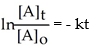
B)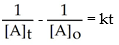
C)
D)
E)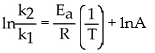
A)
B)
C)
D)
E)
سؤال
Which of the following represents the integrated rate law for a second-order reaction?
A)
B)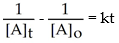
C)
D)k = Ae(-Ea/RT)
E)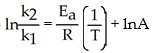
A)
B)
C)
D)k = Ae(-Ea/RT)
E)
سؤال
Which of the following represents the equation for a zeroth-order half-life?
A)t 1/2 =
B)t 1/2 =
C)t 1/2 =
D)t 1/2 =
E)t 1/2 =
A)t 1/2 =
B)t 1/2 =
C)t 1/2 =
D)t 1/2 =
E)t 1/2 =
سؤال
Determine the rate law and the value of k for the following reaction using the data provided.
2 N2O5(g)→ 4 NO2(g)+ O2(g)
![<strong>Determine the rate law and the value of k for the following reaction using the data provided. 2 N<sub>2</sub>O<sub>5</sub>(g)→ 4 NO<sub>2</sub>(g)+ O<sub>2</sub>(g) </strong> A)Rate = 5.6 × 10<sup>-2</sup> M<sup>-1</sup>s<sup>-1</sup>[N<sub>2</sub>O<sub>5</sub>]<sup>2</sup> B)Rate = 6.0 × 10<sup>-1</sup> M<sup>-2</sup>s<sup>-1</sup>[N<sub>2</sub>O<sub>5</sub>]<sup>3</sup> C)Rate = 1.6 × 10<sup>-3</sup> M<sup>1/2</sup>s<sup>-1</sup>[N<sub>2</sub>O<sub>5</sub>]<sup>1/2</sup> D)Rate = 1.7 × 10<sup>-2</sup> M<sup>-1/2</sup>s<sup>-1</sup>[N<sub>2</sub>O<sub>5</sub>]<sup>3/2</sup> E)Rate = 5.2 × 10⁻<sup>3</sup> s<sup>-1</sup>[N<sub>2</sub>O<sub>5</sub>] <div style=padding-top: 35px>](https://d2lvgg3v3hfg70.cloudfront.net/TB6106/11ec739f_d0db_25ac_b38b_752b48617c7c_TB6106_00.jpg)
A)Rate = 5.6 × 10⁻² M-1s-1[N2O5]2
B)Rate = 6.0 × 10⁻¹ M-2s-1[N2O5]3
C)Rate = 1.6 × 10⁻³ M1/2s-1[N2O5]1/2
D)Rate = 1.7 × 10⁻² M-1/2s-1[N2O5]3/2
E)Rate = 5.2 × 10⁻3 s-1[N2O5]
2 N2O5(g)→ 4 NO2(g)+ O2(g)
A)Rate = 5.6 × 10⁻² M-1s-1[N2O5]2
B)Rate = 6.0 × 10⁻¹ M-2s-1[N2O5]3
C)Rate = 1.6 × 10⁻³ M1/2s-1[N2O5]1/2
D)Rate = 1.7 × 10⁻² M-1/2s-1[N2O5]3/2
E)Rate = 5.2 × 10⁻3 s-1[N2O5]
سؤال
سؤال
Determine the rate law and the value of k for the following reaction using the data provided.
NO2(g)+ O3(g)→ NO3(g)+ O2(g)
![<strong>Determine the rate law and the value of k for the following reaction using the data provided. NO<sub>2</sub>(g)+ O<sub>3</sub>(g)→ NO<sub>3</sub>(g)+ O<sub>2</sub>(g) </strong> A)Rate = 1360 M<sup>-2.5</sup>s<sup>-1</sup>[NO<sub>2</sub>]<sup>2.5</sup>[O<sub>3</sub>] B)Rate = 227 M<sup>-2.5</sup>s<sup>-1</sup>[NO<sub>2</sub>][O<sub>3</sub>]<sup>2.5</sup> C)Rate = 43 M<sup>-1</sup>s<sup>-1</sup>[NO<sub>2</sub>][O<sub>3</sub>] D)Rate = 430 M<sup>-2</sup>s<sup>-1</sup>[NO<sub>2</sub>]<sup>2</sup>[O<sub>3</sub>] E)Rate = 130 M<sup>-2</sup>s<sup>-1</sup>[NO<sub>2</sub>][O<sub>3</sub>]<sup>2</sup> <div style=padding-top: 35px>](https://d2lvgg3v3hfg70.cloudfront.net/TB6106/11ec739f_a6a3_cdfa_b38b_fb2b2290c006_TB6106_00.jpg)
A)Rate = 1360 M-2.5s-1[NO2]2.5[O3]
B)Rate = 227 M-2.5s-1[NO2][O3]2.5
C)Rate = 43 M-1s-1[NO2][O3]
D)Rate = 430 M-2s-1[NO2]2[O3]
E)Rate = 130 M-2s-1[NO2][O3]2
NO2(g)+ O3(g)→ NO3(g)+ O2(g)
A)Rate = 1360 M-2.5s-1[NO2]2.5[O3]
B)Rate = 227 M-2.5s-1[NO2][O3]2.5
C)Rate = 43 M-1s-1[NO2][O3]
D)Rate = 430 M-2s-1[NO2]2[O3]
E)Rate = 130 M-2s-1[NO2][O3]2
سؤال
سؤال
سؤال
Derive an expression for a "1/3-life" for a first-order reaction.
A)
B)
C)
D)
E)
A)
B)
C)
D)
E)
سؤال
سؤال
سؤال
سؤال
سؤال
سؤال
سؤال
سؤال
سؤال
Derive an expression for a "1/4-life" for a first-order reaction.
A)
B)
C)
D)
E)
A)
B)
C)
D)
E)
سؤال
سؤال
سؤال
سؤال
سؤال
سؤال
سؤال
سؤال
سؤال
سؤال
سؤال
سؤال
سؤال
سؤال
سؤال
سؤال
سؤال
سؤال
سؤال
سؤال
سؤال
سؤال
سؤال
سؤال
سؤال
سؤال
سؤال
سؤال

فتح الحزمة
قم بالتسجيل لفتح البطاقات في هذه المجموعة!
Unlock Deck
Unlock Deck
1/125

العب

ملء الشاشة (f)
Deck 13: Chemical Kinetics
1
Write a balanced reaction for which the following rate relationships are true.
Rate = = = -
A)N2 + O2 → N2O
B)2 N2O → 2 N2 + O2
C)N2O → N2 + 2 O2
D)N2O →N2 + O2
E)2 N2 + O2 → 2 N2O
Rate =
= = - A)
N2 + O2 → N2OB)2 N2O → 2 N2 + O2
C)N2O → N2 + 2 O2
D)
N2O →N2 + O2E)2 N2 + O2 → 2 N2O
2 N2O → 2 N2 + O2
2
Give the characteristic of a first order reaction having only one reactant.
A)The rate of the reaction is not proportional to the concentration of the reactant.
B)The rate of the reaction is proportional to the square of the concentration of the reactant.
C)The rate of the reaction is proportional to the square root of the concentration of the reactant.
D)The rate of the reaction is proportional to the natural logarithm of the concentration of the reactant.
E)The rate of the reaction is directly proportional to the concentration of the reactant.
A)The rate of the reaction is not proportional to the concentration of the reactant.
B)The rate of the reaction is proportional to the square of the concentration of the reactant.
C)The rate of the reaction is proportional to the square root of the concentration of the reactant.
D)The rate of the reaction is proportional to the natural logarithm of the concentration of the reactant.
E)The rate of the reaction is directly proportional to the concentration of the reactant.
The rate of the reaction is directly proportional to the concentration of the reactant.
3
What are the units of k in a first order reaction?
A)
B)M∙s
C)M-1s-1
D)
E)
A)
B)M∙s
C)M-1s-1
D)
E)
4
Given the following balanced equation,determine the rate of reaction with respect to [SO2].
2 SO2(g)+ O2(g)→ 2 SO3(g)
A)Rate =-
B)Rate = +
C)Rate = -
D)Rate = +
E)It is not possible to determine without more information.
2 SO2(g)+ O2(g)→ 2 SO3(g)
A)Rate =-
B)Rate = +
C)Rate = -
D)Rate = +
E)It is not possible to determine without more information.
فتح الحزمة
افتح القفل للوصول البطاقات البالغ عددها 125 في هذه المجموعة.
فتح الحزمة
k this deck
5
Given the following balanced equation,determine the rate of reaction with respect to [NOCl].If the rate of Cl2 loss is 4.84 × 10⁻² M/s,what is the rate of formation of NOCl?
2 NO(g)+ Cl2(g)→ 2 NOCl(g)
A)4.84 × 10⁻² M/s
B)2.42 × 10⁻² M/s
C)1.45 × 10⁻¹ M/s
D)9.68 × 10⁻² M/s
E)1.61 × 10⁻² M/s
2 NO(g)+ Cl2(g)→ 2 NOCl(g)
A)4.84 × 10⁻² M/s
B)2.42 × 10⁻² M/s
C)1.45 × 10⁻¹ M/s
D)9.68 × 10⁻² M/s
E)1.61 × 10⁻² M/s
فتح الحزمة
افتح القفل للوصول البطاقات البالغ عددها 125 في هذه المجموعة.
فتح الحزمة
k this deck
6
Given the following balanced equation,determine the rate of reaction with respect to [O2].
2 O3(g)→ 3 O2(g)
A)Rate = -
B)Rate = -
C)Rate = +
D)Rate = +
E)It is not possible to determine without more information.
2 O3(g)→ 3 O2(g)
A)Rate = -
B)Rate = -
C)Rate = +
D)Rate = +
E)It is not possible to determine without more information.
فتح الحزمة
افتح القفل للوصول البطاقات البالغ عددها 125 في هذه المجموعة.
فتح الحزمة
k this deck
7
What are the units of k in the following rate law?
Rate = k[X][Y]2
A)
B)
C)M2 s
D)
E)
Rate = k[X][Y]2
A)
B)
C)M2 s
D)
E)
فتح الحزمة
افتح القفل للوصول البطاقات البالغ عددها 125 في هذه المجموعة.
فتح الحزمة
k this deck
8
Given the following balanced equation,determine the rate of reaction with respect to [H2].
N2(g)+ 3 H2(g)→ 2 NH3(g)
A)Rate = +
B)Rate = -
C)Rate = +
D)Rate = -
E)It is not possible to determine without more information.
N2(g)+ 3 H2(g)→ 2 NH3(g)
A)Rate = +
B)Rate = -
C)Rate = +
D)Rate = -
E)It is not possible to determine without more information.
فتح الحزمة
افتح القفل للوصول البطاقات البالغ عددها 125 في هذه المجموعة.
فتح الحزمة
k this deck
9
What are the units of k in the following rate law?
Rate = k[X][Y]
A)
B)Ms
C)M-1s-1
D)
E)
Rate = k[X][Y]
A)
B)Ms
C)M-1s-1
D)
E)
فتح الحزمة
افتح القفل للوصول البطاقات البالغ عددها 125 في هذه المجموعة.
فتح الحزمة
k this deck
10
What is the overall order of the following reaction,given the rate law?
NO(g)+ O3(g)→ NO2(g)+ O2(g)Rate = k[NO][O3]
A)1st order
B)2nd order
C)3rd order
D)1Order
E)0th order
NO(g)+ O3(g)→ NO2(g)+ O2(g)Rate = k[NO][O3]
A)1st order
B)2nd order
C)3rd order
D)1
OrderE)0th order
فتح الحزمة
افتح القفل للوصول البطاقات البالغ عددها 125 في هذه المجموعة.
فتح الحزمة
k this deck
11
Give the characteristic of a second order reaction having only one reactant.
A)The rate of the reaction is not proportional to the concentration of the reactant.
B)The rate of the reaction is proportional to the square of the concentration of the reactant.
C)The rate of the reaction is proportional to the square root of the concentration of the reactant.
D)The rate of the reaction is proportional to the natural logarithm of the concentration of the reactant.
E)The rate of the reaction is directly proportional to the concentration of the reactant.
A)The rate of the reaction is not proportional to the concentration of the reactant.
B)The rate of the reaction is proportional to the square of the concentration of the reactant.
C)The rate of the reaction is proportional to the square root of the concentration of the reactant.
D)The rate of the reaction is proportional to the natural logarithm of the concentration of the reactant.
E)The rate of the reaction is directly proportional to the concentration of the reactant.
فتح الحزمة
افتح القفل للوصول البطاقات البالغ عددها 125 في هذه المجموعة.
فتح الحزمة
k this deck
12
Given the following balanced equation,determine the rate of reaction with respect to [SO3].If the rate of O2 loss is 3.56 × 10⁻³ M/s,what is the rate of formation of SO3?
2 SO2(g)+ O2(g)→ 2 SO3(g)
A)3.56 × 10⁻³ M/s
B)1.19 × 10⁻³ M/s
C)1.78 × 10⁻³ M/s
D)1.42 × 10⁻² M/s
E)7.12 × 10⁻³ M/s
2 SO2(g)+ O2(g)→ 2 SO3(g)
A)3.56 × 10⁻³ M/s
B)1.19 × 10⁻³ M/s
C)1.78 × 10⁻³ M/s
D)1.42 × 10⁻² M/s
E)7.12 × 10⁻³ M/s
فتح الحزمة
افتح القفل للوصول البطاقات البالغ عددها 125 في هذه المجموعة.
فتح الحزمة
k this deck
13
What is the overall order of the following reaction,given the rate law?
Rate = k[X]3[Y]2
A)3rd order
B)5th order
C)2nd order
D)1st order
E)6th order
Rate = k[X]3[Y]2
A)3rd order
B)5th order
C)2nd order
D)1st order
E)6th order
فتح الحزمة
افتح القفل للوصول البطاقات البالغ عددها 125 في هذه المجموعة.
فتح الحزمة
k this deck
14
What is the overall order of the following reaction,given the rate law?
2 X + 3 Y → 2 Z Rate = k[X]1[Y]2
A)3rd order
B)5th order
C)2nd order
D)1st order
E)zeroth order
2 X + 3 Y → 2 Z Rate = k[X]1[Y]2
A)3rd order
B)5th order
C)2nd order
D)1st order
E)zeroth order
فتح الحزمة
افتح القفل للوصول البطاقات البالغ عددها 125 في هذه المجموعة.
فتح الحزمة
k this deck
15
What are the units of k in the following rate law?
Rate = k[X][Y]1/2
A)M/s
B)M-1s-1
C)M1/2s-1
D)M-1/2s-1
E)M-1s-1/2
Rate = k[X][Y]1/2
A)M/s
B)M-1s-1
C)M1/2s-1
D)M-1/2s-1
E)M-1s-1/2
فتح الحزمة
افتح القفل للوصول البطاقات البالغ عددها 125 في هذه المجموعة.
فتح الحزمة
k this deck
16
What is the overall order of the following reaction,given the rate law?
2NO(g)+ H2(g)→ N2(g)+ 2H2O(g)Rate = k[NO]2[H2]
A)1st order
B)2nd order
C)3rd order
D)4th order
E)0th order
2NO(g)+ H2(g)→ N2(g)+ 2H2O(g)Rate = k[NO]2[H2]
A)1st order
B)2nd order
C)3rd order
D)4th order
E)0th order
فتح الحزمة
افتح القفل للوصول البطاقات البالغ عددها 125 في هذه المجموعة.
فتح الحزمة
k this deck
17
Write a balanced reaction for which the following rate relationships are true.
Rate = - = =
A)2 N2O5 → 4 NO2 + O2
B)4 NO2 + O2 → 2 N2O5
C)2 N2O5 → NO2 + 4 O2
D)NO2 + O2 →N2O5
E)N2O5 → NO2 + O2
Rate = -
= = A)2 N2O5 → 4 NO2 + O2
B)4 NO2 + O2 → 2 N2O5
C)2 N2O5 → NO2 + 4 O2
D)
NO2 + O2 →N2O5E)
N2O5 → NO2 + O2 فتح الحزمة
افتح القفل للوصول البطاقات البالغ عددها 125 في هذه المجموعة.
فتح الحزمة
k this deck
18
Given the following balanced equation,determine the rate of reaction with respect to [NOCl].
2 NO(g)+ Cl2(g)→ 2 NOCl(g)
A)Rate = -
B)Rate = +
C)Rate = -
D)Rate = -
E)It is not possible to determine without more information.
2 NO(g)+ Cl2(g)→ 2 NOCl(g)
A)Rate = -
B)Rate = +
C)Rate = -
D)Rate = -
E)It is not possible to determine without more information.
فتح الحزمة
افتح القفل للوصول البطاقات البالغ عددها 125 في هذه المجموعة.
فتح الحزمة
k this deck
19
Given the following balanced equation,determine the rate of reaction with respect to [O2].If the rate of formation of O2 is 6.94 × 10⁻¹ M/s,what is the rate of the loss of O3?
2 O3(g)→ 3 O2(g)
A)0.463 M/s
B)1.04 M/s
C)2.08 M/s
D)0.231 M/s
E)4.16 M/s
2 O3(g)→ 3 O2(g)
A)0.463 M/s
B)1.04 M/s
C)2.08 M/s
D)0.231 M/s
E)4.16 M/s
فتح الحزمة
افتح القفل للوصول البطاقات البالغ عددها 125 في هذه المجموعة.
فتح الحزمة
k this deck
20
What are the units of k in a zeroth order reaction?
A)
B)M∙s
C)M-1s-1
D)
E)
A)
B)M∙s
C)M-1s-1
D)
E)
فتح الحزمة
افتح القفل للوصول البطاقات البالغ عددها 125 في هذه المجموعة.
فتح الحزمة
k this deck
21
Given the following rate law,how does the rate of reaction change if the concentration of Y is doubled?
Rate = k [X]2[Y]3
A)The rate of reaction will increase by a factor of 9.
B)The rate of reaction will increase by a factor of 2.
C)The rate of reaction will increase by a factor of 8.
D)The rate of reaction will increase by a factor of 4.
E)The rate of reaction will remain unchanged.
Rate = k [X]2[Y]3
A)The rate of reaction will increase by a factor of 9.
B)The rate of reaction will increase by a factor of 2.
C)The rate of reaction will increase by a factor of 8.
D)The rate of reaction will increase by a factor of 4.
E)The rate of reaction will remain unchanged.
فتح الحزمة
افتح القفل للوصول البطاقات البالغ عددها 125 في هذه المجموعة.
فتح الحزمة
k this deck
22
Which of the following represents the equation for a first-order half-life?
A)t 1/2 =
B)t 1/2 =
C)t 1/2 =
D)t 1/2 =
E)t 1/2 =
A)t 1/2 =
B)t 1/2 =
C)t 1/2 =
D)t 1/2 =
E)t 1/2 =
فتح الحزمة
افتح القفل للوصول البطاقات البالغ عددها 125 في هذه المجموعة.
فتح الحزمة
k this deck
23
What are the units of k in the following rate law?
Rate = k[X]2
A)M∙s-1
B)M∙s
C)M-1s-1
D)M-2s-1
E)M2s-1
Rate = k[X]2
A)M∙s-1
B)M∙s
C)M-1s-1
D)M-2s-1
E)M2s-1
فتح الحزمة
افتح القفل للوصول البطاقات البالغ عددها 125 في هذه المجموعة.
فتح الحزمة
k this deck
24
Given the following rate law,how does the rate of reaction change if the concentration of Y is doubled?
Rate = k [X][Y]
A)The rate of reaction will increase by a factor of 2.
B)The rate of reaction will increase by a factor of 4.
C)The rate of reaction will increase by a factor of 5.
D)The rate of reaction will decrease by a factor of 2.
E)The rate of reaction will remain unchanged.
Rate = k [X][Y]
A)The rate of reaction will increase by a factor of 2.
B)The rate of reaction will increase by a factor of 4.
C)The rate of reaction will increase by a factor of 5.
D)The rate of reaction will decrease by a factor of 2.
E)The rate of reaction will remain unchanged.
فتح الحزمة
افتح القفل للوصول البطاقات البالغ عددها 125 في هذه المجموعة.
فتح الحزمة
k this deck
25
Which of the following represents the integrated rate law for a zeroth-order reaction?
A)
B)
C)[A]t - [A]o = - kt
D)k = Ae(-Ea/RT)
E)
A)
B)
C)[A]t - [A]o = - kt
D)k = Ae(-Ea/RT)
E)
فتح الحزمة
افتح القفل للوصول البطاقات البالغ عددها 125 في هذه المجموعة.
فتح الحزمة
k this deck
26
What data should be plotted to show that experimental concentration data fits a second-order reaction?
A)ln[reactant] vs.time
B)[reactant] vs.time
C)ln(k)vs.1/T
D)1/[reactant] vs.time
E)ln(k)vs.Ea
A)ln[reactant] vs.time
B)[reactant] vs.time
C)ln(k)vs.1/T
D)1/[reactant] vs.time
E)ln(k)vs.Ea
فتح الحزمة
افتح القفل للوصول البطاقات البالغ عددها 125 في هذه المجموعة.
فتح الحزمة
k this deck
27
Which of the following statements is false?
A)The average rate of a reaction decreases during a reaction.
B)It is not possible to determine the rate of a reaction from its balanced equation.
C)The rate of zero order reactions is not dependent on concentration.
D)The half-life of a first order reaction is dependent on the initial concentration of reactant.
E)None of the statements are false.
A)The average rate of a reaction decreases during a reaction.
B)It is not possible to determine the rate of a reaction from its balanced equation.
C)The rate of zero order reactions is not dependent on concentration.
D)The half-life of a first order reaction is dependent on the initial concentration of reactant.
E)None of the statements are false.
فتح الحزمة
افتح القفل للوصول البطاقات البالغ عددها 125 في هذه المجموعة.
فتح الحزمة
k this deck
28
Which of the following represents the equation for a second-order half-life?
A)t 1/2 =
B)t 1/2 =
C)t 1/2 =
D)t 1/2 =
E)t 1/2 =
A)t 1/2 =
B)t 1/2 =
C)t 1/2 =
D)t 1/2 =
E)t 1/2 =
فتح الحزمة
افتح القفل للوصول البطاقات البالغ عددها 125 في هذه المجموعة.
فتح الحزمة
k this deck
29
What data should be plotted to show that experimental concentration data fits a zeroth-order reaction?
A)ln[reactant] vs.time
B)1/[reactant] vs.time
C)ln(k)vs.1/T
D)ln(k)vs.Ea
E)[reactant] vs.time
A)ln[reactant] vs.time
B)1/[reactant] vs.time
C)ln(k)vs.1/T
D)ln(k)vs.Ea
E)[reactant] vs.time
فتح الحزمة
افتح القفل للوصول البطاقات البالغ عددها 125 في هذه المجموعة.
فتح الحزمة
k this deck
30
Determine the rate law and the value of k for the following reaction using the data provided.
S2O82⁻(aq)+ 3 I⁻(aq)→ 2 SO42⁻(g)+ I3⁻(aq)
A)Rate = 120 M-2s-1 [S2O82⁻]2[I⁻]
B)Rate = 36 M-1s-1 [S2O82⁻][I⁻]
C)Rate = 86 M-2s-1 [S2O82⁻][I⁻]2
D)Rate = 195 M-3s-1 [S2O82⁻]2[I⁻]2
E)Rate = 23 M-1/2s-1 [S2O82⁻][I⁻]1/2
S2O82⁻(aq)+ 3 I⁻(aq)→ 2 SO42⁻(g)+ I3⁻(aq)
A)Rate = 120 M-2s-1 [S2O82⁻]2[I⁻]
B)Rate = 36 M-1s-1 [S2O82⁻][I⁻]
C)Rate = 86 M-2s-1 [S2O82⁻][I⁻]2
D)Rate = 195 M-3s-1 [S2O82⁻]2[I⁻]2
E)Rate = 23 M-1/2s-1 [S2O82⁻][I⁻]1/2
فتح الحزمة
افتح القفل للوصول البطاقات البالغ عددها 125 في هذه المجموعة.
فتح الحزمة
k this deck
31
Determine the rate law and the value of k for the following reaction using the data provided.
2 NO(g)+ O2(g)→ 2 NO2(g)
A)Rate = 57 M-1s-1[NO][O2]
B)Rate = 3.8 M-1/2s-1[NO][O2]1/2
C)Rate = 3.1 × 10⁵ M-3s-1[NO]2[O2]2
D)Rate = 1.7 × 10³ M-2s-1[NO]2[O2]
E)Rate = 9.4 × 10³ M-2s-1[NO][O2]2
2 NO(g)+ O2(g)→ 2 NO2(g)
A)Rate = 57 M-1s-1[NO][O2]
B)Rate = 3.8 M-1/2s-1[NO][O2]1/2
C)Rate = 3.1 × 10⁵ M-3s-1[NO]2[O2]2
D)Rate = 1.7 × 10³ M-2s-1[NO]2[O2]
E)Rate = 9.4 × 10³ M-2s-1[NO][O2]2
فتح الحزمة
افتح القفل للوصول البطاقات البالغ عددها 125 في هذه المجموعة.
فتح الحزمة
k this deck
32
Given the following rate law,how does the rate of reaction change if the concentration of X is halved and the concentration of Y is doubled?
Rate = k [X][Y]2
A)The rate of reaction will increase by a factor of 2.
B)The rate of reaction will increase by a factor of 4.
C)The rate of reaction will increase by a factor of 5.
D)The rate of reaction will decrease by a factor of 2.
E)The rate of reaction will remain unchanged.
Rate = k [X][Y]2
A)The rate of reaction will increase by a factor of 2.
B)The rate of reaction will increase by a factor of 4.
C)The rate of reaction will increase by a factor of 5.
D)The rate of reaction will decrease by a factor of 2.
E)The rate of reaction will remain unchanged.
فتح الحزمة
افتح القفل للوصول البطاقات البالغ عددها 125 في هذه المجموعة.
فتح الحزمة
k this deck
33
Determine the rate law and the value of k for the following reaction using the data provided.
CO(g)+ Cl2(g)→ COCl2(g)
A)Rate = 11 M-3/2s-1 [CO][Cl2]3/2
B)Rate = 36 M-1.8s-1 [CO][Cl2]2.8
C)Rate = 17 M-2s-1 [CO][Cl2]2
D)Rate = 4.4 M-1/2s-1 [CO][Cl2]1/2
E)Rate = 18 M-3/2s-1 [CO]2[Cl2]1/2
CO(g)+ Cl2(g)→ COCl2(g)
A)Rate = 11 M-3/2s-1 [CO][Cl2]3/2
B)Rate = 36 M-1.8s-1 [CO][Cl2]2.8
C)Rate = 17 M-2s-1 [CO][Cl2]2
D)Rate = 4.4 M-1/2s-1 [CO][Cl2]1/2
E)Rate = 18 M-3/2s-1 [CO]2[Cl2]1/2
فتح الحزمة
افتح القفل للوصول البطاقات البالغ عددها 125 في هذه المجموعة.
فتح الحزمة
k this deck
34
What data should be plotted to show that experimental concentration data fits a first-order reaction?
A)1/[reactant] vs.time
B)[reactant] vs.time
C)ln[reactant] vs.time
D)ln(k)vs.1/T
E)ln(k)vs.Ea
A)1/[reactant] vs.time
B)[reactant] vs.time
C)ln[reactant] vs.time
D)ln(k)vs.1/T
E)ln(k)vs.Ea
فتح الحزمة
افتح القفل للوصول البطاقات البالغ عددها 125 في هذه المجموعة.
فتح الحزمة
k this deck
35
Which of the following represents the integrated rate law for a first-order reaction?
A)
B)
C)
D)
E)
A)
B)
C)
D)
E)
فتح الحزمة
افتح القفل للوصول البطاقات البالغ عددها 125 في هذه المجموعة.
فتح الحزمة
k this deck
36
Which of the following represents the integrated rate law for a second-order reaction?
A)
B)
C)
D)k = Ae(-Ea/RT)
E)
A)
B)
C)
D)k = Ae(-Ea/RT)
E)
فتح الحزمة
افتح القفل للوصول البطاقات البالغ عددها 125 في هذه المجموعة.
فتح الحزمة
k this deck
37
Which of the following represents the equation for a zeroth-order half-life?
A)t 1/2 =
B)t 1/2 =
C)t 1/2 =
D)t 1/2 =
E)t 1/2 =
A)t 1/2 =
B)t 1/2 =
C)t 1/2 =
D)t 1/2 =
E)t 1/2 =
فتح الحزمة
افتح القفل للوصول البطاقات البالغ عددها 125 في هذه المجموعة.
فتح الحزمة
k this deck
38
Determine the rate law and the value of k for the following reaction using the data provided.
2 N2O5(g)→ 4 NO2(g)+ O2(g)
A)Rate = 5.6 × 10⁻² M-1s-1[N2O5]2
B)Rate = 6.0 × 10⁻¹ M-2s-1[N2O5]3
C)Rate = 1.6 × 10⁻³ M1/2s-1[N2O5]1/2
D)Rate = 1.7 × 10⁻² M-1/2s-1[N2O5]3/2
E)Rate = 5.2 × 10⁻3 s-1[N2O5]
2 N2O5(g)→ 4 NO2(g)+ O2(g)
A)Rate = 5.6 × 10⁻² M-1s-1[N2O5]2
B)Rate = 6.0 × 10⁻¹ M-2s-1[N2O5]3
C)Rate = 1.6 × 10⁻³ M1/2s-1[N2O5]1/2
D)Rate = 1.7 × 10⁻² M-1/2s-1[N2O5]3/2
E)Rate = 5.2 × 10⁻3 s-1[N2O5]
فتح الحزمة
افتح القفل للوصول البطاقات البالغ عددها 125 في هذه المجموعة.
فتح الحزمة
k this deck
39
Given the following rate law,how does the rate of reaction change if the concentration of Y is doubled?
Rate = k [X][Y]2
A)The rate of reaction will increase by a factor of 2.
B)The rate of reaction will increase by a factor of 4.
C)The rate of reaction will increase by a factor of 5.
D)The rate of reaction will decrease by a factor of 2.
E)The rate of reaction will remain unchanged.
Rate = k [X][Y]2
A)The rate of reaction will increase by a factor of 2.
B)The rate of reaction will increase by a factor of 4.
C)The rate of reaction will increase by a factor of 5.
D)The rate of reaction will decrease by a factor of 2.
E)The rate of reaction will remain unchanged.
فتح الحزمة
افتح القفل للوصول البطاقات البالغ عددها 125 في هذه المجموعة.
فتح الحزمة
k this deck
40
Determine the rate law and the value of k for the following reaction using the data provided.
NO2(g)+ O3(g)→ NO3(g)+ O2(g)
A)Rate = 1360 M-2.5s-1[NO2]2.5[O3]
B)Rate = 227 M-2.5s-1[NO2][O3]2.5
C)Rate = 43 M-1s-1[NO2][O3]
D)Rate = 430 M-2s-1[NO2]2[O3]
E)Rate = 130 M-2s-1[NO2][O3]2
NO2(g)+ O3(g)→ NO3(g)+ O2(g)
A)Rate = 1360 M-2.5s-1[NO2]2.5[O3]
B)Rate = 227 M-2.5s-1[NO2][O3]2.5
C)Rate = 43 M-1s-1[NO2][O3]
D)Rate = 430 M-2s-1[NO2]2[O3]
E)Rate = 130 M-2s-1[NO2][O3]2
فتح الحزمة
افتح القفل للوصول البطاقات البالغ عددها 125 في هذه المجموعة.
فتح الحزمة
k this deck
41
The first-order decomposition of cyclopropane has a rate constant of 6.7 × 10⁻⁴ s-1.If the initial concentration of cyclopropane is 1.33 M,what is the concentration of cyclopropane after 644 s?
A)0.43 M
B)0.15 M
C)0.94 M
D)0.86 M
E)0.67 M
A)0.43 M
B)0.15 M
C)0.94 M
D)0.86 M
E)0.67 M
فتح الحزمة
افتح القفل للوصول البطاقات البالغ عددها 125 في هذه المجموعة.
فتح الحزمة
k this deck
42
The half-life for the second-order decomposition of HI is 15.4 s when the initial concentration of HI is 0.67 M.What is the rate constant for this reaction?
A)1.0 × 10⁻² M-1s-1
B)4.5 × 10⁻² M-1s-1
C)9.7 × 10⁻² M-1s-1
D)2.2 × 10⁻² M-1s-1
E)3.8 × 10⁻² M-1s-1
A)1.0 × 10⁻² M-1s-1
B)4.5 × 10⁻² M-1s-1
C)9.7 × 10⁻² M-1s-1
D)2.2 × 10⁻² M-1s-1
E)3.8 × 10⁻² M-1s-1
فتح الحزمة
افتح القفل للوصول البطاقات البالغ عددها 125 في هذه المجموعة.
فتح الحزمة
k this deck
43
Derive an expression for a "1/3-life" for a first-order reaction.
A)
B)
C)
D)
E)
A)
B)
C)
D)
E)
فتح الحزمة
افتح القفل للوصول البطاقات البالغ عددها 125 في هذه المجموعة.
فتح الحزمة
k this deck
44
The rate constant for a second-order reaction is 0.54 M-1s-1.What is the half-life of this reaction if the initial concentration is 0.27 M?
A)2.0 s
B)5.0 s
C)1.7 s
D)6.9 s
E)1.3 s
A)2.0 s
B)5.0 s
C)1.7 s
D)6.9 s
E)1.3 s
فتح الحزمة
افتح القفل للوصول البطاقات البالغ عددها 125 في هذه المجموعة.
فتح الحزمة
k this deck
45
How many half-lives are required for the concentration of reactant to decrease to 3.1% of its original value?
A)3
B)1
C)5
D)2.75
E)2
A)3
B)1
C)5
D)2.75
E)2
فتح الحزمة
افتح القفل للوصول البطاقات البالغ عددها 125 في هذه المجموعة.
فتح الحزمة
k this deck
46
Which rate law is ternary?
A)rate = k[A][B]2
B)rate = k [A][B]
C)rate = k [A]
D)rate = k [A][B][C][D]
E)rate = k [A]2
A)rate = k[A][B]2
B)rate = k [A][B]
C)rate = k [A]
D)rate = k [A][B][C][D]
E)rate = k [A]2
فتح الحزمة
افتح القفل للوصول البطاقات البالغ عددها 125 في هذه المجموعة.
فتح الحزمة
k this deck
47
The second-order decomposition of HI has a rate constant of 1.80 × 10⁻³ M-1s-1.How much HI remains after 27.3 s if the initial concentration of HI is 4.78 M?
A)4.55 M
B)0.258 M
C)3.87 M
D)2.20 M
E)2.39 M
A)4.55 M
B)0.258 M
C)3.87 M
D)2.20 M
E)2.39 M
فتح الحزمة
افتح القفل للوصول البطاقات البالغ عددها 125 في هذه المجموعة.
فتح الحزمة
k this deck
48
Which of the following reactions would you predict to have the largest orientation factor?
A)NOF(g)+ NOF(g)→ 2NO(g)+ F2(g)
B)Br2(g)+ H2C=CH2(g)→ H2BrC-CBrH2(g)
C)NH3(g)+ BCl3(g)→ H3N-BCl3(g)
D)H(g)+ Cl(g)→ HCl(g)
E)All of these reactions should have nearly identical orientation factors.
A)NOF(g)+ NOF(g)→ 2NO(g)+ F2(g)
B)Br2(g)+ H2C=CH2(g)→ H2BrC-CBrH2(g)
C)NH3(g)+ BCl3(g)→ H3N-BCl3(g)
D)H(g)+ Cl(g)→ HCl(g)
E)All of these reactions should have nearly identical orientation factors.
فتح الحزمة
افتح القفل للوصول البطاقات البالغ عددها 125 في هذه المجموعة.
فتح الحزمة
k this deck
49
A reaction is followed and found to have a rate constant of 3.36 × 10⁴ M-1s-1 at 344 K and a rate constant of 7.69 M-1s-1 at 219 K.Determine the activation energy for this reaction.
A)23.8 kJ/mol
B)42.0 kJ/mol
C)11.5 kJ/mol
D)12.5 kJ/mol
E)58.2 kJ/mol
A)23.8 kJ/mol
B)42.0 kJ/mol
C)11.5 kJ/mol
D)12.5 kJ/mol
E)58.2 kJ/mol
فتح الحزمة
افتح القفل للوصول البطاقات البالغ عددها 125 في هذه المجموعة.
فتح الحزمة
k this deck
50
Which of the following reactions would you predict to have the smallest orientation factor?
A)X2 + Y2 → 2 XY
B)NOCl2 + NO → 2NOCl
C)N2 + O2 → 2 NO
D)N + O2 → NO2
E)All of these reactions should have nearly identical orientation factors.
A)X2 + Y2 → 2 XY
B)NOCl2 + NO → 2NOCl
C)N2 + O2 → 2 NO
D)N + O2 → NO2
E)All of these reactions should have nearly identical orientation factors.
فتح الحزمة
افتح القفل للوصول البطاقات البالغ عددها 125 في هذه المجموعة.
فتح الحزمة
k this deck
51
The first-order decomposition of N2O5 at 328 K has a rate constant of 1.70 × 10⁻³ s-1.If the initial concentration of N2O5 is 2.88 M,what is the concentration of N2O5 after 12.5 minutes?
A)0.124 M
B)0.805 M
C)2.82 M
D)0.355 M
E)0.174 M
A)0.124 M
B)0.805 M
C)2.82 M
D)0.355 M
E)0.174 M
فتح الحزمة
افتح القفل للوصول البطاقات البالغ عددها 125 في هذه المجموعة.
فتح الحزمة
k this deck
52
Derive an expression for a "1/4-life" for a first-order reaction.
A)
B)
C)
D)
E)
A)
B)
C)
D)
E)
فتح الحزمة
افتح القفل للوصول البطاقات البالغ عددها 125 في هذه المجموعة.
فتح الحزمة
k this deck
53
How many half-lives are required for the concentration of reactant to decrease to 25% of its original value?
A)1
B)3
C)1.5
D)2.5
E)2
A)1
B)3
C)1.5
D)2.5
E)2
فتح الحزمة
افتح القفل للوصول البطاقات البالغ عددها 125 في هذه المجموعة.
فتح الحزمة
k this deck
54
How many half-lives are required for the concentration of reactant to decrease to 12.5% of its original value?
A)3
B)1
C)1.75
D)2.75
E)2
A)3
B)1
C)1.75
D)2.75
E)2
فتح الحزمة
افتح القفل للوصول البطاقات البالغ عددها 125 في هذه المجموعة.
فتح الحزمة
k this deck
55
The first-order rearrangement of CH3NC is measured to have a rate constant of 3.61 × 10⁻¹⁵ s-1 at 298 K and a rate constant of 8.66 × 10⁻⁷ s-1 at 425 K.Determine the activation energy for this reaction.
A)160.kJ/mol
B)240.kJ/mol
C)417 kJ/mol
D)127 kJ/mol
E)338 kJ/mol
A)160.kJ/mol
B)240.kJ/mol
C)417 kJ/mol
D)127 kJ/mol
E)338 kJ/mol
فتح الحزمة
افتح القفل للوصول البطاقات البالغ عددها 125 في هذه المجموعة.
فتح الحزمة
k this deck
56
The first-order decay of radon has a half-life of 3.823 days.How many grams of radon remain after 7.22 days if the sample initially weighs 250.0 grams?
A)4.21 g
B)183 g
C)54.8 g
D)76.3 g
E)67.5 g
A)4.21 g
B)183 g
C)54.8 g
D)76.3 g
E)67.5 g
فتح الحزمة
افتح القفل للوصول البطاقات البالغ عددها 125 في هذه المجموعة.
فتح الحزمة
k this deck
57
The rate constant for the first-order decomposition of N2O is 3.40 s-1.What is the half-life of the decomposition?
A)0.491 s
B)0.204 s
C)0.236 s
D)0.424 s
E)0.294 s
A)0.491 s
B)0.204 s
C)0.236 s
D)0.424 s
E)0.294 s
فتح الحزمة
افتح القفل للوصول البطاقات البالغ عددها 125 في هذه المجموعة.
فتح الحزمة
k this deck
58
The half-life for the decay of radium is 1620 years.What is the rate constant for this first-order process?
A)4.28 × 10⁻⁴ yr-1
B)1.12 × 10⁻⁴ yr-1
C)2.33 × 10⁻⁴ yr-1
D)8.91 × 10⁻⁴ yr-1
E)6.17 × 10⁻⁴ yr-1
A)4.28 × 10⁻⁴ yr-1
B)1.12 × 10⁻⁴ yr-1
C)2.33 × 10⁻⁴ yr-1
D)8.91 × 10⁻⁴ yr-1
E)6.17 × 10⁻⁴ yr-1
فتح الحزمة
افتح القفل للوصول البطاقات البالغ عددها 125 في هذه المجموعة.
فتح الحزمة
k this deck
59
The first-order decomposition of N2O at 1000 K has a rate constant of 0.76 s-1.If the initial concentration of N2O is 10.9 M,what is the concentration of N2O after 9.6 s?
A)7.4 × 10⁻³ M
B)1.0 × 10⁻³ M
C)1.4 × 10⁻³ M
D)3.6 × 10⁻³ M
E)8.7 × 10⁻³ M
A)7.4 × 10⁻³ M
B)1.0 × 10⁻³ M
C)1.4 × 10⁻³ M
D)3.6 × 10⁻³ M
E)8.7 × 10⁻³ M
فتح الحزمة
افتح القفل للوصول البطاقات البالغ عددها 125 في هذه المجموعة.
فتح الحزمة
k this deck
60
The second-order decomposition of NO2 has a rate constant of 0.255 M-1s-1.How much NO2 decomposes in 4.00 s if the initial concentration of NO2 (1.00 L volume)is 1.33 M?
A)1.8 mol
B)0.85 mol
C)0.48 mol
D)0.77 mol
E)0.56 mol
A)1.8 mol
B)0.85 mol
C)0.48 mol
D)0.77 mol
E)0.56 mol
فتح الحزمة
افتح القفل للوصول البطاقات البالغ عددها 125 في هذه المجموعة.
فتح الحزمة
k this deck
61
A reaction is found to have an activation energy of 38.0 kJ/mol.If the rate constant for this reaction is 1.60 × 10² M-1s-1 at 249 K,what is the rate constant at 436 K?
A)2.38 × 10⁵ M-1s-1
B)1.26 × 10³ M-1s-1
C)7.94 × 10⁴ M-1s-1
D)4.20 × 10⁵ M-1s-1
E)3.80 × 10⁴ M-1s-1
A)2.38 × 10⁵ M-1s-1
B)1.26 × 10³ M-1s-1
C)7.94 × 10⁴ M-1s-1
D)4.20 × 10⁵ M-1s-1
E)3.80 × 10⁴ M-1s-1
فتح الحزمة
افتح القفل للوصول البطاقات البالغ عددها 125 في هذه المجموعة.
فتح الحزمة
k this deck
62
Is the activation energy for a forward reaction the same as the activation energy for the reverse of the same reaction?
فتح الحزمة
افتح القفل للوصول البطاقات البالغ عددها 125 في هذه المجموعة.
فتح الحزمة
k this deck
63
A reaction is found to have an activation energy of 108 kJ/mol.If the rate constant for this reaction is 4.60 × 10⁻⁶ s-1 at 275 K,what is the rate constant at 366 K?
A)12 s-1
B)1.7 s-1
C)0.58 s-1
D)5.4 × 10⁻⁵ s-1
E)1.9 × 10⁻⁴ s-1
A)12 s-1
B)1.7 s-1
C)0.58 s-1
D)5.4 × 10⁻⁵ s-1
E)1.9 × 10⁻⁴ s-1
فتح الحزمة
افتح القفل للوصول البطاقات البالغ عددها 125 في هذه المجموعة.
فتح الحزمة
k this deck
64
If the activation energy for a given compound is found to be 103 kJ/mol,with a frequency factor of
4.0 × 10¹³ s-1,what is the rate constant for this reaction at 398 K?
A)1.2 s-1
B)8.2 s-1
C)3.9 × 10¹⁰ s-1
D)1.7 × 10¹⁰ s-1
E)2.5 × 10⁷ s-1
4.0 × 10¹³ s-1,what is the rate constant for this reaction at 398 K?
A)1.2 s-1
B)8.2 s-1
C)3.9 × 10¹⁰ s-1
D)1.7 × 10¹⁰ s-1
E)2.5 × 10⁷ s-1
فتح الحزمة
افتح القفل للوصول البطاقات البالغ عددها 125 في هذه المجموعة.
فتح الحزمة
k this deck
65
Match the following.
t1/2
A)frequency factor
B)activation energy
C)half-life
D)rate constant
E)reaction order
t1/2
A)frequency factor
B)activation energy
C)half-life
D)rate constant
E)reaction order
فتح الحزمة
افتح القفل للوصول البطاقات البالغ عددها 125 في هذه المجموعة.
فتح الحزمة
k this deck
66
What is a catalyst and what function does it serve?
فتح الحزمة
افتح القفل للوصول البطاقات البالغ عددها 125 في هذه المجموعة.
فتح الحزمة
k this deck
67
Match the following.
n,in Rate = k[A]n
A)frequency factor
B)activation energy
C)half-life
D)rate constant
E)reaction order
n,in Rate = k[A]n
A)frequency factor
B)activation energy
C)half-life
D)rate constant
E)reaction order
فتح الحزمة
افتح القفل للوصول البطاقات البالغ عددها 125 في هذه المجموعة.
فتح الحزمة
k this deck
68
Given the following proposed mechanism,predict the rate law for the overall reaction.
A2 + 2B → 2AB (overall reaction)
Mechanism
A2 ⇌ 2A fast
A + B → AB slow
A)Rate = k[A][B]
B)Rate = k[A2][B]
C)Rate = k[A2][B]1/2
D)Rate = k[A2]
E)Rate = k [A2]1/2[B]
A2 + 2B → 2AB (overall reaction)
Mechanism
A2 ⇌ 2A fast
A + B → AB slow
A)Rate = k[A][B]
B)Rate = k[A2][B]
C)Rate = k[A2][B]1/2
D)Rate = k[A2]
E)Rate = k [A2]1/2[B]
فتح الحزمة
افتح القفل للوصول البطاقات البالغ عددها 125 في هذه المجموعة.
فتح الحزمة
k this deck
69
What function do enzymes serve?
فتح الحزمة
افتح القفل للوصول البطاقات البالغ عددها 125 في هذه المجموعة.
فتح الحزمة
k this deck
70
Which of the following statements is true?
A)The rate constant does not depend on the activation energy for a reaction where the products are lower in energy than the reactants.
B)A catalyst raises the activation energy of a reaction.
C)Rate constants are temperature dependent.
D)The addition of a homogeneous catalyst does not change the activation energy of a given reaction.
E)None of the above are true.
A)The rate constant does not depend on the activation energy for a reaction where the products are lower in energy than the reactants.
B)A catalyst raises the activation energy of a reaction.
C)Rate constants are temperature dependent.
D)The addition of a homogeneous catalyst does not change the activation energy of a given reaction.
E)None of the above are true.
فتح الحزمة
افتح القفل للوصول البطاقات البالغ عددها 125 في هذه المجموعة.
فتح الحزمة
k this deck
71
Define half-life.
فتح الحزمة
افتح القفل للوصول البطاقات البالغ عددها 125 في هذه المجموعة.
فتح الحزمة
k this deck
72
Explain what the exponential factor in the Arrhenius equation represents.
فتح الحزمة
افتح القفل للوصول البطاقات البالغ عددها 125 في هذه المجموعة.
فتح الحزمة
k this deck
73
What is the difference between average reaction rate and instantaneous reaction rate?
فتح الحزمة
افتح القفل للوصول البطاقات البالغ عددها 125 في هذه المجموعة.
فتح الحزمة
k this deck
74
If the activation energy for a given compound is found to be 42.0 kJ/mol,with a frequency factor of
8.0 × 10¹⁰ s-1,what is the rate constant for this reaction at 298 K?
A)2.9 × 10⁻⁴ s-1
B)7.4 × 10⁻⁴ s-1
C)1.4 × 10⁹ s-1
D)4.6 × 10 5 s-1
E)3.5 × 10³ s-1
8.0 × 10¹⁰ s-1,what is the rate constant for this reaction at 298 K?
A)2.9 × 10⁻⁴ s-1
B)7.4 × 10⁻⁴ s-1
C)1.4 × 10⁹ s-1
D)4.6 × 10 5 s-1
E)3.5 × 10³ s-1
فتح الحزمة
افتح القفل للوصول البطاقات البالغ عددها 125 في هذه المجموعة.
فتح الحزمة
k this deck
75
Match the following.
A
A)frequency factor
B)activation energy
C)half-life
D)rate constant
E)reaction order
A
A)frequency factor
B)activation energy
C)half-life
D)rate constant
E)reaction order
فتح الحزمة
افتح القفل للوصول البطاقات البالغ عددها 125 في هذه المجموعة.
فتح الحزمة
k this deck
76
Given the following proposed mechanism,predict the rate law for the overall reaction.
2NO2 + Cl2 → 2NO2Cl (overall reaction)
Mechanism
NO2 + Cl2 → NO2Cl + Cl slow
NO2 + Cl → NO2Cl fast
A)Rate = k[NO2][Cl2]
B)Rate = k[NO2]2[Cl2]
C)Rate = k[NO2][Cl]
D)Rate = k[NO2Cl][Cl]
E)Rate = k[NO2Cl]2
2NO2 + Cl2 → 2NO2Cl (overall reaction)
Mechanism
NO2 + Cl2 → NO2Cl + Cl slow
NO2 + Cl → NO2Cl fast
A)Rate = k[NO2][Cl2]
B)Rate = k[NO2]2[Cl2]
C)Rate = k[NO2][Cl]
D)Rate = k[NO2Cl][Cl]
E)Rate = k[NO2Cl]2
فتح الحزمة
افتح القفل للوصول البطاقات البالغ عددها 125 في هذه المجموعة.
فتح الحزمة
k this deck
77
Identify an homogeneous catalyst.
A)SO2 over vanadium (V)oxide
B)Pd in H2 gas
C)Pt with methane
D)H2SO4 with concentrated HCl
E)N2 and H2 catalyzed by Fe
A)SO2 over vanadium (V)oxide
B)Pd in H2 gas
C)Pt with methane
D)H2SO4 with concentrated HCl
E)N2 and H2 catalyzed by Fe
فتح الحزمة
افتح القفل للوصول البطاقات البالغ عددها 125 في هذه المجموعة.
فتح الحزمة
k this deck
78
Identify an heterogeneous catalyst.
A)CFCs with ozone
B)Pd in H2 gas
C)KI dissolved in H2O2
D)H2SO4 with concentrated HCl
E)H3PO4 with an alcohol
A)CFCs with ozone
B)Pd in H2 gas
C)KI dissolved in H2O2
D)H2SO4 with concentrated HCl
E)H3PO4 with an alcohol
فتح الحزمة
افتح القفل للوصول البطاقات البالغ عددها 125 في هذه المجموعة.
فتح الحزمة
k this deck
79
Match the following.
k
A)frequency factor
B)activation energy
C)half-life
D)rate constant
E)reaction order
k
A)frequency factor
B)activation energy
C)half-life
D)rate constant
E)reaction order
فتح الحزمة
افتح القفل للوصول البطاقات البالغ عددها 125 في هذه المجموعة.
فتح الحزمة
k this deck
80
Match the following.
Ea
A)frequency factor
B)activation energy
C)half-life
D)rate constant
E)reaction order
Ea
A)frequency factor
B)activation energy
C)half-life
D)rate constant
E)reaction order
فتح الحزمة
افتح القفل للوصول البطاقات البالغ عددها 125 في هذه المجموعة.
فتح الحزمة
k this deck
فتح الحزمة
افتح القفل للوصول البطاقات البالغ عددها 125 في هذه المجموعة.






