







 تكلم مع الذكاء الاصطناعي


Deck 12: Pure Monopoly
ملء الشاشة (f)

سؤال

سؤال
سؤال
سؤال
سؤال
سؤال
سؤال
سؤال
سؤال
سؤال
سؤال
سؤال
سؤال
سؤال
سؤال
سؤال
سؤال
سؤال
سؤال
سؤال
سؤال
سؤال
سؤال
سؤال
سؤال
سؤال
سؤال
سؤال
سؤال
سؤال
سؤال
سؤال
سؤال
سؤال
سؤال
سؤال
سؤال
سؤال
سؤال
سؤال
سؤال
سؤال
سؤال
سؤال
سؤال
سؤال
سؤال
سؤال
سؤال
سؤال
سؤال
سؤال
سؤال
سؤال
سؤال
سؤال
سؤال
سؤال
سؤال
سؤال
سؤال
سؤال
سؤال
سؤال
سؤال
سؤال
سؤال
سؤال
سؤال
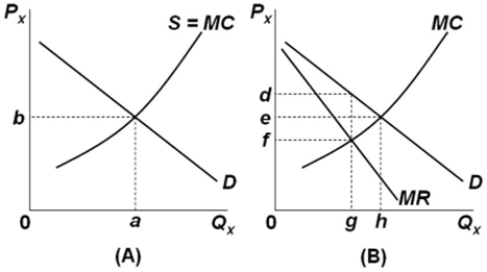 Refer to the diagrams. With the industry structures represented by diagram
A) (B), there will be allocative efficiency.
B) (A), economic profit can persist in the long run.
C) (B), output will be less than in diagram (A).
D) (B), output will be the same as in diagram (A).
سؤال
سؤال
سؤال
سؤال
سؤال
سؤال
سؤال
سؤال
سؤال
سؤال
سؤال

فتح الحزمة
قم بالتسجيل لفتح البطاقات في هذه المجموعة!
Unlock Deck
Unlock Deck
1/224

العب

ملء الشاشة (f)
Deck 12: Pure Monopoly
1
Answer the question on the basis of the accompanying demand schedule. The marginal revenue obtained from selling the third unit of output is
A) $6.
B) $1.
C) $3.
D) $5.
A) $6.
B) $1.
C) $3.
D) $5.
$3.
2
Pure monopoly refers to
A) any market in which the demand curve for the firm is downsloping.
B) a standardized product being produced by many firms.
C) a single firm producing a product for which there are no close substitutes.
D) a large number of firms producing a differentiated product.
A) any market in which the demand curve for the firm is downsloping.
B) a standardized product being produced by many firms.
C) a single firm producing a product for which there are no close substitutes.
D) a large number of firms producing a differentiated product.
a single firm producing a product for which there are no close substitutes.
3
Which of the following best approximates a pure monopoly?
A) the foreign exchange market
B) the Kansas City wheat market
C) the only grocery store in a small isolated town
D) the soft drink market
A) the foreign exchange market
B) the Kansas City wheat market
C) the only grocery store in a small isolated town
D) the soft drink market
the only grocery store in a small isolated town
4
A monopolistic firm has a sales schedule such that it can sell 10 prefabricated garages per week at $10,000 each, but if it restricts its output to 9 per week it can sell these at $11,000 each. The marginal revenue of the 10th unit of sales per week is
A) âˆ'$1,000.
B) $9,000.
C) $10,000.
D) $1,000.
A) âˆ'$1,000.
B) $9,000.
C) $10,000.
D) $1,000.
فتح الحزمة
افتح القفل للوصول البطاقات البالغ عددها 224 في هذه المجموعة.
فتح الحزمة
k this deck
5
Answer the question on the basis of the accompanying demand schedule. The marginal revenue obtained from selling the fourth unit of output is
A) $16.
B) $3.
C) $1.
D) $4.
A) $16.
B) $3.
C) $1.
D) $4.
فتح الحزمة
افتح القفل للوصول البطاقات البالغ عددها 224 في هذه المجموعة.
فتح الحزمة
k this deck
6
If a nondiscriminating imperfectly competitive firm is selling its 100th unit of output for $35, its marginal revenue
A) may be either greater or less than $35.
B) will also be $35.
C) will be less than $35.
D) will be greater than $35.
A) may be either greater or less than $35.
B) will also be $35.
C) will be less than $35.
D) will be greater than $35.
فتح الحزمة
افتح القفل للوصول البطاقات البالغ عددها 224 في هذه المجموعة.
فتح الحزمة
k this deck
7
Large minimum efficient scale of plant combined with limited market demand may lead to
A) natural monopoly.
B) patent monopoly.
C) government franchise monopoly.
D) shared monopoly.
A) natural monopoly.
B) patent monopoly.
C) government franchise monopoly.
D) shared monopoly.
فتح الحزمة
افتح القفل للوصول البطاقات البالغ عددها 224 في هذه المجموعة.
فتح الحزمة
k this deck
8
The nondiscriminating monopolist's demand curve
A) is less elastic than a purely competitive firm's demand curve.
B) is perfectly elastic.
C) coincides with its marginal revenue curve.
D) is perfectly inelastic.
A) is less elastic than a purely competitive firm's demand curve.
B) is perfectly elastic.
C) coincides with its marginal revenue curve.
D) is perfectly inelastic.
فتح الحزمة
افتح القفل للوصول البطاقات البالغ عددها 224 في هذه المجموعة.
فتح الحزمة
k this deck
9
For an imperfectly competitive firm,
A) total revenue is a straight, upsloping line because a firm's sales are independent of product price.
B) the marginal revenue curve lies above the demand curve because any reduction in price applies to all units sold.
C) the marginal revenue curve lies below the demand curve because any reduction in price applies to all units sold.
D) the marginal revenue curve lies below the demand curve because any reduction in price applies only to the extra unit sold.
A) total revenue is a straight, upsloping line because a firm's sales are independent of product price.
B) the marginal revenue curve lies above the demand curve because any reduction in price applies to all units sold.
C) the marginal revenue curve lies below the demand curve because any reduction in price applies to all units sold.
D) the marginal revenue curve lies below the demand curve because any reduction in price applies only to the extra unit sold.
فتح الحزمة
افتح القفل للوصول البطاقات البالغ عددها 224 في هذه المجموعة.
فتح الحزمة
k this deck
10
A natural monopoly occurs when
A) long-run average costs decline continuously through the range of demand.
B) a firm owns or controls some resource essential to production.
C) long-run average costs rise continuously as output is increased.
D) economies of scale are obtained at relatively low levels of output.
A) long-run average costs decline continuously through the range of demand.
B) a firm owns or controls some resource essential to production.
C) long-run average costs rise continuously as output is increased.
D) economies of scale are obtained at relatively low levels of output.
فتح الحزمة
افتح القفل للوصول البطاقات البالغ عددها 224 في هذه المجموعة.
فتح الحزمة
k this deck
11
Barriers to entering an industry
A) encourage allocative efficiency.
B) encourage productive efficiency.
C) are the basis for monopoly.
D) apply only to purely monopolistic industries.
A) encourage allocative efficiency.
B) encourage productive efficiency.
C) are the basis for monopoly.
D) apply only to purely monopolistic industries.
فتح الحزمة
افتح القفل للوصول البطاقات البالغ عددها 224 في هذه المجموعة.
فتح الحزمة
k this deck
12
Answer the question on the basis of the accompanying demand schedule. At the point where 3 units are being sold, the coefficient of price elasticity of demand
A) cannot be estimated.
B) suggests that the market is purely competitive.
C) is less than unity (one).
D) is greater than unity (one).
A) cannot be estimated.
B) suggests that the market is purely competitive.
C) is less than unity (one).
D) is greater than unity (one).
فتح الحزمة
افتح القفل للوصول البطاقات البالغ عددها 224 في هذه المجموعة.
فتح الحزمة
k this deck
13
A purely monopolistic firm
A) has no entry barriers.
B) faces a downsloping demand curve.
C) produces a product or service for which there are many close substitutes.
D) earns only a normal profit in the long run.
A) has no entry barriers.
B) faces a downsloping demand curve.
C) produces a product or service for which there are many close substitutes.
D) earns only a normal profit in the long run.
فتح الحزمة
افتح القفل للوصول البطاقات البالغ عددها 224 في هذه المجموعة.
فتح الحزمة
k this deck
14
What do economies of scale, the ownership of essential raw materials, and patents have in common?
A) They must all be present before price discrimination can be practiced.
B) They are all barriers to entry.
C) They all help explain why a monopolist's demand and marginal revenue curves coincide.
D) They all help explain why the long-run average cost curve is U-shaped.
A) They must all be present before price discrimination can be practiced.
B) They are all barriers to entry.
C) They all help explain why a monopolist's demand and marginal revenue curves coincide.
D) They all help explain why the long-run average cost curve is U-shaped.
فتح الحزمة
افتح القفل للوصول البطاقات البالغ عددها 224 في هذه المجموعة.
فتح الحزمة
k this deck
15
The nondiscriminating pure monopolist's demand curve
A) is the industry demand curve.
B) shows a direct or positive relationship between price and quantity demanded.
C) tends to be inelastic at high prices and elastic at low prices.
D) is identical to its marginal revenue curve.
A) is the industry demand curve.
B) shows a direct or positive relationship between price and quantity demanded.
C) tends to be inelastic at high prices and elastic at low prices.
D) is identical to its marginal revenue curve.
فتح الحزمة
افتح القفل للوصول البطاقات البالغ عددها 224 في هذه المجموعة.
فتح الحزمة
k this deck
16
Pure monopolists may obtain economic profits in the long run because
A) of advertising.
B) marginal revenue is constant as sales increase.
C) of barriers to entry.
D) of rising average fixed costs.
A) of advertising.
B) marginal revenue is constant as sales increase.
C) of barriers to entry.
D) of rising average fixed costs.
فتح الحزمة
افتح القفل للوصول البطاقات البالغ عددها 224 في هذه المجموعة.
فتح الحزمة
k this deck
17
Which of the following is correct?
A) Both purely competitive and monopolistic firms are "price takers."
B) Both purely competitive and monopolistic firms are "price makers."
C) A purely competitive firm is a "price taker," while a monopolist is a "price maker."
D) A purely competitive firm is a "price maker," while a monopolist is a "price taker."
A) Both purely competitive and monopolistic firms are "price takers."
B) Both purely competitive and monopolistic firms are "price makers."
C) A purely competitive firm is a "price taker," while a monopolist is a "price maker."
D) A purely competitive firm is a "price maker," while a monopolist is a "price taker."
فتح الحزمة
افتح القفل للوصول البطاقات البالغ عددها 224 في هذه المجموعة.
فتح الحزمة
k this deck
18
Which of the following is a characteristic of pure monopoly?
A) close substitute products
B) barriers to entry
C) the absence of market power
D) "price taking"
A) close substitute products
B) barriers to entry
C) the absence of market power
D) "price taking"
فتح الحزمة
افتح القفل للوصول البطاقات البالغ عددها 224 في هذه المجموعة.
فتح الحزمة
k this deck
19
Which of the following is not a barrier to entry?
A) patents
B) X-inefficiency
C) economies of scale
D) ownership of essential resources
A) patents
B) X-inefficiency
C) economies of scale
D) ownership of essential resources
فتح الحزمة
افتح القفل للوصول البطاقات البالغ عددها 224 في هذه المجموعة.
فتح الحزمة
k this deck
20
When a firm is on the inelastic segment of its demand curve, it can
A) increase total revenue by reducing price.
B) decrease total costs by decreasing price.
C) increase profits by increasing price.
D) increase total revenue by more than the increase in total cost by increasing price.
A) increase total revenue by reducing price.
B) decrease total costs by decreasing price.
C) increase profits by increasing price.
D) increase total revenue by more than the increase in total cost by increasing price.
فتح الحزمة
افتح القفل للوصول البطاقات البالغ عددها 224 في هذه المجموعة.
فتح الحزمة
k this deck
21
With respect to the pure monopolist's demand curve, it can be said that
A) the stronger the barriers to entry, the more elastic is the monopolist's demand curve.
B) price exceeds marginal revenue at all outputs greater than 1.
C) demand is perfectly inelastic.
D) marginal revenue equals price at all outputs.
A) the stronger the barriers to entry, the more elastic is the monopolist's demand curve.
B) price exceeds marginal revenue at all outputs greater than 1.
C) demand is perfectly inelastic.
D) marginal revenue equals price at all outputs.
فتح الحزمة
افتح القفل للوصول البطاقات البالغ عددها 224 في هذه المجموعة.
فتح الحزمة
k this deck
22
The pure monopolist's demand curve is relatively elastic
A) in the price range where total revenue is declining.
B) at all points where the demand curve lies above the horizontal axis.
C) in the price range where marginal revenue is negative.
D) in the price range where marginal revenue is positive.
A) in the price range where total revenue is declining.
B) at all points where the demand curve lies above the horizontal axis.
C) in the price range where marginal revenue is negative.
D) in the price range where marginal revenue is positive.
فتح الحزمة
افتح القفل للوصول البطاقات البالغ عددها 224 في هذه المجموعة.
فتح الحزمة
k this deck
23
A pure monopolist is selling six units at a price of $12. If the marginal revenue of the seventh unit is $5, then the
A) price of the seventh unit is $10.
B) price of the seventh unit is $11.
C) price of the seventh unit is greater than $12.
D) firm's demand curve is perfectly elastic.
A) price of the seventh unit is $10.
B) price of the seventh unit is $11.
C) price of the seventh unit is greater than $12.
D) firm's demand curve is perfectly elastic.
فتح الحزمة
افتح القفل للوصول البطاقات البالغ عددها 224 في هذه المجموعة.
فتح الحزمة
k this deck
24
Answer the question on the basis of the accompanying table, which shows the demand schedule facing a nondiscriminating monopolist. The profit-maximizing monopolist will sell at a price
A) of $10.
B) of $7.
C) of $5.
D) that cannot be determined with the information provided.
A) of $10.
B) of $7.
C) of $5.
D) that cannot be determined with the information provided.
فتح الحزمة
افتح القفل للوصول البطاقات البالغ عددها 224 في هذه المجموعة.
فتح الحزمة
k this deck
25
If a pure monopolist is operating in a range of output where demand is elastic,
A) it cannot possibly be maximizing profits.
B) marginal revenue will be positive but declining.
C) marginal revenue will be positive and rising.
D) total revenue will be declining.
A) it cannot possibly be maximizing profits.
B) marginal revenue will be positive but declining.
C) marginal revenue will be positive and rising.
D) total revenue will be declining.
فتح الحزمة
افتح القفل للوصول البطاقات البالغ عددها 224 في هذه المجموعة.
فتح الحزمة
k this deck
26
If a monopolist were to produce in the inelastic segment of its demand curve,
A) total revenue would be at a maximum.
B) marginal revenue would be positive.
C) the firm would not be maximizing profits.
D) it would necessarily incur a loss.
A) total revenue would be at a maximum.
B) marginal revenue would be positive.
C) the firm would not be maximizing profits.
D) it would necessarily incur a loss.
فتح الحزمة
افتح القفل للوصول البطاقات البالغ عددها 224 في هذه المجموعة.
فتح الحزمة
k this deck
27
Answer the question on the basis of the accompanying table, which shows the demand schedule facing a nondiscriminating monopolist. The monopolist will select its profit-maximizing level of output somewhere within the
A) 3-5 unit range of output.
B) 1-3 unit range of output.
C) 1-4 unit range of output.
D) 2-4 unit range of output.
A) 3-5 unit range of output.
B) 1-3 unit range of output.
C) 1-4 unit range of output.
D) 2-4 unit range of output.
فتح الحزمة
افتح القفل للوصول البطاقات البالغ عددها 224 في هذه المجموعة.
فتح الحزمة
k this deck
28
For a pure nondiscriminating monopolist, marginal revenue is less than price because
A) the monopolist's demand curve is perfectly elastic.
B) the monopolist's demand curve is perfectly inelastic.
C) when a monopolist lowers price to sell more output, the lower price applies to all units sold.
D) the monopolist's total revenue curve is linear and slopes upward to the right.
A) the monopolist's demand curve is perfectly elastic.
B) the monopolist's demand curve is perfectly inelastic.
C) when a monopolist lowers price to sell more output, the lower price applies to all units sold.
D) the monopolist's total revenue curve is linear and slopes upward to the right.
فتح الحزمة
افتح القفل للوصول البطاقات البالغ عددها 224 في هذه المجموعة.
فتح الحزمة
k this deck
29
The demand curve faced by a pure monopolist
A) may be either more or less elastic than that faced by a single purely competitive firm.
B) is less elastic than that faced by a single purely competitive firm.
C) has the same elasticity as that faced by a single purely competitive firm.
D) is more elastic than that faced by a single purely competitive firm.
A) may be either more or less elastic than that faced by a single purely competitive firm.
B) is less elastic than that faced by a single purely competitive firm.
C) has the same elasticity as that faced by a single purely competitive firm.
D) is more elastic than that faced by a single purely competitive firm.
فتح الحزمة
افتح القفل للوصول البطاقات البالغ عددها 224 في هذه المجموعة.
فتح الحزمة
k this deck
30
Assume a pure monopolist is currently operating at a price-quantity combination on the inelastic segment of its demand curve. If the monopolist is seeking maximum profits, it should
A) retain its current price-quantity combination.
B) increase both price and quantity sold.
C) charge a lower price.
D) charge a higher price.
A) retain its current price-quantity combination.
B) increase both price and quantity sold.
C) charge a lower price.
D) charge a higher price.
فتح الحزمة
افتح القفل للوصول البطاقات البالغ عددها 224 في هذه المجموعة.
فتح الحزمة
k this deck
31
Because the monopolist's demand curve is downsloping,
A) MR will equal price.
B) price must be lowered to sell more output.
C) the elasticity coefficient will increase as price is lowered.
D) its supply curve will also be downsloping.
A) MR will equal price.
B) price must be lowered to sell more output.
C) the elasticity coefficient will increase as price is lowered.
D) its supply curve will also be downsloping.
فتح الحزمة
افتح القفل للوصول البطاقات البالغ عددها 224 في هذه المجموعة.
فتح الحزمة
k this deck
32
Assuming no change in product demand, a pure monopolist
A) can increase price and increase sales simultaneously because it dominates the market.
B) adds an amount to total revenue that is equal to the price of incremental sales.
C) should produce in the range where marginal revenue is negative.
D) must lower price to increase sales.
A) can increase price and increase sales simultaneously because it dominates the market.
B) adds an amount to total revenue that is equal to the price of incremental sales.
C) should produce in the range where marginal revenue is negative.
D) must lower price to increase sales.
فتح الحزمة
افتح القفل للوصول البطاقات البالغ عددها 224 في هذه المجموعة.
فتح الحزمة
k this deck
33
Suppose a pure monopolist is charging a price of $12 and the associated marginal revenue is $9. We thus know that
A) demand is inelastic at this price.
B) the firm is maximizing profits.
C) total revenue is increasing.
D) total revenue is at a maximum.
A) demand is inelastic at this price.
B) the firm is maximizing profits.
C) total revenue is increasing.
D) total revenue is at a maximum.
فتح الحزمة
افتح القفل للوصول البطاقات البالغ عددها 224 في هذه المجموعة.
فتح الحزمة
k this deck
34
The marginal revenue curve for a monopolist
A) is a straight, upsloping curve.
B) rises at first, reaches a maximum, and then declines.
C) becomes negative when output increases beyond some particular level.
D) is a straight line, parallel to the horizontal axis.
A) is a straight, upsloping curve.
B) rises at first, reaches a maximum, and then declines.
C) becomes negative when output increases beyond some particular level.
D) is a straight line, parallel to the horizontal axis.
فتح الحزمة
افتح القفل للوصول البطاقات البالغ عددها 224 في هذه المجموعة.
فتح الحزمة
k this deck
35
For a pure monopolist, the relationship between total revenue and marginal revenue is such that
A) marginal revenue is positive when total revenue is at a maximum.
B) total revenue is positive when marginal revenue is increasing, but total revenue becomes negative when marginal revenue is decreasing.
C) marginal revenue is positive when total revenue is increasing, but marginal revenue becomes negative when total revenue is decreasing.
D) marginal revenue is positive so long as total revenue is positive.
A) marginal revenue is positive when total revenue is at a maximum.
B) total revenue is positive when marginal revenue is increasing, but total revenue becomes negative when marginal revenue is decreasing.
C) marginal revenue is positive when total revenue is increasing, but marginal revenue becomes negative when total revenue is decreasing.
D) marginal revenue is positive so long as total revenue is positive.
فتح الحزمة
افتح القفل للوصول البطاقات البالغ عددها 224 في هذه المجموعة.
فتح الحزمة
k this deck
36
The vertical distance between the horizontal axis and any point on a nondiscriminating monopolist's demand curve measures
A) the quantity demanded.
B) product price and marginal revenue.
C) total revenue.
D) product price and average revenue.
A) the quantity demanded.
B) product price and marginal revenue.
C) total revenue.
D) product price and average revenue.
فتح الحزمة
افتح القفل للوصول البطاقات البالغ عددها 224 في هذه المجموعة.
فتح الحزمة
k this deck
37
Which of the following is characteristic of a pure monopolist's demand curve?
A) Average revenue is less than price.
B) Its elasticity coefficient is 1 at all levels of output.
C) Price and marginal revenue are equal at all levels of output.
D) It is the same as the market demand curve.
A) Average revenue is less than price.
B) Its elasticity coefficient is 1 at all levels of output.
C) Price and marginal revenue are equal at all levels of output.
D) It is the same as the market demand curve.
فتح الحزمة
افتح القفل للوصول البطاقات البالغ عددها 224 في هذه المجموعة.
فتح الحزمة
k this deck
38
A nondiscriminating profit-maximizing monopolist
A) will never produce in the output range where marginal revenue is positive.
B) will never produce in the output range where demand is inelastic.
C) will never produce in the output range where demand is elastic.
D) may produce where demand is either elastic or inelastic, depending on the level of production costs.
A) will never produce in the output range where marginal revenue is positive.
B) will never produce in the output range where demand is inelastic.
C) will never produce in the output range where demand is elastic.
D) may produce where demand is either elastic or inelastic, depending on the level of production costs.
فتح الحزمة
افتح القفل للوصول البطاقات البالغ عددها 224 في هذه المجموعة.
فتح الحزمة
k this deck
39
Which of the following is incorrect? Imperfectly competitive producers
A) face downsloping demand curves.
B) do not compete with one another.
C) can alter their output by changing price.
D) find that, when they reduce price, their total revenue increases by less than the new price.
A) face downsloping demand curves.
B) do not compete with one another.
C) can alter their output by changing price.
D) find that, when they reduce price, their total revenue increases by less than the new price.
فتح الحزمة
افتح القفل للوصول البطاقات البالغ عددها 224 في هذه المجموعة.
فتح الحزمة
k this deck
40
A pure monopolist should never produce in the
A) elastic segment of its demand curve, because it can increase total revenue and reduce total cost by lowering price.
B) inelastic segment of its demand curve, because it can increase total revenue and reduce total cost by increasing price.
C) inelastic segment of its demand curve, because it can always increase total revenue by more than it increases total cost by reducing price.
D) segment of its demand curve, where the price elasticity coefficient is greater than one.
A) elastic segment of its demand curve, because it can increase total revenue and reduce total cost by lowering price.
B) inelastic segment of its demand curve, because it can increase total revenue and reduce total cost by increasing price.
C) inelastic segment of its demand curve, because it can always increase total revenue by more than it increases total cost by reducing price.
D) segment of its demand curve, where the price elasticity coefficient is greater than one.
فتح الحزمة
افتح القفل للوصول البطاقات البالغ عددها 224 في هذه المجموعة.
فتح الحزمة
k this deck
41
In the long run, a pure monopolist will maximize profits by producing that output at which marginal cost is equal to
A) average total cost.
B) marginal revenue.
C) average variable cost.
D) average cost.
A) average total cost.
B) marginal revenue.
C) average variable cost.
D) average cost.
فتح الحزمة
افتح القفل للوصول البطاقات البالغ عددها 224 في هذه المجموعة.
فتح الحزمة
k this deck
42
Answer the question on the basis of the provided demand and cost data for a pure monopolist.
The profit-maximizing level of output will be
A) 4 units.
B) 7 units.
C) 6 units.
D) 5 units.
The profit-maximizing level of output will be
A) 4 units.
B) 7 units.
C) 6 units.
D) 5 units.
فتح الحزمة
افتح القفل للوصول البطاقات البالغ عددها 224 في هذه المجموعة.
فتح الحزمة
k this deck
43
In the short run, a monopolist's economic profits
A) are always positive because the monopolist is a price-maker.
B) are usually negative because of government price regulation.
C) are always zero because consumers prefer to buy from competitive sellers.
D) may be positive or negative depending on market demand and cost conditions.
A) are always positive because the monopolist is a price-maker.
B) are usually negative because of government price regulation.
C) are always zero because consumers prefer to buy from competitive sellers.
D) may be positive or negative depending on market demand and cost conditions.
فتح الحزمة
افتح القفل للوصول البطاقات البالغ عددها 224 في هذه المجموعة.
فتح الحزمة
k this deck
44
If a monopolist's marginal revenue is $3.00 and its marginal cost is $4.50, it will increase its profits by
A) reducing output and raising price.
B) reducing both output and price.
C) increasing both price and output.
D) raising price while keeping output unchanged.
A) reducing output and raising price.
B) reducing both output and price.
C) increasing both price and output.
D) raising price while keeping output unchanged.
فتح الحزمة
افتح القفل للوصول البطاقات البالغ عددها 224 في هذه المجموعة.
فتح الحزمة
k this deck
45
A pure monopolist's short-run profit-maximizing or loss-minimizing position is such that price
A) equals marginal revenue.
B) will vertically intersect demand where MR = MC.
C) will always equal ATC.
D) always exceeds ATC.
A) equals marginal revenue.
B) will vertically intersect demand where MR = MC.
C) will always equal ATC.
D) always exceeds ATC.
فتح الحزمة
افتح القفل للوصول البطاقات البالغ عددها 224 في هذه المجموعة.
فتح الحزمة
k this deck
46
A pure monopolist
A) will realize an economic profit if price exceeds ATC at the profit-maximizing/loss-minimizing level of output.
B) will realize an economic profit if ATC exceeds MR at the profit-maximizing/loss-minimizing level of output.
C) will realize an economic loss if MC intersects the downsloping portion of MR.
D) always realizes an economic profit.
A) will realize an economic profit if price exceeds ATC at the profit-maximizing/loss-minimizing level of output.
B) will realize an economic profit if ATC exceeds MR at the profit-maximizing/loss-minimizing level of output.
C) will realize an economic loss if MC intersects the downsloping portion of MR.
D) always realizes an economic profit.
فتح الحزمة
افتح القفل للوصول البطاقات البالغ عددها 224 في هذه المجموعة.
فتح الحزمة
k this deck
47
Suppose that a pure monopolist can sell 4 units of output at $2 per unit and 5 units at $1.75 per unit. The monopolist will produce and sell the fifth unit if its marginal cost is
A) $1 or less.
B) $.75 or less.
C) $1.75 or less.
D) $2 or less.
A) $1 or less.
B) $.75 or less.
C) $1.75 or less.
D) $2 or less.
فتح الحزمة
افتح القفل للوصول البطاقات البالغ عددها 224 في هذه المجموعة.
فتح الحزمة
k this deck
48
A pure monopolist is producing an output such that ATC = $4, P = $5, MC = $2, and MR = $3. This firm is realizing
A) a loss that could be reduced by producing more output.
B) a loss that could be reduced by producing less output.
C) an economic profit that could be increased by producing more output.
D) an economic profit that could be increased by producing less output.
A) a loss that could be reduced by producing more output.
B) a loss that could be reduced by producing less output.
C) an economic profit that could be increased by producing more output.
D) an economic profit that could be increased by producing less output.
فتح الحزمة
افتح القفل للوصول البطاقات البالغ عددها 224 في هذه المجموعة.
فتح الحزمة
k this deck
49
Answer the question on the basis of the provided demand and cost data for a pure monopolist.
The profit-maximizing monopolist will realize a
A) profit of $8.50.
B) profit of $7.50.
C) profit of $16.
D) loss of $14.
The profit-maximizing monopolist will realize a
A) profit of $8.50.
B) profit of $7.50.
C) profit of $16.
D) loss of $14.
فتح الحزمة
افتح القفل للوصول البطاقات البالغ عددها 224 في هذه المجموعة.
فتح الحزمة
k this deck
50
If a nondiscriminating pure monopolist decides to sell one more unit of output, the marginal revenue associated with that unit will be
A) equal to its price.
B) the price at which that unit is sold less the price reductions that apply to all other units of output.
C) the price at which that unit is sold plus the price increases that apply to all other units of output.
D) indeterminate unless marginal cost data are known.
A) equal to its price.
B) the price at which that unit is sold less the price reductions that apply to all other units of output.
C) the price at which that unit is sold plus the price increases that apply to all other units of output.
D) indeterminate unless marginal cost data are known.
فتح الحزمة
افتح القفل للوصول البطاقات البالغ عددها 224 في هذه المجموعة.
فتح الحزمة
k this deck
51
Suppose that a pure monopolist can sell 5 units of output at $4 per unit and 6 units at $3.90 per unit. The monopolist will produce and sell the sixth unit if its marginal cost is
A) $4 or less.
B) $3.90 or less.
C) $3.50 or less.
D) $3.40 or less.
A) $4 or less.
B) $3.90 or less.
C) $3.50 or less.
D) $3.40 or less.
فتح الحزمة
افتح القفل للوصول البطاقات البالغ عددها 224 في هذه المجموعة.
فتح الحزمة
k this deck
52
Under which of the following situations would a monopolist increase profits by lowering price (and increasing output)?
A) if it discovered that it was producing where MC = MR
B) if it discovered that it was producing where its MC curve intersects its demand curve
C) if it discovered that it was producing where MC < MR
D) under none of these circumstances because a monopolist would never lower price
A) if it discovered that it was producing where MC = MR
B) if it discovered that it was producing where its MC curve intersects its demand curve
C) if it discovered that it was producing where MC < MR
D) under none of these circumstances because a monopolist would never lower price
فتح الحزمة
افتح القفل للوصول البطاقات البالغ عددها 224 في هذه المجموعة.
فتح الحزمة
k this deck
53
Answer the question on the basis of the provided demand and cost data for a pure monopolist.
The profit-maximizing price for the monopolist will be
A) $5.00.
B) $2.90.
C) $3.35.
D) $4.50.
The profit-maximizing price for the monopolist will be
A) $5.00.
B) $2.90.
C) $3.35.
D) $4.50.
فتح الحزمة
افتح القفل للوصول البطاقات البالغ عددها 224 في هذه المجموعة.
فتح الحزمة
k this deck
54
If profits are maximized (or losses minimized), which of the following conditions is common to both unregulated monopoly and pure competition?
A) MC = P
B) MC = ATC
C) MR = MC
D) P = MR
A) MC = P
B) MC = ATC
C) MR = MC
D) P = MR
فتح الحزمة
افتح القفل للوصول البطاقات البالغ عددها 224 في هذه المجموعة.
فتح الحزمة
k this deck
55
An unregulated pure monopolist will maximize profits by producing that output at which
A) P = MC.
B) P = ATC.
C) MR = MC.
D) MC = AC.
A) P = MC.
B) P = ATC.
C) MR = MC.
D) MC = AC.
فتح الحزمة
افتح القفل للوصول البطاقات البالغ عددها 224 في هذه المجموعة.
فتح الحزمة
k this deck
56
Answer the question on the basis of the accompanying table, which shows the demand schedule facing a non discriminating monopolist Assume that this monopolist faces zero production costs. The profit-maximizing monopolist will set a price of
A) $10.
B) $7.
C) $5.
D) $3.
A) $10.
B) $7.
C) $5.
D) $3.
فتح الحزمة
افتح القفل للوصول البطاقات البالغ عددها 224 في هذه المجموعة.
فتح الحزمة
k this deck
57
A nondiscriminating pure monopolist finds that it can sell its 50th unit of output for $50. We can surmise that the marginal
A) cost of the 50th unit is also $50.
B) revenue of the 50th unit is also $50.
C) revenue of the 50th unit is less than $50.
D) revenue of the 50th unit is greater than $50.
A) cost of the 50th unit is also $50.
B) revenue of the 50th unit is also $50.
C) revenue of the 50th unit is less than $50.
D) revenue of the 50th unit is greater than $50.
فتح الحزمة
افتح القفل للوصول البطاقات البالغ عددها 224 في هذه المجموعة.
فتح الحزمة
k this deck
58
The MR = MC rule
A) applies only to pure competition.
B) applies only to pure monopoly.
C) does not apply to pure monopoly, because price exceeds marginal revenue.
D) applies both to pure monopoly and pure competition.
A) applies only to pure competition.
B) applies only to pure monopoly.
C) does not apply to pure monopoly, because price exceeds marginal revenue.
D) applies both to pure monopoly and pure competition.
فتح الحزمة
افتح القفل للوصول البطاقات البالغ عددها 224 في هذه المجموعة.
فتح الحزمة
k this deck
59
Suppose that a pure monopolist can sell 20 units of output at $10 per unit and 21 units at $9.75 per unit. The marginal revenue of the 21st unit of output is
A) $9.75.
B) $204.75.
C) $4.75.
D) $.25.
A) $9.75.
B) $204.75.
C) $4.75.
D) $.25.
فتح الحزمة
افتح القفل للوصول البطاقات البالغ عددها 224 في هذه المجموعة.
فتح الحزمة
k this deck
60
If a pure monopolist is producing at that output where P = ATC, then
A) its economic profits will be zero.
B) it will be realizing losses.
C) it will be producing less than the profit-maximizing level of output.
D) it will be realizing an economic profit.
A) its economic profits will be zero.
B) it will be realizing losses.
C) it will be producing less than the profit-maximizing level of output.
D) it will be realizing an economic profit.
فتح الحزمة
افتح القفل للوصول البطاقات البالغ عددها 224 في هذه المجموعة.
فتح الحزمة
k this deck
61
A single-price monopoly is economically inefficient because, at the profit-maximizing output,
A) marginal revenue exceeds product price at all profitable levels of production.
B) monopolists always price their products on the basis of the ability of consumers to pay rather than on costs of production.
C) MC > P.
D) society values additional units of the monopolized product more highly than it does the alternative products those resources could otherwise produce.
A) marginal revenue exceeds product price at all profitable levels of production.
B) monopolists always price their products on the basis of the ability of consumers to pay rather than on costs of production.
C) MC > P.
D) society values additional units of the monopolized product more highly than it does the alternative products those resources could otherwise produce.
فتح الحزمة
افتح القفل للوصول البطاقات البالغ عددها 224 في هذه المجموعة.
فتح الحزمة
k this deck
62
If a pure monopolist is producing more output than the MR = MC output,
A) the firm may, or may not, be maximizing profits.
B) it will be in the interest of the firm, but not necessarily of society, to reduce output.
C) it will be in the interest of the firm and society to increase output.
D) it will be in the interest of the firm and society to reduce output.
A) the firm may, or may not, be maximizing profits.
B) it will be in the interest of the firm, but not necessarily of society, to reduce output.
C) it will be in the interest of the firm and society to increase output.
D) it will be in the interest of the firm and society to reduce output.
فتح الحزمة
افتح القفل للوصول البطاقات البالغ عددها 224 في هذه المجموعة.
فتح الحزمة
k this deck
63
The supply curve of a pure monopolist
A) is that portion of its marginal cost curve that lies above average variable cost.
B) is the same as that of a purely competitive industry.
C) is its average variable cost curve.
D) does not exist because prices are not "given" to a monopolist.
A) is that portion of its marginal cost curve that lies above average variable cost.
B) is the same as that of a purely competitive industry.
C) is its average variable cost curve.
D) does not exist because prices are not "given" to a monopolist.
فتح الحزمة
افتح القفل للوصول البطاقات البالغ عددها 224 في هذه المجموعة.
فتح الحزمة
k this deck
64
The supply curve for a monopolist is
A) perfectly elastic.
B) upsloping.
C) that portion of the marginal cost curve lying above minimum average variable cost.
D) nonexistent.
A) perfectly elastic.
B) upsloping.
C) that portion of the marginal cost curve lying above minimum average variable cost.
D) nonexistent.
فتح الحزمة
افتح القفل للوصول البطاقات البالغ عددها 224 في هذه المجموعة.
فتح الحزمة
k this deck
65
To maximize profit, a pure monopolist must
A) maximize its total revenue.
B) maximize the difference between marginal revenue and marginal cost.
C) maximize the difference between total revenue and total cost.
D) produce where average total cost is at a minimum.
A) maximize its total revenue.
B) maximize the difference between marginal revenue and marginal cost.
C) maximize the difference between total revenue and total cost.
D) produce where average total cost is at a minimum.
فتح الحزمة
افتح القفل للوصول البطاقات البالغ عددها 224 في هذه المجموعة.
فتح الحزمة
k this deck
66
If the variable costs of a profit-maximizing pure monopolist decline, the firm should
A) produce more output and charge a higher price.
B) produce more output and charge a lower price.
C) reduce both output and price.
D) raise both output and price.
A) produce more output and charge a higher price.
B) produce more output and charge a lower price.
C) reduce both output and price.
D) raise both output and price.
فتح الحزمة
افتح القفل للوصول البطاقات البالغ عددها 224 في هذه المجموعة.
فتح الحزمة
k this deck
67
Economic profit in the long run is
A) possible for both a pure monopoly and a pure competitor.
B) possible for a pure monopoly but not for a pure competitor.
C) impossible for both a pure monopolist and a pure competitor.
D) only possible when barriers to entry are nonexistent.
A) possible for both a pure monopoly and a pure competitor.
B) possible for a pure monopoly but not for a pure competitor.
C) impossible for both a pure monopolist and a pure competitor.
D) only possible when barriers to entry are nonexistent.
فتح الحزمة
افتح القفل للوصول البطاقات البالغ عددها 224 في هذه المجموعة.
فتح الحزمة
k this deck
68
The profit-maximizing output of a pure monopoly is not socially optimal, because in equilibrium
A) price equals minimum average total cost.
B) marginal revenue equals marginal cost.
C) marginal cost exceeds price.
D) price exceeds marginal cost.
A) price equals minimum average total cost.
B) marginal revenue equals marginal cost.
C) marginal cost exceeds price.
D) price exceeds marginal cost.
فتح الحزمة
افتح القفل للوصول البطاقات البالغ عددها 224 في هذه المجموعة.
فتح الحزمة
k this deck
69
Refer to the diagrams. With the industry structures represented by diagramA) (B), there will be allocative efficiency.
B) (A), economic profit can persist in the long run.
C) (B), output will be less than in diagram (A).
D) (B), output will be the same as in diagram (A).
فتح الحزمة
افتح القفل للوصول البطاقات البالغ عددها 224 في هذه المجموعة.
فتح الحزمة
k this deck
70
An important economic problem associated with pure monopoly is that, at the profit-maximizing outputs, resources are
A) overallocated because price exceeds marginal cost.
B) overallocated because marginal cost exceeds price.
C) underallocated because price exceeds marginal cost.
D) underallocated because marginal cost exceeds price.
A) overallocated because price exceeds marginal cost.
B) overallocated because marginal cost exceeds price.
C) underallocated because price exceeds marginal cost.
D) underallocated because marginal cost exceeds price.
فتح الحزمة
افتح القفل للوصول البطاقات البالغ عددها 224 في هذه المجموعة.
فتح الحزمة
k this deck
71
Which of the following statements is correct?
A) The pure monopolist will maximize profit by producing at that point on the demand curve where elasticity is zero.
B) In seeking the profit-maximizing output, the pure monopolist underallocates resources to its production.
C) The pure monopolist maximizes profits by producing that output at which the differential between price and average cost is the greatest.
D) Purely monopolistic sellers earn only normal profits in the long run.
A) The pure monopolist will maximize profit by producing at that point on the demand curve where elasticity is zero.
B) In seeking the profit-maximizing output, the pure monopolist underallocates resources to its production.
C) The pure monopolist maximizes profits by producing that output at which the differential between price and average cost is the greatest.
D) Purely monopolistic sellers earn only normal profits in the long run.
فتح الحزمة
افتح القفل للوصول البطاقات البالغ عددها 224 في هذه المجموعة.
فتح الحزمة
k this deck
72
Which of the following is not a possible source of natural monopoly?
A) large-scale network effects
B) simultaneous consumption
C) greater use of specialized inputs
D) rent-seeking behavior
A) large-scale network effects
B) simultaneous consumption
C) greater use of specialized inputs
D) rent-seeking behavior
فتح الحزمة
افتح القفل للوصول البطاقات البالغ عددها 224 في هذه المجموعة.
فتح الحزمة
k this deck
73
X-inefficiency refers to a situation in which a firm
A) is not as technologically progressive as it might be.
B) encounters diseconomies of scale.
C) fails to realize all existing economies of scale.
D) fails to achieve the minimum average total costs attainable at each level of output.
A) is not as technologically progressive as it might be.
B) encounters diseconomies of scale.
C) fails to realize all existing economies of scale.
D) fails to achieve the minimum average total costs attainable at each level of output.
فتح الحزمة
افتح القفل للوصول البطاقات البالغ عددها 224 في هذه المجموعة.
فتح الحزمة
k this deck
74
Confronted with the same unit cost data, a monopolistic producer will charge
A) the same price and produce the same output as a competitive firm.
B) a higher price and produce a larger output than a competitive firm.
C) a higher price and produce a smaller output than a competitive firm.
D) a lower price and produce a smaller output than a competitive firm.
A) the same price and produce the same output as a competitive firm.
B) a higher price and produce a larger output than a competitive firm.
C) a higher price and produce a smaller output than a competitive firm.
D) a lower price and produce a smaller output than a competitive firm.
فتح الحزمة
افتح القفل للوصول البطاقات البالغ عددها 224 في هذه المجموعة.
فتح الحزمة
k this deck
75
The gains to monopolists from exercising market power
A) exceed the losses to consumers in monopoly markets, resulting in a net gain to society.
B) equal the losses to consumers in monopoly markets, resulting in no net change for society.
C) are less than the losses to consumers in monopoly markets, resulting in a net loss to society.
D) create smaller deadweight losses than occur in purely competitive industries.
A) exceed the losses to consumers in monopoly markets, resulting in a net gain to society.
B) equal the losses to consumers in monopoly markets, resulting in no net change for society.
C) are less than the losses to consumers in monopoly markets, resulting in a net loss to society.
D) create smaller deadweight losses than occur in purely competitive industries.
فتح الحزمة
افتح القفل للوصول البطاقات البالغ عددها 224 في هذه المجموعة.
فتح الحزمة
k this deck
76
A single-price pure monopoly is economically inefficient
A) only because it produces beyond the point of minimum average total cost.
B) only because it produces short of the point of minimum average total cost.
C) because it produces short of minimum average total cost and price is greater than marginal cost.
D) because it produces beyond minimum average total cost and marginal cost is greater than price.
A) only because it produces beyond the point of minimum average total cost.
B) only because it produces short of the point of minimum average total cost.
C) because it produces short of minimum average total cost and price is greater than marginal cost.
D) because it produces beyond minimum average total cost and marginal cost is greater than price.
فتح الحزمة
افتح القفل للوصول البطاقات البالغ عددها 224 في هذه المجموعة.
فتح الحزمة
k this deck
77
Comparing a pure monopoly and a purely competitive firm with identical costs, we would find in long-run equilibrium that the pure monopolist's
A) price, output, and average total cost would all be higher.
B) price and average total cost would be higher, but output would be lower.
C) price, output, and average total cost would all be lower.
D) price and output would be lower, but average total cost would be higher.
A) price, output, and average total cost would all be higher.
B) price and average total cost would be higher, but output would be lower.
C) price, output, and average total cost would all be lower.
D) price and output would be lower, but average total cost would be higher.
فتح الحزمة
افتح القفل للوصول البطاقات البالغ عددها 224 في هذه المجموعة.
فتح الحزمة
k this deck
78
The higher prices charged by monopolists
A) are like a private tax that redistributes income from consumers to monopoly sellers.
B) are socially optimal because they better reflect how much society values the good relative to the resources used to produce it.
C) return to consumers through the public goods provided by monopolies.
D) have no effect on the distribution of income.
A) are like a private tax that redistributes income from consumers to monopoly sellers.
B) are socially optimal because they better reflect how much society values the good relative to the resources used to produce it.
C) return to consumers through the public goods provided by monopolies.
D) have no effect on the distribution of income.
فتح الحزمة
افتح القفل للوصول البطاقات البالغ عددها 224 في هذه المجموعة.
فتح الحزمة
k this deck
79
When a pure monopolist is producing its profit-maximizing output, price will
A) be less than MR.
B) equal neither MC nor MR.
C) equal MR.
D) equal MC.
A) be less than MR.
B) equal neither MC nor MR.
C) equal MR.
D) equal MC.
فتح الحزمة
افتح القفل للوصول البطاقات البالغ عددها 224 في هذه المجموعة.
فتح الحزمة
k this deck
80
At its profit-maximizing output, a pure nondiscriminating monopolist achieves
A) neither productive efficiency nor allocative efficiency.
B) both productive efficiency and allocative efficiency.
C) productive efficiency but not allocative efficiency.
D) allocative efficiency but not productive efficiency.
A) neither productive efficiency nor allocative efficiency.
B) both productive efficiency and allocative efficiency.
C) productive efficiency but not allocative efficiency.
D) allocative efficiency but not productive efficiency.
فتح الحزمة
افتح القفل للوصول البطاقات البالغ عددها 224 في هذه المجموعة.
فتح الحزمة
k this deck
فتح الحزمة
افتح القفل للوصول البطاقات البالغ عددها 224 في هذه المجموعة.






