







 تكلم مع الذكاء الاصطناعي


Deck 19: Safe for Democracy: the United States and World War I, 1916-1920
ملء الشاشة (f)

سؤال

سؤال
سؤال
سؤال
سؤال
سؤال
سؤال
سؤال
سؤال
سؤال
"The World's Constable" (January 14, 1905)
Judge Magazine
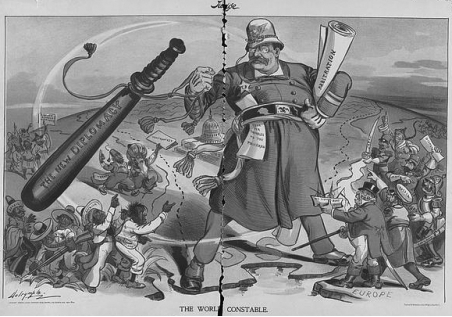
The development depicted in the cartoon would likely be supported by
A) imperialists.
B) progressive reformers.
C) isolationists.
D) civil rights activists.
Judge Magazine
The development depicted in the cartoon would likely be supported by
A) imperialists.
B) progressive reformers.
C) isolationists.
D) civil rights activists.
سؤال
"The World's Constable" (January 14, 1905)
Judge Magazine
The development depicted in the cartoon most closely resembles which of the following views in the nineteenth century?
A) those who were in favor of states' rights
B) those in favor of going to war with Mexico
C) those opposed to the expansion of slavery
D) those who supported high tariffs
Judge Magazine
The development depicted in the cartoon most closely resembles which of the following views in the nineteenth century?
A) those who were in favor of states' rights
B) those in favor of going to war with Mexico
C) those opposed to the expansion of slavery
D) those who supported high tariffs
سؤال
سؤال
سؤال
سؤال
سؤال
سؤال
سؤال
"The World's Constable" (January 14, 1905)
Judge Magazine
The development depicted in the cartoon was most significantly caused by
A) changes in race relations at the turn of the century.
B) war with Europe.
C) new immigration to the United States during the late 1800s.
D) the desire by many Americans for new economic opportunities.
Judge Magazine
The development depicted in the cartoon was most significantly caused by
A) changes in race relations at the turn of the century.
B) war with Europe.
C) new immigration to the United States during the late 1800s.
D) the desire by many Americans for new economic opportunities.
سؤال
سؤال
سؤال
سؤال
سؤال
سؤال
سؤال
سؤال
سؤال
سؤال
سؤال
سؤال
سؤال
سؤال
سؤال
سؤال
سؤال
سؤال
سؤال
سؤال
سؤال
سؤال
سؤال
سؤال
سؤال
سؤال
سؤال
سؤال
سؤال
سؤال
سؤال
سؤال
سؤال
سؤال
سؤال
سؤال
سؤال
سؤال
سؤال
سؤال
سؤال
سؤال
سؤال
سؤال
سؤال
سؤال
سؤال
سؤال
سؤال
Document Based Question
Compare and contrast United States foreign policy in the years between 1890 and 1924 with the country's approach to foreign policy that preceded it. To what degree and in what ways did the policy remain the same and in what ways did it change?
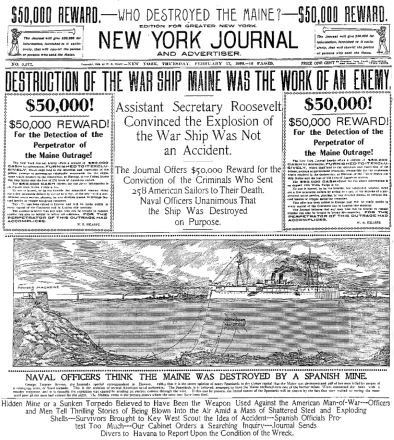
Document 1
Source: New York Journal, February 17, 1898.
 Document 2
Source: The Teller Amendment, April 20, 1898.
Whereas the abhorrent conditions which have existed for more than three years in the Island of Cuba, so near our own borders, have shocked the moral sense of the people of the United States, have been a disgrace to Christian civilization, culminating, as they have, in the destruction of a United States battle ship, with two hundred and sixty-six of its officers and crew, while on a friendly visit in the harbor of Havana, and cannot longer be endured, as has been set forth by the President of the United States in his message to Congress of April eleventh, eighteen hundred and ninety-eight, upon which the action of Congress was invited: Therefore, . . .
Fourth. That the United States hereby disclaims any disposition or intention to exercise sovereignty, jurisdiction, or control over said Island except for the pacification thereof, and asserts its determination, when that is accomplished, to leave the government and control of the Island to its people.
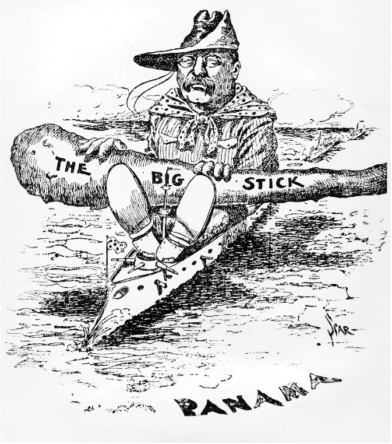
Document 3
Source: Big Stick Diplomacy, New York Globe, 1903.
 Document 4
Source: William Taft, Dollar Diplomacy, 1912.
The diplomacy of the present administration has sought to respond to modern ideas of commercial intercourse. This policy has been characterized as substituting dollars for bullets. It is one that appeals alike to idealistic humanitarian sentiments, to the dictates of sound policy and strategy, and to legitimate commercial aims. It is an effort frankly directed to the increase of American trade upon the axiomatic principle that the Government of the United States shall extend all proper support to every legitimate and beneficial American enterprise abroad. How great have been the results of this diplomacy, coupled with the maximum and minimum provision of the tariff law, will be seen by some consideration of the wonderful increase in the export trade of the United States. Because modern diplomacy is commercial, there has been a disposition in some quarters to attribute to it none but materialistic aims. How strikingly erroneous is such an impression may be seen from a study of the results by which the diplomacy of the United States can be judged.
Document 5
Source: Woodrow Wilson, "Appeal for Support of the League of Nations," 1919.
This is the Covenant of the League of Nations that you hear objected to, the only possible guarantee against war. I would consider myself recreant to every mother and father, every wife and sweetheart in this country, if I consented to the ending of this war without a guarantee that there would be no other. You say, "Is it an absolute guarantee " No; there is no absolute guarantee against human passion; but even if it were only 10 percent of a guarantee, would not you rather have 10 percent guarantee against war than none? If it only creates a presumption that there will not be war, would you not rather have that presumption than live under the certainty that there will be war? For, I tell you, my fellow citizens, I can predict with absolute certainty that within another generation there will be another world war if the nations of the world do not concert the method by which to prevent it.
Document 6
Source: Warren G. Harding, "Back to Normal, " Address before Home Market Club, Boston, Massachusetts, May 14, 1920.
America's present need is not heroics, but healing; not nostrums, but normalcy; not revolution, but restoration; not agitation, but adjustment; not surgery, but serenity; not the dramatic, but the dispassionate; not experiment, but equipoise; not submergence in internationality, but sustainment in triumphant nationality.
Document 7
Source: Calvin Coolidge, First Annual Message, December 6, 1923.
For us peace reigns everywhere. We desire to perpetuate it always by granting full justice to others and requiring of others full justice to ourselves.
Our country has one cardinal principle to maintain in its foreign policy. It is an American principle. It must be an American policy. We attend to our own affairs, conserve our own strength, and protect the interests of our own citizens; but we recognize thoroughly our obligation to help others, reserving to the decision of our own Judgment the time, the place, and the method. We realize the common bond of humanity. We know the inescapable law of service.
Our country has definitely refused to adopt and ratify the covenant of the League of Nations. We have not felt warranted in assuming the responsibilities which its members have assumed. I am not proposing any change in this policy; neither is the Senate. The incident, so far as we are concerned, is closed. The League exists as a foreign agency. We hope it will be helpful. But the United States sees no reason to limit its own freedom and independence of action by joining it. We shall do well to recognize this basic fact in all national affairs and govern ourselves accordingly.
Compare and contrast United States foreign policy in the years between 1890 and 1924 with the country's approach to foreign policy that preceded it. To what degree and in what ways did the policy remain the same and in what ways did it change?
Document 1
Source: New York Journal, February 17, 1898.
Document 2Source: The Teller Amendment, April 20, 1898.
Whereas the abhorrent conditions which have existed for more than three years in the Island of Cuba, so near our own borders, have shocked the moral sense of the people of the United States, have been a disgrace to Christian civilization, culminating, as they have, in the destruction of a United States battle ship, with two hundred and sixty-six of its officers and crew, while on a friendly visit in the harbor of Havana, and cannot longer be endured, as has been set forth by the President of the United States in his message to Congress of April eleventh, eighteen hundred and ninety-eight, upon which the action of Congress was invited: Therefore, . . .
Fourth. That the United States hereby disclaims any disposition or intention to exercise sovereignty, jurisdiction, or control over said Island except for the pacification thereof, and asserts its determination, when that is accomplished, to leave the government and control of the Island to its people.
Document 3
Source: Big Stick Diplomacy, New York Globe, 1903.
Document 4Source: William Taft, Dollar Diplomacy, 1912.
The diplomacy of the present administration has sought to respond to modern ideas of commercial intercourse. This policy has been characterized as substituting dollars for bullets. It is one that appeals alike to idealistic humanitarian sentiments, to the dictates of sound policy and strategy, and to legitimate commercial aims. It is an effort frankly directed to the increase of American trade upon the axiomatic principle that the Government of the United States shall extend all proper support to every legitimate and beneficial American enterprise abroad. How great have been the results of this diplomacy, coupled with the maximum and minimum provision of the tariff law, will be seen by some consideration of the wonderful increase in the export trade of the United States. Because modern diplomacy is commercial, there has been a disposition in some quarters to attribute to it none but materialistic aims. How strikingly erroneous is such an impression may be seen from a study of the results by which the diplomacy of the United States can be judged.
Document 5
Source: Woodrow Wilson, "Appeal for Support of the League of Nations," 1919.
This is the Covenant of the League of Nations that you hear objected to, the only possible guarantee against war. I would consider myself recreant to every mother and father, every wife and sweetheart in this country, if I consented to the ending of this war without a guarantee that there would be no other. You say, "Is it an absolute guarantee " No; there is no absolute guarantee against human passion; but even if it were only 10 percent of a guarantee, would not you rather have 10 percent guarantee against war than none? If it only creates a presumption that there will not be war, would you not rather have that presumption than live under the certainty that there will be war? For, I tell you, my fellow citizens, I can predict with absolute certainty that within another generation there will be another world war if the nations of the world do not concert the method by which to prevent it.
Document 6
Source: Warren G. Harding, "Back to Normal, " Address before Home Market Club, Boston, Massachusetts, May 14, 1920.
America's present need is not heroics, but healing; not nostrums, but normalcy; not revolution, but restoration; not agitation, but adjustment; not surgery, but serenity; not the dramatic, but the dispassionate; not experiment, but equipoise; not submergence in internationality, but sustainment in triumphant nationality.
Document 7
Source: Calvin Coolidge, First Annual Message, December 6, 1923.
For us peace reigns everywhere. We desire to perpetuate it always by granting full justice to others and requiring of others full justice to ourselves.
Our country has one cardinal principle to maintain in its foreign policy. It is an American principle. It must be an American policy. We attend to our own affairs, conserve our own strength, and protect the interests of our own citizens; but we recognize thoroughly our obligation to help others, reserving to the decision of our own Judgment the time, the place, and the method. We realize the common bond of humanity. We know the inescapable law of service.
Our country has definitely refused to adopt and ratify the covenant of the League of Nations. We have not felt warranted in assuming the responsibilities which its members have assumed. I am not proposing any change in this policy; neither is the Senate. The incident, so far as we are concerned, is closed. The League exists as a foreign agency. We hope it will be helpful. But the United States sees no reason to limit its own freedom and independence of action by joining it. We shall do well to recognize this basic fact in all national affairs and govern ourselves accordingly.
سؤال

فتح الحزمة
قم بالتسجيل لفتح البطاقات في هذه المجموعة!
Unlock Deck
Unlock Deck
1/68

العب

ملء الشاشة (f)
Deck 19: Safe for Democracy: the United States and World War I, 1916-1920
1
A World Safe for Democracy (1917)
Woodrow Wilson
The world must be made safe for democracy. Its peace must be planted upon the tested foundations of political liberty. We have no selfish ends to serve. We desire no conquest, no dominion. We seek no indemnities for ourselves, no material compensation for the sacrifices we shall freely make. . . .
It is a fearful thing to lead this great peaceful people into war, into the most terrible and disastrous of all wars, civilization itself seeming to be in the balance.
But the right is more precious than peace, and we shall fight for the things which we have always carried nearest our hearts-for democracy, for the right of those who submit to authority to have a voice in their own Governments, for the rights and liberties of small nations, for a universal dominion of right by such a concert of free peoples as shall bring peace and safety to all nations and make the world itself at last free.
Which of the following ideas most inspired the concerns Wilson offers in his war message?
A) self-determination
B) capitalism
C) the need for stronger alliances
D) the right to unrestricted submarine warfare
Woodrow Wilson
The world must be made safe for democracy. Its peace must be planted upon the tested foundations of political liberty. We have no selfish ends to serve. We desire no conquest, no dominion. We seek no indemnities for ourselves, no material compensation for the sacrifices we shall freely make. . . .
It is a fearful thing to lead this great peaceful people into war, into the most terrible and disastrous of all wars, civilization itself seeming to be in the balance.
But the right is more precious than peace, and we shall fight for the things which we have always carried nearest our hearts-for democracy, for the right of those who submit to authority to have a voice in their own Governments, for the rights and liberties of small nations, for a universal dominion of right by such a concert of free peoples as shall bring peace and safety to all nations and make the world itself at last free.
Which of the following ideas most inspired the concerns Wilson offers in his war message?
A) self-determination
B) capitalism
C) the need for stronger alliances
D) the right to unrestricted submarine warfare
self-determination
2
Why were Americans divided over the outbreak of the Great War?
A) The American public wanted to join the conflict, but Congress remained opposed to any intervention.
B) Irish-Americans and Russian Jews resented Allied powers Great Britain and Russia, and some American reformers lobbied against the war in the name of social justice and peace.
C) Some Americans welcomed the military buildup that would accompany American involvement; others worried about large tax increases.
D) Democrats hoped to shore up support for Wilson's reelection as a "war president," while Republicans objected to "foreign entanglements."
A) The American public wanted to join the conflict, but Congress remained opposed to any intervention.
B) Irish-Americans and Russian Jews resented Allied powers Great Britain and Russia, and some American reformers lobbied against the war in the name of social justice and peace.
C) Some Americans welcomed the military buildup that would accompany American involvement; others worried about large tax increases.
D) Democrats hoped to shore up support for Wilson's reelection as a "war president," while Republicans objected to "foreign entanglements."
Irish-Americans and Russian Jews resented Allied powers Great Britain and Russia, and some American reformers lobbied against the war in the name of social justice and peace.
3
Which of the following best describes the moral imperialism propounded by President Woodrow Wilson?
A) It relied on the principle of racial equality.
B) It rejected military intervention as a barbaric tool of inferior races.
C) It effectively meant the complete withdrawal from foreign affairs at the beginning of American isolationism.
D) It created an irony with regard to the concept of freedom.
A) It relied on the principle of racial equality.
B) It rejected military intervention as a barbaric tool of inferior races.
C) It effectively meant the complete withdrawal from foreign affairs at the beginning of American isolationism.
D) It created an irony with regard to the concept of freedom.
It created an irony with regard to the concept of freedom.
4
Between 1901 and 1920, the United States intervened militarily numerous times in Caribbean countries:
A) in order to protect the economic interests of American banks and investors.
B) in order to spread liberty and freedom in the region.
C) because the democratic leaders of the region asked the United States for aid in suppressing rebellions.
D) in order to fight European powers who sought to establish colonies in the area.
A) in order to protect the economic interests of American banks and investors.
B) in order to spread liberty and freedom in the region.
C) because the democratic leaders of the region asked the United States for aid in suppressing rebellions.
D) in order to fight European powers who sought to establish colonies in the area.
فتح الحزمة
افتح القفل للوصول البطاقات البالغ عددها 68 في هذه المجموعة.
فتح الحزمة
k this deck
5
Woodrow Wilson's moral imperialism in Latin America produced:
A) eight years of unprecedented stability in the region.
B) more military interventions than any other president before or since.
C) economic growth and diversity for the region.
D) very little to show for the policy, as his attention was mostly on Europe.
A) eight years of unprecedented stability in the region.
B) more military interventions than any other president before or since.
C) economic growth and diversity for the region.
D) very little to show for the policy, as his attention was mostly on Europe.
فتح الحزمة
افتح القفل للوصول البطاقات البالغ عددها 68 في هذه المجموعة.
فتح الحزمة
k this deck
6
Dollar Diplomacy:
A) characterizes the foreign policy of Theodore Roosevelt.
B) was put in place by Woodrow Wilson regarding Mexico.
C) was used by William Howard Taft instead of military intervention.
D) was seldom used and never successfully.
A) characterizes the foreign policy of Theodore Roosevelt.
B) was put in place by Woodrow Wilson regarding Mexico.
C) was used by William Howard Taft instead of military intervention.
D) was seldom used and never successfully.
فتح الحزمة
افتح القفل للوصول البطاقات البالغ عددها 68 في هذه المجموعة.
فتح الحزمة
k this deck
7
Which of the following assessments of the Roosevelt Corollary is accurate?
A) It represented a vow to defend the Western Hemisphere against European intervention.
B) It signaled to Japan that the United States was the predominant military power in the Pacific.
C) It was a warning to Central and South American nations to accept a colony-like status vis-à-vis the United States.
D) It held that the United States had the right to exercise an international police power.
A) It represented a vow to defend the Western Hemisphere against European intervention.
B) It signaled to Japan that the United States was the predominant military power in the Pacific.
C) It was a warning to Central and South American nations to accept a colony-like status vis-à-vis the United States.
D) It held that the United States had the right to exercise an international police power.
فتح الحزمة
افتح القفل للوصول البطاقات البالغ عددها 68 في هذه المجموعة.
فتح الحزمة
k this deck
8
A World Safe for Democracy (1917)
Woodrow Wilson
The world must be made safe for democracy. Its peace must be planted upon the tested foundations of political liberty. We have no selfish ends to serve. We desire no conquest, no dominion. We seek no indemnities for ourselves, no material compensation for the sacrifices we shall freely make. . . .
It is a fearful thing to lead this great peaceful people into war, into the most terrible and disastrous of all wars, civilization itself seeming to be in the balance.
But the right is more precious than peace, and we shall fight for the things which we have always carried nearest our hearts-for democracy, for the right of those who submit to authority to have a voice in their own Governments, for the rights and liberties of small nations, for a universal dominion of right by such a concert of free peoples as shall bring peace and safety to all nations and make the world itself at last free.
What outcome of the Spanish-American War foreshadowed the war aims stated by Wilson on the eve of U.S. entry into World War I?
A) the annexation of Guam by the United States
B) the Spanish surrender of Puerto Rico and the rest of its possessions in the West Indies
C) the promise of the United States not to colonize Cuba
D) a continued American military presence in the Philippines
Woodrow Wilson
The world must be made safe for democracy. Its peace must be planted upon the tested foundations of political liberty. We have no selfish ends to serve. We desire no conquest, no dominion. We seek no indemnities for ourselves, no material compensation for the sacrifices we shall freely make. . . .
It is a fearful thing to lead this great peaceful people into war, into the most terrible and disastrous of all wars, civilization itself seeming to be in the balance.
But the right is more precious than peace, and we shall fight for the things which we have always carried nearest our hearts-for democracy, for the right of those who submit to authority to have a voice in their own Governments, for the rights and liberties of small nations, for a universal dominion of right by such a concert of free peoples as shall bring peace and safety to all nations and make the world itself at last free.
What outcome of the Spanish-American War foreshadowed the war aims stated by Wilson on the eve of U.S. entry into World War I?
A) the annexation of Guam by the United States
B) the Spanish surrender of Puerto Rico and the rest of its possessions in the West Indies
C) the promise of the United States not to colonize Cuba
D) a continued American military presence in the Philippines
فتح الحزمة
افتح القفل للوصول البطاقات البالغ عددها 68 في هذه المجموعة.
فتح الحزمة
k this deck
9
Why did World War I transform Western civilization so profoundly?
A) The mass slaughter of World War I was hard to reconcile with the optimist claim that Western civilization was the triumph of reason and human progress.
B) Since a vast majority of victims were civilians, the war forever changed public perceptions on the acceptability of military conflict.
C) As a global conflict between socialist nations on the one hand and monarchies on the other, the war signaled the ideological divisions of the twentieth century.
D) The war generated an economic boom in Europe and the United States that marked the beginning of the so-called Roaring Twenties.
A) The mass slaughter of World War I was hard to reconcile with the optimist claim that Western civilization was the triumph of reason and human progress.
B) Since a vast majority of victims were civilians, the war forever changed public perceptions on the acceptability of military conflict.
C) As a global conflict between socialist nations on the one hand and monarchies on the other, the war signaled the ideological divisions of the twentieth century.
D) The war generated an economic boom in Europe and the United States that marked the beginning of the so-called Roaring Twenties.
فتح الحزمة
افتح القفل للوصول البطاقات البالغ عددها 68 في هذه المجموعة.
فتح الحزمة
k this deck
10
"The World's Constable" (January 14, 1905)
Judge Magazine
The development depicted in the cartoon would likely be supported by
A) imperialists.
B) progressive reformers.
C) isolationists.
D) civil rights activists.
Judge Magazine
The development depicted in the cartoon would likely be supported by
A) imperialists.
B) progressive reformers.
C) isolationists.
D) civil rights activists.
فتح الحزمة
افتح القفل للوصول البطاقات البالغ عددها 68 في هذه المجموعة.
فتح الحزمة
k this deck
11
"The World's Constable" (January 14, 1905)
Judge Magazine
The development depicted in the cartoon most closely resembles which of the following views in the nineteenth century?
A) those who were in favor of states' rights
B) those in favor of going to war with Mexico
C) those opposed to the expansion of slavery
D) those who supported high tariffs
Judge Magazine
The development depicted in the cartoon most closely resembles which of the following views in the nineteenth century?
A) those who were in favor of states' rights
B) those in favor of going to war with Mexico
C) those opposed to the expansion of slavery
D) those who supported high tariffs
فتح الحزمة
افتح القفل للوصول البطاقات البالغ عددها 68 في هذه المجموعة.
فتح الحزمة
k this deck
12
W. T. Stead:
A) accurately predicted the sinking of the Titanic in 1912.
B) claimed American world power in the twentieth century would rest in part on the spread of American culture.
C) expressed grave concern over the growth of America's military and its seizure of new territory.
D) was discredited as a hack with the publication of The Americanization of the World.
A) accurately predicted the sinking of the Titanic in 1912.
B) claimed American world power in the twentieth century would rest in part on the spread of American culture.
C) expressed grave concern over the growth of America's military and its seizure of new territory.
D) was discredited as a hack with the publication of The Americanization of the World.
فتح الحزمة
افتح القفل للوصول البطاقات البالغ عددها 68 في هذه المجموعة.
فتح الحزمة
k this deck
13
Theodore Roosevelt's taking of the Panama Canal Zone is an example of:
A) his ability to speak softly in diplomatic situations when he knew he was outgunned.
B) international Progressivism-the United States was intervening with the sole purpose to uplift the peoples of Central America.
C) liberal internationalism, since he worked closely with the French to work out a deal favorable to Panama.
D) his belief that civilized nations had an obligation to establish order in an unruly world.
A) his ability to speak softly in diplomatic situations when he knew he was outgunned.
B) international Progressivism-the United States was intervening with the sole purpose to uplift the peoples of Central America.
C) liberal internationalism, since he worked closely with the French to work out a deal favorable to Panama.
D) his belief that civilized nations had an obligation to establish order in an unruly world.
فتح الحزمة
افتح القفل للوصول البطاقات البالغ عددها 68 في هذه المجموعة.
فتح الحزمة
k this deck
14
Which of the following statements is accurate about William Howard Taft?
A) Like his predecessor, Theodore Roosevelt, Taft emphasized military intervention to achieve American strategic goals in the Western Hemisphere.
B) Taft discouraged the United Fruit Company from establishing banana plantations in Honduras.
C) Taft believed the best way to promote American interests in the Caribbean and Central America was through economic investment.
D) Taft coined the term "Dollar Diplomacy" in describing the foreign policy approach of Theodore Roosevelt.
A) Like his predecessor, Theodore Roosevelt, Taft emphasized military intervention to achieve American strategic goals in the Western Hemisphere.
B) Taft discouraged the United Fruit Company from establishing banana plantations in Honduras.
C) Taft believed the best way to promote American interests in the Caribbean and Central America was through economic investment.
D) Taft coined the term "Dollar Diplomacy" in describing the foreign policy approach of Theodore Roosevelt.
فتح الحزمة
افتح القفل للوصول البطاقات البالغ عددها 68 في هذه المجموعة.
فتح الحزمة
k this deck
15
The completion of the Panama Canal in 1914:
A) did not end U.S. control of the Panama Canal Zone, which remains an American territory to this day.
B) helped repair U.S. diplomatic relations with Colombia.
C) reduced the sea voyage between the East and West coasts of the United States by 8,000 miles.
D) did not involve the labor of non-U.S. citizens, despite Roosevelt's objections.
A) did not end U.S. control of the Panama Canal Zone, which remains an American territory to this day.
B) helped repair U.S. diplomatic relations with Colombia.
C) reduced the sea voyage between the East and West coasts of the United States by 8,000 miles.
D) did not involve the labor of non-U.S. citizens, despite Roosevelt's objections.
فتح الحزمة
افتح القفل للوصول البطاقات البالغ عددها 68 في هذه المجموعة.
فتح الحزمة
k this deck
16
Assess the effectiveness of President Woodrow Wilson's response to Mexico's civil war.
A) While the United States was able to bring peace to the region, it also undermined the democratic process.
B) In his zealous attempt to remove the dictator Porfirio Díaz, Wilson ended up destabilizing all of Central America.
C) Wilson's attempts to teach Mexican people how to select good men only led to the war spilling over into the United States.
D) President Wilson's efforts to support the popular leader "Pancho" Villa resulted in 10,000 U.S. troops joining the fight between the troops of Huerta and Madero.
A) While the United States was able to bring peace to the region, it also undermined the democratic process.
B) In his zealous attempt to remove the dictator Porfirio Díaz, Wilson ended up destabilizing all of Central America.
C) Wilson's attempts to teach Mexican people how to select good men only led to the war spilling over into the United States.
D) President Wilson's efforts to support the popular leader "Pancho" Villa resulted in 10,000 U.S. troops joining the fight between the troops of Huerta and Madero.
فتح الحزمة
افتح القفل للوصول البطاقات البالغ عددها 68 في هذه المجموعة.
فتح الحزمة
k this deck
17
Which of the following statements about World War I is NOT accurate?
A) It began with the assassination of the heir to the throne of the Austrian-Hungarian empire.
B) It produced casualties on a massive scale, due in part to new military technologies such as tanks and submarines.
C) It actually had little to do with European colonial possessions overseas.
D) It was the result of European powers interlocking military alliances.
A) It began with the assassination of the heir to the throne of the Austrian-Hungarian empire.
B) It produced casualties on a massive scale, due in part to new military technologies such as tanks and submarines.
C) It actually had little to do with European colonial possessions overseas.
D) It was the result of European powers interlocking military alliances.
فتح الحزمة
افتح القفل للوصول البطاقات البالغ عددها 68 في هذه المجموعة.
فتح الحزمة
k this deck
18
"The World's Constable" (January 14, 1905)
Judge Magazine
The development depicted in the cartoon was most significantly caused by
A) changes in race relations at the turn of the century.
B) war with Europe.
C) new immigration to the United States during the late 1800s.
D) the desire by many Americans for new economic opportunities.
Judge Magazine
The development depicted in the cartoon was most significantly caused by
A) changes in race relations at the turn of the century.
B) war with Europe.
C) new immigration to the United States during the late 1800s.
D) the desire by many Americans for new economic opportunities.
فتح الحزمة
افتح القفل للوصول البطاقات البالغ عددها 68 في هذه المجموعة.
فتح الحزمة
k this deck
19
A World Safe for Democracy (1917)
Woodrow Wilson
The world must be made safe for democracy. Its peace must be planted upon the tested foundations of political liberty. We have no selfish ends to serve. We desire no conquest, no dominion. We seek no indemnities for ourselves, no material compensation for the sacrifices we shall freely make. . . .
It is a fearful thing to lead this great peaceful people into war, into the most terrible and disastrous of all wars, civilization itself seeming to be in the balance.
But the right is more precious than peace, and we shall fight for the things which we have always carried nearest our hearts-for democracy, for the right of those who submit to authority to have a voice in their own Governments, for the rights and liberties of small nations, for a universal dominion of right by such a concert of free peoples as shall bring peace and safety to all nations and make the world itself at last free.
In the aftermath of World War I, what was the most serious obstacle to the goals stated in Wilson's war message?
A) Congress's reluctance to be drawn into European matters
B) the unwillingness of European countries to abide by these principles
C) the American people's fear of an economic downturn
D) a lack of safeguards to prevent future colonialism and militarism
Woodrow Wilson
The world must be made safe for democracy. Its peace must be planted upon the tested foundations of political liberty. We have no selfish ends to serve. We desire no conquest, no dominion. We seek no indemnities for ourselves, no material compensation for the sacrifices we shall freely make. . . .
It is a fearful thing to lead this great peaceful people into war, into the most terrible and disastrous of all wars, civilization itself seeming to be in the balance.
But the right is more precious than peace, and we shall fight for the things which we have always carried nearest our hearts-for democracy, for the right of those who submit to authority to have a voice in their own Governments, for the rights and liberties of small nations, for a universal dominion of right by such a concert of free peoples as shall bring peace and safety to all nations and make the world itself at last free.
In the aftermath of World War I, what was the most serious obstacle to the goals stated in Wilson's war message?
A) Congress's reluctance to be drawn into European matters
B) the unwillingness of European countries to abide by these principles
C) the American people's fear of an economic downturn
D) a lack of safeguards to prevent future colonialism and militarism
فتح الحزمة
افتح القفل للوصول البطاقات البالغ عددها 68 في هذه المجموعة.
فتح الحزمة
k this deck
20
From 1914 to 1916, U.S. intervention in Mexico:
A) was welcomed by the Mexican people.
B) led to the U.S. takeover of Mexico.
C) liberated Mexico from Spain.
D) demonstrated the weaknesses of Wilson's foreign policy.
A) was welcomed by the Mexican people.
B) led to the U.S. takeover of Mexico.
C) liberated Mexico from Spain.
D) demonstrated the weaknesses of Wilson's foreign policy.
فتح الحزمة
افتح القفل للوصول البطاقات البالغ عددها 68 في هذه المجموعة.
فتح الحزمة
k this deck
21
Why did the War Industries Board establish standardized specifications during World War I?
A) To prevent private businesses from extracting excess profits.
B) To fulfill the long-standing demands of consumer rights groups.
C) To meet the demands of labor unions.
D) To increase efficiency and speed up production.
A) To prevent private businesses from extracting excess profits.
B) To fulfill the long-standing demands of consumer rights groups.
C) To meet the demands of labor unions.
D) To increase efficiency and speed up production.
فتح الحزمة
افتح القفل للوصول البطاقات البالغ عددها 68 في هذه المجموعة.
فتح الحزمة
k this deck
22
All of the following groups supported Prohibition EXCEPT:
A) urban reformers wishing to undermine the city machines.
B) women reformers who believed men squandered their earnings on alcohol.
C) employers who hoped Prohibition would create a more disciplined labor force.
D) Catholic priests who wished to curb the abuse of alcohol by parishioners.
A) urban reformers wishing to undermine the city machines.
B) women reformers who believed men squandered their earnings on alcohol.
C) employers who hoped Prohibition would create a more disciplined labor force.
D) Catholic priests who wished to curb the abuse of alcohol by parishioners.
فتح الحزمة
افتح القفل للوصول البطاقات البالغ عددها 68 في هذه المجموعة.
فتح الحزمة
k this deck
23
How were women so influential in the outcome of the election of 1916?
A) The campaign of Republican candidate Charles Evans Hughes relied almost exclusively on female volunteers.
B) The Wilson administration actively sought the endorsement of women working in war industries.
C) Women were able to vote in the presidential election in twelve western states and heavily favored Wilson.
D) Although her chances of victory were at best remote, the presidential candidacy of Alice Paul galvanized public opinion.
A) The campaign of Republican candidate Charles Evans Hughes relied almost exclusively on female volunteers.
B) The Wilson administration actively sought the endorsement of women working in war industries.
C) Women were able to vote in the presidential election in twelve western states and heavily favored Wilson.
D) Although her chances of victory were at best remote, the presidential candidacy of Alice Paul galvanized public opinion.
فتح الحزمة
افتح القفل للوصول البطاقات البالغ عددها 68 في هذه المجموعة.
فتح الحزمة
k this deck
24
American neutrality in the Great War:
A) was indirectly threatened by Britain's naval blockade, because it led to German submarine warfare.
B) prevented Wilson's attempts to initiate policies of "preparedness" in 1915.
C) was supported by Wilson's secretary of state, William Jennings Bryan.
D) A and C
A) was indirectly threatened by Britain's naval blockade, because it led to German submarine warfare.
B) prevented Wilson's attempts to initiate policies of "preparedness" in 1915.
C) was supported by Wilson's secretary of state, William Jennings Bryan.
D) A and C
فتح الحزمة
افتح القفل للوصول البطاقات البالغ عددها 68 في هذه المجموعة.
فتح الحزمة
k this deck
25
How did the Committee on Public Information present its message to encourage Americans to remain loyal and support the war effort?
A) The Creel Committee often relied on veiled threats.
B) The CPI frequently invoked the alien and sedition acts.
C) The CPI rhetoric commonly tried to pit immigrants against native-born Americans.
D) The CPI packaged its appeals in the language of social cooperation and an expanded democracy.
A) The Creel Committee often relied on veiled threats.
B) The CPI frequently invoked the alien and sedition acts.
C) The CPI rhetoric commonly tried to pit immigrants against native-born Americans.
D) The CPI packaged its appeals in the language of social cooperation and an expanded democracy.
فتح الحزمة
افتح القفل للوصول البطاقات البالغ عددها 68 في هذه المجموعة.
فتح الحزمة
k this deck
26
The Zimmermann Telegram:
A) helped assure Americans that Germany was not a threat.
B) clarified British war aims.
C) outlined the German plan for an attack on the United States by Mexico.
D) outlined the British plan for an attack on the United States by Mexico.
A) helped assure Americans that Germany was not a threat.
B) clarified British war aims.
C) outlined the German plan for an attack on the United States by Mexico.
D) outlined the British plan for an attack on the United States by Mexico.
فتح الحزمة
افتح القفل للوصول البطاقات البالغ عددها 68 في هذه المجموعة.
فتح الحزمة
k this deck
27
Which of the following is NOT an accurate statement about Eugene V. Debs?
A) He cited abolitionists in defense of Americans' freedom to dissent.
B) His arrest for violation of the Espionage Act was the result of an anti-war speech.
C) His prison sentence was commuted by President Wilson before his stroke.
D) He ran for president while in prison and received 900,000 votes.
A) He cited abolitionists in defense of Americans' freedom to dissent.
B) His arrest for violation of the Espionage Act was the result of an anti-war speech.
C) His prison sentence was commuted by President Wilson before his stroke.
D) He ran for president while in prison and received 900,000 votes.
فتح الحزمة
افتح القفل للوصول البطاقات البالغ عددها 68 في هذه المجموعة.
فتح الحزمة
k this deck
28
Which of the following statements does NOT characterize the woman's suffrage movement of the 1910s?
A) Alice Paul was elected to head the National Woman's Suffrage Association.
B) The movement split up over tactics.
C) Many of its veteran leaders switched their focus to supporting America's involvement in the war.
D) Activists chained themselves to the fence in front of the White House.
A) Alice Paul was elected to head the National Woman's Suffrage Association.
B) The movement split up over tactics.
C) Many of its veteran leaders switched their focus to supporting America's involvement in the war.
D) Activists chained themselves to the fence in front of the White House.
فتح الحزمة
افتح القفل للوصول البطاقات البالغ عددها 68 في هذه المجموعة.
فتح الحزمة
k this deck
29
When American troops finally arrived in Europe:
A) they were too late to participate in the Meuse-Argonne campaign.
B) they helped push back a German offensive near Paris.
C) they turned the tide of the war.
D) the British and French were in full retreat.
A) they were too late to participate in the Meuse-Argonne campaign.
B) they helped push back a German offensive near Paris.
C) they turned the tide of the war.
D) the British and French were in full retreat.
فتح الحزمة
افتح القفل للوصول البطاقات البالغ عددها 68 في هذه المجموعة.
فتح الحزمة
k this deck
30
Why did World War I threaten to tear the women's suffrage movement apart?
A) A large number of activists were German-American.
B) The leadership of the suffrage movement was predominantly socialist.
C) Many of the women in leadership positions were recruited into government service.
D) Many suffragists had been associated with opposition to American involvement in the war.
A) A large number of activists were German-American.
B) The leadership of the suffrage movement was predominantly socialist.
C) Many of the women in leadership positions were recruited into government service.
D) Many suffragists had been associated with opposition to American involvement in the war.
فتح الحزمة
افتح القفل للوصول البطاقات البالغ عددها 68 في هذه المجموعة.
فتح الحزمة
k this deck
31
Most Progressives saw World War I as a golden opportunity because:
A) they believed that the United States would profit from the war.
B) they supported the socialist ideas of Vladimir Lenin.
C) they hoped to disseminate Progressive values around the globe.
D) they saw an opportunity to completely restrict immigration.
A) they believed that the United States would profit from the war.
B) they supported the socialist ideas of Vladimir Lenin.
C) they hoped to disseminate Progressive values around the globe.
D) they saw an opportunity to completely restrict immigration.
فتح الحزمة
افتح القفل للوصول البطاقات البالغ عددها 68 في هذه المجموعة.
فتح الحزمة
k this deck
32
Jeannette Rankin, the first woman elected to Congress:
A) did not support U.S. entry into World War I.
B) supported limited women's suffrage.
C) was pro-German.
D) supported U.S. entry into World War I.
A) did not support U.S. entry into World War I.
B) supported limited women's suffrage.
C) was pro-German.
D) supported U.S. entry into World War I.
فتح الحزمة
افتح القفل للوصول البطاقات البالغ عددها 68 في هذه المجموعة.
فتح الحزمة
k this deck
33
The Committee on Public Information:
A) was directed by William Jennings Bryan.
B) protected civil liberties.
C) was a government agency that sought to shape public opinion.
D) was affiliated with the Socialist Party.
A) was directed by William Jennings Bryan.
B) protected civil liberties.
C) was a government agency that sought to shape public opinion.
D) was affiliated with the Socialist Party.
فتح الحزمة
افتح القفل للوصول البطاقات البالغ عددها 68 في هذه المجموعة.
فتح الحزمة
k this deck
34
Wilson's wartime propaganda effort:
A) produced Edward Bernays, inventor of the "public relations" profession.
B) convinced the IWW and the Socialist Party to reverse positions and support America in the war.
C) relied on private agencies, as direct government involvement was opposed by a skeptical public.
D) A and C
A) produced Edward Bernays, inventor of the "public relations" profession.
B) convinced the IWW and the Socialist Party to reverse positions and support America in the war.
C) relied on private agencies, as direct government involvement was opposed by a skeptical public.
D) A and C
فتح الحزمة
افتح القفل للوصول البطاقات البالغ عددها 68 في هذه المجموعة.
فتح الحزمة
k this deck
35
What did employers, urban reformers, and women reformers hope Prohibition would achieve during the war years?
A) A larger turnout among men for the draft.
B) The decline in desertions and acts of sabotage.
C) A reduction in the public expense associated with alcoholism.
D) Peace and order on the home front.
A) A larger turnout among men for the draft.
B) The decline in desertions and acts of sabotage.
C) A reduction in the public expense associated with alcoholism.
D) Peace and order on the home front.
فتح الحزمة
افتح القفل للوصول البطاقات البالغ عددها 68 في هذه المجموعة.
فتح الحزمة
k this deck
36
Wilson's Fourteen Points included all of the following principles EXCEPT:
A) an end to colonization.
B) self-determination for all nations.
C) freedom of the seas.
D) open diplomacy.
A) an end to colonization.
B) self-determination for all nations.
C) freedom of the seas.
D) open diplomacy.
فتح الحزمة
افتح القفل للوصول البطاقات البالغ عددها 68 في هذه المجموعة.
فتح الحزمة
k this deck
37
In the presidential election of 1916, Woodrow Wilson:
A) chose not to run for reelection.
B) lost to the Republican candidate, Charles Evans Hughes.
C) was reelected when he promised to support the war effort.
D) used the campaign slogan "He kept us out of war."
A) chose not to run for reelection.
B) lost to the Republican candidate, Charles Evans Hughes.
C) was reelected when he promised to support the war effort.
D) used the campaign slogan "He kept us out of war."
فتح الحزمة
افتح القفل للوصول البطاقات البالغ عددها 68 في هذه المجموعة.
فتح الحزمة
k this deck
38
Which of the following elements of President Wilson's Fourteen Points most resembled the commissions Progressives had instituted back home?
A) The League of Nations.
B) The right to free trade.
C) The readjustment of colonial claims.
D) The principle of self-determination for all nations.
A) The League of Nations.
B) The right to free trade.
C) The readjustment of colonial claims.
D) The principle of self-determination for all nations.
فتح الحزمة
افتح القفل للوصول البطاقات البالغ عددها 68 في هذه المجموعة.
فتح الحزمة
k this deck
39
Which of the following is the most likely explanation for the final passage of the Nineteenth Amendment?
A) Suffragists' state-by-state efforts had largely failed.
B) Congressmen from western states backed the amendment in exchange for an end to suffragist support of Prohibition.
C) The Wilson administration eventually supported the amendment in response to public pressure.
D) Jeanette Rankin of Montana cast the deciding vote.
A) Suffragists' state-by-state efforts had largely failed.
B) Congressmen from western states backed the amendment in exchange for an end to suffragist support of Prohibition.
C) The Wilson administration eventually supported the amendment in response to public pressure.
D) Jeanette Rankin of Montana cast the deciding vote.
فتح الحزمة
افتح القفل للوصول البطاقات البالغ عددها 68 في هذه المجموعة.
فتح الحزمة
k this deck
40
During World War I, the federal government:
A) intervened minimally in the economy.
B) encouraged farmers only to produce for American consumption.
C) increased corporate and individual income taxes.
D) pursued a laissez-faire economic policy.
A) intervened minimally in the economy.
B) encouraged farmers only to produce for American consumption.
C) increased corporate and individual income taxes.
D) pursued a laissez-faire economic policy.
فتح الحزمة
افتح القفل للوصول البطاقات البالغ عددها 68 في هذه المجموعة.
فتح الحزمة
k this deck
41
During his presidency, Woodrow Wilson:
A) dismissed numerous black federal employees.
B) banned the showing of the movie Birth of a Nation at the White House.
C) outlawed discrimination in federal agencies.
D) appointed several black judges.
A) dismissed numerous black federal employees.
B) banned the showing of the movie Birth of a Nation at the White House.
C) outlawed discrimination in federal agencies.
D) appointed several black judges.
فتح الحزمة
افتح القفل للوصول البطاقات البالغ عددها 68 في هذه المجموعة.
فتح الحزمة
k this deck
42
All of the following statements about African-American participation during World War I are true EXCEPT:
A) the navy barred African-Americans entirely.
B) the army was segregated.
C) President Wilson allowed African-American soldiers to march in a Paris victory parade.
D) the army barred most African-Americans from combat.
A) the navy barred African-Americans entirely.
B) the army was segregated.
C) President Wilson allowed African-American soldiers to march in a Paris victory parade.
D) the army barred most African-Americans from combat.
فتح الحزمة
افتح القفل للوصول البطاقات البالغ عددها 68 في هذه المجموعة.
فتح الحزمة
k this deck
43
In response to the Russian Revolution that led to the creation of the communist Soviet Union, the United States:
A) diplomatically recognized the Soviet Union.
B) aided supporters of communist rule in the Soviet Union during a civil war in 1918.
C) invited the Soviet Union to the Versailles peace conference.
D) pursued a policy of anticommunism that would remain throughout the twentieth century.
A) diplomatically recognized the Soviet Union.
B) aided supporters of communist rule in the Soviet Union during a civil war in 1918.
C) invited the Soviet Union to the Versailles peace conference.
D) pursued a policy of anticommunism that would remain throughout the twentieth century.
فتح الحزمة
افتح القفل للوصول البطاقات البالغ عددها 68 في هذه المجموعة.
فتح الحزمة
k this deck
44
The Tulsa riot, where 300 African-Americans were killed:
A) occurred after black sharecroppers went on strike and attacked white "scabs."
B) was opposed by police and National Guardsmen, who came to the defense of black victims.
C) began after black veterans tried to prevent the lynching of a young black man.
D) came to an end quickly, after local black and white leaders united to stop the violence.
A) occurred after black sharecroppers went on strike and attacked white "scabs."
B) was opposed by police and National Guardsmen, who came to the defense of black victims.
C) began after black veterans tried to prevent the lynching of a young black man.
D) came to an end quickly, after local black and white leaders united to stop the violence.
فتح الحزمة
افتح القفل للوصول البطاقات البالغ عددها 68 في هذه المجموعة.
فتح الحزمة
k this deck
45
In what ways was W. E. B. Du Bois a typical progressive?
A) He vigorously opposed the war.
B) He blamed African-Americans for their own plight.
C) He believed that only a social revolution could bring racial justice to the United States.
D) He believed that investigation, exposure, and education could solve the nation's problems.
A) He vigorously opposed the war.
B) He blamed African-Americans for their own plight.
C) He believed that only a social revolution could bring racial justice to the United States.
D) He believed that investigation, exposure, and education could solve the nation's problems.
فتح الحزمة
افتح القفل للوصول البطاقات البالغ عددها 68 في هذه المجموعة.
فتح الحزمة
k this deck
46
During World War I, Americans reacted to German-Americans and Germans in all of the following ways EXCEPT:
A) in Iowa, the governor required that all oral communication be done in English.
B) "hamburger" was changed to "liberty sandwich."
C) the director of the Boston Symphony was interned for playing the works of German composers.
D) the federal government barred German immigration to the United States.
A) in Iowa, the governor required that all oral communication be done in English.
B) "hamburger" was changed to "liberty sandwich."
C) the director of the Boston Symphony was interned for playing the works of German composers.
D) the federal government barred German immigration to the United States.
فتح الحزمة
افتح القفل للوصول البطاقات البالغ عددها 68 في هذه المجموعة.
فتح الحزمة
k this deck
47
How did World War I and the rhetoric of freedom shape the labor movement and workers' expectations?
A) World War I had a minimal impact on the labor movement.
B) There were very few labor strikes after the war.
C) Wartime propaganda turned the labor movement toward nationalism.
D) Wartime rhetoric inspired hopes for social and economic justice.
A) World War I had a minimal impact on the labor movement.
B) There were very few labor strikes after the war.
C) Wartime propaganda turned the labor movement toward nationalism.
D) Wartime rhetoric inspired hopes for social and economic justice.
فتح الحزمة
افتح القفل للوصول البطاقات البالغ عددها 68 في هذه المجموعة.
فتح الحزمة
k this deck
48
The "Declaration of Principles" adopted by W. E. B. Du Bois's Niagara Movement:
A) called for voting rights for educated African-Americans.
B) called on African-Americans to accept disenfranchisement.
C) called for complete economic and educational equality.
D) was signed by Booker T. Washington.
A) called for voting rights for educated African-Americans.
B) called on African-Americans to accept disenfranchisement.
C) called for complete economic and educational equality.
D) was signed by Booker T. Washington.
فتح الحزمة
افتح القفل للوصول البطاقات البالغ عددها 68 في هذه المجموعة.
فتح الحزمة
k this deck
49
Eugenics is the:
A) study of the supposed mental characteristics of different races.
B) movement toward colonization in Africa by blacks from the United States.
C) practice of using poison gas by the Germans during World War I.
D) socialist strategy of infiltrating labor unions in the United States.
A) study of the supposed mental characteristics of different races.
B) movement toward colonization in Africa by blacks from the United States.
C) practice of using poison gas by the Germans during World War I.
D) socialist strategy of infiltrating labor unions in the United States.
فتح الحزمة
افتح القفل للوصول البطاقات البالغ عددها 68 في هذه المجموعة.
فتح الحزمة
k this deck
50
Why did Americanization programs often target women?
A) Proponents of Americanization did not want to antagonize men.
B) Immigrant women had the most visible presence in public.
C) They understood women as the bearers and transmitters of culture.
D) Women offered less resistance to Americanization programs.
A) Proponents of Americanization did not want to antagonize men.
B) Immigrant women had the most visible presence in public.
C) They understood women as the bearers and transmitters of culture.
D) Women offered less resistance to Americanization programs.
فتح الحزمة
افتح القفل للوصول البطاقات البالغ عددها 68 في هذه المجموعة.
فتح الحزمة
k this deck
51
All of the following statements about the Great Steel Strike of 1919 are true EXCEPT:
A) the strike involved mostly nonimmigrant workers.
B) the strike centered in Chicago.
C) the strike involved 365,000 workers.
D) workers demanded union recognition.
A) the strike involved mostly nonimmigrant workers.
B) the strike centered in Chicago.
C) the strike involved 365,000 workers.
D) workers demanded union recognition.
فتح الحزمة
افتح القفل للوصول البطاقات البالغ عددها 68 في هذه المجموعة.
فتح الحزمة
k this deck
52
African-Americans migrated north during the Great Migration for all of the following reasons EXCEPT:
A) the prospect of higher wages.
B) the prospect of owning their own homes.
C) escaping the threat of lynching.
D) the prospect of being able to vote.
A) the prospect of higher wages.
B) the prospect of owning their own homes.
C) escaping the threat of lynching.
D) the prospect of being able to vote.
فتح الحزمة
افتح القفل للوصول البطاقات البالغ عددها 68 في هذه المجموعة.
فتح الحزمة
k this deck
53
Which of the following statements would have been prosecuted under the Sedition Act of 1918?
A) "I like German music."
B) "We may lose this war."
C) "I call on you to boycott the draft."
D) "Conscientious objectors deserve to be shot."
A) "I like German music."
B) "We may lose this war."
C) "I call on you to boycott the draft."
D) "Conscientious objectors deserve to be shot."
فتح الحزمة
افتح القفل للوصول البطاقات البالغ عددها 68 في هذه المجموعة.
فتح الحزمة
k this deck
54
How did eugenics shape public policy during World War I?
A) It opened Americans' eyes to the commonalities both native-born citizens and immigrants had.
B) It successfully undermined nativism and exposed it for the bigotry it was.
C) It provided anti-immigrant sentiment with an air of professional expertise.
D) It proved the superior traits of allied soldiers over German soldiers.
A) It opened Americans' eyes to the commonalities both native-born citizens and immigrants had.
B) It successfully undermined nativism and exposed it for the bigotry it was.
C) It provided anti-immigrant sentiment with an air of professional expertise.
D) It proved the superior traits of allied soldiers over German soldiers.
فتح الحزمة
افتح القفل للوصول البطاقات البالغ عددها 68 في هذه المجموعة.
فتح الحزمة
k this deck
55
What triggered the surge of conservative governments in central Europe at the end of World War I?
A) A worldwide revolutionary upsurge.
B) The killing of the tsar during the Russian revolution.
C) The British suppression of the Indian nationalist movement.
D) The revival of the Austrian-Hungarian and Ottoman empires.
A) A worldwide revolutionary upsurge.
B) The killing of the tsar during the Russian revolution.
C) The British suppression of the Indian nationalist movement.
D) The revival of the Austrian-Hungarian and Ottoman empires.
فتح الحزمة
افتح القفل للوصول البطاقات البالغ عددها 68 في هذه المجموعة.
فتح الحزمة
k this deck
56
All of the following statements about immigration policy during World War I are true EXCEPT:
A) Congress conferred citizenship upon Puerto Ricans.
B) Congress required that all immigrants pass IQ tests (intelligence tests).
C) Congress required that immigrants be literate in English or another language.
D) the government temporarily exempted Mexicans from the literacy test.
A) Congress conferred citizenship upon Puerto Ricans.
B) Congress required that all immigrants pass IQ tests (intelligence tests).
C) Congress required that immigrants be literate in English or another language.
D) the government temporarily exempted Mexicans from the literacy test.
فتح الحزمة
افتح القفل للوصول البطاقات البالغ عددها 68 في هذه المجموعة.
فتح الحزمة
k this deck
57
The American Protective League:
A) supported radicals charged under the Espionage and Sedition acts.
B) was concerned about protecting immigrants from persecution.
C) was concerned about the threat to civil liberties.
D) worked with the Justice Department to identify radicals.
A) supported radicals charged under the Espionage and Sedition acts.
B) was concerned about protecting immigrants from persecution.
C) was concerned about the threat to civil liberties.
D) worked with the Justice Department to identify radicals.
فتح الحزمة
افتح القفل للوصول البطاقات البالغ عددها 68 في هذه المجموعة.
فتح الحزمة
k this deck
58
African-Americans who migrated to the North during the Great Migration encountered all of the following conditions EXCEPT:
A) restricted employment opportunities.
B) menial and unskilled jobs.
C) exclusion from the public school system.
D) housing segregation.
A) restricted employment opportunities.
B) menial and unskilled jobs.
C) exclusion from the public school system.
D) housing segregation.
فتح الحزمة
افتح القفل للوصول البطاقات البالغ عددها 68 في هذه المجموعة.
فتح الحزمة
k this deck
59
How did Garveyites define freedom at the time of World War I?
A) As the right to serve and desegregated military units.
B) As black self-reliance and national self-determination.
C) As equal pay for equal work.
D) As the perfect blending and assimilation of white and black Americans.
A) As the right to serve and desegregated military units.
B) As black self-reliance and national self-determination.
C) As equal pay for equal work.
D) As the perfect blending and assimilation of white and black Americans.
فتح الحزمة
افتح القفل للوصول البطاقات البالغ عددها 68 في هذه المجموعة.
فتح الحزمة
k this deck
60
The Espionage Act (1917) and the Sedition Act (1918):
A) were the first federal restrictions on free speech since 1798.
B) drew mostly from similar language in state law.
C) came after strong public calls for a more "defensible democracy."
D) copied similar legislation from Germany, Russia, and the Ottoman Empire.
A) were the first federal restrictions on free speech since 1798.
B) drew mostly from similar language in state law.
C) came after strong public calls for a more "defensible democracy."
D) copied similar legislation from Germany, Russia, and the Ottoman Empire.
فتح الحزمة
افتح القفل للوصول البطاقات البالغ عددها 68 في هذه المجموعة.
فتح الحزمة
k this deck
61
Assess the impact of the bombing of the New York Stock Exchange in September 1920.
A) It triggered the notorious raids against radical labor organizations.
B) It caused the death of forty people.
C) It prompted the American Communist Party to strengthen its ties to the Soviet regime in Moscow.
D) It rekindled anticommunist repression and led to the conviction and execution of five conspirators.
A) It triggered the notorious raids against radical labor organizations.
B) It caused the death of forty people.
C) It prompted the American Communist Party to strengthen its ties to the Soviet regime in Moscow.
D) It rekindled anticommunist repression and led to the conviction and execution of five conspirators.
فتح الحزمة
افتح القفل للوصول البطاقات البالغ عددها 68 في هذه المجموعة.
فتح الحزمة
k this deck
62
Woodrow Wilson's efforts at the Versailles peace conference in Paris:
A) failed to achieve the inclusion of a League of Nations in the peace treaty.
B) refused a treaty clause holding Germany morally responsible for the war.
C) were thwarted by angry Parisian crowds upon his arrival.
D) did not include support for the independence of peoples still under British and French colonial rule.
A) failed to achieve the inclusion of a League of Nations in the peace treaty.
B) refused a treaty clause holding Germany morally responsible for the war.
C) were thwarted by angry Parisian crowds upon his arrival.
D) did not include support for the independence of peoples still under British and French colonial rule.
فتح الحزمة
افتح القفل للوصول البطاقات البالغ عددها 68 في هذه المجموعة.
فتح الحزمة
k this deck
63
Explain the effect of World War I on civil liberties and immigration in the United States.
فتح الحزمة
افتح القفل للوصول البطاقات البالغ عددها 68 في هذه المجموعة.
فتح الحزمة
k this deck
64
Which statement about the Red Scare is FALSE?
A) Officials believed that labor strikes were connected to the Russian Revolution.
B) The government deported hundreds of immigrant radicals.
C) It propelled J. Edgar Hoover's career as an anticommunist government agent.
D) It resulted in a wave of sympathy for persecuted workers.
A) Officials believed that labor strikes were connected to the Russian Revolution.
B) The government deported hundreds of immigrant radicals.
C) It propelled J. Edgar Hoover's career as an anticommunist government agent.
D) It resulted in a wave of sympathy for persecuted workers.
فتح الحزمة
افتح القفل للوصول البطاقات البالغ عددها 68 في هذه المجموعة.
فتح الحزمة
k this deck
65
Which of the following statements about the Treaty of Versailles is FALSE?
A) Its failure to reflect the ideals of self-determination inspired cynicism in the non-European world.
B) It sparked the rise of a new anti-Western nationalist movement.
C) It was opposed by Republicans in Congress and never ratified by the United States.
D) It demonstrated Woodrow Wilson's considerable negotiation skills.
A) Its failure to reflect the ideals of self-determination inspired cynicism in the non-European world.
B) It sparked the rise of a new anti-Western nationalist movement.
C) It was opposed by Republicans in Congress and never ratified by the United States.
D) It demonstrated Woodrow Wilson's considerable negotiation skills.
فتح الحزمة
افتح القفل للوصول البطاقات البالغ عددها 68 في هذه المجموعة.
فتح الحزمة
k this deck
66
Why did many people in eastern Europe consider Woodrow Wilson a "popular saint"?
A) He had liberated them from Russian occupation.
B) He had helped restore the Austrian-Hungarian and Ottoman monarchies.
C) He had helped eastern European immigrants in the United States with a path toward citizenship.
D) His criticism of imperialism helped eastern European peoples carve out new independent nations.
A) He had liberated them from Russian occupation.
B) He had helped restore the Austrian-Hungarian and Ottoman monarchies.
C) He had helped eastern European immigrants in the United States with a path toward citizenship.
D) His criticism of imperialism helped eastern European peoples carve out new independent nations.
فتح الحزمة
افتح القفل للوصول البطاقات البالغ عددها 68 في هذه المجموعة.
فتح الحزمة
k this deck
67
Document Based Question
Compare and contrast United States foreign policy in the years between 1890 and 1924 with the country's approach to foreign policy that preceded it. To what degree and in what ways did the policy remain the same and in what ways did it change?
Document 1
Source: New York Journal, February 17, 1898.
Document 2
Source: The Teller Amendment, April 20, 1898.
Whereas the abhorrent conditions which have existed for more than three years in the Island of Cuba, so near our own borders, have shocked the moral sense of the people of the United States, have been a disgrace to Christian civilization, culminating, as they have, in the destruction of a United States battle ship, with two hundred and sixty-six of its officers and crew, while on a friendly visit in the harbor of Havana, and cannot longer be endured, as has been set forth by the President of the United States in his message to Congress of April eleventh, eighteen hundred and ninety-eight, upon which the action of Congress was invited: Therefore, . . .
Fourth. That the United States hereby disclaims any disposition or intention to exercise sovereignty, jurisdiction, or control over said Island except for the pacification thereof, and asserts its determination, when that is accomplished, to leave the government and control of the Island to its people.
Document 3
Source: Big Stick Diplomacy, New York Globe, 1903.
Document 4
Source: William Taft, Dollar Diplomacy, 1912.
The diplomacy of the present administration has sought to respond to modern ideas of commercial intercourse. This policy has been characterized as substituting dollars for bullets. It is one that appeals alike to idealistic humanitarian sentiments, to the dictates of sound policy and strategy, and to legitimate commercial aims. It is an effort frankly directed to the increase of American trade upon the axiomatic principle that the Government of the United States shall extend all proper support to every legitimate and beneficial American enterprise abroad. How great have been the results of this diplomacy, coupled with the maximum and minimum provision of the tariff law, will be seen by some consideration of the wonderful increase in the export trade of the United States. Because modern diplomacy is commercial, there has been a disposition in some quarters to attribute to it none but materialistic aims. How strikingly erroneous is such an impression may be seen from a study of the results by which the diplomacy of the United States can be judged.
Document 5
Source: Woodrow Wilson, "Appeal for Support of the League of Nations," 1919.
This is the Covenant of the League of Nations that you hear objected to, the only possible guarantee against war. I would consider myself recreant to every mother and father, every wife and sweetheart in this country, if I consented to the ending of this war without a guarantee that there would be no other. You say, "Is it an absolute guarantee " No; there is no absolute guarantee against human passion; but even if it were only 10 percent of a guarantee, would not you rather have 10 percent guarantee against war than none? If it only creates a presumption that there will not be war, would you not rather have that presumption than live under the certainty that there will be war? For, I tell you, my fellow citizens, I can predict with absolute certainty that within another generation there will be another world war if the nations of the world do not concert the method by which to prevent it.
Document 6
Source: Warren G. Harding, "Back to Normal, " Address before Home Market Club, Boston, Massachusetts, May 14, 1920.
America's present need is not heroics, but healing; not nostrums, but normalcy; not revolution, but restoration; not agitation, but adjustment; not surgery, but serenity; not the dramatic, but the dispassionate; not experiment, but equipoise; not submergence in internationality, but sustainment in triumphant nationality.
Document 7
Source: Calvin Coolidge, First Annual Message, December 6, 1923.
For us peace reigns everywhere. We desire to perpetuate it always by granting full justice to others and requiring of others full justice to ourselves.
Our country has one cardinal principle to maintain in its foreign policy. It is an American principle. It must be an American policy. We attend to our own affairs, conserve our own strength, and protect the interests of our own citizens; but we recognize thoroughly our obligation to help others, reserving to the decision of our own Judgment the time, the place, and the method. We realize the common bond of humanity. We know the inescapable law of service.
Our country has definitely refused to adopt and ratify the covenant of the League of Nations. We have not felt warranted in assuming the responsibilities which its members have assumed. I am not proposing any change in this policy; neither is the Senate. The incident, so far as we are concerned, is closed. The League exists as a foreign agency. We hope it will be helpful. But the United States sees no reason to limit its own freedom and independence of action by joining it. We shall do well to recognize this basic fact in all national affairs and govern ourselves accordingly.
Compare and contrast United States foreign policy in the years between 1890 and 1924 with the country's approach to foreign policy that preceded it. To what degree and in what ways did the policy remain the same and in what ways did it change?
Document 1
Source: New York Journal, February 17, 1898.
Document 2Source: The Teller Amendment, April 20, 1898.
Whereas the abhorrent conditions which have existed for more than three years in the Island of Cuba, so near our own borders, have shocked the moral sense of the people of the United States, have been a disgrace to Christian civilization, culminating, as they have, in the destruction of a United States battle ship, with two hundred and sixty-six of its officers and crew, while on a friendly visit in the harbor of Havana, and cannot longer be endured, as has been set forth by the President of the United States in his message to Congress of April eleventh, eighteen hundred and ninety-eight, upon which the action of Congress was invited: Therefore, . . .
Fourth. That the United States hereby disclaims any disposition or intention to exercise sovereignty, jurisdiction, or control over said Island except for the pacification thereof, and asserts its determination, when that is accomplished, to leave the government and control of the Island to its people.
Document 3
Source: Big Stick Diplomacy, New York Globe, 1903.
Document 4Source: William Taft, Dollar Diplomacy, 1912.
The diplomacy of the present administration has sought to respond to modern ideas of commercial intercourse. This policy has been characterized as substituting dollars for bullets. It is one that appeals alike to idealistic humanitarian sentiments, to the dictates of sound policy and strategy, and to legitimate commercial aims. It is an effort frankly directed to the increase of American trade upon the axiomatic principle that the Government of the United States shall extend all proper support to every legitimate and beneficial American enterprise abroad. How great have been the results of this diplomacy, coupled with the maximum and minimum provision of the tariff law, will be seen by some consideration of the wonderful increase in the export trade of the United States. Because modern diplomacy is commercial, there has been a disposition in some quarters to attribute to it none but materialistic aims. How strikingly erroneous is such an impression may be seen from a study of the results by which the diplomacy of the United States can be judged.
Document 5
Source: Woodrow Wilson, "Appeal for Support of the League of Nations," 1919.
This is the Covenant of the League of Nations that you hear objected to, the only possible guarantee against war. I would consider myself recreant to every mother and father, every wife and sweetheart in this country, if I consented to the ending of this war without a guarantee that there would be no other. You say, "Is it an absolute guarantee " No; there is no absolute guarantee against human passion; but even if it were only 10 percent of a guarantee, would not you rather have 10 percent guarantee against war than none? If it only creates a presumption that there will not be war, would you not rather have that presumption than live under the certainty that there will be war? For, I tell you, my fellow citizens, I can predict with absolute certainty that within another generation there will be another world war if the nations of the world do not concert the method by which to prevent it.
Document 6
Source: Warren G. Harding, "Back to Normal, " Address before Home Market Club, Boston, Massachusetts, May 14, 1920.
America's present need is not heroics, but healing; not nostrums, but normalcy; not revolution, but restoration; not agitation, but adjustment; not surgery, but serenity; not the dramatic, but the dispassionate; not experiment, but equipoise; not submergence in internationality, but sustainment in triumphant nationality.
Document 7
Source: Calvin Coolidge, First Annual Message, December 6, 1923.
For us peace reigns everywhere. We desire to perpetuate it always by granting full justice to others and requiring of others full justice to ourselves.
Our country has one cardinal principle to maintain in its foreign policy. It is an American principle. It must be an American policy. We attend to our own affairs, conserve our own strength, and protect the interests of our own citizens; but we recognize thoroughly our obligation to help others, reserving to the decision of our own Judgment the time, the place, and the method. We realize the common bond of humanity. We know the inescapable law of service.
Our country has definitely refused to adopt and ratify the covenant of the League of Nations. We have not felt warranted in assuming the responsibilities which its members have assumed. I am not proposing any change in this policy; neither is the Senate. The incident, so far as we are concerned, is closed. The League exists as a foreign agency. We hope it will be helpful. But the United States sees no reason to limit its own freedom and independence of action by joining it. We shall do well to recognize this basic fact in all national affairs and govern ourselves accordingly.
فتح الحزمة
افتح القفل للوصول البطاقات البالغ عددها 68 في هذه المجموعة.
فتح الحزمة
k this deck
68
Explain why the U.S. Senate ultimately rejected the Versailles Treaty and the ways in which the treaty's rejection determined the United States' place in the world during the 1920s and 1930s.
فتح الحزمة
افتح القفل للوصول البطاقات البالغ عددها 68 في هذه المجموعة.
فتح الحزمة
k this deck
فتح الحزمة
افتح القفل للوصول البطاقات البالغ عددها 68 في هذه المجموعة.






