Deck 16: Acid-Base Equilibria

ملء الشاشة (f)
exit full mode
سؤال
A 8.0 × 10⁻³ M solution of acetic acid,HC2H3O2,is 4.7% ionized at 25°C.In a 8.0 × 10⁻⁴ M solution,the percentage of ionization would be

A)100%.
B)<4.7%.
C)>4.7%.
D)the same.
E)zero.
استخدم زر المسافة أو
up arrow
down arrow
لقلب البطاقة.
سؤال
For which of the following equilibria does Kc correspond to the acid-ionization constant,Ka,of HC2O4-?

A)HC2O4-(aq)+ H2O(l) <strong>For which of the following equilibria does K<sub>c</sub> correspond to the acid-ionization constant,K<sub>a</sub>,of HC<sub>2</sub>O<sub>4</sub><sup>-</sup>?</strong> A)HC<sub>2</sub>O<sub>4</sub><sup>-</sup>(aq)+ H<sub>2</sub>O(l)   H<sub>2</sub>C<sub>2</sub>O<sub>4</sub>(aq)+ OH<sup>-</sup>(aq) B)H<sub>2</sub>C<sub>2</sub>O<sub>4</sub>(aq)+ H<sub>2</sub>O(l)   H<sub>3</sub>O<sup>+</sup>(aq)+ HC<sub>2</sub>O<sub>4</sub><sup>-</sup>(aq) C)HC<sub>2</sub>O<sub>4</sub><sup>-</sup>(aq)+ H<sub>2</sub>O(l)   H<sub>3</sub>O<sup>+</sup>(aq)+ C<sub>2</sub>O<sub>4</sub><sup>2-</sup>(aq) D)HC<sub>2</sub>O<sub>4</sub><sup>-</sup>(aq)+ OH<sup>-</sup>(aq)   C<sub>2</sub>O<sub>4</sub><sup>2-</sup>(aq)+ H<sub>2</sub>O(l) E)HC<sub>2</sub>O<sub>4</sub><sup>-</sup>(aq)+ H<sub>3</sub>O<sup>+</sup>(aq)   H<sub>2</sub>C<sub>2</sub>O<sub>4</sub>(aq)+ H<sub>2</sub>O(l) <div style=padding-top: 35px> H2C2O4(aq)+ OH-(aq)
B)H2C2O4(aq)+ H2O(l) <strong>For which of the following equilibria does K<sub>c</sub> correspond to the acid-ionization constant,K<sub>a</sub>,of HC<sub>2</sub>O<sub>4</sub><sup>-</sup>?</strong> A)HC<sub>2</sub>O<sub>4</sub><sup>-</sup>(aq)+ H<sub>2</sub>O(l)   H<sub>2</sub>C<sub>2</sub>O<sub>4</sub>(aq)+ OH<sup>-</sup>(aq) B)H<sub>2</sub>C<sub>2</sub>O<sub>4</sub>(aq)+ H<sub>2</sub>O(l)   H<sub>3</sub>O<sup>+</sup>(aq)+ HC<sub>2</sub>O<sub>4</sub><sup>-</sup>(aq) C)HC<sub>2</sub>O<sub>4</sub><sup>-</sup>(aq)+ H<sub>2</sub>O(l)   H<sub>3</sub>O<sup>+</sup>(aq)+ C<sub>2</sub>O<sub>4</sub><sup>2-</sup>(aq) D)HC<sub>2</sub>O<sub>4</sub><sup>-</sup>(aq)+ OH<sup>-</sup>(aq)   C<sub>2</sub>O<sub>4</sub><sup>2-</sup>(aq)+ H<sub>2</sub>O(l) E)HC<sub>2</sub>O<sub>4</sub><sup>-</sup>(aq)+ H<sub>3</sub>O<sup>+</sup>(aq)   H<sub>2</sub>C<sub>2</sub>O<sub>4</sub>(aq)+ H<sub>2</sub>O(l) <div style=padding-top: 35px> H3O+(aq)+ HC2O4-(aq)
C)HC2O4-(aq)+ H2O(l) <strong>For which of the following equilibria does K<sub>c</sub> correspond to the acid-ionization constant,K<sub>a</sub>,of HC<sub>2</sub>O<sub>4</sub><sup>-</sup>?</strong> A)HC<sub>2</sub>O<sub>4</sub><sup>-</sup>(aq)+ H<sub>2</sub>O(l)   H<sub>2</sub>C<sub>2</sub>O<sub>4</sub>(aq)+ OH<sup>-</sup>(aq) B)H<sub>2</sub>C<sub>2</sub>O<sub>4</sub>(aq)+ H<sub>2</sub>O(l)   H<sub>3</sub>O<sup>+</sup>(aq)+ HC<sub>2</sub>O<sub>4</sub><sup>-</sup>(aq) C)HC<sub>2</sub>O<sub>4</sub><sup>-</sup>(aq)+ H<sub>2</sub>O(l)   H<sub>3</sub>O<sup>+</sup>(aq)+ C<sub>2</sub>O<sub>4</sub><sup>2-</sup>(aq) D)HC<sub>2</sub>O<sub>4</sub><sup>-</sup>(aq)+ OH<sup>-</sup>(aq)   C<sub>2</sub>O<sub>4</sub><sup>2-</sup>(aq)+ H<sub>2</sub>O(l) E)HC<sub>2</sub>O<sub>4</sub><sup>-</sup>(aq)+ H<sub>3</sub>O<sup>+</sup>(aq)   H<sub>2</sub>C<sub>2</sub>O<sub>4</sub>(aq)+ H<sub>2</sub>O(l) <div style=padding-top: 35px> H3O+(aq)+ C2O42-(aq)
D)HC2O4-(aq)+ OH-(aq) <strong>For which of the following equilibria does K<sub>c</sub> correspond to the acid-ionization constant,K<sub>a</sub>,of HC<sub>2</sub>O<sub>4</sub><sup>-</sup>?</strong> A)HC<sub>2</sub>O<sub>4</sub><sup>-</sup>(aq)+ H<sub>2</sub>O(l)   H<sub>2</sub>C<sub>2</sub>O<sub>4</sub>(aq)+ OH<sup>-</sup>(aq) B)H<sub>2</sub>C<sub>2</sub>O<sub>4</sub>(aq)+ H<sub>2</sub>O(l)   H<sub>3</sub>O<sup>+</sup>(aq)+ HC<sub>2</sub>O<sub>4</sub><sup>-</sup>(aq) C)HC<sub>2</sub>O<sub>4</sub><sup>-</sup>(aq)+ H<sub>2</sub>O(l)   H<sub>3</sub>O<sup>+</sup>(aq)+ C<sub>2</sub>O<sub>4</sub><sup>2-</sup>(aq) D)HC<sub>2</sub>O<sub>4</sub><sup>-</sup>(aq)+ OH<sup>-</sup>(aq)   C<sub>2</sub>O<sub>4</sub><sup>2-</sup>(aq)+ H<sub>2</sub>O(l) E)HC<sub>2</sub>O<sub>4</sub><sup>-</sup>(aq)+ H<sub>3</sub>O<sup>+</sup>(aq)   H<sub>2</sub>C<sub>2</sub>O<sub>4</sub>(aq)+ H<sub>2</sub>O(l) <div style=padding-top: 35px> C2O42-(aq)+ H2O(l)
E)HC2O4-(aq)+ H3O+(aq) <strong>For which of the following equilibria does K<sub>c</sub> correspond to the acid-ionization constant,K<sub>a</sub>,of HC<sub>2</sub>O<sub>4</sub><sup>-</sup>?</strong> A)HC<sub>2</sub>O<sub>4</sub><sup>-</sup>(aq)+ H<sub>2</sub>O(l)   H<sub>2</sub>C<sub>2</sub>O<sub>4</sub>(aq)+ OH<sup>-</sup>(aq) B)H<sub>2</sub>C<sub>2</sub>O<sub>4</sub>(aq)+ H<sub>2</sub>O(l)   H<sub>3</sub>O<sup>+</sup>(aq)+ HC<sub>2</sub>O<sub>4</sub><sup>-</sup>(aq) C)HC<sub>2</sub>O<sub>4</sub><sup>-</sup>(aq)+ H<sub>2</sub>O(l)   H<sub>3</sub>O<sup>+</sup>(aq)+ C<sub>2</sub>O<sub>4</sub><sup>2-</sup>(aq) D)HC<sub>2</sub>O<sub>4</sub><sup>-</sup>(aq)+ OH<sup>-</sup>(aq)   C<sub>2</sub>O<sub>4</sub><sup>2-</sup>(aq)+ H<sub>2</sub>O(l) E)HC<sub>2</sub>O<sub>4</sub><sup>-</sup>(aq)+ H<sub>3</sub>O<sup>+</sup>(aq)   H<sub>2</sub>C<sub>2</sub>O<sub>4</sub>(aq)+ H<sub>2</sub>O(l) <div style=padding-top: 35px> H2C2O4(aq)+ H2O(l)
سؤال
Consider the Ka values for the following acids:
Cyanic acid,HOCN,3.5 × 10-4
Formic acid,HCHO2,1.7 × 10-4
Lactic acid,HC3H5O3,1.3 × 10-4
Propionic acid,HC3H5O2,1.3 × 10-5
Benzoic acid,HC7H5O2,6.3 × 10-5
Which has the strongest conjugate base?

A)propionic acid
B)benzoic acid
C)lactic acid
D)formic acid
E)cyanic
سؤال
Consider the Ka values for the following acids:
Cyanic acid,HOCN,3.5 × 10-4
Formic acid,HCHO2,1.7 × 10-4
Lactic acid,HC3H5O3,1.3 × 10-4
Propionic acid,HC3H5O2,1.3 × 10-5
Benzoic acid,HC7H5O2,6.3 × 10-5
Given initially equimolar soutions of each weak acid,which solution will have the highest hydronium ion concentration once equilibrium is established?

A)cyanic acid
B)benzoic acid
C)lactic acid
D)formic acid
E)propionic acid
سؤال
A 0.10 M aqueous solution of a weak acid HA has a pH of 5.00.What is the value of Ka for HA?

A)1.0 × 10⁻⁸
B)1.0 × 10⁻⁶
C)1.0 × 10⁻⁷
D)1.0 × 10⁻⁵
E)1.0 × 10⁻⁹
سؤال
For which of the following equilibria does Kc correspond to an acid-ionization constant,Ka?

A)NH3(aq)+ H3O+(aq) <strong>For which of the following equilibria does K<sub>c</sub> correspond to an acid-ionization constant,K<sub>a</sub>?</strong> A)NH<sub>3</sub>(aq)+ H<sub>3</sub>O<sup>+</sup>(aq)   NH<sub>4</sub><sup>+</sup>(aq)+ H<sub>2</sub>O(l) B)NH<sub>4</sub><sup>+</sup>(aq)+ OH<sup>-</sup>(aq)   NH<sub>3</sub>(aq)+ H<sub>2</sub>O(l) C)F<sup>-</sup>(aq)+ H<sub>2</sub>O(l)   HF(aq)+ OH<sup>-</sup>(aq) D)HF(aq)+ OH<sup>-</sup>(aq)   H<sub>2</sub>O(l)+ F<sup>-</sup>(aq) E)NH<sub>4</sub><sup>+</sup>(aq)+ H<sub>2</sub>O(l)   NH<sub>3</sub>(aq)+ H<sub>3</sub>O<sup>+</sup>(aq) <div style=padding-top: 35px> NH4+(aq)+ H2O(l)
B)NH4+(aq)+ OH-(aq) <strong>For which of the following equilibria does K<sub>c</sub> correspond to an acid-ionization constant,K<sub>a</sub>?</strong> A)NH<sub>3</sub>(aq)+ H<sub>3</sub>O<sup>+</sup>(aq)   NH<sub>4</sub><sup>+</sup>(aq)+ H<sub>2</sub>O(l) B)NH<sub>4</sub><sup>+</sup>(aq)+ OH<sup>-</sup>(aq)   NH<sub>3</sub>(aq)+ H<sub>2</sub>O(l) C)F<sup>-</sup>(aq)+ H<sub>2</sub>O(l)   HF(aq)+ OH<sup>-</sup>(aq) D)HF(aq)+ OH<sup>-</sup>(aq)   H<sub>2</sub>O(l)+ F<sup>-</sup>(aq) E)NH<sub>4</sub><sup>+</sup>(aq)+ H<sub>2</sub>O(l)   NH<sub>3</sub>(aq)+ H<sub>3</sub>O<sup>+</sup>(aq) <div style=padding-top: 35px> NH3(aq)+ H2O(l)
C)F-(aq)+ H2O(l) <strong>For which of the following equilibria does K<sub>c</sub> correspond to an acid-ionization constant,K<sub>a</sub>?</strong> A)NH<sub>3</sub>(aq)+ H<sub>3</sub>O<sup>+</sup>(aq)   NH<sub>4</sub><sup>+</sup>(aq)+ H<sub>2</sub>O(l) B)NH<sub>4</sub><sup>+</sup>(aq)+ OH<sup>-</sup>(aq)   NH<sub>3</sub>(aq)+ H<sub>2</sub>O(l) C)F<sup>-</sup>(aq)+ H<sub>2</sub>O(l)   HF(aq)+ OH<sup>-</sup>(aq) D)HF(aq)+ OH<sup>-</sup>(aq)   H<sub>2</sub>O(l)+ F<sup>-</sup>(aq) E)NH<sub>4</sub><sup>+</sup>(aq)+ H<sub>2</sub>O(l)   NH<sub>3</sub>(aq)+ H<sub>3</sub>O<sup>+</sup>(aq) <div style=padding-top: 35px> HF(aq)+ OH-(aq)
D)HF(aq)+ OH-(aq) <strong>For which of the following equilibria does K<sub>c</sub> correspond to an acid-ionization constant,K<sub>a</sub>?</strong> A)NH<sub>3</sub>(aq)+ H<sub>3</sub>O<sup>+</sup>(aq)   NH<sub>4</sub><sup>+</sup>(aq)+ H<sub>2</sub>O(l) B)NH<sub>4</sub><sup>+</sup>(aq)+ OH<sup>-</sup>(aq)   NH<sub>3</sub>(aq)+ H<sub>2</sub>O(l) C)F<sup>-</sup>(aq)+ H<sub>2</sub>O(l)   HF(aq)+ OH<sup>-</sup>(aq) D)HF(aq)+ OH<sup>-</sup>(aq)   H<sub>2</sub>O(l)+ F<sup>-</sup>(aq) E)NH<sub>4</sub><sup>+</sup>(aq)+ H<sub>2</sub>O(l)   NH<sub>3</sub>(aq)+ H<sub>3</sub>O<sup>+</sup>(aq) <div style=padding-top: 35px> H2O(l)+ F-(aq)
E)NH4+(aq)+ H2O(l) <strong>For which of the following equilibria does K<sub>c</sub> correspond to an acid-ionization constant,K<sub>a</sub>?</strong> A)NH<sub>3</sub>(aq)+ H<sub>3</sub>O<sup>+</sup>(aq)   NH<sub>4</sub><sup>+</sup>(aq)+ H<sub>2</sub>O(l) B)NH<sub>4</sub><sup>+</sup>(aq)+ OH<sup>-</sup>(aq)   NH<sub>3</sub>(aq)+ H<sub>2</sub>O(l) C)F<sup>-</sup>(aq)+ H<sub>2</sub>O(l)   HF(aq)+ OH<sup>-</sup>(aq) D)HF(aq)+ OH<sup>-</sup>(aq)   H<sub>2</sub>O(l)+ F<sup>-</sup>(aq) E)NH<sub>4</sub><sup>+</sup>(aq)+ H<sub>2</sub>O(l)   NH<sub>3</sub>(aq)+ H<sub>3</sub>O<sup>+</sup>(aq) <div style=padding-top: 35px> NH3(aq)+ H3O+(aq)
سؤال
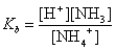
For the equilibrium that exists in an aqueous solution of nitrous acid (HNO2,a weak acid),the equilibrium-constant expression is

A)K = <strong>For the equilibrium that exists in an aqueous solution of nitrous acid (HNO<sub>2</sub>,a weak acid),the equilibrium-constant expression is</strong> A)K =   . B)K =   . C)K =   . D)K = [H<sup>+</sup>][NO<sub>2</sub><sup>-</sup>]. E)none of these <div style=padding-top: 35px> .
B)K = <strong>For the equilibrium that exists in an aqueous solution of nitrous acid (HNO<sub>2</sub>,a weak acid),the equilibrium-constant expression is</strong> A)K =   . B)K =   . C)K =   . D)K = [H<sup>+</sup>][NO<sub>2</sub><sup>-</sup>]. E)none of these <div style=padding-top: 35px> .
C)K = <strong>For the equilibrium that exists in an aqueous solution of nitrous acid (HNO<sub>2</sub>,a weak acid),the equilibrium-constant expression is</strong> A)K =   . B)K =   . C)K =   . D)K = [H<sup>+</sup>][NO<sub>2</sub><sup>-</sup>]. E)none of these <div style=padding-top: 35px> .
D)K = [H+][NO2-].
E)none of these
سؤال
For which of the following equilibria does Kc correspond to the acid-dissociation constant,Ka,of H2PO4-?

A)H2PO4-(aq)+ H3O+(aq) <strong>For which of the following equilibria does K<sub>c</sub> correspond to the acid-dissociation constant,K<sub>a</sub>,of H<sub>2</sub>PO<sub>4</sub><sup>-</sup>?</strong> A)H<sub>2</sub>PO<sub>4</sub><sup>-</sup>(aq)+ H<sub>3</sub>O<sup>+</sup>(aq)   H<sub>3</sub>PO<sub>4</sub>(aq)+ H<sub>2</sub>O(l) B)H<sub>2</sub>PO<sub>4</sub><sup>-</sup>(aq)+ H<sub>2</sub>O(l)   H<sub>3</sub>PO<sub>4</sub>(aq)+ OH<sup>-</sup>(aq) C)H<sub>2</sub>PO<sub>4</sub><sup>-</sup>(aq)+ H<sub>2</sub>O(l)   H<sub>3</sub>O<sup>+</sup>(aq)+ HPO<sub>4</sub><sup>2-</sup>(aq) D)H<sub>3</sub>PO<sub>4</sub>(aq)+ H<sub>2</sub>O(l)   H<sub>3</sub>O<sup>+</sup>(aq)+ H<sub>2</sub>PO<sub>4</sub><sup>-</sup>(aq) E)HPO<sub>4</sub><sup>2-</sup>(aq)+ H<sub>2</sub>O(l)   H<sub>2</sub>PO<sub>4</sub><sup>-</sup>(aq)+ OH<sup>-</sup>(aq) <div style=padding-top: 35px> H3PO4(aq)+ H2O(l)
B)H2PO4-(aq)+ H2O(l) <strong>For which of the following equilibria does K<sub>c</sub> correspond to the acid-dissociation constant,K<sub>a</sub>,of H<sub>2</sub>PO<sub>4</sub><sup>-</sup>?</strong> A)H<sub>2</sub>PO<sub>4</sub><sup>-</sup>(aq)+ H<sub>3</sub>O<sup>+</sup>(aq)   H<sub>3</sub>PO<sub>4</sub>(aq)+ H<sub>2</sub>O(l) B)H<sub>2</sub>PO<sub>4</sub><sup>-</sup>(aq)+ H<sub>2</sub>O(l)   H<sub>3</sub>PO<sub>4</sub>(aq)+ OH<sup>-</sup>(aq) C)H<sub>2</sub>PO<sub>4</sub><sup>-</sup>(aq)+ H<sub>2</sub>O(l)   H<sub>3</sub>O<sup>+</sup>(aq)+ HPO<sub>4</sub><sup>2-</sup>(aq) D)H<sub>3</sub>PO<sub>4</sub>(aq)+ H<sub>2</sub>O(l)   H<sub>3</sub>O<sup>+</sup>(aq)+ H<sub>2</sub>PO<sub>4</sub><sup>-</sup>(aq) E)HPO<sub>4</sub><sup>2-</sup>(aq)+ H<sub>2</sub>O(l)   H<sub>2</sub>PO<sub>4</sub><sup>-</sup>(aq)+ OH<sup>-</sup>(aq) <div style=padding-top: 35px> H3PO4(aq)+ OH-(aq)
C)H2PO4-(aq)+ H2O(l) <strong>For which of the following equilibria does K<sub>c</sub> correspond to the acid-dissociation constant,K<sub>a</sub>,of H<sub>2</sub>PO<sub>4</sub><sup>-</sup>?</strong> A)H<sub>2</sub>PO<sub>4</sub><sup>-</sup>(aq)+ H<sub>3</sub>O<sup>+</sup>(aq)   H<sub>3</sub>PO<sub>4</sub>(aq)+ H<sub>2</sub>O(l) B)H<sub>2</sub>PO<sub>4</sub><sup>-</sup>(aq)+ H<sub>2</sub>O(l)   H<sub>3</sub>PO<sub>4</sub>(aq)+ OH<sup>-</sup>(aq) C)H<sub>2</sub>PO<sub>4</sub><sup>-</sup>(aq)+ H<sub>2</sub>O(l)   H<sub>3</sub>O<sup>+</sup>(aq)+ HPO<sub>4</sub><sup>2-</sup>(aq) D)H<sub>3</sub>PO<sub>4</sub>(aq)+ H<sub>2</sub>O(l)   H<sub>3</sub>O<sup>+</sup>(aq)+ H<sub>2</sub>PO<sub>4</sub><sup>-</sup>(aq) E)HPO<sub>4</sub><sup>2-</sup>(aq)+ H<sub>2</sub>O(l)   H<sub>2</sub>PO<sub>4</sub><sup>-</sup>(aq)+ OH<sup>-</sup>(aq) <div style=padding-top: 35px> H3O+(aq)+ HPO42-(aq)
D)H3PO4(aq)+ H2O(l) <strong>For which of the following equilibria does K<sub>c</sub> correspond to the acid-dissociation constant,K<sub>a</sub>,of H<sub>2</sub>PO<sub>4</sub><sup>-</sup>?</strong> A)H<sub>2</sub>PO<sub>4</sub><sup>-</sup>(aq)+ H<sub>3</sub>O<sup>+</sup>(aq)   H<sub>3</sub>PO<sub>4</sub>(aq)+ H<sub>2</sub>O(l) B)H<sub>2</sub>PO<sub>4</sub><sup>-</sup>(aq)+ H<sub>2</sub>O(l)   H<sub>3</sub>PO<sub>4</sub>(aq)+ OH<sup>-</sup>(aq) C)H<sub>2</sub>PO<sub>4</sub><sup>-</sup>(aq)+ H<sub>2</sub>O(l)   H<sub>3</sub>O<sup>+</sup>(aq)+ HPO<sub>4</sub><sup>2-</sup>(aq) D)H<sub>3</sub>PO<sub>4</sub>(aq)+ H<sub>2</sub>O(l)   H<sub>3</sub>O<sup>+</sup>(aq)+ H<sub>2</sub>PO<sub>4</sub><sup>-</sup>(aq) E)HPO<sub>4</sub><sup>2-</sup>(aq)+ H<sub>2</sub>O(l)   H<sub>2</sub>PO<sub>4</sub><sup>-</sup>(aq)+ OH<sup>-</sup>(aq) <div style=padding-top: 35px> H3O+(aq)+ H2PO4-(aq)
E)HPO42-(aq)+ H2O(l) <strong>For which of the following equilibria does K<sub>c</sub> correspond to the acid-dissociation constant,K<sub>a</sub>,of H<sub>2</sub>PO<sub>4</sub><sup>-</sup>?</strong> A)H<sub>2</sub>PO<sub>4</sub><sup>-</sup>(aq)+ H<sub>3</sub>O<sup>+</sup>(aq)   H<sub>3</sub>PO<sub>4</sub>(aq)+ H<sub>2</sub>O(l) B)H<sub>2</sub>PO<sub>4</sub><sup>-</sup>(aq)+ H<sub>2</sub>O(l)   H<sub>3</sub>PO<sub>4</sub>(aq)+ OH<sup>-</sup>(aq) C)H<sub>2</sub>PO<sub>4</sub><sup>-</sup>(aq)+ H<sub>2</sub>O(l)   H<sub>3</sub>O<sup>+</sup>(aq)+ HPO<sub>4</sub><sup>2-</sup>(aq) D)H<sub>3</sub>PO<sub>4</sub>(aq)+ H<sub>2</sub>O(l)   H<sub>3</sub>O<sup>+</sup>(aq)+ H<sub>2</sub>PO<sub>4</sub><sup>-</sup>(aq) E)HPO<sub>4</sub><sup>2-</sup>(aq)+ H<sub>2</sub>O(l)   H<sub>2</sub>PO<sub>4</sub><sup>-</sup>(aq)+ OH<sup>-</sup>(aq) <div style=padding-top: 35px> H2PO4-(aq)+ OH-(aq)
سؤال
Rank acetic acid (HC2H3O2),hydrocyanic acid (HOCN),and hydrofluoric acid (HF)in order of increasing strength.
Acid
Ka
HC2H3O2
1)8 × 10⁻⁵
HOCN
3)5 × 10⁻⁴
HF
6)8 × 10⁻⁴

A)HC2H3O2 < HOCN < HF
B)HOCN < HC2H3O2 < HF
C)HOCN < HF < HC2H3O2
D)HF < HOCN < HC2H3O2
E)HF < HC2H3O2 < HOCN
سؤال
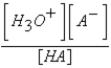
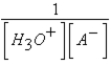
What is the equilibrium expression for the equilibrium A-(aq)+ H3O+(aq) <strong>What is the equilibrium expression for the equilibrium A<sup>-</sup>(aq)+ H<sub>3</sub>O<sup>+</sup>(aq)   HA(aq)+ H<sub>2</sub>O(l)?</strong> A)   B)   C)   D)   E)K<sub>b</sub> <div style=padding-top: 35px> HA(aq)+ H2O(l)?

A) <strong>What is the equilibrium expression for the equilibrium A<sup>-</sup>(aq)+ H<sub>3</sub>O<sup>+</sup>(aq)   HA(aq)+ H<sub>2</sub>O(l)?</strong> A)   B)   C)   D)   E)K<sub>b</sub> <div style=padding-top: 35px>
B) <strong>What is the equilibrium expression for the equilibrium A<sup>-</sup>(aq)+ H<sub>3</sub>O<sup>+</sup>(aq)   HA(aq)+ H<sub>2</sub>O(l)?</strong> A)   B)   C)   D)   E)K<sub>b</sub> <div style=padding-top: 35px>
C) <strong>What is the equilibrium expression for the equilibrium A<sup>-</sup>(aq)+ H<sub>3</sub>O<sup>+</sup>(aq)   HA(aq)+ H<sub>2</sub>O(l)?</strong> A)   B)   C)   D)   E)K<sub>b</sub> <div style=padding-top: 35px>
D) <strong>What is the equilibrium expression for the equilibrium A<sup>-</sup>(aq)+ H<sub>3</sub>O<sup>+</sup>(aq)   HA(aq)+ H<sub>2</sub>O(l)?</strong> A)   B)   C)   D)   E)K<sub>b</sub> <div style=padding-top: 35px>
E)Kb
سؤال
What is the percent ionization of a 1.5 M HC2H3O2 solution (Ka = 1.8 × 10⁻⁵ )at 25°C?
+

A)0.52 %
B)0.35 %
C)2.5 %
D)0.18 %
E)0.28 %
سؤال
A 0.010 M aqueous solution of a weak acid HA has a pH of 4.0.What is the degree of ionization of HA in the solution?

A)0.1 %
B)0.01 %
C)0.001 %
D)1 %
E)10 %
سؤال
For which of the following equilibria does Kc correspond to the acid-ionization constant,Ka,of HCO3-?

A)HCO3-(aq)+ OH-(aq) <strong>For which of the following equilibria does K<sub>c</sub> correspond to the acid-ionization constant,K<sub>a</sub>,of HCO<sub>3</sub><sup>-</sup>?</strong> A)HCO<sub>3</sub><sup>-</sup>(aq)+ OH<sup>-</sup>(aq)   CO<sub>3</sub><sup>2-</sup>(aq)+ H<sub>2</sub>O(l) B)H<sub>2</sub>CO<sub>3</sub>(aq)+ H<sub>2</sub>O(l)   HCO<sub>3</sub><sup>-</sup>(aq)+ H<sub>3</sub>O<sup>+</sup>(aq) C)HCO<sub>3</sub><sup>-</sup>(aq)+ H<sub>2</sub>O(l)   H<sub>2</sub>CO<sub>3</sub>(aq)+ OH<sup>-</sup>(aq) D)HCO<sub>3</sub><sup>-</sup>(aq)+ H<sub>3</sub>O<sup>+</sup>(aq)   H<sub>2</sub>CO<sub>3</sub>(aq)+ H<sub>2</sub>O(l) E)HCO<sub>3</sub><sup>-</sup>(aq)+ H<sub>2</sub>O(l)   CO<sub>3</sub><sup>2-</sup>(aq)+ H<sub>3</sub>O<sup>+</sup>(aq) <div style=padding-top: 35px> CO32-(aq)+ H2O(l)
B)H2CO3(aq)+ H2O(l) <strong>For which of the following equilibria does K<sub>c</sub> correspond to the acid-ionization constant,K<sub>a</sub>,of HCO<sub>3</sub><sup>-</sup>?</strong> A)HCO<sub>3</sub><sup>-</sup>(aq)+ OH<sup>-</sup>(aq)   CO<sub>3</sub><sup>2-</sup>(aq)+ H<sub>2</sub>O(l) B)H<sub>2</sub>CO<sub>3</sub>(aq)+ H<sub>2</sub>O(l)   HCO<sub>3</sub><sup>-</sup>(aq)+ H<sub>3</sub>O<sup>+</sup>(aq) C)HCO<sub>3</sub><sup>-</sup>(aq)+ H<sub>2</sub>O(l)   H<sub>2</sub>CO<sub>3</sub>(aq)+ OH<sup>-</sup>(aq) D)HCO<sub>3</sub><sup>-</sup>(aq)+ H<sub>3</sub>O<sup>+</sup>(aq)   H<sub>2</sub>CO<sub>3</sub>(aq)+ H<sub>2</sub>O(l) E)HCO<sub>3</sub><sup>-</sup>(aq)+ H<sub>2</sub>O(l)   CO<sub>3</sub><sup>2-</sup>(aq)+ H<sub>3</sub>O<sup>+</sup>(aq) <div style=padding-top: 35px> HCO3-(aq)+ H3O+(aq)
C)HCO3-(aq)+ H2O(l) <strong>For which of the following equilibria does K<sub>c</sub> correspond to the acid-ionization constant,K<sub>a</sub>,of HCO<sub>3</sub><sup>-</sup>?</strong> A)HCO<sub>3</sub><sup>-</sup>(aq)+ OH<sup>-</sup>(aq)   CO<sub>3</sub><sup>2-</sup>(aq)+ H<sub>2</sub>O(l) B)H<sub>2</sub>CO<sub>3</sub>(aq)+ H<sub>2</sub>O(l)   HCO<sub>3</sub><sup>-</sup>(aq)+ H<sub>3</sub>O<sup>+</sup>(aq) C)HCO<sub>3</sub><sup>-</sup>(aq)+ H<sub>2</sub>O(l)   H<sub>2</sub>CO<sub>3</sub>(aq)+ OH<sup>-</sup>(aq) D)HCO<sub>3</sub><sup>-</sup>(aq)+ H<sub>3</sub>O<sup>+</sup>(aq)   H<sub>2</sub>CO<sub>3</sub>(aq)+ H<sub>2</sub>O(l) E)HCO<sub>3</sub><sup>-</sup>(aq)+ H<sub>2</sub>O(l)   CO<sub>3</sub><sup>2-</sup>(aq)+ H<sub>3</sub>O<sup>+</sup>(aq) <div style=padding-top: 35px> H2CO3(aq)+ OH-(aq)
D)HCO3-(aq)+ H3O+(aq) <strong>For which of the following equilibria does K<sub>c</sub> correspond to the acid-ionization constant,K<sub>a</sub>,of HCO<sub>3</sub><sup>-</sup>?</strong> A)HCO<sub>3</sub><sup>-</sup>(aq)+ OH<sup>-</sup>(aq)   CO<sub>3</sub><sup>2-</sup>(aq)+ H<sub>2</sub>O(l) B)H<sub>2</sub>CO<sub>3</sub>(aq)+ H<sub>2</sub>O(l)   HCO<sub>3</sub><sup>-</sup>(aq)+ H<sub>3</sub>O<sup>+</sup>(aq) C)HCO<sub>3</sub><sup>-</sup>(aq)+ H<sub>2</sub>O(l)   H<sub>2</sub>CO<sub>3</sub>(aq)+ OH<sup>-</sup>(aq) D)HCO<sub>3</sub><sup>-</sup>(aq)+ H<sub>3</sub>O<sup>+</sup>(aq)   H<sub>2</sub>CO<sub>3</sub>(aq)+ H<sub>2</sub>O(l) E)HCO<sub>3</sub><sup>-</sup>(aq)+ H<sub>2</sub>O(l)   CO<sub>3</sub><sup>2-</sup>(aq)+ H<sub>3</sub>O<sup>+</sup>(aq) <div style=padding-top: 35px> H2CO3(aq)+ H2O(l)
E)HCO3-(aq)+ H2O(l) <strong>For which of the following equilibria does K<sub>c</sub> correspond to the acid-ionization constant,K<sub>a</sub>,of HCO<sub>3</sub><sup>-</sup>?</strong> A)HCO<sub>3</sub><sup>-</sup>(aq)+ OH<sup>-</sup>(aq)   CO<sub>3</sub><sup>2-</sup>(aq)+ H<sub>2</sub>O(l) B)H<sub>2</sub>CO<sub>3</sub>(aq)+ H<sub>2</sub>O(l)   HCO<sub>3</sub><sup>-</sup>(aq)+ H<sub>3</sub>O<sup>+</sup>(aq) C)HCO<sub>3</sub><sup>-</sup>(aq)+ H<sub>2</sub>O(l)   H<sub>2</sub>CO<sub>3</sub>(aq)+ OH<sup>-</sup>(aq) D)HCO<sub>3</sub><sup>-</sup>(aq)+ H<sub>3</sub>O<sup>+</sup>(aq)   H<sub>2</sub>CO<sub>3</sub>(aq)+ H<sub>2</sub>O(l) E)HCO<sub>3</sub><sup>-</sup>(aq)+ H<sub>2</sub>O(l)   CO<sub>3</sub><sup>2-</sup>(aq)+ H<sub>3</sub>O<sup>+</sup>(aq) <div style=padding-top: 35px> CO32-(aq)+ H3O+(aq)
سؤال
A 0.10 M solution of a weak monoprotic acid has a hydronium-ion concentration of 7.2 × 10⁻⁴ M.What is the acid-ionization constant,Ka,for this acid?

A)2.7 × 10⁻²
B)6.3 × 10⁻³
C)7.2 × 10⁻⁴
D)5.2 × 10⁻⁶
E)8.6 × 10⁻⁵
سؤال
An initially 1.0 M aqueous solution of a weak monoprotic acid has a total ion concentration of <strong>An initially 1.0 M aqueous solution of a weak monoprotic acid has a total ion concentration of   M when equilibrium is established.What is the acid-ionization constant,K<sub>a</sub>,of the weak acid? (assume C<sub>a</sub>/K<sub>a</sub> ≥ 10<sup>2</sup>)</strong> A)   B)   C)   D)   E)   <div style=padding-top: 35px> M when equilibrium is established.What is the acid-ionization constant,Ka,of the weak acid? (assume Ca/Ka ≥ 102)

A) <strong>An initially 1.0 M aqueous solution of a weak monoprotic acid has a total ion concentration of   M when equilibrium is established.What is the acid-ionization constant,K<sub>a</sub>,of the weak acid? (assume C<sub>a</sub>/K<sub>a</sub> ≥ 10<sup>2</sup>)</strong> A)   B)   C)   D)   E)   <div style=padding-top: 35px>
B) <strong>An initially 1.0 M aqueous solution of a weak monoprotic acid has a total ion concentration of   M when equilibrium is established.What is the acid-ionization constant,K<sub>a</sub>,of the weak acid? (assume C<sub>a</sub>/K<sub>a</sub> ≥ 10<sup>2</sup>)</strong> A)   B)   C)   D)   E)   <div style=padding-top: 35px>
C) <strong>An initially 1.0 M aqueous solution of a weak monoprotic acid has a total ion concentration of   M when equilibrium is established.What is the acid-ionization constant,K<sub>a</sub>,of the weak acid? (assume C<sub>a</sub>/K<sub>a</sub> ≥ 10<sup>2</sup>)</strong> A)   B)   C)   D)   E)   <div style=padding-top: 35px>
D) <strong>An initially 1.0 M aqueous solution of a weak monoprotic acid has a total ion concentration of   M when equilibrium is established.What is the acid-ionization constant,K<sub>a</sub>,of the weak acid? (assume C<sub>a</sub>/K<sub>a</sub> ≥ 10<sup>2</sup>)</strong> A)   B)   C)   D)   E)   <div style=padding-top: 35px>
E) <strong>An initially 1.0 M aqueous solution of a weak monoprotic acid has a total ion concentration of   M when equilibrium is established.What is the acid-ionization constant,K<sub>a</sub>,of the weak acid? (assume C<sub>a</sub>/K<sub>a</sub> ≥ 10<sup>2</sup>)</strong> A)   B)   C)   D)   E)   <div style=padding-top: 35px>
سؤال
At a temperature of 25°C an initally 0.011 M solution of a weak monoprotic acid is 2.9 % ionized once equilibrium is established.What is the acid-ionization constant,Ka,for this acid? (assume Ca/Ka ≥ 102)

A) <strong>At a temperature of 25°C an initally 0.011 M solution of a weak monoprotic acid is 2.9 % ionized once equilibrium is established.What is the acid-ionization constant,K<sub>a</sub>,for this acid? (assume C<sub>a</sub>/K<sub>a</sub><sub> </sub>≥ 10<sup>2</sup>)</strong> A)   B)   C)   D)   E)   <div style=padding-top: 35px>
B) <strong>At a temperature of 25°C an initally 0.011 M solution of a weak monoprotic acid is 2.9 % ionized once equilibrium is established.What is the acid-ionization constant,K<sub>a</sub>,for this acid? (assume C<sub>a</sub>/K<sub>a</sub><sub> </sub>≥ 10<sup>2</sup>)</strong> A)   B)   C)   D)   E)   <div style=padding-top: 35px>
C) <strong>At a temperature of 25°C an initally 0.011 M solution of a weak monoprotic acid is 2.9 % ionized once equilibrium is established.What is the acid-ionization constant,K<sub>a</sub>,for this acid? (assume C<sub>a</sub>/K<sub>a</sub><sub> </sub>≥ 10<sup>2</sup>)</strong> A)   B)   C)   D)   E)   <div style=padding-top: 35px>
D) <strong>At a temperature of 25°C an initally 0.011 M solution of a weak monoprotic acid is 2.9 % ionized once equilibrium is established.What is the acid-ionization constant,K<sub>a</sub>,for this acid? (assume C<sub>a</sub>/K<sub>a</sub><sub> </sub>≥ 10<sup>2</sup>)</strong> A)   B)   C)   D)   E)   <div style=padding-top: 35px>
E) <strong>At a temperature of 25°C an initally 0.011 M solution of a weak monoprotic acid is 2.9 % ionized once equilibrium is established.What is the acid-ionization constant,K<sub>a</sub>,for this acid? (assume C<sub>a</sub>/K<sub>a</sub><sub> </sub>≥ 10<sup>2</sup>)</strong> A)   B)   C)   D)   E)   <div style=padding-top: 35px>
سؤال
What is the pH of an initially 0.428 M solution of a weak monoprotic acid that is 0.11 % ionized when equilibrium is established? (assume Ca/Ka ≥102)

A)3.32
B)7.00
C)1.32
D)10.63
E)10.68
سؤال
Equal moles of the indicated acids are dissolved in the amounts of water shown in the beakers below.In which solution will the percent ionization of the acid be the lowest? <strong>Equal moles of the indicated acids are dissolved in the amounts of water shown in the beakers below.In which solution will the percent ionization of the acid be the lowest?  </strong> A)All have equal percent ionization of acid. B)III C)IV D)II E)I <div style=padding-top: 35px>

A)All have equal percent ionization of acid.
B)III
C)IV
D)II
E)I
سؤال
A 0.10 M solution of a weak monoprotic acid has a pH of 3.40 at 25°C.What is the acid-ionization constant,Ka,for this acid?

A)1.6 × 10⁻⁶
B)4.0 × 10⁻⁴
C)3.4 × 10⁻⁵
D)1.2 × 10⁻³
E)1.8 × 10⁻⁷
سؤال
A 0.20 M solution of a weak monoprotic acid is 0.22 % ionized.What is the acid-ionization constant,Ka,for this acid?

A)1.9 × 10⁻⁶
B)2.2 × 10⁻⁶
C)1.1 × 10⁻⁴
D)2.4 × 10⁻⁵
E)9.7 × 10⁻⁷
سؤال
What is the equilibrium hydronium ion concentration of an initially 4.5 M solution of hypoiodous acid,HOI,at 25°C (Ka = <strong>What is the equilibrium hydronium ion concentration of an initially 4.5 M solution of hypoiodous acid,HOI,at 25°C (K<sub>a</sub> =   )?</strong> A)   M B)   M C)   M D)   M E)   M <div style=padding-top: 35px> )?

A) <strong>What is the equilibrium hydronium ion concentration of an initially 4.5 M solution of hypoiodous acid,HOI,at 25°C (K<sub>a</sub> =   )?</strong> A)   M B)   M C)   M D)   M E)   M <div style=padding-top: 35px> M
B) <strong>What is the equilibrium hydronium ion concentration of an initially 4.5 M solution of hypoiodous acid,HOI,at 25°C (K<sub>a</sub> =   )?</strong> A)   M B)   M C)   M D)   M E)   M <div style=padding-top: 35px> M
C) <strong>What is the equilibrium hydronium ion concentration of an initially 4.5 M solution of hypoiodous acid,HOI,at 25°C (K<sub>a</sub> =   )?</strong> A)   M B)   M C)   M D)   M E)   M <div style=padding-top: 35px> M
D) <strong>What is the equilibrium hydronium ion concentration of an initially 4.5 M solution of hypoiodous acid,HOI,at 25°C (K<sub>a</sub> =   )?</strong> A)   M B)   M C)   M D)   M E)   M <div style=padding-top: 35px> M
E) <strong>What is the equilibrium hydronium ion concentration of an initially 4.5 M solution of hypoiodous acid,HOI,at 25°C (K<sub>a</sub> =   )?</strong> A)   M B)   M C)   M D)   M E)   M <div style=padding-top: 35px> M
سؤال
What is the equilibrium pH of an initially 0.73 M solution of the monoprotic acid benzoic acid at 25°C (Ka = <strong>What is the equilibrium pH of an initially 0.73 M solution of the monoprotic acid benzoic acid at 25°C (K<sub>a</sub> =   )?</strong> A)2.17 B)7.00 C)1.87 D)12.13 E)5.13 <div style=padding-top: 35px> )?

A)2.17
B)7.00
C)1.87
D)12.13
E)5.13
سؤال
What is the equilibrium percent ionization of an initially 0.32 M solution of the monoprotic acid valeric acid,HC5H9O2,at 25°C (Ka = <strong>What is the equilibrium percent ionization of an initially 0.32 M solution of the monoprotic acid valeric acid,HC<sub>5</sub>H<sub>9</sub>O<sub>2</sub>,at 25°C (K<sub>a</sub> =   )?</strong> A)0.67% B)1.30% C)0.0014% D)0.1% E)2.00% <div style=padding-top: 35px> )?

A)0.67%
B)1.30%
C)0.0014%
D)0.1%
E)2.00%
سؤال
In a 0.20 M solution of a diprotic acid H2A (Ka1 = 1.3 × 10⁻⁵ and Ka2 = 2.7 × 10⁻¹⁰ at 25°C),what is the equilibrium concentration of A2-?

A)7.3 × 10⁻⁶ M
B)2.7 × 10⁻¹⁰ M
C)1.6 × 10⁻³ M
D)0.40 M
E)0.20 M
سؤال
What is Ka for a weak monoprotic acid if a 0.020 M solution of the acid has a pH of 3.28 at 25°C?

A)5.2 × 10⁻²
B)1.4 × 10⁻⁵
C)7.1 × 10⁻²
D)1.0 × 10⁻⁶
E)2.8 × 10⁻⁴
سؤال
In a 0.01 M solution of 1,4-butanedicarboxylic acid,HOOCCH2CH2COOH (Ka1 = 2.9 × 10⁻⁵,Ka2 = 5.3 × 10⁻⁶),which species is present in the lowest concentration?

A)(-OOCCH2CH2COO-)(aq)
B)H2O
C)HOOCCH2CH2COO-(aq)
D)H3O+(aq)
E)HOOCCH2CH2COOH(aq)
سؤال
What is the pH of a solution prepared by dissolving 0.0163 mol of chloroacetic acid,(HC2H2O2Cl)in 1.30 L of water? For chloroacetic acid,Ka = 1.4 × 10⁻³.

A)1.90
B)2.45
C)11.55
D)12.10
E)2.38
سؤال
In a 0.01 M solution of 1,4-butanedicarboxylic acid,HOOCCH2CH2COOH (Ka1 = 2.9 × 10⁻⁵,Ka2 = 5.3 × 10⁻⁶),which species is present in the highest concentration?

A)HOOCCH2CH2COO-(aq)
B)HOOCCH2CH2COOH(aq)
C)H3O+(aq)
D)(-OOCCH2CH2COO-)(aq)
E)OH-(aq)
سؤال
What is the equilibrium pH of an initially 4.4 M solution of hypochlorous acid,HOCl,at 25°C (Ka = <strong>What is the equilibrium pH of an initially 4.4 M solution of hypochlorous acid,HOCl,at 25°C (K<sub>a</sub> =   )?</strong> A)3.44 B)7.37 C)10.41 D)10.71 E)4.08 <div style=padding-top: 35px> )?

A)3.44
B)7.37
C)10.41
D)10.71
E)4.08
سؤال
Carbonic acid,H2CO3,is a weak diprotic acid.In a 0.1 M solution of the acid,which of the following species is present in the largest amount?

A)HCO3-
B)CO32-
C)H2CO3
D)H3O+
E)OH-
سؤال
Phosphoric acid,H3PO4,will undergo three successive ionization reactions to varying extents in water.What is the balanced equilibrium identified as Ka3?

A)H2PO4-(aq)+ H2O(l) <strong>Phosphoric acid,H<sub>3</sub>PO<sub>4</sub>,will undergo three successive ionization reactions to varying extents in water.What is the balanced equilibrium identified as K<sub>a3</sub>?</strong> A)H<sub>2</sub>PO<sub>4</sub><sup>-</sup>(aq)+ H<sub>2</sub>O(l)   H<sub>3</sub>O<sup>+</sup>(aq)+ HPO<sub>4</sub><sup>2-</sup>(aq) B)HPO<sub>4</sub><sup>2-</sup>(aq)+ H<sub>2</sub>O(l)   PO<sub>4</sub><sup>3-</sup>(aq)+ H<sub>3</sub>O<sup>+</sup>(aq) C)H<sub>2</sub>PO<sub>4</sub><sup>-</sup>(aq)+ H<sub>3</sub>O<sup>+</sup>(aq)   H<sub>3</sub>PO<sub>4</sub>(aq)+ H<sub>2</sub>O(l) D)H<sub>3</sub>PO<sub>4</sub>(aq)+ H<sub>2</sub>O(l)   H<sub>3</sub>O<sup>+</sup>(aq)+ H<sub>2</sub>PO<sub>4</sub><sup>-</sup>(aq) E)PO<sub>4</sub><sup>3-</sup>(aq)+ H<sub>2</sub>O(l)   HPO<sub>4</sub><sup>2-</sup>(aq)+ OH<sup>-</sup>(aq) <div style=padding-top: 35px> H3O+(aq)+ HPO42-(aq)
B)HPO42-(aq)+ H2O(l) <strong>Phosphoric acid,H<sub>3</sub>PO<sub>4</sub>,will undergo three successive ionization reactions to varying extents in water.What is the balanced equilibrium identified as K<sub>a3</sub>?</strong> A)H<sub>2</sub>PO<sub>4</sub><sup>-</sup>(aq)+ H<sub>2</sub>O(l)   H<sub>3</sub>O<sup>+</sup>(aq)+ HPO<sub>4</sub><sup>2-</sup>(aq) B)HPO<sub>4</sub><sup>2-</sup>(aq)+ H<sub>2</sub>O(l)   PO<sub>4</sub><sup>3-</sup>(aq)+ H<sub>3</sub>O<sup>+</sup>(aq) C)H<sub>2</sub>PO<sub>4</sub><sup>-</sup>(aq)+ H<sub>3</sub>O<sup>+</sup>(aq)   H<sub>3</sub>PO<sub>4</sub>(aq)+ H<sub>2</sub>O(l) D)H<sub>3</sub>PO<sub>4</sub>(aq)+ H<sub>2</sub>O(l)   H<sub>3</sub>O<sup>+</sup>(aq)+ H<sub>2</sub>PO<sub>4</sub><sup>-</sup>(aq) E)PO<sub>4</sub><sup>3-</sup>(aq)+ H<sub>2</sub>O(l)   HPO<sub>4</sub><sup>2-</sup>(aq)+ OH<sup>-</sup>(aq) <div style=padding-top: 35px> PO43-(aq)+ H3O+(aq)
C)H2PO4-(aq)+ H3O+(aq) <strong>Phosphoric acid,H<sub>3</sub>PO<sub>4</sub>,will undergo three successive ionization reactions to varying extents in water.What is the balanced equilibrium identified as K<sub>a3</sub>?</strong> A)H<sub>2</sub>PO<sub>4</sub><sup>-</sup>(aq)+ H<sub>2</sub>O(l)   H<sub>3</sub>O<sup>+</sup>(aq)+ HPO<sub>4</sub><sup>2-</sup>(aq) B)HPO<sub>4</sub><sup>2-</sup>(aq)+ H<sub>2</sub>O(l)   PO<sub>4</sub><sup>3-</sup>(aq)+ H<sub>3</sub>O<sup>+</sup>(aq) C)H<sub>2</sub>PO<sub>4</sub><sup>-</sup>(aq)+ H<sub>3</sub>O<sup>+</sup>(aq)   H<sub>3</sub>PO<sub>4</sub>(aq)+ H<sub>2</sub>O(l) D)H<sub>3</sub>PO<sub>4</sub>(aq)+ H<sub>2</sub>O(l)   H<sub>3</sub>O<sup>+</sup>(aq)+ H<sub>2</sub>PO<sub>4</sub><sup>-</sup>(aq) E)PO<sub>4</sub><sup>3-</sup>(aq)+ H<sub>2</sub>O(l)   HPO<sub>4</sub><sup>2-</sup>(aq)+ OH<sup>-</sup>(aq) <div style=padding-top: 35px> H3PO4(aq)+ H2O(l)
D)H3PO4(aq)+ H2O(l) <strong>Phosphoric acid,H<sub>3</sub>PO<sub>4</sub>,will undergo three successive ionization reactions to varying extents in water.What is the balanced equilibrium identified as K<sub>a3</sub>?</strong> A)H<sub>2</sub>PO<sub>4</sub><sup>-</sup>(aq)+ H<sub>2</sub>O(l)   H<sub>3</sub>O<sup>+</sup>(aq)+ HPO<sub>4</sub><sup>2-</sup>(aq) B)HPO<sub>4</sub><sup>2-</sup>(aq)+ H<sub>2</sub>O(l)   PO<sub>4</sub><sup>3-</sup>(aq)+ H<sub>3</sub>O<sup>+</sup>(aq) C)H<sub>2</sub>PO<sub>4</sub><sup>-</sup>(aq)+ H<sub>3</sub>O<sup>+</sup>(aq)   H<sub>3</sub>PO<sub>4</sub>(aq)+ H<sub>2</sub>O(l) D)H<sub>3</sub>PO<sub>4</sub>(aq)+ H<sub>2</sub>O(l)   H<sub>3</sub>O<sup>+</sup>(aq)+ H<sub>2</sub>PO<sub>4</sub><sup>-</sup>(aq) E)PO<sub>4</sub><sup>3-</sup>(aq)+ H<sub>2</sub>O(l)   HPO<sub>4</sub><sup>2-</sup>(aq)+ OH<sup>-</sup>(aq) <div style=padding-top: 35px> H3O+(aq)+ H2PO4-(aq)
E)PO43-(aq)+ H2O(l) <strong>Phosphoric acid,H<sub>3</sub>PO<sub>4</sub>,will undergo three successive ionization reactions to varying extents in water.What is the balanced equilibrium identified as K<sub>a3</sub>?</strong> A)H<sub>2</sub>PO<sub>4</sub><sup>-</sup>(aq)+ H<sub>2</sub>O(l)   H<sub>3</sub>O<sup>+</sup>(aq)+ HPO<sub>4</sub><sup>2-</sup>(aq) B)HPO<sub>4</sub><sup>2-</sup>(aq)+ H<sub>2</sub>O(l)   PO<sub>4</sub><sup>3-</sup>(aq)+ H<sub>3</sub>O<sup>+</sup>(aq) C)H<sub>2</sub>PO<sub>4</sub><sup>-</sup>(aq)+ H<sub>3</sub>O<sup>+</sup>(aq)   H<sub>3</sub>PO<sub>4</sub>(aq)+ H<sub>2</sub>O(l) D)H<sub>3</sub>PO<sub>4</sub>(aq)+ H<sub>2</sub>O(l)   H<sub>3</sub>O<sup>+</sup>(aq)+ H<sub>2</sub>PO<sub>4</sub><sup>-</sup>(aq) E)PO<sub>4</sub><sup>3-</sup>(aq)+ H<sub>2</sub>O(l)   HPO<sub>4</sub><sup>2-</sup>(aq)+ OH<sup>-</sup>(aq) <div style=padding-top: 35px> HPO42-(aq)+ OH-(aq)
سؤال
For a 0.05 M H2SO3 solution,which of the following relationships is true?

A)[SO32-] > [H2SO3]
B)[SO32-] > [HSO3-]
C)[HSO3-] > [H2SO3]
D)[H2SO3] > [H+]
E)[H+] > [H2SO3]
سؤال
A 8.42-g sample of homogentisic acid,a weak organic acid having Ka = 4.0 × 10⁻⁵,is dissolved in 35.00 mL of water and its pH is measured to be 2.122.What is the molar mass of homogentisic acid?

A)168 g/mol
B)1110 g/mol
C)1.43 g/mol
D)5.88 g/mol
E)240 g/mol
سؤال
What is the equilibrium concentration of chloroacetic acid,HC2H2O2Cl,in a solution prepared by dissolving 0.0271 mol of HC2H2O2Cl in 1.50 L of water? For chloroacetic acid,Ka = 1.4 × 10⁻³.

A)4.38 × 10⁻³ M
B)1.81 × 10⁻² M
C)5.03 × 10⁻³ M
D)1.37 × 10⁻² M
E)9.03 × 10⁻³ M
سؤال
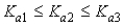
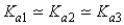
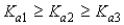
Which of the following represents the usual relationship of acid-ionization constants for a triprotic acid?

A) <strong>Which of the following represents the usual relationship of acid-ionization constants for a triprotic acid?</strong> A)   B)   C)   D)   E)   <div style=padding-top: 35px>
B) <strong>Which of the following represents the usual relationship of acid-ionization constants for a triprotic acid?</strong> A)   B)   C)   D)   E)   <div style=padding-top: 35px>
C) <strong>Which of the following represents the usual relationship of acid-ionization constants for a triprotic acid?</strong> A)   B)   C)   D)   E)   <div style=padding-top: 35px>
D) <strong>Which of the following represents the usual relationship of acid-ionization constants for a triprotic acid?</strong> A)   B)   C)   D)   E)   <div style=padding-top: 35px>
E) <strong>Which of the following represents the usual relationship of acid-ionization constants for a triprotic acid?</strong> A)   B)   C)   D)   E)   <div style=padding-top: 35px>
سؤال
It is safe to make the simplifying assumption that x can be neglected in the denominator of the equilibrium equation when

A) <strong>It is safe to make the simplifying assumption that x can be neglected in the denominator of the equilibrium equation when</strong> A)   . B)   . C)   . D)   . E)   . <div style=padding-top: 35px> .
B) <strong>It is safe to make the simplifying assumption that x can be neglected in the denominator of the equilibrium equation when</strong> A)   . B)   . C)   . D)   . E)   . <div style=padding-top: 35px> .
C) <strong>It is safe to make the simplifying assumption that x can be neglected in the denominator of the equilibrium equation when</strong> A)   . B)   . C)   . D)   . E)   . <div style=padding-top: 35px> .
D) <strong>It is safe to make the simplifying assumption that x can be neglected in the denominator of the equilibrium equation when</strong> A)   . B)   . C)   . D)   . E)   . <div style=padding-top: 35px> .
E) <strong>It is safe to make the simplifying assumption that x can be neglected in the denominator of the equilibrium equation when</strong> A)   . B)   . C)   . D)   . E)   . <div style=padding-top: 35px> .
سؤال
What is the percent ionization of a solution prepared by dissolving 0.0175 mol of chloroacetic acid,(HC2H2O2Cl)in 1.30 L of water? For chloroacetic acid,Ka = 1.4 × 10⁻³.

A)1.3 %
B)100 %
C)27 %
D)72 %
E)0.36 %
سؤال
For a 0.10 M solution of glutaric acid,HO2C(CH2)3CO2H (Ka1 = 4.6 × 10⁻⁵,Ka2 = 3.9 × 10⁻⁶),rank the following species in order of increasing equilibrium concentration.

A)H3O+ < -O2C(CH2)3COO- < HO2C(CH2)3COO- < OH- < HO2C(CH2)3CO2H
B)OH- < -O2C(CH2)3COO- < H3O+ < HO2C(CH2)3COO- < HO2C(CH2)3CO2H
C)OH- < -O2C(CH2)3COO- < HO2C(CH2)3COO- < H3O+ < HO2C(CH2)3CO2H
D)H3O+ < HO2C(CH2)3CO2H < HO2C(CH2)3COO- < -O2C(CH2)3COO- < OH-
E)OH- < -O2C(CH2)3COO- < HO2C(CH2)3COO- < HO2C(CH2)3CO2H < H3O+
سؤال
What is the hydronium-ion concentration of a 0.30 M solution of HCN (Ka = 4.9 × 10⁻¹⁰)at 25°C?

A)1.7 × 10⁻⁴ M
B)3.4 × 10⁻⁶ M
C)2.2 × 10⁻⁶ M
D)1.2 × 10⁻⁵ M
E)4.0 × 10⁻⁵ M
سؤال
The equilibrium hydronium ion concentration of an initially 0.655 M solution of a monoprotic weak acid is <strong>The equilibrium hydronium ion concentration of an initially 0.655 M solution of a monoprotic weak acid is   M.The acid dissociation constant is   At 25°C.What is the pH of this solution?</strong> A)2.26 B)7.00 C)11.74 D)4.52 E)0.18 <div style=padding-top: 35px> M.The acid dissociation constant is <strong>The equilibrium hydronium ion concentration of an initially 0.655 M solution of a monoprotic weak acid is   M.The acid dissociation constant is   At 25°C.What is the pH of this solution?</strong> A)2.26 B)7.00 C)11.74 D)4.52 E)0.18 <div style=padding-top: 35px>
At 25°C.What is the pH of this solution?

A)2.26
B)7.00
C)11.74
D)4.52
E)0.18
سؤال
What is the hydronium-ion concentration of a 0.210 M oxalic acid,H2C2O4,solution? For oxalic acid,Ka1 = 5.6 × 10⁻² and Ka2 = 5.1 × 10⁻⁵.

A)8.4 × 10⁻² M
B)1.1 × 10⁻¹ M
C)1.0 × 10⁻⁷ M
D)3.2 × 10⁻³ M
E)3.3 × 10⁻³ M
سؤال
Which of the following reactions is associated with the definition of Kb?

A)CN-(aq)+ H+(aq) <strong>Which of the following reactions is associated with the definition of K<sub>b</sub>?</strong> A)CN<sup>-</sup>(aq)+ H<sup>+</sup>(aq)   HCN(aq) B)F<sup>-</sup>(aq)+ H<sub>2</sub>O(l)   HF(aq)+ OH<sup>-</sup>(aq) C)Zn(OH<sub>2</sub>)<sub>6</sub><sup>2+</sup>(aq)   [Zn(OH<sub>2</sub>)<sub>5</sub>OH]<sup>+</sup>(aq)+ H<sup>+</sup>(aq) D)Cr<sup>3+</sup>(aq)+ 6H<sub>2</sub>O(l)   Cr(OH<sub>2</sub>)<sub>6</sub><sup>3+</sup>(aq) E)none of these <div style=padding-top: 35px> HCN(aq)
B)F-(aq)+ H2O(l) <strong>Which of the following reactions is associated with the definition of K<sub>b</sub>?</strong> A)CN<sup>-</sup>(aq)+ H<sup>+</sup>(aq)   HCN(aq) B)F<sup>-</sup>(aq)+ H<sub>2</sub>O(l)   HF(aq)+ OH<sup>-</sup>(aq) C)Zn(OH<sub>2</sub>)<sub>6</sub><sup>2+</sup>(aq)   [Zn(OH<sub>2</sub>)<sub>5</sub>OH]<sup>+</sup>(aq)+ H<sup>+</sup>(aq) D)Cr<sup>3+</sup>(aq)+ 6H<sub>2</sub>O(l)   Cr(OH<sub>2</sub>)<sub>6</sub><sup>3+</sup>(aq) E)none of these <div style=padding-top: 35px> HF(aq)+ OH-(aq)
C)Zn(OH2)62+(aq) <strong>Which of the following reactions is associated with the definition of K<sub>b</sub>?</strong> A)CN<sup>-</sup>(aq)+ H<sup>+</sup>(aq)   HCN(aq) B)F<sup>-</sup>(aq)+ H<sub>2</sub>O(l)   HF(aq)+ OH<sup>-</sup>(aq) C)Zn(OH<sub>2</sub>)<sub>6</sub><sup>2+</sup>(aq)   [Zn(OH<sub>2</sub>)<sub>5</sub>OH]<sup>+</sup>(aq)+ H<sup>+</sup>(aq) D)Cr<sup>3+</sup>(aq)+ 6H<sub>2</sub>O(l)   Cr(OH<sub>2</sub>)<sub>6</sub><sup>3+</sup>(aq) E)none of these <div style=padding-top: 35px> [Zn(OH2)5OH]+(aq)+ H+(aq)
D)Cr3+(aq)+ 6H2O(l) <strong>Which of the following reactions is associated with the definition of K<sub>b</sub>?</strong> A)CN<sup>-</sup>(aq)+ H<sup>+</sup>(aq)   HCN(aq) B)F<sup>-</sup>(aq)+ H<sub>2</sub>O(l)   HF(aq)+ OH<sup>-</sup>(aq) C)Zn(OH<sub>2</sub>)<sub>6</sub><sup>2+</sup>(aq)   [Zn(OH<sub>2</sub>)<sub>5</sub>OH]<sup>+</sup>(aq)+ H<sup>+</sup>(aq) D)Cr<sup>3+</sup>(aq)+ 6H<sub>2</sub>O(l)   Cr(OH<sub>2</sub>)<sub>6</sub><sup>3+</sup>(aq) E)none of these <div style=padding-top: 35px> Cr(OH2)63+(aq)
E)none of these
سؤال
What is the pH of a 0.35 M solution of methylamine (CH3NH2,Kb = 4.4 × 10⁻⁴)at 25oC?

A)5.55
B)0.46
C)12.09
D)13.54
E)1.91
سؤال
What is the concentration of C2O42- in a 0.370 M oxalic acid,H2C2O4,solution? For oxalic acid,Ka1 = 5.6 × 10⁻² and Ka2 = 5.1 × 10⁻⁵.

A)1.2 × 10⁻¹ M
B)-3 × 10⁻³ M
C)4.3 × 10⁻³ M
D)5.1 × 10⁻⁵ M
E)1.4 × 10⁻¹ M
سؤال
What is the concentration of HC2O4- in a 0.300 M oxalic acid,H2C2O4,solution? For oxalic acid,Ka1 = 5.6 × 10⁻² and Ka2 = 5.1 × 10⁻⁵.

A)3.9× 10⁻³ M
B)1.0 × 10⁻¹ M
C)1.3 × 10⁻¹ M
D)3.9 × 10⁻³ M
E)5.1 × 10⁻⁵ M
سؤال
What is the equilibrium concentration of H2C2O4 in a 0.370 M oxalic acid,H2C2O4,solution? For oxalic acid,Ka1 = 5.6 × 10⁻² and Ka2 = 5.1 × 10⁻⁵.

A)2.5 × 10⁻¹ M
B)1.4 × 10⁻¹ M
C)3.7 × 10⁻¹ M
D)5.1 × 10⁻⁵ M
E)1.2 × 10⁻¹ M
سؤال
A solution of aniline (C6H5NH2,Kb = 4.2 × 10⁻¹⁰)has a pH of 8.56 at 25oC.What was the initial concentration of aniline?

A)2.8 × 10⁻⁹ M
B)2.1 × 10⁻⁸ M
C)3.2 × 10⁻² M
D)4.2 × 10⁻¹⁰ M
E)3.6 × 10⁻⁶ M
سؤال
What is the concentration of HCO3- in a 0.010 M solution of carbonic acid,H2CO3? For carbonic acid,Ka1 = 4.2 × 10⁻⁷ and Ka2 = 4.8 × 10⁻¹¹.

A)6.5 × 10⁻⁵ M
B)1.0 × 10⁻² M
C)3.2 × 10⁻⁵ M
D)4.8 × 10⁻¹¹ M
E)4.2 × 10⁻⁷ M
سؤال
What is the percent ionization at equilibrium in a 0.10 M solution of dimethylamine,(CH3)2NH (Kb = 5.1 × 10⁻⁴),at 25oC?

A)6.8%
B)0.51%
C)0.68%
D)100%
E)10%
سؤال
What is the hydroxide-ion concentration of a 0.150 M oxalic acid,H2C2O4,solution? For oxalic acid,Ka1 = 5.6 × 10⁻² and Ka2 = 5.1 × 10⁻⁵.

A)3.6 × 10⁻¹² M
B)1.1 × 10⁻¹³ M
C)2.7 × 10⁻³ M
D)1.5 × 10⁻¹³ M
E)1.0 × 10⁻⁷ M
سؤال
For which of the following equilibria does Kc correspond to the base-ionization constant,Kb,of HCO3-?

A)HCO3-(aq)+ H2O(l) <strong>For which of the following equilibria does K<sub>c</sub> correspond to the base-ionization constant,K<sub>b</sub>,of HCO<sub>3</sub><sup>-</sup>?</strong> A)HCO<sub>3</sub><sup>-</sup>(aq)+ H<sub>2</sub>O(l)   CO<sub>3</sub><sup>2-</sup>(aq)+ H<sub>3</sub>O<sup>+</sup>(aq) B)HCO<sub>3</sub><sup>-</sup>(aq)+ H<sub>2</sub>O(l)   H<sub>2</sub>CO<sub>3</sub>(aq)+ OH<sup>-</sup>(aq) C)H<sub>2</sub>CO<sub>3</sub>(aq)+ H<sub>2</sub>O(l)   HCO<sub>3</sub><sup>-</sup>(aq)+ H<sub>3</sub>O<sup>+</sup>(aq) D)HCO<sub>3</sub><sup>-</sup>(aq)+ OH<sup>-</sup>(aq)   CO<sub>3</sub><sup>2-</sup>(aq)+ H<sub>2</sub>O(l) E)HCO<sub>3</sub><sup>-</sup>(aq)+ H<sub>3</sub>O<sup>+</sup>(aq)   H<sub>2</sub>CO<sub>3</sub>(aq)+ H<sub>2</sub>O(l) <div style=padding-top: 35px> CO32-(aq)+ H3O+(aq)
B)HCO3-(aq)+ H2O(l) <strong>For which of the following equilibria does K<sub>c</sub> correspond to the base-ionization constant,K<sub>b</sub>,of HCO<sub>3</sub><sup>-</sup>?</strong> A)HCO<sub>3</sub><sup>-</sup>(aq)+ H<sub>2</sub>O(l)   CO<sub>3</sub><sup>2-</sup>(aq)+ H<sub>3</sub>O<sup>+</sup>(aq) B)HCO<sub>3</sub><sup>-</sup>(aq)+ H<sub>2</sub>O(l)   H<sub>2</sub>CO<sub>3</sub>(aq)+ OH<sup>-</sup>(aq) C)H<sub>2</sub>CO<sub>3</sub>(aq)+ H<sub>2</sub>O(l)   HCO<sub>3</sub><sup>-</sup>(aq)+ H<sub>3</sub>O<sup>+</sup>(aq) D)HCO<sub>3</sub><sup>-</sup>(aq)+ OH<sup>-</sup>(aq)   CO<sub>3</sub><sup>2-</sup>(aq)+ H<sub>2</sub>O(l) E)HCO<sub>3</sub><sup>-</sup>(aq)+ H<sub>3</sub>O<sup>+</sup>(aq)   H<sub>2</sub>CO<sub>3</sub>(aq)+ H<sub>2</sub>O(l) <div style=padding-top: 35px> H2CO3(aq)+ OH-(aq)
C)H2CO3(aq)+ H2O(l) <strong>For which of the following equilibria does K<sub>c</sub> correspond to the base-ionization constant,K<sub>b</sub>,of HCO<sub>3</sub><sup>-</sup>?</strong> A)HCO<sub>3</sub><sup>-</sup>(aq)+ H<sub>2</sub>O(l)   CO<sub>3</sub><sup>2-</sup>(aq)+ H<sub>3</sub>O<sup>+</sup>(aq) B)HCO<sub>3</sub><sup>-</sup>(aq)+ H<sub>2</sub>O(l)   H<sub>2</sub>CO<sub>3</sub>(aq)+ OH<sup>-</sup>(aq) C)H<sub>2</sub>CO<sub>3</sub>(aq)+ H<sub>2</sub>O(l)   HCO<sub>3</sub><sup>-</sup>(aq)+ H<sub>3</sub>O<sup>+</sup>(aq) D)HCO<sub>3</sub><sup>-</sup>(aq)+ OH<sup>-</sup>(aq)   CO<sub>3</sub><sup>2-</sup>(aq)+ H<sub>2</sub>O(l) E)HCO<sub>3</sub><sup>-</sup>(aq)+ H<sub>3</sub>O<sup>+</sup>(aq)   H<sub>2</sub>CO<sub>3</sub>(aq)+ H<sub>2</sub>O(l) <div style=padding-top: 35px> HCO3-(aq)+ H3O+(aq)
D)HCO3-(aq)+ OH-(aq) <strong>For which of the following equilibria does K<sub>c</sub> correspond to the base-ionization constant,K<sub>b</sub>,of HCO<sub>3</sub><sup>-</sup>?</strong> A)HCO<sub>3</sub><sup>-</sup>(aq)+ H<sub>2</sub>O(l)   CO<sub>3</sub><sup>2-</sup>(aq)+ H<sub>3</sub>O<sup>+</sup>(aq) B)HCO<sub>3</sub><sup>-</sup>(aq)+ H<sub>2</sub>O(l)   H<sub>2</sub>CO<sub>3</sub>(aq)+ OH<sup>-</sup>(aq) C)H<sub>2</sub>CO<sub>3</sub>(aq)+ H<sub>2</sub>O(l)   HCO<sub>3</sub><sup>-</sup>(aq)+ H<sub>3</sub>O<sup>+</sup>(aq) D)HCO<sub>3</sub><sup>-</sup>(aq)+ OH<sup>-</sup>(aq)   CO<sub>3</sub><sup>2-</sup>(aq)+ H<sub>2</sub>O(l) E)HCO<sub>3</sub><sup>-</sup>(aq)+ H<sub>3</sub>O<sup>+</sup>(aq)   H<sub>2</sub>CO<sub>3</sub>(aq)+ H<sub>2</sub>O(l) <div style=padding-top: 35px> CO32-(aq)+ H2O(l)
E)HCO3-(aq)+ H3O+(aq) <strong>For which of the following equilibria does K<sub>c</sub> correspond to the base-ionization constant,K<sub>b</sub>,of HCO<sub>3</sub><sup>-</sup>?</strong> A)HCO<sub>3</sub><sup>-</sup>(aq)+ H<sub>2</sub>O(l)   CO<sub>3</sub><sup>2-</sup>(aq)+ H<sub>3</sub>O<sup>+</sup>(aq) B)HCO<sub>3</sub><sup>-</sup>(aq)+ H<sub>2</sub>O(l)   H<sub>2</sub>CO<sub>3</sub>(aq)+ OH<sup>-</sup>(aq) C)H<sub>2</sub>CO<sub>3</sub>(aq)+ H<sub>2</sub>O(l)   HCO<sub>3</sub><sup>-</sup>(aq)+ H<sub>3</sub>O<sup>+</sup>(aq) D)HCO<sub>3</sub><sup>-</sup>(aq)+ OH<sup>-</sup>(aq)   CO<sub>3</sub><sup>2-</sup>(aq)+ H<sub>2</sub>O(l) E)HCO<sub>3</sub><sup>-</sup>(aq)+ H<sub>3</sub>O<sup>+</sup>(aq)   H<sub>2</sub>CO<sub>3</sub>(aq)+ H<sub>2</sub>O(l) <div style=padding-top: 35px> H2CO3(aq)+ H2O(l)
سؤال
What is the hydronium-ion concentration at equilibrium in a 0.10 M solution of aniline (C6H5NH2,Kb = 4.2 × 10⁻¹⁰)at 25oC?

A)1.0 × 10⁻¹³ M
B)1.0 × 10⁻¹ M
C)1.5 × 10⁻⁹ M
D)6.5 × 10⁻⁶ M
E)6.5 × 10⁻⁵ M
سؤال
What is the equilibrium concentration of ammonium ion in a 0.33 M solution of ammonia (NH3,Kb = 1.8 × 10⁻⁵)at 25oC?

A)3.0 × 10⁻¹⁴ M
B)4.1 × 10⁻¹² M
C)2.4 × 10⁻³ M
D)7.4 × 10⁻³ M
E)3.3 × 10⁻¹ M
سؤال
What is the hydroxide-ion concentration at equilibrium in a 0.66 M solution of ethylamine (C2H5NH2,Kb = 4.7 × 10⁻⁴)at 25oC?

A)1.7 × 10⁻² M
B)2.7 × 10⁻² M
C)1.5 × 10⁻¹⁴ M
D)5.8 × 10⁻¹³ M
E)6.6 × 10⁻¹ M
سؤال
What is the pOH of a 0.17 M solution of pyridine (Kb = 1.4 × 10⁻⁹)at 25°C?

A)1.54
B)4.04
C)8.85
D)4.81
E)11.08
سؤال
For which of the following equilibria does Kc correspond to a base-ionization constant,Kb?

A)H3O+(aq)+ OH-(aq) <strong>For which of the following equilibria does K<sub>c</sub> correspond to a base-ionization constant,K<sub>b</sub>?</strong> A)H<sub>3</sub>O<sup>+</sup>(aq)+ OH<sup>-</sup>(aq)   2H<sub>2</sub>O(l) B)HCO<sub>3</sub><sup>-</sup>(aq)+ OH<sup>-</sup>(aq)   CO<sub>3</sub><sup>2-</sup>(aq)+ H<sub>2</sub>O(l) C)HOCl(aq)+ H<sub>2</sub>O(l)   H<sub>3</sub>O<sup>+</sup>(aq)+ OCl<sup>-</sup>(aq) D)CO<sub>3</sub><sup>2-</sup>(aq)+ H<sub>2</sub>O(l)   HCO<sub>3</sub><sup>-</sup>(aq)+ OH<sup>-</sup>(aq) E)HCHO<sub>2</sub>(aq)+ NH<sub>3</sub>(aq)   CHO<sub>2</sub><sup>-</sup>(aq)+ NH<sub>4</sub><sup>+</sup>(aq) <div style=padding-top: 35px> 2H2O(l)
B)HCO3-(aq)+ OH-(aq) <strong>For which of the following equilibria does K<sub>c</sub> correspond to a base-ionization constant,K<sub>b</sub>?</strong> A)H<sub>3</sub>O<sup>+</sup>(aq)+ OH<sup>-</sup>(aq)   2H<sub>2</sub>O(l) B)HCO<sub>3</sub><sup>-</sup>(aq)+ OH<sup>-</sup>(aq)   CO<sub>3</sub><sup>2-</sup>(aq)+ H<sub>2</sub>O(l) C)HOCl(aq)+ H<sub>2</sub>O(l)   H<sub>3</sub>O<sup>+</sup>(aq)+ OCl<sup>-</sup>(aq) D)CO<sub>3</sub><sup>2-</sup>(aq)+ H<sub>2</sub>O(l)   HCO<sub>3</sub><sup>-</sup>(aq)+ OH<sup>-</sup>(aq) E)HCHO<sub>2</sub>(aq)+ NH<sub>3</sub>(aq)   CHO<sub>2</sub><sup>-</sup>(aq)+ NH<sub>4</sub><sup>+</sup>(aq) <div style=padding-top: 35px> CO32-(aq)+ H2O(l)
C)HOCl(aq)+ H2O(l) <strong>For which of the following equilibria does K<sub>c</sub> correspond to a base-ionization constant,K<sub>b</sub>?</strong> A)H<sub>3</sub>O<sup>+</sup>(aq)+ OH<sup>-</sup>(aq)   2H<sub>2</sub>O(l) B)HCO<sub>3</sub><sup>-</sup>(aq)+ OH<sup>-</sup>(aq)   CO<sub>3</sub><sup>2-</sup>(aq)+ H<sub>2</sub>O(l) C)HOCl(aq)+ H<sub>2</sub>O(l)   H<sub>3</sub>O<sup>+</sup>(aq)+ OCl<sup>-</sup>(aq) D)CO<sub>3</sub><sup>2-</sup>(aq)+ H<sub>2</sub>O(l)   HCO<sub>3</sub><sup>-</sup>(aq)+ OH<sup>-</sup>(aq) E)HCHO<sub>2</sub>(aq)+ NH<sub>3</sub>(aq)   CHO<sub>2</sub><sup>-</sup>(aq)+ NH<sub>4</sub><sup>+</sup>(aq) <div style=padding-top: 35px> H3O+(aq)+ OCl-(aq)
D)CO32-(aq)+ H2O(l) <strong>For which of the following equilibria does K<sub>c</sub> correspond to a base-ionization constant,K<sub>b</sub>?</strong> A)H<sub>3</sub>O<sup>+</sup>(aq)+ OH<sup>-</sup>(aq)   2H<sub>2</sub>O(l) B)HCO<sub>3</sub><sup>-</sup>(aq)+ OH<sup>-</sup>(aq)   CO<sub>3</sub><sup>2-</sup>(aq)+ H<sub>2</sub>O(l) C)HOCl(aq)+ H<sub>2</sub>O(l)   H<sub>3</sub>O<sup>+</sup>(aq)+ OCl<sup>-</sup>(aq) D)CO<sub>3</sub><sup>2-</sup>(aq)+ H<sub>2</sub>O(l)   HCO<sub>3</sub><sup>-</sup>(aq)+ OH<sup>-</sup>(aq) E)HCHO<sub>2</sub>(aq)+ NH<sub>3</sub>(aq)   CHO<sub>2</sub><sup>-</sup>(aq)+ NH<sub>4</sub><sup>+</sup>(aq) <div style=padding-top: 35px> HCO3-(aq)+ OH-(aq)
E)HCHO2(aq)+ NH3(aq) <strong>For which of the following equilibria does K<sub>c</sub> correspond to a base-ionization constant,K<sub>b</sub>?</strong> A)H<sub>3</sub>O<sup>+</sup>(aq)+ OH<sup>-</sup>(aq)   2H<sub>2</sub>O(l) B)HCO<sub>3</sub><sup>-</sup>(aq)+ OH<sup>-</sup>(aq)   CO<sub>3</sub><sup>2-</sup>(aq)+ H<sub>2</sub>O(l) C)HOCl(aq)+ H<sub>2</sub>O(l)   H<sub>3</sub>O<sup>+</sup>(aq)+ OCl<sup>-</sup>(aq) D)CO<sub>3</sub><sup>2-</sup>(aq)+ H<sub>2</sub>O(l)   HCO<sub>3</sub><sup>-</sup>(aq)+ OH<sup>-</sup>(aq) E)HCHO<sub>2</sub>(aq)+ NH<sub>3</sub>(aq)   CHO<sub>2</sub><sup>-</sup>(aq)+ NH<sub>4</sub><sup>+</sup>(aq) <div style=padding-top: 35px> CHO2-(aq)+ NH4+(aq)
سؤال
The equilibrium hydronium ion concentration of an initially 0.510 M solution of a diprotic weak acid (H2A)is <strong>The equilibrium hydronium ion concentration of an initially 0.510 M solution of a diprotic weak acid (H<sub>2</sub>A)is   M.What is K<sub>a1</sub>? (assume C<sub>a</sub>/K<sub>a</sub> ≥ 10<sup>2</sup> and K<sub>a1</sub> >> K<sub>a2</sub>)</strong> A)   B)   C)   D)   E)not enough information provided <div style=padding-top: 35px> M.What is Ka1? (assume Ca/Ka ≥ 102 and Ka1 >> Ka2)

A) <strong>The equilibrium hydronium ion concentration of an initially 0.510 M solution of a diprotic weak acid (H<sub>2</sub>A)is   M.What is K<sub>a1</sub>? (assume C<sub>a</sub>/K<sub>a</sub> ≥ 10<sup>2</sup> and K<sub>a1</sub> >> K<sub>a2</sub>)</strong> A)   B)   C)   D)   E)not enough information provided <div style=padding-top: 35px>
B) <strong>The equilibrium hydronium ion concentration of an initially 0.510 M solution of a diprotic weak acid (H<sub>2</sub>A)is   M.What is K<sub>a1</sub>? (assume C<sub>a</sub>/K<sub>a</sub> ≥ 10<sup>2</sup> and K<sub>a1</sub> >> K<sub>a2</sub>)</strong> A)   B)   C)   D)   E)not enough information provided <div style=padding-top: 35px>
C) <strong>The equilibrium hydronium ion concentration of an initially 0.510 M solution of a diprotic weak acid (H<sub>2</sub>A)is   M.What is K<sub>a1</sub>? (assume C<sub>a</sub>/K<sub>a</sub> ≥ 10<sup>2</sup> and K<sub>a1</sub> >> K<sub>a2</sub>)</strong> A)   B)   C)   D)   E)not enough information provided <div style=padding-top: 35px>
D) <strong>The equilibrium hydronium ion concentration of an initially 0.510 M solution of a diprotic weak acid (H<sub>2</sub>A)is   M.What is K<sub>a1</sub>? (assume C<sub>a</sub>/K<sub>a</sub> ≥ 10<sup>2</sup> and K<sub>a1</sub> >> K<sub>a2</sub>)</strong> A)   B)   C)   D)   E)not enough information provided <div style=padding-top: 35px>
E)not enough information provided
سؤال
What is the hydronium-ion concentration in a 0.018 M solution of carbonic acid,H2CO3? For carbonic acid,Ka1 = 4.2 × 10⁻⁷ and Ka2 = 4.8 × 10⁻¹¹.

A)1.8 × 10⁻² M
B)4.2 × 10⁻⁷ M
C)4.8 × 10⁻¹¹ M
D)8.7 × 10⁻⁵ M
E)4.3 × 10⁻⁵ M
سؤال
What is the concentration of CO32- in a 0.033 M solution of carbonic acid,H2CO3? For carbonic acid,Ka1 = 4.2 × 10⁻⁷ and Ka2 = 4.8 × 10⁻¹¹.

A)3.3 × 10⁻² M
B)1.2 × 10⁻⁴ M
C)5.9 × 10⁻⁵ M
D)4.8 × 10⁻¹¹ M
E)4.2 × 10⁻⁷ M
سؤال
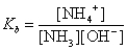
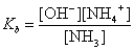
What is the base-ionization equilibrium constant for an aqueous solution of ammonia,NH3?

A) <strong>What is the base-ionization equilibrium constant for an aqueous solution of ammonia,NH<sub>3</sub>?</strong> A)   B)   C)   D)   E)none of these <div style=padding-top: 35px>
B) <strong>What is the base-ionization equilibrium constant for an aqueous solution of ammonia,NH<sub>3</sub>?</strong> A)   B)   C)   D)   E)none of these <div style=padding-top: 35px>
C) <strong>What is the base-ionization equilibrium constant for an aqueous solution of ammonia,NH<sub>3</sub>?</strong> A)   B)   C)   D)   E)none of these <div style=padding-top: 35px>
D) <strong>What is the base-ionization equilibrium constant for an aqueous solution of ammonia,NH<sub>3</sub>?</strong> A)   B)   C)   D)   E)none of these <div style=padding-top: 35px>
E)none of these
سؤال
Which of the following equilibria best represents the hydrolysis reaction that occurs in an aqueous solution of NH4Cl?

A)Cl-(aq)+ H3O+(aq) <strong>Which of the following equilibria best represents the hydrolysis reaction that occurs in an aqueous solution of NH<sub>4</sub>Cl?</strong> A)Cl<sup>-</sup>(aq)+ H<sub>3</sub>O<sup>+</sup>(aq)   HCl(aq)+ H<sub>2</sub>O(l) B)NH<sub>4</sub><sup>+</sup>(aq)+ H<sub>2</sub>O(l)   NH<sub>3</sub>(aq)+ H<sub>3</sub>O<sup>+</sup>(aq) C)NH<sub>4</sub><sup>+</sup>(aq)+ OH<sup>-</sup>(aq)   NH<sub>3</sub>(aq)+ H<sub>2</sub>O(l) D)Cl<sup>-</sup>(aq)+ H<sub>2</sub>O(l)   HCl(aq)+ OH<sup>-</sup>(aq) E)NH<sub>4</sub><sup>+</sup>(aq)+ Cl<sup>-</sup>(aq)   NH<sub>4</sub>Cl(s) <div style=padding-top: 35px> HCl(aq)+ H2O(l)
B)NH4+(aq)+ H2O(l) <strong>Which of the following equilibria best represents the hydrolysis reaction that occurs in an aqueous solution of NH<sub>4</sub>Cl?</strong> A)Cl<sup>-</sup>(aq)+ H<sub>3</sub>O<sup>+</sup>(aq)   HCl(aq)+ H<sub>2</sub>O(l) B)NH<sub>4</sub><sup>+</sup>(aq)+ H<sub>2</sub>O(l)   NH<sub>3</sub>(aq)+ H<sub>3</sub>O<sup>+</sup>(aq) C)NH<sub>4</sub><sup>+</sup>(aq)+ OH<sup>-</sup>(aq)   NH<sub>3</sub>(aq)+ H<sub>2</sub>O(l) D)Cl<sup>-</sup>(aq)+ H<sub>2</sub>O(l)   HCl(aq)+ OH<sup>-</sup>(aq) E)NH<sub>4</sub><sup>+</sup>(aq)+ Cl<sup>-</sup>(aq)   NH<sub>4</sub>Cl(s) <div style=padding-top: 35px> NH3(aq)+ H3O+(aq)
C)NH4+(aq)+ OH-(aq) <strong>Which of the following equilibria best represents the hydrolysis reaction that occurs in an aqueous solution of NH<sub>4</sub>Cl?</strong> A)Cl<sup>-</sup>(aq)+ H<sub>3</sub>O<sup>+</sup>(aq)   HCl(aq)+ H<sub>2</sub>O(l) B)NH<sub>4</sub><sup>+</sup>(aq)+ H<sub>2</sub>O(l)   NH<sub>3</sub>(aq)+ H<sub>3</sub>O<sup>+</sup>(aq) C)NH<sub>4</sub><sup>+</sup>(aq)+ OH<sup>-</sup>(aq)   NH<sub>3</sub>(aq)+ H<sub>2</sub>O(l) D)Cl<sup>-</sup>(aq)+ H<sub>2</sub>O(l)   HCl(aq)+ OH<sup>-</sup>(aq) E)NH<sub>4</sub><sup>+</sup>(aq)+ Cl<sup>-</sup>(aq)   NH<sub>4</sub>Cl(s) <div style=padding-top: 35px> NH3(aq)+ H2O(l)
D)Cl-(aq)+ H2O(l) <strong>Which of the following equilibria best represents the hydrolysis reaction that occurs in an aqueous solution of NH<sub>4</sub>Cl?</strong> A)Cl<sup>-</sup>(aq)+ H<sub>3</sub>O<sup>+</sup>(aq)   HCl(aq)+ H<sub>2</sub>O(l) B)NH<sub>4</sub><sup>+</sup>(aq)+ H<sub>2</sub>O(l)   NH<sub>3</sub>(aq)+ H<sub>3</sub>O<sup>+</sup>(aq) C)NH<sub>4</sub><sup>+</sup>(aq)+ OH<sup>-</sup>(aq)   NH<sub>3</sub>(aq)+ H<sub>2</sub>O(l) D)Cl<sup>-</sup>(aq)+ H<sub>2</sub>O(l)   HCl(aq)+ OH<sup>-</sup>(aq) E)NH<sub>4</sub><sup>+</sup>(aq)+ Cl<sup>-</sup>(aq)   NH<sub>4</sub>Cl(s) <div style=padding-top: 35px> HCl(aq)+ OH-(aq)
E)NH4+(aq)+ Cl-(aq) <strong>Which of the following equilibria best represents the hydrolysis reaction that occurs in an aqueous solution of NH<sub>4</sub>Cl?</strong> A)Cl<sup>-</sup>(aq)+ H<sub>3</sub>O<sup>+</sup>(aq)   HCl(aq)+ H<sub>2</sub>O(l) B)NH<sub>4</sub><sup>+</sup>(aq)+ H<sub>2</sub>O(l)   NH<sub>3</sub>(aq)+ H<sub>3</sub>O<sup>+</sup>(aq) C)NH<sub>4</sub><sup>+</sup>(aq)+ OH<sup>-</sup>(aq)   NH<sub>3</sub>(aq)+ H<sub>2</sub>O(l) D)Cl<sup>-</sup>(aq)+ H<sub>2</sub>O(l)   HCl(aq)+ OH<sup>-</sup>(aq) E)NH<sub>4</sub><sup>+</sup>(aq)+ Cl<sup>-</sup>(aq)   NH<sub>4</sub>Cl(s) <div style=padding-top: 35px> NH4Cl(s)
سؤال
Saccharin is a weak organic base with a Kb of 4.80 × 10-3.A 0.297-g sample of saccharin dissolved in 25.0 mL of water has a pH of 12.190.What is the molar mass of saccharin?

A)0.823 g/mol
B)33.700 g/mol
C)6.824090785E+24 g/mol
D)185 g/mol
E)278 g/mol
سؤال
What is Kb for the following equilibrium? Ka for HNO2 is 5.0 × 10⁻⁴.
NO2-(aq)+ H2O(l) <strong>What is K<sub>b</sub> for the following equilibrium? K<sub>a</sub> for HNO<sub>2</sub> is 5.0 × 10<sup>-4</sup>. NO<sub>2</sub><sup>-</sup>(aq)+ H<sub>2</sub>O(l)   HNO<sub>2</sub>(aq)+ OH<sup>-</sup>(aq)</strong> A)2.0 × 10<sup>-4</sup> B)5.0 × 10<sup>-4</sup> C)5.0 × 10<sup>10</sup> D)5.0 × 10<sup>18</sup> E)2.0 × 10<sup>-11</sup> <div style=padding-top: 35px>
HNO2(aq)+ OH-(aq)

A)2.0 × 10⁻⁴
B)5.0 × 10⁻⁴
C)5.0 × 10¹⁰
D)5.0 × 10¹⁸
E)2.0 × 10⁻¹¹
سؤال
Which of the following salts is most likely to form an aqueous solution having the pH shown in the figure below? <strong>Which of the following salts is most likely to form an aqueous solution having the pH shown in the figure below?  </strong> A)KCl B)Zn(NO<sub>3</sub>)<sub>2</sub> C)NaCN D)NH<sub>4</sub>Cl E)LiBr <div style=padding-top: 35px>

A)KCl
B)Zn(NO3)2
C)NaCN
D)NH4Cl
E)LiBr
سؤال
The Ka for hydrofluoric acid is 6.8 × 10⁻⁴.What is Kb for the fluoride ion?

A)1.5 × 10⁻¹¹
B)6.8 × 10⁻⁴
C)1.5 × 10³
D)6.8 × 10¹⁰
E)6.8 × 10⁻¹⁸
سؤال
Consider the reaction NH3(aq)+ H2O(l) <strong>Consider the reaction NH<sub>3</sub>(aq)+ H<sub>2</sub>O(l)   NH<sub>4</sub><sup>+</sup>(aq)+ OH<sup>-</sup>(aq).K<sub>b</sub> for NH<sub>3</sub> is 1.8 × 10<sup>-5</sup> at 25°C.What is K<sub>a</sub> for the NH<sub>4</sub><sup>+</sup> ion at 25°C?</strong> A)5.6 × 10<sup>4</sup> B)5.6 × 10<sup>-10</sup> C)1.8 × 10<sup>-5</sup> D)7.2 × 10<sup>-12</sup> E)9.2 × 10<sup>-8</sup> <div style=padding-top: 35px> NH4+(aq)+ OH-(aq).Kb for NH3 is 1.8 × 10⁻⁵ at 25°C.What is Ka for the NH4+ ion at 25°C?

A)5.6 × 10⁴
B)5.6 × 10⁻¹⁰
C)1.8 × 10⁻⁵
D)7.2 × 10⁻¹²
E)9.2 × 10⁻⁸
سؤال
Which of the following salts is most likely to form an aqueous solution having the pH shown in the figure below? <strong>Which of the following salts is most likely to form an aqueous solution having the pH shown in the figure below?  </strong> A)Na<sub>2</sub>CO<sub>3</sub> B)RbF C)NH<sub>4</sub>Cl D)Zn(NO<sub>3</sub>)<sub>2</sub> E)KCl <div style=padding-top: 35px>

A)Na2CO3
B)RbF
C)NH4Cl
D)Zn(NO3)2
E)KCl
سؤال
What is Ka at 25°C for the following equilibrium?
CH3NH3+(aq)+ H2O(l) <strong>What is K<sub>a</sub> at 25°C for the following equilibrium? CH<sub>3</sub>NH<sub>3</sub><sup>+</sup>(aq)+ H<sub>2</sub>O(l)   CH<sub>3</sub>NH<sub>2</sub>(aq)+ H<sub>3</sub>O<sup>+</sup>(aq) K<sub>b</sub> (CH<sub>3</sub>NH<sub>2</sub>)= 4.4 × 10<sup>-4</sup> at 25°C.</strong> A)4.4 × 10<sup>-4</sup> B)2.3 × 10<sup>3</sup> C)4.4 × 10<sup>-10</sup> D)4.4 × 10<sup>4</sup> E)2.3 × 10<sup>-11</sup> <div style=padding-top: 35px>
CH3NH2(aq)+ H3O+(aq)
Kb (CH3NH2)= 4.4 × 10⁻⁴ at 25°C.

A)4.4 × 10⁻⁴
B)2.3 × 10³
C)4.4 × 10⁻¹⁰
D)4.4 × 10⁴
E)2.3 × 10⁻¹¹
سؤال
Which of the following salts is most likely to form an aqueous solution having the pH shown in the figure below? <strong>Which of the following salts is most likely to form an aqueous solution having the pH shown in the figure below?  </strong> A)NH<sub>4</sub>Cl B)NaBr C)K<sub>2</sub>CO<sub>3</sub> D)RbCN E)LiNO<sub>3</sub> <div style=padding-top: 35px>

A)NH4Cl
B)NaBr
C)K2CO3
D)RbCN
E)LiNO3
سؤال
Which of the following statements is true concerning a 0.1 M solution of Na2S and a 0.1 M solution of NaHS? For H2S,Ka1 = 1.0 × 10⁻⁷ and Ka2 = 1.3 × 10⁻¹³.

A)Both solutions are neutral.
B)The sodium hydrogen sulfide solution is the more basic.
C)Both solutions have the same pH.
D)The sodium sulfide solution is the more basic.
E)Both the solutions are acidic.
سؤال
Which of the following solutions has the highest hydroxide-ion concentration?

A)0.10 M NH4ClO4
B)0.10 M NaI
C)0.10 M NaNO3
D)0.10 M NH4Cl
E)0.10 M NaCN
سؤال
Given the following,what will be the approximate equilibrium pH of an aqueous solution of ammonium cyanide,NH4CN?
NH4+
Ka = 5.69 x10⁻¹⁰
HCN
Ka = 6.2 x10⁻¹⁰

A)slightly basic
B)slightly acidic
C)nearly neutral
سؤال
Given the following,what will be the approximate equilibrium pH of an aqueous solution of ammonium acetate,NH4CH3CO2?
NH4+
Ka = 5.69 x10⁻¹⁰
CH3CO2-
Kb = 5.71 x10⁻¹⁰

A)very basic
B)very acidic
C)nearly neutral
سؤال
Which of the following salts will produce a neutral solution when added to pure water?

A)LiHCO3
B)NH4NO3
C)Na2SO4
D)RbNO2
E)KNO3
سؤال
The amphiprotic anion monohydrogenphosphate acts as both an acid and a base in aqueous solution.Given the following acid-ionization and base-hydrolysis constants,what will be the approximate equilibrium pH of an aqueous solution of sodium monohydrogenphosphate?
Ka = <strong>The amphiprotic anion monohydrogenphosphate acts as both an acid and a base in aqueous solution.Given the following acid-ionization and base-hydrolysis constants,what will be the approximate equilibrium pH of an aqueous solution of sodium monohydrogenphosphate? K<sub>a</sub> =   K<sub>b</sub> =   ​</strong> A)basic B)acidic C)neutral <div style=padding-top: 35px>
Kb = <strong>The amphiprotic anion monohydrogenphosphate acts as both an acid and a base in aqueous solution.Given the following acid-ionization and base-hydrolysis constants,what will be the approximate equilibrium pH of an aqueous solution of sodium monohydrogenphosphate? K<sub>a</sub> =   K<sub>b</sub> =   ​</strong> A)basic B)acidic C)neutral <div style=padding-top: 35px>

A)basic
B)acidic
C)neutral
سؤال
A 0.0678 M solution of a weak base has a pH of 9.44.What is the identity of the weak base?
Weak Base
Kb
Ethylamine (CH3CH2NH2)
4)7 × 10⁻⁴
Hydrazine (N2H4)
1)7 × 10⁻⁶
Hydroxylamine (NH2OH)
1)1 × 10⁻⁸
Pyridine (C5H5N)
1)4 × 10⁻⁹
Aniline (C6H5NH2)
4)2 × 10⁻¹⁰

A)hydrazine
B)pyridine
C)ethylamine
D)hydroxylamine
E)aniline
سؤال
What is Ka for the anilinium cation,C6H5NH3+,at 25°C? (Kb for C6H5NH2 = 4.2 × 10⁻¹⁰ at 25°C.)

A)1.0 × 10⁻⁷
B)4.2 × 10⁴
C)4.2 × 10⁻²⁴
D)2.4 × 10⁻⁵
E)4.2 × 10⁻¹⁰
سؤال
Which of the following salts forms an acidic aqueous solution?

A)NaNO2
B)KCH3CO2
C)Rb2O
D)FeCl3
E)NaCN
سؤال
Which of the following salts will produce an acidic solution when added to pure water?

A)Cs2CO3
B)NaF
C)KCN
D)Al(NO3)3
E)Li2S
سؤال
Which of the following equilibria best represents the hydrolysis reaction that occurs in an aqueous solution of KNO2?

A)NO2-(aq)+ H2O(l) <strong>Which of the following equilibria best represents the hydrolysis reaction that occurs in an aqueous solution of KNO<sub>2</sub>?</strong> A)NO<sub>2</sub><sup>-</sup>(aq)+ H<sub>2</sub>O(l)   HNO<sub>3</sub>(aq)+ 2H<sup>+</sup>(aq) B)NO<sub>2</sub><sup>-</sup>(aq)+ H<sub>2</sub>O(l)   HNO<sub>2</sub>(aq)+ OH<sup>-</sup>(aq) C)NO<sub>2</sub><sup>-</sup>(aq)+ H<sub>3</sub>O<sup>+</sup>(aq)   HNO<sub>2</sub>(aq)+ H<sub>2</sub>O(l) D)K<sup>+</sup>(aq)+ NO<sub>2</sub><sup>-</sup>(aq)+ H<sub>2</sub>O(l)   KOH(aq)+ HNO<sub>2</sub>(aq) E)K<sup>+</sup>(aq)+ H<sub>2</sub>O(l)   KOH(aq)+ H<sup>+</sup>(aq) <div style=padding-top: 35px> HNO3(aq)+ 2H+(aq)
B)NO2-(aq)+ H2O(l) <strong>Which of the following equilibria best represents the hydrolysis reaction that occurs in an aqueous solution of KNO<sub>2</sub>?</strong> A)NO<sub>2</sub><sup>-</sup>(aq)+ H<sub>2</sub>O(l)   HNO<sub>3</sub>(aq)+ 2H<sup>+</sup>(aq) B)NO<sub>2</sub><sup>-</sup>(aq)+ H<sub>2</sub>O(l)   HNO<sub>2</sub>(aq)+ OH<sup>-</sup>(aq) C)NO<sub>2</sub><sup>-</sup>(aq)+ H<sub>3</sub>O<sup>+</sup>(aq)   HNO<sub>2</sub>(aq)+ H<sub>2</sub>O(l) D)K<sup>+</sup>(aq)+ NO<sub>2</sub><sup>-</sup>(aq)+ H<sub>2</sub>O(l)   KOH(aq)+ HNO<sub>2</sub>(aq) E)K<sup>+</sup>(aq)+ H<sub>2</sub>O(l)   KOH(aq)+ H<sup>+</sup>(aq) <div style=padding-top: 35px> HNO2(aq)+ OH-(aq)
C)NO2-(aq)+ H3O+(aq) <strong>Which of the following equilibria best represents the hydrolysis reaction that occurs in an aqueous solution of KNO<sub>2</sub>?</strong> A)NO<sub>2</sub><sup>-</sup>(aq)+ H<sub>2</sub>O(l)   HNO<sub>3</sub>(aq)+ 2H<sup>+</sup>(aq) B)NO<sub>2</sub><sup>-</sup>(aq)+ H<sub>2</sub>O(l)   HNO<sub>2</sub>(aq)+ OH<sup>-</sup>(aq) C)NO<sub>2</sub><sup>-</sup>(aq)+ H<sub>3</sub>O<sup>+</sup>(aq)   HNO<sub>2</sub>(aq)+ H<sub>2</sub>O(l) D)K<sup>+</sup>(aq)+ NO<sub>2</sub><sup>-</sup>(aq)+ H<sub>2</sub>O(l)   KOH(aq)+ HNO<sub>2</sub>(aq) E)K<sup>+</sup>(aq)+ H<sub>2</sub>O(l)   KOH(aq)+ H<sup>+</sup>(aq) <div style=padding-top: 35px> HNO2(aq)+ H2O(l)
D)K+(aq)+ NO2-(aq)+ H2O(l) <strong>Which of the following equilibria best represents the hydrolysis reaction that occurs in an aqueous solution of KNO<sub>2</sub>?</strong> A)NO<sub>2</sub><sup>-</sup>(aq)+ H<sub>2</sub>O(l)   HNO<sub>3</sub>(aq)+ 2H<sup>+</sup>(aq) B)NO<sub>2</sub><sup>-</sup>(aq)+ H<sub>2</sub>O(l)   HNO<sub>2</sub>(aq)+ OH<sup>-</sup>(aq) C)NO<sub>2</sub><sup>-</sup>(aq)+ H<sub>3</sub>O<sup>+</sup>(aq)   HNO<sub>2</sub>(aq)+ H<sub>2</sub>O(l) D)K<sup>+</sup>(aq)+ NO<sub>2</sub><sup>-</sup>(aq)+ H<sub>2</sub>O(l)   KOH(aq)+ HNO<sub>2</sub>(aq) E)K<sup>+</sup>(aq)+ H<sub>2</sub>O(l)   KOH(aq)+ H<sup>+</sup>(aq) <div style=padding-top: 35px> KOH(aq)+ HNO2(aq)
E)K+(aq)+ H2O(l) <strong>Which of the following equilibria best represents the hydrolysis reaction that occurs in an aqueous solution of KNO<sub>2</sub>?</strong> A)NO<sub>2</sub><sup>-</sup>(aq)+ H<sub>2</sub>O(l)   HNO<sub>3</sub>(aq)+ 2H<sup>+</sup>(aq) B)NO<sub>2</sub><sup>-</sup>(aq)+ H<sub>2</sub>O(l)   HNO<sub>2</sub>(aq)+ OH<sup>-</sup>(aq) C)NO<sub>2</sub><sup>-</sup>(aq)+ H<sub>3</sub>O<sup>+</sup>(aq)   HNO<sub>2</sub>(aq)+ H<sub>2</sub>O(l) D)K<sup>+</sup>(aq)+ NO<sub>2</sub><sup>-</sup>(aq)+ H<sub>2</sub>O(l)   KOH(aq)+ HNO<sub>2</sub>(aq) E)K<sup>+</sup>(aq)+ H<sub>2</sub>O(l)   KOH(aq)+ H<sup>+</sup>(aq) <div style=padding-top: 35px> KOH(aq)+ H+(aq)
فتح الحزمة
قم بالتسجيل لفتح البطاقات في هذه المجموعة!
Unlock Deck
Unlock Deck
1/148
auto play flashcards
العب
simple tutorial
ملء الشاشة (f)
exit full mode
Deck 16: Acid-Base Equilibria
1
A 8.0 × 10⁻³ M solution of acetic acid,HC2H3O2,is 4.7% ionized at 25°C.In a 8.0 × 10⁻⁴ M solution,the percentage of ionization would be

A)100%.
B)<4.7%.
C)>4.7%.
D)the same.
E)zero.
>4.7%.
2
For which of the following equilibria does Kc correspond to the acid-ionization constant,Ka,of HC2O4-?

A)HC2O4-(aq)+ H2O(l) <strong>For which of the following equilibria does K<sub>c</sub> correspond to the acid-ionization constant,K<sub>a</sub>,of HC<sub>2</sub>O<sub>4</sub><sup>-</sup>?</strong> A)HC<sub>2</sub>O<sub>4</sub><sup>-</sup>(aq)+ H<sub>2</sub>O(l)   H<sub>2</sub>C<sub>2</sub>O<sub>4</sub>(aq)+ OH<sup>-</sup>(aq) B)H<sub>2</sub>C<sub>2</sub>O<sub>4</sub>(aq)+ H<sub>2</sub>O(l)   H<sub>3</sub>O<sup>+</sup>(aq)+ HC<sub>2</sub>O<sub>4</sub><sup>-</sup>(aq) C)HC<sub>2</sub>O<sub>4</sub><sup>-</sup>(aq)+ H<sub>2</sub>O(l)   H<sub>3</sub>O<sup>+</sup>(aq)+ C<sub>2</sub>O<sub>4</sub><sup>2-</sup>(aq) D)HC<sub>2</sub>O<sub>4</sub><sup>-</sup>(aq)+ OH<sup>-</sup>(aq)   C<sub>2</sub>O<sub>4</sub><sup>2-</sup>(aq)+ H<sub>2</sub>O(l) E)HC<sub>2</sub>O<sub>4</sub><sup>-</sup>(aq)+ H<sub>3</sub>O<sup>+</sup>(aq)   H<sub>2</sub>C<sub>2</sub>O<sub>4</sub>(aq)+ H<sub>2</sub>O(l) H2C2O4(aq)+ OH-(aq)
B)H2C2O4(aq)+ H2O(l) <strong>For which of the following equilibria does K<sub>c</sub> correspond to the acid-ionization constant,K<sub>a</sub>,of HC<sub>2</sub>O<sub>4</sub><sup>-</sup>?</strong> A)HC<sub>2</sub>O<sub>4</sub><sup>-</sup>(aq)+ H<sub>2</sub>O(l)   H<sub>2</sub>C<sub>2</sub>O<sub>4</sub>(aq)+ OH<sup>-</sup>(aq) B)H<sub>2</sub>C<sub>2</sub>O<sub>4</sub>(aq)+ H<sub>2</sub>O(l)   H<sub>3</sub>O<sup>+</sup>(aq)+ HC<sub>2</sub>O<sub>4</sub><sup>-</sup>(aq) C)HC<sub>2</sub>O<sub>4</sub><sup>-</sup>(aq)+ H<sub>2</sub>O(l)   H<sub>3</sub>O<sup>+</sup>(aq)+ C<sub>2</sub>O<sub>4</sub><sup>2-</sup>(aq) D)HC<sub>2</sub>O<sub>4</sub><sup>-</sup>(aq)+ OH<sup>-</sup>(aq)   C<sub>2</sub>O<sub>4</sub><sup>2-</sup>(aq)+ H<sub>2</sub>O(l) E)HC<sub>2</sub>O<sub>4</sub><sup>-</sup>(aq)+ H<sub>3</sub>O<sup>+</sup>(aq)   H<sub>2</sub>C<sub>2</sub>O<sub>4</sub>(aq)+ H<sub>2</sub>O(l) H3O+(aq)+ HC2O4-(aq)
C)HC2O4-(aq)+ H2O(l) <strong>For which of the following equilibria does K<sub>c</sub> correspond to the acid-ionization constant,K<sub>a</sub>,of HC<sub>2</sub>O<sub>4</sub><sup>-</sup>?</strong> A)HC<sub>2</sub>O<sub>4</sub><sup>-</sup>(aq)+ H<sub>2</sub>O(l)   H<sub>2</sub>C<sub>2</sub>O<sub>4</sub>(aq)+ OH<sup>-</sup>(aq) B)H<sub>2</sub>C<sub>2</sub>O<sub>4</sub>(aq)+ H<sub>2</sub>O(l)   H<sub>3</sub>O<sup>+</sup>(aq)+ HC<sub>2</sub>O<sub>4</sub><sup>-</sup>(aq) C)HC<sub>2</sub>O<sub>4</sub><sup>-</sup>(aq)+ H<sub>2</sub>O(l)   H<sub>3</sub>O<sup>+</sup>(aq)+ C<sub>2</sub>O<sub>4</sub><sup>2-</sup>(aq) D)HC<sub>2</sub>O<sub>4</sub><sup>-</sup>(aq)+ OH<sup>-</sup>(aq)   C<sub>2</sub>O<sub>4</sub><sup>2-</sup>(aq)+ H<sub>2</sub>O(l) E)HC<sub>2</sub>O<sub>4</sub><sup>-</sup>(aq)+ H<sub>3</sub>O<sup>+</sup>(aq)   H<sub>2</sub>C<sub>2</sub>O<sub>4</sub>(aq)+ H<sub>2</sub>O(l) H3O+(aq)+ C2O42-(aq)
D)HC2O4-(aq)+ OH-(aq) <strong>For which of the following equilibria does K<sub>c</sub> correspond to the acid-ionization constant,K<sub>a</sub>,of HC<sub>2</sub>O<sub>4</sub><sup>-</sup>?</strong> A)HC<sub>2</sub>O<sub>4</sub><sup>-</sup>(aq)+ H<sub>2</sub>O(l)   H<sub>2</sub>C<sub>2</sub>O<sub>4</sub>(aq)+ OH<sup>-</sup>(aq) B)H<sub>2</sub>C<sub>2</sub>O<sub>4</sub>(aq)+ H<sub>2</sub>O(l)   H<sub>3</sub>O<sup>+</sup>(aq)+ HC<sub>2</sub>O<sub>4</sub><sup>-</sup>(aq) C)HC<sub>2</sub>O<sub>4</sub><sup>-</sup>(aq)+ H<sub>2</sub>O(l)   H<sub>3</sub>O<sup>+</sup>(aq)+ C<sub>2</sub>O<sub>4</sub><sup>2-</sup>(aq) D)HC<sub>2</sub>O<sub>4</sub><sup>-</sup>(aq)+ OH<sup>-</sup>(aq)   C<sub>2</sub>O<sub>4</sub><sup>2-</sup>(aq)+ H<sub>2</sub>O(l) E)HC<sub>2</sub>O<sub>4</sub><sup>-</sup>(aq)+ H<sub>3</sub>O<sup>+</sup>(aq)   H<sub>2</sub>C<sub>2</sub>O<sub>4</sub>(aq)+ H<sub>2</sub>O(l) C2O42-(aq)+ H2O(l)
E)HC2O4-(aq)+ H3O+(aq) <strong>For which of the following equilibria does K<sub>c</sub> correspond to the acid-ionization constant,K<sub>a</sub>,of HC<sub>2</sub>O<sub>4</sub><sup>-</sup>?</strong> A)HC<sub>2</sub>O<sub>4</sub><sup>-</sup>(aq)+ H<sub>2</sub>O(l)   H<sub>2</sub>C<sub>2</sub>O<sub>4</sub>(aq)+ OH<sup>-</sup>(aq) B)H<sub>2</sub>C<sub>2</sub>O<sub>4</sub>(aq)+ H<sub>2</sub>O(l)   H<sub>3</sub>O<sup>+</sup>(aq)+ HC<sub>2</sub>O<sub>4</sub><sup>-</sup>(aq) C)HC<sub>2</sub>O<sub>4</sub><sup>-</sup>(aq)+ H<sub>2</sub>O(l)   H<sub>3</sub>O<sup>+</sup>(aq)+ C<sub>2</sub>O<sub>4</sub><sup>2-</sup>(aq) D)HC<sub>2</sub>O<sub>4</sub><sup>-</sup>(aq)+ OH<sup>-</sup>(aq)   C<sub>2</sub>O<sub>4</sub><sup>2-</sup>(aq)+ H<sub>2</sub>O(l) E)HC<sub>2</sub>O<sub>4</sub><sup>-</sup>(aq)+ H<sub>3</sub>O<sup>+</sup>(aq)   H<sub>2</sub>C<sub>2</sub>O<sub>4</sub>(aq)+ H<sub>2</sub>O(l) H2C2O4(aq)+ H2O(l)
HC2O4-(aq)+ H2O(l) HC<sub>2</sub>O<sub>4</sub><sup>-</sup>(aq)+ H<sub>2</sub>O(l)   H<sub>3</sub>O<sup>+</sup>(aq)+ C<sub>2</sub>O<sub>4</sub><sup>2-</sup>(aq) H3O+(aq)+ C2O42-(aq)
3
Consider the Ka values for the following acids:
Cyanic acid,HOCN,3.5 × 10-4
Formic acid,HCHO2,1.7 × 10-4
Lactic acid,HC3H5O3,1.3 × 10-4
Propionic acid,HC3H5O2,1.3 × 10-5
Benzoic acid,HC7H5O2,6.3 × 10-5
Which has the strongest conjugate base?

A)propionic acid
B)benzoic acid
C)lactic acid
D)formic acid
E)cyanic
propionic acid
4
Consider the Ka values for the following acids:
Cyanic acid,HOCN,3.5 × 10-4
Formic acid,HCHO2,1.7 × 10-4
Lactic acid,HC3H5O3,1.3 × 10-4
Propionic acid,HC3H5O2,1.3 × 10-5
Benzoic acid,HC7H5O2,6.3 × 10-5
Given initially equimolar soutions of each weak acid,which solution will have the highest hydronium ion concentration once equilibrium is established?

A)cyanic acid
B)benzoic acid
C)lactic acid
D)formic acid
E)propionic acid
فتح الحزمة
افتح القفل للوصول البطاقات البالغ عددها 148 في هذه المجموعة.
فتح الحزمة
k this deck
5
A 0.10 M aqueous solution of a weak acid HA has a pH of 5.00.What is the value of Ka for HA?

A)1.0 × 10⁻⁸
B)1.0 × 10⁻⁶
C)1.0 × 10⁻⁷
D)1.0 × 10⁻⁵
E)1.0 × 10⁻⁹
فتح الحزمة
افتح القفل للوصول البطاقات البالغ عددها 148 في هذه المجموعة.
فتح الحزمة
k this deck
6
For which of the following equilibria does Kc correspond to an acid-ionization constant,Ka?

A)NH3(aq)+ H3O+(aq) <strong>For which of the following equilibria does K<sub>c</sub> correspond to an acid-ionization constant,K<sub>a</sub>?</strong> A)NH<sub>3</sub>(aq)+ H<sub>3</sub>O<sup>+</sup>(aq)   NH<sub>4</sub><sup>+</sup>(aq)+ H<sub>2</sub>O(l) B)NH<sub>4</sub><sup>+</sup>(aq)+ OH<sup>-</sup>(aq)   NH<sub>3</sub>(aq)+ H<sub>2</sub>O(l) C)F<sup>-</sup>(aq)+ H<sub>2</sub>O(l)   HF(aq)+ OH<sup>-</sup>(aq) D)HF(aq)+ OH<sup>-</sup>(aq)   H<sub>2</sub>O(l)+ F<sup>-</sup>(aq) E)NH<sub>4</sub><sup>+</sup>(aq)+ H<sub>2</sub>O(l)   NH<sub>3</sub>(aq)+ H<sub>3</sub>O<sup>+</sup>(aq) NH4+(aq)+ H2O(l)
B)NH4+(aq)+ OH-(aq) <strong>For which of the following equilibria does K<sub>c</sub> correspond to an acid-ionization constant,K<sub>a</sub>?</strong> A)NH<sub>3</sub>(aq)+ H<sub>3</sub>O<sup>+</sup>(aq)   NH<sub>4</sub><sup>+</sup>(aq)+ H<sub>2</sub>O(l) B)NH<sub>4</sub><sup>+</sup>(aq)+ OH<sup>-</sup>(aq)   NH<sub>3</sub>(aq)+ H<sub>2</sub>O(l) C)F<sup>-</sup>(aq)+ H<sub>2</sub>O(l)   HF(aq)+ OH<sup>-</sup>(aq) D)HF(aq)+ OH<sup>-</sup>(aq)   H<sub>2</sub>O(l)+ F<sup>-</sup>(aq) E)NH<sub>4</sub><sup>+</sup>(aq)+ H<sub>2</sub>O(l)   NH<sub>3</sub>(aq)+ H<sub>3</sub>O<sup>+</sup>(aq) NH3(aq)+ H2O(l)
C)F-(aq)+ H2O(l) <strong>For which of the following equilibria does K<sub>c</sub> correspond to an acid-ionization constant,K<sub>a</sub>?</strong> A)NH<sub>3</sub>(aq)+ H<sub>3</sub>O<sup>+</sup>(aq)   NH<sub>4</sub><sup>+</sup>(aq)+ H<sub>2</sub>O(l) B)NH<sub>4</sub><sup>+</sup>(aq)+ OH<sup>-</sup>(aq)   NH<sub>3</sub>(aq)+ H<sub>2</sub>O(l) C)F<sup>-</sup>(aq)+ H<sub>2</sub>O(l)   HF(aq)+ OH<sup>-</sup>(aq) D)HF(aq)+ OH<sup>-</sup>(aq)   H<sub>2</sub>O(l)+ F<sup>-</sup>(aq) E)NH<sub>4</sub><sup>+</sup>(aq)+ H<sub>2</sub>O(l)   NH<sub>3</sub>(aq)+ H<sub>3</sub>O<sup>+</sup>(aq) HF(aq)+ OH-(aq)
D)HF(aq)+ OH-(aq) <strong>For which of the following equilibria does K<sub>c</sub> correspond to an acid-ionization constant,K<sub>a</sub>?</strong> A)NH<sub>3</sub>(aq)+ H<sub>3</sub>O<sup>+</sup>(aq)   NH<sub>4</sub><sup>+</sup>(aq)+ H<sub>2</sub>O(l) B)NH<sub>4</sub><sup>+</sup>(aq)+ OH<sup>-</sup>(aq)   NH<sub>3</sub>(aq)+ H<sub>2</sub>O(l) C)F<sup>-</sup>(aq)+ H<sub>2</sub>O(l)   HF(aq)+ OH<sup>-</sup>(aq) D)HF(aq)+ OH<sup>-</sup>(aq)   H<sub>2</sub>O(l)+ F<sup>-</sup>(aq) E)NH<sub>4</sub><sup>+</sup>(aq)+ H<sub>2</sub>O(l)   NH<sub>3</sub>(aq)+ H<sub>3</sub>O<sup>+</sup>(aq) H2O(l)+ F-(aq)
E)NH4+(aq)+ H2O(l) <strong>For which of the following equilibria does K<sub>c</sub> correspond to an acid-ionization constant,K<sub>a</sub>?</strong> A)NH<sub>3</sub>(aq)+ H<sub>3</sub>O<sup>+</sup>(aq)   NH<sub>4</sub><sup>+</sup>(aq)+ H<sub>2</sub>O(l) B)NH<sub>4</sub><sup>+</sup>(aq)+ OH<sup>-</sup>(aq)   NH<sub>3</sub>(aq)+ H<sub>2</sub>O(l) C)F<sup>-</sup>(aq)+ H<sub>2</sub>O(l)   HF(aq)+ OH<sup>-</sup>(aq) D)HF(aq)+ OH<sup>-</sup>(aq)   H<sub>2</sub>O(l)+ F<sup>-</sup>(aq) E)NH<sub>4</sub><sup>+</sup>(aq)+ H<sub>2</sub>O(l)   NH<sub>3</sub>(aq)+ H<sub>3</sub>O<sup>+</sup>(aq) NH3(aq)+ H3O+(aq)
فتح الحزمة
افتح القفل للوصول البطاقات البالغ عددها 148 في هذه المجموعة.
فتح الحزمة
k this deck
7
For the equilibrium that exists in an aqueous solution of nitrous acid (HNO2,a weak acid),the equilibrium-constant expression is

A)K = <strong>For the equilibrium that exists in an aqueous solution of nitrous acid (HNO<sub>2</sub>,a weak acid),the equilibrium-constant expression is</strong> A)K =   . B)K =   . C)K =   . D)K = [H<sup>+</sup>][NO<sub>2</sub><sup>-</sup>]. E)none of these .
B)K = <strong>For the equilibrium that exists in an aqueous solution of nitrous acid (HNO<sub>2</sub>,a weak acid),the equilibrium-constant expression is</strong> A)K =   . B)K =   . C)K =   . D)K = [H<sup>+</sup>][NO<sub>2</sub><sup>-</sup>]. E)none of these .
C)K = <strong>For the equilibrium that exists in an aqueous solution of nitrous acid (HNO<sub>2</sub>,a weak acid),the equilibrium-constant expression is</strong> A)K =   . B)K =   . C)K =   . D)K = [H<sup>+</sup>][NO<sub>2</sub><sup>-</sup>]. E)none of these .
D)K = [H+][NO2-].
E)none of these
فتح الحزمة
افتح القفل للوصول البطاقات البالغ عددها 148 في هذه المجموعة.
فتح الحزمة
k this deck
8
For which of the following equilibria does Kc correspond to the acid-dissociation constant,Ka,of H2PO4-?

A)H2PO4-(aq)+ H3O+(aq) <strong>For which of the following equilibria does K<sub>c</sub> correspond to the acid-dissociation constant,K<sub>a</sub>,of H<sub>2</sub>PO<sub>4</sub><sup>-</sup>?</strong> A)H<sub>2</sub>PO<sub>4</sub><sup>-</sup>(aq)+ H<sub>3</sub>O<sup>+</sup>(aq)   H<sub>3</sub>PO<sub>4</sub>(aq)+ H<sub>2</sub>O(l) B)H<sub>2</sub>PO<sub>4</sub><sup>-</sup>(aq)+ H<sub>2</sub>O(l)   H<sub>3</sub>PO<sub>4</sub>(aq)+ OH<sup>-</sup>(aq) C)H<sub>2</sub>PO<sub>4</sub><sup>-</sup>(aq)+ H<sub>2</sub>O(l)   H<sub>3</sub>O<sup>+</sup>(aq)+ HPO<sub>4</sub><sup>2-</sup>(aq) D)H<sub>3</sub>PO<sub>4</sub>(aq)+ H<sub>2</sub>O(l)   H<sub>3</sub>O<sup>+</sup>(aq)+ H<sub>2</sub>PO<sub>4</sub><sup>-</sup>(aq) E)HPO<sub>4</sub><sup>2-</sup>(aq)+ H<sub>2</sub>O(l)   H<sub>2</sub>PO<sub>4</sub><sup>-</sup>(aq)+ OH<sup>-</sup>(aq) H3PO4(aq)+ H2O(l)
B)H2PO4-(aq)+ H2O(l) <strong>For which of the following equilibria does K<sub>c</sub> correspond to the acid-dissociation constant,K<sub>a</sub>,of H<sub>2</sub>PO<sub>4</sub><sup>-</sup>?</strong> A)H<sub>2</sub>PO<sub>4</sub><sup>-</sup>(aq)+ H<sub>3</sub>O<sup>+</sup>(aq)   H<sub>3</sub>PO<sub>4</sub>(aq)+ H<sub>2</sub>O(l) B)H<sub>2</sub>PO<sub>4</sub><sup>-</sup>(aq)+ H<sub>2</sub>O(l)   H<sub>3</sub>PO<sub>4</sub>(aq)+ OH<sup>-</sup>(aq) C)H<sub>2</sub>PO<sub>4</sub><sup>-</sup>(aq)+ H<sub>2</sub>O(l)   H<sub>3</sub>O<sup>+</sup>(aq)+ HPO<sub>4</sub><sup>2-</sup>(aq) D)H<sub>3</sub>PO<sub>4</sub>(aq)+ H<sub>2</sub>O(l)   H<sub>3</sub>O<sup>+</sup>(aq)+ H<sub>2</sub>PO<sub>4</sub><sup>-</sup>(aq) E)HPO<sub>4</sub><sup>2-</sup>(aq)+ H<sub>2</sub>O(l)   H<sub>2</sub>PO<sub>4</sub><sup>-</sup>(aq)+ OH<sup>-</sup>(aq) H3PO4(aq)+ OH-(aq)
C)H2PO4-(aq)+ H2O(l) <strong>For which of the following equilibria does K<sub>c</sub> correspond to the acid-dissociation constant,K<sub>a</sub>,of H<sub>2</sub>PO<sub>4</sub><sup>-</sup>?</strong> A)H<sub>2</sub>PO<sub>4</sub><sup>-</sup>(aq)+ H<sub>3</sub>O<sup>+</sup>(aq)   H<sub>3</sub>PO<sub>4</sub>(aq)+ H<sub>2</sub>O(l) B)H<sub>2</sub>PO<sub>4</sub><sup>-</sup>(aq)+ H<sub>2</sub>O(l)   H<sub>3</sub>PO<sub>4</sub>(aq)+ OH<sup>-</sup>(aq) C)H<sub>2</sub>PO<sub>4</sub><sup>-</sup>(aq)+ H<sub>2</sub>O(l)   H<sub>3</sub>O<sup>+</sup>(aq)+ HPO<sub>4</sub><sup>2-</sup>(aq) D)H<sub>3</sub>PO<sub>4</sub>(aq)+ H<sub>2</sub>O(l)   H<sub>3</sub>O<sup>+</sup>(aq)+ H<sub>2</sub>PO<sub>4</sub><sup>-</sup>(aq) E)HPO<sub>4</sub><sup>2-</sup>(aq)+ H<sub>2</sub>O(l)   H<sub>2</sub>PO<sub>4</sub><sup>-</sup>(aq)+ OH<sup>-</sup>(aq) H3O+(aq)+ HPO42-(aq)
D)H3PO4(aq)+ H2O(l) <strong>For which of the following equilibria does K<sub>c</sub> correspond to the acid-dissociation constant,K<sub>a</sub>,of H<sub>2</sub>PO<sub>4</sub><sup>-</sup>?</strong> A)H<sub>2</sub>PO<sub>4</sub><sup>-</sup>(aq)+ H<sub>3</sub>O<sup>+</sup>(aq)   H<sub>3</sub>PO<sub>4</sub>(aq)+ H<sub>2</sub>O(l) B)H<sub>2</sub>PO<sub>4</sub><sup>-</sup>(aq)+ H<sub>2</sub>O(l)   H<sub>3</sub>PO<sub>4</sub>(aq)+ OH<sup>-</sup>(aq) C)H<sub>2</sub>PO<sub>4</sub><sup>-</sup>(aq)+ H<sub>2</sub>O(l)   H<sub>3</sub>O<sup>+</sup>(aq)+ HPO<sub>4</sub><sup>2-</sup>(aq) D)H<sub>3</sub>PO<sub>4</sub>(aq)+ H<sub>2</sub>O(l)   H<sub>3</sub>O<sup>+</sup>(aq)+ H<sub>2</sub>PO<sub>4</sub><sup>-</sup>(aq) E)HPO<sub>4</sub><sup>2-</sup>(aq)+ H<sub>2</sub>O(l)   H<sub>2</sub>PO<sub>4</sub><sup>-</sup>(aq)+ OH<sup>-</sup>(aq) H3O+(aq)+ H2PO4-(aq)
E)HPO42-(aq)+ H2O(l) <strong>For which of the following equilibria does K<sub>c</sub> correspond to the acid-dissociation constant,K<sub>a</sub>,of H<sub>2</sub>PO<sub>4</sub><sup>-</sup>?</strong> A)H<sub>2</sub>PO<sub>4</sub><sup>-</sup>(aq)+ H<sub>3</sub>O<sup>+</sup>(aq)   H<sub>3</sub>PO<sub>4</sub>(aq)+ H<sub>2</sub>O(l) B)H<sub>2</sub>PO<sub>4</sub><sup>-</sup>(aq)+ H<sub>2</sub>O(l)   H<sub>3</sub>PO<sub>4</sub>(aq)+ OH<sup>-</sup>(aq) C)H<sub>2</sub>PO<sub>4</sub><sup>-</sup>(aq)+ H<sub>2</sub>O(l)   H<sub>3</sub>O<sup>+</sup>(aq)+ HPO<sub>4</sub><sup>2-</sup>(aq) D)H<sub>3</sub>PO<sub>4</sub>(aq)+ H<sub>2</sub>O(l)   H<sub>3</sub>O<sup>+</sup>(aq)+ H<sub>2</sub>PO<sub>4</sub><sup>-</sup>(aq) E)HPO<sub>4</sub><sup>2-</sup>(aq)+ H<sub>2</sub>O(l)   H<sub>2</sub>PO<sub>4</sub><sup>-</sup>(aq)+ OH<sup>-</sup>(aq) H2PO4-(aq)+ OH-(aq)
فتح الحزمة
افتح القفل للوصول البطاقات البالغ عددها 148 في هذه المجموعة.
فتح الحزمة
k this deck
9
Rank acetic acid (HC2H3O2),hydrocyanic acid (HOCN),and hydrofluoric acid (HF)in order of increasing strength.
Acid
Ka
HC2H3O2
1)8 × 10⁻⁵
HOCN
3)5 × 10⁻⁴
HF
6)8 × 10⁻⁴

A)HC2H3O2 < HOCN < HF
B)HOCN < HC2H3O2 < HF
C)HOCN < HF < HC2H3O2
D)HF < HOCN < HC2H3O2
E)HF < HC2H3O2 < HOCN
فتح الحزمة
افتح القفل للوصول البطاقات البالغ عددها 148 في هذه المجموعة.
فتح الحزمة
k this deck
10
What is the equilibrium expression for the equilibrium A-(aq)+ H3O+(aq) <strong>What is the equilibrium expression for the equilibrium A<sup>-</sup>(aq)+ H<sub>3</sub>O<sup>+</sup>(aq)   HA(aq)+ H<sub>2</sub>O(l)?</strong> A)   B)   C)   D)   E)K<sub>b</sub> HA(aq)+ H2O(l)?

A) <strong>What is the equilibrium expression for the equilibrium A<sup>-</sup>(aq)+ H<sub>3</sub>O<sup>+</sup>(aq)   HA(aq)+ H<sub>2</sub>O(l)?</strong> A)   B)   C)   D)   E)K<sub>b</sub>
B) <strong>What is the equilibrium expression for the equilibrium A<sup>-</sup>(aq)+ H<sub>3</sub>O<sup>+</sup>(aq)   HA(aq)+ H<sub>2</sub>O(l)?</strong> A)   B)   C)   D)   E)K<sub>b</sub>
C) <strong>What is the equilibrium expression for the equilibrium A<sup>-</sup>(aq)+ H<sub>3</sub>O<sup>+</sup>(aq)   HA(aq)+ H<sub>2</sub>O(l)?</strong> A)   B)   C)   D)   E)K<sub>b</sub>
D) <strong>What is the equilibrium expression for the equilibrium A<sup>-</sup>(aq)+ H<sub>3</sub>O<sup>+</sup>(aq)   HA(aq)+ H<sub>2</sub>O(l)?</strong> A)   B)   C)   D)   E)K<sub>b</sub>
E)Kb
فتح الحزمة
افتح القفل للوصول البطاقات البالغ عددها 148 في هذه المجموعة.
فتح الحزمة
k this deck
11
What is the percent ionization of a 1.5 M HC2H3O2 solution (Ka = 1.8 × 10⁻⁵ )at 25°C?
+

A)0.52 %
B)0.35 %
C)2.5 %
D)0.18 %
E)0.28 %
فتح الحزمة
افتح القفل للوصول البطاقات البالغ عددها 148 في هذه المجموعة.
فتح الحزمة
k this deck
12
A 0.010 M aqueous solution of a weak acid HA has a pH of 4.0.What is the degree of ionization of HA in the solution?

A)0.1 %
B)0.01 %
C)0.001 %
D)1 %
E)10 %
فتح الحزمة
افتح القفل للوصول البطاقات البالغ عددها 148 في هذه المجموعة.
فتح الحزمة
k this deck
13
For which of the following equilibria does Kc correspond to the acid-ionization constant,Ka,of HCO3-?

A)HCO3-(aq)+ OH-(aq) <strong>For which of the following equilibria does K<sub>c</sub> correspond to the acid-ionization constant,K<sub>a</sub>,of HCO<sub>3</sub><sup>-</sup>?</strong> A)HCO<sub>3</sub><sup>-</sup>(aq)+ OH<sup>-</sup>(aq)   CO<sub>3</sub><sup>2-</sup>(aq)+ H<sub>2</sub>O(l) B)H<sub>2</sub>CO<sub>3</sub>(aq)+ H<sub>2</sub>O(l)   HCO<sub>3</sub><sup>-</sup>(aq)+ H<sub>3</sub>O<sup>+</sup>(aq) C)HCO<sub>3</sub><sup>-</sup>(aq)+ H<sub>2</sub>O(l)   H<sub>2</sub>CO<sub>3</sub>(aq)+ OH<sup>-</sup>(aq) D)HCO<sub>3</sub><sup>-</sup>(aq)+ H<sub>3</sub>O<sup>+</sup>(aq)   H<sub>2</sub>CO<sub>3</sub>(aq)+ H<sub>2</sub>O(l) E)HCO<sub>3</sub><sup>-</sup>(aq)+ H<sub>2</sub>O(l)   CO<sub>3</sub><sup>2-</sup>(aq)+ H<sub>3</sub>O<sup>+</sup>(aq) CO32-(aq)+ H2O(l)
B)H2CO3(aq)+ H2O(l) <strong>For which of the following equilibria does K<sub>c</sub> correspond to the acid-ionization constant,K<sub>a</sub>,of HCO<sub>3</sub><sup>-</sup>?</strong> A)HCO<sub>3</sub><sup>-</sup>(aq)+ OH<sup>-</sup>(aq)   CO<sub>3</sub><sup>2-</sup>(aq)+ H<sub>2</sub>O(l) B)H<sub>2</sub>CO<sub>3</sub>(aq)+ H<sub>2</sub>O(l)   HCO<sub>3</sub><sup>-</sup>(aq)+ H<sub>3</sub>O<sup>+</sup>(aq) C)HCO<sub>3</sub><sup>-</sup>(aq)+ H<sub>2</sub>O(l)   H<sub>2</sub>CO<sub>3</sub>(aq)+ OH<sup>-</sup>(aq) D)HCO<sub>3</sub><sup>-</sup>(aq)+ H<sub>3</sub>O<sup>+</sup>(aq)   H<sub>2</sub>CO<sub>3</sub>(aq)+ H<sub>2</sub>O(l) E)HCO<sub>3</sub><sup>-</sup>(aq)+ H<sub>2</sub>O(l)   CO<sub>3</sub><sup>2-</sup>(aq)+ H<sub>3</sub>O<sup>+</sup>(aq) HCO3-(aq)+ H3O+(aq)
C)HCO3-(aq)+ H2O(l) <strong>For which of the following equilibria does K<sub>c</sub> correspond to the acid-ionization constant,K<sub>a</sub>,of HCO<sub>3</sub><sup>-</sup>?</strong> A)HCO<sub>3</sub><sup>-</sup>(aq)+ OH<sup>-</sup>(aq)   CO<sub>3</sub><sup>2-</sup>(aq)+ H<sub>2</sub>O(l) B)H<sub>2</sub>CO<sub>3</sub>(aq)+ H<sub>2</sub>O(l)   HCO<sub>3</sub><sup>-</sup>(aq)+ H<sub>3</sub>O<sup>+</sup>(aq) C)HCO<sub>3</sub><sup>-</sup>(aq)+ H<sub>2</sub>O(l)   H<sub>2</sub>CO<sub>3</sub>(aq)+ OH<sup>-</sup>(aq) D)HCO<sub>3</sub><sup>-</sup>(aq)+ H<sub>3</sub>O<sup>+</sup>(aq)   H<sub>2</sub>CO<sub>3</sub>(aq)+ H<sub>2</sub>O(l) E)HCO<sub>3</sub><sup>-</sup>(aq)+ H<sub>2</sub>O(l)   CO<sub>3</sub><sup>2-</sup>(aq)+ H<sub>3</sub>O<sup>+</sup>(aq) H2CO3(aq)+ OH-(aq)
D)HCO3-(aq)+ H3O+(aq) <strong>For which of the following equilibria does K<sub>c</sub> correspond to the acid-ionization constant,K<sub>a</sub>,of HCO<sub>3</sub><sup>-</sup>?</strong> A)HCO<sub>3</sub><sup>-</sup>(aq)+ OH<sup>-</sup>(aq)   CO<sub>3</sub><sup>2-</sup>(aq)+ H<sub>2</sub>O(l) B)H<sub>2</sub>CO<sub>3</sub>(aq)+ H<sub>2</sub>O(l)   HCO<sub>3</sub><sup>-</sup>(aq)+ H<sub>3</sub>O<sup>+</sup>(aq) C)HCO<sub>3</sub><sup>-</sup>(aq)+ H<sub>2</sub>O(l)   H<sub>2</sub>CO<sub>3</sub>(aq)+ OH<sup>-</sup>(aq) D)HCO<sub>3</sub><sup>-</sup>(aq)+ H<sub>3</sub>O<sup>+</sup>(aq)   H<sub>2</sub>CO<sub>3</sub>(aq)+ H<sub>2</sub>O(l) E)HCO<sub>3</sub><sup>-</sup>(aq)+ H<sub>2</sub>O(l)   CO<sub>3</sub><sup>2-</sup>(aq)+ H<sub>3</sub>O<sup>+</sup>(aq) H2CO3(aq)+ H2O(l)
E)HCO3-(aq)+ H2O(l) <strong>For which of the following equilibria does K<sub>c</sub> correspond to the acid-ionization constant,K<sub>a</sub>,of HCO<sub>3</sub><sup>-</sup>?</strong> A)HCO<sub>3</sub><sup>-</sup>(aq)+ OH<sup>-</sup>(aq)   CO<sub>3</sub><sup>2-</sup>(aq)+ H<sub>2</sub>O(l) B)H<sub>2</sub>CO<sub>3</sub>(aq)+ H<sub>2</sub>O(l)   HCO<sub>3</sub><sup>-</sup>(aq)+ H<sub>3</sub>O<sup>+</sup>(aq) C)HCO<sub>3</sub><sup>-</sup>(aq)+ H<sub>2</sub>O(l)   H<sub>2</sub>CO<sub>3</sub>(aq)+ OH<sup>-</sup>(aq) D)HCO<sub>3</sub><sup>-</sup>(aq)+ H<sub>3</sub>O<sup>+</sup>(aq)   H<sub>2</sub>CO<sub>3</sub>(aq)+ H<sub>2</sub>O(l) E)HCO<sub>3</sub><sup>-</sup>(aq)+ H<sub>2</sub>O(l)   CO<sub>3</sub><sup>2-</sup>(aq)+ H<sub>3</sub>O<sup>+</sup>(aq) CO32-(aq)+ H3O+(aq)
فتح الحزمة
افتح القفل للوصول البطاقات البالغ عددها 148 في هذه المجموعة.
فتح الحزمة
k this deck
14
A 0.10 M solution of a weak monoprotic acid has a hydronium-ion concentration of 7.2 × 10⁻⁴ M.What is the acid-ionization constant,Ka,for this acid?

A)2.7 × 10⁻²
B)6.3 × 10⁻³
C)7.2 × 10⁻⁴
D)5.2 × 10⁻⁶
E)8.6 × 10⁻⁵
فتح الحزمة
افتح القفل للوصول البطاقات البالغ عددها 148 في هذه المجموعة.
فتح الحزمة
k this deck
15
An initially 1.0 M aqueous solution of a weak monoprotic acid has a total ion concentration of <strong>An initially 1.0 M aqueous solution of a weak monoprotic acid has a total ion concentration of   M when equilibrium is established.What is the acid-ionization constant,K<sub>a</sub>,of the weak acid? (assume C<sub>a</sub>/K<sub>a</sub> ≥ 10<sup>2</sup>)</strong> A)   B)   C)   D)   E)   M when equilibrium is established.What is the acid-ionization constant,Ka,of the weak acid? (assume Ca/Ka ≥ 102)

A) <strong>An initially 1.0 M aqueous solution of a weak monoprotic acid has a total ion concentration of   M when equilibrium is established.What is the acid-ionization constant,K<sub>a</sub>,of the weak acid? (assume C<sub>a</sub>/K<sub>a</sub> ≥ 10<sup>2</sup>)</strong> A)   B)   C)   D)   E)
B) <strong>An initially 1.0 M aqueous solution of a weak monoprotic acid has a total ion concentration of   M when equilibrium is established.What is the acid-ionization constant,K<sub>a</sub>,of the weak acid? (assume C<sub>a</sub>/K<sub>a</sub> ≥ 10<sup>2</sup>)</strong> A)   B)   C)   D)   E)
C) <strong>An initially 1.0 M aqueous solution of a weak monoprotic acid has a total ion concentration of   M when equilibrium is established.What is the acid-ionization constant,K<sub>a</sub>,of the weak acid? (assume C<sub>a</sub>/K<sub>a</sub> ≥ 10<sup>2</sup>)</strong> A)   B)   C)   D)   E)
D) <strong>An initially 1.0 M aqueous solution of a weak monoprotic acid has a total ion concentration of   M when equilibrium is established.What is the acid-ionization constant,K<sub>a</sub>,of the weak acid? (assume C<sub>a</sub>/K<sub>a</sub> ≥ 10<sup>2</sup>)</strong> A)   B)   C)   D)   E)
E) <strong>An initially 1.0 M aqueous solution of a weak monoprotic acid has a total ion concentration of   M when equilibrium is established.What is the acid-ionization constant,K<sub>a</sub>,of the weak acid? (assume C<sub>a</sub>/K<sub>a</sub> ≥ 10<sup>2</sup>)</strong> A)   B)   C)   D)   E)
فتح الحزمة
افتح القفل للوصول البطاقات البالغ عددها 148 في هذه المجموعة.
فتح الحزمة
k this deck
16
At a temperature of 25°C an initally 0.011 M solution of a weak monoprotic acid is 2.9 % ionized once equilibrium is established.What is the acid-ionization constant,Ka,for this acid? (assume Ca/Ka ≥ 102)

A) <strong>At a temperature of 25°C an initally 0.011 M solution of a weak monoprotic acid is 2.9 % ionized once equilibrium is established.What is the acid-ionization constant,K<sub>a</sub>,for this acid? (assume C<sub>a</sub>/K<sub>a</sub><sub> </sub>≥ 10<sup>2</sup>)</strong> A)   B)   C)   D)   E)
B) <strong>At a temperature of 25°C an initally 0.011 M solution of a weak monoprotic acid is 2.9 % ionized once equilibrium is established.What is the acid-ionization constant,K<sub>a</sub>,for this acid? (assume C<sub>a</sub>/K<sub>a</sub><sub> </sub>≥ 10<sup>2</sup>)</strong> A)   B)   C)   D)   E)
C) <strong>At a temperature of 25°C an initally 0.011 M solution of a weak monoprotic acid is 2.9 % ionized once equilibrium is established.What is the acid-ionization constant,K<sub>a</sub>,for this acid? (assume C<sub>a</sub>/K<sub>a</sub><sub> </sub>≥ 10<sup>2</sup>)</strong> A)   B)   C)   D)   E)
D) <strong>At a temperature of 25°C an initally 0.011 M solution of a weak monoprotic acid is 2.9 % ionized once equilibrium is established.What is the acid-ionization constant,K<sub>a</sub>,for this acid? (assume C<sub>a</sub>/K<sub>a</sub><sub> </sub>≥ 10<sup>2</sup>)</strong> A)   B)   C)   D)   E)
E) <strong>At a temperature of 25°C an initally 0.011 M solution of a weak monoprotic acid is 2.9 % ionized once equilibrium is established.What is the acid-ionization constant,K<sub>a</sub>,for this acid? (assume C<sub>a</sub>/K<sub>a</sub><sub> </sub>≥ 10<sup>2</sup>)</strong> A)   B)   C)   D)   E)
فتح الحزمة
افتح القفل للوصول البطاقات البالغ عددها 148 في هذه المجموعة.
فتح الحزمة
k this deck
17
What is the pH of an initially 0.428 M solution of a weak monoprotic acid that is 0.11 % ionized when equilibrium is established? (assume Ca/Ka ≥102)

A)3.32
B)7.00
C)1.32
D)10.63
E)10.68
فتح الحزمة
افتح القفل للوصول البطاقات البالغ عددها 148 في هذه المجموعة.
فتح الحزمة
k this deck
18
Equal moles of the indicated acids are dissolved in the amounts of water shown in the beakers below.In which solution will the percent ionization of the acid be the lowest? <strong>Equal moles of the indicated acids are dissolved in the amounts of water shown in the beakers below.In which solution will the percent ionization of the acid be the lowest?  </strong> A)All have equal percent ionization of acid. B)III C)IV D)II E)I
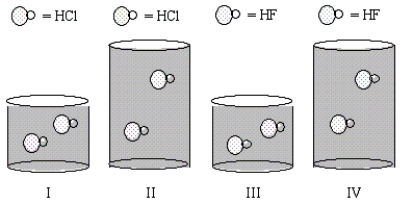
A)All have equal percent ionization of acid.
B)III
C)IV
D)II
E)I
فتح الحزمة
افتح القفل للوصول البطاقات البالغ عددها 148 في هذه المجموعة.
فتح الحزمة
k this deck
19
A 0.10 M solution of a weak monoprotic acid has a pH of 3.40 at 25°C.What is the acid-ionization constant,Ka,for this acid?

A)1.6 × 10⁻⁶
B)4.0 × 10⁻⁴
C)3.4 × 10⁻⁵
D)1.2 × 10⁻³
E)1.8 × 10⁻⁷
فتح الحزمة
افتح القفل للوصول البطاقات البالغ عددها 148 في هذه المجموعة.
فتح الحزمة
k this deck
20
A 0.20 M solution of a weak monoprotic acid is 0.22 % ionized.What is the acid-ionization constant,Ka,for this acid?

A)1.9 × 10⁻⁶
B)2.2 × 10⁻⁶
C)1.1 × 10⁻⁴
D)2.4 × 10⁻⁵
E)9.7 × 10⁻⁷
فتح الحزمة
افتح القفل للوصول البطاقات البالغ عددها 148 في هذه المجموعة.
فتح الحزمة
k this deck
21
What is the equilibrium hydronium ion concentration of an initially 4.5 M solution of hypoiodous acid,HOI,at 25°C (Ka = <strong>What is the equilibrium hydronium ion concentration of an initially 4.5 M solution of hypoiodous acid,HOI,at 25°C (K<sub>a</sub> =   )?</strong> A)   M B)   M C)   M D)   M E)   M )?

A) <strong>What is the equilibrium hydronium ion concentration of an initially 4.5 M solution of hypoiodous acid,HOI,at 25°C (K<sub>a</sub> =   )?</strong> A)   M B)   M C)   M D)   M E)   M M
B) <strong>What is the equilibrium hydronium ion concentration of an initially 4.5 M solution of hypoiodous acid,HOI,at 25°C (K<sub>a</sub> =   )?</strong> A)   M B)   M C)   M D)   M E)   M M
C) <strong>What is the equilibrium hydronium ion concentration of an initially 4.5 M solution of hypoiodous acid,HOI,at 25°C (K<sub>a</sub> =   )?</strong> A)   M B)   M C)   M D)   M E)   M M
D) <strong>What is the equilibrium hydronium ion concentration of an initially 4.5 M solution of hypoiodous acid,HOI,at 25°C (K<sub>a</sub> =   )?</strong> A)   M B)   M C)   M D)   M E)   M M
E) <strong>What is the equilibrium hydronium ion concentration of an initially 4.5 M solution of hypoiodous acid,HOI,at 25°C (K<sub>a</sub> =   )?</strong> A)   M B)   M C)   M D)   M E)   M M
فتح الحزمة
افتح القفل للوصول البطاقات البالغ عددها 148 في هذه المجموعة.
فتح الحزمة
k this deck
22
What is the equilibrium pH of an initially 0.73 M solution of the monoprotic acid benzoic acid at 25°C (Ka = <strong>What is the equilibrium pH of an initially 0.73 M solution of the monoprotic acid benzoic acid at 25°C (K<sub>a</sub> =   )?</strong> A)2.17 B)7.00 C)1.87 D)12.13 E)5.13 )?

A)2.17
B)7.00
C)1.87
D)12.13
E)5.13
فتح الحزمة
افتح القفل للوصول البطاقات البالغ عددها 148 في هذه المجموعة.
فتح الحزمة
k this deck
23
What is the equilibrium percent ionization of an initially 0.32 M solution of the monoprotic acid valeric acid,HC5H9O2,at 25°C (Ka = <strong>What is the equilibrium percent ionization of an initially 0.32 M solution of the monoprotic acid valeric acid,HC<sub>5</sub>H<sub>9</sub>O<sub>2</sub>,at 25°C (K<sub>a</sub> =   )?</strong> A)0.67% B)1.30% C)0.0014% D)0.1% E)2.00% )?

A)0.67%
B)1.30%
C)0.0014%
D)0.1%
E)2.00%
فتح الحزمة
افتح القفل للوصول البطاقات البالغ عددها 148 في هذه المجموعة.
فتح الحزمة
k this deck
24
In a 0.20 M solution of a diprotic acid H2A (Ka1 = 1.3 × 10⁻⁵ and Ka2 = 2.7 × 10⁻¹⁰ at 25°C),what is the equilibrium concentration of A2-?

A)7.3 × 10⁻⁶ M
B)2.7 × 10⁻¹⁰ M
C)1.6 × 10⁻³ M
D)0.40 M
E)0.20 M
فتح الحزمة
افتح القفل للوصول البطاقات البالغ عددها 148 في هذه المجموعة.
فتح الحزمة
k this deck
25
What is Ka for a weak monoprotic acid if a 0.020 M solution of the acid has a pH of 3.28 at 25°C?

A)5.2 × 10⁻²
B)1.4 × 10⁻⁵
C)7.1 × 10⁻²
D)1.0 × 10⁻⁶
E)2.8 × 10⁻⁴
فتح الحزمة
افتح القفل للوصول البطاقات البالغ عددها 148 في هذه المجموعة.
فتح الحزمة
k this deck
26
In a 0.01 M solution of 1,4-butanedicarboxylic acid,HOOCCH2CH2COOH (Ka1 = 2.9 × 10⁻⁵,Ka2 = 5.3 × 10⁻⁶),which species is present in the lowest concentration?

A)(-OOCCH2CH2COO-)(aq)
B)H2O
C)HOOCCH2CH2COO-(aq)
D)H3O+(aq)
E)HOOCCH2CH2COOH(aq)
فتح الحزمة
افتح القفل للوصول البطاقات البالغ عددها 148 في هذه المجموعة.
فتح الحزمة
k this deck
27
What is the pH of a solution prepared by dissolving 0.0163 mol of chloroacetic acid,(HC2H2O2Cl)in 1.30 L of water? For chloroacetic acid,Ka = 1.4 × 10⁻³.

A)1.90
B)2.45
C)11.55
D)12.10
E)2.38
فتح الحزمة
افتح القفل للوصول البطاقات البالغ عددها 148 في هذه المجموعة.
فتح الحزمة
k this deck
28
In a 0.01 M solution of 1,4-butanedicarboxylic acid,HOOCCH2CH2COOH (Ka1 = 2.9 × 10⁻⁵,Ka2 = 5.3 × 10⁻⁶),which species is present in the highest concentration?

A)HOOCCH2CH2COO-(aq)
B)HOOCCH2CH2COOH(aq)
C)H3O+(aq)
D)(-OOCCH2CH2COO-)(aq)
E)OH-(aq)
فتح الحزمة
افتح القفل للوصول البطاقات البالغ عددها 148 في هذه المجموعة.
فتح الحزمة
k this deck
29
What is the equilibrium pH of an initially 4.4 M solution of hypochlorous acid,HOCl,at 25°C (Ka = <strong>What is the equilibrium pH of an initially 4.4 M solution of hypochlorous acid,HOCl,at 25°C (K<sub>a</sub> =   )?</strong> A)3.44 B)7.37 C)10.41 D)10.71 E)4.08 )?

A)3.44
B)7.37
C)10.41
D)10.71
E)4.08
فتح الحزمة
افتح القفل للوصول البطاقات البالغ عددها 148 في هذه المجموعة.
فتح الحزمة
k this deck
30
Carbonic acid,H2CO3,is a weak diprotic acid.In a 0.1 M solution of the acid,which of the following species is present in the largest amount?

A)HCO3-
B)CO32-
C)H2CO3
D)H3O+
E)OH-
فتح الحزمة
افتح القفل للوصول البطاقات البالغ عددها 148 في هذه المجموعة.
فتح الحزمة
k this deck
31
Phosphoric acid,H3PO4,will undergo three successive ionization reactions to varying extents in water.What is the balanced equilibrium identified as Ka3?

A)H2PO4-(aq)+ H2O(l) <strong>Phosphoric acid,H<sub>3</sub>PO<sub>4</sub>,will undergo three successive ionization reactions to varying extents in water.What is the balanced equilibrium identified as K<sub>a3</sub>?</strong> A)H<sub>2</sub>PO<sub>4</sub><sup>-</sup>(aq)+ H<sub>2</sub>O(l)   H<sub>3</sub>O<sup>+</sup>(aq)+ HPO<sub>4</sub><sup>2-</sup>(aq) B)HPO<sub>4</sub><sup>2-</sup>(aq)+ H<sub>2</sub>O(l)   PO<sub>4</sub><sup>3-</sup>(aq)+ H<sub>3</sub>O<sup>+</sup>(aq) C)H<sub>2</sub>PO<sub>4</sub><sup>-</sup>(aq)+ H<sub>3</sub>O<sup>+</sup>(aq)   H<sub>3</sub>PO<sub>4</sub>(aq)+ H<sub>2</sub>O(l) D)H<sub>3</sub>PO<sub>4</sub>(aq)+ H<sub>2</sub>O(l)   H<sub>3</sub>O<sup>+</sup>(aq)+ H<sub>2</sub>PO<sub>4</sub><sup>-</sup>(aq) E)PO<sub>4</sub><sup>3-</sup>(aq)+ H<sub>2</sub>O(l)   HPO<sub>4</sub><sup>2-</sup>(aq)+ OH<sup>-</sup>(aq) H3O+(aq)+ HPO42-(aq)
B)HPO42-(aq)+ H2O(l) <strong>Phosphoric acid,H<sub>3</sub>PO<sub>4</sub>,will undergo three successive ionization reactions to varying extents in water.What is the balanced equilibrium identified as K<sub>a3</sub>?</strong> A)H<sub>2</sub>PO<sub>4</sub><sup>-</sup>(aq)+ H<sub>2</sub>O(l)   H<sub>3</sub>O<sup>+</sup>(aq)+ HPO<sub>4</sub><sup>2-</sup>(aq) B)HPO<sub>4</sub><sup>2-</sup>(aq)+ H<sub>2</sub>O(l)   PO<sub>4</sub><sup>3-</sup>(aq)+ H<sub>3</sub>O<sup>+</sup>(aq) C)H<sub>2</sub>PO<sub>4</sub><sup>-</sup>(aq)+ H<sub>3</sub>O<sup>+</sup>(aq)   H<sub>3</sub>PO<sub>4</sub>(aq)+ H<sub>2</sub>O(l) D)H<sub>3</sub>PO<sub>4</sub>(aq)+ H<sub>2</sub>O(l)   H<sub>3</sub>O<sup>+</sup>(aq)+ H<sub>2</sub>PO<sub>4</sub><sup>-</sup>(aq) E)PO<sub>4</sub><sup>3-</sup>(aq)+ H<sub>2</sub>O(l)   HPO<sub>4</sub><sup>2-</sup>(aq)+ OH<sup>-</sup>(aq) PO43-(aq)+ H3O+(aq)
C)H2PO4-(aq)+ H3O+(aq) <strong>Phosphoric acid,H<sub>3</sub>PO<sub>4</sub>,will undergo three successive ionization reactions to varying extents in water.What is the balanced equilibrium identified as K<sub>a3</sub>?</strong> A)H<sub>2</sub>PO<sub>4</sub><sup>-</sup>(aq)+ H<sub>2</sub>O(l)   H<sub>3</sub>O<sup>+</sup>(aq)+ HPO<sub>4</sub><sup>2-</sup>(aq) B)HPO<sub>4</sub><sup>2-</sup>(aq)+ H<sub>2</sub>O(l)   PO<sub>4</sub><sup>3-</sup>(aq)+ H<sub>3</sub>O<sup>+</sup>(aq) C)H<sub>2</sub>PO<sub>4</sub><sup>-</sup>(aq)+ H<sub>3</sub>O<sup>+</sup>(aq)   H<sub>3</sub>PO<sub>4</sub>(aq)+ H<sub>2</sub>O(l) D)H<sub>3</sub>PO<sub>4</sub>(aq)+ H<sub>2</sub>O(l)   H<sub>3</sub>O<sup>+</sup>(aq)+ H<sub>2</sub>PO<sub>4</sub><sup>-</sup>(aq) E)PO<sub>4</sub><sup>3-</sup>(aq)+ H<sub>2</sub>O(l)   HPO<sub>4</sub><sup>2-</sup>(aq)+ OH<sup>-</sup>(aq) H3PO4(aq)+ H2O(l)
D)H3PO4(aq)+ H2O(l) <strong>Phosphoric acid,H<sub>3</sub>PO<sub>4</sub>,will undergo three successive ionization reactions to varying extents in water.What is the balanced equilibrium identified as K<sub>a3</sub>?</strong> A)H<sub>2</sub>PO<sub>4</sub><sup>-</sup>(aq)+ H<sub>2</sub>O(l)   H<sub>3</sub>O<sup>+</sup>(aq)+ HPO<sub>4</sub><sup>2-</sup>(aq) B)HPO<sub>4</sub><sup>2-</sup>(aq)+ H<sub>2</sub>O(l)   PO<sub>4</sub><sup>3-</sup>(aq)+ H<sub>3</sub>O<sup>+</sup>(aq) C)H<sub>2</sub>PO<sub>4</sub><sup>-</sup>(aq)+ H<sub>3</sub>O<sup>+</sup>(aq)   H<sub>3</sub>PO<sub>4</sub>(aq)+ H<sub>2</sub>O(l) D)H<sub>3</sub>PO<sub>4</sub>(aq)+ H<sub>2</sub>O(l)   H<sub>3</sub>O<sup>+</sup>(aq)+ H<sub>2</sub>PO<sub>4</sub><sup>-</sup>(aq) E)PO<sub>4</sub><sup>3-</sup>(aq)+ H<sub>2</sub>O(l)   HPO<sub>4</sub><sup>2-</sup>(aq)+ OH<sup>-</sup>(aq) H3O+(aq)+ H2PO4-(aq)
E)PO43-(aq)+ H2O(l) <strong>Phosphoric acid,H<sub>3</sub>PO<sub>4</sub>,will undergo three successive ionization reactions to varying extents in water.What is the balanced equilibrium identified as K<sub>a3</sub>?</strong> A)H<sub>2</sub>PO<sub>4</sub><sup>-</sup>(aq)+ H<sub>2</sub>O(l)   H<sub>3</sub>O<sup>+</sup>(aq)+ HPO<sub>4</sub><sup>2-</sup>(aq) B)HPO<sub>4</sub><sup>2-</sup>(aq)+ H<sub>2</sub>O(l)   PO<sub>4</sub><sup>3-</sup>(aq)+ H<sub>3</sub>O<sup>+</sup>(aq) C)H<sub>2</sub>PO<sub>4</sub><sup>-</sup>(aq)+ H<sub>3</sub>O<sup>+</sup>(aq)   H<sub>3</sub>PO<sub>4</sub>(aq)+ H<sub>2</sub>O(l) D)H<sub>3</sub>PO<sub>4</sub>(aq)+ H<sub>2</sub>O(l)   H<sub>3</sub>O<sup>+</sup>(aq)+ H<sub>2</sub>PO<sub>4</sub><sup>-</sup>(aq) E)PO<sub>4</sub><sup>3-</sup>(aq)+ H<sub>2</sub>O(l)   HPO<sub>4</sub><sup>2-</sup>(aq)+ OH<sup>-</sup>(aq) HPO42-(aq)+ OH-(aq)
فتح الحزمة
افتح القفل للوصول البطاقات البالغ عددها 148 في هذه المجموعة.
فتح الحزمة
k this deck
32
For a 0.05 M H2SO3 solution,which of the following relationships is true?

A)[SO32-] > [H2SO3]
B)[SO32-] > [HSO3-]
C)[HSO3-] > [H2SO3]
D)[H2SO3] > [H+]
E)[H+] > [H2SO3]
فتح الحزمة
افتح القفل للوصول البطاقات البالغ عددها 148 في هذه المجموعة.
فتح الحزمة
k this deck
33
A 8.42-g sample of homogentisic acid,a weak organic acid having Ka = 4.0 × 10⁻⁵,is dissolved in 35.00 mL of water and its pH is measured to be 2.122.What is the molar mass of homogentisic acid?

A)168 g/mol
B)1110 g/mol
C)1.43 g/mol
D)5.88 g/mol
E)240 g/mol
فتح الحزمة
افتح القفل للوصول البطاقات البالغ عددها 148 في هذه المجموعة.
فتح الحزمة
k this deck
34
What is the equilibrium concentration of chloroacetic acid,HC2H2O2Cl,in a solution prepared by dissolving 0.0271 mol of HC2H2O2Cl in 1.50 L of water? For chloroacetic acid,Ka = 1.4 × 10⁻³.

A)4.38 × 10⁻³ M
B)1.81 × 10⁻² M
C)5.03 × 10⁻³ M
D)1.37 × 10⁻² M
E)9.03 × 10⁻³ M
فتح الحزمة
افتح القفل للوصول البطاقات البالغ عددها 148 في هذه المجموعة.
فتح الحزمة
k this deck
35
Which of the following represents the usual relationship of acid-ionization constants for a triprotic acid?

A) <strong>Which of the following represents the usual relationship of acid-ionization constants for a triprotic acid?</strong> A)   B)   C)   D)   E)

B) <strong>Which of the following represents the usual relationship of acid-ionization constants for a triprotic acid?</strong> A)   B)   C)   D)   E)
C) <strong>Which of the following represents the usual relationship of acid-ionization constants for a triprotic acid?</strong> A)   B)   C)   D)   E)
D) <strong>Which of the following represents the usual relationship of acid-ionization constants for a triprotic acid?</strong> A)   B)   C)   D)   E)
E) <strong>Which of the following represents the usual relationship of acid-ionization constants for a triprotic acid?</strong> A)   B)   C)   D)   E)
فتح الحزمة
افتح القفل للوصول البطاقات البالغ عددها 148 في هذه المجموعة.
فتح الحزمة
k this deck
36
It is safe to make the simplifying assumption that x can be neglected in the denominator of the equilibrium equation when

A) <strong>It is safe to make the simplifying assumption that x can be neglected in the denominator of the equilibrium equation when</strong> A)   . B)   . C)   . D)   . E)   . .
B) <strong>It is safe to make the simplifying assumption that x can be neglected in the denominator of the equilibrium equation when</strong> A)   . B)   . C)   . D)   . E)   . .
C) <strong>It is safe to make the simplifying assumption that x can be neglected in the denominator of the equilibrium equation when</strong> A)   . B)   . C)   . D)   . E)   . .
D) <strong>It is safe to make the simplifying assumption that x can be neglected in the denominator of the equilibrium equation when</strong> A)   . B)   . C)   . D)   . E)   . .
E) <strong>It is safe to make the simplifying assumption that x can be neglected in the denominator of the equilibrium equation when</strong> A)   . B)   . C)   . D)   . E)   . .
فتح الحزمة
افتح القفل للوصول البطاقات البالغ عددها 148 في هذه المجموعة.
فتح الحزمة
k this deck
37
What is the percent ionization of a solution prepared by dissolving 0.0175 mol of chloroacetic acid,(HC2H2O2Cl)in 1.30 L of water? For chloroacetic acid,Ka = 1.4 × 10⁻³.

A)1.3 %
B)100 %
C)27 %
D)72 %
E)0.36 %
فتح الحزمة
افتح القفل للوصول البطاقات البالغ عددها 148 في هذه المجموعة.
فتح الحزمة
k this deck
38
For a 0.10 M solution of glutaric acid,HO2C(CH2)3CO2H (Ka1 = 4.6 × 10⁻⁵,Ka2 = 3.9 × 10⁻⁶),rank the following species in order of increasing equilibrium concentration.

A)H3O+ < -O2C(CH2)3COO- < HO2C(CH2)3COO- < OH- < HO2C(CH2)3CO2H
B)OH- < -O2C(CH2)3COO- < H3O+ < HO2C(CH2)3COO- < HO2C(CH2)3CO2H
C)OH- < -O2C(CH2)3COO- < HO2C(CH2)3COO- < H3O+ < HO2C(CH2)3CO2H
D)H3O+ < HO2C(CH2)3CO2H < HO2C(CH2)3COO- < -O2C(CH2)3COO- < OH-
E)OH- < -O2C(CH2)3COO- < HO2C(CH2)3COO- < HO2C(CH2)3CO2H < H3O+
فتح الحزمة
افتح القفل للوصول البطاقات البالغ عددها 148 في هذه المجموعة.
فتح الحزمة
k this deck
39
What is the hydronium-ion concentration of a 0.30 M solution of HCN (Ka = 4.9 × 10⁻¹⁰)at 25°C?

A)1.7 × 10⁻⁴ M
B)3.4 × 10⁻⁶ M
C)2.2 × 10⁻⁶ M
D)1.2 × 10⁻⁵ M
E)4.0 × 10⁻⁵ M
فتح الحزمة
افتح القفل للوصول البطاقات البالغ عددها 148 في هذه المجموعة.
فتح الحزمة
k this deck
40
The equilibrium hydronium ion concentration of an initially 0.655 M solution of a monoprotic weak acid is <strong>The equilibrium hydronium ion concentration of an initially 0.655 M solution of a monoprotic weak acid is   M.The acid dissociation constant is   At 25°C.What is the pH of this solution?</strong> A)2.26 B)7.00 C)11.74 D)4.52 E)0.18 M.The acid dissociation constant is <strong>The equilibrium hydronium ion concentration of an initially 0.655 M solution of a monoprotic weak acid is   M.The acid dissociation constant is   At 25°C.What is the pH of this solution?</strong> A)2.26 B)7.00 C)11.74 D)4.52 E)0.18
At 25°C.What is the pH of this solution?

A)2.26
B)7.00
C)11.74
D)4.52
E)0.18
فتح الحزمة
افتح القفل للوصول البطاقات البالغ عددها 148 في هذه المجموعة.
فتح الحزمة
k this deck
41
What is the hydronium-ion concentration of a 0.210 M oxalic acid,H2C2O4,solution? For oxalic acid,Ka1 = 5.6 × 10⁻² and Ka2 = 5.1 × 10⁻⁵.

A)8.4 × 10⁻² M
B)1.1 × 10⁻¹ M
C)1.0 × 10⁻⁷ M
D)3.2 × 10⁻³ M
E)3.3 × 10⁻³ M
فتح الحزمة
افتح القفل للوصول البطاقات البالغ عددها 148 في هذه المجموعة.
فتح الحزمة
k this deck
42
Which of the following reactions is associated with the definition of Kb?

A)CN-(aq)+ H+(aq) <strong>Which of the following reactions is associated with the definition of K<sub>b</sub>?</strong> A)CN<sup>-</sup>(aq)+ H<sup>+</sup>(aq)   HCN(aq) B)F<sup>-</sup>(aq)+ H<sub>2</sub>O(l)   HF(aq)+ OH<sup>-</sup>(aq) C)Zn(OH<sub>2</sub>)<sub>6</sub><sup>2+</sup>(aq)   [Zn(OH<sub>2</sub>)<sub>5</sub>OH]<sup>+</sup>(aq)+ H<sup>+</sup>(aq) D)Cr<sup>3+</sup>(aq)+ 6H<sub>2</sub>O(l)   Cr(OH<sub>2</sub>)<sub>6</sub><sup>3+</sup>(aq) E)none of these HCN(aq)
B)F-(aq)+ H2O(l) <strong>Which of the following reactions is associated with the definition of K<sub>b</sub>?</strong> A)CN<sup>-</sup>(aq)+ H<sup>+</sup>(aq)   HCN(aq) B)F<sup>-</sup>(aq)+ H<sub>2</sub>O(l)   HF(aq)+ OH<sup>-</sup>(aq) C)Zn(OH<sub>2</sub>)<sub>6</sub><sup>2+</sup>(aq)   [Zn(OH<sub>2</sub>)<sub>5</sub>OH]<sup>+</sup>(aq)+ H<sup>+</sup>(aq) D)Cr<sup>3+</sup>(aq)+ 6H<sub>2</sub>O(l)   Cr(OH<sub>2</sub>)<sub>6</sub><sup>3+</sup>(aq) E)none of these HF(aq)+ OH-(aq)
C)Zn(OH2)62+(aq) <strong>Which of the following reactions is associated with the definition of K<sub>b</sub>?</strong> A)CN<sup>-</sup>(aq)+ H<sup>+</sup>(aq)   HCN(aq) B)F<sup>-</sup>(aq)+ H<sub>2</sub>O(l)   HF(aq)+ OH<sup>-</sup>(aq) C)Zn(OH<sub>2</sub>)<sub>6</sub><sup>2+</sup>(aq)   [Zn(OH<sub>2</sub>)<sub>5</sub>OH]<sup>+</sup>(aq)+ H<sup>+</sup>(aq) D)Cr<sup>3+</sup>(aq)+ 6H<sub>2</sub>O(l)   Cr(OH<sub>2</sub>)<sub>6</sub><sup>3+</sup>(aq) E)none of these [Zn(OH2)5OH]+(aq)+ H+(aq)
D)Cr3+(aq)+ 6H2O(l) <strong>Which of the following reactions is associated with the definition of K<sub>b</sub>?</strong> A)CN<sup>-</sup>(aq)+ H<sup>+</sup>(aq)   HCN(aq) B)F<sup>-</sup>(aq)+ H<sub>2</sub>O(l)   HF(aq)+ OH<sup>-</sup>(aq) C)Zn(OH<sub>2</sub>)<sub>6</sub><sup>2+</sup>(aq)   [Zn(OH<sub>2</sub>)<sub>5</sub>OH]<sup>+</sup>(aq)+ H<sup>+</sup>(aq) D)Cr<sup>3+</sup>(aq)+ 6H<sub>2</sub>O(l)   Cr(OH<sub>2</sub>)<sub>6</sub><sup>3+</sup>(aq) E)none of these Cr(OH2)63+(aq)
E)none of these
فتح الحزمة
افتح القفل للوصول البطاقات البالغ عددها 148 في هذه المجموعة.
فتح الحزمة
k this deck
43
What is the pH of a 0.35 M solution of methylamine (CH3NH2,Kb = 4.4 × 10⁻⁴)at 25oC?

A)5.55
B)0.46
C)12.09
D)13.54
E)1.91
فتح الحزمة
افتح القفل للوصول البطاقات البالغ عددها 148 في هذه المجموعة.
فتح الحزمة
k this deck
44
What is the concentration of C2O42- in a 0.370 M oxalic acid,H2C2O4,solution? For oxalic acid,Ka1 = 5.6 × 10⁻² and Ka2 = 5.1 × 10⁻⁵.

A)1.2 × 10⁻¹ M
B)-3 × 10⁻³ M
C)4.3 × 10⁻³ M
D)5.1 × 10⁻⁵ M
E)1.4 × 10⁻¹ M
فتح الحزمة
افتح القفل للوصول البطاقات البالغ عددها 148 في هذه المجموعة.
فتح الحزمة
k this deck
45
What is the concentration of HC2O4- in a 0.300 M oxalic acid,H2C2O4,solution? For oxalic acid,Ka1 = 5.6 × 10⁻² and Ka2 = 5.1 × 10⁻⁵.

A)3.9× 10⁻³ M
B)1.0 × 10⁻¹ M
C)1.3 × 10⁻¹ M
D)3.9 × 10⁻³ M
E)5.1 × 10⁻⁵ M
فتح الحزمة
افتح القفل للوصول البطاقات البالغ عددها 148 في هذه المجموعة.
فتح الحزمة
k this deck
46
What is the equilibrium concentration of H2C2O4 in a 0.370 M oxalic acid,H2C2O4,solution? For oxalic acid,Ka1 = 5.6 × 10⁻² and Ka2 = 5.1 × 10⁻⁵.

A)2.5 × 10⁻¹ M
B)1.4 × 10⁻¹ M
C)3.7 × 10⁻¹ M
D)5.1 × 10⁻⁵ M
E)1.2 × 10⁻¹ M
فتح الحزمة
افتح القفل للوصول البطاقات البالغ عددها 148 في هذه المجموعة.
فتح الحزمة
k this deck
47
A solution of aniline (C6H5NH2,Kb = 4.2 × 10⁻¹⁰)has a pH of 8.56 at 25oC.What was the initial concentration of aniline?

A)2.8 × 10⁻⁹ M
B)2.1 × 10⁻⁸ M
C)3.2 × 10⁻² M
D)4.2 × 10⁻¹⁰ M
E)3.6 × 10⁻⁶ M
فتح الحزمة
افتح القفل للوصول البطاقات البالغ عددها 148 في هذه المجموعة.
فتح الحزمة
k this deck
48
What is the concentration of HCO3- in a 0.010 M solution of carbonic acid,H2CO3? For carbonic acid,Ka1 = 4.2 × 10⁻⁷ and Ka2 = 4.8 × 10⁻¹¹.

A)6.5 × 10⁻⁵ M
B)1.0 × 10⁻² M
C)3.2 × 10⁻⁵ M
D)4.8 × 10⁻¹¹ M
E)4.2 × 10⁻⁷ M
فتح الحزمة
افتح القفل للوصول البطاقات البالغ عددها 148 في هذه المجموعة.
فتح الحزمة
k this deck
49
What is the percent ionization at equilibrium in a 0.10 M solution of dimethylamine,(CH3)2NH (Kb = 5.1 × 10⁻⁴),at 25oC?

A)6.8%
B)0.51%
C)0.68%
D)100%
E)10%
فتح الحزمة
افتح القفل للوصول البطاقات البالغ عددها 148 في هذه المجموعة.
فتح الحزمة
k this deck
50
What is the hydroxide-ion concentration of a 0.150 M oxalic acid,H2C2O4,solution? For oxalic acid,Ka1 = 5.6 × 10⁻² and Ka2 = 5.1 × 10⁻⁵.

A)3.6 × 10⁻¹² M
B)1.1 × 10⁻¹³ M
C)2.7 × 10⁻³ M
D)1.5 × 10⁻¹³ M
E)1.0 × 10⁻⁷ M
فتح الحزمة
افتح القفل للوصول البطاقات البالغ عددها 148 في هذه المجموعة.
فتح الحزمة
k this deck
51
For which of the following equilibria does Kc correspond to the base-ionization constant,Kb,of HCO3-?

A)HCO3-(aq)+ H2O(l) <strong>For which of the following equilibria does K<sub>c</sub> correspond to the base-ionization constant,K<sub>b</sub>,of HCO<sub>3</sub><sup>-</sup>?</strong> A)HCO<sub>3</sub><sup>-</sup>(aq)+ H<sub>2</sub>O(l)   CO<sub>3</sub><sup>2-</sup>(aq)+ H<sub>3</sub>O<sup>+</sup>(aq) B)HCO<sub>3</sub><sup>-</sup>(aq)+ H<sub>2</sub>O(l)   H<sub>2</sub>CO<sub>3</sub>(aq)+ OH<sup>-</sup>(aq) C)H<sub>2</sub>CO<sub>3</sub>(aq)+ H<sub>2</sub>O(l)   HCO<sub>3</sub><sup>-</sup>(aq)+ H<sub>3</sub>O<sup>+</sup>(aq) D)HCO<sub>3</sub><sup>-</sup>(aq)+ OH<sup>-</sup>(aq)   CO<sub>3</sub><sup>2-</sup>(aq)+ H<sub>2</sub>O(l) E)HCO<sub>3</sub><sup>-</sup>(aq)+ H<sub>3</sub>O<sup>+</sup>(aq)   H<sub>2</sub>CO<sub>3</sub>(aq)+ H<sub>2</sub>O(l) CO32-(aq)+ H3O+(aq)
B)HCO3-(aq)+ H2O(l) <strong>For which of the following equilibria does K<sub>c</sub> correspond to the base-ionization constant,K<sub>b</sub>,of HCO<sub>3</sub><sup>-</sup>?</strong> A)HCO<sub>3</sub><sup>-</sup>(aq)+ H<sub>2</sub>O(l)   CO<sub>3</sub><sup>2-</sup>(aq)+ H<sub>3</sub>O<sup>+</sup>(aq) B)HCO<sub>3</sub><sup>-</sup>(aq)+ H<sub>2</sub>O(l)   H<sub>2</sub>CO<sub>3</sub>(aq)+ OH<sup>-</sup>(aq) C)H<sub>2</sub>CO<sub>3</sub>(aq)+ H<sub>2</sub>O(l)   HCO<sub>3</sub><sup>-</sup>(aq)+ H<sub>3</sub>O<sup>+</sup>(aq) D)HCO<sub>3</sub><sup>-</sup>(aq)+ OH<sup>-</sup>(aq)   CO<sub>3</sub><sup>2-</sup>(aq)+ H<sub>2</sub>O(l) E)HCO<sub>3</sub><sup>-</sup>(aq)+ H<sub>3</sub>O<sup>+</sup>(aq)   H<sub>2</sub>CO<sub>3</sub>(aq)+ H<sub>2</sub>O(l) H2CO3(aq)+ OH-(aq)
C)H2CO3(aq)+ H2O(l) <strong>For which of the following equilibria does K<sub>c</sub> correspond to the base-ionization constant,K<sub>b</sub>,of HCO<sub>3</sub><sup>-</sup>?</strong> A)HCO<sub>3</sub><sup>-</sup>(aq)+ H<sub>2</sub>O(l)   CO<sub>3</sub><sup>2-</sup>(aq)+ H<sub>3</sub>O<sup>+</sup>(aq) B)HCO<sub>3</sub><sup>-</sup>(aq)+ H<sub>2</sub>O(l)   H<sub>2</sub>CO<sub>3</sub>(aq)+ OH<sup>-</sup>(aq) C)H<sub>2</sub>CO<sub>3</sub>(aq)+ H<sub>2</sub>O(l)   HCO<sub>3</sub><sup>-</sup>(aq)+ H<sub>3</sub>O<sup>+</sup>(aq) D)HCO<sub>3</sub><sup>-</sup>(aq)+ OH<sup>-</sup>(aq)   CO<sub>3</sub><sup>2-</sup>(aq)+ H<sub>2</sub>O(l) E)HCO<sub>3</sub><sup>-</sup>(aq)+ H<sub>3</sub>O<sup>+</sup>(aq)   H<sub>2</sub>CO<sub>3</sub>(aq)+ H<sub>2</sub>O(l) HCO3-(aq)+ H3O+(aq)
D)HCO3-(aq)+ OH-(aq) <strong>For which of the following equilibria does K<sub>c</sub> correspond to the base-ionization constant,K<sub>b</sub>,of HCO<sub>3</sub><sup>-</sup>?</strong> A)HCO<sub>3</sub><sup>-</sup>(aq)+ H<sub>2</sub>O(l)   CO<sub>3</sub><sup>2-</sup>(aq)+ H<sub>3</sub>O<sup>+</sup>(aq) B)HCO<sub>3</sub><sup>-</sup>(aq)+ H<sub>2</sub>O(l)   H<sub>2</sub>CO<sub>3</sub>(aq)+ OH<sup>-</sup>(aq) C)H<sub>2</sub>CO<sub>3</sub>(aq)+ H<sub>2</sub>O(l)   HCO<sub>3</sub><sup>-</sup>(aq)+ H<sub>3</sub>O<sup>+</sup>(aq) D)HCO<sub>3</sub><sup>-</sup>(aq)+ OH<sup>-</sup>(aq)   CO<sub>3</sub><sup>2-</sup>(aq)+ H<sub>2</sub>O(l) E)HCO<sub>3</sub><sup>-</sup>(aq)+ H<sub>3</sub>O<sup>+</sup>(aq)   H<sub>2</sub>CO<sub>3</sub>(aq)+ H<sub>2</sub>O(l) CO32-(aq)+ H2O(l)
E)HCO3-(aq)+ H3O+(aq) <strong>For which of the following equilibria does K<sub>c</sub> correspond to the base-ionization constant,K<sub>b</sub>,of HCO<sub>3</sub><sup>-</sup>?</strong> A)HCO<sub>3</sub><sup>-</sup>(aq)+ H<sub>2</sub>O(l)   CO<sub>3</sub><sup>2-</sup>(aq)+ H<sub>3</sub>O<sup>+</sup>(aq) B)HCO<sub>3</sub><sup>-</sup>(aq)+ H<sub>2</sub>O(l)   H<sub>2</sub>CO<sub>3</sub>(aq)+ OH<sup>-</sup>(aq) C)H<sub>2</sub>CO<sub>3</sub>(aq)+ H<sub>2</sub>O(l)   HCO<sub>3</sub><sup>-</sup>(aq)+ H<sub>3</sub>O<sup>+</sup>(aq) D)HCO<sub>3</sub><sup>-</sup>(aq)+ OH<sup>-</sup>(aq)   CO<sub>3</sub><sup>2-</sup>(aq)+ H<sub>2</sub>O(l) E)HCO<sub>3</sub><sup>-</sup>(aq)+ H<sub>3</sub>O<sup>+</sup>(aq)   H<sub>2</sub>CO<sub>3</sub>(aq)+ H<sub>2</sub>O(l) H2CO3(aq)+ H2O(l)
فتح الحزمة
افتح القفل للوصول البطاقات البالغ عددها 148 في هذه المجموعة.
فتح الحزمة
k this deck
52
What is the hydronium-ion concentration at equilibrium in a 0.10 M solution of aniline (C6H5NH2,Kb = 4.2 × 10⁻¹⁰)at 25oC?

A)1.0 × 10⁻¹³ M
B)1.0 × 10⁻¹ M
C)1.5 × 10⁻⁹ M
D)6.5 × 10⁻⁶ M
E)6.5 × 10⁻⁵ M
فتح الحزمة
افتح القفل للوصول البطاقات البالغ عددها 148 في هذه المجموعة.
فتح الحزمة
k this deck
53
What is the equilibrium concentration of ammonium ion in a 0.33 M solution of ammonia (NH3,Kb = 1.8 × 10⁻⁵)at 25oC?

A)3.0 × 10⁻¹⁴ M
B)4.1 × 10⁻¹² M
C)2.4 × 10⁻³ M
D)7.4 × 10⁻³ M
E)3.3 × 10⁻¹ M
فتح الحزمة
افتح القفل للوصول البطاقات البالغ عددها 148 في هذه المجموعة.
فتح الحزمة
k this deck
54
What is the hydroxide-ion concentration at equilibrium in a 0.66 M solution of ethylamine (C2H5NH2,Kb = 4.7 × 10⁻⁴)at 25oC?

A)1.7 × 10⁻² M
B)2.7 × 10⁻² M
C)1.5 × 10⁻¹⁴ M
D)5.8 × 10⁻¹³ M
E)6.6 × 10⁻¹ M
فتح الحزمة
افتح القفل للوصول البطاقات البالغ عددها 148 في هذه المجموعة.
فتح الحزمة
k this deck
55
What is the pOH of a 0.17 M solution of pyridine (Kb = 1.4 × 10⁻⁹)at 25°C?

A)1.54
B)4.04
C)8.85
D)4.81
E)11.08
فتح الحزمة
افتح القفل للوصول البطاقات البالغ عددها 148 في هذه المجموعة.
فتح الحزمة
k this deck
56
For which of the following equilibria does Kc correspond to a base-ionization constant,Kb?

A)H3O+(aq)+ OH-(aq) <strong>For which of the following equilibria does K<sub>c</sub> correspond to a base-ionization constant,K<sub>b</sub>?</strong> A)H<sub>3</sub>O<sup>+</sup>(aq)+ OH<sup>-</sup>(aq)   2H<sub>2</sub>O(l) B)HCO<sub>3</sub><sup>-</sup>(aq)+ OH<sup>-</sup>(aq)   CO<sub>3</sub><sup>2-</sup>(aq)+ H<sub>2</sub>O(l) C)HOCl(aq)+ H<sub>2</sub>O(l)   H<sub>3</sub>O<sup>+</sup>(aq)+ OCl<sup>-</sup>(aq) D)CO<sub>3</sub><sup>2-</sup>(aq)+ H<sub>2</sub>O(l)   HCO<sub>3</sub><sup>-</sup>(aq)+ OH<sup>-</sup>(aq) E)HCHO<sub>2</sub>(aq)+ NH<sub>3</sub>(aq)   CHO<sub>2</sub><sup>-</sup>(aq)+ NH<sub>4</sub><sup>+</sup>(aq) 2H2O(l)
B)HCO3-(aq)+ OH-(aq) <strong>For which of the following equilibria does K<sub>c</sub> correspond to a base-ionization constant,K<sub>b</sub>?</strong> A)H<sub>3</sub>O<sup>+</sup>(aq)+ OH<sup>-</sup>(aq)   2H<sub>2</sub>O(l) B)HCO<sub>3</sub><sup>-</sup>(aq)+ OH<sup>-</sup>(aq)   CO<sub>3</sub><sup>2-</sup>(aq)+ H<sub>2</sub>O(l) C)HOCl(aq)+ H<sub>2</sub>O(l)   H<sub>3</sub>O<sup>+</sup>(aq)+ OCl<sup>-</sup>(aq) D)CO<sub>3</sub><sup>2-</sup>(aq)+ H<sub>2</sub>O(l)   HCO<sub>3</sub><sup>-</sup>(aq)+ OH<sup>-</sup>(aq) E)HCHO<sub>2</sub>(aq)+ NH<sub>3</sub>(aq)   CHO<sub>2</sub><sup>-</sup>(aq)+ NH<sub>4</sub><sup>+</sup>(aq) CO32-(aq)+ H2O(l)
C)HOCl(aq)+ H2O(l) <strong>For which of the following equilibria does K<sub>c</sub> correspond to a base-ionization constant,K<sub>b</sub>?</strong> A)H<sub>3</sub>O<sup>+</sup>(aq)+ OH<sup>-</sup>(aq)   2H<sub>2</sub>O(l) B)HCO<sub>3</sub><sup>-</sup>(aq)+ OH<sup>-</sup>(aq)   CO<sub>3</sub><sup>2-</sup>(aq)+ H<sub>2</sub>O(l) C)HOCl(aq)+ H<sub>2</sub>O(l)   H<sub>3</sub>O<sup>+</sup>(aq)+ OCl<sup>-</sup>(aq) D)CO<sub>3</sub><sup>2-</sup>(aq)+ H<sub>2</sub>O(l)   HCO<sub>3</sub><sup>-</sup>(aq)+ OH<sup>-</sup>(aq) E)HCHO<sub>2</sub>(aq)+ NH<sub>3</sub>(aq)   CHO<sub>2</sub><sup>-</sup>(aq)+ NH<sub>4</sub><sup>+</sup>(aq) H3O+(aq)+ OCl-(aq)
D)CO32-(aq)+ H2O(l) <strong>For which of the following equilibria does K<sub>c</sub> correspond to a base-ionization constant,K<sub>b</sub>?</strong> A)H<sub>3</sub>O<sup>+</sup>(aq)+ OH<sup>-</sup>(aq)   2H<sub>2</sub>O(l) B)HCO<sub>3</sub><sup>-</sup>(aq)+ OH<sup>-</sup>(aq)   CO<sub>3</sub><sup>2-</sup>(aq)+ H<sub>2</sub>O(l) C)HOCl(aq)+ H<sub>2</sub>O(l)   H<sub>3</sub>O<sup>+</sup>(aq)+ OCl<sup>-</sup>(aq) D)CO<sub>3</sub><sup>2-</sup>(aq)+ H<sub>2</sub>O(l)   HCO<sub>3</sub><sup>-</sup>(aq)+ OH<sup>-</sup>(aq) E)HCHO<sub>2</sub>(aq)+ NH<sub>3</sub>(aq)   CHO<sub>2</sub><sup>-</sup>(aq)+ NH<sub>4</sub><sup>+</sup>(aq) HCO3-(aq)+ OH-(aq)
E)HCHO2(aq)+ NH3(aq) <strong>For which of the following equilibria does K<sub>c</sub> correspond to a base-ionization constant,K<sub>b</sub>?</strong> A)H<sub>3</sub>O<sup>+</sup>(aq)+ OH<sup>-</sup>(aq)   2H<sub>2</sub>O(l) B)HCO<sub>3</sub><sup>-</sup>(aq)+ OH<sup>-</sup>(aq)   CO<sub>3</sub><sup>2-</sup>(aq)+ H<sub>2</sub>O(l) C)HOCl(aq)+ H<sub>2</sub>O(l)   H<sub>3</sub>O<sup>+</sup>(aq)+ OCl<sup>-</sup>(aq) D)CO<sub>3</sub><sup>2-</sup>(aq)+ H<sub>2</sub>O(l)   HCO<sub>3</sub><sup>-</sup>(aq)+ OH<sup>-</sup>(aq) E)HCHO<sub>2</sub>(aq)+ NH<sub>3</sub>(aq)   CHO<sub>2</sub><sup>-</sup>(aq)+ NH<sub>4</sub><sup>+</sup>(aq) CHO2-(aq)+ NH4+(aq)
فتح الحزمة
افتح القفل للوصول البطاقات البالغ عددها 148 في هذه المجموعة.
فتح الحزمة
k this deck
57
The equilibrium hydronium ion concentration of an initially 0.510 M solution of a diprotic weak acid (H2A)is <strong>The equilibrium hydronium ion concentration of an initially 0.510 M solution of a diprotic weak acid (H<sub>2</sub>A)is   M.What is K<sub>a1</sub>? (assume C<sub>a</sub>/K<sub>a</sub> ≥ 10<sup>2</sup> and K<sub>a1</sub> >> K<sub>a2</sub>)</strong> A)   B)   C)   D)   E)not enough information provided M.What is Ka1? (assume Ca/Ka ≥ 102 and Ka1 >> Ka2)

A) <strong>The equilibrium hydronium ion concentration of an initially 0.510 M solution of a diprotic weak acid (H<sub>2</sub>A)is   M.What is K<sub>a1</sub>? (assume C<sub>a</sub>/K<sub>a</sub> ≥ 10<sup>2</sup> and K<sub>a1</sub> >> K<sub>a2</sub>)</strong> A)   B)   C)   D)   E)not enough information provided
B) <strong>The equilibrium hydronium ion concentration of an initially 0.510 M solution of a diprotic weak acid (H<sub>2</sub>A)is   M.What is K<sub>a1</sub>? (assume C<sub>a</sub>/K<sub>a</sub> ≥ 10<sup>2</sup> and K<sub>a1</sub> >> K<sub>a2</sub>)</strong> A)   B)   C)   D)   E)not enough information provided
C) <strong>The equilibrium hydronium ion concentration of an initially 0.510 M solution of a diprotic weak acid (H<sub>2</sub>A)is   M.What is K<sub>a1</sub>? (assume C<sub>a</sub>/K<sub>a</sub> ≥ 10<sup>2</sup> and K<sub>a1</sub> >> K<sub>a2</sub>)</strong> A)   B)   C)   D)   E)not enough information provided
D) <strong>The equilibrium hydronium ion concentration of an initially 0.510 M solution of a diprotic weak acid (H<sub>2</sub>A)is   M.What is K<sub>a1</sub>? (assume C<sub>a</sub>/K<sub>a</sub> ≥ 10<sup>2</sup> and K<sub>a1</sub> >> K<sub>a2</sub>)</strong> A)   B)   C)   D)   E)not enough information provided
E)not enough information provided
فتح الحزمة
افتح القفل للوصول البطاقات البالغ عددها 148 في هذه المجموعة.
فتح الحزمة
k this deck
58
What is the hydronium-ion concentration in a 0.018 M solution of carbonic acid,H2CO3? For carbonic acid,Ka1 = 4.2 × 10⁻⁷ and Ka2 = 4.8 × 10⁻¹¹.

A)1.8 × 10⁻² M
B)4.2 × 10⁻⁷ M
C)4.8 × 10⁻¹¹ M
D)8.7 × 10⁻⁵ M
E)4.3 × 10⁻⁵ M
فتح الحزمة
افتح القفل للوصول البطاقات البالغ عددها 148 في هذه المجموعة.
فتح الحزمة
k this deck
59
What is the concentration of CO32- in a 0.033 M solution of carbonic acid,H2CO3? For carbonic acid,Ka1 = 4.2 × 10⁻⁷ and Ka2 = 4.8 × 10⁻¹¹.

A)3.3 × 10⁻² M
B)1.2 × 10⁻⁴ M
C)5.9 × 10⁻⁵ M
D)4.8 × 10⁻¹¹ M
E)4.2 × 10⁻⁷ M
فتح الحزمة
افتح القفل للوصول البطاقات البالغ عددها 148 في هذه المجموعة.
فتح الحزمة
k this deck
60
What is the base-ionization equilibrium constant for an aqueous solution of ammonia,NH3?

A) <strong>What is the base-ionization equilibrium constant for an aqueous solution of ammonia,NH<sub>3</sub>?</strong> A)   B)   C)   D)   E)none of these
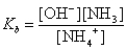
B) <strong>What is the base-ionization equilibrium constant for an aqueous solution of ammonia,NH<sub>3</sub>?</strong> A)   B)   C)   D)   E)none of these
C) <strong>What is the base-ionization equilibrium constant for an aqueous solution of ammonia,NH<sub>3</sub>?</strong> A)   B)   C)   D)   E)none of these
D) <strong>What is the base-ionization equilibrium constant for an aqueous solution of ammonia,NH<sub>3</sub>?</strong> A)   B)   C)   D)   E)none of these
E)none of these
فتح الحزمة
افتح القفل للوصول البطاقات البالغ عددها 148 في هذه المجموعة.
فتح الحزمة
k this deck
61
Which of the following equilibria best represents the hydrolysis reaction that occurs in an aqueous solution of NH4Cl?

A)Cl-(aq)+ H3O+(aq) <strong>Which of the following equilibria best represents the hydrolysis reaction that occurs in an aqueous solution of NH<sub>4</sub>Cl?</strong> A)Cl<sup>-</sup>(aq)+ H<sub>3</sub>O<sup>+</sup>(aq)   HCl(aq)+ H<sub>2</sub>O(l) B)NH<sub>4</sub><sup>+</sup>(aq)+ H<sub>2</sub>O(l)   NH<sub>3</sub>(aq)+ H<sub>3</sub>O<sup>+</sup>(aq) C)NH<sub>4</sub><sup>+</sup>(aq)+ OH<sup>-</sup>(aq)   NH<sub>3</sub>(aq)+ H<sub>2</sub>O(l) D)Cl<sup>-</sup>(aq)+ H<sub>2</sub>O(l)   HCl(aq)+ OH<sup>-</sup>(aq) E)NH<sub>4</sub><sup>+</sup>(aq)+ Cl<sup>-</sup>(aq)   NH<sub>4</sub>Cl(s) HCl(aq)+ H2O(l)
B)NH4+(aq)+ H2O(l) <strong>Which of the following equilibria best represents the hydrolysis reaction that occurs in an aqueous solution of NH<sub>4</sub>Cl?</strong> A)Cl<sup>-</sup>(aq)+ H<sub>3</sub>O<sup>+</sup>(aq)   HCl(aq)+ H<sub>2</sub>O(l) B)NH<sub>4</sub><sup>+</sup>(aq)+ H<sub>2</sub>O(l)   NH<sub>3</sub>(aq)+ H<sub>3</sub>O<sup>+</sup>(aq) C)NH<sub>4</sub><sup>+</sup>(aq)+ OH<sup>-</sup>(aq)   NH<sub>3</sub>(aq)+ H<sub>2</sub>O(l) D)Cl<sup>-</sup>(aq)+ H<sub>2</sub>O(l)   HCl(aq)+ OH<sup>-</sup>(aq) E)NH<sub>4</sub><sup>+</sup>(aq)+ Cl<sup>-</sup>(aq)   NH<sub>4</sub>Cl(s) NH3(aq)+ H3O+(aq)
C)NH4+(aq)+ OH-(aq) <strong>Which of the following equilibria best represents the hydrolysis reaction that occurs in an aqueous solution of NH<sub>4</sub>Cl?</strong> A)Cl<sup>-</sup>(aq)+ H<sub>3</sub>O<sup>+</sup>(aq)   HCl(aq)+ H<sub>2</sub>O(l) B)NH<sub>4</sub><sup>+</sup>(aq)+ H<sub>2</sub>O(l)   NH<sub>3</sub>(aq)+ H<sub>3</sub>O<sup>+</sup>(aq) C)NH<sub>4</sub><sup>+</sup>(aq)+ OH<sup>-</sup>(aq)   NH<sub>3</sub>(aq)+ H<sub>2</sub>O(l) D)Cl<sup>-</sup>(aq)+ H<sub>2</sub>O(l)   HCl(aq)+ OH<sup>-</sup>(aq) E)NH<sub>4</sub><sup>+</sup>(aq)+ Cl<sup>-</sup>(aq)   NH<sub>4</sub>Cl(s) NH3(aq)+ H2O(l)
D)Cl-(aq)+ H2O(l) <strong>Which of the following equilibria best represents the hydrolysis reaction that occurs in an aqueous solution of NH<sub>4</sub>Cl?</strong> A)Cl<sup>-</sup>(aq)+ H<sub>3</sub>O<sup>+</sup>(aq)   HCl(aq)+ H<sub>2</sub>O(l) B)NH<sub>4</sub><sup>+</sup>(aq)+ H<sub>2</sub>O(l)   NH<sub>3</sub>(aq)+ H<sub>3</sub>O<sup>+</sup>(aq) C)NH<sub>4</sub><sup>+</sup>(aq)+ OH<sup>-</sup>(aq)   NH<sub>3</sub>(aq)+ H<sub>2</sub>O(l) D)Cl<sup>-</sup>(aq)+ H<sub>2</sub>O(l)   HCl(aq)+ OH<sup>-</sup>(aq) E)NH<sub>4</sub><sup>+</sup>(aq)+ Cl<sup>-</sup>(aq)   NH<sub>4</sub>Cl(s) HCl(aq)+ OH-(aq)
E)NH4+(aq)+ Cl-(aq) <strong>Which of the following equilibria best represents the hydrolysis reaction that occurs in an aqueous solution of NH<sub>4</sub>Cl?</strong> A)Cl<sup>-</sup>(aq)+ H<sub>3</sub>O<sup>+</sup>(aq)   HCl(aq)+ H<sub>2</sub>O(l) B)NH<sub>4</sub><sup>+</sup>(aq)+ H<sub>2</sub>O(l)   NH<sub>3</sub>(aq)+ H<sub>3</sub>O<sup>+</sup>(aq) C)NH<sub>4</sub><sup>+</sup>(aq)+ OH<sup>-</sup>(aq)   NH<sub>3</sub>(aq)+ H<sub>2</sub>O(l) D)Cl<sup>-</sup>(aq)+ H<sub>2</sub>O(l)   HCl(aq)+ OH<sup>-</sup>(aq) E)NH<sub>4</sub><sup>+</sup>(aq)+ Cl<sup>-</sup>(aq)   NH<sub>4</sub>Cl(s) NH4Cl(s)
فتح الحزمة
افتح القفل للوصول البطاقات البالغ عددها 148 في هذه المجموعة.
فتح الحزمة
k this deck
62
Saccharin is a weak organic base with a Kb of 4.80 × 10-3.A 0.297-g sample of saccharin dissolved in 25.0 mL of water has a pH of 12.190.What is the molar mass of saccharin?

A)0.823 g/mol
B)33.700 g/mol
C)6.824090785E+24 g/mol
D)185 g/mol
E)278 g/mol
فتح الحزمة
افتح القفل للوصول البطاقات البالغ عددها 148 في هذه المجموعة.
فتح الحزمة
k this deck
63
What is Kb for the following equilibrium? Ka for HNO2 is 5.0 × 10⁻⁴.
NO2-(aq)+ H2O(l) <strong>What is K<sub>b</sub> for the following equilibrium? K<sub>a</sub> for HNO<sub>2</sub> is 5.0 × 10<sup>-4</sup>. NO<sub>2</sub><sup>-</sup>(aq)+ H<sub>2</sub>O(l)   HNO<sub>2</sub>(aq)+ OH<sup>-</sup>(aq)</strong> A)2.0 × 10<sup>-4</sup> B)5.0 × 10<sup>-4</sup> C)5.0 × 10<sup>10</sup> D)5.0 × 10<sup>18</sup> E)2.0 × 10<sup>-11</sup>
HNO2(aq)+ OH-(aq)

A)2.0 × 10⁻⁴
B)5.0 × 10⁻⁴
C)5.0 × 10¹⁰
D)5.0 × 10¹⁸
E)2.0 × 10⁻¹¹
فتح الحزمة
افتح القفل للوصول البطاقات البالغ عددها 148 في هذه المجموعة.
فتح الحزمة
k this deck
64
Which of the following salts is most likely to form an aqueous solution having the pH shown in the figure below? <strong>Which of the following salts is most likely to form an aqueous solution having the pH shown in the figure below?  </strong> A)KCl B)Zn(NO<sub>3</sub>)<sub>2</sub> C)NaCN D)NH<sub>4</sub>Cl E)LiBr
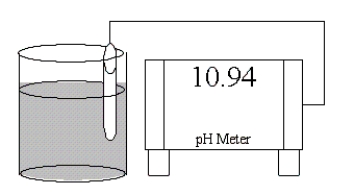
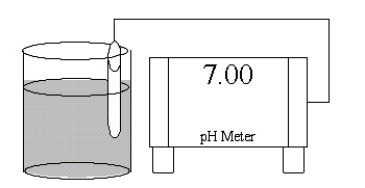
A)KCl
B)Zn(NO3)2
C)NaCN
D)NH4Cl
E)LiBr
فتح الحزمة
افتح القفل للوصول البطاقات البالغ عددها 148 في هذه المجموعة.
فتح الحزمة
k this deck
65
The Ka for hydrofluoric acid is 6.8 × 10⁻⁴.What is Kb for the fluoride ion?

A)1.5 × 10⁻¹¹
B)6.8 × 10⁻⁴
C)1.5 × 10³
D)6.8 × 10¹⁰
E)6.8 × 10⁻¹⁸
فتح الحزمة
افتح القفل للوصول البطاقات البالغ عددها 148 في هذه المجموعة.
فتح الحزمة
k this deck
66
Consider the reaction NH3(aq)+ H2O(l) <strong>Consider the reaction NH<sub>3</sub>(aq)+ H<sub>2</sub>O(l)   NH<sub>4</sub><sup>+</sup>(aq)+ OH<sup>-</sup>(aq).K<sub>b</sub> for NH<sub>3</sub> is 1.8 × 10<sup>-5</sup> at 25°C.What is K<sub>a</sub> for the NH<sub>4</sub><sup>+</sup> ion at 25°C?</strong> A)5.6 × 10<sup>4</sup> B)5.6 × 10<sup>-10</sup> C)1.8 × 10<sup>-5</sup> D)7.2 × 10<sup>-12</sup> E)9.2 × 10<sup>-8</sup> NH4+(aq)+ OH-(aq).Kb for NH3 is 1.8 × 10⁻⁵ at 25°C.What is Ka for the NH4+ ion at 25°C?

A)5.6 × 10⁴
B)5.6 × 10⁻¹⁰
C)1.8 × 10⁻⁵
D)7.2 × 10⁻¹²
E)9.2 × 10⁻⁸
فتح الحزمة
افتح القفل للوصول البطاقات البالغ عددها 148 في هذه المجموعة.
فتح الحزمة
k this deck
67
Which of the following salts is most likely to form an aqueous solution having the pH shown in the figure below? <strong>Which of the following salts is most likely to form an aqueous solution having the pH shown in the figure below?  </strong> A)Na<sub>2</sub>CO<sub>3</sub> B)RbF C)NH<sub>4</sub>Cl D)Zn(NO<sub>3</sub>)<sub>2</sub> E)KCl

A)Na2CO3
B)RbF
C)NH4Cl
D)Zn(NO3)2
E)KCl
فتح الحزمة
افتح القفل للوصول البطاقات البالغ عددها 148 في هذه المجموعة.
فتح الحزمة
k this deck
68
What is Ka at 25°C for the following equilibrium?
CH3NH3+(aq)+ H2O(l) <strong>What is K<sub>a</sub> at 25°C for the following equilibrium? CH<sub>3</sub>NH<sub>3</sub><sup>+</sup>(aq)+ H<sub>2</sub>O(l)   CH<sub>3</sub>NH<sub>2</sub>(aq)+ H<sub>3</sub>O<sup>+</sup>(aq) K<sub>b</sub> (CH<sub>3</sub>NH<sub>2</sub>)= 4.4 × 10<sup>-4</sup> at 25°C.</strong> A)4.4 × 10<sup>-4</sup> B)2.3 × 10<sup>3</sup> C)4.4 × 10<sup>-10</sup> D)4.4 × 10<sup>4</sup> E)2.3 × 10<sup>-11</sup>
CH3NH2(aq)+ H3O+(aq)
Kb (CH3NH2)= 4.4 × 10⁻⁴ at 25°C.

A)4.4 × 10⁻⁴
B)2.3 × 10³
C)4.4 × 10⁻¹⁰
D)4.4 × 10⁴
E)2.3 × 10⁻¹¹
فتح الحزمة
افتح القفل للوصول البطاقات البالغ عددها 148 في هذه المجموعة.
فتح الحزمة
k this deck
69
Which of the following salts is most likely to form an aqueous solution having the pH shown in the figure below? <strong>Which of the following salts is most likely to form an aqueous solution having the pH shown in the figure below?  </strong> A)NH<sub>4</sub>Cl B)NaBr C)K<sub>2</sub>CO<sub>3</sub> D)RbCN E)LiNO<sub>3</sub>
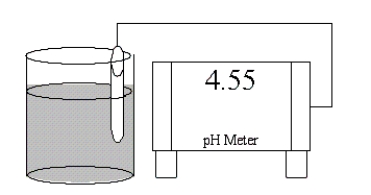
A)NH4Cl
B)NaBr
C)K2CO3
D)RbCN
E)LiNO3
فتح الحزمة
افتح القفل للوصول البطاقات البالغ عددها 148 في هذه المجموعة.
فتح الحزمة
k this deck
70
Which of the following statements is true concerning a 0.1 M solution of Na2S and a 0.1 M solution of NaHS? For H2S,Ka1 = 1.0 × 10⁻⁷ and Ka2 = 1.3 × 10⁻¹³.

A)Both solutions are neutral.
B)The sodium hydrogen sulfide solution is the more basic.
C)Both solutions have the same pH.
D)The sodium sulfide solution is the more basic.
E)Both the solutions are acidic.
فتح الحزمة
افتح القفل للوصول البطاقات البالغ عددها 148 في هذه المجموعة.
فتح الحزمة
k this deck
71
Which of the following solutions has the highest hydroxide-ion concentration?

A)0.10 M NH4ClO4
B)0.10 M NaI
C)0.10 M NaNO3
D)0.10 M NH4Cl
E)0.10 M NaCN
فتح الحزمة
افتح القفل للوصول البطاقات البالغ عددها 148 في هذه المجموعة.
فتح الحزمة
k this deck
72
Given the following,what will be the approximate equilibrium pH of an aqueous solution of ammonium cyanide,NH4CN?
NH4+
Ka = 5.69 x10⁻¹⁰
HCN
Ka = 6.2 x10⁻¹⁰

A)slightly basic
B)slightly acidic
C)nearly neutral
فتح الحزمة
افتح القفل للوصول البطاقات البالغ عددها 148 في هذه المجموعة.
فتح الحزمة
k this deck
73
Given the following,what will be the approximate equilibrium pH of an aqueous solution of ammonium acetate,NH4CH3CO2?
NH4+
Ka = 5.69 x10⁻¹⁰
CH3CO2-
Kb = 5.71 x10⁻¹⁰

A)very basic
B)very acidic
C)nearly neutral
فتح الحزمة
افتح القفل للوصول البطاقات البالغ عددها 148 في هذه المجموعة.
فتح الحزمة
k this deck
74
Which of the following salts will produce a neutral solution when added to pure water?

A)LiHCO3
B)NH4NO3
C)Na2SO4
D)RbNO2
E)KNO3
فتح الحزمة
افتح القفل للوصول البطاقات البالغ عددها 148 في هذه المجموعة.
فتح الحزمة
k this deck
75
The amphiprotic anion monohydrogenphosphate acts as both an acid and a base in aqueous solution.Given the following acid-ionization and base-hydrolysis constants,what will be the approximate equilibrium pH of an aqueous solution of sodium monohydrogenphosphate?
Ka = <strong>The amphiprotic anion monohydrogenphosphate acts as both an acid and a base in aqueous solution.Given the following acid-ionization and base-hydrolysis constants,what will be the approximate equilibrium pH of an aqueous solution of sodium monohydrogenphosphate? K<sub>a</sub> =   K<sub>b</sub> =   ​</strong> A)basic B)acidic C)neutral
Kb = <strong>The amphiprotic anion monohydrogenphosphate acts as both an acid and a base in aqueous solution.Given the following acid-ionization and base-hydrolysis constants,what will be the approximate equilibrium pH of an aqueous solution of sodium monohydrogenphosphate? K<sub>a</sub> =   K<sub>b</sub> =   ​</strong> A)basic B)acidic C)neutral

A)basic
B)acidic
C)neutral
فتح الحزمة
افتح القفل للوصول البطاقات البالغ عددها 148 في هذه المجموعة.
فتح الحزمة
k this deck
76
A 0.0678 M solution of a weak base has a pH of 9.44.What is the identity of the weak base?
Weak Base
Kb
Ethylamine (CH3CH2NH2)
4)7 × 10⁻⁴
Hydrazine (N2H4)
1)7 × 10⁻⁶
Hydroxylamine (NH2OH)
1)1 × 10⁻⁸
Pyridine (C5H5N)
1)4 × 10⁻⁹
Aniline (C6H5NH2)
4)2 × 10⁻¹⁰

A)hydrazine
B)pyridine
C)ethylamine
D)hydroxylamine
E)aniline
فتح الحزمة
افتح القفل للوصول البطاقات البالغ عددها 148 في هذه المجموعة.
فتح الحزمة
k this deck
77
What is Ka for the anilinium cation,C6H5NH3+,at 25°C? (Kb for C6H5NH2 = 4.2 × 10⁻¹⁰ at 25°C.)

A)1.0 × 10⁻⁷
B)4.2 × 10⁴
C)4.2 × 10⁻²⁴
D)2.4 × 10⁻⁵
E)4.2 × 10⁻¹⁰
فتح الحزمة
افتح القفل للوصول البطاقات البالغ عددها 148 في هذه المجموعة.
فتح الحزمة
k this deck
78
Which of the following salts forms an acidic aqueous solution?

A)NaNO2
B)KCH3CO2
C)Rb2O
D)FeCl3
E)NaCN
فتح الحزمة
افتح القفل للوصول البطاقات البالغ عددها 148 في هذه المجموعة.
فتح الحزمة
k this deck
79
Which of the following salts will produce an acidic solution when added to pure water?

A)Cs2CO3
B)NaF
C)KCN
D)Al(NO3)3
E)Li2S
فتح الحزمة
افتح القفل للوصول البطاقات البالغ عددها 148 في هذه المجموعة.
فتح الحزمة
k this deck
80
Which of the following equilibria best represents the hydrolysis reaction that occurs in an aqueous solution of KNO2?

A)NO2-(aq)+ H2O(l) <strong>Which of the following equilibria best represents the hydrolysis reaction that occurs in an aqueous solution of KNO<sub>2</sub>?</strong> A)NO<sub>2</sub><sup>-</sup>(aq)+ H<sub>2</sub>O(l)   HNO<sub>3</sub>(aq)+ 2H<sup>+</sup>(aq) B)NO<sub>2</sub><sup>-</sup>(aq)+ H<sub>2</sub>O(l)   HNO<sub>2</sub>(aq)+ OH<sup>-</sup>(aq) C)NO<sub>2</sub><sup>-</sup>(aq)+ H<sub>3</sub>O<sup>+</sup>(aq)   HNO<sub>2</sub>(aq)+ H<sub>2</sub>O(l) D)K<sup>+</sup>(aq)+ NO<sub>2</sub><sup>-</sup>(aq)+ H<sub>2</sub>O(l)   KOH(aq)+ HNO<sub>2</sub>(aq) E)K<sup>+</sup>(aq)+ H<sub>2</sub>O(l)   KOH(aq)+ H<sup>+</sup>(aq) HNO3(aq)+ 2H+(aq)
B)NO2-(aq)+ H2O(l) <strong>Which of the following equilibria best represents the hydrolysis reaction that occurs in an aqueous solution of KNO<sub>2</sub>?</strong> A)NO<sub>2</sub><sup>-</sup>(aq)+ H<sub>2</sub>O(l)   HNO<sub>3</sub>(aq)+ 2H<sup>+</sup>(aq) B)NO<sub>2</sub><sup>-</sup>(aq)+ H<sub>2</sub>O(l)   HNO<sub>2</sub>(aq)+ OH<sup>-</sup>(aq) C)NO<sub>2</sub><sup>-</sup>(aq)+ H<sub>3</sub>O<sup>+</sup>(aq)   HNO<sub>2</sub>(aq)+ H<sub>2</sub>O(l) D)K<sup>+</sup>(aq)+ NO<sub>2</sub><sup>-</sup>(aq)+ H<sub>2</sub>O(l)   KOH(aq)+ HNO<sub>2</sub>(aq) E)K<sup>+</sup>(aq)+ H<sub>2</sub>O(l)   KOH(aq)+ H<sup>+</sup>(aq) HNO2(aq)+ OH-(aq)
C)NO2-(aq)+ H3O+(aq) <strong>Which of the following equilibria best represents the hydrolysis reaction that occurs in an aqueous solution of KNO<sub>2</sub>?</strong> A)NO<sub>2</sub><sup>-</sup>(aq)+ H<sub>2</sub>O(l)   HNO<sub>3</sub>(aq)+ 2H<sup>+</sup>(aq) B)NO<sub>2</sub><sup>-</sup>(aq)+ H<sub>2</sub>O(l)   HNO<sub>2</sub>(aq)+ OH<sup>-</sup>(aq) C)NO<sub>2</sub><sup>-</sup>(aq)+ H<sub>3</sub>O<sup>+</sup>(aq)   HNO<sub>2</sub>(aq)+ H<sub>2</sub>O(l) D)K<sup>+</sup>(aq)+ NO<sub>2</sub><sup>-</sup>(aq)+ H<sub>2</sub>O(l)   KOH(aq)+ HNO<sub>2</sub>(aq) E)K<sup>+</sup>(aq)+ H<sub>2</sub>O(l)   KOH(aq)+ H<sup>+</sup>(aq) HNO2(aq)+ H2O(l)
D)K+(aq)+ NO2-(aq)+ H2O(l) <strong>Which of the following equilibria best represents the hydrolysis reaction that occurs in an aqueous solution of KNO<sub>2</sub>?</strong> A)NO<sub>2</sub><sup>-</sup>(aq)+ H<sub>2</sub>O(l)   HNO<sub>3</sub>(aq)+ 2H<sup>+</sup>(aq) B)NO<sub>2</sub><sup>-</sup>(aq)+ H<sub>2</sub>O(l)   HNO<sub>2</sub>(aq)+ OH<sup>-</sup>(aq) C)NO<sub>2</sub><sup>-</sup>(aq)+ H<sub>3</sub>O<sup>+</sup>(aq)   HNO<sub>2</sub>(aq)+ H<sub>2</sub>O(l) D)K<sup>+</sup>(aq)+ NO<sub>2</sub><sup>-</sup>(aq)+ H<sub>2</sub>O(l)   KOH(aq)+ HNO<sub>2</sub>(aq) E)K<sup>+</sup>(aq)+ H<sub>2</sub>O(l)   KOH(aq)+ H<sup>+</sup>(aq) KOH(aq)+ HNO2(aq)
E)K+(aq)+ H2O(l) <strong>Which of the following equilibria best represents the hydrolysis reaction that occurs in an aqueous solution of KNO<sub>2</sub>?</strong> A)NO<sub>2</sub><sup>-</sup>(aq)+ H<sub>2</sub>O(l)   HNO<sub>3</sub>(aq)+ 2H<sup>+</sup>(aq) B)NO<sub>2</sub><sup>-</sup>(aq)+ H<sub>2</sub>O(l)   HNO<sub>2</sub>(aq)+ OH<sup>-</sup>(aq) C)NO<sub>2</sub><sup>-</sup>(aq)+ H<sub>3</sub>O<sup>+</sup>(aq)   HNO<sub>2</sub>(aq)+ H<sub>2</sub>O(l) D)K<sup>+</sup>(aq)+ NO<sub>2</sub><sup>-</sup>(aq)+ H<sub>2</sub>O(l)   KOH(aq)+ HNO<sub>2</sub>(aq) E)K<sup>+</sup>(aq)+ H<sub>2</sub>O(l)   KOH(aq)+ H<sup>+</sup>(aq) KOH(aq)+ H+(aq)
فتح الحزمة
افتح القفل للوصول البطاقات البالغ عددها 148 في هذه المجموعة.
فتح الحزمة
k this deck
locked card icon
فتح الحزمة
افتح القفل للوصول البطاقات البالغ عددها 148 في هذه المجموعة.