







 تكلم مع الذكاء الاصطناعي


Deck 9: Meiosis and the Genetic Basis of Sexual Reproduction
ملء الشاشة (f)

سؤال
Figure: 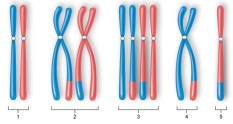
Which of the diagrams represents a chromosome pair in a cell at the end of prophase II?
A) diagram 1
B) diagram 2
C) diagram 3
D) diagram 4
E) diagram 5
Which of the diagrams represents a chromosome pair in a cell at the end of prophase II?
A) diagram 1
B) diagram 2
C) diagram 3
D) diagram 4
E) diagram 5

سؤال
سؤال
سؤال
سؤال
سؤال
سؤال
سؤال
سؤال
سؤال
سؤال
سؤال
سؤال
سؤال
سؤال
Figure:
Which of the diagrams best illustrates the appearance of a chromosome pair in a cell at the end of prophase I?
A) diagram 1
B) diagram 2
C) diagram 3
D) diagram 4
E) diagram 5
Which of the diagrams best illustrates the appearance of a chromosome pair in a cell at the end of prophase I?
A) diagram 1
B) diagram 2
C) diagram 3
D) diagram 4
E) diagram 5
سؤال
سؤال
سؤال
سؤال
سؤال
سؤال
سؤال
سؤال
سؤال
For the figure shown here,indicate the correct stage of meiosis and diploid chromosome number. 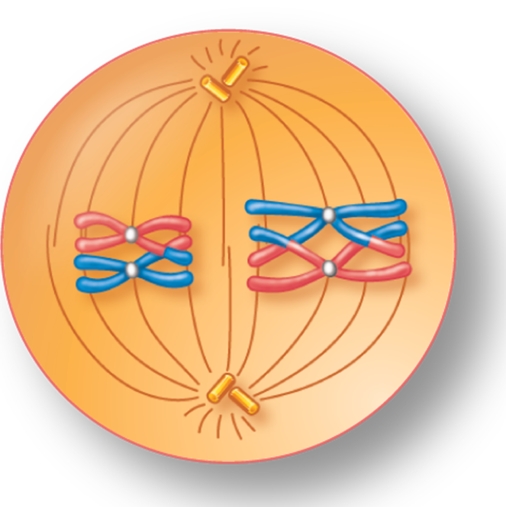
A) metaphase II, 2n=4
B) metaphase II, 2n=2
C) metaphase II, 2n=8
D) metaphase I, 2n=4
E) metaphase I, 2n=8
A) metaphase II, 2n=4
B) metaphase II, 2n=2
C) metaphase II, 2n=8
D) metaphase I, 2n=4
E) metaphase I, 2n=8
سؤال
سؤال
سؤال
سؤال
سؤال
سؤال
For the figure shown here,indicate the correct stage of meiosis and diploid chromosome number. 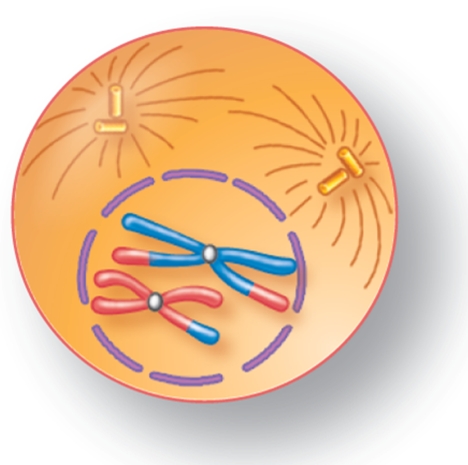
A) prophase I, 2n=4
B) prophase II, 2n=4
C) metaphase I, 2n=4
D) metaphase II, 2n=2
E) anaphase II, 2n=2
A) prophase I, 2n=4
B) prophase II, 2n=4
C) metaphase I, 2n=4
D) metaphase II, 2n=2
E) anaphase II, 2n=2
سؤال
سؤال
سؤال
For the figure shown here,indicate the correct stage of meiosis and diploid chromosome number. 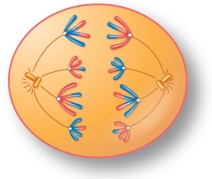
A) anaphase I, 2n=16
B) anaphase II, 2n=16
C) anaphase I, 2n=8
D) anaphase II, 2n=8
E) anaphase II, 2n=4
A) anaphase I, 2n=16
B) anaphase II, 2n=16
C) anaphase I, 2n=8
D) anaphase II, 2n=8
E) anaphase II, 2n=4
سؤال
سؤال
سؤال
سؤال
سؤال
سؤال
سؤال
سؤال
سؤال
سؤال
سؤال
سؤال
سؤال
سؤال
سؤال
سؤال
سؤال
سؤال
سؤال
سؤال
سؤال
سؤال

فتح الحزمة
قم بالتسجيل لفتح البطاقات في هذه المجموعة!
Unlock Deck
Unlock Deck
1/55

العب

ملء الشاشة (f)
Deck 9: Meiosis and the Genetic Basis of Sexual Reproduction
1
Figure:
Which of the diagrams represents a chromosome pair in a cell at the end of prophase II?
A) diagram 1
B) diagram 2
C) diagram 3
D) diagram 4
E) diagram 5
Which of the diagrams represents a chromosome pair in a cell at the end of prophase II?
A) diagram 1
B) diagram 2
C) diagram 3
D) diagram 4
E) diagram 5
D
2
During prophase II,a diploid organism contains how many copies of each gene?
A) 1
B) 2
C) 3
D) 4
E) 8
A) 1
B) 2
C) 3
D) 4
E) 8
B
3
Which of the following lists is in the correct order,from the least inclusive to the most inclusive?
A) allele - gene - chromosome
B) gene - allele - chromosome
C) allele - chromosome - gene
D) chromosome - gene - allele
E) gene - chromosome - allele
A) allele - gene - chromosome
B) gene - allele - chromosome
C) allele - chromosome - gene
D) chromosome - gene - allele
E) gene - chromosome - allele
B
4
Which of the following statements is correct?
A) Meiosis involves 2 divisions and produces 4 non-identical daughter nuclei.
B) Meiosis involves 1 division and produces 2 non-identical daughter nuclei.
C) Mitosis involves 1 division and produces 2 non-identical daughter nuclei.
D) Mitosis involves 2 divisions and produces 4 identical daughter nuclei.
E) Meiosis involves 2 divisions and produces 4 identical daughter nuclei.
A) Meiosis involves 2 divisions and produces 4 non-identical daughter nuclei.
B) Meiosis involves 1 division and produces 2 non-identical daughter nuclei.
C) Mitosis involves 1 division and produces 2 non-identical daughter nuclei.
D) Mitosis involves 2 divisions and produces 4 identical daughter nuclei.
E) Meiosis involves 2 divisions and produces 4 identical daughter nuclei.
فتح الحزمة
افتح القفل للوصول البطاقات البالغ عددها 55 في هذه المجموعة.
فتح الحزمة
k this deck
5
During crossing-over
A) genetic material is exchanged between sister chromatids, resulting in new combinations of alleles.
B) genetic material is exchanged between nonsister chromatids, resulting in new combinations of alleles.
C) sister chromatids from each homologous chromosome of a tetrad are exchanged, resulting in new combinations of alleles.
D) nonsister chromatids from each homologous chromosome of a tetrad are exchanged, resulting in new combinations of alleles.
E) one homologous chromosome of a tetrad is exchanged with another tetrad, resulting in new combinations of alleles.
A) genetic material is exchanged between sister chromatids, resulting in new combinations of alleles.
B) genetic material is exchanged between nonsister chromatids, resulting in new combinations of alleles.
C) sister chromatids from each homologous chromosome of a tetrad are exchanged, resulting in new combinations of alleles.
D) nonsister chromatids from each homologous chromosome of a tetrad are exchanged, resulting in new combinations of alleles.
E) one homologous chromosome of a tetrad is exchanged with another tetrad, resulting in new combinations of alleles.
فتح الحزمة
افتح القفل للوصول البطاقات البالغ عددها 55 في هذه المجموعة.
فتح الحزمة
k this deck
6
A tetrad is composed of
A) two chromosomes with two sister chromatids each.
B) two sister chromatids with separate centromeres.
C) four chromosomes with two sister chromatids each.
D) four sister chromatids with a common centromere.
E) four sister chromatids attached at a common centromere.
A) two chromosomes with two sister chromatids each.
B) two sister chromatids with separate centromeres.
C) four chromosomes with two sister chromatids each.
D) four sister chromatids with a common centromere.
E) four sister chromatids attached at a common centromere.
فتح الحزمة
افتح القفل للوصول البطاقات البالغ عددها 55 في هذه المجموعة.
فتح الحزمة
k this deck
7
During meiosis I,the homologous chromosomes of a tetrad
A) face the same spindle pole.
B) face both spindle poles.
C) face opposite spindle poles.
D) do not face spindle poles, but are aligned at the spindle equator.
E) undergo separation of sister chromatids.
A) face the same spindle pole.
B) face both spindle poles.
C) face opposite spindle poles.
D) do not face spindle poles, but are aligned at the spindle equator.
E) undergo separation of sister chromatids.
فتح الحزمة
افتح القفل للوصول البطاقات البالغ عددها 55 في هذه المجموعة.
فتح الحزمة
k this deck
8
Down syndrome is associated with which of the following karyotypes?
A) 47, XXY
B) 47, XXX
C) 46, XY
D) 47, XY, trisomy 21
E) 45, XO
A) 47, XXY
B) 47, XXX
C) 46, XY
D) 47, XY, trisomy 21
E) 45, XO
فتح الحزمة
افتح القفل للوصول البطاقات البالغ عددها 55 في هذه المجموعة.
فتح الحزمة
k this deck
9
A dyad consists of
A) two homologous chromosomes consisting of two sister chromatids.
B) two homologous chromosomes consisting of two nonsister chromatids.
C) one duplicated chromosome consisting of two nonsister chromatids.
D) one duplicated chromosome consisting of two sister chromatids.
E) two homologous chromosomes consisting of a single DNA strand each.
A) two homologous chromosomes consisting of two sister chromatids.
B) two homologous chromosomes consisting of two nonsister chromatids.
C) one duplicated chromosome consisting of two nonsister chromatids.
D) one duplicated chromosome consisting of two sister chromatids.
E) two homologous chromosomes consisting of a single DNA strand each.
فتح الحزمة
افتح القفل للوصول البطاقات البالغ عددها 55 في هذه المجموعة.
فتح الحزمة
k this deck
10
During G1 stage of interphase,a diploid organism contains how many copies of each gene?
A) 1
B) 2
C) 4
D) 8
E) 16
A) 1
B) 2
C) 4
D) 8
E) 16
فتح الحزمة
افتح القفل للوصول البطاقات البالغ عددها 55 في هذه المجموعة.
فتح الحزمة
k this deck
11
Which of the following processes does not contribute to creating genetic variability in the offspring?
A) crossing-over
B) independent assortment of chromosomes
C) pairing of homologous chromosomes
D) interkinesis
E) different alleles of the same gene
A) crossing-over
B) independent assortment of chromosomes
C) pairing of homologous chromosomes
D) interkinesis
E) different alleles of the same gene
فتح الحزمة
افتح القفل للوصول البطاقات البالغ عددها 55 في هذه المجموعة.
فتح الحزمة
k this deck
12
One major difference between meiosis I and meiosis II is that
A) crossing over occurs in prophase of meiosis I but not in prophase of meiosis II.
B) sister chromatids are separated during meiosis I while homologous chromosomes are separated during meiosis II.
C) the resulting cells at the end of meiosis I are diploid while the cells at the end of meiosis II are haploid.
D) in telophase of meiosis I four daughter cells form from the parent cell and in telophase of meiosis II each parent cells gives rise to two daughter cells.
E) in meiosis I there is no pairing of chromosomes while homologues pair in meiosis II.
A) crossing over occurs in prophase of meiosis I but not in prophase of meiosis II.
B) sister chromatids are separated during meiosis I while homologous chromosomes are separated during meiosis II.
C) the resulting cells at the end of meiosis I are diploid while the cells at the end of meiosis II are haploid.
D) in telophase of meiosis I four daughter cells form from the parent cell and in telophase of meiosis II each parent cells gives rise to two daughter cells.
E) in meiosis I there is no pairing of chromosomes while homologues pair in meiosis II.
فتح الحزمة
افتح القفل للوصول البطاقات البالغ عددها 55 في هذه المجموعة.
فتح الحزمة
k this deck
13
Armadillos have a diploid chromosome number of 64.At prophase I,an armadillo's cell would have ____ tetrads present.
A) 16
B) 32
C) 64
D) 80
E) 128
A) 16
B) 32
C) 64
D) 80
E) 128
فتح الحزمة
افتح القفل للوصول البطاقات البالغ عددها 55 في هذه المجموعة.
فتح الحزمة
k this deck
14
Which statement best describes how the members of a tetrad are separated during meiosis I?
A) The two homologous chromosomes of a tetrad separate into different daughter nuclei.
B) The sister chromatids of each chromosome separate into different daughter nuclei.
C) The nonsister chromatids of each tetrad separate into different daughter nuclei.
D) The two homologous chromosomes of a tetrad separate into one of two daughter nuclei.
E) The two homologous chromosomes of a tetrad are duplicated and separate into each daughter nucleus.
A) The two homologous chromosomes of a tetrad separate into different daughter nuclei.
B) The sister chromatids of each chromosome separate into different daughter nuclei.
C) The nonsister chromatids of each tetrad separate into different daughter nuclei.
D) The two homologous chromosomes of a tetrad separate into one of two daughter nuclei.
E) The two homologous chromosomes of a tetrad are duplicated and separate into each daughter nucleus.
فتح الحزمة
افتح القفل للوصول البطاقات البالغ عددها 55 في هذه المجموعة.
فتح الحزمة
k this deck
15
Figure:
Which of the diagrams best illustrates the appearance of a chromosome pair in a cell at the end of prophase I?
A) diagram 1
B) diagram 2
C) diagram 3
D) diagram 4
E) diagram 5
Which of the diagrams best illustrates the appearance of a chromosome pair in a cell at the end of prophase I?
A) diagram 1
B) diagram 2
C) diagram 3
D) diagram 4
E) diagram 5
فتح الحزمة
افتح القفل للوصول البطاقات البالغ عددها 55 في هذه المجموعة.
فتح الحزمة
k this deck
16
The possibility of Down syndrome increases as the mother's age increases because
A) her DNA is damaged through an accumulation of replication errors.
B) her DNA stops checking for replication errors.
C) fertilization no longer occurs correctly with older eggs.
D) the contents of the egg contains the wrong signals for the correct development of the fetus.
E) the possibility of nondisjunction increases.
A) her DNA is damaged through an accumulation of replication errors.
B) her DNA stops checking for replication errors.
C) fertilization no longer occurs correctly with older eggs.
D) the contents of the egg contains the wrong signals for the correct development of the fetus.
E) the possibility of nondisjunction increases.
فتح الحزمة
افتح القفل للوصول البطاقات البالغ عددها 55 في هذه المجموعة.
فتح الحزمة
k this deck
17
Which of the following does not occur twice during meiosis?
A) production of daughter nuclei
B) spindle formation
C) pairing of homologous chromosomes
D) separation of genetic material
E) alignment of chromosomes at spindle equator
A) production of daughter nuclei
B) spindle formation
C) pairing of homologous chromosomes
D) separation of genetic material
E) alignment of chromosomes at spindle equator
فتح الحزمة
افتح القفل للوصول البطاقات البالغ عددها 55 في هذه المجموعة.
فتح الحزمة
k this deck
18
During prophase I,a diploid organism contains how many copies of each gene?
A) 1
B) 2
C) 3
D) 4
E) 8
A) 1
B) 2
C) 3
D) 4
E) 8
فتح الحزمة
افتح القفل للوصول البطاقات البالغ عددها 55 في هذه المجموعة.
فتح الحزمة
k this deck
19
In each gamete following telophase II,how many copies of each gene is/are present?
A) 1
B) 2
C) 3
D) 4
E) 8
A) 1
B) 2
C) 3
D) 4
E) 8
فتح الحزمة
افتح القفل للوصول البطاقات البالغ عددها 55 في هذه المجموعة.
فتح الحزمة
k this deck
20
Which of the following is a correct match?
A) separation of tetrads - anaphase II
B) synapsis - metaphase I
C) separation of sister chromatids - anaphase I
D) synapsis - prophase II
E) separation of sister chromatids - anaphase II
A) separation of tetrads - anaphase II
B) synapsis - metaphase I
C) separation of sister chromatids - anaphase I
D) synapsis - prophase II
E) separation of sister chromatids - anaphase II
فتح الحزمة
افتح القفل للوصول البطاقات البالغ عددها 55 في هذه المجموعة.
فتح الحزمة
k this deck
21
Which of the following processes and products are paired correctly?
A) spermatogenesis - 2n zygote
B) oogenesis - 2n zygote
C) oogenesis - 1n gamete
D) meiosis - 2n zygote
E) mitosis - 1n gamete
A) spermatogenesis - 2n zygote
B) oogenesis - 2n zygote
C) oogenesis - 1n gamete
D) meiosis - 2n zygote
E) mitosis - 1n gamete
فتح الحزمة
افتح القفل للوصول البطاقات البالغ عددها 55 في هذه المجموعة.
فتح الحزمة
k this deck
22
How does nondisjunction during meiosis I differ from nondisjunction in meiosis II?
A) Half of the gametes from nondisjunction during meiosis I will have normal chromosome number.
B) Half of the gametes from nondisjunction during meiosis II will have normal chromosome number.
C) Gametes from nondisjunction during meiosis I will have an extra chromosome, while gametes from nondisjunction during meiosis II will have a missing chromosome.
D) Gametes from nondisjunction during meiosis II will have an extra chromosome, while gametes from nondisjunction during meiosis I will have a missing chromosome.
E) Nondisjunction during meiosis I results in only two gametes, while nondisjunction during meiosis II gives four gametes, half of which have extra or missing chromosomes.
A) Half of the gametes from nondisjunction during meiosis I will have normal chromosome number.
B) Half of the gametes from nondisjunction during meiosis II will have normal chromosome number.
C) Gametes from nondisjunction during meiosis I will have an extra chromosome, while gametes from nondisjunction during meiosis II will have a missing chromosome.
D) Gametes from nondisjunction during meiosis II will have an extra chromosome, while gametes from nondisjunction during meiosis I will have a missing chromosome.
E) Nondisjunction during meiosis I results in only two gametes, while nondisjunction during meiosis II gives four gametes, half of which have extra or missing chromosomes.
فتح الحزمة
افتح القفل للوصول البطاقات البالغ عددها 55 في هذه المجموعة.
فتح الحزمة
k this deck
23
In the human life cycle
A) meiosis produces haploid gametes, and fertilization creates a diploid cell that divides by mitosis to produce a new individual.
B) mitosis produces haploid gametes, and fertilization creates a diploid cell that divides by meiosis to produce a new individual.
C) diploid gametes reproduce by meiosis to produce haploid daughter cells that divide by mitosis to produce a new individual.
D) diploid gametes reproduce by mitosis to produce diploid daughter cells that divide by meiosis to produce a new individual.
E) a haploid zygote reproduces by meiosis to produce diploid daughter cells that divide by mitosis to produce a new individual.
A) meiosis produces haploid gametes, and fertilization creates a diploid cell that divides by mitosis to produce a new individual.
B) mitosis produces haploid gametes, and fertilization creates a diploid cell that divides by meiosis to produce a new individual.
C) diploid gametes reproduce by meiosis to produce haploid daughter cells that divide by mitosis to produce a new individual.
D) diploid gametes reproduce by mitosis to produce diploid daughter cells that divide by meiosis to produce a new individual.
E) a haploid zygote reproduces by meiosis to produce diploid daughter cells that divide by mitosis to produce a new individual.
فتح الحزمة
افتح القفل للوصول البطاقات البالغ عددها 55 في هذه المجموعة.
فتح الحزمة
k this deck
24
For the figure shown here,indicate the correct stage of meiosis and diploid chromosome number.
A) metaphase II, 2n=4
B) metaphase II, 2n=2
C) metaphase II, 2n=8
D) metaphase I, 2n=4
E) metaphase I, 2n=8
A) metaphase II, 2n=4
B) metaphase II, 2n=2
C) metaphase II, 2n=8
D) metaphase I, 2n=4
E) metaphase I, 2n=8
فتح الحزمة
افتح القفل للوصول البطاقات البالغ عددها 55 في هذه المجموعة.
فتح الحزمة
k this deck
25
An individual with Swyer syndrome (46,XY)differs from an individual with Klinefelter syndrome (47,XXY)because
A) an individual with Swyer syndrome has a Barr body, while an individual with Klinefelter syndrome does not.
B) an individual with Klinefelter syndrome has a functional SRY gene on his Y chromosome, whereas an individual with Swyer syndrome does not.
C) both individuals have a functional SRY gene, but the extra X chromosome makes the individual with Klinefelter syndrome appear female.
D) neither individual has a functional SRY gene, but the X chromosome of the individual with Swyer syndrome has a functional SRY and appears male.
E) an individual with Swyer syndrome lacks a functional SRY gene, but appears male because it has moved to the X chromosome as in an individual with Klinefelter syndrome.
A) an individual with Swyer syndrome has a Barr body, while an individual with Klinefelter syndrome does not.
B) an individual with Klinefelter syndrome has a functional SRY gene on his Y chromosome, whereas an individual with Swyer syndrome does not.
C) both individuals have a functional SRY gene, but the extra X chromosome makes the individual with Klinefelter syndrome appear female.
D) neither individual has a functional SRY gene, but the X chromosome of the individual with Swyer syndrome has a functional SRY and appears male.
E) an individual with Swyer syndrome lacks a functional SRY gene, but appears male because it has moved to the X chromosome as in an individual with Klinefelter syndrome.
فتح الحزمة
افتح القفل للوصول البطاقات البالغ عددها 55 في هذه المجموعة.
فتح الحزمة
k this deck
26
Which of the following is not a function of meiosis?
A) cause an organism to grow
B) create genetic variability
C) reduce the chromosome number in gametes
D) keep chromosome number constant from one generation to the next
E) produce gametes
A) cause an organism to grow
B) create genetic variability
C) reduce the chromosome number in gametes
D) keep chromosome number constant from one generation to the next
E) produce gametes
فتح الحزمة
افتح القفل للوصول البطاقات البالغ عددها 55 في هذه المجموعة.
فتح الحزمة
k this deck
27
Following meiosis I,the daughter cells are ______; following meiosis II,the daughter cells are ______; and following mitosis,the daughter cells are _______.
A) diploid; haploid; diploid
B) diploid; diploid; haploid
C) haploid; haploid; diploid
D) haploid; haploid; haploid
E) diploid; diploid; diploid
A) diploid; haploid; diploid
B) diploid; diploid; haploid
C) haploid; haploid; diploid
D) haploid; haploid; haploid
E) diploid; diploid; diploid
فتح الحزمة
افتح القفل للوصول البطاقات البالغ عددها 55 في هذه المجموعة.
فتح الحزمة
k this deck
28
The failure of sister chromatids to separate would result in how many normal gametes?
A) 0
B) 1
C) 2
D) 3
E) 4
A) 0
B) 1
C) 2
D) 3
E) 4
فتح الحزمة
افتح القفل للوصول البطاقات البالغ عددها 55 في هذه المجموعة.
فتح الحزمة
k this deck
29
An egg with 22 chromosomes that is fertilized by a normal sperm will result in
A) a zygote with trisomy.
B) a zygote with disomy.
C) a zygote with monosomy.
D) a zygote with normal chromosome number.
E) nondisjunction during subsequent mitosis.
A) a zygote with trisomy.
B) a zygote with disomy.
C) a zygote with monosomy.
D) a zygote with normal chromosome number.
E) nondisjunction during subsequent mitosis.
فتح الحزمة
افتح القفل للوصول البطاقات البالغ عددها 55 في هذه المجموعة.
فتح الحزمة
k this deck
30
For the figure shown here,indicate the correct stage of meiosis and diploid chromosome number.
A) prophase I, 2n=4
B) prophase II, 2n=4
C) metaphase I, 2n=4
D) metaphase II, 2n=2
E) anaphase II, 2n=2
A) prophase I, 2n=4
B) prophase II, 2n=4
C) metaphase I, 2n=4
D) metaphase II, 2n=2
E) anaphase II, 2n=2
فتح الحزمة
افتح القفل للوصول البطاقات البالغ عددها 55 في هذه المجموعة.
فتح الحزمة
k this deck
31
Which of the following phases results in separation of sister chromatids into daughter chromosomes?
A) anaphase of mitosis
B) anaphase I, anaphase II, and anaphase of mitosis
C) anaphase I and anaphase II
D) anaphase I and anaphase of mitosis
E) anaphase II and anaphase of mitosis
A) anaphase of mitosis
B) anaphase I, anaphase II, and anaphase of mitosis
C) anaphase I and anaphase II
D) anaphase I and anaphase of mitosis
E) anaphase II and anaphase of mitosis
فتح الحزمة
افتح القفل للوصول البطاقات البالغ عددها 55 في هذه المجموعة.
فتح الحزمة
k this deck
32
During meiosis II,
A) homologous chromosomes line up separately, with sister chromatids facing the same spindle pole.
B) chromosomes line up separately, with sister chromatids facing opposite spindle poles.
C) chromosomes line up separately, with sister chromatids facing the same spindle pole.
D) homologous chromosomes line up separately, with sister chromatids facing opposite spindle poles.
E) homologous chromosomes line up together, with sister chromatids facing opposite spindle poles.
A) homologous chromosomes line up separately, with sister chromatids facing the same spindle pole.
B) chromosomes line up separately, with sister chromatids facing opposite spindle poles.
C) chromosomes line up separately, with sister chromatids facing the same spindle pole.
D) homologous chromosomes line up separately, with sister chromatids facing opposite spindle poles.
E) homologous chromosomes line up together, with sister chromatids facing opposite spindle poles.
فتح الحزمة
افتح القفل للوصول البطاقات البالغ عددها 55 في هذه المجموعة.
فتح الحزمة
k this deck
33
For the figure shown here,indicate the correct stage of meiosis and diploid chromosome number.
A) anaphase I, 2n=16
B) anaphase II, 2n=16
C) anaphase I, 2n=8
D) anaphase II, 2n=8
E) anaphase II, 2n=4
A) anaphase I, 2n=16
B) anaphase II, 2n=16
C) anaphase I, 2n=8
D) anaphase II, 2n=8
E) anaphase II, 2n=4
فتح الحزمة
افتح القفل للوصول البطاقات البالغ عددها 55 في هذه المجموعة.
فتح الحزمة
k this deck
34
Interphase differs from interkinesis because
A) DNA is duplicated during interphase, but not during interkinesis.
B) DNA is duplicated during interkinesis, but not during interphase.
C) homologous chromosomes separate during interkinesis, but not during interphase.
D) homologous chromosomes separate during interphase, but not during interkinesis.
E) interkinesis only occurs during mitosis, while interphase occurs during both meiosis and mitosis.
A) DNA is duplicated during interphase, but not during interkinesis.
B) DNA is duplicated during interkinesis, but not during interphase.
C) homologous chromosomes separate during interkinesis, but not during interphase.
D) homologous chromosomes separate during interphase, but not during interkinesis.
E) interkinesis only occurs during mitosis, while interphase occurs during both meiosis and mitosis.
فتح الحزمة
افتح القفل للوصول البطاقات البالغ عددها 55 في هذه المجموعة.
فتح الحزمة
k this deck
35
The failure of sister chromatids to separate during meiosis is called
A) synapsis.
B) crossing-over.
C) tetrad formation.
D) disjunction.
E) nondisjunction.
A) synapsis.
B) crossing-over.
C) tetrad formation.
D) disjunction.
E) nondisjunction.
فتح الحزمة
افتح القفل للوصول البطاقات البالغ عددها 55 في هذه المجموعة.
فتح الحزمة
k this deck
36
Metaphase II is more similar to metaphase of mitosis than to metaphase I because
A) in metaphase I, tetrads align together at the spindle equator.
B) in metaphase II, tetrads align separately at the spindle equator.
C) in metaphase of mitosis, tetrads align separately at the spindle equator.
D) in metaphase II, dyads align separately at the spindle equator.
E) in metaphase I, dyads align separately at the spindle equator.
A) in metaphase I, tetrads align together at the spindle equator.
B) in metaphase II, tetrads align separately at the spindle equator.
C) in metaphase of mitosis, tetrads align separately at the spindle equator.
D) in metaphase II, dyads align separately at the spindle equator.
E) in metaphase I, dyads align separately at the spindle equator.
فتح الحزمة
افتح القفل للوصول البطاقات البالغ عددها 55 في هذه المجموعة.
فتح الحزمة
k this deck
37
Swyer syndrome (46,XY,female appearance),would most likely result from
A) nondisjunction during meiosis I in the female parent.
B) nondisjunction during meiosis I in the male parent.
C) nondisjunction during meiosis II in the female parent.
D) nondisjunction during meiosis II in the male parent.
E) normal disjunction during meiosis, but deletion of portion of the Y chromosome in the male parent.
A) nondisjunction during meiosis I in the female parent.
B) nondisjunction during meiosis I in the male parent.
C) nondisjunction during meiosis II in the female parent.
D) nondisjunction during meiosis II in the male parent.
E) normal disjunction during meiosis, but deletion of portion of the Y chromosome in the male parent.
فتح الحزمة
افتح القفل للوصول البطاقات البالغ عددها 55 في هذه المجموعة.
فتح الحزمة
k this deck
38
Which of the following human syndromes is a monosomy?
A) Turner syndrome
B) Klinefelter syndrome
C) Down syndrome
D) Swyer syndrome
E) Barr body syndrome
A) Turner syndrome
B) Klinefelter syndrome
C) Down syndrome
D) Swyer syndrome
E) Barr body syndrome
فتح الحزمة
افتح القفل للوصول البطاقات البالغ عددها 55 في هذه المجموعة.
فتح الحزمة
k this deck
39
An individual with the karyotype 48,XYYY would have how many Barr bodies?
A) 0
B) 1
C) 2
D) 3
E) 4
A) 0
B) 1
C) 2
D) 3
E) 4
فتح الحزمة
افتح القفل للوصول البطاقات البالغ عددها 55 في هذه المجموعة.
فتح الحزمة
k this deck
40
Turner syndrome is associated with which of the following karyotypes?
A) 47, XXY
B) 47, XXX
C) 46, XY
D) 47, XY, trisomy 21
E) 45, XO
A) 47, XXY
B) 47, XXX
C) 46, XY
D) 47, XY, trisomy 21
E) 45, XO
فتح الحزمة
افتح القفل للوصول البطاقات البالغ عددها 55 في هذه المجموعة.
فتح الحزمة
k this deck
41
Chromosomes that occur in pairs and code for the same traits are called _____________ chromosomes; these do not include the __________________ chromosomes which code for gender.
A) homologous; autosomes
B) autosomes; homologous
C) diploid; haploid
D) homologous: sex
E) sex; autosomes
A) homologous; autosomes
B) autosomes; homologous
C) diploid; haploid
D) homologous: sex
E) sex; autosomes
فتح الحزمة
افتح القفل للوصول البطاقات البالغ عددها 55 في هذه المجموعة.
فتح الحزمة
k this deck
42
Goats have a diploid chromosome number of 60.At prophase I,each cell would have ____ tetrads present,for a total of _____ chromatids.
A) 30; 120
B) 30; 60
C) 60; 120
D) 60; 240
E) 30; 240
A) 30; 120
B) 30; 60
C) 60; 120
D) 60; 240
E) 30; 240
فتح الحزمة
افتح القفل للوصول البطاقات البالغ عددها 55 في هذه المجموعة.
فتح الحزمة
k this deck
43
Klinefelter syndrome can result from
A) nondisjunction during meiosis I in the female parent.
B) nondisjunction during meiosis I in the male parent.
C) nondisjunction during meiosis I in either female parent.
D) nondisjunction during meiosis I or II in the male parent.
E) nondisjunction during meiosis I or II in either parent.
A) nondisjunction during meiosis I in the female parent.
B) nondisjunction during meiosis I in the male parent.
C) nondisjunction during meiosis I in either female parent.
D) nondisjunction during meiosis I or II in the male parent.
E) nondisjunction during meiosis I or II in either parent.
فتح الحزمة
افتح القفل للوصول البطاقات البالغ عددها 55 في هذه المجموعة.
فتح الحزمة
k this deck
44
Which of the following statements is true?
A) Chromosomes are classified into two categories, the sex chromosomes that determine gender and autosomes that determine non-gender related traits.
B) Homologous chromosomes differ in banding patterns, the traits they code for and size.
C) While sex chromosomes determine different genders they look the same until they are stained.
D) In humans all 46 chromosomes have an identical match called the homologue.
E) Chromosomes are classified into two categories, autosomes that determine gender and the sex chromosomes that determine non-gender related traits.
A) Chromosomes are classified into two categories, the sex chromosomes that determine gender and autosomes that determine non-gender related traits.
B) Homologous chromosomes differ in banding patterns, the traits they code for and size.
C) While sex chromosomes determine different genders they look the same until they are stained.
D) In humans all 46 chromosomes have an identical match called the homologue.
E) Chromosomes are classified into two categories, autosomes that determine gender and the sex chromosomes that determine non-gender related traits.
فتح الحزمة
افتح القفل للوصول البطاقات البالغ عددها 55 في هذه المجموعة.
فتح الحزمة
k this deck
45
Crossing over between sister chromatids does not result in recombination of genetic material while crossing over between non-sister chromatids does because
A) sister chromatids have the same alleles while non-sister chromatids have different ones.
B) sister chromatids have the same genes while non-sister chromatids have different ones.
C) sister chromatids have the same alleles but different genes while non-sister chromatids have different alleles but the same genes.
D) non-sister chromatids have the same alleles while sister chromatids have different ones.
E) non-sister chromatids have the same genes while sister chromatids have different ones.
A) sister chromatids have the same alleles while non-sister chromatids have different ones.
B) sister chromatids have the same genes while non-sister chromatids have different ones.
C) sister chromatids have the same alleles but different genes while non-sister chromatids have different alleles but the same genes.
D) non-sister chromatids have the same alleles while sister chromatids have different ones.
E) non-sister chromatids have the same genes while sister chromatids have different ones.
فتح الحزمة
افتح القفل للوصول البطاقات البالغ عددها 55 في هذه المجموعة.
فتح الحزمة
k this deck
46
Which of the following is not a symptom of Down syndrome?
A) increased mental abilities
B) eyelid fold
C) stubby fingers
D) short stature
E) fissured tongue
A) increased mental abilities
B) eyelid fold
C) stubby fingers
D) short stature
E) fissured tongue
فتح الحزمة
افتح القفل للوصول البطاقات البالغ عددها 55 في هذه المجموعة.
فتح الحزمة
k this deck
47
Camels have a diploid chromosome number of 70.At prophase II,each cell would contain how many chromatids?
A) 0
B) 35
C) 70
D) 140
E) 280
A) 0
B) 35
C) 70
D) 140
E) 280
فتح الحزمة
افتح القفل للوصول البطاقات البالغ عددها 55 في هذه المجموعة.
فتح الحزمة
k this deck
48
All but which one of these results from nondisjunction?
A) trisomy
B) diploidy
C) monosomy
D) polyploidy
E) Down syndrome
A) trisomy
B) diploidy
C) monosomy
D) polyploidy
E) Down syndrome
فتح الحزمة
افتح القفل للوصول البطاقات البالغ عددها 55 في هذه المجموعة.
فتح الحزمة
k this deck
49
You are looking at a cell under the microscope,and see what appears to be several "X" structures being pulled to each side of the cell.What stage of meiosis are you looking at?
A) anaphase I
B) prophase I
C) prophase II
D) metaphase I
E) anaphase II
A) anaphase I
B) prophase I
C) prophase II
D) metaphase I
E) anaphase II
فتح الحزمة
افتح القفل للوصول البطاقات البالغ عددها 55 في هذه المجموعة.
فتح الحزمة
k this deck
50
The human life cycle consists of
A) adults who are haploid and produce diploid gametes, these gametes fuse to produce a haploid zygote which grows into an adult.
B) zygotes who are haploid fuse to produce a diploid gamete which grows into an adult.
C) gametes that are diploid and produce haploid zygotes, these grow into haploid adults.
D) adults who are diploid and produce haploid gametes, these gametes fuse to produce a diploid zygote which grows into an adult.
E) adults that are diploid who produce zygotes that are also diploid.
A) adults who are haploid and produce diploid gametes, these gametes fuse to produce a haploid zygote which grows into an adult.
B) zygotes who are haploid fuse to produce a diploid gamete which grows into an adult.
C) gametes that are diploid and produce haploid zygotes, these grow into haploid adults.
D) adults who are diploid and produce haploid gametes, these gametes fuse to produce a diploid zygote which grows into an adult.
E) adults that are diploid who produce zygotes that are also diploid.
فتح الحزمة
افتح القفل للوصول البطاقات البالغ عددها 55 في هذه المجموعة.
فتح الحزمة
k this deck
51
During which stage of meiosis will the pairs of homologous chromosomes line up?
Rev: 02_06_2014_QC_44511
A) metaphase I
B) metaphase II
C) metaphase
D) anaphase I
E) prophase II
Rev: 02_06_2014_QC_44511
A) metaphase I
B) metaphase II
C) metaphase
D) anaphase I
E) prophase II
فتح الحزمة
افتح القفل للوصول البطاقات البالغ عددها 55 في هذه المجموعة.
فتح الحزمة
k this deck
52
Camels have a diploid chromosome number of 70.At prophase II,each cell would contain how many tetrads?
A) 0
B) 35
C) 70
D) 140
E) 280
A) 0
B) 35
C) 70
D) 140
E) 280
فتح الحزمة
افتح القفل للوصول البطاقات البالغ عددها 55 في هذه المجموعة.
فتح الحزمة
k this deck
53
Which of the following is not correct about crossing over?
A) Crossing over is preceded by a process known as synapsis where homologous chromosomes attach to each other.
B) Crossing over results in greater genetic variability in offspring.
C) Crossing over is only detectable when it occurs between sister chromatids.
D) Crossing over occurs during Prophase I when homologous chromosomes line up prior to separation.
E) In humans, crossing over occurs an average of approximately two events per chromosome.
A) Crossing over is preceded by a process known as synapsis where homologous chromosomes attach to each other.
B) Crossing over results in greater genetic variability in offspring.
C) Crossing over is only detectable when it occurs between sister chromatids.
D) Crossing over occurs during Prophase I when homologous chromosomes line up prior to separation.
E) In humans, crossing over occurs an average of approximately two events per chromosome.
فتح الحزمة
افتح القفل للوصول البطاقات البالغ عددها 55 في هذه المجموعة.
فتح الحزمة
k this deck
54
It is essential that germ cells undergo meiosis so that
A) the cells can differentiate.
B) the fertilized egg has half the genetic material of the parents.
C) the number of chromosomes is cut in half in gametes.
D) genetic disorders are prevented.
E) genetic diversity is reduced.
A) the cells can differentiate.
B) the fertilized egg has half the genetic material of the parents.
C) the number of chromosomes is cut in half in gametes.
D) genetic disorders are prevented.
E) genetic diversity is reduced.
فتح الحزمة
افتح القفل للوصول البطاقات البالغ عددها 55 في هذه المجموعة.
فتح الحزمة
k this deck
55
It would be possible for a male and a female to have exactly the same __________________ but they would have to differ in _____________________.
A) diploid chromosomes; haploid chromosomes
B) autosomes; sex chromosomes
C) homologues; autosomes
D) karyotype; sex chromosomes
E) karyotype; autosomes
A) diploid chromosomes; haploid chromosomes
B) autosomes; sex chromosomes
C) homologues; autosomes
D) karyotype; sex chromosomes
E) karyotype; autosomes
فتح الحزمة
افتح القفل للوصول البطاقات البالغ عددها 55 في هذه المجموعة.
فتح الحزمة
k this deck
فتح الحزمة
افتح القفل للوصول البطاقات البالغ عددها 55 في هذه المجموعة.






