







 تكلم مع الذكاء الاصطناعي


Deck 47: Discontinuing Ventilatory Support
ملء الشاشة (f)

سؤال

سؤال
سؤال
سؤال
سؤال
سؤال
سؤال
سؤال
Which of the following patients exhibits an acceptable ventilatory demand? 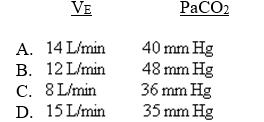
سؤال
سؤال
سؤال
سؤال
You measure the spontaneous rate of breathing and VT on four patients receiving ventilator support. For which one is successful weaning most likely? 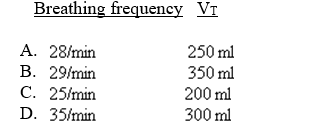
سؤال
سؤال
سؤال
Which of the following five adult patients receiving ventilatory support is the best candidate for weaning? 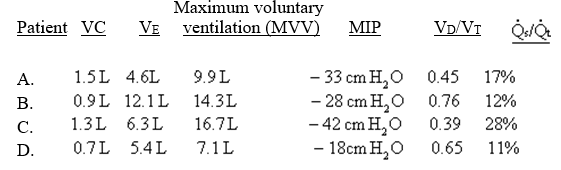
سؤال
سؤال
سؤال
سؤال
سؤال
سؤال
سؤال
سؤال
سؤال
سؤال
سؤال
سؤال
سؤال
سؤال
سؤال
سؤال
سؤال
Of the following adult patients receiving ventilatory support, which has a stable enough cardiovascular profile to consider weaning? 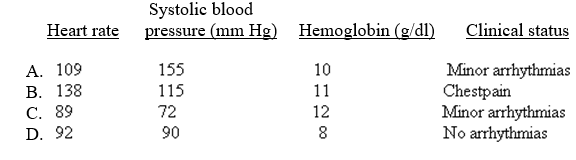
سؤال
سؤال
سؤال
سؤال
سؤال
سؤال
سؤال
سؤال
سؤال
سؤال
سؤال
سؤال
سؤال
سؤال
سؤال
سؤال
سؤال
سؤال
سؤال
سؤال
سؤال
سؤال
سؤال
سؤال
سؤال
سؤال
سؤال
سؤال
سؤال
سؤال
سؤال
سؤال
سؤال
سؤال

فتح الحزمة
قم بالتسجيل لفتح البطاقات في هذه المجموعة!
Unlock Deck
Unlock Deck
1/66

العب

ملء الشاشة (f)
Deck 47: Discontinuing Ventilatory Support
1
When is ventilator dependence likely to occur?
I)when ventilatory capacity exceeds demand
II)when arterial hypoxemia is present
III)when the patient is malnourished
IV)when the cardiovascular system is unstable
A)II and IV
B)I, II, and III
C)III and IV
D)II, III, and IV
I)when ventilatory capacity exceeds demand
II)when arterial hypoxemia is present
III)when the patient is malnourished
IV)when the cardiovascular system is unstable
A)II and IV
B)I, II, and III
C)III and IV
D)II, III, and IV
D
2
Ventilatory capacity is determined by all of the following except:
A)central nervous system (CNS) drive
B)trigger level
C)muscle strength
D)muscle endurance
A)central nervous system (CNS) drive
B)trigger level
C)muscle strength
D)muscle endurance
B
3
Which of the following is false about the P0.1 measure?
A)P0.1 correlates well with central respiratory drive.
B)P0.1 is the airway pressure measured 100 ms after occlusion.
C)P0.1 is an effort-dependent measure of respiratory drive.
D)Chronic obstructive pulmonary disease (COPD) patients with a P0.1 greater than 6 cm H2O are difficult to wean.
A)P0.1 correlates well with central respiratory drive.
B)P0.1 is the airway pressure measured 100 ms after occlusion.
C)P0.1 is an effort-dependent measure of respiratory drive.
D)Chronic obstructive pulmonary disease (COPD) patients with a P0.1 greater than 6 cm H2O are difficult to wean.
C
4
A patient receiving ventilator support has a spontaneous rate of breathing of 26/min and an average VT of 300 ml. What is this patient's rapid-shallow breathing index?
A)12
B)87
C)105
D)66
A)12
B)87
C)105
D)66
فتح الحزمة
افتح القفل للوصول البطاقات البالغ عددها 66 في هذه المجموعة.
فتح الحزمة
k this deck
5
All of the following oxygenation measures support a patient's readiness to wean except:
A)PaO2/PAO2 (a/A) = 0.45
B)PaO2/FIO2 (P/F) = 110
C)PAO2 - PaO2 = 240 mm Hg
D)physiologic shunt ( ) = 12%
A)PaO2/PAO2 (a/A) = 0.45
B)PaO2/FIO2 (P/F) = 110
C)PAO2 - PaO2 = 240 mm Hg
D)physiologic shunt ( ) = 12%
فتح الحزمة
افتح القفل للوصول البطاقات البالغ عددها 66 في هذه المجموعة.
فتح الحزمة
k this deck
6
Successful weaning is less likely when a patient's work of breathing exceeds what level?
A)4 J/min
B)8 J/min
C)12 J/min
D)16 J/min
A)4 J/min
B)8 J/min
C)12 J/min
D)16 J/min
فتح الحزمة
افتح القفل للوصول البطاقات البالغ عددها 66 في هذه المجموعة.
فتح الحزمة
k this deck
7
All of the following indicate that a patient's renal function is adequate for weaning except:
A)output = 20 ml/hr
B)no major weight gain
C)no edema present
D)normal electrolytes
A)output = 20 ml/hr
B)no major weight gain
C)no edema present
D)normal electrolytes
فتح الحزمة
افتح القفل للوصول البطاقات البالغ عددها 66 في هذه المجموعة.
فتح الحزمة
k this deck
8
Which of the following patients exhibits an acceptable ventilatory demand?
فتح الحزمة
افتح القفل للوصول البطاقات البالغ عددها 66 في هذه المجموعة.
فتح الحزمة
k this deck
9
Which of the following metabolic factors can hinder weaning?
I.excessive carbohydrate feeding
II.amino acid-based parenteral nutrition
III.calorie intake = 1.5 * resting energy expenditure (REE)
A)II and III
B)I and II
C)I, II, and III
D)I and III
I.excessive carbohydrate feeding
II.amino acid-based parenteral nutrition
III.calorie intake = 1.5 * resting energy expenditure (REE)
A)II and III
B)I and II
C)I, II, and III
D)I and III
فتح الحزمة
افتح القفل للوصول البطاقات البالغ عددها 66 في هذه المجموعة.
فتح الحزمة
k this deck
10
What is the most important prerequisite for weaning a patient from ventilatory support?
A)improvement in the original problem requiring mechanical ventilation
B)assurance that the patient's ventilatory demand exceeds the patient's capacity
C)objective evidence indicating good respiratory muscle endurance
D)ability to maintain adequate oxygenation with an FIO2 less than 0.4
A)improvement in the original problem requiring mechanical ventilation
B)assurance that the patient's ventilatory demand exceeds the patient's capacity
C)objective evidence indicating good respiratory muscle endurance
D)ability to maintain adequate oxygenation with an FIO2 less than 0.4
فتح الحزمة
افتح القفل للوصول البطاقات البالغ عددها 66 في هذه المجموعة.
فتح الحزمة
k this deck
11
A patient has an adequate ventilatory reserve if which of the following is TRUE?
A)ability to double the resting minute ventilation
B)normal PaCO2 and minute ventilation less than 10 L/min
C)MIP = -55 cm H2O
D)VD/VT less than 0.4
A)ability to double the resting minute ventilation
B)normal PaCO2 and minute ventilation less than 10 L/min
C)MIP = -55 cm H2O
D)VD/VT less than 0.4
فتح الحزمة
افتح القفل للوصول البطاقات البالغ عددها 66 في هذه المجموعة.
فتح الحزمة
k this deck
12
You measure the spontaneous rate of breathing and VT on four patients receiving ventilator support. For which one is successful weaning most likely?
فتح الحزمة
افتح القفل للوصول البطاقات البالغ عددها 66 في هذه المجموعة.
فتح الحزمة
k this deck
13
All of the following factors can reduce a patient's ventilatory drive except:
A)respiratory alkalosis
B)metabolic acidosis
C)depressant drugs
D)decreased metabolism
A)respiratory alkalosis
B)metabolic acidosis
C)depressant drugs
D)decreased metabolism
فتح الحزمة
افتح القفل للوصول البطاقات البالغ عددها 66 في هذه المجموعة.
فتح الحزمة
k this deck
14
Which of the following signs observed on a mechanically ventilated patient indicate that successful weaning is unlikely?
I)palpable scalene muscle use during inspiration
II)palpable abdominal tensing during expiration
III)presence of an irregular breathing pattern
IV)patient unable to alter breathing pattern on command
A)II and IV
B)I, II, and III
C)III and IV
D)I, II, III, and IV
I)palpable scalene muscle use during inspiration
II)palpable abdominal tensing during expiration
III)presence of an irregular breathing pattern
IV)patient unable to alter breathing pattern on command
A)II and IV
B)I, II, and III
C)III and IV
D)I, II, III, and IV
فتح الحزمة
افتح القفل للوصول البطاقات البالغ عددها 66 في هذه المجموعة.
فتح الحزمة
k this deck
15
Which of the following five adult patients receiving ventilatory support is the best candidate for weaning?
فتح الحزمة
افتح القفل للوصول البطاقات البالغ عددها 66 في هذه المجموعة.
فتح الحزمة
k this deck
16
All of the following indicate that an adult patient is ready to be weaned from ventilatory support except:
A)VC = 1.9 L
B)spontaneous rate of 32/min
C) = 8%
D)MIP = -45 cm H2O
A)VC = 1.9 L
B)spontaneous rate of 32/min
C) = 8%
D)MIP = -45 cm H2O
فتح الحزمة
افتح القفل للوصول البطاقات البالغ عددها 66 في هذه المجموعة.
فتح الحزمة
k this deck
17
Above what pressure-time index (PTI) will most patients be unable to sustain spontaneous breathing?
A)0.03
B)0.05
C)0.10
D)0.15
A)0.03
B)0.05
C)0.10
D)0.15
فتح الحزمة
افتح القفل للوصول البطاقات البالغ عددها 66 في هذه المجموعة.
فتح الحزمة
k this deck
18
All of the following indicate that an adult patient is ready to be weaned from ventilatory support except:
A)PAO2 - PaO2 = 430 on 100% O2
B)VD/VT = 0.55
C)MIP = -33 cm H2O
D)PO2 = 76 mm Hg on 40% O2
A)PAO2 - PaO2 = 430 on 100% O2
B)VD/VT = 0.55
C)MIP = -33 cm H2O
D)PO2 = 76 mm Hg on 40% O2
فتح الحزمة
افتح القفل للوصول البطاقات البالغ عددها 66 في هذه المجموعة.
فتح الحزمة
k this deck
19
What is the least reliable weaning index?
A)vital capacity (VC)
B)maximum inspiratory capacity (MIP)
C)minute ventilation (VE)
D)rapid-shallow breathing index (f/VT)
A)vital capacity (VC)
B)maximum inspiratory capacity (MIP)
C)minute ventilation (VE)
D)rapid-shallow breathing index (f/VT)
فتح الحزمة
افتح القفل للوصول البطاقات البالغ عددها 66 في هذه المجموعة.
فتح الحزمة
k this deck
20
All of the following factors will increase ventilatory demand (workload) except:
A)severe hypoxemia
B)pulmonary infection
C)increased compliance
D)bronchospasm
A)severe hypoxemia
B)pulmonary infection
C)increased compliance
D)bronchospasm
فتح الحزمة
افتح القفل للوصول البطاقات البالغ عددها 66 في هذه المجموعة.
فتح الحزمة
k this deck
21
An alert patient receiving ventilatory support through a demand flow intermittent mandatory ventilation system exhibits clinical signs of an increased work of breathing whenever you try to decrease the mandatory rate below 6/min. In order to aid in weaning this patient, which of the following would you recommend?
A)Apply a low level of pressure support.
B)Apply a high level of inspiratory pressure.
C)Increase the mandatory VT.
D)Decrease the mandatory VT.
A)Apply a low level of pressure support.
B)Apply a high level of inspiratory pressure.
C)Increase the mandatory VT.
D)Decrease the mandatory VT.
فتح الحزمة
افتح القفل للوصول البطاقات البالغ عددها 66 في هذه المجموعة.
فتح الحزمة
k this deck
22
Which of the following ventilator modes can ensure delivery of a preset VT during spontaneous breathing?
I. volume support or VERSUS (Siemens Servo Ventilator 300)
II. volume-assured pressure support or VAPS (Bird 8400ST)
III. augmented minute ventilation or MMV (Bear 1000)
A)II and III
B)I and II
C)I and III
D)I, II, and III
I. volume support or VERSUS (Siemens Servo Ventilator 300)
II. volume-assured pressure support or VAPS (Bird 8400ST)
III. augmented minute ventilation or MMV (Bear 1000)
A)II and III
B)I and II
C)I and III
D)I, II, and III
فتح الحزمة
افتح القفل للوصول البطاقات البالغ عددها 66 في هذه المجموعة.
فتح الحزمة
k this deck
23
Which of the following must you verify when considering weaning an obtunded patient?
I)adequate gag reflex
II)no depressant drugs
III)adequate cough
A)II and III
B)I and II
C)I, II, and III
D)I and III
I)adequate gag reflex
II)no depressant drugs
III)adequate cough
A)II and III
B)I and II
C)I, II, and III
D)I and III
فتح الحزمة
افتح القفل للوصول البطاقات البالغ عددها 66 في هذه المجموعة.
فتح الحزمة
k this deck
24
Common approaches used to wean patients from ventilatory support include which of the following?
I)T-tube alternating with mechanical ventilation
II)pressure-supported ventilation (PSV)III.intermittent mandatory ventilation
A)II and III
B)I and II
C)I, II, and III
D)I and III
I)T-tube alternating with mechanical ventilation
II)pressure-supported ventilation (PSV)III.intermittent mandatory ventilation
A)II and III
B)I and II
C)I, II, and III
D)I and III
فتح الحزمة
افتح القفل للوصول البطاقات البالغ عددها 66 في هذه المجموعة.
فتح الحزمة
k this deck
25
Which of the following is false about noninvasive positive-pressure ventilation (NIPPV)?
A)NIPPV can support ventilation without a tracheal airway.
B)NIPPV should not be used with patients at risk for aspiration.
C)Patients likely to fail weaning are good candidates for NIPPV.
D)NIPPV can be used to prevent reintubation when weaning fails.
A)NIPPV can support ventilation without a tracheal airway.
B)NIPPV should not be used with patients at risk for aspiration.
C)Patients likely to fail weaning are good candidates for NIPPV.
D)NIPPV can be used to prevent reintubation when weaning fails.
فتح الحزمة
افتح القفل للوصول البطاقات البالغ عددها 66 في هذه المجموعة.
فتح الحزمة
k this deck
26
A physician orders a T-tube trial for a patient receiving ventilatory support in the assist-control mode with an FIO2 of 0.4. What FIO2 would you recommend for this patient during the spontaneous breathing period?
A)0.3
B)0.4
C)0.5
D)0.6
A)0.3
B)0.4
C)0.5
D)0.6
فتح الحزمة
افتح القفل للوصول البطاقات البالغ عددها 66 في هذه المجموعة.
فتح الحزمة
k this deck
27
Which method of weaning may be useful to minimize auto-PEEP?
A)intermittent mandatory ventilation
B)synchronized intermittent mandatory ventilation
C)continuous positive airway pressure (CPAP)
D)T-piece
A)intermittent mandatory ventilation
B)synchronized intermittent mandatory ventilation
C)continuous positive airway pressure (CPAP)
D)T-piece
فتح الحزمة
افتح القفل للوصول البطاقات البالغ عددها 66 في هذه المجموعة.
فتح الحزمة
k this deck
28
Prerequisites for successful weaning include:
I)psychological readiness
II)adequate gag and swallow reflexes
III)ability to follow instructions
IV)adequate cough
A)I, II, and III
B)II and IV
C)I, II, III, and IV
D)III and IV
I)psychological readiness
II)adequate gag and swallow reflexes
III)ability to follow instructions
IV)adequate cough
A)I, II, and III
B)II and IV
C)I, II, III, and IV
D)III and IV
فتح الحزمة
افتح القفل للوصول البطاقات البالغ عددها 66 في هذه المجموعة.
فتح الحزمة
k this deck
29
Which of the following ventilator strategies would you consider as a good alternative to T-tube trials when using a rapid weaning protocol?
I. continuous positive airway pressure (CPAP) with flow-by (flow triggering)
II. low-level pressure-supported ventilation (PSV)
III. intermittent mandatory ventilation
A)II and III
B)I and II
C)I, II, and III
D)I and III
I. continuous positive airway pressure (CPAP) with flow-by (flow triggering)
II. low-level pressure-supported ventilation (PSV)
III. intermittent mandatory ventilation
A)II and III
B)I and II
C)I, II, and III
D)I and III
فتح الحزمة
افتح القفل للوصول البطاقات البالغ عددها 66 في هذه المجموعة.
فتح الحزمة
k this deck
30
Which of the following techniques can help to decrease a patient's imposed work of breathing during weaning from ventilatory support?
I)use of pressure-supported ventilation (PSV)II.trigger breath by flow, not pressure
III)application of small amounts of continuous positive airway pressure (CPAP) or positive end-expiratory pressure (PEEP)IV.use of automatic tube compensation (ATC)
A)II and IV
B)I, II, and III
C)III and IV
D)I, II, III, and IV
I)use of pressure-supported ventilation (PSV)II.trigger breath by flow, not pressure
III)application of small amounts of continuous positive airway pressure (CPAP) or positive end-expiratory pressure (PEEP)IV.use of automatic tube compensation (ATC)
A)II and IV
B)I, II, and III
C)III and IV
D)I, II, III, and IV
فتح الحزمة
افتح القفل للوصول البطاقات البالغ عددها 66 في هذه المجموعة.
فتح الحزمة
k this deck
31
Which of the following electrolyte imbalances can hinder weaning from ventilatory support?
I)hypophosphatemia
II)hypomagnesemia
III)hypokalemia
A)II and III
B)I and II
C)I, II, and III
D)I and III
I)hypophosphatemia
II)hypomagnesemia
III)hypokalemia
A)II and III
B)I and II
C)I, II, and III
D)I and III
فتح الحزمة
افتح القفل للوصول البطاقات البالغ عددها 66 في هذه المجموعة.
فتح الحزمة
k this deck
32
Of the following adult patients receiving ventilatory support, which has a stable enough cardiovascular profile to consider weaning?
فتح الحزمة
افتح القفل للوصول البطاقات البالغ عددها 66 في هذه المجموعة.
فتح الحزمة
k this deck
33
What are some advantages of mandatory minute ventilation (MMV) as a weaning tool?
I. It provides greater control over PaCO2 than intermittent mandatory ventilation does.
II. It prevents acidemia with acute hypoventilation.
III. It eliminates concerns over depressant drugs.
IV. It ensures an efficient pattern of ventilation.
A)II and IV
B)I, II, and III
C)III and IV
D)I, II, III, and IV
I. It provides greater control over PaCO2 than intermittent mandatory ventilation does.
II. It prevents acidemia with acute hypoventilation.
III. It eliminates concerns over depressant drugs.
IV. It ensures an efficient pattern of ventilation.
A)II and IV
B)I, II, and III
C)III and IV
D)I, II, III, and IV
فتح الحزمة
افتح القفل للوصول البطاقات البالغ عددها 66 في هذه المجموعة.
فتح الحزمة
k this deck
34
Which of the following cardiovascular signs would indicate that a patient's cardiovascular status is unstable and that weaning should NOT begin at this time?
A)cardiac index of 2.5 L/min/m2
B)hemoglobin content of 10 g/dl
C)heart rate of 108/min
D)systolic blood pressure of 80 mm Hg
A)cardiac index of 2.5 L/min/m2
B)hemoglobin content of 10 g/dl
C)heart rate of 108/min
D)systolic blood pressure of 80 mm Hg
فتح الحزمة
افتح القفل للوصول البطاقات البالغ عددها 66 في هذه المجموعة.
فتح الحزمة
k this deck
35
An alert patient receiving intermittent mandatory ventilation at a rate of 8/min and VT of 600 ml has stable vital signs and satisfactory blood gases on an FIO2 of 0.45. What would you do to initiate weaning for this patient?
A)Lengthen the automatic sigh interval.
B)Decrease the mandatory rate to 5 to 6/min.
C)Increase FIO2 to 60%.
D)Decrease the VT to 500 ml.
A)Lengthen the automatic sigh interval.
B)Decrease the mandatory rate to 5 to 6/min.
C)Increase FIO2 to 60%.
D)Decrease the VT to 500 ml.
فتح الحزمة
افتح القفل للوصول البطاقات البالغ عددها 66 في هذه المجموعة.
فتح الحزمة
k this deck
36
A physician has selected a pressure support protocol to wean a patient off ventilatory support. Which of the following pressure levels would you recommend to begin the weaning process?
A)pressure sufficient to obtain a VT of 3 to 5 ml/kg of ideal body weight (IBW)
B)pressure sufficient to overcome the imposed workload
C)pressure sufficient to obtain a VT of 8 to 10 ml/kg IBW
D)pressure equal to 30% of the volume-cycled peak inspiratory pressure
A)pressure sufficient to obtain a VT of 3 to 5 ml/kg of ideal body weight (IBW)
B)pressure sufficient to overcome the imposed workload
C)pressure sufficient to obtain a VT of 8 to 10 ml/kg IBW
D)pressure equal to 30% of the volume-cycled peak inspiratory pressure
فتح الحزمة
افتح القفل للوصول البطاقات البالغ عددها 66 في هذه المجموعة.
فتح الحزمة
k this deck
37
A physician is using a pressure support protocol to wean a patient off ventilatory support. The patient is now at a 5 cm H2O pressure level and has a spontaneous respiratory rate of 21/min. Other cardiovascular and respiratory signs indicate that the patient remains stable. Which of the following actions would you recommend at this point?
A)Switch the patient to 5 cm H2O continuous positive airway pressure (CPAP) through the endotracheal tube.
B)Extubate the patient and provide supplemental O2.
C)Switch the patient to intermittent mandatory ventilation at a rate of 2/min.
D)Decrease the pressure support level to 3 cm H2O.
A)Switch the patient to 5 cm H2O continuous positive airway pressure (CPAP) through the endotracheal tube.
B)Extubate the patient and provide supplemental O2.
C)Switch the patient to intermittent mandatory ventilation at a rate of 2/min.
D)Decrease the pressure support level to 3 cm H2O.
فتح الحزمة
افتح القفل للوصول البطاقات البالغ عددها 66 في هذه المجموعة.
فتح الحزمة
k this deck
38
Advantages of adding continuous positive airway pressure (CPAP) to T-tube weaning include all of the following except:
A)improved blood oxygenation
B)decreased work of breathing
C)compensation for auto-PEEP
D)faster weaning or extubation
A)improved blood oxygenation
B)decreased work of breathing
C)compensation for auto-PEEP
D)faster weaning or extubation
فتح الحزمة
افتح القفل للوصول البطاقات البالغ عددها 66 في هذه المجموعة.
فتح الحزمة
k this deck
39
With most ventilators that provide mandatory minute ventilation, what happens if the patient's minute ventilation falls below the preset level?
A)The frequency of mandatory breaths increases.
B)The level of pressure support increases.
C)The frequency of mandatory breaths decreases.
D)The machine delivers a series of sigh breaths.
A)The frequency of mandatory breaths increases.
B)The level of pressure support increases.
C)The frequency of mandatory breaths decreases.
D)The machine delivers a series of sigh breaths.
فتح الحزمة
افتح القفل للوصول البطاقات البالغ عددها 66 في هذه المجموعة.
فتح الحزمة
k this deck
40
All of the following drug categories can depress ventilatory drive and hinder weaning except:
A)analgesics
B)narcotics
C)hypnotics
D)antibiotics
A)analgesics
B)narcotics
C)hypnotics
D)antibiotics
فتح الحزمة
افتح القفل للوصول البطاقات البالغ عددها 66 في هذه المجموعة.
فتح الحزمة
k this deck
41
What patients are at high risk for postextubation upper airway obstruction?
I)those with neuromuscular disorders
II)those who have had major neck surgery
III)those with infectious masses or abscesses
A)II and III
B)I and II
C)I and III
D)I, II, and III
I)those with neuromuscular disorders
II)those who have had major neck surgery
III)those with infectious masses or abscesses
A)II and III
B)I and II
C)I and III
D)I, II, and III
فتح الحزمة
افتح القفل للوصول البطاقات البالغ عددها 66 في هذه المجموعة.
فتح الحزمة
k this deck
42
Which of the following cardiovascular changes would you consider a bad sign during weaning a patient from ventilatory support?
A)development of chest pain
B)increase in both stroke volume and cardiac index
C)increase in heart rate from 95 to 110/min
D)fall in blood pressure from 143/95 to 126/88 mm Hg
A)development of chest pain
B)increase in both stroke volume and cardiac index
C)increase in heart rate from 95 to 110/min
D)fall in blood pressure from 143/95 to 126/88 mm Hg
فتح الحزمة
افتح القفل للوصول البطاقات البالغ عددها 66 في هذه المجموعة.
فتح الحزمة
k this deck
43
Which of the following is FALSE about artificial tracheal airways and weaning?
A)There are decreases in tube inner diameter (ID) and increases in VE increase the work of breathing.
B)The added work due to artificial airways can increase ventilator dependence.
C)Artificial airways can increase the work of breathing nearly threefold.
D)Tracheostomy tubes increase the work of breathing more than can endotracheal tubes.
A)There are decreases in tube inner diameter (ID) and increases in VE increase the work of breathing.
B)The added work due to artificial airways can increase ventilator dependence.
C)Artificial airways can increase the work of breathing nearly threefold.
D)Tracheostomy tubes increase the work of breathing more than can endotracheal tubes.
فتح الحزمة
افتح القفل للوصول البطاقات البالغ عددها 66 في هذه المجموعة.
فتح الحزمة
k this deck
44
Which of the following patients are at high risk for severe laryngeal edema after an endotracheal tube extubation?
I)pediatric burn victim
II)patient with epiglottitis
III)smoke inhalation patient
IV)pulmonary fibrosis patient
A)II and IV
B)I, II, and III
C)III and IV
D)I, II, III, and IV
I)pediatric burn victim
II)patient with epiglottitis
III)smoke inhalation patient
IV)pulmonary fibrosis patient
A)II and IV
B)I, II, and III
C)III and IV
D)I, II, III, and IV
فتح الحزمة
افتح القفل للوصول البطاقات البالغ عددها 66 في هذه المجموعة.
فتح الحزمة
k this deck
45
All of the following are disadvantages of using intermittent mandatory ventilation for weaning except:
A)potentially high work of breathing
B)weaning time possibly prolonged
C)patient-ventilator dyssynchrony
D)higher mean airway pressures
A)potentially high work of breathing
B)weaning time possibly prolonged
C)patient-ventilator dyssynchrony
D)higher mean airway pressures
فتح الحزمة
افتح القفل للوصول البطاقات البالغ عددها 66 في هذه المجموعة.
فتح الحزمة
k this deck
46
While monitoring a patient during a T-tube weaning trial, you notice the following: an increase in heart rate from 86 to 100/min; an increase in respiratory rate from 12 to 23/min; an increase in PaCO2 from 39 to 45 mm Hg; and a decrease in PaO2 from 82 to 73 mm Hg. Which of the following actions would be appropriate at this time?
A)Reconnect the patient to the ventilator with prior settings.
B)Request that the patient be administered a mild sedative.
C)Suction the patient after manual hyperinflation or oxygenation.
D)Encourage the patient to relax, and continue careful monitoring.
A)Reconnect the patient to the ventilator with prior settings.
B)Request that the patient be administered a mild sedative.
C)Suction the patient after manual hyperinflation or oxygenation.
D)Encourage the patient to relax, and continue careful monitoring.
فتح الحزمة
افتح القفل للوصول البطاقات البالغ عددها 66 في هذه المجموعة.
فتح الحزمة
k this deck
47
Approximately what level of pressure support is required to overcome the work of breathing imposed by an 8-mm endotracheal tube in a patient with a spontaneous minute ventilation of 12 L/min?
A)3
B)5
C)8
D)11
A)3
B)5
C)8
D)11
فتح الحزمة
افتح القفل للوصول البطاقات البالغ عددها 66 في هذه المجموعة.
فتح الحزمة
k this deck
48
While monitoring a patient during a T-tube weaning trial, you notice the following: increased patient agitation; increased heart rate (from 90 to 118/min); increased respiratory rate (from 17 to 33/min with some paradoxical motion); and premature ventricular contractions (PVCs) increasing to an average of 5/min. Which of the following actions would be appropriate at this time?
A)Reconnect the patient to the ventilator with prior settings.
B)Encourage the patient to relax, and continue careful monitoring.
C)Request that the patient be given a stat (immediate) bolus of lidocaine.
D)Request that the patient be given a strong sedative or hypnotic.
A)Reconnect the patient to the ventilator with prior settings.
B)Encourage the patient to relax, and continue careful monitoring.
C)Request that the patient be given a stat (immediate) bolus of lidocaine.
D)Request that the patient be given a strong sedative or hypnotic.
فتح الحزمة
افتح القفل للوصول البطاقات البالغ عددها 66 في هذه المجموعة.
فتح الحزمة
k this deck
49
Limitations of noninvasive positive-pressure ventilation include all of the following except it:
A)requires patient cooperation
B)limits access to the airway
C)causes mask-related problems
D)prevents speech or swallowing
A)requires patient cooperation
B)limits access to the airway
C)causes mask-related problems
D)prevents speech or swallowing
فتح الحزمة
افتح القفل للوصول البطاقات البالغ عددها 66 في هذه المجموعة.
فتح الحزمة
k this deck
50
Advantages of noninvasive positive-pressure ventilation include all of the following except it:
A)preserves airway defenses
B)allows intermittent use
C)eliminates risk of aspiration
D)allows speech or swallowing
A)preserves airway defenses
B)allows intermittent use
C)eliminates risk of aspiration
D)allows speech or swallowing
فتح الحزمة
افتح القفل للوصول البطاقات البالغ عددها 66 في هذه المجموعة.
فتح الحزمة
k this deck
51
While monitoring a patient being weaned by intermittent mandatory ventilation, you notice the following: total minute ventilation = 12 L/min; set (machine) minute ventilation = 5 L/min; set rate = 10/min; total rate = 20/min. What is the patient's average spontaneous VT?
A)500 ml
B)600 ml
C)700 ml
D)800 ml
A)500 ml
B)600 ml
C)700 ml
D)800 ml
فتح الحزمة
افتح القفل للوصول البطاقات البالغ عددها 66 في هذه المجموعة.
فتح الحزمة
k this deck
52
All of the following are advantages of using pressure-supported ventilation for weaning except:
A)guaranteed VT
B)reduced work of breathing
C)respiratory muscle fatigue prevented
D)better patient comfort and synchrony
A)guaranteed VT
B)reduced work of breathing
C)respiratory muscle fatigue prevented
D)better patient comfort and synchrony
فتح الحزمة
افتح القفل للوصول البطاقات البالغ عددها 66 في هذه المجموعة.
فتح الحزمة
k this deck
53
All of the following are disadvantages of using the T-tube method for weaning except:
A)more staff time required
B)abrupt transition sometimes difficult
C)high imposed work of breathing
D)lack of alarm systems
A)more staff time required
B)abrupt transition sometimes difficult
C)high imposed work of breathing
D)lack of alarm systems
فتح الحزمة
افتح القفل للوصول البطاقات البالغ عددها 66 في هذه المجموعة.
فتح الحزمة
k this deck
54
Which of the following changes can be expected when weaning a patient through a T-tube trial?
I)increase in respiratory rate of 10/min
II)increase in heart rate of 15 to 20/min
III)5 to 10 mm Hg rise in the arterial PCO2
IV)doubling of the minute ventilation
A)II and IV
B)I, II, and III
C)III and IV
D)I, II, III, and IV
I)increase in respiratory rate of 10/min
II)increase in heart rate of 15 to 20/min
III)5 to 10 mm Hg rise in the arterial PCO2
IV)doubling of the minute ventilation
A)II and IV
B)I, II, and III
C)III and IV
D)I, II, III, and IV
فتح الحزمة
افتح القفل للوصول البطاقات البالغ عددها 66 في هذه المجموعة.
فتح الحزمة
k this deck
55
In most weaning protocols, what minimum blood gas parameters are needed to start the process?
A)PaO2 greater than 70 mm Hg and PaCO2 less than 50 mm Hg on FIO2 less than 0.6 and PEEP less than 5 cm H2O
B)PaO2 greater than 70 mm Hg and PaCO2 less than 50 mm Hg on FIO2 less than 0.4 and PEEP 5 cm H2O or greater
C)PaO2 greater than 50 mm Hg and PaCO2 less than 50 mm Hg on FIO2 less than 0.6 and PEEP less than 10 cm H2O
D)PaO2 greater than 70 mm Hg and PaCO2 less than 70 mm Hg on FIO2 less than 0.6 and PEEP 5 cm H2O or greater
A)PaO2 greater than 70 mm Hg and PaCO2 less than 50 mm Hg on FIO2 less than 0.6 and PEEP less than 5 cm H2O
B)PaO2 greater than 70 mm Hg and PaCO2 less than 50 mm Hg on FIO2 less than 0.4 and PEEP 5 cm H2O or greater
C)PaO2 greater than 50 mm Hg and PaCO2 less than 50 mm Hg on FIO2 less than 0.6 and PEEP less than 10 cm H2O
D)PaO2 greater than 70 mm Hg and PaCO2 less than 70 mm Hg on FIO2 less than 0.6 and PEEP 5 cm H2O or greater
فتح الحزمة
افتح القفل للوصول البطاقات البالغ عددها 66 في هذه المجموعة.
فتح الحزمة
k this deck
56
Which of the following weaning methods provides the best respiratory muscle strength conditioning?
A)pressure-supported ventilation
B)T-tube
C)intermittent mandatory ventilation
D)volume-assured pressure support (VAPS)
A)pressure-supported ventilation
B)T-tube
C)intermittent mandatory ventilation
D)volume-assured pressure support (VAPS)
فتح الحزمة
افتح القفل للوصول البطاقات البالغ عددها 66 في هذه المجموعة.
فتح الحزمة
k this deck
57
While monitoring a patient being weaned through a T-tube protocol, signs indicating that mechanical ventilation should be restored include all of the following except:
A)development of cardiac arrhythmias
B)asynchronous or paradoxical breathing
C)development of severe hypotension
D)moderate rise in respiratory rate
A)development of cardiac arrhythmias
B)asynchronous or paradoxical breathing
C)development of severe hypotension
D)moderate rise in respiratory rate
فتح الحزمة
افتح القفل للوصول البطاقات البالغ عددها 66 في هذه المجموعة.
فتح الحزمة
k this deck
58
What is the best way to decrease the work of breathing imposed by an artificial airway on a patient receiving ventilatory support?
A)Provide pressure support.
B)Decrease inspiratory flow.
C)Lower the minute ventilation.
D)Use low rates of breathing.
A)Provide pressure support.
B)Decrease inspiratory flow.
C)Lower the minute ventilation.
D)Use low rates of breathing.
فتح الحزمة
افتح القفل للوصول البطاقات البالغ عددها 66 في هذه المجموعة.
فتح الحزمة
k this deck
59
What are some factors that indicate a patient's readiness for extubation?
I)adequate oxygenation or ventilation with spontaneous breathing
II)minimal risk for upper airway obstruction
III)adequate airway protection or minimal aspiration risk
IV)adequate clearance of pulmonary secretions
A)II and IV
B)I, II, and III
C)III and IV
D)I, II, III, and IV
I)adequate oxygenation or ventilation with spontaneous breathing
II)minimal risk for upper airway obstruction
III)adequate airway protection or minimal aspiration risk
IV)adequate clearance of pulmonary secretions
A)II and IV
B)I, II, and III
C)III and IV
D)I, II, III, and IV
فتح الحزمة
افتح القفل للوصول البطاقات البالغ عددها 66 في هذه المجموعة.
فتح الحزمة
k this deck
60
In considering a patient for endotracheal tube extubation, which of the following procedures would you recommend to determine the risk of postextubation upper airway obstruction?
A)methylene blue test
B)pre- and post-bronchodilator
C)cuff leak test
D)forced vital capacity
A)methylene blue test
B)pre- and post-bronchodilator
C)cuff leak test
D)forced vital capacity
فتح الحزمة
افتح القفل للوصول البطاقات البالغ عددها 66 في هذه المجموعة.
فتح الحزمة
k this deck
61
Treatment options for severe postextubation stridor include all of the following except:
A)nebulized racemic epinephrine
B)heated saline aerosol
C)nebulized dexamethasone
D)He-O2 mixtures
A)nebulized racemic epinephrine
B)heated saline aerosol
C)nebulized dexamethasone
D)He-O2 mixtures
فتح الحزمة
افتح القفل للوصول البطاقات البالغ عددها 66 في هذه المجموعة.
فتح الحزمة
k this deck
62
A patient whom you are trying to wean below 5 cm H2O pressure support develops respiratory muscle fatigue. Which of the following would you recommend to overcome this problem?
I. Make sure there is adequate O2 transport or cardiac output.
II. Make sure that the patient is adequately nourished.
III. Check and replace any depleted electrolytes.
IV. Clear secretions and provide bronchodilation.
A)II and IV
B)I, II, and III
C)III and IV
D)I, II, III, and IV
I. Make sure there is adequate O2 transport or cardiac output.
II. Make sure that the patient is adequately nourished.
III. Check and replace any depleted electrolytes.
IV. Clear secretions and provide bronchodilation.
A)II and IV
B)I, II, and III
C)III and IV
D)I, II, III, and IV
فتح الحزمة
افتح القفل للوصول البطاقات البالغ عددها 66 في هذه المجموعة.
فتح الحزمة
k this deck
63
Common causes for weaning failure include all of the following except:
A)myocardial ischemia
B)critical illness polyneuropathy
C)psychological dependence
D)secondary polycythemia
A)myocardial ischemia
B)critical illness polyneuropathy
C)psychological dependence
D)secondary polycythemia
فتح الحزمة
افتح القفل للوصول البطاقات البالغ عددها 66 في هذه المجموعة.
فتح الحزمة
k this deck
64
In considering a patient for extubation, which of the following would you recommend to minimize the risk of postextubation aspiration?
A)Perform and confirm a positive cuff leak test.
B)Discontinue (DC) tube feeding 4 to 6 hours before extubation.
C)Perform deep endotracheal suctioning before extubation.
D)Keep the cuff inflated when removing the tube.
A)Perform and confirm a positive cuff leak test.
B)Discontinue (DC) tube feeding 4 to 6 hours before extubation.
C)Perform deep endotracheal suctioning before extubation.
D)Keep the cuff inflated when removing the tube.
فتح الحزمة
افتح القفل للوصول البطاقات البالغ عددها 66 في هذه المجموعة.
فتح الحزمة
k this deck
65
All of the following are useful strategies in managing the psychological problems encountered in weaning some patients from ventilator support except to:
A)secure a psychiatric consult
B)decrease environmental stress
C)avoid mental stimulation
D)teach relaxation methods
A)secure a psychiatric consult
B)decrease environmental stress
C)avoid mental stimulation
D)teach relaxation methods
فتح الحزمة
افتح القفل للوصول البطاقات البالغ عددها 66 في هذه المجموعة.
فتح الحزمة
k this deck
66
Who should make the decisions related to terminal weaning?
A)patient
B)patient's family and patient's physician
C)nurse
D)respiratory therapist
A)patient
B)patient's family and patient's physician
C)nurse
D)respiratory therapist
فتح الحزمة
افتح القفل للوصول البطاقات البالغ عددها 66 في هذه المجموعة.
فتح الحزمة
k this deck
فتح الحزمة
افتح القفل للوصول البطاقات البالغ عددها 66 في هذه المجموعة.






