







 تكلم مع الذكاء الاصطناعي


Deck 5: Economic Efficiency , Government Price Setting and Taxes
ملء الشاشة (f)

سؤال

سؤال
سؤال
سؤال
سؤال
سؤال
سؤال
سؤال
سؤال
سؤال
سؤال
سؤال
سؤال
سؤال
سؤال
سؤال
سؤال
سؤال
سؤال
سؤال
سؤال
سؤال
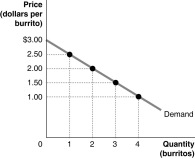
Refer to Figure 5-1. If the market price is $1.50, what is the consumer surplus on the second burrito?
A) $0.50
B) $1.00
C) $1.50
D) $3.50
سؤال
Refer to Figure 5-1. If the market price is $1.00, what is the consumer surplus on the third burrito?
A) $0.50
B) $1.00
C) $1.50
D) $7.50
سؤال
Refer to Figure 5-1. Arnold's marginal benefit from consuming the fourth burrito is
A) $0.
B) $1.00.
C) $2.50.
D) $3.00.
سؤال
Refer to Figure 5-1. If the market price is $1.00, what is the consumer surplus on the fourth burrito?
A) $0
B) $0.50
C) $1.50
D) $2.25
سؤال
سؤال
Refer to Figure 5-1. If the market price is $2.00, what is the consumer surplus on the first burrito?
A) $0.50
B) $1.00
C) $2.00
D) $7.50
سؤال
سؤال
سؤال
سؤال
Refer to Figure 5-1. If the market price is $1.50, what is the consumer surplus on the first burrito?
A) $0.50
B) $1.00
C) $1.50
D) $7.50
سؤال
Refer to Figure 5-1. If the market price is $1.00, what is Arnold's consumer surplus?
A) $1.00
B) $2.00
C) $6.00
D) $7.00
سؤال
سؤال
سؤال
سؤال
سؤال
Refer to Figure 5-1. Arnold's marginal benefit from consuming the third burrito is
A) $1.25.
B) $1.50.
C) $2.50.
D) $6.00.
سؤال
سؤال
Refer to Figure 5-1. If the market price is $1.50, what is Arnold's consumer surplus?
A) $1.50
B) $2.25
C) $3.00
D) $4.75
سؤال
Refer to Figure 5-1. Arnold's marginal benefit from consuming the second burrito is
A) $1.00.
B) $1.50.
C) $2.00.
D) $4.50.
سؤال
سؤال
Refer to Figure 5-1. If the market price is $1.00, what is the maximum number of burritos that Arnold will buy?
A) 1
B) 2
C) 3
D) 4
سؤال
سؤال
سؤال
سؤال
سؤال
Refer to Figure 5-1. If the market price is $3.00, what is the maximum number of burritos that Arnold will buy?
A) 0
B) 2
C) 3
D) 4
سؤال
سؤال
سؤال
سؤال
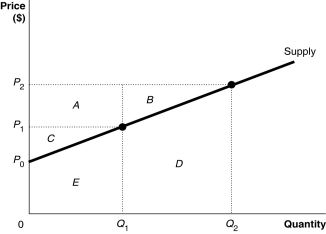
Refer to Figure 5-2. What area represents the increase in producer surplus when the market price rises from P1 to P2?
A) B + D
B) A + C + E
C) C + E
D) A + B
سؤال
سؤال
Refer to Figure 5-1. What is the total amount that Arnold is willing to pay for 3 burritos?
A) $1.50
B) $6.00
C) $7.00
D) $10.00
سؤال
Refer to Figure 5-1. What is the total amount that Arnold is willing to pay for 2 burritos?
A) $2.00
B) $4.50
C) $7.50
D) $10.00
سؤال
سؤال
Refer to Figure 5-1. If the market price is $2.00, what is the consumer surplus on the second burrito?
A) $0
B) $1.00
C) $2.00
D) $4.50
سؤال
سؤال
Refer to Figure 5-1. What is the total amount that Arnold is willing to pay for 4 burritos?
A) $1.00
B) $4.00
C) $7.00
D) $10.00
سؤال
Refer to Figure 5-2. What area represents producer surplus at a price of P2?
A) A + B
B) B + D
C) A + B + C
D) A + B + C + D + E
سؤال
Refer to Figure 5-1. If the market price is $2.00, what is Arnold's consumer surplus?
A) $0.50
B) $1.00
C) $1.50
D) $3.00
سؤال
سؤال
سؤال
سؤال
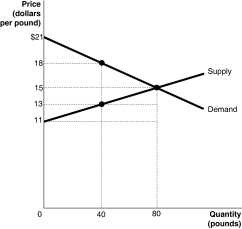
Refer to Figure 5-3. What is the value of the deadweight loss at a price of $18?
A) $100
B) $180
C) $660
D) $1040
سؤال
Refer to Figure 5-3. What is the value of producer surplus at the equilibrium price of $15?
A) $80
B) $160
C) $240
D) $400
سؤال
Refer to Figure 5-3. What is the value of consumer surplus at a price of $18?
A) $60
B) $120
C) $180
D) $240
سؤال
سؤال
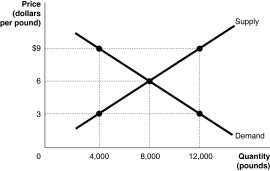
Refer to Figure 5-4. The figure above represents the market for pecans. Assume that this is a competitive market. At a price of $9,
A) the marginal cost of pecans is greater than the marginal benefit; therefore, output is inefficiently low.
B) producers should lower the price to $3 in order to sell the quantity demanded of 4000.
C) the marginal benefit of pecans is greater than the marginal cost; therefore, output is inefficiently high.
D) the marginal benefit of pecans is greater than the marginal cost; therefore, output is inefficiently low.
سؤال
Refer to Figure 5-3. What is the value of producer surplus at a price of $18?
A) $240
B) $300
C) $340
D) $720
سؤال
Refer to Figure 5-3. What is the value of the deadweight loss at the equilibrium price of $15?
A) $0
B) $40
C) $60
D) $100
سؤال
Refer to Figure 5-3. At a price of $18, consumers are willing to buy 40 pounds of tiger shrimp. Is this an economically efficient quantity?
A) No, the marginal benefit of the 40th unit exceeds the marginal cost of that 80th unit.
B) Yes, otherwise consumers would not buy 40 units.
C) Yes, because $18 shows what consumers are willing to pay for the product.
D) No, the marginal cost of the 40th unit exceeds the marginal benefit of the 40th unit.
سؤال
سؤال
سؤال
سؤال
سؤال
Refer to Figure 5-4. The figure above represents the market for pecans. Assume that this is a competitive market. At a price of $3,
A) the marginal cost of pecans is greater than the marginal benefit; therefore, output is inefficiently low.
B) producers should raise the price to $9 in order to sell the quantity demanded of 12 000.
C) the marginal benefit of pecans is greater than the marginal cost; therefore, output is inefficiently high.
D) the marginal benefit of pecans is greater than the marginal cost; therefore, output is inefficiently low.
سؤال
سؤال
Refer to Figure 5-3. At the equilibrium price of $15, consumers are willing to buy 80 pounds of tiger shrimp. Is this an economically efficient quantity?
A) No, the marginal benefit of the 80th unit exceeds the marginal cost of the 80th unit.
B) Yes, because marginal cost is zero at the 80th unit.
C) Yes, because $15 is the price where the marginal benefit is equal to the marginal cost.
D) No, the marginal cost of the 80th unit exceeds the marginal benefit of the 80th unit.
سؤال
Refer to Figure 5-3. What is the value of consumer surplus at the equilibrium price of $15?
A) $60
B) $120
C) $180
D) $240
سؤال

فتح الحزمة
قم بالتسجيل لفتح البطاقات في هذه المجموعة!
Unlock Deck
Unlock Deck
1/187

العب

ملء الشاشة (f)
Deck 5: Economic Efficiency , Government Price Setting and Taxes
1
Marginal cost is
A) the total cost of producing one unit of a good or service.
B) the average cost of producing a good or service.
C) the difference between the lowest price a firm would have been willing to accept and the price it actually receives.
D) the additional cost to a firm of producing one more unit of a good or service.
A) the total cost of producing one unit of a good or service.
B) the average cost of producing a good or service.
C) the difference between the lowest price a firm would have been willing to accept and the price it actually receives.
D) the additional cost to a firm of producing one more unit of a good or service.
D
2
Willingness to pay measures
A) the maximum price a buyer is willing to pay for a product minus the amount the buyer actually pays for it.
B) the amount a seller actually receives for a good minus the minimum amount the seller is willing to accept for the good.
C) the maximum price that a buyer is willing to pay for a good.
D) the maximum price a buyer is willing to pay minus the minimum price a seller is willing to accept.
A) the maximum price a buyer is willing to pay for a product minus the amount the buyer actually pays for it.
B) the amount a seller actually receives for a good minus the minimum amount the seller is willing to accept for the good.
C) the maximum price that a buyer is willing to pay for a good.
D) the maximum price a buyer is willing to pay minus the minimum price a seller is willing to accept.
C
3
Refer to Table 5-2. The table above lists the highest prices five consumers are willing to pay for a theatre ticket. If the price of one ticket is $25,
A) everyone will buy a ticket.
B) consumer surplus will be maximised.
C) Anya's consumer surplus is $1.
D) no one will buy a ticket.
D
4
Consumers are willing to purchase a product up to the point where
A) the marginal benefit of consuming the product is equal to the marginal cost of consuming it.
B) the consumer surplus is equal to the producer surplus.
C) the marginal benefit of consuming the product equals the area below the supply curve and above the market price.
D) the marginal benefit of consuming a product is equal to its price.
A) the marginal benefit of consuming the product is equal to the marginal cost of consuming it.
B) the consumer surplus is equal to the producer surplus.
C) the marginal benefit of consuming the product equals the area below the supply curve and above the market price.
D) the marginal benefit of consuming a product is equal to its price.
فتح الحزمة
افتح القفل للوصول البطاقات البالغ عددها 187 في هذه المجموعة.
فتح الحزمة
k this deck
5
Refer to Table 5-3. The table above lists the marginal cost of cowboy hats by The Waco Kid, a firm that specialises in producing fancy dress costumes. If the price of cowboy hats increases from $38 to $46,
A) consumers will buy no cowboy hats.
B) the marginal cost of producing the third cowboy hat will increase to $46.
C) producer surplus will rise from $22 to $46.
D) there will be a surplus of cowboy hats.
فتح الحزمة
افتح القفل للوصول البطاقات البالغ عددها 187 في هذه المجموعة.
فتح الحزمة
k this deck
6
Refer to Table 5-1. The table above lists the highest prices three consumers, Tom, Dick and Harriet, are willing to pay for a short-sleeved polo shirt. If the price of one of the shirts is $28 dollars,
A) Tom will buy two shirts, Dick will buy one shirt and Harriet will buy no shirts.
B) Tom will receive $12 of consumer surplus from buying one shirt.
C) Tom and Dick receive a total of $70 of consumer surplus from buying one shirt each. Harriet will buy no shirts.
D) Harriet will receive $25 of consumer surplus since she will buy no shirts.
فتح الحزمة
افتح القفل للوصول البطاقات البالغ عددها 187 في هذه المجموعة.
فتح الحزمة
k this deck
7
Refer to Table 5-2. The table above lists the highest prices five consumers are willing to pay for a theatre ticket. If the price of one ticket falls from $25 to $10,
A) only three tickets will be sold.
B) consumer surplus decreases from $24 to $12.
C) consumer surplus increases from $0 to $31.
D) everyone will buy a ticket.
فتح الحزمة
افتح القفل للوصول البطاقات البالغ عددها 187 في هذه المجموعة.
فتح الحزمة
k this deck
8
Refer to Table 5-2. The table above lists the highest prices five consumers are willing to pay for a theatre ticket. If the price of one of the tickets is $10,
A) everyone will buy a ticket except for Esther.
B) only Anya and Basil will buy tickets.
C) Celeste's consumer surplus is $25.
D) the total consumer surplus from the purchase of tickets will be $61.
فتح الحزمة
افتح القفل للوصول البطاقات البالغ عددها 187 في هذه المجموعة.
فتح الحزمة
k this deck
9
Refer to Table 5-1. The table above lists the highest prices three consumers, Tom, Dick and Harriet, are willing to pay for a short-sleeved polo shirt. If the price of the shirts falls from $28 to $20,
A) consumer surplus increases from $14 to $35.
B) Tom will buy two shirts; Dick and Harriet will each buy one shirt.
C) consumer surplus will increase from $70 to $95.
D) Harriet will receive more consumer surplus than Tom or Dick.
فتح الحزمة
افتح القفل للوصول البطاقات البالغ عددها 187 في هذه المجموعة.
فتح الحزمة
k this deck
10
Refer to Table 5-3. The table above lists the marginal cost of cowboy hats by The Waco Kid, a firm that specialises in producing fancy dress costumes. If the market price of The Waco Kid's cowboy hats is $40,
A) The Waco Kid will produce four hats.
B) producer surplus from the first hat is $40.
C) producer surplus will equal $28.
D) there will be a surplus; as a result, the price will fall to $24.
فتح الحزمة
افتح القفل للوصول البطاقات البالغ عددها 187 في هذه المجموعة.
فتح الحزمة
k this deck
11
Frieda is at her local florist to buy a dozen roses. She is willing to pay $75 for the roses, and buys them for $75. Frieda's consumer surplus from the purchase is
A) $150.
B) $75.
C) $37.50.
D) $0.
A) $150.
B) $75.
C) $37.50.
D) $0.
فتح الحزمة
افتح القفل للوصول البطاقات البالغ عددها 187 في هذه المجموعة.
فتح الحزمة
k this deck
12
The difference between the highest price a consumer is willing to pay for a good and the price the consumer actually pays is called
A) producer surplus.
B) the substitution effect.
C) the income effect.
D) consumer surplus.
A) producer surplus.
B) the substitution effect.
C) the income effect.
D) consumer surplus.
فتح الحزمة
افتح القفل للوصول البطاقات البالغ عددها 187 في هذه المجموعة.
فتح الحزمة
k this deck
13
Arthur buys a new mobile phone for $150. He receives consumer surplus of $150 from the purchase. How much does Arthur value his cell phone?
A) $0
B) $150
C) $225
D) $300
A) $0
B) $150
C) $225
D) $300
فتح الحزمة
افتح القفل للوصول البطاقات البالغ عددها 187 في هذه المجموعة.
فتح الحزمة
k this deck
14
Marginal benefit is equal to the ________ benefit a consumer receives from consuming one more unit of a good or service.
A) total
B) unintended
C) additional
D) surplus
A) total
B) unintended
C) additional
D) surplus
فتح الحزمة
افتح القفل للوصول البطاقات البالغ عددها 187 في هذه المجموعة.
فتح الحزمة
k this deck
15
Lucinda buys a new GPS system for $250. She receives consumer surplus of $75 from the purchase. How much does Lucinda value her GPS system?
A) $75
B) $175
C) $250
D) $325
A) $75
B) $175
C) $250
D) $325
فتح الحزمة
افتح القفل للوصول البطاقات البالغ عددها 187 في هذه المجموعة.
فتح الحزمة
k this deck
16
Refer to Table 5-2. The table above lists the highest prices five consumers are willing to pay for a theatre ticket. If the price of one ticket rises from $10 to $19,
A) only three tickets will be sold.
B) consumer surplus decreases from $31 to $6.
C) consumer surplus increases from $44 to $71.
D) no one will buy a ticket.
فتح الحزمة
افتح القفل للوصول البطاقات البالغ عددها 187 في هذه المجموعة.
فتح الحزمة
k this deck
17
Each point on a ________ curve shows the willingness of consumers to purchase a product at different prices.
A) demand
B) supply
C) production possibilities
D) marginal cost
A) demand
B) supply
C) production possibilities
D) marginal cost
فتح الحزمة
افتح القفل للوصول البطاقات البالغ عددها 187 في هذه المجموعة.
فتح الحزمة
k this deck
18
Paul goes to Sportsmart to buy a new tennis racquet. He is willing to pay $200 for a new racquet, but buys one on sale for $125. Paul's consumer surplus from the purchase is
A) $325.
B) $200.
C) $125.
D) $75.
A) $325.
B) $200.
C) $125.
D) $75.
فتح الحزمة
افتح القفل للوصول البطاقات البالغ عددها 187 في هذه المجموعة.
فتح الحزمة
k this deck
19
In a city with rent-controlled apartments, all of the following are true except
A) apartments usually rent for rates lower than the market rate.
B) apartments are often in shorter supply than they would be without rent control.
C) it usually takes more time to find an apartment than it would without rent control.
D) landlords have an incentive to rent more apartments than they would without rent control.
A) apartments usually rent for rates lower than the market rate.
B) apartments are often in shorter supply than they would be without rent control.
C) it usually takes more time to find an apartment than it would without rent control.
D) landlords have an incentive to rent more apartments than they would without rent control.
فتح الحزمة
افتح القفل للوصول البطاقات البالغ عددها 187 في هذه المجموعة.
فتح الحزمة
k this deck
20
Refer to Table 5-2. The table above lists the highest prices five consumers are willing to pay for a theatre ticket. If the price of one of the tickets is $18,
A) Anya and Basil will each buy two tickets.
B) Basil will receive $2 of consumer surplus from buying one ticket.
C) Anya and Basil receive a total of $26 of consumer surplus from buying one ticket each. No one else will buy a ticket.
D) Celeste, Dralon, and Esther will receive a total of $34 of consumer surplus since they will buy no tickets.
فتح الحزمة
افتح القفل للوصول البطاقات البالغ عددها 187 في هذه المجموعة.
فتح الحزمة
k this deck
21
Refer to Table 5-3. The table above lists the marginal cost of cowboy hats by The Waco Kid, a firm that specialises in producing fancy dress costumes. If the price of cowboy hats decreases from $38 to $30
A) consumer surplus will rise by $6.
B) the marginal cost of producing the third cowboy hat will fall to $30.
C) producer surplus will fall from $22 to $6.
D) producer surplus will rise from $8 to $24.
فتح الحزمة
افتح القفل للوصول البطاقات البالغ عددها 187 في هذه المجموعة.
فتح الحزمة
k this deck
22
Refer to Figure 5-1. If the market price is $1.50, what is the consumer surplus on the second burrito?
A) $0.50
B) $1.00
C) $1.50
D) $3.50
فتح الحزمة
افتح القفل للوصول البطاقات البالغ عددها 187 في هذه المجموعة.
فتح الحزمة
k this deck
23
Refer to Figure 5-1. If the market price is $1.00, what is the consumer surplus on the third burrito?
A) $0.50
B) $1.00
C) $1.50
D) $7.50
فتح الحزمة
افتح القفل للوصول البطاقات البالغ عددها 187 في هذه المجموعة.
فتح الحزمة
k this deck
24
Refer to Figure 5-1. Arnold's marginal benefit from consuming the fourth burrito is
A) $0.
B) $1.00.
C) $2.50.
D) $3.00.
فتح الحزمة
افتح القفل للوصول البطاقات البالغ عددها 187 في هذه المجموعة.
فتح الحزمة
k this deck
25
Refer to Figure 5-1. If the market price is $1.00, what is the consumer surplus on the fourth burrito?
A) $0
B) $0.50
C) $1.50
D) $2.25
فتح الحزمة
افتح القفل للوصول البطاقات البالغ عددها 187 في هذه المجموعة.
فتح الحزمة
k this deck
26
Refer to Table 5-3. The table above lists the marginal cost of cowboy hats by The Waco Kid, a firm that specialises in producing fancy dress costumes. If the market price of cowboy hats is $50, how many hats will be produced?
A) 0
B) 1
C) 2
D) 4
فتح الحزمة
افتح القفل للوصول البطاقات البالغ عددها 187 في هذه المجموعة.
فتح الحزمة
k this deck
27
Refer to Figure 5-1. If the market price is $2.00, what is the consumer surplus on the first burrito?
A) $0.50
B) $1.00
C) $2.00
D) $7.50
فتح الحزمة
افتح القفل للوصول البطاقات البالغ عددها 187 في هذه المجموعة.
فتح الحزمة
k this deck
28
Refer to Table 5-3. The table above lists the marginal cost of cowboy hats by The Waco Kid, a firm that specialises in producing fancy dress costumes. If the market price of cowboy hats is $50, producer surplus is
A) $0.
B) $4.
C) $62.
D) $138.
فتح الحزمة
افتح القفل للوصول البطاقات البالغ عددها 187 في هذه المجموعة.
فتح الحزمة
k this deck
29
A demand curve shows
A) the willingness of consumers to buy a product at different prices.
B) the willingness of consumers to substitute one product for another product.
C) the relationship between the price of a product and the demand for the product.
D) the relationship between the price of a product and the total benefit consumers receive from the product.
A) the willingness of consumers to buy a product at different prices.
B) the willingness of consumers to substitute one product for another product.
C) the relationship between the price of a product and the demand for the product.
D) the relationship between the price of a product and the total benefit consumers receive from the product.
فتح الحزمة
افتح القفل للوصول البطاقات البالغ عددها 187 في هذه المجموعة.
فتح الحزمة
k this deck
30
The total amount of producer surplus in a market is equal to
A) the difference between quantity supplied and quantity demanded.
B) the area above the market supply curve and below the market price.
C) the area above the market supply curve.
D) the area between the demand curve and the supply curve below the market price.
A) the difference between quantity supplied and quantity demanded.
B) the area above the market supply curve and below the market price.
C) the area above the market supply curve.
D) the area between the demand curve and the supply curve below the market price.
فتح الحزمة
افتح القفل للوصول البطاقات البالغ عددها 187 في هذه المجموعة.
فتح الحزمة
k this deck
31
Refer to Figure 5-1. If the market price is $1.50, what is the consumer surplus on the first burrito?
A) $0.50
B) $1.00
C) $1.50
D) $7.50
فتح الحزمة
افتح القفل للوصول البطاقات البالغ عددها 187 في هذه المجموعة.
فتح الحزمة
k this deck
32
Refer to Figure 5-1. If the market price is $1.00, what is Arnold's consumer surplus?
A) $1.00
B) $2.00
C) $6.00
D) $7.00
فتح الحزمة
افتح القفل للوصول البطاقات البالغ عددها 187 في هذه المجموعة.
فتح الحزمة
k this deck
33
The area ________ the market supply curve and ________ the market price is equal to the total amount of producer surplus in a market.
A) above; above
B) above; below
C) below; above
D) below; below
A) above; above
B) above; below
C) below; above
D) below; below
فتح الحزمة
افتح القفل للوصول البطاقات البالغ عددها 187 في هذه المجموعة.
فتح الحزمة
k this deck
34
Which of the following statements is true?
A) Consumer surplus measures the total benefit from participating in a market.
B) When a market is in equilibrium, consumer surplus equals producer surplus.
C) Consumer surplus measures the net benefit from participating in a market.
D) Producer surplus measures the total benefit received by producers from participating in a market.
A) Consumer surplus measures the total benefit from participating in a market.
B) When a market is in equilibrium, consumer surplus equals producer surplus.
C) Consumer surplus measures the net benefit from participating in a market.
D) Producer surplus measures the total benefit received by producers from participating in a market.
فتح الحزمة
افتح القفل للوصول البطاقات البالغ عددها 187 في هذه المجموعة.
فتح الحزمة
k this deck
35
Refer to Table 5-3. The table above lists the marginal cost of cowboy hats by The Waco Kid, a firm that specialises in producing fancy dress costumes. If the market price of cowboy hats is $35, The Waco Kid will produce
A) 1 hat.
B) 2 hats.
C) 3 hats.
D) 4 hats.
فتح الحزمة
افتح القفل للوصول البطاقات البالغ عددها 187 في هذه المجموعة.
فتح الحزمة
k this deck
36
Consumer surplus in a market for a product would be equal to ________ if the market price was zero.
A) zero
B) the area between the supply curve and the demand curve
C) the area above the supply curve
D) the area under the demand curve
A) zero
B) the area between the supply curve and the demand curve
C) the area above the supply curve
D) the area under the demand curve
فتح الحزمة
افتح القفل للوصول البطاقات البالغ عددها 187 في هذه المجموعة.
فتح الحزمة
k this deck
37
Refer to Figure 5-1. Arnold's marginal benefit from consuming the third burrito is
A) $1.25.
B) $1.50.
C) $2.50.
D) $6.00.
فتح الحزمة
افتح القفل للوصول البطاقات البالغ عددها 187 في هذه المجموعة.
فتح الحزمة
k this deck
38
A ________ curve shows the marginal cost of producing one more unit of a good or service.
A) demand
B) supply
C) production possibilities
D) marginal benefit
A) demand
B) supply
C) production possibilities
D) marginal benefit
فتح الحزمة
افتح القفل للوصول البطاقات البالغ عددها 187 في هذه المجموعة.
فتح الحزمة
k this deck
39
Refer to Figure 5-1. If the market price is $1.50, what is Arnold's consumer surplus?
A) $1.50
B) $2.25
C) $3.00
D) $4.75
فتح الحزمة
افتح القفل للوصول البطاقات البالغ عددها 187 في هذه المجموعة.
فتح الحزمة
k this deck
40
Refer to Figure 5-1. Arnold's marginal benefit from consuming the second burrito is
A) $1.00.
B) $1.50.
C) $2.00.
D) $4.50.
فتح الحزمة
افتح القفل للوصول البطاقات البالغ عددها 187 في هذه المجموعة.
فتح الحزمة
k this deck
41
The difference between the ________ and the ________ from the sale of a product is called producer surplus.
A) lowest price a firm would have been willing to accept; price it actually receives
B) highest price a firm wold have been willing to accept; lowest price it was willing to accept
C) cost to produce a product; price a firm actually receives
D) cost to produce a product; profit received
A) lowest price a firm would have been willing to accept; price it actually receives
B) highest price a firm wold have been willing to accept; lowest price it was willing to accept
C) cost to produce a product; price a firm actually receives
D) cost to produce a product; profit received
فتح الحزمة
افتح القفل للوصول البطاقات البالغ عددها 187 في هذه المجموعة.
فتح الحزمة
k this deck
42
Refer to Figure 5-1. If the market price is $1.00, what is the maximum number of burritos that Arnold will buy?
A) 1
B) 2
C) 3
D) 4
فتح الحزمة
افتح القفل للوصول البطاقات البالغ عددها 187 في هذه المجموعة.
فتح الحزمة
k this deck
43
Suppliers will be willing to supply a product only if
A) the price received is less than the additional cost of producing the product.
B) the price received is at least equal to the additional cost of producing the product.
C) the price is higher than the average cost of producing the product.
D) the price received is at least double the additional cost of producing the product.
A) the price received is less than the additional cost of producing the product.
B) the price received is at least equal to the additional cost of producing the product.
C) the price is higher than the average cost of producing the product.
D) the price received is at least double the additional cost of producing the product.
فتح الحزمة
افتح القفل للوصول البطاقات البالغ عددها 187 في هذه المجموعة.
فتح الحزمة
k this deck
44
What area on a supply and demand graph represents consumer surplus?
فتح الحزمة
افتح القفل للوصول البطاقات البالغ عددها 187 في هذه المجموعة.
فتح الحزمة
k this deck
45
What is producer surplus? What does producer surplus measure?
فتح الحزمة
افتح القفل للوصول البطاقات البالغ عددها 187 في هذه المجموعة.
فتح الحزمة
k this deck
46
Marginal benefit is the total benefit to a consumer from consuming one more unit of a good or service.
فتح الحزمة
افتح القفل للوصول البطاقات البالغ عددها 187 في هذه المجموعة.
فتح الحزمة
k this deck
47
Refer to Figure 5-1. If the market price is $3.00, what is the maximum number of burritos that Arnold will buy?
A) 0
B) 2
C) 3
D) 4
فتح الحزمة
افتح القفل للوصول البطاقات البالغ عددها 187 في هذه المجموعة.
فتح الحزمة
k this deck
48
Consumer surplus is the difference between the highest price someone is willing to pay for a product and the price he actually pays for the product.
فتح الحزمة
افتح القفل للوصول البطاقات البالغ عددها 187 في هذه المجموعة.
فتح الحزمة
k this deck
49
The total amount of producer surplus in a market is equal to the area below the supply curve.
فتح الحزمة
افتح القفل للوصول البطاقات البالغ عددها 187 في هذه المجموعة.
فتح الحزمة
k this deck
50
Producer surplus is the difference between the lowest price a firm is willing to accept for a product and the price it actually receives for the product.
فتح الحزمة
افتح القفل للوصول البطاقات البالغ عددها 187 في هذه المجموعة.
فتح الحزمة
k this deck
51
Refer to Figure 5-2. What area represents the increase in producer surplus when the market price rises from P1 to P2?
A) B + D
B) A + C + E
C) C + E
D) A + B
فتح الحزمة
افتح القفل للوصول البطاقات البالغ عددها 187 في هذه المجموعة.
فتح الحزمة
k this deck
52
What is marginal benefit? Which curve is also referred to as a marginal benefit curve?
فتح الحزمة
افتح القفل للوصول البطاقات البالغ عددها 187 في هذه المجموعة.
فتح الحزمة
k this deck
53
Refer to Figure 5-1. What is the total amount that Arnold is willing to pay for 3 burritos?
A) $1.50
B) $6.00
C) $7.00
D) $10.00
فتح الحزمة
افتح القفل للوصول البطاقات البالغ عددها 187 في هذه المجموعة.
فتح الحزمة
k this deck
54
Refer to Figure 5-1. What is the total amount that Arnold is willing to pay for 2 burritos?
A) $2.00
B) $4.50
C) $7.50
D) $10.00
فتح الحزمة
افتح القفل للوصول البطاقات البالغ عددها 187 في هذه المجموعة.
فتح الحزمة
k this deck
55
Marginal cost is the additional cost to a firm of producing one more unit of a good or service.
فتح الحزمة
افتح القفل للوصول البطاقات البالغ عددها 187 في هذه المجموعة.
فتح الحزمة
k this deck
56
Refer to Figure 5-1. If the market price is $2.00, what is the consumer surplus on the second burrito?
A) $0
B) $1.00
C) $2.00
D) $4.50
فتح الحزمة
افتح القفل للوصول البطاقات البالغ عددها 187 في هذه المجموعة.
فتح الحزمة
k this deck
57
The total amount of consumer surplus in a market is equal to the area below the demand curve.
فتح الحزمة
افتح القفل للوصول البطاقات البالغ عددها 187 في هذه المجموعة.
فتح الحزمة
k this deck
58
Refer to Figure 5-1. What is the total amount that Arnold is willing to pay for 4 burritos?
A) $1.00
B) $4.00
C) $7.00
D) $10.00
فتح الحزمة
افتح القفل للوصول البطاقات البالغ عددها 187 في هذه المجموعة.
فتح الحزمة
k this deck
59
Refer to Figure 5-2. What area represents producer surplus at a price of P2?
A) A + B
B) B + D
C) A + B + C
D) A + B + C + D + E
فتح الحزمة
افتح القفل للوصول البطاقات البالغ عددها 187 في هذه المجموعة.
فتح الحزمة
k this deck
60
Refer to Figure 5-1. If the market price is $2.00, what is Arnold's consumer surplus?
A) $0.50
B) $1.00
C) $1.50
D) $3.00
فتح الحزمة
افتح القفل للوصول البطاقات البالغ عددها 187 في هذه المجموعة.
فتح الحزمة
k this deck
61
In a competitive market equilibrium
A) total consumer surplus equals total producer surplus.
B) marginal benefit and marginal cost are maximised.
C) consumers and producers benefit equally.
D) the marginal benefit equals the marginal cost of the last unit sold.
A) total consumer surplus equals total producer surplus.
B) marginal benefit and marginal cost are maximised.
C) consumers and producers benefit equally.
D) the marginal benefit equals the marginal cost of the last unit sold.
فتح الحزمة
افتح القفل للوصول البطاقات البالغ عددها 187 في هذه المجموعة.
فتح الحزمة
k this deck
62
________ refers to the reduction in economic surplus resulting from not being in competitive equilibrium.
A) Marginal cost
B) Producer atrophy
C) Deadweight loss
D) Economic shortage
A) Marginal cost
B) Producer atrophy
C) Deadweight loss
D) Economic shortage
فتح الحزمة
افتح القفل للوصول البطاقات البالغ عددها 187 في هذه المجموعة.
فتح الحزمة
k this deck
63
Economic efficiency in a competitive market is achieved when
A) economic surplus is equal to consumer surplus.
B) consumers and producers are satisfied.
C) the marginal benefit equals the marginal cost from the last unit sold.
D) producer surplus equals the total amount firms receive from consumers minus the cost of production.
A) economic surplus is equal to consumer surplus.
B) consumers and producers are satisfied.
C) the marginal benefit equals the marginal cost from the last unit sold.
D) producer surplus equals the total amount firms receive from consumers minus the cost of production.
فتح الحزمة
افتح القفل للوصول البطاقات البالغ عددها 187 في هذه المجموعة.
فتح الحزمة
k this deck
64
Refer to Figure 5-3. What is the value of the deadweight loss at a price of $18?
A) $100
B) $180
C) $660
D) $1040
فتح الحزمة
افتح القفل للوصول البطاقات البالغ عددها 187 في هذه المجموعة.
فتح الحزمة
k this deck
65
Refer to Figure 5-3. What is the value of producer surplus at the equilibrium price of $15?
A) $80
B) $160
C) $240
D) $400
فتح الحزمة
افتح القفل للوصول البطاقات البالغ عددها 187 في هذه المجموعة.
فتح الحزمة
k this deck
66
Refer to Figure 5-3. What is the value of consumer surplus at a price of $18?
A) $60
B) $120
C) $180
D) $240
فتح الحزمة
افتح القفل للوصول البطاقات البالغ عددها 187 في هذه المجموعة.
فتح الحزمة
k this deck
67
In a competitive market, the demand curve shows the ________ received by consumers, and the supply curve shows the ________.
A) utility; average cost.
B) marginal benefit; marginal cost
C) economic surplus; opportunity cost
D) net benefit; net cost
A) utility; average cost.
B) marginal benefit; marginal cost
C) economic surplus; opportunity cost
D) net benefit; net cost
فتح الحزمة
افتح القفل للوصول البطاقات البالغ عددها 187 في هذه المجموعة.
فتح الحزمة
k this deck
68
Refer to Figure 5-4. The figure above represents the market for pecans. Assume that this is a competitive market. At a price of $9,
A) the marginal cost of pecans is greater than the marginal benefit; therefore, output is inefficiently low.
B) producers should lower the price to $3 in order to sell the quantity demanded of 4000.
C) the marginal benefit of pecans is greater than the marginal cost; therefore, output is inefficiently high.
D) the marginal benefit of pecans is greater than the marginal cost; therefore, output is inefficiently low.
فتح الحزمة
افتح القفل للوصول البطاقات البالغ عددها 187 في هذه المجموعة.
فتح الحزمة
k this deck
69
Refer to Figure 5-3. What is the value of producer surplus at a price of $18?
A) $240
B) $300
C) $340
D) $720
فتح الحزمة
افتح القفل للوصول البطاقات البالغ عددها 187 في هذه المجموعة.
فتح الحزمة
k this deck
70
Refer to Figure 5-3. What is the value of the deadweight loss at the equilibrium price of $15?
A) $0
B) $40
C) $60
D) $100
فتح الحزمة
افتح القفل للوصول البطاقات البالغ عددها 187 في هذه المجموعة.
فتح الحزمة
k this deck
71
Refer to Figure 5-3. At a price of $18, consumers are willing to buy 40 pounds of tiger shrimp. Is this an economically efficient quantity?
A) No, the marginal benefit of the 40th unit exceeds the marginal cost of that 80th unit.
B) Yes, otherwise consumers would not buy 40 units.
C) Yes, because $18 shows what consumers are willing to pay for the product.
D) No, the marginal cost of the 40th unit exceeds the marginal benefit of the 40th unit.
فتح الحزمة
افتح القفل للوصول البطاقات البالغ عددها 187 في هذه المجموعة.
فتح الحزمة
k this deck
72
Assume the market price for lemon grass is $4.00 per pound, but most buyers are willing to pay more than the market price. At the market price of $4.00, the quantity of lemon grass demanded is 1500 pounds per month, and quantity demanded does not reach zero until the price reaches $30.00 per pound. Construct a graph showing this data, calculate the total consumer surplus in the market for lemon grass, and show the consumer surplus on the graph.
فتح الحزمة
افتح القفل للوصول البطاقات البالغ عددها 187 في هذه المجموعة.
فتح الحزمة
k this deck
73
If, in a competitive market, marginal benefit is less than marginal cost,
A) the net benefit to consumers from participating in the market is less than the net benefit to producers.
B) the government must force producers to raise prices in order to achieve economic efficiency.
C) the quantity sold is greater than the equilibrium quantity.
D) the quantity sold is less than the equilibrium quantity.
A) the net benefit to consumers from participating in the market is less than the net benefit to producers.
B) the government must force producers to raise prices in order to achieve economic efficiency.
C) the quantity sold is greater than the equilibrium quantity.
D) the quantity sold is less than the equilibrium quantity.
فتح الحزمة
افتح القفل للوصول البطاقات البالغ عددها 187 في هذه المجموعة.
فتح الحزمة
k this deck
74
Economic surplus
A) does not exist when a competitive market is in equilibrium.
B) is equal to the sum of consumer surplus and producer surplus.
C) is the difference between quantity demanded and quantity supplied when the market price for a product is greater than the equilibrium price.
D) is equal to the difference between consumer surplus and producer surplus.
A) does not exist when a competitive market is in equilibrium.
B) is equal to the sum of consumer surplus and producer surplus.
C) is the difference between quantity demanded and quantity supplied when the market price for a product is greater than the equilibrium price.
D) is equal to the difference between consumer surplus and producer surplus.
فتح الحزمة
افتح القفل للوصول البطاقات البالغ عددها 187 في هذه المجموعة.
فتح الحزمة
k this deck
75
________ is maximised in a competitive market when marginal benefit equals marginal cost.
A) Deadweight loss
B) Marginal profit
C) Economic surplus
D) Selling price
A) Deadweight loss
B) Marginal profit
C) Economic surplus
D) Selling price
فتح الحزمة
افتح القفل للوصول البطاقات البالغ عددها 187 في هذه المجموعة.
فتح الحزمة
k this deck
76
Refer to Figure 5-4. The figure above represents the market for pecans. Assume that this is a competitive market. At a price of $3,
A) the marginal cost of pecans is greater than the marginal benefit; therefore, output is inefficiently low.
B) producers should raise the price to $9 in order to sell the quantity demanded of 12 000.
C) the marginal benefit of pecans is greater than the marginal cost; therefore, output is inefficiently high.
D) the marginal benefit of pecans is greater than the marginal cost; therefore, output is inefficiently low.
فتح الحزمة
افتح القفل للوصول البطاقات البالغ عددها 187 في هذه المجموعة.
فتح الحزمة
k this deck
77
The marginal cost for Java Joe's to produce its first cup of coffee is $0.75. Its marginal cost to produce its second cup of coffee is $1.25. Its marginal cost increases by $0.50 for each additional cup of coffee it produces. Suppose the market price for coffee is $2.25. Construct a graph showing the producer surplus for each cup of coffee Java Joe's will sell. How many cups of coffee will Java Joe's sell? What is the value of the producer surplus Java Joe's receives for each cup of coffee it sells?
فتح الحزمة
افتح القفل للوصول البطاقات البالغ عددها 187 في هذه المجموعة.
فتح الحزمة
k this deck
78
Refer to Figure 5-3. At the equilibrium price of $15, consumers are willing to buy 80 pounds of tiger shrimp. Is this an economically efficient quantity?
A) No, the marginal benefit of the 80th unit exceeds the marginal cost of the 80th unit.
B) Yes, because marginal cost is zero at the 80th unit.
C) Yes, because $15 is the price where the marginal benefit is equal to the marginal cost.
D) No, the marginal cost of the 80th unit exceeds the marginal benefit of the 80th unit.
فتح الحزمة
افتح القفل للوصول البطاقات البالغ عددها 187 في هذه المجموعة.
فتح الحزمة
k this deck
79
Refer to Figure 5-3. What is the value of consumer surplus at the equilibrium price of $15?
A) $60
B) $120
C) $180
D) $240
فتح الحزمة
افتح القفل للوصول البطاقات البالغ عددها 187 في هذه المجموعة.
فتح الحزمة
k this deck
80
Economic efficiency is defined as a market outcome in which the marginal benefit to consumers of the last unit produced is equal to the marginal cost of production, and in which
A) the sum of consumer surplus and producer surplus is at a maximum.
B) economic surplus is minimised.
C) the sum of the benefits to firms is equal to the sum of the benefits to consumers.
D) the sum of consumer surplus and producer surplus is minimised.
A) the sum of consumer surplus and producer surplus is at a maximum.
B) economic surplus is minimised.
C) the sum of the benefits to firms is equal to the sum of the benefits to consumers.
D) the sum of consumer surplus and producer surplus is minimised.
فتح الحزمة
افتح القفل للوصول البطاقات البالغ عددها 187 في هذه المجموعة.
فتح الحزمة
k this deck
فتح الحزمة
افتح القفل للوصول البطاقات البالغ عددها 187 في هذه المجموعة.






