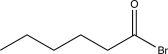
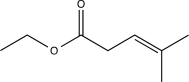
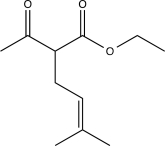
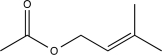
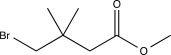
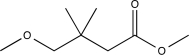
Deck 23: Nucleophilic Additionelimination Reactions 2: Weak Nucleophiles

ملء الشاشة (f)
exit full mode
سؤال
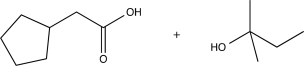
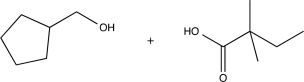
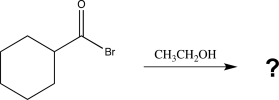
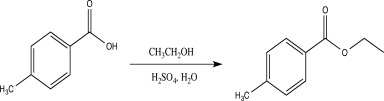
Which of the following correctly explains how sulfuric acid catalyzes the reaction shown below? <strong>Which of the following correctly explains how sulfuric acid catalyzes the reaction shown below?  </strong> A)The acid increases the rate of nucleophile elimination. B)The acid increases the nucleophilicity of the alcohol. C)The acid donates a proton to the alcohol. D)The acid converts the ester into a carboxylic acid. E)The acid activates the carbonyl carbon and makes it more electrophilic. <div style=padding-top: 35px>

A)The acid increases the rate of nucleophile elimination.
B)The acid increases the nucleophilicity of the alcohol.
C)The acid donates a proton to the alcohol.
D)The acid converts the ester into a carboxylic acid.
E)The acid activates the carbonyl carbon and makes it more electrophilic.
استخدم زر المسافة أو
up arrow
down arrow
لقلب البطاقة.
سؤال
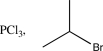
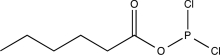
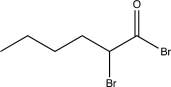
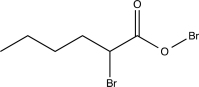
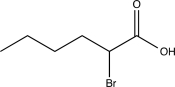
What is the role of PCl3 in the following reaction? <strong>What is the role of PCl<sub>3</sub> in the following reaction?  </strong> A)It converts the carboxylic acid to an enolizable acid chloride. B)It acts as a base and deprotonates the α carbon. C)It converts the carboxylic acid to an acid bromide. D)It activates Br<sub>2</sub> and forms a better nucleophile. E)It increases the rate of the reaction. <div style=padding-top: 35px>
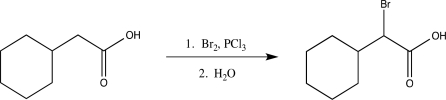
A)It converts the carboxylic acid to an enolizable acid chloride.
B)It acts as a base and deprotonates the α carbon.
C)It converts the carboxylic acid to an acid bromide.
D)It activates Br2 and forms a better nucleophile.
E)It increases the rate of the reaction.
سؤال
Which of the following correctly explains why two equivalents of amine are required for the aminolysis reaction shown below,while alcoholysis requires only one equivalent of alcohol? <strong>Which of the following correctly explains why two equivalents of amine are required for the aminolysis reaction shown below,while alcoholysis requires only one equivalent of alcohol?  </strong> A)Amines are less nucleophilic than alcohols. B)One equivalent of amine acts as a base and is irreversibly protonated. C)Alcohols are stronger bases than amines. D)Inductive effects from the Cl make the carbonyl C less electrophilic in aminolysis than in alcoholysis. E)Two molecules of amine are involved in the rate-determining step. <div style=padding-top: 35px>
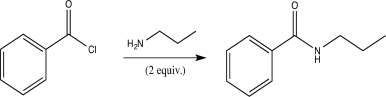
A)Amines are less nucleophilic than alcohols.
B)One equivalent of amine acts as a base and is irreversibly protonated.
C)Alcohols are stronger bases than amines.
D)Inductive effects from the Cl make the carbonyl C less electrophilic in aminolysis than in alcoholysis.
E)Two molecules of amine are involved in the rate-determining step.
سؤال
The reaction below is an example of a(n)_________ reaction,which forms a(n)_________ as a product. <strong>The reaction below is an example of a(n)_________ reaction,which forms a(n)_________ as a product.  </strong> A)hydrolysis, ester B)aminolysis, amide C)alcoholysis, ester D)hydrolysis, carboxylic acid E)sulfonation, ester <div style=padding-top: 35px>
A)hydrolysis, ester
B)aminolysis, amide
C)alcoholysis, ester
D)hydrolysis, carboxylic acid
E)sulfonation, ester
سؤال
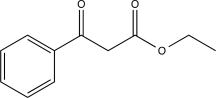
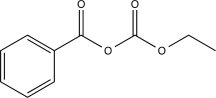
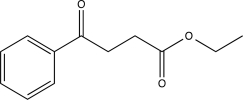
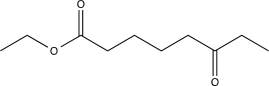
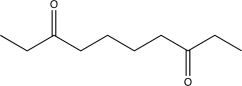
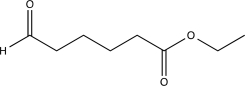
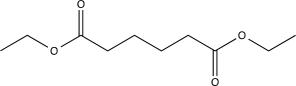
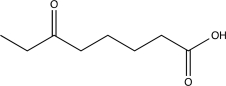
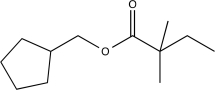
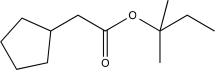
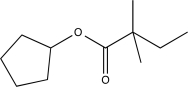
Which of the following compounds would undergo hydrolysis at the highest rate?

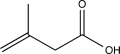
A) <strong>Which of the following compounds would undergo hydrolysis at the highest rate?</strong> A)   B)   C)   D)   E)   <div style=padding-top: 35px>
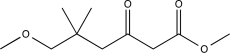
B) <strong>Which of the following compounds would undergo hydrolysis at the highest rate?</strong> A)   B)   C)   D)   E)   <div style=padding-top: 35px>
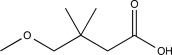
C) <strong>Which of the following compounds would undergo hydrolysis at the highest rate?</strong> A)   B)   C)   D)   E)   <div style=padding-top: 35px>
D) <strong>Which of the following compounds would undergo hydrolysis at the highest rate?</strong> A)   B)   C)   D)   E)   <div style=padding-top: 35px>
E) <strong>Which of the following compounds would undergo hydrolysis at the highest rate?</strong> A)   B)   C)   D)   E)   <div style=padding-top: 35px>
سؤال
What is the product of the following reaction sequence? <strong>What is the product of the following reaction sequence?  </strong> A)   B)   C)   D)   E)   <div style=padding-top: 35px>
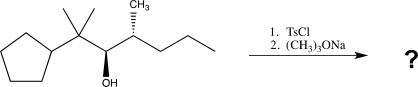
A) <strong>What is the product of the following reaction sequence?  </strong> A)   B)   C)   D)   E)   <div style=padding-top: 35px>
B) <strong>What is the product of the following reaction sequence?  </strong> A)   B)   C)   D)   E)   <div style=padding-top: 35px>
C) <strong>What is the product of the following reaction sequence?  </strong> A)   B)   C)   D)   E)   <div style=padding-top: 35px>
D) <strong>What is the product of the following reaction sequence?  </strong> A)   B)   C)   D)   E)   <div style=padding-top: 35px>
E) <strong>What is the product of the following reaction sequence?  </strong> A)   B)   C)   D)   E)   <div style=padding-top: 35px>
سؤال
What is the major driving force for the reaction below? <strong>What is the major driving force for the reaction below?  </strong> A)The product, an acid chloride, is more thermodynamically stable than a carboxylic acid. B)Chloride is a better nucleophile than hydroxide. C)The reaction is highly exothermic. D)Hydroxide is a better leaving group than chloride. E)The byproducts SO<sub>2</sub> and HCl bubble out of solution irreversibly. <div style=padding-top: 35px>

A)The product, an acid chloride, is more thermodynamically stable than a carboxylic acid.
B)Chloride is a better nucleophile than hydroxide.
C)The reaction is highly exothermic.
D)Hydroxide is a better leaving group than chloride.
E)The byproducts SO2 and HCl bubble out of solution irreversibly.
سؤال
Which of the following elementary steps is involved in the mechanism of the reaction shown below? <strong>Which of the following elementary steps is involved in the mechanism of the reaction shown below?  </strong> A)Coordination B)Proton transfer C)Bimolecular elimination D)Electrophilic addition E)Carbocation rearrangement <div style=padding-top: 35px>
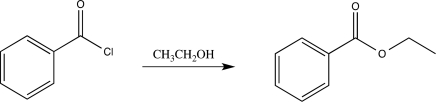
A)Coordination
B)Proton transfer
C)Bimolecular elimination
D)Electrophilic addition
E)Carbocation rearrangement
سؤال
Which of the following is an intermediate in the reaction shown below? <strong>Which of the following is an intermediate in the reaction shown below?  </strong> A)   B)   C)   D)   E)   <div style=padding-top: 35px>
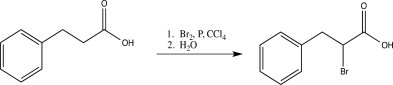
A) <strong>Which of the following is an intermediate in the reaction shown below?  </strong> A)   B)   C)   D)   E)   <div style=padding-top: 35px>
B) <strong>Which of the following is an intermediate in the reaction shown below?  </strong> A)   B)   C)   D)   E)   <div style=padding-top: 35px>
C) <strong>Which of the following is an intermediate in the reaction shown below?  </strong> A)   B)   C)   D)   E)   <div style=padding-top: 35px>
D) <strong>Which of the following is an intermediate in the reaction shown below?  </strong> A)   B)   C)   D)   E)   <div style=padding-top: 35px>
E) <strong>Which of the following is an intermediate in the reaction shown below?  </strong> A)   B)   C)   D)   E)   <div style=padding-top: 35px>
سؤال
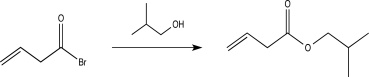
How many proton transfer steps occur in the mechanism for the reaction below? <strong>How many proton transfer steps occur in the mechanism for the reaction below?  </strong> A)0 B)1 C)2 D)3 E)4 <div style=padding-top: 35px>
A)0
B)1
C)2
D)3
E)4
سؤال
What base would be the best choice to catalyze the reaction shown below? <strong>What base would be the best choice to catalyze the reaction shown below?  </strong> A)N(C<sub>2</sub>H<sub>5</sub>)<sub>3</sub> B)   C)NaOH D)NaO(CH<sub>2</sub>)<sub>3</sub>CH<sub>3</sub> E)NaOCH<sub>2</sub>CH<sub>3</sub> <div style=padding-top: 35px>

A)N(C2H5)3
B) <strong>What base would be the best choice to catalyze the reaction shown below?  </strong> A)N(C<sub>2</sub>H<sub>5</sub>)<sub>3</sub> B)   C)NaOH D)NaO(CH<sub>2</sub>)<sub>3</sub>CH<sub>3</sub> E)NaOCH<sub>2</sub>CH<sub>3</sub> <div style=padding-top: 35px>
C)NaOH
D)NaO(CH2)3CH3
E)NaOCH2CH3
سؤال
What is the rate-determining step in the reaction below? <strong>What is the rate-determining step in the reaction below?  </strong> A)Proton transfer B)Electrophilic addition C)Nucleophilic elimination D)Bimolecular nucleophilic substitution E)Nucleophilic addition <div style=padding-top: 35px>
A)Proton transfer
B)Electrophilic addition
C)Nucleophilic elimination
D)Bimolecular nucleophilic substitution
E)Nucleophilic addition
سؤال
What is the starting material of the following reaction sequence? <strong>What is the starting material of the following reaction sequence?  </strong> A)   B)   C)   D)   E)   <div style=padding-top: 35px>
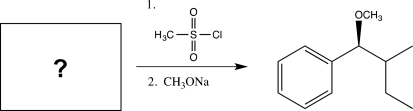
A) <strong>What is the starting material of the following reaction sequence?  </strong> A)   B)   C)   D)   E)   <div style=padding-top: 35px>
B) <strong>What is the starting material of the following reaction sequence?  </strong> A)   B)   C)   D)   E)   <div style=padding-top: 35px>
C) <strong>What is the starting material of the following reaction sequence?  </strong> A)   B)   C)   D)   E)   <div style=padding-top: 35px>
D) <strong>What is the starting material of the following reaction sequence?  </strong> A)   B)   C)   D)   E)   <div style=padding-top: 35px>
E) <strong>What is the starting material of the following reaction sequence?  </strong> A)   B)   C)   D)   E)   <div style=padding-top: 35px>
سؤال
Determine the product of the following sequence of reactions. <strong>Determine the product of the following sequence of reactions.  </strong> A)   B)   C)   D)   E)   <div style=padding-top: 35px>
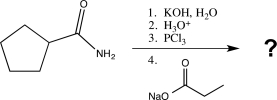
A) <strong>Determine the product of the following sequence of reactions.  </strong> A)   B)   C)   D)   E)   <div style=padding-top: 35px>
B) <strong>Determine the product of the following sequence of reactions.  </strong> A)   B)   C)   D)   E)   <div style=padding-top: 35px>
C) <strong>Determine the product of the following sequence of reactions.  </strong> A)   B)   C)   D)   E)   <div style=padding-top: 35px>
D) <strong>Determine the product of the following sequence of reactions.  </strong> A)   B)   C)   D)   E)   <div style=padding-top: 35px>
E) <strong>Determine the product of the following sequence of reactions.  </strong> A)   B)   C)   D)   E)   <div style=padding-top: 35px>
سؤال
What is the missing reagent needed to complete the synthesis below. <strong>What is the missing reagent needed to complete the synthesis below.  </strong> A)   B)   C)H<sub>2</sub>O D)   E)   <div style=padding-top: 35px>
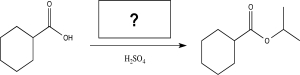
A) <strong>What is the missing reagent needed to complete the synthesis below.  </strong> A)   B)   C)H<sub>2</sub>O D)   E)   <div style=padding-top: 35px>
B) <strong>What is the missing reagent needed to complete the synthesis below.  </strong> A)   B)   C)H<sub>2</sub>O D)   E)   <div style=padding-top: 35px>
C)H2O
D) <strong>What is the missing reagent needed to complete the synthesis below.  </strong> A)   B)   C)H<sub>2</sub>O D)   E)   <div style=padding-top: 35px>
E) <strong>What is the missing reagent needed to complete the synthesis below.  </strong> A)   B)   C)H<sub>2</sub>O D)   E)   <div style=padding-top: 35px>
سؤال
What is the rate-determining step in the mechanism for the following reaction? <strong>What is the rate-determining step in the mechanism for the following reaction?  </strong> A)Bimolecular nucleophilic substitution B)Coordination C)Nucleophile elimination D)Nucleophilic addition E)Proton transfer <div style=padding-top: 35px>

A)Bimolecular nucleophilic substitution
B)Coordination
C)Nucleophile elimination
D)Nucleophilic addition
E)Proton transfer
سؤال
Determine the missing starting material for the sequence of reactions shown below. <strong>Determine the missing starting material for the sequence of reactions shown below.  </strong> A)   B)   C)   D)   E)   <div style=padding-top: 35px>
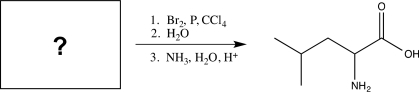
A) <strong>Determine the missing starting material for the sequence of reactions shown below.  </strong> A)   B)   C)   D)   E)   <div style=padding-top: 35px>
B) <strong>Determine the missing starting material for the sequence of reactions shown below.  </strong> A)   B)   C)   D)   E)   <div style=padding-top: 35px>
C) <strong>Determine the missing starting material for the sequence of reactions shown below.  </strong> A)   B)   C)   D)   E)   <div style=padding-top: 35px>
D) <strong>Determine the missing starting material for the sequence of reactions shown below.  </strong> A)   B)   C)   D)   E)   <div style=padding-top: 35px>
E) <strong>Determine the missing starting material for the sequence of reactions shown below.  </strong> A)   B)   C)   D)   E)   <div style=padding-top: 35px>
سؤال
The reaction below is an example of a(n)________ reaction. <strong>The reaction below is an example of a(n)________ reaction.  </strong> A)alcoholysis B)base-catalyzed transesterification C)saponification D)acid-catalyzed transesterification E)ester hydrolysis <div style=padding-top: 35px>

A)alcoholysis
B)base-catalyzed transesterification
C)saponification
D)acid-catalyzed transesterification
E)ester hydrolysis
سؤال
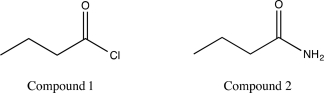
Rank the following in order of increasing reaction rate of hydrolysis. <strong>Rank the following in order of increasing reaction rate of hydrolysis.  </strong> A)2 < 1 < 3 B)1 < 2 < 3 C)1 < 3 < 2 D)3 < 1 < 2 E)2 < 3 < 1 <div style=padding-top: 35px>

A)2 < 1 < 3
B)1 < 2 < 3
C)1 < 3 < 2
D)3 < 1 < 2
E)2 < 3 < 1
سؤال
Predict the product of the following reaction. <strong>Predict the product of the following reaction.  </strong> A)   B)   C)   D)   E)   <div style=padding-top: 35px>

A) <strong>Predict the product of the following reaction.  </strong> A)   B)   C)   D)   E)   <div style=padding-top: 35px>
B) <strong>Predict the product of the following reaction.  </strong> A)   B)   C)   D)   E)   <div style=padding-top: 35px>
C) <strong>Predict the product of the following reaction.  </strong> A)   B)   C)   D)   E)   <div style=padding-top: 35px>
D) <strong>Predict the product of the following reaction.  </strong> A)   B)   C)   D)   E)   <div style=padding-top: 35px>
E) <strong>Predict the product of the following reaction.  </strong> A)   B)   C)   D)   E)   <div style=padding-top: 35px>
سؤال
What is the major product of the following sequence of reactions? <strong>What is the major product of the following sequence of reactions?  </strong> A)   B)   C)   D)   E)   <div style=padding-top: 35px>
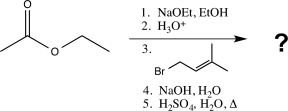
A) <strong>What is the major product of the following sequence of reactions?  </strong> A)   B)   C)   D)   E)   <div style=padding-top: 35px>
B) <strong>What is the major product of the following sequence of reactions?  </strong> A)   B)   C)   D)   E)   <div style=padding-top: 35px>
C) <strong>What is the major product of the following sequence of reactions?  </strong> A)   B)   C)   D)   E)   <div style=padding-top: 35px>
D) <strong>What is the major product of the following sequence of reactions?  </strong> A)   B)   C)   D)   E)   <div style=padding-top: 35px>
E) <strong>What is the major product of the following sequence of reactions?  </strong> A)   B)   C)   D)   E)   <div style=padding-top: 35px>
سؤال
Propose a synthetic route to carry out the following transformation. Propose a synthetic route to carry out the following transformation.  <div style=padding-top: 35px>

سؤال
What is the major product of the following reaction? <strong>What is the major product of the following reaction?  </strong> A)   B)   C)   D)   E)   <div style=padding-top: 35px>
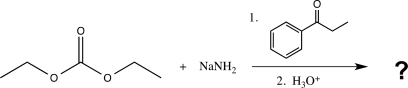
A) <strong>What is the major product of the following reaction?  </strong> A)   B)   C)   D)   E)   <div style=padding-top: 35px>
B) <strong>What is the major product of the following reaction?  </strong> A)   B)   C)   D)   E)   <div style=padding-top: 35px>
C) <strong>What is the major product of the following reaction?  </strong> A)   B)   C)   D)   E)   <div style=padding-top: 35px>
D) <strong>What is the major product of the following reaction?  </strong> A)   B)   C)   D)   E)   <div style=padding-top: 35px>
E) <strong>What is the major product of the following reaction?  </strong> A)   B)   C)   D)   E)   <div style=padding-top: 35px>
سؤال
Which of the following compounds would produce the structure shown below when treated with a base and then acidified? <strong>Which of the following compounds would produce the structure shown below when treated with a base and then acidified?  </strong> A)   B)   C)   D)   E)   <div style=padding-top: 35px>
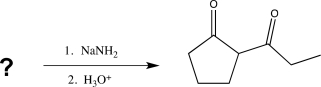
A) <strong>Which of the following compounds would produce the structure shown below when treated with a base and then acidified?  </strong> A)   B)   C)   D)   E)   <div style=padding-top: 35px>
B) <strong>Which of the following compounds would produce the structure shown below when treated with a base and then acidified?  </strong> A)   B)   C)   D)   E)   <div style=padding-top: 35px>
C) <strong>Which of the following compounds would produce the structure shown below when treated with a base and then acidified?  </strong> A)   B)   C)   D)   E)   <div style=padding-top: 35px>
D) <strong>Which of the following compounds would produce the structure shown below when treated with a base and then acidified?  </strong> A)   B)   C)   D)   E)   <div style=padding-top: 35px>
E) <strong>Which of the following compounds would produce the structure shown below when treated with a base and then acidified?  </strong> A)   B)   C)   D)   E)   <div style=padding-top: 35px>
سؤال
Draw a complete,detailed mechanism for the reaction below,and label the rate-determining step. Draw a complete,detailed mechanism for the reaction below,and label the rate-determining step.  <div style=padding-top: 35px>

سؤال
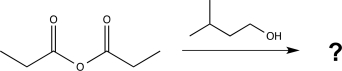
Determine the product(s)of the following reaction. Determine the product(s)of the following reaction.  <div style=padding-top: 35px>
سؤال
Predict the major product(s)of the following reaction. <strong>Predict the major product(s)of the following reaction.  </strong> A)   B)   C)   D)   E)   <div style=padding-top: 35px>
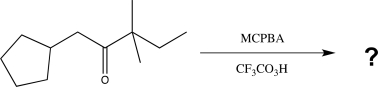
A) <strong>Predict the major product(s)of the following reaction.  </strong> A)   B)   C)   D)   E)   <div style=padding-top: 35px>
B) <strong>Predict the major product(s)of the following reaction.  </strong> A)   B)   C)   D)   E)   <div style=padding-top: 35px>
C) <strong>Predict the major product(s)of the following reaction.  </strong> A)   B)   C)   D)   E)   <div style=padding-top: 35px>
D) <strong>Predict the major product(s)of the following reaction.  </strong> A)   B)   C)   D)   E)   <div style=padding-top: 35px>
E) <strong>Predict the major product(s)of the following reaction.  </strong> A)   B)   C)   D)   E)   <div style=padding-top: 35px>
سؤال
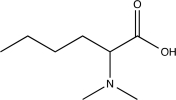
Show how the following could be synthesized from hexanoic acid. Show how the following could be synthesized from hexanoic acid.  <div style=padding-top: 35px>
سؤال
Indicate which of the following molecules will undergo alcoholysis at a higher rate,and explain why. Indicate which of the following molecules will undergo alcoholysis at a higher rate,and explain why.  <div style=padding-top: 35px>
سؤال
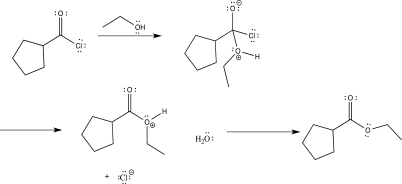
Draw curved arrows to complete the reaction mechanism shown below,and indicate the rate-determining step. Draw curved arrows to complete the reaction mechanism shown below,and indicate the rate-determining step.  <div style=padding-top: 35px>
سؤال
How many dipeptides can be formed in the reaction below? <strong>How many dipeptides can be formed in the reaction below?  </strong> A)One B)Two C)Four D)Six E)Eight <div style=padding-top: 35px>
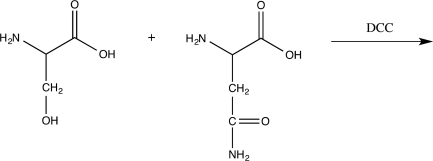
A)One
B)Two
C)Four
D)Six
E)Eight
سؤال
Draw a complete,detailed mechanism for the reaction below,and predict the product(s). Draw a complete,detailed mechanism for the reaction below,and predict the product(s).  <div style=padding-top: 35px>

سؤال
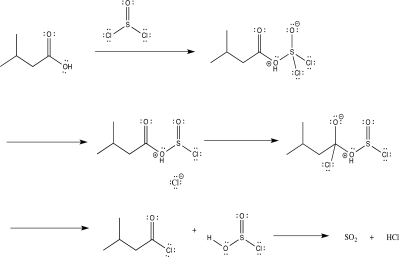
Draw in curved arrows and label the elementary steps in the reaction mechanism below. Draw in curved arrows and label the elementary steps in the reaction mechanism below.  <div style=padding-top: 35px>
سؤال
Draw the mechanism for the following reaction,and label each elementary step. Draw the mechanism for the following reaction,and label each elementary step.  <div style=padding-top: 35px>

سؤال
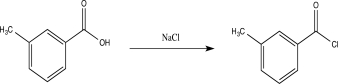
A student attempted to carry out the reaction below,but it was unsuccessful.Explain why the reaction did not work,and suggest a better alternative. A student attempted to carry out the reaction below,but it was unsuccessful.Explain why the reaction did not work,and suggest a better alternative.  <div style=padding-top: 35px>
سؤال
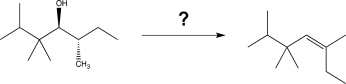
Show how you would carry out the following synthesis. Show how you would carry out the following synthesis.  <div style=padding-top: 35px>
سؤال
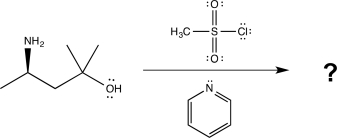
Draw a complete,detailed mechanism for the reaction below,label each elementary step,and predict the product. Draw a complete,detailed mechanism for the reaction below,label each elementary step,and predict the product.  <div style=padding-top: 35px>
سؤال
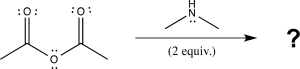
Draw a complete,detailed mechanism for the following reaction,and predict the products. Draw a complete,detailed mechanism for the following reaction,and predict the products.  <div style=padding-top: 35px>
سؤال
Briefly explain why the following reaction would be unsuccessful. Briefly explain why the following reaction would be unsuccessful.  <div style=padding-top: 35px>

سؤال
Predict the major product of the following reaction sequence. <strong>Predict the major product of the following reaction sequence.  </strong> A)   B)   C)   D)   E)   <div style=padding-top: 35px>

A) <strong>Predict the major product of the following reaction sequence.  </strong> A)   B)   C)   D)   E)   <div style=padding-top: 35px>
B) <strong>Predict the major product of the following reaction sequence.  </strong> A)   B)   C)   D)   E)   <div style=padding-top: 35px>
C) <strong>Predict the major product of the following reaction sequence.  </strong> A)   B)   C)   D)   E)   <div style=padding-top: 35px>
D) <strong>Predict the major product of the following reaction sequence.  </strong> A)   B)   C)   D)   E)   <div style=padding-top: 35px>
E) <strong>Predict the major product of the following reaction sequence.  </strong> A)   B)   C)   D)   E)   <div style=padding-top: 35px>
سؤال
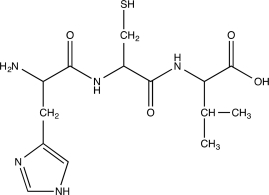
Identify the N-terminus,the C-terminus,and the peptide bonds in the tripeptide below. Identify the N-terminus,the C-terminus,and the peptide bonds in the tripeptide below.  <div style=padding-top: 35px>
سؤال
The acid-catalyzed transesterification reaction shown below is reversible.What are two specific things you could do to increase the yield of products? The acid-catalyzed transesterification reaction shown below is reversible.What are two specific things you could do to increase the yield of products?  <div style=padding-top: 35px>

سؤال
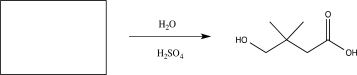
Fill in the missing starting material for the reaction below. Fill in the missing starting material for the reaction below.  <div style=padding-top: 35px>
سؤال
Suppose that a polypeptide containing 16 amino acid residues is partially hydrolyzed into three smaller peptides,A-C,which are analyzed by Edman degradation and found to have the following sequences.
A: Ala-Ile-Asn
B: Pro-Gln-Cys-Val-Pro-Val
C: Pro-Val-Asp-Ser-Gly-His-Cys-Ala-Ala
What is the original sequence of this polypeptide?
سؤال
Draw a complete,detailed mechanism for the following reaction,and predict the product. Draw a complete,detailed mechanism for the following reaction,and predict the product.  <div style=padding-top: 35px>

سؤال
Draw all possible products that could be obtained from the reaction below. Draw all possible products that could be obtained from the reaction below.  <div style=padding-top: 35px>

سؤال
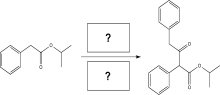
Fill in the boxes with an appropriate base and solvent to carry out the reaction below. Fill in the boxes with an appropriate base and solvent to carry out the reaction below.  <div style=padding-top: 35px>
سؤال
Draw a complete,detailed mechanism for the reaction below,and predict the product. Draw a complete,detailed mechanism for the reaction below,and predict the product.  <div style=padding-top: 35px>
سؤال
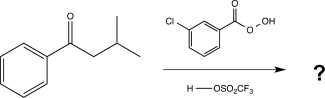
Fill in the missing reagents and intermediates to complete the synthesis below. Fill in the missing reagents and intermediates to complete the synthesis below.  <div style=padding-top: 35px>
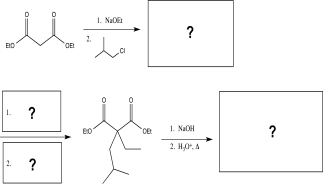
سؤال
Show how the compound below can be synthesized using a Claisen condensation.Include all necessary reagents. Show how the compound below can be synthesized using a Claisen condensation.Include all necessary reagents.  <div style=padding-top: 35px>
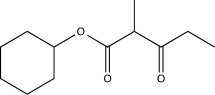
سؤال
Predict the product of the reaction below,and identify the type of reaction. Predict the product of the reaction below,and identify the type of reaction.  <div style=padding-top: 35px>
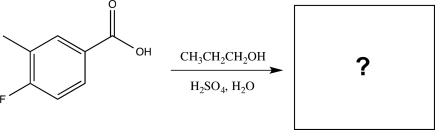
سؤال
Show how to carry out the following synthesis using reagents with fewer than five carbon atoms. Show how to carry out the following synthesis using reagents with fewer than five carbon atoms.  <div style=padding-top: 35px>
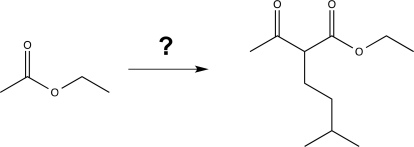
سؤال
Show how you would carry out the following transformation,using any necessary reagents. Show how you would carry out the following transformation,using any necessary reagents.  <div style=padding-top: 35px>

سؤال
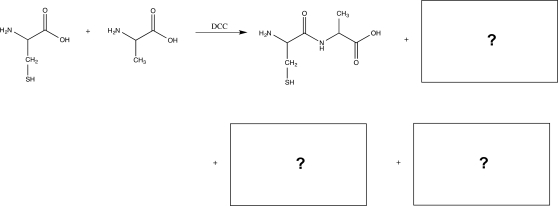
Draw the structures of three additional dipeptides that could be produced in the reaction below,and draw the mechanism for the production of the dipeptide shown. Draw the structures of three additional dipeptides that could be produced in the reaction below,and draw the mechanism for the production of the dipeptide shown.  <div style=padding-top: 35px>
فتح الحزمة
قم بالتسجيل لفتح البطاقات في هذه المجموعة!
Unlock Deck
Unlock Deck
1/54
auto play flashcards
العب
simple tutorial
ملء الشاشة (f)
exit full mode
Deck 23: Nucleophilic Additionelimination Reactions 2: Weak Nucleophiles
1
Which of the following correctly explains how sulfuric acid catalyzes the reaction shown below? <strong>Which of the following correctly explains how sulfuric acid catalyzes the reaction shown below?  </strong> A)The acid increases the rate of nucleophile elimination. B)The acid increases the nucleophilicity of the alcohol. C)The acid donates a proton to the alcohol. D)The acid converts the ester into a carboxylic acid. E)The acid activates the carbonyl carbon and makes it more electrophilic.

A)The acid increases the rate of nucleophile elimination.
B)The acid increases the nucleophilicity of the alcohol.
C)The acid donates a proton to the alcohol.
D)The acid converts the ester into a carboxylic acid.
E)The acid activates the carbonyl carbon and makes it more electrophilic.
The acid activates the carbonyl carbon and makes it more electrophilic.
2
What is the role of PCl3 in the following reaction? <strong>What is the role of PCl<sub>3</sub> in the following reaction?  </strong> A)It converts the carboxylic acid to an enolizable acid chloride. B)It acts as a base and deprotonates the α carbon. C)It converts the carboxylic acid to an acid bromide. D)It activates Br<sub>2</sub> and forms a better nucleophile. E)It increases the rate of the reaction.

A)It converts the carboxylic acid to an enolizable acid chloride.
B)It acts as a base and deprotonates the α carbon.
C)It converts the carboxylic acid to an acid bromide.
D)It activates Br2 and forms a better nucleophile.
E)It increases the rate of the reaction.
It converts the carboxylic acid to an enolizable acid chloride.
3
Which of the following correctly explains why two equivalents of amine are required for the aminolysis reaction shown below,while alcoholysis requires only one equivalent of alcohol? <strong>Which of the following correctly explains why two equivalents of amine are required for the aminolysis reaction shown below,while alcoholysis requires only one equivalent of alcohol?  </strong> A)Amines are less nucleophilic than alcohols. B)One equivalent of amine acts as a base and is irreversibly protonated. C)Alcohols are stronger bases than amines. D)Inductive effects from the Cl make the carbonyl C less electrophilic in aminolysis than in alcoholysis. E)Two molecules of amine are involved in the rate-determining step.

A)Amines are less nucleophilic than alcohols.
B)One equivalent of amine acts as a base and is irreversibly protonated.
C)Alcohols are stronger bases than amines.
D)Inductive effects from the Cl make the carbonyl C less electrophilic in aminolysis than in alcoholysis.
E)Two molecules of amine are involved in the rate-determining step.
One equivalent of amine acts as a base and is irreversibly protonated.
4
The reaction below is an example of a(n)_________ reaction,which forms a(n)_________ as a product. <strong>The reaction below is an example of a(n)_________ reaction,which forms a(n)_________ as a product.  </strong> A)hydrolysis, ester B)aminolysis, amide C)alcoholysis, ester D)hydrolysis, carboxylic acid E)sulfonation, ester

A)hydrolysis, ester
B)aminolysis, amide
C)alcoholysis, ester
D)hydrolysis, carboxylic acid
E)sulfonation, ester
فتح الحزمة
افتح القفل للوصول البطاقات البالغ عددها 54 في هذه المجموعة.
فتح الحزمة
k this deck
5
Which of the following compounds would undergo hydrolysis at the highest rate?

A) <strong>Which of the following compounds would undergo hydrolysis at the highest rate?</strong> A)   B)   C)   D)   E)
B) <strong>Which of the following compounds would undergo hydrolysis at the highest rate?</strong> A)   B)   C)   D)   E)
C) <strong>Which of the following compounds would undergo hydrolysis at the highest rate?</strong> A)   B)   C)   D)   E)
D) <strong>Which of the following compounds would undergo hydrolysis at the highest rate?</strong> A)   B)   C)   D)   E)
E) <strong>Which of the following compounds would undergo hydrolysis at the highest rate?</strong> A)   B)   C)   D)   E)
فتح الحزمة
افتح القفل للوصول البطاقات البالغ عددها 54 في هذه المجموعة.
فتح الحزمة
k this deck
6
What is the product of the following reaction sequence? <strong>What is the product of the following reaction sequence?  </strong> A)   B)   C)   D)   E)

A) <strong>What is the product of the following reaction sequence?  </strong> A)   B)   C)   D)   E)
B) <strong>What is the product of the following reaction sequence?  </strong> A)   B)   C)   D)   E)
C) <strong>What is the product of the following reaction sequence?  </strong> A)   B)   C)   D)   E)
D) <strong>What is the product of the following reaction sequence?  </strong> A)   B)   C)   D)   E)
E) <strong>What is the product of the following reaction sequence?  </strong> A)   B)   C)   D)   E)
فتح الحزمة
افتح القفل للوصول البطاقات البالغ عددها 54 في هذه المجموعة.
فتح الحزمة
k this deck
7
What is the major driving force for the reaction below? <strong>What is the major driving force for the reaction below?  </strong> A)The product, an acid chloride, is more thermodynamically stable than a carboxylic acid. B)Chloride is a better nucleophile than hydroxide. C)The reaction is highly exothermic. D)Hydroxide is a better leaving group than chloride. E)The byproducts SO<sub>2</sub> and HCl bubble out of solution irreversibly.

A)The product, an acid chloride, is more thermodynamically stable than a carboxylic acid.
B)Chloride is a better nucleophile than hydroxide.
C)The reaction is highly exothermic.
D)Hydroxide is a better leaving group than chloride.
E)The byproducts SO2 and HCl bubble out of solution irreversibly.
فتح الحزمة
افتح القفل للوصول البطاقات البالغ عددها 54 في هذه المجموعة.

فتح الحزمة
k this deck
8
Which of the following elementary steps is involved in the mechanism of the reaction shown below? <strong>Which of the following elementary steps is involved in the mechanism of the reaction shown below?  </strong> A)Coordination B)Proton transfer C)Bimolecular elimination D)Electrophilic addition E)Carbocation rearrangement

A)Coordination
B)Proton transfer
C)Bimolecular elimination
D)Electrophilic addition
E)Carbocation rearrangement
فتح الحزمة
افتح القفل للوصول البطاقات البالغ عددها 54 في هذه المجموعة.

فتح الحزمة
k this deck
9
Which of the following is an intermediate in the reaction shown below? <strong>Which of the following is an intermediate in the reaction shown below?  </strong> A)   B)   C)   D)   E)

A) <strong>Which of the following is an intermediate in the reaction shown below?  </strong> A)   B)   C)   D)   E)
B) <strong>Which of the following is an intermediate in the reaction shown below?  </strong> A)   B)   C)   D)   E)
C) <strong>Which of the following is an intermediate in the reaction shown below?  </strong> A)   B)   C)   D)   E)
D) <strong>Which of the following is an intermediate in the reaction shown below?  </strong> A)   B)   C)   D)   E)
E) <strong>Which of the following is an intermediate in the reaction shown below?  </strong> A)   B)   C)   D)   E)
فتح الحزمة
افتح القفل للوصول البطاقات البالغ عددها 54 في هذه المجموعة.
فتح الحزمة
k this deck
10
How many proton transfer steps occur in the mechanism for the reaction below? <strong>How many proton transfer steps occur in the mechanism for the reaction below?  </strong> A)0 B)1 C)2 D)3 E)4

A)0
B)1
C)2
D)3
E)4
فتح الحزمة
افتح القفل للوصول البطاقات البالغ عددها 54 في هذه المجموعة.
فتح الحزمة
k this deck
11
What base would be the best choice to catalyze the reaction shown below? <strong>What base would be the best choice to catalyze the reaction shown below?  </strong> A)N(C<sub>2</sub>H<sub>5</sub>)<sub>3</sub> B)   C)NaOH D)NaO(CH<sub>2</sub>)<sub>3</sub>CH<sub>3</sub> E)NaOCH<sub>2</sub>CH<sub>3</sub>

A)N(C2H5)3
B) <strong>What base would be the best choice to catalyze the reaction shown below?  </strong> A)N(C<sub>2</sub>H<sub>5</sub>)<sub>3</sub> B)   C)NaOH D)NaO(CH<sub>2</sub>)<sub>3</sub>CH<sub>3</sub> E)NaOCH<sub>2</sub>CH<sub>3</sub>
C)NaOH
D)NaO(CH2)3CH3
E)NaOCH2CH3
فتح الحزمة
افتح القفل للوصول البطاقات البالغ عددها 54 في هذه المجموعة.
فتح الحزمة
k this deck
12
What is the rate-determining step in the reaction below? <strong>What is the rate-determining step in the reaction below?  </strong> A)Proton transfer B)Electrophilic addition C)Nucleophilic elimination D)Bimolecular nucleophilic substitution E)Nucleophilic addition

A)Proton transfer
B)Electrophilic addition
C)Nucleophilic elimination
D)Bimolecular nucleophilic substitution
E)Nucleophilic addition
فتح الحزمة
افتح القفل للوصول البطاقات البالغ عددها 54 في هذه المجموعة.
فتح الحزمة
k this deck
13
What is the starting material of the following reaction sequence? <strong>What is the starting material of the following reaction sequence?  </strong> A)   B)   C)   D)   E)

A) <strong>What is the starting material of the following reaction sequence?  </strong> A)   B)   C)   D)   E)
B) <strong>What is the starting material of the following reaction sequence?  </strong> A)   B)   C)   D)   E)
C) <strong>What is the starting material of the following reaction sequence?  </strong> A)   B)   C)   D)   E)
D) <strong>What is the starting material of the following reaction sequence?  </strong> A)   B)   C)   D)   E)
E) <strong>What is the starting material of the following reaction sequence?  </strong> A)   B)   C)   D)   E)
فتح الحزمة
افتح القفل للوصول البطاقات البالغ عددها 54 في هذه المجموعة.
فتح الحزمة
k this deck
14
Determine the product of the following sequence of reactions. <strong>Determine the product of the following sequence of reactions.  </strong> A)   B)   C)   D)   E)

A) <strong>Determine the product of the following sequence of reactions.  </strong> A)   B)   C)   D)   E)
B) <strong>Determine the product of the following sequence of reactions.  </strong> A)   B)   C)   D)   E)
C) <strong>Determine the product of the following sequence of reactions.  </strong> A)   B)   C)   D)   E)
D) <strong>Determine the product of the following sequence of reactions.  </strong> A)   B)   C)   D)   E)
E) <strong>Determine the product of the following sequence of reactions.  </strong> A)   B)   C)   D)   E)
فتح الحزمة
افتح القفل للوصول البطاقات البالغ عددها 54 في هذه المجموعة.
فتح الحزمة
k this deck
15
What is the missing reagent needed to complete the synthesis below. <strong>What is the missing reagent needed to complete the synthesis below.  </strong> A)   B)   C)H<sub>2</sub>O D)   E)

A) <strong>What is the missing reagent needed to complete the synthesis below.  </strong> A)   B)   C)H<sub>2</sub>O D)   E)
B) <strong>What is the missing reagent needed to complete the synthesis below.  </strong> A)   B)   C)H<sub>2</sub>O D)   E)
C)H2O
D) <strong>What is the missing reagent needed to complete the synthesis below.  </strong> A)   B)   C)H<sub>2</sub>O D)   E)
E) <strong>What is the missing reagent needed to complete the synthesis below.  </strong> A)   B)   C)H<sub>2</sub>O D)   E)
فتح الحزمة
افتح القفل للوصول البطاقات البالغ عددها 54 في هذه المجموعة.
فتح الحزمة
k this deck
16
What is the rate-determining step in the mechanism for the following reaction? <strong>What is the rate-determining step in the mechanism for the following reaction?  </strong> A)Bimolecular nucleophilic substitution B)Coordination C)Nucleophile elimination D)Nucleophilic addition E)Proton transfer

A)Bimolecular nucleophilic substitution
B)Coordination
C)Nucleophile elimination
D)Nucleophilic addition
E)Proton transfer
فتح الحزمة
افتح القفل للوصول البطاقات البالغ عددها 54 في هذه المجموعة.
فتح الحزمة
k this deck
17
Determine the missing starting material for the sequence of reactions shown below. <strong>Determine the missing starting material for the sequence of reactions shown below.  </strong> A)   B)   C)   D)   E)

A) <strong>Determine the missing starting material for the sequence of reactions shown below.  </strong> A)   B)   C)   D)   E)
B) <strong>Determine the missing starting material for the sequence of reactions shown below.  </strong> A)   B)   C)   D)   E)
C) <strong>Determine the missing starting material for the sequence of reactions shown below.  </strong> A)   B)   C)   D)   E)
D) <strong>Determine the missing starting material for the sequence of reactions shown below.  </strong> A)   B)   C)   D)   E)
E) <strong>Determine the missing starting material for the sequence of reactions shown below.  </strong> A)   B)   C)   D)   E)
فتح الحزمة
افتح القفل للوصول البطاقات البالغ عددها 54 في هذه المجموعة.
فتح الحزمة
k this deck
18
The reaction below is an example of a(n)________ reaction. <strong>The reaction below is an example of a(n)________ reaction.  </strong> A)alcoholysis B)base-catalyzed transesterification C)saponification D)acid-catalyzed transesterification E)ester hydrolysis

A)alcoholysis
B)base-catalyzed transesterification
C)saponification
D)acid-catalyzed transesterification
E)ester hydrolysis
فتح الحزمة
افتح القفل للوصول البطاقات البالغ عددها 54 في هذه المجموعة.
فتح الحزمة
k this deck
19
Rank the following in order of increasing reaction rate of hydrolysis. <strong>Rank the following in order of increasing reaction rate of hydrolysis.  </strong> A)2 < 1 < 3 B)1 < 2 < 3 C)1 < 3 < 2 D)3 < 1 < 2 E)2 < 3 < 1

A)2 < 1 < 3
B)1 < 2 < 3
C)1 < 3 < 2
D)3 < 1 < 2
E)2 < 3 < 1
فتح الحزمة
افتح القفل للوصول البطاقات البالغ عددها 54 في هذه المجموعة.
فتح الحزمة
k this deck
20
Predict the product of the following reaction. <strong>Predict the product of the following reaction.  </strong> A)   B)   C)   D)   E)

A) <strong>Predict the product of the following reaction.  </strong> A)   B)   C)   D)   E)
B) <strong>Predict the product of the following reaction.  </strong> A)   B)   C)   D)   E)
C) <strong>Predict the product of the following reaction.  </strong> A)   B)   C)   D)   E)
D) <strong>Predict the product of the following reaction.  </strong> A)   B)   C)   D)   E)
E) <strong>Predict the product of the following reaction.  </strong> A)   B)   C)   D)   E)
فتح الحزمة
افتح القفل للوصول البطاقات البالغ عددها 54 في هذه المجموعة.
فتح الحزمة
k this deck
21
What is the major product of the following sequence of reactions? <strong>What is the major product of the following sequence of reactions?  </strong> A)   B)   C)   D)   E)

A) <strong>What is the major product of the following sequence of reactions?  </strong> A)   B)   C)   D)   E)
B) <strong>What is the major product of the following sequence of reactions?  </strong> A)   B)   C)   D)   E)
C) <strong>What is the major product of the following sequence of reactions?  </strong> A)   B)   C)   D)   E)
D) <strong>What is the major product of the following sequence of reactions?  </strong> A)   B)   C)   D)   E)
E) <strong>What is the major product of the following sequence of reactions?  </strong> A)   B)   C)   D)   E)
فتح الحزمة
افتح القفل للوصول البطاقات البالغ عددها 54 في هذه المجموعة.
فتح الحزمة
k this deck
22
Propose a synthetic route to carry out the following transformation. Propose a synthetic route to carry out the following transformation.
فتح الحزمة
افتح القفل للوصول البطاقات البالغ عددها 54 في هذه المجموعة.
فتح الحزمة
k this deck
23
What is the major product of the following reaction? <strong>What is the major product of the following reaction?  </strong> A)   B)   C)   D)   E)

A) <strong>What is the major product of the following reaction?  </strong> A)   B)   C)   D)   E)
B) <strong>What is the major product of the following reaction?  </strong> A)   B)   C)   D)   E)
C) <strong>What is the major product of the following reaction?  </strong> A)   B)   C)   D)   E)
D) <strong>What is the major product of the following reaction?  </strong> A)   B)   C)   D)   E)
E) <strong>What is the major product of the following reaction?  </strong> A)   B)   C)   D)   E)
فتح الحزمة
افتح القفل للوصول البطاقات البالغ عددها 54 في هذه المجموعة.
فتح الحزمة
k this deck
24
Which of the following compounds would produce the structure shown below when treated with a base and then acidified? <strong>Which of the following compounds would produce the structure shown below when treated with a base and then acidified?  </strong> A)   B)   C)   D)   E)

A) <strong>Which of the following compounds would produce the structure shown below when treated with a base and then acidified?  </strong> A)   B)   C)   D)   E)
B) <strong>Which of the following compounds would produce the structure shown below when treated with a base and then acidified?  </strong> A)   B)   C)   D)   E)
C) <strong>Which of the following compounds would produce the structure shown below when treated with a base and then acidified?  </strong> A)   B)   C)   D)   E)
D) <strong>Which of the following compounds would produce the structure shown below when treated with a base and then acidified?  </strong> A)   B)   C)   D)   E)
E) <strong>Which of the following compounds would produce the structure shown below when treated with a base and then acidified?  </strong> A)   B)   C)   D)   E)
فتح الحزمة
افتح القفل للوصول البطاقات البالغ عددها 54 في هذه المجموعة.
فتح الحزمة
k this deck
25
Draw a complete,detailed mechanism for the reaction below,and label the rate-determining step. Draw a complete,detailed mechanism for the reaction below,and label the rate-determining step.
فتح الحزمة
افتح القفل للوصول البطاقات البالغ عددها 54 في هذه المجموعة.
فتح الحزمة
k this deck
26
Determine the product(s)of the following reaction. Determine the product(s)of the following reaction.
فتح الحزمة
افتح القفل للوصول البطاقات البالغ عددها 54 في هذه المجموعة.
فتح الحزمة
k this deck
27
Predict the major product(s)of the following reaction. <strong>Predict the major product(s)of the following reaction.  </strong> A)   B)   C)   D)   E)

A) <strong>Predict the major product(s)of the following reaction.  </strong> A)   B)   C)   D)   E)
B) <strong>Predict the major product(s)of the following reaction.  </strong> A)   B)   C)   D)   E)
C) <strong>Predict the major product(s)of the following reaction.  </strong> A)   B)   C)   D)   E)
D) <strong>Predict the major product(s)of the following reaction.  </strong> A)   B)   C)   D)   E)
E) <strong>Predict the major product(s)of the following reaction.  </strong> A)   B)   C)   D)   E)
فتح الحزمة
افتح القفل للوصول البطاقات البالغ عددها 54 في هذه المجموعة.
فتح الحزمة
k this deck
28
Show how the following could be synthesized from hexanoic acid. Show how the following could be synthesized from hexanoic acid.
فتح الحزمة
افتح القفل للوصول البطاقات البالغ عددها 54 في هذه المجموعة.
فتح الحزمة
k this deck
29
Indicate which of the following molecules will undergo alcoholysis at a higher rate,and explain why. Indicate which of the following molecules will undergo alcoholysis at a higher rate,and explain why.
فتح الحزمة
افتح القفل للوصول البطاقات البالغ عددها 54 في هذه المجموعة.
فتح الحزمة
k this deck
30
Draw curved arrows to complete the reaction mechanism shown below,and indicate the rate-determining step. Draw curved arrows to complete the reaction mechanism shown below,and indicate the rate-determining step.
فتح الحزمة
افتح القفل للوصول البطاقات البالغ عددها 54 في هذه المجموعة.
فتح الحزمة
k this deck
31
How many dipeptides can be formed in the reaction below? <strong>How many dipeptides can be formed in the reaction below?  </strong> A)One B)Two C)Four D)Six E)Eight

A)One
B)Two
C)Four
D)Six
E)Eight
فتح الحزمة
افتح القفل للوصول البطاقات البالغ عددها 54 في هذه المجموعة.
فتح الحزمة
k this deck
32
Draw a complete,detailed mechanism for the reaction below,and predict the product(s). Draw a complete,detailed mechanism for the reaction below,and predict the product(s).
فتح الحزمة
افتح القفل للوصول البطاقات البالغ عددها 54 في هذه المجموعة.
فتح الحزمة
k this deck
33
Draw in curved arrows and label the elementary steps in the reaction mechanism below. Draw in curved arrows and label the elementary steps in the reaction mechanism below.
فتح الحزمة
افتح القفل للوصول البطاقات البالغ عددها 54 في هذه المجموعة.
فتح الحزمة
k this deck
34
Draw the mechanism for the following reaction,and label each elementary step. Draw the mechanism for the following reaction,and label each elementary step.
فتح الحزمة
افتح القفل للوصول البطاقات البالغ عددها 54 في هذه المجموعة.
فتح الحزمة
k this deck
35
A student attempted to carry out the reaction below,but it was unsuccessful.Explain why the reaction did not work,and suggest a better alternative. A student attempted to carry out the reaction below,but it was unsuccessful.Explain why the reaction did not work,and suggest a better alternative.
فتح الحزمة
افتح القفل للوصول البطاقات البالغ عددها 54 في هذه المجموعة.
فتح الحزمة
k this deck
36
Show how you would carry out the following synthesis. Show how you would carry out the following synthesis.
فتح الحزمة
افتح القفل للوصول البطاقات البالغ عددها 54 في هذه المجموعة.
فتح الحزمة
k this deck
37
Draw a complete,detailed mechanism for the reaction below,label each elementary step,and predict the product. Draw a complete,detailed mechanism for the reaction below,label each elementary step,and predict the product.
فتح الحزمة
افتح القفل للوصول البطاقات البالغ عددها 54 في هذه المجموعة.
فتح الحزمة
k this deck
38
Draw a complete,detailed mechanism for the following reaction,and predict the products. Draw a complete,detailed mechanism for the following reaction,and predict the products.
فتح الحزمة
افتح القفل للوصول البطاقات البالغ عددها 54 في هذه المجموعة.
فتح الحزمة
k this deck
39
Briefly explain why the following reaction would be unsuccessful. Briefly explain why the following reaction would be unsuccessful.
فتح الحزمة
افتح القفل للوصول البطاقات البالغ عددها 54 في هذه المجموعة.
فتح الحزمة
k this deck
40
Predict the major product of the following reaction sequence. <strong>Predict the major product of the following reaction sequence.  </strong> A)   B)   C)   D)   E)

A) <strong>Predict the major product of the following reaction sequence.  </strong> A)   B)   C)   D)   E)
B) <strong>Predict the major product of the following reaction sequence.  </strong> A)   B)   C)   D)   E)
C) <strong>Predict the major product of the following reaction sequence.  </strong> A)   B)   C)   D)   E)
D) <strong>Predict the major product of the following reaction sequence.  </strong> A)   B)   C)   D)   E)
E) <strong>Predict the major product of the following reaction sequence.  </strong> A)   B)   C)   D)   E)
فتح الحزمة
افتح القفل للوصول البطاقات البالغ عددها 54 في هذه المجموعة.
فتح الحزمة
k this deck
41
Identify the N-terminus,the C-terminus,and the peptide bonds in the tripeptide below. Identify the N-terminus,the C-terminus,and the peptide bonds in the tripeptide below.
فتح الحزمة
افتح القفل للوصول البطاقات البالغ عددها 54 في هذه المجموعة.
فتح الحزمة
k this deck
42
The acid-catalyzed transesterification reaction shown below is reversible.What are two specific things you could do to increase the yield of products? The acid-catalyzed transesterification reaction shown below is reversible.What are two specific things you could do to increase the yield of products?
فتح الحزمة
افتح القفل للوصول البطاقات البالغ عددها 54 في هذه المجموعة.
فتح الحزمة
k this deck
43
Fill in the missing starting material for the reaction below. Fill in the missing starting material for the reaction below.
فتح الحزمة
افتح القفل للوصول البطاقات البالغ عددها 54 في هذه المجموعة.
فتح الحزمة
k this deck
44
Suppose that a polypeptide containing 16 amino acid residues is partially hydrolyzed into three smaller peptides,A-C,which are analyzed by Edman degradation and found to have the following sequences.
A: Ala-Ile-Asn
B: Pro-Gln-Cys-Val-Pro-Val
C: Pro-Val-Asp-Ser-Gly-His-Cys-Ala-Ala
What is the original sequence of this polypeptide?
فتح الحزمة
افتح القفل للوصول البطاقات البالغ عددها 54 في هذه المجموعة.
فتح الحزمة
k this deck
45
Draw a complete,detailed mechanism for the following reaction,and predict the product. Draw a complete,detailed mechanism for the following reaction,and predict the product.
فتح الحزمة
افتح القفل للوصول البطاقات البالغ عددها 54 في هذه المجموعة.
فتح الحزمة
k this deck
46
Draw all possible products that could be obtained from the reaction below. Draw all possible products that could be obtained from the reaction below.
فتح الحزمة
افتح القفل للوصول البطاقات البالغ عددها 54 في هذه المجموعة.
فتح الحزمة
k this deck
47
Fill in the boxes with an appropriate base and solvent to carry out the reaction below. Fill in the boxes with an appropriate base and solvent to carry out the reaction below.
فتح الحزمة
افتح القفل للوصول البطاقات البالغ عددها 54 في هذه المجموعة.
فتح الحزمة
k this deck
48
Draw a complete,detailed mechanism for the reaction below,and predict the product. Draw a complete,detailed mechanism for the reaction below,and predict the product.
فتح الحزمة
افتح القفل للوصول البطاقات البالغ عددها 54 في هذه المجموعة.
فتح الحزمة
k this deck
49
Fill in the missing reagents and intermediates to complete the synthesis below. Fill in the missing reagents and intermediates to complete the synthesis below.
فتح الحزمة
افتح القفل للوصول البطاقات البالغ عددها 54 في هذه المجموعة.
فتح الحزمة
k this deck
50
Show how the compound below can be synthesized using a Claisen condensation.Include all necessary reagents. Show how the compound below can be synthesized using a Claisen condensation.Include all necessary reagents.
فتح الحزمة
افتح القفل للوصول البطاقات البالغ عددها 54 في هذه المجموعة.
فتح الحزمة
k this deck
51
Predict the product of the reaction below,and identify the type of reaction. Predict the product of the reaction below,and identify the type of reaction.
فتح الحزمة
افتح القفل للوصول البطاقات البالغ عددها 54 في هذه المجموعة.
فتح الحزمة
k this deck
52
Show how to carry out the following synthesis using reagents with fewer than five carbon atoms. Show how to carry out the following synthesis using reagents with fewer than five carbon atoms.
فتح الحزمة
افتح القفل للوصول البطاقات البالغ عددها 54 في هذه المجموعة.
فتح الحزمة
k this deck
53
Show how you would carry out the following transformation,using any necessary reagents. Show how you would carry out the following transformation,using any necessary reagents.
فتح الحزمة
افتح القفل للوصول البطاقات البالغ عددها 54 في هذه المجموعة.
فتح الحزمة
k this deck
54
Draw the structures of three additional dipeptides that could be produced in the reaction below,and draw the mechanism for the production of the dipeptide shown. Draw the structures of three additional dipeptides that could be produced in the reaction below,and draw the mechanism for the production of the dipeptide shown.
فتح الحزمة
افتح القفل للوصول البطاقات البالغ عددها 54 في هذه المجموعة.
فتح الحزمة
k this deck
locked card icon
فتح الحزمة
افتح القفل للوصول البطاقات البالغ عددها 54 في هذه المجموعة.