







 تكلم مع الذكاء الاصطناعي


Deck 11: Monopolistic Competition and Oligopoly
ملء الشاشة (f)

سؤال
Figure 11-1 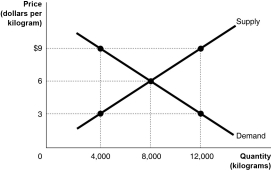
Refer to Figure 11-1.The figure above represents the market for pecans.Assume that this is a competitive market.If the price of pecans is $3,
A) economic surplus is maximised.
B) not enough consumers want to buy pecans.
C) the quantity supplied is less than the economically efficient quantity.
D) the quantity supplied is economically efficient, but the quantity demanded is economically inefficient.
Refer to Figure 11-1.The figure above represents the market for pecans.Assume that this is a competitive market.If the price of pecans is $3,
A) economic surplus is maximised.
B) not enough consumers want to buy pecans.
C) the quantity supplied is less than the economically efficient quantity.
D) the quantity supplied is economically efficient, but the quantity demanded is economically inefficient.

سؤال
Figure 11-1
Refer to Figure 11-1.The figure above represents the market for pecans.Assume that this is a competitive market.If the price of pecans is $9,what changes in the market would result in an economically efficient output?
A) The price would decrease, the quantity supplied would decrease and the quantity demanded would increase.
B) The quantity supplied would increase, the quantity demanded would decrease and the equilibrium price would decrease.
C) The price would decrease, the demand would increase and the supply would decrease.
D) The price would increase, the quantity demanded would decrease and the quantity supplied would increase.
Refer to Figure 11-1.The figure above represents the market for pecans.Assume that this is a competitive market.If the price of pecans is $9,what changes in the market would result in an economically efficient output?
A) The price would decrease, the quantity supplied would decrease and the quantity demanded would increase.
B) The quantity supplied would increase, the quantity demanded would decrease and the equilibrium price would decrease.
C) The price would decrease, the demand would increase and the supply would decrease.
D) The price would increase, the quantity demanded would decrease and the quantity supplied would increase.
سؤال
Figure 11-1
Refer to Figure 11-1.The figure above represents the market for pecans.Assume that this is a competitive market.If 4000 kilograms of pecans are sold,
A) the deadweight loss is equal to $12 000.
B) consumer surplus equals zero.
C) the marginal benefit of each of the 4000 kilograms of pecans equals $3.
D) marginal benefit is equal to marginal cost.
Refer to Figure 11-1.The figure above represents the market for pecans.Assume that this is a competitive market.If 4000 kilograms of pecans are sold,
A) the deadweight loss is equal to $12 000.
B) consumer surplus equals zero.
C) the marginal benefit of each of the 4000 kilograms of pecans equals $3.
D) marginal benefit is equal to marginal cost.
سؤال
Figure 11-1
Refer to Figure 11-1.The figure above represents the market for pecans.Assume that this is a competitive market.If the price of pecans is $3,what changes in the market would result in an economically efficient output?
A) The price would increase, the quantity supplied would decrease and the quantity demanded would increase.
B) The quantity supplied would increase, the quantity demanded would decrease and the equilibrium price would increase.
C) The price would increase, the demand would decrease and the supply would increase.
D) The price would increase, the quantity demanded would decrease and the quantity supplied would increase.
Refer to Figure 11-1.The figure above represents the market for pecans.Assume that this is a competitive market.If the price of pecans is $3,what changes in the market would result in an economically efficient output?
A) The price would increase, the quantity supplied would decrease and the quantity demanded would increase.
B) The quantity supplied would increase, the quantity demanded would decrease and the equilibrium price would increase.
C) The price would increase, the demand would decrease and the supply would increase.
D) The price would increase, the quantity demanded would decrease and the quantity supplied would increase.
سؤال
Figure 11-1
Refer to Figure 11-1.The figure above represents the market for pecans.Assume that this is a competitive market.At a price of $3,
A) the marginal cost of pecans is greater than the marginal benefit; therefore, output is inefficiently low.
B) producers should raise the price to $9 in order to sell the quantity demanded of 12 000.
C) the marginal benefit of pecans is greater than the marginal cost; therefore, output is inefficiently high.
D) the marginal benefit of pecans is greater than the marginal cost; therefore, output is inefficiently low.
Refer to Figure 11-1.The figure above represents the market for pecans.Assume that this is a competitive market.At a price of $3,
A) the marginal cost of pecans is greater than the marginal benefit; therefore, output is inefficiently low.
B) producers should raise the price to $9 in order to sell the quantity demanded of 12 000.
C) the marginal benefit of pecans is greater than the marginal cost; therefore, output is inefficiently high.
D) the marginal benefit of pecans is greater than the marginal cost; therefore, output is inefficiently low.
سؤال
سؤال
Figure 11-1
Refer to Figure 11-1.The figure above represents the market for pecans.Assume that this is a competitive market.If 8000 kilograms of pecans are sold,
A) the deadweight loss is equal to economic surplus.
B) producer surplus equals consumer surplus.
C) the marginal benefit of each of the 8000 kilograms of pecans equals $9.
D) marginal benefit is equal to marginal cost.
Refer to Figure 11-1.The figure above represents the market for pecans.Assume that this is a competitive market.If 8000 kilograms of pecans are sold,
A) the deadweight loss is equal to economic surplus.
B) producer surplus equals consumer surplus.
C) the marginal benefit of each of the 8000 kilograms of pecans equals $9.
D) marginal benefit is equal to marginal cost.
سؤال
سؤال
سؤال
سؤال
سؤال
Figure 11-1
Refer to Figure 11-1.The figure above represents the market for pecans.Assume that this is a competitive market.At a price of $9,
A) the marginal cost of pecans is greater than the marginal benefit; therefore, output is inefficiently low.
B) producers should lower the price to $3 in order to sell the quantity demanded of 4000.
C) the marginal benefit of pecans is greater than the marginal cost; therefore, output is inefficiently high.
D) the marginal benefit of pecans is greater than the marginal cost; therefore, output is inefficiently low.
Refer to Figure 11-1.The figure above represents the market for pecans.Assume that this is a competitive market.At a price of $9,
A) the marginal cost of pecans is greater than the marginal benefit; therefore, output is inefficiently low.
B) producers should lower the price to $3 in order to sell the quantity demanded of 4000.
C) the marginal benefit of pecans is greater than the marginal cost; therefore, output is inefficiently high.
D) the marginal benefit of pecans is greater than the marginal cost; therefore, output is inefficiently low.
سؤال
سؤال
سؤال
سؤال
سؤال
سؤال
سؤال
Figure 11-1
Refer to Figure 11-1.The figure above represents the market for pecans.Assume that this is a competitive market.Which of the following is true?
A) If the price of pecans is $3, the output will be economically efficient but there will be a deadweight loss.
B) If the price of pecans is $9, consumers will purchase more than the economically efficient output.
C) Both 4000 kilograms and 12 000 kilograms are economically inefficient rates of output.
D) If the price of pecans is $3, producers will sell 12 000 kilograms of pecans but this output will be economically inefficient.
Refer to Figure 11-1.The figure above represents the market for pecans.Assume that this is a competitive market.Which of the following is true?
A) If the price of pecans is $3, the output will be economically efficient but there will be a deadweight loss.
B) If the price of pecans is $9, consumers will purchase more than the economically efficient output.
C) Both 4000 kilograms and 12 000 kilograms are economically inefficient rates of output.
D) If the price of pecans is $3, producers will sell 12 000 kilograms of pecans but this output will be economically inefficient.
سؤال
Figure 11-1
Refer to Figure 11-1.The figure above represents the market for pecans.Assume that this is a competitive market.If the price of pecans is $9,
A) economic surplus is maximised.
B) too many consumers want to buy pecans.
C) the quantity supplied is greater than the economically efficient quantity.
D) the quantity demanded is economically efficient, but the quantity supplied is economically inefficient.
Refer to Figure 11-1.The figure above represents the market for pecans.Assume that this is a competitive market.If the price of pecans is $9,
A) economic surplus is maximised.
B) too many consumers want to buy pecans.
C) the quantity supplied is greater than the economically efficient quantity.
D) the quantity demanded is economically efficient, but the quantity supplied is economically inefficient.
سؤال
سؤال
سؤال
Figure 11-2 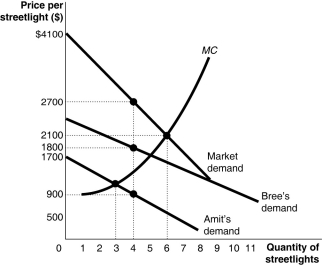 Amit and Bree are the only two homeowners on an isolated private road. Both agree that installing street lights along the road would be beneficial and want to do so. Figure 11-2 shows their willingness to pay for different quantities of street lights, the market demand for street lights and the marginal cost of installing the street lights.
Refer to Figure 11-2.What is the optimal quantity of street lights to install?
A) 3
B) 4
C) 6
D) 9
Amit and Bree are the only two homeowners on an isolated private road. Both agree that installing street lights along the road would be beneficial and want to do so. Figure 11-2 shows their willingness to pay for different quantities of street lights, the market demand for street lights and the marginal cost of installing the street lights.Refer to Figure 11-2.What is the optimal quantity of street lights to install?
A) 3
B) 4
C) 6
D) 9
سؤال
Figure 11-2 Amit and Bree are the only two homeowners on an isolated private road. Both agree that installing street lights along the road would be beneficial and want to do so. Figure 11-2 shows their willingness to pay for different quantities of street lights, the market demand for street lights and the marginal cost of installing the street lights.
Refer to Figure 11-2.How much is Amit willing to pay to have 4 street lights installed?
A) $3600
B) $2700
C) $1800
D) $900
Amit and Bree are the only two homeowners on an isolated private road. Both agree that installing street lights along the road would be beneficial and want to do so. Figure 11-2 shows their willingness to pay for different quantities of street lights, the market demand for street lights and the marginal cost of installing the street lights.Refer to Figure 11-2.How much is Amit willing to pay to have 4 street lights installed?
A) $3600
B) $2700
C) $1800
D) $900
سؤال
سؤال
Figure 11-2 Amit and Bree are the only two homeowners on an isolated private road. Both agree that installing street lights along the road would be beneficial and want to do so. Figure 11-2 shows their willingness to pay for different quantities of street lights, the market demand for street lights and the marginal cost of installing the street lights.
Refer to Figure 11-2.Suppose Amit and Bree know each other's preferences so that it is not possible for one to deceive the other.Which of the following statements best describes the circumstances under which the optimal quantity of street lights could be achieved?
A) The optimal quantity will be installed only if the two parties agree to pay according to their willingness to pay as indicated by their respective demand curves.
B) Because there are only two consumers, it is likely that private bargaining will result in the optimal quantity being installed.
C) The optimal quantity will be installed only if the two parties split the cost of installation equally.
D) The optimal quantity will be installed only if Bree pays for the entire installation cost.
Amit and Bree are the only two homeowners on an isolated private road. Both agree that installing street lights along the road would be beneficial and want to do so. Figure 11-2 shows their willingness to pay for different quantities of street lights, the market demand for street lights and the marginal cost of installing the street lights.Refer to Figure 11-2.Suppose Amit and Bree know each other's preferences so that it is not possible for one to deceive the other.Which of the following statements best describes the circumstances under which the optimal quantity of street lights could be achieved?
A) The optimal quantity will be installed only if the two parties agree to pay according to their willingness to pay as indicated by their respective demand curves.
B) Because there are only two consumers, it is likely that private bargaining will result in the optimal quantity being installed.
C) The optimal quantity will be installed only if the two parties split the cost of installation equally.
D) The optimal quantity will be installed only if Bree pays for the entire installation cost.
سؤال
سؤال
سؤال
سؤال
سؤال
سؤال
سؤال
Figure 11-2 Amit and Bree are the only two homeowners on an isolated private road. Both agree that installing street lights along the road would be beneficial and want to do so. Figure 11-2 shows their willingness to pay for different quantities of street lights, the market demand for street lights and the marginal cost of installing the street lights.
Refer to Figure 11-2.How much is Bree willing to pay to have 4 street lights installed?
A) $1500
B) $1800
C) $2700
D) $7200
Amit and Bree are the only two homeowners on an isolated private road. Both agree that installing street lights along the road would be beneficial and want to do so. Figure 11-2 shows their willingness to pay for different quantities of street lights, the market demand for street lights and the marginal cost of installing the street lights.Refer to Figure 11-2.How much is Bree willing to pay to have 4 street lights installed?
A) $1500
B) $1800
C) $2700
D) $7200
سؤال
سؤال
سؤال
سؤال
سؤال
سؤال
سؤال
سؤال
سؤال
سؤال
سؤال
سؤال
سؤال
سؤال
سؤال
سؤال
سؤال
سؤال
سؤال
سؤال
سؤال
سؤال
سؤال
سؤال
سؤال
سؤال
سؤال
سؤال
سؤال
سؤال
Figure 11-4 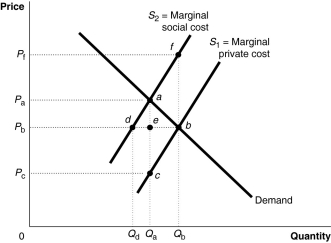 Figure 11-4 shows a market with a negative externality.
Refer to Figure 11-4.The efficient output level is
A) Qd.
B) Qb.
C) Qa.
D) Qb - Qd.
Figure 11-4 shows a market with a negative externality.Refer to Figure 11-4.The efficient output level is
A) Qd.
B) Qb.
C) Qa.
D) Qb - Qd.
سؤال
Figure 11-4 Figure 11-4 shows a market with a negative externality.
Refer to Figure 11-4.The private profit-maximising quantity for the firm is
A) Qa.
B) Qb.
C) Qb - Qd.
D) Qd.
Figure 11-4 shows a market with a negative externality.Refer to Figure 11-4.The private profit-maximising quantity for the firm is
A) Qa.
B) Qb.
C) Qb - Qd.
D) Qd.
سؤال
سؤال
Figure 11-3 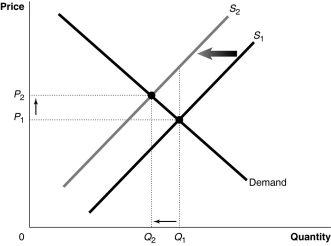 Figure 11-3 shows a market with an externality. The current market equilibrium output of Q1 is not the economically efficient output. The economically efficient output is Q2.
Refer to Figure 11-3.If,because of an externality,the economically efficient output is Q2 and not the current equilibrium output of Q1,what does S1 represent?
A) The market supply curve reflecting external cost.
B) The market supply curve reflecting implicit cost.
C) The market supply curve reflecting social cost.
D) The market supply curve reflecting private cost.
Figure 11-3 shows a market with an externality. The current market equilibrium output of Q1 is not the economically efficient output. The economically efficient output is Q2.Refer to Figure 11-3.If,because of an externality,the economically efficient output is Q2 and not the current equilibrium output of Q1,what does S1 represent?
A) The market supply curve reflecting external cost.
B) The market supply curve reflecting implicit cost.
C) The market supply curve reflecting social cost.
D) The market supply curve reflecting private cost.
سؤال
سؤال
سؤال
Figure 11-3 Figure 11-3 shows a market with an externality. The current market equilibrium output of Q1 is not the economically efficient output. The economically efficient output is Q2.
Refer to Figure 11-3.If,because of an externality,the economically efficient output is Q2 and not the current equilibrium output of Q1,what does S2 represent?
A) The market supply curve reflecting private cost.
B) The market supply curve reflecting social cost.
C) The market supply curve reflecting external cost.
D) The market supply curve reflecting implicit cost.
Figure 11-3 shows a market with an externality. The current market equilibrium output of Q1 is not the economically efficient output. The economically efficient output is Q2.Refer to Figure 11-3.If,because of an externality,the economically efficient output is Q2 and not the current equilibrium output of Q1,what does S2 represent?
A) The market supply curve reflecting private cost.
B) The market supply curve reflecting social cost.
C) The market supply curve reflecting external cost.
D) The market supply curve reflecting implicit cost.
سؤال
Figure 11-3 Figure 11-3 shows a market with an externality. The current market equilibrium output of Q1 is not the economically efficient output. The economically efficient output is Q2.
Refer to Figure 11-3.Suppose the current market equilibrium output of Q1 is not the economically efficient output because of an externality.The economically efficient output is Q2.In that case,the diagram shows
A) the effect of a positive externality in the production of a good.
B) the effect of a negative externality in the production of a good.
C) the effect of an external cost imposed on a producer.
D) the effect of an external benefit such as a subsidy granted to consumers of a good.
Figure 11-3 shows a market with an externality. The current market equilibrium output of Q1 is not the economically efficient output. The economically efficient output is Q2.Refer to Figure 11-3.Suppose the current market equilibrium output of Q1 is not the economically efficient output because of an externality.The economically efficient output is Q2.In that case,the diagram shows
A) the effect of a positive externality in the production of a good.
B) the effect of a negative externality in the production of a good.
C) the effect of an external cost imposed on a producer.
D) the effect of an external benefit such as a subsidy granted to consumers of a good.
سؤال
سؤال
سؤال
سؤال
سؤال
سؤال
Figure 11-4 Figure 11-4 shows a market with a negative externality.
Refer to Figure 11-4.The deadweight loss due to the externality is represented by the area
A) abc.
B) abf.
C) abd.
D) ade.
Figure 11-4 shows a market with a negative externality.Refer to Figure 11-4.The deadweight loss due to the externality is represented by the area
A) abc.
B) abf.
C) abd.
D) ade.
سؤال
سؤال
سؤال
سؤال

فتح الحزمة
قم بالتسجيل لفتح البطاقات في هذه المجموعة!
Unlock Deck
Unlock Deck
1/304

العب

ملء الشاشة (f)
Deck 11: Monopolistic Competition and Oligopoly
1
Figure 11-1
Refer to Figure 11-1.The figure above represents the market for pecans.Assume that this is a competitive market.If the price of pecans is $3,
A) economic surplus is maximised.
B) not enough consumers want to buy pecans.
C) the quantity supplied is less than the economically efficient quantity.
D) the quantity supplied is economically efficient, but the quantity demanded is economically inefficient.
Refer to Figure 11-1.The figure above represents the market for pecans.Assume that this is a competitive market.If the price of pecans is $3,
A) economic surplus is maximised.
B) not enough consumers want to buy pecans.
C) the quantity supplied is less than the economically efficient quantity.
D) the quantity supplied is economically efficient, but the quantity demanded is economically inefficient.
the quantity supplied is less than the economically efficient quantity.
2
Figure 11-1
Refer to Figure 11-1.The figure above represents the market for pecans.Assume that this is a competitive market.If the price of pecans is $9,what changes in the market would result in an economically efficient output?
A) The price would decrease, the quantity supplied would decrease and the quantity demanded would increase.
B) The quantity supplied would increase, the quantity demanded would decrease and the equilibrium price would decrease.
C) The price would decrease, the demand would increase and the supply would decrease.
D) The price would increase, the quantity demanded would decrease and the quantity supplied would increase.
Refer to Figure 11-1.The figure above represents the market for pecans.Assume that this is a competitive market.If the price of pecans is $9,what changes in the market would result in an economically efficient output?
A) The price would decrease, the quantity supplied would decrease and the quantity demanded would increase.
B) The quantity supplied would increase, the quantity demanded would decrease and the equilibrium price would decrease.
C) The price would decrease, the demand would increase and the supply would decrease.
D) The price would increase, the quantity demanded would decrease and the quantity supplied would increase.
The price would decrease, the quantity supplied would decrease and the quantity demanded would increase.
3
Figure 11-1
Refer to Figure 11-1.The figure above represents the market for pecans.Assume that this is a competitive market.If 4000 kilograms of pecans are sold,
A) the deadweight loss is equal to $12 000.
B) consumer surplus equals zero.
C) the marginal benefit of each of the 4000 kilograms of pecans equals $3.
D) marginal benefit is equal to marginal cost.
Refer to Figure 11-1.The figure above represents the market for pecans.Assume that this is a competitive market.If 4000 kilograms of pecans are sold,
A) the deadweight loss is equal to $12 000.
B) consumer surplus equals zero.
C) the marginal benefit of each of the 4000 kilograms of pecans equals $3.
D) marginal benefit is equal to marginal cost.
the deadweight loss is equal to $12 000.
4
Figure 11-1
Refer to Figure 11-1.The figure above represents the market for pecans.Assume that this is a competitive market.If the price of pecans is $3,what changes in the market would result in an economically efficient output?
A) The price would increase, the quantity supplied would decrease and the quantity demanded would increase.
B) The quantity supplied would increase, the quantity demanded would decrease and the equilibrium price would increase.
C) The price would increase, the demand would decrease and the supply would increase.
D) The price would increase, the quantity demanded would decrease and the quantity supplied would increase.
Refer to Figure 11-1.The figure above represents the market for pecans.Assume that this is a competitive market.If the price of pecans is $3,what changes in the market would result in an economically efficient output?
A) The price would increase, the quantity supplied would decrease and the quantity demanded would increase.
B) The quantity supplied would increase, the quantity demanded would decrease and the equilibrium price would increase.
C) The price would increase, the demand would decrease and the supply would increase.
D) The price would increase, the quantity demanded would decrease and the quantity supplied would increase.
فتح الحزمة
افتح القفل للوصول البطاقات البالغ عددها 304 في هذه المجموعة.
فتح الحزمة
k this deck
5
Figure 11-1
Refer to Figure 11-1.The figure above represents the market for pecans.Assume that this is a competitive market.At a price of $3,
A) the marginal cost of pecans is greater than the marginal benefit; therefore, output is inefficiently low.
B) producers should raise the price to $9 in order to sell the quantity demanded of 12 000.
C) the marginal benefit of pecans is greater than the marginal cost; therefore, output is inefficiently high.
D) the marginal benefit of pecans is greater than the marginal cost; therefore, output is inefficiently low.
Refer to Figure 11-1.The figure above represents the market for pecans.Assume that this is a competitive market.At a price of $3,
A) the marginal cost of pecans is greater than the marginal benefit; therefore, output is inefficiently low.
B) producers should raise the price to $9 in order to sell the quantity demanded of 12 000.
C) the marginal benefit of pecans is greater than the marginal cost; therefore, output is inefficiently high.
D) the marginal benefit of pecans is greater than the marginal cost; therefore, output is inefficiently low.
فتح الحزمة
افتح القفل للوصول البطاقات البالغ عددها 304 في هذه المجموعة.
فتح الحزمة
k this deck
6
One difference between the demand for a private good and that for a public good is that
A) with a private good, each consumer chooses the quantity she wants to consume, but with a public good each consumer chooses the price she is willing to pay for a fixed quantity.
B) with a private good, each consumer chooses the quantity she wants to consume, but with a public good everyone consumes the same quantity.
C) with a private good, each consumer receives different amounts of benefit from consuming the product, but with a public good every consumer realises the same amount of benefit from consuming the product.
D) the marginal benefit from consuming the last unit of a public good always exceeds the marginal benefit from consuming the last unit of a private good because there are externalities in the consumption of the former.
A) with a private good, each consumer chooses the quantity she wants to consume, but with a public good each consumer chooses the price she is willing to pay for a fixed quantity.
B) with a private good, each consumer chooses the quantity she wants to consume, but with a public good everyone consumes the same quantity.
C) with a private good, each consumer receives different amounts of benefit from consuming the product, but with a public good every consumer realises the same amount of benefit from consuming the product.
D) the marginal benefit from consuming the last unit of a public good always exceeds the marginal benefit from consuming the last unit of a private good because there are externalities in the consumption of the former.
فتح الحزمة
افتح القفل للوصول البطاقات البالغ عددها 304 في هذه المجموعة.
فتح الحزمة
k this deck
7
Figure 11-1
Refer to Figure 11-1.The figure above represents the market for pecans.Assume that this is a competitive market.If 8000 kilograms of pecans are sold,
A) the deadweight loss is equal to economic surplus.
B) producer surplus equals consumer surplus.
C) the marginal benefit of each of the 8000 kilograms of pecans equals $9.
D) marginal benefit is equal to marginal cost.
Refer to Figure 11-1.The figure above represents the market for pecans.Assume that this is a competitive market.If 8000 kilograms of pecans are sold,
A) the deadweight loss is equal to economic surplus.
B) producer surplus equals consumer surplus.
C) the marginal benefit of each of the 8000 kilograms of pecans equals $9.
D) marginal benefit is equal to marginal cost.
فتح الحزمة
افتح القفل للوصول البطاقات البالغ عددها 304 في هذه المجموعة.
فتح الحزمة
k this deck
8
Economic efficiency is defined as a market outcome in which the marginal benefit to consumers of the last unit produced is equal to the marginal cost of production,and in which
A) the sum of consumer surplus and producer surplus is at a maximum.
B) economic surplus is minimised.
C) the sum of the benefits to firms is equal to the sum of the benefits to consumers.
D) the sum of consumer surplus and producer surplus is minimised.
A) the sum of consumer surplus and producer surplus is at a maximum.
B) economic surplus is minimised.
C) the sum of the benefits to firms is equal to the sum of the benefits to consumers.
D) the sum of consumer surplus and producer surplus is minimised.
فتح الحزمة
افتح القفل للوصول البطاقات البالغ عددها 304 في هذه المجموعة.
فتح الحزمة
k this deck
9
Economic efficiency in a competitive market is achieved when
A) economic surplus is equal to consumer surplus.
B) consumers and producers are satisfied.
C) the marginal benefit equals the marginal cost from the last unit sold.
D) producer surplus equals the total amount firms receive from consumers minus the cost of production.
A) economic surplus is equal to consumer surplus.
B) consumers and producers are satisfied.
C) the marginal benefit equals the marginal cost from the last unit sold.
D) producer surplus equals the total amount firms receive from consumers minus the cost of production.
فتح الحزمة
افتح القفل للوصول البطاقات البالغ عددها 304 في هذه المجموعة.
فتح الحزمة
k this deck
10
If there is a market outcome in which the marginal benefit to consumers of the last unit produced is equal to its marginal cost of production,and consumer surplus plus producer surplus is maximised,then
A) maximum deadweight loss occurs.
B) economic efficiency is achieved.
C) profits are maximised.
D) costs are minimised.
A) maximum deadweight loss occurs.
B) economic efficiency is achieved.
C) profits are maximised.
D) costs are minimised.
فتح الحزمة
افتح القفل للوصول البطاقات البالغ عددها 304 في هذه المجموعة.
فتح الحزمة
k this deck
11
How does the construction of a market demand curve for a private good differ from that for a public good?
A) There is no difference; in both cases the demand curve is determined by adding up the price each consumer is willing to pay for each quantity of the good.
B) There is no difference; in both cases the demand curve is determined by adding up the quantities demanded by each consumer at each price.
C) The market demand curve for a private good is determined by adding up the quantities demanded by each consumer at each price, but the market demand curve for a public good is determined by adding up the price each consumer is willing to pay for each quantity of the good.
D) The market demand curve for a private good is determined by adding up the price each consumer is willing to pay for each quantity of the good, but the market demand curve for a public good is determined by adding up the quantities demanded by each consumer at each price.
A) There is no difference; in both cases the demand curve is determined by adding up the price each consumer is willing to pay for each quantity of the good.
B) There is no difference; in both cases the demand curve is determined by adding up the quantities demanded by each consumer at each price.
C) The market demand curve for a private good is determined by adding up the quantities demanded by each consumer at each price, but the market demand curve for a public good is determined by adding up the price each consumer is willing to pay for each quantity of the good.
D) The market demand curve for a private good is determined by adding up the price each consumer is willing to pay for each quantity of the good, but the market demand curve for a public good is determined by adding up the quantities demanded by each consumer at each price.
فتح الحزمة
افتح القفل للوصول البطاقات البالغ عددها 304 في هذه المجموعة.
فتح الحزمة
k this deck
12
Figure 11-1
Refer to Figure 11-1.The figure above represents the market for pecans.Assume that this is a competitive market.At a price of $9,
A) the marginal cost of pecans is greater than the marginal benefit; therefore, output is inefficiently low.
B) producers should lower the price to $3 in order to sell the quantity demanded of 4000.
C) the marginal benefit of pecans is greater than the marginal cost; therefore, output is inefficiently high.
D) the marginal benefit of pecans is greater than the marginal cost; therefore, output is inefficiently low.
Refer to Figure 11-1.The figure above represents the market for pecans.Assume that this is a competitive market.At a price of $9,
A) the marginal cost of pecans is greater than the marginal benefit; therefore, output is inefficiently low.
B) producers should lower the price to $3 in order to sell the quantity demanded of 4000.
C) the marginal benefit of pecans is greater than the marginal cost; therefore, output is inefficiently high.
D) the marginal benefit of pecans is greater than the marginal cost; therefore, output is inefficiently low.
فتح الحزمة
افتح القفل للوصول البطاقات البالغ عددها 304 في هذه المجموعة.
فتح الحزمة
k this deck
13
The market demand for a public good can be determined by
A) adding up the total private benefits and external benefits that each quantity provides the citizens of a country.
B) adding up how much each citizen expects to consume at each possible price.
C) adding up how much each consumer is willing to pay for each unit of the public good.
D) estimating the value of the benefit that each unit provides and multiplying that by the number of consumers.
A) adding up the total private benefits and external benefits that each quantity provides the citizens of a country.
B) adding up how much each citizen expects to consume at each possible price.
C) adding up how much each consumer is willing to pay for each unit of the public good.
D) estimating the value of the benefit that each unit provides and multiplying that by the number of consumers.
فتح الحزمة
افتح القفل للوصول البطاقات البالغ عددها 304 في هذه المجموعة.
فتح الحزمة
k this deck
14
For certain public projects such as building a dam on a river or a bridge to an island,what procedure is a government likely to use to determine what quantity of a public good should be supplied?
A) It conducts public surveys to determine if consumers want the product.
B) It hires economists to estimate the market demand for the product.
C) It takes a vote in Parliament.
D) It evaluates the costs and benefits of producing the good.
A) It conducts public surveys to determine if consumers want the product.
B) It hires economists to estimate the market demand for the product.
C) It takes a vote in Parliament.
D) It evaluates the costs and benefits of producing the good.
فتح الحزمة
افتح القفل للوصول البطاقات البالغ عددها 304 في هذه المجموعة.
فتح الحزمة
k this deck
15
In a competitive market equilibrium,
A) total consumer surplus equals total producer surplus.
B) marginal benefit and marginal cost are maximised.
C) consumers and producers benefit equally.
D) the marginal benefit equals the marginal cost of the last unit sold.
A) total consumer surplus equals total producer surplus.
B) marginal benefit and marginal cost are maximised.
C) consumers and producers benefit equally.
D) the marginal benefit equals the marginal cost of the last unit sold.
فتح الحزمة
افتح القفل للوصول البطاقات البالغ عددها 304 في هذه المجموعة.
فتح الحزمة
k this deck
16
Which of the following displays these two characteristics: non-rivalry and non-excludability in consumption?
A) Public goods
B) Private goods
C) Quasi-public goods
D) Common resources
A) Public goods
B) Private goods
C) Quasi-public goods
D) Common resources
فتح الحزمة
افتح القفل للوصول البطاقات البالغ عددها 304 في هذه المجموعة.
فتح الحزمة
k this deck
17
Private producers have no incentive to provide public goods because
A) the government subsidy granted is usually insufficient to enable private producers to make a profit.
B) production of huge quantities of public goods entails huge fixed costs.
C) they cannot avoid the tragedy of the commons.
D) once produced, it will not be possible to exclude those who do not pay for the good.
A) the government subsidy granted is usually insufficient to enable private producers to make a profit.
B) production of huge quantities of public goods entails huge fixed costs.
C) they cannot avoid the tragedy of the commons.
D) once produced, it will not be possible to exclude those who do not pay for the good.
فتح الحزمة
افتح القفل للوصول البطاقات البالغ عددها 304 في هذه المجموعة.
فتح الحزمة
k this deck
18
Which of the following displays these two characteristics: rivalry and non-excludability?
A) A public good
B) A private good
C) A quasi-public good
D) A common resource
A) A public good
B) A private good
C) A quasi-public good
D) A common resource
فتح الحزمة
افتح القفل للوصول البطاقات البالغ عددها 304 في هذه المجموعة.
فتح الحزمة
k this deck
19
Figure 11-1
Refer to Figure 11-1.The figure above represents the market for pecans.Assume that this is a competitive market.Which of the following is true?
A) If the price of pecans is $3, the output will be economically efficient but there will be a deadweight loss.
B) If the price of pecans is $9, consumers will purchase more than the economically efficient output.
C) Both 4000 kilograms and 12 000 kilograms are economically inefficient rates of output.
D) If the price of pecans is $3, producers will sell 12 000 kilograms of pecans but this output will be economically inefficient.
Refer to Figure 11-1.The figure above represents the market for pecans.Assume that this is a competitive market.Which of the following is true?
A) If the price of pecans is $3, the output will be economically efficient but there will be a deadweight loss.
B) If the price of pecans is $9, consumers will purchase more than the economically efficient output.
C) Both 4000 kilograms and 12 000 kilograms are economically inefficient rates of output.
D) If the price of pecans is $3, producers will sell 12 000 kilograms of pecans but this output will be economically inefficient.
فتح الحزمة
افتح القفل للوصول البطاقات البالغ عددها 304 في هذه المجموعة.
فتح الحزمة
k this deck
20
Figure 11-1
Refer to Figure 11-1.The figure above represents the market for pecans.Assume that this is a competitive market.If the price of pecans is $9,
A) economic surplus is maximised.
B) too many consumers want to buy pecans.
C) the quantity supplied is greater than the economically efficient quantity.
D) the quantity demanded is economically efficient, but the quantity supplied is economically inefficient.
Refer to Figure 11-1.The figure above represents the market for pecans.Assume that this is a competitive market.If the price of pecans is $9,
A) economic surplus is maximised.
B) too many consumers want to buy pecans.
C) the quantity supplied is greater than the economically efficient quantity.
D) the quantity demanded is economically efficient, but the quantity supplied is economically inefficient.
فتح الحزمة
افتح القفل للوصول البطاقات البالغ عددها 304 في هذه المجموعة.
فتح الحزمة
k this deck
21
In England during the Middle Ages,each village had an area of pasture on which any family in the village was allowed to graze its cows and sheep without charge.Eventually,the grass in the pasture would be depleted and no family's cow or sheep would get enough to eat.The reason the grass was depleted was
A) the area of pasture was non-excludable and the consumption of the grass was rival.
B) self-interest motives led livestock owners to raise too many cows and sheep.
C) due to a policy of neglect on the part of the English government.
D) it did not get enough rainfall.
A) the area of pasture was non-excludable and the consumption of the grass was rival.
B) self-interest motives led livestock owners to raise too many cows and sheep.
C) due to a policy of neglect on the part of the English government.
D) it did not get enough rainfall.
فتح الحزمة
افتح القفل للوصول البطاقات البالغ عددها 304 في هذه المجموعة.
فتح الحزمة
k this deck
22
Economic efficiency is a market outcome in which the marginal benefit of consumers is equal to the marginal cost of production,and the sum of consumer surplus and producer surplus is maximised.
فتح الحزمة
افتح القفل للوصول البطاقات البالغ عددها 304 في هذه المجموعة.
فتح الحزمة
k this deck
23
Figure 11-2 Amit and Bree are the only two homeowners on an isolated private road. Both agree that installing street lights along the road would be beneficial and want to do so. Figure 11-2 shows their willingness to pay for different quantities of street lights, the market demand for street lights and the marginal cost of installing the street lights.
Refer to Figure 11-2.What is the optimal quantity of street lights to install?
A) 3
B) 4
C) 6
D) 9
Amit and Bree are the only two homeowners on an isolated private road. Both agree that installing street lights along the road would be beneficial and want to do so. Figure 11-2 shows their willingness to pay for different quantities of street lights, the market demand for street lights and the marginal cost of installing the street lights.Refer to Figure 11-2.What is the optimal quantity of street lights to install?
A) 3
B) 4
C) 6
D) 9
فتح الحزمة
افتح القفل للوصول البطاقات البالغ عددها 304 في هذه المجموعة.
فتح الحزمة
k this deck
24
Figure 11-2 Amit and Bree are the only two homeowners on an isolated private road. Both agree that installing street lights along the road would be beneficial and want to do so. Figure 11-2 shows their willingness to pay for different quantities of street lights, the market demand for street lights and the marginal cost of installing the street lights.
Refer to Figure 11-2.How much is Amit willing to pay to have 4 street lights installed?
A) $3600
B) $2700
C) $1800
D) $900
Amit and Bree are the only two homeowners on an isolated private road. Both agree that installing street lights along the road would be beneficial and want to do so. Figure 11-2 shows their willingness to pay for different quantities of street lights, the market demand for street lights and the marginal cost of installing the street lights.Refer to Figure 11-2.How much is Amit willing to pay to have 4 street lights installed?
A) $3600
B) $2700
C) $1800
D) $900
فتح الحزمة
افتح القفل للوصول البطاقات البالغ عددها 304 في هذه المجموعة.
فتح الحزمة
k this deck
25
The supply curve of a public good shows
A) the total quantities that all producers are willing and able to supply at each price.
B) the maximum amount suppliers require to produce each quantity of the good.
C) the total cost of producing each unit of the good.
D) the marginal cost of producing each unit of the good.
A) the total quantities that all producers are willing and able to supply at each price.
B) the maximum amount suppliers require to produce each quantity of the good.
C) the total cost of producing each unit of the good.
D) the marginal cost of producing each unit of the good.
فتح الحزمة
افتح القفل للوصول البطاقات البالغ عددها 304 في هذه المجموعة.
فتح الحزمة
k this deck
26
Figure 11-2 Amit and Bree are the only two homeowners on an isolated private road. Both agree that installing street lights along the road would be beneficial and want to do so. Figure 11-2 shows their willingness to pay for different quantities of street lights, the market demand for street lights and the marginal cost of installing the street lights.
Refer to Figure 11-2.Suppose Amit and Bree know each other's preferences so that it is not possible for one to deceive the other.Which of the following statements best describes the circumstances under which the optimal quantity of street lights could be achieved?
A) The optimal quantity will be installed only if the two parties agree to pay according to their willingness to pay as indicated by their respective demand curves.
B) Because there are only two consumers, it is likely that private bargaining will result in the optimal quantity being installed.
C) The optimal quantity will be installed only if the two parties split the cost of installation equally.
D) The optimal quantity will be installed only if Bree pays for the entire installation cost.
Amit and Bree are the only two homeowners on an isolated private road. Both agree that installing street lights along the road would be beneficial and want to do so. Figure 11-2 shows their willingness to pay for different quantities of street lights, the market demand for street lights and the marginal cost of installing the street lights.Refer to Figure 11-2.Suppose Amit and Bree know each other's preferences so that it is not possible for one to deceive the other.Which of the following statements best describes the circumstances under which the optimal quantity of street lights could be achieved?
A) The optimal quantity will be installed only if the two parties agree to pay according to their willingness to pay as indicated by their respective demand curves.
B) Because there are only two consumers, it is likely that private bargaining will result in the optimal quantity being installed.
C) The optimal quantity will be installed only if the two parties split the cost of installation equally.
D) The optimal quantity will be installed only if Bree pays for the entire installation cost.
فتح الحزمة
افتح القفل للوصول البطاقات البالغ عددها 304 في هذه المجموعة.
فتح الحزمة
k this deck
27
An important difference between the demand for a private good and the demand for a public good is that
A) individuals reveal their preferences for a public good, but they do not have to reveal their preferences for a private good.
B) the resources used to provide public goods are common resources or government owned; the resources used to produce private goods are all privately owned.
C) individuals reveal their preferences for a private good, but they do not have to reveal their preferences for a public good.
D) the demand for a private good produces consumption externalities; the demand for a public good produces production externalities.
A) individuals reveal their preferences for a public good, but they do not have to reveal their preferences for a private good.
B) the resources used to provide public goods are common resources or government owned; the resources used to produce private goods are all privately owned.
C) individuals reveal their preferences for a private good, but they do not have to reveal their preferences for a public good.
D) the demand for a private good produces consumption externalities; the demand for a public good produces production externalities.
فتح الحزمة
افتح القفل للوصول البطاقات البالغ عددها 304 في هذه المجموعة.
فتح الحزمة
k this deck
28
Which of the following is a possible solution when a scarce resource is subject to the tragedy of the commons?
A) Access to the commons can be restricted through community norms and laws.
B) Offer subsidies to consumers.
C) Force people to move away from the commons.
D) Persuade people to use less of the scarce resource through an advertising campaign.
A) Access to the commons can be restricted through community norms and laws.
B) Offer subsidies to consumers.
C) Force people to move away from the commons.
D) Persuade people to use less of the scarce resource through an advertising campaign.
فتح الحزمة
افتح القفل للوصول البطاقات البالغ عددها 304 في هذه المجموعة.
فتح الحزمة
k this deck
29
The 'tragedy of the commons' refers to the phenomenon where
A) individuals are free riders.
B) people overuse a common resource.
C) people do not internalise an externality.
D) there is rivalry in consumption.
A) individuals are free riders.
B) people overuse a common resource.
C) people do not internalise an externality.
D) there is rivalry in consumption.
فتح الحزمة
افتح القفل للوصول البطاقات البالغ عددها 304 في هذه المجموعة.
فتح الحزمة
k this deck
30
If marginal benefit is greater than marginal cost,output is inefficiently high.
فتح الحزمة
افتح القفل للوصول البطاقات البالغ عددها 304 في هذه المجموعة.
فتح الحزمة
k this deck
31
It is difficult for a private market to provide the economically efficient quantity of a public good because
A) by law, governments cannot use cost-benefit analysis to determine this quantity.
B) public goods produce positive and negative externalities.
C) individual preferences are not revealed in the market for the good.
D) it is too expensive to produce the necessary amount of the good.
A) by law, governments cannot use cost-benefit analysis to determine this quantity.
B) public goods produce positive and negative externalities.
C) individual preferences are not revealed in the market for the good.
D) it is too expensive to produce the necessary amount of the good.
فتح الحزمة
افتح القفل للوصول البطاقات البالغ عددها 304 في هذه المجموعة.
فتح الحزمة
k this deck
32
Public goods are distinguished by two primary characteristics.What are they?
A) Non-rivalry and non-excludability
B) Government intervention and low prices
C) Market failure and high prices
D) Rivalry and exclusivity
A) Non-rivalry and non-excludability
B) Government intervention and low prices
C) Market failure and high prices
D) Rivalry and exclusivity
فتح الحزمة
افتح القفل للوصول البطاقات البالغ عددها 304 في هذه المجموعة.
فتح الحزمة
k this deck
33
Figure 11-2 Amit and Bree are the only two homeowners on an isolated private road. Both agree that installing street lights along the road would be beneficial and want to do so. Figure 11-2 shows their willingness to pay for different quantities of street lights, the market demand for street lights and the marginal cost of installing the street lights.
Refer to Figure 11-2.How much is Bree willing to pay to have 4 street lights installed?
A) $1500
B) $1800
C) $2700
D) $7200
Amit and Bree are the only two homeowners on an isolated private road. Both agree that installing street lights along the road would be beneficial and want to do so. Figure 11-2 shows their willingness to pay for different quantities of street lights, the market demand for street lights and the marginal cost of installing the street lights.Refer to Figure 11-2.How much is Bree willing to pay to have 4 street lights installed?
A) $1500
B) $1800
C) $2700
D) $7200
فتح الحزمة
افتح القفل للوصول البطاقات البالغ عددها 304 في هذه المجموعة.
فتح الحزمة
k this deck
34
Overuse of a common resource may be avoided by all of the following methods except
A) charging for the use of a common resource.
B) issuing tradable permits for the use of a common resource.
C) the government taking over ownership of all private common resources.
D) setting quotas or legal limits on the quantity consumed of the common resource.
A) charging for the use of a common resource.
B) issuing tradable permits for the use of a common resource.
C) the government taking over ownership of all private common resources.
D) setting quotas or legal limits on the quantity consumed of the common resource.
فتح الحزمة
افتح القفل للوصول البطاقات البالغ عددها 304 في هذه المجموعة.
فتح الحزمة
k this deck
35
Negative externalities and the tragedy of the commons are problems that have a common source.What is this common source?
A) Self-interest motives of producers and consumers
B) A lack of concern for human rights
C) A lack of competition
D) A lack of clearly defined and enforced property rights
A) Self-interest motives of producers and consumers
B) A lack of concern for human rights
C) A lack of competition
D) A lack of clearly defined and enforced property rights
فتح الحزمة
افتح القفل للوصول البطاقات البالغ عددها 304 في هذه المجموعة.
فتح الحزمة
k this deck
36
Haiti was once a heavily forested country.Today,80 per cent of Haiti's forests have been cut down,primarily to be burned to create charcoal.The reduction in the number of trees has led to devastating floods when it rains heavily.This is an example of
A) tragic externalities.
B) the tragedy of the commons.
C) human greed.
D) the consequences of not having a market economic system.
A) tragic externalities.
B) the tragedy of the commons.
C) human greed.
D) the consequences of not having a market economic system.
فتح الحزمة
افتح القفل للوصول البطاقات البالغ عددها 304 في هذه المجموعة.
فتح الحزمة
k this deck
37
A tragedy of the commons occurs when a resource is
A) rival and excludable.
B) rival and non-excludable.
C) non-rival and non-excludable.
D) non-rival and excludable.
A) rival and excludable.
B) rival and non-excludable.
C) non-rival and non-excludable.
D) non-rival and excludable.
فتح الحزمة
افتح القفل للوصول البطاقات البالغ عددها 304 في هذه المجموعة.
فتح الحزمة
k this deck
38
Which of the following is an example of a common resource?
A) Elephants in the wild
B) Lions in a zoo
C) A university education
D) Public transportation
A) Elephants in the wild
B) Lions in a zoo
C) A university education
D) Public transportation
فتح الحزمة
افتح القفل للوصول البطاقات البالغ عددها 304 في هذه المجموعة.
فتح الحزمة
k this deck
39
The efficient output level of a public good occurs where the
A) greatest number of free riders occurs.
B) marginal cost of producing the last unit is equal to the marginal benefit realised by consumers.
C) total cost of production is affordable.
D) marginal cost of production is at its lowest.
A) greatest number of free riders occurs.
B) marginal cost of producing the last unit is equal to the marginal benefit realised by consumers.
C) total cost of production is affordable.
D) marginal cost of production is at its lowest.
فتح الحزمة
افتح القفل للوصول البطاقات البالغ عددها 304 في هذه المجموعة.
فتح الحزمة
k this deck
40
The tragedy of the commons was avoided in the Middle Ages by
A) selling common grounds to individuals.
B) the local police, who monitored entry into the commons.
C) social pressure to uphold traditionally accepted limits on family use of the commons.
D) the government, which imposed a tax for the use of the commons.
A) selling common grounds to individuals.
B) the local police, who monitored entry into the commons.
C) social pressure to uphold traditionally accepted limits on family use of the commons.
D) the government, which imposed a tax for the use of the commons.
فتح الحزمة
افتح القفل للوصول البطاقات البالغ عددها 304 في هذه المجموعة.
فتح الحزمة
k this deck
41
Rent-seeking behaviour,unlike profit-maximising behaviour in competitive markets,wastes society's scarce resources.
فتح الحزمة
افتح القفل للوصول البطاقات البالغ عددها 304 في هذه المجموعة.
فتح الحزمة
k this deck
42
Which of the following statements about rent seeking is false?
A) Rent seeking often involves governments because governments transfer huge amounts of funds that economic agents must compete for.
B) A person is engaging in rent-seeking behaviour when he uses the political process to acquire ownership of a resource that belongs to the public.
C) Because rent seeking redistributes society's resources, anyone engaging in such behaviour is violating the law.
D) If a firm can benefit from government intervention in the economy, it is more likely to spend resources attempting to secure this intervention than toward innovating its product to gain a competitive edge in the market.
A) Rent seeking often involves governments because governments transfer huge amounts of funds that economic agents must compete for.
B) A person is engaging in rent-seeking behaviour when he uses the political process to acquire ownership of a resource that belongs to the public.
C) Because rent seeking redistributes society's resources, anyone engaging in such behaviour is violating the law.
D) If a firm can benefit from government intervention in the economy, it is more likely to spend resources attempting to secure this intervention than toward innovating its product to gain a competitive edge in the market.
فتح الحزمة
افتح القفل للوصول البطاقات البالغ عددها 304 في هذه المجموعة.
فتح الحزمة
k this deck
43
Define the tragedy of the commons.Give three examples of common resources.Briefly explain why common property resources are subject to overuse.
فتح الحزمة
افتح القفل للوصول البطاقات البالغ عددها 304 في هذه المجموعة.
فتح الحزمة
k this deck
44
What is rent seeking and how is it related to regulatory capture?
فتح الحزمة
افتح القفل للوصول البطاقات البالغ عددها 304 في هذه المجموعة.
فتح الحزمة
k this deck
45
Will equilibrium in a market always result in an outcome that is economically efficient? Explain.
فتح الحزمة
افتح القفل للوصول البطاقات البالغ عددها 304 في هذه المجموعة.
فتح الحزمة
k this deck
46
'When it comes to public goods,individuals do not reveal their true preferences because it is not in their self-interest to do so.' Evaluate this statement.
فتح الحزمة
افتح القفل للوصول البطاقات البالغ عددها 304 في هذه المجموعة.
فتح الحزمة
k this deck
47
Goods differ on the basis of whether their consumption is rival and excludable.Explain the terms 'rivalry' and 'excludability' as they are used to define goods.List the four categories of goods,and define these categories in terms of rivalry and excludability.
فتح الحزمة
افتح القفل للوصول البطاقات البالغ عددها 304 في هذه المجموعة.
فتح الحزمة
k this deck
48
State whether each of the following goods and services is non-rival,non-excludable or both:
a.A toll road
b.A public park
c.A lighthouse
d.An art museum
e.A radio broadcast of 'A Prairie Home Companion'
a.A toll road
b.A public park
c.A lighthouse
d.An art museum
e.A radio broadcast of 'A Prairie Home Companion'
فتح الحزمة
افتح القفل للوصول البطاقات البالغ عددها 304 في هذه المجموعة.
فتح الحزمة
k this deck
49
One result of the public choice model is that most economists believe that
A) when market failure occurs, government intervention will always lead to a more efficient outcome.
B) government intervention will always result in a reduction in economic efficiency in regulated markets.
C) policymakers may have incentives to intervene in the economy in ways that do not promote economic efficiency.
D) the voting paradox will prevent voters from selecting the best person for public office.
A) when market failure occurs, government intervention will always lead to a more efficient outcome.
B) government intervention will always result in a reduction in economic efficiency in regulated markets.
C) policymakers may have incentives to intervene in the economy in ways that do not promote economic efficiency.
D) the voting paradox will prevent voters from selecting the best person for public office.
فتح الحزمة
افتح القفل للوصول البطاقات البالغ عددها 304 في هذه المجموعة.
فتح الحزمة
k this deck
50
Logrolling refers to attempts by individuals to use government action to make themselves better off at the expense of others.
فتح الحزمة
افتح القفل للوصول البطاقات البالغ عددها 304 في هذه المجموعة.
فتح الحزمة
k this deck
51
Economic rent is defined as
A) what you pay to rent your apartment or house.
B) the revenue received by a factor of production with an upward-sloping supply curve.
C) the price of a factor of production that is fixed in supply.
D) the surplus received by employing a factor of production in its highest-valued use.
A) what you pay to rent your apartment or house.
B) the revenue received by a factor of production with an upward-sloping supply curve.
C) the price of a factor of production that is fixed in supply.
D) the surplus received by employing a factor of production in its highest-valued use.
فتح الحزمة
افتح القفل للوصول البطاقات البالغ عددها 304 في هذه المجموعة.
فتح الحزمة
k this deck
52
What is the relationship between market failure and government failure?
فتح الحزمة
افتح القفل للوصول البطاقات البالغ عددها 304 في هذه المجموعة.
فتح الحزمة
k this deck
53
The price of a factor of production that is in fixed supply is called
A) economic rent.
B) economic profit.
C) a compensating differential.
D) opportunity cost.
A) economic rent.
B) economic profit.
C) a compensating differential.
D) opportunity cost.
فتح الحزمة
افتح القفل للوصول البطاقات البالغ عددها 304 في هذه المجموعة.
فتح الحزمة
k this deck
54
The social benefit of a given level of a public good is the vertical sum of all private benefits for that level.
فتح الحزمة
افتح القفل للوصول البطاقات البالغ عددها 304 في هذه المجموعة.
فتح الحزمة
k this deck
55
Some individuals seek to use government action to make themselves better off at the expense of others.The actions of these individuals
A) are examples of fraud; but these individuals usually avoid prosecution because of logrolling and rational ignorance.
B) are examples of rent seeking.
C) offer proof that Adam Smith's 'invisible hand' is not valid.
D) are evidence of the voting paradox.
A) are examples of fraud; but these individuals usually avoid prosecution because of logrolling and rational ignorance.
B) are examples of rent seeking.
C) offer proof that Adam Smith's 'invisible hand' is not valid.
D) are evidence of the voting paradox.
فتح الحزمة
افتح القفل للوصول البطاقات البالغ عددها 304 في هذه المجموعة.
فتح الحزمة
k this deck
56
Which of the following is not an example of rent-seeking behaviour?
A) Competition for subsidies
B) Lobbying the government to impose tariffs on certain imported products
C) Competition for the exclusive right to import a product
D) Engaging in aggressive advertising that slams a competitor's product
A) Competition for subsidies
B) Lobbying the government to impose tariffs on certain imported products
C) Competition for the exclusive right to import a product
D) Engaging in aggressive advertising that slams a competitor's product
فتح الحزمة
افتح القفل للوصول البطاقات البالغ عددها 304 في هذه المجموعة.
فتح الحزمة
k this deck
57
Economic rent refers to the price of a factor of production which is fixed in supply.
فتح الحزمة
افتح القفل للوصول البطاقات البالغ عددها 304 في هذه المجموعة.
فتح الحزمة
k this deck
58
A modern example of the tragedy of the commons is the forests in many poor countries.
فتح الحزمة
افتح القفل للوصول البطاقات البالغ عددها 304 في هذه المجموعة.
فتح الحزمة
k this deck
59
A public good is a good that is both rival and excludable.
فتح الحزمة
افتح القفل للوصول البطاقات البالغ عددها 304 في هذه المجموعة.
فتح الحزمة
k this deck
60
Economists often analyse the interaction of individuals and firms in markets.Economists also examine the actions of individuals and firms as they attempt to use government to make themselves better off at the expense of others,a process that is referred to as
A) rent seeking.
B) logrolling.
C) government failure.
D) the public choice initiative.
A) rent seeking.
B) logrolling.
C) government failure.
D) the public choice initiative.
فتح الحزمة
افتح القفل للوصول البطاقات البالغ عددها 304 في هذه المجموعة.
فتح الحزمة
k this deck
61
Which of the following is a source of market failure?
A) Unforeseen circumstances which lead to the bankruptcy of many firms
B) A lack of government intervention in a market
C) Incomplete property rights or inability to enforce property rights
D) An inequitable income distribution
A) Unforeseen circumstances which lead to the bankruptcy of many firms
B) A lack of government intervention in a market
C) Incomplete property rights or inability to enforce property rights
D) An inequitable income distribution
فتح الحزمة
افتح القفل للوصول البطاقات البالغ عددها 304 في هذه المجموعة.
فتح الحزمة
k this deck
62
An externality is
A) a benefit realised by the purchaser of a good or service.
B) a cost paid for by the producer of a good or service.
C) a benefit or cost experienced by someone who is not a producer or consumer of a good or service.
D) anything that is external or not relevant to the production of a good or service.
A) a benefit realised by the purchaser of a good or service.
B) a cost paid for by the producer of a good or service.
C) a benefit or cost experienced by someone who is not a producer or consumer of a good or service.
D) anything that is external or not relevant to the production of a good or service.
فتح الحزمة
افتح القفل للوصول البطاقات البالغ عددها 304 في هذه المجموعة.
فتح الحزمة
k this deck
63
Figure 11-4 Figure 11-4 shows a market with a negative externality.
Refer to Figure 11-4.The efficient output level is
A) Qd.
B) Qb.
C) Qa.
D) Qb - Qd.
Figure 11-4 shows a market with a negative externality.Refer to Figure 11-4.The efficient output level is
A) Qd.
B) Qb.
C) Qa.
D) Qb - Qd.
فتح الحزمة
افتح القفل للوصول البطاقات البالغ عددها 304 في هذه المجموعة.
فتح الحزمة
k this deck
64
Figure 11-4 Figure 11-4 shows a market with a negative externality.
Refer to Figure 11-4.The private profit-maximising quantity for the firm is
A) Qa.
B) Qb.
C) Qb - Qd.
D) Qd.
Figure 11-4 shows a market with a negative externality.Refer to Figure 11-4.The private profit-maximising quantity for the firm is
A) Qa.
B) Qb.
C) Qb - Qd.
D) Qd.
فتح الحزمة
افتح القفل للوصول البطاقات البالغ عددها 304 في هذه المجموعة.
فتح الحزمة
k this deck
65
What is a 'social cost' of production?
A) The cost of the natural resources used up in production.
B) The total costs of producing a product, both implicit and explicit costs.
C) The sum of all costs to individuals in society, regardless of whether the costs are borne by those who produce the products or consume the product.
D) The cost of the environmental damage created by production.
A) The cost of the natural resources used up in production.
B) The total costs of producing a product, both implicit and explicit costs.
C) The sum of all costs to individuals in society, regardless of whether the costs are borne by those who produce the products or consume the product.
D) The cost of the environmental damage created by production.
فتح الحزمة
افتح القفل للوصول البطاقات البالغ عددها 304 في هذه المجموعة.
فتح الحزمة
k this deck
66
Figure 11-3 Figure 11-3 shows a market with an externality. The current market equilibrium output of Q1 is not the economically efficient output. The economically efficient output is Q2.
Refer to Figure 11-3.If,because of an externality,the economically efficient output is Q2 and not the current equilibrium output of Q1,what does S1 represent?
A) The market supply curve reflecting external cost.
B) The market supply curve reflecting implicit cost.
C) The market supply curve reflecting social cost.
D) The market supply curve reflecting private cost.
Figure 11-3 shows a market with an externality. The current market equilibrium output of Q1 is not the economically efficient output. The economically efficient output is Q2.Refer to Figure 11-3.If,because of an externality,the economically efficient output is Q2 and not the current equilibrium output of Q1,what does S1 represent?
A) The market supply curve reflecting external cost.
B) The market supply curve reflecting implicit cost.
C) The market supply curve reflecting social cost.
D) The market supply curve reflecting private cost.
فتح الحزمة
افتح القفل للوصول البطاقات البالغ عددها 304 في هذه المجموعة.
فتح الحزمة
k this deck
67
What are property rights?
A) The title to ownership of any physical asset.
B) A legal document verifying ownership of intangible assets.
C) The rights individuals or firms have to the exclusive use of their property, including the right to buy or sell it.
D) The right of the government to appropriate private assets for the good of society.
A) The title to ownership of any physical asset.
B) A legal document verifying ownership of intangible assets.
C) The rights individuals or firms have to the exclusive use of their property, including the right to buy or sell it.
D) The right of the government to appropriate private assets for the good of society.
فتح الحزمة
افتح القفل للوصول البطاقات البالغ عددها 304 في هذه المجموعة.
فتح الحزمة
k this deck
68
Private costs
A) are borne by producers of a good while social costs are borne by government.
B) are borne by consumers of a good while social costs are borne by government.
C) are borne by producers of a good while social costs are borne by society at large.
D) are borne by producers of a good while social costs are borne by those who cannot afford to purchase the good.
A) are borne by producers of a good while social costs are borne by government.
B) are borne by consumers of a good while social costs are borne by government.
C) are borne by producers of a good while social costs are borne by society at large.
D) are borne by producers of a good while social costs are borne by those who cannot afford to purchase the good.
فتح الحزمة
افتح القفل للوصول البطاقات البالغ عددها 304 في هذه المجموعة.
فتح الحزمة
k this deck
69
Figure 11-3 Figure 11-3 shows a market with an externality. The current market equilibrium output of Q1 is not the economically efficient output. The economically efficient output is Q2.
Refer to Figure 11-3.If,because of an externality,the economically efficient output is Q2 and not the current equilibrium output of Q1,what does S2 represent?
A) The market supply curve reflecting private cost.
B) The market supply curve reflecting social cost.
C) The market supply curve reflecting external cost.
D) The market supply curve reflecting implicit cost.
Figure 11-3 shows a market with an externality. The current market equilibrium output of Q1 is not the economically efficient output. The economically efficient output is Q2.Refer to Figure 11-3.If,because of an externality,the economically efficient output is Q2 and not the current equilibrium output of Q1,what does S2 represent?
A) The market supply curve reflecting private cost.
B) The market supply curve reflecting social cost.
C) The market supply curve reflecting external cost.
D) The market supply curve reflecting implicit cost.
فتح الحزمة
افتح القفل للوصول البطاقات البالغ عددها 304 في هذه المجموعة.
فتح الحزمة
k this deck
70
Figure 11-3 Figure 11-3 shows a market with an externality. The current market equilibrium output of Q1 is not the economically efficient output. The economically efficient output is Q2.
Refer to Figure 11-3.Suppose the current market equilibrium output of Q1 is not the economically efficient output because of an externality.The economically efficient output is Q2.In that case,the diagram shows
A) the effect of a positive externality in the production of a good.
B) the effect of a negative externality in the production of a good.
C) the effect of an external cost imposed on a producer.
D) the effect of an external benefit such as a subsidy granted to consumers of a good.
Figure 11-3 shows a market with an externality. The current market equilibrium output of Q1 is not the economically efficient output. The economically efficient output is Q2.Refer to Figure 11-3.Suppose the current market equilibrium output of Q1 is not the economically efficient output because of an externality.The economically efficient output is Q2.In that case,the diagram shows
A) the effect of a positive externality in the production of a good.
B) the effect of a negative externality in the production of a good.
C) the effect of an external cost imposed on a producer.
D) the effect of an external benefit such as a subsidy granted to consumers of a good.
فتح الحزمة
افتح القفل للوصول البطاقات البالغ عددها 304 في هذه المجموعة.
فتح الحزمة
k this deck
71
Which of the following activities creates a negative externality?
A) Cleaning up the sidewalk on your block
B) Graduating from university
C) Repainting the house you live in to improve its appearance
D) Keeping a junked car parked on your front lawn
A) Cleaning up the sidewalk on your block
B) Graduating from university
C) Repainting the house you live in to improve its appearance
D) Keeping a junked car parked on your front lawn
فتح الحزمة
افتح القفل للوصول البطاقات البالغ عددها 304 في هذه المجموعة.
فتح الحزمة
k this deck
72
When a negative externality exists,the private market produces
A) more than the economically efficient output level.
B) less than the economically efficient output level.
C) products at a low opportunity cost.
D) products at a high opportunity cost.
A) more than the economically efficient output level.
B) less than the economically efficient output level.
C) products at a low opportunity cost.
D) products at a high opportunity cost.
فتح الحزمة
افتح القفل للوصول البطاقات البالغ عددها 304 في هذه المجموعة.
فتح الحزمة
k this deck
73
What is a market failure?
A) It refers to the inability of the market to allocate resources efficiently up to the point where marginal social benefit equals marginal social cost.
B) It refers to the inability of the market to allocate resources efficiently up to the point where marginal social benefit equals marginal private cost.
C) It refers to a situation where an entire sector of the economy (for example, the airline industry) collapses because of some unforeseen event.
D) It refers to a breakdown in a market economy because of widespread corruption in government.
A) It refers to the inability of the market to allocate resources efficiently up to the point where marginal social benefit equals marginal social cost.
B) It refers to the inability of the market to allocate resources efficiently up to the point where marginal social benefit equals marginal private cost.
C) It refers to a situation where an entire sector of the economy (for example, the airline industry) collapses because of some unforeseen event.
D) It refers to a breakdown in a market economy because of widespread corruption in government.
فتح الحزمة
افتح القفل للوصول البطاقات البالغ عددها 304 في هذه المجموعة.
فتح الحزمة
k this deck
74
Mandatory motorcycle helmet laws are designed to reduce the severity of injuries resulting from motorcycle involvement in traffic accidents.In this sense,these mandatory helmet laws are reducing ________ of risky behaviour.
A) positive externalities
B) negative externalities
C) the private benefit
D) the social benefit
A) positive externalities
B) negative externalities
C) the private benefit
D) the social benefit
فتح الحزمة
افتح القفل للوصول البطاقات البالغ عددها 304 في هذه المجموعة.
فتح الحزمة
k this deck
75
Which of the following is an example of a positive externality?
A) Banning the sale of chocolate in primary schools
B) Planting trees along the footpath, which adds beauty and creates shade
C) Forbidding the use of mobile phones in public
D) Prohibiting street parking in all residential neighbourhoods
A) Banning the sale of chocolate in primary schools
B) Planting trees along the footpath, which adds beauty and creates shade
C) Forbidding the use of mobile phones in public
D) Prohibiting street parking in all residential neighbourhoods
فتح الحزمة
افتح القفل للوصول البطاقات البالغ عددها 304 في هذه المجموعة.
فتح الحزمة
k this deck
76
Figure 11-4 Figure 11-4 shows a market with a negative externality.
Refer to Figure 11-4.The deadweight loss due to the externality is represented by the area
A) abc.
B) abf.
C) abd.
D) ade.
Figure 11-4 shows a market with a negative externality.Refer to Figure 11-4.The deadweight loss due to the externality is represented by the area
A) abc.
B) abf.
C) abd.
D) ade.
فتح الحزمة
افتح القفل للوصول البطاقات البالغ عددها 304 في هذه المجموعة.
فتح الحزمة
k this deck
77
Which of the following represents the true economic cost of production when firms produce goods that cause negative externalities?
A) The private cost of production
B) The social cost of production
C) The external cost of production
D) The explicit cost of production
A) The private cost of production
B) The social cost of production
C) The external cost of production
D) The explicit cost of production
فتح الحزمة
افتح القفل للوصول البطاقات البالغ عددها 304 في هذه المجموعة.
فتح الحزمة
k this deck
78
If you burn your trash in the back yard despite regulations against it,then you are
A) acting economically irrationally and creating a social cost.
B) avoiding the private costs associated with disposing your garbage some other way and creating a social cost.
C) acting rationally and creating a positive externality.
D) saving landfill space and creating a social benefit.
A) acting economically irrationally and creating a social cost.
B) avoiding the private costs associated with disposing your garbage some other way and creating a social cost.
C) acting rationally and creating a positive externality.
D) saving landfill space and creating a social benefit.
فتح الحزمة
افتح القفل للوصول البطاقات البالغ عددها 304 في هذه المجموعة.
فتح الحزمة
k this deck
79
A positive externality causes
A) the marginal social benefit to be equal to the marginal private cost of the last unit produced.
B) the marginal social benefit to be less than the marginal private cost of the last unit produced.
C) the marginal social benefit to exceed the marginal private cost of the last unit produced.
D) the marginal private benefit to exceed the marginal social cost of the last unit produced.
A) the marginal social benefit to be equal to the marginal private cost of the last unit produced.
B) the marginal social benefit to be less than the marginal private cost of the last unit produced.
C) the marginal social benefit to exceed the marginal private cost of the last unit produced.
D) the marginal private benefit to exceed the marginal social cost of the last unit produced.
فتح الحزمة
افتح القفل للوصول البطاقات البالغ عددها 304 في هذه المجموعة.
فتح الحزمة
k this deck
80
A negative externality exists if
A) there are price controls in a market.
B) there are quantity controls in a market.
C) the marginal social cost of producing a good or service exceeds the private cost.
D) the marginal private cost of producing a good or service exceeds the social cost.
A) there are price controls in a market.
B) there are quantity controls in a market.
C) the marginal social cost of producing a good or service exceeds the private cost.
D) the marginal private cost of producing a good or service exceeds the social cost.
فتح الحزمة
افتح القفل للوصول البطاقات البالغ عددها 304 في هذه المجموعة.
فتح الحزمة
k this deck
فتح الحزمة
افتح القفل للوصول البطاقات البالغ عددها 304 في هذه المجموعة.






