







 تكلم مع الذكاء الاصطناعي


Deck 20: Thermodynamics: Entropy, Free Energy, and the Direction of Chemical Reactions
ملء الشاشة (f)

سؤال

سؤال
سؤال
سؤال
سؤال
سؤال
سؤال
سؤال
سؤال
سؤال
سؤال
سؤال
سؤال
سؤال
سؤال
سؤال
سؤال
سؤال
سؤال
سؤال
سؤال
سؤال
سؤال
سؤال
سؤال
Calculate S° for the combustion of propane. 
A) -100.9 J/K
B) -72.5 J/K
C) 72.5 J/K
D) 100.9 J/K
E) 877.5 J/K
A) -100.9 J/K
B) -72.5 J/K
C) 72.5 J/K
D) 100.9 J/K
E) 877.5 J/K
سؤال
سؤال
سؤال
Elemental boron can be formed by reaction of boron trichloride with hydrogen.  If S° = 80.3 J/K for the reaction above, what is S° for BCl3(g)?
A) -18.2 J/K.mol
B) 18.2 J/K.mol
C) 290.1 J/K.mol
D) 355.4 J/K.mol
E) 450.6 J/K.mol
If S° = 80.3 J/K for the reaction above, what is S° for BCl3(g)?A) -18.2 J/K.mol
B) 18.2 J/K.mol
C) 290.1 J/K.mol
D) 355.4 J/K.mol
E) 450.6 J/K.mol
سؤال
سؤال
سؤال
سؤال
You are given pure samples of pentane, CH3CH2CH2CH2CH3(l), and 1,3-pentadiene, CH2=CHCH=CHCH3(l). What prediction would you make concerning their standard molar entropies at 298 K?
A) S°pentane > S°1, 3-pentadiene
B) S°pentane < S°1, 3-pentadiene
C) S°pentane S°1, 3-pentadiene
D) S°pentane = S°1, 3-pentadiene + 2
E) More information is needed to make reasonable predictions.
A) S°pentane > S°1, 3-pentadiene
B) S°pentane < S°1, 3-pentadiene
C) S°pentane S°1, 3-pentadiene
D) S°pentane = S°1, 3-pentadiene + 2
E) More information is needed to make reasonable predictions.
سؤال
سؤال
سؤال
سؤال
Calculate S° for the reaction 
A) -548.1 J/K
B) -147.7 J/K
C) 147.7 J/K
D) 310.1 J/K E ) 548.1 J/K
A) -548.1 J/K
B) -147.7 J/K
C) 147.7 J/K
D) 310.1 J/K E ) 548.1 J/K
سؤال
سؤال
Calculate S° for the reaction 
A) -118.2 J/K
B) -104.8 J/K
C) 104.8 J/K
D) 118.2 J/K
E) 1270.0 J/K
A) -118.2 J/K
B) -104.8 J/K
C) 104.8 J/K
D) 118.2 J/K
E) 1270.0 J/K
سؤال
سؤال
Calculate S° for the reaction 
A) -254.96 J/K
B) -198.02 J/K
C) 198.02 J/K
D) 254.96 J/K
E) 471.86 J/K
A) -254.96 J/K
B) -198.02 J/K
C) 198.02 J/K
D) 254.96 J/K
E) 471.86 J/K
سؤال
Use the given data at 298 K to calculate G° for the reaction 
A) 129.3 kJ
B) 133.6 kJ
C) 196.0 kJ
D) 199.8 kJ
E) 229.6 kJ
A) 129.3 kJ
B) 133.6 kJ
C) 196.0 kJ
D) 199.8 kJ
E) 229.6 kJ
سؤال
سؤال
The temperature at which the following process reaches equilibrium at 1.0 atm is the normal boiling point of hydrogen peroxide.

Use the following thermodynamic information at 298 K to determine this temperature.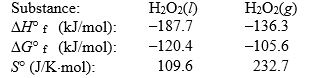
A) 120°C
B) 144°C
C) 196°C
D) 418°C
E) 585°C
Use the following thermodynamic information at 298 K to determine this temperature.
A) 120°C
B) 144°C
C) 196°C
D) 418°C
E) 585°C
سؤال
Sulfuryl dichloride is formed when sulfur dioxide reacts with chlorine. The data refer to 298 K. SO2(g) + Cl2(g) SO2Cl2(g) 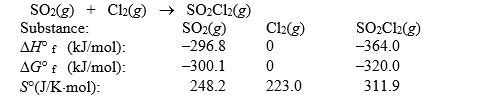 What is the value of G° for this reaction at 600 K?
A) -162.8 kJ
B) -40.1 kJ
C) -28.4 kJ
D) 28.4 kJ
E) 162.8 kJ
What is the value of G° for this reaction at 600 K?A) -162.8 kJ
B) -40.1 kJ
C) -28.4 kJ
D) 28.4 kJ
E) 162.8 kJ
سؤال
سؤال
The temperature at which the following process reaches equilibrium at 1.0 atm is the normal melting point for phosphoric acid. 
Use the following thermodynamic data at 298 K to determine this temperature.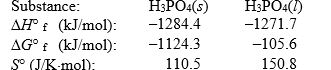
A) 286 K
B) 305 K
C) 315 K
D) 347 K
E) 3170 K
Use the following thermodynamic data at 298 K to determine this temperature.
A) 286 K
B) 305 K
C) 315 K
D) 347 K
E) 3170 K
سؤال
سؤال
سؤال
Nitric oxide reacts with chlorine to form NOCl. The data refer to 298 K. 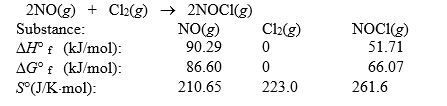 What is the value of G° for this reaction at 550 K?
A) -143.76 kJ
B) -78.78 kJ
C) -22.24 kJ
D) -10.56 kJ
E) 66600 kJ
What is the value of G° for this reaction at 550 K?A) -143.76 kJ
B) -78.78 kJ
C) -22.24 kJ
D) -10.56 kJ
E) 66600 kJ
سؤال
سؤال
سؤال
سؤال
Elemental boron can be formed by reaction of boron trichloride with hydrogen. 
A) -293.4 kJ
B) 293.4 kJ
C) -102.8 kJ
D) 102.8 kJ
E) none of the above
A) -293.4 kJ
B) 293.4 kJ
C) -102.8 kJ
D) 102.8 kJ
E) none of the above
سؤال
سؤال
سؤال
Calculate G° for the reaction of ammonia with fluorine. 
A) 179.1 kJ
B) -179.1 kJ
C) 1539.7 kJ
D) -1539.7 kJ
E) none of the above
A) 179.1 kJ
B) -179.1 kJ
C) 1539.7 kJ
D) -1539.7 kJ
E) none of the above
سؤال
Calculate G° for the reaction 
A) 566.60 kJ
B) 50.38 kJ
C) 25.19 kJ
D) -25.19 kJ
E) -566.60 kJ
A) 566.60 kJ
B) 50.38 kJ
C) 25.19 kJ
D) -25.19 kJ
E) -566.60 kJ
سؤال
Calculate G° for the combustion of propane. 
A) -2073.1 kJ
B) -1387.3 kJ
C) -598.5 kJ
D) 598.5 kJ
E) 2073.1 kJ
A) -2073.1 kJ
B) -1387.3 kJ
C) -598.5 kJ
D) 598.5 kJ
E) 2073.1 kJ
سؤال
سؤال
سؤال
سؤال
سؤال
What is the free energy change, G°, for the equilibrium between hydrogen iodide, hydrogen, and iodine at 453°C?

A) 6.4 kJ
B) 8.8 kJ
C) 15 kJ
D) 19 kJ
E) 24 kJ
A) 6.4 kJ
B) 8.8 kJ
C) 15 kJ
D) 19 kJ
E) 24 kJ
سؤال
سؤال
Consider the figure which shows G° for a chemical process plotted against absolute temperature. 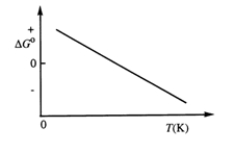 Which one of the following is an incorrect conclusion, based on the information in the diagram?
A) . H° > 0
B) . S° > 0
C) The reaction is spontaneous at high temperatures.
D) . S° increases with temperature while H° remains constant.
E) There exists a certain temperature at which H° = T S°.
Which one of the following is an incorrect conclusion, based on the information in the diagram?A) . H° > 0
B) . S° > 0
C) The reaction is spontaneous at high temperatures.
D) . S° increases with temperature while H° remains constant.
E) There exists a certain temperature at which H° = T S°.
سؤال
For each of the following pairs, predict which (A or B) will have the greater entropy, and in one sentence indicate your reasoning. 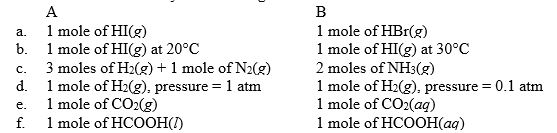
سؤال
سؤال
سؤال
سؤال
The reaction of methane with water to form carbon dioxide and hydrogen is non-spontaneous at 298 K. At what temperature will this system make the transition from non-spontaneous to spontaneous? The data refer to 298 K.


A) 658 K
B) 683 K
C) 955 K
D) 1047 K
E) 1229 K
A) 658 K
B) 683 K
C) 955 K
D) 1047 K
E) 1229 K
سؤال
Consider the figure which shows G° for a chemical process plotted against absolute temperature. From this plot, it is reasonable to conclude that: 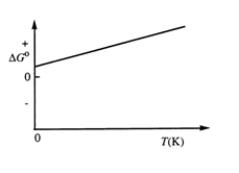
A) . H° > 0, S° > 0
B) . H° > 0, S° < 0
C) . H° < 0, S° > 0
D) . H° < 0, S° < 0
E) none of the above
A) . H° > 0, S° > 0
B) . H° > 0, S° < 0
C) . H° < 0, S° > 0
D) . H° < 0, S° < 0
E) none of the above
سؤال
سؤال
Iron(III) oxide can be reduced by carbon monoxide. 
Use the following thermodynamic data at 298 K to determine the equilibrium constant at this temperature.
A) 7.0 × 10⁻⁶
B) 1.3 × 10⁻³
C) 2.2 × 10⁴
D) 1.4 × 10⁵
E) > 2.0 × 10⁵
Use the following thermodynamic data at 298 K to determine the equilibrium constant at this temperature.
A) 7.0 × 10⁻⁶
B) 1.3 × 10⁻³
C) 2.2 × 10⁴
D) 1.4 × 10⁵
E) > 2.0 × 10⁵
سؤال
سؤال
سؤال
Consider the figure which shows G° for a chemical process plotted against absolute temperature. From this plot, it is reasonable to conclude that: 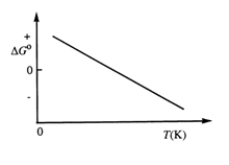
A) . H° > 0, S° > 0
B) . H° > 0, S° < 0
C) . H° < 0, S° > 0
D) . H° < 0, S° < 0
E) none of the above
A) . H° > 0, S° > 0
B) . H° > 0, S° < 0
C) . H° < 0, S° > 0
D) . H° < 0, S° < 0
E) none of the above
سؤال
The formation constant for the reaction

Is Kf = 1.7 × 10⁷ at 25°C. What is G° at this temperature?
A) -1.5 kJ
B) -3.5 kJ
C) -18 kJ
D) -23 kJ
E) -41 kJ
Is Kf = 1.7 × 10⁷ at 25°C. What is G° at this temperature?
A) -1.5 kJ
B) -3.5 kJ
C) -18 kJ
D) -23 kJ
E) -41 kJ
سؤال
سؤال
سؤال
Calculate the equilibrium constant at 25°C for the reaction of methane with water to form carbon dioxide and hydrogen. The data refer to

A) 8.2 × 10¹⁹
B) 0.96
C) 0.58
D) 1.2 × 10⁻²⁰
E) 1.4 × 10-46
A) 8.2 × 10¹⁹
B) 0.96
C) 0.58
D) 1.2 × 10⁻²⁰
E) 1.4 × 10-46

فتح الحزمة
قم بالتسجيل لفتح البطاقات في هذه المجموعة!
Unlock Deck
Unlock Deck
1/94

العب

ملء الشاشة (f)
Deck 20: Thermodynamics: Entropy, Free Energy, and the Direction of Chemical Reactions
1
Which of the following should have the greatest molar entropy at 298 K?
A) CH4(g)
B) H2O(l)
C) NaCl(s)
D) N2O4(g)
E) H2(g)
A) CH4(g)
B) H2O(l)
C) NaCl(s)
D) N2O4(g)
E) H2(g)
N2O4(g)
2
Which relationship or statement best describes S° for the following reaction?
O3(g) + NO(g) O2(g) + NO2(g)
A) . S° 0
B) . S° < 0
C) . S° > 0
D) . S° = H°/T
E) More information is needed to make a reasonable prediction.
O3(g) + NO(g) O2(g) + NO2(g)
A) . S° 0
B) . S° < 0
C) . S° > 0
D) . S° = H°/T
E) More information is needed to make a reasonable prediction.
. S° 0
3
Which, if any, of the following processes is spontaneous under the specified conditions?
A) H2O(l) H2O(s) at 25°C
B) CO2(s) CO2(g) at 0°C
C) 2H2O(g) 2H2(g) + O2(g)
D) C(graphite) C(diamond) at 25°C and 1 atm pressure
E) None of the above is spontaneous.
A) H2O(l) H2O(s) at 25°C
B) CO2(s) CO2(g) at 0°C
C) 2H2O(g) 2H2(g) + O2(g)
D) C(graphite) C(diamond) at 25°C and 1 atm pressure
E) None of the above is spontaneous.
CO2(s) CO2(g) at 0°C
4
Which of the following is necessary for a process to be spontaneous?
A) . Hsys < 0
B) . Ssys > 0
C) . Ssurr< 0
D) . Suniv > 0
E) . Gsys = 0
A) . Hsys < 0
B) . Ssys > 0
C) . Ssurr< 0
D) . Suniv > 0
E) . Gsys = 0
فتح الحزمة
افتح القفل للوصول البطاقات البالغ عددها 94 في هذه المجموعة.
فتح الحزمة
k this deck
5
Which of the following is always true for an endothermic process?
A) q sys > 0, Ssurr < 0
B) q sys < 0, Ssurr > 0
C) q sys < 0, Ssurr < 0
D) q sys > 0, Ssurr > 0
E) w < 0
A) q sys > 0, Ssurr < 0
B) q sys < 0, Ssurr > 0
C) q sys < 0, Ssurr < 0
D) q sys > 0, Ssurr > 0
E) w < 0
فتح الحزمة
افتح القفل للوصول البطاقات البالغ عددها 94 في هذه المجموعة.
فتح الحزمة
k this deck
6
Which of the following is true for a system at equilibrium?
A) . S°sys = S°surr
B) . S°sys = - S°surr
C) . S°sys = S°surr = 0
D) . S°univ > 0
E) None of the above is a sufficient condition.
A) . S°sys = S°surr
B) . S°sys = - S°surr
C) . S°sys = S°surr = 0
D) . S°univ > 0
E) None of the above is a sufficient condition.
فتح الحزمة
افتح القفل للوصول البطاقات البالغ عددها 94 في هذه المجموعة.
فتح الحزمة
k this deck
7
Which relationship or statement best describes S° for the following reaction?
HgS(s) + O2(g) Hg(l) + SO2(g)
A) . S° 0
B) . S° < 0
C) . S° > 0
D) . S° = H°/T
E) More information is needed to make a reasonable prediction.
HgS(s) + O2(g) Hg(l) + SO2(g)
A) . S° 0
B) . S° < 0
C) . S° > 0
D) . S° = H°/T
E) More information is needed to make a reasonable prediction.
فتح الحزمة
افتح القفل للوصول البطاقات البالغ عددها 94 في هذه المجموعة.
فتح الحزمة
k this deck
8
When a sky diver free-falls through the air, the process is
A) non-spontaneous because he is accelerating due to the force applied by gravity.
B) non-spontaneous because he is losing potential energy.
C) non-spontaneous, if he had planned the jump for two weeks.
D) spontaneous.
E) in equilibrium.
A) non-spontaneous because he is accelerating due to the force applied by gravity.
B) non-spontaneous because he is losing potential energy.
C) non-spontaneous, if he had planned the jump for two weeks.
D) spontaneous.
E) in equilibrium.
فتح الحزمة
افتح القفل للوصول البطاقات البالغ عددها 94 في هذه المجموعة.
فتح الحزمة
k this deck
9
Which of the following values is based on the Third Law of Thermodynamics?
A) . H° f = 0 for Al(s) at 298 K
B) . G° f = 0 for H2(g) at 298 K
C) S° = 51.446 J/(mol·K) for Na(s) at 298 K
D) q sys < 0 for H2O(l) H2O(s) at 0°C
E) none of the above
A) . H° f = 0 for Al(s) at 298 K
B) . G° f = 0 for H2(g) at 298 K
C) S° = 51.446 J/(mol·K) for Na(s) at 298 K
D) q sys < 0 for H2O(l) H2O(s) at 0°C
E) none of the above
فتح الحزمة
افتح القفل للوصول البطاقات البالغ عددها 94 في هذه المجموعة.
فتح الحزمة
k this deck
10
Which relationship or statement best describes S° for the following reaction?
2H2S(g) + 3O2(g) 2H2O(g) + 2SO2(g)
A) . S° 0
B) . S° < 0
C) . S° > 0
D) . S° = H°/T
E) More information is needed to make a reasonable prediction.
2H2S(g) + 3O2(g) 2H2O(g) + 2SO2(g)
A) . S° 0
B) . S° < 0
C) . S° > 0
D) . S° = H°/T
E) More information is needed to make a reasonable prediction.
فتح الحزمة
افتح القفل للوصول البطاقات البالغ عددها 94 في هذه المجموعة.
فتح الحزمة
k this deck
11
Which of the following results in a decrease in the entropy of the system?
A) O2(g), 300 K O2(g), 400 K
B) H2O(s), 0°C H2O(l), 0°C
C) N2(g), 25°C N2(aq), 25°C
D) NH3(l), -34.5°C NH3(g), -34.5°C
E) 2H2O2(g) 2H2O(g) + O2(g)
A) O2(g), 300 K O2(g), 400 K
B) H2O(s), 0°C H2O(l), 0°C
C) N2(g), 25°C N2(aq), 25°C
D) NH3(l), -34.5°C NH3(g), -34.5°C
E) 2H2O2(g) 2H2O(g) + O2(g)
فتح الحزمة
افتح القفل للوصول البطاقات البالغ عددها 94 في هذه المجموعة.
فتح الحزمة
k this deck
12
Which relationship or statement best describes S° for the following reaction?
2NH3(g) + 2ClF3(g) 6HF(g) + N2(g) + Cl2(g)
A) . S° 0
B) . S° < 0
C) . S° > 0
D) . S° = H°/T
E) More information is needed to make a reasonable prediction.
2NH3(g) + 2ClF3(g) 6HF(g) + N2(g) + Cl2(g)
A) . S° 0
B) . S° < 0
C) . S° > 0
D) . S° = H°/T
E) More information is needed to make a reasonable prediction.
فتح الحزمة
افتح القفل للوصول البطاقات البالغ عددها 94 في هذه المجموعة.
فتح الحزمة
k this deck
13
Which of the following is always true for an exothermic process?
A) q sys > 0, Ssurr < 0
B) q sys < 0, Ssurr > 0
C) q sys < 0, Ssurr < 0
D) q sys > 0, Ssurr > 0
E) w < 0
A) q sys > 0, Ssurr < 0
B) q sys < 0, Ssurr > 0
C) q sys < 0, Ssurr < 0
D) q sys > 0, Ssurr > 0
E) w < 0
فتح الحزمة
افتح القفل للوصول البطاقات البالغ عددها 94 في هذه المجموعة.
فتح الحزمة
k this deck
14
Which relationship best describes S° for the following reaction?
CO(g) + H2O(g) CO2(g) + H2(g)
A) . S° = H°
B) . S° = H°/T
C) . S° > 0
D) . S° < 0
E) . S° 0
CO(g) + H2O(g) CO2(g) + H2(g)
A) . S° = H°
B) . S° = H°/T
C) . S° > 0
D) . S° < 0
E) . S° 0
فتح الحزمة
افتح القفل للوصول البطاقات البالغ عددها 94 في هذه المجموعة.
فتح الحزمة
k this deck
15
Which of the following is true for pure oxygen gas, O2(g) at 25°C?
A) . H° f > 0
B) . H° f < 0
C) . G° f > 0
D) . G° f < 0
E) S° > 0
A) . H° f > 0
B) . H° f < 0
C) . G° f > 0
D) . G° f < 0
E) S° > 0
فتح الحزمة
افتح القفل للوصول البطاقات البالغ عددها 94 في هذه المجموعة.
فتح الحزمة
k this deck
16
Which relationship best describes S° for the following reaction? 8H2(g) + S8(s) 8H2S(g)
A) . S° = H°
B) . S° = H°/T
C) . S° 0
D) . S° < 0
E) . S° > 0
A) . S° = H°
B) . S° = H°/T
C) . S° 0
D) . S° < 0
E) . S° > 0
فتح الحزمة
افتح القفل للوصول البطاقات البالغ عددها 94 في هذه المجموعة.
فتح الحزمة
k this deck
17
Which relationship or statement best describes S° for the following reaction?
C2H5OH(l) + 3O2(g) 2CO2(g) + 3H2O(l)
A) . S° 0
B) . S° < 0
C) . S° > 0
D) . S° = H°/T
E) More information is needed to make a reasonable prediction.
C2H5OH(l) + 3O2(g) 2CO2(g) + 3H2O(l)
A) . S° 0
B) . S° < 0
C) . S° > 0
D) . S° = H°/T
E) More information is needed to make a reasonable prediction.
فتح الحزمة
افتح القفل للوصول البطاقات البالغ عددها 94 في هذه المجموعة.
فتح الحزمة
k this deck
18
A certain process has Suniv > 0 at 25°C. What does one know about the process?
A) It is exothermic.
B) It is endothermic.
C) It is spontaneous at 25°C.
D) It will move rapidly toward equilibrium.
E) none of the above
A) It is exothermic.
B) It is endothermic.
C) It is spontaneous at 25°C.
D) It will move rapidly toward equilibrium.
E) none of the above
فتح الحزمة
افتح القفل للوصول البطاقات البالغ عددها 94 في هذه المجموعة.
فتح الحزمة
k this deck
19
Which relationship or statement best describes S° for the following reaction?
Pb(s) + Cl2(g) PbCl2(s)
A) . S° 0
B) . S° < 0
C) . S° > 0
D) . S° = H°/T
E) More information is needed to make a reasonable prediction.
Pb(s) + Cl2(g) PbCl2(s)
A) . S° 0
B) . S° < 0
C) . S° > 0
D) . S° = H°/T
E) More information is needed to make a reasonable prediction.
فتح الحزمة
افتح القفل للوصول البطاقات البالغ عددها 94 في هذه المجموعة.
فتح الحزمة
k this deck
20
Which relationship or statement best describes S° for the following reaction?
KCl(s) K+(aq) + Cl-(aq)
A) . S° 0
B) . S° < 0
C) . S° > 0
D) . S° = H°/T
E) More information is needed to make a reasonable prediction.
KCl(s) K+(aq) + Cl-(aq)
A) . S° 0
B) . S° < 0
C) . S° > 0
D) . S° = H°/T
E) More information is needed to make a reasonable prediction.
فتح الحزمة
افتح القفل للوصول البطاقات البالغ عددها 94 في هذه المجموعة.
فتح الحزمة
k this deck
21
Which relationship or statement best describes S° for the following reaction?
CaO(s) + CO2(g) CaCO3(s)
A) . S° 0
B) . S° < 0
C) . S° > 0
D) . S° = H°/T
E) More information is needed to make a reasonable prediction.
CaO(s) + CO2(g) CaCO3(s)
A) . S° 0
B) . S° < 0
C) . S° > 0
D) . S° = H°/T
E) More information is needed to make a reasonable prediction.
فتح الحزمة
افتح القفل للوصول البطاقات البالغ عددها 94 في هذه المجموعة.
فتح الحزمة
k this deck
22
Which one of the following phase changes decreases the entropy of the system?
A) melting
B) heating a gas
C) vaporization
D) condensation
E) sublimation
A) melting
B) heating a gas
C) vaporization
D) condensation
E) sublimation
فتح الحزمة
افتح القفل للوصول البطاقات البالغ عددها 94 في هذه المجموعة.
فتح الحزمة
k this deck
23
For a chemical reaction to be spontaneous only at high temperatures, which of the following conditions must be met?
A) . S° > 0, H° > 0
B) . S° > 0, H° < 0
C) . S° < 0, H° < 0
D) . S° < 0, H° > 0
E) . G° > 0
A) . S° > 0, H° > 0
B) . S° > 0, H° < 0
C) . S° < 0, H° < 0
D) . S° < 0, H° > 0
E) . G° > 0
فتح الحزمة
افتح القفل للوصول البطاقات البالغ عددها 94 في هذه المجموعة.
فتح الحزمة
k this deck
24
Which relationship or statement best describes S° for the following reaction? BaCl2(aq) + Na2SO4(aq) BaSO4(s) + 2NaCl(aq)
A) . S° 0
B) . S° < 0
C) . S° > 0
D) . S° = H°/T
E) More information is needed to make a reasonable prediction.
A) . S° 0
B) . S° < 0
C) . S° > 0
D) . S° = H°/T
E) More information is needed to make a reasonable prediction.
فتح الحزمة
افتح القفل للوصول البطاقات البالغ عددها 94 في هذه المجموعة.
فتح الحزمة
k this deck
25
Calculate S° for the combustion of propane.
A) -100.9 J/K
B) -72.5 J/K
C) 72.5 J/K
D) 100.9 J/K
E) 877.5 J/K
A) -100.9 J/K
B) -72.5 J/K
C) 72.5 J/K
D) 100.9 J/K
E) 877.5 J/K
فتح الحزمة
افتح القفل للوصول البطاقات البالغ عددها 94 في هذه المجموعة.
فتح الحزمة
k this deck
26
Which one of the following changes of state increases the entropy of the system?
A) condensation
B) cooling a gas
C) freezing
D) crystallization
E) sublimation
A) condensation
B) cooling a gas
C) freezing
D) crystallization
E) sublimation
فتح الحزمة
افتح القفل للوصول البطاقات البالغ عددها 94 في هذه المجموعة.
فتح الحزمة
k this deck
27
You are given pure samples of ethane, C2H6(g), and toluene, C7H8(l). What prediction would you make concerning their standard molar entropies at 298 K?
A) S°ethane > S°toluene
B) S°ethane < S°toluene
C) S°ethane (S°toluene) ÷ 3
D) S°ethane S°toluene
E) Since toluene is much more complex than ethane, but ethane is in the gas phase while toluene is a liquid, none of the above predictions can be confidently made without further information or calculations.
A) S°ethane > S°toluene
B) S°ethane < S°toluene
C) S°ethane (S°toluene) ÷ 3
D) S°ethane S°toluene
E) Since toluene is much more complex than ethane, but ethane is in the gas phase while toluene is a liquid, none of the above predictions can be confidently made without further information or calculations.
فتح الحزمة
افتح القفل للوصول البطاقات البالغ عددها 94 في هذه المجموعة.
فتح الحزمة
k this deck
28
Elemental boron can be formed by reaction of boron trichloride with hydrogen. If S° = 80.3 J/K for the reaction above, what is S° for BCl3(g)?
A) -18.2 J/K.mol
B) 18.2 J/K.mol
C) 290.1 J/K.mol
D) 355.4 J/K.mol
E) 450.6 J/K.mol
If S° = 80.3 J/K for the reaction above, what is S° for BCl3(g)?A) -18.2 J/K.mol
B) 18.2 J/K.mol
C) 290.1 J/K.mol
D) 355.4 J/K.mol
E) 450.6 J/K.mol
فتح الحزمة
افتح القفل للوصول البطاقات البالغ عددها 94 في هذه المجموعة.
فتح الحزمة
k this deck
29
You are given pure samples of ammonia, NH3(g), and nitrogen trifluoride, NF3(g). What prediction would you make concerning their standard molar entropies at 298 K?
A) S°ammonia > S°nitrogen trifluoride
B) S°ammonia < S°nitrogen trifluoride
C) S°ammonia S°nitrogen trifluoride
D) Other conditions need to be specified before a reliable prediction can be made.
E) Even if more conditions are specified, a reliable prediction cannot be made.
A) S°ammonia > S°nitrogen trifluoride
B) S°ammonia < S°nitrogen trifluoride
C) S°ammonia S°nitrogen trifluoride
D) Other conditions need to be specified before a reliable prediction can be made.
E) Even if more conditions are specified, a reliable prediction cannot be made.
فتح الحزمة
افتح القفل للوصول البطاقات البالغ عددها 94 في هذه المجموعة.
فتح الحزمة
k this deck
30
For a chemical reaction to be spontaneous at all temperatures, which of the following conditions must be met?
A) . S° > 0, H° > 0
B) . S° > 0, H° < 0
C) . S° < 0, H° < 0
D) . S° < 0, H° > 0
E) It is not possible for a reaction to be spontaneous at all temperatures.
A) . S° > 0, H° > 0
B) . S° > 0, H° < 0
C) . S° < 0, H° < 0
D) . S° < 0, H° > 0
E) It is not possible for a reaction to be spontaneous at all temperatures.
فتح الحزمة
افتح القفل للوصول البطاقات البالغ عددها 94 في هذه المجموعة.
فتح الحزمة
k this deck
31
A sample of water is heated at a constant pressure of one atmosphere. Initially, the sample is ice at 260 K, and at the end the sample consists of steam at 400 K. In which of the following 5K temperature intervals would there be the greatest increase in the entropy of the sample?
A) from 260 K to 265 K
B) from 275 K to 280 K
C) from 360 K to 365 K
D) 370 K to 375 K
E) from 395 K to 400 K
A) from 260 K to 265 K
B) from 275 K to 280 K
C) from 360 K to 365 K
D) 370 K to 375 K
E) from 395 K to 400 K
فتح الحزمة
افتح القفل للوصول البطاقات البالغ عددها 94 في هذه المجموعة.
فتح الحزمة
k this deck
32
You are given pure samples of pentane, CH3CH2CH2CH2CH3(l), and 1,3-pentadiene, CH2=CHCH=CHCH3(l). What prediction would you make concerning their standard molar entropies at 298 K?
A) S°pentane > S°1, 3-pentadiene
B) S°pentane < S°1, 3-pentadiene
C) S°pentane S°1, 3-pentadiene
D) S°pentane = S°1, 3-pentadiene + 2
E) More information is needed to make reasonable predictions.
A) S°pentane > S°1, 3-pentadiene
B) S°pentane < S°1, 3-pentadiene
C) S°pentane S°1, 3-pentadiene
D) S°pentane = S°1, 3-pentadiene + 2
E) More information is needed to make reasonable predictions.
فتح الحزمة
افتح القفل للوصول البطاقات البالغ عددها 94 في هذه المجموعة.
فتح الحزمة
k this deck
33
For a chemical reaction to be spontaneous only at low temperatures, which of the following conditions must be met?
A) . S° > 0, H° > 0
B) . S° > 0, H° < 0
C) . S° < 0, H° < 0
D) . S° < 0, H° > 0
E) . G° > 0
A) . S° > 0, H° > 0
B) . S° > 0, H° < 0
C) . S° < 0, H° < 0
D) . S° < 0, H° > 0
E) . G° > 0
فتح الحزمة
افتح القفل للوصول البطاقات البالغ عددها 94 في هذه المجموعة.
فتح الحزمة
k this deck
34
Which of the following pairs has the member with the greater molar entropy listed first? All systems are at 25°C.
A) CO(g), CO2(g)
B) NaCl(s), NaCl(aq)
C) H2S(g), H2S(aq)
D) Li(s), Pb(s)
E) H2(g), H2O(g)
A) CO(g), CO2(g)
B) NaCl(s), NaCl(aq)
C) H2S(g), H2S(aq)
D) Li(s), Pb(s)
E) H2(g), H2O(g)
فتح الحزمة
افتح القفل للوصول البطاقات البالغ عددها 94 في هذه المجموعة.
فتح الحزمة
k this deck
35
For a chemical reaction to be non-spontaneous at any temperature, which of the following conditions must be met?
A) . S° > 0, H° > 0
B) . S° > 0, H° < 0
C) . S° < 0, H° < 0
D) . S° < 0, H° > 0
E) All reactions are spontaneous at some temperature.
A) . S° > 0, H° > 0
B) . S° > 0, H° < 0
C) . S° < 0, H° < 0
D) . S° < 0, H° > 0
E) All reactions are spontaneous at some temperature.
فتح الحزمة
افتح القفل للوصول البطاقات البالغ عددها 94 في هذه المجموعة.
فتح الحزمة
k this deck
36
Calculate S° for the reaction
A) -548.1 J/K
B) -147.7 J/K
C) 147.7 J/K
D) 310.1 J/K E ) 548.1 J/K
A) -548.1 J/K
B) -147.7 J/K
C) 147.7 J/K
D) 310.1 J/K E ) 548.1 J/K
فتح الحزمة
افتح القفل للوصول البطاقات البالغ عددها 94 في هذه المجموعة.
فتح الحزمة
k this deck
37
In which one of these pairs will the entropy of the first substance be greater than that of the second? Assume P and T are the same for each pair, unless stated otherwise.
A) 1 mole of F2(g); 1 mole of Cl2(g)
B) 1 mole of I2(s); 1 mole of I2(g)
C) 1 mole of CaCO3(s); 1 mole of CaO(s) plus 1 mole of CO2(g)
D) 1 mole of H2(g) at 25°C; 1 mole of H2(g) at 50°C
E) 1 mole of O3(g); 1 mole of O2(g)
A) 1 mole of F2(g); 1 mole of Cl2(g)
B) 1 mole of I2(s); 1 mole of I2(g)
C) 1 mole of CaCO3(s); 1 mole of CaO(s) plus 1 mole of CO2(g)
D) 1 mole of H2(g) at 25°C; 1 mole of H2(g) at 50°C
E) 1 mole of O3(g); 1 mole of O2(g)
فتح الحزمة
افتح القفل للوصول البطاقات البالغ عددها 94 في هذه المجموعة.
فتح الحزمة
k this deck
38
Calculate S° for the reaction
A) -118.2 J/K
B) -104.8 J/K
C) 104.8 J/K
D) 118.2 J/K
E) 1270.0 J/K
A) -118.2 J/K
B) -104.8 J/K
C) 104.8 J/K
D) 118.2 J/K
E) 1270.0 J/K
فتح الحزمة
افتح القفل للوصول البطاقات البالغ عددها 94 في هذه المجموعة.
فتح الحزمة
k this deck
39
In which one of the following pairs will the first system have a higher entropy than the second? Assume P and T are the same for each pair, unless stated otherwise.
A) 1 mole He(g); 1 mole Kr(g)
B) 1 mole O2(g); 2 mole O(g)
C) 1 mole CH4(g); 1 mole C2H6(g)
D) 1 mole Xe(g) at 1 atmosphere; 1 mole Xe(g) at 0.5 atmosphere
E) 20 one-dollar bills distributed randomly among 20 people; 20 one-dollar bills distributed randomly among 10 people
A) 1 mole He(g); 1 mole Kr(g)
B) 1 mole O2(g); 2 mole O(g)
C) 1 mole CH4(g); 1 mole C2H6(g)
D) 1 mole Xe(g) at 1 atmosphere; 1 mole Xe(g) at 0.5 atmosphere
E) 20 one-dollar bills distributed randomly among 20 people; 20 one-dollar bills distributed randomly among 10 people
فتح الحزمة
افتح القفل للوصول البطاقات البالغ عددها 94 في هذه المجموعة.
فتح الحزمة
k this deck
40
Calculate S° for the reaction
A) -254.96 J/K
B) -198.02 J/K
C) 198.02 J/K
D) 254.96 J/K
E) 471.86 J/K
A) -254.96 J/K
B) -198.02 J/K
C) 198.02 J/K
D) 254.96 J/K
E) 471.86 J/K
فتح الحزمة
افتح القفل للوصول البطاقات البالغ عددها 94 في هذه المجموعة.
فتح الحزمة
k this deck
41
Use the given data at 298 K to calculate G° for the reaction
A) 129.3 kJ
B) 133.6 kJ
C) 196.0 kJ
D) 199.8 kJ
E) 229.6 kJ
A) 129.3 kJ
B) 133.6 kJ
C) 196.0 kJ
D) 199.8 kJ
E) 229.6 kJ
فتح الحزمة
افتح القفل للوصول البطاقات البالغ عددها 94 في هذه المجموعة.
فتح الحزمة
k this deck
42
Consider the following quantities used in thermodynamics: E, H, q, w, S, G. How many of them are state functions?
A) 0
B) 1
C) 2
D) 3
E) 4
A) 0
B) 1
C) 2
D) 3
E) 4
فتح الحزمة
افتح القفل للوصول البطاقات البالغ عددها 94 في هذه المجموعة.
فتح الحزمة
k this deck
43
The temperature at which the following process reaches equilibrium at 1.0 atm is the normal boiling point of hydrogen peroxide.
Use the following thermodynamic information at 298 K to determine this temperature.
A) 120°C
B) 144°C
C) 196°C
D) 418°C
E) 585°C
Use the following thermodynamic information at 298 K to determine this temperature.
A) 120°C
B) 144°C
C) 196°C
D) 418°C
E) 585°C
فتح الحزمة
افتح القفل للوصول البطاقات البالغ عددها 94 في هذه المجموعة.
فتح الحزمة
k this deck
44
Sulfuryl dichloride is formed when sulfur dioxide reacts with chlorine. The data refer to 298 K. SO2(g) + Cl2(g) SO2Cl2(g) What is the value of G° for this reaction at 600 K?
A) -162.8 kJ
B) -40.1 kJ
C) -28.4 kJ
D) 28.4 kJ
E) 162.8 kJ
What is the value of G° for this reaction at 600 K?A) -162.8 kJ
B) -40.1 kJ
C) -28.4 kJ
D) 28.4 kJ
E) 162.8 kJ
فتح الحزمة
افتح القفل للوصول البطاقات البالغ عددها 94 في هذه المجموعة.
فتح الحزمة
k this deck
45
Hydrogen sulfide decomposes according to the following reaction
2H2S(g) 2H2(g) + S2(g)
For this reaction at 298K S° = 78.1 J/K, H° = 169.4 kJ, and G° = 146.1 kJ. What is the value of G° at 900 K?
A) -69881 kJ
B) 48.4 kJ
C) 99.1 kJ
D) 240 kJ
E) 441 kJ
2H2S(g) 2H2(g) + S2(g)
For this reaction at 298K S° = 78.1 J/K, H° = 169.4 kJ, and G° = 146.1 kJ. What is the value of G° at 900 K?
A) -69881 kJ
B) 48.4 kJ
C) 99.1 kJ
D) 240 kJ
E) 441 kJ
فتح الحزمة
افتح القفل للوصول البطاقات البالغ عددها 94 في هذه المجموعة.
فتح الحزمة
k this deck
46
The temperature at which the following process reaches equilibrium at 1.0 atm is the normal melting point for phosphoric acid.
Use the following thermodynamic data at 298 K to determine this temperature.
A) 286 K
B) 305 K
C) 315 K
D) 347 K
E) 3170 K
Use the following thermodynamic data at 298 K to determine this temperature.
A) 286 K
B) 305 K
C) 315 K
D) 347 K
E) 3170 K
فتح الحزمة
افتح القفل للوصول البطاقات البالغ عددها 94 في هذه المجموعة.
فتح الحزمة
k this deck
47
For a process with S < 0, which one of the following statements is correct?
A) The process will definitely be spontaneous if H < 0.
B) The process will be definitely be spontaneous if H < T S.
C) The process can never be spontaneous.
D) The process will definitely be spontaneous, regardless of H.
E) The process will definitely be spontaneous if Ssurr > 0.
A) The process will definitely be spontaneous if H < 0.
B) The process will be definitely be spontaneous if H < T S.
C) The process can never be spontaneous.
D) The process will definitely be spontaneous, regardless of H.
E) The process will definitely be spontaneous if Ssurr > 0.
فتح الحزمة
افتح القفل للوصول البطاقات البالغ عددها 94 في هذه المجموعة.
فتح الحزمة
k this deck
48
"A diamond is forever" is one of the most successful advertising slogans of all time. But is it true? For the reaction shown below, calculate the standard free energy change at 298K and determine whether or not a diamond is "forever". C(diamond) C(graphite)
Data: Hf°(diamond) = 1.895 kJ/mol; S°(diamond) = 2.337 J mol-1 K-1;
S°(graphite) = 5.740 J mol-1K-1.
A) . G° = 2.19 kJ; forever
B) . G° = -1.90 kJ; not forever
C) . G° = -2.90 kJ; not forever
D) . G° = 1.90 kJ; forever
E) . G° = < -1000 kJ; not forever
Data: Hf°(diamond) = 1.895 kJ/mol; S°(diamond) = 2.337 J mol-1 K-1;
S°(graphite) = 5.740 J mol-1K-1.
A) . G° = 2.19 kJ; forever
B) . G° = -1.90 kJ; not forever
C) . G° = -2.90 kJ; not forever
D) . G° = 1.90 kJ; forever
E) . G° = < -1000 kJ; not forever
فتح الحزمة
افتح القفل للوصول البطاقات البالغ عددها 94 في هذه المجموعة.
فتح الحزمة
k this deck
49
Nitric oxide reacts with chlorine to form NOCl. The data refer to 298 K. What is the value of G° for this reaction at 550 K?
A) -143.76 kJ
B) -78.78 kJ
C) -22.24 kJ
D) -10.56 kJ
E) 66600 kJ
What is the value of G° for this reaction at 550 K?A) -143.76 kJ
B) -78.78 kJ
C) -22.24 kJ
D) -10.56 kJ
E) 66600 kJ
فتح الحزمة
افتح القفل للوصول البطاقات البالغ عددها 94 في هذه المجموعة.
فتح الحزمة
k this deck
50
In order for a process to be spontaneous,
A) the entropy of the system must increase.
B) the entropy of the surroundings must increase.
C) the entropy of the universe must decrease.
D) the entropy of the surroundings must decrease.
E) the entropy change of the surroundings plus the entropy change of the system must be positive.
A) the entropy of the system must increase.
B) the entropy of the surroundings must increase.
C) the entropy of the universe must decrease.
D) the entropy of the surroundings must decrease.
E) the entropy change of the surroundings plus the entropy change of the system must be positive.
فتح الحزمة
افتح القفل للوصول البطاقات البالغ عددها 94 في هذه المجموعة.
فتح الحزمة
k this deck
51
Given: H2O(l) H2O(s) H° = -6.02 kJ at 273K Calculate the entropy change of the surroundings ( Ssurr) when one mole of water freezes at 0 °C and a pressure of one atmosphere.
A) 22.1 J/K
B) -22.1 J/K
C) 397 J/K
D) -397 J/K
E) 0.022 J/K
A) 22.1 J/K
B) -22.1 J/K
C) 397 J/K
D) -397 J/K
E) 0.022 J/K
فتح الحزمة
افتح القفل للوصول البطاقات البالغ عددها 94 في هذه المجموعة.
فتح الحزمة
k this deck
52
Given: H2O(l) H2O(g) H° = 40.7 kJ at 373K What is the entropy change in the system ( S) when one mole of water vaporizes at 100 °C and a pressure of one atmosphere?
A) 407 J/K
B) -407 J/K
C) 109 J/K
D) -109 J/K
E) J/K
A) 407 J/K
B) -407 J/K
C) 109 J/K
D) -109 J/K
E) J/K
فتح الحزمة
افتح القفل للوصول البطاقات البالغ عددها 94 في هذه المجموعة.
فتح الحزمة
k this deck
53
Elemental boron can be formed by reaction of boron trichloride with hydrogen.
A) -293.4 kJ
B) 293.4 kJ
C) -102.8 kJ
D) 102.8 kJ
E) none of the above
A) -293.4 kJ
B) 293.4 kJ
C) -102.8 kJ
D) 102.8 kJ
E) none of the above
فتح الحزمة
افتح القفل للوصول البطاقات البالغ عددها 94 في هذه المجموعة.
فتح الحزمة
k this deck
54
Which of the following conditions will ensure that a chemical reaction will definitely proceed in the forward direction, toward products?
A) . H > 0
B) . H < 0
C) . Ssys > 0
D) . Ssurr > Ssys
E) . S > H/T
A) . H > 0
B) . H < 0
C) . Ssys > 0
D) . Ssurr > Ssys
E) . S > H/T
فتح الحزمة
افتح القفل للوصول البطاقات البالغ عددها 94 في هذه المجموعة.
فتح الحزمة
k this deck
55
A certain process has H° > 0, S° < 0, and G° > 0. The values of H° and S° do not depend on the temperature. Which of the following is a correct conclusion about this process?
A) It is non-spontaneous at all T.
B) It is spontaneous at high T.
C) It is spontaneous at low T.
D) It is spontaneous at all T.
E) None of the above conclusions is correct.
A) It is non-spontaneous at all T.
B) It is spontaneous at high T.
C) It is spontaneous at low T.
D) It is spontaneous at all T.
E) None of the above conclusions is correct.
فتح الحزمة
افتح القفل للوصول البطاقات البالغ عددها 94 في هذه المجموعة.
فتح الحزمة
k this deck
56
Calculate G° for the reaction of ammonia with fluorine.
A) 179.1 kJ
B) -179.1 kJ
C) 1539.7 kJ
D) -1539.7 kJ
E) none of the above
A) 179.1 kJ
B) -179.1 kJ
C) 1539.7 kJ
D) -1539.7 kJ
E) none of the above
فتح الحزمة
افتح القفل للوصول البطاقات البالغ عددها 94 في هذه المجموعة.
فتح الحزمة
k this deck
57
Calculate G° for the reaction
A) 566.60 kJ
B) 50.38 kJ
C) 25.19 kJ
D) -25.19 kJ
E) -566.60 kJ
A) 566.60 kJ
B) 50.38 kJ
C) 25.19 kJ
D) -25.19 kJ
E) -566.60 kJ
فتح الحزمة
افتح القفل للوصول البطاقات البالغ عددها 94 في هذه المجموعة.
فتح الحزمة
k this deck
58
Calculate G° for the combustion of propane.
A) -2073.1 kJ
B) -1387.3 kJ
C) -598.5 kJ
D) 598.5 kJ
E) 2073.1 kJ
A) -2073.1 kJ
B) -1387.3 kJ
C) -598.5 kJ
D) 598.5 kJ
E) 2073.1 kJ
فتح الحزمة
افتح القفل للوصول البطاقات البالغ عددها 94 في هذه المجموعة.
فتح الحزمة
k this deck
59
In order for a process to be spontaneous,
A) . H must be less than zero.
B) . S must be greater than zero.
C) . G must be greater than zero.
D) it should be rapid.
E) . Ssys + Ssurr must be greater than zero.
A) . H must be less than zero.
B) . S must be greater than zero.
C) . G must be greater than zero.
D) it should be rapid.
E) . Ssys + Ssurr must be greater than zero.
فتح الحزمة
افتح القفل للوصول البطاقات البالغ عددها 94 في هذه المجموعة.
فتح الحزمة
k this deck
60
The second law of thermodynamics tells us that
A) the entropy of the universe is constant.
B) entropy is neither created nor destroyed.
C) the universe proceeds toward a state of lower entropy.
D) the universe proceeds toward a state of higher entropy.
E) the universe cannot create entropy.
A) the entropy of the universe is constant.
B) entropy is neither created nor destroyed.
C) the universe proceeds toward a state of lower entropy.
D) the universe proceeds toward a state of higher entropy.
E) the universe cannot create entropy.
فتح الحزمة
افتح القفل للوصول البطاقات البالغ عددها 94 في هذه المجموعة.
فتح الحزمة
k this deck
61
Given: C2H2(g) 2C(graphite) + H2(g) G° = -209 kJ
A sample of gaseous C2H2 (acetylene, or ethyne) was stored for one year, yet at the end of this period the sample remained unchanged and no graphite or hydrogen gas had been formed. Briefly explain why there is no inconsistency between the sign of G° and the apparent stability of the sample.
A sample of gaseous C2H2 (acetylene, or ethyne) was stored for one year, yet at the end of this period the sample remained unchanged and no graphite or hydrogen gas had been formed. Briefly explain why there is no inconsistency between the sign of G° and the apparent stability of the sample.
فتح الحزمة
افتح القفل للوصول البطاقات البالغ عددها 94 في هذه المجموعة.
فتح الحزمة
k this deck
62
A chemical reaction has G° = 10.0 kJ and S° = 50.0 J/K
a. Calculate H° for this reaction at 25°C.
b. Could this reaction ever be spontaneous? Explain your answer.
a. Calculate H° for this reaction at 25°C.
b. Could this reaction ever be spontaneous? Explain your answer.
فتح الحزمة
افتح القفل للوصول البطاقات البالغ عددها 94 في هذه المجموعة.
فتح الحزمة
k this deck
63
What is the free energy change, G°, for the equilibrium between hydrogen iodide, hydrogen, and iodine at 453°C?
A) 6.4 kJ
B) 8.8 kJ
C) 15 kJ
D) 19 kJ
E) 24 kJ
A) 6.4 kJ
B) 8.8 kJ
C) 15 kJ
D) 19 kJ
E) 24 kJ
فتح الحزمة
افتح القفل للوصول البطاقات البالغ عددها 94 في هذه المجموعة.
فتح الحزمة
k this deck
64
A reaction is proceeding toward equilibrium. At a certain stage, the concentrations of reactants and products are such that G = G°. What conclusion can reasonably be drawn about the reaction at this time?
A) K > Q
B) K < Q
C) K = Q
D) K = 1
E) Q = 1
A) K > Q
B) K < Q
C) K = Q
D) K = 1
E) Q = 1
فتح الحزمة
افتح القفل للوصول البطاقات البالغ عددها 94 في هذه المجموعة.
فتح الحزمة
k this deck
65
Consider the figure which shows G° for a chemical process plotted against absolute temperature. Which one of the following is an incorrect conclusion, based on the information in the diagram?
A) . H° > 0
B) . S° > 0
C) The reaction is spontaneous at high temperatures.
D) . S° increases with temperature while H° remains constant.
E) There exists a certain temperature at which H° = T S°.
Which one of the following is an incorrect conclusion, based on the information in the diagram?A) . H° > 0
B) . S° > 0
C) The reaction is spontaneous at high temperatures.
D) . S° increases with temperature while H° remains constant.
E) There exists a certain temperature at which H° = T S°.
فتح الحزمة
افتح القفل للوصول البطاقات البالغ عددها 94 في هذه المجموعة.
فتح الحزمة
k this deck
66
For each of the following pairs, predict which (A or B) will have the greater entropy, and in one sentence indicate your reasoning.
فتح الحزمة
افتح القفل للوصول البطاقات البالغ عددها 94 في هذه المجموعة.
فتح الحزمة
k this deck
67
a. Explain what is meant by a spontaneous process.
b. Is a spontaneous process necessarily a rapid one? Explain, and provide a real reaction as an example to illustrate your answer.
b. Is a spontaneous process necessarily a rapid one? Explain, and provide a real reaction as an example to illustrate your answer.
فتح الحزمة
افتح القفل للوصول البطاقات البالغ عددها 94 في هذه المجموعة.
فتح الحزمة
k this deck
68
A reaction has G = 10.0 kJ and G° = 15.0 kJ at a temperature of 50 °C. Calculate the value of the reaction quotient Q under these conditions.
A) 0.16
B) 9.1 × 10⁻⁵
C) 1.1 × 10⁴
D) 6.4
E) 6.0 × 10⁻⁶
A) 0.16
B) 9.1 × 10⁻⁵
C) 1.1 × 10⁴
D) 6.4
E) 6.0 × 10⁻⁶
فتح الحزمة
افتح القفل للوصول البطاقات البالغ عددها 94 في هذه المجموعة.
فتح الحزمة
k this deck
69
In the expression, S = k ln W, W is called the number of microstates. Explain clearly the meaning of the word "microstate", and why a system under a given set of conditions normally has many microstates.
فتح الحزمة
افتح القفل للوصول البطاقات البالغ عددها 94 في هذه المجموعة.
فتح الحزمة
k this deck
70
The reaction of methane with water to form carbon dioxide and hydrogen is non-spontaneous at 298 K. At what temperature will this system make the transition from non-spontaneous to spontaneous? The data refer to 298 K.
A) 658 K
B) 683 K
C) 955 K
D) 1047 K
E) 1229 K
A) 658 K
B) 683 K
C) 955 K
D) 1047 K
E) 1229 K
فتح الحزمة
افتح القفل للوصول البطاقات البالغ عددها 94 في هذه المجموعة.
فتح الحزمة
k this deck
71
Consider the figure which shows G° for a chemical process plotted against absolute temperature. From this plot, it is reasonable to conclude that:
A) . H° > 0, S° > 0
B) . H° > 0, S° < 0
C) . H° < 0, S° > 0
D) . H° < 0, S° < 0
E) none of the above
A) . H° > 0, S° > 0
B) . H° > 0, S° < 0
C) . H° < 0, S° > 0
D) . H° < 0, S° < 0
E) none of the above
فتح الحزمة
افتح القفل للوصول البطاقات البالغ عددها 94 في هذه المجموعة.
فتح الحزمة
k this deck
72
Consider the reaction
11ec6d53_97e1_49fd_9cd1_030bf8888a28_TB5833_
If the concentrations of the Cu+ and I- ions in equilibrium at 298 K are both equal to 1.03 × 10⁻⁶ M, what is the value of G° for the reaction?
A) -68 kJ
B) 68 kJ
C) -30. kJ
D) 30 kJ
E) 34 kJ
11ec6d53_97e1_49fd_9cd1_030bf8888a28_TB5833_
If the concentrations of the Cu+ and I- ions in equilibrium at 298 K are both equal to 1.03 × 10⁻⁶ M, what is the value of G° for the reaction?
A) -68 kJ
B) 68 kJ
C) -30. kJ
D) 30 kJ
E) 34 kJ
فتح الحزمة
افتح القفل للوصول البطاقات البالغ عددها 94 في هذه المجموعة.
فتح الحزمة
k this deck
73
Iron(III) oxide can be reduced by carbon monoxide.
Use the following thermodynamic data at 298 K to determine the equilibrium constant at this temperature.
A) 7.0 × 10⁻⁶
B) 1.3 × 10⁻³
C) 2.2 × 10⁴
D) 1.4 × 10⁵
E) > 2.0 × 10⁵
Use the following thermodynamic data at 298 K to determine the equilibrium constant at this temperature.
A) 7.0 × 10⁻⁶
B) 1.3 × 10⁻³
C) 2.2 × 10⁴
D) 1.4 × 10⁵
E) > 2.0 × 10⁵
فتح الحزمة
افتح القفل للوصول البطاقات البالغ عددها 94 في هذه المجموعة.
فتح الحزمة
k this deck
74
For the reaction of xenon and fluorine gases to form solid XeF4, H° = -251 kJ and G° = -121 kJ at 25°C. Calculate S° for the reaction.
فتح الحزمة
افتح القفل للوصول البطاقات البالغ عددها 94 في هذه المجموعة.
فتح الحزمة
k this deck
75
In tables of thermodynamic data provided in chemistry books, one finds H°f, G°f, and S° listed. Briefly, explain why the entropy data are supplied as S°, while the enthalpy and free energy data are in the form of H°f and G°f, respectively.
فتح الحزمة
افتح القفل للوصول البطاقات البالغ عددها 94 في هذه المجموعة.
فتح الحزمة
k this deck
76
Consider the figure which shows G° for a chemical process plotted against absolute temperature. From this plot, it is reasonable to conclude that:
A) . H° > 0, S° > 0
B) . H° > 0, S° < 0
C) . H° < 0, S° > 0
D) . H° < 0, S° < 0
E) none of the above
A) . H° > 0, S° > 0
B) . H° > 0, S° < 0
C) . H° < 0, S° > 0
D) . H° < 0, S° < 0
E) none of the above
فتح الحزمة
افتح القفل للوصول البطاقات البالغ عددها 94 في هذه المجموعة.
فتح الحزمة
k this deck
77
The formation constant for the reaction
Is Kf = 1.7 × 10⁷ at 25°C. What is G° at this temperature?
A) -1.5 kJ
B) -3.5 kJ
C) -18 kJ
D) -23 kJ
E) -41 kJ
Is Kf = 1.7 × 10⁷ at 25°C. What is G° at this temperature?
A) -1.5 kJ
B) -3.5 kJ
C) -18 kJ
D) -23 kJ
E) -41 kJ
فتح الحزمة
افتح القفل للوصول البطاقات البالغ عددها 94 في هذه المجموعة.
فتح الحزمة
k this deck
78
A chemical reaction has H° = 42.8 kJ and S° = 92.5 J/K, at 25°C. Calculate the temperature at which G° = 0. State any approximation involved in your calculation.
فتح الحزمة
افتح القفل للوصول البطاقات البالغ عددها 94 في هذه المجموعة.
فتح الحزمة
k this deck
79
State the second and third laws of thermodynamics.
فتح الحزمة
افتح القفل للوصول البطاقات البالغ عددها 94 في هذه المجموعة.
فتح الحزمة
k this deck
80
Calculate the equilibrium constant at 25°C for the reaction of methane with water to form carbon dioxide and hydrogen. The data refer to
A) 8.2 × 10¹⁹
B) 0.96
C) 0.58
D) 1.2 × 10⁻²⁰
E) 1.4 × 10-46
A) 8.2 × 10¹⁹
B) 0.96
C) 0.58
D) 1.2 × 10⁻²⁰
E) 1.4 × 10-46
فتح الحزمة
افتح القفل للوصول البطاقات البالغ عددها 94 في هذه المجموعة.
فتح الحزمة
k this deck
فتح الحزمة
افتح القفل للوصول البطاقات البالغ عددها 94 في هذه المجموعة.






