







 تكلم مع الذكاء الاصطناعي


Deck 8: 2: Sec 82 Mc the Determinants of the Deadweight Loss
ملء الشاشة (f)

سؤال

سؤال
سؤال
سؤال
سؤال
سؤال
سؤال
سؤال
سؤال
سؤال
Figure 8-14 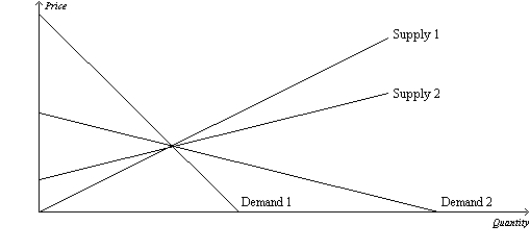
Refer to Figure 8-14.Which of the following statements is correct?
A)Supply 1 is more elastic than supply 2.
B)Demand 2 is more elastic than demand 1.
C)Demand 1 is more elastic than supply 1.
D)All of the above are correct.
Refer to Figure 8-14.Which of the following statements is correct?
A)Supply 1 is more elastic than supply 2.
B)Demand 2 is more elastic than demand 1.
C)Demand 1 is more elastic than supply 1.
D)All of the above are correct.
سؤال
Figure 8-14
Refer to Figure 8-14.Which of the following combinations will minimize the deadweight loss from a tax?
A)supply 1 and demand 1
B)supply 2 and demand 2
C)supply 1 and demand 2
D)supply 2 and demand 1
Refer to Figure 8-14.Which of the following combinations will minimize the deadweight loss from a tax?
A)supply 1 and demand 1
B)supply 2 and demand 2
C)supply 1 and demand 2
D)supply 2 and demand 1
سؤال
سؤال
سؤال
سؤال
سؤال
Figure 8-14
Refer to Figure 8-14.Which of the following combinations will maximize the deadweight loss from a tax?
A)supply 1 and demand 1
B)supply 2 and demand 2
C)supply 1 and demand 2
D)supply 2 and demand 1
Refer to Figure 8-14.Which of the following combinations will maximize the deadweight loss from a tax?
A)supply 1 and demand 1
B)supply 2 and demand 2
C)supply 1 and demand 2
D)supply 2 and demand 1
سؤال
سؤال
سؤال
سؤال
سؤال
سؤال
سؤال
سؤال
سؤال
سؤال
سؤال
سؤال
سؤال
سؤال
سؤال
سؤال
سؤال
سؤال
سؤال
سؤال
سؤال
Figure 8-14
Refer to Figure 8-14.Which of the following statements is not correct?
A)Supply 2 is more elastic than supply 1.
B)Demand 2 is more elastic than demand 1.
C)Supply 1 is more inelastic than supply 2.
D)Demand 2 is more inelastic than supply 2.
Refer to Figure 8-14.Which of the following statements is not correct?
A)Supply 2 is more elastic than supply 1.
B)Demand 2 is more elastic than demand 1.
C)Supply 1 is more inelastic than supply 2.
D)Demand 2 is more inelastic than supply 2.
سؤال
سؤال
سؤال
سؤال
سؤال
Figure 8-15 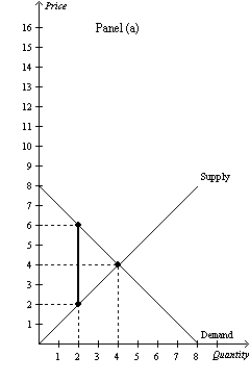
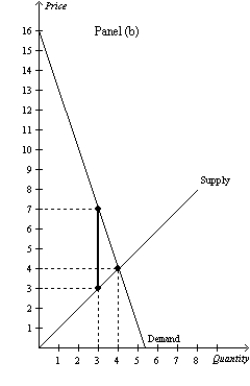
Refer to Figure 8-15.Panel (a)and Panel (b)each illustrate a $4 tax placed on a market.In comparison to Panel (a),Panel (b)illustrates which of the following statements?
A)When demand is relatively inelastic,the deadweight loss of a tax is smaller than when demand is relatively elastic.
B)When demand is relatively elastic,the deadweight loss of a tax is larger than when demand is relatively inelastic.
C)When supply is relatively inelastic,the deadweight loss of a tax is smaller than when supply is relatively elastic.
D)When supply is relatively elastic,the deadweight loss of a tax is larger than when supply is relatively inelastic.
Refer to Figure 8-15.Panel (a)and Panel (b)each illustrate a $4 tax placed on a market.In comparison to Panel (a),Panel (b)illustrates which of the following statements?
A)When demand is relatively inelastic,the deadweight loss of a tax is smaller than when demand is relatively elastic.
B)When demand is relatively elastic,the deadweight loss of a tax is larger than when demand is relatively inelastic.
C)When supply is relatively inelastic,the deadweight loss of a tax is smaller than when supply is relatively elastic.
D)When supply is relatively elastic,the deadweight loss of a tax is larger than when supply is relatively inelastic.
سؤال
سؤال
سؤال
سؤال
سؤال
سؤال
سؤال
سؤال
سؤال
سؤال
سؤال
سؤال
Figure 8-16 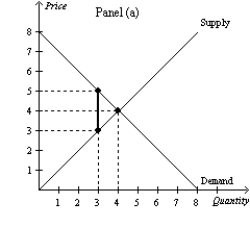
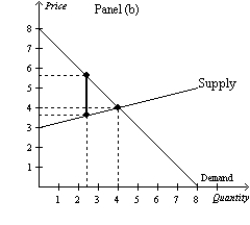
Refer to Figure 8-16.Panel (a)and Panel (b)each illustrate a $2 tax placed on a market.In comparison to Panel (b),Panel (a)illustrates which of the following statements?
A)When demand is relatively inelastic,the deadweight loss of a tax is smaller than when demand is relatively elastic.
B)When demand is relatively elastic,the deadweight loss of a tax is larger than when demand is relatively inelastic.
C)When supply is relatively inelastic,the deadweight loss of a tax is smaller than when supply is relatively elastic.
D)When supply is relatively elastic,the deadweight loss of a tax is larger than when supply is relatively inelastic.
Refer to Figure 8-16.Panel (a)and Panel (b)each illustrate a $2 tax placed on a market.In comparison to Panel (b),Panel (a)illustrates which of the following statements?
A)When demand is relatively inelastic,the deadweight loss of a tax is smaller than when demand is relatively elastic.
B)When demand is relatively elastic,the deadweight loss of a tax is larger than when demand is relatively inelastic.
C)When supply is relatively inelastic,the deadweight loss of a tax is smaller than when supply is relatively elastic.
D)When supply is relatively elastic,the deadweight loss of a tax is larger than when supply is relatively inelastic.
سؤال
Figure 8-18 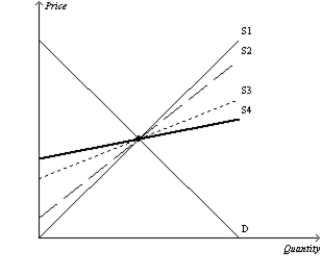
Refer to Figure 8-18.Suppose the government imposes a $1 tax in each of the four markets represented by supply curves S1,S2,S3,and S4.The deadweight will be the smallest in the market represented by
A)S1.
B)S2.
C)S3.
D)S4.
Refer to Figure 8-18.Suppose the government imposes a $1 tax in each of the four markets represented by supply curves S1,S2,S3,and S4.The deadweight will be the smallest in the market represented by
A)S1.
B)S2.
C)S3.
D)S4.
سؤال
سؤال
Figure 8-15
Refer to Figure 8-15.Panel (a)and Panel (b)each illustrate a $4 tax placed on a market.In comparison to Panel (b),Panel (a)illustrates which of the following statements?
A)When demand is relatively inelastic,the deadweight loss of a tax is smaller than when demand is relatively elastic.
B)When demand is relatively elastic,the deadweight loss of a tax is larger than when demand is relatively inelastic.
C)When supply is relatively inelastic,the deadweight loss of a tax is smaller than when supply is relatively elastic.
D)When supply is relatively elastic,the deadweight loss of a tax is larger than when supply is relatively inelastic.
Refer to Figure 8-15.Panel (a)and Panel (b)each illustrate a $4 tax placed on a market.In comparison to Panel (b),Panel (a)illustrates which of the following statements?
A)When demand is relatively inelastic,the deadweight loss of a tax is smaller than when demand is relatively elastic.
B)When demand is relatively elastic,the deadweight loss of a tax is larger than when demand is relatively inelastic.
C)When supply is relatively inelastic,the deadweight loss of a tax is smaller than when supply is relatively elastic.
D)When supply is relatively elastic,the deadweight loss of a tax is larger than when supply is relatively inelastic.
سؤال
سؤال
سؤال
سؤال
Figure 8-18
Refer to Figure 8-18.Suppose the government imposes a $1 tax in each of the four markets represented by supply curves S1,S2,S3,and S4.The deadweight will be the largest in the market represented by
A)S1.
B)S2.
C)S3.
D)S4.
Refer to Figure 8-18.Suppose the government imposes a $1 tax in each of the four markets represented by supply curves S1,S2,S3,and S4.The deadweight will be the largest in the market represented by
A)S1.
B)S2.
C)S3.
D)S4.

فتح الحزمة
قم بالتسجيل لفتح البطاقات في هذه المجموعة!
Unlock Deck
Unlock Deck
1/61

العب

ملء الشاشة (f)
Deck 8: 2: Sec 82 Mc the Determinants of the Deadweight Loss
1
When a good is taxed,the burden of the tax
A)falls more heavily on the side of the market that is more elastic.
B)falls more heavily on the side of the market that is more inelastic.
C)falls more heavily on the side of the market that is closer to unit elastic.
D)is distributed independently of relative elasticities of supply and demand.
A)falls more heavily on the side of the market that is more elastic.
B)falls more heavily on the side of the market that is more inelastic.
C)falls more heavily on the side of the market that is closer to unit elastic.
D)is distributed independently of relative elasticities of supply and demand.
D
2
The size of the deadweight loss generated from a tax is affected by the
A)elasticities of both supply and demand.
B)elasticity of demand only.
C)elasticity of supply only.
D)total revenue collected by the government.
A)elasticities of both supply and demand.
B)elasticity of demand only.
C)elasticity of supply only.
D)total revenue collected by the government.
B
3
When a tax is imposed on a good for which the supply is relatively elastic and the demand is relatively inelastic,
A)buyers of the good will bear most of the burden of the tax.
B)sellers of the good will bear most of the burden of the tax.
C)buyers and sellers will each bear 50 percent of the burden of the tax.
D)both equilibrium price and quantity will increase.
A)buyers of the good will bear most of the burden of the tax.
B)sellers of the good will bear most of the burden of the tax.
C)buyers and sellers will each bear 50 percent of the burden of the tax.
D)both equilibrium price and quantity will increase.
B
4
Which of the following statements is correct regarding the imposition of a tax on gasoline?
A)The incidence of the tax depends upon whether the buyers or the sellers are required to remit tax payments to the government.
B)The incidence of the tax depends upon the price elasticities of demand and supply.
C)The amount of tax revenue raised by the tax depends upon whether the buyers or the sellers are required to remit tax payments to the government.
D)The amount of tax revenue raised by the tax does not depend upon the amount of the tax per unit.
A)The incidence of the tax depends upon whether the buyers or the sellers are required to remit tax payments to the government.
B)The incidence of the tax depends upon the price elasticities of demand and supply.
C)The amount of tax revenue raised by the tax depends upon whether the buyers or the sellers are required to remit tax payments to the government.
D)The amount of tax revenue raised by the tax does not depend upon the amount of the tax per unit.
فتح الحزمة
افتح القفل للوصول البطاقات البالغ عددها 61 في هذه المجموعة.
فتح الحزمة
k this deck
5
Suppose a tax is imposed on bananas.In which of the following cases will the tax cause the equilibrium quantity of bananas to shrink by the largest amount?
A)The response of buyers to a change in the price of bananas is strong,and the response of sellers to a change in the price of bananas is weak.
B)The response of sellers to a change in the price of bananas is strong,and the response of buyers to a change in the price of bananas is weak.
C)The response of buyers and sellers to a change in the price of bananas is strong.
D)The response of buyers and sellers to a change in the price of bananas is weak.
A)The response of buyers to a change in the price of bananas is strong,and the response of sellers to a change in the price of bananas is weak.
B)The response of sellers to a change in the price of bananas is strong,and the response of buyers to a change in the price of bananas is weak.
C)The response of buyers and sellers to a change in the price of bananas is strong.
D)The response of buyers and sellers to a change in the price of bananas is weak.
فتح الحزمة
افتح القفل للوصول البطاقات البالغ عددها 61 في هذه المجموعة.
فتح الحزمة
k this deck
6
The deadweight loss from a tax of $2 per unit will be smallest in a market with
A)inelastic supply and elastic demand.
B)inelastic supply and inelastic demand.
C)elastic supply and elastic demand.
D)elastic supply and inelastic demand.
A)inelastic supply and elastic demand.
B)inelastic supply and inelastic demand.
C)elastic supply and elastic demand.
D)elastic supply and inelastic demand.
فتح الحزمة
افتح القفل للوصول البطاقات البالغ عددها 61 في هذه المجموعة.
فتح الحزمة
k this deck
7
When a tax is imposed on a good for which the demand is relatively elastic and the supply is relatively inelastic,
A)buyers of the good will bear most of the burden of the tax.
B)sellers of the good will bear most of the burden of the tax.
C)buyers and sellers will each bear 50 percent of the burden of the tax.
D)the effective price paid by buyers will decrease as a result of the tax.
A)buyers of the good will bear most of the burden of the tax.
B)sellers of the good will bear most of the burden of the tax.
C)buyers and sellers will each bear 50 percent of the burden of the tax.
D)the effective price paid by buyers will decrease as a result of the tax.
فتح الحزمة
افتح القفل للوصول البطاقات البالغ عددها 61 في هذه المجموعة.
فتح الحزمة
k this deck
8
Suppose a tax of $1 per unit is imposed on a good.The more elastic the demand for the good,other things equal,
A)the larger is the decrease in quantity demanded as a result of the tax.
B)the smaller is the tax burden on buyers relative to the tax burden on sellers.
C)the larger is the deadweight loss of the tax.
D)All of the above are correct.
A)the larger is the decrease in quantity demanded as a result of the tax.
B)the smaller is the tax burden on buyers relative to the tax burden on sellers.
C)the larger is the deadweight loss of the tax.
D)All of the above are correct.
فتح الحزمة
افتح القفل للوصول البطاقات البالغ عددها 61 في هذه المجموعة.
فتح الحزمة
k this deck
9
Sellers of a product will bear the larger part of the tax burden,and buyers will bear a smaller part of the tax burden,when the
A)tax is placed on the sellers of the product.
B)tax is placed on the buyers of the product.
C)supply of the product is more elastic than the demand for the product.
D)demand for the product is more elastic than the supply of the product.
A)tax is placed on the sellers of the product.
B)tax is placed on the buyers of the product.
C)supply of the product is more elastic than the demand for the product.
D)demand for the product is more elastic than the supply of the product.
فتح الحزمة
افتح القفل للوصول البطاقات البالغ عددها 61 في هذه المجموعة.
فتح الحزمة
k this deck
10
Figure 8-14
Refer to Figure 8-14.Which of the following statements is correct?
A)Supply 1 is more elastic than supply 2.
B)Demand 2 is more elastic than demand 1.
C)Demand 1 is more elastic than supply 1.
D)All of the above are correct.
Refer to Figure 8-14.Which of the following statements is correct?
A)Supply 1 is more elastic than supply 2.
B)Demand 2 is more elastic than demand 1.
C)Demand 1 is more elastic than supply 1.
D)All of the above are correct.
فتح الحزمة
افتح القفل للوصول البطاقات البالغ عددها 61 في هذه المجموعة.
فتح الحزمة
k this deck
11
Figure 8-14
Refer to Figure 8-14.Which of the following combinations will minimize the deadweight loss from a tax?
A)supply 1 and demand 1
B)supply 2 and demand 2
C)supply 1 and demand 2
D)supply 2 and demand 1
Refer to Figure 8-14.Which of the following combinations will minimize the deadweight loss from a tax?
A)supply 1 and demand 1
B)supply 2 and demand 2
C)supply 1 and demand 2
D)supply 2 and demand 1
فتح الحزمة
افتح القفل للوصول البطاقات البالغ عددها 61 في هذه المجموعة.
فتح الحزمة
k this deck
12
Suppose a tax is imposed on baseball bats.In which of the following cases will the tax cause the equilibrium quantity of baseball bats to shrink by the smallest amount?
A)The response of buyers to a change in the price of baseball bats is strong,and the response of sellers to a change in the price of baseball bats is weak.
B)The response of sellers to a change in the price of baseball bats is strong,and the response of buyers to a change in the price of baseball bats is weak.
C)The response of buyers and sellers to a change in the price of baseball bats is strong.
D)The response of buyers and sellers to a change in the price of baseball bats is weak.
A)The response of buyers to a change in the price of baseball bats is strong,and the response of sellers to a change in the price of baseball bats is weak.
B)The response of sellers to a change in the price of baseball bats is strong,and the response of buyers to a change in the price of baseball bats is weak.
C)The response of buyers and sellers to a change in the price of baseball bats is strong.
D)The response of buyers and sellers to a change in the price of baseball bats is weak.
فتح الحزمة
افتح القفل للوصول البطاقات البالغ عددها 61 في هذه المجموعة.
فتح الحزمة
k this deck
13
The deadweight loss from a $3 tax will be largest in a market with
A)inelastic supply and elastic demand.
B)inelastic supply and inelastic demand.
C)elastic supply and elastic demand.
D)elastic supply and inelastic demand.
A)inelastic supply and elastic demand.
B)inelastic supply and inelastic demand.
C)elastic supply and elastic demand.
D)elastic supply and inelastic demand.
فتح الحزمة
افتح القفل للوصول البطاقات البالغ عددها 61 في هذه المجموعة.
فتح الحزمة
k this deck
14
The deadweight loss from a tax of $x per unit will be smallest in a market
A)in which demand is elastic and supply is inelastic.
B)in which demand is inelastic and supply is elastic.
C)in which demand is inelastic and supply is inelastic.
D)None of the above are correct;we need to know the value of x in order to determine the answer.
A)in which demand is elastic and supply is inelastic.
B)in which demand is inelastic and supply is elastic.
C)in which demand is inelastic and supply is inelastic.
D)None of the above are correct;we need to know the value of x in order to determine the answer.
فتح الحزمة
افتح القفل للوصول البطاقات البالغ عددها 61 في هذه المجموعة.
فتح الحزمة
k this deck
15
Suppose a tax of $1 per unit is imposed on a good.The more elastic the supply of the good,other things equal,the
A)smaller is the response of quantity supplied to the tax.
B)larger is the tax burden on sellers relative to the tax burden on buyers.
C)larger is the deadweight loss of the tax.
D)All of the above are correct.
A)smaller is the response of quantity supplied to the tax.
B)larger is the tax burden on sellers relative to the tax burden on buyers.
C)larger is the deadweight loss of the tax.
D)All of the above are correct.
فتح الحزمة
افتح القفل للوصول البطاقات البالغ عددها 61 في هذه المجموعة.
فتح الحزمة
k this deck
16
Figure 8-14
Refer to Figure 8-14.Which of the following combinations will maximize the deadweight loss from a tax?
A)supply 1 and demand 1
B)supply 2 and demand 2
C)supply 1 and demand 2
D)supply 2 and demand 1
Refer to Figure 8-14.Which of the following combinations will maximize the deadweight loss from a tax?
A)supply 1 and demand 1
B)supply 2 and demand 2
C)supply 1 and demand 2
D)supply 2 and demand 1
فتح الحزمة
افتح القفل للوصول البطاقات البالغ عددها 61 في هذه المجموعة.
فتح الحزمة
k this deck
17
The price elasticities of supply and demand affect
A)both the size of the deadweight loss from a tax and the tax incidence.
B)the size of the deadweight loss from a tax but not the tax incidence.
C)the tax incidence but not the size of the deadweight loss from a tax.
D)neither the size of the deadweight loss from a tax nor the tax incidence.
A)both the size of the deadweight loss from a tax and the tax incidence.
B)the size of the deadweight loss from a tax but not the tax incidence.
C)the tax incidence but not the size of the deadweight loss from a tax.
D)neither the size of the deadweight loss from a tax nor the tax incidence.
فتح الحزمة
افتح القفل للوصول البطاقات البالغ عددها 61 في هذه المجموعة.
فتح الحزمة
k this deck
18
Buyers of a product will bear the larger part of the tax burden,and sellers will bear a smaller part of the tax burden,when the
A)tax is placed on the sellers of the product.
B)tax is placed on the buyers of the product.
C)supply of the product is more elastic than the demand for the product.
D)demand for the product is more elastic than the supply of the product.
A)tax is placed on the sellers of the product.
B)tax is placed on the buyers of the product.
C)supply of the product is more elastic than the demand for the product.
D)demand for the product is more elastic than the supply of the product.
فتح الحزمة
افتح القفل للوصول البطاقات البالغ عددها 61 في هذه المجموعة.
فتح الحزمة
k this deck
19
The size of a tax and the deadweight loss that results from the tax are
A)positively related.
B)negatively related.
C)independent of each other.
D)equal to each other.
A)positively related.
B)negatively related.
C)independent of each other.
D)equal to each other.
فتح الحزمة
افتح القفل للوصول البطاقات البالغ عددها 61 في هذه المجموعة.
فتح الحزمة
k this deck
20
When a tax is imposed on a good for which both demand and supply are very elastic,
A)sellers effectively pay the majority of the tax.
B)buyers effectively pay the majority of the tax.
C)the tax burden is equally divided between buyers and sellers.
D)None of the above is correct;further information would be required to determine how the burden of the tax is distributed between buyers and sellers.
A)sellers effectively pay the majority of the tax.
B)buyers effectively pay the majority of the tax.
C)the tax burden is equally divided between buyers and sellers.
D)None of the above is correct;further information would be required to determine how the burden of the tax is distributed between buyers and sellers.
فتح الحزمة
افتح القفل للوصول البطاقات البالغ عددها 61 في هذه المجموعة.
فتح الحزمة
k this deck
21
Assume the supply curve for cigars is a typical,upward-sloping straight line,and the demand curve for cigars is a typical,downward-sloping straight line.Suppose the equilibrium quantity in the market for cigars is 1,000 per month when there is no tax.Then a tax of $0.50 per cigar is imposed.The effective price paid by buyers increases from $1.50 to $1.90 and the effective price received by sellers falls from $1.50 to $1.40.The government's tax revenue amounts to $475 per month.Which of the following statements is correct?
A)The demand for cigars is less elastic than the supply of cigars.
B)The tax causes a decrease in consumer surplus of $390 and a decrease in producer surplus of $97.50.
C)The deadweight loss of the tax is $12.50.
D)All of the above are correct.
A)The demand for cigars is less elastic than the supply of cigars.
B)The tax causes a decrease in consumer surplus of $390 and a decrease in producer surplus of $97.50.
C)The deadweight loss of the tax is $12.50.
D)All of the above are correct.
فتح الحزمة
افتح القفل للوصول البطاقات البالغ عددها 61 في هذه المجموعة.
فتح الحزمة
k this deck
22
Suppose the government places a per-unit tax on a good.The smaller the price elasticities of demand and supply for the good,the
A)smaller the deadweight loss from the tax.
B)greater the deadweight loss from the tax.
C)less efficient is the tax.
D)more equitable is the distribution of the tax burden between buyers and sellers.
A)smaller the deadweight loss from the tax.
B)greater the deadweight loss from the tax.
C)less efficient is the tax.
D)more equitable is the distribution of the tax burden between buyers and sellers.
فتح الحزمة
افتح القفل للوصول البطاقات البالغ عددها 61 في هذه المجموعة.
فتح الحزمة
k this deck
23
Suppose the price of milk is $2.39 per gallon,and the equilibrium quantity of milk is 100 thousand gallons per day with no tax on milk.Starting from this initial situation,which of the following scenarios would result in the smallest deadweight loss?
A)The price elasticity of demand for milk is 0.3,the price elasticity of supply for milk is 0.7,and the milk tax amounts to $0.40 per gallon.
B)The price elasticity of demand for milk is 0.2,the price elasticity of supply for milk is 0.5,and the milk tax amounts to $0.30 per gallon.
C)The price elasticity of demand for milk is 0.2,the price elasticity of supply for milk is 0.7,and the milk tax amounts to $0.30 per gallon.
D)The price elasticity of demand for milk is 0.1,the price elasticity of supply for milk is 0.5,and the milk tax amounts to $0.20 per gallon.
A)The price elasticity of demand for milk is 0.3,the price elasticity of supply for milk is 0.7,and the milk tax amounts to $0.40 per gallon.
B)The price elasticity of demand for milk is 0.2,the price elasticity of supply for milk is 0.5,and the milk tax amounts to $0.30 per gallon.
C)The price elasticity of demand for milk is 0.2,the price elasticity of supply for milk is 0.7,and the milk tax amounts to $0.30 per gallon.
D)The price elasticity of demand for milk is 0.1,the price elasticity of supply for milk is 0.5,and the milk tax amounts to $0.20 per gallon.
فتح الحزمة
افتح القفل للوصول البطاقات البالغ عددها 61 في هذه المجموعة.
فتح الحزمة
k this deck
24
Other things equal,the deadweight loss of a tax
A)decreases as the size of the tax increases.
B)increases as the size of the tax increases,but the increase in the deadweight loss is less rapid than the increase in the size of the tax.
C)increases as the size of the tax increases,and the increase in the deadweight loss is more rapid than the increase in the size of the tax.
D)increases as the price elasticities of demand and/or supply increase,but the deadweight loss does not change as the size of the tax increases.
A)decreases as the size of the tax increases.
B)increases as the size of the tax increases,but the increase in the deadweight loss is less rapid than the increase in the size of the tax.
C)increases as the size of the tax increases,and the increase in the deadweight loss is more rapid than the increase in the size of the tax.
D)increases as the price elasticities of demand and/or supply increase,but the deadweight loss does not change as the size of the tax increases.
فتح الحزمة
افتح القفل للوصول البطاقات البالغ عددها 61 في هذه المجموعة.
فتح الحزمة
k this deck
25
Suppose the government imposes a tax on cheese.The deadweight loss from this tax will likely be greater in the
A)first year after it is imposed than in the eighth year after it is imposed because demand and supply will be more elastic in the first year than in the eighth year.
B)first year after it is imposed than in the eighth year after it is imposed because demand and supply will be less elastic in the first year than in the eighth year.
C)eighth year after it is imposed than in the first year after it is imposed because demand and supply will be more elastic in the first year than in the eighth year.
D)eighth year after it is imposed than in the first year after it is imposed because demand and supply will be less elastic in the first year than in the eighth year.
A)first year after it is imposed than in the eighth year after it is imposed because demand and supply will be more elastic in the first year than in the eighth year.
B)first year after it is imposed than in the eighth year after it is imposed because demand and supply will be less elastic in the first year than in the eighth year.
C)eighth year after it is imposed than in the first year after it is imposed because demand and supply will be more elastic in the first year than in the eighth year.
D)eighth year after it is imposed than in the first year after it is imposed because demand and supply will be less elastic in the first year than in the eighth year.
فتح الحزمة
افتح القفل للوصول البطاقات البالغ عددها 61 في هذه المجموعة.
فتح الحزمة
k this deck
26
Suppose that policymakers are considering placing a tax on either of two markets.In Market A,the tax will have a significant effect on the price consumers pay,but it will not affect equilibrium quantity very much.In Market B,the same tax will have only a small effect on the price consumers pay,but it will have a large effect on the equilibrium quantity.Other factors are held constant.In which market will the tax have a larger deadweight loss?
A)Market A
B)Market B
C)The deadweight loss will be the same in both markets.
D)There is not enough information to answer the question.
A)Market A
B)Market B
C)The deadweight loss will be the same in both markets.
D)There is not enough information to answer the question.
فتح الحزمة
افتح القفل للوصول البطاقات البالغ عددها 61 في هذه المجموعة.
فتح الحزمة
k this deck
27
Assume the supply curve for diapers is a typical,upward-sloping straight line,and the demand curve for diapers is a typical,downward-sloping straight line.Suppose the equilibrium quantity in the market for diapers is 1,000 per month when there is no tax.Then a tax of $0.50 per diaper is imposed.The effective price paid by buyers increases from $1.50 to $1.90 and the effective price received by sellers falls from $1.50 to $1.40.The government's tax revenue amounts to $475 per month.Which of the following statements is correct?
A)After the tax is imposed,the equilibrium quantity of diapers is 900 per month.
B)The demand for diapers is more elastic than the supply of diapers.
C)The deadweight loss of the tax is $12.50.
D)The tax causes a decrease in consumer surplus of $380.
A)After the tax is imposed,the equilibrium quantity of diapers is 900 per month.
B)The demand for diapers is more elastic than the supply of diapers.
C)The deadweight loss of the tax is $12.50.
D)The tax causes a decrease in consumer surplus of $380.
فتح الحزمة
افتح القفل للوصول البطاقات البالغ عددها 61 في هذه المجموعة.
فتح الحزمة
k this deck
28
Consider a good to which a per-unit tax applies.The size of the deadweight that results from the tax is smaller,the
A)less elastic is the demand for the good.
B)less elastic is the supply of the good.
C)smaller is the amount of the tax.
D)All of the above are correct.
A)less elastic is the demand for the good.
B)less elastic is the supply of the good.
C)smaller is the amount of the tax.
D)All of the above are correct.
فتح الحزمة
افتح القفل للوصول البطاقات البالغ عددها 61 في هذه المجموعة.
فتح الحزمة
k this deck
29
The amount of deadweight loss from a tax depends upon the
A)price elasticity of demand.
B)price elasticity of supply.
C)amount of the tax per unit.
D)All of the above are correct.
A)price elasticity of demand.
B)price elasticity of supply.
C)amount of the tax per unit.
D)All of the above are correct.
فتح الحزمة
افتح القفل للوصول البطاقات البالغ عددها 61 في هذه المجموعة.
فتح الحزمة
k this deck
30
Economists generally agree that the most important tax in the U.S.economy is the
A)income tax.
B)tax on labor.
C)inheritance or death tax.
D)tax on corporate profits.
A)income tax.
B)tax on labor.
C)inheritance or death tax.
D)tax on corporate profits.
فتح الحزمة
افتح القفل للوصول البطاقات البالغ عددها 61 في هذه المجموعة.
فتح الحزمة
k this deck
31
Economists generally agree that the most important tax in the U.S.economy is the
A)investment tax.
B)sales tax.
C)property tax.
D)labor tax.
A)investment tax.
B)sales tax.
C)property tax.
D)labor tax.
فتح الحزمة
افتح القفل للوصول البطاقات البالغ عددها 61 في هذه المجموعة.
فتح الحزمة
k this deck
32
The deadweight loss from a tax
A)does not vary in amount when the price elasticity of demand changes.
B)does not vary in amount when the amount of the tax per unit changes.
C)is larger,the larger is the amount of the tax per unit.
D)is smaller,the larger is the amount of the tax per unit.
A)does not vary in amount when the price elasticity of demand changes.
B)does not vary in amount when the amount of the tax per unit changes.
C)is larger,the larger is the amount of the tax per unit.
D)is smaller,the larger is the amount of the tax per unit.
فتح الحزمة
افتح القفل للوصول البطاقات البالغ عددها 61 في هذه المجموعة.
فتح الحزمة
k this deck
33
Assume the price of gasoline is $2.40 per gallon,and the equilibrium quantity of gasoline is 12 million gallons per day with no tax on gasoline.Starting from this initial situation,which of the following scenarios would result in the largest deadweight loss?
A)A 10 percent increase in the price of gasoline reduces the quantity of gasoline demanded by 2 percent and it increases the quantity of gasoline supplied by 5 percent;and the tax on gasoline amounts to $0.40 per gallon.
B)A 10 percent increase in the price of gasoline reduces the quantity of gasoline demanded by 2 percent and it increases the quantity of gasoline supplied by 7 percent;and the tax on gasoline amounts to $0.40 per gallon.
C)A 10 percent increase in the price of gasoline reduces the quantity of gasoline demanded by 1 percent and it increases the quantity of gasoline supplied by 8 percent;and the tax on gasoline amounts to $0.35 per gallon.
D)There is insufficient information to make this determination.
A)A 10 percent increase in the price of gasoline reduces the quantity of gasoline demanded by 2 percent and it increases the quantity of gasoline supplied by 5 percent;and the tax on gasoline amounts to $0.40 per gallon.
B)A 10 percent increase in the price of gasoline reduces the quantity of gasoline demanded by 2 percent and it increases the quantity of gasoline supplied by 7 percent;and the tax on gasoline amounts to $0.40 per gallon.
C)A 10 percent increase in the price of gasoline reduces the quantity of gasoline demanded by 1 percent and it increases the quantity of gasoline supplied by 8 percent;and the tax on gasoline amounts to $0.35 per gallon.
D)There is insufficient information to make this determination.
فتح الحزمة
افتح القفل للوصول البطاقات البالغ عددها 61 في هذه المجموعة.
فتح الحزمة
k this deck
34
Which of the following statements is correct regarding a tax on a good and the resulting deadweight loss?
A)The greater are the price elasticities of supply and demand,the greater is the deadweight loss.
B)The greater is the price elasticity of supply and the smaller is the price elasticity of demand,the greater is the deadweight loss.
C)The smaller are the decreases in quantity demanded and quantity supplied,the greater the deadweight loss.
D)The smaller is the wedge between the effective price to sellers and the effective price to buyers,the greater is the deadweight loss.
A)The greater are the price elasticities of supply and demand,the greater is the deadweight loss.
B)The greater is the price elasticity of supply and the smaller is the price elasticity of demand,the greater is the deadweight loss.
C)The smaller are the decreases in quantity demanded and quantity supplied,the greater the deadweight loss.
D)The smaller is the wedge between the effective price to sellers and the effective price to buyers,the greater is the deadweight loss.
فتح الحزمة
افتح القفل للوصول البطاقات البالغ عددها 61 في هذه المجموعة.
فتح الحزمة
k this deck
35
Assume the price of gasoline is $2.00 per gallon,and the equilibrium quantity of gasoline is 10 million gallons per day with no tax on gasoline.Starting from this initial situation,which of the following scenarios would result in the largest deadweight loss?
A)The price elasticity of demand for gasoline is 0.1;the price elasticity of supply for gasoline is 0.6;and the gasoline tax amounts to $0.20 per gallon.
B)The price elasticity of demand for gasoline is 0.1;the price elasticity of supply for gasoline is 0.4;and the gasoline tax amounts to $0.20 per gallon.
C)The price elasticity of demand for gasoline is 0.2;the price elasticity of supply for gasoline is 0.6;and the gasoline tax amounts to $0.30 per gallon.
D)There is insufficient information to make this determination.
A)The price elasticity of demand for gasoline is 0.1;the price elasticity of supply for gasoline is 0.6;and the gasoline tax amounts to $0.20 per gallon.
B)The price elasticity of demand for gasoline is 0.1;the price elasticity of supply for gasoline is 0.4;and the gasoline tax amounts to $0.20 per gallon.
C)The price elasticity of demand for gasoline is 0.2;the price elasticity of supply for gasoline is 0.6;and the gasoline tax amounts to $0.30 per gallon.
D)There is insufficient information to make this determination.
فتح الحزمة
افتح القفل للوصول البطاقات البالغ عددها 61 في هذه المجموعة.
فتح الحزمة
k this deck
36
The demand for chicken wings is more elastic than the demand for razor blades.Suppose the government levies an equivalent tax on chicken wings and razor blades.The deadweight loss would be larger in the market for
A)chicken wings than in the market for razor blades because the quantity of chicken wings would fall by more than the quantity of razor blades.
B)chicken wings than in the market for razor blades because the quantity of razor blades would fall by more than the quantity of chicken wings.
C)razor blades than in the market for chicken wings because the quantity of chicken wings would fall by more than the quantity of razor blades.
D)razor blades than in the market for chicken wings because the quantity of razor blades would fall by more than the quantity of chicken wings.
A)chicken wings than in the market for razor blades because the quantity of chicken wings would fall by more than the quantity of razor blades.
B)chicken wings than in the market for razor blades because the quantity of razor blades would fall by more than the quantity of chicken wings.
C)razor blades than in the market for chicken wings because the quantity of chicken wings would fall by more than the quantity of razor blades.
D)razor blades than in the market for chicken wings because the quantity of razor blades would fall by more than the quantity of chicken wings.
فتح الحزمة
افتح القفل للوصول البطاقات البالغ عددها 61 في هذه المجموعة.
فتح الحزمة
k this deck
37
Figure 8-14
Refer to Figure 8-14.Which of the following statements is not correct?
A)Supply 2 is more elastic than supply 1.
B)Demand 2 is more elastic than demand 1.
C)Supply 1 is more inelastic than supply 2.
D)Demand 2 is more inelastic than supply 2.
Refer to Figure 8-14.Which of the following statements is not correct?
A)Supply 2 is more elastic than supply 1.
B)Demand 2 is more elastic than demand 1.
C)Supply 1 is more inelastic than supply 2.
D)Demand 2 is more inelastic than supply 2.
فتح الحزمة
افتح القفل للوصول البطاقات البالغ عددها 61 في هذه المجموعة.
فتح الحزمة
k this deck
38
Consider a good to which a per-unit tax applies.The size of the deadweight that results from the tax is smaller,the
A)larger is the price elasticity of demand.
B)smaller is the price elasticity of supply.
C)larger is the amount of the tax.
D)All of the above are correct.
A)larger is the price elasticity of demand.
B)smaller is the price elasticity of supply.
C)larger is the amount of the tax.
D)All of the above are correct.
فتح الحزمة
افتح القفل للوصول البطاقات البالغ عددها 61 في هذه المجموعة.
فتح الحزمة
k this deck
39
The amount of deadweight loss that results from a tax of a given size is determined by
A)whether the tax is levied on buyers or sellers.
B)the number of buyers in the market relative to the number of sellers.
C)the price elasticities of demand and supply.
D)the ratio of the tax per unit to the effective price received by sellers.
A)whether the tax is levied on buyers or sellers.
B)the number of buyers in the market relative to the number of sellers.
C)the price elasticities of demand and supply.
D)the ratio of the tax per unit to the effective price received by sellers.
فتح الحزمة
افتح القفل للوصول البطاقات البالغ عددها 61 في هذه المجموعة.
فتح الحزمة
k this deck
40
Consider a good to which a per-unit tax applies.The greater the price elasticities of demand and supply for the good,the
A)smaller the deadweight loss from the tax.
B)greater the deadweight loss from the tax.
C)more efficient is the tax.
D)more equitable is the distribution of the tax burden between buyers and sellers.
A)smaller the deadweight loss from the tax.
B)greater the deadweight loss from the tax.
C)more efficient is the tax.
D)more equitable is the distribution of the tax burden between buyers and sellers.
فتح الحزمة
افتح القفل للوصول البطاقات البالغ عددها 61 في هذه المجموعة.
فتح الحزمة
k this deck
41
The marginal tax rate on labor income for many workers in the United States is almost
A)30 percent.
B)40 percent.
C)50 percent.
D)65 percent.
A)30 percent.
B)40 percent.
C)50 percent.
D)65 percent.
فتح الحزمة
افتح القفل للوصول البطاقات البالغ عددها 61 في هذه المجموعة.
فتح الحزمة
k this deck
42
Figure 8-15
Refer to Figure 8-15.Panel (a)and Panel (b)each illustrate a $4 tax placed on a market.In comparison to Panel (a),Panel (b)illustrates which of the following statements?
A)When demand is relatively inelastic,the deadweight loss of a tax is smaller than when demand is relatively elastic.
B)When demand is relatively elastic,the deadweight loss of a tax is larger than when demand is relatively inelastic.
C)When supply is relatively inelastic,the deadweight loss of a tax is smaller than when supply is relatively elastic.
D)When supply is relatively elastic,the deadweight loss of a tax is larger than when supply is relatively inelastic.
Refer to Figure 8-15.Panel (a)and Panel (b)each illustrate a $4 tax placed on a market.In comparison to Panel (a),Panel (b)illustrates which of the following statements?
A)When demand is relatively inelastic,the deadweight loss of a tax is smaller than when demand is relatively elastic.
B)When demand is relatively elastic,the deadweight loss of a tax is larger than when demand is relatively inelastic.
C)When supply is relatively inelastic,the deadweight loss of a tax is smaller than when supply is relatively elastic.
D)When supply is relatively elastic,the deadweight loss of a tax is larger than when supply is relatively inelastic.
فتح الحزمة
افتح القفل للوصول البطاقات البالغ عددها 61 في هذه المجموعة.
فتح الحزمة
k this deck
43
Taxes on labor have the effect of encouraging
A)workers to work more hours.
B)the elderly to postpone retirement.
C)second earners within a family to take a job.
D)unscrupulous people to take part in the underground economy.
A)workers to work more hours.
B)the elderly to postpone retirement.
C)second earners within a family to take a job.
D)unscrupulous people to take part in the underground economy.
فتح الحزمة
افتح القفل للوصول البطاقات البالغ عددها 61 في هذه المجموعة.
فتح الحزمة
k this deck
44
Which of the following is not correct?
A)Economists who argue that labor taxes are highly distorting believe that labor supply is fairly elastic.
B)Economists who argue that labor taxes are not highly distorting believe that labor supply is fairly inelastic.
C)Economists who argue that labor supply is fairly inelastic cite elderly workers who adjust the date they retire as an example.
D)Economists who argue that labor supply is fairly elastic cite workers who adjust the hours of overtime that they work as an example.
A)Economists who argue that labor taxes are highly distorting believe that labor supply is fairly elastic.
B)Economists who argue that labor taxes are not highly distorting believe that labor supply is fairly inelastic.
C)Economists who argue that labor supply is fairly inelastic cite elderly workers who adjust the date they retire as an example.
D)Economists who argue that labor supply is fairly elastic cite workers who adjust the hours of overtime that they work as an example.
فتح الحزمة
افتح القفل للوصول البطاقات البالغ عددها 61 في هذه المجموعة.
فتح الحزمة
k this deck
45
As more people become self-employed,which allows them to determine how many hours they work per week,we would expect the deadweight loss from the Social Security tax to
A)increase,and the revenue generated from the tax to increase.
B)increase,and the revenue generated from the tax to decrease.
C)decrease,and the revenue generated from the tax to increase.
D)decrease,and the revenue generated from the tax to decrease.
A)increase,and the revenue generated from the tax to increase.
B)increase,and the revenue generated from the tax to decrease.
C)decrease,and the revenue generated from the tax to increase.
D)decrease,and the revenue generated from the tax to decrease.
فتح الحزمة
افتح القفل للوصول البطاقات البالغ عددها 61 في هذه المجموعة.
فتح الحزمة
k this deck
46
The Social Security tax is a tax on
A)capital.
B)labor.
C)land.
D)savings.
A)capital.
B)labor.
C)land.
D)savings.
فتح الحزمة
افتح القفل للوصول البطاقات البالغ عددها 61 في هذه المجموعة.
فتح الحزمة
k this deck
47
Which of the following is a tax on labor?
A)Medicare tax
B)inheritance tax
C)sales tax
D)All of the above are labor taxes.
A)Medicare tax
B)inheritance tax
C)sales tax
D)All of the above are labor taxes.
فتح الحزمة
افتح القفل للوصول البطاقات البالغ عددها 61 في هذه المجموعة.
فتح الحزمة
k this deck
48
If the labor supply curve is nearly vertical,a tax on labor
A)has a large deadweight loss.
B)raises a small amount of tax revenue.
C)has little impact on the amount of work that workers are willing to do.
D)results in a large tax burden on the firms that hire labor.
A)has a large deadweight loss.
B)raises a small amount of tax revenue.
C)has little impact on the amount of work that workers are willing to do.
D)results in a large tax burden on the firms that hire labor.
فتح الحزمة
افتح القفل للوصول البطاقات البالغ عددها 61 في هذه المجموعة.
فتح الحزمة
k this deck
49
Economists disagree on whether labor taxes cause small or large deadweight losses.This disagreement arises primarily because economists hold different views about
A)the size of labor taxes.
B)the importance of labor taxes imposed by the federal government relative to the importance of labor taxes imposed by the various states.
C)the elasticity of labor supply.
D)the elasticity of labor demand.
A)the size of labor taxes.
B)the importance of labor taxes imposed by the federal government relative to the importance of labor taxes imposed by the various states.
C)the elasticity of labor supply.
D)the elasticity of labor demand.
فتح الحزمة
افتح القفل للوصول البطاقات البالغ عددها 61 في هذه المجموعة.
فتح الحزمة
k this deck
50
Taxes on labor encourage which of the following?
A)labor demand to be more inelastic
B)mothers to stay at home rather than work in the labor force
C)workers to work overtime
D)fathers to take on second jobs
A)labor demand to be more inelastic
B)mothers to stay at home rather than work in the labor force
C)workers to work overtime
D)fathers to take on second jobs
فتح الحزمة
افتح القفل للوصول البطاقات البالغ عددها 61 في هذه المجموعة.
فتح الحزمة
k this deck
51
Which of the following is a tax on labor?
A)Medicare tax
B)Social Security tax
C)federal income tax
D)All of the above are labor taxes.
A)Medicare tax
B)Social Security tax
C)federal income tax
D)All of the above are labor taxes.
فتح الحزمة
افتح القفل للوصول البطاقات البالغ عددها 61 في هذه المجموعة.
فتح الحزمة
k this deck
52
If the labor supply curve is very elastic,a tax on labor
A)has a large deadweight loss.
B)raises enough tax revenue to offset the loss in welfare.
C)has a relatively small impact on the number of hours that workers choose to work.
D)results in a large tax burden on the firms that hire labor.
A)has a large deadweight loss.
B)raises enough tax revenue to offset the loss in welfare.
C)has a relatively small impact on the number of hours that workers choose to work.
D)results in a large tax burden on the firms that hire labor.
فتح الحزمة
افتح القفل للوصول البطاقات البالغ عددها 61 في هذه المجموعة.
فتح الحزمة
k this deck
53
The less freedom young mothers have to work outside the home,the
A)more elastic the supply of labor will be.
B)less elastic the supply of labor will be.
C)more horizontal the labor supply curve will be.
D)larger is the decrease in employment that will result from a tax on labor.
A)more elastic the supply of labor will be.
B)less elastic the supply of labor will be.
C)more horizontal the labor supply curve will be.
D)larger is the decrease in employment that will result from a tax on labor.
فتح الحزمة
افتح القفل للوصول البطاقات البالغ عددها 61 في هذه المجموعة.
فتح الحزمة
k this deck
54
Figure 8-16
Refer to Figure 8-16.Panel (a)and Panel (b)each illustrate a $2 tax placed on a market.In comparison to Panel (b),Panel (a)illustrates which of the following statements?
A)When demand is relatively inelastic,the deadweight loss of a tax is smaller than when demand is relatively elastic.
B)When demand is relatively elastic,the deadweight loss of a tax is larger than when demand is relatively inelastic.
C)When supply is relatively inelastic,the deadweight loss of a tax is smaller than when supply is relatively elastic.
D)When supply is relatively elastic,the deadweight loss of a tax is larger than when supply is relatively inelastic.
Refer to Figure 8-16.Panel (a)and Panel (b)each illustrate a $2 tax placed on a market.In comparison to Panel (b),Panel (a)illustrates which of the following statements?
A)When demand is relatively inelastic,the deadweight loss of a tax is smaller than when demand is relatively elastic.
B)When demand is relatively elastic,the deadweight loss of a tax is larger than when demand is relatively inelastic.
C)When supply is relatively inelastic,the deadweight loss of a tax is smaller than when supply is relatively elastic.
D)When supply is relatively elastic,the deadweight loss of a tax is larger than when supply is relatively inelastic.
فتح الحزمة
افتح القفل للوصول البطاقات البالغ عددها 61 في هذه المجموعة.
فتح الحزمة
k this deck
55
Figure 8-18
Refer to Figure 8-18.Suppose the government imposes a $1 tax in each of the four markets represented by supply curves S1,S2,S3,and S4.The deadweight will be the smallest in the market represented by
A)S1.
B)S2.
C)S3.
D)S4.
Refer to Figure 8-18.Suppose the government imposes a $1 tax in each of the four markets represented by supply curves S1,S2,S3,and S4.The deadweight will be the smallest in the market represented by
A)S1.
B)S2.
C)S3.
D)S4.
فتح الحزمة
افتح القفل للوصول البطاقات البالغ عددها 61 في هذه المجموعة.
فتح الحزمة
k this deck
56
Taxes on labor encourage all of the following except
A)older workers to take early retirement from the labor force.
B)mothers to stay at home rather than work in the labor force.
C)workers to work overtime.
D)people to be paid "under the table."
A)older workers to take early retirement from the labor force.
B)mothers to stay at home rather than work in the labor force.
C)workers to work overtime.
D)people to be paid "under the table."
فتح الحزمة
افتح القفل للوصول البطاقات البالغ عددها 61 في هذه المجموعة.
فتح الحزمة
k this deck
57
Figure 8-15
Refer to Figure 8-15.Panel (a)and Panel (b)each illustrate a $4 tax placed on a market.In comparison to Panel (b),Panel (a)illustrates which of the following statements?
A)When demand is relatively inelastic,the deadweight loss of a tax is smaller than when demand is relatively elastic.
B)When demand is relatively elastic,the deadweight loss of a tax is larger than when demand is relatively inelastic.
C)When supply is relatively inelastic,the deadweight loss of a tax is smaller than when supply is relatively elastic.
D)When supply is relatively elastic,the deadweight loss of a tax is larger than when supply is relatively inelastic.
Refer to Figure 8-15.Panel (a)and Panel (b)each illustrate a $4 tax placed on a market.In comparison to Panel (b),Panel (a)illustrates which of the following statements?
A)When demand is relatively inelastic,the deadweight loss of a tax is smaller than when demand is relatively elastic.
B)When demand is relatively elastic,the deadweight loss of a tax is larger than when demand is relatively inelastic.
C)When supply is relatively inelastic,the deadweight loss of a tax is smaller than when supply is relatively elastic.
D)When supply is relatively elastic,the deadweight loss of a tax is larger than when supply is relatively inelastic.
فتح الحزمة
افتح القفل للوصول البطاقات البالغ عددها 61 في هذه المجموعة.
فتح الحزمة
k this deck
58
Concerning the labor market and taxes on labor,economists disagree about
A)the size of the tax on labor.
B)the size of the deadweight loss of the tax on labor.
C)whether or not a tax on labor places a wedge between the wage that firms pay and the wage that workers receive.
D)All of the above are correct.
A)the size of the tax on labor.
B)the size of the deadweight loss of the tax on labor.
C)whether or not a tax on labor places a wedge between the wage that firms pay and the wage that workers receive.
D)All of the above are correct.
فتح الحزمة
افتح القفل للوصول البطاقات البالغ عددها 61 في هذه المجموعة.
فتح الحزمة
k this deck
59
The less freedom people are given to choose the date of their retirement,the
A)more elastic is the supply of labor.
B)less elastic is the supply of labor.
C)flatter is the labor supply curve.
D)smaller is the decrease in employment that will result from a tax on labor.
A)more elastic is the supply of labor.
B)less elastic is the supply of labor.
C)flatter is the labor supply curve.
D)smaller is the decrease in employment that will result from a tax on labor.
فتح الحزمة
افتح القفل للوصول البطاقات البالغ عددها 61 في هذه المجموعة.
فتح الحزمة
k this deck
60
Labor taxes may distort labor markets greatly if
A)labor supply is highly inelastic.
B)many workers choose to work 40 hours per week regardless of their earnings.
C)the number of hours many part-time workers want to work is very sensitive to the wage rate.
D)"underground" workers do not respond to changes in the wages of legal jobs because they prefer not to pay taxes.
A)labor supply is highly inelastic.
B)many workers choose to work 40 hours per week regardless of their earnings.
C)the number of hours many part-time workers want to work is very sensitive to the wage rate.
D)"underground" workers do not respond to changes in the wages of legal jobs because they prefer not to pay taxes.
فتح الحزمة
افتح القفل للوصول البطاقات البالغ عددها 61 في هذه المجموعة.
فتح الحزمة
k this deck
61
Figure 8-18
Refer to Figure 8-18.Suppose the government imposes a $1 tax in each of the four markets represented by supply curves S1,S2,S3,and S4.The deadweight will be the largest in the market represented by
A)S1.
B)S2.
C)S3.
D)S4.
Refer to Figure 8-18.Suppose the government imposes a $1 tax in each of the four markets represented by supply curves S1,S2,S3,and S4.The deadweight will be the largest in the market represented by
A)S1.
B)S2.
C)S3.
D)S4.
فتح الحزمة
افتح القفل للوصول البطاقات البالغ عددها 61 في هذه المجموعة.
فتح الحزمة
k this deck
فتح الحزمة
افتح القفل للوصول البطاقات البالغ عددها 61 في هذه المجموعة.






