







 تكلم مع الذكاء الاصطناعي


Deck 9: Cellular Respiration and Fermentation
ملء الشاشة (f)

سؤال

سؤال
سؤال
سؤال
سؤال
سؤال
سؤال
سؤال
سؤال
سؤال
سؤال
سؤال
سؤال
سؤال
سؤال
سؤال
سؤال
سؤال
سؤال
سؤال
سؤال
سؤال
سؤال
سؤال
سؤال
سؤال
سؤال
سؤال
Use the accompanying figure to answer the question(s) below. 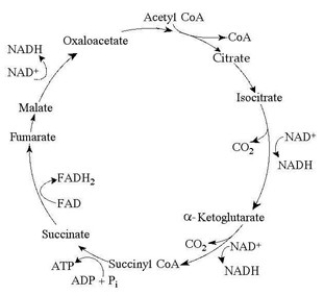
Starting with citrate, which of the following combinations of products would result from three acetyl-CoA molecules entering the citric acid cycle (see the accompanying figure)?
A) 1 ATP, 2 CO2, 3 NADH, and 1 FADH2
B) 2 ATP, 2 CO2, 3 NADH, and 3 FADH2
C) 3 ATP, 3 CO2, 3 NADH, and 3 FADH2
D) 3 ATP, 6 CO2, 9 NADH, and 3 FADH2
E) 38 ATP, 6 CO2, 3 NADH, and 12 FADH2
Starting with citrate, which of the following combinations of products would result from three acetyl-CoA molecules entering the citric acid cycle (see the accompanying figure)?
A) 1 ATP, 2 CO2, 3 NADH, and 1 FADH2
B) 2 ATP, 2 CO2, 3 NADH, and 3 FADH2
C) 3 ATP, 3 CO2, 3 NADH, and 3 FADH2
D) 3 ATP, 6 CO2, 9 NADH, and 3 FADH2
E) 38 ATP, 6 CO2, 3 NADH, and 12 FADH2
سؤال
سؤال
سؤال
سؤال
سؤال
سؤال
Use the accompanying figure to answer the question(s) below.
If pyruvate oxidation is blocked, what will happen to the levels of oxaloacetate and citric acid in the citric acid cycle shown in the accompanying figure?
A) There will be no change in the levels of oxaloacetate and citric acid.
B) Oxaloacetate will decrease and citric acid will accumulate.
C) Oxaloacetate will accumulate and citric acid will decrease.
D) Both oxaloacetate and citric acid will decrease.
E) Both oxaloacetate and citric acid will accumulate.
If pyruvate oxidation is blocked, what will happen to the levels of oxaloacetate and citric acid in the citric acid cycle shown in the accompanying figure?
A) There will be no change in the levels of oxaloacetate and citric acid.
B) Oxaloacetate will decrease and citric acid will accumulate.
C) Oxaloacetate will accumulate and citric acid will decrease.
D) Both oxaloacetate and citric acid will decrease.
E) Both oxaloacetate and citric acid will accumulate.
سؤال
سؤال
سؤال
سؤال
سؤال
سؤال
سؤال
سؤال
سؤال
سؤال
Use the accompanying figure to answer the following question(s). 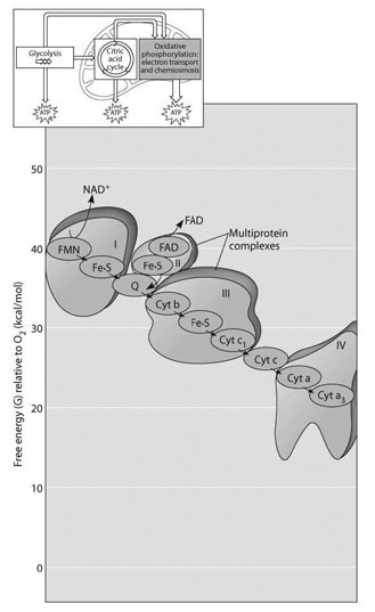
The accompanying figure shows the electron transport chain. Which of the following is the combination of substances that is initially added to the chain?
A) oxygen, carbon dioxide, and water
B) NAD+, FAD, and electrons
C) NADH, FADH2, and protons
D) NADH, FADH2, and O2
E) oxygen and protons
The accompanying figure shows the electron transport chain. Which of the following is the combination of substances that is initially added to the chain?
A) oxygen, carbon dioxide, and water
B) NAD+, FAD, and electrons
C) NADH, FADH2, and protons
D) NADH, FADH2, and O2
E) oxygen and protons
سؤال
سؤال
سؤال
سؤال
Use the following information to answer the question(s) below.
Exposing inner mitochondrial membranes to ultrasonic vibrations will disrupt the membranes. However, the fragments will reseal "inside out." The little vesicles that result can still transfer electrons from NADH to oxygen and synthesize ATP.
These inside-out membrane vesicles will ________.
A) become acidic inside the vesicles when NADH is added
B) become alkaline inside the vesicles when NADH is added
C) make ATP from ADP and i if transferred to a pH 4 buffered solution after incubation in a pH 7 buffered solution
D) hydrolyze ATP to pump protons out of the interior of the vesicle to the exterior
E) reverse electron flow to generate NADH from NAD+ in the absence of oxygen
Exposing inner mitochondrial membranes to ultrasonic vibrations will disrupt the membranes. However, the fragments will reseal "inside out." The little vesicles that result can still transfer electrons from NADH to oxygen and synthesize ATP.
These inside-out membrane vesicles will ________.
A) become acidic inside the vesicles when NADH is added
B) become alkaline inside the vesicles when NADH is added
C) make ATP from ADP and
i if transferred to a pH 4 buffered solution after incubation in a pH 7 buffered solutionD) hydrolyze ATP to pump protons out of the interior of the vesicle to the exterior
E) reverse electron flow to generate NADH from NAD+ in the absence of oxygen
سؤال
Use the accompanying figure to answer the following question(s).
Which of the following most accurately describes what is happening along the electron transport chain in the accompanying figure?
A) Electrons are transferred to ADP to generate ATP at each step in the process.
B) Each electron carrier alternates between being reduced and being oxidized.
C) ATP is generated at each step of the process.
D) Energy of the electrons increases at each step of the process.
E) Molecules in the chain give up some of their potential energy.
Which of the following most accurately describes what is happening along the electron transport chain in the accompanying figure?
A) Electrons are transferred to ADP to generate ATP at each step in the process.
B) Each electron carrier alternates between being reduced and being oxidized.
C) ATP is generated at each step of the process.
D) Energy of the electrons increases at each step of the process.
E) Molecules in the chain give up some of their potential energy.
سؤال
سؤال
سؤال
سؤال
سؤال
سؤال
سؤال
سؤال
سؤال
سؤال
سؤال
سؤال

فتح الحزمة
قم بالتسجيل لفتح البطاقات في هذه المجموعة!
Unlock Deck
Unlock Deck
1/61

العب

ملء الشاشة (f)
Deck 9: Cellular Respiration and Fermentation
1
Why might adding inorganic phosphate to a reaction mixture where glycolysis is rapidly proceeding help sustain the metabolic pathway?
A) It would increase the amount of glucose available for catabolism.
B) It would increase the oxygen supply available for aerobic respiration because each phosphate group contains four oxygen atoms as constituents.
C) The metabolic intermediates of glycolysis are phosphorylated.
D) It increases the energy level of the electrons that are transferred to the electron transport chain where ATP is produced.
A) It would increase the amount of glucose available for catabolism.
B) It would increase the oxygen supply available for aerobic respiration because each phosphate group contains four oxygen atoms as constituents.
C) The metabolic intermediates of glycolysis are phosphorylated.
D) It increases the energy level of the electrons that are transferred to the electron transport chain where ATP is produced.
C
2
When a glucose molecule loses a hydrogen atom as the result of an oxidation-reduction reaction, the molecule becomes ________.
A) hydrolyzed
B) hydrogenated
C) oxidized
D) reduced
E) an oxidizing agent
A) hydrolyzed
B) hydrogenated
C) oxidized
D) reduced
E) an oxidizing agent
C
3
Why is glycolysis considered to be one of the first metabolic pathways to have evolved?
A) It produces much less ATP than does oxidative phosphorylation.
B) It does not involve organelles or specialized structures, does not require oxygen, and is present in most organisms.
C) It is found in prokaryotic cells but not in eukaryotic cells.
D) It relies on chemiosmosis, which is a metabolic mechanism present only in the first cells' prokaryotic cells.
E) It requires the presence of membrane-enclosed cell organelles found only in eukaryotic cells.
A) It produces much less ATP than does oxidative phosphorylation.
B) It does not involve organelles or specialized structures, does not require oxygen, and is present in most organisms.
C) It is found in prokaryotic cells but not in eukaryotic cells.
D) It relies on chemiosmosis, which is a metabolic mechanism present only in the first cells' prokaryotic cells.
E) It requires the presence of membrane-enclosed cell organelles found only in eukaryotic cells.
B
4
What is the major adaptive advantage of cellular respiration?
A) to reduce an electron acceptor molecule
B) to supply the cell with fixed carbon
C) to produce adenosine triphosphate (ATP)
D) to generate oxygen
E) to utilize glucose
A) to reduce an electron acceptor molecule
B) to supply the cell with fixed carbon
C) to produce adenosine triphosphate (ATP)
D) to generate oxygen
E) to utilize glucose
فتح الحزمة
افتح القفل للوصول البطاقات البالغ عددها 61 في هذه المجموعة.
فتح الحزمة
k this deck
5
What is the term for metabolic pathways that release stored energy by breaking down complex molecules?
A) anabolic pathways
B) catabolic pathways
C) fermentation pathways
D) thermodynamic pathways
E) bioenergetic pathways
A) anabolic pathways
B) catabolic pathways
C) fermentation pathways
D) thermodynamic pathways
E) bioenergetic pathways
فتح الحزمة
افتح القفل للوصول البطاقات البالغ عددها 61 في هذه المجموعة.
فتح الحزمة
k this deck
6
Canine phosphofructokinase (PFK) deficiency afflicts Springer spaniels, affecting an estimated 10 percent of the breed. Given its critical role in glycolysis, one implication of the genetic defect resulting in PFK deficiency in dogs is ________.
A) early embryonic mortality
B) elevated blood-glucose levels in the dog's blood
C) an intolerance for exercise
D) a reduced life span
A) early embryonic mortality
B) elevated blood-glucose levels in the dog's blood
C) an intolerance for exercise
D) a reduced life span
فتح الحزمة
افتح القفل للوصول البطاقات البالغ عددها 61 في هذه المجموعة.
فتح الحزمة
k this deck
7
Why is glycolysis described as having an investment phase and a payoff phase?
A) It both splits molecules and assembles molecules.
B) It attaches and detaches phosphate groups.
C) It uses glucose and generates pyruvate.
D) It shifts molecules from cytosol to mitochondrion.
E) It uses stored ATP and then forms a net increase in ATP.
A) It both splits molecules and assembles molecules.
B) It attaches and detaches phosphate groups.
C) It uses glucose and generates pyruvate.
D) It shifts molecules from cytosol to mitochondrion.
E) It uses stored ATP and then forms a net increase in ATP.
فتح الحزمة
افتح القفل للوصول البطاقات البالغ عددها 61 في هذه المجموعة.
فتح الحزمة
k this deck
8
Which of the following statements about NAD+ is TRUE?
A) NAD+ is reduced to NADH during glycolysis, pyruvate oxidation, and the citric acid cycle.
B) NAD+ has more chemical energy than NADH.
C) NAD+ is oxidized by the action of hydrogenases.
D) NAD+ can donate electrons for use in oxidative phosphorylation.
E) In the absence of NAD+, glycolysis can still function.
A) NAD+ is reduced to NADH during glycolysis, pyruvate oxidation, and the citric acid cycle.
B) NAD+ has more chemical energy than NADH.
C) NAD+ is oxidized by the action of hydrogenases.
D) NAD+ can donate electrons for use in oxidative phosphorylation.
E) In the absence of NAD+, glycolysis can still function.
فتح الحزمة
افتح القفل للوصول البطاقات البالغ عددها 61 في هذه المجموعة.
فتح الحزمة
k this deck
9
In glycolysis, for each molecule of glucose oxidized to pyruvate ________.
A) two molecules of ATP are used and two molecules of ATP are produced.
B) two molecules of ATP are used and four molecules of ATP are produced.
C) four molecules of ATP are used and two molecules of ATP are produced.
D) two molecules of ATP are used and six molecules of ATP are produced.
E) six molecules of ATP are used and six molecules of ATP are produced.
A) two molecules of ATP are used and two molecules of ATP are produced.
B) two molecules of ATP are used and four molecules of ATP are produced.
C) four molecules of ATP are used and two molecules of ATP are produced.
D) two molecules of ATP are used and six molecules of ATP are produced.
E) six molecules of ATP are used and six molecules of ATP are produced.
فتح الحزمة
افتح القفل للوصول البطاقات البالغ عددها 61 في هذه المجموعة.
فتح الحزمة
k this deck
10
During glycolysis, when each molecule of glucose is catabolized to two molecules of pyruvate, most of the potential energy contained in glucose is ________.
A) transferred to ADP, forming ATP
B) transferred directly to ATP
C) retained in the two pyruvates
D) stored in the NADH produced
E) used to phosphorylate fructose to form fructose 6-phosphate
A) transferred to ADP, forming ATP
B) transferred directly to ATP
C) retained in the two pyruvates
D) stored in the NADH produced
E) used to phosphorylate fructose to form fructose 6-phosphate
فتح الحزمة
افتح القفل للوصول البطاقات البالغ عددها 61 في هذه المجموعة.
فتح الحزمة
k this deck
11
Which kind of metabolic poison would most directly interfere with glycolysis?
A) an agent that reacts with oxygen and depletes its concentration in the cell
B) an agent that binds to pyruvate and inactivates it
C) an agent that closely mimics the structure of glucose but is not metabolized
D) an agent that reacts with NADH and oxidizes it to NAD+
E) an agent that blocks the passage of electrons along the electron transport chain
A) an agent that reacts with oxygen and depletes its concentration in the cell
B) an agent that binds to pyruvate and inactivates it
C) an agent that closely mimics the structure of glucose but is not metabolized
D) an agent that reacts with NADH and oxidizes it to NAD+
E) an agent that blocks the passage of electrons along the electron transport chain
فتح الحزمة
افتح القفل للوصول البطاقات البالغ عددها 61 في هذه المجموعة.
فتح الحزمة
k this deck
12
The molecule that functions as the reducing agent (electron donor) in a redox or oxidation-reduction reaction ________.
A) gains electrons and gains potential energy
B) loses electrons and loses potential energy
C) gains electrons and loses potential energy
D) loses electrons and gains potential energy
E) neither gains nor loses electrons but gains or loses potential energy
A) gains electrons and gains potential energy
B) loses electrons and loses potential energy
C) gains electrons and loses potential energy
D) loses electrons and gains potential energy
E) neither gains nor loses electrons but gains or loses potential energy
فتح الحزمة
افتح القفل للوصول البطاقات البالغ عددها 61 في هذه المجموعة.
فتح الحزمة
k this deck
13
Which process in eukaryotic cells will proceed normally whether oxygen (O2) is present or absent?
A) electron transport
B) glycolysis
C) the citric acid cycle
D) oxidative phosphorylation
E) chemiosmosis
A) electron transport
B) glycolysis
C) the citric acid cycle
D) oxidative phosphorylation
E) chemiosmosis
فتح الحزمة
افتح القفل للوصول البطاقات البالغ عددها 61 في هذه المجموعة.
فتح الحزمة
k this deck
14
Starting with one molecule of glucose, the energy-containing products of glycolysis are ________.
A) 2 NAD+, 2 pyruvate, and 2 ATP
B) 2 NADH, 2 pyruvate, and 2 ATP
C) 2 FADH2, 2 pyruvate, and 4 ATP
D) 6 CO2, 2 pyruvate, and 2 ATP
E) 6 CO2, 2 pyruvate, and 30 ATP
A) 2 NAD+, 2 pyruvate, and 2 ATP
B) 2 NADH, 2 pyruvate, and 2 ATP
C) 2 FADH2, 2 pyruvate, and 4 ATP
D) 6 CO2, 2 pyruvate, and 2 ATP
E) 6 CO2, 2 pyruvate, and 30 ATP
فتح الحزمة
افتح القفل للوصول البطاقات البالغ عددها 61 في هذه المجموعة.
فتح الحزمة
k this deck
15
In addition to ATP, what are the end products of glycolysis?
A) CO2 and H2O
B) CO2 and pyruvate
C) NADH and pyruvate
D) CO2 and NADH
E) H2O, FADH2, and citrate
A) CO2 and H2O
B) CO2 and pyruvate
C) NADH and pyruvate
D) CO2 and NADH
E) H2O, FADH2, and citrate
فتح الحزمة
افتح القفل للوصول البطاقات البالغ عددها 61 في هذه المجموعة.
فتح الحزمة
k this deck
16
What kind of molecules serve as electron acceptors in cellular respiration?
A) water
B) polar molecules
C) molecules with high potential energy
D) molecules with low potential energy
E) molecules in an excited state
A) water
B) polar molecules
C) molecules with high potential energy
D) molecules with low potential energy
E) molecules in an excited state
فتح الحزمة
افتح القفل للوصول البطاقات البالغ عددها 61 في هذه المجموعة.
فتح الحزمة
k this deck
17
Which of the listed statements describes the results of the following reaction?
C6H12O6 + 6 O2 → 6 CO2 + 6 H2O + Energy
A) C6H12O6 is oxidized and O2 is reduced.
B) O2 is oxidized and H2O is reduced.
C) CO2 is reduced and O2 is oxidized.
D) C6H12O6 is reduced and CO2 is oxidized.
E) O2 is reduced and CO2 is oxidized.
C6H12O6 + 6 O2 → 6 CO2 + 6 H2O + Energy
A) C6H12O6 is oxidized and O2 is reduced.
B) O2 is oxidized and H2O is reduced.
C) CO2 is reduced and O2 is oxidized.
D) C6H12O6 is reduced and CO2 is oxidized.
E) O2 is reduced and CO2 is oxidized.
فتح الحزمة
افتح القفل للوصول البطاقات البالغ عددها 61 في هذه المجموعة.
فتح الحزمة
k this deck
18
The glucose molecule has a large quantity of energy in its ________.
A) C-H bonds
B) C-N bonds
C) number of oxygen atoms
D) polar structure
A) C-H bonds
B) C-N bonds
C) number of oxygen atoms
D) polar structure
فتح الحزمة
افتح القفل للوصول البطاقات البالغ عددها 61 في هذه المجموعة.
فتح الحزمة
k this deck
19
Substrate-level phosphorylation accounts for approximately what percentage of the ATP formed by the reactions of glycolysis?
A) 0 percent
B) 2 percent
C) 10 percent
D) 38 percent
E) 100 percent
A) 0 percent
B) 2 percent
C) 10 percent
D) 38 percent
E) 100 percent
فتح الحزمة
افتح القفل للوصول البطاقات البالغ عددها 61 في هذه المجموعة.
فتح الحزمة
k this deck
20
How many oxygen molecules (O2) are required each time a molecule of glucose (C6H12O6) is completely oxidized to carbon dioxide and water via aerobic respiration?
A) 1
B) 3
C) 6
D) 12
E) 30
A) 1
B) 3
C) 6
D) 12
E) 30
فتح الحزمة
افتح القفل للوصول البطاقات البالغ عددها 61 في هذه المجموعة.
فتح الحزمة
k this deck
21
Which of the following events takes place in the electron transport chain?
A) the breakdown of glucose into two pyruvate molecules
B) the breakdown of an acetyl group to carbon dioxide
C) the extraction of energy from high-energy electrons remaining from glycolysis and the citric acid cycle
D) substrate-level phosphorylation
A) the breakdown of glucose into two pyruvate molecules
B) the breakdown of an acetyl group to carbon dioxide
C) the extraction of energy from high-energy electrons remaining from glycolysis and the citric acid cycle
D) substrate-level phosphorylation
فتح الحزمة
افتح القفل للوصول البطاقات البالغ عددها 61 في هذه المجموعة.
فتح الحزمة
k this deck
22
The primary role of oxygen in cellular respiration is to ________.
A) yield energy in the form of ATP as it is passed down the respiratory chain
B) act as an acceptor for electrons and hydrogen, forming water
C) combine with carbon, forming CO2
D) combine with lactate, forming pyruvate
E) catalyze the reactions of glycolysis
A) yield energy in the form of ATP as it is passed down the respiratory chain
B) act as an acceptor for electrons and hydrogen, forming water
C) combine with carbon, forming CO2
D) combine with lactate, forming pyruvate
E) catalyze the reactions of glycolysis
فتح الحزمة
افتح القفل للوصول البطاقات البالغ عددها 61 في هذه المجموعة.
فتح الحزمة
k this deck
23
The energy of electron transport serves to move (translocate) protons to the outer mitochondrial compartment. How does this help the mitochondrion produce ATP?
A) The hydrogen ions (protons) are transferred to oxygen in an energy-releasing reaction.
B) The translocation of protons sets up the electrochemical gradient that drives ATP synthesis in the mitochondria.
C) The protons pick up electrons from the electron transport chain on their way through the inner mitochondrial membrane.
D) The protons receive electrons from the NAD+ and FAD that are accepted by electrons in glycolysis and the citric acid cycle.
A) The hydrogen ions (protons) are transferred to oxygen in an energy-releasing reaction.
B) The translocation of protons sets up the electrochemical gradient that drives ATP synthesis in the mitochondria.
C) The protons pick up electrons from the electron transport chain on their way through the inner mitochondrial membrane.
D) The protons receive electrons from the NAD+ and FAD that are accepted by electrons in glycolysis and the citric acid cycle.
فتح الحزمة
افتح القفل للوصول البطاقات البالغ عددها 61 في هذه المجموعة.
فتح الحزمة
k this deck
24
The oxygen consumed during cellular respiration is involved directly in which process or event?
A) glycolysis
B) accepting electrons at the end of the electron transport chain
C) the citric acid cycle
D) the oxidation of pyruvate to acetyl CoA
E) the phosphorylation of ADP to form ATP
A) glycolysis
B) accepting electrons at the end of the electron transport chain
C) the citric acid cycle
D) the oxidation of pyruvate to acetyl CoA
E) the phosphorylation of ADP to form ATP
فتح الحزمة
افتح القفل للوصول البطاقات البالغ عددها 61 في هذه المجموعة.
فتح الحزمة
k this deck
25
Glycolysis is active when cellular energy levels are ________; the regulatory enzyme, phosphofructokinase, is ________ by ATP.
A) low; activated
B) low; inhibited
C) high; activated
D) high; inhibited
A) low; activated
B) low; inhibited
C) high; activated
D) high; inhibited
فتح الحزمة
افتح القفل للوصول البطاقات البالغ عددها 61 في هذه المجموعة.
فتح الحزمة
k this deck
26
Which electron carrier(s) function in the citric acid cycle?
A) NAD+ only
B) NADH and FADH2
C) the electron transport chain
D) ADP and ATP
A) NAD+ only
B) NADH and FADH2
C) the electron transport chain
D) ADP and ATP
فتح الحزمة
افتح القفل للوصول البطاقات البالغ عددها 61 في هذه المجموعة.
فتح الحزمة
k this deck
27
The constituents of the electron transport chain have similar capabilities, with the exception of ubiquinone (coenzyme Q). What is different about ubiquinone?
A) Ubiquinone is a protein that begins the electron transport chain, so it accepts the highest-energy electrons.
B) Ubiquinone is a protein that serves as a regulator of the rate of redox reactions in the electron transport chain.
C) Ubiquinone is a protein that is a constituent of all cells, prokaryotic or eukaryotic; hence its name, originating from "ubiquitous."
D) Ubiquinone is not a protein, is lipid soluble, and can move through the inner mitochondrial membrane.
A) Ubiquinone is a protein that begins the electron transport chain, so it accepts the highest-energy electrons.
B) Ubiquinone is a protein that serves as a regulator of the rate of redox reactions in the electron transport chain.
C) Ubiquinone is a protein that is a constituent of all cells, prokaryotic or eukaryotic; hence its name, originating from "ubiquitous."
D) Ubiquinone is not a protein, is lipid soluble, and can move through the inner mitochondrial membrane.
فتح الحزمة
افتح القفل للوصول البطاقات البالغ عددها 61 في هذه المجموعة.
فتح الحزمة
k this deck
28
Use the accompanying figure to answer the question(s) below.
Starting with citrate, which of the following combinations of products would result from three acetyl-CoA molecules entering the citric acid cycle (see the accompanying figure)?
A) 1 ATP, 2 CO2, 3 NADH, and 1 FADH2
B) 2 ATP, 2 CO2, 3 NADH, and 3 FADH2
C) 3 ATP, 3 CO2, 3 NADH, and 3 FADH2
D) 3 ATP, 6 CO2, 9 NADH, and 3 FADH2
E) 38 ATP, 6 CO2, 3 NADH, and 12 FADH2
Starting with citrate, which of the following combinations of products would result from three acetyl-CoA molecules entering the citric acid cycle (see the accompanying figure)?
A) 1 ATP, 2 CO2, 3 NADH, and 1 FADH2
B) 2 ATP, 2 CO2, 3 NADH, and 3 FADH2
C) 3 ATP, 3 CO2, 3 NADH, and 3 FADH2
D) 3 ATP, 6 CO2, 9 NADH, and 3 FADH2
E) 38 ATP, 6 CO2, 3 NADH, and 12 FADH2
فتح الحزمة
افتح القفل للوصول البطاقات البالغ عددها 61 في هذه المجموعة.
فتح الحزمة
k this deck
29
C6H12O6 (glucose) + 6 O2 → 6 CO2 + 6 H2O
Where is most of the water in this reaction produced?
A) during glycolysis
B) in the citric acid cycle
C) during fermentation
D) in the electron transport chain
Where is most of the water in this reaction produced?
A) during glycolysis
B) in the citric acid cycle
C) during fermentation
D) in the electron transport chain
فتح الحزمة
افتح القفل للوصول البطاقات البالغ عددها 61 في هذه المجموعة.
فتح الحزمة
k this deck
30
Which of the following statements about cellular metabolism is FALSE?
A) Glycolysis is inhibited when cellular energy levels are abundant.
B) Citric acid cycle activity is dependent solely on availability of substrate; otherwise, it is unregulated.
C) In the electron transport chain, electrons decrease in energy level as they are transferred from one electron carrier to the next.
D) Reactions of the citric acid cycle take place in the mitochondrial matrix.
A) Glycolysis is inhibited when cellular energy levels are abundant.
B) Citric acid cycle activity is dependent solely on availability of substrate; otherwise, it is unregulated.
C) In the electron transport chain, electrons decrease in energy level as they are transferred from one electron carrier to the next.
D) Reactions of the citric acid cycle take place in the mitochondrial matrix.
فتح الحزمة
افتح القفل للوصول البطاقات البالغ عددها 61 في هذه المجموعة.
فتح الحزمة
k this deck
31
Fatty acids usually have an even number of carbons in their structures. They are catabolized by a process called beta-oxidation. The end products of the metabolic pathway are acetyl groups
Of acetyl-CoA molecules. These acetyl groups ________.
A) directly enter the electron transport chain
B) directly enter the energy-yielding stages of glycolysis
C) are directly decarboxylated by pyruvate dehydrogenase
D) directly enter the citric acid cycle
Of acetyl-CoA molecules. These acetyl groups ________.
A) directly enter the electron transport chain
B) directly enter the energy-yielding stages of glycolysis
C) are directly decarboxylated by pyruvate dehydrogenase
D) directly enter the citric acid cycle
فتح الحزمة
افتح القفل للوصول البطاقات البالغ عددها 61 في هذه المجموعة.
فتح الحزمة
k this deck
32
If you were to add one of the eight citric acid cycle intermediates to the culture medium of yeast growing in the laboratory, what do you think would happen to the rates of ATP and carbon dioxide production?
A) There would be no change in ATP production, but we would observe an increased rate of carbon dioxide production.
B) The rates of ATP production and carbon dioxide production would both increase.
C) The rate of ATP production would decrease, but the rate of carbon dioxide production would increase.
D) Rates of ATP and carbon dioxide production would probably both decrease.
A) There would be no change in ATP production, but we would observe an increased rate of carbon dioxide production.
B) The rates of ATP production and carbon dioxide production would both increase.
C) The rate of ATP production would decrease, but the rate of carbon dioxide production would increase.
D) Rates of ATP and carbon dioxide production would probably both decrease.
فتح الحزمة
افتح القفل للوصول البطاقات البالغ عددها 61 في هذه المجموعة.
فتح الحزمة
k this deck
33
During cellular respiration, acetyl CoA accumulates in which location?
A) cytosol
B) mitochondrial outer membrane
C) mitochondrial inner membrane
D) mitochondrial intermembrane space
E) mitochondrial matrix
A) cytosol
B) mitochondrial outer membrane
C) mitochondrial inner membrane
D) mitochondrial intermembrane space
E) mitochondrial matrix
فتح الحزمة
افتح القفل للوصول البطاقات البالغ عددها 61 في هذه المجموعة.
فتح الحزمة
k this deck
34
Use the accompanying figure to answer the question(s) below.
If pyruvate oxidation is blocked, what will happen to the levels of oxaloacetate and citric acid in the citric acid cycle shown in the accompanying figure?
A) There will be no change in the levels of oxaloacetate and citric acid.
B) Oxaloacetate will decrease and citric acid will accumulate.
C) Oxaloacetate will accumulate and citric acid will decrease.
D) Both oxaloacetate and citric acid will decrease.
E) Both oxaloacetate and citric acid will accumulate.
If pyruvate oxidation is blocked, what will happen to the levels of oxaloacetate and citric acid in the citric acid cycle shown in the accompanying figure?
A) There will be no change in the levels of oxaloacetate and citric acid.
B) Oxaloacetate will decrease and citric acid will accumulate.
C) Oxaloacetate will accumulate and citric acid will decrease.
D) Both oxaloacetate and citric acid will decrease.
E) Both oxaloacetate and citric acid will accumulate.
فتح الحزمة
افتح القفل للوصول البطاقات البالغ عددها 61 في هذه المجموعة.
فتح الحزمة
k this deck
35
Even though plants cells photosynthesize, they still use their mitochondria for oxidation of pyruvate. This will occur in ________.
A) photosynthetic cells in the light, while photosynthesis occurs concurrently
B) nonphotosynthesizing cells only
C) cells that are storing glucose only
D) all cells all the time
E) photosynthesizing cells in the light and in other tissues in the dark
A) photosynthetic cells in the light, while photosynthesis occurs concurrently
B) nonphotosynthesizing cells only
C) cells that are storing glucose only
D) all cells all the time
E) photosynthesizing cells in the light and in other tissues in the dark
فتح الحزمة
افتح القفل للوصول البطاقات البالغ عددها 61 في هذه المجموعة.
فتح الحزمة
k this deck
36
Following glycolysis and the citric acid cycle, but before the electron transport chain and oxidative phosphorylation, the carbon skeleton of glucose has been broken down to CO2 with some net gain of ATP. Most of the energy from the original glucose molecule at that point in the process, however, is in the form of ________.
A) acetyl CoA
B) glucose
C) pyruvate
D) NADH
A) acetyl CoA
B) glucose
C) pyruvate
D) NADH
فتح الحزمة
افتح القفل للوصول البطاقات البالغ عددها 61 في هذه المجموعة.
فتح الحزمة
k this deck
37
Phosphofructokinase is an allosteric enzyme that catalyzes the conversion of fructose 6-phosphate to fructose 1,6-bisphosphate, an early step of glycolysis. In the presence of oxygen, an increase in the amount of ATP in a cell would be expected to ________.
A) inhibit the enzyme and thus slow the rates of glycolysis and the citric acid cycle.
B) activate the enzyme and thus slow the rates of glycolysis and the citric acid cycle.
C) inhibit the enzyme and thus increase the rates of glycolysis and the citric acid cycle.
D) activate the enzyme and thus increase the rates of glycolysis and the citric acid cycle.
E) inhibit the enzyme and thus increase the rate of glycolysis and the concentration of citrate.
A) inhibit the enzyme and thus slow the rates of glycolysis and the citric acid cycle.
B) activate the enzyme and thus slow the rates of glycolysis and the citric acid cycle.
C) inhibit the enzyme and thus increase the rates of glycolysis and the citric acid cycle.
D) activate the enzyme and thus increase the rates of glycolysis and the citric acid cycle.
E) inhibit the enzyme and thus increase the rate of glycolysis and the concentration of citrate.
فتح الحزمة
افتح القفل للوصول البطاقات البالغ عددها 61 في هذه المجموعة.
فتح الحزمة
k this deck
38
Carbon dioxide (CO2) is released during which of the following stages of cellular respiration?
A) glycolysis and the oxidation of pyruvate to acetyl CoA
B) oxidation of pyruvate to acetyl CoA and the citric acid cycle
C) the citric acid cycle and oxidative phosphorylation
D) oxidative phosphorylation and fermentation
E) fermentation and glycolysis
A) glycolysis and the oxidation of pyruvate to acetyl CoA
B) oxidation of pyruvate to acetyl CoA and the citric acid cycle
C) the citric acid cycle and oxidative phosphorylation
D) oxidative phosphorylation and fermentation
E) fermentation and glycolysis
فتح الحزمة
افتح القفل للوصول البطاقات البالغ عددها 61 في هذه المجموعة.
فتح الحزمة
k this deck
39
A substrate-level phosphorylation occurs in the citric acid cycle when ________.
A) GDP is phosphorylated to produce GTP
B) NAD+ is phosphorylated to NADH
C) oxaloacetate is phosphorylated
D) acetylation of oxaloacetate takes place
A) GDP is phosphorylated to produce GTP
B) NAD+ is phosphorylated to NADH
C) oxaloacetate is phosphorylated
D) acetylation of oxaloacetate takes place
فتح الحزمة
افتح القفل للوصول البطاقات البالغ عددها 61 في هذه المجموعة.
فتح الحزمة
k this deck
40
Inside an active mitochondrion, most electrons follow which pathway?
A) glycolysis → NADH → oxidative phosphorylation → ATP → oxygen
B) citric acid cycle → FADH2 → electron transport chain → ATP
C) electron transport chain → citric acid cycle → ATP → oxygen
D) pyruvate → citric acid cycle → ATP → NADH → oxygen
E) citric acid cycle → NADH → electron transport chain → oxygen
A) glycolysis → NADH → oxidative phosphorylation → ATP → oxygen
B) citric acid cycle → FADH2 → electron transport chain → ATP
C) electron transport chain → citric acid cycle → ATP → oxygen
D) pyruvate → citric acid cycle → ATP → NADH → oxygen
E) citric acid cycle → NADH → electron transport chain → oxygen
فتح الحزمة
افتح القفل للوصول البطاقات البالغ عددها 61 في هذه المجموعة.
فتح الحزمة
k this deck
41
Use the following information to answer the question(s) below.
Exposing inner mitochondrial membranes to ultrasonic vibrations will disrupt the membranes. However, the fragments will reseal "inside out." The little vesicles that result can still transfer electrons from NADH to oxygen and synthesize ATP.
After the disruption, when electron transfer and ATP synthesis still occur, what must be present?
A) all of the electron transport proteins and ATP synthase
B) all of the electron transport system and the ability to add CoA to acetyl groups
C) the ATP synthase system
D) the electron transport system
E) plasma membranes like those used by bacteria for respiration
Exposing inner mitochondrial membranes to ultrasonic vibrations will disrupt the membranes. However, the fragments will reseal "inside out." The little vesicles that result can still transfer electrons from NADH to oxygen and synthesize ATP.
After the disruption, when electron transfer and ATP synthesis still occur, what must be present?
A) all of the electron transport proteins and ATP synthase
B) all of the electron transport system and the ability to add CoA to acetyl groups
C) the ATP synthase system
D) the electron transport system
E) plasma membranes like those used by bacteria for respiration
فتح الحزمة
افتح القفل للوصول البطاقات البالغ عددها 61 في هذه المجموعة.
فتح الحزمة
k this deck
42
Which of the following produces the most ATP when glucose (C6H12O6) is completely oxidized to carbon dioxide and water?
A) glycolysis
B) fermentation
C) oxidation of pyruvate to acetyl CoA
D) citric acid cycle
E) oxidative phosphorylation (chemiosmosis)
A) glycolysis
B) fermentation
C) oxidation of pyruvate to acetyl CoA
D) citric acid cycle
E) oxidative phosphorylation (chemiosmosis)
فتح الحزمة
افتح القفل للوصول البطاقات البالغ عددها 61 في هذه المجموعة.
فتح الحزمة
k this deck
43
In liver cells, the inner mitochondrial membranes are about five times the area of the outer mitochondrial membranes. What purpose must this serve?
A) It allows for an increased rate of glycolysis.
B) It allows for an increased rate of the citric acid cycle.
C) It increases the surface for oxidative phosphorylation.
D) It increases the surface for substrate-level phosphorylation.
E) It allows the liver cell to have more peroxisomes.
A) It allows for an increased rate of glycolysis.
B) It allows for an increased rate of the citric acid cycle.
C) It increases the surface for oxidative phosphorylation.
D) It increases the surface for substrate-level phosphorylation.
E) It allows the liver cell to have more peroxisomes.
فتح الحزمة
افتح القفل للوصول البطاقات البالغ عددها 61 في هذه المجموعة.
فتح الحزمة
k this deck
44
Use the accompanying figure to answer the following question(s).
The accompanying figure shows the electron transport chain. Which of the following is the combination of substances that is initially added to the chain?
A) oxygen, carbon dioxide, and water
B) NAD+, FAD, and electrons
C) NADH, FADH2, and protons
D) NADH, FADH2, and O2
E) oxygen and protons
The accompanying figure shows the electron transport chain. Which of the following is the combination of substances that is initially added to the chain?
A) oxygen, carbon dioxide, and water
B) NAD+, FAD, and electrons
C) NADH, FADH2, and protons
D) NADH, FADH2, and O2
E) oxygen and protons
فتح الحزمة
افتح القفل للوصول البطاقات البالغ عددها 61 في هذه المجموعة.
فتح الحزمة
k this deck
45
Which metabolic pathway is common to both cellular respiration and fermentation?
A) the oxidation of pyruvate to acetyl CoA
B) the citric acid cycle
C) oxidative phosphorylation
D) glycolysis
E) chemiosmosis
A) the oxidation of pyruvate to acetyl CoA
B) the citric acid cycle
C) oxidative phosphorylation
D) glycolysis
E) chemiosmosis
فتح الحزمة
افتح القفل للوصول البطاقات البالغ عددها 61 في هذه المجموعة.
فتح الحزمة
k this deck
46
In mitochondria, exergonic redox reactions ________.
A) are the source of energy driving prokaryotic ATP synthesis
B) are directly coupled to substrate-level phosphorylation
C) provide the energy that establishes the proton gradient
D) reduce carbon atoms to carbon dioxide
E) are coupled via phosphorylated intermediates to endergonic processes
A) are the source of energy driving prokaryotic ATP synthesis
B) are directly coupled to substrate-level phosphorylation
C) provide the energy that establishes the proton gradient
D) reduce carbon atoms to carbon dioxide
E) are coupled via phosphorylated intermediates to endergonic processes
فتح الحزمة
افتح القفل للوصول البطاقات البالغ عددها 61 في هذه المجموعة.
فتح الحزمة
k this deck
47
When electrons flow along the electron transport chains of mitochondria, which of the following changes occurs?
A) The pH of the matrix increases.
B) ATP synthase pumps protons by active transport.
C) The electrons gain free energy.
D) The cytochromes phosphorylate ADP to form ATP.
E) NAD+ is oxidized.
A) The pH of the matrix increases.
B) ATP synthase pumps protons by active transport.
C) The electrons gain free energy.
D) The cytochromes phosphorylate ADP to form ATP.
E) NAD+ is oxidized.
فتح الحزمة
افتح القفل للوصول البطاقات البالغ عددها 61 في هذه المجموعة.
فتح الحزمة
k this deck
48
Use the following information to answer the question(s) below.
Exposing inner mitochondrial membranes to ultrasonic vibrations will disrupt the membranes. However, the fragments will reseal "inside out." The little vesicles that result can still transfer electrons from NADH to oxygen and synthesize ATP.
These inside-out membrane vesicles will ________.
A) become acidic inside the vesicles when NADH is added
B) become alkaline inside the vesicles when NADH is added
C) make ATP from ADP and i if transferred to a pH 4 buffered solution after incubation in a pH 7 buffered solution
D) hydrolyze ATP to pump protons out of the interior of the vesicle to the exterior
E) reverse electron flow to generate NADH from NAD+ in the absence of oxygen
Exposing inner mitochondrial membranes to ultrasonic vibrations will disrupt the membranes. However, the fragments will reseal "inside out." The little vesicles that result can still transfer electrons from NADH to oxygen and synthesize ATP.
These inside-out membrane vesicles will ________.
A) become acidic inside the vesicles when NADH is added
B) become alkaline inside the vesicles when NADH is added
C) make ATP from ADP and
i if transferred to a pH 4 buffered solution after incubation in a pH 7 buffered solutionD) hydrolyze ATP to pump protons out of the interior of the vesicle to the exterior
E) reverse electron flow to generate NADH from NAD+ in the absence of oxygen
فتح الحزمة
افتح القفل للوصول البطاقات البالغ عددها 61 في هذه المجموعة.
فتح الحزمة
k this deck
49
Use the accompanying figure to answer the following question(s).
Which of the following most accurately describes what is happening along the electron transport chain in the accompanying figure?
A) Electrons are transferred to ADP to generate ATP at each step in the process.
B) Each electron carrier alternates between being reduced and being oxidized.
C) ATP is generated at each step of the process.
D) Energy of the electrons increases at each step of the process.
E) Molecules in the chain give up some of their potential energy.
Which of the following most accurately describes what is happening along the electron transport chain in the accompanying figure?
A) Electrons are transferred to ADP to generate ATP at each step in the process.
B) Each electron carrier alternates between being reduced and being oxidized.
C) ATP is generated at each step of the process.
D) Energy of the electrons increases at each step of the process.
E) Molecules in the chain give up some of their potential energy.
فتح الحزمة
افتح القفل للوصول البطاقات البالغ عددها 61 في هذه المجموعة.
فتح الحزمة
k this deck
50
The synthesis of ATP by oxidative phosphorylation, using the energy released by movement of protons across the membrane down their electrochemical gradient, is an example of ________.
A) active transport
B) an endergonic reaction coupled to an exergonic reaction
C) a reaction with a positive ΔG
D) osmosis
E) allosteric regulation
A) active transport
B) an endergonic reaction coupled to an exergonic reaction
C) a reaction with a positive ΔG
D) osmosis
E) allosteric regulation
فتح الحزمة
افتح القفل للوصول البطاقات البالغ عددها 61 في هذه المجموعة.
فتح الحزمة
k this deck
51
The ATP made during fermentation is generated by ________.
A) the electron transport chain
B) substrate-level phosphorylation
C) chemiosmosis
D) oxidative phosphorylation
E) aerobic respiration
A) the electron transport chain
B) substrate-level phosphorylation
C) chemiosmosis
D) oxidative phosphorylation
E) aerobic respiration
فتح الحزمة
افتح القفل للوصول البطاقات البالغ عددها 61 في هذه المجموعة.
فتح الحزمة
k this deck
52
Chemiosmotic ATP synthesis (oxidative phosphorylation) occurs in ________.
A) all cells but only in the presence of oxygen
B) only eukaryotic cells, in the presence of oxygen
C) only in mitochondria, using either oxygen or other electron acceptors
D) all respiring cells, both prokaryotic and eukaryotic, using either oxygen or other electron acceptors
E) all cells, in the absence of respiration
A) all cells but only in the presence of oxygen
B) only eukaryotic cells, in the presence of oxygen
C) only in mitochondria, using either oxygen or other electron acceptors
D) all respiring cells, both prokaryotic and eukaryotic, using either oxygen or other electron acceptors
E) all cells, in the absence of respiration
فتح الحزمة
افتح القفل للوصول البطاقات البالغ عددها 61 في هذه المجموعة.
فتح الحزمة
k this deck
53
An organism is discovered that thrives in both the presence and absence of oxygen in the air. Curiously, the consumption of sugar increases as oxygen is removed from the organism's environment, even though the organism does not gain much weight. This organism ________.
A) must use a molecule other than oxygen to accept electrons from the electron transport chain
B) is a normal eukaryotic organism
C) is photosynthetic
D) is an anaerobic organism
E) is a facultative anaerobe
A) must use a molecule other than oxygen to accept electrons from the electron transport chain
B) is a normal eukaryotic organism
C) is photosynthetic
D) is an anaerobic organism
E) is a facultative anaerobe
فتح الحزمة
افتح القفل للوصول البطاقات البالغ عددها 61 في هذه المجموعة.
فتح الحزمة
k this deck
54
A mutation in yeast makes it unable to convert pyruvate to ethanol. How will this mutation affect these yeast cells? The mutant yeast cells will ________.
A) be unable to grow anaerobically
B) grow anaerobically only when given glucose
C) be unable to metabolize glucose
D) die because they cannot regenerate NAD+ from NAD
E) metabolize only fatty acids
A) be unable to grow anaerobically
B) grow anaerobically only when given glucose
C) be unable to metabolize glucose
D) die because they cannot regenerate NAD+ from NAD
E) metabolize only fatty acids
فتح الحزمة
افتح القفل للوصول البطاقات البالغ عددها 61 في هذه المجموعة.
فتح الحزمة
k this deck
55
The final electron acceptor of the electron transport chain that functions in aerobic oxidative phosphorylation is ________.
A) oxygen
B) water
C) NAD+
D) pyruvate
E) ADP
A) oxygen
B) water
C) NAD+
D) pyruvate
E) ADP
فتح الحزمة
افتح القفل للوصول البطاقات البالغ عددها 61 في هذه المجموعة.
فتح الحزمة
k this deck
56
Which of the following occurs in the cytosol of a eukaryotic cell?
A) glycolysis and fermentation
B) fermentation and chemiosmosis
C) oxidation of pyruvate to acetyl CoA
D) citric acid cycle
E) oxidative phosphorylation
A) glycolysis and fermentation
B) fermentation and chemiosmosis
C) oxidation of pyruvate to acetyl CoA
D) citric acid cycle
E) oxidative phosphorylation
فتح الحزمة
افتح القفل للوصول البطاقات البالغ عددها 61 في هذه المجموعة.
فتح الحزمة
k this deck
57
In the absence of oxygen, yeast cells can obtain energy by fermentation, resulting in the production of ________.
A) ATP, CO2, and ethanol (ethyl alcohol)
B) ATP, CO2, and lactate
C) ATP, NADH, and pyruvate
D) ATP, pyruvate, and oxygen
E) ATP, pyruvate, and acetyl CoA
A) ATP, CO2, and ethanol (ethyl alcohol)
B) ATP, CO2, and lactate
C) ATP, NADH, and pyruvate
D) ATP, pyruvate, and oxygen
E) ATP, pyruvate, and acetyl CoA
فتح الحزمة
افتح القفل للوصول البطاقات البالغ عددها 61 في هذه المجموعة.
فتح الحزمة
k this deck
58
What carbon source(s) can yeast cells metabolize under anaerobic conditions to make ATP?
A) glucose
B) ethanol
C) pyruvate
D) lactic acid
E) either ethanol or lactic acid
A) glucose
B) ethanol
C) pyruvate
D) lactic acid
E) either ethanol or lactic acid
فتح الحزمة
افتح القفل للوصول البطاقات البالغ عددها 61 في هذه المجموعة.
فتح الحزمة
k this deck
59
Why are fermentation reactions important for cells?
A) They produce alcohol, which enhances the permeability of their mitochondrial membranes to proton translocation.
B) They regenerate NAD+ so that glycolysis can continue to operate.
C) They allow the cell to conserve oxygen for the citric acid cycle.
D) They generate oxygen.
A) They produce alcohol, which enhances the permeability of their mitochondrial membranes to proton translocation.
B) They regenerate NAD+ so that glycolysis can continue to operate.
C) They allow the cell to conserve oxygen for the citric acid cycle.
D) They generate oxygen.
فتح الحزمة
افتح القفل للوصول البطاقات البالغ عددها 61 في هذه المجموعة.
فتح الحزمة
k this deck
60
Energy released by the electron transport chain is used to pump H+ into which location in eukaryotic cells?
A) cytosol
B) mitochondrial outer membrane
C) mitochondrial inner membrane
D) mitochondrial intermembrane space
E) mitochondrial matrix
A) cytosol
B) mitochondrial outer membrane
C) mitochondrial inner membrane
D) mitochondrial intermembrane space
E) mitochondrial matrix
فتح الحزمة
افتح القفل للوصول البطاقات البالغ عددها 61 في هذه المجموعة.
فتح الحزمة
k this deck
61
Yeast cells that have defective mitochondria incapable of respiration will be able to grow by catabolizing which of the following carbon sources for energy?
A) glucose
B) proteins
C) fatty acids
D) glucose, proteins, and fatty acids
E) Such yeast cells will not be capable of catabolizing any food molecules and, therefore, will die.
A) glucose
B) proteins
C) fatty acids
D) glucose, proteins, and fatty acids
E) Such yeast cells will not be capable of catabolizing any food molecules and, therefore, will die.
فتح الحزمة
افتح القفل للوصول البطاقات البالغ عددها 61 في هذه المجموعة.
فتح الحزمة
k this deck
فتح الحزمة
افتح القفل للوصول البطاقات البالغ عددها 61 في هذه المجموعة.






