







 تكلم مع الذكاء الاصطناعي


Deck 28: Nursing Care of Patients With Kidney Disorders
ملء الشاشة (f)

سؤال

سؤال
سؤال
سؤال
سؤال
سؤال
سؤال
سؤال
سؤال
سؤال
سؤال
سؤال
سؤال
سؤال
سؤال
سؤال
سؤال
سؤال
سؤال
سؤال
سؤال
سؤال
سؤال
The nurse is preparing to assess a patient with nephrotic syndrome. Place an "X" over the area of the body where the nurse would assess for severe edema in this patient.
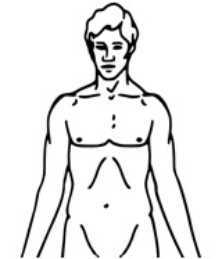
سؤال
سؤال
سؤال
سؤال
سؤال
سؤال
سؤال
The nurse is assessing a patient with this type of device in the arm. For what should the nurse assess this patient? 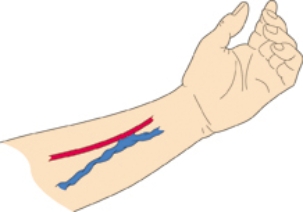
A) a bruit upon auscultation
B) a thrill upon auscultation
C) a bruit upon palpation
D) a thrill upon inspection
A) a bruit upon auscultation
B) a thrill upon auscultation
C) a bruit upon palpation
D) a thrill upon inspection
سؤال
A patient with end-stage kidney disease selects to perform peritoneal dialysis in the home. Where should the nurse instruct the patient that the catheter for this type of dialysis will be placed? Place an X on the area of the diagram.
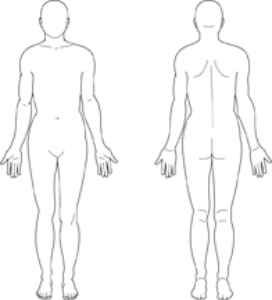
سؤال
سؤال
سؤال
سؤال
سؤال
A patient is scheduled for a kidney transplant. Indicate where on the diagrams the nurse instructs the patient that the new kidney will be located.
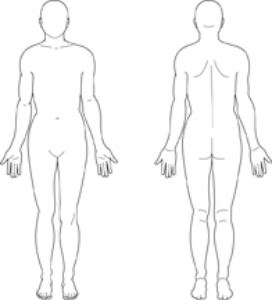
سؤال
سؤال
سؤال
سؤال
سؤال

فتح الحزمة
قم بالتسجيل لفتح البطاقات في هذه المجموعة!
Unlock Deck
Unlock Deck
1/41

العب

ملء الشاشة (f)
Deck 28: Nursing Care of Patients With Kidney Disorders
1
A patient with chronic kidney disease is trying to decide between hemodialysis and peritoneal dialysis. What should the nurse encourage the patient to consider as advantages of peritoneal dialysis?
A) minimal vascular complications
B) liberal intake of fluids
C) better self-management
D) better metabolite elimination
E) lower risk of infection
A) minimal vascular complications
B) liberal intake of fluids
C) better self-management
D) better metabolite elimination
E) lower risk of infection
minimal vascular complications
liberal intake of fluids
better self-management
liberal intake of fluids
better self-management
2
A patient who received a kidney transplant seven years ago is seen for increasing blood pressure and proteinuria. The nurse realizes that this patient is demonstrating signs of what health problem?
A) chronic rejection
B) acute rejection
C) renal artery stenosis
D) pyelonephritis
A) chronic rejection
B) acute rejection
C) renal artery stenosis
D) pyelonephritis
chronic rejection
3
An older patient is admitted to the hospital with cardiac complications associated with diabetes. What should be of concern to the nurse regarding this patient's medications?
A) the type and amount of medications in relation to the patient's renal function
B) whether the patient is taking the prescribed dosages
C) what vitamins and supplements this patient is taking
D) the costs of the patient's medications
A) the type and amount of medications in relation to the patient's renal function
B) whether the patient is taking the prescribed dosages
C) what vitamins and supplements this patient is taking
D) the costs of the patient's medications
the type and amount of medications in relation to the patient's renal function
4
A patient who is recovering from acute kidney injury (AKI) is being discharged. What should the nurse include in this patient's instructions?
A) Avoid alcohol consumption.
B) Use over-the-counter medications as needed.
C) Instruct to weigh self at least once a month.
D) Resume a normal diet.
A) Avoid alcohol consumption.
B) Use over-the-counter medications as needed.
C) Instruct to weigh self at least once a month.
D) Resume a normal diet.
فتح الحزمة
افتح القفل للوصول البطاقات البالغ عددها 41 في هذه المجموعة.
فتح الحزمة
k this deck
5
A patient is diagnosed with hypertension caused by polycystic kidney disease. What might be helpful to control this patient's blood pressure?
A) ACE inhibitors
B) kidney transplant
C) dialysis
D) peritoneal dialysis
A) ACE inhibitors
B) kidney transplant
C) dialysis
D) peritoneal dialysis
فتح الحزمة
افتح القفل للوصول البطاقات البالغ عددها 41 في هذه المجموعة.
فتح الحزمة
k this deck
6
A patient is admitted with signs of chronic kidney disease. What finding should the nurse use to determine whether this patient is developing metabolic acidosis?
A) Kussmaul respirations
B) low urine output
C) muscle cramps
D) diarrhea
A) Kussmaul respirations
B) low urine output
C) muscle cramps
D) diarrhea
فتح الحزمة
افتح القفل للوصول البطاقات البالغ عددها 41 في هذه المجموعة.
فتح الحزمة
k this deck
7
A patient with polycystic kidney disease is planning to be married and asks the nurse if his children could inherit this disorder. What is the nurse's best response?
A) "Yes, this condition can be inherited."
B) "Yes, but this condition is so rare that you shouldn't worry about it."
C) "No, polycystic kidney disease occurs because of spontaneous mutations."
D) "You should ask your fiancée to come with you to your next office visit so we can discuss this."
A) "Yes, this condition can be inherited."
B) "Yes, but this condition is so rare that you shouldn't worry about it."
C) "No, polycystic kidney disease occurs because of spontaneous mutations."
D) "You should ask your fiancée to come with you to your next office visit so we can discuss this."
فتح الحزمة
افتح القفل للوصول البطاقات البالغ عددها 41 في هذه المجموعة.
فتح الحزمة
k this deck
8
A patient who is diagnosed with renal cancer states, "I only lost a few pounds! I had no other symptoms!" What should the nurse realize as being the only consistent symptom of renal cancer?
A) hematuria
B) flank pain
C) nausea
D) vomiting
A) hematuria
B) flank pain
C) nausea
D) vomiting
فتح الحزمة
افتح القفل للوصول البطاقات البالغ عددها 41 في هذه المجموعة.
فتح الحزمة
k this deck
9
The nurse is planning care for a patient with kidney disease who is having difficulty maintaining adequate nutrition. Which intervention should the nurse include in this patient's plan of care?
A) Provide mouth care before meals.
B) Schedule meals for three times each day.
C) Provide antiemetics after meals.
D) Weigh once per week.
A) Provide mouth care before meals.
B) Schedule meals for three times each day.
C) Provide antiemetics after meals.
D) Weigh once per week.
فتح الحزمة
افتح القفل للوصول البطاقات البالغ عددها 41 في هذه المجموعة.
فتح الحزمة
k this deck
10
A patient with diabetes and heart disease is diagnosed with chronic kidney disease. Which medication order should the nurse question for this patient?
A) oral antihyperglycemic agent
B) beta-blocker
C) calcium channel blocker
D) analgesic
A) oral antihyperglycemic agent
B) beta-blocker
C) calcium channel blocker
D) analgesic
فتح الحزمة
افتح القفل للوصول البطاقات البالغ عددها 41 في هذه المجموعة.
فتح الحزمة
k this deck
11
Three weeks after being treated for strep throat, a patient comes into the clinic with signs of acute glomerulonephritis. What symptom will the nurse most likely find upon assessment of this patient?
A) periorbital edema
B) hunger
C) polyuria
D) polyphagia
A) periorbital edema
B) hunger
C) polyuria
D) polyphagia
فتح الحزمة
افتح القفل للوصول البطاقات البالغ عددها 41 في هذه المجموعة.
فتح الحزمة
k this deck
12
An older patient is scheduled for a CT scan with and without contrast dye. What should be done prior to this CT scan?
A) Monitor renal function.
B) Assess for level of responsiveness.
C) Assess vital signs.
D) Keep the patient NPO.
A) Monitor renal function.
B) Assess for level of responsiveness.
C) Assess vital signs.
D) Keep the patient NPO.
فتح الحزمة
افتح القفل للوصول البطاقات البالغ عددها 41 في هذه المجموعة.
فتح الحزمة
k this deck
13
The nurse is teaching a patient recovering from a nephrectomy for kidney cancer. What should the nurse include in this teaching?
A) early recognition of a urinary tract infection (UTI)
B) ways to limit fluids
C) promoting high-impact sports and activities
D) organ donor information
A) early recognition of a urinary tract infection (UTI)
B) ways to limit fluids
C) promoting high-impact sports and activities
D) organ donor information
فتح الحزمة
افتح القفل للوصول البطاقات البالغ عددها 41 في هذه المجموعة.
فتح الحزمة
k this deck
14
The nurse is preparing to assess an older patient with age-related renal dysfunction. What should the nurse include in this assessment?
A) evidence of medication or drug toxicity
B) recreational activities
C) activity status
D) daily meal pattern
A) evidence of medication or drug toxicity
B) recreational activities
C) activity status
D) daily meal pattern
فتح الحزمة
افتح القفل للوصول البطاقات البالغ عددها 41 في هذه المجموعة.
فتح الحزمة
k this deck
15
A patient with chronic kidney disease is diagnosed with hypertension. The nurse realizes that this patient's blood pressure needs to be controlled because
A) not doing so increases the risk of adverse effects on the kidneys.
B) it is the easiest diagnosis to treat.
C) medications are available to treat this disorder.
D) everyone should have low-normal blood pressure.
A) not doing so increases the risk of adverse effects on the kidneys.
B) it is the easiest diagnosis to treat.
C) medications are available to treat this disorder.
D) everyone should have low-normal blood pressure.
فتح الحزمة
افتح القفل للوصول البطاقات البالغ عددها 41 في هذه المجموعة.
فتح الحزمة
k this deck
16
A patient is scheduled to have an arteriovenous (AV) fistula created for hemodialysis. What should the nurse include when teaching the patient about this fistula?
A) Avoid using the arm with the fistula for blood pressure readings.
B) A functioning fistula has a palpable pulse and bruit.
C) Ensure the use of the dominant hand and arm for placement.
D) The fistula can be used immediately after its creation.
E) Venipunctures should be performed on the arm with the fistula.
A) Avoid using the arm with the fistula for blood pressure readings.
B) A functioning fistula has a palpable pulse and bruit.
C) Ensure the use of the dominant hand and arm for placement.
D) The fistula can be used immediately after its creation.
E) Venipunctures should be performed on the arm with the fistula.
فتح الحزمة
افتح القفل للوصول البطاقات البالغ عددها 41 في هذه المجموعة.
فتح الحزمة
k this deck
17
A patient with acute kidney injury (AKI) is prescribed furosemide (Lasix). The nurse realizes that this medication will be helpful to the patient because it will
A) reduce edema.
B) keep sodium in the body.
C) preserve protein.
D) be the gentlest diuretic to use.
A) reduce edema.
B) keep sodium in the body.
C) preserve protein.
D) be the gentlest diuretic to use.
فتح الحزمة
افتح القفل للوصول البطاقات البالغ عددها 41 في هذه المجموعة.
فتح الحزمة
k this deck
18
A patient is diagnosed with postrenal acute kidney injury (AKI). The nurse realizes that this type of kidney injury can be caused by what health problem?
A) benign prostatic hypertrophy
B) hypovolemia
C) sepsis
D) drug toxicity
A) benign prostatic hypertrophy
B) hypovolemia
C) sepsis
D) drug toxicity
فتح الحزمة
افتح القفل للوصول البطاقات البالغ عددها 41 في هذه المجموعة.
فتح الحزمة
k this deck
19
The nurse is caring for a patient with chronic glomerulonephritis. Which intervention should the nurse add to this patient's plan of care to address excess body fluid?
A) Weigh daily on the same scale.
B) Document energy level.
C) Schedule activities to conserve energy.
D) Assess for signs of infection.
A) Weigh daily on the same scale.
B) Document energy level.
C) Schedule activities to conserve energy.
D) Assess for signs of infection.
فتح الحزمة
افتح القفل للوصول البطاقات البالغ عددها 41 في هذه المجموعة.
فتح الحزمة
k this deck
20
The nurse is planning the care of a patient with chronic glomerulonephritis. What should the nurse identify as being the goal of treatment for this patient?
A) maintaining renal function
B) achieving maximum independence
C) returning to work as soon as possible
D) lifestyle changes
A) maintaining renal function
B) achieving maximum independence
C) returning to work as soon as possible
D) lifestyle changes
فتح الحزمة
افتح القفل للوصول البطاقات البالغ عددها 41 في هذه المجموعة.
فتح الحزمة
k this deck
21
The nurse is teaching a patient about hemodialysis. How should the nurse explain this process?
A) It moves blood through a semipermeable membrane into a dialyzer that is used to remove waste products as well as correct fluid and electrolyte imbalances.
B) It allows a choice of either diffusion osmosis or ultrafiltration to remove excess water from the body.
C) It adds potassium to the blood when passing through the dialyzer and works on the principle of diffusion.
D) It will add electrolytes and water to the blood when passing through a semipermeable membrane to correct electrolyte imbalances.
A) It moves blood through a semipermeable membrane into a dialyzer that is used to remove waste products as well as correct fluid and electrolyte imbalances.
B) It allows a choice of either diffusion osmosis or ultrafiltration to remove excess water from the body.
C) It adds potassium to the blood when passing through the dialyzer and works on the principle of diffusion.
D) It will add electrolytes and water to the blood when passing through a semipermeable membrane to correct electrolyte imbalances.
فتح الحزمة
افتح القفل للوصول البطاقات البالغ عددها 41 في هذه المجموعة.
فتح الحزمة
k this deck
22
Which method indicates that the nurse correctly calculated maintenance fluid intake for a patient with acute kidney injury (AKI) who is on fluid restriction?
A)
B)
C)
D)
A)
B)
C)
D)
فتح الحزمة
افتح القفل للوصول البطاقات البالغ عددها 41 في هذه المجموعة.
فتح الحزمة
k this deck
23
The nurse is preparing to assess a patient with nephrotic syndrome. Place an "X" over the area of the body where the nurse would assess for severe edema in this patient.
فتح الحزمة
افتح القفل للوصول البطاقات البالغ عددها 41 في هذه المجموعة.
فتح الحزمة
k this deck
24
The nurse administers epoetin alfa (Epogen) to a patient on dialysis. What should the nurse expect the therapeutic effect of this medication to be?
A) It treats the anemia seen in chronic kidney disease patients on dialysis.
B) It combats the effects of dialysis on bone marrow.
C) It promotes elimination of nephrotoxic drugs from the body.
D) It enhances absorption of iron and folate in the intestinal tract.
A) It treats the anemia seen in chronic kidney disease patients on dialysis.
B) It combats the effects of dialysis on bone marrow.
C) It promotes elimination of nephrotoxic drugs from the body.
D) It enhances absorption of iron and folate in the intestinal tract.
فتح الحزمة
افتح القفل للوصول البطاقات البالغ عددها 41 في هذه المجموعة.
فتح الحزمة
k this deck
25
The nurse recognizes that the risk for dehydration in the elderly increases significantly due to which age-related change in renal function?
A) decreased ability of the kidney to concentrate urine
B) hypoplasia
C) presence of renal cysts
D) reduced clearance of drugs excreted by the kidney
A) decreased ability of the kidney to concentrate urine
B) hypoplasia
C) presence of renal cysts
D) reduced clearance of drugs excreted by the kidney
فتح الحزمة
افتح القفل للوصول البطاقات البالغ عددها 41 في هذه المجموعة.
فتح الحزمة
k this deck
26
A patient recovering from a total nephrectomy is being discharged. What should the nurse instruct the patient about care at home?
A) Avoid contact sports and falls.
B) Older males should schedule routine screening exams for prostatic hypertrophy.
C) Monitor weight.
D) Monitor for signs of rejection.
E) Maintain prescribed fluid restrictions.
A) Avoid contact sports and falls.
B) Older males should schedule routine screening exams for prostatic hypertrophy.
C) Monitor weight.
D) Monitor for signs of rejection.
E) Maintain prescribed fluid restrictions.
فتح الحزمة
افتح القفل للوصول البطاقات البالغ عددها 41 في هذه المجموعة.
فتح الحزمة
k this deck
27
The nurse is caring for a patient receiving peritoneal dialysis. After completing the exchange and draining the dialysate, the nurse notices that the dialysate is cloudy. How should the nurse interpret this finding?
A) a sign of infection
B) a sign of vascular access occlusion
C) the normal appearance of dialysate
D) a sign of possible bowel perforation
A) a sign of infection
B) a sign of vascular access occlusion
C) the normal appearance of dialysate
D) a sign of possible bowel perforation
فتح الحزمة
افتح القفل للوصول البطاقات البالغ عددها 41 في هذه المجموعة.
فتح الحزمة
k this deck
28
The nurse is reviewing the laboratory results for a newly admitted patient. Based on these results, the nurse should anticipate that the patient will need further testing for what health problem?
A) acute proliferative glomerulonephritis
B) nothing because these tests are within normal limits
C) prerenal acute kidney injury (AKI)
D) end-stage kidney disease
A) acute proliferative glomerulonephritis
B) nothing because these tests are within normal limits
C) prerenal acute kidney injury (AKI)
D) end-stage kidney disease
فتح الحزمة
افتح القفل للوصول البطاقات البالغ عددها 41 في هذه المجموعة.
فتح الحزمة
k this deck
29
The nurse is preparing to administer an osmotic diuretic to a patient. What should the nurse do when providing this medication?
A) Check solution for crystallization prior to IV administration.
B) Evaluate urine output after test dose is given.
C) Assess for signs of worsening heart failure.
D) Assess for orthostatic hypotension.
E) Monitor patient for signs of ototoxicity.
A) Check solution for crystallization prior to IV administration.
B) Evaluate urine output after test dose is given.
C) Assess for signs of worsening heart failure.
D) Assess for orthostatic hypotension.
E) Monitor patient for signs of ototoxicity.
فتح الحزمة
افتح القفل للوصول البطاقات البالغ عددها 41 في هذه المجموعة.
فتح الحزمة
k this deck
30
The nurse is assessing a patient with this type of device in the arm. For what should the nurse assess this patient?
A) a bruit upon auscultation
B) a thrill upon auscultation
C) a bruit upon palpation
D) a thrill upon inspection
A) a bruit upon auscultation
B) a thrill upon auscultation
C) a bruit upon palpation
D) a thrill upon inspection
فتح الحزمة
افتح القفل للوصول البطاقات البالغ عددها 41 في هذه المجموعة.
فتح الحزمة
k this deck
31
A patient with end-stage kidney disease selects to perform peritoneal dialysis in the home. Where should the nurse instruct the patient that the catheter for this type of dialysis will be placed? Place an X on the area of the diagram.
فتح الحزمة
افتح القفل للوصول البطاقات البالغ عددها 41 في هذه المجموعة.
فتح الحزمة
k this deck
32
During the assessment the nurse suspects a patient with injuries from a motor vehicle crash sustained kidney trauma. What did the nurse assess to make this clinical decision?
A) Turner sign
B) nausea and vomiting
C) microscopic hematuria
D) blood pressure 88/58 mm Hg
E) heart rate 118 beats per minute
A) Turner sign
B) nausea and vomiting
C) microscopic hematuria
D) blood pressure 88/58 mm Hg
E) heart rate 118 beats per minute
فتح الحزمة
افتح القفل للوصول البطاقات البالغ عددها 41 في هذه المجموعة.
فتح الحزمة
k this deck
33
A patient is in the recovery phase of acute tubular necrosis (ATN). What manifestations should the nurse observe that indicate this phase is progressing as expected?
A) elevated serum potassium level
B) urine output excessive for intake
C) elevated blood urea nitrogen level
D) decrease in serum phosphate level
E) urine output low in relation to intake
A) elevated serum potassium level
B) urine output excessive for intake
C) elevated blood urea nitrogen level
D) decrease in serum phosphate level
E) urine output low in relation to intake
فتح الحزمة
افتح القفل للوصول البطاقات البالغ عددها 41 في هذه المجموعة.
فتح الحزمة
k this deck
34
The nurse is completing the instructions to a patient who underwent a cadaver kidney transplant and is ready for discharge from the hospital. What patient statement indicates that further teaching is needed?
A) "I'm glad I won't have to take immunosuppressants any longer."
B) "I know to check my weight on a regular basis."
C) "I'll call my doctor if I notice any decrease in my urine output."
D) "I'll tell my friends to stay away from me if they have colds or the flu."
A) "I'm glad I won't have to take immunosuppressants any longer."
B) "I know to check my weight on a regular basis."
C) "I'll call my doctor if I notice any decrease in my urine output."
D) "I'll tell my friends to stay away from me if they have colds or the flu."
فتح الحزمة
افتح القفل للوصول البطاقات البالغ عددها 41 في هذه المجموعة.
فتح الحزمة
k this deck
35
At the conclusion of a health history the nurse determines that a patient is at risk for kidney cancer. What did the nurse assess to make this clinical decision?
A) obesity
B) over 55 years of age
C) genetic predisposition
D) female
E) bladder calculi
A) obesity
B) over 55 years of age
C) genetic predisposition
D) female
E) bladder calculi
فتح الحزمة
افتح القفل للوصول البطاقات البالغ عددها 41 في هذه المجموعة.
فتح الحزمة
k this deck
36
A patient is scheduled for a kidney transplant. Indicate where on the diagrams the nurse instructs the patient that the new kidney will be located.
فتح الحزمة
افتح القفل للوصول البطاقات البالغ عددها 41 في هذه المجموعة.
فتح الحزمة
k this deck
37
The nurse instructs a patient with acute kidney injury that the expected result of taking sodium polystyrene sulfonate (Kayexalate) is to do what?
A) remove potassium
B) replace sodium
C) replace magnesium
D) exchange calcium for sodium
A) remove potassium
B) replace sodium
C) replace magnesium
D) exchange calcium for sodium
فتح الحزمة
افتح القفل للوصول البطاقات البالغ عددها 41 في هذه المجموعة.
فتح الحزمة
k this deck
38
The nurse is reviewing a patient's medical record. What health problem should the nurse suspect is occurring with this patient?
A) acute poststreptococcal glomerulonephritis
B) azotemia
C) acute kidney injury
D) kidney trauma
A) acute poststreptococcal glomerulonephritis
B) azotemia
C) acute kidney injury
D) kidney trauma
فتح الحزمة
افتح القفل للوصول البطاقات البالغ عددها 41 في هذه المجموعة.
فتح الحزمة
k this deck
39
The nurse is evaluating the effectiveness of dietary teaching provided to a patient with chronic kidney disease. Which menu choices indicate that the patient understands the dietary regimen?
A) apple and oatmeal for breakfast; peanut butter sandwich for lunch; pasta with fish for dinner
B) bacon and eggs for breakfast; hot dog with sauerkraut for lunch; baked canned ham with green peas for dinner
C) two bananas for breakfast; rice and beans for lunch; fruit salad, green beans, and an 8-ounce steak for dinner
D) half a cantaloupe and three eggs for breakfast; a baked potato with processed cheese spread and broccoli for lunch; chicken, pinto beans, squash, and pecan pie for dinner
A) apple and oatmeal for breakfast; peanut butter sandwich for lunch; pasta with fish for dinner
B) bacon and eggs for breakfast; hot dog with sauerkraut for lunch; baked canned ham with green peas for dinner
C) two bananas for breakfast; rice and beans for lunch; fruit salad, green beans, and an 8-ounce steak for dinner
D) half a cantaloupe and three eggs for breakfast; a baked potato with processed cheese spread and broccoli for lunch; chicken, pinto beans, squash, and pecan pie for dinner
فتح الحزمة
افتح القفل للوصول البطاقات البالغ عددها 41 في هذه المجموعة.
فتح الحزمة
k this deck
40
A patient weighing 209 lbs. is suspected of being in stage 2 of an acute kidney injury. If the nurse uses the standard output of 0.5mL/kg/h, what is the maximum amount of urine that this patient should produce for 18 hours to confirm this stage of kidney injury?
فتح الحزمة
افتح القفل للوصول البطاقات البالغ عددها 41 في هذه المجموعة.
فتح الحزمة
k this deck
41
A patient with chronic kidney disease is prescribed a diet containing 0.75 grams of protein per kg of body weight per day. The patient weighs 231 lbs. How many grams of protein should the nurse instruct the patient to ingest each day?
فتح الحزمة
افتح القفل للوصول البطاقات البالغ عددها 41 في هذه المجموعة.
فتح الحزمة
k this deck
فتح الحزمة
افتح القفل للوصول البطاقات البالغ عددها 41 في هذه المجموعة.






