







 تكلم مع الذكاء الاصطناعي


Deck 32: Nursing Care of Patients With Vascular and Lymphatic Disorders
ملء الشاشة (f)

سؤال

سؤال
سؤال
سؤال
سؤال
سؤال
سؤال
سؤال
سؤال
سؤال
سؤال
سؤال
سؤال
سؤال
سؤال
سؤال
سؤال
سؤال
سؤال
سؤال
سؤال
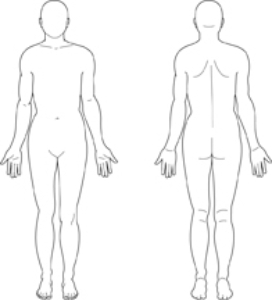
A patient experiencing intermittent claudication points to the area of the body where this occurs. Place an "X" on the diagram below indicating which body part is involved.
سؤال
سؤال
سؤال
سؤال
سؤال
سؤال
سؤال
سؤال
سؤال
سؤال
سؤال
سؤال
سؤال
سؤال
سؤال
سؤال
سؤال
سؤال
سؤال

فتح الحزمة
قم بالتسجيل لفتح البطاقات في هذه المجموعة!
Unlock Deck
Unlock Deck
1/40

العب

ملء الشاشة (f)
Deck 32: Nursing Care of Patients With Vascular and Lymphatic Disorders
1
A 75-year-old patient is diagnosed with chronic venous insufficiency. What should the nurse instruct this patient?
A) Keep legs in a dependent position as much as possible.
B) Avoid the use of knee-high hose or girdles.
C) Limit ambulation.
D) Dangle legs over the side of the bed several times per day.
A) Keep legs in a dependent position as much as possible.
B) Avoid the use of knee-high hose or girdles.
C) Limit ambulation.
D) Dangle legs over the side of the bed several times per day.
Avoid the use of knee-high hose or girdles.
2
An older patient is prescribed elastic graduated compression stockings. What should the nurse instruct the patient about these stockings?
A) Wear the stockings continuously, except when showering.
B) Expect areas of skin breakdown under the stockings.
C) Wear the stockings primarily while sleeping.
D) Remove the stockings once per day and while sleeping.
A) Wear the stockings continuously, except when showering.
B) Expect areas of skin breakdown under the stockings.
C) Wear the stockings primarily while sleeping.
D) Remove the stockings once per day and while sleeping.
Remove the stockings once per day and while sleeping.
3
A patient is seen for increasing edema in his left lower extremity and pain in the limb with ambulation. What should the nurse suspect is occurring in this patient?
A) arterial occlusion
B) deep vein thrombosis
C) superficial vein thrombosis
D) varicose veins
A) arterial occlusion
B) deep vein thrombosis
C) superficial vein thrombosis
D) varicose veins
deep vein thrombosis
4
A patient with diabetes is beginning treatment for hypertension. What should the nurse explain as being the blood pressure treatment goal for this patient?
A) 140/90 mmHg
B) 135/85 mmHg
C) 130/80 mmHg
D) 120/80 mmHg
A) 140/90 mmHg
B) 135/85 mmHg
C) 130/80 mmHg
D) 120/80 mmHg
فتح الحزمة
افتح القفل للوصول البطاقات البالغ عددها 40 في هذه المجموعة.
فتح الحزمة
k this deck
5
The nurse calls a patient at home with the laboratory results from his visit of earlier in the day. Based on a review of these results, what does the nurse expect the healthcare provider to advise?
A) Maintain the same daily dose of heparin.
B) Maintain the same daily dose of warfarin (Coumadin).
C) Increase the dose of warfarin (Coumadin) according to the previous instructions by the physician.
D) Stop taking the warfarin (Coumadin) until the next clinic appointment.
A) Maintain the same daily dose of heparin.
B) Maintain the same daily dose of warfarin (Coumadin).
C) Increase the dose of warfarin (Coumadin) according to the previous instructions by the physician.
D) Stop taking the warfarin (Coumadin) until the next clinic appointment.
فتح الحزمة
افتح القفل للوصول البطاقات البالغ عددها 40 في هذه المجموعة.
فتح الحزمة
k this deck
6
The nurse is instructing a patient with hypertension about lifestyle modifications. What would be appropriate to include in the teaching for this patient?
A) Review the DASH diet.
B) Begin a walking program, and progress to 30 minutes 5 to 6 days each week.
C) Plan a weight lifting regimen.
D) Eliminate dairy products from the diet.
E) Restrict fluid intake.
A) Review the DASH diet.
B) Begin a walking program, and progress to 30 minutes 5 to 6 days each week.
C) Plan a weight lifting regimen.
D) Eliminate dairy products from the diet.
E) Restrict fluid intake.
فتح الحزمة
افتح القفل للوصول البطاقات البالغ عددها 40 في هذه المجموعة.
فتح الحزمة
k this deck
7
During the abdominal assessment of an elderly patient, the nurse palpates a mass in the midabdomen. What should the nurse do next?
A) Percuss the mass.
B) Ask the patient to cough.
C) Get the physician.
D) Auscultate the mass.
A) Percuss the mass.
B) Ask the patient to cough.
C) Get the physician.
D) Auscultate the mass.
فتح الحزمة
افتح القفل للوصول البطاقات البالغ عددها 40 في هذه المجموعة.
فتح الحزمة
k this deck
8
A patient is diagnosed with thromboangiitis obliterans. What would be appropriate teaching for this patient?
A) Medications are the only cure.
B) Surgical procedures can be performed to cure this disorder.
C) Management depends upon the patient's willingness to stop smoking.
D) Nothing can help manage this disorder.
A) Medications are the only cure.
B) Surgical procedures can be performed to cure this disorder.
C) Management depends upon the patient's willingness to stop smoking.
D) Nothing can help manage this disorder.
فتح الحزمة
افتح القفل للوصول البطاقات البالغ عددها 40 في هذه المجموعة.
فتح الحزمة
k this deck
9
A patient is being discharged on long-term oral anticoagulant therapy for arterial thrombus formation in the lower extremity. What should be included in this patient's discharge instructions?
A) Slight bleeding from the nose is expected.
B) Contact the physician's office for follow-up laboratory studies.
C) Pain in the limb is a sign of healing.
D) Take two doses of the prescribed anticoagulant if a dose is missed one day.
A) Slight bleeding from the nose is expected.
B) Contact the physician's office for follow-up laboratory studies.
C) Pain in the limb is a sign of healing.
D) Take two doses of the prescribed anticoagulant if a dose is missed one day.
فتح الحزمة
افتح القفل للوصول البطاقات البالغ عددها 40 في هذه المجموعة.
فتح الحزمة
k this deck
10
A patient's blood pressure continues to be elevated despite being prescribed an ACE inhibitor for several weeks. What should the nurse do at this time?
A) Ask if the patient is taking the prescribed medication.
B) Suggest to the physician that another medication be added.
C) Schedule the patient to have the blood pressure checked again in a week.
D) Realize the patient is anxious because of the diagnosis.
A) Ask if the patient is taking the prescribed medication.
B) Suggest to the physician that another medication be added.
C) Schedule the patient to have the blood pressure checked again in a week.
D) Realize the patient is anxious because of the diagnosis.
فتح الحزمة
افتح القفل للوصول البطاقات البالغ عددها 40 في هذه المجموعة.
فتح الحزمة
k this deck
11
A patient with a deep vein thrombosis (DVT) is going to be weaned from intravenous heparin. When should the nurse anticipate that oral warfarin sodium would be prescribed?
A) the same day the heparin is discontinued
B) the day before the heparin is discontinued
C) four to five days before the heparin is discontinued
D) the same day as the heparin is started
A) the same day the heparin is discontinued
B) the day before the heparin is discontinued
C) four to five days before the heparin is discontinued
D) the same day as the heparin is started
فتح الحزمة
افتح القفل للوصول البطاقات البالغ عددها 40 في هذه المجموعة.
فتح الحزمة
k this deck
12
A patient is demonstrating signs of thrombophlebitis. With this disorder, the nurse realizes that three mechanisms occur, which include:
A) pooling of blood in the vessel.
B) blood hypercoagulation.
C) stasis of blood flow.
D) elevated systemic blood pressure.
E) vessel damage.
A) pooling of blood in the vessel.
B) blood hypercoagulation.
C) stasis of blood flow.
D) elevated systemic blood pressure.
E) vessel damage.
فتح الحزمة
افتح القفل للوصول البطاقات البالغ عددها 40 في هذه المجموعة.
فتح الحزمة
k this deck
13
The nurse suspects a patient recovering from an abdominal aortic aneurysm repair is experiencing graft leaking. What findings did the nurse use to make this clinical decision?
A) urine output 45 mL/hr
B) complaint of groin pain
C) abdominal dressing dry and intact
D) respiratory rate 16 and regular
E) complaint of back discomfort
A) urine output 45 mL/hr
B) complaint of groin pain
C) abdominal dressing dry and intact
D) respiratory rate 16 and regular
E) complaint of back discomfort
فتح الحزمة
افتح القفل للوصول البطاقات البالغ عددها 40 في هذه المجموعة.
فتح الحزمة
k this deck
14
A patient is demonstrating signs of ineffective peripheral tissue perfusion. What intervention would be appropriate for this patient?
A) Encourage patient to reduce level of exercise.
B) Discuss smoking cessation techniques.
C) Keep extremities cool.
D) Assist with pillow placement under knees.
A) Encourage patient to reduce level of exercise.
B) Discuss smoking cessation techniques.
C) Keep extremities cool.
D) Assist with pillow placement under knees.
فتح الحزمة
افتح القفل للوصول البطاقات البالغ عددها 40 في هذه المجموعة.
فتح الحزمة
k this deck
15
The nurse suspects that a patient is experiencing the effects of peripheral atherosclerosis. What did the nurse most likely assess in this patient?
A) rubor with extremity elevation
B) normal hair distribution bilaterally over lower extremities
C) peripheral pulses present bilaterally
D) complaints of leg pain upon rest
A) rubor with extremity elevation
B) normal hair distribution bilaterally over lower extremities
C) peripheral pulses present bilaterally
D) complaints of leg pain upon rest
فتح الحزمة
افتح القفل للوصول البطاقات البالغ عددها 40 في هذه المجموعة.
فتح الحزمة
k this deck
16
A patient who is being treated for a deep vein thrombosis (DVT) complains of chest pain and shortness of breath. What should the nurse do first?
A) Elevate the head of the bed and begin oxygen therapy.
B) Measure the patient's blood pressure.
C) Assess the extremity with the thrombosis.
D) Assess the pulses on the extremity with the thrombosis.
A) Elevate the head of the bed and begin oxygen therapy.
B) Measure the patient's blood pressure.
C) Assess the extremity with the thrombosis.
D) Assess the pulses on the extremity with the thrombosis.
فتح الحزمة
افتح القفل للوصول البطاقات البالغ عددها 40 في هذه المجموعة.
فتح الحزمة
k this deck
17
The nurse measures a patient's blood pressure as 144/88 mmHg. What intervention would be most appropriate for this patient?
A) Provide stress-reduction techniques.
B) Inform the physician so antihypertensive medication can be prescribed.
C) Offer the patient a glass of water.
D) Remeasure the blood pressure in a few minutes.
A) Provide stress-reduction techniques.
B) Inform the physician so antihypertensive medication can be prescribed.
C) Offer the patient a glass of water.
D) Remeasure the blood pressure in a few minutes.
فتح الحزمة
افتح القفل للوصول البطاقات البالغ عددها 40 في هذه المجموعة.
فتح الحزمة
k this deck
18
A co-worker asks the nurse is to review the following discharge instructions with an assigned patient. Based on the content to be reviewed, the nurse should realize that the patient has what health problem?
A) thromboangiitis obliterans
B) atherosclerosis
C) Raynaud disease
D) Buerger disease
A) thromboangiitis obliterans
B) atherosclerosis
C) Raynaud disease
D) Buerger disease
فتح الحزمة
افتح القفل للوصول البطاقات البالغ عددها 40 في هذه المجموعة.
فتح الحزمة
k this deck
19
A patient is having segmental pressure measurements conducted to help diagnose peripheral vascular disease. What finding would indicate the presence of this disorder?
A) thigh pressure higher than the arm
B) calf pressure higher than the arm
C) calf pressure lower than the arm
D) no difference between the arm or leg
A) thigh pressure higher than the arm
B) calf pressure higher than the arm
C) calf pressure lower than the arm
D) no difference between the arm or leg
فتح الحزمة
افتح القفل للوصول البطاقات البالغ عددها 40 في هذه المجموعة.
فتح الحزمة
k this deck
20
The nurse is planning care for a patient who was diagnosed with deep vein thrombosis (DVT). What should be included in this plan of care?
A) Activity as tolerated.
B) Measure and apply elastic antiembolism stockings.
C) Encourage the patient to sit out of bed several hours every day.
D) Assist patient with putting on tight-fitting pants.
A) Activity as tolerated.
B) Measure and apply elastic antiembolism stockings.
C) Encourage the patient to sit out of bed several hours every day.
D) Assist patient with putting on tight-fitting pants.
فتح الحزمة
افتح القفل للوصول البطاقات البالغ عددها 40 في هذه المجموعة.
فتح الحزمة
k this deck
21
A patient experiencing intermittent claudication points to the area of the body where this occurs. Place an "X" on the diagram below indicating which body part is involved.
فتح الحزمة
افتح القفل للوصول البطاقات البالغ عددها 40 في هذه المجموعة.
فتح الحزمة
k this deck
22
While conducting an assessment, the nurse suspects that a patient is experiencing a hypertensive crisis. What did the nurse assess to make this clinical decision?
A) acute onset of confusion
B) onset of projectile vomiting
C) complaints of a severe headache
D) systolic blood pressure 198 mmHg
E) diastolic blood pressure 148 mmHg
A) acute onset of confusion
B) onset of projectile vomiting
C) complaints of a severe headache
D) systolic blood pressure 198 mmHg
E) diastolic blood pressure 148 mmHg
فتح الحزمة
افتح القفل للوصول البطاقات البالغ عددها 40 في هذه المجموعة.
فتح الحزمة
k this deck
23
A patient with a history of deep venous thrombosis is prescribed dabigatran (Pradaxa). What should the nurse instruct the patient about this medication?
A) Use a straight razor to shave if necessary.
B) Limited amounts of alcohol are permitted.
C) A reversal agent for this medication is not available.
D) The cost of this medication is higher than for warfarin.
E) Laboratory test monitoring is not necessary for this medication.
A) Use a straight razor to shave if necessary.
B) Limited amounts of alcohol are permitted.
C) A reversal agent for this medication is not available.
D) The cost of this medication is higher than for warfarin.
E) Laboratory test monitoring is not necessary for this medication.
فتح الحزمة
افتح القفل للوصول البطاقات البالغ عددها 40 في هذه المجموعة.
فتح الحزمة
k this deck
24
The nurse completes an assessment with a patient and begins planning care for a venous leg ulcer. What manifestations did the nurse use to make this clinical decision?
A) There is an ulcer located on the toe.
B) The ulcer is superficial and pink.
C) Pulses in the foot are decreased.
D) Skin over the leg is discolored brown.
E) The patient rates pain as 8 on a scale from 0 to 10.
A) There is an ulcer located on the toe.
B) The ulcer is superficial and pink.
C) Pulses in the foot are decreased.
D) Skin over the leg is discolored brown.
E) The patient rates pain as 8 on a scale from 0 to 10.
فتح الحزمة
افتح القفل للوصول البطاقات البالغ عددها 40 في هذه المجموعة.
فتح الحزمة
k this deck
25
A patient with a history of recurrent venous micro emboli is scheduled for an insertion of a Greenfield filter. What should the nurse explain to the patient about this procedure?
A) The filter can be inserted under fluoroscopy.
B) Mortality from the insertion of the filter is low.
C) The filter will need to be replaced every 6 months.
D) The patient may only need local anesthesia for the procedure.
E) The filter traps emboli while maintaining the patency of the vena cava.
A) The filter can be inserted under fluoroscopy.
B) Mortality from the insertion of the filter is low.
C) The filter will need to be replaced every 6 months.
D) The patient may only need local anesthesia for the procedure.
E) The filter traps emboli while maintaining the patency of the vena cava.
فتح الحزمة
افتح القفل للوصول البطاقات البالغ عددها 40 في هذه المجموعة.
فتح الحزمة
k this deck
26
A patient comes into the clinic complaining of a new onset of hoarseness. What additional assessment findings should the nurse use to suspect that this patient is experiencing a thoracic aneurysm?
A) brassy cough
B) lumbar back pain
C) edema of the face
D) distended neck veins
E) absent pulses in the wrists
A) brassy cough
B) lumbar back pain
C) edema of the face
D) distended neck veins
E) absent pulses in the wrists
فتح الحزمة
افتح القفل للوصول البطاقات البالغ عددها 40 في هذه المجموعة.
فتح الحزمة
k this deck
27
The home care nurse instructs a patient with peripheral atherosclerosis on foot care. Which observations indicate that teaching has been effective?
A) The patient uses a razor to cut the toenails.
B) The patient walks barefoot in the bedroom.
C) The patient washes feet and legs with warm water.
D) The patient applies powder to the feet after a shower.
E) The patient inspects feet and legs each day with a mirror.
A) The patient uses a razor to cut the toenails.
B) The patient walks barefoot in the bedroom.
C) The patient washes feet and legs with warm water.
D) The patient applies powder to the feet after a shower.
E) The patient inspects feet and legs each day with a mirror.
فتح الحزمة
افتح القفل للوصول البطاقات البالغ عددها 40 في هذه المجموعة.
فتح الحزمة
k this deck
28
The nurse suspects that a patient's hypertension is being influenced by sympathetic nervous system stimulation. Which substances should the nurse identify as contributing to this patient's elevated blood pressure?
A) epinephrine
B) angiotensin II
C) norepinephrine
D) adrenomedullin
E) antidiuretic hormone
A) epinephrine
B) angiotensin II
C) norepinephrine
D) adrenomedullin
E) antidiuretic hormone
فتح الحزمة
افتح القفل للوصول البطاقات البالغ عددها 40 في هذه المجموعة.
فتح الحزمة
k this deck
29
A patient is diagnosed with an aortic dissection. Which medications should the nurse expect to be prescribed for this patient?
A) verapamil (Isoptin)
B) esmolol (Brevibloc)
C) diltiazem (Cardizem)
D) hydralazine (Apresoline)
E) sodium nitroprusside (Nipride)
A) verapamil (Isoptin)
B) esmolol (Brevibloc)
C) diltiazem (Cardizem)
D) hydralazine (Apresoline)
E) sodium nitroprusside (Nipride)
فتح الحزمة
افتح القفل للوصول البطاقات البالغ عددها 40 في هذه المجموعة.
فتح الحزمة
k this deck
30
A patient is recovering from surgery for varicose veins. What information should the nurse include in this patient's postoperative teaching?
A) Elevate the extremities.
B) Increase ambulation gradually.
C) Sit for no more than 1 hour at a time.
D) Avoid standing for more than 15 minutes.
E) Keep pressure dressing applied for 6 weeks.
A) Elevate the extremities.
B) Increase ambulation gradually.
C) Sit for no more than 1 hour at a time.
D) Avoid standing for more than 15 minutes.
E) Keep pressure dressing applied for 6 weeks.
فتح الحزمة
افتح القفل للوصول البطاقات البالغ عددها 40 في هذه المجموعة.
فتح الحزمة
k this deck
31
A patient makes an appointment to see the primary healthcare provider because during a routine eye examination the ophthalmologist asked how long the patient had been treated for hypertension. What did the ophthalmologist observe that caused the health problem of hypertension to be discussed?
A) nystagmus
B) papilledema
C) astigmatism
D) retinal exudates
E) retinal hemorrhages
A) nystagmus
B) papilledema
C) astigmatism
D) retinal exudates
E) retinal hemorrhages
فتح الحزمة
افتح القفل للوصول البطاقات البالغ عددها 40 في هذه المجموعة.
فتح الحزمة
k this deck
32
A patient is diagnosed with a disorder in which deoxygenated blood is having difficulty returning to the heart and lungs for reoxygenation. In which part of the peripheral vascular system is the origin of this patient's disorder?
A) arteries
B) arterioles
C) capillaries
D) venules
A) arteries
B) arterioles
C) capillaries
D) venules
فتح الحزمة
افتح القفل للوصول البطاقات البالغ عددها 40 في هذه المجموعة.
فتح الحزمة
k this deck
33
A patient with hypertension weighing 115 kg is advised by the primary healthcare provider to lose 10% of total body weight over the next 6 months. How many lbs. of weight loss per month should the nurse instruct the patient to establish as a goal?
فتح الحزمة
افتح القفل للوصول البطاقات البالغ عددها 40 في هذه المجموعة.
فتح الحزمة
k this deck
34
A patient with some blood loss is maintaining a blood pressure of 100/60 mmHg. The nurse interprets this to mean that the patient's blood pressure is being maintained through the help of which structure?
A) arterioles
B) venules
C) capillaries
D) veins
A) arterioles
B) venules
C) capillaries
D) veins
فتح الحزمة
افتح القفل للوصول البطاقات البالغ عددها 40 في هذه المجموعة.
فتح الحزمة
k this deck
35
The nurse is teaching a community education class on hypertension and risk factors for this disorder. What is the primary risk factor leading to the higher incidence of hypertension in older adults?
A) being a black adult
B) being a white male
C) having a family history of hypertension
D) age-related increase in the systolic blood pressure
A) being a black adult
B) being a white male
C) having a family history of hypertension
D) age-related increase in the systolic blood pressure
فتح الحزمة
افتح القفل للوصول البطاقات البالغ عددها 40 في هذه المجموعة.
فتح الحزمة
k this deck
36
After inspecting a patient's left lower leg, the nurse leaves the patient's room and asks the charge nurse to notify the patient's healthcare provider regarding a possible arterial thrombosis. What did the nurse assess to make this decision?
A) absent pedal pulses
B) skin cold to the touch
C) +4 edema on the ankle
D) foot unresponsive to sensation
E) line of demarcation across the foot
A) absent pedal pulses
B) skin cold to the touch
C) +4 edema on the ankle
D) foot unresponsive to sensation
E) line of demarcation across the foot
فتح الحزمة
افتح القفل للوصول البطاقات البالغ عددها 40 في هذه المجموعة.
فتح الحزمة
k this deck
37
A patient is suspected as having secondary hypertension. For which diagnostic tests should the nurse prepare this patient?
A) bladder scan
B) renal lithotripsy
C) renal ultrasound
D) renal arteriogram
E) intravenous pyelogram
A) bladder scan
B) renal lithotripsy
C) renal ultrasound
D) renal arteriogram
E) intravenous pyelogram
فتح الحزمة
افتح القفل للوصول البطاقات البالغ عددها 40 في هذه المجموعة.
فتح الحزمة
k this deck
38
A patient with hypertension is prescribed the alpha-adrenergic blocker doxazosin (Cardura). What should the nurse instruct the patient about this medication?
A) Take the medication at bedtime.
B) Change positions slowly and sit down if dizziness occurs.
C) Notify the primary healthcare provider if nasal congestion develops.
D) Restrict the intake of all alcoholic beverages and items containing caffeine.
E) Avoid engaging in hazardous activity for 12 to 24 hours after the first dose.
A) Take the medication at bedtime.
B) Change positions slowly and sit down if dizziness occurs.
C) Notify the primary healthcare provider if nasal congestion develops.
D) Restrict the intake of all alcoholic beverages and items containing caffeine.
E) Avoid engaging in hazardous activity for 12 to 24 hours after the first dose.
فتح الحزمة
افتح القفل للوصول البطاقات البالغ عددها 40 في هذه المجموعة.
فتح الحزمة
k this deck
39
A patient is demonstrating a sign of blood pressure stabilization accompanied by a decreased urine output. What should the nurse explain is the body's mechanism responsible for this blood pressure stabilization?
A) response to chemoreceptors in the aortic arch
B) renal conservation of sodium and water
C) change in body temperature
D) intake of dietary fat and protein
A) response to chemoreceptors in the aortic arch
B) renal conservation of sodium and water
C) change in body temperature
D) intake of dietary fat and protein
فتح الحزمة
افتح القفل للوصول البطاقات البالغ عددها 40 في هذه المجموعة.
فتح الحزمة
k this deck
40
The nurse is concerned that a patient recovering from surgery to repair an abdominal aneurysm is developing bowel ischemia. What assessment findings did the nurse use to come to this conclusion?
A) diarrhea
B) obvious bloody stool
C) abdominal distention
D) onset of abdominal pain
E) hyperactive bowel sounds
A) diarrhea
B) obvious bloody stool
C) abdominal distention
D) onset of abdominal pain
E) hyperactive bowel sounds
فتح الحزمة
افتح القفل للوصول البطاقات البالغ عددها 40 في هذه المجموعة.
فتح الحزمة
k this deck
فتح الحزمة
افتح القفل للوصول البطاقات البالغ عددها 40 في هذه المجموعة.






