







 تكلم مع الذكاء الاصطناعي


Deck 2: Small Kingdoms and Mighty Empires in the Near East
ملء الشاشة (f)

سؤال

سؤال
سؤال
سؤال
سؤال
سؤال
سؤال
سؤال
سؤال
سؤال
سؤال
سؤال
سؤال
سؤال
سؤال
سؤال
سؤال
سؤال
سؤال
سؤال
سؤال
سؤال
سؤال
سؤال
سؤال
سؤال
سؤال
سؤال
سؤال
سؤال
سؤال
سؤال
سؤال
سؤال
سؤال
سؤال
سؤال
سؤال
سؤال
سؤال
سؤال
سؤال
سؤال
سؤال
سؤال
سؤال
سؤال
سؤال
سؤال
According to Map 2.1, The Assyrian and Persian Empires, ca. 1000-500 B.C.E., which two cities were located within the Assyrian homeland? 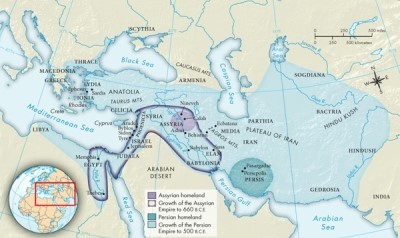
A)Pasargadae and Persepolis
B)Nineveh and Calah
C)Jerusalem and Thebes
D)Babylon and Susa
A)Pasargadae and Persepolis
B)Nineveh and Calah
C)Jerusalem and Thebes
D)Babylon and Susa
سؤال
سؤال
سؤال
سؤال
سؤال
سؤال
سؤال
سؤال
سؤال
سؤال
سؤال
According to Map 2.1, The Assyrian and Persian Empires, ca. 1000-500 B.C.E., how did Iran's geography affect its development? 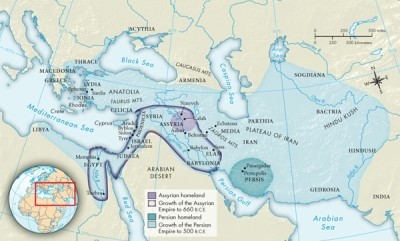
A)The central plateau separated the Iranian civilizations from neighboring cultures, giving it an insular quality.
B)The mountainous northern border prevented Central Asian nomads from moving into Iran, permitting the Iranians' civilization to develop in relative security.
C)The southern coastline of Iran developed a sophisticated commercial culture, while the plateau region remained isolated and underdeveloped.
D)The uncrossable salt deserts forced traffic east and west across Iran, establishing a route for trade and communication between East and West.
A)The central plateau separated the Iranian civilizations from neighboring cultures, giving it an insular quality.
B)The mountainous northern border prevented Central Asian nomads from moving into Iran, permitting the Iranians' civilization to develop in relative security.
C)The southern coastline of Iran developed a sophisticated commercial culture, while the plateau region remained isolated and underdeveloped.
D)The uncrossable salt deserts forced traffic east and west across Iran, establishing a route for trade and communication between East and West.
سؤال
سؤال
سؤال
سؤال
سؤال
سؤال
سؤال
سؤال
سؤال
سؤال
سؤال
سؤال

فتح الحزمة
قم بالتسجيل لفتح البطاقات في هذه المجموعة!
Unlock Deck
Unlock Deck
1/72

العب

ملء الشاشة (f)
Deck 2: Small Kingdoms and Mighty Empires in the Near East
1
Why did the Assyrians develop a fierce warrior society?
A)They were a nomadic people who had been driven out of central Asia and who desperately sought greater security.
B)They lived in an open, exposed land in northern Mesopotamia that had been subjected to frequent attacks from the north, east, and south.
C)Their religious system placed a singular importance on acts of military bravery and strength to secure the gods' favor.
D)They developed extensive trade networks that could only be supported by creating a fearsome reputation.
A)They were a nomadic people who had been driven out of central Asia and who desperately sought greater security.
B)They lived in an open, exposed land in northern Mesopotamia that had been subjected to frequent attacks from the north, east, and south.
C)Their religious system placed a singular importance on acts of military bravery and strength to secure the gods' favor.
D)They developed extensive trade networks that could only be supported by creating a fearsome reputation.
They lived in an open, exposed land in northern Mesopotamia that had been subjected to frequent attacks from the north, east, and south.
2
Under the leadership of King Piye, the African kingdom of Kush in the eighth century
A)forged a land route across the Sahara Desert, linking trade from the Mediterranean to central Africa.
B)united Egypt into a single empire and established a period of peace while they assimilated to Egyptian culture.
C)allied with the Philistines and Phoenicians of the Near East to contain Egyptian power within the Nile Valley.
D)established a slave-trade network to bring thousands of central African slaves to Egypt to work on royal building projects.
A)forged a land route across the Sahara Desert, linking trade from the Mediterranean to central Africa.
B)united Egypt into a single empire and established a period of peace while they assimilated to Egyptian culture.
C)allied with the Philistines and Phoenicians of the Near East to contain Egyptian power within the Nile Valley.
D)established a slave-trade network to bring thousands of central African slaves to Egypt to work on royal building projects.
united Egypt into a single empire and established a period of peace while they assimilated to Egyptian culture.
3
How did the arrival of the Sea People affect Egypt?
A)Long wars against the invaders weakened and impoverished Egypt, leading it to focus on its own defense.
B)Improved sailing techniques expanded trade and allowed Egypt to prosper from its abundant agriculture.
C)The Sea People provided the Egyptian army greater mobility and enough soldiers to outflank and subdue the peoples of the Near East.
D)The Sea People drove Egyptians southward, away from the coast, where they established power over the Nubian kingdom.
A)Long wars against the invaders weakened and impoverished Egypt, leading it to focus on its own defense.
B)Improved sailing techniques expanded trade and allowed Egypt to prosper from its abundant agriculture.
C)The Sea People provided the Egyptian army greater mobility and enough soldiers to outflank and subdue the peoples of the Near East.
D)The Sea People drove Egyptians southward, away from the coast, where they established power over the Nubian kingdom.
Long wars against the invaders weakened and impoverished Egypt, leading it to focus on its own defense.
4
The most important difference between Yahweh and Mesopotamian gods was Yahweh's
A)indifference.
B)promise to protect the Hebrews if they obeyed his commandments.
C)immortality.
D)lack of clarity regarding his wishes and needs.
A)indifference.
B)promise to protect the Hebrews if they obeyed his commandments.
C)immortality.
D)lack of clarity regarding his wishes and needs.
فتح الحزمة
افتح القفل للوصول البطاقات البالغ عددها 72 في هذه المجموعة.
فتح الحزمة
k this deck
5
Solomon transformed the kingdom of Israel by
A)dividing it territorially to undermine tribal boundaries and launching a widespread building program.
B)rejecting all local religious cults and destroying all worship except that dedicated to Yahweh.
C)creating a Jewish law code that was the foundation of the Jewish covenant system of religion.
D)allying it with the Assyrians in order to secure peace for Israel on its northern border.
A)dividing it territorially to undermine tribal boundaries and launching a widespread building program.
B)rejecting all local religious cults and destroying all worship except that dedicated to Yahweh.
C)creating a Jewish law code that was the foundation of the Jewish covenant system of religion.
D)allying it with the Assyrians in order to secure peace for Israel on its northern border.
فتح الحزمة
افتح القفل للوصول البطاقات البالغ عددها 72 في هذه المجموعة.
فتح الحزمة
k this deck
6
How did the Assyrians carve out their extensive empire?
A)They remained almost constantly at war, fighting and conquering opponents in every direction.
B)They established trade monopolies that forced neighboring states to submit to them politically.
C)They bribed local nobles and elites to betray their rulers and accept Assyrian domination.
D)They allied with local religious minorities and offered them protection in return for supporting Assyrian rule.
A)They remained almost constantly at war, fighting and conquering opponents in every direction.
B)They established trade monopolies that forced neighboring states to submit to them politically.
C)They bribed local nobles and elites to betray their rulers and accept Assyrian domination.
D)They allied with local religious minorities and offered them protection in return for supporting Assyrian rule.
فتح الحزمة
افتح القفل للوصول البطاقات البالغ عددها 72 في هذه المجموعة.
فتح الحزمة
k this deck
7
How did the Hebrews handle trade with neighboring societies?
A)They established merchant houses in neighboring societies; small groups of Hebrews settled in the major trading cities throughout the Near East.
B)Their merchants established trade alliances with foreign merchants throughout the Near East.
C)They established a caravan trade with groups of Hebrews who sustained the nomadic tradition and traveled throughout the Near East.
D)They traded with neighboring cultures largely through foreigners, especially the Phoenicians.
A)They established merchant houses in neighboring societies; small groups of Hebrews settled in the major trading cities throughout the Near East.
B)Their merchants established trade alliances with foreign merchants throughout the Near East.
C)They established a caravan trade with groups of Hebrews who sustained the nomadic tradition and traveled throughout the Near East.
D)They traded with neighboring cultures largely through foreigners, especially the Phoenicians.
فتح الحزمة
افتح القفل للوصول البطاقات البالغ عددها 72 في هذه المجموعة.
فتح الحزمة
k this deck
8
Which of the following best describes the Hebrew attitude toward sex?
A)Sex was basically good because it was part of Yahweh's creation.
B)Sex was basically evil but was tolerated within marriage.
C)Sex was the highest form of human endeavor.
D)Sex was something never to be spoken of.
A)Sex was basically good because it was part of Yahweh's creation.
B)Sex was basically evil but was tolerated within marriage.
C)Sex was the highest form of human endeavor.
D)Sex was something never to be spoken of.
فتح الحزمة
افتح القفل للوصول البطاقات البالغ عددها 72 في هذه المجموعة.
فتح الحزمة
k this deck
9
How did the Hebrews' transition to settled agriculture affect their society?
A)The extended family became more important than the tribe in the individual's social framework.
B)Religious leaders became more important than political ones in directing the affairs of the kingdom.
C)The power of regional authorities diminished as the central state expanded the scope of its activities.
D)The private ownership of land gave way to communal agriculture, which could produce more crops.
A)The extended family became more important than the tribe in the individual's social framework.
B)Religious leaders became more important than political ones in directing the affairs of the kingdom.
C)The power of regional authorities diminished as the central state expanded the scope of its activities.
D)The private ownership of land gave way to communal agriculture, which could produce more crops.
فتح الحزمة
افتح القفل للوصول البطاقات البالغ عددها 72 في هذه المجموعة.
فتح الحزمة
k this deck
10
According to the Hebrew tradition, Passover marked
A)the Hebrews traversing the Red Sea ahead of pharaoh's troops, thereby escaping slavery in Egypt.
B)Yahweh sparing the first-born sons from Hebrew homes in Egypt.
C)the Hebrews surviving forty years in the Desert of Sinai as they moved toward the Promised Land.
D)Yahweh establishing Saul as the king of the Jewish state.
A)the Hebrews traversing the Red Sea ahead of pharaoh's troops, thereby escaping slavery in Egypt.
B)Yahweh sparing the first-born sons from Hebrew homes in Egypt.
C)the Hebrews surviving forty years in the Desert of Sinai as they moved toward the Promised Land.
D)Yahweh establishing Saul as the king of the Jewish state.
فتح الحزمة
افتح القفل للوصول البطاقات البالغ عددها 72 في هذه المجموعة.
فتح الحزمة
k this deck
11
How did women's role in religion change as Jewish society developed settled agriculture?
A)As property came under family control, women gained greater power over family decision-making and a more public presence in religious life.
B)When the Temple of Solomon was built, women gained control over the care of the religious artifacts and ritual life within the temple.
C)As symbols of fertility, women's role within religious rites grew in order to secure Yahweh's favor for a good harvest.
D)Women, who had formerly served as priestesses, found their religious roles increasingly centered on the home.
A)As property came under family control, women gained greater power over family decision-making and a more public presence in religious life.
B)When the Temple of Solomon was built, women gained control over the care of the religious artifacts and ritual life within the temple.
C)As symbols of fertility, women's role within religious rites grew in order to secure Yahweh's favor for a good harvest.
D)Women, who had formerly served as priestesses, found their religious roles increasingly centered on the home.
فتح الحزمة
افتح القفل للوصول البطاقات البالغ عددها 72 في هذه المجموعة.
فتح الحزمة
k this deck
12
The Phoenicians' greatest cultural achievement was the
A)invention of settled agriculture.
B)development of a sun-based calendar.
C)adoption of monotheistic religion.
D)creation of an alphabet.
A)invention of settled agriculture.
B)development of a sun-based calendar.
C)adoption of monotheistic religion.
D)creation of an alphabet.
فتح الحزمة
افتح القفل للوصول البطاقات البالغ عددها 72 في هذه المجموعة.
فتح الحزمة
k this deck
13
A fundamental concept of the Jewish religion, the Covenant
A)recorded the story of creation.
B)recognized the diversity of the gods.
C)implied an agreement between the Hebrews and their god.
D)recognized that Yahweh was the chief god of the Hebrews.
A)recorded the story of creation.
B)recognized the diversity of the gods.
C)implied an agreement between the Hebrews and their god.
D)recognized that Yahweh was the chief god of the Hebrews.
فتح الحزمة
افتح القفل للوصول البطاقات البالغ عددها 72 في هذه المجموعة.
فتح الحزمة
k this deck
14
The Phoenicians spread their trade and customs by
A)requiring local communities to send male children to the local temple to be trained in Phoenician religious rituals.
B)requiring that taxes be paid in Phoenicians coins, thus forcing local people to engage in commercial exchange.
C)establishing small trading posts from which local peoples could learn and adopt whatever they found desirable.
D)building large markets throughout their lands and requiring all trade to occur within the market walls.
A)requiring local communities to send male children to the local temple to be trained in Phoenician religious rituals.
B)requiring that taxes be paid in Phoenicians coins, thus forcing local people to engage in commercial exchange.
C)establishing small trading posts from which local peoples could learn and adopt whatever they found desirable.
D)building large markets throughout their lands and requiring all trade to occur within the market walls.
فتح الحزمة
افتح القفل للوصول البطاقات البالغ عددها 72 في هذه المجموعة.
فتح الحزمة
k this deck
15
The key to the Assyrians' success in conquering and controlling their empire was their
A)sophisticated military organization.
B)shrewd diplomacy.
C)brutality.
D)acceptance of other cultures.
A)sophisticated military organization.
B)shrewd diplomacy.
C)brutality.
D)acceptance of other cultures.
فتح الحزمة
افتح القفل للوصول البطاقات البالغ عددها 72 في هذه المجموعة.
فتح الحزمة
k this deck
16
What was the primary military innovation of the Assyrians?
A)Drill practice and training for military troops
B)The integration of naval and land forces in coordinated attacks
C)Applying technology to warfare and building extensive siege machinery
D)Making the mounted horseman central to military forces
A)Drill practice and training for military troops
B)The integration of naval and land forces in coordinated attacks
C)Applying technology to warfare and building extensive siege machinery
D)Making the mounted horseman central to military forces
فتح الحزمة
افتح القفل للوصول البطاقات البالغ عددها 72 في هذه المجموعة.
فتح الحزمة
k this deck
17
Which of the following was true of the Hebrew migration into Egypt?
A)They were seeking food in a time of famine.
B)They fled into Egypt in an effort to escape slavery in Babylon.
C)They were sold to the Egyptians by the Assyrians.
D)They moved into Egypt in search of fertile land in the Nile Delta.
A)They were seeking food in a time of famine.
B)They fled into Egypt in an effort to escape slavery in Babylon.
C)They were sold to the Egyptians by the Assyrians.
D)They moved into Egypt in search of fertile land in the Nile Delta.
فتح الحزمة
افتح القفل للوصول البطاقات البالغ عددها 72 في هذه المجموعة.
فتح الحزمة
k this deck
18
Within Hebrew society, which of the following characterizes the attitude that prevailed toward wives?
A)They were considered unique treasures of the household who had to be secluded from society.
B)They were considered servants in the household and were expected to provide domestic and sexual services while denied any rights of their own.
C)They were considered to be the head of the household with authority over household finances.
D)They were considered to be the pillar of the family, and their work and wisdom were respected and treasured.
A)They were considered unique treasures of the household who had to be secluded from society.
B)They were considered servants in the household and were expected to provide domestic and sexual services while denied any rights of their own.
C)They were considered to be the head of the household with authority over household finances.
D)They were considered to be the pillar of the family, and their work and wisdom were respected and treasured.
فتح الحزمة
افتح القفل للوصول البطاقات البالغ عددها 72 في هذه المجموعة.
فتح الحزمة
k this deck
19
Which of the following was true of the Kush capital of Meroë?
A)It was famed for its copper production.
B)It was the site of hundreds of pyramids.
C)It survived for less than ten years.
D)It was established initially by the Hittites.
A)It was famed for its copper production.
B)It was the site of hundreds of pyramids.
C)It survived for less than ten years.
D)It was established initially by the Hittites.
فتح الحزمة
افتح القفل للوصول البطاقات البالغ عددها 72 في هذه المجموعة.
فتح الحزمة
k this deck
20
After Solomon's death, the Hebrew kingdom
A)continued to consolidate politically.
B)became a powerful empire.
C)devolved into a tribal-based society.
D)split into two separate kingdoms.
A)continued to consolidate politically.
B)became a powerful empire.
C)devolved into a tribal-based society.
D)split into two separate kingdoms.
فتح الحزمة
افتح القفل للوصول البطاقات البالغ عددها 72 في هذه المجموعة.
فتح الحزمة
k this deck
21
The Persians were descended from what groups of horseback-riding people from the steppes of Asia?
A)Nubians
B)Akkadians
C)Nomadic Indo-Europeans
D)Hittites
A)Nubians
B)Akkadians
C)Nomadic Indo-Europeans
D)Hittites
فتح الحزمة
افتح القفل للوصول البطاقات البالغ عددها 72 في هذه المجموعة.
فتح الحزمة
k this deck
22
The concept of opposition and struggle that we see in Zoroastrianism between the deities Ahuramazda (good) and Angra Mainyu (evil) is identified by scholars as what?
A)Pantheism
B)Atheism
C)Pluralism
D)Dualism
A)Pantheism
B)Atheism
C)Pluralism
D)Dualism
فتح الحزمة
افتح القفل للوصول البطاقات البالغ عددها 72 في هذه المجموعة.
فتح الحزمة
k this deck
23
How did the Persians transform the artistic traditions of the Assyrians?
A)The Persians adopted the Assyrian tradition of life-sized sculpture but introduced fluid design elements that created the appearance of motion rather than stiffness.
B)The Persians adopted the Assyrian tradition of large-scale architecture but introduced intimate spaces within the architectural design that permitted greater privacy for individuals within homes and palaces.
C)The Persians adopted the Assyrian tradition of mosaic-tiled floors but replaced the Assyrians' geometric patterns with realistic depictions of agriculture and wildlife.
D)The Persians adopted the Assyrian tradition of realistic monumental sculpture but replaced the gory depiction of slaughter with noble and dignified portrayals of themselves and their conquered subjects.
A)The Persians adopted the Assyrian tradition of life-sized sculpture but introduced fluid design elements that created the appearance of motion rather than stiffness.
B)The Persians adopted the Assyrian tradition of large-scale architecture but introduced intimate spaces within the architectural design that permitted greater privacy for individuals within homes and palaces.
C)The Persians adopted the Assyrian tradition of mosaic-tiled floors but replaced the Assyrians' geometric patterns with realistic depictions of agriculture and wildlife.
D)The Persians adopted the Assyrian tradition of realistic monumental sculpture but replaced the gory depiction of slaughter with noble and dignified portrayals of themselves and their conquered subjects.
فتح الحزمة
افتح القفل للوصول البطاقات البالغ عددها 72 في هذه المجموعة.
فتح الحزمة
k this deck
24
Who were the Magi?
A)The ruling class among the Persians who held control over water resources
B)A priestly class among the Medes who officiated at sacrifices and tended the sacred flame
C)A mystery cult among the Jews that merged Judaism and local religious shrines
D)The priestly caste among the Persians who sustained the nomadic traditions as society became more urbanized
A)The ruling class among the Persians who held control over water resources
B)A priestly class among the Medes who officiated at sacrifices and tended the sacred flame
C)A mystery cult among the Jews that merged Judaism and local religious shrines
D)The priestly caste among the Persians who sustained the nomadic traditions as society became more urbanized
فتح الحزمة
افتح القفل للوصول البطاقات البالغ عددها 72 في هذه المجموعة.
فتح الحزمة
k this deck
25
How did the Assyrians and the Jews interpret the fall of Jerusalem differently?
A)The Assyrians viewed their conquest as the blessings of the gods, while the Jews viewed their defeat as a consequence of poor military planning.
B)The Assyrians viewed their conquest as a result of superior political leadership, while the Jews viewed their defeat as a consequence of their land's poor resources.
C)The Assyrians believed their conquest resulted from military superiority, while the Jews believed their defeat to be a consequence of their king mistrusting their god.
D)The Assyrians viewed their conquest as the blessings of the gods, while the Jews viewed their defeat as a consequence of their poor material resources.
A)The Assyrians viewed their conquest as the blessings of the gods, while the Jews viewed their defeat as a consequence of poor military planning.
B)The Assyrians viewed their conquest as a result of superior political leadership, while the Jews viewed their defeat as a consequence of their land's poor resources.
C)The Assyrians believed their conquest resulted from military superiority, while the Jews believed their defeat to be a consequence of their king mistrusting their god.
D)The Assyrians viewed their conquest as the blessings of the gods, while the Jews viewed their defeat as a consequence of their poor material resources.
فتح الحزمة
افتح القفل للوصول البطاقات البالغ عددها 72 في هذه المجموعة.
فتح الحزمة
k this deck
26
Zoroaster taught that
A)it was the individual's responsibility to choose between good and evil.
B)humans are mere pawns, manipulated by the gods.
C)priests should have power over political leaders.
D)there is only one god.
A)it was the individual's responsibility to choose between good and evil.
B)humans are mere pawns, manipulated by the gods.
C)priests should have power over political leaders.
D)there is only one god.
فتح الحزمة
افتح القفل للوصول البطاقات البالغ عددها 72 في هذه المجموعة.
فتح الحزمة
k this deck
27
The library of which Assyrian king in the city of Nineveh held extensive records, chronicles, and texts of medicine, astronomy, religion, mythology, prophecies, and practicing magic?
A)Ashurbanipal
B)Cyrus
C)Piye
D)Hezekiah
A)Ashurbanipal
B)Cyrus
C)Piye
D)Hezekiah
فتح الحزمة
افتح القفل للوصول البطاقات البالغ عددها 72 في هذه المجموعة.
فتح الحزمة
k this deck
28
Which of the following characterizes the legacy of the Assyrian Empire?
A)It provided the model of enlightened rule for subsequent regimes throughout the ancient world.
B)It was largely forgotten until nineteenth-century archeologists rediscovered the city of Nineveh.
C)It served as an example of poor imperial rule throughout the ancient world because of its reliance on military power.
D)It was ignored by its immediate successor but was studied by the Romans for ideas on imperial administration.
A)It provided the model of enlightened rule for subsequent regimes throughout the ancient world.
B)It was largely forgotten until nineteenth-century archeologists rediscovered the city of Nineveh.
C)It served as an example of poor imperial rule throughout the ancient world because of its reliance on military power.
D)It was ignored by its immediate successor but was studied by the Romans for ideas on imperial administration.
فتح الحزمة
افتح القفل للوصول البطاقات البالغ عددها 72 في هذه المجموعة.
فتح الحزمة
k this deck
29
Which of the following is true of iron?
A)The process of turning iron ore into metal is relatively simple.
B)Most iron is found deep beneath the earth's surface.
C)It must be smelted at a higher temperature than copper and tin.
D)It is much rarer than copper and tin.
A)The process of turning iron ore into metal is relatively simple.
B)Most iron is found deep beneath the earth's surface.
C)It must be smelted at a higher temperature than copper and tin.
D)It is much rarer than copper and tin.
فتح الحزمة
افتح القفل للوصول البطاقات البالغ عددها 72 في هذه المجموعة.
فتح الحزمة
k this deck
30
Persia sought to strengthen its empire by
A)respecting conquered peoples and permitting them to practice their native customs and religions.
B)installing military regiments throughout the empire for rapid responses to rebellions.
C)establishing governors for each province who had full authority to act on behalf of the emperor.
D)demanding little in terms of tribute or taxes from conquered peoples but providing peace and security.
A)respecting conquered peoples and permitting them to practice their native customs and religions.
B)installing military regiments throughout the empire for rapid responses to rebellions.
C)establishing governors for each province who had full authority to act on behalf of the emperor.
D)demanding little in terms of tribute or taxes from conquered peoples but providing peace and security.
فتح الحزمة
افتح القفل للوصول البطاقات البالغ عددها 72 في هذه المجموعة.
فتح الحزمة
k this deck
31
Which of the following led to strife and unrest among the Hebrew people under Solomon's rule?
A)His unwillingness to abide by Jewish traditions
B)His repeated military failures
C)The high cost in resources and labor of his building program
D)The close relations he established with the Assyrians
A)His unwillingness to abide by Jewish traditions
B)His repeated military failures
C)The high cost in resources and labor of his building program
D)The close relations he established with the Assyrians
فتح الحزمة
افتح القفل للوصول البطاقات البالغ عددها 72 في هذه المجموعة.
فتح الحزمة
k this deck
32
What text covered the first five books of the Hebrew Bible and also contained rules about sexual actions, childbirth, animal sacrifices, and dietary laws?
A)Hammurabi's code
B)Epic of Gilgamesh
C)The Book of the Dead
D)The Torah
A)Hammurabi's code
B)Epic of Gilgamesh
C)The Book of the Dead
D)The Torah
فتح الحزمة
افتح القفل للوصول البطاقات البالغ عددها 72 في هذه المجموعة.
فتح الحزمة
k this deck
33
Two characteristics that lift Cyrus the Great above the common level of warrior-king were his concept of empire and his
A)concern for economic development.
B)effective use of military power.
C)enlightened imperial governance.
D)creation of an efficient bureaucracy.
A)concern for economic development.
B)effective use of military power.
C)enlightened imperial governance.
D)creation of an efficient bureaucracy.
فتح الحزمة
افتح القفل للوصول البطاقات البالغ عددها 72 في هذه المجموعة.
فتح الحزمة
k this deck
34
How did the Chaldeans seek to legitimize their rule?
A)They established a general amnesty for all those who had opposed their authority in order to demonstrate their mercy.
B)They publicly massacred the leaders of empires they conquered to show their power and brutality.
C)They sought to revive an image of Babylonian greatness and the days of Hammurabi.
D)They publicly executed the priests of other religions to show that the Chaldean gods were more powerful than any others.
A)They established a general amnesty for all those who had opposed their authority in order to demonstrate their mercy.
B)They publicly massacred the leaders of empires they conquered to show their power and brutality.
C)They sought to revive an image of Babylonian greatness and the days of Hammurabi.
D)They publicly executed the priests of other religions to show that the Chaldean gods were more powerful than any others.
فتح الحزمة
افتح القفل للوصول البطاقات البالغ عددها 72 في هذه المجموعة.
فتح الحزمة
k this deck
35
What Near Eastern people were identified by the Greek word meaning "Purple People" because of this society's production of purple and blue textiles?
A)Kushites
B)Medes
C)Phoenicians
D)Assyrians
A)Kushites
B)Medes
C)Phoenicians
D)Assyrians
فتح الحزمة
افتح القفل للوصول البطاقات البالغ عددها 72 في هذه المجموعة.
فتح الحزمة
k this deck
36
Under the ruler Darius I, the Persian Empire was divided into administrative districts. These areas would be ruled by Persians or local nobles. What were these administrators called?
A)Satraps
B)Proconsuls
C)Governors
D)Khans
A)Satraps
B)Proconsuls
C)Governors
D)Khans
فتح الحزمة
افتح القفل للوصول البطاقات البالغ عددها 72 في هذه المجموعة.
فتح الحزمة
k this deck
37
The Chaldeans were able to overthrow the Assyrians in 626 B.C.E. with the assistance of what other people?
A)Medes
B)Phoenicians
C)Nubians
D)Hebrews
A)Medes
B)Phoenicians
C)Nubians
D)Hebrews
فتح الحزمة
افتح القفل للوصول البطاقات البالغ عددها 72 في هذه المجموعة.
فتح الحزمة
k this deck
38
What is the name of the Phoenician colonial trade city established on the North African Coast in what is now modern Tunisia?
A)Nineveh
B)Carthage
C)Persepolis
D)Thebes
A)Nineveh
B)Carthage
C)Persepolis
D)Thebes
فتح الحزمة
افتح القفل للوصول البطاقات البالغ عددها 72 في هذه المجموعة.
فتح الحزمة
k this deck
39
After having unified Persia and Media, Cyrus the Great sought to
A)isolate the Persian Empire from foreign influence.
B)encourage nomadic tribes to join his military by opening new land to them.
C)culturally unite the two societies under a single religion and language.
D)win control of the western terminal ports of the trade routes that crossed Iran and Anatolia.
A)isolate the Persian Empire from foreign influence.
B)encourage nomadic tribes to join his military by opening new land to them.
C)culturally unite the two societies under a single religion and language.
D)win control of the western terminal ports of the trade routes that crossed Iran and Anatolia.
فتح الحزمة
افتح القفل للوصول البطاقات البالغ عددها 72 في هذه المجموعة.
فتح الحزمة
k this deck
40
How did the Assyrians organize the different parts of their empire?
A)Lands that adopted the Assyrian religion were granted substantial political rights, while those that did not were placed under military control.
B)Lands that paid substantial tribute to Assyria were allowed greater self-determination, while those that offered fewer taxes were directly governed by the king.
C)Lands that adopted Assyrian culture and dress were granted self-rule, while those that refused became militarily ruled dependencies.
D)Lands close to Assyria became provinces governed by Assyrian officials, while those farther removed were made dependent states in which the Assyrians chose their rulers.
A)Lands that adopted the Assyrian religion were granted substantial political rights, while those that did not were placed under military control.
B)Lands that paid substantial tribute to Assyria were allowed greater self-determination, while those that offered fewer taxes were directly governed by the king.
C)Lands that adopted Assyrian culture and dress were granted self-rule, while those that refused became militarily ruled dependencies.
D)Lands close to Assyria became provinces governed by Assyrian officials, while those farther removed were made dependent states in which the Assyrians chose their rulers.
فتح الحزمة
افتح القفل للوصول البطاقات البالغ عددها 72 في هذه المجموعة.
فتح الحزمة
k this deck
41
How did the Phoenicians seek to spread their more advanced civilization among the local peoples of the Near East?
فتح الحزمة
افتح القفل للوصول البطاقات البالغ عددها 72 في هذه المجموعة.
فتح الحزمة
k this deck
42
"Now do I, Mahseiah, say to you, Build and equip that site . . . and dwell theron with your wife. But you may not sell that house or give it as a present to others; only your children by my daughter Mibtahiah shall have power over it after you two." In this quote from Evaluating the Evidence 2.2: A Jewish Family Contract, Mahseiah is attempting to accomplish what goal in this contract?
A)To exhibit control over his son-in-law
B)To provide economic security for his daughter and grandchildren
C)To influence his daughter's choices
D)To encourage his family to be independent
A)To exhibit control over his son-in-law
B)To provide economic security for his daughter and grandchildren
C)To influence his daughter's choices
D)To encourage his family to be independent
فتح الحزمة
افتح القفل للوصول البطاقات البالغ عددها 72 في هذه المجموعة.
فتح الحزمة
k this deck
43
According to the Bible, who led the Hebrews out of Egypt?
A)Saul
B)David
C)Moses
D)Abraham
A)Saul
B)David
C)Moses
D)Abraham
فتح الحزمة
افتح القفل للوصول البطاقات البالغ عددها 72 في هذه المجموعة.
فتح الحزمة
k this deck
44
Which of the following was a consequence of Cyrus the Great's conquest of the Medes?
A)The Medes and the Persians were united as a single people.
B)The Medes' cities were destroyed and their populations were scattered.
C)The Medes became a weak and subject people.
D)The Medes' resentment of the Persians began to grow.
A)The Medes and the Persians were united as a single people.
B)The Medes' cities were destroyed and their populations were scattered.
C)The Medes became a weak and subject people.
D)The Medes' resentment of the Persians began to grow.
فتح الحزمة
افتح القفل للوصول البطاقات البالغ عددها 72 في هذه المجموعة.
فتح الحزمة
k this deck
45
How did the Chaldeans seek to present themselves as a rebirth of the Babylonian Empire?
فتح الحزمة
افتح القفل للوصول البطاقات البالغ عددها 72 في هذه المجموعة.
فتح الحزمة
k this deck
46
What were the key elements that allowed the Assyrians to become a dominant empire in the area of the Fertile Crescent?
فتح الحزمة
افتح القفل للوصول البطاقات البالغ عددها 72 في هذه المجموعة.
فتح الحزمة
k this deck
47
How did Solomon transform the Hebrews into the nation of Israel?
فتح الحزمة
افتح القفل للوصول البطاقات البالغ عددها 72 في هذه المجموعة.
فتح الحزمة
k this deck
48
How did the Assyrians establish the mightiest military the ancient Near East had ever seen?
فتح الحزمة
افتح القفل للوصول البطاقات البالغ عددها 72 في هذه المجموعة.
فتح الحزمة
k this deck
49
According to Map 2.1, The Assyrian and Persian Empires, ca. 1000-500 B.C.E., which two cities were located within the Assyrian homeland?
A)Pasargadae and Persepolis
B)Nineveh and Calah
C)Jerusalem and Thebes
D)Babylon and Susa
A)Pasargadae and Persepolis
B)Nineveh and Calah
C)Jerusalem and Thebes
D)Babylon and Susa
فتح الحزمة
افتح القفل للوصول البطاقات البالغ عددها 72 في هذه المجموعة.
فتح الحزمة
k this deck
50
Who were the satraps, and what role did they play in Persian government?
فتح الحزمة
افتح القفل للوصول البطاقات البالغ عددها 72 في هذه المجموعة.
فتح الحزمة
k this deck
51
"The God of Israel, who call you by name. . . . It was I who roused him for victory and who levels all roads for him." This passage from the Hebrew Bible (and included in the Individuals in Society box) suggests that Yahweh was responsible for the success of which of the following rulers?
A)Cyrus
B)Darius
C)Sargon
D)Ashurbanipal
A)Cyrus
B)Darius
C)Sargon
D)Ashurbanipal
فتح الحزمة
افتح القفل للوصول البطاقات البالغ عددها 72 في هذه المجموعة.
فتح الحزمة
k this deck
52
What led to the decline of Egypt and the collapse of the Hittite Empire in the twelfth century B.C.E. ?
فتح الحزمة
افتح القفل للوصول البطاقات البالغ عددها 72 في هذه المجموعة.
فتح الحزمة
k this deck
53
What were Cyrus the Great's most important military accomplishments?
فتح الحزمة
افتح القفل للوصول البطاقات البالغ عددها 72 في هذه المجموعة.
فتح الحزمة
k this deck
54
Why did the Assyrians forcibly relocate some of the people they conquered?
A)To deal with regional overpopulation
B)To address local labor shortages
C)To reduce the chances of rebellion
D)To punish those who resisted them
A)To deal with regional overpopulation
B)To address local labor shortages
C)To reduce the chances of rebellion
D)To punish those who resisted them
فتح الحزمة
افتح القفل للوصول البطاقات البالغ عددها 72 في هذه المجموعة.
فتح الحزمة
k this deck
55
Why were the Hebrew kingdoms and the rise of the Hebrew people in the region of the eastern Mediterranean so significant?
فتح الحزمة
افتح القفل للوصول البطاقات البالغ عددها 72 في هذه المجموعة.
فتح الحزمة
k this deck
56
The script used to write English today is derived from the alphabet of the
A)Phoenicians.
B)Assyrians.
C)Hebrews.
D)Persians.
A)Phoenicians.
B)Assyrians.
C)Hebrews.
D)Persians.
فتح الحزمة
افتح القفل للوصول البطاقات البالغ عددها 72 في هذه المجموعة.
فتح الحزمة
k this deck
57
What was the Iron Age, and why was it significant?
فتح الحزمة
افتح القفل للوصول البطاقات البالغ عددها 72 في هذه المجموعة.
فتح الحزمة
k this deck
58
Which of the following best characterizes Egypt's Third Intermediate Period?
A)It was a time of innovation and dynamic growth.
B)It was a time of peace, tranquility, and prosperity.
C)It was a time of rapid territorial expansion and urbanization.
D)It was a time of political upheaval and economic decline.
A)It was a time of innovation and dynamic growth.
B)It was a time of peace, tranquility, and prosperity.
C)It was a time of rapid territorial expansion and urbanization.
D)It was a time of political upheaval and economic decline.
فتح الحزمة
افتح القفل للوصول البطاقات البالغ عددها 72 في هذه المجموعة.
فتح الحزمة
k this deck
59
Evaluating the Evidence 2.1: The Report of Wenamun describes the trip of an Egyptian official to purchase Lebanese wood in order to construct a ceremonial boat. In response to the official's request for lumber, the Phoenician trader replied as follows: "If you pay me for doing it, I will do it. My relations carried out this business after Pharaoh had sent six ships laden with the goods of Egypt, and they had been unloaded into their storehouses. You, what have you brought for me? . . . What are these foolish travels they made you do?" What does this reply suggest about Egypt's wealth and status?
A)Egyptian wealth and power had remained unchanged.
B)Egyptian wealth and power had declined.
C)Egyptian wealth and power had increased.
D)Egyptian wealth and power had reached their zenith.
A)Egyptian wealth and power had remained unchanged.
B)Egyptian wealth and power had declined.
C)Egyptian wealth and power had increased.
D)Egyptian wealth and power had reached their zenith.
فتح الحزمة
افتح القفل للوصول البطاقات البالغ عددها 72 في هذه المجموعة.
فتح الحزمة
k this deck
60
According to Map 2.1, The Assyrian and Persian Empires, ca. 1000-500 B.C.E., how did Iran's geography affect its development?
A)The central plateau separated the Iranian civilizations from neighboring cultures, giving it an insular quality.
B)The mountainous northern border prevented Central Asian nomads from moving into Iran, permitting the Iranians' civilization to develop in relative security.
C)The southern coastline of Iran developed a sophisticated commercial culture, while the plateau region remained isolated and underdeveloped.
D)The uncrossable salt deserts forced traffic east and west across Iran, establishing a route for trade and communication between East and West.
A)The central plateau separated the Iranian civilizations from neighboring cultures, giving it an insular quality.
B)The mountainous northern border prevented Central Asian nomads from moving into Iran, permitting the Iranians' civilization to develop in relative security.
C)The southern coastline of Iran developed a sophisticated commercial culture, while the plateau region remained isolated and underdeveloped.
D)The uncrossable salt deserts forced traffic east and west across Iran, establishing a route for trade and communication between East and West.
فتح الحزمة
افتح القفل للوصول البطاقات البالغ عددها 72 في هذه المجموعة.
فتح الحزمة
k this deck
61
Compare the Jewish religion with Zoroastrianism. What are the key features of each? What distinguished these two religions from earlier Mesopotamian religion? How have these two religions influenced our own time?
فتح الحزمة
افتح القفل للوصول البطاقات البالغ عددها 72 في هذه المجموعة.
فتح الحزمة
k this deck
62
Answer the following questions:
Kush
A)Period beginning about 1100 B.C.E., when iron became the most important material for tools and weapons.
B)Kingdom in Nubia that adopted hieroglyphics and pyramids, and later conquered Egypt.
C)Seafaring people from Canaan who traded and founded colonies throughout the Mediterranean and spread the phonetic alphabet.
D)The sole god in Hebrew monotheism; later Anglicized as Jehovah.
E)The first five books of the Hebrew Bible, containing the most important legal and ethical Hebrew texts; later became part of the Christian Old Testament.
F)An agreement that the Hebrews believed to exist between themselves and Yahweh, in which he would consider them his chosen people if they worshiped him as their only god.
G)Administrators in the Persian Empire who controlled local government, collected taxes, heard legal cases, and maintained order.
H)Religion based on ideas that stressed devotion to the god Ahuramazda alone and emphasizing the individual's responsibility to choose between good and evil.
Kush
A)Period beginning about 1100 B.C.E., when iron became the most important material for tools and weapons.
B)Kingdom in Nubia that adopted hieroglyphics and pyramids, and later conquered Egypt.
C)Seafaring people from Canaan who traded and founded colonies throughout the Mediterranean and spread the phonetic alphabet.
D)The sole god in Hebrew monotheism; later Anglicized as Jehovah.
E)The first five books of the Hebrew Bible, containing the most important legal and ethical Hebrew texts; later became part of the Christian Old Testament.
F)An agreement that the Hebrews believed to exist between themselves and Yahweh, in which he would consider them his chosen people if they worshiped him as their only god.
G)Administrators in the Persian Empire who controlled local government, collected taxes, heard legal cases, and maintained order.
H)Religion based on ideas that stressed devotion to the god Ahuramazda alone and emphasizing the individual's responsibility to choose between good and evil.
فتح الحزمة
افتح القفل للوصول البطاقات البالغ عددها 72 في هذه المجموعة.
فتح الحزمة
k this deck
63
What was the role of women in Hebrew society? How and why did the adoption of a settled lifestyle affect women?
فتح الحزمة
افتح القفل للوصول البطاقات البالغ عددها 72 في هذه المجموعة.
فتح الحزمة
k this deck
64
Answer the following questions:
Zoroastrianism
A)Period beginning about 1100 B.C.E., when iron became the most important material for tools and weapons.
B)Kingdom in Nubia that adopted hieroglyphics and pyramids, and later conquered Egypt.
C)Seafaring people from Canaan who traded and founded colonies throughout the Mediterranean and spread the phonetic alphabet.
D)The sole god in Hebrew monotheism; later Anglicized as Jehovah.
E)The first five books of the Hebrew Bible, containing the most important legal and ethical Hebrew texts; later became part of the Christian Old Testament.
F)An agreement that the Hebrews believed to exist between themselves and Yahweh, in which he would consider them his chosen people if they worshiped him as their only god.
G)Administrators in the Persian Empire who controlled local government, collected taxes, heard legal cases, and maintained order.
H)Religion based on ideas that stressed devotion to the god Ahuramazda alone and emphasizing the individual's responsibility to choose between good and evil.
Zoroastrianism
A)Period beginning about 1100 B.C.E., when iron became the most important material for tools and weapons.
B)Kingdom in Nubia that adopted hieroglyphics and pyramids, and later conquered Egypt.
C)Seafaring people from Canaan who traded and founded colonies throughout the Mediterranean and spread the phonetic alphabet.
D)The sole god in Hebrew monotheism; later Anglicized as Jehovah.
E)The first five books of the Hebrew Bible, containing the most important legal and ethical Hebrew texts; later became part of the Christian Old Testament.
F)An agreement that the Hebrews believed to exist between themselves and Yahweh, in which he would consider them his chosen people if they worshiped him as their only god.
G)Administrators in the Persian Empire who controlled local government, collected taxes, heard legal cases, and maintained order.
H)Religion based on ideas that stressed devotion to the god Ahuramazda alone and emphasizing the individual's responsibility to choose between good and evil.
فتح الحزمة
افتح القفل للوصول البطاقات البالغ عددها 72 في هذه المجموعة.
فتح الحزمة
k this deck
65
Answer the following questions:
Iron Age
A)Period beginning about 1100 B.C.E., when iron became the most important material for tools and weapons.
B)Kingdom in Nubia that adopted hieroglyphics and pyramids, and later conquered Egypt.
C)Seafaring people from Canaan who traded and founded colonies throughout the Mediterranean and spread the phonetic alphabet.
D)The sole god in Hebrew monotheism; later Anglicized as Jehovah.
E)The first five books of the Hebrew Bible, containing the most important legal and ethical Hebrew texts; later became part of the Christian Old Testament.
F)An agreement that the Hebrews believed to exist between themselves and Yahweh, in which he would consider them his chosen people if they worshiped him as their only god.
G)Administrators in the Persian Empire who controlled local government, collected taxes, heard legal cases, and maintained order.
H)Religion based on ideas that stressed devotion to the god Ahuramazda alone and emphasizing the individual's responsibility to choose between good and evil.
Iron Age
A)Period beginning about 1100 B.C.E., when iron became the most important material for tools and weapons.
B)Kingdom in Nubia that adopted hieroglyphics and pyramids, and later conquered Egypt.
C)Seafaring people from Canaan who traded and founded colonies throughout the Mediterranean and spread the phonetic alphabet.
D)The sole god in Hebrew monotheism; later Anglicized as Jehovah.
E)The first five books of the Hebrew Bible, containing the most important legal and ethical Hebrew texts; later became part of the Christian Old Testament.
F)An agreement that the Hebrews believed to exist between themselves and Yahweh, in which he would consider them his chosen people if they worshiped him as their only god.
G)Administrators in the Persian Empire who controlled local government, collected taxes, heard legal cases, and maintained order.
H)Religion based on ideas that stressed devotion to the god Ahuramazda alone and emphasizing the individual's responsibility to choose between good and evil.
فتح الحزمة
افتح القفل للوصول البطاقات البالغ عددها 72 في هذه المجموعة.
فتح الحزمة
k this deck
66
Compare the two great empires-Assyrian and Persian-that emerged after the thirteenth century B.C.E. How were they created? How were they ruled? How do historians explain the differences and similarities between them?
فتح الحزمة
افتح القفل للوصول البطاقات البالغ عددها 72 في هذه المجموعة.
فتح الحزمة
k this deck
67
Answer the following questions:
satraps
A)Period beginning about 1100 B.C.E., when iron became the most important material for tools and weapons.
B)Kingdom in Nubia that adopted hieroglyphics and pyramids, and later conquered Egypt.
C)Seafaring people from Canaan who traded and founded colonies throughout the Mediterranean and spread the phonetic alphabet.
D)The sole god in Hebrew monotheism; later Anglicized as Jehovah.
E)The first five books of the Hebrew Bible, containing the most important legal and ethical Hebrew texts; later became part of the Christian Old Testament.
F)An agreement that the Hebrews believed to exist between themselves and Yahweh, in which he would consider them his chosen people if they worshiped him as their only god.
G)Administrators in the Persian Empire who controlled local government, collected taxes, heard legal cases, and maintained order.
H)Religion based on ideas that stressed devotion to the god Ahuramazda alone and emphasizing the individual's responsibility to choose between good and evil.
satraps
A)Period beginning about 1100 B.C.E., when iron became the most important material for tools and weapons.
B)Kingdom in Nubia that adopted hieroglyphics and pyramids, and later conquered Egypt.
C)Seafaring people from Canaan who traded and founded colonies throughout the Mediterranean and spread the phonetic alphabet.
D)The sole god in Hebrew monotheism; later Anglicized as Jehovah.
E)The first five books of the Hebrew Bible, containing the most important legal and ethical Hebrew texts; later became part of the Christian Old Testament.
F)An agreement that the Hebrews believed to exist between themselves and Yahweh, in which he would consider them his chosen people if they worshiped him as their only god.
G)Administrators in the Persian Empire who controlled local government, collected taxes, heard legal cases, and maintained order.
H)Religion based on ideas that stressed devotion to the god Ahuramazda alone and emphasizing the individual's responsibility to choose between good and evil.
فتح الحزمة
افتح القفل للوصول البطاقات البالغ عددها 72 في هذه المجموعة.
فتح الحزمة
k this deck
68
Answer the following questions:
Phoenicians
A)Period beginning about 1100 B.C.E., when iron became the most important material for tools and weapons.
B)Kingdom in Nubia that adopted hieroglyphics and pyramids, and later conquered Egypt.
C)Seafaring people from Canaan who traded and founded colonies throughout the Mediterranean and spread the phonetic alphabet.
D)The sole god in Hebrew monotheism; later Anglicized as Jehovah.
E)The first five books of the Hebrew Bible, containing the most important legal and ethical Hebrew texts; later became part of the Christian Old Testament.
F)An agreement that the Hebrews believed to exist between themselves and Yahweh, in which he would consider them his chosen people if they worshiped him as their only god.
G)Administrators in the Persian Empire who controlled local government, collected taxes, heard legal cases, and maintained order.
H)Religion based on ideas that stressed devotion to the god Ahuramazda alone and emphasizing the individual's responsibility to choose between good and evil.
Phoenicians
A)Period beginning about 1100 B.C.E., when iron became the most important material for tools and weapons.
B)Kingdom in Nubia that adopted hieroglyphics and pyramids, and later conquered Egypt.
C)Seafaring people from Canaan who traded and founded colonies throughout the Mediterranean and spread the phonetic alphabet.
D)The sole god in Hebrew monotheism; later Anglicized as Jehovah.
E)The first five books of the Hebrew Bible, containing the most important legal and ethical Hebrew texts; later became part of the Christian Old Testament.
F)An agreement that the Hebrews believed to exist between themselves and Yahweh, in which he would consider them his chosen people if they worshiped him as their only god.
G)Administrators in the Persian Empire who controlled local government, collected taxes, heard legal cases, and maintained order.
H)Religion based on ideas that stressed devotion to the god Ahuramazda alone and emphasizing the individual's responsibility to choose between good and evil.
فتح الحزمة
افتح القفل للوصول البطاقات البالغ عددها 72 في هذه المجموعة.
فتح الحزمة
k this deck
69
What were the key features of Persian government? How did they contribute to the empire's relative internal peace?
فتح الحزمة
افتح القفل للوصول البطاقات البالغ عددها 72 في هذه المجموعة.
فتح الحزمة
k this deck
70
Answer the following questions:
Yahweh
A)Period beginning about 1100 B.C.E., when iron became the most important material for tools and weapons.
B)Kingdom in Nubia that adopted hieroglyphics and pyramids, and later conquered Egypt.
C)Seafaring people from Canaan who traded and founded colonies throughout the Mediterranean and spread the phonetic alphabet.
D)The sole god in Hebrew monotheism; later Anglicized as Jehovah.
E)The first five books of the Hebrew Bible, containing the most important legal and ethical Hebrew texts; later became part of the Christian Old Testament.
F)An agreement that the Hebrews believed to exist between themselves and Yahweh, in which he would consider them his chosen people if they worshiped him as their only god.
G)Administrators in the Persian Empire who controlled local government, collected taxes, heard legal cases, and maintained order.
H)Religion based on ideas that stressed devotion to the god Ahuramazda alone and emphasizing the individual's responsibility to choose between good and evil.
Yahweh
A)Period beginning about 1100 B.C.E., when iron became the most important material for tools and weapons.
B)Kingdom in Nubia that adopted hieroglyphics and pyramids, and later conquered Egypt.
C)Seafaring people from Canaan who traded and founded colonies throughout the Mediterranean and spread the phonetic alphabet.
D)The sole god in Hebrew monotheism; later Anglicized as Jehovah.
E)The first five books of the Hebrew Bible, containing the most important legal and ethical Hebrew texts; later became part of the Christian Old Testament.
F)An agreement that the Hebrews believed to exist between themselves and Yahweh, in which he would consider them his chosen people if they worshiped him as their only god.
G)Administrators in the Persian Empire who controlled local government, collected taxes, heard legal cases, and maintained order.
H)Religion based on ideas that stressed devotion to the god Ahuramazda alone and emphasizing the individual's responsibility to choose between good and evil.
فتح الحزمة
افتح القفل للوصول البطاقات البالغ عددها 72 في هذه المجموعة.
فتح الحزمة
k this deck
71
Answer the following questions:
Torah
A)Period beginning about 1100 B.C.E., when iron became the most important material for tools and weapons.
B)Kingdom in Nubia that adopted hieroglyphics and pyramids, and later conquered Egypt.
C)Seafaring people from Canaan who traded and founded colonies throughout the Mediterranean and spread the phonetic alphabet.
D)The sole god in Hebrew monotheism; later Anglicized as Jehovah.
E)The first five books of the Hebrew Bible, containing the most important legal and ethical Hebrew texts; later became part of the Christian Old Testament.
F)An agreement that the Hebrews believed to exist between themselves and Yahweh, in which he would consider them his chosen people if they worshiped him as their only god.
G)Administrators in the Persian Empire who controlled local government, collected taxes, heard legal cases, and maintained order.
H)Religion based on ideas that stressed devotion to the god Ahuramazda alone and emphasizing the individual's responsibility to choose between good and evil.
Torah
A)Period beginning about 1100 B.C.E., when iron became the most important material for tools and weapons.
B)Kingdom in Nubia that adopted hieroglyphics and pyramids, and later conquered Egypt.
C)Seafaring people from Canaan who traded and founded colonies throughout the Mediterranean and spread the phonetic alphabet.
D)The sole god in Hebrew monotheism; later Anglicized as Jehovah.
E)The first five books of the Hebrew Bible, containing the most important legal and ethical Hebrew texts; later became part of the Christian Old Testament.
F)An agreement that the Hebrews believed to exist between themselves and Yahweh, in which he would consider them his chosen people if they worshiped him as their only god.
G)Administrators in the Persian Empire who controlled local government, collected taxes, heard legal cases, and maintained order.
H)Religion based on ideas that stressed devotion to the god Ahuramazda alone and emphasizing the individual's responsibility to choose between good and evil.
فتح الحزمة
افتح القفل للوصول البطاقات البالغ عددها 72 في هذه المجموعة.
فتح الحزمة
k this deck
72
Answer the following questions:
Covenant
A)Period beginning about 1100 B.C.E., when iron became the most important material for tools and weapons.
B)Kingdom in Nubia that adopted hieroglyphics and pyramids, and later conquered Egypt.
C)Seafaring people from Canaan who traded and founded colonies throughout the Mediterranean and spread the phonetic alphabet.
D)The sole god in Hebrew monotheism; later Anglicized as Jehovah.
E)The first five books of the Hebrew Bible, containing the most important legal and ethical Hebrew texts; later became part of the Christian Old Testament.
F)An agreement that the Hebrews believed to exist between themselves and Yahweh, in which he would consider them his chosen people if they worshiped him as their only god.
G)Administrators in the Persian Empire who controlled local government, collected taxes, heard legal cases, and maintained order.
H)Religion based on ideas that stressed devotion to the god Ahuramazda alone and emphasizing the individual's responsibility to choose between good and evil.
Covenant
A)Period beginning about 1100 B.C.E., when iron became the most important material for tools and weapons.
B)Kingdom in Nubia that adopted hieroglyphics and pyramids, and later conquered Egypt.
C)Seafaring people from Canaan who traded and founded colonies throughout the Mediterranean and spread the phonetic alphabet.
D)The sole god in Hebrew monotheism; later Anglicized as Jehovah.
E)The first five books of the Hebrew Bible, containing the most important legal and ethical Hebrew texts; later became part of the Christian Old Testament.
F)An agreement that the Hebrews believed to exist between themselves and Yahweh, in which he would consider them his chosen people if they worshiped him as their only god.
G)Administrators in the Persian Empire who controlled local government, collected taxes, heard legal cases, and maintained order.
H)Religion based on ideas that stressed devotion to the god Ahuramazda alone and emphasizing the individual's responsibility to choose between good and evil.
فتح الحزمة
افتح القفل للوصول البطاقات البالغ عددها 72 في هذه المجموعة.
فتح الحزمة
k this deck
فتح الحزمة
افتح القفل للوصول البطاقات البالغ عددها 72 في هذه المجموعة.






