







 تكلم مع الذكاء الاصطناعي


Deck 10: Religion, Reform, and Culture, 1820-1848
ملء الشاشة (f)

سؤال

سؤال
سؤال
سؤال
سؤال
سؤال
سؤال
سؤال
سؤال
سؤال
سؤال
سؤال
سؤال
سؤال
سؤال
سؤال
سؤال
سؤال
سؤال
سؤال
سؤال
سؤال
سؤال
سؤال
For this question,refer to the following poster advertising Barlow,Wilson,Primrose,and West's "Mammoth Minstrels' Colored Masquerade." 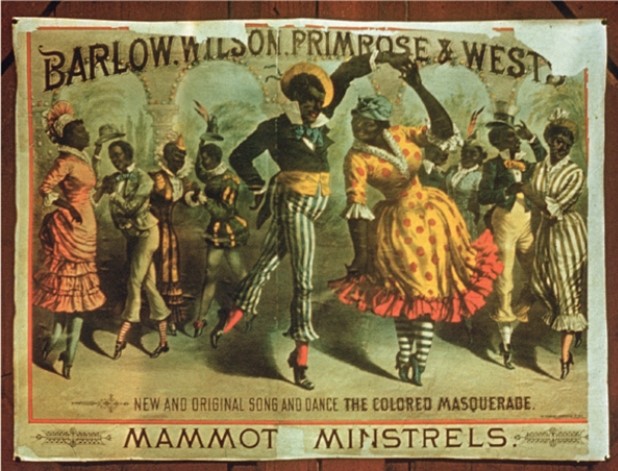 The poster above is best understood in the context of
A) the abolitionist movement's highly visible campaign against slavery.
B) racist stereotyping and the notion of slavery as a positive good.
C) regional groups developing cultures that reflected their experiences.
D) transformations in gender roles and expectations that emerged during this period.
The poster above is best understood in the context ofA) the abolitionist movement's highly visible campaign against slavery.
B) racist stereotyping and the notion of slavery as a positive good.
C) regional groups developing cultures that reflected their experiences.
D) transformations in gender roles and expectations that emerged during this period.
سؤال
سؤال
For this question,refer to the following poster advertising Barlow,Wilson,Primrose,and West's "Mammoth Minstrels' Colored Masquerade." 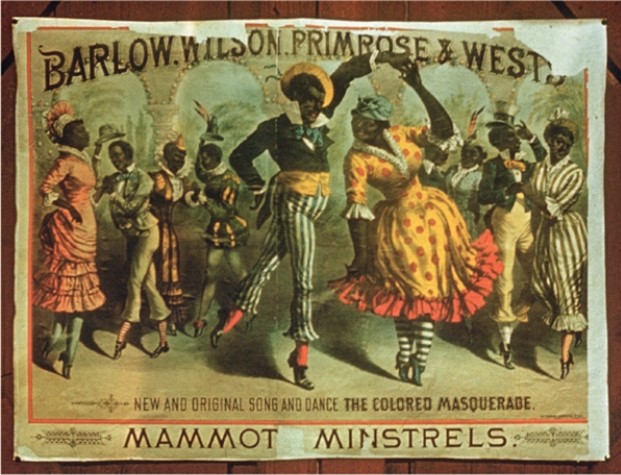 Which of the following ideas or trends of the twentieth century would compare most closely with those depicted in the artwork above?
A) Society's assumptions about gender in the 1950s
B) Demands of African Americans for equality in the 1960s
C) The Harlem Renaissance movement in the 1920s
D) The ambivalence of the government toward Mexicans in the 1930s and 1940s
Which of the following ideas or trends of the twentieth century would compare most closely with those depicted in the artwork above?A) Society's assumptions about gender in the 1950s
B) Demands of African Americans for equality in the 1960s
C) The Harlem Renaissance movement in the 1920s
D) The ambivalence of the government toward Mexicans in the 1930s and 1940s
سؤال
سؤال
سؤال
سؤال
سؤال
سؤال
سؤال
سؤال
سؤال
سؤال
سؤال
سؤال
سؤال
سؤال
For this question,refer to the following poster advertising Barlow,Wilson,Primrose,and West's "Mammoth Minstrels' Colored Masquerade." 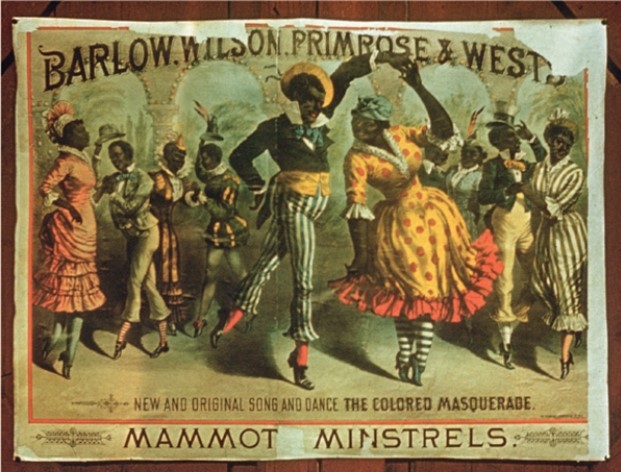 Which of the following groups was most likely the intended audience of the poster above?
A) Abolitionists
B) Slaves
C) Working-class whites
D) The urban elite and middle classes
Which of the following groups was most likely the intended audience of the poster above?A) Abolitionists
B) Slaves
C) Working-class whites
D) The urban elite and middle classes
سؤال
سؤال
سؤال
سؤال
سؤال
سؤال
سؤال
سؤال
سؤال
سؤال
سؤال
سؤال
سؤال
سؤال
سؤال
سؤال
سؤال
سؤال
سؤال
سؤال
سؤال
سؤال
سؤال
سؤال
سؤال
سؤال
سؤال
سؤال
سؤال
سؤال
سؤال
سؤال
سؤال
سؤال
سؤال
سؤال
سؤال
سؤال
سؤال
سؤال

فتح الحزمة
قم بالتسجيل لفتح البطاقات في هذه المجموعة!
Unlock Deck
Unlock Deck
1/88

العب

ملء الشاشة (f)
Deck 10: Religion, Reform, and Culture, 1820-1848
1
Through which of the following movements did evangelical reformers succeed in effecting substantial legal and cultural transformations in early nineteenth-century America?
A) Prison reform
B) Prostitution
C) Immigration reform
D) Temperance
A) Prison reform
B) Prostitution
C) Immigration reform
D) Temperance
Temperance
2
Which of the following was the critical catalyst for antebellum reform movements?
A) National government initiatives
B) The Second Great Awakening
C) State government initiatives
D) Industrialization
A) National government initiatives
B) The Second Great Awakening
C) State government initiatives
D) Industrialization
The Second Great Awakening
3
What was the Second Great Awakening that took place in the United States in the nineteenth century?
A) A wave of educational reforms in the early republic inspired by Thomas Grimké
B) The republican cultural and intellectual movement inspired by Thomas Jefferson
C) A long-lasting religious revival that made the United States a genuinely religious society
D) The nationalistic cultural backlash that demonstrated a rejection of English cultural supremacy
A) A wave of educational reforms in the early republic inspired by Thomas Grimké
B) The republican cultural and intellectual movement inspired by Thomas Jefferson
C) A long-lasting religious revival that made the United States a genuinely religious society
D) The nationalistic cultural backlash that demonstrated a rejection of English cultural supremacy
A long-lasting religious revival that made the United States a genuinely religious society
4
Henry David Thoreau,Margaret Fuller,and Ralph Waldo Emerson were well known for their involvement in which of the following movements?
A) Temperance
B) Prison reform
C) Educational reform
D) Transcendentalism
A) Temperance
B) Prison reform
C) Educational reform
D) Transcendentalism
فتح الحزمة
افتح القفل للوصول البطاقات البالغ عددها 88 في هذه المجموعة.
فتح الحزمة
k this deck
5
Which of the following describes the residents of the Brook Farm community of the 1840s?
A) Brook Farm's residents pioneered the use of advanced farming techniques.
B) They practiced nineteenth-century versions of free love and communism.
C) They wanted to combine farming with study and a lively intellectual life.
D) Brook Farm's residents consisted mostly of families and single women.
A) Brook Farm's residents pioneered the use of advanced farming techniques.
B) They practiced nineteenth-century versions of free love and communism.
C) They wanted to combine farming with study and a lively intellectual life.
D) Brook Farm's residents consisted mostly of families and single women.
فتح الحزمة
افتح القفل للوصول البطاقات البالغ عددها 88 في هذه المجموعة.
فتح الحزمة
k this deck
6
Which of the following was a result of the Second Great Awakening?
A) Churches split into warring factions.
B) Different denominations cooperated with one another.
C) Americans turned their backs on the poor.
D) The gulf between American politics and religion widened further.
A) Churches split into warring factions.
B) Different denominations cooperated with one another.
C) Americans turned their backs on the poor.
D) The gulf between American politics and religion widened further.
فتح الحزمة
افتح القفل للوصول البطاقات البالغ عددها 88 في هذه المجموعة.
فتح الحزمة
k this deck
7
Which of the following is properly paired?
A) Henry David Thoreau-Uncle Tom's Cabin
B) Walt Whitman-Leaves of Grass
C) Nathaniel Hawthorne-The American Scholar
D) Herman Melville-The Scarlet Letter
A) Henry David Thoreau-Uncle Tom's Cabin
B) Walt Whitman-Leaves of Grass
C) Nathaniel Hawthorne-The American Scholar
D) Herman Melville-The Scarlet Letter
فتح الحزمة
افتح القفل للوصول البطاقات البالغ عددها 88 في هذه المجموعة.
فتح الحزمة
k this deck
8
The philosophy that people could gain mystical knowledge and harmony beyond the world of the senses is known as which of the following?
A) Individualism
B) The cult of domesticity
C) Utopianism
D) Transcendentalism
A) Individualism
B) The cult of domesticity
C) Utopianism
D) Transcendentalism
فتح الحزمة
افتح القفل للوصول البطاقات البالغ عددها 88 في هذه المجموعة.
فتح الحزمة
k this deck
9
Which of the following statements about Ralph Waldo Emerson is correct?
A) He was a Unitarian minister who eventually rejected organized religion.
B) His view of individualism promoted hard work and indulgent consumption.
C) He resigned his pulpit due to his fear of public speaking.
D) Emerson's influence was briefly intense,but it did not stand the test of time.
A) He was a Unitarian minister who eventually rejected organized religion.
B) His view of individualism promoted hard work and indulgent consumption.
C) He resigned his pulpit due to his fear of public speaking.
D) Emerson's influence was briefly intense,but it did not stand the test of time.
فتح الحزمة
افتح القفل للوصول البطاقات البالغ عددها 88 في هذه المجموعة.
فتح الحزمة
k this deck
10
Which of the following describes the purpose of Henry David Thoreau's book Walden?
A) It was written to document Thoreau's spiritual search for meaning beyond the artificiality of "civilized" life.
B) It was intended to serve as a guidebook for others who wanted to learn how to survive alone in the woods.
C) The book sought to advise farmers on practical matters that would increase the profitability of small farms.
D) It warned of the dangers that could arise from too many efforts to promote and create social reform.
A) It was written to document Thoreau's spiritual search for meaning beyond the artificiality of "civilized" life.
B) It was intended to serve as a guidebook for others who wanted to learn how to survive alone in the woods.
C) The book sought to advise farmers on practical matters that would increase the profitability of small farms.
D) It warned of the dangers that could arise from too many efforts to promote and create social reform.
فتح الحزمة
افتح القفل للوصول البطاقات البالغ عددها 88 في هذه المجموعة.
فتح الحزمة
k this deck
11
Ralph Waldo Emerson wrote about which of the following in his essays and lectures?
A) He rejected traditional biblical teachings and promoted atheism.
B) He argued that people should reject old conventions and discover their original relation with nature.
C) He defended traditional Calvinist theology,which had been challenged by the Second Great Awakening.
D) He suggested that science and technology would lead humankind into a new era of enlightenment.
A) He rejected traditional biblical teachings and promoted atheism.
B) He argued that people should reject old conventions and discover their original relation with nature.
C) He defended traditional Calvinist theology,which had been challenged by the Second Great Awakening.
D) He suggested that science and technology would lead humankind into a new era of enlightenment.
فتح الحزمة
افتح القفل للوصول البطاقات البالغ عددها 88 في هذه المجموعة.
فتح الحزمة
k this deck
12
Which of the following describes the Fourierist movement in America?
A) Fourierists inspired Susan B.Anthony and helped launch the women's rights movement.
B) It demonstrated the difficulty of creating enduring utopian communities.
C) Mormonism was founded on the principles of Fourierism.
D) It created a lasting and uniquely American style of furniture.
A) Fourierists inspired Susan B.Anthony and helped launch the women's rights movement.
B) It demonstrated the difficulty of creating enduring utopian communities.
C) Mormonism was founded on the principles of Fourierism.
D) It created a lasting and uniquely American style of furniture.
فتح الحزمة
افتح القفل للوصول البطاقات البالغ عددها 88 في هذه المجموعة.
فتح الحزمة
k this deck
13
What did Alexis de Tocqueville mean when he used the term individualism to describe American society in 1835?
A) Americans lived in social isolation,without any ties to caste,class,association,or family.
B) Americans valued and respected differing views on political topics.
C) The American people welcomed all types of immigrants,regardless of ethnicity or religion.
D) Most Americans were uninfluenced by political parties and did not vote by party lines.
A) Americans lived in social isolation,without any ties to caste,class,association,or family.
B) Americans valued and respected differing views on political topics.
C) The American people welcomed all types of immigrants,regardless of ethnicity or religion.
D) Most Americans were uninfluenced by political parties and did not vote by party lines.
فتح الحزمة
افتح القفل للوصول البطاقات البالغ عددها 88 في هذه المجموعة.
فتح الحزمة
k this deck
14
Which of the following statements characterizes the relationship between church and state in postrevolutionary America?
A) Most citizens believed that government and politics should be completely free from the influence of religious beliefs.
B) The Baptist Church led the campaign for state protection and funding of all Christian denominations.
C) Most states continued to support churches indirectly by not taxing their property or ministers' incomes.
D) By 1786,the Anglican Church of Virginia was the only example of an established church in any state.
A) Most citizens believed that government and politics should be completely free from the influence of religious beliefs.
B) The Baptist Church led the campaign for state protection and funding of all Christian denominations.
C) Most states continued to support churches indirectly by not taxing their property or ministers' incomes.
D) By 1786,the Anglican Church of Virginia was the only example of an established church in any state.
فتح الحزمة
افتح القفل للوصول البطاقات البالغ عددها 88 في هذه المجموعة.
فتح الحزمة
k this deck
15
Charles Grandison Finney found success as a young revivalist preacher in the 1820s by emphasizing which of the following issues in his sermons?
A) Workers' need for higher wages
B) Poor children's need for better schools
C) The importance of personal conversion
D) Religious justifications for slavery
A) Workers' need for higher wages
B) Poor children's need for better schools
C) The importance of personal conversion
D) Religious justifications for slavery
فتح الحزمة
افتح القفل للوصول البطاقات البالغ عددها 88 في هذه المجموعة.
فتح الحزمة
k this deck
16
Which were the two fastest-growing American church denominations during the early nineteenth century?
A) Baptists and Methodists
B) Lutherans and Presbyterians
C) Presbyterians and Episcopalians
D) Episcopalians and Congregationalists
A) Baptists and Methodists
B) Lutherans and Presbyterians
C) Presbyterians and Episcopalians
D) Episcopalians and Congregationalists
فتح الحزمة
افتح القفل للوصول البطاقات البالغ عددها 88 في هذه المجموعة.
فتح الحزمة
k this deck
17
How did evangelical Christians spread religious revival during the Second Great Awakening?
A) By holding large camp meetings
B) By creating parochial schools
C) By preaching the doctrine of original sin
D) By using better-educated preachers
A) By holding large camp meetings
B) By creating parochial schools
C) By preaching the doctrine of original sin
D) By using better-educated preachers
فتح الحزمة
افتح القفل للوصول البطاقات البالغ عددها 88 في هذه المجموعة.
فتح الحزمة
k this deck
18
Which of the following describes the nineteenth-century Shakers?
A) They believed men were spiritually weaker than women.
B) They excluded African Americans in order to maintain racial purity.
C) Men greatly outnumbered women in Shaker communities.
D) They allowed both women and men to govern their communities.
A) They believed men were spiritually weaker than women.
B) They excluded African Americans in order to maintain racial purity.
C) Men greatly outnumbered women in Shaker communities.
D) They allowed both women and men to govern their communities.
فتح الحزمة
افتح القفل للوصول البطاقات البالغ عددها 88 في هذه المجموعة.
فتح الحزمة
k this deck
19
How did middle-class reformers attempt to overcome disorder and lawlessness among urban wage earners in early nineteenth-century America?
A) By supporting political reforms that were designed to help disadvantaged families survive adversity
B) By forming regional and national organizations to institutionalize charity and combat crime systematically
C) By establishing missions to bring their messages of moral purity and self-discipline to the poor
D) By ignoring social problems and concentrating on improving the behavior of their children and household servants
A) By supporting political reforms that were designed to help disadvantaged families survive adversity
B) By forming regional and national organizations to institutionalize charity and combat crime systematically
C) By establishing missions to bring their messages of moral purity and self-discipline to the poor
D) By ignoring social problems and concentrating on improving the behavior of their children and household servants
فتح الحزمة
افتح القفل للوصول البطاقات البالغ عددها 88 في هذه المجموعة.
فتح الحزمة
k this deck
20
Which of the following did Nathaniel Hawthorne and Herman Melville have in common?
A) Both celebrated the positive potential of the individual.
B) They wrote mostly of the past and ignored current realities in the United States.
C) Both warned against the restrictions imposed on individuals by social groups.
D) They criticized transcendentalism and warned against excessive individualism.
A) Both celebrated the positive potential of the individual.
B) They wrote mostly of the past and ignored current realities in the United States.
C) Both warned against the restrictions imposed on individuals by social groups.
D) They criticized transcendentalism and warned against excessive individualism.
فتح الحزمة
افتح القفل للوصول البطاقات البالغ عددها 88 في هذه المجموعة.
فتح الحزمة
k this deck
21
Which of the following was an evangelical movement that believed the Second Coming of Christ had already occurred and people could attain complete freedom from sin?
A) Mormonism
B) Perfectionism
C) Fourierism
D) Transcendentalism
A) Mormonism
B) Perfectionism
C) Fourierism
D) Transcendentalism
فتح الحزمة
افتح القفل للوصول البطاقات البالغ عددها 88 في هذه المجموعة.
فتح الحزمة
k this deck
22
For this question,refer to the following sermon. Intemperance is the sin of our land,and,with our boundless prosperity,is coming in upon us like a flood;and if anything shall defeat the hopes of the world,which hang upon our experiment of civil liberty,it is that river of fire....
In every city and town the poor-tax,created chiefly by intemperance,is [increasing the burden on taxpaying citizens]....The frequency of going upon the town [relying on public welfare] has taken away the reluctance of pride,and destroyed the motives to providence which the fear of poverty and suffering once supplied.The prospect of a destitute old age,or of a suffering family,no longer troubles the vicious portion of our community.They drink up their daily earnings,and bless God for the poor-house,and begin to look upon it as,of right,the drunkard's home....Every intemperate and idle man,whom you behold tottering about the streets and steeping himself at the stores,regards your houses and lands as pledged to take care of him,puts his hands deep,annually,into your pockets....
What then is this universal,natural,and national remedy for intemperance? it is the banishment of ardent spirits from the list of lawful articles of commerce,by a correct and efficient public sentiment;such as has turned slavery out of half our land,and will yet expel it from the world....
This however cannot be done effectually so long as the traffic in ardent spirits is regarded as lawful,and is patronized by men of reputation and moral worth in every part of the land.Like slavery,it must be regarded as sinful,impolitic,and dishonorable.That no measures will avail short of rendering ardent spirits a contraband of trade,is nearly self-evident.
Lyman Beecher,Six Sermons on the Nature,Occasions,Signs,Evils,and Remedy of Intemperance,1829
Which of the following led most directly led to the sentiments expressed in the excerpt above?
A) The abolition movement
B) The Market Revolution
C) The Second Great Awakening.
D) The spread of democratic political ideals
In every city and town the poor-tax,created chiefly by intemperance,is [increasing the burden on taxpaying citizens]....The frequency of going upon the town [relying on public welfare] has taken away the reluctance of pride,and destroyed the motives to providence which the fear of poverty and suffering once supplied.The prospect of a destitute old age,or of a suffering family,no longer troubles the vicious portion of our community.They drink up their daily earnings,and bless God for the poor-house,and begin to look upon it as,of right,the drunkard's home....Every intemperate and idle man,whom you behold tottering about the streets and steeping himself at the stores,regards your houses and lands as pledged to take care of him,puts his hands deep,annually,into your pockets....
What then is this universal,natural,and national remedy for intemperance? it is the banishment of ardent spirits from the list of lawful articles of commerce,by a correct and efficient public sentiment;such as has turned slavery out of half our land,and will yet expel it from the world....
This however cannot be done effectually so long as the traffic in ardent spirits is regarded as lawful,and is patronized by men of reputation and moral worth in every part of the land.Like slavery,it must be regarded as sinful,impolitic,and dishonorable.That no measures will avail short of rendering ardent spirits a contraband of trade,is nearly self-evident.
Lyman Beecher,Six Sermons on the Nature,Occasions,Signs,Evils,and Remedy of Intemperance,1829
Which of the following led most directly led to the sentiments expressed in the excerpt above?
A) The abolition movement
B) The Market Revolution
C) The Second Great Awakening.
D) The spread of democratic political ideals
فتح الحزمة
افتح القفل للوصول البطاقات البالغ عددها 88 في هذه المجموعة.
فتح الحزمة
k this deck
23
Why are the Oneidians,Shakers,and Fourierists historically significant?
A) All of these groups exercised great influence over American politics.
B) These utopians all criticized capitalism but made tremendous profits through manufacturing.
C) They repudiated heterosexual sex and sexuality.
D) They articulated criticisms of the class divisions created by the market economy.
A) All of these groups exercised great influence over American politics.
B) These utopians all criticized capitalism but made tremendous profits through manufacturing.
C) They repudiated heterosexual sex and sexuality.
D) They articulated criticisms of the class divisions created by the market economy.
فتح الحزمة
افتح القفل للوصول البطاقات البالغ عددها 88 في هذه المجموعة.
فتح الحزمة
k this deck
24
For this question,refer to the following poster advertising Barlow,Wilson,Primrose,and West's "Mammoth Minstrels' Colored Masquerade." The poster above is best understood in the context of
A) the abolitionist movement's highly visible campaign against slavery.
B) racist stereotyping and the notion of slavery as a positive good.
C) regional groups developing cultures that reflected their experiences.
D) transformations in gender roles and expectations that emerged during this period.
The poster above is best understood in the context ofA) the abolitionist movement's highly visible campaign against slavery.
B) racist stereotyping and the notion of slavery as a positive good.
C) regional groups developing cultures that reflected their experiences.
D) transformations in gender roles and expectations that emerged during this period.
فتح الحزمة
افتح القفل للوصول البطاقات البالغ عددها 88 في هذه المجموعة.
فتح الحزمة
k this deck
25
Which of the following factors was critical in the ballooning populations of cities like New York in the mid-nineteenth century?
A) The rapid increase in life expectancy
B) America's relatively high birthrate
C) Immigration
D) The growth of urban culture
A) The rapid increase in life expectancy
B) America's relatively high birthrate
C) Immigration
D) The growth of urban culture
فتح الحزمة
افتح القفل للوصول البطاقات البالغ عددها 88 في هذه المجموعة.
فتح الحزمة
k this deck
26
For this question,refer to the following poster advertising Barlow,Wilson,Primrose,and West's "Mammoth Minstrels' Colored Masquerade." Which of the following ideas or trends of the twentieth century would compare most closely with those depicted in the artwork above?
A) Society's assumptions about gender in the 1950s
B) Demands of African Americans for equality in the 1960s
C) The Harlem Renaissance movement in the 1920s
D) The ambivalence of the government toward Mexicans in the 1930s and 1940s
Which of the following ideas or trends of the twentieth century would compare most closely with those depicted in the artwork above?A) Society's assumptions about gender in the 1950s
B) Demands of African Americans for equality in the 1960s
C) The Harlem Renaissance movement in the 1920s
D) The ambivalence of the government toward Mexicans in the 1930s and 1940s
فتح الحزمة
افتح القفل للوصول البطاقات البالغ عددها 88 في هذه المجموعة.
فتح الحزمة
k this deck
27
Which of the following statements is true about William Lloyd Garrison?
A) He attacked the U.S.Constitution because it condoned slavery.
B) He was motivated by political,not religious,concerns.
C) Garrison believed violence was an acceptable means for ending American slavery.
D) Garrison called for the institution of gradual abolition in all states.
A) He attacked the U.S.Constitution because it condoned slavery.
B) He was motivated by political,not religious,concerns.
C) Garrison believed violence was an acceptable means for ending American slavery.
D) Garrison called for the institution of gradual abolition in all states.
فتح الحزمة
افتح القفل للوصول البطاقات البالغ عددها 88 في هذه المجموعة.
فتح الحزمة
k this deck
28
Which of these factors contributed to the tremendous increase in commercialized sex in the new cities of the mid-nineteenth century?
A) Mainstream churches' timidity about addressing sexual issues explicitly
B) The subsistence wages and exploitative conditions of women's jobs
C) An influx of immigrants from Southern and Eastern European countries
D) Cities' refusal to pass legislation banning prostitution and pornography
A) Mainstream churches' timidity about addressing sexual issues explicitly
B) The subsistence wages and exploitative conditions of women's jobs
C) An influx of immigrants from Southern and Eastern European countries
D) Cities' refusal to pass legislation banning prostitution and pornography
فتح الحزمة
افتح القفل للوصول البطاقات البالغ عددها 88 في هذه المجموعة.
فتح الحزمة
k this deck
29
Which of the following describes The Book of Mormon,published in 1830?
A) It was a historical account of the Mormons' westward migration to Utah.
B) It claimed that Jesus Christ visited an ancient American civilization soon after his resurrection.
C) The book offered a detailed explanation and justification of the Mormons' social philosophy.
D) The book was written anonymously by anti-Mormons to discredit Mormon beliefs.
A) It was a historical account of the Mormons' westward migration to Utah.
B) It claimed that Jesus Christ visited an ancient American civilization soon after his resurrection.
C) The book offered a detailed explanation and justification of the Mormons' social philosophy.
D) The book was written anonymously by anti-Mormons to discredit Mormon beliefs.
فتح الحزمة
افتح القفل للوصول البطاقات البالغ عددها 88 في هذه المجموعة.
فتح الحزمة
k this deck
30
Which of the following factors contributed to the rise of anti-immigrant sentiment in American cities in the mid-nineteenth century?
A) Male promiscuity
B) Minstrel shows
C) Prostitution
D) The Democratic Party
A) Male promiscuity
B) Minstrel shows
C) Prostitution
D) The Democratic Party
فتح الحزمة
افتح القفل للوصول البطاقات البالغ عددها 88 في هذه المجموعة.
فتح الحزمة
k this deck
31
In his 1829 pamphlet,An Appeal ...to the Colored Citizens of the World,David Walker did which of the following?
A) He justified slave rebellion and warned white Americans that violence and retribution would come if justice were delayed.
B) He appealed to the religious consciences of slaveholders to recognize slavery as being morally wrong.
C) He approved of colonization programs to establish an African republic for freed American slaves.
D) He urged slaves not to rebel but to seek comfort in their relationships and religious activities instead.
A) He justified slave rebellion and warned white Americans that violence and retribution would come if justice were delayed.
B) He appealed to the religious consciences of slaveholders to recognize slavery as being morally wrong.
C) He approved of colonization programs to establish an African republic for freed American slaves.
D) He urged slaves not to rebel but to seek comfort in their relationships and religious activities instead.
فتح الحزمة
افتح القفل للوصول البطاقات البالغ عددها 88 في هذه المجموعة.
فتح الحزمة
k this deck
32
Which of the following was a result of the Turner Rebellion of the 1830s?
A) The rebels won their freedom.
B) A national convention of African American activists met in Philadelphia.
C) Tougher slave codes and restrictions were implemented.
D) Rioting erupted in northern cities.
A) The rebels won their freedom.
B) A national convention of African American activists met in Philadelphia.
C) Tougher slave codes and restrictions were implemented.
D) Rioting erupted in northern cities.
فتح الحزمة
افتح القفل للوصول البطاقات البالغ عددها 88 في هذه المجموعة.
فتح الحزمة
k this deck
33
The Oneida Community,founded in 1839 by John Humphrey Noyes,was known for which of the following practices?
A) Complex marriage
B) Monogamy
C) Celibacy
D) Equality of men and women
A) Complex marriage
B) Monogamy
C) Celibacy
D) Equality of men and women
فتح الحزمة
افتح القفل للوصول البطاقات البالغ عددها 88 في هذه المجموعة.
فتح الحزمة
k this deck
34
Abolitionist leaders used which of the following in their crusade to end slavery in the middle of the 1800s?
A) Lecture tours demanding the end of the international slave trade
B) Aid to fugitive slaves
C) Continuous demonstrations against slavery outside the White House
D) Financial support for free blacks willing to foment rebellion in the South
A) Lecture tours demanding the end of the international slave trade
B) Aid to fugitive slaves
C) Continuous demonstrations against slavery outside the White House
D) Financial support for free blacks willing to foment rebellion in the South
فتح الحزمة
افتح القفل للوصول البطاقات البالغ عددها 88 في هذه المجموعة.
فتح الحزمة
k this deck
35
In its campaign to end slavery,the American Anti-Slavery Society embraced which of the following tactics?
A) Smuggling weapons to slaves for use in an eventual uprising
B) Purchasing and freeing slaves threatened with a sale that would break up their families
C) Mounting civil disobedience actions and mass demonstrations to protest slavery
D) Sponsoring public lectures and collecting signatures on antislavery petitions
A) Smuggling weapons to slaves for use in an eventual uprising
B) Purchasing and freeing slaves threatened with a sale that would break up their families
C) Mounting civil disobedience actions and mass demonstrations to protest slavery
D) Sponsoring public lectures and collecting signatures on antislavery petitions
فتح الحزمة
افتح القفل للوصول البطاقات البالغ عددها 88 في هذه المجموعة.
فتح الحزمة
k this deck
36
For this question,refer to the following sermon. Intemperance is the sin of our land,and,with our boundless prosperity,is coming in upon us like a flood;and if anything shall defeat the hopes of the world,which hang upon our experiment of civil liberty,it is that river of fire....
In every city and town the poor-tax,created chiefly by intemperance,is [increasing the burden on taxpaying citizens]....The frequency of going upon the town [relying on public welfare] has taken away the reluctance of pride,and destroyed the motives to providence which the fear of poverty and suffering once supplied.The prospect of a destitute old age,or of a suffering family,no longer troubles the vicious portion of our community.They drink up their daily earnings,and bless God for the poor-house,and begin to look upon it as,of right,the drunkard's home....Every intemperate and idle man,whom you behold tottering about the streets and steeping himself at the stores,regards your houses and lands as pledged to take care of him,puts his hands deep,annually,into your pockets....
What then is this universal,natural,and national remedy for intemperance? it is the banishment of ardent spirits from the list of lawful articles of commerce,by a correct and efficient public sentiment;such as has turned slavery out of half our land,and will yet expel it from the world....
This however cannot be done effectually so long as the traffic in ardent spirits is regarded as lawful,and is patronized by men of reputation and moral worth in every part of the land.Like slavery,it must be regarded as sinful,impolitic,and dishonorable.That no measures will avail short of rendering ardent spirits a contraband of trade,is nearly self-evident.
Lyman Beecher,Six Sermons on the Nature,Occasions,Signs,Evils,and Remedy of Intemperance,1829
The ideas expressed in the excerpt above most directly reflect which of the following continuities in U.S.history?
A) The emergences of new national cultures
B) A sense of unique national mission and destiny
C) Deepening regional divisions brought about by cultural differences
D) Periodic bursts of religious reform and revivalism
In every city and town the poor-tax,created chiefly by intemperance,is [increasing the burden on taxpaying citizens]....The frequency of going upon the town [relying on public welfare] has taken away the reluctance of pride,and destroyed the motives to providence which the fear of poverty and suffering once supplied.The prospect of a destitute old age,or of a suffering family,no longer troubles the vicious portion of our community.They drink up their daily earnings,and bless God for the poor-house,and begin to look upon it as,of right,the drunkard's home....Every intemperate and idle man,whom you behold tottering about the streets and steeping himself at the stores,regards your houses and lands as pledged to take care of him,puts his hands deep,annually,into your pockets....
What then is this universal,natural,and national remedy for intemperance? it is the banishment of ardent spirits from the list of lawful articles of commerce,by a correct and efficient public sentiment;such as has turned slavery out of half our land,and will yet expel it from the world....
This however cannot be done effectually so long as the traffic in ardent spirits is regarded as lawful,and is patronized by men of reputation and moral worth in every part of the land.Like slavery,it must be regarded as sinful,impolitic,and dishonorable.That no measures will avail short of rendering ardent spirits a contraband of trade,is nearly self-evident.
Lyman Beecher,Six Sermons on the Nature,Occasions,Signs,Evils,and Remedy of Intemperance,1829
The ideas expressed in the excerpt above most directly reflect which of the following continuities in U.S.history?
A) The emergences of new national cultures
B) A sense of unique national mission and destiny
C) Deepening regional divisions brought about by cultural differences
D) Periodic bursts of religious reform and revivalism
فتح الحزمة
افتح القفل للوصول البطاقات البالغ عددها 88 في هذه المجموعة.
فتح الحزمة
k this deck
37
How did women participate in the abolition movement in the mid-eighteenth century?
A) Female abolitionists often discussed issues of slavery among themselves,but they had limited involvement in the movement.
B) Women were not active in the abolition movement.
C) Women interested in abolition attended meetings with their husbands but did not actively participate in the societies.
D) Women abolitionists established influential groups such as the Philadelphia Female Anti-Slavery Society.
A) Female abolitionists often discussed issues of slavery among themselves,but they had limited involvement in the movement.
B) Women were not active in the abolition movement.
C) Women interested in abolition attended meetings with their husbands but did not actively participate in the societies.
D) Women abolitionists established influential groups such as the Philadelphia Female Anti-Slavery Society.
فتح الحزمة
افتح القفل للوصول البطاقات البالغ عددها 88 في هذه المجموعة.
فتح الحزمة
k this deck
38
Which of the following describes the minstrel shows that became popular in American cities in the 1840s?
A) They were pioneered by P.T.Barnum,who founded the Barnum & Bailey Circus.
B) Minstrel shows celebrated the lifestyle of the "b'hoys."
C) Minstrel shows contributed to the problem of prostitution in the big cities.
D) They were a popular form of entertainment and social criticism.
A) They were pioneered by P.T.Barnum,who founded the Barnum & Bailey Circus.
B) Minstrel shows celebrated the lifestyle of the "b'hoys."
C) Minstrel shows contributed to the problem of prostitution in the big cities.
D) They were a popular form of entertainment and social criticism.
فتح الحزمة
افتح القفل للوصول البطاقات البالغ عددها 88 في هذه المجموعة.
فتح الحزمة
k this deck
39
For this question,refer to the following sermon. Intemperance is the sin of our land,and,with our boundless prosperity,is coming in upon us like a flood;and if anything shall defeat the hopes of the world,which hang upon our experiment of civil liberty,it is that river of fire....
In every city and town the poor-tax,created chiefly by intemperance,is [increasing the burden on taxpaying citizens]....The frequency of going upon the town [relying on public welfare] has taken away the reluctance of pride,and destroyed the motives to providence which the fear of poverty and suffering once supplied.The prospect of a destitute old age,or of a suffering family,no longer troubles the vicious portion of our community.They drink up their daily earnings,and bless God for the poor-house,and begin to look upon it as,of right,the drunkard's home....Every intemperate and idle man,whom you behold tottering about the streets and steeping himself at the stores,regards your houses and lands as pledged to take care of him,puts his hands deep,annually,into your pockets....
What then is this universal,natural,and national remedy for intemperance? it is the banishment of ardent spirits from the list of lawful articles of commerce,by a correct and efficient public sentiment;such as has turned slavery out of half our land,and will yet expel it from the world....
This however cannot be done effectually so long as the traffic in ardent spirits is regarded as lawful,and is patronized by men of reputation and moral worth in every part of the land.Like slavery,it must be regarded as sinful,impolitic,and dishonorable.That no measures will avail short of rendering ardent spirits a contraband of trade,is nearly self-evident.
Lyman Beecher,Six Sermons on the Nature,Occasions,Signs,Evils,and Remedy of Intemperance,1829
Which of the following would be most likely to oppose the ideas expressed in the excerpt above?
A) Southern slave owners
B) Members of the urban middle class
C) Ethic communities of immigrants
D) State governments
In every city and town the poor-tax,created chiefly by intemperance,is [increasing the burden on taxpaying citizens]....The frequency of going upon the town [relying on public welfare] has taken away the reluctance of pride,and destroyed the motives to providence which the fear of poverty and suffering once supplied.The prospect of a destitute old age,or of a suffering family,no longer troubles the vicious portion of our community.They drink up their daily earnings,and bless God for the poor-house,and begin to look upon it as,of right,the drunkard's home....Every intemperate and idle man,whom you behold tottering about the streets and steeping himself at the stores,regards your houses and lands as pledged to take care of him,puts his hands deep,annually,into your pockets....
What then is this universal,natural,and national remedy for intemperance? it is the banishment of ardent spirits from the list of lawful articles of commerce,by a correct and efficient public sentiment;such as has turned slavery out of half our land,and will yet expel it from the world....
This however cannot be done effectually so long as the traffic in ardent spirits is regarded as lawful,and is patronized by men of reputation and moral worth in every part of the land.Like slavery,it must be regarded as sinful,impolitic,and dishonorable.That no measures will avail short of rendering ardent spirits a contraband of trade,is nearly self-evident.
Lyman Beecher,Six Sermons on the Nature,Occasions,Signs,Evils,and Remedy of Intemperance,1829
Which of the following would be most likely to oppose the ideas expressed in the excerpt above?
A) Southern slave owners
B) Members of the urban middle class
C) Ethic communities of immigrants
D) State governments
فتح الحزمة
افتح القفل للوصول البطاقات البالغ عددها 88 في هذه المجموعة.
فتح الحزمة
k this deck
40
For this question,refer to the following poster advertising Barlow,Wilson,Primrose,and West's "Mammoth Minstrels' Colored Masquerade." Which of the following groups was most likely the intended audience of the poster above?
A) Abolitionists
B) Slaves
C) Working-class whites
D) The urban elite and middle classes
Which of the following groups was most likely the intended audience of the poster above?A) Abolitionists
B) Slaves
C) Working-class whites
D) The urban elite and middle classes
فتح الحزمة
افتح القفل للوصول البطاقات البالغ عددها 88 في هذه المجموعة.
فتح الحزمة
k this deck
41
During the 1840s,American women's rights activists focused on which of the following goals?
A) Challenging the conventional division of labor within the family
B) Strengthening the legal rights of married women
C) Making it easier for married women to file for divorce
D) Educating women about birth control and abortion
A) Challenging the conventional division of labor within the family
B) Strengthening the legal rights of married women
C) Making it easier for married women to file for divorce
D) Educating women about birth control and abortion
فتح الحزمة
افتح القفل للوصول البطاقات البالغ عددها 88 في هذه المجموعة.
فتح الحزمة
k this deck
42
What was the purpose of the Female Moral Reform Society,which middle-class New York women founded in 1834?
A) To provide moral guidance for young,working women who were living away from their families
B) To create new opportunities for male and female reformers to work together as equals in the same organization
C) To create a network of schools to train young,middle-class women in manners and morals
D) To condemn prostitution and punish young women who participated in urban prostitution
A) To provide moral guidance for young,working women who were living away from their families
B) To create new opportunities for male and female reformers to work together as equals in the same organization
C) To create a network of schools to train young,middle-class women in manners and morals
D) To condemn prostitution and punish young women who participated in urban prostitution
فتح الحزمة
افتح القفل للوصول البطاقات البالغ عددها 88 في هذه المجموعة.
فتح الحزمة
k this deck
43
The public movement for women's rights developed out of which of the following sources in the 1840s?
A) The Second Great Awakening
B) Mormonism
C) The American Revolution
D) The Oneida Community
A) The Second Great Awakening
B) Mormonism
C) The American Revolution
D) The Oneida Community
فتح الحزمة
افتح القفل للوصول البطاقات البالغ عددها 88 في هذه المجموعة.
فتح الحزمة
k this deck
44
Answer the following questions :
married women's property laws
A)Word coined by Alexis de Tocqueville in 1835 to describe Americans as people no longer bound by social attachments to classes,castes,associations,and families.
B)A series of evangelical Protestant revivals extending from the 1810s to the 1830s which prompted thousands of conversion and widespread optimism about Americans' capacity for progress and reform.
C)A web of reform organizations,heavily Whig in their political orientation,built by evangelical Protestant men and women influenced by the Second Great Awakening.
D)A literary explosion during the 1840s inspired in part by Emerson's ideas on the liberation of the individual.
E)A European philosophy that rejected the ordered rationality of the eighteenth-century Enlightenment,embracing human passion,spiritual quest,and self-knowledge.Romanticism strongly influenced American Transcendentalism.
F)A nineteenth-century American intellectual movement that posited the importance of an ideal world of mystical knowledge and harmony beyond the immediate grasp of the senses.Influenced by Romanticism,writers Ralph Waldo Emerson and Henry David Thoreau called for the critical examination of society and emphasized individuality,self-reliance,and nonconformity.
G)Communities founded by reformers and Transcendentalists to help realize their spiritual and moral potential and to escape from the competition of modern industrial society.
H)A system of social and economic organization proposed by French thinker Charles Fourier,which was based on common ownership of goods and shared labor by members of a community.A number of nineteenth-century American utopian communities tried to put Fourierist principles into practice.
I)Christian movement of the 1830s that believed people could achieve moral perfection in their earthly lives because the Second Coming of Christ had already occurred.
J)Founded by Joseph Smith in 1830.After Smith's death at the hands of an angry mob,Brigham Young led many followers of Mormonism to lands in present-day Utah in 1846.
K)The practice of men taking multiple wives,which Mormon prophet Joseph Smith argued was biblically sanctioned and divinely ordained as a family system.
L)Sensational and popular urban newspapers that built large circulations by reporting crime and scandals.
M)Popular theatrical entertainment begun around 1830,in which white actors in blackface presented comic routines that combined racist caricature and social criticism.
N)Organizations in northern free black communities that sought to help community members and work against racial discrimination,inequality,and political slavery.
O)Church founded in 1816 by African Americans who were discriminated against by white Protestants.The church spread across the Northeast and Midwest and even founded a few congregations in the slave states of Missouri,Kentucky,Louisiana,and South Carolina.
P)The social reform movement to end slavery immediately and without compensation that began in the United States in the 1830s.
Q)The first interracial social justice movement in the United States,which advocated the immediate,unconditional end of slavery on the basis of human rights,without compensation to slave masters.
R)An informal network of whites and free blacks in the South that assisted fugitive slaves to reach freedom in the North.
S)A procedure in the House of Representatives from 1836 to 1844 by which antislavery petitions were automatically tabled when they were received so that they could not become the subject of debate.
T)An antislavery political party that ran its first presidential candidate in 1844,controversially challenging both the Democrats and Whigs.
U)An organization led by middle-class Christian women who viewed prostitutes as victims of male lust and sought to expose their male customers while "rescuing" sex workers and encouraging them to pursue respectable trades.
V)A middle-class ideal of "separate spheres" which celebrated women's special mission as homemakers,wives,and mothers who exercised a Christian influence on their families and communities,but which excluded women from professional careers,politics,and civic life.
W)Laws enacted between 1839 and 1860 in New York and other states that permitted married women to own,inherit,and bequeath property.
X)The first women's rights convention in the United States.Held in New York in 1848,it resulted in a manifesto extending to women the egalitarian republican ideology of the Declaration of Independence.
married women's property laws
A)Word coined by Alexis de Tocqueville in 1835 to describe Americans as people no longer bound by social attachments to classes,castes,associations,and families.
B)A series of evangelical Protestant revivals extending from the 1810s to the 1830s which prompted thousands of conversion and widespread optimism about Americans' capacity for progress and reform.
C)A web of reform organizations,heavily Whig in their political orientation,built by evangelical Protestant men and women influenced by the Second Great Awakening.
D)A literary explosion during the 1840s inspired in part by Emerson's ideas on the liberation of the individual.
E)A European philosophy that rejected the ordered rationality of the eighteenth-century Enlightenment,embracing human passion,spiritual quest,and self-knowledge.Romanticism strongly influenced American Transcendentalism.
F)A nineteenth-century American intellectual movement that posited the importance of an ideal world of mystical knowledge and harmony beyond the immediate grasp of the senses.Influenced by Romanticism,writers Ralph Waldo Emerson and Henry David Thoreau called for the critical examination of society and emphasized individuality,self-reliance,and nonconformity.
G)Communities founded by reformers and Transcendentalists to help realize their spiritual and moral potential and to escape from the competition of modern industrial society.
H)A system of social and economic organization proposed by French thinker Charles Fourier,which was based on common ownership of goods and shared labor by members of a community.A number of nineteenth-century American utopian communities tried to put Fourierist principles into practice.
I)Christian movement of the 1830s that believed people could achieve moral perfection in their earthly lives because the Second Coming of Christ had already occurred.
J)Founded by Joseph Smith in 1830.After Smith's death at the hands of an angry mob,Brigham Young led many followers of Mormonism to lands in present-day Utah in 1846.
K)The practice of men taking multiple wives,which Mormon prophet Joseph Smith argued was biblically sanctioned and divinely ordained as a family system.
L)Sensational and popular urban newspapers that built large circulations by reporting crime and scandals.
M)Popular theatrical entertainment begun around 1830,in which white actors in blackface presented comic routines that combined racist caricature and social criticism.
N)Organizations in northern free black communities that sought to help community members and work against racial discrimination,inequality,and political slavery.
O)Church founded in 1816 by African Americans who were discriminated against by white Protestants.The church spread across the Northeast and Midwest and even founded a few congregations in the slave states of Missouri,Kentucky,Louisiana,and South Carolina.
P)The social reform movement to end slavery immediately and without compensation that began in the United States in the 1830s.
Q)The first interracial social justice movement in the United States,which advocated the immediate,unconditional end of slavery on the basis of human rights,without compensation to slave masters.
R)An informal network of whites and free blacks in the South that assisted fugitive slaves to reach freedom in the North.
S)A procedure in the House of Representatives from 1836 to 1844 by which antislavery petitions were automatically tabled when they were received so that they could not become the subject of debate.
T)An antislavery political party that ran its first presidential candidate in 1844,controversially challenging both the Democrats and Whigs.
U)An organization led by middle-class Christian women who viewed prostitutes as victims of male lust and sought to expose their male customers while "rescuing" sex workers and encouraging them to pursue respectable trades.
V)A middle-class ideal of "separate spheres" which celebrated women's special mission as homemakers,wives,and mothers who exercised a Christian influence on their families and communities,but which excluded women from professional careers,politics,and civic life.
W)Laws enacted between 1839 and 1860 in New York and other states that permitted married women to own,inherit,and bequeath property.
X)The first women's rights convention in the United States.Held in New York in 1848,it resulted in a manifesto extending to women the egalitarian republican ideology of the Declaration of Independence.
فتح الحزمة
افتح القفل للوصول البطاقات البالغ عددها 88 في هذه المجموعة.
فتح الحزمة
k this deck
45
Which of these statements most accurately describes the experiences of free blacks in the early nineteenth-century United States?
A) Most held low-wage jobs as farmworkers,day laborers,or laundresses.
B) They constituted a majority of the African American population in the South by 1820.
C) Many free blacks would have settled in Africa had they been able to afford the trip.
D) Most northern states passed laws banning free blacks from owning or running a business.
A) Most held low-wage jobs as farmworkers,day laborers,or laundresses.
B) They constituted a majority of the African American population in the South by 1820.
C) Many free blacks would have settled in Africa had they been able to afford the trip.
D) Most northern states passed laws banning free blacks from owning or running a business.
فتح الحزمة
افتح القفل للوصول البطاقات البالغ عددها 88 في هذه المجموعة.
فتح الحزمة
k this deck
46
Answer the following questions :
Fourierist socialism
A)Word coined by Alexis de Tocqueville in 1835 to describe Americans as people no longer bound by social attachments to classes,castes,associations,and families.
B)A series of evangelical Protestant revivals extending from the 1810s to the 1830s which prompted thousands of conversion and widespread optimism about Americans' capacity for progress and reform.
C)A web of reform organizations,heavily Whig in their political orientation,built by evangelical Protestant men and women influenced by the Second Great Awakening.
D)A literary explosion during the 1840s inspired in part by Emerson's ideas on the liberation of the individual.
E)A European philosophy that rejected the ordered rationality of the eighteenth-century Enlightenment,embracing human passion,spiritual quest,and self-knowledge.Romanticism strongly influenced American Transcendentalism.
F)A nineteenth-century American intellectual movement that posited the importance of an ideal world of mystical knowledge and harmony beyond the immediate grasp of the senses.Influenced by Romanticism,writers Ralph Waldo Emerson and Henry David Thoreau called for the critical examination of society and emphasized individuality,self-reliance,and nonconformity.
G)Communities founded by reformers and Transcendentalists to help realize their spiritual and moral potential and to escape from the competition of modern industrial society.
H)A system of social and economic organization proposed by French thinker Charles Fourier,which was based on common ownership of goods and shared labor by members of a community.A number of nineteenth-century American utopian communities tried to put Fourierist principles into practice.
I)Christian movement of the 1830s that believed people could achieve moral perfection in their earthly lives because the Second Coming of Christ had already occurred.
J)Founded by Joseph Smith in 1830.After Smith's death at the hands of an angry mob,Brigham Young led many followers of Mormonism to lands in present-day Utah in 1846.
K)The practice of men taking multiple wives,which Mormon prophet Joseph Smith argued was biblically sanctioned and divinely ordained as a family system.
L)Sensational and popular urban newspapers that built large circulations by reporting crime and scandals.
M)Popular theatrical entertainment begun around 1830,in which white actors in blackface presented comic routines that combined racist caricature and social criticism.
N)Organizations in northern free black communities that sought to help community members and work against racial discrimination,inequality,and political slavery.
O)Church founded in 1816 by African Americans who were discriminated against by white Protestants.The church spread across the Northeast and Midwest and even founded a few congregations in the slave states of Missouri,Kentucky,Louisiana,and South Carolina.
P)The social reform movement to end slavery immediately and without compensation that began in the United States in the 1830s.
Q)The first interracial social justice movement in the United States,which advocated the immediate,unconditional end of slavery on the basis of human rights,without compensation to slave masters.
R)An informal network of whites and free blacks in the South that assisted fugitive slaves to reach freedom in the North.
S)A procedure in the House of Representatives from 1836 to 1844 by which antislavery petitions were automatically tabled when they were received so that they could not become the subject of debate.
T)An antislavery political party that ran its first presidential candidate in 1844,controversially challenging both the Democrats and Whigs.
U)An organization led by middle-class Christian women who viewed prostitutes as victims of male lust and sought to expose their male customers while "rescuing" sex workers and encouraging them to pursue respectable trades.
V)A middle-class ideal of "separate spheres" which celebrated women's special mission as homemakers,wives,and mothers who exercised a Christian influence on their families and communities,but which excluded women from professional careers,politics,and civic life.
W)Laws enacted between 1839 and 1860 in New York and other states that permitted married women to own,inherit,and bequeath property.
X)The first women's rights convention in the United States.Held in New York in 1848,it resulted in a manifesto extending to women the egalitarian republican ideology of the Declaration of Independence.
Fourierist socialism
A)Word coined by Alexis de Tocqueville in 1835 to describe Americans as people no longer bound by social attachments to classes,castes,associations,and families.
B)A series of evangelical Protestant revivals extending from the 1810s to the 1830s which prompted thousands of conversion and widespread optimism about Americans' capacity for progress and reform.
C)A web of reform organizations,heavily Whig in their political orientation,built by evangelical Protestant men and women influenced by the Second Great Awakening.
D)A literary explosion during the 1840s inspired in part by Emerson's ideas on the liberation of the individual.
E)A European philosophy that rejected the ordered rationality of the eighteenth-century Enlightenment,embracing human passion,spiritual quest,and self-knowledge.Romanticism strongly influenced American Transcendentalism.
F)A nineteenth-century American intellectual movement that posited the importance of an ideal world of mystical knowledge and harmony beyond the immediate grasp of the senses.Influenced by Romanticism,writers Ralph Waldo Emerson and Henry David Thoreau called for the critical examination of society and emphasized individuality,self-reliance,and nonconformity.
G)Communities founded by reformers and Transcendentalists to help realize their spiritual and moral potential and to escape from the competition of modern industrial society.
H)A system of social and economic organization proposed by French thinker Charles Fourier,which was based on common ownership of goods and shared labor by members of a community.A number of nineteenth-century American utopian communities tried to put Fourierist principles into practice.
I)Christian movement of the 1830s that believed people could achieve moral perfection in their earthly lives because the Second Coming of Christ had already occurred.
J)Founded by Joseph Smith in 1830.After Smith's death at the hands of an angry mob,Brigham Young led many followers of Mormonism to lands in present-day Utah in 1846.
K)The practice of men taking multiple wives,which Mormon prophet Joseph Smith argued was biblically sanctioned and divinely ordained as a family system.
L)Sensational and popular urban newspapers that built large circulations by reporting crime and scandals.
M)Popular theatrical entertainment begun around 1830,in which white actors in blackface presented comic routines that combined racist caricature and social criticism.
N)Organizations in northern free black communities that sought to help community members and work against racial discrimination,inequality,and political slavery.
O)Church founded in 1816 by African Americans who were discriminated against by white Protestants.The church spread across the Northeast and Midwest and even founded a few congregations in the slave states of Missouri,Kentucky,Louisiana,and South Carolina.
P)The social reform movement to end slavery immediately and without compensation that began in the United States in the 1830s.
Q)The first interracial social justice movement in the United States,which advocated the immediate,unconditional end of slavery on the basis of human rights,without compensation to slave masters.
R)An informal network of whites and free blacks in the South that assisted fugitive slaves to reach freedom in the North.
S)A procedure in the House of Representatives from 1836 to 1844 by which antislavery petitions were automatically tabled when they were received so that they could not become the subject of debate.
T)An antislavery political party that ran its first presidential candidate in 1844,controversially challenging both the Democrats and Whigs.
U)An organization led by middle-class Christian women who viewed prostitutes as victims of male lust and sought to expose their male customers while "rescuing" sex workers and encouraging them to pursue respectable trades.
V)A middle-class ideal of "separate spheres" which celebrated women's special mission as homemakers,wives,and mothers who exercised a Christian influence on their families and communities,but which excluded women from professional careers,politics,and civic life.
W)Laws enacted between 1839 and 1860 in New York and other states that permitted married women to own,inherit,and bequeath property.
X)The first women's rights convention in the United States.Held in New York in 1848,it resulted in a manifesto extending to women the egalitarian republican ideology of the Declaration of Independence.
فتح الحزمة
افتح القفل للوصول البطاقات البالغ عددها 88 في هذه المجموعة.
فتح الحزمة
k this deck
47
Answer the following questions :
Benevolent Empire
A)Word coined by Alexis de Tocqueville in 1835 to describe Americans as people no longer bound by social attachments to classes,castes,associations,and families.
B)A series of evangelical Protestant revivals extending from the 1810s to the 1830s which prompted thousands of conversion and widespread optimism about Americans' capacity for progress and reform.
C)A web of reform organizations,heavily Whig in their political orientation,built by evangelical Protestant men and women influenced by the Second Great Awakening.
D)A literary explosion during the 1840s inspired in part by Emerson's ideas on the liberation of the individual.
E)A European philosophy that rejected the ordered rationality of the eighteenth-century Enlightenment,embracing human passion,spiritual quest,and self-knowledge.Romanticism strongly influenced American Transcendentalism.
F)A nineteenth-century American intellectual movement that posited the importance of an ideal world of mystical knowledge and harmony beyond the immediate grasp of the senses.Influenced by Romanticism,writers Ralph Waldo Emerson and Henry David Thoreau called for the critical examination of society and emphasized individuality,self-reliance,and nonconformity.
G)Communities founded by reformers and Transcendentalists to help realize their spiritual and moral potential and to escape from the competition of modern industrial society.
H)A system of social and economic organization proposed by French thinker Charles Fourier,which was based on common ownership of goods and shared labor by members of a community.A number of nineteenth-century American utopian communities tried to put Fourierist principles into practice.
I)Christian movement of the 1830s that believed people could achieve moral perfection in their earthly lives because the Second Coming of Christ had already occurred.
J)Founded by Joseph Smith in 1830.After Smith's death at the hands of an angry mob,Brigham Young led many followers of Mormonism to lands in present-day Utah in 1846.
K)The practice of men taking multiple wives,which Mormon prophet Joseph Smith argued was biblically sanctioned and divinely ordained as a family system.
L)Sensational and popular urban newspapers that built large circulations by reporting crime and scandals.
M)Popular theatrical entertainment begun around 1830,in which white actors in blackface presented comic routines that combined racist caricature and social criticism.
N)Organizations in northern free black communities that sought to help community members and work against racial discrimination,inequality,and political slavery.
O)Church founded in 1816 by African Americans who were discriminated against by white Protestants.The church spread across the Northeast and Midwest and even founded a few congregations in the slave states of Missouri,Kentucky,Louisiana,and South Carolina.
P)The social reform movement to end slavery immediately and without compensation that began in the United States in the 1830s.
Q)The first interracial social justice movement in the United States,which advocated the immediate,unconditional end of slavery on the basis of human rights,without compensation to slave masters.
R)An informal network of whites and free blacks in the South that assisted fugitive slaves to reach freedom in the North.
S)A procedure in the House of Representatives from 1836 to 1844 by which antislavery petitions were automatically tabled when they were received so that they could not become the subject of debate.
T)An antislavery political party that ran its first presidential candidate in 1844,controversially challenging both the Democrats and Whigs.
U)An organization led by middle-class Christian women who viewed prostitutes as victims of male lust and sought to expose their male customers while "rescuing" sex workers and encouraging them to pursue respectable trades.
V)A middle-class ideal of "separate spheres" which celebrated women's special mission as homemakers,wives,and mothers who exercised a Christian influence on their families and communities,but which excluded women from professional careers,politics,and civic life.
W)Laws enacted between 1839 and 1860 in New York and other states that permitted married women to own,inherit,and bequeath property.
X)The first women's rights convention in the United States.Held in New York in 1848,it resulted in a manifesto extending to women the egalitarian republican ideology of the Declaration of Independence.
Benevolent Empire
A)Word coined by Alexis de Tocqueville in 1835 to describe Americans as people no longer bound by social attachments to classes,castes,associations,and families.
B)A series of evangelical Protestant revivals extending from the 1810s to the 1830s which prompted thousands of conversion and widespread optimism about Americans' capacity for progress and reform.
C)A web of reform organizations,heavily Whig in their political orientation,built by evangelical Protestant men and women influenced by the Second Great Awakening.
D)A literary explosion during the 1840s inspired in part by Emerson's ideas on the liberation of the individual.
E)A European philosophy that rejected the ordered rationality of the eighteenth-century Enlightenment,embracing human passion,spiritual quest,and self-knowledge.Romanticism strongly influenced American Transcendentalism.
F)A nineteenth-century American intellectual movement that posited the importance of an ideal world of mystical knowledge and harmony beyond the immediate grasp of the senses.Influenced by Romanticism,writers Ralph Waldo Emerson and Henry David Thoreau called for the critical examination of society and emphasized individuality,self-reliance,and nonconformity.
G)Communities founded by reformers and Transcendentalists to help realize their spiritual and moral potential and to escape from the competition of modern industrial society.
H)A system of social and economic organization proposed by French thinker Charles Fourier,which was based on common ownership of goods and shared labor by members of a community.A number of nineteenth-century American utopian communities tried to put Fourierist principles into practice.
I)Christian movement of the 1830s that believed people could achieve moral perfection in their earthly lives because the Second Coming of Christ had already occurred.
J)Founded by Joseph Smith in 1830.After Smith's death at the hands of an angry mob,Brigham Young led many followers of Mormonism to lands in present-day Utah in 1846.
K)The practice of men taking multiple wives,which Mormon prophet Joseph Smith argued was biblically sanctioned and divinely ordained as a family system.
L)Sensational and popular urban newspapers that built large circulations by reporting crime and scandals.
M)Popular theatrical entertainment begun around 1830,in which white actors in blackface presented comic routines that combined racist caricature and social criticism.
N)Organizations in northern free black communities that sought to help community members and work against racial discrimination,inequality,and political slavery.
O)Church founded in 1816 by African Americans who were discriminated against by white Protestants.The church spread across the Northeast and Midwest and even founded a few congregations in the slave states of Missouri,Kentucky,Louisiana,and South Carolina.
P)The social reform movement to end slavery immediately and without compensation that began in the United States in the 1830s.
Q)The first interracial social justice movement in the United States,which advocated the immediate,unconditional end of slavery on the basis of human rights,without compensation to slave masters.
R)An informal network of whites and free blacks in the South that assisted fugitive slaves to reach freedom in the North.
S)A procedure in the House of Representatives from 1836 to 1844 by which antislavery petitions were automatically tabled when they were received so that they could not become the subject of debate.
T)An antislavery political party that ran its first presidential candidate in 1844,controversially challenging both the Democrats and Whigs.
U)An organization led by middle-class Christian women who viewed prostitutes as victims of male lust and sought to expose their male customers while "rescuing" sex workers and encouraging them to pursue respectable trades.
V)A middle-class ideal of "separate spheres" which celebrated women's special mission as homemakers,wives,and mothers who exercised a Christian influence on their families and communities,but which excluded women from professional careers,politics,and civic life.
W)Laws enacted between 1839 and 1860 in New York and other states that permitted married women to own,inherit,and bequeath property.
X)The first women's rights convention in the United States.Held in New York in 1848,it resulted in a manifesto extending to women the egalitarian republican ideology of the Declaration of Independence.
فتح الحزمة
افتح القفل للوصول البطاقات البالغ عددها 88 في هذه المجموعة.
فتح الحزمة
k this deck
48
Answer the following questions :
plural marriage
A)Word coined by Alexis de Tocqueville in 1835 to describe Americans as people no longer bound by social attachments to classes,castes,associations,and families.
B)A series of evangelical Protestant revivals extending from the 1810s to the 1830s which prompted thousands of conversion and widespread optimism about Americans' capacity for progress and reform.
C)A web of reform organizations,heavily Whig in their political orientation,built by evangelical Protestant men and women influenced by the Second Great Awakening.
D)A literary explosion during the 1840s inspired in part by Emerson's ideas on the liberation of the individual.
E)A European philosophy that rejected the ordered rationality of the eighteenth-century Enlightenment,embracing human passion,spiritual quest,and self-knowledge.Romanticism strongly influenced American Transcendentalism.
F)A nineteenth-century American intellectual movement that posited the importance of an ideal world of mystical knowledge and harmony beyond the immediate grasp of the senses.Influenced by Romanticism,writers Ralph Waldo Emerson and Henry David Thoreau called for the critical examination of society and emphasized individuality,self-reliance,and nonconformity.
G)Communities founded by reformers and Transcendentalists to help realize their spiritual and moral potential and to escape from the competition of modern industrial society.
H)A system of social and economic organization proposed by French thinker Charles Fourier,which was based on common ownership of goods and shared labor by members of a community.A number of nineteenth-century American utopian communities tried to put Fourierist principles into practice.
I)Christian movement of the 1830s that believed people could achieve moral perfection in their earthly lives because the Second Coming of Christ had already occurred.
J)Founded by Joseph Smith in 1830.After Smith's death at the hands of an angry mob,Brigham Young led many followers of Mormonism to lands in present-day Utah in 1846.
K)The practice of men taking multiple wives,which Mormon prophet Joseph Smith argued was biblically sanctioned and divinely ordained as a family system.
L)Sensational and popular urban newspapers that built large circulations by reporting crime and scandals.
M)Popular theatrical entertainment begun around 1830,in which white actors in blackface presented comic routines that combined racist caricature and social criticism.
N)Organizations in northern free black communities that sought to help community members and work against racial discrimination,inequality,and political slavery.
O)Church founded in 1816 by African Americans who were discriminated against by white Protestants.The church spread across the Northeast and Midwest and even founded a few congregations in the slave states of Missouri,Kentucky,Louisiana,and South Carolina.
P)The social reform movement to end slavery immediately and without compensation that began in the United States in the 1830s.
Q)The first interracial social justice movement in the United States,which advocated the immediate,unconditional end of slavery on the basis of human rights,without compensation to slave masters.
R)An informal network of whites and free blacks in the South that assisted fugitive slaves to reach freedom in the North.
S)A procedure in the House of Representatives from 1836 to 1844 by which antislavery petitions were automatically tabled when they were received so that they could not become the subject of debate.
T)An antislavery political party that ran its first presidential candidate in 1844,controversially challenging both the Democrats and Whigs.
U)An organization led by middle-class Christian women who viewed prostitutes as victims of male lust and sought to expose their male customers while "rescuing" sex workers and encouraging them to pursue respectable trades.
V)A middle-class ideal of "separate spheres" which celebrated women's special mission as homemakers,wives,and mothers who exercised a Christian influence on their families and communities,but which excluded women from professional careers,politics,and civic life.
W)Laws enacted between 1839 and 1860 in New York and other states that permitted married women to own,inherit,and bequeath property.
X)The first women's rights convention in the United States.Held in New York in 1848,it resulted in a manifesto extending to women the egalitarian republican ideology of the Declaration of Independence.
plural marriage
A)Word coined by Alexis de Tocqueville in 1835 to describe Americans as people no longer bound by social attachments to classes,castes,associations,and families.
B)A series of evangelical Protestant revivals extending from the 1810s to the 1830s which prompted thousands of conversion and widespread optimism about Americans' capacity for progress and reform.
C)A web of reform organizations,heavily Whig in their political orientation,built by evangelical Protestant men and women influenced by the Second Great Awakening.
D)A literary explosion during the 1840s inspired in part by Emerson's ideas on the liberation of the individual.
E)A European philosophy that rejected the ordered rationality of the eighteenth-century Enlightenment,embracing human passion,spiritual quest,and self-knowledge.Romanticism strongly influenced American Transcendentalism.
F)A nineteenth-century American intellectual movement that posited the importance of an ideal world of mystical knowledge and harmony beyond the immediate grasp of the senses.Influenced by Romanticism,writers Ralph Waldo Emerson and Henry David Thoreau called for the critical examination of society and emphasized individuality,self-reliance,and nonconformity.
G)Communities founded by reformers and Transcendentalists to help realize their spiritual and moral potential and to escape from the competition of modern industrial society.
H)A system of social and economic organization proposed by French thinker Charles Fourier,which was based on common ownership of goods and shared labor by members of a community.A number of nineteenth-century American utopian communities tried to put Fourierist principles into practice.
I)Christian movement of the 1830s that believed people could achieve moral perfection in their earthly lives because the Second Coming of Christ had already occurred.
J)Founded by Joseph Smith in 1830.After Smith's death at the hands of an angry mob,Brigham Young led many followers of Mormonism to lands in present-day Utah in 1846.
K)The practice of men taking multiple wives,which Mormon prophet Joseph Smith argued was biblically sanctioned and divinely ordained as a family system.
L)Sensational and popular urban newspapers that built large circulations by reporting crime and scandals.
M)Popular theatrical entertainment begun around 1830,in which white actors in blackface presented comic routines that combined racist caricature and social criticism.
N)Organizations in northern free black communities that sought to help community members and work against racial discrimination,inequality,and political slavery.
O)Church founded in 1816 by African Americans who were discriminated against by white Protestants.The church spread across the Northeast and Midwest and even founded a few congregations in the slave states of Missouri,Kentucky,Louisiana,and South Carolina.
P)The social reform movement to end slavery immediately and without compensation that began in the United States in the 1830s.
Q)The first interracial social justice movement in the United States,which advocated the immediate,unconditional end of slavery on the basis of human rights,without compensation to slave masters.
R)An informal network of whites and free blacks in the South that assisted fugitive slaves to reach freedom in the North.
S)A procedure in the House of Representatives from 1836 to 1844 by which antislavery petitions were automatically tabled when they were received so that they could not become the subject of debate.
T)An antislavery political party that ran its first presidential candidate in 1844,controversially challenging both the Democrats and Whigs.
U)An organization led by middle-class Christian women who viewed prostitutes as victims of male lust and sought to expose their male customers while "rescuing" sex workers and encouraging them to pursue respectable trades.
V)A middle-class ideal of "separate spheres" which celebrated women's special mission as homemakers,wives,and mothers who exercised a Christian influence on their families and communities,but which excluded women from professional careers,politics,and civic life.
W)Laws enacted between 1839 and 1860 in New York and other states that permitted married women to own,inherit,and bequeath property.
X)The first women's rights convention in the United States.Held in New York in 1848,it resulted in a manifesto extending to women the egalitarian republican ideology of the Declaration of Independence.
فتح الحزمة
افتح القفل للوصول البطاقات البالغ عددها 88 في هذه المجموعة.
فتح الحزمة
k this deck
49
Answer the following questions :
gag rule
A)Word coined by Alexis de Tocqueville in 1835 to describe Americans as people no longer bound by social attachments to classes,castes,associations,and families.
B)A series of evangelical Protestant revivals extending from the 1810s to the 1830s which prompted thousands of conversion and widespread optimism about Americans' capacity for progress and reform.
C)A web of reform organizations,heavily Whig in their political orientation,built by evangelical Protestant men and women influenced by the Second Great Awakening.
D)A literary explosion during the 1840s inspired in part by Emerson's ideas on the liberation of the individual.
E)A European philosophy that rejected the ordered rationality of the eighteenth-century Enlightenment,embracing human passion,spiritual quest,and self-knowledge.Romanticism strongly influenced American Transcendentalism.
F)A nineteenth-century American intellectual movement that posited the importance of an ideal world of mystical knowledge and harmony beyond the immediate grasp of the senses.Influenced by Romanticism,writers Ralph Waldo Emerson and Henry David Thoreau called for the critical examination of society and emphasized individuality,self-reliance,and nonconformity.
G)Communities founded by reformers and Transcendentalists to help realize their spiritual and moral potential and to escape from the competition of modern industrial society.
H)A system of social and economic organization proposed by French thinker Charles Fourier,which was based on common ownership of goods and shared labor by members of a community.A number of nineteenth-century American utopian communities tried to put Fourierist principles into practice.
I)Christian movement of the 1830s that believed people could achieve moral perfection in their earthly lives because the Second Coming of Christ had already occurred.
J)Founded by Joseph Smith in 1830.After Smith's death at the hands of an angry mob,Brigham Young led many followers of Mormonism to lands in present-day Utah in 1846.
K)The practice of men taking multiple wives,which Mormon prophet Joseph Smith argued was biblically sanctioned and divinely ordained as a family system.
L)Sensational and popular urban newspapers that built large circulations by reporting crime and scandals.
M)Popular theatrical entertainment begun around 1830,in which white actors in blackface presented comic routines that combined racist caricature and social criticism.
N)Organizations in northern free black communities that sought to help community members and work against racial discrimination,inequality,and political slavery.
O)Church founded in 1816 by African Americans who were discriminated against by white Protestants.The church spread across the Northeast and Midwest and even founded a few congregations in the slave states of Missouri,Kentucky,Louisiana,and South Carolina.
P)The social reform movement to end slavery immediately and without compensation that began in the United States in the 1830s.
Q)The first interracial social justice movement in the United States,which advocated the immediate,unconditional end of slavery on the basis of human rights,without compensation to slave masters.
R)An informal network of whites and free blacks in the South that assisted fugitive slaves to reach freedom in the North.
S)A procedure in the House of Representatives from 1836 to 1844 by which antislavery petitions were automatically tabled when they were received so that they could not become the subject of debate.
T)An antislavery political party that ran its first presidential candidate in 1844,controversially challenging both the Democrats and Whigs.
U)An organization led by middle-class Christian women who viewed prostitutes as victims of male lust and sought to expose their male customers while "rescuing" sex workers and encouraging them to pursue respectable trades.
V)A middle-class ideal of "separate spheres" which celebrated women's special mission as homemakers,wives,and mothers who exercised a Christian influence on their families and communities,but which excluded women from professional careers,politics,and civic life.
W)Laws enacted between 1839 and 1860 in New York and other states that permitted married women to own,inherit,and bequeath property.
X)The first women's rights convention in the United States.Held in New York in 1848,it resulted in a manifesto extending to women the egalitarian republican ideology of the Declaration of Independence.
gag rule
A)Word coined by Alexis de Tocqueville in 1835 to describe Americans as people no longer bound by social attachments to classes,castes,associations,and families.
B)A series of evangelical Protestant revivals extending from the 1810s to the 1830s which prompted thousands of conversion and widespread optimism about Americans' capacity for progress and reform.
C)A web of reform organizations,heavily Whig in their political orientation,built by evangelical Protestant men and women influenced by the Second Great Awakening.
D)A literary explosion during the 1840s inspired in part by Emerson's ideas on the liberation of the individual.
E)A European philosophy that rejected the ordered rationality of the eighteenth-century Enlightenment,embracing human passion,spiritual quest,and self-knowledge.Romanticism strongly influenced American Transcendentalism.
F)A nineteenth-century American intellectual movement that posited the importance of an ideal world of mystical knowledge and harmony beyond the immediate grasp of the senses.Influenced by Romanticism,writers Ralph Waldo Emerson and Henry David Thoreau called for the critical examination of society and emphasized individuality,self-reliance,and nonconformity.
G)Communities founded by reformers and Transcendentalists to help realize their spiritual and moral potential and to escape from the competition of modern industrial society.
H)A system of social and economic organization proposed by French thinker Charles Fourier,which was based on common ownership of goods and shared labor by members of a community.A number of nineteenth-century American utopian communities tried to put Fourierist principles into practice.
I)Christian movement of the 1830s that believed people could achieve moral perfection in their earthly lives because the Second Coming of Christ had already occurred.
J)Founded by Joseph Smith in 1830.After Smith's death at the hands of an angry mob,Brigham Young led many followers of Mormonism to lands in present-day Utah in 1846.
K)The practice of men taking multiple wives,which Mormon prophet Joseph Smith argued was biblically sanctioned and divinely ordained as a family system.
L)Sensational and popular urban newspapers that built large circulations by reporting crime and scandals.
M)Popular theatrical entertainment begun around 1830,in which white actors in blackface presented comic routines that combined racist caricature and social criticism.
N)Organizations in northern free black communities that sought to help community members and work against racial discrimination,inequality,and political slavery.
O)Church founded in 1816 by African Americans who were discriminated against by white Protestants.The church spread across the Northeast and Midwest and even founded a few congregations in the slave states of Missouri,Kentucky,Louisiana,and South Carolina.
P)The social reform movement to end slavery immediately and without compensation that began in the United States in the 1830s.
Q)The first interracial social justice movement in the United States,which advocated the immediate,unconditional end of slavery on the basis of human rights,without compensation to slave masters.
R)An informal network of whites and free blacks in the South that assisted fugitive slaves to reach freedom in the North.
S)A procedure in the House of Representatives from 1836 to 1844 by which antislavery petitions were automatically tabled when they were received so that they could not become the subject of debate.
T)An antislavery political party that ran its first presidential candidate in 1844,controversially challenging both the Democrats and Whigs.
U)An organization led by middle-class Christian women who viewed prostitutes as victims of male lust and sought to expose their male customers while "rescuing" sex workers and encouraging them to pursue respectable trades.
V)A middle-class ideal of "separate spheres" which celebrated women's special mission as homemakers,wives,and mothers who exercised a Christian influence on their families and communities,but which excluded women from professional careers,politics,and civic life.
W)Laws enacted between 1839 and 1860 in New York and other states that permitted married women to own,inherit,and bequeath property.
X)The first women's rights convention in the United States.Held in New York in 1848,it resulted in a manifesto extending to women the egalitarian republican ideology of the Declaration of Independence.
فتح الحزمة
افتح القفل للوصول البطاقات البالغ عددها 88 في هذه المجموعة.
فتح الحزمة
k this deck
50
Efforts by women reformers to regulate sexual behavior resulted in laws in Massachusetts and New York that did which of the following?
A) Banned the manufacture,distribution,and sale of birth control devices
B) Made seduction of women a crime
C) Banned the common practice of abortion
D) Made solicitation of prostitutes a crime
A) Banned the manufacture,distribution,and sale of birth control devices
B) Made seduction of women a crime
C) Banned the common practice of abortion
D) Made solicitation of prostitutes a crime
فتح الحزمة
افتح القفل للوصول البطاقات البالغ عددها 88 في هذه المجموعة.
فتح الحزمة
k this deck
51
Horace Mann and Catharine Beecher were both actively involved in which of the following movements in the 1840s?
A) Prison reform
B) Educational reform
C) Temperance
D) Abolition
A) Prison reform
B) Educational reform
C) Temperance
D) Abolition
فتح الحزمة
افتح القفل للوصول البطاقات البالغ عددها 88 في هذه المجموعة.
فتح الحزمة
k this deck
52
Answer the following questions :
Church of Jesus Christ of Latter Day Saints,or Mormons
A)Word coined by Alexis de Tocqueville in 1835 to describe Americans as people no longer bound by social attachments to classes,castes,associations,and families.
B)A series of evangelical Protestant revivals extending from the 1810s to the 1830s which prompted thousands of conversion and widespread optimism about Americans' capacity for progress and reform.
C)A web of reform organizations,heavily Whig in their political orientation,built by evangelical Protestant men and women influenced by the Second Great Awakening.
D)A literary explosion during the 1840s inspired in part by Emerson's ideas on the liberation of the individual.
E)A European philosophy that rejected the ordered rationality of the eighteenth-century Enlightenment,embracing human passion,spiritual quest,and self-knowledge.Romanticism strongly influenced American Transcendentalism.
F)A nineteenth-century American intellectual movement that posited the importance of an ideal world of mystical knowledge and harmony beyond the immediate grasp of the senses.Influenced by Romanticism,writers Ralph Waldo Emerson and Henry David Thoreau called for the critical examination of society and emphasized individuality,self-reliance,and nonconformity.
G)Communities founded by reformers and Transcendentalists to help realize their spiritual and moral potential and to escape from the competition of modern industrial society.
H)A system of social and economic organization proposed by French thinker Charles Fourier,which was based on common ownership of goods and shared labor by members of a community.A number of nineteenth-century American utopian communities tried to put Fourierist principles into practice.
I)Christian movement of the 1830s that believed people could achieve moral perfection in their earthly lives because the Second Coming of Christ had already occurred.
J)Founded by Joseph Smith in 1830.After Smith's death at the hands of an angry mob,Brigham Young led many followers of Mormonism to lands in present-day Utah in 1846.
K)The practice of men taking multiple wives,which Mormon prophet Joseph Smith argued was biblically sanctioned and divinely ordained as a family system.
L)Sensational and popular urban newspapers that built large circulations by reporting crime and scandals.
M)Popular theatrical entertainment begun around 1830,in which white actors in blackface presented comic routines that combined racist caricature and social criticism.
N)Organizations in northern free black communities that sought to help community members and work against racial discrimination,inequality,and political slavery.
O)Church founded in 1816 by African Americans who were discriminated against by white Protestants.The church spread across the Northeast and Midwest and even founded a few congregations in the slave states of Missouri,Kentucky,Louisiana,and South Carolina.
P)The social reform movement to end slavery immediately and without compensation that began in the United States in the 1830s.
Q)The first interracial social justice movement in the United States,which advocated the immediate,unconditional end of slavery on the basis of human rights,without compensation to slave masters.
R)An informal network of whites and free blacks in the South that assisted fugitive slaves to reach freedom in the North.
S)A procedure in the House of Representatives from 1836 to 1844 by which antislavery petitions were automatically tabled when they were received so that they could not become the subject of debate.
T)An antislavery political party that ran its first presidential candidate in 1844,controversially challenging both the Democrats and Whigs.
U)An organization led by middle-class Christian women who viewed prostitutes as victims of male lust and sought to expose their male customers while "rescuing" sex workers and encouraging them to pursue respectable trades.
V)A middle-class ideal of "separate spheres" which celebrated women's special mission as homemakers,wives,and mothers who exercised a Christian influence on their families and communities,but which excluded women from professional careers,politics,and civic life.
W)Laws enacted between 1839 and 1860 in New York and other states that permitted married women to own,inherit,and bequeath property.
X)The first women's rights convention in the United States.Held in New York in 1848,it resulted in a manifesto extending to women the egalitarian republican ideology of the Declaration of Independence.
Church of Jesus Christ of Latter Day Saints,or Mormons
A)Word coined by Alexis de Tocqueville in 1835 to describe Americans as people no longer bound by social attachments to classes,castes,associations,and families.
B)A series of evangelical Protestant revivals extending from the 1810s to the 1830s which prompted thousands of conversion and widespread optimism about Americans' capacity for progress and reform.
C)A web of reform organizations,heavily Whig in their political orientation,built by evangelical Protestant men and women influenced by the Second Great Awakening.
D)A literary explosion during the 1840s inspired in part by Emerson's ideas on the liberation of the individual.
E)A European philosophy that rejected the ordered rationality of the eighteenth-century Enlightenment,embracing human passion,spiritual quest,and self-knowledge.Romanticism strongly influenced American Transcendentalism.
F)A nineteenth-century American intellectual movement that posited the importance of an ideal world of mystical knowledge and harmony beyond the immediate grasp of the senses.Influenced by Romanticism,writers Ralph Waldo Emerson and Henry David Thoreau called for the critical examination of society and emphasized individuality,self-reliance,and nonconformity.
G)Communities founded by reformers and Transcendentalists to help realize their spiritual and moral potential and to escape from the competition of modern industrial society.
H)A system of social and economic organization proposed by French thinker Charles Fourier,which was based on common ownership of goods and shared labor by members of a community.A number of nineteenth-century American utopian communities tried to put Fourierist principles into practice.
I)Christian movement of the 1830s that believed people could achieve moral perfection in their earthly lives because the Second Coming of Christ had already occurred.
J)Founded by Joseph Smith in 1830.After Smith's death at the hands of an angry mob,Brigham Young led many followers of Mormonism to lands in present-day Utah in 1846.
K)The practice of men taking multiple wives,which Mormon prophet Joseph Smith argued was biblically sanctioned and divinely ordained as a family system.
L)Sensational and popular urban newspapers that built large circulations by reporting crime and scandals.
M)Popular theatrical entertainment begun around 1830,in which white actors in blackface presented comic routines that combined racist caricature and social criticism.
N)Organizations in northern free black communities that sought to help community members and work against racial discrimination,inequality,and political slavery.
O)Church founded in 1816 by African Americans who were discriminated against by white Protestants.The church spread across the Northeast and Midwest and even founded a few congregations in the slave states of Missouri,Kentucky,Louisiana,and South Carolina.
P)The social reform movement to end slavery immediately and without compensation that began in the United States in the 1830s.
Q)The first interracial social justice movement in the United States,which advocated the immediate,unconditional end of slavery on the basis of human rights,without compensation to slave masters.
R)An informal network of whites and free blacks in the South that assisted fugitive slaves to reach freedom in the North.
S)A procedure in the House of Representatives from 1836 to 1844 by which antislavery petitions were automatically tabled when they were received so that they could not become the subject of debate.
T)An antislavery political party that ran its first presidential candidate in 1844,controversially challenging both the Democrats and Whigs.
U)An organization led by middle-class Christian women who viewed prostitutes as victims of male lust and sought to expose their male customers while "rescuing" sex workers and encouraging them to pursue respectable trades.
V)A middle-class ideal of "separate spheres" which celebrated women's special mission as homemakers,wives,and mothers who exercised a Christian influence on their families and communities,but which excluded women from professional careers,politics,and civic life.
W)Laws enacted between 1839 and 1860 in New York and other states that permitted married women to own,inherit,and bequeath property.
X)The first women's rights convention in the United States.Held in New York in 1848,it resulted in a manifesto extending to women the egalitarian republican ideology of the Declaration of Independence.
فتح الحزمة
افتح القفل للوصول البطاقات البالغ عددها 88 في هذه المجموعة.
فتح الحزمة
k this deck
53
Answer the following questions :
perfectionism
A)Word coined by Alexis de Tocqueville in 1835 to describe Americans as people no longer bound by social attachments to classes,castes,associations,and families.
B)A series of evangelical Protestant revivals extending from the 1810s to the 1830s which prompted thousands of conversion and widespread optimism about Americans' capacity for progress and reform.
C)A web of reform organizations,heavily Whig in their political orientation,built by evangelical Protestant men and women influenced by the Second Great Awakening.
D)A literary explosion during the 1840s inspired in part by Emerson's ideas on the liberation of the individual.
E)A European philosophy that rejected the ordered rationality of the eighteenth-century Enlightenment,embracing human passion,spiritual quest,and self-knowledge.Romanticism strongly influenced American Transcendentalism.
F)A nineteenth-century American intellectual movement that posited the importance of an ideal world of mystical knowledge and harmony beyond the immediate grasp of the senses.Influenced by Romanticism,writers Ralph Waldo Emerson and Henry David Thoreau called for the critical examination of society and emphasized individuality,self-reliance,and nonconformity.
G)Communities founded by reformers and Transcendentalists to help realize their spiritual and moral potential and to escape from the competition of modern industrial society.
H)A system of social and economic organization proposed by French thinker Charles Fourier,which was based on common ownership of goods and shared labor by members of a community.A number of nineteenth-century American utopian communities tried to put Fourierist principles into practice.
I)Christian movement of the 1830s that believed people could achieve moral perfection in their earthly lives because the Second Coming of Christ had already occurred.
J)Founded by Joseph Smith in 1830.After Smith's death at the hands of an angry mob,Brigham Young led many followers of Mormonism to lands in present-day Utah in 1846.
K)The practice of men taking multiple wives,which Mormon prophet Joseph Smith argued was biblically sanctioned and divinely ordained as a family system.
L)Sensational and popular urban newspapers that built large circulations by reporting crime and scandals.
M)Popular theatrical entertainment begun around 1830,in which white actors in blackface presented comic routines that combined racist caricature and social criticism.
N)Organizations in northern free black communities that sought to help community members and work against racial discrimination,inequality,and political slavery.
O)Church founded in 1816 by African Americans who were discriminated against by white Protestants.The church spread across the Northeast and Midwest and even founded a few congregations in the slave states of Missouri,Kentucky,Louisiana,and South Carolina.
P)The social reform movement to end slavery immediately and without compensation that began in the United States in the 1830s.
Q)The first interracial social justice movement in the United States,which advocated the immediate,unconditional end of slavery on the basis of human rights,without compensation to slave masters.
R)An informal network of whites and free blacks in the South that assisted fugitive slaves to reach freedom in the North.
S)A procedure in the House of Representatives from 1836 to 1844 by which antislavery petitions were automatically tabled when they were received so that they could not become the subject of debate.
T)An antislavery political party that ran its first presidential candidate in 1844,controversially challenging both the Democrats and Whigs.
U)An organization led by middle-class Christian women who viewed prostitutes as victims of male lust and sought to expose their male customers while "rescuing" sex workers and encouraging them to pursue respectable trades.
V)A middle-class ideal of "separate spheres" which celebrated women's special mission as homemakers,wives,and mothers who exercised a Christian influence on their families and communities,but which excluded women from professional careers,politics,and civic life.
W)Laws enacted between 1839 and 1860 in New York and other states that permitted married women to own,inherit,and bequeath property.
X)The first women's rights convention in the United States.Held in New York in 1848,it resulted in a manifesto extending to women the egalitarian republican ideology of the Declaration of Independence.
perfectionism
A)Word coined by Alexis de Tocqueville in 1835 to describe Americans as people no longer bound by social attachments to classes,castes,associations,and families.
B)A series of evangelical Protestant revivals extending from the 1810s to the 1830s which prompted thousands of conversion and widespread optimism about Americans' capacity for progress and reform.
C)A web of reform organizations,heavily Whig in their political orientation,built by evangelical Protestant men and women influenced by the Second Great Awakening.
D)A literary explosion during the 1840s inspired in part by Emerson's ideas on the liberation of the individual.
E)A European philosophy that rejected the ordered rationality of the eighteenth-century Enlightenment,embracing human passion,spiritual quest,and self-knowledge.Romanticism strongly influenced American Transcendentalism.
F)A nineteenth-century American intellectual movement that posited the importance of an ideal world of mystical knowledge and harmony beyond the immediate grasp of the senses.Influenced by Romanticism,writers Ralph Waldo Emerson and Henry David Thoreau called for the critical examination of society and emphasized individuality,self-reliance,and nonconformity.
G)Communities founded by reformers and Transcendentalists to help realize their spiritual and moral potential and to escape from the competition of modern industrial society.
H)A system of social and economic organization proposed by French thinker Charles Fourier,which was based on common ownership of goods and shared labor by members of a community.A number of nineteenth-century American utopian communities tried to put Fourierist principles into practice.
I)Christian movement of the 1830s that believed people could achieve moral perfection in their earthly lives because the Second Coming of Christ had already occurred.
J)Founded by Joseph Smith in 1830.After Smith's death at the hands of an angry mob,Brigham Young led many followers of Mormonism to lands in present-day Utah in 1846.
K)The practice of men taking multiple wives,which Mormon prophet Joseph Smith argued was biblically sanctioned and divinely ordained as a family system.
L)Sensational and popular urban newspapers that built large circulations by reporting crime and scandals.
M)Popular theatrical entertainment begun around 1830,in which white actors in blackface presented comic routines that combined racist caricature and social criticism.
N)Organizations in northern free black communities that sought to help community members and work against racial discrimination,inequality,and political slavery.
O)Church founded in 1816 by African Americans who were discriminated against by white Protestants.The church spread across the Northeast and Midwest and even founded a few congregations in the slave states of Missouri,Kentucky,Louisiana,and South Carolina.
P)The social reform movement to end slavery immediately and without compensation that began in the United States in the 1830s.
Q)The first interracial social justice movement in the United States,which advocated the immediate,unconditional end of slavery on the basis of human rights,without compensation to slave masters.
R)An informal network of whites and free blacks in the South that assisted fugitive slaves to reach freedom in the North.
S)A procedure in the House of Representatives from 1836 to 1844 by which antislavery petitions were automatically tabled when they were received so that they could not become the subject of debate.
T)An antislavery political party that ran its first presidential candidate in 1844,controversially challenging both the Democrats and Whigs.
U)An organization led by middle-class Christian women who viewed prostitutes as victims of male lust and sought to expose their male customers while "rescuing" sex workers and encouraging them to pursue respectable trades.
V)A middle-class ideal of "separate spheres" which celebrated women's special mission as homemakers,wives,and mothers who exercised a Christian influence on their families and communities,but which excluded women from professional careers,politics,and civic life.
W)Laws enacted between 1839 and 1860 in New York and other states that permitted married women to own,inherit,and bequeath property.
X)The first women's rights convention in the United States.Held in New York in 1848,it resulted in a manifesto extending to women the egalitarian republican ideology of the Declaration of Independence.
فتح الحزمة
افتح القفل للوصول البطاقات البالغ عددها 88 في هذه المجموعة.
فتح الحزمة
k this deck
54
Why did many northern wage earners not support abolition in the mid-eighteenth century?
A) Wageworkers feared that freed blacks would work for lower wages and compete for jobs.
B) The northerners supported slavery only because of the belief of black inferiority.
C) They were interested in maintaining the English Protestant society of the North.
D) They did not want the Baptists beliefs held by many slaves to spread to the North.
A) Wageworkers feared that freed blacks would work for lower wages and compete for jobs.
B) The northerners supported slavery only because of the belief of black inferiority.
C) They were interested in maintaining the English Protestant society of the North.
D) They did not want the Baptists beliefs held by many slaves to spread to the North.
فتح الحزمة
افتح القفل للوصول البطاقات البالغ عددها 88 في هذه المجموعة.
فتح الحزمة
k this deck
55
Answer the following questions :
Second Great Awakening
A)Word coined by Alexis de Tocqueville in 1835 to describe Americans as people no longer bound by social attachments to classes,castes,associations,and families.
B)A series of evangelical Protestant revivals extending from the 1810s to the 1830s which prompted thousands of conversion and widespread optimism about Americans' capacity for progress and reform.
C)A web of reform organizations,heavily Whig in their political orientation,built by evangelical Protestant men and women influenced by the Second Great Awakening.
D)A literary explosion during the 1840s inspired in part by Emerson's ideas on the liberation of the individual.
E)A European philosophy that rejected the ordered rationality of the eighteenth-century Enlightenment,embracing human passion,spiritual quest,and self-knowledge.Romanticism strongly influenced American Transcendentalism.
F)A nineteenth-century American intellectual movement that posited the importance of an ideal world of mystical knowledge and harmony beyond the immediate grasp of the senses.Influenced by Romanticism,writers Ralph Waldo Emerson and Henry David Thoreau called for the critical examination of society and emphasized individuality,self-reliance,and nonconformity.
G)Communities founded by reformers and Transcendentalists to help realize their spiritual and moral potential and to escape from the competition of modern industrial society.
H)A system of social and economic organization proposed by French thinker Charles Fourier,which was based on common ownership of goods and shared labor by members of a community.A number of nineteenth-century American utopian communities tried to put Fourierist principles into practice.
I)Christian movement of the 1830s that believed people could achieve moral perfection in their earthly lives because the Second Coming of Christ had already occurred.
J)Founded by Joseph Smith in 1830.After Smith's death at the hands of an angry mob,Brigham Young led many followers of Mormonism to lands in present-day Utah in 1846.
K)The practice of men taking multiple wives,which Mormon prophet Joseph Smith argued was biblically sanctioned and divinely ordained as a family system.
L)Sensational and popular urban newspapers that built large circulations by reporting crime and scandals.
M)Popular theatrical entertainment begun around 1830,in which white actors in blackface presented comic routines that combined racist caricature and social criticism.
N)Organizations in northern free black communities that sought to help community members and work against racial discrimination,inequality,and political slavery.
O)Church founded in 1816 by African Americans who were discriminated against by white Protestants.The church spread across the Northeast and Midwest and even founded a few congregations in the slave states of Missouri,Kentucky,Louisiana,and South Carolina.
P)The social reform movement to end slavery immediately and without compensation that began in the United States in the 1830s.
Q)The first interracial social justice movement in the United States,which advocated the immediate,unconditional end of slavery on the basis of human rights,without compensation to slave masters.
R)An informal network of whites and free blacks in the South that assisted fugitive slaves to reach freedom in the North.
S)A procedure in the House of Representatives from 1836 to 1844 by which antislavery petitions were automatically tabled when they were received so that they could not become the subject of debate.
T)An antislavery political party that ran its first presidential candidate in 1844,controversially challenging both the Democrats and Whigs.
U)An organization led by middle-class Christian women who viewed prostitutes as victims of male lust and sought to expose their male customers while "rescuing" sex workers and encouraging them to pursue respectable trades.
V)A middle-class ideal of "separate spheres" which celebrated women's special mission as homemakers,wives,and mothers who exercised a Christian influence on their families and communities,but which excluded women from professional careers,politics,and civic life.
W)Laws enacted between 1839 and 1860 in New York and other states that permitted married women to own,inherit,and bequeath property.
X)The first women's rights convention in the United States.Held in New York in 1848,it resulted in a manifesto extending to women the egalitarian republican ideology of the Declaration of Independence.
Second Great Awakening
A)Word coined by Alexis de Tocqueville in 1835 to describe Americans as people no longer bound by social attachments to classes,castes,associations,and families.
B)A series of evangelical Protestant revivals extending from the 1810s to the 1830s which prompted thousands of conversion and widespread optimism about Americans' capacity for progress and reform.
C)A web of reform organizations,heavily Whig in their political orientation,built by evangelical Protestant men and women influenced by the Second Great Awakening.
D)A literary explosion during the 1840s inspired in part by Emerson's ideas on the liberation of the individual.
E)A European philosophy that rejected the ordered rationality of the eighteenth-century Enlightenment,embracing human passion,spiritual quest,and self-knowledge.Romanticism strongly influenced American Transcendentalism.
F)A nineteenth-century American intellectual movement that posited the importance of an ideal world of mystical knowledge and harmony beyond the immediate grasp of the senses.Influenced by Romanticism,writers Ralph Waldo Emerson and Henry David Thoreau called for the critical examination of society and emphasized individuality,self-reliance,and nonconformity.
G)Communities founded by reformers and Transcendentalists to help realize their spiritual and moral potential and to escape from the competition of modern industrial society.
H)A system of social and economic organization proposed by French thinker Charles Fourier,which was based on common ownership of goods and shared labor by members of a community.A number of nineteenth-century American utopian communities tried to put Fourierist principles into practice.
I)Christian movement of the 1830s that believed people could achieve moral perfection in their earthly lives because the Second Coming of Christ had already occurred.
J)Founded by Joseph Smith in 1830.After Smith's death at the hands of an angry mob,Brigham Young led many followers of Mormonism to lands in present-day Utah in 1846.
K)The practice of men taking multiple wives,which Mormon prophet Joseph Smith argued was biblically sanctioned and divinely ordained as a family system.
L)Sensational and popular urban newspapers that built large circulations by reporting crime and scandals.
M)Popular theatrical entertainment begun around 1830,in which white actors in blackface presented comic routines that combined racist caricature and social criticism.
N)Organizations in northern free black communities that sought to help community members and work against racial discrimination,inequality,and political slavery.
O)Church founded in 1816 by African Americans who were discriminated against by white Protestants.The church spread across the Northeast and Midwest and even founded a few congregations in the slave states of Missouri,Kentucky,Louisiana,and South Carolina.
P)The social reform movement to end slavery immediately and without compensation that began in the United States in the 1830s.
Q)The first interracial social justice movement in the United States,which advocated the immediate,unconditional end of slavery on the basis of human rights,without compensation to slave masters.
R)An informal network of whites and free blacks in the South that assisted fugitive slaves to reach freedom in the North.
S)A procedure in the House of Representatives from 1836 to 1844 by which antislavery petitions were automatically tabled when they were received so that they could not become the subject of debate.
T)An antislavery political party that ran its first presidential candidate in 1844,controversially challenging both the Democrats and Whigs.
U)An organization led by middle-class Christian women who viewed prostitutes as victims of male lust and sought to expose their male customers while "rescuing" sex workers and encouraging them to pursue respectable trades.
V)A middle-class ideal of "separate spheres" which celebrated women's special mission as homemakers,wives,and mothers who exercised a Christian influence on their families and communities,but which excluded women from professional careers,politics,and civic life.
W)Laws enacted between 1839 and 1860 in New York and other states that permitted married women to own,inherit,and bequeath property.
X)The first women's rights convention in the United States.Held in New York in 1848,it resulted in a manifesto extending to women the egalitarian republican ideology of the Declaration of Independence.
فتح الحزمة
افتح القفل للوصول البطاقات البالغ عددها 88 في هذه المجموعة.
فتح الحزمة
k this deck
56
Answer the following questions :
American Renaissance
A)Word coined by Alexis de Tocqueville in 1835 to describe Americans as people no longer bound by social attachments to classes,castes,associations,and families.
B)A series of evangelical Protestant revivals extending from the 1810s to the 1830s which prompted thousands of conversion and widespread optimism about Americans' capacity for progress and reform.
C)A web of reform organizations,heavily Whig in their political orientation,built by evangelical Protestant men and women influenced by the Second Great Awakening.
D)A literary explosion during the 1840s inspired in part by Emerson's ideas on the liberation of the individual.
E)A European philosophy that rejected the ordered rationality of the eighteenth-century Enlightenment,embracing human passion,spiritual quest,and self-knowledge.Romanticism strongly influenced American Transcendentalism.
F)A nineteenth-century American intellectual movement that posited the importance of an ideal world of mystical knowledge and harmony beyond the immediate grasp of the senses.Influenced by Romanticism,writers Ralph Waldo Emerson and Henry David Thoreau called for the critical examination of society and emphasized individuality,self-reliance,and nonconformity.
G)Communities founded by reformers and Transcendentalists to help realize their spiritual and moral potential and to escape from the competition of modern industrial society.
H)A system of social and economic organization proposed by French thinker Charles Fourier,which was based on common ownership of goods and shared labor by members of a community.A number of nineteenth-century American utopian communities tried to put Fourierist principles into practice.
I)Christian movement of the 1830s that believed people could achieve moral perfection in their earthly lives because the Second Coming of Christ had already occurred.
J)Founded by Joseph Smith in 1830.After Smith's death at the hands of an angry mob,Brigham Young led many followers of Mormonism to lands in present-day Utah in 1846.
K)The practice of men taking multiple wives,which Mormon prophet Joseph Smith argued was biblically sanctioned and divinely ordained as a family system.
L)Sensational and popular urban newspapers that built large circulations by reporting crime and scandals.
M)Popular theatrical entertainment begun around 1830,in which white actors in blackface presented comic routines that combined racist caricature and social criticism.
N)Organizations in northern free black communities that sought to help community members and work against racial discrimination,inequality,and political slavery.
O)Church founded in 1816 by African Americans who were discriminated against by white Protestants.The church spread across the Northeast and Midwest and even founded a few congregations in the slave states of Missouri,Kentucky,Louisiana,and South Carolina.
P)The social reform movement to end slavery immediately and without compensation that began in the United States in the 1830s.
Q)The first interracial social justice movement in the United States,which advocated the immediate,unconditional end of slavery on the basis of human rights,without compensation to slave masters.
R)An informal network of whites and free blacks in the South that assisted fugitive slaves to reach freedom in the North.
S)A procedure in the House of Representatives from 1836 to 1844 by which antislavery petitions were automatically tabled when they were received so that they could not become the subject of debate.
T)An antislavery political party that ran its first presidential candidate in 1844,controversially challenging both the Democrats and Whigs.
U)An organization led by middle-class Christian women who viewed prostitutes as victims of male lust and sought to expose their male customers while "rescuing" sex workers and encouraging them to pursue respectable trades.
V)A middle-class ideal of "separate spheres" which celebrated women's special mission as homemakers,wives,and mothers who exercised a Christian influence on their families and communities,but which excluded women from professional careers,politics,and civic life.
W)Laws enacted between 1839 and 1860 in New York and other states that permitted married women to own,inherit,and bequeath property.
X)The first women's rights convention in the United States.Held in New York in 1848,it resulted in a manifesto extending to women the egalitarian republican ideology of the Declaration of Independence.
American Renaissance
A)Word coined by Alexis de Tocqueville in 1835 to describe Americans as people no longer bound by social attachments to classes,castes,associations,and families.
B)A series of evangelical Protestant revivals extending from the 1810s to the 1830s which prompted thousands of conversion and widespread optimism about Americans' capacity for progress and reform.
C)A web of reform organizations,heavily Whig in their political orientation,built by evangelical Protestant men and women influenced by the Second Great Awakening.
D)A literary explosion during the 1840s inspired in part by Emerson's ideas on the liberation of the individual.
E)A European philosophy that rejected the ordered rationality of the eighteenth-century Enlightenment,embracing human passion,spiritual quest,and self-knowledge.Romanticism strongly influenced American Transcendentalism.
F)A nineteenth-century American intellectual movement that posited the importance of an ideal world of mystical knowledge and harmony beyond the immediate grasp of the senses.Influenced by Romanticism,writers Ralph Waldo Emerson and Henry David Thoreau called for the critical examination of society and emphasized individuality,self-reliance,and nonconformity.
G)Communities founded by reformers and Transcendentalists to help realize their spiritual and moral potential and to escape from the competition of modern industrial society.
H)A system of social and economic organization proposed by French thinker Charles Fourier,which was based on common ownership of goods and shared labor by members of a community.A number of nineteenth-century American utopian communities tried to put Fourierist principles into practice.
I)Christian movement of the 1830s that believed people could achieve moral perfection in their earthly lives because the Second Coming of Christ had already occurred.
J)Founded by Joseph Smith in 1830.After Smith's death at the hands of an angry mob,Brigham Young led many followers of Mormonism to lands in present-day Utah in 1846.
K)The practice of men taking multiple wives,which Mormon prophet Joseph Smith argued was biblically sanctioned and divinely ordained as a family system.
L)Sensational and popular urban newspapers that built large circulations by reporting crime and scandals.
M)Popular theatrical entertainment begun around 1830,in which white actors in blackface presented comic routines that combined racist caricature and social criticism.
N)Organizations in northern free black communities that sought to help community members and work against racial discrimination,inequality,and political slavery.
O)Church founded in 1816 by African Americans who were discriminated against by white Protestants.The church spread across the Northeast and Midwest and even founded a few congregations in the slave states of Missouri,Kentucky,Louisiana,and South Carolina.
P)The social reform movement to end slavery immediately and without compensation that began in the United States in the 1830s.
Q)The first interracial social justice movement in the United States,which advocated the immediate,unconditional end of slavery on the basis of human rights,without compensation to slave masters.
R)An informal network of whites and free blacks in the South that assisted fugitive slaves to reach freedom in the North.
S)A procedure in the House of Representatives from 1836 to 1844 by which antislavery petitions were automatically tabled when they were received so that they could not become the subject of debate.
T)An antislavery political party that ran its first presidential candidate in 1844,controversially challenging both the Democrats and Whigs.
U)An organization led by middle-class Christian women who viewed prostitutes as victims of male lust and sought to expose their male customers while "rescuing" sex workers and encouraging them to pursue respectable trades.
V)A middle-class ideal of "separate spheres" which celebrated women's special mission as homemakers,wives,and mothers who exercised a Christian influence on their families and communities,but which excluded women from professional careers,politics,and civic life.
W)Laws enacted between 1839 and 1860 in New York and other states that permitted married women to own,inherit,and bequeath property.
X)The first women's rights convention in the United States.Held in New York in 1848,it resulted in a manifesto extending to women the egalitarian republican ideology of the Declaration of Independence.
فتح الحزمة
افتح القفل للوصول البطاقات البالغ عددها 88 في هذه المجموعة.
فتح الحزمة
k this deck
57
What was the gag rule passed by the House of Representatives in 1836?
A) It suspended the writ of habeas corpus for any abolitionist speaker arrested for violating antiabolitionist laws.
B) The policy automatically tabled and prevented discussion of any antislavery petitions received by the House.
C) It prevented southern politicians from giving proslavery speeches on the floor of the House.
D) The rule made it a federal crime to distribute abolitionist tracts in any state where slavery was legal.
A) It suspended the writ of habeas corpus for any abolitionist speaker arrested for violating antiabolitionist laws.
B) The policy automatically tabled and prevented discussion of any antislavery petitions received by the House.
C) It prevented southern politicians from giving proslavery speeches on the floor of the House.
D) The rule made it a federal crime to distribute abolitionist tracts in any state where slavery was legal.
فتح الحزمة
افتح القفل للوصول البطاقات البالغ عددها 88 في هذه المجموعة.
فتح الحزمة
k this deck
58
Mid-nineteenth-century publications such as Catharine Beecher's Treatise on Domestic Economy did which of the following?
A) Advocated women's right to vote and hold elected offices
B) Promoted the notion that higher education would make women better mothers
C) Emphasized the social importance of homemaking and domesticity
D) Promoted less restrictive feminine clothing to protect women's health
A) Advocated women's right to vote and hold elected offices
B) Promoted the notion that higher education would make women better mothers
C) Emphasized the social importance of homemaking and domesticity
D) Promoted less restrictive feminine clothing to protect women's health
فتح الحزمة
افتح القفل للوصول البطاقات البالغ عددها 88 في هذه المجموعة.
فتح الحزمة
k this deck
59
Answer the following questions :
Romanticism
A)Word coined by Alexis de Tocqueville in 1835 to describe Americans as people no longer bound by social attachments to classes,castes,associations,and families.
B)A series of evangelical Protestant revivals extending from the 1810s to the 1830s which prompted thousands of conversion and widespread optimism about Americans' capacity for progress and reform.
C)A web of reform organizations,heavily Whig in their political orientation,built by evangelical Protestant men and women influenced by the Second Great Awakening.
D)A literary explosion during the 1840s inspired in part by Emerson's ideas on the liberation of the individual.
E)A European philosophy that rejected the ordered rationality of the eighteenth-century Enlightenment,embracing human passion,spiritual quest,and self-knowledge.Romanticism strongly influenced American Transcendentalism.
F)A nineteenth-century American intellectual movement that posited the importance of an ideal world of mystical knowledge and harmony beyond the immediate grasp of the senses.Influenced by Romanticism,writers Ralph Waldo Emerson and Henry David Thoreau called for the critical examination of society and emphasized individuality,self-reliance,and nonconformity.
G)Communities founded by reformers and Transcendentalists to help realize their spiritual and moral potential and to escape from the competition of modern industrial society.
H)A system of social and economic organization proposed by French thinker Charles Fourier,which was based on common ownership of goods and shared labor by members of a community.A number of nineteenth-century American utopian communities tried to put Fourierist principles into practice.
I)Christian movement of the 1830s that believed people could achieve moral perfection in their earthly lives because the Second Coming of Christ had already occurred.
J)Founded by Joseph Smith in 1830.After Smith's death at the hands of an angry mob,Brigham Young led many followers of Mormonism to lands in present-day Utah in 1846.
K)The practice of men taking multiple wives,which Mormon prophet Joseph Smith argued was biblically sanctioned and divinely ordained as a family system.
L)Sensational and popular urban newspapers that built large circulations by reporting crime and scandals.
M)Popular theatrical entertainment begun around 1830,in which white actors in blackface presented comic routines that combined racist caricature and social criticism.
N)Organizations in northern free black communities that sought to help community members and work against racial discrimination,inequality,and political slavery.
O)Church founded in 1816 by African Americans who were discriminated against by white Protestants.The church spread across the Northeast and Midwest and even founded a few congregations in the slave states of Missouri,Kentucky,Louisiana,and South Carolina.
P)The social reform movement to end slavery immediately and without compensation that began in the United States in the 1830s.
Q)The first interracial social justice movement in the United States,which advocated the immediate,unconditional end of slavery on the basis of human rights,without compensation to slave masters.
R)An informal network of whites and free blacks in the South that assisted fugitive slaves to reach freedom in the North.
S)A procedure in the House of Representatives from 1836 to 1844 by which antislavery petitions were automatically tabled when they were received so that they could not become the subject of debate.
T)An antislavery political party that ran its first presidential candidate in 1844,controversially challenging both the Democrats and Whigs.
U)An organization led by middle-class Christian women who viewed prostitutes as victims of male lust and sought to expose their male customers while "rescuing" sex workers and encouraging them to pursue respectable trades.
V)A middle-class ideal of "separate spheres" which celebrated women's special mission as homemakers,wives,and mothers who exercised a Christian influence on their families and communities,but which excluded women from professional careers,politics,and civic life.
W)Laws enacted between 1839 and 1860 in New York and other states that permitted married women to own,inherit,and bequeath property.
X)The first women's rights convention in the United States.Held in New York in 1848,it resulted in a manifesto extending to women the egalitarian republican ideology of the Declaration of Independence.
Romanticism
A)Word coined by Alexis de Tocqueville in 1835 to describe Americans as people no longer bound by social attachments to classes,castes,associations,and families.
B)A series of evangelical Protestant revivals extending from the 1810s to the 1830s which prompted thousands of conversion and widespread optimism about Americans' capacity for progress and reform.
C)A web of reform organizations,heavily Whig in their political orientation,built by evangelical Protestant men and women influenced by the Second Great Awakening.
D)A literary explosion during the 1840s inspired in part by Emerson's ideas on the liberation of the individual.
E)A European philosophy that rejected the ordered rationality of the eighteenth-century Enlightenment,embracing human passion,spiritual quest,and self-knowledge.Romanticism strongly influenced American Transcendentalism.
F)A nineteenth-century American intellectual movement that posited the importance of an ideal world of mystical knowledge and harmony beyond the immediate grasp of the senses.Influenced by Romanticism,writers Ralph Waldo Emerson and Henry David Thoreau called for the critical examination of society and emphasized individuality,self-reliance,and nonconformity.
G)Communities founded by reformers and Transcendentalists to help realize their spiritual and moral potential and to escape from the competition of modern industrial society.
H)A system of social and economic organization proposed by French thinker Charles Fourier,which was based on common ownership of goods and shared labor by members of a community.A number of nineteenth-century American utopian communities tried to put Fourierist principles into practice.
I)Christian movement of the 1830s that believed people could achieve moral perfection in their earthly lives because the Second Coming of Christ had already occurred.
J)Founded by Joseph Smith in 1830.After Smith's death at the hands of an angry mob,Brigham Young led many followers of Mormonism to lands in present-day Utah in 1846.
K)The practice of men taking multiple wives,which Mormon prophet Joseph Smith argued was biblically sanctioned and divinely ordained as a family system.
L)Sensational and popular urban newspapers that built large circulations by reporting crime and scandals.
M)Popular theatrical entertainment begun around 1830,in which white actors in blackface presented comic routines that combined racist caricature and social criticism.
N)Organizations in northern free black communities that sought to help community members and work against racial discrimination,inequality,and political slavery.
O)Church founded in 1816 by African Americans who were discriminated against by white Protestants.The church spread across the Northeast and Midwest and even founded a few congregations in the slave states of Missouri,Kentucky,Louisiana,and South Carolina.
P)The social reform movement to end slavery immediately and without compensation that began in the United States in the 1830s.
Q)The first interracial social justice movement in the United States,which advocated the immediate,unconditional end of slavery on the basis of human rights,without compensation to slave masters.
R)An informal network of whites and free blacks in the South that assisted fugitive slaves to reach freedom in the North.
S)A procedure in the House of Representatives from 1836 to 1844 by which antislavery petitions were automatically tabled when they were received so that they could not become the subject of debate.
T)An antislavery political party that ran its first presidential candidate in 1844,controversially challenging both the Democrats and Whigs.
U)An organization led by middle-class Christian women who viewed prostitutes as victims of male lust and sought to expose their male customers while "rescuing" sex workers and encouraging them to pursue respectable trades.
V)A middle-class ideal of "separate spheres" which celebrated women's special mission as homemakers,wives,and mothers who exercised a Christian influence on their families and communities,but which excluded women from professional careers,politics,and civic life.
W)Laws enacted between 1839 and 1860 in New York and other states that permitted married women to own,inherit,and bequeath property.
X)The first women's rights convention in the United States.Held in New York in 1848,it resulted in a manifesto extending to women the egalitarian republican ideology of the Declaration of Independence.
فتح الحزمة
افتح القفل للوصول البطاقات البالغ عددها 88 في هذه المجموعة.
فتح الحزمة
k this deck
60
Answer the following questions :
Liberty Party
A)Word coined by Alexis de Tocqueville in 1835 to describe Americans as people no longer bound by social attachments to classes,castes,associations,and families.
B)A series of evangelical Protestant revivals extending from the 1810s to the 1830s which prompted thousands of conversion and widespread optimism about Americans' capacity for progress and reform.
C)A web of reform organizations,heavily Whig in their political orientation,built by evangelical Protestant men and women influenced by the Second Great Awakening.
D)A literary explosion during the 1840s inspired in part by Emerson's ideas on the liberation of the individual.
E)A European philosophy that rejected the ordered rationality of the eighteenth-century Enlightenment,embracing human passion,spiritual quest,and self-knowledge.Romanticism strongly influenced American Transcendentalism.
F)A nineteenth-century American intellectual movement that posited the importance of an ideal world of mystical knowledge and harmony beyond the immediate grasp of the senses.Influenced by Romanticism,writers Ralph Waldo Emerson and Henry David Thoreau called for the critical examination of society and emphasized individuality,self-reliance,and nonconformity.
G)Communities founded by reformers and Transcendentalists to help realize their spiritual and moral potential and to escape from the competition of modern industrial society.
H)A system of social and economic organization proposed by French thinker Charles Fourier,which was based on common ownership of goods and shared labor by members of a community.A number of nineteenth-century American utopian communities tried to put Fourierist principles into practice.
I)Christian movement of the 1830s that believed people could achieve moral perfection in their earthly lives because the Second Coming of Christ had already occurred.
J)Founded by Joseph Smith in 1830.After Smith's death at the hands of an angry mob,Brigham Young led many followers of Mormonism to lands in present-day Utah in 1846.
K)The practice of men taking multiple wives,which Mormon prophet Joseph Smith argued was biblically sanctioned and divinely ordained as a family system.
L)Sensational and popular urban newspapers that built large circulations by reporting crime and scandals.
M)Popular theatrical entertainment begun around 1830,in which white actors in blackface presented comic routines that combined racist caricature and social criticism.
N)Organizations in northern free black communities that sought to help community members and work against racial discrimination,inequality,and political slavery.
O)Church founded in 1816 by African Americans who were discriminated against by white Protestants.The church spread across the Northeast and Midwest and even founded a few congregations in the slave states of Missouri,Kentucky,Louisiana,and South Carolina.
P)The social reform movement to end slavery immediately and without compensation that began in the United States in the 1830s.
Q)The first interracial social justice movement in the United States,which advocated the immediate,unconditional end of slavery on the basis of human rights,without compensation to slave masters.
R)An informal network of whites and free blacks in the South that assisted fugitive slaves to reach freedom in the North.
S)A procedure in the House of Representatives from 1836 to 1844 by which antislavery petitions were automatically tabled when they were received so that they could not become the subject of debate.
T)An antislavery political party that ran its first presidential candidate in 1844,controversially challenging both the Democrats and Whigs.
U)An organization led by middle-class Christian women who viewed prostitutes as victims of male lust and sought to expose their male customers while "rescuing" sex workers and encouraging them to pursue respectable trades.
V)A middle-class ideal of "separate spheres" which celebrated women's special mission as homemakers,wives,and mothers who exercised a Christian influence on their families and communities,but which excluded women from professional careers,politics,and civic life.
W)Laws enacted between 1839 and 1860 in New York and other states that permitted married women to own,inherit,and bequeath property.
X)The first women's rights convention in the United States.Held in New York in 1848,it resulted in a manifesto extending to women the egalitarian republican ideology of the Declaration of Independence.
Liberty Party
A)Word coined by Alexis de Tocqueville in 1835 to describe Americans as people no longer bound by social attachments to classes,castes,associations,and families.
B)A series of evangelical Protestant revivals extending from the 1810s to the 1830s which prompted thousands of conversion and widespread optimism about Americans' capacity for progress and reform.
C)A web of reform organizations,heavily Whig in their political orientation,built by evangelical Protestant men and women influenced by the Second Great Awakening.
D)A literary explosion during the 1840s inspired in part by Emerson's ideas on the liberation of the individual.
E)A European philosophy that rejected the ordered rationality of the eighteenth-century Enlightenment,embracing human passion,spiritual quest,and self-knowledge.Romanticism strongly influenced American Transcendentalism.
F)A nineteenth-century American intellectual movement that posited the importance of an ideal world of mystical knowledge and harmony beyond the immediate grasp of the senses.Influenced by Romanticism,writers Ralph Waldo Emerson and Henry David Thoreau called for the critical examination of society and emphasized individuality,self-reliance,and nonconformity.
G)Communities founded by reformers and Transcendentalists to help realize their spiritual and moral potential and to escape from the competition of modern industrial society.
H)A system of social and economic organization proposed by French thinker Charles Fourier,which was based on common ownership of goods and shared labor by members of a community.A number of nineteenth-century American utopian communities tried to put Fourierist principles into practice.
I)Christian movement of the 1830s that believed people could achieve moral perfection in their earthly lives because the Second Coming of Christ had already occurred.
J)Founded by Joseph Smith in 1830.After Smith's death at the hands of an angry mob,Brigham Young led many followers of Mormonism to lands in present-day Utah in 1846.
K)The practice of men taking multiple wives,which Mormon prophet Joseph Smith argued was biblically sanctioned and divinely ordained as a family system.
L)Sensational and popular urban newspapers that built large circulations by reporting crime and scandals.
M)Popular theatrical entertainment begun around 1830,in which white actors in blackface presented comic routines that combined racist caricature and social criticism.
N)Organizations in northern free black communities that sought to help community members and work against racial discrimination,inequality,and political slavery.
O)Church founded in 1816 by African Americans who were discriminated against by white Protestants.The church spread across the Northeast and Midwest and even founded a few congregations in the slave states of Missouri,Kentucky,Louisiana,and South Carolina.
P)The social reform movement to end slavery immediately and without compensation that began in the United States in the 1830s.
Q)The first interracial social justice movement in the United States,which advocated the immediate,unconditional end of slavery on the basis of human rights,without compensation to slave masters.
R)An informal network of whites and free blacks in the South that assisted fugitive slaves to reach freedom in the North.
S)A procedure in the House of Representatives from 1836 to 1844 by which antislavery petitions were automatically tabled when they were received so that they could not become the subject of debate.
T)An antislavery political party that ran its first presidential candidate in 1844,controversially challenging both the Democrats and Whigs.
U)An organization led by middle-class Christian women who viewed prostitutes as victims of male lust and sought to expose their male customers while "rescuing" sex workers and encouraging them to pursue respectable trades.
V)A middle-class ideal of "separate spheres" which celebrated women's special mission as homemakers,wives,and mothers who exercised a Christian influence on their families and communities,but which excluded women from professional careers,politics,and civic life.
W)Laws enacted between 1839 and 1860 in New York and other states that permitted married women to own,inherit,and bequeath property.
X)The first women's rights convention in the United States.Held in New York in 1848,it resulted in a manifesto extending to women the egalitarian republican ideology of the Declaration of Independence.
فتح الحزمة
افتح القفل للوصول البطاقات البالغ عددها 88 في هذه المجموعة.
فتح الحزمة
k this deck
61
Answer the following questions :
Underground Railroad
A)Word coined by Alexis de Tocqueville in 1835 to describe Americans as people no longer bound by social attachments to classes,castes,associations,and families.
B)A series of evangelical Protestant revivals extending from the 1810s to the 1830s which prompted thousands of conversion and widespread optimism about Americans' capacity for progress and reform.
C)A web of reform organizations,heavily Whig in their political orientation,built by evangelical Protestant men and women influenced by the Second Great Awakening.
D)A literary explosion during the 1840s inspired in part by Emerson's ideas on the liberation of the individual.
E)A European philosophy that rejected the ordered rationality of the eighteenth-century Enlightenment,embracing human passion,spiritual quest,and self-knowledge.Romanticism strongly influenced American Transcendentalism.
F)A nineteenth-century American intellectual movement that posited the importance of an ideal world of mystical knowledge and harmony beyond the immediate grasp of the senses.Influenced by Romanticism,writers Ralph Waldo Emerson and Henry David Thoreau called for the critical examination of society and emphasized individuality,self-reliance,and nonconformity.
G)Communities founded by reformers and Transcendentalists to help realize their spiritual and moral potential and to escape from the competition of modern industrial society.
H)A system of social and economic organization proposed by French thinker Charles Fourier,which was based on common ownership of goods and shared labor by members of a community.A number of nineteenth-century American utopian communities tried to put Fourierist principles into practice.
I)Christian movement of the 1830s that believed people could achieve moral perfection in their earthly lives because the Second Coming of Christ had already occurred.
J)Founded by Joseph Smith in 1830.After Smith's death at the hands of an angry mob,Brigham Young led many followers of Mormonism to lands in present-day Utah in 1846.
K)The practice of men taking multiple wives,which Mormon prophet Joseph Smith argued was biblically sanctioned and divinely ordained as a family system.
L)Sensational and popular urban newspapers that built large circulations by reporting crime and scandals.
M)Popular theatrical entertainment begun around 1830,in which white actors in blackface presented comic routines that combined racist caricature and social criticism.
N)Organizations in northern free black communities that sought to help community members and work against racial discrimination,inequality,and political slavery.
O)Church founded in 1816 by African Americans who were discriminated against by white Protestants.The church spread across the Northeast and Midwest and even founded a few congregations in the slave states of Missouri,Kentucky,Louisiana,and South Carolina.
P)The social reform movement to end slavery immediately and without compensation that began in the United States in the 1830s.
Q)The first interracial social justice movement in the United States,which advocated the immediate,unconditional end of slavery on the basis of human rights,without compensation to slave masters.
R)An informal network of whites and free blacks in the South that assisted fugitive slaves to reach freedom in the North.
S)A procedure in the House of Representatives from 1836 to 1844 by which antislavery petitions were automatically tabled when they were received so that they could not become the subject of debate.
T)An antislavery political party that ran its first presidential candidate in 1844,controversially challenging both the Democrats and Whigs.
U)An organization led by middle-class Christian women who viewed prostitutes as victims of male lust and sought to expose their male customers while "rescuing" sex workers and encouraging them to pursue respectable trades.
V)A middle-class ideal of "separate spheres" which celebrated women's special mission as homemakers,wives,and mothers who exercised a Christian influence on their families and communities,but which excluded women from professional careers,politics,and civic life.
W)Laws enacted between 1839 and 1860 in New York and other states that permitted married women to own,inherit,and bequeath property.
X)The first women's rights convention in the United States.Held in New York in 1848,it resulted in a manifesto extending to women the egalitarian republican ideology of the Declaration of Independence.
Underground Railroad
A)Word coined by Alexis de Tocqueville in 1835 to describe Americans as people no longer bound by social attachments to classes,castes,associations,and families.
B)A series of evangelical Protestant revivals extending from the 1810s to the 1830s which prompted thousands of conversion and widespread optimism about Americans' capacity for progress and reform.
C)A web of reform organizations,heavily Whig in their political orientation,built by evangelical Protestant men and women influenced by the Second Great Awakening.
D)A literary explosion during the 1840s inspired in part by Emerson's ideas on the liberation of the individual.
E)A European philosophy that rejected the ordered rationality of the eighteenth-century Enlightenment,embracing human passion,spiritual quest,and self-knowledge.Romanticism strongly influenced American Transcendentalism.
F)A nineteenth-century American intellectual movement that posited the importance of an ideal world of mystical knowledge and harmony beyond the immediate grasp of the senses.Influenced by Romanticism,writers Ralph Waldo Emerson and Henry David Thoreau called for the critical examination of society and emphasized individuality,self-reliance,and nonconformity.
G)Communities founded by reformers and Transcendentalists to help realize their spiritual and moral potential and to escape from the competition of modern industrial society.
H)A system of social and economic organization proposed by French thinker Charles Fourier,which was based on common ownership of goods and shared labor by members of a community.A number of nineteenth-century American utopian communities tried to put Fourierist principles into practice.
I)Christian movement of the 1830s that believed people could achieve moral perfection in their earthly lives because the Second Coming of Christ had already occurred.
J)Founded by Joseph Smith in 1830.After Smith's death at the hands of an angry mob,Brigham Young led many followers of Mormonism to lands in present-day Utah in 1846.
K)The practice of men taking multiple wives,which Mormon prophet Joseph Smith argued was biblically sanctioned and divinely ordained as a family system.
L)Sensational and popular urban newspapers that built large circulations by reporting crime and scandals.
M)Popular theatrical entertainment begun around 1830,in which white actors in blackface presented comic routines that combined racist caricature and social criticism.
N)Organizations in northern free black communities that sought to help community members and work against racial discrimination,inequality,and political slavery.
O)Church founded in 1816 by African Americans who were discriminated against by white Protestants.The church spread across the Northeast and Midwest and even founded a few congregations in the slave states of Missouri,Kentucky,Louisiana,and South Carolina.
P)The social reform movement to end slavery immediately and without compensation that began in the United States in the 1830s.
Q)The first interracial social justice movement in the United States,which advocated the immediate,unconditional end of slavery on the basis of human rights,without compensation to slave masters.
R)An informal network of whites and free blacks in the South that assisted fugitive slaves to reach freedom in the North.
S)A procedure in the House of Representatives from 1836 to 1844 by which antislavery petitions were automatically tabled when they were received so that they could not become the subject of debate.
T)An antislavery political party that ran its first presidential candidate in 1844,controversially challenging both the Democrats and Whigs.
U)An organization led by middle-class Christian women who viewed prostitutes as victims of male lust and sought to expose their male customers while "rescuing" sex workers and encouraging them to pursue respectable trades.
V)A middle-class ideal of "separate spheres" which celebrated women's special mission as homemakers,wives,and mothers who exercised a Christian influence on their families and communities,but which excluded women from professional careers,politics,and civic life.
W)Laws enacted between 1839 and 1860 in New York and other states that permitted married women to own,inherit,and bequeath property.
X)The first women's rights convention in the United States.Held in New York in 1848,it resulted in a manifesto extending to women the egalitarian republican ideology of the Declaration of Independence.
فتح الحزمة
افتح القفل للوصول البطاقات البالغ عددها 88 في هذه المجموعة.
فتح الحزمة
k this deck
62
What effects did the Second Great Awakening have on American society?
فتح الحزمة
افتح القفل للوصول البطاقات البالغ عددها 88 في هذه المجموعة.
فتح الحزمة
k this deck
63
What were the origins of the abolitionist movement in the 1830s?
فتح الحزمة
افتح القفل للوصول البطاقات البالغ عددها 88 في هذه المجموعة.
فتح الحزمة
k this deck
64
How did republicanism affect the organization,values,and popularity of American churches?
فتح الحزمة
افتح القفل للوصول البطاقات البالغ عددها 88 في هذه المجموعة.
فتح الحزمة
k this deck
65
Answer the following questions :
penny papers
A)Word coined by Alexis de Tocqueville in 1835 to describe Americans as people no longer bound by social attachments to classes,castes,associations,and families.
B)A series of evangelical Protestant revivals extending from the 1810s to the 1830s which prompted thousands of conversion and widespread optimism about Americans' capacity for progress and reform.
C)A web of reform organizations,heavily Whig in their political orientation,built by evangelical Protestant men and women influenced by the Second Great Awakening.
D)A literary explosion during the 1840s inspired in part by Emerson's ideas on the liberation of the individual.
E)A European philosophy that rejected the ordered rationality of the eighteenth-century Enlightenment,embracing human passion,spiritual quest,and self-knowledge.Romanticism strongly influenced American Transcendentalism.
F)A nineteenth-century American intellectual movement that posited the importance of an ideal world of mystical knowledge and harmony beyond the immediate grasp of the senses.Influenced by Romanticism,writers Ralph Waldo Emerson and Henry David Thoreau called for the critical examination of society and emphasized individuality,self-reliance,and nonconformity.
G)Communities founded by reformers and Transcendentalists to help realize their spiritual and moral potential and to escape from the competition of modern industrial society.
H)A system of social and economic organization proposed by French thinker Charles Fourier,which was based on common ownership of goods and shared labor by members of a community.A number of nineteenth-century American utopian communities tried to put Fourierist principles into practice.
I)Christian movement of the 1830s that believed people could achieve moral perfection in their earthly lives because the Second Coming of Christ had already occurred.
J)Founded by Joseph Smith in 1830.After Smith's death at the hands of an angry mob,Brigham Young led many followers of Mormonism to lands in present-day Utah in 1846.
K)The practice of men taking multiple wives,which Mormon prophet Joseph Smith argued was biblically sanctioned and divinely ordained as a family system.
L)Sensational and popular urban newspapers that built large circulations by reporting crime and scandals.
M)Popular theatrical entertainment begun around 1830,in which white actors in blackface presented comic routines that combined racist caricature and social criticism.
N)Organizations in northern free black communities that sought to help community members and work against racial discrimination,inequality,and political slavery.
O)Church founded in 1816 by African Americans who were discriminated against by white Protestants.The church spread across the Northeast and Midwest and even founded a few congregations in the slave states of Missouri,Kentucky,Louisiana,and South Carolina.
P)The social reform movement to end slavery immediately and without compensation that began in the United States in the 1830s.
Q)The first interracial social justice movement in the United States,which advocated the immediate,unconditional end of slavery on the basis of human rights,without compensation to slave masters.
R)An informal network of whites and free blacks in the South that assisted fugitive slaves to reach freedom in the North.
S)A procedure in the House of Representatives from 1836 to 1844 by which antislavery petitions were automatically tabled when they were received so that they could not become the subject of debate.
T)An antislavery political party that ran its first presidential candidate in 1844,controversially challenging both the Democrats and Whigs.
U)An organization led by middle-class Christian women who viewed prostitutes as victims of male lust and sought to expose their male customers while "rescuing" sex workers and encouraging them to pursue respectable trades.
V)A middle-class ideal of "separate spheres" which celebrated women's special mission as homemakers,wives,and mothers who exercised a Christian influence on their families and communities,but which excluded women from professional careers,politics,and civic life.
W)Laws enacted between 1839 and 1860 in New York and other states that permitted married women to own,inherit,and bequeath property.
X)The first women's rights convention in the United States.Held in New York in 1848,it resulted in a manifesto extending to women the egalitarian republican ideology of the Declaration of Independence.
penny papers
A)Word coined by Alexis de Tocqueville in 1835 to describe Americans as people no longer bound by social attachments to classes,castes,associations,and families.
B)A series of evangelical Protestant revivals extending from the 1810s to the 1830s which prompted thousands of conversion and widespread optimism about Americans' capacity for progress and reform.
C)A web of reform organizations,heavily Whig in their political orientation,built by evangelical Protestant men and women influenced by the Second Great Awakening.
D)A literary explosion during the 1840s inspired in part by Emerson's ideas on the liberation of the individual.
E)A European philosophy that rejected the ordered rationality of the eighteenth-century Enlightenment,embracing human passion,spiritual quest,and self-knowledge.Romanticism strongly influenced American Transcendentalism.
F)A nineteenth-century American intellectual movement that posited the importance of an ideal world of mystical knowledge and harmony beyond the immediate grasp of the senses.Influenced by Romanticism,writers Ralph Waldo Emerson and Henry David Thoreau called for the critical examination of society and emphasized individuality,self-reliance,and nonconformity.
G)Communities founded by reformers and Transcendentalists to help realize their spiritual and moral potential and to escape from the competition of modern industrial society.
H)A system of social and economic organization proposed by French thinker Charles Fourier,which was based on common ownership of goods and shared labor by members of a community.A number of nineteenth-century American utopian communities tried to put Fourierist principles into practice.
I)Christian movement of the 1830s that believed people could achieve moral perfection in their earthly lives because the Second Coming of Christ had already occurred.
J)Founded by Joseph Smith in 1830.After Smith's death at the hands of an angry mob,Brigham Young led many followers of Mormonism to lands in present-day Utah in 1846.
K)The practice of men taking multiple wives,which Mormon prophet Joseph Smith argued was biblically sanctioned and divinely ordained as a family system.
L)Sensational and popular urban newspapers that built large circulations by reporting crime and scandals.
M)Popular theatrical entertainment begun around 1830,in which white actors in blackface presented comic routines that combined racist caricature and social criticism.
N)Organizations in northern free black communities that sought to help community members and work against racial discrimination,inequality,and political slavery.
O)Church founded in 1816 by African Americans who were discriminated against by white Protestants.The church spread across the Northeast and Midwest and even founded a few congregations in the slave states of Missouri,Kentucky,Louisiana,and South Carolina.
P)The social reform movement to end slavery immediately and without compensation that began in the United States in the 1830s.
Q)The first interracial social justice movement in the United States,which advocated the immediate,unconditional end of slavery on the basis of human rights,without compensation to slave masters.
R)An informal network of whites and free blacks in the South that assisted fugitive slaves to reach freedom in the North.
S)A procedure in the House of Representatives from 1836 to 1844 by which antislavery petitions were automatically tabled when they were received so that they could not become the subject of debate.
T)An antislavery political party that ran its first presidential candidate in 1844,controversially challenging both the Democrats and Whigs.
U)An organization led by middle-class Christian women who viewed prostitutes as victims of male lust and sought to expose their male customers while "rescuing" sex workers and encouraging them to pursue respectable trades.
V)A middle-class ideal of "separate spheres" which celebrated women's special mission as homemakers,wives,and mothers who exercised a Christian influence on their families and communities,but which excluded women from professional careers,politics,and civic life.
W)Laws enacted between 1839 and 1860 in New York and other states that permitted married women to own,inherit,and bequeath property.
X)The first women's rights convention in the United States.Held in New York in 1848,it resulted in a manifesto extending to women the egalitarian republican ideology of the Declaration of Independence.
فتح الحزمة
افتح القفل للوصول البطاقات البالغ عددها 88 في هذه المجموعة.
فتح الحزمة
k this deck
66
Answer the following questions :
African Methodist Episcopal Church
A)Word coined by Alexis de Tocqueville in 1835 to describe Americans as people no longer bound by social attachments to classes,castes,associations,and families.
B)A series of evangelical Protestant revivals extending from the 1810s to the 1830s which prompted thousands of conversion and widespread optimism about Americans' capacity for progress and reform.
C)A web of reform organizations,heavily Whig in their political orientation,built by evangelical Protestant men and women influenced by the Second Great Awakening.
D)A literary explosion during the 1840s inspired in part by Emerson's ideas on the liberation of the individual.
E)A European philosophy that rejected the ordered rationality of the eighteenth-century Enlightenment,embracing human passion,spiritual quest,and self-knowledge.Romanticism strongly influenced American Transcendentalism.
F)A nineteenth-century American intellectual movement that posited the importance of an ideal world of mystical knowledge and harmony beyond the immediate grasp of the senses.Influenced by Romanticism,writers Ralph Waldo Emerson and Henry David Thoreau called for the critical examination of society and emphasized individuality,self-reliance,and nonconformity.
G)Communities founded by reformers and Transcendentalists to help realize their spiritual and moral potential and to escape from the competition of modern industrial society.
H)A system of social and economic organization proposed by French thinker Charles Fourier,which was based on common ownership of goods and shared labor by members of a community.A number of nineteenth-century American utopian communities tried to put Fourierist principles into practice.
I)Christian movement of the 1830s that believed people could achieve moral perfection in their earthly lives because the Second Coming of Christ had already occurred.
J)Founded by Joseph Smith in 1830.After Smith's death at the hands of an angry mob,Brigham Young led many followers of Mormonism to lands in present-day Utah in 1846.
K)The practice of men taking multiple wives,which Mormon prophet Joseph Smith argued was biblically sanctioned and divinely ordained as a family system.
L)Sensational and popular urban newspapers that built large circulations by reporting crime and scandals.
M)Popular theatrical entertainment begun around 1830,in which white actors in blackface presented comic routines that combined racist caricature and social criticism.
N)Organizations in northern free black communities that sought to help community members and work against racial discrimination,inequality,and political slavery.
O)Church founded in 1816 by African Americans who were discriminated against by white Protestants.The church spread across the Northeast and Midwest and even founded a few congregations in the slave states of Missouri,Kentucky,Louisiana,and South Carolina.
P)The social reform movement to end slavery immediately and without compensation that began in the United States in the 1830s.
Q)The first interracial social justice movement in the United States,which advocated the immediate,unconditional end of slavery on the basis of human rights,without compensation to slave masters.
R)An informal network of whites and free blacks in the South that assisted fugitive slaves to reach freedom in the North.
S)A procedure in the House of Representatives from 1836 to 1844 by which antislavery petitions were automatically tabled when they were received so that they could not become the subject of debate.
T)An antislavery political party that ran its first presidential candidate in 1844,controversially challenging both the Democrats and Whigs.
U)An organization led by middle-class Christian women who viewed prostitutes as victims of male lust and sought to expose their male customers while "rescuing" sex workers and encouraging them to pursue respectable trades.
V)A middle-class ideal of "separate spheres" which celebrated women's special mission as homemakers,wives,and mothers who exercised a Christian influence on their families and communities,but which excluded women from professional careers,politics,and civic life.
W)Laws enacted between 1839 and 1860 in New York and other states that permitted married women to own,inherit,and bequeath property.
X)The first women's rights convention in the United States.Held in New York in 1848,it resulted in a manifesto extending to women the egalitarian republican ideology of the Declaration of Independence.
African Methodist Episcopal Church
A)Word coined by Alexis de Tocqueville in 1835 to describe Americans as people no longer bound by social attachments to classes,castes,associations,and families.
B)A series of evangelical Protestant revivals extending from the 1810s to the 1830s which prompted thousands of conversion and widespread optimism about Americans' capacity for progress and reform.
C)A web of reform organizations,heavily Whig in their political orientation,built by evangelical Protestant men and women influenced by the Second Great Awakening.
D)A literary explosion during the 1840s inspired in part by Emerson's ideas on the liberation of the individual.
E)A European philosophy that rejected the ordered rationality of the eighteenth-century Enlightenment,embracing human passion,spiritual quest,and self-knowledge.Romanticism strongly influenced American Transcendentalism.
F)A nineteenth-century American intellectual movement that posited the importance of an ideal world of mystical knowledge and harmony beyond the immediate grasp of the senses.Influenced by Romanticism,writers Ralph Waldo Emerson and Henry David Thoreau called for the critical examination of society and emphasized individuality,self-reliance,and nonconformity.
G)Communities founded by reformers and Transcendentalists to help realize their spiritual and moral potential and to escape from the competition of modern industrial society.
H)A system of social and economic organization proposed by French thinker Charles Fourier,which was based on common ownership of goods and shared labor by members of a community.A number of nineteenth-century American utopian communities tried to put Fourierist principles into practice.
I)Christian movement of the 1830s that believed people could achieve moral perfection in their earthly lives because the Second Coming of Christ had already occurred.
J)Founded by Joseph Smith in 1830.After Smith's death at the hands of an angry mob,Brigham Young led many followers of Mormonism to lands in present-day Utah in 1846.
K)The practice of men taking multiple wives,which Mormon prophet Joseph Smith argued was biblically sanctioned and divinely ordained as a family system.
L)Sensational and popular urban newspapers that built large circulations by reporting crime and scandals.
M)Popular theatrical entertainment begun around 1830,in which white actors in blackface presented comic routines that combined racist caricature and social criticism.
N)Organizations in northern free black communities that sought to help community members and work against racial discrimination,inequality,and political slavery.
O)Church founded in 1816 by African Americans who were discriminated against by white Protestants.The church spread across the Northeast and Midwest and even founded a few congregations in the slave states of Missouri,Kentucky,Louisiana,and South Carolina.
P)The social reform movement to end slavery immediately and without compensation that began in the United States in the 1830s.
Q)The first interracial social justice movement in the United States,which advocated the immediate,unconditional end of slavery on the basis of human rights,without compensation to slave masters.
R)An informal network of whites and free blacks in the South that assisted fugitive slaves to reach freedom in the North.
S)A procedure in the House of Representatives from 1836 to 1844 by which antislavery petitions were automatically tabled when they were received so that they could not become the subject of debate.
T)An antislavery political party that ran its first presidential candidate in 1844,controversially challenging both the Democrats and Whigs.
U)An organization led by middle-class Christian women who viewed prostitutes as victims of male lust and sought to expose their male customers while "rescuing" sex workers and encouraging them to pursue respectable trades.
V)A middle-class ideal of "separate spheres" which celebrated women's special mission as homemakers,wives,and mothers who exercised a Christian influence on their families and communities,but which excluded women from professional careers,politics,and civic life.
W)Laws enacted between 1839 and 1860 in New York and other states that permitted married women to own,inherit,and bequeath property.
X)The first women's rights convention in the United States.Held in New York in 1848,it resulted in a manifesto extending to women the egalitarian republican ideology of the Declaration of Independence.
فتح الحزمة
افتح القفل للوصول البطاقات البالغ عددها 88 في هذه المجموعة.
فتح الحزمة
k this deck
67
What were the main beliefs of transcendentalism? How was transcendentalism an expression of the social changes sweeping nineteenth-century society?
فتح الحزمة
افتح القفل للوصول البطاقات البالغ عددها 88 في هذه المجموعة.
فتح الحزمة
k this deck
68
How do you explain the proliferation of rural utopian communities in the nineteenth century? What made some more successful than others?
فتح الحزمة
افتح القفل للوصول البطاقات البالغ عددها 88 في هذه المجموعة.
فتح الحزمة
k this deck
69
Why did Protestant Christianity and Protestant women emerge as forces for social change? In what areas did women become active?
فتح الحزمة
افتح القفل للوصول البطاقات البالغ عددها 88 في هذه المجموعة.
فتح الحزمة
k this deck
70
Answer the following questions :
domesticity
A)Word coined by Alexis de Tocqueville in 1835 to describe Americans as people no longer bound by social attachments to classes,castes,associations,and families.
B)A series of evangelical Protestant revivals extending from the 1810s to the 1830s which prompted thousands of conversion and widespread optimism about Americans' capacity for progress and reform.
C)A web of reform organizations,heavily Whig in their political orientation,built by evangelical Protestant men and women influenced by the Second Great Awakening.
D)A literary explosion during the 1840s inspired in part by Emerson's ideas on the liberation of the individual.
E)A European philosophy that rejected the ordered rationality of the eighteenth-century Enlightenment,embracing human passion,spiritual quest,and self-knowledge.Romanticism strongly influenced American Transcendentalism.
F)A nineteenth-century American intellectual movement that posited the importance of an ideal world of mystical knowledge and harmony beyond the immediate grasp of the senses.Influenced by Romanticism,writers Ralph Waldo Emerson and Henry David Thoreau called for the critical examination of society and emphasized individuality,self-reliance,and nonconformity.
G)Communities founded by reformers and Transcendentalists to help realize their spiritual and moral potential and to escape from the competition of modern industrial society.
H)A system of social and economic organization proposed by French thinker Charles Fourier,which was based on common ownership of goods and shared labor by members of a community.A number of nineteenth-century American utopian communities tried to put Fourierist principles into practice.
I)Christian movement of the 1830s that believed people could achieve moral perfection in their earthly lives because the Second Coming of Christ had already occurred.
J)Founded by Joseph Smith in 1830.After Smith's death at the hands of an angry mob,Brigham Young led many followers of Mormonism to lands in present-day Utah in 1846.
K)The practice of men taking multiple wives,which Mormon prophet Joseph Smith argued was biblically sanctioned and divinely ordained as a family system.
L)Sensational and popular urban newspapers that built large circulations by reporting crime and scandals.
M)Popular theatrical entertainment begun around 1830,in which white actors in blackface presented comic routines that combined racist caricature and social criticism.
N)Organizations in northern free black communities that sought to help community members and work against racial discrimination,inequality,and political slavery.
O)Church founded in 1816 by African Americans who were discriminated against by white Protestants.The church spread across the Northeast and Midwest and even founded a few congregations in the slave states of Missouri,Kentucky,Louisiana,and South Carolina.
P)The social reform movement to end slavery immediately and without compensation that began in the United States in the 1830s.
Q)The first interracial social justice movement in the United States,which advocated the immediate,unconditional end of slavery on the basis of human rights,without compensation to slave masters.
R)An informal network of whites and free blacks in the South that assisted fugitive slaves to reach freedom in the North.
S)A procedure in the House of Representatives from 1836 to 1844 by which antislavery petitions were automatically tabled when they were received so that they could not become the subject of debate.
T)An antislavery political party that ran its first presidential candidate in 1844,controversially challenging both the Democrats and Whigs.
U)An organization led by middle-class Christian women who viewed prostitutes as victims of male lust and sought to expose their male customers while "rescuing" sex workers and encouraging them to pursue respectable trades.
V)A middle-class ideal of "separate spheres" which celebrated women's special mission as homemakers,wives,and mothers who exercised a Christian influence on their families and communities,but which excluded women from professional careers,politics,and civic life.
W)Laws enacted between 1839 and 1860 in New York and other states that permitted married women to own,inherit,and bequeath property.
X)The first women's rights convention in the United States.Held in New York in 1848,it resulted in a manifesto extending to women the egalitarian republican ideology of the Declaration of Independence.
domesticity
A)Word coined by Alexis de Tocqueville in 1835 to describe Americans as people no longer bound by social attachments to classes,castes,associations,and families.
B)A series of evangelical Protestant revivals extending from the 1810s to the 1830s which prompted thousands of conversion and widespread optimism about Americans' capacity for progress and reform.
C)A web of reform organizations,heavily Whig in their political orientation,built by evangelical Protestant men and women influenced by the Second Great Awakening.
D)A literary explosion during the 1840s inspired in part by Emerson's ideas on the liberation of the individual.
E)A European philosophy that rejected the ordered rationality of the eighteenth-century Enlightenment,embracing human passion,spiritual quest,and self-knowledge.Romanticism strongly influenced American Transcendentalism.
F)A nineteenth-century American intellectual movement that posited the importance of an ideal world of mystical knowledge and harmony beyond the immediate grasp of the senses.Influenced by Romanticism,writers Ralph Waldo Emerson and Henry David Thoreau called for the critical examination of society and emphasized individuality,self-reliance,and nonconformity.
G)Communities founded by reformers and Transcendentalists to help realize their spiritual and moral potential and to escape from the competition of modern industrial society.
H)A system of social and economic organization proposed by French thinker Charles Fourier,which was based on common ownership of goods and shared labor by members of a community.A number of nineteenth-century American utopian communities tried to put Fourierist principles into practice.
I)Christian movement of the 1830s that believed people could achieve moral perfection in their earthly lives because the Second Coming of Christ had already occurred.
J)Founded by Joseph Smith in 1830.After Smith's death at the hands of an angry mob,Brigham Young led many followers of Mormonism to lands in present-day Utah in 1846.
K)The practice of men taking multiple wives,which Mormon prophet Joseph Smith argued was biblically sanctioned and divinely ordained as a family system.
L)Sensational and popular urban newspapers that built large circulations by reporting crime and scandals.
M)Popular theatrical entertainment begun around 1830,in which white actors in blackface presented comic routines that combined racist caricature and social criticism.
N)Organizations in northern free black communities that sought to help community members and work against racial discrimination,inequality,and political slavery.
O)Church founded in 1816 by African Americans who were discriminated against by white Protestants.The church spread across the Northeast and Midwest and even founded a few congregations in the slave states of Missouri,Kentucky,Louisiana,and South Carolina.
P)The social reform movement to end slavery immediately and without compensation that began in the United States in the 1830s.
Q)The first interracial social justice movement in the United States,which advocated the immediate,unconditional end of slavery on the basis of human rights,without compensation to slave masters.
R)An informal network of whites and free blacks in the South that assisted fugitive slaves to reach freedom in the North.
S)A procedure in the House of Representatives from 1836 to 1844 by which antislavery petitions were automatically tabled when they were received so that they could not become the subject of debate.
T)An antislavery political party that ran its first presidential candidate in 1844,controversially challenging both the Democrats and Whigs.
U)An organization led by middle-class Christian women who viewed prostitutes as victims of male lust and sought to expose their male customers while "rescuing" sex workers and encouraging them to pursue respectable trades.
V)A middle-class ideal of "separate spheres" which celebrated women's special mission as homemakers,wives,and mothers who exercised a Christian influence on their families and communities,but which excluded women from professional careers,politics,and civic life.
W)Laws enacted between 1839 and 1860 in New York and other states that permitted married women to own,inherit,and bequeath property.
X)The first women's rights convention in the United States.Held in New York in 1848,it resulted in a manifesto extending to women the egalitarian republican ideology of the Declaration of Independence.
فتح الحزمة
افتح القفل للوصول البطاقات البالغ عددها 88 في هذه المجموعة.
فتح الحزمة
k this deck
71
In what respects were the new cultures of the mid-nineteenth century-those of utopian communalists and of urban residents-different from the mainstream culture described in previous chapters? How were they alike?
فتح الحزمة
افتح القفل للوصول البطاقات البالغ عددها 88 في هذه المجموعة.
فتح الحزمة
k this deck
72
Answer the following questions :
utopias
A)Word coined by Alexis de Tocqueville in 1835 to describe Americans as people no longer bound by social attachments to classes,castes,associations,and families.
B)A series of evangelical Protestant revivals extending from the 1810s to the 1830s which prompted thousands of conversion and widespread optimism about Americans' capacity for progress and reform.
C)A web of reform organizations,heavily Whig in their political orientation,built by evangelical Protestant men and women influenced by the Second Great Awakening.
D)A literary explosion during the 1840s inspired in part by Emerson's ideas on the liberation of the individual.
E)A European philosophy that rejected the ordered rationality of the eighteenth-century Enlightenment,embracing human passion,spiritual quest,and self-knowledge.Romanticism strongly influenced American Transcendentalism.
F)A nineteenth-century American intellectual movement that posited the importance of an ideal world of mystical knowledge and harmony beyond the immediate grasp of the senses.Influenced by Romanticism,writers Ralph Waldo Emerson and Henry David Thoreau called for the critical examination of society and emphasized individuality,self-reliance,and nonconformity.
G)Communities founded by reformers and Transcendentalists to help realize their spiritual and moral potential and to escape from the competition of modern industrial society.
H)A system of social and economic organization proposed by French thinker Charles Fourier,which was based on common ownership of goods and shared labor by members of a community.A number of nineteenth-century American utopian communities tried to put Fourierist principles into practice.
I)Christian movement of the 1830s that believed people could achieve moral perfection in their earthly lives because the Second Coming of Christ had already occurred.
J)Founded by Joseph Smith in 1830.After Smith's death at the hands of an angry mob,Brigham Young led many followers of Mormonism to lands in present-day Utah in 1846.
K)The practice of men taking multiple wives,which Mormon prophet Joseph Smith argued was biblically sanctioned and divinely ordained as a family system.
L)Sensational and popular urban newspapers that built large circulations by reporting crime and scandals.
M)Popular theatrical entertainment begun around 1830,in which white actors in blackface presented comic routines that combined racist caricature and social criticism.
N)Organizations in northern free black communities that sought to help community members and work against racial discrimination,inequality,and political slavery.
O)Church founded in 1816 by African Americans who were discriminated against by white Protestants.The church spread across the Northeast and Midwest and even founded a few congregations in the slave states of Missouri,Kentucky,Louisiana,and South Carolina.
P)The social reform movement to end slavery immediately and without compensation that began in the United States in the 1830s.
Q)The first interracial social justice movement in the United States,which advocated the immediate,unconditional end of slavery on the basis of human rights,without compensation to slave masters.
R)An informal network of whites and free blacks in the South that assisted fugitive slaves to reach freedom in the North.
S)A procedure in the House of Representatives from 1836 to 1844 by which antislavery petitions were automatically tabled when they were received so that they could not become the subject of debate.
T)An antislavery political party that ran its first presidential candidate in 1844,controversially challenging both the Democrats and Whigs.
U)An organization led by middle-class Christian women who viewed prostitutes as victims of male lust and sought to expose their male customers while "rescuing" sex workers and encouraging them to pursue respectable trades.
V)A middle-class ideal of "separate spheres" which celebrated women's special mission as homemakers,wives,and mothers who exercised a Christian influence on their families and communities,but which excluded women from professional careers,politics,and civic life.
W)Laws enacted between 1839 and 1860 in New York and other states that permitted married women to own,inherit,and bequeath property.
X)The first women's rights convention in the United States.Held in New York in 1848,it resulted in a manifesto extending to women the egalitarian republican ideology of the Declaration of Independence.
utopias
A)Word coined by Alexis de Tocqueville in 1835 to describe Americans as people no longer bound by social attachments to classes,castes,associations,and families.
B)A series of evangelical Protestant revivals extending from the 1810s to the 1830s which prompted thousands of conversion and widespread optimism about Americans' capacity for progress and reform.
C)A web of reform organizations,heavily Whig in their political orientation,built by evangelical Protestant men and women influenced by the Second Great Awakening.
D)A literary explosion during the 1840s inspired in part by Emerson's ideas on the liberation of the individual.
E)A European philosophy that rejected the ordered rationality of the eighteenth-century Enlightenment,embracing human passion,spiritual quest,and self-knowledge.Romanticism strongly influenced American Transcendentalism.
F)A nineteenth-century American intellectual movement that posited the importance of an ideal world of mystical knowledge and harmony beyond the immediate grasp of the senses.Influenced by Romanticism,writers Ralph Waldo Emerson and Henry David Thoreau called for the critical examination of society and emphasized individuality,self-reliance,and nonconformity.
G)Communities founded by reformers and Transcendentalists to help realize their spiritual and moral potential and to escape from the competition of modern industrial society.
H)A system of social and economic organization proposed by French thinker Charles Fourier,which was based on common ownership of goods and shared labor by members of a community.A number of nineteenth-century American utopian communities tried to put Fourierist principles into practice.
I)Christian movement of the 1830s that believed people could achieve moral perfection in their earthly lives because the Second Coming of Christ had already occurred.
J)Founded by Joseph Smith in 1830.After Smith's death at the hands of an angry mob,Brigham Young led many followers of Mormonism to lands in present-day Utah in 1846.
K)The practice of men taking multiple wives,which Mormon prophet Joseph Smith argued was biblically sanctioned and divinely ordained as a family system.
L)Sensational and popular urban newspapers that built large circulations by reporting crime and scandals.
M)Popular theatrical entertainment begun around 1830,in which white actors in blackface presented comic routines that combined racist caricature and social criticism.
N)Organizations in northern free black communities that sought to help community members and work against racial discrimination,inequality,and political slavery.
O)Church founded in 1816 by African Americans who were discriminated against by white Protestants.The church spread across the Northeast and Midwest and even founded a few congregations in the slave states of Missouri,Kentucky,Louisiana,and South Carolina.
P)The social reform movement to end slavery immediately and without compensation that began in the United States in the 1830s.
Q)The first interracial social justice movement in the United States,which advocated the immediate,unconditional end of slavery on the basis of human rights,without compensation to slave masters.
R)An informal network of whites and free blacks in the South that assisted fugitive slaves to reach freedom in the North.
S)A procedure in the House of Representatives from 1836 to 1844 by which antislavery petitions were automatically tabled when they were received so that they could not become the subject of debate.
T)An antislavery political party that ran its first presidential candidate in 1844,controversially challenging both the Democrats and Whigs.
U)An organization led by middle-class Christian women who viewed prostitutes as victims of male lust and sought to expose their male customers while "rescuing" sex workers and encouraging them to pursue respectable trades.
V)A middle-class ideal of "separate spheres" which celebrated women's special mission as homemakers,wives,and mothers who exercised a Christian influence on their families and communities,but which excluded women from professional careers,politics,and civic life.
W)Laws enacted between 1839 and 1860 in New York and other states that permitted married women to own,inherit,and bequeath property.
X)The first women's rights convention in the United States.Held in New York in 1848,it resulted in a manifesto extending to women the egalitarian republican ideology of the Declaration of Independence.
فتح الحزمة
افتح القفل للوصول البطاقات البالغ عددها 88 في هذه المجموعة.
فتح الحزمة
k this deck
73
Answer the following questions :
minstrel shows
A)Word coined by Alexis de Tocqueville in 1835 to describe Americans as people no longer bound by social attachments to classes,castes,associations,and families.
B)A series of evangelical Protestant revivals extending from the 1810s to the 1830s which prompted thousands of conversion and widespread optimism about Americans' capacity for progress and reform.
C)A web of reform organizations,heavily Whig in their political orientation,built by evangelical Protestant men and women influenced by the Second Great Awakening.
D)A literary explosion during the 1840s inspired in part by Emerson's ideas on the liberation of the individual.
E)A European philosophy that rejected the ordered rationality of the eighteenth-century Enlightenment,embracing human passion,spiritual quest,and self-knowledge.Romanticism strongly influenced American Transcendentalism.
F)A nineteenth-century American intellectual movement that posited the importance of an ideal world of mystical knowledge and harmony beyond the immediate grasp of the senses.Influenced by Romanticism,writers Ralph Waldo Emerson and Henry David Thoreau called for the critical examination of society and emphasized individuality,self-reliance,and nonconformity.
G)Communities founded by reformers and Transcendentalists to help realize their spiritual and moral potential and to escape from the competition of modern industrial society.
H)A system of social and economic organization proposed by French thinker Charles Fourier,which was based on common ownership of goods and shared labor by members of a community.A number of nineteenth-century American utopian communities tried to put Fourierist principles into practice.
I)Christian movement of the 1830s that believed people could achieve moral perfection in their earthly lives because the Second Coming of Christ had already occurred.
J)Founded by Joseph Smith in 1830.After Smith's death at the hands of an angry mob,Brigham Young led many followers of Mormonism to lands in present-day Utah in 1846.
K)The practice of men taking multiple wives,which Mormon prophet Joseph Smith argued was biblically sanctioned and divinely ordained as a family system.
L)Sensational and popular urban newspapers that built large circulations by reporting crime and scandals.
M)Popular theatrical entertainment begun around 1830,in which white actors in blackface presented comic routines that combined racist caricature and social criticism.
N)Organizations in northern free black communities that sought to help community members and work against racial discrimination,inequality,and political slavery.
O)Church founded in 1816 by African Americans who were discriminated against by white Protestants.The church spread across the Northeast and Midwest and even founded a few congregations in the slave states of Missouri,Kentucky,Louisiana,and South Carolina.
P)The social reform movement to end slavery immediately and without compensation that began in the United States in the 1830s.
Q)The first interracial social justice movement in the United States,which advocated the immediate,unconditional end of slavery on the basis of human rights,without compensation to slave masters.
R)An informal network of whites and free blacks in the South that assisted fugitive slaves to reach freedom in the North.
S)A procedure in the House of Representatives from 1836 to 1844 by which antislavery petitions were automatically tabled when they were received so that they could not become the subject of debate.
T)An antislavery political party that ran its first presidential candidate in 1844,controversially challenging both the Democrats and Whigs.
U)An organization led by middle-class Christian women who viewed prostitutes as victims of male lust and sought to expose their male customers while "rescuing" sex workers and encouraging them to pursue respectable trades.
V)A middle-class ideal of "separate spheres" which celebrated women's special mission as homemakers,wives,and mothers who exercised a Christian influence on their families and communities,but which excluded women from professional careers,politics,and civic life.
W)Laws enacted between 1839 and 1860 in New York and other states that permitted married women to own,inherit,and bequeath property.
X)The first women's rights convention in the United States.Held in New York in 1848,it resulted in a manifesto extending to women the egalitarian republican ideology of the Declaration of Independence.
minstrel shows
A)Word coined by Alexis de Tocqueville in 1835 to describe Americans as people no longer bound by social attachments to classes,castes,associations,and families.
B)A series of evangelical Protestant revivals extending from the 1810s to the 1830s which prompted thousands of conversion and widespread optimism about Americans' capacity for progress and reform.
C)A web of reform organizations,heavily Whig in their political orientation,built by evangelical Protestant men and women influenced by the Second Great Awakening.
D)A literary explosion during the 1840s inspired in part by Emerson's ideas on the liberation of the individual.
E)A European philosophy that rejected the ordered rationality of the eighteenth-century Enlightenment,embracing human passion,spiritual quest,and self-knowledge.Romanticism strongly influenced American Transcendentalism.
F)A nineteenth-century American intellectual movement that posited the importance of an ideal world of mystical knowledge and harmony beyond the immediate grasp of the senses.Influenced by Romanticism,writers Ralph Waldo Emerson and Henry David Thoreau called for the critical examination of society and emphasized individuality,self-reliance,and nonconformity.
G)Communities founded by reformers and Transcendentalists to help realize their spiritual and moral potential and to escape from the competition of modern industrial society.
H)A system of social and economic organization proposed by French thinker Charles Fourier,which was based on common ownership of goods and shared labor by members of a community.A number of nineteenth-century American utopian communities tried to put Fourierist principles into practice.
I)Christian movement of the 1830s that believed people could achieve moral perfection in their earthly lives because the Second Coming of Christ had already occurred.
J)Founded by Joseph Smith in 1830.After Smith's death at the hands of an angry mob,Brigham Young led many followers of Mormonism to lands in present-day Utah in 1846.
K)The practice of men taking multiple wives,which Mormon prophet Joseph Smith argued was biblically sanctioned and divinely ordained as a family system.
L)Sensational and popular urban newspapers that built large circulations by reporting crime and scandals.
M)Popular theatrical entertainment begun around 1830,in which white actors in blackface presented comic routines that combined racist caricature and social criticism.
N)Organizations in northern free black communities that sought to help community members and work against racial discrimination,inequality,and political slavery.
O)Church founded in 1816 by African Americans who were discriminated against by white Protestants.The church spread across the Northeast and Midwest and even founded a few congregations in the slave states of Missouri,Kentucky,Louisiana,and South Carolina.
P)The social reform movement to end slavery immediately and without compensation that began in the United States in the 1830s.
Q)The first interracial social justice movement in the United States,which advocated the immediate,unconditional end of slavery on the basis of human rights,without compensation to slave masters.
R)An informal network of whites and free blacks in the South that assisted fugitive slaves to reach freedom in the North.
S)A procedure in the House of Representatives from 1836 to 1844 by which antislavery petitions were automatically tabled when they were received so that they could not become the subject of debate.
T)An antislavery political party that ran its first presidential candidate in 1844,controversially challenging both the Democrats and Whigs.
U)An organization led by middle-class Christian women who viewed prostitutes as victims of male lust and sought to expose their male customers while "rescuing" sex workers and encouraging them to pursue respectable trades.
V)A middle-class ideal of "separate spheres" which celebrated women's special mission as homemakers,wives,and mothers who exercised a Christian influence on their families and communities,but which excluded women from professional careers,politics,and civic life.
W)Laws enacted between 1839 and 1860 in New York and other states that permitted married women to own,inherit,and bequeath property.
X)The first women's rights convention in the United States.Held in New York in 1848,it resulted in a manifesto extending to women the egalitarian republican ideology of the Declaration of Independence.
فتح الحزمة
افتح القفل للوصول البطاقات البالغ عددها 88 في هذه المجموعة.
فتح الحزمة
k this deck
74
Answer the following questions :
American Anti-Slavery Society
A)Word coined by Alexis de Tocqueville in 1835 to describe Americans as people no longer bound by social attachments to classes,castes,associations,and families.
B)A series of evangelical Protestant revivals extending from the 1810s to the 1830s which prompted thousands of conversion and widespread optimism about Americans' capacity for progress and reform.
C)A web of reform organizations,heavily Whig in their political orientation,built by evangelical Protestant men and women influenced by the Second Great Awakening.
D)A literary explosion during the 1840s inspired in part by Emerson's ideas on the liberation of the individual.
E)A European philosophy that rejected the ordered rationality of the eighteenth-century Enlightenment,embracing human passion,spiritual quest,and self-knowledge.Romanticism strongly influenced American Transcendentalism.
F)A nineteenth-century American intellectual movement that posited the importance of an ideal world of mystical knowledge and harmony beyond the immediate grasp of the senses.Influenced by Romanticism,writers Ralph Waldo Emerson and Henry David Thoreau called for the critical examination of society and emphasized individuality,self-reliance,and nonconformity.
G)Communities founded by reformers and Transcendentalists to help realize their spiritual and moral potential and to escape from the competition of modern industrial society.
H)A system of social and economic organization proposed by French thinker Charles Fourier,which was based on common ownership of goods and shared labor by members of a community.A number of nineteenth-century American utopian communities tried to put Fourierist principles into practice.
I)Christian movement of the 1830s that believed people could achieve moral perfection in their earthly lives because the Second Coming of Christ had already occurred.
J)Founded by Joseph Smith in 1830.After Smith's death at the hands of an angry mob,Brigham Young led many followers of Mormonism to lands in present-day Utah in 1846.
K)The practice of men taking multiple wives,which Mormon prophet Joseph Smith argued was biblically sanctioned and divinely ordained as a family system.
L)Sensational and popular urban newspapers that built large circulations by reporting crime and scandals.
M)Popular theatrical entertainment begun around 1830,in which white actors in blackface presented comic routines that combined racist caricature and social criticism.
N)Organizations in northern free black communities that sought to help community members and work against racial discrimination,inequality,and political slavery.
O)Church founded in 1816 by African Americans who were discriminated against by white Protestants.The church spread across the Northeast and Midwest and even founded a few congregations in the slave states of Missouri,Kentucky,Louisiana,and South Carolina.
P)The social reform movement to end slavery immediately and without compensation that began in the United States in the 1830s.
Q)The first interracial social justice movement in the United States,which advocated the immediate,unconditional end of slavery on the basis of human rights,without compensation to slave masters.
R)An informal network of whites and free blacks in the South that assisted fugitive slaves to reach freedom in the North.
S)A procedure in the House of Representatives from 1836 to 1844 by which antislavery petitions were automatically tabled when they were received so that they could not become the subject of debate.
T)An antislavery political party that ran its first presidential candidate in 1844,controversially challenging both the Democrats and Whigs.
U)An organization led by middle-class Christian women who viewed prostitutes as victims of male lust and sought to expose their male customers while "rescuing" sex workers and encouraging them to pursue respectable trades.
V)A middle-class ideal of "separate spheres" which celebrated women's special mission as homemakers,wives,and mothers who exercised a Christian influence on their families and communities,but which excluded women from professional careers,politics,and civic life.
W)Laws enacted between 1839 and 1860 in New York and other states that permitted married women to own,inherit,and bequeath property.
X)The first women's rights convention in the United States.Held in New York in 1848,it resulted in a manifesto extending to women the egalitarian republican ideology of the Declaration of Independence.
American Anti-Slavery Society
A)Word coined by Alexis de Tocqueville in 1835 to describe Americans as people no longer bound by social attachments to classes,castes,associations,and families.
B)A series of evangelical Protestant revivals extending from the 1810s to the 1830s which prompted thousands of conversion and widespread optimism about Americans' capacity for progress and reform.
C)A web of reform organizations,heavily Whig in their political orientation,built by evangelical Protestant men and women influenced by the Second Great Awakening.
D)A literary explosion during the 1840s inspired in part by Emerson's ideas on the liberation of the individual.
E)A European philosophy that rejected the ordered rationality of the eighteenth-century Enlightenment,embracing human passion,spiritual quest,and self-knowledge.Romanticism strongly influenced American Transcendentalism.
F)A nineteenth-century American intellectual movement that posited the importance of an ideal world of mystical knowledge and harmony beyond the immediate grasp of the senses.Influenced by Romanticism,writers Ralph Waldo Emerson and Henry David Thoreau called for the critical examination of society and emphasized individuality,self-reliance,and nonconformity.
G)Communities founded by reformers and Transcendentalists to help realize their spiritual and moral potential and to escape from the competition of modern industrial society.
H)A system of social and economic organization proposed by French thinker Charles Fourier,which was based on common ownership of goods and shared labor by members of a community.A number of nineteenth-century American utopian communities tried to put Fourierist principles into practice.
I)Christian movement of the 1830s that believed people could achieve moral perfection in their earthly lives because the Second Coming of Christ had already occurred.
J)Founded by Joseph Smith in 1830.After Smith's death at the hands of an angry mob,Brigham Young led many followers of Mormonism to lands in present-day Utah in 1846.
K)The practice of men taking multiple wives,which Mormon prophet Joseph Smith argued was biblically sanctioned and divinely ordained as a family system.
L)Sensational and popular urban newspapers that built large circulations by reporting crime and scandals.
M)Popular theatrical entertainment begun around 1830,in which white actors in blackface presented comic routines that combined racist caricature and social criticism.
N)Organizations in northern free black communities that sought to help community members and work against racial discrimination,inequality,and political slavery.
O)Church founded in 1816 by African Americans who were discriminated against by white Protestants.The church spread across the Northeast and Midwest and even founded a few congregations in the slave states of Missouri,Kentucky,Louisiana,and South Carolina.
P)The social reform movement to end slavery immediately and without compensation that began in the United States in the 1830s.
Q)The first interracial social justice movement in the United States,which advocated the immediate,unconditional end of slavery on the basis of human rights,without compensation to slave masters.
R)An informal network of whites and free blacks in the South that assisted fugitive slaves to reach freedom in the North.
S)A procedure in the House of Representatives from 1836 to 1844 by which antislavery petitions were automatically tabled when they were received so that they could not become the subject of debate.
T)An antislavery political party that ran its first presidential candidate in 1844,controversially challenging both the Democrats and Whigs.
U)An organization led by middle-class Christian women who viewed prostitutes as victims of male lust and sought to expose their male customers while "rescuing" sex workers and encouraging them to pursue respectable trades.
V)A middle-class ideal of "separate spheres" which celebrated women's special mission as homemakers,wives,and mothers who exercised a Christian influence on their families and communities,but which excluded women from professional careers,politics,and civic life.
W)Laws enacted between 1839 and 1860 in New York and other states that permitted married women to own,inherit,and bequeath property.
X)The first women's rights convention in the United States.Held in New York in 1848,it resulted in a manifesto extending to women the egalitarian republican ideology of the Declaration of Independence.
فتح الحزمة
افتح القفل للوصول البطاقات البالغ عددها 88 في هذه المجموعة.
فتح الحزمة
k this deck
75
Answer the following questions :
Seneca Falls Convention
A)Word coined by Alexis de Tocqueville in 1835 to describe Americans as people no longer bound by social attachments to classes,castes,associations,and families.
B)A series of evangelical Protestant revivals extending from the 1810s to the 1830s which prompted thousands of conversion and widespread optimism about Americans' capacity for progress and reform.
C)A web of reform organizations,heavily Whig in their political orientation,built by evangelical Protestant men and women influenced by the Second Great Awakening.
D)A literary explosion during the 1840s inspired in part by Emerson's ideas on the liberation of the individual.
E)A European philosophy that rejected the ordered rationality of the eighteenth-century Enlightenment,embracing human passion,spiritual quest,and self-knowledge.Romanticism strongly influenced American Transcendentalism.
F)A nineteenth-century American intellectual movement that posited the importance of an ideal world of mystical knowledge and harmony beyond the immediate grasp of the senses.Influenced by Romanticism,writers Ralph Waldo Emerson and Henry David Thoreau called for the critical examination of society and emphasized individuality,self-reliance,and nonconformity.
G)Communities founded by reformers and Transcendentalists to help realize their spiritual and moral potential and to escape from the competition of modern industrial society.
H)A system of social and economic organization proposed by French thinker Charles Fourier,which was based on common ownership of goods and shared labor by members of a community.A number of nineteenth-century American utopian communities tried to put Fourierist principles into practice.
I)Christian movement of the 1830s that believed people could achieve moral perfection in their earthly lives because the Second Coming of Christ had already occurred.
J)Founded by Joseph Smith in 1830.After Smith's death at the hands of an angry mob,Brigham Young led many followers of Mormonism to lands in present-day Utah in 1846.
K)The practice of men taking multiple wives,which Mormon prophet Joseph Smith argued was biblically sanctioned and divinely ordained as a family system.
L)Sensational and popular urban newspapers that built large circulations by reporting crime and scandals.
M)Popular theatrical entertainment begun around 1830,in which white actors in blackface presented comic routines that combined racist caricature and social criticism.
N)Organizations in northern free black communities that sought to help community members and work against racial discrimination,inequality,and political slavery.
O)Church founded in 1816 by African Americans who were discriminated against by white Protestants.The church spread across the Northeast and Midwest and even founded a few congregations in the slave states of Missouri,Kentucky,Louisiana,and South Carolina.
P)The social reform movement to end slavery immediately and without compensation that began in the United States in the 1830s.
Q)The first interracial social justice movement in the United States,which advocated the immediate,unconditional end of slavery on the basis of human rights,without compensation to slave masters.
R)An informal network of whites and free blacks in the South that assisted fugitive slaves to reach freedom in the North.
S)A procedure in the House of Representatives from 1836 to 1844 by which antislavery petitions were automatically tabled when they were received so that they could not become the subject of debate.
T)An antislavery political party that ran its first presidential candidate in 1844,controversially challenging both the Democrats and Whigs.
U)An organization led by middle-class Christian women who viewed prostitutes as victims of male lust and sought to expose their male customers while "rescuing" sex workers and encouraging them to pursue respectable trades.
V)A middle-class ideal of "separate spheres" which celebrated women's special mission as homemakers,wives,and mothers who exercised a Christian influence on their families and communities,but which excluded women from professional careers,politics,and civic life.
W)Laws enacted between 1839 and 1860 in New York and other states that permitted married women to own,inherit,and bequeath property.
X)The first women's rights convention in the United States.Held in New York in 1848,it resulted in a manifesto extending to women the egalitarian republican ideology of the Declaration of Independence.
Seneca Falls Convention
A)Word coined by Alexis de Tocqueville in 1835 to describe Americans as people no longer bound by social attachments to classes,castes,associations,and families.
B)A series of evangelical Protestant revivals extending from the 1810s to the 1830s which prompted thousands of conversion and widespread optimism about Americans' capacity for progress and reform.
C)A web of reform organizations,heavily Whig in their political orientation,built by evangelical Protestant men and women influenced by the Second Great Awakening.
D)A literary explosion during the 1840s inspired in part by Emerson's ideas on the liberation of the individual.
E)A European philosophy that rejected the ordered rationality of the eighteenth-century Enlightenment,embracing human passion,spiritual quest,and self-knowledge.Romanticism strongly influenced American Transcendentalism.
F)A nineteenth-century American intellectual movement that posited the importance of an ideal world of mystical knowledge and harmony beyond the immediate grasp of the senses.Influenced by Romanticism,writers Ralph Waldo Emerson and Henry David Thoreau called for the critical examination of society and emphasized individuality,self-reliance,and nonconformity.
G)Communities founded by reformers and Transcendentalists to help realize their spiritual and moral potential and to escape from the competition of modern industrial society.
H)A system of social and economic organization proposed by French thinker Charles Fourier,which was based on common ownership of goods and shared labor by members of a community.A number of nineteenth-century American utopian communities tried to put Fourierist principles into practice.
I)Christian movement of the 1830s that believed people could achieve moral perfection in their earthly lives because the Second Coming of Christ had already occurred.
J)Founded by Joseph Smith in 1830.After Smith's death at the hands of an angry mob,Brigham Young led many followers of Mormonism to lands in present-day Utah in 1846.
K)The practice of men taking multiple wives,which Mormon prophet Joseph Smith argued was biblically sanctioned and divinely ordained as a family system.
L)Sensational and popular urban newspapers that built large circulations by reporting crime and scandals.
M)Popular theatrical entertainment begun around 1830,in which white actors in blackface presented comic routines that combined racist caricature and social criticism.
N)Organizations in northern free black communities that sought to help community members and work against racial discrimination,inequality,and political slavery.
O)Church founded in 1816 by African Americans who were discriminated against by white Protestants.The church spread across the Northeast and Midwest and even founded a few congregations in the slave states of Missouri,Kentucky,Louisiana,and South Carolina.
P)The social reform movement to end slavery immediately and without compensation that began in the United States in the 1830s.
Q)The first interracial social justice movement in the United States,which advocated the immediate,unconditional end of slavery on the basis of human rights,without compensation to slave masters.
R)An informal network of whites and free blacks in the South that assisted fugitive slaves to reach freedom in the North.
S)A procedure in the House of Representatives from 1836 to 1844 by which antislavery petitions were automatically tabled when they were received so that they could not become the subject of debate.
T)An antislavery political party that ran its first presidential candidate in 1844,controversially challenging both the Democrats and Whigs.
U)An organization led by middle-class Christian women who viewed prostitutes as victims of male lust and sought to expose their male customers while "rescuing" sex workers and encouraging them to pursue respectable trades.
V)A middle-class ideal of "separate spheres" which celebrated women's special mission as homemakers,wives,and mothers who exercised a Christian influence on their families and communities,but which excluded women from professional careers,politics,and civic life.
W)Laws enacted between 1839 and 1860 in New York and other states that permitted married women to own,inherit,and bequeath property.
X)The first women's rights convention in the United States.Held in New York in 1848,it resulted in a manifesto extending to women the egalitarian republican ideology of the Declaration of Independence.
فتح الحزمة
افتح القفل للوصول البطاقات البالغ عددها 88 في هذه المجموعة.
فتح الحزمة
k this deck
76
Answer the following questions :
Female Moral Reform Society
A)Word coined by Alexis de Tocqueville in 1835 to describe Americans as people no longer bound by social attachments to classes,castes,associations,and families.
B)A series of evangelical Protestant revivals extending from the 1810s to the 1830s which prompted thousands of conversion and widespread optimism about Americans' capacity for progress and reform.
C)A web of reform organizations,heavily Whig in their political orientation,built by evangelical Protestant men and women influenced by the Second Great Awakening.
D)A literary explosion during the 1840s inspired in part by Emerson's ideas on the liberation of the individual.
E)A European philosophy that rejected the ordered rationality of the eighteenth-century Enlightenment,embracing human passion,spiritual quest,and self-knowledge.Romanticism strongly influenced American Transcendentalism.
F)A nineteenth-century American intellectual movement that posited the importance of an ideal world of mystical knowledge and harmony beyond the immediate grasp of the senses.Influenced by Romanticism,writers Ralph Waldo Emerson and Henry David Thoreau called for the critical examination of society and emphasized individuality,self-reliance,and nonconformity.
G)Communities founded by reformers and Transcendentalists to help realize their spiritual and moral potential and to escape from the competition of modern industrial society.
H)A system of social and economic organization proposed by French thinker Charles Fourier,which was based on common ownership of goods and shared labor by members of a community.A number of nineteenth-century American utopian communities tried to put Fourierist principles into practice.
I)Christian movement of the 1830s that believed people could achieve moral perfection in their earthly lives because the Second Coming of Christ had already occurred.
J)Founded by Joseph Smith in 1830.After Smith's death at the hands of an angry mob,Brigham Young led many followers of Mormonism to lands in present-day Utah in 1846.
K)The practice of men taking multiple wives,which Mormon prophet Joseph Smith argued was biblically sanctioned and divinely ordained as a family system.
L)Sensational and popular urban newspapers that built large circulations by reporting crime and scandals.
M)Popular theatrical entertainment begun around 1830,in which white actors in blackface presented comic routines that combined racist caricature and social criticism.
N)Organizations in northern free black communities that sought to help community members and work against racial discrimination,inequality,and political slavery.
O)Church founded in 1816 by African Americans who were discriminated against by white Protestants.The church spread across the Northeast and Midwest and even founded a few congregations in the slave states of Missouri,Kentucky,Louisiana,and South Carolina.
P)The social reform movement to end slavery immediately and without compensation that began in the United States in the 1830s.
Q)The first interracial social justice movement in the United States,which advocated the immediate,unconditional end of slavery on the basis of human rights,without compensation to slave masters.
R)An informal network of whites and free blacks in the South that assisted fugitive slaves to reach freedom in the North.
S)A procedure in the House of Representatives from 1836 to 1844 by which antislavery petitions were automatically tabled when they were received so that they could not become the subject of debate.
T)An antislavery political party that ran its first presidential candidate in 1844,controversially challenging both the Democrats and Whigs.
U)An organization led by middle-class Christian women who viewed prostitutes as victims of male lust and sought to expose their male customers while "rescuing" sex workers and encouraging them to pursue respectable trades.
V)A middle-class ideal of "separate spheres" which celebrated women's special mission as homemakers,wives,and mothers who exercised a Christian influence on their families and communities,but which excluded women from professional careers,politics,and civic life.
W)Laws enacted between 1839 and 1860 in New York and other states that permitted married women to own,inherit,and bequeath property.
X)The first women's rights convention in the United States.Held in New York in 1848,it resulted in a manifesto extending to women the egalitarian republican ideology of the Declaration of Independence.
Female Moral Reform Society
A)Word coined by Alexis de Tocqueville in 1835 to describe Americans as people no longer bound by social attachments to classes,castes,associations,and families.
B)A series of evangelical Protestant revivals extending from the 1810s to the 1830s which prompted thousands of conversion and widespread optimism about Americans' capacity for progress and reform.
C)A web of reform organizations,heavily Whig in their political orientation,built by evangelical Protestant men and women influenced by the Second Great Awakening.
D)A literary explosion during the 1840s inspired in part by Emerson's ideas on the liberation of the individual.
E)A European philosophy that rejected the ordered rationality of the eighteenth-century Enlightenment,embracing human passion,spiritual quest,and self-knowledge.Romanticism strongly influenced American Transcendentalism.
F)A nineteenth-century American intellectual movement that posited the importance of an ideal world of mystical knowledge and harmony beyond the immediate grasp of the senses.Influenced by Romanticism,writers Ralph Waldo Emerson and Henry David Thoreau called for the critical examination of society and emphasized individuality,self-reliance,and nonconformity.
G)Communities founded by reformers and Transcendentalists to help realize their spiritual and moral potential and to escape from the competition of modern industrial society.
H)A system of social and economic organization proposed by French thinker Charles Fourier,which was based on common ownership of goods and shared labor by members of a community.A number of nineteenth-century American utopian communities tried to put Fourierist principles into practice.
I)Christian movement of the 1830s that believed people could achieve moral perfection in their earthly lives because the Second Coming of Christ had already occurred.
J)Founded by Joseph Smith in 1830.After Smith's death at the hands of an angry mob,Brigham Young led many followers of Mormonism to lands in present-day Utah in 1846.
K)The practice of men taking multiple wives,which Mormon prophet Joseph Smith argued was biblically sanctioned and divinely ordained as a family system.
L)Sensational and popular urban newspapers that built large circulations by reporting crime and scandals.
M)Popular theatrical entertainment begun around 1830,in which white actors in blackface presented comic routines that combined racist caricature and social criticism.
N)Organizations in northern free black communities that sought to help community members and work against racial discrimination,inequality,and political slavery.
O)Church founded in 1816 by African Americans who were discriminated against by white Protestants.The church spread across the Northeast and Midwest and even founded a few congregations in the slave states of Missouri,Kentucky,Louisiana,and South Carolina.
P)The social reform movement to end slavery immediately and without compensation that began in the United States in the 1830s.
Q)The first interracial social justice movement in the United States,which advocated the immediate,unconditional end of slavery on the basis of human rights,without compensation to slave masters.
R)An informal network of whites and free blacks in the South that assisted fugitive slaves to reach freedom in the North.
S)A procedure in the House of Representatives from 1836 to 1844 by which antislavery petitions were automatically tabled when they were received so that they could not become the subject of debate.
T)An antislavery political party that ran its first presidential candidate in 1844,controversially challenging both the Democrats and Whigs.
U)An organization led by middle-class Christian women who viewed prostitutes as victims of male lust and sought to expose their male customers while "rescuing" sex workers and encouraging them to pursue respectable trades.
V)A middle-class ideal of "separate spheres" which celebrated women's special mission as homemakers,wives,and mothers who exercised a Christian influence on their families and communities,but which excluded women from professional careers,politics,and civic life.
W)Laws enacted between 1839 and 1860 in New York and other states that permitted married women to own,inherit,and bequeath property.
X)The first women's rights convention in the United States.Held in New York in 1848,it resulted in a manifesto extending to women the egalitarian republican ideology of the Declaration of Independence.
فتح الحزمة
افتح القفل للوصول البطاقات البالغ عددها 88 في هذه المجموعة.
فتح الحزمة
k this deck
77
Answer the following questions :
Transcendentalism
A)Word coined by Alexis de Tocqueville in 1835 to describe Americans as people no longer bound by social attachments to classes,castes,associations,and families.
B)A series of evangelical Protestant revivals extending from the 1810s to the 1830s which prompted thousands of conversion and widespread optimism about Americans' capacity for progress and reform.
C)A web of reform organizations,heavily Whig in their political orientation,built by evangelical Protestant men and women influenced by the Second Great Awakening.
D)A literary explosion during the 1840s inspired in part by Emerson's ideas on the liberation of the individual.
E)A European philosophy that rejected the ordered rationality of the eighteenth-century Enlightenment,embracing human passion,spiritual quest,and self-knowledge.Romanticism strongly influenced American Transcendentalism.
F)A nineteenth-century American intellectual movement that posited the importance of an ideal world of mystical knowledge and harmony beyond the immediate grasp of the senses.Influenced by Romanticism,writers Ralph Waldo Emerson and Henry David Thoreau called for the critical examination of society and emphasized individuality,self-reliance,and nonconformity.
G)Communities founded by reformers and Transcendentalists to help realize their spiritual and moral potential and to escape from the competition of modern industrial society.
H)A system of social and economic organization proposed by French thinker Charles Fourier,which was based on common ownership of goods and shared labor by members of a community.A number of nineteenth-century American utopian communities tried to put Fourierist principles into practice.
I)Christian movement of the 1830s that believed people could achieve moral perfection in their earthly lives because the Second Coming of Christ had already occurred.
J)Founded by Joseph Smith in 1830.After Smith's death at the hands of an angry mob,Brigham Young led many followers of Mormonism to lands in present-day Utah in 1846.
K)The practice of men taking multiple wives,which Mormon prophet Joseph Smith argued was biblically sanctioned and divinely ordained as a family system.
L)Sensational and popular urban newspapers that built large circulations by reporting crime and scandals.
M)Popular theatrical entertainment begun around 1830,in which white actors in blackface presented comic routines that combined racist caricature and social criticism.
N)Organizations in northern free black communities that sought to help community members and work against racial discrimination,inequality,and political slavery.
O)Church founded in 1816 by African Americans who were discriminated against by white Protestants.The church spread across the Northeast and Midwest and even founded a few congregations in the slave states of Missouri,Kentucky,Louisiana,and South Carolina.
P)The social reform movement to end slavery immediately and without compensation that began in the United States in the 1830s.
Q)The first interracial social justice movement in the United States,which advocated the immediate,unconditional end of slavery on the basis of human rights,without compensation to slave masters.
R)An informal network of whites and free blacks in the South that assisted fugitive slaves to reach freedom in the North.
S)A procedure in the House of Representatives from 1836 to 1844 by which antislavery petitions were automatically tabled when they were received so that they could not become the subject of debate.
T)An antislavery political party that ran its first presidential candidate in 1844,controversially challenging both the Democrats and Whigs.
U)An organization led by middle-class Christian women who viewed prostitutes as victims of male lust and sought to expose their male customers while "rescuing" sex workers and encouraging them to pursue respectable trades.
V)A middle-class ideal of "separate spheres" which celebrated women's special mission as homemakers,wives,and mothers who exercised a Christian influence on their families and communities,but which excluded women from professional careers,politics,and civic life.
W)Laws enacted between 1839 and 1860 in New York and other states that permitted married women to own,inherit,and bequeath property.
X)The first women's rights convention in the United States.Held in New York in 1848,it resulted in a manifesto extending to women the egalitarian republican ideology of the Declaration of Independence.
Transcendentalism
A)Word coined by Alexis de Tocqueville in 1835 to describe Americans as people no longer bound by social attachments to classes,castes,associations,and families.
B)A series of evangelical Protestant revivals extending from the 1810s to the 1830s which prompted thousands of conversion and widespread optimism about Americans' capacity for progress and reform.
C)A web of reform organizations,heavily Whig in their political orientation,built by evangelical Protestant men and women influenced by the Second Great Awakening.
D)A literary explosion during the 1840s inspired in part by Emerson's ideas on the liberation of the individual.
E)A European philosophy that rejected the ordered rationality of the eighteenth-century Enlightenment,embracing human passion,spiritual quest,and self-knowledge.Romanticism strongly influenced American Transcendentalism.
F)A nineteenth-century American intellectual movement that posited the importance of an ideal world of mystical knowledge and harmony beyond the immediate grasp of the senses.Influenced by Romanticism,writers Ralph Waldo Emerson and Henry David Thoreau called for the critical examination of society and emphasized individuality,self-reliance,and nonconformity.
G)Communities founded by reformers and Transcendentalists to help realize their spiritual and moral potential and to escape from the competition of modern industrial society.
H)A system of social and economic organization proposed by French thinker Charles Fourier,which was based on common ownership of goods and shared labor by members of a community.A number of nineteenth-century American utopian communities tried to put Fourierist principles into practice.
I)Christian movement of the 1830s that believed people could achieve moral perfection in their earthly lives because the Second Coming of Christ had already occurred.
J)Founded by Joseph Smith in 1830.After Smith's death at the hands of an angry mob,Brigham Young led many followers of Mormonism to lands in present-day Utah in 1846.
K)The practice of men taking multiple wives,which Mormon prophet Joseph Smith argued was biblically sanctioned and divinely ordained as a family system.
L)Sensational and popular urban newspapers that built large circulations by reporting crime and scandals.
M)Popular theatrical entertainment begun around 1830,in which white actors in blackface presented comic routines that combined racist caricature and social criticism.
N)Organizations in northern free black communities that sought to help community members and work against racial discrimination,inequality,and political slavery.
O)Church founded in 1816 by African Americans who were discriminated against by white Protestants.The church spread across the Northeast and Midwest and even founded a few congregations in the slave states of Missouri,Kentucky,Louisiana,and South Carolina.
P)The social reform movement to end slavery immediately and without compensation that began in the United States in the 1830s.
Q)The first interracial social justice movement in the United States,which advocated the immediate,unconditional end of slavery on the basis of human rights,without compensation to slave masters.
R)An informal network of whites and free blacks in the South that assisted fugitive slaves to reach freedom in the North.
S)A procedure in the House of Representatives from 1836 to 1844 by which antislavery petitions were automatically tabled when they were received so that they could not become the subject of debate.
T)An antislavery political party that ran its first presidential candidate in 1844,controversially challenging both the Democrats and Whigs.
U)An organization led by middle-class Christian women who viewed prostitutes as victims of male lust and sought to expose their male customers while "rescuing" sex workers and encouraging them to pursue respectable trades.
V)A middle-class ideal of "separate spheres" which celebrated women's special mission as homemakers,wives,and mothers who exercised a Christian influence on their families and communities,but which excluded women from professional careers,politics,and civic life.
W)Laws enacted between 1839 and 1860 in New York and other states that permitted married women to own,inherit,and bequeath property.
X)The first women's rights convention in the United States.Held in New York in 1848,it resulted in a manifesto extending to women the egalitarian republican ideology of the Declaration of Independence.
فتح الحزمة
افتح القفل للوصول البطاقات البالغ عددها 88 في هذه المجموعة.
فتح الحزمة
k this deck
78
Answer the following questions :
Free African Societies
A)Word coined by Alexis de Tocqueville in 1835 to describe Americans as people no longer bound by social attachments to classes,castes,associations,and families.
B)A series of evangelical Protestant revivals extending from the 1810s to the 1830s which prompted thousands of conversion and widespread optimism about Americans' capacity for progress and reform.
C)A web of reform organizations,heavily Whig in their political orientation,built by evangelical Protestant men and women influenced by the Second Great Awakening.
D)A literary explosion during the 1840s inspired in part by Emerson's ideas on the liberation of the individual.
E)A European philosophy that rejected the ordered rationality of the eighteenth-century Enlightenment,embracing human passion,spiritual quest,and self-knowledge.Romanticism strongly influenced American Transcendentalism.
F)A nineteenth-century American intellectual movement that posited the importance of an ideal world of mystical knowledge and harmony beyond the immediate grasp of the senses.Influenced by Romanticism,writers Ralph Waldo Emerson and Henry David Thoreau called for the critical examination of society and emphasized individuality,self-reliance,and nonconformity.
G)Communities founded by reformers and Transcendentalists to help realize their spiritual and moral potential and to escape from the competition of modern industrial society.
H)A system of social and economic organization proposed by French thinker Charles Fourier,which was based on common ownership of goods and shared labor by members of a community.A number of nineteenth-century American utopian communities tried to put Fourierist principles into practice.
I)Christian movement of the 1830s that believed people could achieve moral perfection in their earthly lives because the Second Coming of Christ had already occurred.
J)Founded by Joseph Smith in 1830.After Smith's death at the hands of an angry mob,Brigham Young led many followers of Mormonism to lands in present-day Utah in 1846.
K)The practice of men taking multiple wives,which Mormon prophet Joseph Smith argued was biblically sanctioned and divinely ordained as a family system.
L)Sensational and popular urban newspapers that built large circulations by reporting crime and scandals.
M)Popular theatrical entertainment begun around 1830,in which white actors in blackface presented comic routines that combined racist caricature and social criticism.
N)Organizations in northern free black communities that sought to help community members and work against racial discrimination,inequality,and political slavery.
O)Church founded in 1816 by African Americans who were discriminated against by white Protestants.The church spread across the Northeast and Midwest and even founded a few congregations in the slave states of Missouri,Kentucky,Louisiana,and South Carolina.
P)The social reform movement to end slavery immediately and without compensation that began in the United States in the 1830s.
Q)The first interracial social justice movement in the United States,which advocated the immediate,unconditional end of slavery on the basis of human rights,without compensation to slave masters.
R)An informal network of whites and free blacks in the South that assisted fugitive slaves to reach freedom in the North.
S)A procedure in the House of Representatives from 1836 to 1844 by which antislavery petitions were automatically tabled when they were received so that they could not become the subject of debate.
T)An antislavery political party that ran its first presidential candidate in 1844,controversially challenging both the Democrats and Whigs.
U)An organization led by middle-class Christian women who viewed prostitutes as victims of male lust and sought to expose their male customers while "rescuing" sex workers and encouraging them to pursue respectable trades.
V)A middle-class ideal of "separate spheres" which celebrated women's special mission as homemakers,wives,and mothers who exercised a Christian influence on their families and communities,but which excluded women from professional careers,politics,and civic life.
W)Laws enacted between 1839 and 1860 in New York and other states that permitted married women to own,inherit,and bequeath property.
X)The first women's rights convention in the United States.Held in New York in 1848,it resulted in a manifesto extending to women the egalitarian republican ideology of the Declaration of Independence.
Free African Societies
A)Word coined by Alexis de Tocqueville in 1835 to describe Americans as people no longer bound by social attachments to classes,castes,associations,and families.
B)A series of evangelical Protestant revivals extending from the 1810s to the 1830s which prompted thousands of conversion and widespread optimism about Americans' capacity for progress and reform.
C)A web of reform organizations,heavily Whig in their political orientation,built by evangelical Protestant men and women influenced by the Second Great Awakening.
D)A literary explosion during the 1840s inspired in part by Emerson's ideas on the liberation of the individual.
E)A European philosophy that rejected the ordered rationality of the eighteenth-century Enlightenment,embracing human passion,spiritual quest,and self-knowledge.Romanticism strongly influenced American Transcendentalism.
F)A nineteenth-century American intellectual movement that posited the importance of an ideal world of mystical knowledge and harmony beyond the immediate grasp of the senses.Influenced by Romanticism,writers Ralph Waldo Emerson and Henry David Thoreau called for the critical examination of society and emphasized individuality,self-reliance,and nonconformity.
G)Communities founded by reformers and Transcendentalists to help realize their spiritual and moral potential and to escape from the competition of modern industrial society.
H)A system of social and economic organization proposed by French thinker Charles Fourier,which was based on common ownership of goods and shared labor by members of a community.A number of nineteenth-century American utopian communities tried to put Fourierist principles into practice.
I)Christian movement of the 1830s that believed people could achieve moral perfection in their earthly lives because the Second Coming of Christ had already occurred.
J)Founded by Joseph Smith in 1830.After Smith's death at the hands of an angry mob,Brigham Young led many followers of Mormonism to lands in present-day Utah in 1846.
K)The practice of men taking multiple wives,which Mormon prophet Joseph Smith argued was biblically sanctioned and divinely ordained as a family system.
L)Sensational and popular urban newspapers that built large circulations by reporting crime and scandals.
M)Popular theatrical entertainment begun around 1830,in which white actors in blackface presented comic routines that combined racist caricature and social criticism.
N)Organizations in northern free black communities that sought to help community members and work against racial discrimination,inequality,and political slavery.
O)Church founded in 1816 by African Americans who were discriminated against by white Protestants.The church spread across the Northeast and Midwest and even founded a few congregations in the slave states of Missouri,Kentucky,Louisiana,and South Carolina.
P)The social reform movement to end slavery immediately and without compensation that began in the United States in the 1830s.
Q)The first interracial social justice movement in the United States,which advocated the immediate,unconditional end of slavery on the basis of human rights,without compensation to slave masters.
R)An informal network of whites and free blacks in the South that assisted fugitive slaves to reach freedom in the North.
S)A procedure in the House of Representatives from 1836 to 1844 by which antislavery petitions were automatically tabled when they were received so that they could not become the subject of debate.
T)An antislavery political party that ran its first presidential candidate in 1844,controversially challenging both the Democrats and Whigs.
U)An organization led by middle-class Christian women who viewed prostitutes as victims of male lust and sought to expose their male customers while "rescuing" sex workers and encouraging them to pursue respectable trades.
V)A middle-class ideal of "separate spheres" which celebrated women's special mission as homemakers,wives,and mothers who exercised a Christian influence on their families and communities,but which excluded women from professional careers,politics,and civic life.
W)Laws enacted between 1839 and 1860 in New York and other states that permitted married women to own,inherit,and bequeath property.
X)The first women's rights convention in the United States.Held in New York in 1848,it resulted in a manifesto extending to women the egalitarian republican ideology of the Declaration of Independence.
فتح الحزمة
افتح القفل للوصول البطاقات البالغ عددها 88 في هذه المجموعة.
فتح الحزمة
k this deck
79
Answer the following questions :
abolitionism
A)Word coined by Alexis de Tocqueville in 1835 to describe Americans as people no longer bound by social attachments to classes,castes,associations,and families.
B)A series of evangelical Protestant revivals extending from the 1810s to the 1830s which prompted thousands of conversion and widespread optimism about Americans' capacity for progress and reform.
C)A web of reform organizations,heavily Whig in their political orientation,built by evangelical Protestant men and women influenced by the Second Great Awakening.
D)A literary explosion during the 1840s inspired in part by Emerson's ideas on the liberation of the individual.
E)A European philosophy that rejected the ordered rationality of the eighteenth-century Enlightenment,embracing human passion,spiritual quest,and self-knowledge.Romanticism strongly influenced American Transcendentalism.
F)A nineteenth-century American intellectual movement that posited the importance of an ideal world of mystical knowledge and harmony beyond the immediate grasp of the senses.Influenced by Romanticism,writers Ralph Waldo Emerson and Henry David Thoreau called for the critical examination of society and emphasized individuality,self-reliance,and nonconformity.
G)Communities founded by reformers and Transcendentalists to help realize their spiritual and moral potential and to escape from the competition of modern industrial society.
H)A system of social and economic organization proposed by French thinker Charles Fourier,which was based on common ownership of goods and shared labor by members of a community.A number of nineteenth-century American utopian communities tried to put Fourierist principles into practice.
I)Christian movement of the 1830s that believed people could achieve moral perfection in their earthly lives because the Second Coming of Christ had already occurred.
J)Founded by Joseph Smith in 1830.After Smith's death at the hands of an angry mob,Brigham Young led many followers of Mormonism to lands in present-day Utah in 1846.
K)The practice of men taking multiple wives,which Mormon prophet Joseph Smith argued was biblically sanctioned and divinely ordained as a family system.
L)Sensational and popular urban newspapers that built large circulations by reporting crime and scandals.
M)Popular theatrical entertainment begun around 1830,in which white actors in blackface presented comic routines that combined racist caricature and social criticism.
N)Organizations in northern free black communities that sought to help community members and work against racial discrimination,inequality,and political slavery.
O)Church founded in 1816 by African Americans who were discriminated against by white Protestants.The church spread across the Northeast and Midwest and even founded a few congregations in the slave states of Missouri,Kentucky,Louisiana,and South Carolina.
P)The social reform movement to end slavery immediately and without compensation that began in the United States in the 1830s.
Q)The first interracial social justice movement in the United States,which advocated the immediate,unconditional end of slavery on the basis of human rights,without compensation to slave masters.
R)An informal network of whites and free blacks in the South that assisted fugitive slaves to reach freedom in the North.
S)A procedure in the House of Representatives from 1836 to 1844 by which antislavery petitions were automatically tabled when they were received so that they could not become the subject of debate.
T)An antislavery political party that ran its first presidential candidate in 1844,controversially challenging both the Democrats and Whigs.
U)An organization led by middle-class Christian women who viewed prostitutes as victims of male lust and sought to expose their male customers while "rescuing" sex workers and encouraging them to pursue respectable trades.
V)A middle-class ideal of "separate spheres" which celebrated women's special mission as homemakers,wives,and mothers who exercised a Christian influence on their families and communities,but which excluded women from professional careers,politics,and civic life.
W)Laws enacted between 1839 and 1860 in New York and other states that permitted married women to own,inherit,and bequeath property.
X)The first women's rights convention in the United States.Held in New York in 1848,it resulted in a manifesto extending to women the egalitarian republican ideology of the Declaration of Independence.
abolitionism
A)Word coined by Alexis de Tocqueville in 1835 to describe Americans as people no longer bound by social attachments to classes,castes,associations,and families.
B)A series of evangelical Protestant revivals extending from the 1810s to the 1830s which prompted thousands of conversion and widespread optimism about Americans' capacity for progress and reform.
C)A web of reform organizations,heavily Whig in their political orientation,built by evangelical Protestant men and women influenced by the Second Great Awakening.
D)A literary explosion during the 1840s inspired in part by Emerson's ideas on the liberation of the individual.
E)A European philosophy that rejected the ordered rationality of the eighteenth-century Enlightenment,embracing human passion,spiritual quest,and self-knowledge.Romanticism strongly influenced American Transcendentalism.
F)A nineteenth-century American intellectual movement that posited the importance of an ideal world of mystical knowledge and harmony beyond the immediate grasp of the senses.Influenced by Romanticism,writers Ralph Waldo Emerson and Henry David Thoreau called for the critical examination of society and emphasized individuality,self-reliance,and nonconformity.
G)Communities founded by reformers and Transcendentalists to help realize their spiritual and moral potential and to escape from the competition of modern industrial society.
H)A system of social and economic organization proposed by French thinker Charles Fourier,which was based on common ownership of goods and shared labor by members of a community.A number of nineteenth-century American utopian communities tried to put Fourierist principles into practice.
I)Christian movement of the 1830s that believed people could achieve moral perfection in their earthly lives because the Second Coming of Christ had already occurred.
J)Founded by Joseph Smith in 1830.After Smith's death at the hands of an angry mob,Brigham Young led many followers of Mormonism to lands in present-day Utah in 1846.
K)The practice of men taking multiple wives,which Mormon prophet Joseph Smith argued was biblically sanctioned and divinely ordained as a family system.
L)Sensational and popular urban newspapers that built large circulations by reporting crime and scandals.
M)Popular theatrical entertainment begun around 1830,in which white actors in blackface presented comic routines that combined racist caricature and social criticism.
N)Organizations in northern free black communities that sought to help community members and work against racial discrimination,inequality,and political slavery.
O)Church founded in 1816 by African Americans who were discriminated against by white Protestants.The church spread across the Northeast and Midwest and even founded a few congregations in the slave states of Missouri,Kentucky,Louisiana,and South Carolina.
P)The social reform movement to end slavery immediately and without compensation that began in the United States in the 1830s.
Q)The first interracial social justice movement in the United States,which advocated the immediate,unconditional end of slavery on the basis of human rights,without compensation to slave masters.
R)An informal network of whites and free blacks in the South that assisted fugitive slaves to reach freedom in the North.
S)A procedure in the House of Representatives from 1836 to 1844 by which antislavery petitions were automatically tabled when they were received so that they could not become the subject of debate.
T)An antislavery political party that ran its first presidential candidate in 1844,controversially challenging both the Democrats and Whigs.
U)An organization led by middle-class Christian women who viewed prostitutes as victims of male lust and sought to expose their male customers while "rescuing" sex workers and encouraging them to pursue respectable trades.
V)A middle-class ideal of "separate spheres" which celebrated women's special mission as homemakers,wives,and mothers who exercised a Christian influence on their families and communities,but which excluded women from professional careers,politics,and civic life.
W)Laws enacted between 1839 and 1860 in New York and other states that permitted married women to own,inherit,and bequeath property.
X)The first women's rights convention in the United States.Held in New York in 1848,it resulted in a manifesto extending to women the egalitarian republican ideology of the Declaration of Independence.
فتح الحزمة
افتح القفل للوصول البطاقات البالغ عددها 88 في هذه المجموعة.
فتح الحزمة
k this deck
80
Answer the following questions :
individualism
A)Word coined by Alexis de Tocqueville in 1835 to describe Americans as people no longer bound by social attachments to classes,castes,associations,and families.
B)A series of evangelical Protestant revivals extending from the 1810s to the 1830s which prompted thousands of conversion and widespread optimism about Americans' capacity for progress and reform.
C)A web of reform organizations,heavily Whig in their political orientation,built by evangelical Protestant men and women influenced by the Second Great Awakening.
D)A literary explosion during the 1840s inspired in part by Emerson's ideas on the liberation of the individual.
E)A European philosophy that rejected the ordered rationality of the eighteenth-century Enlightenment,embracing human passion,spiritual quest,and self-knowledge.Romanticism strongly influenced American Transcendentalism.
F)A nineteenth-century American intellectual movement that posited the importance of an ideal world of mystical knowledge and harmony beyond the immediate grasp of the senses.Influenced by Romanticism,writers Ralph Waldo Emerson and Henry David Thoreau called for the critical examination of society and emphasized individuality,self-reliance,and nonconformity.
G)Communities founded by reformers and Transcendentalists to help realize their spiritual and moral potential and to escape from the competition of modern industrial society.
H)A system of social and economic organization proposed by French thinker Charles Fourier,which was based on common ownership of goods and shared labor by members of a community.A number of nineteenth-century American utopian communities tried to put Fourierist principles into practice.
I)Christian movement of the 1830s that believed people could achieve moral perfection in their earthly lives because the Second Coming of Christ had already occurred.
J)Founded by Joseph Smith in 1830.After Smith's death at the hands of an angry mob,Brigham Young led many followers of Mormonism to lands in present-day Utah in 1846.
K)The practice of men taking multiple wives,which Mormon prophet Joseph Smith argued was biblically sanctioned and divinely ordained as a family system.
L)Sensational and popular urban newspapers that built large circulations by reporting crime and scandals.
M)Popular theatrical entertainment begun around 1830,in which white actors in blackface presented comic routines that combined racist caricature and social criticism.
N)Organizations in northern free black communities that sought to help community members and work against racial discrimination,inequality,and political slavery.
O)Church founded in 1816 by African Americans who were discriminated against by white Protestants.The church spread across the Northeast and Midwest and even founded a few congregations in the slave states of Missouri,Kentucky,Louisiana,and South Carolina.
P)The social reform movement to end slavery immediately and without compensation that began in the United States in the 1830s.
Q)The first interracial social justice movement in the United States,which advocated the immediate,unconditional end of slavery on the basis of human rights,without compensation to slave masters.
R)An informal network of whites and free blacks in the South that assisted fugitive slaves to reach freedom in the North.
S)A procedure in the House of Representatives from 1836 to 1844 by which antislavery petitions were automatically tabled when they were received so that they could not become the subject of debate.
T)An antislavery political party that ran its first presidential candidate in 1844,controversially challenging both the Democrats and Whigs.
U)An organization led by middle-class Christian women who viewed prostitutes as victims of male lust and sought to expose their male customers while "rescuing" sex workers and encouraging them to pursue respectable trades.
V)A middle-class ideal of "separate spheres" which celebrated women's special mission as homemakers,wives,and mothers who exercised a Christian influence on their families and communities,but which excluded women from professional careers,politics,and civic life.
W)Laws enacted between 1839 and 1860 in New York and other states that permitted married women to own,inherit,and bequeath property.
X)The first women's rights convention in the United States.Held in New York in 1848,it resulted in a manifesto extending to women the egalitarian republican ideology of the Declaration of Independence.
individualism
A)Word coined by Alexis de Tocqueville in 1835 to describe Americans as people no longer bound by social attachments to classes,castes,associations,and families.
B)A series of evangelical Protestant revivals extending from the 1810s to the 1830s which prompted thousands of conversion and widespread optimism about Americans' capacity for progress and reform.
C)A web of reform organizations,heavily Whig in their political orientation,built by evangelical Protestant men and women influenced by the Second Great Awakening.
D)A literary explosion during the 1840s inspired in part by Emerson's ideas on the liberation of the individual.
E)A European philosophy that rejected the ordered rationality of the eighteenth-century Enlightenment,embracing human passion,spiritual quest,and self-knowledge.Romanticism strongly influenced American Transcendentalism.
F)A nineteenth-century American intellectual movement that posited the importance of an ideal world of mystical knowledge and harmony beyond the immediate grasp of the senses.Influenced by Romanticism,writers Ralph Waldo Emerson and Henry David Thoreau called for the critical examination of society and emphasized individuality,self-reliance,and nonconformity.
G)Communities founded by reformers and Transcendentalists to help realize their spiritual and moral potential and to escape from the competition of modern industrial society.
H)A system of social and economic organization proposed by French thinker Charles Fourier,which was based on common ownership of goods and shared labor by members of a community.A number of nineteenth-century American utopian communities tried to put Fourierist principles into practice.
I)Christian movement of the 1830s that believed people could achieve moral perfection in their earthly lives because the Second Coming of Christ had already occurred.
J)Founded by Joseph Smith in 1830.After Smith's death at the hands of an angry mob,Brigham Young led many followers of Mormonism to lands in present-day Utah in 1846.
K)The practice of men taking multiple wives,which Mormon prophet Joseph Smith argued was biblically sanctioned and divinely ordained as a family system.
L)Sensational and popular urban newspapers that built large circulations by reporting crime and scandals.
M)Popular theatrical entertainment begun around 1830,in which white actors in blackface presented comic routines that combined racist caricature and social criticism.
N)Organizations in northern free black communities that sought to help community members and work against racial discrimination,inequality,and political slavery.
O)Church founded in 1816 by African Americans who were discriminated against by white Protestants.The church spread across the Northeast and Midwest and even founded a few congregations in the slave states of Missouri,Kentucky,Louisiana,and South Carolina.
P)The social reform movement to end slavery immediately and without compensation that began in the United States in the 1830s.
Q)The first interracial social justice movement in the United States,which advocated the immediate,unconditional end of slavery on the basis of human rights,without compensation to slave masters.
R)An informal network of whites and free blacks in the South that assisted fugitive slaves to reach freedom in the North.
S)A procedure in the House of Representatives from 1836 to 1844 by which antislavery petitions were automatically tabled when they were received so that they could not become the subject of debate.
T)An antislavery political party that ran its first presidential candidate in 1844,controversially challenging both the Democrats and Whigs.
U)An organization led by middle-class Christian women who viewed prostitutes as victims of male lust and sought to expose their male customers while "rescuing" sex workers and encouraging them to pursue respectable trades.
V)A middle-class ideal of "separate spheres" which celebrated women's special mission as homemakers,wives,and mothers who exercised a Christian influence on their families and communities,but which excluded women from professional careers,politics,and civic life.
W)Laws enacted between 1839 and 1860 in New York and other states that permitted married women to own,inherit,and bequeath property.
X)The first women's rights convention in the United States.Held in New York in 1848,it resulted in a manifesto extending to women the egalitarian republican ideology of the Declaration of Independence.
فتح الحزمة
افتح القفل للوصول البطاقات البالغ عددها 88 في هذه المجموعة.
فتح الحزمة
k this deck
فتح الحزمة
افتح القفل للوصول البطاقات البالغ عددها 88 في هذه المجموعة.






