







 تكلم مع الذكاء الاصطناعي


Deck 6: Nucleophilic Reactions
ملء الشاشة (f)

سؤال

سؤال
Select the potential energy diagram that represents a two-step endothermic (endergonic)reaction. 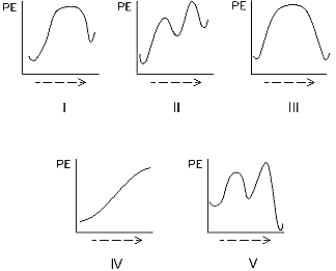
A)I
B)II
C)III
D)IV
E)V
A)I
B)II
C)III
D)IV
E)V
سؤال
سؤال
سؤال
Consider the SN2 reaction of 2-iodopentane with CH3CO2- ion. 
Assuming no other changes,what effect on the rate would result from simultaneously doubling the concentrations of both 2-iodopentane and sodium acetate?
A)No effect.
B)It would double the rate.
C)It would triple the rate.
D)It would increase the rate four times.
E)It would increase the rate six times.
Assuming no other changes,what effect on the rate would result from simultaneously doubling the concentrations of both 2-iodopentane and sodium acetate?
A)No effect.
B)It would double the rate.
C)It would triple the rate.
D)It would increase the rate four times.
E)It would increase the rate six times.
سؤال
The reaction,  has the following thermodynamic values at 27.0 ºC: H = -75.3 kJ mol-1; S = 54.4 J K-1 mol-1.What is the value of G for this reaction?
A)-73.8 kJ mol-1
B)-76.8 kJ mol-1
C)-59.0 kJ mol-1
D)+91.6 kJ mol-1
E)-91.6 kJ mol-1
has the following thermodynamic values at 27.0 ºC: H = -75.3 kJ mol-1; S = 54.4 J K-1 mol-1.What is the value of G for this reaction?A)-73.8 kJ mol-1
B)-76.8 kJ mol-1
C)-59.0 kJ mol-1
D)+91.6 kJ mol-1
E)-91.6 kJ mol-1
سؤال
سؤال
سؤال
سؤال
سؤال
سؤال
سؤال
Consider the reaction of 2-chloro-2-methylpentane with sodium iodide.  Assuming no other changes,how would it affect the rate if one simultaneously doubled the concentration of 2-chloro-2-methylpentane and sodium iodide?
A)No effect.
B)It would double the rate.
C)It would triple the rate.
D)It would quadruple the rate.
E)It would increase the rate five times.
Assuming no other changes,how would it affect the rate if one simultaneously doubled the concentration of 2-chloro-2-methylpentane and sodium iodide?A)No effect.
B)It would double the rate.
C)It would triple the rate.
D)It would quadruple the rate.
E)It would increase the rate five times.
سؤال
The major product of the following reaction would be: 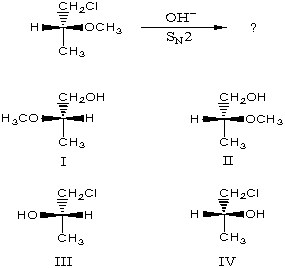
A)I
B)II
C)III
D)IV
E)An equimolar mixture of I and II.
A)I
B)II
C)III
D)IV
E)An equimolar mixture of I and II.
سؤال
Select the potential energy diagram that represents a single-step endothermic (endergonic)reaction. 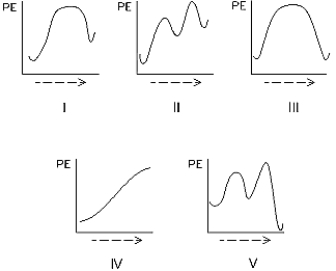
A)I
B)II
C)III
D)IV
E)V
A)I
B)II
C)III
D)IV
E)V
سؤال
سؤال
What product(s)would you expect to obtain from the following SN2 reaction? 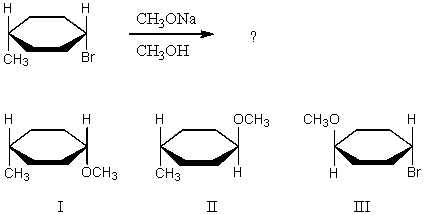
A)I
B)II
C)An equimolar mixture of I and II.
D)III
E)None of these choices.
A)I
B)II
C)An equimolar mixture of I and II.
D)III
E)None of these choices.
سؤال
سؤال
Select the potential energy diagram that represents an exothermic (exergonic)reaction. 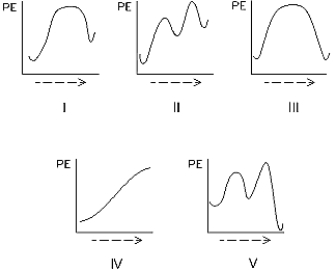
A)I
B)II
C)III
D)IV
E)V
A)I
B)II
C)III
D)IV
E)V
سؤال
Consider the SN2 reaction of 1-chloro-5-methylhexane with CN- ion. 
Assuming no other changes,what effect on the rate would result from simultaneously doubling the concentrations of both 1-chloro-5-methylhexane and NaCN?
A)No effect.
B)It would double the rate.
C)It would triple the rate.
D)It would increase the rate four times.
E)It would increase the rate six times.
Assuming no other changes,what effect on the rate would result from simultaneously doubling the concentrations of both 1-chloro-5-methylhexane and NaCN?
A)No effect.
B)It would double the rate.
C)It would triple the rate.
D)It would increase the rate four times.
E)It would increase the rate six times.
سؤال
Ambident nucleophiles are ones which can react with a substrate at either of two nucleophilic sites.Which of the following is not an ambident nucleophile? 
A)I
B)II
C)III
D)IV
E)V
A)I
B)II
C)III
D)IV
E)V
سؤال
Rank the following in terms of nucleophilic strength: 
A)I>II>III>IV>V
B)V>IV>III>II>I
C)I>IV>II>III>V
D)V>I>IV>II>III
E)I>II>IV>V>III
A)I>II>III>IV>V
B)V>IV>III>II>I
C)I>IV>II>III>V
D)V>I>IV>II>III
E)I>II>IV>V>III
سؤال
سؤال
سؤال
سؤال
سؤال
Which SN2 reaction would you expect to take place most rapidly? Assume that the concentrations of the reactants and the temperature are the same in each instance.
A)
B)

C)
D)

E)
A)
B)
C)
D)
E)
سؤال
سؤال
سؤال
Which is not a polar aprotic solvent?
A)
B)
C)
D)
E)
A)
B)
C)
D)
E)
سؤال
سؤال
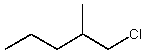
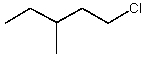
Which alkyl chloride,though primary,is essentially unreactive in SN2 reactions?
A)
B)
C)
D)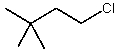
E)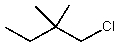
A)
B)
C)
D)
E)
سؤال
سؤال
سؤال
سؤال
سؤال
Which is the strongest nucleophile?
A)OH-
B)CH3CH2O-
C)
D)CH3CH2OH
E)H2O
A)OH-
B)CH3CH2O-
C)
D)CH3CH2OH
E)H2O
سؤال
Which alkyl halide would be most reactive in an SN1 reaction? 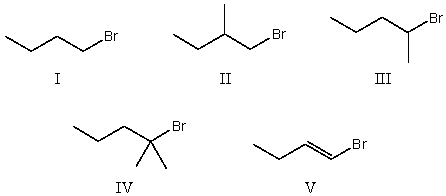
A)I
B)II
C)III
D)IV
E)V
A)I
B)II
C)III
D)IV
E)V
سؤال
سؤال
سؤال
Which of the following would be most reactive in an SN2 reaction?
A)
B)
C)
D)
E)
A)
B)
C)
D)
E)
سؤال
Identify the leaving group in the following reaction. 
A)C6H5S-
B)Na+
C)CH3CH2I
D)C6H5SCH2CH3
E)I-
A)C6H5S-
B)Na+
C)CH3CH2I
D)C6H5SCH2CH3
E)I-
سؤال
Which SN2 reaction would take place most rapidly?
A)
B)
C)
D)
E)
A)
B)
C)
D)
E)
سؤال
سؤال
سؤال
سؤال
سؤال
سؤال
سؤال
سؤال
سؤال
سؤال
Identify the leaving group in the following reaction. 
A)CH3OH
B)CH3OH2+
C)CH3OCH3
D)H2O
E)None of these choices.
A)CH3OH
B)CH3OH2+
C)CH3OCH3
D)H2O
E)None of these choices.
سؤال
Which is the most reactive nucleophile in DMF (structure shown below)? 
A)F-
B)Cl-
C)Br-
D)I-
E)All of these choices are equally reactive.
A)F-
B)Cl-
C)Br-
D)I-
E)All of these choices are equally reactive.
سؤال
سؤال
سؤال
سؤال
سؤال
سؤال
سؤال
سؤال
سؤال
سؤال
سؤال
سؤال
سؤال
سؤال
سؤال
What final product is likely to be obtained through the following series of reactions? 
سؤال
سؤال
سؤال
سؤال
سؤال
سؤال
سؤال
سؤال
سؤال
سؤال
سؤال

فتح الحزمة
قم بالتسجيل لفتح البطاقات في هذه المجموعة!
Unlock Deck
Unlock Deck
1/91

العب

ملء الشاشة (f)
Deck 6: Nucleophilic Reactions
1
An increase in the temperature at which a reaction is carried out increases
A)the collision frequency.
B)the fraction of molecules with proper orientation.
C)the fraction of molecules with energy greater than Eact.
D)More than one of these choices.
E)None of these choices.
A)the collision frequency.
B)the fraction of molecules with proper orientation.
C)the fraction of molecules with energy greater than Eact.
D)More than one of these choices.
E)None of these choices.
More than one of these choices.
2
Select the potential energy diagram that represents a two-step endothermic (endergonic)reaction.
A)I
B)II
C)III
D)IV
E)V
A)I
B)II
C)III
D)IV
E)V
II
3
Consider the SN2 reaction of butyl bromide with OH- ion. CH3CH2CH2CH2Br + OH- CH3CH2CH2CH2OH + Br-
Assuming no other changes,what effect on the rate would result from simultaneously doubling the concentrations of both butyl bromide and OH- ion?
A)No effect.
B)It would double the rate.
C)It would triple the rate.
D)It would increase the rate four times.
E)It would increase the rate six times.
Assuming no other changes,what effect on the rate would result from simultaneously doubling the concentrations of both butyl bromide and OH- ion?
A)No effect.
B)It would double the rate.
C)It would triple the rate.
D)It would increase the rate four times.
E)It would increase the rate six times.
It would increase the rate four times.
4
The rate equation for a nucleophilic substitution reaction of a tertiary alkyl bromide (R-Br)with I- ion would be:
A)Rate = k [RBr]
B)Rate = k [I-]
C)Rate = k [RBr][I-]
D)Rate = k [RBr]2[I-]
E)Rate = k [RBr][I-]2
A)Rate = k [RBr]
B)Rate = k [I-]
C)Rate = k [RBr][I-]
D)Rate = k [RBr]2[I-]
E)Rate = k [RBr][I-]2
فتح الحزمة
افتح القفل للوصول البطاقات البالغ عددها 91 في هذه المجموعة.
فتح الحزمة
k this deck
5
Consider the SN2 reaction of 2-iodopentane with CH3CO2- ion.
Assuming no other changes,what effect on the rate would result from simultaneously doubling the concentrations of both 2-iodopentane and sodium acetate?
A)No effect.
B)It would double the rate.
C)It would triple the rate.
D)It would increase the rate four times.
E)It would increase the rate six times.
Assuming no other changes,what effect on the rate would result from simultaneously doubling the concentrations of both 2-iodopentane and sodium acetate?
A)No effect.
B)It would double the rate.
C)It would triple the rate.
D)It would increase the rate four times.
E)It would increase the rate six times.
فتح الحزمة
افتح القفل للوصول البطاقات البالغ عددها 91 في هذه المجموعة.
فتح الحزمة
k this deck
6
The reaction, has the following thermodynamic values at 27.0 ºC: H = -75.3 kJ mol-1; S = 54.4 J K-1 mol-1.What is the value of G for this reaction?
A)-73.8 kJ mol-1
B)-76.8 kJ mol-1
C)-59.0 kJ mol-1
D)+91.6 kJ mol-1
E)-91.6 kJ mol-1
has the following thermodynamic values at 27.0 ºC: H = -75.3 kJ mol-1; S = 54.4 J K-1 mol-1.What is the value of G for this reaction?A)-73.8 kJ mol-1
B)-76.8 kJ mol-1
C)-59.0 kJ mol-1
D)+91.6 kJ mol-1
E)-91.6 kJ mol-1
فتح الحزمة
افتح القفل للوصول البطاقات البالغ عددها 91 في هذه المجموعة.
فتح الحزمة
k this deck
7
If the rate of reaction of [0.1 M] sodium cyanide with [0.1 M] 2-bromo-2-methylpropane is 1.2 x 10⁻³ M/s,what would be the effect on the overall rate if the concentration of sodium cyanide is increased to [0.2 M] and the concentration of the alkyl bromide is decreased to [0.05 M]?
A)the rate will increase by a factor of 2
B)the rate will decrease by a factor of 2
C)the rate will increase by a factor of 10
D)the rate will decrease by a factor of 10
E)the rate will remain unchanged
A)the rate will increase by a factor of 2
B)the rate will decrease by a factor of 2
C)the rate will increase by a factor of 10
D)the rate will decrease by a factor of 10
E)the rate will remain unchanged
فتح الحزمة
افتح القفل للوصول البطاقات البالغ عددها 91 في هذه المجموعة.
فتح الحزمة
k this deck
8
The difference in the bond energies of reactants and the transition state of a reaction is designated by the notation:
A)" H "
B)" H‡"
C)" G "
D)" G‡"
E)" S‡"
A)" H "
B)" H‡"
C)" G "
D)" G‡"
E)" S‡"
فتح الحزمة
افتح القفل للوصول البطاقات البالغ عددها 91 في هذه المجموعة.
فتح الحزمة
k this deck
9
The hybridization state of the charged carbon in a carbocation is ___.
A)sp4
B)sp3
C)sp2
D)sp
E)s
A)sp4
B)sp3
C)sp2
D)sp
E)s
فتح الحزمة
افتح القفل للوصول البطاقات البالغ عددها 91 في هذه المجموعة.
فتح الحزمة
k this deck
10
The rate equation for a nucleophilic substitution reaction of a secondary alkyl chloride (R-Cl)with I- ion would be:
A)Rate = k [RCl]
B)Rate = k [I-]
C)Rate = k [RCl][I-]
D)Rate = k [RCl]2[I-]
E)Rate = k [RCl][I-]2
A)Rate = k [RCl]
B)Rate = k [I-]
C)Rate = k [RCl][I-]
D)Rate = k [RCl]2[I-]
E)Rate = k [RCl][I-]2
فتح الحزمة
افتح القفل للوصول البطاقات البالغ عددها 91 في هذه المجموعة.
فتح الحزمة
k this deck
11
Which will be true for any actual or potential nucleophilic substitution reaction?
A)" H is positive."
B)" H is negative."
C)" G‡ is positive."
D)" G is positive."
E)" G is negative."
A)" H is positive."
B)" H is negative."
C)" G‡ is positive."
D)" G is positive."
E)" G is negative."
فتح الحزمة
افتح القفل للوصول البطاقات البالغ عددها 91 في هذه المجموعة.
فتح الحزمة
k this deck
12
A true statement about the transition state(s)of an SN2 reaction is:
A)The two transition states are of unequal energy.
B)The transition states precede and follow an unstable reaction intermediate.
C)The single transition state represents the point of maximum free energy of the reaction.
D)Existence of this transition state implies an exothermic reaction.
E)The transition state will always have a net charge of -1.
A)The two transition states are of unequal energy.
B)The transition states precede and follow an unstable reaction intermediate.
C)The single transition state represents the point of maximum free energy of the reaction.
D)Existence of this transition state implies an exothermic reaction.
E)The transition state will always have a net charge of -1.
فتح الحزمة
افتح القفل للوصول البطاقات البالغ عددها 91 في هذه المجموعة.
فتح الحزمة
k this deck
13
Consider the reaction of 2-chloro-2-methylpentane with sodium iodide. Assuming no other changes,how would it affect the rate if one simultaneously doubled the concentration of 2-chloro-2-methylpentane and sodium iodide?
A)No effect.
B)It would double the rate.
C)It would triple the rate.
D)It would quadruple the rate.
E)It would increase the rate five times.
Assuming no other changes,how would it affect the rate if one simultaneously doubled the concentration of 2-chloro-2-methylpentane and sodium iodide?A)No effect.
B)It would double the rate.
C)It would triple the rate.
D)It would quadruple the rate.
E)It would increase the rate five times.
فتح الحزمة
افتح القفل للوصول البطاقات البالغ عددها 91 في هذه المجموعة.
فتح الحزمة
k this deck
14
The major product of the following reaction would be:
A)I
B)II
C)III
D)IV
E)An equimolar mixture of I and II.
A)I
B)II
C)III
D)IV
E)An equimolar mixture of I and II.
فتح الحزمة
افتح القفل للوصول البطاقات البالغ عددها 91 في هذه المجموعة.
فتح الحزمة
k this deck
15
Select the potential energy diagram that represents a single-step endothermic (endergonic)reaction.
A)I
B)II
C)III
D)IV
E)V
A)I
B)II
C)III
D)IV
E)V
فتح الحزمة
افتح القفل للوصول البطاقات البالغ عددها 91 في هذه المجموعة.
فتح الحزمة
k this deck
16
Increasing the temperature of a chemical reaction usually increases greatly the rate of the reaction.The most important reason for this is that increasing the temperature
A)increases the collision frequency.
B)decreases the probability factor.
C)increases the fraction of collisions with energy greater than Eact.
D)decreases the energy of activation.
E)makes the reaction more exothermic.
A)increases the collision frequency.
B)decreases the probability factor.
C)increases the fraction of collisions with energy greater than Eact.
D)decreases the energy of activation.
E)makes the reaction more exothermic.
فتح الحزمة
افتح القفل للوصول البطاقات البالغ عددها 91 في هذه المجموعة.
فتح الحزمة
k this deck
17
What product(s)would you expect to obtain from the following SN2 reaction?
A)I
B)II
C)An equimolar mixture of I and II.
D)III
E)None of these choices.
A)I
B)II
C)An equimolar mixture of I and II.
D)III
E)None of these choices.
فتح الحزمة
افتح القفل للوصول البطاقات البالغ عددها 91 في هذه المجموعة.
فتح الحزمة
k this deck
18
Select the rate law for the following reaction,e.g., CH3CH2CH2CHBrCH3 + OH- CH3CH2CH2CHOHCH3 + Br -
( RBr )
A)Rate = k [RBr]
B)Rate = k [RBr] [OH-]
C)Rate = k [RBr]2 [OH-]
D)Rate = k [RBr] [OH-]2
E)Rate = k [RBr]2 [OH-]2
( RBr )
A)Rate = k [RBr]
B)Rate = k [RBr] [OH-]
C)Rate = k [RBr]2 [OH-]
D)Rate = k [RBr] [OH-]2
E)Rate = k [RBr]2 [OH-]2
فتح الحزمة
افتح القفل للوصول البطاقات البالغ عددها 91 في هذه المجموعة.
فتح الحزمة
k this deck
19
Select the potential energy diagram that represents an exothermic (exergonic)reaction.
A)I
B)II
C)III
D)IV
E)V
A)I
B)II
C)III
D)IV
E)V
فتح الحزمة
افتح القفل للوصول البطاقات البالغ عددها 91 في هذه المجموعة.
فتح الحزمة
k this deck
20
Consider the SN2 reaction of 1-chloro-5-methylhexane with CN- ion.
Assuming no other changes,what effect on the rate would result from simultaneously doubling the concentrations of both 1-chloro-5-methylhexane and NaCN?
A)No effect.
B)It would double the rate.
C)It would triple the rate.
D)It would increase the rate four times.
E)It would increase the rate six times.
Assuming no other changes,what effect on the rate would result from simultaneously doubling the concentrations of both 1-chloro-5-methylhexane and NaCN?
A)No effect.
B)It would double the rate.
C)It would triple the rate.
D)It would increase the rate four times.
E)It would increase the rate six times.
فتح الحزمة
افتح القفل للوصول البطاقات البالغ عددها 91 في هذه المجموعة.
فتح الحزمة
k this deck
21
Ambident nucleophiles are ones which can react with a substrate at either of two nucleophilic sites.Which of the following is not an ambident nucleophile?
A)I
B)II
C)III
D)IV
E)V
A)I
B)II
C)III
D)IV
E)V
فتح الحزمة
افتح القفل للوصول البطاقات البالغ عددها 91 في هذه المجموعة.
فتح الحزمة
k this deck
22
Rank the following in terms of nucleophilic strength:
A)I>II>III>IV>V
B)V>IV>III>II>I
C)I>IV>II>III>V
D)V>I>IV>II>III
E)I>II>IV>V>III
A)I>II>III>IV>V
B)V>IV>III>II>I
C)I>IV>II>III>V
D)V>I>IV>II>III
E)I>II>IV>V>III
فتح الحزمة
افتح القفل للوصول البطاقات البالغ عددها 91 في هذه المجموعة.
فتح الحزمة
k this deck
23
Which is the weakest nucleophile in polar aprotic solvents?
A)I-
B)Br-
C)Cl-
D)F-
E)All of these choices are equally strong nucleophiles,regardless of the type of solvent used.
A)I-
B)Br-
C)Cl-
D)F-
E)All of these choices are equally strong nucleophiles,regardless of the type of solvent used.
فتح الحزمة
افتح القفل للوصول البطاقات البالغ عددها 91 في هذه المجموعة.
فتح الحزمة
k this deck
24
An increase in the kinetic energy of reacting molecules results in
A)a decrease in reaction rate.
B)an increase in the probability factor.
C)a decrease in the probability factor.
D)an increase in the reaction rate.
E)no changes.
A)a decrease in reaction rate.
B)an increase in the probability factor.
C)a decrease in the probability factor.
D)an increase in the reaction rate.
E)no changes.
فتح الحزمة
افتح القفل للوصول البطاقات البالغ عددها 91 في هذه المجموعة.
فتح الحزمة
k this deck
25
Reaction of (R)-2-chloro-4-methylhexane with excess NaI in acetone gives racemic 2-iodo-4-methylhexane.What is the explanation that best describes this transformation?
A)an SN2 reaction has occurred with inversion of configuration
B)racemization followed by an SN2 attack
C)an SNI reaction has taken over resulting in inversion of configuration
D)an SN1 reaction has occurred due to carbocation formation
E)an SN1 reaction followed by an SN2 "backside" attack
A)an SN2 reaction has occurred with inversion of configuration
B)racemization followed by an SN2 attack
C)an SNI reaction has taken over resulting in inversion of configuration
D)an SN1 reaction has occurred due to carbocation formation
E)an SN1 reaction followed by an SN2 "backside" attack
فتح الحزمة
افتح القفل للوصول البطاقات البالغ عددها 91 في هذه المجموعة.
فتح الحزمة
k this deck
26
Which alkyl halide would you expect to undergo an SN2 reaction most slowly?
A)1-bromohexane
B)1-bromo-2-methylpentane
C)1-bromo-3-methylpentane
D)1-bromo-4-methylpentane
E)1-bromo-2,2-dimethylbutane
A)1-bromohexane
B)1-bromo-2-methylpentane
C)1-bromo-3-methylpentane
D)1-bromo-4-methylpentane
E)1-bromo-2,2-dimethylbutane
فتح الحزمة
افتح القفل للوصول البطاقات البالغ عددها 91 في هذه المجموعة.
فتح الحزمة
k this deck
27
Which SN2 reaction would you expect to take place most rapidly? Assume that the concentrations of the reactants and the temperature are the same in each instance.
A)
B)
C)
D)
E)
A)
B)
C)
D)
E)
فتح الحزمة
افتح القفل للوصول البطاقات البالغ عددها 91 في هذه المجموعة.
فتح الحزمة
k this deck
28
Identify the nucleophile in the following reaction: 2 H2O + RX ROH + H3O+ + X-
A)X-
B)H3O+
C)ROH
D)H2O
E)RX
A)X-
B)H3O+
C)ROH
D)H2O
E)RX
فتح الحزمة
افتح القفل للوصول البطاقات البالغ عددها 91 في هذه المجموعة.
فتح الحزمة
k this deck
29
The p orbital of the charged carbon in the isopropyl cation,(CH3)2CH+,contains how many electrons?
A)0
B)1
C)2
D)3
E)4
A)0
B)1
C)2
D)3
E)4
فتح الحزمة
افتح القفل للوصول البطاقات البالغ عددها 91 في هذه المجموعة.
فتح الحزمة
k this deck
30
Which is not a polar aprotic solvent?
A)
B)
C)
D)
E)
A)
B)
C)
D)
E)
فتح الحزمة
افتح القفل للوصول البطاقات البالغ عددها 91 في هذه المجموعة.
فتح الحزمة
k this deck
31
Which is the weakest nucleophile in polar protic solvents?
A)I-
B)Br-
C)Cl-
D)F-
E)All of these choices are equally strong nucleophiles,regardless of the type of solvent used.
A)I-
B)Br-
C)Cl-
D)F-
E)All of these choices are equally strong nucleophiles,regardless of the type of solvent used.
فتح الحزمة
افتح القفل للوصول البطاقات البالغ عددها 91 في هذه المجموعة.
فتح الحزمة
k this deck
32
Which alkyl chloride,though primary,is essentially unreactive in SN2 reactions?
A)
B)
C)
D)
E)
A)
B)
C)
D)
E)
فتح الحزمة
افتح القفل للوصول البطاقات البالغ عددها 91 في هذه المجموعة.
فتح الحزمة
k this deck
33
Which ion is the strongest nucleophile in aqueous solution?
A)F-
B)Cl-
C)Br-
D)I-
E)All of these choices are equally strong.
A)F-
B)Cl-
C)Br-
D)I-
E)All of these choices are equally strong.
فتح الحزمة
افتح القفل للوصول البطاقات البالغ عددها 91 في هذه المجموعة.
فتح الحزمة
k this deck
34
Consider the substitution reaction that takes place when (R)-3-bromo-3-methylhexane is treated with methanol.Which of the following would be true?
A)The reaction would take place only with inversion of configuration at the stereogenic center.
B)The reaction would take place only with retention of configuration at the stereogenic center.
C)The reaction would take place with racemization.
D)No reaction would take place.
E)The alkyl halide does not possess a stereogenic center.
A)The reaction would take place only with inversion of configuration at the stereogenic center.
B)The reaction would take place only with retention of configuration at the stereogenic center.
C)The reaction would take place with racemization.
D)No reaction would take place.
E)The alkyl halide does not possess a stereogenic center.
فتح الحزمة
افتح القفل للوصول البطاقات البالغ عددها 91 في هذه المجموعة.
فتح الحزمة
k this deck
35
Which of the following is not a nucleophile?
A)H2O
B)CH3O-
C)NH3
D)NH4+
E)All are nucleophiles.
A)H2O
B)CH3O-
C)NH3
D)NH4+
E)All are nucleophiles.
فتح الحزمة
افتح القفل للوصول البطاقات البالغ عددها 91 في هذه المجموعة.
فتح الحزمة
k this deck
36
Which of the following alkyl bromide isomers would most readily undergo an SN2 reaction?
A)bromocyclobutane
B)4-bromo-1-butene
C)3-bromo-1-butene
D)1-bromo-1-butene
E)All will react at the same rate.
A)bromocyclobutane
B)4-bromo-1-butene
C)3-bromo-1-butene
D)1-bromo-1-butene
E)All will react at the same rate.
فتح الحزمة
افتح القفل للوصول البطاقات البالغ عددها 91 في هذه المجموعة.
فتح الحزمة
k this deck
37
Which is the strongest nucleophile?
A)OH-
B)CH3CH2O-
C)
D)CH3CH2OH
E)H2O
A)OH-
B)CH3CH2O-
C)
D)CH3CH2OH
E)H2O
فتح الحزمة
افتح القفل للوصول البطاقات البالغ عددها 91 في هذه المجموعة.
فتح الحزمة
k this deck
38
Which alkyl halide would be most reactive in an SN1 reaction?
A)I
B)II
C)III
D)IV
E)V
A)I
B)II
C)III
D)IV
E)V
فتح الحزمة
افتح القفل للوصول البطاقات البالغ عددها 91 في هذه المجموعة.
فتح الحزمة
k this deck
39
Which is a polar aprotic solvent?
A)2-methylhexane
B)CCl4
C)NH3(l)
D)CH3CH2CH2OCH2CH2CH3
E)2-methyl-2-propanol
A)2-methylhexane
B)CCl4
C)NH3(l)
D)CH3CH2CH2OCH2CH2CH3
E)2-methyl-2-propanol
فتح الحزمة
افتح القفل للوصول البطاقات البالغ عددها 91 في هذه المجموعة.
فتح الحزمة
k this deck
40
Identify the nucleophile in the following reaction: 2R'OH + RX ROR' + [R'OH2]+ + X-
A)X-
B)[R'OH2]-
C)ROR'
D)R'OH
E)RX
A)X-
B)[R'OH2]-
C)ROR'
D)R'OH
E)RX
فتح الحزمة
افتح القفل للوصول البطاقات البالغ عددها 91 في هذه المجموعة.
فتح الحزمة
k this deck
41
Which of the following would be most reactive in an SN2 reaction?
A)
B)
C)
D)
E)
A)
B)
C)
D)
E)
فتح الحزمة
افتح القفل للوصول البطاقات البالغ عددها 91 في هذه المجموعة.
فتح الحزمة
k this deck
42
Identify the leaving group in the following reaction.
A)C6H5S-
B)Na+
C)CH3CH2I
D)C6H5SCH2CH3
E)I-
A)C6H5S-
B)Na+
C)CH3CH2I
D)C6H5SCH2CH3
E)I-
فتح الحزمة
افتح القفل للوصول البطاقات البالغ عددها 91 في هذه المجموعة.
فتح الحزمة
k this deck
43
Which SN2 reaction would take place most rapidly?
A)
B)
C)
D)
E)
A)
B)
C)
D)
E)
فتح الحزمة
افتح القفل للوصول البطاقات البالغ عددها 91 في هذه المجموعة.
فتح الحزمة
k this deck
44
Which of the following nucleophiles will react the fastest with 1-bromoptopane in ethanol?
A)SH-
B)OH-
C)H2O
D)H2S
E)All react at about the same rate.
A)SH-
B)OH-
C)H2O
D)H2S
E)All react at about the same rate.
فتح الحزمة
افتح القفل للوصول البطاقات البالغ عددها 91 في هذه المجموعة.
فتح الحزمة
k this deck
45
Which of the following is a feasible substitution reaction?
A)CH3CH2Cl + NaBr CH3CH2Br + NaCl
B)CH3CH3 + NaCN CH3CH2CN + NaH
C)CH3CH2Cl + NaOH CH2=CH2 + H2O + NaCl
D)More than one of these choices.
E)None of these choices.
A)CH3CH2Cl + NaBr CH3CH2Br + NaCl
B)CH3CH3 + NaCN CH3CH2CN + NaH
C)CH3CH2Cl + NaOH CH2=CH2 + H2O + NaCl
D)More than one of these choices.
E)None of these choices.
فتح الحزمة
افتح القفل للوصول البطاقات البالغ عددها 91 في هذه المجموعة.
فتح الحزمة
k this deck
46
Which SN2 reaction will occur most rapidly in aqueous acetone solution? Assume concentrations and temperature are the same in each instance.
A)HO- + CH3-Cl CH3OH + Cl-
B)HO- + CH3CH2-Cl CH3CH2OH + Cl-
C)HO- + (CH3)2CH-Cl (CH3)2CHOH + Cl-
D)HO- + (CH3)3C-Cl (CH3)3COH + Cl-
E)HO- + (CH3)3CCH2-Cl (CH3)3CCH2OH + Cl-
A)HO- + CH3-Cl CH3OH + Cl-
B)HO- + CH3CH2-Cl CH3CH2OH + Cl-
C)HO- + (CH3)2CH-Cl (CH3)2CHOH + Cl-
D)HO- + (CH3)3C-Cl (CH3)3COH + Cl-
E)HO- + (CH3)3CCH2-Cl (CH3)3CCH2OH + Cl-
فتح الحزمة
افتح القفل للوصول البطاقات البالغ عددها 91 في هذه المجموعة.
فتح الحزمة
k this deck
47
Which SN2 reaction will occur most rapidly in a mixture of water and ethanol?
A)I- + CH3CH2-Br CH3CH2-I + Br-
B)I- + CH3CH2-Cl CH3CH2-I + Cl-
C)I- + CH3CH2-F CH3CH2-I + F-
D)Br- + CH3CH2-Cl CH3CH2-Br + Cl-
E)Br- + CH3CH2-F CH3CH2-Br + F-
A)I- + CH3CH2-Br CH3CH2-I + Br-
B)I- + CH3CH2-Cl CH3CH2-I + Cl-
C)I- + CH3CH2-F CH3CH2-I + F-
D)Br- + CH3CH2-Cl CH3CH2-Br + Cl-
E)Br- + CH3CH2-F CH3CH2-Br + F-
فتح الحزمة
افتح القفل للوصول البطاقات البالغ عددها 91 في هذه المجموعة.
فتح الحزمة
k this deck
48
Which of the following is the poorest leaving group?
A)H-
B)CH3O-
C)H2O
D)OH-
E)NH2-
A)H-
B)CH3O-
C)H2O
D)OH-
E)NH2-
فتح الحزمة
افتح القفل للوصول البطاقات البالغ عددها 91 في هذه المجموعة.
فتح الحزمة
k this deck
49
Which of the following solvents will best promote a nucleophilic reaction between NaCN and 1-bromopropane?
A)H2O/MeOH mixture
B)H2O
C)MeCN
D)HF(aq)
E)running with no solvent
A)H2O/MeOH mixture
B)H2O
C)MeCN
D)HF(aq)
E)running with no solvent
فتح الحزمة
افتح القفل للوصول البطاقات البالغ عددها 91 في هذه المجموعة.
فتح الحزمة
k this deck
50
The relative nucleophilicities of species do not necessarily parallel the relative basicities of the same species because
A)not all nucleophiles are bases,and vice versa.
B)experimental measurements of sufficient accuracy are not available to make the comparisons.
C)nucleophilicity is a thermodynamic matter; basicity is a matter of kinetics.
D)basicity is a thermodynamic matter; nucleophilicity is a matter of kinetics.
E)Actually,the relative values do parallel one another.
A)not all nucleophiles are bases,and vice versa.
B)experimental measurements of sufficient accuracy are not available to make the comparisons.
C)nucleophilicity is a thermodynamic matter; basicity is a matter of kinetics.
D)basicity is a thermodynamic matter; nucleophilicity is a matter of kinetics.
E)Actually,the relative values do parallel one another.
فتح الحزمة
افتح القفل للوصول البطاقات البالغ عددها 91 في هذه المجموعة.
فتح الحزمة
k this deck
51
Which of the following nucleophiles will react the fastest with tert-butyl bromide in ethanol?
A)F-
B)Br-
C)I-
D)Cl-
E)All react at about the same rate.
A)F-
B)Br-
C)I-
D)Cl-
E)All react at about the same rate.
فتح الحزمة
افتح القفل للوصول البطاقات البالغ عددها 91 في هذه المجموعة.
فتح الحزمة
k this deck
52
Which alkyl halide would you expect to react most slowly when heated in aqueous solution?
A)(CH3)3C-F
B)(CH3)3C-Cl
C)(CH3)3C-Br
D)(CH3)3C-I
E)All of these choices would react at the same rate.
A)(CH3)3C-F
B)(CH3)3C-Cl
C)(CH3)3C-Br
D)(CH3)3C-I
E)All of these choices would react at the same rate.
فتح الحزمة
افتح القفل للوصول البطاقات البالغ عددها 91 في هذه المجموعة.
فتح الحزمة
k this deck
53
Identify the leaving group in the following reaction.
A)CH3OH
B)CH3OH2+
C)CH3OCH3
D)H2O
E)None of these choices.
A)CH3OH
B)CH3OH2+
C)CH3OCH3
D)H2O
E)None of these choices.
فتح الحزمة
افتح القفل للوصول البطاقات البالغ عددها 91 في هذه المجموعة.
فتح الحزمة
k this deck
54
Which is the most reactive nucleophile in DMF (structure shown below)?
A)F-
B)Cl-
C)Br-
D)I-
E)All of these choices are equally reactive.
A)F-
B)Cl-
C)Br-
D)I-
E)All of these choices are equally reactive.
فتح الحزمة
افتح القفل للوصول البطاقات البالغ عددها 91 في هذه المجموعة.
فتح الحزمة
k this deck
55
Which ion is the strongest nucleophile in an aprotic solvent such as dimethylsulfoxide?
A)I-
B)Br-
C)Cl-
D)F-
E)All of these choices are equal.
A)I-
B)Br-
C)Cl-
D)F-
E)All of these choices are equal.
فتح الحزمة
افتح القفل للوصول البطاقات البالغ عددها 91 في هذه المجموعة.
فتح الحزمة
k this deck
56
Which nucleophilic substitution reaction would be unlikely to occur?
A)HO- + CH3CH2-I CH3CH2-OH + I-
B)I- + CH3CH2-H CH3CH2-I + H-
C)CH3S- + CH3-Br CH3S-CH3 + Br-
D)All of these choices would be unlikely to occur.
E)None of these choices would be unlikely to occur.
A)HO- + CH3CH2-I CH3CH2-OH + I-
B)I- + CH3CH2-H CH3CH2-I + H-
C)CH3S- + CH3-Br CH3S-CH3 + Br-
D)All of these choices would be unlikely to occur.
E)None of these choices would be unlikely to occur.
فتح الحزمة
افتح القفل للوصول البطاقات البالغ عددها 91 في هذه المجموعة.
فتح الحزمة
k this deck
57
Considering the relative solvation of reactants and the transition states of substitution reactions of these reactants,predict which general type of reaction would be most favored by the use of a polar solvent.
A)Y: + RX RY+ + X:-
B)Y:- + RX RY + X:-
C)Y: + RX+ RY+ + X:
D)Y:- + RX+ RY + X:
E)RX+ R+ + X:
A)Y: + RX RY+ + X:-
B)Y:- + RX RY + X:-
C)Y: + RX+ RY+ + X:
D)Y:- + RX+ RY + X:
E)RX+ R+ + X:
فتح الحزمة
افتح القفل للوصول البطاقات البالغ عددها 91 في هذه المجموعة.
فتح الحزمة
k this deck
58
Which of these species,acting in a protic solvent,exhibits greater nucleophilic activity than expected on the basis of its basicity?
A)OH-
B)CH3O-
C)SH-
D)Cl-
E)H2O
A)OH-
B)CH3O-
C)SH-
D)Cl-
E)H2O
فتح الحزمة
افتح القفل للوصول البطاقات البالغ عددها 91 في هذه المجموعة.
فتح الحزمة
k this deck
59
Which of the following is not true concerning the strength of a nucleophile?
A)Nucleophilicity may not parallel basicity.
B)Negatively charged nucleophiles are always more reactive than their conjugate acids.
C)The greater the strength of a nucleophile,the faster an SN2 reaction will occur.
D)Strong bases are always good nucleophiles
E)None of these answer choices are correct.
A)Nucleophilicity may not parallel basicity.
B)Negatively charged nucleophiles are always more reactive than their conjugate acids.
C)The greater the strength of a nucleophile,the faster an SN2 reaction will occur.
D)Strong bases are always good nucleophiles
E)None of these answer choices are correct.
فتح الحزمة
افتح القفل للوصول البطاقات البالغ عددها 91 في هذه المجموعة.
فتح الحزمة
k this deck
60
Which of the following is not a good leaving group?
A)C2H5O-
B)Cl-
C)Isup>-
D)CH3CO2-
E)All of these choices are good leaving groups.
A)C2H5O-
B)Cl-
C)Isup>-
D)CH3CO2-
E)All of these choices are good leaving groups.
فتح الحزمة
افتح القفل للوصول البطاقات البالغ عددها 91 في هذه المجموعة.
فتح الحزمة
k this deck
61
In the SN2 reaction,the unstable arrangement of atoms in which both the nucleophile and the leaving group are partially bonded to the same carbon atom is called the ___.
فتح الحزمة
افتح القفل للوصول البطاقات البالغ عددها 91 في هذه المجموعة.
فتح الحزمة
k this deck
62
SN2 reactions of the type,Nu- + RL Nu-R + L-, are favored
A)when tertiary substrates are used.
B)by using a high concentration of the nucleophile.
C)by using a solvent of high polarity.
D)by the use of weak nucleophiles.
E)by none of these choices.
A)when tertiary substrates are used.
B)by using a high concentration of the nucleophile.
C)by using a solvent of high polarity.
D)by the use of weak nucleophiles.
E)by none of these choices.
فتح الحزمة
افتح القفل للوصول البطاقات البالغ عددها 91 في هذه المجموعة.
فتح الحزمة
k this deck
63
SN1 reactions of the following type: Nu:- + R-X R-Nu + :X-
Are favored
A)by the use of tertiary substrates (as opposed to primary or secondary substrates).
B)by increasing the concentration of the nucleophile.
C)by increasing the polarity of the solvent.
D)by use of a weak nucleophile.
E)by the use of tertiary substrates (as opposed to primary or secondary substrates)and by use of a weak nucleophile.
Are favored
A)by the use of tertiary substrates (as opposed to primary or secondary substrates).
B)by increasing the concentration of the nucleophile.
C)by increasing the polarity of the solvent.
D)by use of a weak nucleophile.
E)by the use of tertiary substrates (as opposed to primary or secondary substrates)and by use of a weak nucleophile.
فتح الحزمة
افتح القفل للوصول البطاقات البالغ عددها 91 في هذه المجموعة.
فتح الحزمة
k this deck
64
As we go down Group 7A of the periodic table,the size of the halogen atom increases; accordingly,the carbon-halogen bond length gets ___ and the bond strength gets ___.
فتح الحزمة
افتح القفل للوصول البطاقات البالغ عددها 91 في هذه المجموعة.
فتح الحزمة
k this deck
65
In order for colliding species to react,they must ___ and ___.
فتح الحزمة
افتح القفل للوصول البطاقات البالغ عددها 91 في هذه المجموعة.
فتح الحزمة
k this deck
66
Racemic mixtures form in SN1 reactions when leaving group departure results in a loss of chirality followed by subsequent attack of the nucleophile.
فتح الحزمة
افتح القفل للوصول البطاقات البالغ عددها 91 في هذه المجموعة.
فتح الحزمة
k this deck
67
Which of the following statements is (are)true of an SN2 reaction of (R)-2-bromobutane with hydroxide ion?
A)Doubling the hydroxide ion concentration would double the rate of the reaction.(Assume that all other experimental conditions are unchanged.)
B)The major product would be (S)-2-butanol.
C)Doubling the concentration of (R)-2-bromobutane would double the rate of the reaction.(Assume that all other experimental conditions are unchanged.)
D)All of these choices.
E)Two of these choices.
A)Doubling the hydroxide ion concentration would double the rate of the reaction.(Assume that all other experimental conditions are unchanged.)
B)The major product would be (S)-2-butanol.
C)Doubling the concentration of (R)-2-bromobutane would double the rate of the reaction.(Assume that all other experimental conditions are unchanged.)
D)All of these choices.
E)Two of these choices.
فتح الحزمة
افتح القفل للوصول البطاقات البالغ عددها 91 في هذه المجموعة.
فتح الحزمة
k this deck
68
SN1 reactions of the type,Nu- + RL Nu-R + L-,are favored
A)when tertiary substrates are used.
B)by using a high concentration of the nucleophile.
C)when L- is a strong base.
D)by use of a non-polar solvent.
E)by none of these choices.
A)when tertiary substrates are used.
B)by using a high concentration of the nucleophile.
C)when L- is a strong base.
D)by use of a non-polar solvent.
E)by none of these choices.
فتح الحزمة
افتح القفل للوصول البطاقات البالغ عددها 91 في هذه المجموعة.
فتح الحزمة
k this deck
69
What final product is likely to be obtained through the following series of reactions?
فتح الحزمة
افتح القفل للوصول البطاقات البالغ عددها 91 في هذه المجموعة.
فتح الحزمة
k this deck
70
Which of the following statements is (are)true of SN1 reactions of alkyl halides in general?
A)The rate of an SN1 reaction depends on the concentration of the alkyl halide.
B)The rate of an SN1 reaction depends on the concentration of the nucleophile.
C)SN1 reactions of alkyl halides are favored by polar solvents.
D)The rate of an SN1 reaction depends on the concentration of the alkyl halide and SN1 reactions of alkyl halides are favored by polar solvents.
E)The rate of an SN1 reaction depends on the concentration of the alkyl halide and the concentration of the nucleophile,and SN1 reactions of alkyl halides are favored by polar solvents.
A)The rate of an SN1 reaction depends on the concentration of the alkyl halide.
B)The rate of an SN1 reaction depends on the concentration of the nucleophile.
C)SN1 reactions of alkyl halides are favored by polar solvents.
D)The rate of an SN1 reaction depends on the concentration of the alkyl halide and SN1 reactions of alkyl halides are favored by polar solvents.
E)The rate of an SN1 reaction depends on the concentration of the alkyl halide and the concentration of the nucleophile,and SN1 reactions of alkyl halides are favored by polar solvents.
فتح الحزمة
افتح القفل للوصول البطاقات البالغ عددها 91 في هذه المجموعة.
فتح الحزمة
k this deck
71
SN1 reactions of the following type: Nu:- + R-X R-Nu + :X-
Are favored
A)by the use of tertiary substrates (as opposed to primary or secondary substrates).
B)by increasing the concentration of the nucleophile.
C)by increasing the polarity of the solvent.
D)by use of a strong base.
E)by more than one of these choices.
Are favored
A)by the use of tertiary substrates (as opposed to primary or secondary substrates).
B)by increasing the concentration of the nucleophile.
C)by increasing the polarity of the solvent.
D)by use of a strong base.
E)by more than one of these choices.
فتح الحزمة
افتح القفل للوصول البطاقات البالغ عددها 91 في هذه المجموعة.
فتح الحزمة
k this deck
72
Which of the following statements is (are)true of SN1 reactions of alkyl halides in general?
A)The rate of an SN1 reaction depends on the concentration of the alkyl halide.
B)The rate of an SN1 reaction depends on the concentration of the nucleophile.
C)SN1 reactions of alkyl halides occur faster in polar aprotic solvents (compared to protic solvents).
D)The rate of an SN1 reaction depends on the concentration of the alkyl halide and SN1 reactions of alkyl halides occur faster in polar aprotic solvents (compared to protic solvents).
E)The rate of an SN1 reaction depends on the concentration of the alkyl halide and the concentration of the nucleophile,and SN1 reactions of alkyl halides occur faster in polar aprotic solvents (compared to protic solvents).
A)The rate of an SN1 reaction depends on the concentration of the alkyl halide.
B)The rate of an SN1 reaction depends on the concentration of the nucleophile.
C)SN1 reactions of alkyl halides occur faster in polar aprotic solvents (compared to protic solvents).
D)The rate of an SN1 reaction depends on the concentration of the alkyl halide and SN1 reactions of alkyl halides occur faster in polar aprotic solvents (compared to protic solvents).
E)The rate of an SN1 reaction depends on the concentration of the alkyl halide and the concentration of the nucleophile,and SN1 reactions of alkyl halides occur faster in polar aprotic solvents (compared to protic solvents).
فتح الحزمة
افتح القفل للوصول البطاقات البالغ عددها 91 في هذه المجموعة.
فتح الحزمة
k this deck
73
Increasing the temperature of a reaction will speed up the overall rate as this will increase the energy of activation for reaction.
فتح الحزمة
افتح القفل للوصول البطاقات البالغ عددها 91 في هذه المجموعة.
فتح الحزمة
k this deck
74
Which nucleophilic substitution reaction is not likely to occur?
A)I-+ CH3CH2-Cl CH3CH2-I + Cl-
B)I- + CH3CH2-Br CH3CH2-I + Br-
C)I- + CH3CH2-OH CH3CH2-I + OH-
D)CH3O-+ CH3CH2-Br CH3CH2-OCH3 + Br-
E)OH-+ CH3CH2-Cl CH3CH2-OH + Cl-
A)I-+ CH3CH2-Cl CH3CH2-I + Cl-
B)I- + CH3CH2-Br CH3CH2-I + Br-
C)I- + CH3CH2-OH CH3CH2-I + OH-
D)CH3O-+ CH3CH2-Br CH3CH2-OCH3 + Br-
E)OH-+ CH3CH2-Cl CH3CH2-OH + Cl-
فتح الحزمة
افتح القفل للوصول البطاقات البالغ عددها 91 في هذه المجموعة.
فتح الحزمة
k this deck
75
Draw the potential energy diagram that represents an exothermic reaction between a tertiary alkyl halide and methanol.Briefly explain your rationale.
فتح الحزمة
افتح القفل للوصول البطاقات البالغ عددها 91 في هذه المجموعة.
فتح الحزمة
k this deck
76
When 5-bromo-1-pentanol is treated with sodium hydride in diethyl ether,the product is analyzed to be C5H10O.Propose a likely structure for this product,suggesting a reasonable mechanistic pathway for its formation.
فتح الحزمة
افتح القفل للوصول البطاقات البالغ عددها 91 في هذه المجموعة.
فتح الحزمة
k this deck
77
In a highly exergonic SN2 reaction we can assume the transition state is similar to the products formed in the reaction.
فتح الحزمة
افتح القفل للوصول البطاقات البالغ عددها 91 في هذه المجموعة.
فتح الحزمة
k this deck
78
A nucleophile in an SN2 reaction must approach from the ___ of the carbon atom attached to the leaving group since the electrons in the nucleophile's HOMO begins to overlap with the ___ of the carbon atom attached to the leaving group.
فتح الحزمة
افتح القفل للوصول البطاقات البالغ عددها 91 في هذه المجموعة.
فتح الحزمة
k this deck
79
Which nucleophilic substitution reaction would be likely to occur (although probably not in excellent yield,due to competing elimination)?
A)HO- + CH3CH2CH2CHICH3 CH3 CH2CH2CHOHCH3 + I-
B)Cl-+ CH3CH2CH2CH2-OH CH3CH2CH2CH2-Cl + OH-
C)CH3S- + CH3CH2CH2-OCH3 CH3S-CH2CH2CH3 + OCH3---
D)All of these choices are likely to occur.
E)None of these choices are likely to occur.
A)HO- + CH3CH2CH2CHICH3 CH3 CH2CH2CHOHCH3 + I-
B)Cl-+ CH3CH2CH2CH2-OH CH3CH2CH2CH2-Cl + OH-
C)CH3S- + CH3CH2CH2-OCH3 CH3S-CH2CH2CH3 + OCH3---
D)All of these choices are likely to occur.
E)None of these choices are likely to occur.
فتح الحزمة
افتح القفل للوصول البطاقات البالغ عددها 91 في هذه المجموعة.
فتح الحزمة
k this deck
80
An endergonic SN2 reaction will have a have a higher energy of activation ( G‡)than an exergonic SN2 reaction.
فتح الحزمة
افتح القفل للوصول البطاقات البالغ عددها 91 في هذه المجموعة.
فتح الحزمة
k this deck
فتح الحزمة
افتح القفل للوصول البطاقات البالغ عددها 91 في هذه المجموعة.






