







 تكلم مع الذكاء الاصطناعي


Deck 13: Abdomen and Gastrointestinal System
ملء الشاشة (f)

سؤال

سؤال
سؤال
سؤال
سؤال
سؤال
سؤال
سؤال
سؤال
سؤال
سؤال
سؤال
سؤال
سؤال
سؤال
سؤال
سؤال
سؤال
سؤال
سؤال
سؤال
سؤال
سؤال
سؤال
Which assessment technique is the nurse performing in the figure below? 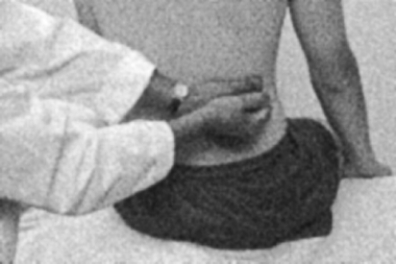
A) Direct percussion
B) Indirect percussion
C) Light palpation
D) Deep palpation
A) Direct percussion
B) Indirect percussion
C) Light palpation
D) Deep palpation
سؤال
سؤال
سؤال
سؤال
سؤال
سؤال
Which location does a nurse select when palpating a patient's liver? 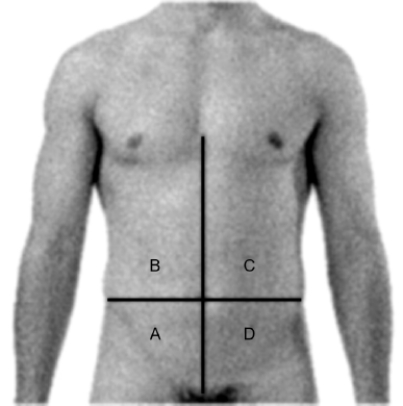
A) A (right lower quadrant)
B) B (right upper quadrant)
C) C (left upper quadrant)
D) D (left lower quadrant)
A) A (right lower quadrant)
B) B (right upper quadrant)
C) C (left upper quadrant)
D) D (left lower quadrant)
سؤال
سؤال
سؤال
سؤال
سؤال
سؤال
سؤال
سؤال

فتح الحزمة
قم بالتسجيل لفتح البطاقات في هذه المجموعة!
Unlock Deck
Unlock Deck
1/38

العب

ملء الشاشة (f)
Deck 13: Abdomen and Gastrointestinal System
1
When auscultating a patient's abdomen using the bell of the stethoscope, the nurse hears soft, low-pitched murmurs over the right and left upper midline. What do these sounds indicate?
A) Expected peristalsis
B) Femoral artery stenosis
C) Renal artery stenosis
D) Hyperactive bowel sounds
A) Expected peristalsis
B) Femoral artery stenosis
C) Renal artery stenosis
D) Hyperactive bowel sounds
Renal artery stenosis
2
What sound does a nurse expect to hear when using the bell of the stethoscope over the epigastric area of the abdomen of a healthy patient?
A) Bowel sounds
B) Venous hum
C) Soft, low-pitched murmur
D) No sounds
A) Bowel sounds
B) Venous hum
C) Soft, low-pitched murmur
D) No sounds
No sounds
3
During an assessment for abdominal pain, a patient reports a colicky abdominal pain and pain in the right shoulder that gets worse after eating fried foods. What question does the nurse ask to confirm the suspicion of cholelithiasis?
A) "Have you noticed any swelling in your ankles or feet at the end of the day?"
B) "Have you noticed a change in the color of your urine or stools?"
C) "Have you vomited up any blood in the last 24 hours?"
D) "Have you experienced fever, chills, or sweating?"
A) "Have you noticed any swelling in your ankles or feet at the end of the day?"
B) "Have you noticed a change in the color of your urine or stools?"
C) "Have you vomited up any blood in the last 24 hours?"
D) "Have you experienced fever, chills, or sweating?"
"Have you noticed a change in the color of your urine or stools?"
4
When inspecting a patient's abdomen, which finding does the nurse note as normal?
A) Engorgement of veins around the umbilicus
B) Sudden bulge at the umbilicus when coughing
C) Visible peristalsis in all quadrants
D) Silver-white striae extending from the umbilicus
A) Engorgement of veins around the umbilicus
B) Sudden bulge at the umbilicus when coughing
C) Visible peristalsis in all quadrants
D) Silver-white striae extending from the umbilicus
فتح الحزمة
افتح القفل للوصول البطاقات البالغ عددها 38 في هذه المجموعة.
فتح الحزمة
k this deck
5
When inspecting a patient's abdomen, the nurse notes which finding as abnormal?
A) Protruding abdomen with skin that is lighter in color than the arms and legs
B) Marked, widely lateral pulsating mass to the left of the midline
C) Faint, fine vascular network
D) Small shadows created by changes in contour
A) Protruding abdomen with skin that is lighter in color than the arms and legs
B) Marked, widely lateral pulsating mass to the left of the midline
C) Faint, fine vascular network
D) Small shadows created by changes in contour
فتح الحزمة
افتح القفل للوصول البطاقات البالغ عددها 38 في هذه المجموعة.
فتح الحزمة
k this deck
6
A patient reports having abdominal distention and having vomited several times yesterday and today. What question is appropriate for the nurse to ask in response to this information?
A) "Has there been a change in your usual pattern of urination?"
B) "Did you have heartburn before the vomiting?"
C) "What did the vomitus look like?"
D) "Have you noticed a change in the color of your urine or stools?"
A) "Has there been a change in your usual pattern of urination?"
B) "Did you have heartburn before the vomiting?"
C) "What did the vomitus look like?"
D) "Have you noticed a change in the color of your urine or stools?"
فتح الحزمة
افتح القفل للوصول البطاقات البالغ عددها 38 في هذه المجموعة.
فتح الحزمة
k this deck
7
A patient reports a change in the usual pattern of urination. What question does the nurse ask to determine if incontinence is the reason for these symptoms?
A) "Do you have the feeling that you cannot wait to urinate?"
B) "Are you urinating a large amount each time you go to the bathroom?"
C) "Has the color of your urine changed lately?"
D) "Have you noticed any swelling in your ankles at the end of the day?"
A) "Do you have the feeling that you cannot wait to urinate?"
B) "Are you urinating a large amount each time you go to the bathroom?"
C) "Has the color of your urine changed lately?"
D) "Have you noticed any swelling in your ankles at the end of the day?"
فتح الحزمة
افتح القفل للوصول البطاقات البالغ عددها 38 في هذه المجموعة.
فتح الحزمة
k this deck
8
On inspection of a female patient's abdomen, the nurse asks the patient to raise her head without using her arms and notes a midline bulge. What is the appropriate response of the nurse at this time?
A) Ask the patient to hold her breath to see if the bulge reappears.
B) Auscultate the patient's abdomen for hypoactive bowel sounds.
C) Document this as a normal finding and continue the examination.
D) Perform light palpation of the abdomen.
A) Ask the patient to hold her breath to see if the bulge reappears.
B) Auscultate the patient's abdomen for hypoactive bowel sounds.
C) Document this as a normal finding and continue the examination.
D) Perform light palpation of the abdomen.
فتح الحزمة
افتح القفل للوصول البطاقات البالغ عددها 38 في هذه المجموعة.
فتح الحزمة
k this deck
9
A patient reports having abdominal distention. The nurse observes that the patient's sclerae are yellow. Which abnormal finding does the nurse anticipate on examination of this patient's abdomen?
A) Decreased bowel sounds in all quadrants
B) Glistening or taut skin of the abdomen
C) Bulge in the abdomen when coughing
D) Bruit around the umbilicus
A) Decreased bowel sounds in all quadrants
B) Glistening or taut skin of the abdomen
C) Bulge in the abdomen when coughing
D) Bruit around the umbilicus
فتح الحزمة
افتح القفل للوصول البطاقات البالغ عددها 38 في هذه المجموعة.
فتح الحزمة
k this deck
10
How does the nurse accurately assess bowel sounds?
A) Press the diaphragm of the stethoscope firmly against the abdomen in each quadrant.
B) Hold the diaphragm of the stethoscope lightly against the abdomen in each quadrant.
C) Press the bell of the stethoscope firmly against the abdomen in each quadrant.
D) Hold the bell of the stethoscope lightly against the abdomen in each quadrant.
A) Press the diaphragm of the stethoscope firmly against the abdomen in each quadrant.
B) Hold the diaphragm of the stethoscope lightly against the abdomen in each quadrant.
C) Press the bell of the stethoscope firmly against the abdomen in each quadrant.
D) Hold the bell of the stethoscope lightly against the abdomen in each quadrant.
فتح الحزمة
افتح القفل للوصول البطاقات البالغ عددها 38 في هذه المجموعة.
فتح الحزمة
k this deck
11
Using deep palpation of a patient's epigastrium, a nurse feels a rhythmic pulsation of the aorta. Based on this finding, what is the nurse's most appropriate response?
A) Auscultate this area using the bell of the stethoscope.
B) Percuss the area for tones.
C) Ask the patient if there is pain in this area.
D) Document this as a normal finding.
A) Auscultate this area using the bell of the stethoscope.
B) Percuss the area for tones.
C) Ask the patient if there is pain in this area.
D) Document this as a normal finding.
فتح الحزمة
افتح القفل للوصول البطاقات البالغ عددها 38 في هذه المجموعة.
فتح الحزمة
k this deck
12
What technique does a nurse use when performing deep palpation of a patient's abdomen?
A) Places the left hand under the ribs to lift them up
B) Asks the patient to breathe slowly through the mouth
C) Positions the patient on the right side with knees flexed
D) Uses the heel of the hand to depress the abdomen
A) Places the left hand under the ribs to lift them up
B) Asks the patient to breathe slowly through the mouth
C) Positions the patient on the right side with knees flexed
D) Uses the heel of the hand to depress the abdomen
فتح الحزمة
افتح القفل للوصول البطاقات البالغ عددها 38 في هذه المجموعة.
فتح الحزمة
k this deck
13
A nurse inspects the abdomen for skin color, surface characteristics, and surface movement. What part of the abdominal assessment does the nurse perform next?
A) Light palpation for tenderness and muscle tone
B) Ausculation of the bowel sounds in all four quadrants
C) Deep palpation for masses or aortic pulsation
D) Percussion for tones in all four quadrants
A) Light palpation for tenderness and muscle tone
B) Ausculation of the bowel sounds in all four quadrants
C) Deep palpation for masses or aortic pulsation
D) Percussion for tones in all four quadrants
فتح الحزمة
افتح القفل للوصول البطاقات البالغ عددها 38 في هذه المجموعة.
فتح الحزمة
k this deck
14
In assessing a patient with renal disease, the nurse palpates edema in both ankles and feet. Based on this finding, what question does the nurse ask the patient?
A) "Have you had any pain in your abdomen?"
B) "Have you had an unexpected weight gain?"
C) "Have you noticed a change in the color of your skin?"
D) "Have you had any nausea or vomiting?"
A) "Have you had any pain in your abdomen?"
B) "Have you had an unexpected weight gain?"
C) "Have you noticed a change in the color of your skin?"
D) "Have you had any nausea or vomiting?"
فتح الحزمة
افتح القفل للوصول البطاقات البالغ عددها 38 في هذه المجموعة.
فتح الحزمة
k this deck
15
What instructions does the nurse give a patient before palpating the abdomen?
A) Bend the knees.
B) Take a deep breath and hold it.
C) Take a deep breath and cough.
D) Place the hands over the head.
A) Bend the knees.
B) Take a deep breath and hold it.
C) Take a deep breath and cough.
D) Place the hands over the head.
فتح الحزمة
افتح القفل للوصول البطاقات البالغ عددها 38 في هذه المجموعة.
فتح الحزمة
k this deck
16
A patient reports having abdominal distention. The nurse notices that the patient's sclerae are yellow. What question is appropriate for the nurse to ask in response to this information?
A) "Has there been a change in your usual pattern of urination?"
B) "Have you had any nausea or vomiting?"
C) "Has there been a change in your bowel habits?"
D) "Have you had indigestion or heartburn?"
A) "Has there been a change in your usual pattern of urination?"
B) "Have you had any nausea or vomiting?"
C) "Has there been a change in your bowel habits?"
D) "Have you had indigestion or heartburn?"
فتح الحزمة
افتح القفل للوصول البطاقات البالغ عددها 38 في هذه المجموعة.
فتح الحزمة
k this deck
17
A patient tells the nurse, "I've been having pain in my belly for several days that gets worse after eating." Which datum from the symptom analysis is consistent with the nurse's suspicion of peptic ulcer disease?
A) Gnawing epigastric pain radiates to the back or shoulder that worsens after eating.
B) Sharp midepigastric pain radiates to the jaw.
C) Intermittent cramping pain in the left lower quadrant is relieved by defecation.
D) Colicky pain is felt near the umbilicus with vomiting and constipation.
A) Gnawing epigastric pain radiates to the back or shoulder that worsens after eating.
B) Sharp midepigastric pain radiates to the jaw.
C) Intermittent cramping pain in the left lower quadrant is relieved by defecation.
D) Colicky pain is felt near the umbilicus with vomiting and constipation.
فتح الحزمة
افتح القفل للوصول البطاقات البالغ عددها 38 في هذه المجموعة.
فتح الحزمة
k this deck
18
A patient reports having frequent heartburn. Which question does the nurse ask in response to this information?
A) "Has your abdomen been distended when you feel the heartburn?"
B) "What have you eaten in the last 24 hours?"
C) "Is there a history of heart disease in your family?"
D) "How long after eating do you have heartburn?"
A) "Has your abdomen been distended when you feel the heartburn?"
B) "What have you eaten in the last 24 hours?"
C) "Is there a history of heart disease in your family?"
D) "How long after eating do you have heartburn?"
فتح الحزمة
افتح القفل للوصول البطاقات البالغ عددها 38 في هذه المجموعة.
فتح الحزمة
k this deck
19
A patient reports intermittent cramping abdominal pain that is relieved by having a bowel movement. The patient complains of having the pain at this time, which is why she is seeking care. Which abnormal finding does the nurse anticipate finding on examination of this patient's abdomen?
A) Decreased bowel sounds
B) Bulge in the abdomen when coughing
C) Palpable mass in the left lower quadrant
D) Bruit around the umbilicus
A) Decreased bowel sounds
B) Bulge in the abdomen when coughing
C) Palpable mass in the left lower quadrant
D) Bruit around the umbilicus
فتح الحزمة
افتح القفل للوصول البطاقات البالغ عددها 38 في هذه المجموعة.
فتح الحزمة
k this deck
20
A nurse notices abdominal distention when inspecting a patient's abdomen. What action does the nurse take next to gain further objective data?
A) Place a measuring tape around the superior iliac crests.
B) Assist the patient to turn on to the left side and then the right side.
C) Ask the patient to cough while lying supine.
D) Use the fingertips to sharply strike one side of the abdomen.
A) Place a measuring tape around the superior iliac crests.
B) Assist the patient to turn on to the left side and then the right side.
C) Ask the patient to cough while lying supine.
D) Use the fingertips to sharply strike one side of the abdomen.
فتح الحزمة
افتح القفل للوصول البطاقات البالغ عددها 38 في هذه المجموعة.
فتح الحزمة
k this deck
21
On palpation of the left upper quadrant of the abdomen of a female patient, the nurse notes tenderness. This finding may indicate a disorder in which organ?
A) Spleen
B) Gallbladder
C) Sigmoid colon
D) Left ovary
A) Spleen
B) Gallbladder
C) Sigmoid colon
D) Left ovary
فتح الحزمة
افتح القفل للوصول البطاقات البالغ عددها 38 في هذه المجموعة.
فتح الحزمة
k this deck
22
Put in correct order the steps used to palpate the liver.
A) Place your right hand parallel to the right costal margin.
B) Ask the patient to take a deep breath and hold it.
C) Lift up the eleventh and twelfth ribs with the left hand.
D) Press your right hand down and under the coastal margin.
E) Assess the border and contour of the liver.
A) Place your right hand parallel to the right costal margin.
B) Ask the patient to take a deep breath and hold it.
C) Lift up the eleventh and twelfth ribs with the left hand.
D) Press your right hand down and under the coastal margin.
E) Assess the border and contour of the liver.
فتح الحزمة
افتح القفل للوصول البطاقات البالغ عددها 38 في هذه المجموعة.
فتح الحزمة
k this deck
23
A nurse expects which finding when assessing the abdomen of a patient who has been unable to void for 12 hours?
A) Absent bowel sounds
B) Hyperactive bowel sounds
C) Tympanic tones over the lower abdomen
D) Dull tones over the suprapubic area
A) Absent bowel sounds
B) Hyperactive bowel sounds
C) Tympanic tones over the lower abdomen
D) Dull tones over the suprapubic area
فتح الحزمة
افتح القفل للوصول البطاقات البالغ عددها 38 في هذه المجموعة.
فتح الحزمة
k this deck
24
Which assessment technique is the nurse performing in the figure below?
A) Direct percussion
B) Indirect percussion
C) Light palpation
D) Deep palpation
A) Direct percussion
B) Indirect percussion
C) Light palpation
D) Deep palpation
فتح الحزمة
افتح القفل للوصول البطاقات البالغ عددها 38 في هذه المجموعة.
فتح الحزمة
k this deck
25
The nurse recognizes which clinical finding as expected on palpation of the abdomen?
A) Inability to palpate the spleen
B) Left kidney rounded at 2 cm below the costal margin
C) Slight tenderness of the gallbladder on light palpation
D) Bounding pulsation of the aorta over the umbilicus
A) Inability to palpate the spleen
B) Left kidney rounded at 2 cm below the costal margin
C) Slight tenderness of the gallbladder on light palpation
D) Bounding pulsation of the aorta over the umbilicus
فتح الحزمة
افتح القفل للوصول البطاقات البالغ عددها 38 في هذه المجموعة.
فتح الحزمة
k this deck
26
Which sound does a nurse expect to hear when percussing a patient's abdomen?
A) Tympany over all quadrants
B) Resonance over the upper quadrants and tympany in the lower quadrants
C) Dull sounds over the upper quadrants and hollow sounds over the lower quadrants
D) Dull sounds over the stomach and resonant sounds over the bladder
A) Tympany over all quadrants
B) Resonance over the upper quadrants and tympany in the lower quadrants
C) Dull sounds over the upper quadrants and hollow sounds over the lower quadrants
D) Dull sounds over the stomach and resonant sounds over the bladder
فتح الحزمة
افتح القفل للوصول البطاقات البالغ عددها 38 في هذه المجموعة.
فتح الحزمة
k this deck
27
When assessing the abdomen of a patient who has fluid in the peritoneal cavity, the nurse expects what change to occur when the patient turns from supine to the left side?
A) Movement of the tympanic tones from lateral in the supine position to closer to midline when lying on the left side
B) Movement of the dull tones from lateral in the supine position to closer to midline when lying on the left side
C) Change in bowel sounds from hypoactive in the supine position to hyperactive when lying on the left side
D) Change in bowel sounds from hyperactive in the supine position to hypoactive when lying on the left side
A) Movement of the tympanic tones from lateral in the supine position to closer to midline when lying on the left side
B) Movement of the dull tones from lateral in the supine position to closer to midline when lying on the left side
C) Change in bowel sounds from hypoactive in the supine position to hyperactive when lying on the left side
D) Change in bowel sounds from hyperactive in the supine position to hypoactive when lying on the left side
فتح الحزمة
افتح القفل للوصول البطاقات البالغ عددها 38 في هذه المجموعة.
فتح الحزمة
k this deck
28
A nurse suspects appendicitis in a patient with abdominal pain. Which findings are suggestive of appendicitis? (Select all that apply.)
A) Pain radiating to the right shoulder
B) Pain around the umbilicus
C) Pain relieved by lying still
D) Right lower quadrant pain
E) Increased peristalsis
A) Pain radiating to the right shoulder
B) Pain around the umbilicus
C) Pain relieved by lying still
D) Right lower quadrant pain
E) Increased peristalsis
فتح الحزمة
افتح القفل للوصول البطاقات البالغ عددها 38 في هذه المجموعة.
فتح الحزمة
k this deck
29
When assessing an adult's liver, the nurse percusses the lower border and finds it to be 5 cm below the costal margin. What is the nurse's appropriate action at this time?
A) Document this as an expected finding for this adult.
B) Palpate the gallbladder for tenderness.
C) Percuss downward beginning in the right midclavicular line.
D) Use the hooking technique to palpate the lower border of the liver.
A) Document this as an expected finding for this adult.
B) Palpate the gallbladder for tenderness.
C) Percuss downward beginning in the right midclavicular line.
D) Use the hooking technique to palpate the lower border of the liver.
فتح الحزمة
افتح القفل للوصول البطاقات البالغ عددها 38 في هذه المجموعة.
فتح الحزمة
k this deck
30
Which location does a nurse select when palpating a patient's liver?
A) A (right lower quadrant)
B) B (right upper quadrant)
C) C (left upper quadrant)
D) D (left lower quadrant)
A) A (right lower quadrant)
B) B (right upper quadrant)
C) C (left upper quadrant)
D) D (left lower quadrant)
فتح الحزمة
افتح القفل للوصول البطاقات البالغ عددها 38 في هذه المجموعة.
فتح الحزمة
k this deck
31
Which patient has the lowest risk for colon cancer?
A) Patient A is 50 years old, is obese, and has type 2 diabetes mellitus.
B) Patient B is 60 years old, has alcoholism, and smokes a pack of cigarettes daily.
C) Patient C is 55 years old, has ulcerative colitis, and inflammatory bowel disease.
D) Patient D is 45 years old and has diverticulosis.
A) Patient A is 50 years old, is obese, and has type 2 diabetes mellitus.
B) Patient B is 60 years old, has alcoholism, and smokes a pack of cigarettes daily.
C) Patient C is 55 years old, has ulcerative colitis, and inflammatory bowel disease.
D) Patient D is 45 years old and has diverticulosis.
فتح الحزمة
افتح القفل للوصول البطاقات البالغ عددها 38 في هذه المجموعة.
فتح الحزمة
k this deck
32
To correctly percuss the abdomen, a nurse places the distal aspect of the middle finger of the nondominant hand against the skin of the abdomen, and the other fingers are spread apart and slightly lifted off the skin. How does the nurse use the fingers of the dominant hand?
A) The pad of the middle finger strikes the distal interphalangeal joint of the middle finger touching the skin of the abdomen.
B) The tip of the middle finger strikes the nail of the middle finger touching the skin of the abdomen.
C) The tip of the middle finger strikes the distal interphalangeal joint of the middle finger touching the skin of the abdomen.
D) The pads of the index and middle fingers strike the nail of the middle finger touching the skin of the abdomen.
A) The pad of the middle finger strikes the distal interphalangeal joint of the middle finger touching the skin of the abdomen.
B) The tip of the middle finger strikes the nail of the middle finger touching the skin of the abdomen.
C) The tip of the middle finger strikes the distal interphalangeal joint of the middle finger touching the skin of the abdomen.
D) The pads of the index and middle fingers strike the nail of the middle finger touching the skin of the abdomen.
فتح الحزمة
افتح القفل للوصول البطاقات البالغ عددها 38 في هذه المجموعة.
فتح الحزمة
k this deck
33
Which techniques does a nurse use to palpate a patient's right kidney?
A) Asks the patient to take a deep breath, elevates the patient's eleventh and twelfth ribs with the left hand, and deeply palpates for the right kidney with the right hand.
B) Asks the patient to exhale, elevates the patient's eleventh and twelfth ribs with the left hand, and deeply palpates for the right kidney with the right hand.
C) Asks the patient to take a deep breath, elevates the patient's right flank with the left hand, and deeply palpates for the right kidney with the right hand.
D) Asks the patient to exhale, elevates the patient's right flank with the left hand, and deeply palpates for the right kidney with the right hand.
A) Asks the patient to take a deep breath, elevates the patient's eleventh and twelfth ribs with the left hand, and deeply palpates for the right kidney with the right hand.
B) Asks the patient to exhale, elevates the patient's eleventh and twelfth ribs with the left hand, and deeply palpates for the right kidney with the right hand.
C) Asks the patient to take a deep breath, elevates the patient's right flank with the left hand, and deeply palpates for the right kidney with the right hand.
D) Asks the patient to exhale, elevates the patient's right flank with the left hand, and deeply palpates for the right kidney with the right hand.
فتح الحزمة
افتح القفل للوصول البطاقات البالغ عددها 38 في هذه المجموعة.
فتح الحزمة
k this deck
34
When palpating the abdomen to determine a floating mass, a nurse presses on the abdomen at a 90-degree angle with the fingertips. Which finding indicates a mass?
A) An increase in abdominal girth.
B) A complaint from the patient of a dull pain in the flank area.
C) A freely movable mass will float upward and touch the fingertips.
D) Fluid in the abdomen will shift upward and touch the fingertips.
A) An increase in abdominal girth.
B) A complaint from the patient of a dull pain in the flank area.
C) A freely movable mass will float upward and touch the fingertips.
D) Fluid in the abdomen will shift upward and touch the fingertips.
فتح الحزمة
افتح القفل للوصول البطاقات البالغ عددها 38 في هذه المجموعة.
فتح الحزمة
k this deck
35
The nurse observes a patient rocking back and forth on the examination table in pain. Based on the patient's history, the nurse suspects kidney stones. What additional examination technique does the nurse perform to confirm this suspicion?
A) Palpating the flank area for rebound tenderness
B) Percussing the bladder for fullness
C) Percussing the costal vertebral margins for tenderness
D) Palpating McBurney point for tenderness
A) Palpating the flank area for rebound tenderness
B) Percussing the bladder for fullness
C) Percussing the costal vertebral margins for tenderness
D) Palpating McBurney point for tenderness
فتح الحزمة
افتح القفل للوصول البطاقات البالغ عددها 38 في هذه المجموعة.
فتح الحزمة
k this deck
36
A 75-year-old male patient asks how to reduce his risk of esophageal cancer. What is the nurse's most appropriate response?
A) "Don't worry about it, esophageal cancers have a low incidence in men."
B) "You should not be concerned about esophageal cancer at your age."
C) "You should consider limiting your alcohol intake to two drinks per day."
D) "Increasing the fiber and protein in your diet can help you lower your risk."
A) "Don't worry about it, esophageal cancers have a low incidence in men."
B) "You should not be concerned about esophageal cancer at your age."
C) "You should consider limiting your alcohol intake to two drinks per day."
D) "Increasing the fiber and protein in your diet can help you lower your risk."
فتح الحزمة
افتح القفل للوصول البطاقات البالغ عددها 38 في هذه المجموعة.
فتح الحزمة
k this deck
37
Alcoholism increases the risk of cancers of the gastrointestinal tract. Which cancer risk is increased in patients with alcoholism? (Select all that apply.)
A) Esophageal cancer
B) Stomach cancer
C) Pancreatic cancer
D) Liver cancer
E) Colon cancer
F) Bladder cancer
A) Esophageal cancer
B) Stomach cancer
C) Pancreatic cancer
D) Liver cancer
E) Colon cancer
F) Bladder cancer
فتح الحزمة
افتح القفل للوصول البطاقات البالغ عددها 38 في هذه المجموعة.
فتح الحزمة
k this deck
38
The patient reports right lower quadrant (RLQ) pain that is worse with coughing. Based on the patient's history, the nurse suspects appendicitis. What additional examination technique does the nurse perform to confirm this suspicion?
A) Placing the hand over the lower right thigh and asking the patient to flex the knee while pushing down on the knee to resist it and noting if the patient complains of pain
B) Palpating deeply a point of the abdomen, located halfway between the umbilicus and the left anterior iliac crest
C) Asking the patient to flex the right hip and knee to 90 degrees, then abducting the leg and noting if the patient complains of pain
D) Pressing down in an area away from the RLQ at a 90-degree angle to the abdomen, then releasing the fingers quickly and noting any complaint of pain
A) Placing the hand over the lower right thigh and asking the patient to flex the knee while pushing down on the knee to resist it and noting if the patient complains of pain
B) Palpating deeply a point of the abdomen, located halfway between the umbilicus and the left anterior iliac crest
C) Asking the patient to flex the right hip and knee to 90 degrees, then abducting the leg and noting if the patient complains of pain
D) Pressing down in an area away from the RLQ at a 90-degree angle to the abdomen, then releasing the fingers quickly and noting any complaint of pain
فتح الحزمة
افتح القفل للوصول البطاقات البالغ عددها 38 في هذه المجموعة.
فتح الحزمة
k this deck
فتح الحزمة
افتح القفل للوصول البطاقات البالغ عددها 38 في هذه المجموعة.






