







 تكلم مع الذكاء الاصطناعي


Deck 16: Skull Patterns
ملء الشاشة (f)

سؤال
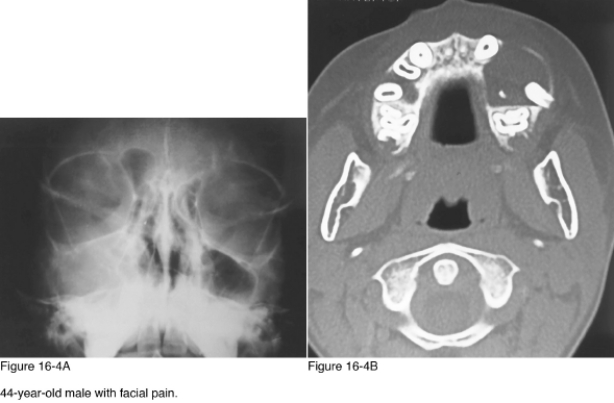
In Figure 16-4A there is opacification of the __________ sinus.
A) Frontal
B) Ethmoid
C) Sphenoid
D) Maxillary

سؤال
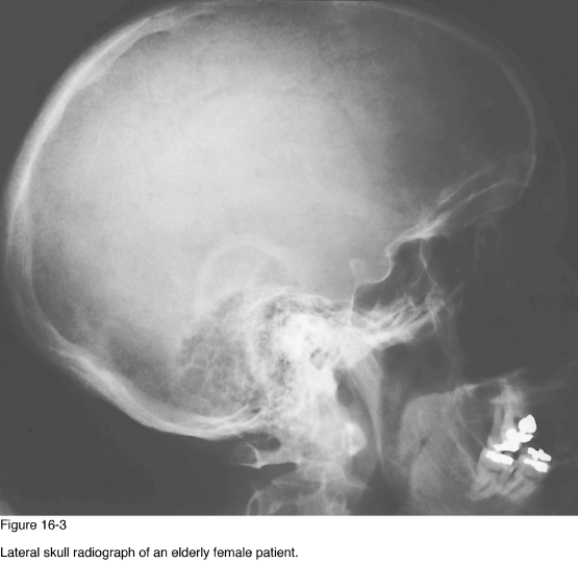
Chronic disease of the __________ may produce the appearance of the skull in Figure 16-3.
A) Lungs
B) Prostate
C) Kidneys
D) Adrenals
سؤال
Which of the following best describes the diagnostic imaging study represented by Figure 16-4B?
A) Axial computed tomography through the maxilla
B) Axial computed tomography through the mandible
C) Axial magnetic resonance imaging through the maxilla
D) Axial magnetic resonance imaging through the mandible
سؤال
Which of the following diagnoses best accounts for the well-circumscribed cyst containing the crown of an unerupted tooth in Figure 16-4B?
A) Fibrous dysplasia
B) Dentigerous cyst
C) Infection
D) Solitary bone cyst
سؤال
The granular appearance of the skull in Figure 16-3 is best described as __________.
A) Salt and pepper
B) Punched out
C) Hair on end
D) Osteoporosis circumscripta
سؤال
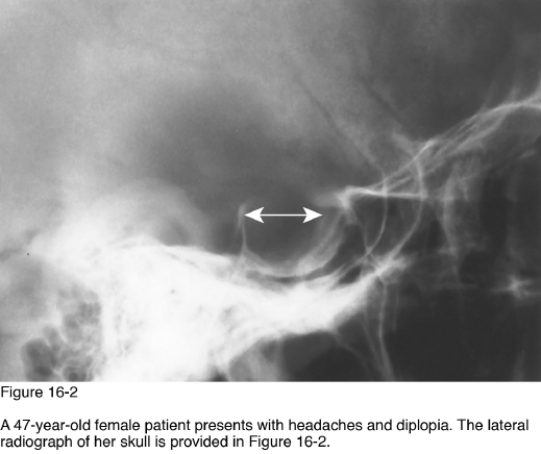
Enlargement of the sella turcica secondary to entrasellar extension of the subarachnoid space through defect in the diaphragm sellae describes __________.
A) Increased intracranial pressure
B) Aneurysm of the carotid vessel
C) Meningioma
D) Empty sella syndrome
سؤال
Which of the following radiographic patterns of disease is represented in Figure 16-3?
A) Enlarged sella turcica
B) Basilar impression
C) Diffuse demineralization
D) Cystic lesion of the mandible
سؤال
What type of pituitary adenoma is likely to result in enlargement of the sella turcica in patients with acromegaly?
A) Eosinophilic
B) Chromophobe
C) Basophilic
D) Craniopharyngioma
سؤال
The anteroposterior dimension of the sella turcica should not exceed __________mm.
A) 8
B) 12
C) 16
D) 18
سؤال
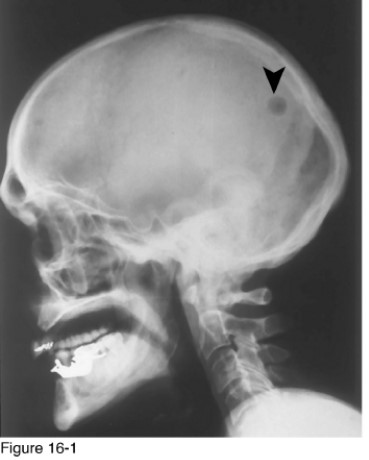
Which of the following radiographic patterns of disease is represented in Figure 16-1?
A) Basilar invagination
B) Intracranial calcifications
C) Radiodense mandible lesions
D) Osteolytic defect of the skull
سؤال
Which of the following radiographic patterns of disease is represented in Figure 16-4A?
A) Mass in the paranasal sinus
B) Radiodense mandible lesions
C) Intracranial calcifications
D) Cystic lesions of the mandible and skull
سؤال
Sickle-cell anemia and thalassemia may produce findings observed in this radiograph due to __________.
A) Metastatic disease
B) Bone infarcts
C) Endocrinopathy
D) Marrow hyperplasia
سؤال
Of the following, which is the most common disease producing the radiographic appearance of Figure 16-4A?
A) Polypoid rhinosinusitis
B) Acute sinusitis
C) Fibrous dysplasia
D) Wegener granulomatosus
سؤال
Aneurysm of which of the following arteries may produce enlargement of the sella turcica?
A) External carotid
B) Internal carotid
C) Middle meningeal
D) Basilar
سؤال
Of the following, which is the most common cause of the lesion observed in Figure 16-1?
A) Metastasis
B) Necrosis
C) Encephalocele
D) Primary malignancy
سؤال
Which of the following diagnostic imaging studies would be most appropriate if the patient also had a history of primary breast malignancy with mastectomy 2 years before this examination?
A) Skeletal x-ray survey
B) CT examination of the head
C) MRI examination of the head
D) Radionuclide scintigraphy
سؤال
Which of the following diagnoses would best explain the lesion, if on biopsy it was determined to contain ectodermal and mesodermal tissue?
A) Histiocytosis X
B) Multiple myeloma
C) Dermoid
D) Leptomeningeal cyst
سؤال
Of the following, which is the most likely reason for enlargement of the sella turcica in this patient?
A) Increased intracranial pressure
B) Meningioma
C) Chordoma
D) Pituitary tumor
سؤال
If the lesion in Figure 16-1 was surrounded by an osteosclerotic border, it would be known as a __________ ?
A) Button sequestration
B) Punched-out lesion
C) Donut lesion
D) Raindrop lesion
سؤال
Of the following, the most common cause of this presentation is ___________.
A) Metastatic bone disease
B) Osteoporosis
C) Multiple myeloma
D) Paget disease

فتح الحزمة
قم بالتسجيل لفتح البطاقات في هذه المجموعة!
Unlock Deck
Unlock Deck
1/20

العب

ملء الشاشة (f)
Deck 16: Skull Patterns
1
In Figure 16-4A there is opacification of the __________ sinus.
A) Frontal
B) Ethmoid
C) Sphenoid
D) Maxillary
Maxillary
2
Chronic disease of the __________ may produce the appearance of the skull in Figure 16-3.
A) Lungs
B) Prostate
C) Kidneys
D) Adrenals
Kidneys
3
Which of the following best describes the diagnostic imaging study represented by Figure 16-4B?
A) Axial computed tomography through the maxilla
B) Axial computed tomography through the mandible
C) Axial magnetic resonance imaging through the maxilla
D) Axial magnetic resonance imaging through the mandible
Axial computed tomography through the maxilla
4
Which of the following diagnoses best accounts for the well-circumscribed cyst containing the crown of an unerupted tooth in Figure 16-4B?
A) Fibrous dysplasia
B) Dentigerous cyst
C) Infection
D) Solitary bone cyst
فتح الحزمة
افتح القفل للوصول البطاقات البالغ عددها 20 في هذه المجموعة.
فتح الحزمة
k this deck
5
The granular appearance of the skull in Figure 16-3 is best described as __________.
A) Salt and pepper
B) Punched out
C) Hair on end
D) Osteoporosis circumscripta
فتح الحزمة
افتح القفل للوصول البطاقات البالغ عددها 20 في هذه المجموعة.
فتح الحزمة
k this deck
6
Enlargement of the sella turcica secondary to entrasellar extension of the subarachnoid space through defect in the diaphragm sellae describes __________.
A) Increased intracranial pressure
B) Aneurysm of the carotid vessel
C) Meningioma
D) Empty sella syndrome
فتح الحزمة
افتح القفل للوصول البطاقات البالغ عددها 20 في هذه المجموعة.
فتح الحزمة
k this deck
7
Which of the following radiographic patterns of disease is represented in Figure 16-3?
A) Enlarged sella turcica
B) Basilar impression
C) Diffuse demineralization
D) Cystic lesion of the mandible
فتح الحزمة
افتح القفل للوصول البطاقات البالغ عددها 20 في هذه المجموعة.
فتح الحزمة
k this deck
8
What type of pituitary adenoma is likely to result in enlargement of the sella turcica in patients with acromegaly?
A) Eosinophilic
B) Chromophobe
C) Basophilic
D) Craniopharyngioma
فتح الحزمة
افتح القفل للوصول البطاقات البالغ عددها 20 في هذه المجموعة.
فتح الحزمة
k this deck
9
The anteroposterior dimension of the sella turcica should not exceed __________mm.
A) 8
B) 12
C) 16
D) 18
فتح الحزمة
افتح القفل للوصول البطاقات البالغ عددها 20 في هذه المجموعة.
فتح الحزمة
k this deck
10
Which of the following radiographic patterns of disease is represented in Figure 16-1?
A) Basilar invagination
B) Intracranial calcifications
C) Radiodense mandible lesions
D) Osteolytic defect of the skull
فتح الحزمة
افتح القفل للوصول البطاقات البالغ عددها 20 في هذه المجموعة.
فتح الحزمة
k this deck
11
Which of the following radiographic patterns of disease is represented in Figure 16-4A?
A) Mass in the paranasal sinus
B) Radiodense mandible lesions
C) Intracranial calcifications
D) Cystic lesions of the mandible and skull
فتح الحزمة
افتح القفل للوصول البطاقات البالغ عددها 20 في هذه المجموعة.
فتح الحزمة
k this deck
12
Sickle-cell anemia and thalassemia may produce findings observed in this radiograph due to __________.
A) Metastatic disease
B) Bone infarcts
C) Endocrinopathy
D) Marrow hyperplasia
فتح الحزمة
افتح القفل للوصول البطاقات البالغ عددها 20 في هذه المجموعة.
فتح الحزمة
k this deck
13
Of the following, which is the most common disease producing the radiographic appearance of Figure 16-4A?
A) Polypoid rhinosinusitis
B) Acute sinusitis
C) Fibrous dysplasia
D) Wegener granulomatosus
فتح الحزمة
افتح القفل للوصول البطاقات البالغ عددها 20 في هذه المجموعة.
فتح الحزمة
k this deck
14
Aneurysm of which of the following arteries may produce enlargement of the sella turcica?
A) External carotid
B) Internal carotid
C) Middle meningeal
D) Basilar
فتح الحزمة
افتح القفل للوصول البطاقات البالغ عددها 20 في هذه المجموعة.
فتح الحزمة
k this deck
15
Of the following, which is the most common cause of the lesion observed in Figure 16-1?
A) Metastasis
B) Necrosis
C) Encephalocele
D) Primary malignancy
فتح الحزمة
افتح القفل للوصول البطاقات البالغ عددها 20 في هذه المجموعة.
فتح الحزمة
k this deck
16
Which of the following diagnostic imaging studies would be most appropriate if the patient also had a history of primary breast malignancy with mastectomy 2 years before this examination?
A) Skeletal x-ray survey
B) CT examination of the head
C) MRI examination of the head
D) Radionuclide scintigraphy
فتح الحزمة
افتح القفل للوصول البطاقات البالغ عددها 20 في هذه المجموعة.
فتح الحزمة
k this deck
17
Which of the following diagnoses would best explain the lesion, if on biopsy it was determined to contain ectodermal and mesodermal tissue?
A) Histiocytosis X
B) Multiple myeloma
C) Dermoid
D) Leptomeningeal cyst
فتح الحزمة
افتح القفل للوصول البطاقات البالغ عددها 20 في هذه المجموعة.
فتح الحزمة
k this deck
18
Of the following, which is the most likely reason for enlargement of the sella turcica in this patient?
A) Increased intracranial pressure
B) Meningioma
C) Chordoma
D) Pituitary tumor
فتح الحزمة
افتح القفل للوصول البطاقات البالغ عددها 20 في هذه المجموعة.
فتح الحزمة
k this deck
19
If the lesion in Figure 16-1 was surrounded by an osteosclerotic border, it would be known as a __________ ?
A) Button sequestration
B) Punched-out lesion
C) Donut lesion
D) Raindrop lesion
فتح الحزمة
افتح القفل للوصول البطاقات البالغ عددها 20 في هذه المجموعة.
فتح الحزمة
k this deck
20
Of the following, the most common cause of this presentation is ___________.
A) Metastatic bone disease
B) Osteoporosis
C) Multiple myeloma
D) Paget disease
فتح الحزمة
افتح القفل للوصول البطاقات البالغ عددها 20 في هذه المجموعة.
فتح الحزمة
k this deck
فتح الحزمة
افتح القفل للوصول البطاقات البالغ عددها 20 في هذه المجموعة.






