







 تكلم مع الذكاء الاصطناعي


Deck 6: Metabolism: Energy and Enzymes
ملء الشاشة (f)

سؤال

سؤال
سؤال
سؤال
سؤال
سؤال
سؤال
سؤال
سؤال
سؤال
سؤال
سؤال
سؤال
سؤال
سؤال
سؤال
سؤال
سؤال
سؤال
سؤال
سؤال
سؤال
سؤال
In this reaction, the reactant (s) are _____________ and the coenzyme NAD is ____________. 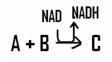
A) reduced; oxidized
B) oxidized; oxidized
C) reduced; reduced
D) oxidized; reduced
A) reduced; oxidized
B) oxidized; oxidized
C) reduced; reduced
D) oxidized; reduced
سؤال
سؤال
The metabolic pathway at right involves how many possible chemical reactions? 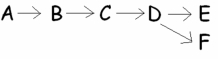
A) five
B) six
C) one
D) three
A) five
B) six
C) one
D) three
سؤال
سؤال
If the reaction in this graph is coupled with D  E, then D
E is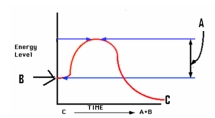
A) exergonic.
B) endergonic.
C) spontaneous.
D) No answer choice is correct.
E, then D E is
A) exergonic.
B) endergonic.
C) spontaneous.
D) No answer choice is correct.
سؤال
سؤال
__________ represents the first reactant of this metabolic pathway and ________ represents the endproduct (s) of the pathway? 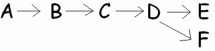
A) A; E
B) B; E and F
C) A; E and F
D) A and B; D and E
A) A; E
B) B; E and F
C) A; E and F
D) A and B; D and E
سؤال
Analyze this figure to categorize the chemical reaction as a synthesis reaction or a degradation reaction. Cite evidence to support your answer. 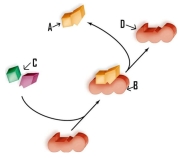
سؤال
سؤال
سؤال
سؤال
Which of the following labels is incorrectly identified? 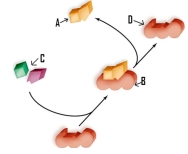
A) A refers to the products.
B) B refers to the substrate-enzyme complex.
C) C refers to the reactants.
D) D refers to the product.
A) A refers to the products.
B) B refers to the substrate-enzyme complex.
C) C refers to the reactants.
D) D refers to the product.
سؤال
سؤال
What does this graph reveal about the rate of reaction of the two different enzymes? What are the implications of this finding? 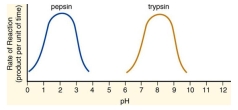
سؤال
Study the graph shown here. The letter 'B ' depicts the _____, while 'C' depicts ________. 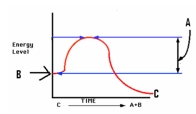
A) energy of activation; energy of products
B) energy of products; energy of activation
C) energy of reactants; energy of products
D) reactant concentration; activation energy
A) energy of activation; energy of products
B) energy of products; energy of activation
C) energy of reactants; energy of products
D) reactant concentration; activation energy
سؤال
Analyze the graph. Label the following. 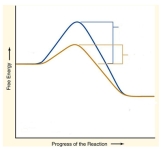
A. The energy of activation of the reaction with an enzyme.
B. The energy of activation of the reaction without an enzyme.
C. The energy of the reactants.
D. The energy of the products.
A. The energy of activation of the reaction with an enzyme.
B. The energy of activation of the reaction without an enzyme.
C. The energy of the reactants.
D. The energy of the products.
A. The energy of activation of the reaction with an enzyme.
B. The energy of activation of the reaction without an enzyme.
C. The energy of the reactants.
D. The energy of the products.
A. The energy of activation of the reaction with an enzyme.
B. The energy of activation of the reaction without an enzyme.
C. The energy of the reactants.
D. The energy of the products.
سؤال
Study the figure shown here. What does the letter A depict? 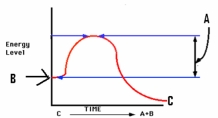
A) energy of the reactant
B) energy of the products
C) energy of activation
D) substrate concentration
A) energy of the reactant
B) energy of the products
C) energy of activation
D) substrate concentration
سؤال
سؤال
سؤال
سؤال
سؤال
سؤال
سؤال
سؤال
سؤال
سؤال
سؤال
سؤال
سؤال

فتح الحزمة
قم بالتسجيل لفتح البطاقات في هذه المجموعة!
Unlock Deck
Unlock Deck
1/52

العب

ملء الشاشة (f)
Deck 6: Metabolism: Energy and Enzymes
1
ATP is considered to be
A) an enzyme used widely in all kinds of cells.
B) a coenzyme used to inhibit or activate different enzymes.
C) a molecule that carries a great deal of chemical energy in a chemical bond.
D) the precursor of a high-energy membrane-bounded protein.
A) an enzyme used widely in all kinds of cells.
B) a coenzyme used to inhibit or activate different enzymes.
C) a molecule that carries a great deal of chemical energy in a chemical bond.
D) the precursor of a high-energy membrane-bounded protein.
C
2
Which statement describes the currently accepted theory of how an enzyme and its substrate fit together?
A) As the product is released, the enzyme breaks down.
B) The enzyme is like a key that fits into the substrate, which is like a lock.
C) The active site is permanently changed by its interaction with the substrate.
D) As the substrate binds to the enzyme, the shape of the active site changes to accommodate the reaction.
A) As the product is released, the enzyme breaks down.
B) The enzyme is like a key that fits into the substrate, which is like a lock.
C) The active site is permanently changed by its interaction with the substrate.
D) As the substrate binds to the enzyme, the shape of the active site changes to accommodate the reaction.
D
3
Which best describes the first law of thermodynamics?
A) Energy is changed from one form to another with a loss of usable energy.
B) Energy is not created nor destroyed, but it can change from one energy form to another.
C) Energy can be created from matter or used to produce matter.
D) Some useful energy is lost as heat whenever an energy transfer occurs.
E) Energy transfers are always 100% efficient in changing energy from one useful form to another.
A) Energy is changed from one form to another with a loss of usable energy.
B) Energy is not created nor destroyed, but it can change from one energy form to another.
C) Energy can be created from matter or used to produce matter.
D) Some useful energy is lost as heat whenever an energy transfer occurs.
E) Energy transfers are always 100% efficient in changing energy from one useful form to another.
B
4
Of the following, which process will not denature a protein?
A) heating to temperatures above 100 C
B) addition of strong acids or strong bases
C) phosphorylation
D) addition of distilled water
A) heating to temperatures above 100 C
B) addition of strong acids or strong bases
C) phosphorylation
D) addition of distilled water
فتح الحزمة
افتح القفل للوصول البطاقات البالغ عددها 52 في هذه المجموعة.
فتح الحزمة
k this deck
5
Which organelles contain functioning ATP synthetase complexes in their membranes?
A) golgi complexes and lysosomes
B) mitochondria and chloroplasts
C) endoplasmic reticulum and vesicles
D) vacuoles and vesicles
E) mitochondria and endoplasmic reticulum
A) golgi complexes and lysosomes
B) mitochondria and chloroplasts
C) endoplasmic reticulum and vesicles
D) vacuoles and vesicles
E) mitochondria and endoplasmic reticulum
فتح الحزمة
افتح القفل للوصول البطاقات البالغ عددها 52 في هذه المجموعة.
فتح الحزمة
k this deck
6
ATP is considered a high-energy compound because under cellular conditions, 7.3 kcal per mole of energy is released when a bond is broken between
A) the base adenine and the sugar ribose.
B) the adenosine and the phosphate groups.
C) the base adenine and the phosphate groups.
D) the adenosine diphosphate and the third phosphate.
E) All of the bonds release energy as ATP is completely broken down.
A) the base adenine and the sugar ribose.
B) the adenosine and the phosphate groups.
C) the base adenine and the phosphate groups.
D) the adenosine diphosphate and the third phosphate.
E) All of the bonds release energy as ATP is completely broken down.
فتح الحزمة
افتح القفل للوصول البطاقات البالغ عددها 52 في هذه المجموعة.
فتح الحزمة
k this deck
7
Energy coupling of endergonic and exergonic reactions within cells
A) permits biological reactions to proceed at temperatures consistent with life.
B) uses heat released by one reaction to fuel the other reaction.
C) utilizes ATP to carry energy between the exergonic and endergonic reactions.
D) All of the choices are correct.
A) permits biological reactions to proceed at temperatures consistent with life.
B) uses heat released by one reaction to fuel the other reaction.
C) utilizes ATP to carry energy between the exergonic and endergonic reactions.
D) All of the choices are correct.
فتح الحزمة
افتح القفل للوصول البطاقات البالغ عددها 52 في هذه المجموعة.
فتح الحزمة
k this deck
8
Endergonic reactions
A) release energy.
B) have a negative G and occur spontaneously.
C) can only occur if there is an input of energy.
D) have products with less free energy than the reactants.
E) All of the choices are correct.
A) release energy.
B) have a negative G and occur spontaneously.
C) can only occur if there is an input of energy.
D) have products with less free energy than the reactants.
E) All of the choices are correct.
فتح الحزمة
افتح القفل للوصول البطاقات البالغ عددها 52 في هذه المجموعة.
فتح الحزمة
k this deck
9
Which of these statements is NOT a consequence of the second law of thermodynamics?
A) While the total amount of energy is unchanged, the energy lost as heat is no longer useful to the cell in doing work.
B) Reactions that occur spontaneously are those that increase the amount of useful energy in a system.
C) The amount of disorder in the universe is always increasing.
D) To maintain organization of a cell, a continual input of energy is required.
A) While the total amount of energy is unchanged, the energy lost as heat is no longer useful to the cell in doing work.
B) Reactions that occur spontaneously are those that increase the amount of useful energy in a system.
C) The amount of disorder in the universe is always increasing.
D) To maintain organization of a cell, a continual input of energy is required.
فتح الحزمة
افتح القفل للوصول البطاقات البالغ عددها 52 في هذه المجموعة.
فتح الحزمة
k this deck
10
The sum of the chemical reaction in a cell constitute
A) coupling reactions.
B) free energy.
C) endergonic reactions only.
D) exergonic reactions only.
E) metabolism.
A) coupling reactions.
B) free energy.
C) endergonic reactions only.
D) exergonic reactions only.
E) metabolism.
فتح الحزمة
افتح القفل للوصول البطاقات البالغ عددها 52 في هذه المجموعة.
فتح الحزمة
k this deck
11
Which statement is NOT true about how various conditions will effect the activity of an enzyme?
A) Higher temperatures generally increase the activity of an enzyme up to a point.
B) Above a certain range of temperatures, the protein of an enzyme is denatured.
C) A change in pH can cause an enzyme to be inactivated.
D) An enzyme's activity is generally reduced by an increase in substrate concentration.
E) When sufficient substrate is available, the active site will nearly always be occupied.
A) Higher temperatures generally increase the activity of an enzyme up to a point.
B) Above a certain range of temperatures, the protein of an enzyme is denatured.
C) A change in pH can cause an enzyme to be inactivated.
D) An enzyme's activity is generally reduced by an increase in substrate concentration.
E) When sufficient substrate is available, the active site will nearly always be occupied.
فتح الحزمة
افتح القفل للوصول البطاقات البالغ عددها 52 في هذه المجموعة.
فتح الحزمة
k this deck
12
Which statement is NOT true about enzyme inhibition?
A) In competitive inhibition, the inhibitor binds to the active site of the enzyme.
B) In noncompetitive inhibition, the inhibitor binds to the allosteric site of the substrate.
C) In irreversible inhibition, a poison binds to the enzyme so that it can never work again.
D) Most inhibitors act in a reversible fashion.
E) All of the statements are true.
A) In competitive inhibition, the inhibitor binds to the active site of the enzyme.
B) In noncompetitive inhibition, the inhibitor binds to the allosteric site of the substrate.
C) In irreversible inhibition, a poison binds to the enzyme so that it can never work again.
D) Most inhibitors act in a reversible fashion.
E) All of the statements are true.
فتح الحزمة
افتح القفل للوصول البطاقات البالغ عددها 52 في هذه المجموعة.
فتح الحزمة
k this deck
13
Coupling occurs when the energy released by an exergonic reaction is
A) used to drive another exergonic reaction.
B) used to drive an endergonic reaction.
C) lost as nonusable heat to the environment.
D) used to decrease the entropy of the universe.
E) All of the choices are correct.
A) used to drive another exergonic reaction.
B) used to drive an endergonic reaction.
C) lost as nonusable heat to the environment.
D) used to decrease the entropy of the universe.
E) All of the choices are correct.
فتح الحزمة
افتح القفل للوصول البطاقات البالغ عددها 52 في هذه المجموعة.
فتح الحزمة
k this deck
14
Which of the following is NOT a form of potential energy?
A) food
B) water in a dam
C) a muscle contracting
D) All of the choices are not potential energy.
A) food
B) water in a dam
C) a muscle contracting
D) All of the choices are not potential energy.
فتح الحزمة
افتح القفل للوصول البطاقات البالغ عددها 52 في هذه المجموعة.
فتح الحزمة
k this deck
15
Which form of energy is NOT correctly associated with the related example?
A) kinetic energy: fat molecules
B) kinetic energy: movement of muscles
C) chemical energy: glucose
D) potential energy: water held behind a dam
E) potential energy: ATP
A) kinetic energy: fat molecules
B) kinetic energy: movement of muscles
C) chemical energy: glucose
D) potential energy: water held behind a dam
E) potential energy: ATP
فتح الحزمة
افتح القفل للوصول البطاقات البالغ عددها 52 في هذه المجموعة.
فتح الحزمة
k this deck
16
A coenzyme is
A) an ionic cofactor that interacts with an enzyme to allow it to work.
B) a protein cofactor that interacts with an enzyme to allow it to work.
C) a nonprotein organic cofactor that interacts with an enzyme to allow it to work.
D) an ionic cofactor that interacts with an enzyme to inhibit it.
E) a protein cofactor that interacts with an enzyme to inhibit it.
A) an ionic cofactor that interacts with an enzyme to allow it to work.
B) a protein cofactor that interacts with an enzyme to allow it to work.
C) a nonprotein organic cofactor that interacts with an enzyme to allow it to work.
D) an ionic cofactor that interacts with an enzyme to inhibit it.
E) a protein cofactor that interacts with an enzyme to inhibit it.
فتح الحزمة
افتح القفل للوصول البطاقات البالغ عددها 52 في هذه المجموعة.
فتح الحزمة
k this deck
17
Which best describes the second law of thermodynamics?
A) Energy is not created nor destroyed, but it can change into matter.
B) Energy is not created nor destroyed, but it can change from one energy form to another.
C) Energy can be created from matter or used to produce matter.
D) Some useful energy is lost as heat whenever an energy transfer occurs.
E) Energy transfers are always 100% efficient in changing energy from one useful form to another.
A) Energy is not created nor destroyed, but it can change into matter.
B) Energy is not created nor destroyed, but it can change from one energy form to another.
C) Energy can be created from matter or used to produce matter.
D) Some useful energy is lost as heat whenever an energy transfer occurs.
E) Energy transfers are always 100% efficient in changing energy from one useful form to another.
فتح الحزمة
افتح القفل للوصول البطاقات البالغ عددها 52 في هذه المجموعة.
فتح الحزمة
k this deck
18
A living organism represents stored energy in the form of chemical compounds. When an organism dies, what happens to this stored energy?
A) All chemicals immediately lose their high-energy bonds.
B) All molecules immediately degrade into basic elements.
C) All energy immediately leaves, and that is one manifestation that the organism is dead.
D) The chemical compounds in cells lose their organization over time because there is no longer an input of energy to maintain the organized state.
E) The chemical compounds remain exactly intact and ready to start up again unless digested by a consumer or decay organism.
A) All chemicals immediately lose their high-energy bonds.
B) All molecules immediately degrade into basic elements.
C) All energy immediately leaves, and that is one manifestation that the organism is dead.
D) The chemical compounds in cells lose their organization over time because there is no longer an input of energy to maintain the organized state.
E) The chemical compounds remain exactly intact and ready to start up again unless digested by a consumer or decay organism.
فتح الحزمة
افتح القفل للوصول البطاقات البالغ عددها 52 في هذه المجموعة.
فتح الحزمة
k this deck
19
The subunits from which ATP is made are
A) ADP and phosphate.
B) FAD and NAD+.
C) FAD and NADPH.
D) ADP and FAD.
E) ADP and NAD+.
A) ADP and phosphate.
B) FAD and NAD+.
C) FAD and NADPH.
D) ADP and FAD.
E) ADP and NAD+.
فتح الحزمة
افتح القفل للوصول البطاقات البالغ عددها 52 في هذه المجموعة.
فتح الحزمة
k this deck
20
The activity of an enzyme might be increased by all of the following except ________.
A) increase in substrate concentration
B) a vitamin
C) a 2-4 degree increase in temperature
D) the presence of lead
A) increase in substrate concentration
B) a vitamin
C) a 2-4 degree increase in temperature
D) the presence of lead
فتح الحزمة
افتح القفل للوصول البطاقات البالغ عددها 52 في هذه المجموعة.
فتح الحزمة
k this deck
21
An automobile engine is about 20 - 30% efficient in converting chemical energy to mechanical energy. Cells are about 39% efficient in the transformation of glucose to ATP. The rest of the energy is lost as heat. This is illustrative of the
A) First Law of Thermodynamics.
B) Second Law of Thermodynamics.
C) Third Law of Thermodynamics.
D) the Cell Theory.
A) First Law of Thermodynamics.
B) Second Law of Thermodynamics.
C) Third Law of Thermodynamics.
D) the Cell Theory.
فتح الحزمة
افتح القفل للوصول البطاقات البالغ عددها 52 في هذه المجموعة.
فتح الحزمة
k this deck
22
In living substances, the hydrolysis of ATP to ADP and P is virtually the sole supply of energy. However, ATP does not release this energy spontaneously but only in cell machinery where some work is being carried out. In such cases, special enzymes (ATPases) are necessary for the hydrolysis of ATP. How does the universality of ATP and the diversity of enzyme systems relate to the unity and diversity of life through evolution?
فتح الحزمة
افتح القفل للوصول البطاقات البالغ عددها 52 في هذه المجموعة.
فتح الحزمة
k this deck
23
In this reaction, the reactant (s) are _____________ and the coenzyme NAD is ____________.
A) reduced; oxidized
B) oxidized; oxidized
C) reduced; reduced
D) oxidized; reduced
A) reduced; oxidized
B) oxidized; oxidized
C) reduced; reduced
D) oxidized; reduced
فتح الحزمة
افتح القفل للوصول البطاقات البالغ عددها 52 في هذه المجموعة.
فتح الحزمة
k this deck
24
Which of the following is consistent with the laws of thermodynamics governing energy?
A) When a liter of gasoline is burned in a car engine, 100% of its energy goes into moving the car along the road.
B) You eat a "quarter-pounder" hamburger and assemble exactly a quarter-pound of additional body weight on your body.
C) Eventually sunlight that is absorbed on the earth returns to space as dispersed heat.
D) A calorie of sunlight becomes a calorie of plant tissue that, eaten by you, becomes a calorie of heat lost in muscle "power."
E) Chemical bonds are a case of converting energy to matter; breaking the bonds converts matter to energy.
A) When a liter of gasoline is burned in a car engine, 100% of its energy goes into moving the car along the road.
B) You eat a "quarter-pounder" hamburger and assemble exactly a quarter-pound of additional body weight on your body.
C) Eventually sunlight that is absorbed on the earth returns to space as dispersed heat.
D) A calorie of sunlight becomes a calorie of plant tissue that, eaten by you, becomes a calorie of heat lost in muscle "power."
E) Chemical bonds are a case of converting energy to matter; breaking the bonds converts matter to energy.
فتح الحزمة
افتح القفل للوصول البطاقات البالغ عددها 52 في هذه المجموعة.
فتح الحزمة
k this deck
25
The metabolic pathway at right involves how many possible chemical reactions?
A) five
B) six
C) one
D) three
A) five
B) six
C) one
D) three
فتح الحزمة
افتح القفل للوصول البطاقات البالغ عددها 52 في هذه المجموعة.
فتح الحزمة
k this deck
26
While science is not yet able to describe the phenomenon of "thinking" in physical terms, we can be certain that it is a process involving the metabolism of brain cells. With positron emission tomography (PET scan) it is possible to inject short-lived isotopes and image the regions of the brain that have the most active metabolism during various mental activities. For different mental functions, different regions and amounts of nerve cells become active. However,
A) the cellular energy expended in "thinking" must be less than the chemical bond energy supplied in food to these brain cells.
B) "thought" cannot be linked to cell processes because energy is not related to matter.
C) since thoughts can occur over and over, the requirement for a continual input of energy to prevent entropy does not apply to this cell activity.
D) "thinking" is beyond the scope of science to study.
A) the cellular energy expended in "thinking" must be less than the chemical bond energy supplied in food to these brain cells.
B) "thought" cannot be linked to cell processes because energy is not related to matter.
C) since thoughts can occur over and over, the requirement for a continual input of energy to prevent entropy does not apply to this cell activity.
D) "thinking" is beyond the scope of science to study.
فتح الحزمة
افتح القفل للوصول البطاقات البالغ عددها 52 في هذه المجموعة.
فتح الحزمة
k this deck
27
If the reaction in this graph is coupled with D E, then D
E is
A) exergonic.
B) endergonic.
C) spontaneous.
D) No answer choice is correct.
E, then D E is
A) exergonic.
B) endergonic.
C) spontaneous.
D) No answer choice is correct.
فتح الحزمة
افتح القفل للوصول البطاقات البالغ عددها 52 في هذه المجموعة.
فتح الحزمة
k this deck
28
If there are twelve different intermediate products produced in the stages of a metabolic pathway within a cell, we can expect that there
A) is one enzyme that carries this process through to the end product.
B) is one enzyme for degradation and another enzyme for synthesis.
C) may not be any enzymes involved if this is a natural cell product.
D) must be twelve different raw materials combined in the cell by one enzyme.
E) are about twelve enzymes, at least one responsible for each step in the metabolic pathway.
A) is one enzyme that carries this process through to the end product.
B) is one enzyme for degradation and another enzyme for synthesis.
C) may not be any enzymes involved if this is a natural cell product.
D) must be twelve different raw materials combined in the cell by one enzyme.
E) are about twelve enzymes, at least one responsible for each step in the metabolic pathway.
فتح الحزمة
افتح القفل للوصول البطاقات البالغ عددها 52 في هذه المجموعة.
فتح الحزمة
k this deck
29
__________ represents the first reactant of this metabolic pathway and ________ represents the endproduct (s) of the pathway?
A) A; E
B) B; E and F
C) A; E and F
D) A and B; D and E
A) A; E
B) B; E and F
C) A; E and F
D) A and B; D and E
فتح الحزمة
افتح القفل للوصول البطاقات البالغ عددها 52 في هذه المجموعة.
فتح الحزمة
k this deck
30
Analyze this figure to categorize the chemical reaction as a synthesis reaction or a degradation reaction. Cite evidence to support your answer.
فتح الحزمة
افتح القفل للوصول البطاقات البالغ عددها 52 في هذه المجموعة.
فتح الحزمة
k this deck
31
Lactose is milk sugar, and humans produce substantial lactase enzyme to digest it when we are infants. However, we soon lose some or even all of our lactase after childhood. In such cases, undigested lactose passes to the lower intestine where bacteria break it down into lactic acid and CO2, causing painful gas and bloating. This problem could be avoided by
A) avoiding all dairy products containing lactose.
B) taking lactase enzyme tablets when consuming lactose products.
C) taking any enzyme tablets when consuming dairy products.
D) consuming lactose in tablet form.
E) Both taking lactase enzyme and avoiding all dairy products would be correct.
A) avoiding all dairy products containing lactose.
B) taking lactase enzyme tablets when consuming lactose products.
C) taking any enzyme tablets when consuming dairy products.
D) consuming lactose in tablet form.
E) Both taking lactase enzyme and avoiding all dairy products would be correct.
فتح الحزمة
افتح القفل للوصول البطاقات البالغ عددها 52 في هذه المجموعة.
فتح الحزمة
k this deck
32
While eating a container of yogurt, you have to leave, so you store the yogurt in the refrigerator. A day later you return and find the surface of the yogurt is no longer smooth but has broken into several liquified products. You correctly guess that enzymes from your saliva, via the spoon, have continued digesting the yogurt in your absence. What will happen over time?
A) The reaction will soon stop because the amount of saliva is small, and you would have to add more saliva to continue the degradation.
B) The reaction will continue, since the enzyme is not denatured by the reaction.
C) The reaction will continue until half is digested and then stop because the reaction between substrate and product will be balanced.
D) Absolutely no degradation of the yogurt will occur naturally unless in the presence of this enzyme.
A) The reaction will soon stop because the amount of saliva is small, and you would have to add more saliva to continue the degradation.
B) The reaction will continue, since the enzyme is not denatured by the reaction.
C) The reaction will continue until half is digested and then stop because the reaction between substrate and product will be balanced.
D) Absolutely no degradation of the yogurt will occur naturally unless in the presence of this enzyme.
فتح الحزمة
افتح القفل للوصول البطاقات البالغ عددها 52 في هذه المجموعة.
فتح الحزمة
k this deck
33
Astrophysicists explain that eventually the sun will swell to become a red giant, engulf the earth and "burn out" with all forms of energy dispersing in a final "heat death." Compared with conditions today, the entropy of the universe then will
A) have increased greatly.
B) have decreased greatly.
C) remain the same because energy cannot be created or destroyed. Compared with conditions today, the entropy of the universe then will have greatly increased.
A) have increased greatly.
B) have decreased greatly.
C) remain the same because energy cannot be created or destroyed. Compared with conditions today, the entropy of the universe then will have greatly increased.
فتح الحزمة
افتح القفل للوصول البطاقات البالغ عددها 52 في هذه المجموعة.
فتح الحزمة
k this deck
34
Which of the following labels is incorrectly identified?
A) A refers to the products.
B) B refers to the substrate-enzyme complex.
C) C refers to the reactants.
D) D refers to the product.
A) A refers to the products.
B) B refers to the substrate-enzyme complex.
C) C refers to the reactants.
D) D refers to the product.
فتح الحزمة
افتح القفل للوصول البطاقات البالغ عددها 52 في هذه المجموعة.
فتح الحزمة
k this deck
35
Explain how, at a glance, it appears that life must violate the laws of thermodynamics. Provide a brief explanation on how life does NOT violate these rules.
فتح الحزمة
افتح القفل للوصول البطاقات البالغ عددها 52 في هذه المجموعة.
فتح الحزمة
k this deck
36
What does this graph reveal about the rate of reaction of the two different enzymes? What are the implications of this finding?
فتح الحزمة
افتح القفل للوصول البطاقات البالغ عددها 52 في هذه المجموعة.
فتح الحزمة
k this deck
37
Study the graph shown here. The letter 'B ' depicts the _____, while 'C' depicts ________.
A) energy of activation; energy of products
B) energy of products; energy of activation
C) energy of reactants; energy of products
D) reactant concentration; activation energy
A) energy of activation; energy of products
B) energy of products; energy of activation
C) energy of reactants; energy of products
D) reactant concentration; activation energy
فتح الحزمة
افتح القفل للوصول البطاقات البالغ عددها 52 في هذه المجموعة.
فتح الحزمة
k this deck
38
Analyze the graph. Label the following.
A. The energy of activation of the reaction with an enzyme.
B. The energy of activation of the reaction without an enzyme.
C. The energy of the reactants.
D. The energy of the products.
A. The energy of activation of the reaction with an enzyme.
B. The energy of activation of the reaction without an enzyme.
C. The energy of the reactants.
D. The energy of the products.
A. The energy of activation of the reaction with an enzyme.
B. The energy of activation of the reaction without an enzyme.
C. The energy of the reactants.
D. The energy of the products.
A. The energy of activation of the reaction with an enzyme.
B. The energy of activation of the reaction without an enzyme.
C. The energy of the reactants.
D. The energy of the products.
فتح الحزمة
افتح القفل للوصول البطاقات البالغ عددها 52 في هذه المجموعة.
فتح الحزمة
k this deck
39
Study the figure shown here. What does the letter A depict?
A) energy of the reactant
B) energy of the products
C) energy of activation
D) substrate concentration
A) energy of the reactant
B) energy of the products
C) energy of activation
D) substrate concentration
فتح الحزمة
افتح القفل للوصول البطاقات البالغ عددها 52 في هذه المجموعة.
فتح الحزمة
k this deck
40
In living substances, the hydrolysis of ATP to ADP and P is virtually the sole supply of energy. However, ATP does not release this energy spontaneously but only in cell machinery where some work is being carried out. If ATP underwent hydrolysis spontaneously at a fast rate without enzymes, would life as we know it be possible?
فتح الحزمة
افتح القفل للوصول البطاقات البالغ عددها 52 في هذه المجموعة.
فتح الحزمة
k this deck
41
Which substrate is missing: 6CO2 + ______ + energy = C6H12O6 + 6O2 ?
A) 6H2O
B) 4H2O
C) 4O2
D) glucose
A) 6H2O
B) 4H2O
C) 4O2
D) glucose
فتح الحزمة
افتح القفل للوصول البطاقات البالغ عددها 52 في هذه المجموعة.
فتح الحزمة
k this deck
42
If a change in pH alters an allosteric site where an inhibitor binds, but doesn't change the active site for the intended substrate, it would be possible for an enzymatically controlled reaction to occur as normal.
فتح الحزمة
افتح القفل للوصول البطاقات البالغ عددها 52 في هذه المجموعة.
فتح الحزمة
k this deck
43
An enzyme is a globular protein that inhibits the formation of chemical bonds within the enzyme's substrate(s) causing the rate of the reaction to slow down.
فتح الحزمة
افتح القفل للوصول البطاقات البالغ عددها 52 في هذه المجموعة.
فتح الحزمة
k this deck
44
Which of the following conditions is in defiance of the Second Law of Thermodynamics?
A) As our body converts glucose into ATP some of the energy is given off in the form of heat.
B) The temperature of your car's engine begins to increase as you drive to work.
C) When we are cold our body shivers as a response to the decrease in body temperature.
D) None of these are in defiance of the Second Law of Thermodynamics.
A) As our body converts glucose into ATP some of the energy is given off in the form of heat.
B) The temperature of your car's engine begins to increase as you drive to work.
C) When we are cold our body shivers as a response to the decrease in body temperature.
D) None of these are in defiance of the Second Law of Thermodynamics.
فتح الحزمة
افتح القفل للوصول البطاقات البالغ عددها 52 في هذه المجموعة.
فتح الحزمة
k this deck
45
During the conversion of glucose into a free form of energy only a small percentage is converted into useable ATP. What is the rest of the energy converted into?
A) heat
B) CO2
C) H2O
D) CO-
A) heat
B) CO2
C) H2O
D) CO-
فتح الحزمة
افتح القفل للوصول البطاقات البالغ عددها 52 في هذه المجموعة.
فتح الحزمة
k this deck
46
In order to roll a rock down a hillside, you must first push it up out of the hole in which it rests. Pushing the rock is analogous to the energy of activation of a chemical reaction.
فتح الحزمة
افتح القفل للوصول البطاقات البالغ عددها 52 في هذه المجموعة.
فتح الحزمة
k this deck
47
Enzyme inhibition is the process that turns off an enzyme in a metabolic pathway as the result of inhibitory actions of a product of the pathway.
فتح الحزمة
افتح القفل للوصول البطاقات البالغ عددها 52 في هذه المجموعة.
فتح الحزمة
k this deck
48
Which of the following substrates are required to run cellular respiration?
A) glucose and oxygen
B) glucose and carbon dioxide
C) sunlight and oxygen
D) energy and glucose
A) glucose and oxygen
B) glucose and carbon dioxide
C) sunlight and oxygen
D) energy and glucose
فتح الحزمة
افتح القفل للوصول البطاقات البالغ عددها 52 في هذه المجموعة.
فتح الحزمة
k this deck
49
If an organism runs photosynthesis for its main form of energy, the removal of what substrate would limit it's growth?
A) 6H2O
B) C6H12O6
C) 6O2
D) 6CO-
A) 6H2O
B) C6H12O6
C) 6O2
D) 6CO-
فتح الحزمة
افتح القفل للوصول البطاقات البالغ عددها 52 في هذه المجموعة.
فتح الحزمة
k this deck
50
While we are sitting down to lunch we are consuming _______ energy which will then be converted into ______ energy as we work until dinner time.
A) potential, kinetic
B) kinetic, potential
C) kinetic, free
D) potential, stored
A) potential, kinetic
B) kinetic, potential
C) kinetic, free
D) potential, stored
فتح الحزمة
افتح القفل للوصول البطاقات البالغ عددها 52 في هذه المجموعة.
فتح الحزمة
k this deck
51
What are the end products of photosynthesis?
A) glucose and oxygen
B) glucose and ATP
C) carbon dioxide and energy
D) carbon dioxide and water
A) glucose and oxygen
B) glucose and ATP
C) carbon dioxide and energy
D) carbon dioxide and water
فتح الحزمة
افتح القفل للوصول البطاقات البالغ عددها 52 في هذه المجموعة.
فتح الحزمة
k this deck
52
Which of the following is an example of potential energy?
A) a snickers bar
B) an apple growing on a tree
C) a glass of milk
D) all are examples of potential energy
A) a snickers bar
B) an apple growing on a tree
C) a glass of milk
D) all are examples of potential energy
فتح الحزمة
افتح القفل للوصول البطاقات البالغ عددها 52 في هذه المجموعة.
فتح الحزمة
k this deck
فتح الحزمة
افتح القفل للوصول البطاقات البالغ عددها 52 في هذه المجموعة.






