







 تكلم مع الذكاء الاصطناعي


Deck 25: Control of Body Temperature and Water Balance
ملء الشاشة (f)

سؤال

سؤال
سؤال
سؤال
سؤال
سؤال
سؤال
سؤال
سؤال
سؤال
سؤال
سؤال
سؤال
سؤال
سؤال
سؤال
سؤال
سؤال
سؤال
سؤال
سؤال
سؤال
سؤال
سؤال
سؤال
سؤال
سؤال
سؤال
سؤال
سؤال
سؤال
سؤال
سؤال
سؤال
سؤال
سؤال
سؤال
سؤال
سؤال
سؤال
سؤال
سؤال
سؤال
سؤال
Which arrow in this schematic view of the nephron shows reabsorption? 
A) arrow A
B) arrow B
C) arrow C
D) arrow D
A) arrow A
B) arrow B
C) arrow C
D) arrow D
سؤال
سؤال
سؤال
سؤال
سؤال
سؤال
سؤال
Which arrow in this figure shows heat transfer by conduction? 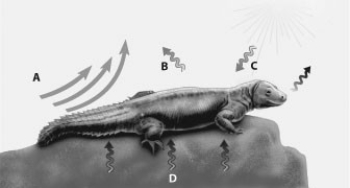
A) arrow A
B) arrow B
C) arrow C
D) arrow D
A) arrow A
B) arrow B
C) arrow C
D) arrow D
سؤال
سؤال
سؤال
سؤال
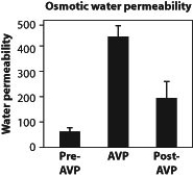
The following questions relate to the three figures above, which indicate how the tubules in the kidney respond to the administration of the hormone vasopressin (AVP). 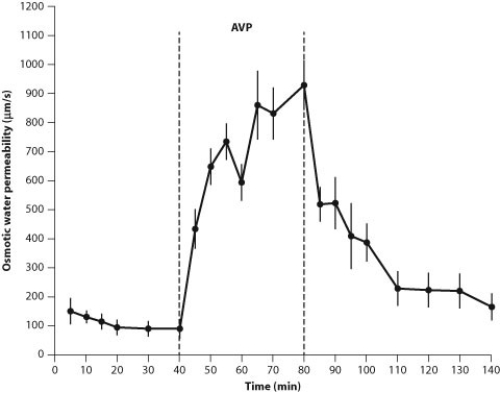
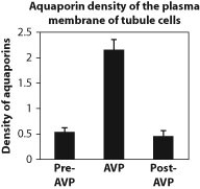
The density of the aquaporins in the presence of vasopressin was approximately
A) half as much as before the administration of vasopressin.
B) twice as much as before the administration of vasopressin.
C) four times as much as before the administration of vasopressin.
D) unchanged by the administration of vasopressin.
The density of the aquaporins in the presence of vasopressin was approximately
A) half as much as before the administration of vasopressin.
B) twice as much as before the administration of vasopressin.
C) four times as much as before the administration of vasopressin.
D) unchanged by the administration of vasopressin.
سؤال
سؤال
The following questions relate to the three figures above, which indicate how the tubules in the kidney respond to the administration of the hormone vasopressin (AVP).
The hypothesis that scientists who collected these data were most likely testing is that
A) the permeability of collecting changes over time.
B) collecting tubules have aquaporins.
C) permeability change is linked to the number of aquaporins.
D) aquaporins allow water into kidney tubules.
The hypothesis that scientists who collected these data were most likely testing is that
A) the permeability of collecting changes over time.
B) collecting tubules have aquaporins.
C) permeability change is linked to the number of aquaporins.
D) aquaporins allow water into kidney tubules.
سؤال
Which part of the nephron shown is its proximal tubule? 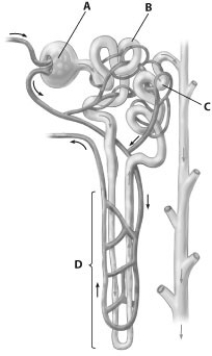
A) part A
B) part B
C) part C
D) part D
A) part A
B) part B
C) part C
D) part D
سؤال
سؤال
سؤال
After reading the paragraph below, answer the questions that follow.
Scientists studied the thermoregulatory and osmoregulatory responses in exercising human subjects who were experiencing different levels of dehydration (0%, 3%, 5%, and 7% based on body weight). After exercise, the subjects' body temperatures, sweating rates, and blood solute concentrations were measured. Their results are shown in these three graphs. Note that only sweating rate was measured after each bout of exercise. Body temperature was measured after the first two bouts of exercise, and blood solutes after only the first bout of exercise.
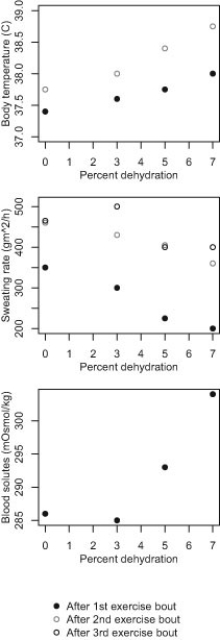 Source: Adapted from Sawka, M. N., Young, A. J., Francesconi, R. P., Muza, S. R., & Pandolf, K. B. (1985). Thermoregulatory and blood responses during exercise at graded hypohydration levels. J Appl Physiol, 59, 1394-1402.
Examine the body temperature and sweating rate graphs. Normal body temperatures range from 36.5C to 37.5C. Which of the following best describes how the relationship between osmoregulation and thermoregulation is altered after the first bout of exercise?
A) The rate of sweating is not high enough to cool body temperatures when dehydration is experienced.
B) Higher body temperatures increase sweating rates, which in turn create higher dehydration percentages.
C) Sweating rate is sufficient to maintain normal body temperatures when there is no dehydration.
D) Greater dehydration increases sweating rates, which in turn increase body temperatures.
Scientists studied the thermoregulatory and osmoregulatory responses in exercising human subjects who were experiencing different levels of dehydration (0%, 3%, 5%, and 7% based on body weight). After exercise, the subjects' body temperatures, sweating rates, and blood solute concentrations were measured. Their results are shown in these three graphs. Note that only sweating rate was measured after each bout of exercise. Body temperature was measured after the first two bouts of exercise, and blood solutes after only the first bout of exercise.
Source: Adapted from Sawka, M. N., Young, A. J., Francesconi, R. P., Muza, S. R., & Pandolf, K. B. (1985). Thermoregulatory and blood responses during exercise at graded hypohydration levels. J Appl Physiol, 59, 1394-1402.Examine the body temperature and sweating rate graphs. Normal body temperatures range from 36.5C to 37.5C. Which of the following best describes how the relationship between osmoregulation and thermoregulation is altered after the first bout of exercise?
A) The rate of sweating is not high enough to cool body temperatures when dehydration is experienced.
B) Higher body temperatures increase sweating rates, which in turn create higher dehydration percentages.
C) Sweating rate is sufficient to maintain normal body temperatures when there is no dehydration.
D) Greater dehydration increases sweating rates, which in turn increase body temperatures.
سؤال
After reading the paragraph below, answer the questions that follow.
Scientists studied the thermoregulatory and osmoregulatory responses in exercising human subjects who were experiencing different levels of dehydration (0%, 3%, 5%, and 7% based on body weight). After exercise, the subjects' body temperatures, sweating rates, and blood solute concentrations were measured. Their results are shown in these three graphs. Note that only sweating rate was measured after each bout of exercise. Body temperature was measured after the first two bouts of exercise, and blood solutes after only the first bout of exercise.
Source: Adapted from Sawka, M. N., Young, A. J., Francesconi, R. P., Muza, S. R., & Pandolf, K. B. (1985). Thermoregulatory and blood responses during exercise at graded hypohydration levels. J Appl Physiol, 59, 1394-1402.
What is the best explanation for the relationship between body temperature and dehydration?
A) There is reduced evaporation.
B) There is increased conduction.
C) There is reduced radiation.
D) There is increased convection.
Scientists studied the thermoregulatory and osmoregulatory responses in exercising human subjects who were experiencing different levels of dehydration (0%, 3%, 5%, and 7% based on body weight). After exercise, the subjects' body temperatures, sweating rates, and blood solute concentrations were measured. Their results are shown in these three graphs. Note that only sweating rate was measured after each bout of exercise. Body temperature was measured after the first two bouts of exercise, and blood solutes after only the first bout of exercise.
Source: Adapted from Sawka, M. N., Young, A. J., Francesconi, R. P., Muza, S. R., & Pandolf, K. B. (1985). Thermoregulatory and blood responses during exercise at graded hypohydration levels. J Appl Physiol, 59, 1394-1402.What is the best explanation for the relationship between body temperature and dehydration?
A) There is reduced evaporation.
B) There is increased conduction.
C) There is reduced radiation.
D) There is increased convection.
سؤال
سؤال
After reading the paragraph below, answer the questions that follow.
Scientists studied the thermoregulatory and osmoregulatory responses in exercising human subjects who were experiencing different levels of dehydration (0%, 3%, 5%, and 7% based on body weight). After exercise, the subjects' body temperatures, sweating rates, and blood solute concentrations were measured. Their results are shown in these three graphs. Note that only sweating rate was measured after each bout of exercise. Body temperature was measured after the first two bouts of exercise, and blood solutes after only the first bout of exercise.
Source: Adapted from Sawka, M. N., Young, A. J., Francesconi, R. P., Muza, S. R., & Pandolf, K. B. (1985). Thermoregulatory and blood responses during exercise at graded hypohydration levels. J Appl Physiol, 59, 1394-1402.
Predict what happens after the study, when the dehydrated subjects become rehydrated.
A) Blood solute concentrations should increase.
B) Their pituitary glands should begin to secrete ADH.
C) Collecting duct cells should begin to reabsorb less water.
D) The amount of water excreted should decrease.
Scientists studied the thermoregulatory and osmoregulatory responses in exercising human subjects who were experiencing different levels of dehydration (0%, 3%, 5%, and 7% based on body weight). After exercise, the subjects' body temperatures, sweating rates, and blood solute concentrations were measured. Their results are shown in these three graphs. Note that only sweating rate was measured after each bout of exercise. Body temperature was measured after the first two bouts of exercise, and blood solutes after only the first bout of exercise.
Source: Adapted from Sawka, M. N., Young, A. J., Francesconi, R. P., Muza, S. R., & Pandolf, K. B. (1985). Thermoregulatory and blood responses during exercise at graded hypohydration levels. J Appl Physiol, 59, 1394-1402.Predict what happens after the study, when the dehydrated subjects become rehydrated.
A) Blood solute concentrations should increase.
B) Their pituitary glands should begin to secrete ADH.
C) Collecting duct cells should begin to reabsorb less water.
D) The amount of water excreted should decrease.
سؤال
سؤال
سؤال
After reading the paragraph below, answer the questions that follow.
Scientists studied the thermoregulatory and osmoregulatory responses in exercising human subjects who were experiencing different levels of dehydration (0%, 3%, 5%, and 7% based on body weight). After exercise, the subjects' body temperatures, sweating rates, and blood solute concentrations were measured. Their results are shown in these three graphs. Note that only sweating rate was measured after each bout of exercise. Body temperature was measured after the first two bouts of exercise, and blood solutes after only the first bout of exercise.
Source: Adapted from Sawka, M. N., Young, A. J., Francesconi, R. P., Muza, S. R., & Pandolf, K. B. (1985). Thermoregulatory and blood responses during exercise at graded hypohydration levels. J Appl Physiol, 59, 1394-1402.
Which of the following homeostatic mechanisms is demonstrated in the graph of blood solutes?
A) At low percent dehydration, the addition of aquaporin proteins in the collecting ducts can maintain blood solute concentrations.
B) At low percent dehydration, the reduction of aquaporin proteins in the collecting ducts can maintain blood solute concentrations.
C) At high percent dehydration, the addition of aquaporin proteins in the collecting ducts can increase blood solute concentrations.
D) At high percent dehydration, the reduction of aquaporin proteins in the collecting ducts can reduce blood solute concentrations.
Scientists studied the thermoregulatory and osmoregulatory responses in exercising human subjects who were experiencing different levels of dehydration (0%, 3%, 5%, and 7% based on body weight). After exercise, the subjects' body temperatures, sweating rates, and blood solute concentrations were measured. Their results are shown in these three graphs. Note that only sweating rate was measured after each bout of exercise. Body temperature was measured after the first two bouts of exercise, and blood solutes after only the first bout of exercise.
Source: Adapted from Sawka, M. N., Young, A. J., Francesconi, R. P., Muza, S. R., & Pandolf, K. B. (1985). Thermoregulatory and blood responses during exercise at graded hypohydration levels. J Appl Physiol, 59, 1394-1402.Which of the following homeostatic mechanisms is demonstrated in the graph of blood solutes?
A) At low percent dehydration, the addition of aquaporin proteins in the collecting ducts can maintain blood solute concentrations.
B) At low percent dehydration, the reduction of aquaporin proteins in the collecting ducts can maintain blood solute concentrations.
C) At high percent dehydration, the addition of aquaporin proteins in the collecting ducts can increase blood solute concentrations.
D) At high percent dehydration, the reduction of aquaporin proteins in the collecting ducts can reduce blood solute concentrations.

فتح الحزمة
قم بالتسجيل لفتح البطاقات في هذه المجموعة!
Unlock Deck
Unlock Deck
1/67

العب

ملء الشاشة (f)
Deck 25: Control of Body Temperature and Water Balance
1
Which of the following statements about uric acid is true?
A) Uric acid requires less water to excrete than does urea.
B) Uric acid is more soluble in water than urea.
C) The darker material in bird droppings is mostly uric acid.
D) Uric acid is more toxic than ammonia.
A) Uric acid requires less water to excrete than does urea.
B) Uric acid is more soluble in water than urea.
C) The darker material in bird droppings is mostly uric acid.
D) Uric acid is more toxic than ammonia.
A
2
It is a cool winter evening, and you are feeling a little chilled. To warm yourself up you sip some hot tea. As you swallow, you can feel the tea warm your mouth and throat. The drink is warming you up by the process of
A) convection.
B) induction.
C) conduction.
D) radiation.
A) convection.
B) induction.
C) conduction.
D) radiation.
A
3
Which of the following is a function of the human urinary system?
A) detoxification of waste products
B) elimination of undigested foods
C) regulation of water content for body fluids
D) production of ammonia
A) detoxification of waste products
B) elimination of undigested foods
C) regulation of water content for body fluids
D) production of ammonia
C
4
What is the advantage of excreting nitrogenous waste in the form of ammonia?
A) Ammonia is less toxic than uric acid.
B) Ammonia is less soluble than uric acid.
C) Ammonia excretion conserves energy.
D) Ammonia does not diffuse across cell membranes.
A) Ammonia is less toxic than uric acid.
B) Ammonia is less soluble than uric acid.
C) Ammonia excretion conserves energy.
D) Ammonia does not diffuse across cell membranes.
فتح الحزمة
افتح القفل للوصول البطاقات البالغ عددها 67 في هذه المجموعة.
فتح الحزمة
k this deck
5
Which of the following physiological responses occurs in the human body when it becomes overheated?
A) slowing of the heart rate
B) constriction of blood vessels in the skin
C) increased blood flow to the skin
D) retention of water
A) slowing of the heart rate
B) constriction of blood vessels in the skin
C) increased blood flow to the skin
D) retention of water
فتح الحزمة
افتح القفل للوصول البطاقات البالغ عددها 67 في هذه المجموعة.
فتح الحزمة
k this deck
6
Animals that maintain internal body temperature using heat generated by their own metabolism are called
A) endotherms.
B) ectotherms.
C) reptiles.
D) amphibians.
A) endotherms.
B) ectotherms.
C) reptiles.
D) amphibians.
فتح الحزمة
افتح القفل للوصول البطاقات البالغ عددها 67 في هذه المجموعة.
فتح الحزمة
k this deck
7
Thermoregulation, an important part of homeostasis, is defined as
A) a mechanism for utilizing body fat for energy.
B) a reduction in blood flow to an animal's extremities in order to conserve heat.
C) the maintenance of internal body temperature within an optimal range despite change in external temperature.
D) the mechanisms that allow an animal to hibernate without food or drink.
A) a mechanism for utilizing body fat for energy.
B) a reduction in blood flow to an animal's extremities in order to conserve heat.
C) the maintenance of internal body temperature within an optimal range despite change in external temperature.
D) the mechanisms that allow an animal to hibernate without food or drink.
فتح الحزمة
افتح القفل للوصول البطاقات البالغ عددها 67 في هذه المجموعة.
فتح الحزمة
k this deck
8
Which of the following kinds of animals excrete their nitrogenous waste entirely as ammonia?
A) birds
B) fish
C) land snails
D) insects
A) birds
B) fish
C) land snails
D) insects
فتح الحزمة
افتح القفل للوصول البطاقات البالغ عددها 67 في هذه المجموعة.
فتح الحزمة
k this deck
9
Which of the following by-products of metabolism is the most toxic?
A) carbon monoxide
B) ammonia
C) urea
D) lactic acid
A) carbon monoxide
B) ammonia
C) urea
D) lactic acid
فتح الحزمة
افتح القفل للوصول البطاقات البالغ عددها 67 في هذه المجموعة.
فتح الحزمة
k this deck
10
Which of the following processes involves the transfer of heat between an animal and an object in its environment that the animal is touching?
A) radiation
B) conduction
C) convection
D) evaporation
A) radiation
B) conduction
C) convection
D) evaporation
فتح الحزمة
افتح القفل للوصول البطاقات البالغ عددها 67 في هذه المجموعة.
فتح الحزمة
k this deck
11
To enhance heat loss, humans sweat; this is an adaptation known as
A) insulation.
B) evaporative cooling.
C) irradiation.
D) conduction.
A) insulation.
B) evaporative cooling.
C) irradiation.
D) conduction.
فتح الحزمة
افتح القفل للوصول البطاقات البالغ عددها 67 في هذه المجموعة.
فتح الحزمة
k this deck
12
Which of the following statements regarding saltwater fish is true?
A) The concentration of solutes in the internal fluids of saltwater fish is lower than that in the surrounding water.
B) The concentration of solutes in the internal fluids of saltwater fish is higher than that in the surrounding environment.
C) Saltwater fish produce large amounts of diluted urine.
D) Saltwater fish have body fluids with a solute concentration equal to their surroundings.
A) The concentration of solutes in the internal fluids of saltwater fish is lower than that in the surrounding water.
B) The concentration of solutes in the internal fluids of saltwater fish is higher than that in the surrounding environment.
C) Saltwater fish produce large amounts of diluted urine.
D) Saltwater fish have body fluids with a solute concentration equal to their surroundings.
فتح الحزمة
افتح القفل للوصول البطاقات البالغ عددها 67 في هذه المجموعة.
فتح الحزمة
k this deck
13
Marine animals that have body fluids with a solute concentration equal to that of the surrounding seawater are
A) osmoregulators.
B) osmoconformers.
C) hypotonic.
D) hypertonic.
A) osmoregulators.
B) osmoconformers.
C) hypotonic.
D) hypertonic.
فتح الحزمة
افتح القفل للوصول البطاقات البالغ عددها 67 في هذه المجموعة.
فتح الحزمة
k this deck
14
The transfer of heat from arteries that carry warm blood past veins that carry cooler blood is an example of
A) insulation.
B) countercurrent heat exchange.
C) evaporative cooling.
D) behavioral thermoregulation.
A) insulation.
B) countercurrent heat exchange.
C) evaporative cooling.
D) behavioral thermoregulation.
فتح الحزمة
افتح القفل للوصول البطاقات البالغ عددها 67 في هذه المجموعة.
فتح الحزمة
k this deck
15
To conserve precious salts, freshwater fish
A) drink large amounts of water and produce small amounts of urine.
B) drink almost no water and produce large amounts of dilute urine.
C) excrete salt ions and small amounts of urine.
D) consume salt ions in food and eliminate water by osmosis.
A) drink large amounts of water and produce small amounts of urine.
B) drink almost no water and produce large amounts of dilute urine.
C) excrete salt ions and small amounts of urine.
D) consume salt ions in food and eliminate water by osmosis.
فتح الحزمة
افتح القفل للوصول البطاقات البالغ عددها 67 في هذه المجموعة.
فتح الحزمة
k this deck
16
Which of the following is a function of the vertebrate liver?
A) combining ammonia and carbon dioxide to form urea
B) synthesizing ammonia from uric acid
C) excreting urea
D) producing urea from uric acid and carbon dioxide
A) combining ammonia and carbon dioxide to form urea
B) synthesizing ammonia from uric acid
C) excreting urea
D) producing urea from uric acid and carbon dioxide
فتح الحزمة
افتح القفل للوصول البطاقات البالغ عددها 67 في هذه المجموعة.
فتح الحزمة
k this deck
17
The mechanism for excreting nitrogenous waste in aquatic animals was ineffective on land because
A) land animals concurrently developed a more efficient reproduction system.
B) land animals found better food sources.
C) land animals had a more difficult time with water balance than aquatic species.
D) aquatic animals did not have as much protein in their diets as did land animals.
A) land animals concurrently developed a more efficient reproduction system.
B) land animals found better food sources.
C) land animals had a more difficult time with water balance than aquatic species.
D) aquatic animals did not have as much protein in their diets as did land animals.
فتح الحزمة
افتح القفل للوصول البطاقات البالغ عددها 67 في هذه المجموعة.
فتح الحزمة
k this deck
18
Birds, like other animals, must eliminate ammonia or urea. They do so by converting it to
A) amino acids.
B) ammonia.
C) nucleic acids.
D) uric acid.
A) amino acids.
B) ammonia.
C) nucleic acids.
D) uric acid.
فتح الحزمة
افتح القفل للوصول البطاقات البالغ عددها 67 في هذه المجموعة.
فتح الحزمة
k this deck
19
A sophisticated mechanism that has evolved in mammals for eliminating nitrogenous wastes involves
A) secretion through cell membranes.
B) forming urea from combining ammonia with carbon dioxide
C) producing uric acid and storing it in the body until it can be released.
D) producing uric acid as an embryo and urea after birth.
A) secretion through cell membranes.
B) forming urea from combining ammonia with carbon dioxide
C) producing uric acid and storing it in the body until it can be released.
D) producing uric acid as an embryo and urea after birth.
فتح الحزمة
افتح القفل للوصول البطاقات البالغ عددها 67 في هذه المجموعة.
فتح الحزمة
k this deck
20
Which of the following statements regarding freshwater fish is true?
A) Freshwater fish frequently drink to obtain salt ions.
B) Freshwater fish use their gills to actively take up salt ions.
C) Freshwater fish lose water through their gills by osmosis.
D) Freshwater fish do not produce urine.
A) Freshwater fish frequently drink to obtain salt ions.
B) Freshwater fish use their gills to actively take up salt ions.
C) Freshwater fish lose water through their gills by osmosis.
D) Freshwater fish do not produce urine.
فتح الحزمة
افتح القفل للوصول البطاقات البالغ عددها 67 في هذه المجموعة.
فتح الحزمة
k this deck
21
The dialyzing solution used during kidney dialysis functions much like a fluid associated with a nephron. What is the fluid?
A) the interstitial fluid
B) the filtrate in the proximal tubule
C) the filtrate in the loop of Henle
D) the filtrate in the distal tubule
A) the interstitial fluid
B) the filtrate in the proximal tubule
C) the filtrate in the loop of Henle
D) the filtrate in the distal tubule
فتح الحزمة
افتح القفل للوصول البطاقات البالغ عددها 67 في هذه المجموعة.
فتح الحزمة
k this deck
22
Through which of the following structures does urine leave the bladder?
A) ureter
B) urethra
C) renal medulla
D) distal tubule
A) ureter
B) urethra
C) renal medulla
D) distal tubule
فتح الحزمة
افتح القفل للوصول البطاقات البالغ عددها 67 في هذه المجموعة.
فتح الحزمة
k this deck
23
When a dolphin consumes a large volume of water and electrolytes, it must be able to get rid of large volumes of water via urine and feces. This is an example of the process of
A) osmoregulation.
B) convection.
C) thermoregulation.
D) countercurrent heat exchange.
A) osmoregulation.
B) convection.
C) thermoregulation.
D) countercurrent heat exchange.
فتح الحزمة
افتح القفل للوصول البطاقات البالغ عددها 67 في هذه المجموعة.
فتح الحزمة
k this deck
24
Which of the following options correctly lists the structures in the kidney in the order in which fluid flows through them?
A) proximal tubule, Bowman's capsule, loop of Henle, distal tubule, glomerulus
B) Bowman's capsule, proximal tubule, loop of Henle, distal tubule, glomerulus
C) glomerulus, Bowman's capsule, proximal tubule, loop of Henle, distal tubule
D) glomerulus, proximal tubule, distal tubule, Bowman's capsule, loop of Henle
A) proximal tubule, Bowman's capsule, loop of Henle, distal tubule, glomerulus
B) Bowman's capsule, proximal tubule, loop of Henle, distal tubule, glomerulus
C) glomerulus, Bowman's capsule, proximal tubule, loop of Henle, distal tubule
D) glomerulus, proximal tubule, distal tubule, Bowman's capsule, loop of Henle
فتح الحزمة
افتح القفل للوصول البطاقات البالغ عددها 67 في هذه المجموعة.
فتح الحزمة
k this deck
25
Water moves out of filtrate in the nephron tubule into the interstitial fluid by
A) filtration.
B) excretion.
C) secretion.
D) osmosis.
A) filtration.
B) excretion.
C) secretion.
D) osmosis.
فتح الحزمة
افتح القفل للوصول البطاقات البالغ عددها 67 في هذه المجموعة.
فتح الحزمة
k this deck
26
During production of urine, a major function of the kidney is
A) water conservation.
B) amino acid production.
C) urea conservation.
D) uric acid production.
A) water conservation.
B) amino acid production.
C) urea conservation.
D) uric acid production.
فتح الحزمة
افتح القفل للوصول البطاقات البالغ عددها 67 في هذه المجموعة.
فتح الحزمة
k this deck
27
The first step in the formation of urine is the
A) secretion of hydrogen ions into the kidney tubules.
B) formation of filtrate that enters Bowman's capsule.
C) secretion of urea into the renal pelvis.
D) reabsorption of nutrients by Bowman's capsule.
A) secretion of hydrogen ions into the kidney tubules.
B) formation of filtrate that enters Bowman's capsule.
C) secretion of urea into the renal pelvis.
D) reabsorption of nutrients by Bowman's capsule.
فتح الحزمة
افتح القفل للوصول البطاقات البالغ عددها 67 في هذه المجموعة.
فتح الحزمة
k this deck
28
Where along the nephron is glucose reabsorbed from the filtrate back into the blood?
A) distal tubule
B) loop of Henle
C) proximal tubule
D) Bowman's capsule
A) distal tubule
B) loop of Henle
C) proximal tubule
D) Bowman's capsule
فتح الحزمة
افتح القفل للوصول البطاقات البالغ عددها 67 في هذه المجموعة.
فتح الحزمة
k this deck
29
During filtration in the glomerulus, which of the following enters Bowman's capsule from the bloodstream?
A) red blood cells
B) nucleic acids
C) lymphocytes
D) water
A) red blood cells
B) nucleic acids
C) lymphocytes
D) water
فتح الحزمة
افتح القفل للوصول البطاقات البالغ عددها 67 في هذه المجموعة.
فتح الحزمة
k this deck
30
The overall process that refines the filtrate and ultimately returns water and valuable solutes to the blood is known as
A) reabsorption.
B) excretion.
C) filtration.
D) secretion.
A) reabsorption.
B) excretion.
C) filtration.
D) secretion.
فتح الحزمة
افتح القفل للوصول البطاقات البالغ عددها 67 في هذه المجموعة.
فتح الحزمة
k this deck
31
What is the functional unit of the kidney?
A) renal unit
B) Bowman's capsule
C) nephron
D) glomerulus
A) renal unit
B) Bowman's capsule
C) nephron
D) glomerulus
فتح الحزمة
افتح القفل للوصول البطاقات البالغ عددها 67 في هذه المجموعة.
فتح الحزمة
k this deck
32
What is the function of urea reabsorption in the collecting ducts of the kidney?
A) It restores the correct concentration of blood urea.
B) It increases the osmotic concentration of the interstitial fluid in the renal medulla so that more water can be extracted from the urine.
C) It reduces the salinity of the renal medulla and thus helps regulate how much water is reabsorbed from the urine.
D) It moves the urea into the ascending limb of the loop of Henle so that it can be excreted from there in the urine.
A) It restores the correct concentration of blood urea.
B) It increases the osmotic concentration of the interstitial fluid in the renal medulla so that more water can be extracted from the urine.
C) It reduces the salinity of the renal medulla and thus helps regulate how much water is reabsorbed from the urine.
D) It moves the urea into the ascending limb of the loop of Henle so that it can be excreted from there in the urine.
فتح الحزمة
افتح القفل للوصول البطاقات البالغ عددها 67 في هذه المجموعة.
فتح الحزمة
k this deck
33
What is the function of antidiuretic hormone?
A) to increase urination
B) to increase water reabsorption
C) to stimulate sodium reabsorption
D) to counter the effects of alcohol consumption
A) to increase urination
B) to increase water reabsorption
C) to stimulate sodium reabsorption
D) to counter the effects of alcohol consumption
فتح الحزمة
افتح القفل للوصول البطاقات البالغ عددها 67 في هذه المجموعة.
فتح الحزمة
k this deck
34
Urine flows from the collecting duct into the
A) ureter.
B) urethra.
C) renal pelvis.
D) distal tubule.
A) ureter.
B) urethra.
C) renal pelvis.
D) distal tubule.
فتح الحزمة
افتح القفل للوصول البطاقات البالغ عددها 67 في هذه المجموعة.
فتح الحزمة
k this deck
35
Which of the following statements regarding the urinary system is true?
A) Bowman's capsule envelops the glomerulus.
B) Most glomeruli are located in the renal medulla.
C) The urinary bladder receives ammonia for excretion.
D) The urethra is responsible for transporting urea from the kidney to the urinary bladder.
A) Bowman's capsule envelops the glomerulus.
B) Most glomeruli are located in the renal medulla.
C) The urinary bladder receives ammonia for excretion.
D) The urethra is responsible for transporting urea from the kidney to the urinary bladder.
فتح الحزمة
افتح القفل للوصول البطاقات البالغ عددها 67 في هذه المجموعة.
فتح الحزمة
k this deck
36
A salamander is a vertebrate that spends part of its life cycle in water (juvenile stage) and part on land (adult stage). In both life stages, the salamander's body temperature depends on its surrounding environment, so the salamander demonstrates ________ behavior.
A) endothermic
B) ectothermic
C) huddling
D) regulatory
A) endothermic
B) ectothermic
C) huddling
D) regulatory
فتح الحزمة
افتح القفل للوصول البطاقات البالغ عددها 67 في هذه المجموعة.
فتح الحزمة
k this deck
37
Why must water that has moved to the interstitial fluid in the medulla be quickly removed from the interstitial fluid?
A) to prevent dilution of urine
B) to prevent destruction of the concentration gradient necessary for water reabsorption
C) to equilibrate the concentration of solutes in the cortex and medulla
D) to maintain an environment for transport of nutrients
A) to prevent dilution of urine
B) to prevent destruction of the concentration gradient necessary for water reabsorption
C) to equilibrate the concentration of solutes in the cortex and medulla
D) to maintain an environment for transport of nutrients
فتح الحزمة
افتح القفل للوصول البطاقات البالغ عددها 67 في هذه المجموعة.
فتح الحزمة
k this deck
38
In a dialysis machine, wastes are removed from blood plasma by the process of
A) filtration.
B) diffusion.
C) reabsorption.
D) absorption.
A) filtration.
B) diffusion.
C) reabsorption.
D) absorption.
فتح الحزمة
افتح القفل للوصول البطاقات البالغ عددها 67 في هذه المجموعة.
فتح الحزمة
k this deck
39
If a person sits on a cool floor, heat from that person is transferred to the floor. This is an example of
A) convection.
B) radiation.
C) conduction.
D) evaporation.
A) convection.
B) radiation.
C) conduction.
D) evaporation.
فتح الحزمة
افتح القفل للوصول البطاقات البالغ عددها 67 في هذه المجموعة.
فتح الحزمة
k this deck
40
Secretion is the movement of substances such as drugs or toxic molecules from the ________ into the ________.
A) nephron tubule; glomerulus
B) glomerulus; nephron tubule
C) blood; filtrate
D) urinary bladder; outside
A) nephron tubule; glomerulus
B) glomerulus; nephron tubule
C) blood; filtrate
D) urinary bladder; outside
فتح الحزمة
افتح القفل للوصول البطاقات البالغ عددها 67 في هذه المجموعة.
فتح الحزمة
k this deck
41
Which of the following options correctly lists the order of the four main processes that occur in the urinary system?
A) filtration, excretion, reabsorption, secretion
B) excretion, filtration, reabsorption, secretion
C) filtration, reabsorption and secretion occurring simultaneously, excretion
D) reabsorption and secretion occurring simultaneously, excretion, filtration
A) filtration, excretion, reabsorption, secretion
B) excretion, filtration, reabsorption, secretion
C) filtration, reabsorption and secretion occurring simultaneously, excretion
D) reabsorption and secretion occurring simultaneously, excretion, filtration
فتح الحزمة
افتح القفل للوصول البطاقات البالغ عددها 67 في هذه المجموعة.
فتح الحزمة
k this deck
42
Emperor penguins use a huddling behavior to conduct heat efficiently. Similarly, honeybees conduct heat within their hives by huddling together and then changing positions from the center of the huddle to the edges in order to keep heat circulating. When it is warm, however, the bees transport water into their hives and then beat their wings in order to make ________ cooling possible.
A) conductive and convective
B) isotonic and convective
C) evaporative and convective
D) evaporative and conductive
A) conductive and convective
B) isotonic and convective
C) evaporative and convective
D) evaporative and conductive
فتح الحزمة
افتح القفل للوصول البطاقات البالغ عددها 67 في هذه المجموعة.
فتح الحزمة
k this deck
43
Plants have specific temperatures (or temperature ranges) that allow for maximum growth. A process by which heat from ________ is transferred from the sun to leaves helps give plants these ideal temperatures.
A) convection
B) evaporation
C) conduction
D) radiation
A) convection
B) evaporation
C) conduction
D) radiation
فتح الحزمة
افتح القفل للوصول البطاقات البالغ عددها 67 في هذه المجموعة.
فتح الحزمة
k this deck
44
Which arrow in this schematic view of the nephron shows reabsorption?
A) arrow A
B) arrow B
C) arrow C
D) arrow D
A) arrow A
B) arrow B
C) arrow C
D) arrow D
فتح الحزمة
افتح القفل للوصول البطاقات البالغ عددها 67 في هذه المجموعة.
فتح الحزمة
k this deck
45
Compared to urine, the filtrate that first enters a nephron tubule
A) contains less water.
B) contains red blood cells.
C) has more salts.
D) does not contain urea.
A) contains less water.
B) contains red blood cells.
C) has more salts.
D) does not contain urea.
فتح الحزمة
افتح القفل للوصول البطاقات البالغ عددها 67 في هذه المجموعة.
فتح الحزمة
k this deck
46
Which of the following would indicate abnormally low production of ADH?
A) swelling due to fluid buildup
B) excessive urination
C) feeling thirsty after exercising
A) swelling due to fluid buildup
B) excessive urination
C) feeling thirsty after exercising
فتح الحزمة
افتح القفل للوصول البطاقات البالغ عددها 67 في هذه المجموعة.
فتح الحزمة
k this deck
47
When humans are cold, they often shiver. Shivering increases their ________, thereby warming their bodies.
A) metabolic heat production
B) layer of insulation
C) circulatory adaptation
D) evaporative cooling
A) metabolic heat production
B) layer of insulation
C) circulatory adaptation
D) evaporative cooling
فتح الحزمة
افتح القفل للوصول البطاقات البالغ عددها 67 في هذه المجموعة.
فتح الحزمة
k this deck
48
Like humans, cats can experience kidney failure. Unlike humans, however, cat kidney dialysis as a treatment option is not widely available and used. Rather, efforts are made to treat any complications that arise from failing kidneys such as low potassium or high phosphate levels. When low potassium levels are identified, potassium supplements are given to return cells to a balanced potassium-water level. This is an example of an effort to maintain
A) osmoregulation.
B) thermoregulation.
C) convection.
D) evaporation.
A) osmoregulation.
B) thermoregulation.
C) convection.
D) evaporation.
فتح الحزمة
افتح القفل للوصول البطاقات البالغ عددها 67 في هذه المجموعة.
فتح الحزمة
k this deck
49
Cormorants are sea-dwelling birds that consume high levels of salt from the seawater they drink. To get rid of this excess salt, cormorants "sneeze" out the salt that has collected in a localized area near their sinuses. This process is an example of
A) osmoregulation.
B) thermoregulation.
C) conduction.
D) radiation.
A) osmoregulation.
B) thermoregulation.
C) conduction.
D) radiation.
فتح الحزمة
افتح القفل للوصول البطاقات البالغ عددها 67 في هذه المجموعة.
فتح الحزمة
k this deck
50
In 2011, scientists investigated whether the salts that are spread on icy roads to melt the ice are diluted enough by spring rainfall so that they do not have negative effects on amphibian species that breed in nearby areas. They exposed clutches (groups of eggs) of salamanders to three test conditions with varying salt concentrations (road salts mixed with dechlorinated tap water) to simulate salt concentrations of small pools of water located near highways that are typically fed by rain-areas where salamanders often lay their eggs. After 9 days, the scientists placed the three groups in "normal" water and measured how much body mass the salamanders lost every 3 days for 9 days. They chose to measure change in mass because salamanders are able to take in water, which helps lower the chances of salamander embryos dying from freezing, disease, or predation. The table below provides partial results of this study.
-This study is considering the salamander clutches' ability to maintain the process of
A) osmoregulation.
B) thermoregulation.
C) countercurrent heat exchange.
D) diffusion.
-This study is considering the salamander clutches' ability to maintain the process of
A) osmoregulation.
B) thermoregulation.
C) countercurrent heat exchange.
D) diffusion.
فتح الحزمة
افتح القفل للوصول البطاقات البالغ عددها 67 في هذه المجموعة.
فتح الحزمة
k this deck
51
Which arrow in this figure shows heat transfer by conduction?
A) arrow A
B) arrow B
C) arrow C
D) arrow D
A) arrow A
B) arrow B
C) arrow C
D) arrow D
فتح الحزمة
افتح القفل للوصول البطاقات البالغ عددها 67 في هذه المجموعة.
فتح الحزمة
k this deck
52
A woman running a marathon collapses at the finish line and is rushed to the hospital. The physicians determine that she has lost a large amount of water and salts from excessive sweating. The appropriate course of action for the physicians would be to determine the woman's intracellular fluid levels so that they can provide a fluid replacement therapy that will
A) regain isotonic conditions of salt and water.
B) regain hypertonic conditions of salt and water.
C) regain hypotonic conditions of salt and water.
D) provide a measure of metabolic heat production.
A) regain isotonic conditions of salt and water.
B) regain hypertonic conditions of salt and water.
C) regain hypotonic conditions of salt and water.
D) provide a measure of metabolic heat production.
فتح الحزمة
افتح القفل للوصول البطاقات البالغ عددها 67 في هذه المجموعة.
فتح الحزمة
k this deck
53
After reading the paragraph below, answer the questions that follow.
Most fishes can either live in freshwater or live in saltwater habitats, but not in both. If you move a marine fish from the ocean to a lake, it will quickly die, and vice versa. However, a small number of fish species are capable of moving between the two environments. Salmon are osmoregulators that hatch in rivers, spend most of their lives in the ocean, and return to the river where they were born in order to breed.
When a salmon moves from the ocean to a freshwater environment, you would expect its urine volume to ________ and its rate of salt absorption to ________.
A) increase; remain the same
B) increase; increase
C) decrease; decrease
D) decrease; increase
Most fishes can either live in freshwater or live in saltwater habitats, but not in both. If you move a marine fish from the ocean to a lake, it will quickly die, and vice versa. However, a small number of fish species are capable of moving between the two environments. Salmon are osmoregulators that hatch in rivers, spend most of their lives in the ocean, and return to the river where they were born in order to breed.
When a salmon moves from the ocean to a freshwater environment, you would expect its urine volume to ________ and its rate of salt absorption to ________.
A) increase; remain the same
B) increase; increase
C) decrease; decrease
D) decrease; increase
فتح الحزمة
افتح القفل للوصول البطاقات البالغ عددها 67 في هذه المجموعة.
فتح الحزمة
k this deck
54
If valuable solutes were not adequately reabsorbed from filtrate, what would occur?
A) The excretion process could not be completed.
B) The solutes would be excreted.
C) The filtration process could not be completed.
D) The solutes would be reabsorbed.
A) The excretion process could not be completed.
B) The solutes would be excreted.
C) The filtration process could not be completed.
D) The solutes would be reabsorbed.
فتح الحزمة
افتح القفل للوصول البطاقات البالغ عددها 67 في هذه المجموعة.
فتح الحزمة
k this deck
55
The following questions relate to the three figures above, which indicate how the tubules in the kidney respond to the administration of the hormone vasopressin (AVP).
The density of the aquaporins in the presence of vasopressin was approximately
A) half as much as before the administration of vasopressin.
B) twice as much as before the administration of vasopressin.
C) four times as much as before the administration of vasopressin.
D) unchanged by the administration of vasopressin.
The density of the aquaporins in the presence of vasopressin was approximately
A) half as much as before the administration of vasopressin.
B) twice as much as before the administration of vasopressin.
C) four times as much as before the administration of vasopressin.
D) unchanged by the administration of vasopressin.
فتح الحزمة
افتح القفل للوصول البطاقات البالغ عددها 67 في هذه المجموعة.
فتح الحزمة
k this deck
56
The nitrogenous waste product in bears (mammals) is ________, while most saltwater fish get rid of wastes through ________.
A) ammonia; urea
B) uric acid; urea
C) urea; ammonia
D) ammonia; uric acid
A) ammonia; urea
B) uric acid; urea
C) urea; ammonia
D) ammonia; uric acid
فتح الحزمة
افتح القفل للوصول البطاقات البالغ عددها 67 في هذه المجموعة.
فتح الحزمة
k this deck
57
The following questions relate to the three figures above, which indicate how the tubules in the kidney respond to the administration of the hormone vasopressin (AVP).
The hypothesis that scientists who collected these data were most likely testing is that
A) the permeability of collecting changes over time.
B) collecting tubules have aquaporins.
C) permeability change is linked to the number of aquaporins.
D) aquaporins allow water into kidney tubules.
The hypothesis that scientists who collected these data were most likely testing is that
A) the permeability of collecting changes over time.
B) collecting tubules have aquaporins.
C) permeability change is linked to the number of aquaporins.
D) aquaporins allow water into kidney tubules.
فتح الحزمة
افتح القفل للوصول البطاقات البالغ عددها 67 في هذه المجموعة.
فتح الحزمة
k this deck
58
Which part of the nephron shown is its proximal tubule?
A) part A
B) part B
C) part C
D) part D
A) part A
B) part B
C) part C
D) part D
فتح الحزمة
افتح القفل للوصول البطاقات البالغ عددها 67 في هذه المجموعة.
فتح الحزمة
k this deck
59
After reading the paragraph below, answer the questions that follow.
Most fishes can either live in freshwater or live in saltwater habitats, but not in both. If you move a marine fish from the ocean to a lake, it will quickly die, and vice versa. However, a small number of fish species are capable of moving between the two environments. Salmon are osmoregulators that hatch in rivers, spend most of their lives in the ocean, and return to the river where they were born in order to breed.
When a salmon leaves the river and moves out to sea, you would expect ________ to leave its body by osmosis and that excess ________ would need to be pumped out.
A) salt; water
B) water; salt
C) salt; salt
D) water; water
Most fishes can either live in freshwater or live in saltwater habitats, but not in both. If you move a marine fish from the ocean to a lake, it will quickly die, and vice versa. However, a small number of fish species are capable of moving between the two environments. Salmon are osmoregulators that hatch in rivers, spend most of their lives in the ocean, and return to the river where they were born in order to breed.
When a salmon leaves the river and moves out to sea, you would expect ________ to leave its body by osmosis and that excess ________ would need to be pumped out.
A) salt; water
B) water; salt
C) salt; salt
D) water; water
فتح الحزمة
افتح القفل للوصول البطاقات البالغ عددها 67 في هذه المجموعة.
فتح الحزمة
k this deck
60
A logical treatment plan for patients with high ADH levels would include
A) less fluids.
B) more fluids.
C) less glucose.
D) more glucose.
A) less fluids.
B) more fluids.
C) less glucose.
D) more glucose.
فتح الحزمة
افتح القفل للوصول البطاقات البالغ عددها 67 في هذه المجموعة.
فتح الحزمة
k this deck
61
After reading the paragraph below, answer the questions that follow.
Scientists studied the thermoregulatory and osmoregulatory responses in exercising human subjects who were experiencing different levels of dehydration (0%, 3%, 5%, and 7% based on body weight). After exercise, the subjects' body temperatures, sweating rates, and blood solute concentrations were measured. Their results are shown in these three graphs. Note that only sweating rate was measured after each bout of exercise. Body temperature was measured after the first two bouts of exercise, and blood solutes after only the first bout of exercise.
Source: Adapted from Sawka, M. N., Young, A. J., Francesconi, R. P., Muza, S. R., & Pandolf, K. B. (1985). Thermoregulatory and blood responses during exercise at graded hypohydration levels. J Appl Physiol, 59, 1394-1402.
Examine the body temperature and sweating rate graphs. Normal body temperatures range from 36.5C to 37.5C. Which of the following best describes how the relationship between osmoregulation and thermoregulation is altered after the first bout of exercise?
A) The rate of sweating is not high enough to cool body temperatures when dehydration is experienced.
B) Higher body temperatures increase sweating rates, which in turn create higher dehydration percentages.
C) Sweating rate is sufficient to maintain normal body temperatures when there is no dehydration.
D) Greater dehydration increases sweating rates, which in turn increase body temperatures.
Scientists studied the thermoregulatory and osmoregulatory responses in exercising human subjects who were experiencing different levels of dehydration (0%, 3%, 5%, and 7% based on body weight). After exercise, the subjects' body temperatures, sweating rates, and blood solute concentrations were measured. Their results are shown in these three graphs. Note that only sweating rate was measured after each bout of exercise. Body temperature was measured after the first two bouts of exercise, and blood solutes after only the first bout of exercise.
Source: Adapted from Sawka, M. N., Young, A. J., Francesconi, R. P., Muza, S. R., & Pandolf, K. B. (1985). Thermoregulatory and blood responses during exercise at graded hypohydration levels. J Appl Physiol, 59, 1394-1402.Examine the body temperature and sweating rate graphs. Normal body temperatures range from 36.5C to 37.5C. Which of the following best describes how the relationship between osmoregulation and thermoregulation is altered after the first bout of exercise?
A) The rate of sweating is not high enough to cool body temperatures when dehydration is experienced.
B) Higher body temperatures increase sweating rates, which in turn create higher dehydration percentages.
C) Sweating rate is sufficient to maintain normal body temperatures when there is no dehydration.
D) Greater dehydration increases sweating rates, which in turn increase body temperatures.
فتح الحزمة
افتح القفل للوصول البطاقات البالغ عددها 67 في هذه المجموعة.
فتح الحزمة
k this deck
62
After reading the paragraph below, answer the questions that follow.
Scientists studied the thermoregulatory and osmoregulatory responses in exercising human subjects who were experiencing different levels of dehydration (0%, 3%, 5%, and 7% based on body weight). After exercise, the subjects' body temperatures, sweating rates, and blood solute concentrations were measured. Their results are shown in these three graphs. Note that only sweating rate was measured after each bout of exercise. Body temperature was measured after the first two bouts of exercise, and blood solutes after only the first bout of exercise.
Source: Adapted from Sawka, M. N., Young, A. J., Francesconi, R. P., Muza, S. R., & Pandolf, K. B. (1985). Thermoregulatory and blood responses during exercise at graded hypohydration levels. J Appl Physiol, 59, 1394-1402.
What is the best explanation for the relationship between body temperature and dehydration?
A) There is reduced evaporation.
B) There is increased conduction.
C) There is reduced radiation.
D) There is increased convection.
Scientists studied the thermoregulatory and osmoregulatory responses in exercising human subjects who were experiencing different levels of dehydration (0%, 3%, 5%, and 7% based on body weight). After exercise, the subjects' body temperatures, sweating rates, and blood solute concentrations were measured. Their results are shown in these three graphs. Note that only sweating rate was measured after each bout of exercise. Body temperature was measured after the first two bouts of exercise, and blood solutes after only the first bout of exercise.
Source: Adapted from Sawka, M. N., Young, A. J., Francesconi, R. P., Muza, S. R., & Pandolf, K. B. (1985). Thermoregulatory and blood responses during exercise at graded hypohydration levels. J Appl Physiol, 59, 1394-1402.What is the best explanation for the relationship between body temperature and dehydration?
A) There is reduced evaporation.
B) There is increased conduction.
C) There is reduced radiation.
D) There is increased convection.
فتح الحزمة
افتح القفل للوصول البطاقات البالغ عددها 67 في هذه المجموعة.
فتح الحزمة
k this deck
63
In 2011, scientists investigated whether the salts that are spread on icy roads to melt the ice are diluted enough by spring rainfall so that they do not have negative effects on amphibian species that breed in nearby areas. They exposed clutches (groups of eggs) of salamanders to three test conditions with varying salt concentrations (road salts mixed with dechlorinated tap water) to simulate salt concentrations of small pools of water located near highways that are typically fed by rain-areas where salamanders often lay their eggs. After 9 days, the scientists placed the three groups in "normal" water and measured how much body mass the salamanders lost every 3 days for 9 days. They chose to measure change in mass because salamanders are able to take in water, which helps lower the chances of salamander embryos dying from freezing, disease, or predation. The table below provides partial results of this study.
-There was a third group (group 3) in this study that experienced the same test conditions as groups 1 and 2 except that the water to which group 3 was exposed always had a chloride concentration (mg/L) that salamander clutches would normally experience (that is, with no road salts in the water). What do you predict that group 3 demonstrated?
A) higher mass lost from its initial conditions than group 2
B) the same mass lost from its initial conditions as group 1
C) no mass lost from its initial conditions
D) the highest mass loss of all groups
-There was a third group (group 3) in this study that experienced the same test conditions as groups 1 and 2 except that the water to which group 3 was exposed always had a chloride concentration (mg/L) that salamander clutches would normally experience (that is, with no road salts in the water). What do you predict that group 3 demonstrated?
A) higher mass lost from its initial conditions than group 2
B) the same mass lost from its initial conditions as group 1
C) no mass lost from its initial conditions
D) the highest mass loss of all groups
فتح الحزمة
افتح القفل للوصول البطاقات البالغ عددها 67 في هذه المجموعة.
فتح الحزمة
k this deck
64
After reading the paragraph below, answer the questions that follow.
Scientists studied the thermoregulatory and osmoregulatory responses in exercising human subjects who were experiencing different levels of dehydration (0%, 3%, 5%, and 7% based on body weight). After exercise, the subjects' body temperatures, sweating rates, and blood solute concentrations were measured. Their results are shown in these three graphs. Note that only sweating rate was measured after each bout of exercise. Body temperature was measured after the first two bouts of exercise, and blood solutes after only the first bout of exercise.
Source: Adapted from Sawka, M. N., Young, A. J., Francesconi, R. P., Muza, S. R., & Pandolf, K. B. (1985). Thermoregulatory and blood responses during exercise at graded hypohydration levels. J Appl Physiol, 59, 1394-1402.
Predict what happens after the study, when the dehydrated subjects become rehydrated.
A) Blood solute concentrations should increase.
B) Their pituitary glands should begin to secrete ADH.
C) Collecting duct cells should begin to reabsorb less water.
D) The amount of water excreted should decrease.
Scientists studied the thermoregulatory and osmoregulatory responses in exercising human subjects who were experiencing different levels of dehydration (0%, 3%, 5%, and 7% based on body weight). After exercise, the subjects' body temperatures, sweating rates, and blood solute concentrations were measured. Their results are shown in these three graphs. Note that only sweating rate was measured after each bout of exercise. Body temperature was measured after the first two bouts of exercise, and blood solutes after only the first bout of exercise.
Source: Adapted from Sawka, M. N., Young, A. J., Francesconi, R. P., Muza, S. R., & Pandolf, K. B. (1985). Thermoregulatory and blood responses during exercise at graded hypohydration levels. J Appl Physiol, 59, 1394-1402.Predict what happens after the study, when the dehydrated subjects become rehydrated.
A) Blood solute concentrations should increase.
B) Their pituitary glands should begin to secrete ADH.
C) Collecting duct cells should begin to reabsorb less water.
D) The amount of water excreted should decrease.
فتح الحزمة
افتح القفل للوصول البطاقات البالغ عددها 67 في هذه المجموعة.
فتح الحزمة
k this deck
65
In 2011, scientists investigated whether the salts that are spread on icy roads to melt the ice are diluted enough by spring rainfall so that they do not have negative effects on amphibian species that breed in nearby areas. They exposed clutches (groups of eggs) of salamanders to three test conditions with varying salt concentrations (road salts mixed with dechlorinated tap water) to simulate salt concentrations of small pools of water located near highways that are typically fed by rain-areas where salamanders often lay their eggs. After 9 days, the scientists placed the three groups in "normal" water and measured how much body mass the salamanders lost every 3 days for 9 days. They chose to measure change in mass because salamanders are able to take in water, which helps lower the chances of salamander embryos dying from freezing, disease, or predation. The table below provides partial results of this study.
-There was a third group (group 3) in this study that experienced the same test conditions as groups 1 and 2 except that the water to which group 3 was exposed always had a chloride concentration (mg/L) that salamander clutches would normally experience (that is, with no road salts in the water). How would you describe this group?
A) an experimental group
B) a control group
C) a dependent variable
D) an independent variable
-There was a third group (group 3) in this study that experienced the same test conditions as groups 1 and 2 except that the water to which group 3 was exposed always had a chloride concentration (mg/L) that salamander clutches would normally experience (that is, with no road salts in the water). How would you describe this group?
A) an experimental group
B) a control group
C) a dependent variable
D) an independent variable
فتح الحزمة
افتح القفل للوصول البطاقات البالغ عددها 67 في هذه المجموعة.
فتح الحزمة
k this deck
66
In 2011, scientists investigated whether the salts that are spread on icy roads to melt the ice are diluted enough by spring rainfall so that they do not have negative effects on amphibian species that breed in nearby areas. They exposed clutches (groups of eggs) of salamanders to three test conditions with varying salt concentrations (road salts mixed with dechlorinated tap water) to simulate salt concentrations of small pools of water located near highways that are typically fed by rain-areas where salamanders often lay their eggs. After 9 days, the scientists placed the three groups in "normal" water and measured how much body mass the salamanders lost every 3 days for 9 days. They chose to measure change in mass because salamanders are able to take in water, which helps lower the chances of salamander embryos dying from freezing, disease, or predation. The table below provides partial results of this study.
-What conclusion did scientists likely draw from this study?
A) Rainy conditions may not be enough to dilute road salts that have high salt concentrations. Therefore, salamander clutches will experience minimal physiological damage.
B) Rainy conditions are enough to completely dilute road salts that have high salt concentrations. Therefore, salamander clutches will not experience any permanent physiological damage.
C) Rainy conditions are enough to completely dilute road salts that have high salt concentrations. Therefore, salamander clutches will experience minimal physiological damage.
D) Rainy conditions may not be enough to dilute road salts that have high salt concentrations. Therefore, salamander clutches will face permanent physiological damage.
-What conclusion did scientists likely draw from this study?
A) Rainy conditions may not be enough to dilute road salts that have high salt concentrations. Therefore, salamander clutches will experience minimal physiological damage.
B) Rainy conditions are enough to completely dilute road salts that have high salt concentrations. Therefore, salamander clutches will not experience any permanent physiological damage.
C) Rainy conditions are enough to completely dilute road salts that have high salt concentrations. Therefore, salamander clutches will experience minimal physiological damage.
D) Rainy conditions may not be enough to dilute road salts that have high salt concentrations. Therefore, salamander clutches will face permanent physiological damage.
فتح الحزمة
افتح القفل للوصول البطاقات البالغ عددها 67 في هذه المجموعة.
فتح الحزمة
k this deck
67
After reading the paragraph below, answer the questions that follow.
Scientists studied the thermoregulatory and osmoregulatory responses in exercising human subjects who were experiencing different levels of dehydration (0%, 3%, 5%, and 7% based on body weight). After exercise, the subjects' body temperatures, sweating rates, and blood solute concentrations were measured. Their results are shown in these three graphs. Note that only sweating rate was measured after each bout of exercise. Body temperature was measured after the first two bouts of exercise, and blood solutes after only the first bout of exercise.
Source: Adapted from Sawka, M. N., Young, A. J., Francesconi, R. P., Muza, S. R., & Pandolf, K. B. (1985). Thermoregulatory and blood responses during exercise at graded hypohydration levels. J Appl Physiol, 59, 1394-1402.
Which of the following homeostatic mechanisms is demonstrated in the graph of blood solutes?
A) At low percent dehydration, the addition of aquaporin proteins in the collecting ducts can maintain blood solute concentrations.
B) At low percent dehydration, the reduction of aquaporin proteins in the collecting ducts can maintain blood solute concentrations.
C) At high percent dehydration, the addition of aquaporin proteins in the collecting ducts can increase blood solute concentrations.
D) At high percent dehydration, the reduction of aquaporin proteins in the collecting ducts can reduce blood solute concentrations.
Scientists studied the thermoregulatory and osmoregulatory responses in exercising human subjects who were experiencing different levels of dehydration (0%, 3%, 5%, and 7% based on body weight). After exercise, the subjects' body temperatures, sweating rates, and blood solute concentrations were measured. Their results are shown in these three graphs. Note that only sweating rate was measured after each bout of exercise. Body temperature was measured after the first two bouts of exercise, and blood solutes after only the first bout of exercise.
Source: Adapted from Sawka, M. N., Young, A. J., Francesconi, R. P., Muza, S. R., & Pandolf, K. B. (1985). Thermoregulatory and blood responses during exercise at graded hypohydration levels. J Appl Physiol, 59, 1394-1402.Which of the following homeostatic mechanisms is demonstrated in the graph of blood solutes?
A) At low percent dehydration, the addition of aquaporin proteins in the collecting ducts can maintain blood solute concentrations.
B) At low percent dehydration, the reduction of aquaporin proteins in the collecting ducts can maintain blood solute concentrations.
C) At high percent dehydration, the addition of aquaporin proteins in the collecting ducts can increase blood solute concentrations.
D) At high percent dehydration, the reduction of aquaporin proteins in the collecting ducts can reduce blood solute concentrations.
فتح الحزمة
افتح القفل للوصول البطاقات البالغ عددها 67 في هذه المجموعة.
فتح الحزمة
k this deck
فتح الحزمة
افتح القفل للوصول البطاقات البالغ عددها 67 في هذه المجموعة.






