







 تكلم مع الذكاء الاصطناعي


Deck 18: The Evolution of Invertebrate Diversity
ملء الشاشة (f)

سؤال

سؤال
سؤال
سؤال
سؤال
سؤال
سؤال
سؤال
سؤال
سؤال
سؤال
سؤال
سؤال
سؤال
سؤال
سؤال
سؤال
سؤال
سؤال
سؤال
سؤال
سؤال
سؤال
سؤال
سؤال
سؤال
سؤال
سؤال
سؤال
سؤال
سؤال
سؤال
سؤال
سؤال
سؤال
سؤال
سؤال
سؤال
سؤال
سؤال
سؤال
سؤال
سؤال
سؤال
سؤال
سؤال
سؤال
سؤال
سؤال
سؤال
سؤال
سؤال
سؤال
سؤال
سؤال
سؤال
سؤال
سؤال
سؤال
سؤال
سؤال
Use the figure below to answer the questions that follow.
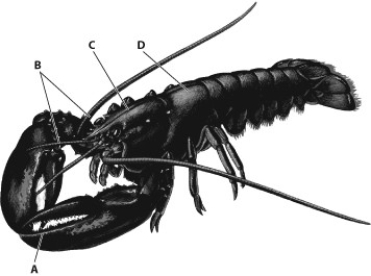
Which part of this figure shows the thorax segment of the lobster?
A) structure A
B) structure B
C) structure C
D) structure D
Which part of this figure shows the thorax segment of the lobster?
A) structure A
B) structure B
C) structure C
D) structure D
سؤال
سؤال
Use the figure below to answer the questions that follow.
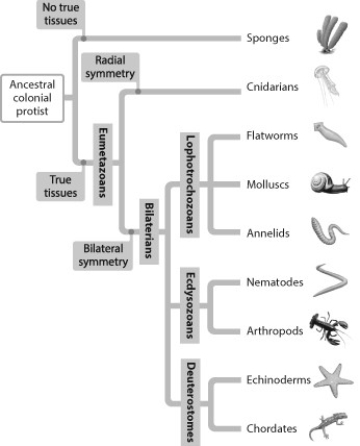
Which group of animals is the most diverse?
A) sponges
B) deuterostomes
C) bilaterians
D) eumetazoans
Which group of animals is the most diverse?
A) sponges
B) deuterostomes
C) bilaterians
D) eumetazoans
سؤال
سؤال
سؤال
سؤال
سؤال
سؤال
After reading the paragraphs below, answer the questions that follow.
The graph below is of an index of diversity of arthropods in three different plots of a cornfield. In one of the three plots an insecticide was sprayed. Answer the questions below about this situation.
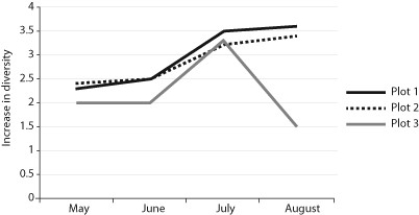 Arthropod diversity in three cornfield plots.
When and where does it appear that the insecticide was applied?
A) in August in Plot 3
B) in July in Plot 3
C) in June in Plot 1
D) in May in Plot 1
The graph below is of an index of diversity of arthropods in three different plots of a cornfield. In one of the three plots an insecticide was sprayed. Answer the questions below about this situation.
Arthropod diversity in three cornfield plots.When and where does it appear that the insecticide was applied?
A) in August in Plot 3
B) in July in Plot 3
C) in June in Plot 1
D) in May in Plot 1
سؤال
Use the figure below to answer the questions that follow.
Starfish do not appear to have bilateral symmetry and yet the diagram indicates they are bilaterians. What other characteristics do they have that would confirm that classification?
A) a water vascular system and tube feet
B) a bilateral larva and an anus that forms from the first opening in the embryo
C) an internal skeleton and a complete digestive system
D) external digestion and the ability to regenerate portions of its body
Starfish do not appear to have bilateral symmetry and yet the diagram indicates they are bilaterians. What other characteristics do they have that would confirm that classification?
A) a water vascular system and tube feet
B) a bilateral larva and an anus that forms from the first opening in the embryo
C) an internal skeleton and a complete digestive system
D) external digestion and the ability to regenerate portions of its body
سؤال
سؤال
Use the figure below to answer the questions that follow.
Which part of this figure shows the tube feet of the starfish?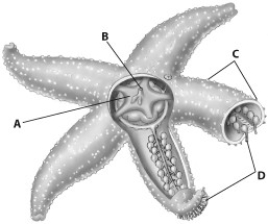
A) structure A
B) structure B
C) structure C
D) structure D
Which part of this figure shows the tube feet of the starfish?
A) structure A
B) structure B
C) structure C
D) structure D
سؤال
سؤال
سؤال
After reading the paragraphs below, answer the questions that follow.
The graph below is of an index of diversity of arthropods in three different plots of a cornfield. In one of the three plots an insecticide was sprayed. Answer the questions below about this situation.
Arthropod diversity in three cornfield plots.
The fact that the lines generally rise from left to right indicates
A) some species were disappearing as others were appearing.
B) time has passed since the experiment began.
C) in general, species diversity increased over time.
D) in August there were fewer insects than in any other month.
The graph below is of an index of diversity of arthropods in three different plots of a cornfield. In one of the three plots an insecticide was sprayed. Answer the questions below about this situation.
Arthropod diversity in three cornfield plots.The fact that the lines generally rise from left to right indicates
A) some species were disappearing as others were appearing.
B) time has passed since the experiment began.
C) in general, species diversity increased over time.
D) in August there were fewer insects than in any other month.
سؤال
After reading the paragraphs below, answer the questions that follow.
The graph below is of an index of diversity of arthropods in three different plots of a cornfield. In one of the three plots an insecticide was sprayed. Answer the questions below about this situation.
Arthropod diversity in three cornfield plots.
Which of the following conclusions is supported by the data shown in the graph?
A) Some species were disappearing as others were appearing.
B) There were more individual arthropods in each of the plots in July than in any other month.
C) In general, species diversity for all three plots taken together was greatest in July.
D) In August, Plot 2 had the greatest species diversity.
The graph below is of an index of diversity of arthropods in three different plots of a cornfield. In one of the three plots an insecticide was sprayed. Answer the questions below about this situation.
Arthropod diversity in three cornfield plots.Which of the following conclusions is supported by the data shown in the graph?
A) Some species were disappearing as others were appearing.
B) There were more individual arthropods in each of the plots in July than in any other month.
C) In general, species diversity for all three plots taken together was greatest in July.
D) In August, Plot 2 had the greatest species diversity.
سؤال
سؤال
Use the figure below to answer the questions that follow.
The most obvious feature that this animal shares with annelids is
A) large claws
B) three major body regions
C) several types of jointed appendages
D) segmentation
The most obvious feature that this animal shares with annelids is
A) large claws
B) three major body regions
C) several types of jointed appendages
D) segmentation
سؤال
سؤال
Use the figure below to answer the questions that follow.
Which phyla of animals are most closely related?
A) chordates and nematodes
B) flatworms and molluscs
C) sponges and chordates
D) arthropods and annelids
Which phyla of animals are most closely related?
A) chordates and nematodes
B) flatworms and molluscs
C) sponges and chordates
D) arthropods and annelids

فتح الحزمة
قم بالتسجيل لفتح البطاقات في هذه المجموعة!
Unlock Deck
Unlock Deck
1/81

العب

ملء الشاشة (f)
Deck 18: The Evolution of Invertebrate Diversity
1
Which of the following statements is true?
A) Arthropods have an open circulatory system, while annelids have a closed circulatory system.
B) Vertebrates have an open circulatory system, while annelids have a closed circulatory system.
C) Vertebrates have an open circulatory system, while arthropods have a closed circulatory system.
D) Annelids have an open circulatory system, while molluscs have a closed circulatory system.
A) Arthropods have an open circulatory system, while annelids have a closed circulatory system.
B) Vertebrates have an open circulatory system, while annelids have a closed circulatory system.
C) Vertebrates have an open circulatory system, while arthropods have a closed circulatory system.
D) Annelids have an open circulatory system, while molluscs have a closed circulatory system.
A
2
Most of the animals alive today are
A) vertebrates.
B) invertebrates.
C) choanoflagellates.
D) really colonies of protist cells.
A) vertebrates.
B) invertebrates.
C) choanoflagellates.
D) really colonies of protist cells.
B
3
During the Cambrian explosion approximately 535 to 525 million years ago,
A) all modern species of animals suddenly appeared.
B) animals rapidly diversified in the oceans.
C) a massive volcanic eruption nearly wiped out life on Earth.
D) great forests produced peat layers that were later transformed into coal.
A) all modern species of animals suddenly appeared.
B) animals rapidly diversified in the oceans.
C) a massive volcanic eruption nearly wiped out life on Earth.
D) great forests produced peat layers that were later transformed into coal.
B
4
How do sponges transport nutrients within their bodies?
A) They have simple digestive and circulatory systems composed of spongin.
B) They rely on diffusion to move nutrients between their cells.
C) Their mobile amoebocytes transport food molecules from cell to cell.
D) They are not able to transport nutrients within their bodies but must independently absorb all necessary nutrients from the surrounding water.
A) They have simple digestive and circulatory systems composed of spongin.
B) They rely on diffusion to move nutrients between their cells.
C) Their mobile amoebocytes transport food molecules from cell to cell.
D) They are not able to transport nutrients within their bodies but must independently absorb all necessary nutrients from the surrounding water.
فتح الحزمة
افتح القفل للوصول البطاقات البالغ عددها 81 في هذه المجموعة.
فتح الحزمة
k this deck
5
Which of the following statements regarding cnidarians is true?
A) Cnidarians have three true tissue layers.
B) The digestive and circulatory compartment of cnidarians is called the gastrovascular cavity.
C) The more stationary cnidarian body form, which is cylindrical with a ring of tentacles, is the medusa.
D) Cnidarians are herbivores and can be destructive grazers on seaweeds.
A) Cnidarians have three true tissue layers.
B) The digestive and circulatory compartment of cnidarians is called the gastrovascular cavity.
C) The more stationary cnidarian body form, which is cylindrical with a ring of tentacles, is the medusa.
D) Cnidarians are herbivores and can be destructive grazers on seaweeds.
فتح الحزمة
افتح القفل للوصول البطاقات البالغ عددها 81 في هذه المجموعة.
فتح الحزمة
k this deck
6
Which of the following animals displays radial symmetry?
A) an earthworm
B) a sea anemone
C) a fish
D) a lobster
A) an earthworm
B) a sea anemone
C) a fish
D) a lobster
فتح الحزمة
افتح القفل للوصول البطاقات البالغ عددها 81 في هذه المجموعة.
فتح الحزمة
k this deck
7
Which of the following are not included among the eumetazoans that have true tissues?
A) sea stars (Echinodermata)
B) earthworms (Annelida)
C) sea anemones (Cnidaria)
D) sponges (Porifera)
A) sea stars (Echinodermata)
B) earthworms (Annelida)
C) sea anemones (Cnidaria)
D) sponges (Porifera)
فتح الحزمة
افتح القفل للوصول البطاقات البالغ عددها 81 في هذه المجموعة.
فتح الحزمة
k this deck
8
In protostomes
A) the opening formed during gastrulation becomes the mouth.
B) the opening formed during gastrulation becomes the anus.
C) there is no body cavity.
D) there is no endoderm.
A) the opening formed during gastrulation becomes the mouth.
B) the opening formed during gastrulation becomes the anus.
C) there is no body cavity.
D) there is no endoderm.
فتح الحزمة
افتح القفل للوصول البطاقات البالغ عددها 81 في هذه المجموعة.
فتح الحزمة
k this deck
9
A typical sponge is best described as a
A) slow-moving suspension feeder with a true coelom.
B) sessile suspension feeder with bilateral symmetry.
C) slow-moving carnivore with no true tissues or symmetry.
D) sessile suspension feeder with no true tissues or body symmetry.
A) slow-moving suspension feeder with a true coelom.
B) sessile suspension feeder with bilateral symmetry.
C) slow-moving carnivore with no true tissues or symmetry.
D) sessile suspension feeder with no true tissues or body symmetry.
فتح الحزمة
افتح القفل للوصول البطاقات البالغ عددها 81 في هذه المجموعة.
فتح الحزمة
k this deck
10
Which of the following are not included among the bilateria, a clade of animals with bilateral symmetry at some stage of development?
A) sea stars (Echinodermata)
B) earthworms (Annelida)
C) sea anemones (Cnidaria)
D) octopus (Mollusca)
A) sea stars (Echinodermata)
B) earthworms (Annelida)
C) sea anemones (Cnidaria)
D) octopus (Mollusca)
فتح الحزمة
افتح القفل للوصول البطاقات البالغ عددها 81 في هذه المجموعة.
فتح الحزمة
k this deck
11
Which of the following statements about deuterostomes is true?
A) Deuterostomes lack true tissues.
B) Deuterostomes have only two tissue layers.
C) The opening that forms during deuterostome gastrulation becomes the anus.
D) The opening that forms during deuterostome gastrulation becomes the mouth.
A) Deuterostomes lack true tissues.
B) Deuterostomes have only two tissue layers.
C) The opening that forms during deuterostome gastrulation becomes the anus.
D) The opening that forms during deuterostome gastrulation becomes the mouth.
فتح الحزمة
افتح القفل للوصول البطاقات البالغ عددها 81 في هذه المجموعة.
فتح الحزمة
k this deck
12
A dog's head is at its ________ end, and its belly is its ________ surface.
A) posterior; dorsal
B) anterior; dorsal
C) posterior; ventral
D) anterior; ventral
A) posterior; dorsal
B) anterior; dorsal
C) posterior; ventral
D) anterior; ventral
فتح الحزمة
افتح القفل للوصول البطاقات البالغ عددها 81 في هذه المجموعة.
فتح الحزمة
k this deck
13
Organisms with true radial symmetry
A) have their sense organs, mouth, and brain clustered in the head.
B) tend to be highly mobile.
C) do not have a distinct head region and tend to be sedentary or passive drifters.
D) can be divided into two matching halves along only one plane.
A) have their sense organs, mouth, and brain clustered in the head.
B) tend to be highly mobile.
C) do not have a distinct head region and tend to be sedentary or passive drifters.
D) can be divided into two matching halves along only one plane.
فتح الحزمة
افتح القفل للوصول البطاقات البالغ عددها 81 في هذه المجموعة.
فتح الحزمة
k this deck
14
Which of the following items demonstrates radial symmetry?
A) a glove
B) a tennis racket
C) a pair of sunglasses
D) an apple pie
A) a glove
B) a tennis racket
C) a pair of sunglasses
D) an apple pie
فتح الحزمة
افتح القفل للوصول البطاقات البالغ عددها 81 في هذه المجموعة.
فتح الحزمة
k this deck
15
Typical animal embryos have a(n) ________, or external cell layer, and a(n) ________, which lines the digestive tract.
A) ectoderm; blastula
B) ectoderm; endoderm
C) endoderm; ectoderm
D) mesoderm; gastrula
A) ectoderm; blastula
B) ectoderm; endoderm
C) endoderm; ectoderm
D) mesoderm; gastrula
فتح الحزمة
افتح القفل للوصول البطاقات البالغ عددها 81 في هذه المجموعة.
فتح الحزمة
k this deck
16
All animals
A) are prokaryotic.
B) are heterotrophic.
C) have cell walls made of chitin.
D) obtain food by absorption.
A) are prokaryotic.
B) are heterotrophic.
C) have cell walls made of chitin.
D) obtain food by absorption.
فتح الحزمة
افتح القفل للوصول البطاقات البالغ عددها 81 في هذه المجموعة.
فتح الحزمة
k this deck
17
The ________ is a flagellated cell that sweeps water through a sponge's body.
A) choanocyte
B) amoebocyte
C) spicule
D) spongin
A) choanocyte
B) amoebocyte
C) spicule
D) spongin
فتح الحزمة
افتح القفل للوصول البطاقات البالغ عددها 81 في هذه المجموعة.
فتح الحزمة
k this deck
18
The locomotive behavior of earthworms is enabled by contraction of their longitudinal and circular muscles; this is seen through their typical burrowing behavior. Nematodes, however, contract their longitudinal muscles against the pressure of fluid in their bodies to produce a whiplike motion that enables them to move. Suppose you place an earthworm and a nematode in a watery solution. Which do you think would be able to move more easily, and why?
A) the earthworm, because it uses two sets of muscles to help it move through the watery solution
B) the nematode, because its whiplike motion will easily propel it through the watery solution
C) the earthworm, because it can contract and expand its muscles to burrow down through the watery solution
D) the nematode, because it can move its paddle-like appendages on its segments to help it move through the watery solution
A) the earthworm, because it uses two sets of muscles to help it move through the watery solution
B) the nematode, because its whiplike motion will easily propel it through the watery solution
C) the earthworm, because it can contract and expand its muscles to burrow down through the watery solution
D) the nematode, because it can move its paddle-like appendages on its segments to help it move through the watery solution
فتح الحزمة
افتح القفل للوصول البطاقات البالغ عددها 81 في هذه المجموعة.
فتح الحزمة
k this deck
19
Which of the following is considered a likely explanation for the events of the Cambrian explosion?
A) Complex predator-prey relationships and increased atmospheric oxygen levels promoted animal diversification.
B) A great surge of volcanic activity was triggered by significant movements of the continental plates and possibly by an asteroid impact.
C) Solar flares led to increased UV radiation intensity, which in turn promoted a high rate of mutation. This led to rapid diversification of animals.
D) The massive growth of swamp vegetation depleted the atmosphere's carbon dioxide and eventually cooled the Earth's climate.
A) Complex predator-prey relationships and increased atmospheric oxygen levels promoted animal diversification.
B) A great surge of volcanic activity was triggered by significant movements of the continental plates and possibly by an asteroid impact.
C) Solar flares led to increased UV radiation intensity, which in turn promoted a high rate of mutation. This led to rapid diversification of animals.
D) The massive growth of swamp vegetation depleted the atmosphere's carbon dioxide and eventually cooled the Earth's climate.
فتح الحزمة
افتح القفل للوصول البطاقات البالغ عددها 81 في هذه المجموعة.
فتح الحزمة
k this deck
20
Animals directly evolved from
A) plants.
B) protists.
C) fungi.
D) bacteria.
A) plants.
B) protists.
C) fungi.
D) bacteria.
فتح الحزمة
افتح القفل للوصول البطاقات البالغ عددها 81 في هذه المجموعة.
فتح الحزمة
k this deck
21
Flatworms (Platyhelminthes) are ________ and typically have ________.
A) radially symmetrical; no digestive system
B) bilaterally symmetrical; a gastrovascular cavity with one opening
C) bilaterally symmetrical; a complete digestive tract with a mouth and anus
D) all parasites; no digestive system
A) radially symmetrical; no digestive system
B) bilaterally symmetrical; a gastrovascular cavity with one opening
C) bilaterally symmetrical; a complete digestive tract with a mouth and anus
D) all parasites; no digestive system
فتح الحزمة
افتح القفل للوصول البطاقات البالغ عددها 81 في هذه المجموعة.
فتح الحزمة
k this deck
22
Which of the following groups has a series of similar segments that make up most of the body?
A) millipedes
B) crustaceans
C) scorpions
D) insects
A) millipedes
B) crustaceans
C) scorpions
D) insects
فتح الحزمة
افتح القفل للوصول البطاقات البالغ عددها 81 في هذه المجموعة.
فتح الحزمة
k this deck
23
Most adult insects have three major body parts or sections. They are the
A) head, body, and legs.
B) head, thorax, and abdomen.
C) antennae, head, and abdomen.
D) legs, wings, and body.
A) head, body, and legs.
B) head, thorax, and abdomen.
C) antennae, head, and abdomen.
D) legs, wings, and body.
فتح الحزمة
افتح القفل للوصول البطاقات البالغ عددها 81 في هذه المجموعة.
فتح الحزمة
k this deck
24
Animals that are segmented and have jointed appendages and an exoskeleton are members of the phylum
A) Platyhelminthes.
B) Annelida.
C) Cnidaria.
D) Arthropoda.
A) Platyhelminthes.
B) Annelida.
C) Cnidaria.
D) Arthropoda.
فتح الحزمة
افتح القفل للوصول البطاقات البالغ عددها 81 في هذه المجموعة.
فتح الحزمة
k this deck
25
Which mollusc group includes primarily sedentary animals that use mucus-coated gills to trap fine food particles?
A) cephalopods
B) gastropods
C) chitons
D) bivalves
A) cephalopods
B) gastropods
C) chitons
D) bivalves
فتح الحزمة
افتح القفل للوصول البطاقات البالغ عددها 81 في هذه المجموعة.
فتح الحزمة
k this deck
26
Complete metamorphosis is considered to occur in a species if
A) the larva and adult have different diets.
B) the larva and adult live in different habitats.
C) a pupation stage separates the larval and adult stages.
D) the adult has wings, but the larva does not.
A) the larva and adult have different diets.
B) the larva and adult live in different habitats.
C) a pupation stage separates the larval and adult stages.
D) the adult has wings, but the larva does not.
فتح الحزمة
افتح القفل للوصول البطاقات البالغ عددها 81 في هذه المجموعة.
فتح الحزمة
k this deck
27
Which adaptation is a key characteristic of annelids that greatly increases their flexibility and mobility?
A) complete digestive tract
B) exoskeleton
C) segmentation
D) three true tissue layers
A) complete digestive tract
B) exoskeleton
C) segmentation
D) three true tissue layers
فتح الحزمة
افتح القفل للوصول البطاقات البالغ عددها 81 في هذه المجموعة.
فتح الحزمة
k this deck
28
The digestive tract of a nematode is most like which of the following?
A) a sock
B) a soda straw
C) a cup
D) a baseball
A) a sock
B) a soda straw
C) a cup
D) a baseball
فتح الحزمة
افتح القفل للوصول البطاقات البالغ عددها 81 في هذه المجموعة.
فتح الحزمة
k this deck
29
You find a wormlike, soft-bodied adult animal in a mudflat. It is bilaterally symmetrical, is segmented, has a true coelom, and has a complete digestive tract. Based on these characteristics, what phylum does the animal represent?
A) Cnidaria
B) Platyhelminthes
C) Nematoda
D) Annelida
A) Cnidaria
B) Platyhelminthes
C) Nematoda
D) Annelida
فتح الحزمة
افتح القفل للوصول البطاقات البالغ عددها 81 في هذه المجموعة.
فتح الحزمة
k this deck
30
Tapeworms are similar to fungi in that they
A) have cell walls made of chitin.
B) are sessile autotrophs.
C) feed by absorption.
D) inhabit marine, damp terrestrial, and freshwater habitats.
A) have cell walls made of chitin.
B) are sessile autotrophs.
C) feed by absorption.
D) inhabit marine, damp terrestrial, and freshwater habitats.
فتح الحزمة
افتح القفل للوصول البطاقات البالغ عددها 81 في هذه المجموعة.
فتح الحزمة
k this deck
31
A bilaterally symmetrical, wormlike animal that has a complete digestive tract and a cuticle could be a member of which of the following phyla?
A) Cnidaria
B) Annelida
C) Nematoda
D) Chordata
A) Cnidaria
B) Annelida
C) Nematoda
D) Chordata
فتح الحزمة
افتح القفل للوصول البطاقات البالغ عددها 81 في هذه المجموعة.
فتح الحزمة
k this deck
32
You inflate a balloon and let it go. It shoots away as air exits forcefully through the balloon's narrow opening. This most closely resembles the mode of movement seen in
A) sea anemones.
B) snails.
C) squid.
D) nematodes.
A) sea anemones.
B) snails.
C) squid.
D) nematodes.
فتح الحزمة
افتح القفل للوصول البطاقات البالغ عددها 81 في هذه المجموعة.
فتح الحزمة
k this deck
33
While wading in the ocean, you look down into the water and notice an umbrella-shaped, translucent animal. It swims by pulsing its body, and long tentacles trail behind it. One of them brushes your leg. Ouch! You feel a burning sensation where it touched you. To what phylum does this creature probably belong?
A) Porifera
B) Cnidaria
C) Platyhelminthes
D) Mollusca
A) Porifera
B) Cnidaria
C) Platyhelminthes
D) Mollusca
فتح الحزمة
افتح القفل للوصول البطاقات البالغ عددها 81 في هذه المجموعة.
فتح الحزمة
k this deck
34
An organism that can fly and has an exoskeleton must be a(n)
A) bird.
B) echinoderm.
C) insect.
D) polychaete.
A) bird.
B) echinoderm.
C) insect.
D) polychaete.
فتح الحزمة
افتح القفل للوصول البطاقات البالغ عددها 81 في هذه المجموعة.
فتح الحزمة
k this deck
35
The most numerous, diverse, and widespread animals are the
A) Arthropoda.
B) Mollusca.
C) Annelida.
D) Chordata.
A) Arthropoda.
B) Mollusca.
C) Annelida.
D) Chordata.
فتح الحزمة
افتح القفل للوصول البطاقات البالغ عددها 81 في هذه المجموعة.
فتح الحزمة
k this deck
36
Coral reefs are
A) shells of Mollusca that have been converted to rock by geological processes.
B) hard external skeletons secreted by coral animals (Cnidaria).
C) marine rocks that often are used as attachment places by Cnidaria.
D) hardened sugars that are secreted by algae.
A) shells of Mollusca that have been converted to rock by geological processes.
B) hard external skeletons secreted by coral animals (Cnidaria).
C) marine rocks that often are used as attachment places by Cnidaria.
D) hardened sugars that are secreted by algae.
فتح الحزمة
افتح القفل للوصول البطاقات البالغ عددها 81 في هذه المجموعة.
فتح الحزمة
k this deck
37
While walking in your basement, you hear a crunching noise and notice that you have stepped on an organism. You look closely and see part of a segmented body and a few jointed appendages. What phylum does this animal represent?
A) Echinodermata
B) Annelida
C) Arthropoda
D) Chordata
A) Echinodermata
B) Annelida
C) Arthropoda
D) Chordata
فتح الحزمة
افتح القفل للوصول البطاقات البالغ عددها 81 في هذه المجموعة.
فتح الحزمة
k this deck
38
________ are soil dwellers; ________ are mostly marine; and ________ mostly inhabit fresh water.
A) Earthworms; leeches; annelids
B) Earthworms; leeches; polychaetes
C) Earthworms; polychaetes; leeches
D) Polychaetes; earthworms; leeches
A) Earthworms; leeches; annelids
B) Earthworms; leeches; polychaetes
C) Earthworms; polychaetes; leeches
D) Polychaetes; earthworms; leeches
فتح الحزمة
افتح القفل للوصول البطاقات البالغ عددها 81 في هذه المجموعة.
فتح الحزمة
k this deck
39
Which of the following groups includes both spiders and horseshoe crabs?
A) millipedes
B) crustaceans
C) chelicerates
D) insects
A) millipedes
B) crustaceans
C) chelicerates
D) insects
فتح الحزمة
افتح القفل للوصول البطاقات البالغ عددها 81 في هذه المجموعة.
فتح الحزمة
k this deck
40
Which of the following is a typical characteristic of molluscs?
A) a gastrovascular cavity with only one opening
B) a sessile lifestyle
C) an internal skeleton and segmented body plan
D) a rasping organ called the radula
A) a gastrovascular cavity with only one opening
B) a sessile lifestyle
C) an internal skeleton and segmented body plan
D) a rasping organ called the radula
فتح الحزمة
افتح القفل للوصول البطاقات البالغ عددها 81 في هذه المجموعة.
فتح الحزمة
k this deck
41
The flexible, longitudinal rod that is located between the digestive tract and the nerve cord in chordates is called the
A) spinal cord.
B) notochord.
C) dorsal, hollow nerve cord.
D) spine.
A) spinal cord.
B) notochord.
C) dorsal, hollow nerve cord.
D) spine.
فتح الحزمة
افتح القفل للوصول البطاقات البالغ عددها 81 في هذه المجموعة.
فتح الحزمة
k this deck
42
Which of the following features is unique to chordates?
A) bilateral symmetry
B) a coelom
C) a notochord
D) a complete digestive tract including an anus
A) bilateral symmetry
B) a coelom
C) a notochord
D) a complete digestive tract including an anus
فتح الحزمة
افتح القفل للوصول البطاقات البالغ عددها 81 في هذه المجموعة.
فتح الحزمة
k this deck
43
Which of the following statements is true?
A) Cnidarians have no true tissues and are filter feeders, while flatworms have true tissues and a gastrovascular cavity.
B) Nematodes have no true tissues and are filter feeders, while chordates have true tissues and a gastrovascular cavity.
C) Molluscs have no true tissues and are filter feeders, while cnidarians have true tissues and a gastrovascular cavity.
D) Sponges have no true tissues and are filter feeders, while cnidarians have true tissues and a gastrovascular cavity.
A) Cnidarians have no true tissues and are filter feeders, while flatworms have true tissues and a gastrovascular cavity.
B) Nematodes have no true tissues and are filter feeders, while chordates have true tissues and a gastrovascular cavity.
C) Molluscs have no true tissues and are filter feeders, while cnidarians have true tissues and a gastrovascular cavity.
D) Sponges have no true tissues and are filter feeders, while cnidarians have true tissues and a gastrovascular cavity.
فتح الحزمة
افتح القفل للوصول البطاقات البالغ عددها 81 في هذه المجموعة.
فتح الحزمة
k this deck
44
The insect body plan includes many groups of serially repeated units. For example, there are typically three pairs of legs, one on each of the three segments of the thorax. Which of the following options best describes how these pairs of legs develop and evolve?
A) A single gene controls the development of all six legs. Thus within a species, all three pairs of legs are identical.
B) The leg pairs all influence each other during development. Gene products move by diffusion from one segment to the other. Therefore, it is impossible to alter the development and form of one pair of legs without causing similar changes in the other two pairs of legs.
C) The body parts develop in a modular fashion. Therefore, a genetic change could alter the development of one pair of limbs without noticeably changing the rest of the insect's body plan.
D) The leg pairs grow under the control of an ancient set of highly conserved genes. Therefore, all insects have more or less identical legs. Other parts of the insect body plan can evolve somewhat more freely.
A) A single gene controls the development of all six legs. Thus within a species, all three pairs of legs are identical.
B) The leg pairs all influence each other during development. Gene products move by diffusion from one segment to the other. Therefore, it is impossible to alter the development and form of one pair of legs without causing similar changes in the other two pairs of legs.
C) The body parts develop in a modular fashion. Therefore, a genetic change could alter the development of one pair of limbs without noticeably changing the rest of the insect's body plan.
D) The leg pairs grow under the control of an ancient set of highly conserved genes. Therefore, all insects have more or less identical legs. Other parts of the insect body plan can evolve somewhat more freely.
فتح الحزمة
افتح القفل للوصول البطاقات البالغ عددها 81 في هذه المجموعة.
فتح الحزمة
k this deck
45
The symmetry of echinoderms generally includes
A) radially symmetrical larvae and adults.
B) bilaterally symmetrical larvae and adults.
C) bilaterally symmetrical larvae and radially symmetrical adults.
D) radially symmetrical larvae and bilaterally symmetrical adults.
A) radially symmetrical larvae and adults.
B) bilaterally symmetrical larvae and adults.
C) bilaterally symmetrical larvae and radially symmetrical adults.
D) radially symmetrical larvae and bilaterally symmetrical adults.
فتح الحزمة
افتح القفل للوصول البطاقات البالغ عددها 81 في هذه المجموعة.
فتح الحزمة
k this deck
46
You find a small, elongated animal embedded in the sand with one end sticking out. Among other things, it has segmental musculature, a coelom, a notochord, and a complete digestive tract with an anus located partway down the body. This animal is
A) an annelid.
B) a larval echinoderm.
C) either a larval echinoderm or a chordate.
D) a chordate.
A) an annelid.
B) a larval echinoderm.
C) either a larval echinoderm or a chordate.
D) a chordate.
فتح الحزمة
افتح القفل للوصول البطاقات البالغ عددها 81 في هذه المجموعة.
فتح الحزمة
k this deck
47
Which of the following exhibits bilateral symmetry?
A) a butterfly
B) a sponge
C) a sea anemone
A) a butterfly
B) a sponge
C) a sea anemone
فتح الحزمة
افتح القفل للوصول البطاقات البالغ عددها 81 في هذه المجموعة.
فتح الحزمة
k this deck
48
Which of the following are threats to the biodiversity of invertebrates?
A) habitat destruction only
B) non-native (invasive) species only
C) habitat degradation only
D) habitat destruction, non-native (invasive) species, habitat degradation
A) habitat destruction only
B) non-native (invasive) species only
C) habitat degradation only
D) habitat destruction, non-native (invasive) species, habitat degradation
فتح الحزمة
افتح القفل للوصول البطاقات البالغ عددها 81 في هذه المجموعة.
فتح الحزمة
k this deck
49
Suppose that the bottom of an ocean floor is disrupted, and bits of algae along with other bottom-dwelling microorganisms are scattered about into the ocean water. Which organism would be able to take the best advantage of this temporary food source?
A) sponges
B) cnidarians
C) parasitic flatworms
D) soil-dwelling nematodes
A) sponges
B) cnidarians
C) parasitic flatworms
D) soil-dwelling nematodes
فتح الحزمة
افتح القفل للوصول البطاقات البالغ عددها 81 في هذه المجموعة.
فتح الحزمة
k this deck
50
According to the "new" revised phylogeny based on genetic analyses, annelids are a member of the Lophotrochozoa and are most closely related to which of the following groups?
A) echinoderms
B) molluscs
C) cnidarians
D) arthropods
A) echinoderms
B) molluscs
C) cnidarians
D) arthropods
فتح الحزمة
افتح القفل للوصول البطاقات البالغ عددها 81 في هذه المجموعة.
فتح الحزمة
k this deck
51
Which of the following statements about tunicates indicates that these animals are chordates?
A) Larvae show segmentation, but adults do not.
B) Larvae have a dorsal hollow nerve cord, a post-anal tail, pharyngeal slits, and a notochord.
C) Larvae and adults both have a true coelom.
A) Larvae show segmentation, but adults do not.
B) Larvae have a dorsal hollow nerve cord, a post-anal tail, pharyngeal slits, and a notochord.
C) Larvae and adults both have a true coelom.
فتح الحزمة
افتح القفل للوصول البطاقات البالغ عددها 81 في هذه المجموعة.
فتح الحزمة
k this deck
52
Traditional animal phylogenetic trees and the most recent molecular phylogenetic trees have many similarities. Which is a feature of the recent trees that was not present in the traditional phylogeny?
A) the placement of Echinodermata and Chordata together in a clade of deuterostomes
B) the status of sponges as the first group to diverge from the other animals
C) the grouping of nematodes and arthropods into a clade called the Ecdysozoa
D) the grouping of all bilaterally symmetric animals within a single clade
A) the placement of Echinodermata and Chordata together in a clade of deuterostomes
B) the status of sponges as the first group to diverge from the other animals
C) the grouping of nematodes and arthropods into a clade called the Ecdysozoa
D) the grouping of all bilaterally symmetric animals within a single clade
فتح الحزمة
افتح القفل للوصول البطاقات البالغ عددها 81 في هذه المجموعة.
فتح الحزمة
k this deck
53
Which of the following phyla is most closely related to echinoderms?
A) Annelida
B) Mollusca
C) Arthropoda
D) Chordata
A) Annelida
B) Mollusca
C) Arthropoda
D) Chordata
فتح الحزمة
افتح القفل للوصول البطاقات البالغ عددها 81 في هذه المجموعة.
فتح الحزمة
k this deck
54
Which of the following is an invertebrate chordate?
A) lancelets
B) snakes
C) sharks
D) sea urchins
A) lancelets
B) snakes
C) sharks
D) sea urchins
فتح الحزمة
افتح القفل للوصول البطاقات البالغ عددها 81 في هذه المجموعة.
فتح الحزمة
k this deck
55
To be characterized as a chordate, an organism must
A) display all four key characteristics of Chordata in both the larval and adult stages.
B) possess a backbone in at least one life stage.
C) possess a backbone in both the larval and adult stages.
D) display each of the four key characteristics of the chordates at some point in the life cycle.
A) display all four key characteristics of Chordata in both the larval and adult stages.
B) possess a backbone in at least one life stage.
C) possess a backbone in both the larval and adult stages.
D) display each of the four key characteristics of the chordates at some point in the life cycle.
فتح الحزمة
افتح القفل للوصول البطاقات البالغ عددها 81 في هذه المجموعة.
فتح الحزمة
k this deck
56
Which of the following correctly lists organisms from least complex in overall development to most complex?
A) hydras, sponges, lobsters
B) sponges, hydras, clams
C) sponges, clams, hydras
D) sponges, hydras, tunicates
A) hydras, sponges, lobsters
B) sponges, hydras, clams
C) sponges, clams, hydras
D) sponges, hydras, tunicates
فتح الحزمة
افتح القفل للوصول البطاقات البالغ عددها 81 في هذه المجموعة.
فتح الحزمة
k this deck
57
Invertebrate diversity contributes to all of the following except
A) medicines.
B) food sources for humans.
C) bioremediation.
D) cosmetics.
A) medicines.
B) food sources for humans.
C) bioremediation.
D) cosmetics.
فتح الحزمة
افتح القفل للوصول البطاقات البالغ عددها 81 في هذه المجموعة.
فتح الحزمة
k this deck
58
Cassiopeia is a marine organism with a medusa body that has an unusual orientation: It floats upside-down. It also has a distinct coloration that is due to algae that live between the epidermis (outer) layer and gastrodermis (inner layer that lines the digestive cavity) of the Cassiopeia. The algae provide food for the Cassiopeia, and the Cassiopeia's orientation provides sunlight to the algae for photosynthesis. Cassiopeia is a/an ________, and the Cassiopeia and the algae have a ________ relationship.
A) mollusc; predatory
B) arthropod; symbiotic
C) cnidarian; symbiotic
D) echinoderm; symbiotic
A) mollusc; predatory
B) arthropod; symbiotic
C) cnidarian; symbiotic
D) echinoderm; symbiotic
فتح الحزمة
افتح القفل للوصول البطاقات البالغ عددها 81 في هذه المجموعة.
فتح الحزمة
k this deck
59
Which of the following is a unique feature of echinoderms?
A) bilateral symmetry
B) a water vascular system
C) radial symmetry
D) a deuterostome pattern of development
A) bilateral symmetry
B) a water vascular system
C) radial symmetry
D) a deuterostome pattern of development
فتح الحزمة
افتح القفل للوصول البطاقات البالغ عددها 81 في هذه المجموعة.
فتح الحزمة
k this deck
60
According to recent genetic research, the complexity of an organism
A) is directly correlated with the number of protein-coding genes in its genome.
B) is inversely related to the number of protein-coding genes in its genome.
C) has more to do with how genes are used or regulated than with which genes are present.
A) is directly correlated with the number of protein-coding genes in its genome.
B) is inversely related to the number of protein-coding genes in its genome.
C) has more to do with how genes are used or regulated than with which genes are present.
فتح الحزمة
افتح القفل للوصول البطاقات البالغ عددها 81 في هذه المجموعة.
فتح الحزمة
k this deck
61
Use the figure below to answer the questions that follow.
Which part of this figure shows the thorax segment of the lobster?
A) structure A
B) structure B
C) structure C
D) structure D
Which part of this figure shows the thorax segment of the lobster?
A) structure A
B) structure B
C) structure C
D) structure D
فتح الحزمة
افتح القفل للوصول البطاقات البالغ عددها 81 في هذه المجموعة.
فتح الحزمة
k this deck
62
Caddisflies are insects that lay their eggs on the bottom of streams. The eggs mature into larvae, and eventually the larvae pupate, move to the surface of the stream, shed their pupal membranes, and emerge as winged adults. Caddisflies demonstrate
A) incomplete metamorphosis.
B) complete metamorphosis.
C) alteration of generations.
A) incomplete metamorphosis.
B) complete metamorphosis.
C) alteration of generations.
فتح الحزمة
افتح القفل للوصول البطاقات البالغ عددها 81 في هذه المجموعة.
فتح الحزمة
k this deck
63
Use the figure below to answer the questions that follow.
Which group of animals is the most diverse?
A) sponges
B) deuterostomes
C) bilaterians
D) eumetazoans
Which group of animals is the most diverse?
A) sponges
B) deuterostomes
C) bilaterians
D) eumetazoans
فتح الحزمة
افتح القفل للوصول البطاقات البالغ عددها 81 في هذه المجموعة.
فتح الحزمة
k this deck
64
Suppose you use a dissecting microscope to observe organisms that have colonized discs of densely packed, fibrous wood (Masonite plates) that have been submerged in 6 inches of lake water for 8 weeks. You see insect cases (protective shelters), insect larvae, and newly emerged insects with wings. You determine that you are looking at an insect species
A) that undergoes incomplete metamorphosis.
B) that undergoes complete metamorphosis.
C) with a body plan of radial symmetry.
D) with incomplete digestive tracts.
A) that undergoes incomplete metamorphosis.
B) that undergoes complete metamorphosis.
C) with a body plan of radial symmetry.
D) with incomplete digestive tracts.
فتح الحزمة
افتح القفل للوصول البطاقات البالغ عددها 81 في هذه المجموعة.
فتح الحزمة
k this deck
65
For the following questions consider these characteristics:
I. radial symmetry
II. bilateral symmetry
III. true tissues
IV. complete digestive tract
One of the most venomous organisms on earth is an Australian marine invertebrate that kills its prey using cnidocytes. These animals would be expected to have
A) I only.
B) I and III only.
C) II and III only.
D) II, III, and IV only.
I. radial symmetry
II. bilateral symmetry
III. true tissues
IV. complete digestive tract
One of the most venomous organisms on earth is an Australian marine invertebrate that kills its prey using cnidocytes. These animals would be expected to have
A) I only.
B) I and III only.
C) II and III only.
D) II, III, and IV only.
فتح الحزمة
افتح القفل للوصول البطاقات البالغ عددها 81 في هذه المجموعة.
فتح الحزمة
k this deck
66
For the following questions consider these characteristics:
I. radial symmetry
II. bilateral symmetry
III. true tissues
IV. complete digestive tract
A scientist found thousands of small worms thrashing about in a very small amount of soil and determined that the thrashing motion was due to having only longitudinal muscles. These worms are likely to have
A) I only.
B) I and III only.
C) II and III only.
D) II, III, and IV only.
I. radial symmetry
II. bilateral symmetry
III. true tissues
IV. complete digestive tract
A scientist found thousands of small worms thrashing about in a very small amount of soil and determined that the thrashing motion was due to having only longitudinal muscles. These worms are likely to have
A) I only.
B) I and III only.
C) II and III only.
D) II, III, and IV only.
فتح الحزمة
افتح القفل للوصول البطاقات البالغ عددها 81 في هذه المجموعة.
فتح الحزمة
k this deck
67
For the following questions consider these characteristics:
I. radial symmetry
II. bilateral symmetry
III. true tissues
IV. complete digestive tract
Parasitic sheep liver flukes would be expected to have
A) I only.
B) I and III only.
C) II and III only.
D) II, III, and IV only.
I. radial symmetry
II. bilateral symmetry
III. true tissues
IV. complete digestive tract
Parasitic sheep liver flukes would be expected to have
A) I only.
B) I and III only.
C) II and III only.
D) II, III, and IV only.
فتح الحزمة
افتح القفل للوصول البطاقات البالغ عددها 81 في هذه المجموعة.
فتح الحزمة
k this deck
68
After reading the paragraphs below, answer the questions that follow.
Corals belong to phylum Cnidaria. The reefs themselves are made up of millions of polyps, each of which secretes a calcium carbonate skeleton that becomes part of the reef structure. Corals, which are attached to the reef as adults, have free-swimming larvae that develop into new polyps.
Corals are actually colorless. The brilliant colors that are visible on the reef come from the zooxanthellae (microscopic algae) that live within their body tissues. The zooxanthellae and corals have a symbiotic relationship in which corals provide carbon dioxide and mineral nutrients (released as wastes from coral digestion) to the zooxanthellae. The zooxanthellae perform photosynthesis. Photosynthesis produces nutrients (in the form of sugars) for the coral and also releases oxygen. This relationship supplements energy from predation and allows corals to survive in clear tropical water, even though these areas have very low nutrient levels.
Corals supplement the energy they receive from the zooxanthellae by capturing prey using their
A) amoebocytes.
B) cnidocytes.
C) choanocytes.
D) osteocytes.
Corals belong to phylum Cnidaria. The reefs themselves are made up of millions of polyps, each of which secretes a calcium carbonate skeleton that becomes part of the reef structure. Corals, which are attached to the reef as adults, have free-swimming larvae that develop into new polyps.
Corals are actually colorless. The brilliant colors that are visible on the reef come from the zooxanthellae (microscopic algae) that live within their body tissues. The zooxanthellae and corals have a symbiotic relationship in which corals provide carbon dioxide and mineral nutrients (released as wastes from coral digestion) to the zooxanthellae. The zooxanthellae perform photosynthesis. Photosynthesis produces nutrients (in the form of sugars) for the coral and also releases oxygen. This relationship supplements energy from predation and allows corals to survive in clear tropical water, even though these areas have very low nutrient levels.
Corals supplement the energy they receive from the zooxanthellae by capturing prey using their
A) amoebocytes.
B) cnidocytes.
C) choanocytes.
D) osteocytes.
فتح الحزمة
افتح القفل للوصول البطاقات البالغ عددها 81 في هذه المجموعة.
فتح الحزمة
k this deck
69
After reading the paragraphs below, answer the questions that follow.
The graph below is of an index of diversity of arthropods in three different plots of a cornfield. In one of the three plots an insecticide was sprayed. Answer the questions below about this situation.
Arthropod diversity in three cornfield plots.
When and where does it appear that the insecticide was applied?
A) in August in Plot 3
B) in July in Plot 3
C) in June in Plot 1
D) in May in Plot 1
The graph below is of an index of diversity of arthropods in three different plots of a cornfield. In one of the three plots an insecticide was sprayed. Answer the questions below about this situation.
Arthropod diversity in three cornfield plots.When and where does it appear that the insecticide was applied?
A) in August in Plot 3
B) in July in Plot 3
C) in June in Plot 1
D) in May in Plot 1
فتح الحزمة
افتح القفل للوصول البطاقات البالغ عددها 81 في هذه المجموعة.
فتح الحزمة
k this deck
70
Use the figure below to answer the questions that follow.
Starfish do not appear to have bilateral symmetry and yet the diagram indicates they are bilaterians. What other characteristics do they have that would confirm that classification?
A) a water vascular system and tube feet
B) a bilateral larva and an anus that forms from the first opening in the embryo
C) an internal skeleton and a complete digestive system
D) external digestion and the ability to regenerate portions of its body
Starfish do not appear to have bilateral symmetry and yet the diagram indicates they are bilaterians. What other characteristics do they have that would confirm that classification?
A) a water vascular system and tube feet
B) a bilateral larva and an anus that forms from the first opening in the embryo
C) an internal skeleton and a complete digestive system
D) external digestion and the ability to regenerate portions of its body
فتح الحزمة
افتح القفل للوصول البطاقات البالغ عددها 81 في هذه المجموعة.
فتح الحزمة
k this deck
71
After reading the paragraphs below, answer the questions that follow.
Corals belong to phylum Cnidaria. The reefs themselves are made up of millions of polyps, each of which secretes a calcium carbonate skeleton that becomes part of the reef structure. Corals, which are attached to the reef as adults, have free-swimming larvae that develop into new polyps.
Corals are actually colorless. The brilliant colors that are visible on the reef come from the zooxanthellae (microscopic algae) that live within their body tissues. The zooxanthellae and corals have a symbiotic relationship in which corals provide carbon dioxide and mineral nutrients (released as wastes from coral digestion) to the zooxanthellae. The zooxanthellae perform photosynthesis. Photosynthesis produces nutrients (in the form of sugars) for the coral and also releases oxygen. This relationship supplements energy from predation and allows corals to survive in clear tropical water, even though these areas have very low nutrient levels.
What advantage do free-swimming larvae confer on reef-building corals?
A) providing reef-building corals with a defense against fishes and other predators
B) allowing reef-building corals to establish colonies in the deep ocean
C) increasing survival since coral larvae have exoskeletons of chitin
D) allowing reef-building corals to expand their populations into new habitats
Corals belong to phylum Cnidaria. The reefs themselves are made up of millions of polyps, each of which secretes a calcium carbonate skeleton that becomes part of the reef structure. Corals, which are attached to the reef as adults, have free-swimming larvae that develop into new polyps.
Corals are actually colorless. The brilliant colors that are visible on the reef come from the zooxanthellae (microscopic algae) that live within their body tissues. The zooxanthellae and corals have a symbiotic relationship in which corals provide carbon dioxide and mineral nutrients (released as wastes from coral digestion) to the zooxanthellae. The zooxanthellae perform photosynthesis. Photosynthesis produces nutrients (in the form of sugars) for the coral and also releases oxygen. This relationship supplements energy from predation and allows corals to survive in clear tropical water, even though these areas have very low nutrient levels.
What advantage do free-swimming larvae confer on reef-building corals?
A) providing reef-building corals with a defense against fishes and other predators
B) allowing reef-building corals to establish colonies in the deep ocean
C) increasing survival since coral larvae have exoskeletons of chitin
D) allowing reef-building corals to expand their populations into new habitats
فتح الحزمة
افتح القفل للوصول البطاقات البالغ عددها 81 في هذه المجموعة.
فتح الحزمة
k this deck
72
Use the figure below to answer the questions that follow.
Which part of this figure shows the tube feet of the starfish?
A) structure A
B) structure B
C) structure C
D) structure D
Which part of this figure shows the tube feet of the starfish?
A) structure A
B) structure B
C) structure C
D) structure D
فتح الحزمة
افتح القفل للوصول البطاقات البالغ عددها 81 في هذه المجموعة.
فتح الحزمة
k this deck
73
Many sponges, cnidarians, and echinoderms have few if any external characteristics distinguishing males from females. This seemingly odd structural characteristic is most likely associated with which of these functions?
A) substrate feeding
B) reproducing asexually only
C) reproducing by spawning (simultaneous release of gametes into the water for fertilization)
D) having a gastrovascular cavity that takes up most of the internal space.
A) substrate feeding
B) reproducing asexually only
C) reproducing by spawning (simultaneous release of gametes into the water for fertilization)
D) having a gastrovascular cavity that takes up most of the internal space.
فتح الحزمة
افتح القفل للوصول البطاقات البالغ عددها 81 في هذه المجموعة.
فتح الحزمة
k this deck
74
Which of these molluscs commonly have a coiled shell?
A) gastropods only
B) bivalves only
C) cephalopods only
D) gastropods and bivalves
A) gastropods only
B) bivalves only
C) cephalopods only
D) gastropods and bivalves
فتح الحزمة
افتح القفل للوصول البطاقات البالغ عددها 81 في هذه المجموعة.
فتح الحزمة
k this deck
75
After reading the paragraphs below, answer the questions that follow.
The graph below is of an index of diversity of arthropods in three different plots of a cornfield. In one of the three plots an insecticide was sprayed. Answer the questions below about this situation.
Arthropod diversity in three cornfield plots.
The fact that the lines generally rise from left to right indicates
A) some species were disappearing as others were appearing.
B) time has passed since the experiment began.
C) in general, species diversity increased over time.
D) in August there were fewer insects than in any other month.
The graph below is of an index of diversity of arthropods in three different plots of a cornfield. In one of the three plots an insecticide was sprayed. Answer the questions below about this situation.
Arthropod diversity in three cornfield plots.The fact that the lines generally rise from left to right indicates
A) some species were disappearing as others were appearing.
B) time has passed since the experiment began.
C) in general, species diversity increased over time.
D) in August there were fewer insects than in any other month.
فتح الحزمة
افتح القفل للوصول البطاقات البالغ عددها 81 في هذه المجموعة.
فتح الحزمة
k this deck
76
After reading the paragraphs below, answer the questions that follow.
The graph below is of an index of diversity of arthropods in three different plots of a cornfield. In one of the three plots an insecticide was sprayed. Answer the questions below about this situation.
Arthropod diversity in three cornfield plots.
Which of the following conclusions is supported by the data shown in the graph?
A) Some species were disappearing as others were appearing.
B) There were more individual arthropods in each of the plots in July than in any other month.
C) In general, species diversity for all three plots taken together was greatest in July.
D) In August, Plot 2 had the greatest species diversity.
The graph below is of an index of diversity of arthropods in three different plots of a cornfield. In one of the three plots an insecticide was sprayed. Answer the questions below about this situation.
Arthropod diversity in three cornfield plots.Which of the following conclusions is supported by the data shown in the graph?
A) Some species were disappearing as others were appearing.
B) There were more individual arthropods in each of the plots in July than in any other month.
C) In general, species diversity for all three plots taken together was greatest in July.
D) In August, Plot 2 had the greatest species diversity.
فتح الحزمة
افتح القفل للوصول البطاقات البالغ عددها 81 في هذه المجموعة.
فتح الحزمة
k this deck
77
Which of these molluscs sometimes do not have an exterior shell?
A) gastropods only
B) bivalves only
C) cephalopods only
D) gastropods and cephalopods
A) gastropods only
B) bivalves only
C) cephalopods only
D) gastropods and cephalopods
فتح الحزمة
افتح القفل للوصول البطاقات البالغ عددها 81 في هذه المجموعة.
فتح الحزمة
k this deck
78
Use the figure below to answer the questions that follow.
The most obvious feature that this animal shares with annelids is
A) large claws
B) three major body regions
C) several types of jointed appendages
D) segmentation
The most obvious feature that this animal shares with annelids is
A) large claws
B) three major body regions
C) several types of jointed appendages
D) segmentation
فتح الحزمة
افتح القفل للوصول البطاقات البالغ عددها 81 في هذه المجموعة.
فتح الحزمة
k this deck
79
Which of these molluscs commonly have a hinged shell?
A) gastropods only
B) bivalves only
C) cephalopods only
D) gastropods and bivalves
A) gastropods only
B) bivalves only
C) cephalopods only
D) gastropods and bivalves
فتح الحزمة
افتح القفل للوصول البطاقات البالغ عددها 81 في هذه المجموعة.
فتح الحزمة
k this deck
80
Use the figure below to answer the questions that follow.
Which phyla of animals are most closely related?
A) chordates and nematodes
B) flatworms and molluscs
C) sponges and chordates
D) arthropods and annelids
Which phyla of animals are most closely related?
A) chordates and nematodes
B) flatworms and molluscs
C) sponges and chordates
D) arthropods and annelids
فتح الحزمة
افتح القفل للوصول البطاقات البالغ عددها 81 في هذه المجموعة.
فتح الحزمة
k this deck
فتح الحزمة
افتح القفل للوصول البطاقات البالغ عددها 81 في هذه المجموعة.






