







 تكلم مع الذكاء الاصطناعي


Deck 38: Nervous and Sensory Systems
ملء الشاشة (f)

سؤال

سؤال
سؤال
سؤال
سؤال
سؤال
سؤال
سؤال
سؤال
سؤال
سؤال
سؤال
سؤال
سؤال
سؤال
سؤال
سؤال
سؤال
سؤال
سؤال
سؤال
سؤال
سؤال
سؤال
سؤال
سؤال
سؤال
سؤال
سؤال
سؤال
سؤال
سؤال
سؤال
سؤال
سؤال
سؤال
سؤال
سؤال
سؤال
سؤال
سؤال
سؤال
سؤال
سؤال
سؤال
سؤال
سؤال
سؤال
سؤال
سؤال
سؤال
سؤال
سؤال
سؤال
سؤال
سؤال
سؤال
سؤال
سؤال
سؤال
سؤال
Refer to the illustration of the limbic system in Figure 38.1 to help answer the next few questions.
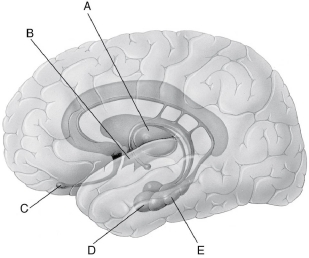 Figure 38.1
In Figure 38.1, which letter points to the thalamus?
A) A
B) B
C) C
D) D
E) E
Figure 38.1In Figure 38.1, which letter points to the thalamus?
A) A
B) B
C) C
D) D
E) E
سؤال
Refer to the illustration of the limbic system in Figure 38.1 to help answer the next few questions.
Figure 38.1
In Figure 38.1, which letter points to the hippocampus?
A) A
B) B
C) C
D) D
E) E
Figure 38.1In Figure 38.1, which letter points to the hippocampus?
A) A
B) B
C) C
D) D
E) E
سؤال
سؤال
سؤال
سؤال
The next questions refer to the diagram of the ear in Figure 38.3.
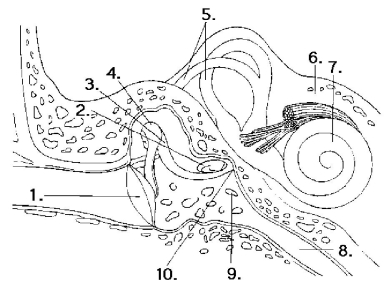 Figure 38.3
The organ of Corti is contained in the structure numbered
A) 3.
B) 4.
C) 5.
D) 6.
E) 7.
Figure 38.3The organ of Corti is contained in the structure numbered
A) 3.
B) 4.
C) 5.
D) 6.
E) 7.
سؤال
The next questions refer to the diagram of the ear in Figure 38.3.
Figure 38.3
Vibrations of the tympanic membrane are transmitted to the oval window by the structures at which numbers?
A) 1, 2, 3, and 4
B) 2, 3, and 4
C) 3 and 4
D) 4
E) 5
Figure 38.3Vibrations of the tympanic membrane are transmitted to the oval window by the structures at which numbers?
A) 1, 2, 3, and 4
B) 2, 3, and 4
C) 3 and 4
D) 4
E) 5
سؤال
سؤال
Refer to the illustration of the limbic system in Figure 38.1 to help answer the next few questions.
Figure 38.1
In Figure 38.1, which letter points to the hypothalamus?
A) A
B) B
C) C
D) D
E) E
Figure 38.1In Figure 38.1, which letter points to the hypothalamus?
A) A
B) B
C) C
D) D
E) E
سؤال
سؤال
Refer to the illustration of the limbic system in Figure 38.1 to help answer the next few questions.
Figure 38.1
In Figure 38.1, which letter points to the olfactory bulb?
A) A
B) B
C) C
D) D
E) E
Figure 38.1In Figure 38.1, which letter points to the olfactory bulb?
A) A
B) B
C) C
D) D
E) E
سؤال
The next questions refer to the diagram of the ear in Figure 38.3.
Figure 38.3
The sense of head motion begins with sensory transduction by the structures at which numbers?
A) 2, 3, and 4
B) 2, 5, and 7
C) 4
D) 5
E) 7 and 8
Figure 38.3The sense of head motion begins with sensory transduction by the structures at which numbers?
A) 2, 3, and 4
B) 2, 5, and 7
C) 4
D) 5
E) 7 and 8
سؤال
سؤال
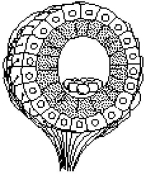 Figure 38.2
The structure diagrammed in Figure 38.2 is the
A) neuromast.
B) statocyst.
C) taste bud.
D) ommatidium.
E) olfactory bulb.
سؤال
سؤال
سؤال
سؤال
The next questions refer to the diagram of the ear in Figure 38.3.
Figure 38.3
The structure involved in equalizing the pressure between the ear and the atmosphere is represented by number
A) 7.
B) 1.
C) 8.
D) 9.
E) 10.
Figure 38.3The structure involved in equalizing the pressure between the ear and the atmosphere is represented by number
A) 7.
B) 1.
C) 8.
D) 9.
E) 10.
سؤال
سؤال
Refer to the illustration of the limbic system in Figure 38.1 to help answer the next few questions.
Figure 38.1
In Figure 38.1, which letter points to the amygdala?
A) A
B) B
C) C
D) D
E) E
Figure 38.1In Figure 38.1, which letter points to the amygdala?
A) A
B) B
C) C
D) D
E) E

فتح الحزمة
قم بالتسجيل لفتح البطاقات في هذه المجموعة!
Unlock Deck
Unlock Deck
1/89

العب

ملء الشاشة (f)
Deck 38: Nervous and Sensory Systems
1
Choose the correct match of glial cell type and function.
A) astrocytes-metabolize neurotransmitters and modulate synaptic effectiveness
B) oligodendrocytes-produce the myelin sheaths of myelinated neurons in the peripheral nervous system
C) microglia-produce the myelin sheaths of myelinated neurons in the central nervous system
D) radial glia-the source of immunoprotection against pathogens.
E) Schwann cells-provide nutritional support to nonmyelinated neurons
A) astrocytes-metabolize neurotransmitters and modulate synaptic effectiveness
B) oligodendrocytes-produce the myelin sheaths of myelinated neurons in the peripheral nervous system
C) microglia-produce the myelin sheaths of myelinated neurons in the central nervous system
D) radial glia-the source of immunoprotection against pathogens.
E) Schwann cells-provide nutritional support to nonmyelinated neurons
A
2
The bottlenose dolphin breathes air but can sleep in the ocean because it
A) ceases breathing while sleeping and remains underwater.
B) sleeps for only 30 minutes at a time, the maximum interval for which it can cease breathing.
C) fills its swim bladder with air to keep its blowhole above the surface of the water while it sleeps.
D) moves to shallow water to sleep, so it does not need to swim to keep its blowhole above the surface of the water.
E) alternates which half of its brain is asleep and which half is awake.
A) ceases breathing while sleeping and remains underwater.
B) sleeps for only 30 minutes at a time, the maximum interval for which it can cease breathing.
C) fills its swim bladder with air to keep its blowhole above the surface of the water while it sleeps.
D) moves to shallow water to sleep, so it does not need to swim to keep its blowhole above the surface of the water.
E) alternates which half of its brain is asleep and which half is awake.
E
3
The central nervous system is lacking in animals that have
A) a complete gut.
B) bilateral symmetry.
C) radial symmetry.
D) a closed circulatory system.
E) excitable membranes.
A) a complete gut.
B) bilateral symmetry.
C) radial symmetry.
D) a closed circulatory system.
E) excitable membranes.
C
4
Central coordination of vertebrate biological rhythms in physiology and behavior resides in the
A) pituitary gland.
B) hypothalamus.
C) cerebrum.
D) cerebellum.
E) thalamus.
A) pituitary gland.
B) hypothalamus.
C) cerebrum.
D) cerebellum.
E) thalamus.
فتح الحزمة
افتح القفل للوصول البطاقات البالغ عددها 89 في هذه المجموعة.
فتح الحزمة
k this deck
5
The divisions of the nervous system that have antagonistic, or opposing, actions are the
A) motor and sensory systems.
B) sympathetic and parasympathetic systems.
C) presynaptic and postsynaptic membranes.
D) forebrain and hindbrain.
E) central nervous system and peripheral nervous system.
A) motor and sensory systems.
B) sympathetic and parasympathetic systems.
C) presynaptic and postsynaptic membranes.
D) forebrain and hindbrain.
E) central nervous system and peripheral nervous system.
فتح الحزمة
افتح القفل للوصول البطاقات البالغ عددها 89 في هذه المجموعة.
فتح الحزمة
k this deck
6
In a cephalized invertebrate, the system that transmits "efferent" impulses from the anterior ganglion to distal segments is the
A) central nervous system.
B) peripheral nervous system.
C) autonomic nervous system.
D) parasympathetic nervous system.
E) sympathetic nervous system.
A) central nervous system.
B) peripheral nervous system.
C) autonomic nervous system.
D) parasympathetic nervous system.
E) sympathetic nervous system.
فتح الحزمة
افتح القفل للوصول البطاقات البالغ عددها 89 في هذه المجموعة.
فتح الحزمة
k this deck
7
Exercise and emergency reactions include
A) increased activity in all parts of the peripheral nervous system.
B) increased activity in the sympathetic division and decreased activity in the parasympathetic division.
C) decreased activity in the sympathetic division and increased activity in the parasympathetic division.
D) increased activity in the enteric nervous system.
E) reduced heart rate and blood pressure.
A) increased activity in all parts of the peripheral nervous system.
B) increased activity in the sympathetic division and decreased activity in the parasympathetic division.
C) decreased activity in the sympathetic division and increased activity in the parasympathetic division.
D) increased activity in the enteric nervous system.
E) reduced heart rate and blood pressure.
فتح الحزمة
افتح القفل للوصول البطاقات البالغ عددها 89 في هذه المجموعة.
فتح الحزمة
k this deck
8
Cephalization, the clustering of neurons and interneurons in the anterior part of the animal, is apparent in
A) Hydra.
B) cnidarians.
C) Planaria.
D) sea stars.
E) invertebrate animals with radial symmetry.
A) Hydra.
B) cnidarians.
C) Planaria.
D) sea stars.
E) invertebrate animals with radial symmetry.
فتح الحزمة
افتح القفل للوصول البطاقات البالغ عددها 89 في هذه المجموعة.
فتح الحزمة
k this deck
9
The telencephalon region of the developing brain of a mammal
A) develops as the neural tube differentiates.
B) develops from the midbrain.
C) is the brain region most like that of ancestral vertebrates.
D) gives rise to the cerebrum.
E) divides further into the metencephalon and myelencephalon.
A) develops as the neural tube differentiates.
B) develops from the midbrain.
C) is the brain region most like that of ancestral vertebrates.
D) gives rise to the cerebrum.
E) divides further into the metencephalon and myelencephalon.
فتح الحزمة
افتح القفل للوصول البطاقات البالغ عددها 89 في هذه المجموعة.
فتح الحزمة
k this deck
10
The 11 pairs of appendages projecting from the rostral area of star-nosed moles are
A) chemosensory structures.
B) tactile structures.
C) olfactory structures.
D) highly sensitive photoreceptors.
E) gustatory structures.
A) chemosensory structures.
B) tactile structures.
C) olfactory structures.
D) highly sensitive photoreceptors.
E) gustatory structures.
فتح الحزمة
افتح القفل للوصول البطاقات البالغ عددها 89 في هذه المجموعة.
فتح الحزمة
k this deck
11
Preparation for the fight-or-flight response includes activation of the ________ nervous system.
A) sympathetic
B) somatic
C) central
D) visceral
E) parasympathetic
A) sympathetic
B) somatic
C) central
D) visceral
E) parasympathetic
فتح الحزمة
افتح القفل للوصول البطاقات البالغ عددها 89 في هذه المجموعة.
فتح الحزمة
k this deck
12
The cerebrospinal fluid is
A) a filtrate of the blood.
B) a secretion of glial cells.
C) a secretion of interneurons.
D) cytosol secreted from ependymal cells.
E) secreted by the hypothalamus.
A) a filtrate of the blood.
B) a secretion of glial cells.
C) a secretion of interneurons.
D) cytosol secreted from ependymal cells.
E) secreted by the hypothalamus.
فتح الحزمة
افتح القفل للوصول البطاقات البالغ عددها 89 في هذه المجموعة.
فتح الحزمة
k this deck
13
Imagine you are resting comfortably on a sofa after dinner. This could be described as a state with
A) increased activity in the sympathetic, parasympathetic, and enteric nervous systems.
B) decreased activity in the sympathetic, parasympathetic, and enteric nervous systems.
C) decreased activity in the sympathetic nervous system, and increased activity in the parasympathetic and enteric nervous systems.
D) increased activity in the sympathetic nervous system, and decreased activity in the parasympathetic and enteric nervous systems.
E) increased activity in the sympathetic nervous system, decreased activity in the parasympathetic nervous system, and increased activity in the enteric nervous system.
A) increased activity in the sympathetic, parasympathetic, and enteric nervous systems.
B) decreased activity in the sympathetic, parasympathetic, and enteric nervous systems.
C) decreased activity in the sympathetic nervous system, and increased activity in the parasympathetic and enteric nervous systems.
D) increased activity in the sympathetic nervous system, and decreased activity in the parasympathetic and enteric nervous systems.
E) increased activity in the sympathetic nervous system, decreased activity in the parasympathetic nervous system, and increased activity in the enteric nervous system.
فتح الحزمة
افتح القفل للوصول البطاقات البالغ عددها 89 في هذه المجموعة.
فتح الحزمة
k this deck
14
The system that modulates excitation and inhibition of the smooth and cardiac muscles of the digestive, cardiovascular, and excretory systems is the
A) central nervous system.
B) motor system.
C) autonomic nervous system.
D) parasympathetic nervous system.
E) sympathetic nervous system.
A) central nervous system.
B) motor system.
C) autonomic nervous system.
D) parasympathetic nervous system.
E) sympathetic nervous system.
فتح الحزمة
افتح القفل للوصول البطاقات البالغ عددها 89 في هذه المجموعة.
فتح الحزمة
k this deck
15
The endogenous nature of biological rhythms is based on the observation that animals isolated from light and dark cues
A) continue to have cycles of exactly 24 hours in duration.
B) continue to have cycles of approximately 24 hours in duration-some more rapid, some slower.
C) synchronize activity with whatever lighting cycle is imposed on them.
D) cease having any rhythms.
E) are independent of any genetic determinants.
A) continue to have cycles of exactly 24 hours in duration.
B) continue to have cycles of approximately 24 hours in duration-some more rapid, some slower.
C) synchronize activity with whatever lighting cycle is imposed on them.
D) cease having any rhythms.
E) are independent of any genetic determinants.
فتح الحزمة
افتح القفل للوصول البطاقات البالغ عددها 89 في هذه المجموعة.
فتح الحزمة
k this deck
16
The activation of the parasympathetic branch of the autonomic nervous system is associated with
A) resting and digesting.
B) release of epinephrine into the blood.
C) increased metabolic rate.
D) fight-or-flight responses.
E) intensive aerobic exercise.
A) resting and digesting.
B) release of epinephrine into the blood.
C) increased metabolic rate.
D) fight-or-flight responses.
E) intensive aerobic exercise.
فتح الحزمة
افتح القفل للوصول البطاقات البالغ عددها 89 في هذه المجموعة.
فتح الحزمة
k this deck
17
Myelinated neurons are especially abundant in
A) the gray matter of the brain and the white matter of the spinal cord.
B) the white matter of the brain and the gray matter of the spinal cord.
C) the gray matter of the brain and the gray matter of the spinal cord.
D) the white matter in the brain and the white matter in the spinal cord.
E) all areas of the brain and spinal cord.
A) the gray matter of the brain and the white matter of the spinal cord.
B) the white matter of the brain and the gray matter of the spinal cord.
C) the gray matter of the brain and the gray matter of the spinal cord.
D) the white matter in the brain and the white matter in the spinal cord.
E) all areas of the brain and spinal cord.
فتح الحزمة
افتح القفل للوصول البطاقات البالغ عددها 89 في هذه المجموعة.
فتح الحزمة
k this deck
18
Cerebrospinal fluid can be described as all of the following except
A) functioning in transport of nutrients and hormones through the brain.
B) a product of the filtration of blood in the brain.
C) formed from layers of connective tissue.
D) functioning to cushion the brain.
E) filling cavities in the brain called ventricles.
A) functioning in transport of nutrients and hormones through the brain.
B) a product of the filtration of blood in the brain.
C) formed from layers of connective tissue.
D) functioning to cushion the brain.
E) filling cavities in the brain called ventricles.
فتح الحزمة
افتح القفل للوصول البطاقات البالغ عددها 89 في هذه المجموعة.
فتح الحزمة
k this deck
19
The blood-brain barrier
A) is formed by tight junctions.
B) is formed by oligodendrocytes.
C) tightly regulates the intracellular environment of the CNS.
D) uses chemical signals to communicate with the spinal cord.
E) provides support to the brain tissue.
A) is formed by tight junctions.
B) is formed by oligodendrocytes.
C) tightly regulates the intracellular environment of the CNS.
D) uses chemical signals to communicate with the spinal cord.
E) provides support to the brain tissue.
فتح الحزمة
افتح القفل للوصول البطاقات البالغ عددها 89 في هذه المجموعة.
فتح الحزمة
k this deck
20
Afferent neuronal systems include the
A) sensory systems.
B) peripheral nervous system.
C) autonomic nervous system.
D) parasympathetic nervous system.
E) sympathetic nervous system.
A) sensory systems.
B) peripheral nervous system.
C) autonomic nervous system.
D) parasympathetic nervous system.
E) sympathetic nervous system.
فتح الحزمة
افتح القفل للوصول البطاقات البالغ عددها 89 في هذه المجموعة.
فتح الحزمة
k this deck
21
Hormones that are secreted by the posterior pituitary gland are made in the
A) cerebrum.
B) cerebellum.
C) thalamus.
D) hypothalamus.
E) medulla oblongata.
A) cerebrum.
B) cerebellum.
C) thalamus.
D) hypothalamus.
E) medulla oblongata.
فتح الحزمة
افتح القفل للوصول البطاقات البالغ عددها 89 في هذه المجموعة.
فتح الحزمة
k this deck
22
If you were writing an essay, the part of your brain that would be actively involved in this task is
A) the temporal and frontal lobes.
B) the parietal lobe.
C) Broca's area.
D) Wernicke's area.
E) the occipital lobe.
A) the temporal and frontal lobes.
B) the parietal lobe.
C) Broca's area.
D) Wernicke's area.
E) the occipital lobe.
فتح الحزمة
افتح القفل للوصول البطاقات البالغ عددها 89 في هذه المجموعة.
فتح الحزمة
k this deck
23
Our understanding of mental illness has been most advanced by discoveries involving the
A) degree of convolutions in the brain's surface.
B) evolution of the telencephalon.
C) sequence of developmental specialization.
D) chemicals involved in brain communications.
E) nature of the blood-brain barrier.
A) degree of convolutions in the brain's surface.
B) evolution of the telencephalon.
C) sequence of developmental specialization.
D) chemicals involved in brain communications.
E) nature of the blood-brain barrier.
فتح الحزمة
افتح القفل للوصول البطاقات البالغ عددها 89 في هذه المجموعة.
فتح الحزمة
k this deck
24
Wernicke's and Broca's regions of the brain affect
A) olfaction.
B) vision.
C) speech.
D) memory.
E) hearing.
A) olfaction.
B) vision.
C) speech.
D) memory.
E) hearing.
فتح الحزمة
افتح القفل للوصول البطاقات البالغ عددها 89 في هذه المجموعة.
فتح الحزمة
k this deck
25
Calculation, contemplation, and cognition are human activities associated with increased activity in the
A) pituitary gland.
B) hypothalamus.
C) cerebrum.
D) cerebellum.
E) spinal cord.
A) pituitary gland.
B) hypothalamus.
C) cerebrum.
D) cerebellum.
E) spinal cord.
فتح الحزمة
افتح القفل للوصول البطاقات البالغ عددها 89 في هذه المجموعة.
فتح الحزمة
k this deck
26
Wernicke's area
A) is active when speech is heard and comprehended.
B) is active during the generation of speech.
C) coordinates the response to olfactory sensation.
D) is active when you are reading silently.
E) is found on the left side of the brain.
A) is active when speech is heard and comprehended.
B) is active during the generation of speech.
C) coordinates the response to olfactory sensation.
D) is active when you are reading silently.
E) is found on the left side of the brain.
فتح الحزمة
افتح القفل للوصول البطاقات البالغ عددها 89 في هذه المجموعة.
فتح الحزمة
k this deck
27
Short-term memory information processing usually causes changes in the
A) brainstem.
B) medulla.
C) hypothalamus.
D) hippocampus.
E) cranial nerves.
A) brainstem.
B) medulla.
C) hypothalamus.
D) hippocampus.
E) cranial nerves.
فتح الحزمة
افتح القفل للوصول البطاقات البالغ عددها 89 في هذه المجموعة.
فتح الحزمة
k this deck
28
Which of the following shows a brain structure correctly paired with one of its primary functions?
A) frontal lobe-decision making
B) occipital lobe-control of skeletal muscles
C) temporal lobe-visual processing
D) cerebellum-language comprehension
E) occipital lobe-speech production
A) frontal lobe-decision making
B) occipital lobe-control of skeletal muscles
C) temporal lobe-visual processing
D) cerebellum-language comprehension
E) occipital lobe-speech production
فتح الحزمة
افتح القفل للوصول البطاقات البالغ عددها 89 في هذه المجموعة.
فتح الحزمة
k this deck
29
Food and water appetites are under the regulatory influence of the
A) cerebrum.
B) cerebellum.
C) thalamus.
D) hypothalamus.
E) medulla oblongata.
A) cerebrum.
B) cerebellum.
C) thalamus.
D) hypothalamus.
E) medulla oblongata.
فتح الحزمة
افتح القفل للوصول البطاقات البالغ عددها 89 في هذه المجموعة.
فتح الحزمة
k this deck
30
An organism that lacks integration centers
A) cannot receive stimuli.
B) will not have a nervous system.
C) will not be able to interpret stimuli.
D) can be expected to lack myelinated neurons.
A) cannot receive stimuli.
B) will not have a nervous system.
C) will not be able to interpret stimuli.
D) can be expected to lack myelinated neurons.
فتح الحزمة
افتح القفل للوصول البطاقات البالغ عددها 89 في هذه المجموعة.
فتح الحزمة
k this deck
31
Failure of an embryonic neuron to establish a synaptic connection to another cell
A) converts that neuron to an ependymal cell.
B) causes the neuron to migrate to another part of the brain.
C) converts that neuron to a glial cell.
D) leads to Alzheimer's disease.
E) results in the apoptosis of that neuron.
A) converts that neuron to an ependymal cell.
B) causes the neuron to migrate to another part of the brain.
C) converts that neuron to a glial cell.
D) leads to Alzheimer's disease.
E) results in the apoptosis of that neuron.
فتح الحزمة
افتح القفل للوصول البطاقات البالغ عددها 89 في هذه المجموعة.
فتح الحزمة
k this deck
32
Increases and decreases of the heart rate result from changes in the activity of the
A) corpus callosum.
B) medulla oblongata.
C) thalamus.
D) pituitary.
E) cerebellum.
A) corpus callosum.
B) medulla oblongata.
C) thalamus.
D) pituitary.
E) cerebellum.
فتح الحزمة
افتح القفل للوصول البطاقات البالغ عددها 89 في هذه المجموعة.
فتح الحزمة
k this deck
33
In mammals, advanced cognition is usually correlated with a large and very convoluted neocortex, but birds are capable of sophisticated cognition because they have
A) a more advanced cerebellum.
B) a cerebellum with several flat layers.
C) a pallium with neurons clustered into nuclei.
D) microvilli to increase the brain's surface area.
A) a more advanced cerebellum.
B) a cerebellum with several flat layers.
C) a pallium with neurons clustered into nuclei.
D) microvilli to increase the brain's surface area.
فتح الحزمة
افتح القفل للوصول البطاقات البالغ عددها 89 في هذه المجموعة.
فتح الحزمة
k this deck
34
The regulatory centers for the respiratory and circulatory systems are found in the
A) cerebrum.
B) cerebellum.
C) thalamus.
D) hypothalamus.
E) medulla oblongata.
A) cerebrum.
B) cerebellum.
C) thalamus.
D) hypothalamus.
E) medulla oblongata.
فتح الحزمة
افتح القفل للوصول البطاقات البالغ عددها 89 في هذه المجموعة.
فتح الحزمة
k this deck
35
Which of the following structures are correctly paired?
A) forebrain and medulla oblongata
B) forebrain and cerebellum
C) midbrain and cerebrum
D) hindbrain and cerebellum
E) brainstem and anterior pituitary gland
A) forebrain and medulla oblongata
B) forebrain and cerebellum
C) midbrain and cerebrum
D) hindbrain and cerebellum
E) brainstem and anterior pituitary gland
فتح الحزمة
افتح القفل للوصول البطاقات البالغ عددها 89 في هذه المجموعة.
فتح الحزمة
k this deck
36
The coordination of groups of skeletal muscles is driven by activity in the
A) cerebrum.
B) cerebellum.
C) thalamus.
D) hypothalamus.
E) medulla oblongata.
A) cerebrum.
B) cerebellum.
C) thalamus.
D) hypothalamus.
E) medulla oblongata.
فتح الحزمة
افتح القفل للوصول البطاقات البالغ عددها 89 في هذه المجموعة.
فتح الحزمة
k this deck
37
The regulation of body temperature derives from the activity of the
A) cerebrum.
B) cerebellum.
C) thalamus.
D) hypothalamus.
E) medulla oblongata.
A) cerebrum.
B) cerebellum.
C) thalamus.
D) hypothalamus.
E) medulla oblongata.
فتح الحزمة
افتح القفل للوصول البطاقات البالغ عددها 89 في هذه المجموعة.
فتح الحزمة
k this deck
38
The unconscious control of respiration and circulation is associated with the
A) thalamus.
B) cerebellum.
C) medulla oblongata.
D) corpus callosum.
E) cerebrum.
A) thalamus.
B) cerebellum.
C) medulla oblongata.
D) corpus callosum.
E) cerebrum.
فتح الحزمة
افتح القفل للوصول البطاقات البالغ عددها 89 في هذه المجموعة.
فتح الحزمة
k this deck
39
The suprachiasmatic nuclei are found in the
A) thalamus.
B) hypothalamus.
C) epithalamus.
D) amygdala.
E) Broca's area.
A) thalamus.
B) hypothalamus.
C) epithalamus.
D) amygdala.
E) Broca's area.
فتح الحزمة
افتح القفل للوصول البطاقات البالغ عددها 89 في هذه المجموعة.
فتح الحزمة
k this deck
40
The motor cortex is part of the
A) cerebrum.
B) cerebellum.
C) spinal cord.
D) midbrain.
E) medulla oblongata.
A) cerebrum.
B) cerebellum.
C) spinal cord.
D) midbrain.
E) medulla oblongata.
فتح الحزمة
افتح القفل للوصول البطاقات البالغ عددها 89 في هذه المجموعة.
فتح الحزمة
k this deck
41
Proteins coded by a very large family of related genes are active in the sensory transduction of
A) gustatory stimuli.
B) olfactory stimuli.
C) visual stimuli.
D) auditory stimuli.
E) stimuli related to the position of the head.
A) gustatory stimuli.
B) olfactory stimuli.
C) visual stimuli.
D) auditory stimuli.
E) stimuli related to the position of the head.
فتح الحزمة
افتح القفل للوصول البطاقات البالغ عددها 89 في هذه المجموعة.
فتح الحزمة
k this deck
42
A ligand for the umami receptor in the sense of taste is
A) glucose.
B) sodium ions.
C) potassium ions.
D) hydrogen ions.
E) monosodium glutamate.
A) glucose.
B) sodium ions.
C) potassium ions.
D) hydrogen ions.
E) monosodium glutamate.
فتح الحزمة
افتح القفل للوصول البطاقات البالغ عددها 89 في هذه المجموعة.
فتح الحزمة
k this deck
43
An injury to the occipital lobe will likely impair the function of the
A) primary visual cortex.
B) thalamus.
C) optic chiasma.
D) sense of taste.
E) sense of touch.
A) primary visual cortex.
B) thalamus.
C) optic chiasma.
D) sense of taste.
E) sense of touch.
فتح الحزمة
افتح القفل للوصول البطاقات البالغ عددها 89 في هذه المجموعة.
فتح الحزمة
k this deck
44
When Phineas Gage had a metal rod driven into his frontal lobe he experienced
A) loss of the ability to reason.
B) loss of all short-term memory.
C) greatly altered emotional responses.
D) loss of all long-term memory.
E) loss of his sense of balance.
A) loss of the ability to reason.
B) loss of all short-term memory.
C) greatly altered emotional responses.
D) loss of all long-term memory.
E) loss of his sense of balance.
فتح الحزمة
افتح القفل للوصول البطاقات البالغ عددها 89 في هذه المجموعة.
فتح الحزمة
k this deck
45
Choose the correct sequence of the following events leading to the sensory processing of a stimulus. 1. transmission
2) transduction
3) integration
4) amplification
A) 1 → 2 → 3 → 4
B) 1 → 4 → 2 → 3
C) 2 → 4 → 1 → 3
D) 3 → 1 → 2 → 4
E) 3 → 1 → 4 → 2
2) transduction
3) integration
4) amplification
A) 1 → 2 → 3 → 4
B) 1 → 4 → 2 → 3
C) 2 → 4 → 1 → 3
D) 3 → 1 → 2 → 4
E) 3 → 1 → 4 → 2
فتح الحزمة
افتح القفل للوصول البطاقات البالغ عددها 89 في هذه المجموعة.
فتح الحزمة
k this deck
46
The generation of action potentials in olfactory neurons initiated by odors drawn into the nasal cavity is an example of
A) perception.
B) sensory transduction.
C) sensory adaptation.
D) habituation.
E) lateral inhibition.
A) perception.
B) sensory transduction.
C) sensory adaptation.
D) habituation.
E) lateral inhibition.
فتح الحزمة
افتح القفل للوصول البطاقات البالغ عددها 89 في هذه المجموعة.
فتح الحزمة
k this deck
47
Tastes and smells are distinct kinds of environmental information in that
A) neural projections from taste receptors reach different parts of the brain than the neural projections from olfactory receptors.
B) the single area of the cerebral cortex that receives smell and taste signals can distinguish tastes and smells by the pattern of action potentials received.
C) tastant molecules are airborne, whereas odorant molecules are dissolved in fluids.
D) distinguishing tastant molecules requires learning, whereas smell discrimination is an innate process.
E) odorants bind to receptor proteins, but none of the tastant stimuli will bind to receptors.
A) neural projections from taste receptors reach different parts of the brain than the neural projections from olfactory receptors.
B) the single area of the cerebral cortex that receives smell and taste signals can distinguish tastes and smells by the pattern of action potentials received.
C) tastant molecules are airborne, whereas odorant molecules are dissolved in fluids.
D) distinguishing tastant molecules requires learning, whereas smell discrimination is an innate process.
E) odorants bind to receptor proteins, but none of the tastant stimuli will bind to receptors.
فتح الحزمة
افتح القفل للوصول البطاقات البالغ عددها 89 في هذه المجموعة.
فتح الحزمة
k this deck
48
The olfactory bulbs are located in the
A) nasal cavity.
B) anterior pituitary gland.
C) posterior pituitary gland.
D) brain.
E) brainstem.
A) nasal cavity.
B) anterior pituitary gland.
C) posterior pituitary gland.
D) brain.
E) brainstem.
فتح الحزمة
افتح القفل للوصول البطاقات البالغ عددها 89 في هذه المجموعة.
فتح الحزمة
k this deck
49
A given photon of light may trigger an action potential with thousands of times more energy because the signal strength is magnified by
A) the receptor.
B) a G protein.
C) an enzyme-catalyzed reaction.
D) sensory adaptation.
E) triggering several receptors at once.
A) the receptor.
B) a G protein.
C) an enzyme-catalyzed reaction.
D) sensory adaptation.
E) triggering several receptors at once.
فتح الحزمة
افتح القفل للوصول البطاقات البالغ عددها 89 في هذه المجموعة.
فتح الحزمة
k this deck
50
Umami perception would be stimulated by
A) sugar water.
B) chocolate milk.
C) a savory and rich cheese.
D) acidic orange juice.
E) salt water.
A) sugar water.
B) chocolate milk.
C) a savory and rich cheese.
D) acidic orange juice.
E) salt water.
فتح الحزمة
افتح القفل للوصول البطاقات البالغ عددها 89 في هذه المجموعة.
فتح الحزمة
k this deck
51
The correct sequence of sensory processing is
A) sensory adaptation → stimulus reception → sensory transduction → sensory perception.
B) stimulus reception → sensory transduction → sensory perception → sensory adaptation.
C) sensory perception → stimulus reception → sensory transduction → sensory adaptation.
D) sensory perception → sensory transduction → stimulus reception → sensory adaptation.
E) stimulus reception → sensory perception → sensory adaptation → sensory transduction.
A) sensory adaptation → stimulus reception → sensory transduction → sensory perception.
B) stimulus reception → sensory transduction → sensory perception → sensory adaptation.
C) sensory perception → stimulus reception → sensory transduction → sensory adaptation.
D) sensory perception → sensory transduction → stimulus reception → sensory adaptation.
E) stimulus reception → sensory perception → sensory adaptation → sensory transduction.
فتح الحزمة
افتح القفل للوصول البطاقات البالغ عددها 89 في هذه المجموعة.
فتح الحزمة
k this deck
52
Stimuli alter the activity of excitable sensory cells via
A) integration.
B) transmission.
C) transduction.
D) transcription.
E) amplification.
A) integration.
B) transmission.
C) transduction.
D) transcription.
E) amplification.
فتح الحزمة
افتح القفل للوصول البطاقات البالغ عددها 89 في هذه المجموعة.
فتح الحزمة
k this deck
53
The cellular membrane across which ion flow varies during auditory transduction is the
A) tectorial membrane.
B) tympanic membrane.
C) round-window membrane.
D) hair cell membrane.
E) basilar membrane.
A) tectorial membrane.
B) tympanic membrane.
C) round-window membrane.
D) hair cell membrane.
E) basilar membrane.
فتح الحزمة
افتح القفل للوصول البطاقات البالغ عددها 89 في هذه المجموعة.
فتح الحزمة
k this deck
54
Forming new long-term memories is strikingly disrupted after damage to the
A) thalamus.
B) hypothalamus.
C) hippocampus.
D) somatosensory cortex.
E) primary motor cortex.
A) thalamus.
B) hypothalamus.
C) hippocampus.
D) somatosensory cortex.
E) primary motor cortex.
فتح الحزمة
افتح القفل للوصول البطاقات البالغ عددها 89 في هذه المجموعة.
فتح الحزمة
k this deck
55
Artificial electrical stimulation of a human's capsaicin-sensitive neurons would likely produce the sensation of
A) cold temperature.
B) hot temperature.
C) tactile stimulus.
D) odor of pepper.
E) deep pressure.
A) cold temperature.
B) hot temperature.
C) tactile stimulus.
D) odor of pepper.
E) deep pressure.
فتح الحزمة
افتح القفل للوصول البطاقات البالغ عددها 89 في هذه المجموعة.
فتح الحزمة
k this deck
56
Immediately after putting on a shirt, your skin might feel itchy. However, this perception soon fades due to
A) sensory adaptation.
B) accommodation.
C) the increase of transduction.
D) reduced motor unit recruitment.
E) reduced receptor amplification.
A) sensory adaptation.
B) accommodation.
C) the increase of transduction.
D) reduced motor unit recruitment.
E) reduced receptor amplification.
فتح الحزمة
افتح القفل للوصول البطاقات البالغ عددها 89 في هذه المجموعة.
فتح الحزمة
k this deck
57
Artificial electrical stimulation of a human's menthol-sensitive neurons would likely produce the sensation of
A) cold temperature.
B) hot temperature.
C) tactile stimulus.
D) odor of pepper.
E) deep pressure.
A) cold temperature.
B) hot temperature.
C) tactile stimulus.
D) odor of pepper.
E) deep pressure.
فتح الحزمة
افتح القفل للوصول البطاقات البالغ عددها 89 في هذه المجموعة.
فتح الحزمة
k this deck
58
An earthworm without a statocyst would not be able to
A) move.
B) sense light.
C) hear.
D) orient with respect to gravity.
E) respond to touch.
A) move.
B) sense light.
C) hear.
D) orient with respect to gravity.
E) respond to touch.
فتح الحزمة
افتح القفل للوصول البطاقات البالغ عددها 89 في هذه المجموعة.
فتح الحزمة
k this deck
59
Statocysts contain cells that are
A) mechanoreceptors used to detect orientation relative to gravity.
B) chemoreceptors used in selecting migration routes.
C) photoreceptors used in setting biological rhythms.
D) thermoreceptors used in prey detection.
E) chemoreceptors used in acid-base balance.
A) mechanoreceptors used to detect orientation relative to gravity.
B) chemoreceptors used in selecting migration routes.
C) photoreceptors used in setting biological rhythms.
D) thermoreceptors used in prey detection.
E) chemoreceptors used in acid-base balance.
فتح الحزمة
افتح القفل للوصول البطاقات البالغ عددها 89 في هذه المجموعة.
فتح الحزمة
k this deck
60
Sound waves arriving at a listener first strike the
A) tectorial membrane.
B) tympanic membrane.
C) round-window membrane.
D) hair cell membrane.
E) basilar membrane.
A) tectorial membrane.
B) tympanic membrane.
C) round-window membrane.
D) hair cell membrane.
E) basilar membrane.
فتح الحزمة
افتح القفل للوصول البطاقات البالغ عددها 89 في هذه المجموعة.
فتح الحزمة
k this deck
61
Refer to the illustration of the limbic system in Figure 38.1 to help answer the next few questions.
Figure 38.1
In Figure 38.1, which letter points to the thalamus?
A) A
B) B
C) C
D) D
E) E
Figure 38.1In Figure 38.1, which letter points to the thalamus?
A) A
B) B
C) C
D) D
E) E
فتح الحزمة
افتح القفل للوصول البطاقات البالغ عددها 89 في هذه المجموعة.
فتح الحزمة
k this deck
62
Refer to the illustration of the limbic system in Figure 38.1 to help answer the next few questions.
Figure 38.1
In Figure 38.1, which letter points to the hippocampus?
A) A
B) B
C) C
D) D
E) E
Figure 38.1In Figure 38.1, which letter points to the hippocampus?
A) A
B) B
C) C
D) D
E) E
فتح الحزمة
افتح القفل للوصول البطاقات البالغ عددها 89 في هذه المجموعة.
فتح الحزمة
k this deck
63
In the human retina
A) cone cells can detect color, but rod cells cannot.
B) cone cells are more sensitive than rod cells to light.
C) cone cells, but not rod cells, have a visual pigment.
D) rod cells are most highly concentrated in the center of the retina.
E) rod cells require higher illumination for stimulation than do cone cells.
A) cone cells can detect color, but rod cells cannot.
B) cone cells are more sensitive than rod cells to light.
C) cone cells, but not rod cells, have a visual pigment.
D) rod cells are most highly concentrated in the center of the retina.
E) rod cells require higher illumination for stimulation than do cone cells.
فتح الحزمة
افتح القفل للوصول البطاقات البالغ عددها 89 في هذه المجموعة.
فتح الحزمة
k this deck
64
It can be very difficult to select an angle for sneaking up to a grasshopper to catch it because grasshoppers have
A) excellent hearing for detecting predators.
B) compound eyes with multiple ommatidia.
C) eyes with multiple fovea.
D) a camera-like eye with multiple fovea.
E) binocular vision.
A) excellent hearing for detecting predators.
B) compound eyes with multiple ommatidia.
C) eyes with multiple fovea.
D) a camera-like eye with multiple fovea.
E) binocular vision.
فتح الحزمة
افتح القفل للوصول البطاقات البالغ عددها 89 في هذه المجموعة.
فتح الحزمة
k this deck
65
Rods exposed to light will
A) depolarize due to the opening of sodium channels.
B) hyperpolarize due to the closing of sodium channels.
C) depolarize due to the opening of potassium channels.
D) hyperpolarize due to the closing of potassium channels.
E) fire one action potential for each photon received.
A) depolarize due to the opening of sodium channels.
B) hyperpolarize due to the closing of sodium channels.
C) depolarize due to the opening of potassium channels.
D) hyperpolarize due to the closing of potassium channels.
E) fire one action potential for each photon received.
فتح الحزمة
افتح القفل للوصول البطاقات البالغ عددها 89 في هذه المجموعة.
فتح الحزمة
k this deck
66
The next questions refer to the diagram of the ear in Figure 38.3.
Figure 38.3
The organ of Corti is contained in the structure numbered
A) 3.
B) 4.
C) 5.
D) 6.
E) 7.
Figure 38.3The organ of Corti is contained in the structure numbered
A) 3.
B) 4.
C) 5.
D) 6.
E) 7.
فتح الحزمة
افتح القفل للوصول البطاقات البالغ عددها 89 في هذه المجموعة.
فتح الحزمة
k this deck
67
The next questions refer to the diagram of the ear in Figure 38.3.
Figure 38.3
Vibrations of the tympanic membrane are transmitted to the oval window by the structures at which numbers?
A) 1, 2, 3, and 4
B) 2, 3, and 4
C) 3 and 4
D) 4
E) 5
Figure 38.3Vibrations of the tympanic membrane are transmitted to the oval window by the structures at which numbers?
A) 1, 2, 3, and 4
B) 2, 3, and 4
C) 3 and 4
D) 4
E) 5
فتح الحزمة
افتح القفل للوصول البطاقات البالغ عددها 89 في هذه المجموعة.
فتح الحزمة
k this deck
68
The pathway leading to the perception of sound by mammals begins with the
A) hair cells of the organ of Corti, which rests on the basilar membrane, coming in contact with the tectorial membrane.
B) hair cells of the organ of Corti, which rests on the tympanic membrane, coming in contact with the tectorial membrane.
C) hair cells of the organ of Corti, which rests on the tectorial membrane, coming in contact with the basilar membrane.
D) hair cells of the organ of Corti coming in contact with the tectorial membrane as a result of fluid waves in the cochlea causing vibrations in the round window.
E) hair cells on the tympanic membrane as a result of fluid waves in the cochlea causing vibrations in the round window.
A) hair cells of the organ of Corti, which rests on the basilar membrane, coming in contact with the tectorial membrane.
B) hair cells of the organ of Corti, which rests on the tympanic membrane, coming in contact with the tectorial membrane.
C) hair cells of the organ of Corti, which rests on the tectorial membrane, coming in contact with the basilar membrane.
D) hair cells of the organ of Corti coming in contact with the tectorial membrane as a result of fluid waves in the cochlea causing vibrations in the round window.
E) hair cells on the tympanic membrane as a result of fluid waves in the cochlea causing vibrations in the round window.
فتح الحزمة
افتح القفل للوصول البطاقات البالغ عددها 89 في هذه المجموعة.
فتح الحزمة
k this deck
69
Refer to the illustration of the limbic system in Figure 38.1 to help answer the next few questions.
Figure 38.1
In Figure 38.1, which letter points to the hypothalamus?
A) A
B) B
C) C
D) D
E) E
Figure 38.1In Figure 38.1, which letter points to the hypothalamus?
A) A
B) B
C) C
D) D
E) E
فتح الحزمة
افتح القفل للوصول البطاقات البالغ عددها 89 في هذه المجموعة.
فتح الحزمة
k this deck
70
Dizziness is a perceived sensation that can occur when
A) the hair cells in the cochlea move more than their normal limits.
B) moving fluid in the semicircular canals encounters a stationary cupula.
C) rods and cones provide information that does not correspond with information received by cochlear hair cells.
D) the basilar membrane makes physical contact with the tectorial membrane.
E) the utricle is horizontal but the saccule is vertical.
A) the hair cells in the cochlea move more than their normal limits.
B) moving fluid in the semicircular canals encounters a stationary cupula.
C) rods and cones provide information that does not correspond with information received by cochlear hair cells.
D) the basilar membrane makes physical contact with the tectorial membrane.
E) the utricle is horizontal but the saccule is vertical.
فتح الحزمة
افتح القفل للوصول البطاقات البالغ عددها 89 في هذه المجموعة.
فتح الحزمة
k this deck
71
Refer to the illustration of the limbic system in Figure 38.1 to help answer the next few questions.
Figure 38.1
In Figure 38.1, which letter points to the olfactory bulb?
A) A
B) B
C) C
D) D
E) E
Figure 38.1In Figure 38.1, which letter points to the olfactory bulb?
A) A
B) B
C) C
D) D
E) E
فتح الحزمة
افتح القفل للوصول البطاقات البالغ عددها 89 في هذه المجموعة.
فتح الحزمة
k this deck
72
The next questions refer to the diagram of the ear in Figure 38.3.
Figure 38.3
The sense of head motion begins with sensory transduction by the structures at which numbers?
A) 2, 3, and 4
B) 2, 5, and 7
C) 4
D) 5
E) 7 and 8
Figure 38.3The sense of head motion begins with sensory transduction by the structures at which numbers?
A) 2, 3, and 4
B) 2, 5, and 7
C) 4
D) 5
E) 7 and 8
فتح الحزمة
افتح القفل للوصول البطاقات البالغ عددها 89 في هذه المجموعة.
فتح الحزمة
k this deck
73
The perceived pitch of a sound depends on
A) which part of the tympanic membrane is being vibrated by sound waves.
B) which part of the oval window produces waves in the cochlear fluid.
C) which region of the basilar membrane was set in motion.
D) whether or not the sound moves the incus, malleus, and stapes.
E) the listener having had training in music.
A) which part of the tympanic membrane is being vibrated by sound waves.
B) which part of the oval window produces waves in the cochlear fluid.
C) which region of the basilar membrane was set in motion.
D) whether or not the sound moves the incus, malleus, and stapes.
E) the listener having had training in music.
فتح الحزمة
افتح القفل للوصول البطاقات البالغ عددها 89 في هذه المجموعة.
فتح الحزمة
k this deck
74
Figure 38.2The structure diagrammed in Figure 38.2 is the
A) neuromast.
B) statocyst.
C) taste bud.
D) ommatidium.
E) olfactory bulb.
فتح الحزمة
افتح القفل للوصول البطاقات البالغ عددها 89 في هذه المجموعة.
فتح الحزمة
k this deck
75
The sand grains or other dense materials resting on mechanoreceptors used by most invertebrates to sense gravity are called
A) cochlea.
B) statoliths.
C) stapes.
D) pinnae.
E) antennae.
A) cochlea.
B) statoliths.
C) stapes.
D) pinnae.
E) antennae.
فتح الحزمة
افتح القفل للوصول البطاقات البالغ عددها 89 في هذه المجموعة.
فتح الحزمة
k this deck
76
Sensory transduction of light/dark information in the vertebrate retina is accomplished by
A) ganglion cells.
B) amacrine cells.
C) bipolar cells.
D) horizontal cells.
E) rods and cones.
A) ganglion cells.
B) amacrine cells.
C) bipolar cells.
D) horizontal cells.
E) rods and cones.
فتح الحزمة
افتح القفل للوصول البطاقات البالغ عددها 89 في هذه المجموعة.
فتح الحزمة
k this deck
77
The cochlea is an organ of auditory transduction that contains
A) fluid and cells that can undergo mechanosensory transduction.
B) air and cells that produce wax.
C) air and small bones that vibrate in response to sound waves.
D) fluid with stacks of chemosensory cells.
E) air and statocysts activated by movement.
A) fluid and cells that can undergo mechanosensory transduction.
B) air and cells that produce wax.
C) air and small bones that vibrate in response to sound waves.
D) fluid with stacks of chemosensory cells.
E) air and statocysts activated by movement.
فتح الحزمة
افتح القفل للوصول البطاقات البالغ عددها 89 في هذه المجموعة.
فتح الحزمة
k this deck
78
The next questions refer to the diagram of the ear in Figure 38.3.
Figure 38.3
The structure involved in equalizing the pressure between the ear and the atmosphere is represented by number
A) 7.
B) 1.
C) 8.
D) 9.
E) 10.
Figure 38.3The structure involved in equalizing the pressure between the ear and the atmosphere is represented by number
A) 7.
B) 1.
C) 8.
D) 9.
E) 10.
فتح الحزمة
افتح القفل للوصول البطاقات البالغ عددها 89 في هذه المجموعة.
فتح الحزمة
k this deck
79
A rod exposed to light will
A) fire action potentials that will increase its release of glutamate.
B) undergo a graded depolarization that will increase its release of glutamate.
C) undergo a graded hyperpolarization that will increase its release of glutamate.
D) undergo a graded depolarization that will decrease its release of glutamate.
E) undergo a graded hyperpolarization that will decrease its release of glutamate.
A) fire action potentials that will increase its release of glutamate.
B) undergo a graded depolarization that will increase its release of glutamate.
C) undergo a graded hyperpolarization that will increase its release of glutamate.
D) undergo a graded depolarization that will decrease its release of glutamate.
E) undergo a graded hyperpolarization that will decrease its release of glutamate.
فتح الحزمة
افتح القفل للوصول البطاقات البالغ عددها 89 في هذه المجموعة.
فتح الحزمة
k this deck
80
Refer to the illustration of the limbic system in Figure 38.1 to help answer the next few questions.
Figure 38.1
In Figure 38.1, which letter points to the amygdala?
A) A
B) B
C) C
D) D
E) E
Figure 38.1In Figure 38.1, which letter points to the amygdala?
A) A
B) B
C) C
D) D
E) E
فتح الحزمة
افتح القفل للوصول البطاقات البالغ عددها 89 في هذه المجموعة.
فتح الحزمة
k this deck
فتح الحزمة
افتح القفل للوصول البطاقات البالغ عددها 89 في هذه المجموعة.






