







 تكلم مع الذكاء الاصطناعي


Deck 34: Circulation and Gas Exchange
ملء الشاشة (f)

سؤال

سؤال
سؤال
سؤال
سؤال
سؤال
سؤال
سؤال
سؤال
سؤال
سؤال
سؤال
سؤال
سؤال
سؤال
سؤال
سؤال
سؤال
سؤال
سؤال
سؤال
سؤال
سؤال
سؤال
سؤال
سؤال
سؤال
سؤال
سؤال
سؤال
سؤال
سؤال
سؤال
سؤال
سؤال
سؤال
سؤال
سؤال
سؤال
سؤال
سؤال
سؤال
سؤال
سؤال
سؤال
سؤال
سؤال
سؤال
سؤال
سؤال
سؤال
سؤال
سؤال
سؤال
سؤال
سؤال
سؤال
سؤال
سؤال
سؤال
سؤال
سؤال
سؤال
Please use the following information to answer the question(s) below.
In the Himalayas, Mount Everest, Earth's highest mountain, reaches over 8,800 meters at its peak. At this altitude the atmospheric pressure is only 254 mm Hg. Although humans cannot survive at this altitude, the bar-headed goose can fly there without any problems. Bar-headed goose hemoglobin can bind the same number of oxygen molecules as human hemoglobin, but their affinities for binding oxygen are different (see graph below).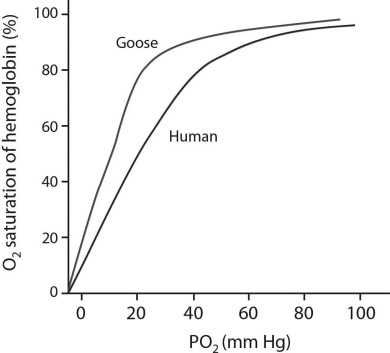
What is the maximum number of molecules of oxygen that bar-headed goose hemoglobin can bind to?
A) 1
B) 2
C) 3
D) 4
In the Himalayas, Mount Everest, Earth's highest mountain, reaches over 8,800 meters at its peak. At this altitude the atmospheric pressure is only 254 mm Hg. Although humans cannot survive at this altitude, the bar-headed goose can fly there without any problems. Bar-headed goose hemoglobin can bind the same number of oxygen molecules as human hemoglobin, but their affinities for binding oxygen are different (see graph below).
What is the maximum number of molecules of oxygen that bar-headed goose hemoglobin can bind to?
A) 1
B) 2
C) 3
D) 4
سؤال
سؤال
سؤال
سؤال
سؤال
At what point in the following figure would blood velocity be lowest? 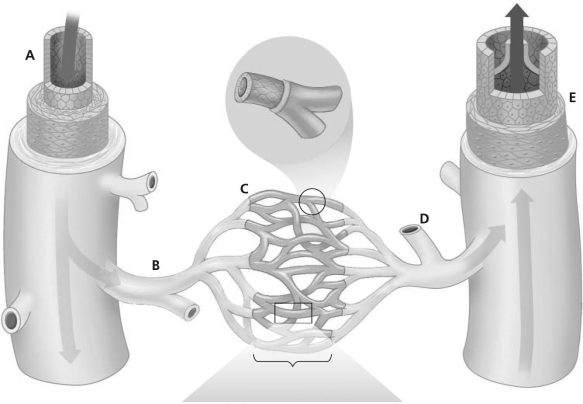
A) A
B) B
C) C
D) D
E) E
A) A
B) B
C) C
D) D
E) E
سؤال
سؤال
At what point in the following figure would blood pressure be highest? 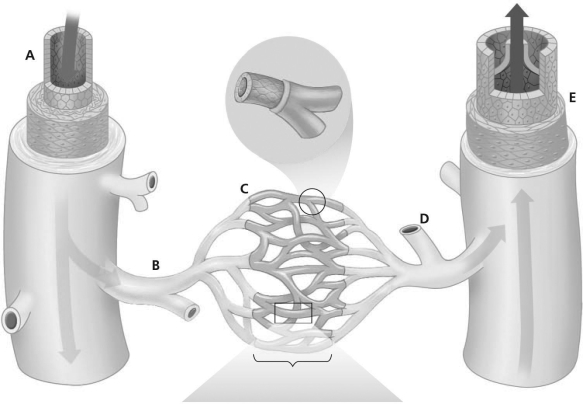
A) A
B) B
C) C
D) D
E) E
A) A
B) B
C) C
D) D
E) E
سؤال
سؤال
سؤال
سؤال
سؤال
سؤال
سؤال
سؤال
سؤال
Please use the following information to answer the question(s) below.
In the Himalayas, Mount Everest, Earth's highest mountain, reaches over 8,800 meters at its peak. At this altitude the atmospheric pressure is only 254 mm Hg. Although humans cannot survive at this altitude, the bar-headed goose can fly there without any problems. Bar-headed goose hemoglobin can bind the same number of oxygen molecules as human hemoglobin, but their affinities for binding oxygen are different (see graph below).
What is the approximate partial pressure of oxygen on top of Mount Everest?
A) 26 mm Hg
B) 53 mm Hg
C) 159 mm Hg
D) 254 mm Hg
In the Himalayas, Mount Everest, Earth's highest mountain, reaches over 8,800 meters at its peak. At this altitude the atmospheric pressure is only 254 mm Hg. Although humans cannot survive at this altitude, the bar-headed goose can fly there without any problems. Bar-headed goose hemoglobin can bind the same number of oxygen molecules as human hemoglobin, but their affinities for binding oxygen are different (see graph below).
What is the approximate partial pressure of oxygen on top of Mount Everest?
A) 26 mm Hg
B) 53 mm Hg
C) 159 mm Hg
D) 254 mm Hg
سؤال

فتح الحزمة
قم بالتسجيل لفتح البطاقات في هذه المجموعة!
Unlock Deck
Unlock Deck
1/88

العب

ملء الشاشة (f)
Deck 34: Circulation and Gas Exchange
1
Which of the following develops the greatest pressure on the blood in the mammalian aorta?
A) systole of the left atrium
B) diastole of the right ventricle
C) systole of the left ventricle
D) diastole of the right atrium
E) diastole of the left atrium
A) systole of the left atrium
B) diastole of the right ventricle
C) systole of the left ventricle
D) diastole of the right atrium
E) diastole of the left atrium
C
2
Heart rate will increase in the presence of increased
A) apolipoproteins.
B) immunoglobulins.
C) erythropoietin.
D) epinephrine.
E) platelets.
A) apolipoproteins.
B) immunoglobulins.
C) erythropoietin.
D) epinephrine.
E) platelets.
D
3
Organisms with a circulating body fluid that is distinct from the fluid that directly surrounds the body's cells are likely to have
A) an open circulatory system.
B) a closed circulatory system.
C) a gastrovascular cavity.
D) branched tracheae.
E) hemolymph.
A) an open circulatory system.
B) a closed circulatory system.
C) a gastrovascular cavity.
D) branched tracheae.
E) hemolymph.
B
4
A human red blood cell in an artery of the left arm is on its way to deliver oxygen to a cell in the thumb. To travel from the artery in the arm to the left ventricle, this red blood cell must pass through
A) one capillary bed.
B) two capillary beds.
C) three capillary beds.
D) four capillary beds.
E) five capillary beds.
A) one capillary bed.
B) two capillary beds.
C) three capillary beds.
D) four capillary beds.
E) five capillary beds.
فتح الحزمة
افتح القفل للوصول البطاقات البالغ عددها 88 في هذه المجموعة.
فتح الحزمة
k this deck
5
A stroke volume in the heart of 70 mL/cycle, with a pulse of 60 cycles per minute, results in a cardiac output of
A) 4.2 L/minute.
B) 4.2 mL/minute.
C) 0.42 L/minute.
D) 42 L/minute.
E) 420 L/minute.
A) 4.2 L/minute.
B) 4.2 mL/minute.
C) 0.42 L/minute.
D) 42 L/minute.
E) 420 L/minute.
فتح الحزمة
افتح القفل للوصول البطاقات البالغ عددها 88 في هذه المجموعة.
فتح الحزمة
k this deck
6
Which of the following is the correct sequence of blood flow in reptiles and mammals?
A) left ventricle → aorta → lungs → systemic circulation
B) right ventricle → pulmonary vein → pulmocutaneous circulation
C) pulmonary vein → left atrium → left ventricle → pulmonary circuit
D) vena cava → right atrium → right ventricle → pulmonary circuit
E) right atrium → pulmonary artery → left atrium → ventricle
A) left ventricle → aorta → lungs → systemic circulation
B) right ventricle → pulmonary vein → pulmocutaneous circulation
C) pulmonary vein → left atrium → left ventricle → pulmonary circuit
D) vena cava → right atrium → right ventricle → pulmonary circuit
E) right atrium → pulmonary artery → left atrium → ventricle
فتح الحزمة
افتح القفل للوصول البطاقات البالغ عددها 88 في هذه المجموعة.
فتح الحزمة
k this deck
7
The semilunar valves of the mammalian heart
A) are the route by which blood flows from the atria to the ventricles.
B) are found only on the right side of the heart.
C) are the attachment sites where the pulmonary veins empty into the heart.
D) are able to prevent backflow of blood in the aorta and pulmonary arteries.
E) are at the places where the anterior and posterior venae cavae empty into the heart.
A) are the route by which blood flows from the atria to the ventricles.
B) are found only on the right side of the heart.
C) are the attachment sites where the pulmonary veins empty into the heart.
D) are able to prevent backflow of blood in the aorta and pulmonary arteries.
E) are at the places where the anterior and posterior venae cavae empty into the heart.
فتح الحزمة
افتح القفل للوصول البطاقات البالغ عددها 88 في هذه المجموعة.
فتح الحزمة
k this deck
8
In which of the following organisms does blood flow from the pulmocutaneous circulation to the heart before circulating through the rest of the body?
A) annelids
B) molluscs
C) fishes
D) frogs
E) insects
A) annelids
B) molluscs
C) fishes
D) frogs
E) insects
فتح الحزمة
افتح القفل للوصول البطاقات البالغ عددها 88 في هذه المجموعة.
فتح الحزمة
k this deck
9
The only vertebrates in which blood flows directly from respiratory organs to body tissues without first returning to the heart are the
A) amphibians.
B) birds.
C) fishes.
D) mammals.
E) reptiles.
A) amphibians.
B) birds.
C) fishes.
D) mammals.
E) reptiles.
فتح الحزمة
افتح القفل للوصول البطاقات البالغ عددها 88 في هذه المجموعة.
فتح الحزمة
k this deck
10
Gas exchange in the aquatic salamander known as the axolotl is correctly described as
A) active transport to move oxygen into the salamander from the water.
B) facilitated diffusion to move oxygen into the salamander from the water.
C) facilitated diffusion of carbon dioxide from the salamander into the water.
D) simple diffusion of oxygen into the salamander from the water.
E) active transport of carbon dioxide from the salamander into the water.
A) active transport to move oxygen into the salamander from the water.
B) facilitated diffusion to move oxygen into the salamander from the water.
C) facilitated diffusion of carbon dioxide from the salamander into the water.
D) simple diffusion of oxygen into the salamander from the water.
E) active transport of carbon dioxide from the salamander into the water.
فتح الحزمة
افتح القفل للوصول البطاقات البالغ عددها 88 في هذه المجموعة.
فتح الحزمة
k this deck
11
The material present in arterioles that is not present in capillaries is
A) fully oxygenated blood.
B) plasma in which carbon dioxide has been added.
C) a lining of endothelial cells.
D) circular smooth muscle cells that can alter the size of the arterioles.
E) white blood cells and platelets.
A) fully oxygenated blood.
B) plasma in which carbon dioxide has been added.
C) a lining of endothelial cells.
D) circular smooth muscle cells that can alter the size of the arterioles.
E) white blood cells and platelets.
فتح الحزمة
افتح القفل للوصول البطاقات البالغ عددها 88 في هذه المجموعة.
فتح الحزمة
k this deck
12
The set of blood vessels with the slowest velocity of blood flow is
A) the arteries.
B) the arterioles.
C) the venules.
D) the capillaries.
E) the veins.
A) the arteries.
B) the arterioles.
C) the venules.
D) the capillaries.
E) the veins.
فتح الحزمة
افتح القفل للوصول البطاقات البالغ عددها 88 في هذه المجموعة.
فتح الحزمة
k this deck
13
To adjust blood pressure independently in the capillaries of the gas-exchange surface and in the capillaries of the general body circulation, an organism would need a(n)
A) open circulatory system.
B) closed circulatory system.
C) lymphatic system.
D) two-chambered heart.
E) four-chambered heart.
A) open circulatory system.
B) closed circulatory system.
C) lymphatic system.
D) two-chambered heart.
E) four-chambered heart.
فتح الحزمة
افتح القفل للوصول البطاقات البالغ عددها 88 في هذه المجموعة.
فتح الحزمة
k this deck
14
A patient with a blood pressure of 120/75, a pulse rate of 40 beats/minute, a stroke volume of 70 mL/beat, and a respiratory rate of 25 breaths/minute will have a cardiac output of
A) 500 mL/minute.
B) 1,000 mL/minute.
C) 1,750 mL/minute.
D) 2,800 mL/minute.
E) 4,800 mL/minute.
A) 500 mL/minute.
B) 1,000 mL/minute.
C) 1,750 mL/minute.
D) 2,800 mL/minute.
E) 4,800 mL/minute.
فتح الحزمة
افتح القفل للوصول البطاقات البالغ عددها 88 في هذه المجموعة.
فتح الحزمة
k this deck
15
Why has natural selection favored the evolution of double circulation in birds and mammals?
A) because they are larger than reptiles and amphibians
B) because they use more energy than equivalent-sized reptiles and amphibians
C) because they have more viscous blood than reptiles and amphibians
D) because they cannot obtain as much oxygen from the air as reptiles and amphibians
A) because they are larger than reptiles and amphibians
B) because they use more energy than equivalent-sized reptiles and amphibians
C) because they have more viscous blood than reptiles and amphibians
D) because they cannot obtain as much oxygen from the air as reptiles and amphibians
فتح الحزمة
افتح القفل للوصول البطاقات البالغ عددها 88 في هذه المجموعة.
فتح الحزمة
k this deck
16
Circulatory systems compensate for
A) temperature differences between the lungs and the active tissue.
B) the slow rate at which diffusion occurs over large distances.
C) the problem of communication systems involving only the nervous system.
D) the need to cushion animals from trauma.
E) the need fetal organisms have for maintaining an optimal body temperature.
A) temperature differences between the lungs and the active tissue.
B) the slow rate at which diffusion occurs over large distances.
C) the problem of communication systems involving only the nervous system.
D) the need to cushion animals from trauma.
E) the need fetal organisms have for maintaining an optimal body temperature.
فتح الحزمة
افتح القفل للوصول البطاقات البالغ عددها 88 في هذه المجموعة.
فتح الحزمة
k this deck
17
Damage to the sinoatrial node in humans
A) is a major contributor to heart attacks.
B) would block conductance between the bundle branches and the Purkinje fibers.
C) would cause blood flow rate to increase.
D) would disrupt the rate and timing of cardiac muscle contractions.
E) would have a direct effect on blood pressure monitors in the aorta.
A) is a major contributor to heart attacks.
B) would block conductance between the bundle branches and the Purkinje fibers.
C) would cause blood flow rate to increase.
D) would disrupt the rate and timing of cardiac muscle contractions.
E) would have a direct effect on blood pressure monitors in the aorta.
فتح الحزمة
افتح القفل للوصول البطاقات البالغ عددها 88 في هذه المجموعة.
فتح الحزمة
k this deck
18
A significant increase in the amount of interstitial fluid surrounding the capillary beds of a human's lungs will cause
A) an increase in the amount of carbon dioxide moving from the blood to the lungs.
B) an increase in the amount of oxygen moving from the lungs into the blood.
C) a decrease in the amount of oxygen moving from the lungs into the blood.
D) an increase of pressure that would cause the capillary beds to burst.
E) a decrease in the amount of work needed for effective ventilation of the lungs.
A) an increase in the amount of carbon dioxide moving from the blood to the lungs.
B) an increase in the amount of oxygen moving from the lungs into the blood.
C) a decrease in the amount of oxygen moving from the lungs into the blood.
D) an increase of pressure that would cause the capillary beds to burst.
E) a decrease in the amount of work needed for effective ventilation of the lungs.
فتح الحزمة
افتح القفل للوصول البطاقات البالغ عددها 88 في هذه المجموعة.
فتح الحزمة
k this deck
19
The set of blood vessels with the lowest blood pressure driving flow is
A) the arteries.
B) the arterioles.
C) the venules.
D) the capillaries.
E) the veins.
A) the arteries.
B) the arterioles.
C) the venules.
D) the capillaries.
E) the veins.
فتح الحزمة
افتح القفل للوصول البطاقات البالغ عددها 88 في هذه المجموعة.
فتح الحزمة
k this deck
20
The fluid that moves around in the circulatory system of a typical arthropod is
A) the intracellular fluid.
B) the blood plasma.
C) the cytosol.
D) the hemolymph.
A) the intracellular fluid.
B) the blood plasma.
C) the cytosol.
D) the hemolymph.
فتح الحزمة
افتح القفل للوصول البطاقات البالغ عددها 88 في هذه المجموعة.
فتح الحزمة
k this deck
21
The velocity of blood flow is the lowest in capillaries because
A) the capillary walls are not thin enough to allow oxygen to exchange with the cells.
B) the capillaries are far from the heart, and blood flow slows as distance from the heart increases.
C) the diastolic blood pressure is too low to deliver blood to the capillaries at a high flow rate.
D) the systemic capillaries are supplied by the left ventricle, which has a lower cardiac output than the right ventricle.
E) the total cross-sectional area of the capillaries is greater than the total cross-sectional area of the arteries or any other part of the circulatory system.
A) the capillary walls are not thin enough to allow oxygen to exchange with the cells.
B) the capillaries are far from the heart, and blood flow slows as distance from the heart increases.
C) the diastolic blood pressure is too low to deliver blood to the capillaries at a high flow rate.
D) the systemic capillaries are supplied by the left ventricle, which has a lower cardiac output than the right ventricle.
E) the total cross-sectional area of the capillaries is greater than the total cross-sectional area of the arteries or any other part of the circulatory system.
فتح الحزمة
افتح القفل للوصول البطاقات البالغ عددها 88 في هذه المجموعة.
فتح الحزمة
k this deck
22
Small swollen areas in the neck, groin, and axillary region are associated with
A) increased activity of the immune system.
B) a broken limb.
C) blood sugar that is abnormally high.
D) dehydration.
E) sodium depletion.
A) increased activity of the immune system.
B) a broken limb.
C) blood sugar that is abnormally high.
D) dehydration.
E) sodium depletion.
فتح الحزمة
افتح القفل للوصول البطاقات البالغ عددها 88 في هذه المجموعة.
فتح الحزمة
k this deck
23
If, during protein starvation, the osmotic pressure on the venous side of capillary beds drops below the hydrostatic pressure, then
A) hemoglobin will not release oxygen.
B) fluids will tend to accumulate in tissues.
C) the pH of the interstitial fluids will increase.
D) most carbon dioxide will be bound to hemoglobin and carried away from tissues.
E) plasma proteins will escape through the endothelium of the capillaries.
A) hemoglobin will not release oxygen.
B) fluids will tend to accumulate in tissues.
C) the pH of the interstitial fluids will increase.
D) most carbon dioxide will be bound to hemoglobin and carried away from tissues.
E) plasma proteins will escape through the endothelium of the capillaries.
فتح الحزمة
افتح القفل للوصول البطاقات البالغ عددها 88 في هذه المجموعة.
فتح الحزمة
k this deck
24
Dialysis is the process of filtering the blood; it is performed when kidney function is below normal. During dialysis, plasma and its proteins are separated from the cells. Dialysis patients, who will have blood withdrawn, dialyzed, and then replaced, are always weighed when they enter the facility and then weighed carefully again before they leave, because
A) even small changes in body weight may signify changes in blood volume and therefore blood pressure.
B) many people who have dialysis are diabetic and must control their weight carefully.
C) dialysis removes blood proteins, and these weigh more than other blood components.
D) dialysis is likely to cause edema, and such swelling must be controlled.
E) reclining posture during dialysis can cause a tendency for weight gain.
A) even small changes in body weight may signify changes in blood volume and therefore blood pressure.
B) many people who have dialysis are diabetic and must control their weight carefully.
C) dialysis removes blood proteins, and these weigh more than other blood components.
D) dialysis is likely to cause edema, and such swelling must be controlled.
E) reclining posture during dialysis can cause a tendency for weight gain.
فتح الحزمة
افتح القفل للوصول البطاقات البالغ عددها 88 في هذه المجموعة.
فتح الحزمة
k this deck
25
Among the following choices, which organism likely has the highest systolic pressure?
A) mouse
B) rabbit
C) human
D) hippopotamus
E) giraffe
A) mouse
B) rabbit
C) human
D) hippopotamus
E) giraffe
فتح الحزمة
افتح القفل للوصول البطاقات البالغ عددها 88 في هذه المجموعة.
فتح الحزمة
k this deck
26
The blood pressure is lowest in the
A) aorta.
B) arteries.
C) arterioles.
D) capillaries.
E) superior vena cava.
A) aorta.
B) arteries.
C) arterioles.
D) capillaries.
E) superior vena cava.
فتح الحزمة
افتح القفل للوصول البطاقات البالغ عددها 88 في هذه المجموعة.
فتح الحزمة
k this deck
27
The diagnosis of hypertension in adults is based on the
A) measurement of fatty deposits on the endothelium of arteries.
B) measurement of the LDL/HDL ratio in peripheral blood.
C) percent of blood volume made up of platelets.
D) blood pressure being greater than 140 mm Hg systolic and/or >90 diastolic.
E) number of leukocytes per mm3 of blood.
A) measurement of fatty deposits on the endothelium of arteries.
B) measurement of the LDL/HDL ratio in peripheral blood.
C) percent of blood volume made up of platelets.
D) blood pressure being greater than 140 mm Hg systolic and/or >90 diastolic.
E) number of leukocytes per mm3 of blood.
فتح الحزمة
افتح القفل للوصول البطاقات البالغ عددها 88 في هذه المجموعة.
فتح الحزمة
k this deck
28
Vasoconstriction of blood vessels delivering blood to the gut is a likely response when an individual is
A) lying down after standing up.
B) eating a meal.
C) stressed and secreting stress hormones.
D) responding to increased blood pressure.
E) having an allergy attack with lots of histamine secretion.
A) lying down after standing up.
B) eating a meal.
C) stressed and secreting stress hormones.
D) responding to increased blood pressure.
E) having an allergy attack with lots of histamine secretion.
فتح الحزمة
افتح القفل للوصول البطاقات البالغ عددها 88 في هذه المجموعة.
فتح الحزمة
k this deck
29
An increased concentration of nitric oxide within a vascular bed is associated with
A) vasoconstriction.
B) vasodilation.
C) narrowing of the arteries.
D) a reduction in blood flow in that region.
E) a decreased amount of blood in the capillaries of that vascular bed.
A) vasoconstriction.
B) vasodilation.
C) narrowing of the arteries.
D) a reduction in blood flow in that region.
E) a decreased amount of blood in the capillaries of that vascular bed.
فتح الحزمة
افتح القفل للوصول البطاقات البالغ عددها 88 في هذه المجموعة.
فتح الحزمة
k this deck
30
When the air in a testing chamber is specially mixed so that its oxygen content is 10% and its overall air pressure is 400 mm Hg, then the partial pressure of oxygen is
A) 400 mm Hg.
B) 82 mm Hg.
C) 40 mm Hg.
D) 21 mm Hg.
E) 4 mm Hg.
A) 400 mm Hg.
B) 82 mm Hg.
C) 40 mm Hg.
D) 21 mm Hg.
E) 4 mm Hg.
فتح الحزمة
افتح القفل للوصول البطاقات البالغ عددها 88 في هذه المجموعة.
فتح الحزمة
k this deck
31
A species that has a normal resting systolic blood pressure of >260 mm Hg is likely to be
A) an animal that is small and compact, without the need to pump blood very far from the heart.
B) an animal with abundant lipid storage.
C) a species that has very wide-diameter veins.
D) an animal that has a very long distance between its heart and its brain.
E) an animal that makes frequent, quick motions.
A) an animal that is small and compact, without the need to pump blood very far from the heart.
B) an animal with abundant lipid storage.
C) a species that has very wide-diameter veins.
D) an animal that has a very long distance between its heart and its brain.
E) an animal that makes frequent, quick motions.
فتح الحزمة
افتح القفل للوصول البطاقات البالغ عددها 88 في هذه المجموعة.
فتح الحزمة
k this deck
32
The plasma proteins in humans
A) maintain the blood's osmotic pressure.
B) transport water-soluble lipids.
C) carry out gas exchange.
D) undergo aerobic metabolism.
E) transport oxygen.
A) maintain the blood's osmotic pressure.
B) transport water-soluble lipids.
C) carry out gas exchange.
D) undergo aerobic metabolism.
E) transport oxygen.
فتح الحزمة
افتح القفل للوصول البطاقات البالغ عددها 88 في هذه المجموعة.
فتح الحزمة
k this deck
33
Large proteins such as albumin remain in capillaries rather than diffusing out, resulting in the
A) loss of osmotic pressure in the capillaries.
B) development of an osmotic pressure difference across capillary walls.
C) loss of fluid from capillaries.
D) increased diffusion of CO₂.
E) increased diffusion of Hb.
A) loss of osmotic pressure in the capillaries.
B) development of an osmotic pressure difference across capillary walls.
C) loss of fluid from capillaries.
D) increased diffusion of CO₂.
E) increased diffusion of Hb.
فتح الحزمة
افتح القفل للوصول البطاقات البالغ عددها 88 في هذه المجموعة.
فتح الحزمة
k this deck
34
What will be the long-term effect of blocking the lymphatic vessels associated with a capillary bed?
A) more fluid entering the venous capillaries
B) an increase in the blood pressure in the capillary bed
C) the accumulation of more fluid in the interstitial areas
D) fewer proteins leaking out of the blood to enter the interstitial fluid
E) the area of the blockage becoming abnormally small
A) more fluid entering the venous capillaries
B) an increase in the blood pressure in the capillary bed
C) the accumulation of more fluid in the interstitial areas
D) fewer proteins leaking out of the blood to enter the interstitial fluid
E) the area of the blockage becoming abnormally small
فتح الحزمة
افتح القفل للوصول البطاقات البالغ عددها 88 في هذه المجموعة.
فتح الحزمة
k this deck
35
In a healthy human, the typical life span of a red blood cell is
A) 24 hours.
B) 1 week.
C) 1 month.
D) 4 months.
E) 80 years or more.
A) 24 hours.
B) 1 week.
C) 1 month.
D) 4 months.
E) 80 years or more.
فتح الحزمة
افتح القفل للوصول البطاقات البالغ عددها 88 في هذه المجموعة.
فتح الحزمة
k this deck
36
Which of the following can cause the LDL/HDL ratio to increase and thus increase the likelihood of a myocardial infarction?
A) stopping smoking
B) eating more trans fats
C) exercising more
D) taking statin drugs
A) stopping smoking
B) eating more trans fats
C) exercising more
D) taking statin drugs
فتح الحزمة
افتح القفل للوصول البطاقات البالغ عددها 88 في هذه المجموعة.
فتح الحزمة
k this deck
37
The hormone that stimulates the production of red blood cells and the organ where this hormone is synthesized are
A) growth hormone and pancreas, respectively.
B) erythropoietin and kidney, respectively.
C) cortisol and adrenal gland, respectively.
D) epinephrine and adrenal gland, respectively.
E) acetylcholine and bone marrow, respectively.
A) growth hormone and pancreas, respectively.
B) erythropoietin and kidney, respectively.
C) cortisol and adrenal gland, respectively.
D) epinephrine and adrenal gland, respectively.
E) acetylcholine and bone marrow, respectively.
فتح الحزمة
افتح القفل للوصول البطاقات البالغ عددها 88 في هذه المجموعة.
فتح الحزمة
k this deck
38
Dissolved proteins in human plasma include which of the following?
A) fibrinogen only
B) hemoglobin only
C) fibrinogen and immunoglobulin only
D) hemoglobin and immunoglobulin only
E) fibrinogen, hemoglobin, and immunoglobulin
A) fibrinogen only
B) hemoglobin only
C) fibrinogen and immunoglobulin only
D) hemoglobin and immunoglobulin only
E) fibrinogen, hemoglobin, and immunoglobulin
فتح الحزمة
افتح القفل للوصول البطاقات البالغ عددها 88 في هذه المجموعة.
فتح الحزمة
k this deck
39
The production of red blood cells is stimulated by
A) low-density lipoproteins.
B) immunoglobulins.
C) erythropoietin.
D) epinephrine.
E) platelets.
A) low-density lipoproteins.
B) immunoglobulins.
C) erythropoietin.
D) epinephrine.
E) platelets.
فتح الحزمة
افتح القفل للوصول البطاقات البالغ عددها 88 في هذه المجموعة.
فتح الحزمة
k this deck
40
The meshwork that forms the fabric of a blood clot is
A) epinephrine.
B) fibrin.
C) thrombin.
D) prothrombin.
E) collagen.
A) epinephrine.
B) fibrin.
C) thrombin.
D) prothrombin.
E) collagen.
فتح الحزمة
افتح القفل للوصول البطاقات البالغ عددها 88 في هذه المجموعة.
فتح الحزمة
k this deck
41
The sun shining on a tidal pool during a hot day heats the water. As some water evaporates, the pool becomes saltier, causing
A) a decrease in its carbon dioxide content.
B) a decrease in its oxygen content.
C) an increase in its ability to sustain aerobic organisms.
D) a decrease in the water's density.
E) a decrease in the movement of the water molecules.
A) a decrease in its carbon dioxide content.
B) a decrease in its oxygen content.
C) an increase in its ability to sustain aerobic organisms.
D) a decrease in the water's density.
E) a decrease in the movement of the water molecules.
فتح الحزمة
افتح القفل للوصول البطاقات البالغ عددها 88 في هذه المجموعة.
فتح الحزمة
k this deck
42
In mammals, most gas exchange between the atmosphere and the pulmonary blood occurs in the
A) trachea.
B) larynx.
C) bronchi.
D) bronchioles.
E) alveoli.
A) trachea.
B) larynx.
C) bronchi.
D) bronchioles.
E) alveoli.
فتح الحزمة
افتح القفل للوصول البطاقات البالغ عددها 88 في هذه المجموعة.
فتح الحزمة
k this deck
43
Breathing is usually regulated by
A) erythropoietin levels in the blood.
B) the concentration of red blood cells.
C) hemoglobin levels in the blood.
D) CO₂ and O₂ concentration and pH-level sensors.
E) the lungs and the larynx.
A) erythropoietin levels in the blood.
B) the concentration of red blood cells.
C) hemoglobin levels in the blood.
D) CO₂ and O₂ concentration and pH-level sensors.
E) the lungs and the larynx.
فتح الحزمة
افتح القفل للوصول البطاقات البالغ عددها 88 في هذه المجموعة.
فتح الحزمة
k this deck
44
Countercurrent exchange is evident in
A) the flow of water across the gills of a fish and that of blood within those gills.
B) the flow of blood in the dorsal vessel of an insect and that of air within its tracheae.
C) the flow of air within the primary bronchi of a human and that of blood within the pulmonary veins.
D) the flow of water across the skin of a frog and that of blood within the ventricle of its heart.
E) the flow of fluid out of the arterial end of a capillary and that of fluid back into the venous end of the same capillary.
A) the flow of water across the gills of a fish and that of blood within those gills.
B) the flow of blood in the dorsal vessel of an insect and that of air within its tracheae.
C) the flow of air within the primary bronchi of a human and that of blood within the pulmonary veins.
D) the flow of water across the skin of a frog and that of blood within the ventricle of its heart.
E) the flow of fluid out of the arterial end of a capillary and that of fluid back into the venous end of the same capillary.
فتح الحزمة
افتح القفل للوصول البطاقات البالغ عددها 88 في هذه المجموعة.
فتح الحزمة
k this deck
45
Some human infants, especially those born prematurely, suffer serious respiratory failure because of
A) the sudden change from the uterine environment to the air.
B) the overproduction of surfactants.
C) the incomplete development of the lung surface.
D) lung collapse due to inadequate production of surfactant.
E) mutations in the genes involved in lung formation.
A) the sudden change from the uterine environment to the air.
B) the overproduction of surfactants.
C) the incomplete development of the lung surface.
D) lung collapse due to inadequate production of surfactant.
E) mutations in the genes involved in lung formation.
فتح الحزمة
افتح القفل للوصول البطاقات البالغ عددها 88 في هذه المجموعة.
فتح الحزمة
k this deck
46
Air rushes into the lungs of humans during inhalation because
A) the rib muscles and diaphragm contract, increasing the lung volume.
B) the volume of the alveoli increases as smooth muscles contract.
C) gas flows from a region of lower pressure to a region of higher pressure.
D) pulmonary muscles contract and pull on the outer surface of the lungs.
E) a positive respiratory pressure is created when the diaphragm relaxes.
A) the rib muscles and diaphragm contract, increasing the lung volume.
B) the volume of the alveoli increases as smooth muscles contract.
C) gas flows from a region of lower pressure to a region of higher pressure.
D) pulmonary muscles contract and pull on the outer surface of the lungs.
E) a positive respiratory pressure is created when the diaphragm relaxes.
فتح الحزمة
افتح القفل للوصول البطاقات البالغ عددها 88 في هذه المجموعة.
فتح الحزمة
k this deck
47
Atmospheric pressure at sea level is equal to a column of 760 mm Hg. Oxygen makes up 21% of the atmosphere by volume. The partial pressure of oxygen in such conditions is
A) 160 mm Hg.
B) 16 mm Hg.
C) 120/75.
D) 21/760.
E) 760/21.
A) 160 mm Hg.
B) 16 mm Hg.
C) 120/75.
D) 21/760.
E) 760/21.
فتح الحزمة
افتح القفل للوصول البطاقات البالغ عددها 88 في هذه المجموعة.
فتح الحزمة
k this deck
48
Of the following choices, impairment of a mammal's breathing cycle is most likely following neural damage in
A) the cerebrum and cerebellum.
B) the medulla oblongata and the pons.
C) the adrenal medulla and the adrenal cortex.
D) the thalamus and the hypothalamus.
E) the frontal lobe and the temporal lobe.
A) the cerebrum and cerebellum.
B) the medulla oblongata and the pons.
C) the adrenal medulla and the adrenal cortex.
D) the thalamus and the hypothalamus.
E) the frontal lobe and the temporal lobe.
فتح الحزمة
افتح القفل للوصول البطاقات البالغ عددها 88 في هذه المجموعة.
فتح الحزمة
k this deck
49
The amount of air inhaled and exhaled in a normal breath is called
A) residual volume.
B) vital capacity.
C) tidal volume.
D) countercurrent exchange.
A) residual volume.
B) vital capacity.
C) tidal volume.
D) countercurrent exchange.
فتح الحزمة
افتح القفل للوصول البطاقات البالغ عددها 88 في هذه المجموعة.
فتح الحزمة
k this deck
50
At sea level, atmospheric pressure is 760 mm Hg. Nitrogen gas is approximately 78% of the total gases in the atmosphere, so the approximate partial pressure of nitrogen is
A) 5.9 mm Hg.
B) 59.2 mm Hg.
C) 76 mm Hg.
D) 160 mm Hg.
E) 592.8 mm Hg.
A) 5.9 mm Hg.
B) 59.2 mm Hg.
C) 76 mm Hg.
D) 160 mm Hg.
E) 592.8 mm Hg.
فتح الحزمة
افتح القفل للوصول البطاقات البالغ عددها 88 في هذه المجموعة.
فتح الحزمة
k this deck
51
During most daily activities, the human respiration rate is most closely linked to the blood levels of
A) nitrogen.
B) oxygen.
C) carbon dioxide.
D) sodium.
A) nitrogen.
B) oxygen.
C) carbon dioxide.
D) sodium.
فتح الحزمة
افتح القفل للوصول البطاقات البالغ عددها 88 في هذه المجموعة.
فتح الحزمة
k this deck
52
Gas exchange is more difficult for aquatic animals with gills than for terrestrial animals with lungs because
A) water is less dense than air.
B) water contains much less O₂ than air per unit volume.
C) gills have less surface area than lungs.
D) gills allow only unidirectional transport.
E) gills collapse in air.
A) water is less dense than air.
B) water contains much less O₂ than air per unit volume.
C) gills have less surface area than lungs.
D) gills allow only unidirectional transport.
E) gills collapse in air.
فتح الحزمة
افتح القفل للوصول البطاقات البالغ عددها 88 في هذه المجموعة.
فتح الحزمة
k this deck
53
What happens to pH and breathing rate during exercise?
A) pH decreases, which causes breathing rate to increase.
B) pH decreases, which causes breathing rate to decrease.
C) pH increases, which causes breathing rate to increase.
D) pH increases, which causes breathing rate to decrease.
A) pH decreases, which causes breathing rate to increase.
B) pH decreases, which causes breathing rate to decrease.
C) pH increases, which causes breathing rate to increase.
D) pH increases, which causes breathing rate to decrease.
فتح الحزمة
افتح القفل للوصول البطاقات البالغ عددها 88 في هذه المجموعة.
فتح الحزمة
k this deck
54
At the summit of a high mountain, the atmospheric pressure is 380 mm Hg. If the atmosphere is still composed of 21% oxygen, then the partial pressure of oxygen at this altitude is
A) 0 mm Hg.
B) 80 mm Hg.
C) 160 mm Hg.
D) 380 mm Hg.
E) 760 mm Hg.
A) 0 mm Hg.
B) 80 mm Hg.
C) 160 mm Hg.
D) 380 mm Hg.
E) 760 mm Hg.
فتح الحزمة
افتح القفل للوصول البطاقات البالغ عددها 88 في هذه المجموعة.
فتح الحزمة
k this deck
55
Air-breathing insects carry out gas exchange
A) in their specialized external gills.
B) in their specialized internal gills.
C) in the alveoli of their lungs.
D) across the finest branches of the trachea and cell membranes.
E) across all parts of their thin exoskeleton.
A) in their specialized external gills.
B) in their specialized internal gills.
C) in the alveoli of their lungs.
D) across the finest branches of the trachea and cell membranes.
E) across all parts of their thin exoskeleton.
فتح الحزمة
افتح القفل للوصول البطاقات البالغ عددها 88 في هذه المجموعة.
فتح الحزمة
k this deck
56
An oil-water mixture works as an insecticidal spray against mosquitoes and other insects because it
A) coats their lungs.
B) blocks the openings into the tracheal system.
C) interferes with gas exchange across the capillaries.
D) clogs their bronchi.
E) prevents gases from leaving the atmosphere.
A) coats their lungs.
B) blocks the openings into the tracheal system.
C) interferes with gas exchange across the capillaries.
D) clogs their bronchi.
E) prevents gases from leaving the atmosphere.
فتح الحزمة
افتح القفل للوصول البطاقات البالغ عددها 88 في هذه المجموعة.
فتح الحزمة
k this deck
57
At an atmospheric pressure of 870 mm Hg of 21% oxygen, the partial pressure of oxygen is
A) 100 mm Hg.
B) 127 mm Hg.
C) 151 mm Hg.
D) 182 mm Hg.
E) 219 mm Hg.
A) 100 mm Hg.
B) 127 mm Hg.
C) 151 mm Hg.
D) 182 mm Hg.
E) 219 mm Hg.
فتح الحزمة
افتح القفل للوصول البطاقات البالغ عددها 88 في هذه المجموعة.
فتح الحزمة
k this deck
58
Sponges, cnidarians, and flatworms lack a specialized gas-exchange surface because
A) they are too large for a circulatory system to operate well.
B) they live without the need for oxygen.
C) they do not produce carbon dioxide.
D) countercurrent exchange mechanisms cannot function well in their living conditions.
E) nearly all of their cells are in direct contact with the external environment.
A) they are too large for a circulatory system to operate well.
B) they live without the need for oxygen.
C) they do not produce carbon dioxide.
D) countercurrent exchange mechanisms cannot function well in their living conditions.
E) nearly all of their cells are in direct contact with the external environment.
فتح الحزمة
افتح القفل للوصول البطاقات البالغ عددها 88 في هذه المجموعة.
فتح الحزمة
k this deck
59
Countercurrent exchange in the fish gill helps to maximize
A) endocytosis.
B) blood pressure.
C) diffusion.
D) active transport.
E) osmosis.
A) endocytosis.
B) blood pressure.
C) diffusion.
D) active transport.
E) osmosis.
فتح الحزمة
افتح القفل للوصول البطاقات البالغ عددها 88 في هذه المجموعة.
فتح الحزمة
k this deck
60
The exhalation of air from human lungs is driven by
A) a decrease in the volume of the thoracic cavity.
B) a decrease in the residual volume of the lungs.
C) the contraction of the diaphragm.
D) the closure of the mouth.
E) the expansion of the rib cage.
A) a decrease in the volume of the thoracic cavity.
B) a decrease in the residual volume of the lungs.
C) the contraction of the diaphragm.
D) the closure of the mouth.
E) the expansion of the rib cage.
فتح الحزمة
افتح القفل للوصول البطاقات البالغ عددها 88 في هذه المجموعة.
فتح الحزمة
k this deck
61
Blood pH and cerebrospinal fluid pH are affected by carbon dioxide content. This enables the organism to sense a disturbance in gas levels as
A) the brain directly measures and monitors carbon dioxide and causes breathing changes accordingly.
B) the medulla oblongata, which is in contact with cerebrospinal fluid, monitors pH and uses this measure to control breathing.
C) the brain alters the pH of the cerebrospinal fluid to force the animal to retain more or less carbon dioxide.
D) the lungs sense changes in oxygen concentration, which causes the medulla oblongata to speed up or slow breathing.
E) the medulla oblongata is able to control the concentration of bicarbonate ions in the blood.
A) the brain directly measures and monitors carbon dioxide and causes breathing changes accordingly.
B) the medulla oblongata, which is in contact with cerebrospinal fluid, monitors pH and uses this measure to control breathing.
C) the brain alters the pH of the cerebrospinal fluid to force the animal to retain more or less carbon dioxide.
D) the lungs sense changes in oxygen concentration, which causes the medulla oblongata to speed up or slow breathing.
E) the medulla oblongata is able to control the concentration of bicarbonate ions in the blood.
فتح الحزمة
افتح القفل للوصول البطاقات البالغ عددها 88 في هذه المجموعة.
فتح الحزمة
k this deck
62
An anthropologist discovers the fossilized heart of an extinct animal. The evidence indicates that the organism's heart was large, was well formed, and had four chambers, with no connection between the right and left sides. A reasonable conclusion supported by these observations is that the
A) animal had evolved from birds.
B) animal was endothermic and had a high metabolic rate.
C) animal was most closely related to alligators and crocodiles.
D) animal was likely an invertebrate animal.
E) species had little to no need to regulate blood pressure.
A) animal had evolved from birds.
B) animal was endothermic and had a high metabolic rate.
C) animal was most closely related to alligators and crocodiles.
D) animal was likely an invertebrate animal.
E) species had little to no need to regulate blood pressure.
فتح الحزمة
افتح القفل للوصول البطاقات البالغ عددها 88 في هذه المجموعة.
فتح الحزمة
k this deck
63
Please use the following information to answer the question(s) below.
In the Himalayas, Mount Everest, Earth's highest mountain, reaches over 8,800 meters at its peak. At this altitude the atmospheric pressure is only 254 mm Hg. Although humans cannot survive at this altitude, the bar-headed goose can fly there without any problems. Bar-headed goose hemoglobin can bind the same number of oxygen molecules as human hemoglobin, but their affinities for binding oxygen are different (see graph below).
What is the maximum number of molecules of oxygen that bar-headed goose hemoglobin can bind to?
A) 1
B) 2
C) 3
D) 4
In the Himalayas, Mount Everest, Earth's highest mountain, reaches over 8,800 meters at its peak. At this altitude the atmospheric pressure is only 254 mm Hg. Although humans cannot survive at this altitude, the bar-headed goose can fly there without any problems. Bar-headed goose hemoglobin can bind the same number of oxygen molecules as human hemoglobin, but their affinities for binding oxygen are different (see graph below).
What is the maximum number of molecules of oxygen that bar-headed goose hemoglobin can bind to?
A) 1
B) 2
C) 3
D) 4
فتح الحزمة
افتح القفل للوصول البطاقات البالغ عددها 88 في هذه المجموعة.
فتح الحزمة
k this deck
64
In which of the following animals would you expect to find high concentrations of myoglobin?
A) snake
B) frog
C) tiger
D) whale
A) snake
B) frog
C) tiger
D) whale
فتح الحزمة
افتح القفل للوصول البطاقات البالغ عددها 88 في هذه المجموعة.
فتح الحزمة
k this deck
65
The Bohr shift on the oxygen-hemoglobin dissociation curve is produced by changes in
A) the partial pressure of oxygen.
B) the partial pressure of carbon dioxide.
C) hemoglobin concentration.
D) temperature.
E) pH.
A) the partial pressure of oxygen.
B) the partial pressure of carbon dioxide.
C) hemoglobin concentration.
D) temperature.
E) pH.
فتح الحزمة
افتح القفل للوصول البطاقات البالغ عددها 88 في هذه المجموعة.
فتح الحزمة
k this deck
66
A group of students was designing an experiment to test the effect of smoking on grass frogs. They hypothesized that keeping the frogs in a smoke-filled environment for defined periods of time would result in the animals developing lung cancer. However, when they searched for previously published information to support their hypothesis, they discovered they were wrong in their original assessment. Even though they were never going to go ahead with their experiment (so as not to harm frogs needlessly), they knew that a more likely outcome of putting carcinogens in the air would be the development of
A) the amphibian equivalent of hypertension.
B) skin cancer.
C) gill abnormalities in the next generation of tadpoles.
D) tracheal tube abnormalities.
E) diminished absorption of oxygen.
A) the amphibian equivalent of hypertension.
B) skin cancer.
C) gill abnormalities in the next generation of tadpoles.
D) tracheal tube abnormalities.
E) diminished absorption of oxygen.
فتح الحزمة
افتح القفل للوصول البطاقات البالغ عددها 88 في هذه المجموعة.
فتح الحزمة
k this deck
67
What is the approximate oxygen saturation percentage of bar-headed goose hemoglobin on top of Mount Everest?
A) 70%
B) 80%
C) 90%
D) 100%
A) 70%
B) 80%
C) 90%
D) 100%
فتح الحزمة
افتح القفل للوصول البطاقات البالغ عددها 88 في هذه المجموعة.
فتح الحزمة
k this deck
68
At what point in the following figure would blood velocity be lowest?
A) A
B) B
C) C
D) D
E) E
A) A
B) B
C) C
D) D
E) E
فتح الحزمة
افتح القفل للوصول البطاقات البالغ عددها 88 في هذه المجموعة.
فتح الحزمة
k this deck
69
Hemoglobin and hemocyanin
A) are both found within blood cells.
B) are both red in color.
C) are both freely dissolved in the plasma.
D) both transport oxygen.
E) are both found in mammals.
A) are both found within blood cells.
B) are both red in color.
C) are both freely dissolved in the plasma.
D) both transport oxygen.
E) are both found in mammals.
فتح الحزمة
افتح القفل للوصول البطاقات البالغ عددها 88 في هذه المجموعة.
فتح الحزمة
k this deck
70
At what point in the following figure would blood pressure be highest?
A) A
B) B
C) C
D) D
E) E
A) A
B) B
C) C
D) D
E) E
فتح الحزمة
افتح القفل للوصول البطاقات البالغ عددها 88 في هذه المجموعة.
فتح الحزمة
k this deck
71
An "internal reservoir" of oxygen in rested muscle is found in oxygen molecules bound to
A) hemoglobin.
B) bicarbonate ions.
C) carbonic acid.
D) actin and myosin.
E) myoglobin.
A) hemoglobin.
B) bicarbonate ions.
C) carbonic acid.
D) actin and myosin.
E) myoglobin.
فتح الحزمة
افتح القفل للوصول البطاقات البالغ عددها 88 في هذه المجموعة.
فتح الحزمة
k this deck
72
What statement about the data in the graph is true?
A) Bar-headed geese hemoglobin can bind more oxygen at higher altitudes than human hemoglobin.
B) Bar-headed geese hemoglobin can bind more oxygen at lower altitudes than human hemoglobin.
C) Bar-headed geese hemoglobin can bind more oxygen at higher temperatures than human hemoglobin.
D) Bar-headed geese hemoglobin can bind more oxygen at lower temperatures than human hemoglobin.
A) Bar-headed geese hemoglobin can bind more oxygen at higher altitudes than human hemoglobin.
B) Bar-headed geese hemoglobin can bind more oxygen at lower altitudes than human hemoglobin.
C) Bar-headed geese hemoglobin can bind more oxygen at higher temperatures than human hemoglobin.
D) Bar-headed geese hemoglobin can bind more oxygen at lower temperatures than human hemoglobin.
فتح الحزمة
افتح القفل للوصول البطاقات البالغ عددها 88 في هذه المجموعة.
فتح الحزمة
k this deck
73
In an animal species known for endurance running rather than fast sprinting, you would expect to find
A) a slower rate of oxygen consumption so that its breathing will not have to be accelerated.
B) a decrease in myoglobin concentration in the muscles.
C) a relatively slow heart rate in order to lower oxygen consumption.
D) a lower pressure of oxygen in the alveoli.
E) a much higher rate of oxygen consumption for its size.
A) a slower rate of oxygen consumption so that its breathing will not have to be accelerated.
B) a decrease in myoglobin concentration in the muscles.
C) a relatively slow heart rate in order to lower oxygen consumption.
D) a lower pressure of oxygen in the alveoli.
E) a much higher rate of oxygen consumption for its size.
فتح الحزمة
افتح القفل للوصول البطاقات البالغ عددها 88 في هذه المجموعة.
فتح الحزمة
k this deck
74
The hemocyanin of arthropods and molluscs differs from the hemoglobin of mammals in that
A) the oxygen dissociation curve for hemocyanin is linear.
B) hemocyanin carries more carbon dioxide.
C) hemocyanin has protein coupled to copper rather than iron.
D) the protein of hemocyanin is not bound to metal.
E) hemocyanin is bound to sodium ions.
A) the oxygen dissociation curve for hemocyanin is linear.
B) hemocyanin carries more carbon dioxide.
C) hemocyanin has protein coupled to copper rather than iron.
D) the protein of hemocyanin is not bound to metal.
E) hemocyanin is bound to sodium ions.
فتح الحزمة
افتح القفل للوصول البطاقات البالغ عددها 88 في هذه المجموعة.
فتح الحزمة
k this deck
75
An increase from pH 7.1 to pH 7.5 around hemoglobin causes
A) hemoglobin to release all bound oxygen molecules.
B) an increase in the affinity of hemoglobin to bind oxygen molecules.
C) hemoglobin to denature.
D) an increase in the binding of H+ by hemoglobin.
E) hemoglobin to more readily give up its oxygen molecules.
A) hemoglobin to release all bound oxygen molecules.
B) an increase in the affinity of hemoglobin to bind oxygen molecules.
C) hemoglobin to denature.
D) an increase in the binding of H+ by hemoglobin.
E) hemoglobin to more readily give up its oxygen molecules.
فتح الحزمة
افتح القفل للوصول البطاقات البالغ عددها 88 في هذه المجموعة.
فتح الحزمة
k this deck
76
Hydrogen ions produced within human red blood cells are prevented from significantly lowering plasma pH because they bind to
A) hemoglobin.
B) plasma proteins.
C) carbon dioxide.
D) carbonic acid.
A) hemoglobin.
B) plasma proteins.
C) carbon dioxide.
D) carbonic acid.
فتح الحزمة
افتح القفل للوصول البطاقات البالغ عددها 88 في هذه المجموعة.
فتح الحزمة
k this deck
77
To become bound to hemoglobin for transport in a mammal, atmospheric molecules of oxygen must cross
A) zero membranes-oxygen binds directly to hemoglobin, a protein dissolved in the plasma of the blood.
B) one membrane-that of the lining in the lungs-and then bind directly to hemoglobin, a protein dissolved in the plasma of the blood.
C) two membranes-in and out of the cell lining the lung-and then bind directly to hemoglobin, a protein dissolved in the plasma of the blood.
D) four membranes-in and out of the cell lining the lung and in and out of the endothelial cell lining an alveolar capillary-and then bind directly to hemoglobin, a protein dissolved in the plasma of the blood.
E) five membranes-in and out of the cell lining the lung, in and out of the endothelial cell lining an alveolar capillary, and into the red blood cell-to bind with hemoglobin.
A) zero membranes-oxygen binds directly to hemoglobin, a protein dissolved in the plasma of the blood.
B) one membrane-that of the lining in the lungs-and then bind directly to hemoglobin, a protein dissolved in the plasma of the blood.
C) two membranes-in and out of the cell lining the lung-and then bind directly to hemoglobin, a protein dissolved in the plasma of the blood.
D) four membranes-in and out of the cell lining the lung and in and out of the endothelial cell lining an alveolar capillary-and then bind directly to hemoglobin, a protein dissolved in the plasma of the blood.
E) five membranes-in and out of the cell lining the lung, in and out of the endothelial cell lining an alveolar capillary, and into the red blood cell-to bind with hemoglobin.
فتح الحزمة
افتح القفل للوصول البطاقات البالغ عددها 88 في هذه المجموعة.
فتح الحزمة
k this deck
78
Most of the carbon dioxide produced by humans is
A) converted to bicarbonate ions by an enzyme in red blood cells.
B) bound to hemoglobin.
C) transported in the erythrocytes as carbonic acid.
D) simply dissolved in the plasma.
A) converted to bicarbonate ions by an enzyme in red blood cells.
B) bound to hemoglobin.
C) transported in the erythrocytes as carbonic acid.
D) simply dissolved in the plasma.
فتح الحزمة
افتح القفل للوصول البطاقات البالغ عددها 88 في هذه المجموعة.
فتح الحزمة
k this deck
79
Please use the following information to answer the question(s) below.
In the Himalayas, Mount Everest, Earth's highest mountain, reaches over 8,800 meters at its peak. At this altitude the atmospheric pressure is only 254 mm Hg. Although humans cannot survive at this altitude, the bar-headed goose can fly there without any problems. Bar-headed goose hemoglobin can bind the same number of oxygen molecules as human hemoglobin, but their affinities for binding oxygen are different (see graph below).
What is the approximate partial pressure of oxygen on top of Mount Everest?
A) 26 mm Hg
B) 53 mm Hg
C) 159 mm Hg
D) 254 mm Hg
In the Himalayas, Mount Everest, Earth's highest mountain, reaches over 8,800 meters at its peak. At this altitude the atmospheric pressure is only 254 mm Hg. Although humans cannot survive at this altitude, the bar-headed goose can fly there without any problems. Bar-headed goose hemoglobin can bind the same number of oxygen molecules as human hemoglobin, but their affinities for binding oxygen are different (see graph below).
What is the approximate partial pressure of oxygen on top of Mount Everest?
A) 26 mm Hg
B) 53 mm Hg
C) 159 mm Hg
D) 254 mm Hg
فتح الحزمة
افتح القفل للوصول البطاقات البالغ عددها 88 في هذه المجموعة.
فتح الحزمة
k this deck
80
In order to fly over Mount Everest, bar-headed geese must fly higher and increase their altitude. What will happen in bar-headed geese as they increase their altitude?
A) More oxygen molecules will bind to hemoglobin.
B) Fewer oxygen molecules will bind to hemoglobin.
C) Carbon dioxide molecules will bind to hemoglobin instead of oxygen.
D) The number of oxygen molecules bound to hemoglobin will not change.
A) More oxygen molecules will bind to hemoglobin.
B) Fewer oxygen molecules will bind to hemoglobin.
C) Carbon dioxide molecules will bind to hemoglobin instead of oxygen.
D) The number of oxygen molecules bound to hemoglobin will not change.
فتح الحزمة
افتح القفل للوصول البطاقات البالغ عددها 88 في هذه المجموعة.
فتح الحزمة
k this deck
فتح الحزمة
افتح القفل للوصول البطاقات البالغ عددها 88 في هذه المجموعة.






