







 تكلم مع الذكاء الاصطناعي


Deck 14: Predation and Herbivory
ملء الشاشة (f)

سؤال

سؤال
سؤال
سؤال
سؤال
سؤال
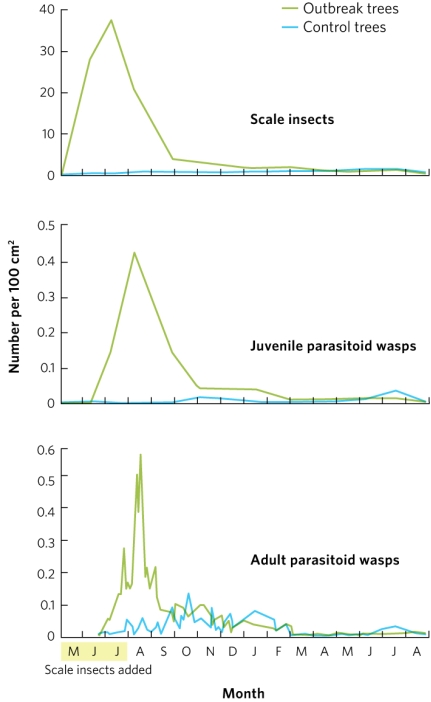
The graphs show the result of experiments involving the crop pest the California red scale insect Aonidiella aurantii and the parasitoid wasp Aphytis melinus. What did the results show about the populations of wasps and scale insects on control and outbreak trees? Is the parasitoid wasp a good biocontrol candidate for reducing scale insects?
سؤال
سؤال
سؤال
سؤال
سؤال
سؤال
سؤال
سؤال
سؤال
سؤال
سؤال
سؤال
سؤال
سؤال
سؤال
سؤال
سؤال
سؤال
سؤال
سؤال
سؤال
سؤال
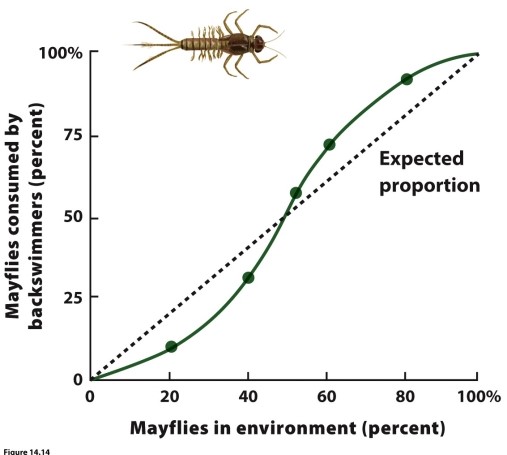
In experiments with the backswimmer (Notonecta glauca), a predatory insect, and two types of prey species, isopods (Asellus aquaticus) and mayflies (Coeon dipterum), predator preference seemed to be affected by the percent of mayflies. What explains the results presented in the figure? What type of functional response is being demonstrated?
سؤال
سؤال
سؤال
سؤال
سؤال
سؤال
سؤال
سؤال
سؤال
سؤال
سؤال
سؤال
سؤال
سؤال
سؤال
سؤال
سؤال
سؤال
سؤال
سؤال
سؤال
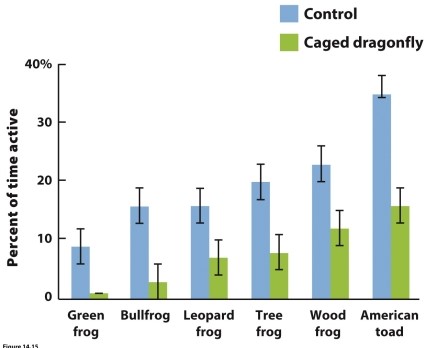
The figure shows results of a study in which scientists observed the responses of tadpoles to a caged predator and an empty control cage in tubs of water. The caged predator emitted a chemical that alerted the tadpoles to its presence but was not able to kill tadpoles. Based on the figure, how did tadpoles respond to the experiment, and what type of defence did they exhibit?
سؤال
سؤال
سؤال
سؤال
سؤال
سؤال
سؤال
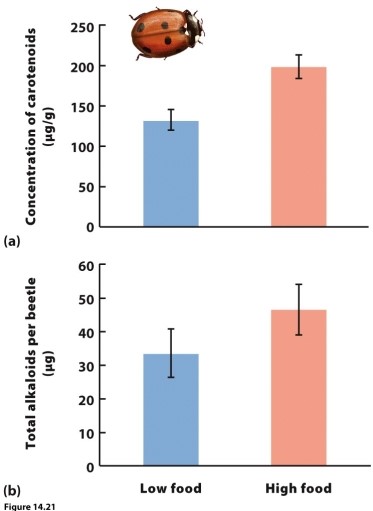
Ladybugs (Coccinella septempunctata) produce bad-tasting alkaloids as a chemical defence against predators. Researchers wanted to determine the costs of this chemical defence. They fed ladybugs either small or large amounts of food and measured alkaloid production and concentrations of carotenoids in the ladybug bodies. Carotenoids are the chemicals responsible for the red colour of the ladybug, which advertises its unpalatability to predators. What do the results of this experiment, shown in the figure, indicate about costs of chemical defences?

فتح الحزمة
قم بالتسجيل لفتح البطاقات في هذه المجموعة!
Unlock Deck
Unlock Deck
1/56

العب

ملء الشاشة (f)
Deck 14: Predation and Herbivory
1
In Lotka-Volterra models of predator-prey interactions, the growth rate of the predator population is represented by
A) NP − acmP.
B) acN − m.
C) acNP − mP.
D) cNP − amP.
A) NP − acmP.
B) acN − m.
C) acNP − mP.
D) cNP − amP.
C
2
In Lotka-Volterra models of predator-prey interactions, the growth rate of the prey population is represented by
A) cNP − rN.
B) r − cP.
C) crN − NP.
D) rN − cNP.
A) cNP − rN.
B) r − cP.
C) crN − NP.
D) rN − cNP.
D
3
Reductions in bay scallops in the Atlantic Ocean were caused by
A) an increase in the top predator shark population.
B) an increase in the mesopredator cownose ray population.
C) a decrease in the mesopredator cownose ray population.
D) a decrease in the food supply of bay scallops.
A) an increase in the top predator shark population.
B) an increase in the mesopredator cownose ray population.
C) a decrease in the mesopredator cownose ray population.
D) a decrease in the food supply of bay scallops.
B
4
How does the removal of top predators affect mesopredator populations?
A) The mesopredator population declines because there is no control on population size.
B) The geographic range and abundance of mesopredators decline.
C) Mesopredator populations remain unchanged.
D) The geographic range and abundance of mesopredators increase.
A) The mesopredator population declines because there is no control on population size.
B) The geographic range and abundance of mesopredators decline.
C) Mesopredator populations remain unchanged.
D) The geographic range and abundance of mesopredators increase.
فتح الحزمة
افتح القفل للوصول البطاقات البالغ عددها 56 في هذه المجموعة.
فتح الحزمة
k this deck
5
Predators that live in the Canadian tundra and feed on larger herbivores tend to have _____ population cycles, and predators that feed on smaller herbivores tend to have _____ population cycles.
A) short; long
B) long; short
C) short; short
D) long; long
A) short; long
B) long; short
C) short; short
D) long; long
فتح الحزمة
افتح القفل للوصول البطاقات البالغ عددها 56 في هذه المجموعة.
فتح الحزمة
k this deck
6
The graphs show the result of experiments involving the crop pest the California red scale insect Aonidiella aurantii and the parasitoid wasp Aphytis melinus. What did the results show about the populations of wasps and scale insects on control and outbreak trees? Is the parasitoid wasp a good biocontrol candidate for reducing scale insects?
فتح الحزمة
افتح القفل للوصول البطاقات البالغ عددها 56 في هذه المجموعة.
فتح الحزمة
k this deck
7
Which would be considered a mesopredator?
A) wolves
B) mountain lions
C) coyotes
D) bears
A) wolves
B) mountain lions
C) coyotes
D) bears
فتح الحزمة
افتح القفل للوصول البطاقات البالغ عددها 56 في هذه المجموعة.
فتح الحزمة
k this deck
8
What is the driving force in the 10-year cycle of lynx and hare abundance?
A) competition
B) low resources
C) climate change
D) predation
A) competition
B) low resources
C) climate change
D) predation
فتح الحزمة
افتح القفل للوصول البطاقات البالغ عددها 56 في هذه المجموعة.
فتح الحزمة
k this deck
9
The introduction of the brown tree snake (Boiga irregularis) to Guam decimated the native fauna because
A) the brown tree snake was a superior predator.
B) animals on Guam had no defences against snakes.
C) the brown tree snake carried a virulent pathogen.
D) animals on Guam were very susceptible to a parasite carried by the brown tree snake.
A) the brown tree snake was a superior predator.
B) animals on Guam had no defences against snakes.
C) the brown tree snake carried a virulent pathogen.
D) animals on Guam were very susceptible to a parasite carried by the brown tree snake.
فتح الحزمة
افتح القفل للوصول البطاقات البالغ عددها 56 في هذه المجموعة.
فتح الحزمة
k this deck
10
In Lotka-Volterra models of predator-prey interactions, c represents
A) the probability of an encounter leading to prey's capture.
B) the efficiency of converting consumed prey into predator offspring.
C) the per capita mortality rate of predators.
D) the intrinsic growth rate.
A) the probability of an encounter leading to prey's capture.
B) the efficiency of converting consumed prey into predator offspring.
C) the per capita mortality rate of predators.
D) the intrinsic growth rate.
فتح الحزمة
افتح القفل للوصول البطاقات البالغ عددها 56 في هذه المجموعة.
فتح الحزمة
k this deck
11
A species has been transplanted to a region of the world where historically it did not exist. It spreads rapidly and harms native species. This is known as
A) an introduced species.
B) an exotic species.
C) an invasive species.
D) a nonnative species.
A) an introduced species.
B) an exotic species.
C) an invasive species.
D) a nonnative species.
فتح الحزمة
افتح القفل للوصول البطاقات البالغ عددها 56 في هذه المجموعة.
فتح الحزمة
k this deck
12
Lotka-Volterra models of predator-prey interactions show that
A) predator populations lag behind prey populations.
B) prey populations lag behind predatory populations.
C) predator and prey populations cycle together.
D) predator-prey cycles are inherently unstable.
A) predator populations lag behind prey populations.
B) prey populations lag behind predatory populations.
C) predator and prey populations cycle together.
D) predator-prey cycles are inherently unstable.
فتح الحزمة
افتح القفل للوصول البطاقات البالغ عددها 56 في هذه المجموعة.
فتح الحزمة
k this deck
13
Top predators are predators that eat
A) plants and herbivores.
B) herbivores and top predators.
C) mesopredators and plants.
D) herbivores and mesopredators.
A) plants and herbivores.
B) herbivores and top predators.
C) mesopredators and plants.
D) herbivores and mesopredators.
فتح الحزمة
افتح القفل للوصول البطاقات البالغ عددها 56 في هذه المجموعة.
فتح الحزمة
k this deck
14
In rocky shore communities in which sea urchins lived among populations of brown algae and other species of algae, sea urchins were experimentally removed. What happed in response to sea urchin removal?
فتح الحزمة
افتح القفل للوصول البطاقات البالغ عددها 56 في هذه المجموعة.
فتح الحزمة
k this deck
15
In the study of brown anole lizards (Anolis sagrei) and orb-weaving spiders (Metepeira datona) on islands in the Bahamas, researchers concluded that
A) spiders reduced lizard populations.
B) lizards reduced spider populations.
C) reintroduction of spiders caused increases in their population.
D) lizards did not affect spider populations.
A) spiders reduced lizard populations.
B) lizards reduced spider populations.
C) reintroduction of spiders caused increases in their population.
D) lizards did not affect spider populations.
فتح الحزمة
افتح القفل للوصول البطاقات البالغ عددها 56 في هذه المجموعة.
فتح الحزمة
k this deck
16
The biocontrol species cactus moth (Cactoblastis cactorum) has not been able to eradicate the invasive prickly pear cactus from Australia because
A) cactus moths prefer to consume other cactus species rather than prickly pear.
B) prickly pear cactus is able to disperse to moth-free areas.
C) cactus moth populations are declining because of parasitic infection.
D) prickly pear cactus has evolved defences against the cactus moth.
A) cactus moths prefer to consume other cactus species rather than prickly pear.
B) prickly pear cactus is able to disperse to moth-free areas.
C) cactus moth populations are declining because of parasitic infection.
D) prickly pear cactus has evolved defences against the cactus moth.
فتح الحزمة
افتح القفل للوصول البطاقات البالغ عددها 56 في هذه المجموعة.
فتح الحزمة
k this deck
17
Australian authorities removed dingoes and feral dogs because they killed sheep. As a result
A) sheep populations increased.
B) populations of the mesopredator, the red fox, decreased.
C) populations of the mesopredator, the red fox, increased.
D) rabbit populations increased dramatically.
A) sheep populations increased.
B) populations of the mesopredator, the red fox, decreased.
C) populations of the mesopredator, the red fox, increased.
D) rabbit populations increased dramatically.
فتح الحزمة
افتح القفل للوصول البطاقات البالغ عددها 56 في هذه المجموعة.
فتح الحزمة
k this deck
18
How was the invasive plant the Saint-John's-wort controlled in California?
A) A leaf-feeding beetle was introduced to control the weed.
B) The weed was killed off with herbicide.
C) The weed was killed off by a plant pathogen.
D) More cows were released to eat the weed.
A) A leaf-feeding beetle was introduced to control the weed.
B) The weed was killed off with herbicide.
C) The weed was killed off by a plant pathogen.
D) More cows were released to eat the weed.
فتح الحزمة
افتح القفل للوصول البطاقات البالغ عددها 56 في هذه المجموعة.
فتح الحزمة
k this deck
19
Experiments with fences that exclude deer and other plant herbivores from grazing showed greater plant biomass in fenced areas than in unfenced control areas. The few plant species that remain in unfenced areas are those that
A) are tolerant to herbivory.
B) herbivores prefer not to eat.
C) herbivores cannot locate.
D) have high growth rates to compensate for herbivory.
A) are tolerant to herbivory.
B) herbivores prefer not to eat.
C) herbivores cannot locate.
D) have high growth rates to compensate for herbivory.
فتح الحزمة
افتح القفل للوصول البطاقات البالغ عددها 56 في هذه المجموعة.
فتح الحزمة
k this deck
20
Huffaker's laboratory experiment of predator and prey species of mites demonstrated that predator and prey cycles
A) stabilize with increased food sources.
B) stabilize when males are added.
C) stabilize when prey have refuges.
D) are always unstable.
A) stabilize with increased food sources.
B) stabilize when males are added.
C) stabilize when prey have refuges.
D) are always unstable.
فتح الحزمة
افتح القفل للوصول البطاقات البالغ عددها 56 في هذه المجموعة.
فتح الحزمة
k this deck
21
In Lotka-Volterra models, a population is stable when its rate of change is
A) greater than zero.
B) less than zero.
C) equal to zero.
D) None of the above.
A) greater than zero.
B) less than zero.
C) equal to zero.
D) None of the above.
فتح الحزمة
افتح القفل للوصول البطاقات البالغ عددها 56 في هذه المجموعة.
فتح الحزمة
k this deck
22
Wolves hunt in packs that chase down their prey. This is an example of
A) sit-and-wait hunting.
B) ambush hunting.
C) active hunting.
D) trap hunting.
A) sit-and-wait hunting.
B) ambush hunting.
C) active hunting.
D) trap hunting.
فتح الحزمة
افتح القفل للوصول البطاقات البالغ عددها 56 في هذه المجموعة.
فتح الحزمة
k this deck
23
Which of the following is NOT a behavioural defence against predation?
A) alarm calling
B) spatial avoidance
C) camouflage
D) reduced activity
A) alarm calling
B) spatial avoidance
C) camouflage
D) reduced activity
فتح الحزمة
افتح القفل للوصول البطاقات البالغ عددها 56 في هذه المجموعة.
فتح الحزمة
k this deck
24
A numerical response is a change in the number of predators due all of the following EXCEPT
A) changes in prey abundances.
B) population growth.
C) immigration.
D) emigration.
A) changes in prey abundances.
B) population growth.
C) immigration.
D) emigration.
فتح الحزمة
افتح القفل للوصول البطاقات البالغ عددها 56 في هذه المجموعة.
فتح الحزمة
k this deck
25
Simultaneous examination of predator and prey population trends is called a
A) dual population trajectory.
B) joint population trajectory.
C) dual population isocline.
D) joint population isocline.
A) dual population trajectory.
B) joint population trajectory.
C) dual population isocline.
D) joint population isocline.
فتح الحزمة
افتح القفل للوصول البطاقات البالغ عددها 56 في هذه المجموعة.
فتح الحزمة
k this deck
26
In Lotka-Volterra predator-prey models, predator populations decrease when
A) N ÷ ac < m.
B) N ÷ ac > m.
C) N < m ÷ ac.
D) N > m ÷ ac.
A) N ÷ ac < m.
B) N ÷ ac > m.
C) N < m ÷ ac.
D) N > m ÷ ac.
فتح الحزمة
افتح القفل للوصول البطاقات البالغ عددها 56 في هذه المجموعة.
فتح الحزمة
k this deck
27
Which is a warning colouration?
A) Batesian colouration
B) Müllerian colouration
C) crypsis
D) aposematism
A) Batesian colouration
B) Müllerian colouration
C) crypsis
D) aposematism
فتح الحزمة
افتح القفل للوصول البطاقات البالغ عددها 56 في هذه المجموعة.
فتح الحزمة
k this deck
28
In experiments with the backswimmer (Notonecta glauca), a predatory insect, and two types of prey species, isopods (Asellus aquaticus) and mayflies (Coeon dipterum), predator preference seemed to be affected by the percent of mayflies. What explains the results presented in the figure? What type of functional response is being demonstrated?
فتح الحزمة
افتح القفل للوصول البطاقات البالغ عددها 56 في هذه المجموعة.
فتح الحزمة
k this deck
29
In a functional response
A) the prey can regulate the fitness of the predator population.
B) the predator can regulate the fitness of the prey population.
C) the prey can regulate the growth of the predator population.
D) the predator can regulate the growth of the prey population.
A) the prey can regulate the fitness of the predator population.
B) the predator can regulate the fitness of the prey population.
C) the prey can regulate the growth of the predator population.
D) the predator can regulate the growth of the prey population.
فتح الحزمة
افتح القفل للوصول البطاقات البالغ عددها 56 في هذه المجموعة.
فتح الحزمة
k this deck
30
Alarm signals in primates are an example of
A) a chemical defence.
B) a structural defence.
C) a behavioural defence.
D) aposematism.
A) a chemical defence.
B) a structural defence.
C) a behavioural defence.
D) aposematism.
فتح الحزمة
افتح القفل للوصول البطاقات البالغ عددها 56 في هذه المجموعة.
فتح الحزمة
k this deck
31
The colour pattern and texture of the body of a horned lizard (Phrynosoma platyrhinos) allows it to blend into the ground of the desert in which it lives. This is an example of
A) a structural defence.
B) a behavioural defence.
C) spatial avoidance.
D) crypsis.
A) a structural defence.
B) a behavioural defence.
C) spatial avoidance.
D) crypsis.
فتح الحزمة
افتح القفل للوصول البطاقات البالغ عددها 56 في هذه المجموعة.
فتح الحزمة
k this deck
32
At the equilibrium isocline the population of predators
A) causes the prey population to be stable.
B) causes the prey population to increase.
C) causes the prey population to decrease.
D) and prey both stabilize.
A) causes the prey population to be stable.
B) causes the prey population to increase.
C) causes the prey population to decrease.
D) and prey both stabilize.
فتح الحزمة
افتح القفل للوصول البطاقات البالغ عددها 56 في هذه المجموعة.
فتح الحزمة
k this deck
33
The bombardier beetle (Stenaptinus insignis) deters predators by releasing boiling hot fluid from its abdomen. This is an example of
A) crypsis.
B) structural defence.
C) chemical defence.
D) behavioural defence.
A) crypsis.
B) structural defence.
C) chemical defence.
D) behavioural defence.
فتح الحزمة
افتح القفل للوصول البطاقات البالغ عددها 56 في هذه المجموعة.
فتح الحزمة
k this deck
34
A functional response in predator-prey cycles is the relation between the density of
A) predators and an individual prey's rate of food consumption.
B) prey and an individual predator's rate of food consumption.
C) predators and an individual prey's rate of growth.
D) prey and an individual predator's rate of growth.
A) predators and an individual prey's rate of food consumption.
B) prey and an individual predator's rate of food consumption.
C) predators and an individual prey's rate of growth.
D) prey and an individual predator's rate of growth.
فتح الحزمة
افتح القفل للوصول البطاقات البالغ عددها 56 في هذه المجموعة.
فتح الحزمة
k this deck
35
A type _____ functional response occurs when a predator's rate of prey consumption increases linearly with increasing prey and then satiates.
A) I
B) II
C) III
D) IV
A) I
B) II
C) III
D) IV
فتح الحزمة
افتح القفل للوصول البطاقات البالغ عددها 56 في هذه المجموعة.
فتح الحزمة
k this deck
36
For some predators, as prey density increases, the rate of consumption slows and eventually levels off with satiation. This is a type _____ functional response.
A) I
B) II
C) III
D) IV
A) I
B) II
C) III
D) IV
فتح الحزمة
افتح القفل للوصول البطاقات البالغ عددها 56 في هذه المجموعة.
فتح الحزمة
k this deck
37
At the joint equilibrium point
A) both predator and prey populations are increasing.
B) both predator and prey populations are decreasing.
C) both predator and prey populations have zero growth.
D) one population is increasing and the other population is decreasing.
A) both predator and prey populations are increasing.
B) both predator and prey populations are decreasing.
C) both predator and prey populations have zero growth.
D) one population is increasing and the other population is decreasing.
فتح الحزمة
افتح القفل للوصول البطاقات البالغ عددها 56 في هذه المجموعة.
فتح الحزمة
k this deck
38
Many organisms that employ chemical defences also display
A) crypsis.
B) aposematism.
C) camouflage.
D) Batesian colouration.
A) crypsis.
B) aposematism.
C) camouflage.
D) Batesian colouration.
فتح الحزمة
افتح القفل للوصول البطاقات البالغ عددها 56 في هذه المجموعة.
فتح الحزمة
k this deck
39
The crucian carp (Carassius carassius) develops a muscular hump on its back that increases its acceleration in response to predators. This is an example of
A) a chemical defence.
B) crypsis.
C) a structural defence.
D) a behavioural defence.
A) a chemical defence.
B) crypsis.
C) a structural defence.
D) a behavioural defence.
فتح الحزمة
افتح القفل للوصول البطاقات البالغ عددها 56 في هذه المجموعة.
فتح الحزمة
k this deck
40
Chameleon colour patterns are an example of
A) structural defences.
B) aposematism.
C) behavioural defences.
D) crypsis.
A) structural defences.
B) aposematism.
C) behavioural defences.
D) crypsis.
فتح الحزمة
افتح القفل للوصول البطاقات البالغ عددها 56 في هذه المجموعة.
فتح الحزمة
k this deck
41
Milkweeds use _____ as a chemical defence against herbivory.
A) alkaloids
B) tannins
C) glycosides
D) resin
A) alkaloids
B) tannins
C) glycosides
D) resin
فتح الحزمة
افتح القفل للوصول البطاقات البالغ عددها 56 في هذه المجموعة.
فتح الحزمة
k this deck
42
Researchers studying production of nicotine in tobacco plants (Nicotiana sylvestris) treated some of the plants with a hormone that prevents the chemical defences from responding to herbivory. What did they find to be the cost of nicotine production?
A) reduced growth rate
B) increased herbivory
C) plant death
D) reduced seed production
A) reduced growth rate
B) increased herbivory
C) plant death
D) reduced seed production
فتح الحزمة
افتح القفل للوصول البطاقات البالغ عددها 56 في هذه المجموعة.
فتح الحزمة
k this deck
43
Which of the following is an example of a plant alkaloid?
A) tannin
B) lignin
C) caffeine
D) latex
A) tannin
B) lignin
C) caffeine
D) latex
فتح الحزمة
افتح القفل للوصول البطاقات البالغ عددها 56 في هذه المجموعة.
فتح الحزمة
k this deck
44
The scarlet king snake (Lampropeltis elapsoides) found in the eastern United States has similar colouration to that of the poisonous eastern coral snake (Micrurus fulvius). This is an example of
A) aposematism.
B) crypsis.
C) Müllerian mimicry.
D) Batesian mimicry.
A) aposematism.
B) crypsis.
C) Müllerian mimicry.
D) Batesian mimicry.
فتح الحزمة
افتح القفل للوصول البطاقات البالغ عددها 56 في هذه المجموعة.
فتح الحزمة
k this deck
45
Plants that respond to herbivory by increasing their growth rate (compensatory growth) are using
A) structural defence.
B) tolerance.
C) chemical defence.
D) coevolution.
A) structural defence.
B) tolerance.
C) chemical defence.
D) coevolution.
فتح الحزمة
افتح القفل للوصول البطاقات البالغ عددها 56 في هذه المجموعة.
فتح الحزمة
k this deck
46
Plant alkaloids act as chemical defence against herbivory because
A) they are toxic to herbivores.
B) they are difficult for herbivores to digest.
C) they make the plant unpalatable.
D) they are difficult to consume.
A) they are toxic to herbivores.
B) they are difficult for herbivores to digest.
C) they make the plant unpalatable.
D) they are difficult to consume.
فتح الحزمة
افتح القفل للوصول البطاقات البالغ عددها 56 في هذه المجموعة.
فتح الحزمة
k this deck
47
The common wasp (Vespula vulgaris), the hover fly (Helophilus pendulus), and the hornet clearwing (Sesia apiformis) all exhibit similar colour patterns, but only the wasp is harmful. What benefit, if any, do the hornet and fly gain from having colouring similar to that of the wasp?
فتح الحزمة
افتح القفل للوصول البطاقات البالغ عددها 56 في هذه المجموعة.
فتح الحزمة
k this deck
48
The resemblance of poison dart frog species of the genus Ranitomeya to one another in Peru is an example of
A) Batesian mimicry.
B) Müllerian mimicry.
C) crypsis.
D) a chemical defence.
A) Batesian mimicry.
B) Müllerian mimicry.
C) crypsis.
D) a chemical defence.
فتح الحزمة
افتح القفل للوصول البطاقات البالغ عددها 56 في هذه المجموعة.
فتح الحزمة
k this deck
49
The figure shows results of a study in which scientists observed the responses of tadpoles to a caged predator and an empty control cage in tubs of water. The caged predator emitted a chemical that alerted the tadpoles to its presence but was not able to kill tadpoles. Based on the figure, how did tadpoles respond to the experiment, and what type of defence did they exhibit?
فتح الحزمة
افتح القفل للوصول البطاقات البالغ عددها 56 في هذه المجموعة.
فتح الحزمة
k this deck
50
Reduced growth and development due to reduced feeding and foraging activity is a cost of
A) chemical defences.
B) structural defences.
C) behavioural defences.
D) crypsis.
A) chemical defences.
B) structural defences.
C) behavioural defences.
D) crypsis.
فتح الحزمة
افتح القفل للوصول البطاقات البالغ عددها 56 في هذه المجموعة.
فتح الحزمة
k this deck
51
On Macquarie Island invasive rabbits were causing declines in palatable vegetation, and feral cats were preying on native birds. What was the primary result when a flea carrying a virus that killed the rabbits decreased rabbits' numbers on the island?
A) Feral cats switched from eating rabbits to eating native birds.
B) Feral cats also died off because of the loss of the rabbit prey.
C) Native bird populations on the island increased.
D) Native plant populations on the island declined.
A) Feral cats switched from eating rabbits to eating native birds.
B) Feral cats also died off because of the loss of the rabbit prey.
C) Native bird populations on the island increased.
D) Native plant populations on the island declined.
فتح الحزمة
افتح القفل للوصول البطاقات البالغ عددها 56 في هذه المجموعة.
فتح الحزمة
k this deck
52
The Indian grey mongoose (Herpestes edwardsii) is a small mammal that is known for its ability to kill venomous king cobras (Ophiophagus hannah). Mongooses have evolved acetylcholine receptors that make them resistant or immune to the cobra's venom. What is likely responsible for this?
A) coevolution
B) natural selection
C) structural defences
D) chemical defences
A) coevolution
B) natural selection
C) structural defences
D) chemical defences
فتح الحزمة
افتح القفل للوصول البطاقات البالغ عددها 56 في هذه المجموعة.
فتح الحزمة
k this deck
53
The viceroy (Limenitis archippus) is an unpalatable North American butterfly that has colouration similar to that of another species of unpalatable butterfly, the monarch (Danaus plexippus). This is an example of
A) crypsis.
B) Müllerian mimicry.
C) Batesian mimicry.
D) camouflage.
A) crypsis.
B) Müllerian mimicry.
C) Batesian mimicry.
D) camouflage.
فتح الحزمة
افتح القفل للوصول البطاقات البالغ عددها 56 في هذه المجموعة.
فتح الحزمة
k this deck
54
What does it mean when scientists set the alpha at .05 for a statistical test?
فتح الحزمة
افتح القفل للوصول البطاقات البالغ عددها 56 في هذه المجموعة.
فتح الحزمة
k this deck
55
Which of the following chemical defences makes plants difficult for herbivores to digest?
A) alkaloids
B) latex
C) resins
D) tannins
A) alkaloids
B) latex
C) resins
D) tannins
فتح الحزمة
افتح القفل للوصول البطاقات البالغ عددها 56 في هذه المجموعة.
فتح الحزمة
k this deck
56
Ladybugs (Coccinella septempunctata) produce bad-tasting alkaloids as a chemical defence against predators. Researchers wanted to determine the costs of this chemical defence. They fed ladybugs either small or large amounts of food and measured alkaloid production and concentrations of carotenoids in the ladybug bodies. Carotenoids are the chemicals responsible for the red colour of the ladybug, which advertises its unpalatability to predators. What do the results of this experiment, shown in the figure, indicate about costs of chemical defences?
فتح الحزمة
افتح القفل للوصول البطاقات البالغ عددها 56 في هذه المجموعة.
فتح الحزمة
k this deck
فتح الحزمة
افتح القفل للوصول البطاقات البالغ عددها 56 في هذه المجموعة.






