







 تكلم مع الذكاء الاصطناعي


Deck 4: Adaptations to Variable Environments
ملء الشاشة (f)

سؤال

سؤال
سؤال
Use the following graphs and information to answer questions 13, 14, and 15. This figure shows the tail shape developed by three tadpole genotypes (M, N, and O), when raised in an environment with predators and an environment without predators. In the presence of predators, tadpoles with large tails have high fitness and tadpoles with small tails have low fitness. When predators are not present, tadpoles with large tails have low fitness and tadpoles with small tails have high fitness.
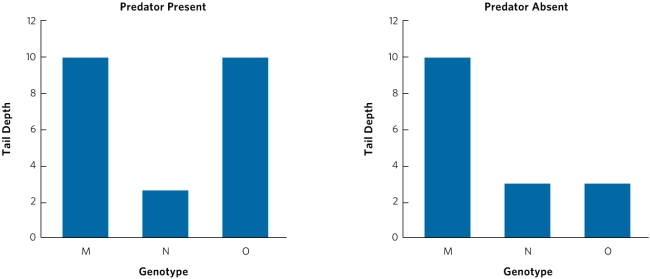
Which genotype(s) would have the highest average fitness across both environments?
a. M only
b. N only
c. O only
d. both M and N
e. both N and O
answer c
Which genotype(s) would have the highest average fitness across both environments?
a. M only
b. N only
c. O only
d. both M and N
e. both N and O
answer c
سؤال
سؤال
Use the following graphs and information to answer questions 13, 14, and 15. This figure shows the tail shape developed by three tadpole genotypes (M, N, and O), when raised in an environment with predators and an environment without predators. In the presence of predators, tadpoles with large tails have high fitness and tadpoles with small tails have low fitness. When predators are not present, tadpoles with large tails have low fitness and tadpoles with small tails have high fitness.
Which genotype(s) exhibit(s) phenotypic plasticity in response to predators?
A) M only
B) N only
C) O only
D) both M and N
E) both N and O
Which genotype(s) exhibit(s) phenotypic plasticity in response to predators?
A) M only
B) N only
C) O only
D) both M and N
E) both N and O
سؤال
سؤال
سؤال
سؤال
سؤال
سؤال
سؤال
سؤال
سؤال
سؤال
سؤال
سؤال
سؤال
سؤال
سؤال
سؤال
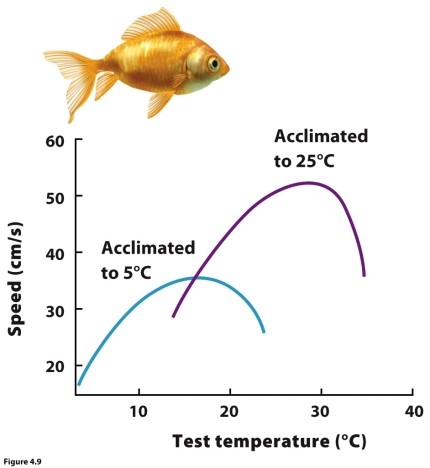
Based on the nearby figure, describe the phenotypic trade-offs of a fish being acclimated to 25°C compared with a fish acclimated to 5°C.
سؤال
سؤال
سؤال
سؤال
سؤال
سؤال
سؤال
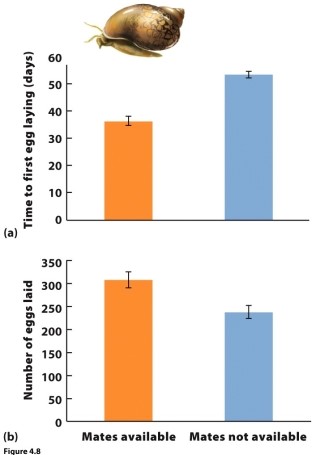
Refer to the nearby figure to answer this question.
Describe the phenotypic plasticity of common pond snails in the absence of mates, and explain the costs and benefits of that phenotypic plasticity.
سؤال
سؤال
سؤال
سؤال
سؤال
سؤال
سؤال
سؤال
سؤال
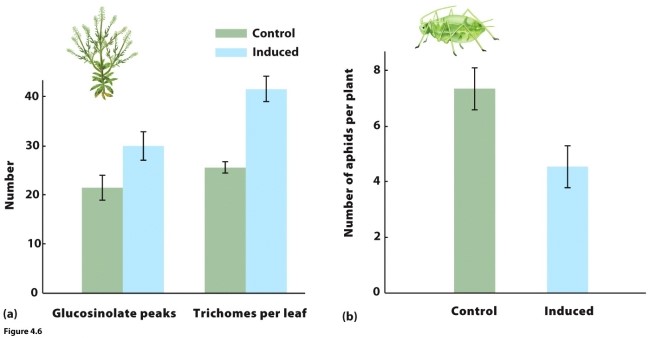 Consider the nearby figure, which shows how Virginia pepperweed responds to herbivores. Which of the following conclusions can we make solely using the data shown?
I) Plants increased glucosinolate production when aphids were present.
II) Plants with more glucosinolate and trichomes had fewer aphids.
III) Producing glucosinolate and trichomes reduced plant fitness when aphids were absent.
A) I only
B) II only
C) III only
D) I and II only
E) I, II, and III
سؤال
سؤال
سؤال
سؤال
سؤال
سؤال
A forager that selects food type based on a balance of the energy provided, handling time, and abundance displays
A) optimal diet composition.
B) diet mixing.
C) risk-sensitive foraging.
D) central-place foraging.
سؤال
سؤال
An animal that consumes a varied diet because a single food does not contain all necessary nutrients is an example of
A) optimal diet composition.
B) diet mixing.
C) risk-sensitive foraging.
D) central-place foraging.
سؤال
سؤال
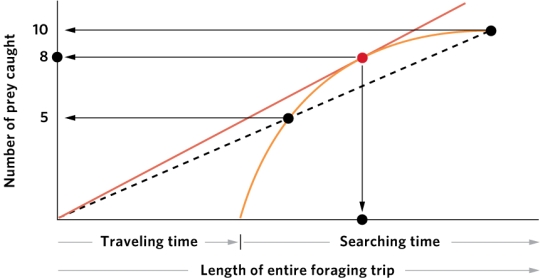
Based on the central-place foraging theory and the nearby figure, identify the optimal number of prey for a forager to catch. In the figure the orange line indicates the optimal rate of prey capture.
A) 5 prey
B) 8 prey
C) 10 prey
D) 5, 8, and 10 prey are equally optimal
سؤال
سؤال
سؤال
سؤال
سؤال
سؤال
Use the table to answer questions 49 and 50.
An ecologist is studying the relationship between a beetle species and a flower species. She examines six plants and counts the number of beetles and the number of flowers on each plant.

Which of the following terms best describes the data?
A) positive linear correlation
B) negative linear correlation
C) positive curvilinear correlation
D) negative curvilinear correlation
An ecologist is studying the relationship between a beetle species and a flower species. She examines six plants and counts the number of beetles and the number of flowers on each plant.
Which of the following terms best describes the data?
A) positive linear correlation
B) negative linear correlation
C) positive curvilinear correlation
D) negative curvilinear correlation
سؤال
سؤال
سؤال
سؤال
سؤال
Use the table to answer questions 49 and 50.
An ecologist is studying the relationship between a beetle species and a flower species. She examines six plants and counts the number of beetles and the number of flowers on each plant.
What can we conclude from the data?
A) Flowers cause beetles to be more abundant.
B) Beetles cause plants to grow more flowers.
C) A third unmeasured variable causes both beetles and flowers to increase.
D) There is no relationship between flowers and beetles.
An ecologist is studying the relationship between a beetle species and a flower species. She examines six plants and counts the number of beetles and the number of flowers on each plant.
What can we conclude from the data?
A) Flowers cause beetles to be more abundant.
B) Beetles cause plants to grow more flowers.
C) A third unmeasured variable causes both beetles and flowers to increase.
D) There is no relationship between flowers and beetles.
سؤال

فتح الحزمة
قم بالتسجيل لفتح البطاقات في هذه المجموعة!
Unlock Deck
Unlock Deck
1/59

العب

ملء الشاشة (f)
Deck 4: Adaptations to Variable Environments
1
When a given phenotype has higher fitness in one environment and different phenotypes have higher fitness in other environments, this is considered to be
A) phenotypic plasticity.
B) an environmental cue.
C) a phenotypic trade-off.
D) acclimation.
A) phenotypic plasticity.
B) an environmental cue.
C) a phenotypic trade-off.
D) acclimation.
C
2
Describe how a moving animal experiences spatial variation as environmental change over time, and provide an example.
As an animal moves through an area, it encounters new environmental conditions. If it moves quickly, it encounters new environments more rapidly than if it moves slowly. Humans climbing from sea level to the tops of high mountains encounter a wide range of conditions, from changing temperature to reduced oxygen.
3
Use the following graphs and information to answer questions 13, 14, and 15. This figure shows the tail shape developed by three tadpole genotypes (M, N, and O), when raised in an environment with predators and an environment without predators. In the presence of predators, tadpoles with large tails have high fitness and tadpoles with small tails have low fitness. When predators are not present, tadpoles with large tails have low fitness and tadpoles with small tails have high fitness.
Which genotype(s) would have the highest average fitness across both environments?
a. M only
b. N only
c. O only
d. both M and N
e. both N and O
answer c
Which genotype(s) would have the highest average fitness across both environments?
a. M only
b. N only
c. O only
d. both M and N
e. both N and O
answer c
فتح الحزمة
افتح القفل للوصول البطاقات البالغ عددها 59 في هذه المجموعة.
فتح الحزمة
k this deck
4
When the protist Euplotes detects predators, it grows "wings" and other projections to discourage predators. However, developing the projections and wings slows down growth. This is an example of
I) phenotypic trade-offs.
II) phenotypic plasticity.
III) inbreeding depression.
A) I only
B) II only
C) III only
D) I and II only
E) I, II, and III
I) phenotypic trade-offs.
II) phenotypic plasticity.
III) inbreeding depression.
A) I only
B) II only
C) III only
D) I and II only
E) I, II, and III
فتح الحزمة
افتح القفل للوصول البطاقات البالغ عددها 59 في هذه المجموعة.
فتح الحزمة
k this deck
5
Use the following graphs and information to answer questions 13, 14, and 15. This figure shows the tail shape developed by three tadpole genotypes (M, N, and O), when raised in an environment with predators and an environment without predators. In the presence of predators, tadpoles with large tails have high fitness and tadpoles with small tails have low fitness. When predators are not present, tadpoles with large tails have low fitness and tadpoles with small tails have high fitness.
Which genotype(s) exhibit(s) phenotypic plasticity in response to predators?
A) M only
B) N only
C) O only
D) both M and N
E) both N and O
Which genotype(s) exhibit(s) phenotypic plasticity in response to predators?
A) M only
B) N only
C) O only
D) both M and N
E) both N and O
فتح الحزمة
افتح القفل للوصول البطاقات البالغ عددها 59 في هذه المجموعة.
فتح الحزمة
k this deck
6
Which of the following is an example of weather?
A) The average annual rainfall in a North American desert is 33 cm per year.
B) The average summer temperature at a specific location has increased from 30°C in the 1950s to 32°C in the 1990s.
C) A single location received 10 cm of snow on January 1, 2011, but no snow on January 2, 2011.
D) The composition of the soil differs between the coastal beaches and the eastern forests of North America.
A) The average annual rainfall in a North American desert is 33 cm per year.
B) The average summer temperature at a specific location has increased from 30°C in the 1950s to 32°C in the 1990s.
C) A single location received 10 cm of snow on January 1, 2011, but no snow on January 2, 2011.
D) The composition of the soil differs between the coastal beaches and the eastern forests of North America.
فتح الحزمة
افتح القفل للوصول البطاقات البالغ عددها 59 في هذه المجموعة.
فتح الحزمة
k this deck
7
Consider an area in which plants change from one group of species to another group of species over a distance of 20 cm. How might this scale of variation affect two herbivores- aphids (very small insects) and moose (large mammals)?
A) Aphids would be more strongly affected by this gradient.
B) Moose would be more strongly affected by this gradient.
C) Neither would be affected by this gradient.
D) They would be equally affected by this gradient.
A) Aphids would be more strongly affected by this gradient.
B) Moose would be more strongly affected by this gradient.
C) Neither would be affected by this gradient.
D) They would be equally affected by this gradient.
فتح الحزمة
افتح القفل للوصول البطاقات البالغ عددها 59 في هذه المجموعة.
فتح الحزمة
k this deck
8
The average annual rainfall measured in a desert over 10 years is which type of variation?
A) weather
B) climate
C) spatial
D) phenotypic
A) weather
B) climate
C) spatial
D) phenotypic
فتح الحزمة
افتح القفل للوصول البطاقات البالغ عددها 59 في هذه المجموعة.
فتح الحزمة
k this deck
9
Under which of the following situations would the plastic genotype be favoured over other genotypes?
I) if all environments have predators
II) if no environments have predators
III) if environments with predators are as common as environments without predators
A) situation I
B) situation II
C) situation III
D) situations I and II
E) situations I and III
I) if all environments have predators
II) if no environments have predators
III) if environments with predators are as common as environments without predators
A) situation I
B) situation II
C) situation III
D) situations I and II
E) situations I and III
فتح الحزمة
افتح القفل للوصول البطاقات البالغ عددها 59 في هذه المجموعة.
فتح الحزمة
k this deck
10
Which of the following types of environmental variation can change over time?
I) weather
II) climate
III) spatial variation
A) I only
B) II only
C) III only
D) both I and II
E) I, II, and III
I) weather
II) climate
III) spatial variation
A) I only
B) II only
C) III only
D) both I and II
E) I, II, and III
فتح الحزمة
افتح القفل للوصول البطاقات البالغ عددها 59 في هذه المجموعة.
فتح الحزمة
k this deck
11
Long-duration environmental events usually take place over _____ spatial scale(s).
A) a small
B) an intermediate
C) a large
D) both large and small
A) a small
B) an intermediate
C) a large
D) both large and small
فتح الحزمة
افتح القفل للوصول البطاقات البالغ عددها 59 في هذه المجموعة.
فتح الحزمة
k this deck
12
Why are phenotypic trade-offs necessary for adaptive phenotypic plasticity to evolve?
فتح الحزمة
افتح القفل للوصول البطاقات البالغ عددها 59 في هذه المجموعة.
فتح الحزمة
k this deck
13
Which shows the order of phenotypically plastic traits from those that typically respond most rapidly to those that typically respond least rapidly?
A) behaviour, morphology, physiology
B) physiology, morphology, behaviour
C) behaviour, physiology, morphology
D) morphology, behaviour, physiology
E) morphology, physiology, behaviour.
A) behaviour, morphology, physiology
B) physiology, morphology, behaviour
C) behaviour, physiology, morphology
D) morphology, behaviour, physiology
E) morphology, physiology, behaviour.
فتح الحزمة
افتح القفل للوصول البطاقات البالغ عددها 59 في هذه المجموعة.
فتح الحزمة
k this deck
14
Which lists the correct order from events that affect the smallest spatial scale to events that affect the largest spatial scale?
A) thunderstorms, monsoons, hurricanes
B) thunderstorms, hurricanes, monsoons
C) monsoons, thunderstorms, hurricanes
D) hurricanes, thunderstorms, monsoons
A) thunderstorms, monsoons, hurricanes
B) thunderstorms, hurricanes, monsoons
C) monsoons, thunderstorms, hurricanes
D) hurricanes, thunderstorms, monsoons
فتح الحزمة
افتح القفل للوصول البطاقات البالغ عددها 59 في هذه المجموعة.
فتح الحزمة
k this deck
15
Some individuals exhibit adaptive phenotypic plasticity in response to competition from members of their own species. Why would food availability probably be a more reliable cue than the number of conspecifics about the amount of competition for food?
فتح الحزمة
افتح القفل للوصول البطاقات البالغ عددها 59 في هذه المجموعة.
فتح الحزمة
k this deck
16
Using an example, describe how the same level of temporal variation in the environment may be perceived differently by different species of animals.
فتح الحزمة
افتح القفل للوصول البطاقات البالغ عددها 59 في هذه المجموعة.
فتح الحزمة
k this deck
17
Which of the following statements about environmental cues is (are) TRUE?
I) Environmental cues are necessary for an organism to evolve adaptive phenotypic plasticity.
II) Environmental cues can include smell, sight, and sound.
III) Environmental cues are used by animals but not by plants.
A) I only
B) II only
C) III only
D) I and II
E) I, II, and III
I) Environmental cues are necessary for an organism to evolve adaptive phenotypic plasticity.
II) Environmental cues can include smell, sight, and sound.
III) Environmental cues are used by animals but not by plants.
A) I only
B) II only
C) III only
D) I and II
E) I, II, and III
فتح الحزمة
افتح القفل للوصول البطاقات البالغ عددها 59 في هذه المجموعة.
فتح الحزمة
k this deck
18
Which lists the correct order from slowest to fastest?
A) change in landforms, spatial heterogeneity in oceans, atmospheric processes
B) atmospheric processes, change in landforms, heterogeneity in oceans
C) change in landforms, atmospheric processes, heterogeneity in oceans
D) heterogeneity in oceans, atmospheric processes, change in landforms
A) change in landforms, spatial heterogeneity in oceans, atmospheric processes
B) atmospheric processes, change in landforms, heterogeneity in oceans
C) change in landforms, atmospheric processes, heterogeneity in oceans
D) heterogeneity in oceans, atmospheric processes, change in landforms
فتح الحزمة
افتح القفل للوصول البطاقات البالغ عددها 59 في هذه المجموعة.
فتح الحزمة
k this deck
19
Phenotypic plasticity
A) refers to an environment that varies.
B) occurs when a single phenotype has different fitness in different environments.
C) is a type of environmental cue.
D) is the ability of a single genotype to produce multiple phenotypes.
A) refers to an environment that varies.
B) occurs when a single phenotype has different fitness in different environments.
C) is a type of environmental cue.
D) is the ability of a single genotype to produce multiple phenotypes.
فتح الحزمة
افتح القفل للوصول البطاقات البالغ عددها 59 في هذه المجموعة.
فتح الحزمة
k this deck
20
Environmentally induced changes in an individual's physiology are called
A) acclimation.
B) environmental cues.
C) phenotypic trade-offs.
D) nonplastic genotypes.
A) acclimation.
B) environmental cues.
C) phenotypic trade-offs.
D) nonplastic genotypes.
فتح الحزمة
افتح القفل للوصول البطاقات البالغ عددها 59 في هذه المجموعة.
فتح الحزمة
k this deck
21
Based on the nearby figure, describe the phenotypic trade-offs of a fish being acclimated to 25°C compared with a fish acclimated to 5°C.
فتح الحزمة
افتح القفل للوصول البطاقات البالغ عددها 59 في هذه المجموعة.
فتح الحزمة
k this deck
22
If a goldfish is acclimated at 25°C, at which temperature would we expect the fish to swim fastest?
A) 5°C
B) 25°C
C) 40°C
D) equally fast at all temperatures
A) 5°C
B) 25°C
C) 40°C
D) equally fast at all temperatures
فتح الحزمة
افتح القفل للوصول البطاقات البالغ عددها 59 في هذه المجموعة.
فتح الحزمة
k this deck
23
Explain why many prey species reduce activity when they detect predators but have high activity when they do not detect predators.
فتح الحزمة
افتح القفل للوصول البطاقات البالغ عددها 59 في هذه المجموعة.
فتح الحزمة
k this deck
24
When humans move from low elevations to high elevations, it typically takes one or more weeks for their bodies to improve their ability to carry oxygen. This is an example of
A) microhabitat use.
B) acclimation.
C) aestivation.
D) migration.
A) microhabitat use.
B) acclimation.
C) aestivation.
D) migration.
فتح الحزمة
افتح القفل للوصول البطاقات البالغ عددها 59 في هذه المجموعة.
فتح الحزمة
k this deck
25
In response to a specific type of environmental variation, the Burmese python can drastically increase the size of its heart and length of its intestines in less than 2 days. What environmental variation causes this drastic change?
A) variation in predators
B) variation in availability of food
C) variation in availability of mates
D) variation in temperature
A) variation in predators
B) variation in availability of food
C) variation in availability of mates
D) variation in temperature
فتح الحزمة
افتح القفل للوصول البطاقات البالغ عددها 59 في هذه المجموعة.
فتح الحزمة
k this deck
26
A specific location within the area where an animal lives and typically contains more favourable abiotic conditions than other locations in the area is a
A) microhabitat.
B) torpor.
C) acclimation.
D) climate.
A) microhabitat.
B) torpor.
C) acclimation.
D) climate.
فتح الحزمة
افتح القفل للوصول البطاقات البالغ عددها 59 في هذه المجموعة.
فتح الحزمة
k this deck
27
Which statement about predator and prey phenotypic plasticity is accurate?
I) Prey can change morphology to avoid predators.
II) Predators can change morphology to capture prey.
III) Both predators and prey exhibit phenotypic trade-offs.
A) I only
B) II only
C) III only
D) I and II only
E) I, II, and III
I) Prey can change morphology to avoid predators.
II) Predators can change morphology to capture prey.
III) Both predators and prey exhibit phenotypic trade-offs.
A) I only
B) II only
C) III only
D) I and II only
E) I, II, and III
فتح الحزمة
افتح القفل للوصول البطاقات البالغ عددها 59 في هذه المجموعة.
فتح الحزمة
k this deck
28
Refer to the nearby figure to answer this question.
Describe the phenotypic plasticity of common pond snails in the absence of mates, and explain the costs and benefits of that phenotypic plasticity.
فتح الحزمة
افتح القفل للوصول البطاقات البالغ عددها 59 في هذه المجموعة.
فتح الحزمة
k this deck
29
Describe two ways in which a desert lizard can survive high summer temperatures.
فتح الحزمة
افتح القفل للوصول البطاقات البالغ عددها 59 في هذه المجموعة.
فتح الحزمة
k this deck
30
Over the course of a day, a snake will move from place to place to reach its preferred body temperature. This is an example of
A) microhabitat use.
B) acclimation.
C) aestivation.
D) migration.
A) microhabitat use.
B) acclimation.
C) aestivation.
D) migration.
فتح الحزمة
افتح القفل للوصول البطاقات البالغ عددها 59 في هذه المجموعة.
فتح الحزمة
k this deck
31
During the course of two generations, monarch butterflies move from southern Canada to Mexico, spend the winter in Mexico, and then return to Southern Canada. This is an example of
A) climate.
B) migration.
C) storage.
D) foraging.
A) climate.
B) migration.
C) storage.
D) foraging.
فتح الحزمة
افتح القفل للوصول البطاقات البالغ عددها 59 في هذه المجموعة.
فتح الحزمة
k this deck
32
Which of the following are phenotypically plastic responses of plants to reduced water availability?
I) develop trichomes and produce more glucosinolate
II) close stomata in leaves
III) increase the root/shoot ratio
A) I only
B) II only
C) III only
D) I and II only
E) II, and III only
I) develop trichomes and produce more glucosinolate
II) close stomata in leaves
III) increase the root/shoot ratio
A) I only
B) II only
C) III only
D) I and II only
E) II, and III only
فتح الحزمة
افتح القفل للوصول البطاقات البالغ عددها 59 في هذه المجموعة.
فتح الحزمة
k this deck
33
Plants develop trichomes and produce glucosinolates as adaptive phenotypic plasticity to
A) reduce competition for resources.
B) attract pollinators for reproduction.
C) protect against herbivores.
D) survive harsh drought conditions.
A) reduce competition for resources.
B) attract pollinators for reproduction.
C) protect against herbivores.
D) survive harsh drought conditions.
فتح الحزمة
افتح القفل للوصول البطاقات البالغ عددها 59 في هذه المجموعة.
فتح الحزمة
k this deck
34
What is an example of how jewelweed plants exhibit adaptive phenotypic plasticity in response to competition from other plants?
A) develop trichomes and glucosinolates
B) grow shorter stems
C) grow longer stems
D) close stomata in leaves
A) develop trichomes and glucosinolates
B) grow shorter stems
C) grow longer stems
D) close stomata in leaves
فتح الحزمة
افتح القفل للوصول البطاقات البالغ عددها 59 في هذه المجموعة.
فتح الحزمة
k this deck
35
One cost of self-fertilization in the absence of mates is
A) inbreeding depression.
B) physiological acclimation.
C) migration.
D) handling time.
A) inbreeding depression.
B) physiological acclimation.
C) migration.
D) handling time.
فتح الحزمة
افتح القفل للوصول البطاقات البالغ عددها 59 في هذه المجموعة.
فتح الحزمة
k this deck
36
The phenotypic plasticity that allows a copepod to survive being moved from salt water to fresh water is similar to the phenotypic plasticity of a human moved from low elevation to high elevation because both are
A) examples of behavioural phenotypic plasticity.
B) examples of morphological phenotypic plasticity.
C) examples of physiological phenotypic plasticity.
D) changes that cannot be reversed.
A) examples of behavioural phenotypic plasticity.
B) examples of morphological phenotypic plasticity.
C) examples of physiological phenotypic plasticity.
D) changes that cannot be reversed.
فتح الحزمة
افتح القفل للوصول البطاقات البالغ عددها 59 في هذه المجموعة.
فتح الحزمة
k this deck
37
Consider the nearby figure, which shows how Virginia pepperweed responds to herbivores. Which of the following conclusions can we make solely using the data shown?I) Plants increased glucosinolate production when aphids were present.
II) Plants with more glucosinolate and trichomes had fewer aphids.
III) Producing glucosinolate and trichomes reduced plant fitness when aphids were absent.
A) I only
B) II only
C) III only
D) I and II only
E) I, II, and III
فتح الحزمة
افتح القفل للوصول البطاقات البالغ عددها 59 في هذه المجموعة.
فتح الحزمة
k this deck
38
What types of plants and animals are able to reproduce even if they cannot find a mate?
A) predators
B) competitors
C) hermaphrodites
D) inbred organisms
A) predators
B) competitors
C) hermaphrodites
D) inbred organisms
فتح الحزمة
افتح القفل للوصول البطاقات البالغ عددها 59 في هذه المجموعة.
فتح الحزمة
k this deck
39
Topic: Many organisms have evolved adaptations to variable abiotic conditions.
Level: medium
Level: medium
فتح الحزمة
افتح القفل للوصول البطاقات البالغ عددها 59 في هذه المجموعة.
فتح الحزمة
k this deck
40
Tigriopus copepods living in ocean tide pools are subject to frequent changes in salt concentrations. In response to these drastic changes in salinity, Tigriopus copepods change the amount of amino acids in their bodies, which allows the osmotic potential of their body fluids to match that of the tide pool. This is an example of
A) microhabitat use.
B) acclimation.
C) aestivation.
D) torpor.
A) microhabitat use.
B) acclimation.
C) aestivation.
D) torpor.
فتح الحزمة
افتح القفل للوصول البطاقات البالغ عددها 59 في هذه المجموعة.
فتح الحزمة
k this deck
41
Consider a mouse that can forage in one of two fields. The south field has three times more seeds than the north field. However, an owl (a predator that eats mice) lives at the south field. The mouse forages in the north field despite the fact that it contains less food. This is an example of:
a. optimal diet composition.
b. diet mixing.
c. risk-sensitive foraging.
d. central-place foraging.
a. optimal diet composition.
b. diet mixing.
c. risk-sensitive foraging.
d. central-place foraging.
فتح الحزمة
افتح القفل للوصول البطاقات البالغ عددها 59 في هذه المجموعة.
فتح الحزمة
k this deck
42
A fox that catches prey in several fields but brings the prey back to a single den to feed its young is an example of
A) optimal diet composition.
B) diet mixing.
C) risk-sensitive foraging.
D) central-place foraging.
A) optimal diet composition.
B) diet mixing.
C) risk-sensitive foraging.
D) central-place foraging.
فتح الحزمة
افتح القفل للوصول البطاقات البالغ عددها 59 في هذه المجموعة.
فتح الحزمة
k this deck
43
A forager that selects food type based on a balance of the energy provided, handling time, and abundance displays
A) optimal diet composition.
B) diet mixing.
C) risk-sensitive foraging.
D) central-place foraging.
فتح الحزمة
افتح القفل للوصول البطاقات البالغ عددها 59 في هذه المجموعة.
فتح الحزمة
k this deck
44
Many Arctic animals accumulate fat as an energy reserve that allows them to survive winter when food is difficult to obtain. This strategy is an example of
A) migration.
B) storage.
C) dormancy.
D) diapause.
A) migration.
B) storage.
C) dormancy.
D) diapause.
فتح الحزمة
افتح القفل للوصول البطاقات البالغ عددها 59 في هذه المجموعة.
فتح الحزمة
k this deck
45
An animal that consumes a varied diet because a single food does not contain all necessary nutrients is an example of
A) optimal diet composition.
B) diet mixing.
C) risk-sensitive foraging.
D) central-place foraging.
فتح الحزمة
افتح القفل للوصول البطاقات البالغ عددها 59 في هذه المجموعة.
فتح الحزمة
k this deck
46
An active hummingbird maintains its resting body temperature at approximately 40°C, while a torpid hummingbird maintains its resting body temperature at approximately 20°C. Explain how torpor allows hummingbirds to survive cold periods with little available food.
فتح الحزمة
افتح القفل للوصول البطاقات البالغ عددها 59 في هذه المجموعة.
فتح الحزمة
k this deck
47
Based on the central-place foraging theory and the nearby figure, identify the optimal number of prey for a forager to catch. In the figure the orange line indicates the optimal rate of prey capture.
A) 5 prey
B) 8 prey
C) 10 prey
D) 5, 8, and 10 prey are equally optimal
فتح الحزمة
افتح القفل للوصول البطاقات البالغ عددها 59 في هذه المجموعة.
فتح الحزمة
k this deck
48
Desert tortoises shut down metabolic processes for long periods during very hot and dry summer conditions. What form of dormancy is this?
A) diapause
B) hibernation
C) torpor
D) aestivation
A) diapause
B) hibernation
C) torpor
D) aestivation
فتح الحزمة
افتح القفل للوصول البطاقات البالغ عددها 59 في هذه المجموعة.
فتح الحزمة
k this deck
49
Experimental studies found that increased CO2 caused some types of plants to increase their overall growth rates. What aspect of phenotypic plasticity contributed to the increase in growth rate?
A) increased production of trichomes
B) increased production of glucosinolate
C) decreased time that stomata are open
D) decrease in the size of the roots
A) increased production of trichomes
B) increased production of glucosinolate
C) decreased time that stomata are open
D) decrease in the size of the roots
فتح الحزمة
افتح القفل للوصول البطاقات البالغ عددها 59 في هذه المجموعة.
فتح الحزمة
k this deck
50
Why is it beneficial for birds and mammals with high surface-area-to-volume ratios to reduce their body temperature for short periods?
A) Reducing body temperature makes them less vulnerable to predators.
B) Reducing body temperature saves energy that would be consumed producing body heat.
C) Reducing body temperature allows them to gather more food.
D) Reducing body temperature prevents water loss.
A) Reducing body temperature makes them less vulnerable to predators.
B) Reducing body temperature saves energy that would be consumed producing body heat.
C) Reducing body temperature allows them to gather more food.
D) Reducing body temperature prevents water loss.
فتح الحزمة
افتح القفل للوصول البطاقات البالغ عددها 59 في هذه المجموعة.
فتح الحزمة
k this deck
51
Explain the differences and similarities between storage and dormancy as adaptive strategies, and provide an example.
فتح الحزمة
افتح القفل للوصول البطاقات البالغ عددها 59 في هذه المجموعة.
فتح الحزمة
k this deck
52
What form of dormancy do mammals use to conserve energy and survive seasons during which they are unable to obtain food?
A) diapause
B) hibernation
C) torpor
D) aestivation
A) diapause
B) hibernation
C) torpor
D) aestivation
فتح الحزمة
افتح القفل للوصول البطاقات البالغ عددها 59 في هذه المجموعة.
فتح الحزمة
k this deck
53
Use the table to answer questions 49 and 50.
An ecologist is studying the relationship between a beetle species and a flower species. She examines six plants and counts the number of beetles and the number of flowers on each plant.
Which of the following terms best describes the data?
A) positive linear correlation
B) negative linear correlation
C) positive curvilinear correlation
D) negative curvilinear correlation
An ecologist is studying the relationship between a beetle species and a flower species. She examines six plants and counts the number of beetles and the number of flowers on each plant.
Which of the following terms best describes the data?
A) positive linear correlation
B) negative linear correlation
C) positive curvilinear correlation
D) negative curvilinear correlation
فتح الحزمة
افتح القفل للوصول البطاقات البالغ عددها 59 في هذه المجموعة.
فتح الحزمة
k this deck
54
A scientist is studying a bird that forages for worms and takes them back to its nest. If the relation between search time and the number of prey caught remains constant but the scientist moves the food closer, what change in the bird's behaviour would central-place foraging predict?
A) More worms would be brought back per trip.
B) The number of worms brought back would not change.
C) Fewer worms would be brought back per trip.
D) The bird would enter torpor.
A) More worms would be brought back per trip.
B) The number of worms brought back would not change.
C) Fewer worms would be brought back per trip.
D) The bird would enter torpor.
فتح الحزمة
افتح القفل للوصول البطاقات البالغ عددها 59 في هذه المجموعة.
فتح الحزمة
k this deck
55
A heron, a large wading bird, is hunting in a pond that contains three types of prey: fish, frogs, and snakes. All three types of prey are abundant and provide the same amount of energy to the heron. The heron has the highest handling time capturing fish, an intermediate handling time capturing snakes, and the lowest handling time capturing frogs. What prey item would foraging theory predict that the heron should catch most frequently?
A) fish
B) snakes
C) frogs
D) fish and frogs equally frequently
A) fish
B) snakes
C) frogs
D) fish and frogs equally frequently
فتح الحزمة
افتح القفل للوصول البطاقات البالغ عددها 59 في هذه المجموعة.
فتح الحزمة
k this deck
56
Torpor is beneficial to animals because
A) it allows them to move away from dangerous conditions.
B) it allows them to acquire additional food.
C) it allows them to conserve energy.
D) it prevents them from freezing.
A) it allows them to move away from dangerous conditions.
B) it allows them to acquire additional food.
C) it allows them to conserve energy.
D) it prevents them from freezing.
فتح الحزمة
افتح القفل للوصول البطاقات البالغ عددها 59 في هذه المجموعة.
فتح الحزمة
k this deck
57
Consider a species of squirrel that eats acorns and maple seeds. Define the diet-mixing hypothesis and describe an experiment that would test whether squirrels eat both acorns and seeds because of the diet-mixing hypothesis. As part of your answer, describe the experimental treatments, the response variable that would be measured, and results that would both support and reject the diet-mixing hypothesis.
فتح الحزمة
افتح القفل للوصول البطاقات البالغ عددها 59 في هذه المجموعة.
فتح الحزمة
k this deck
58
Use the table to answer questions 49 and 50.
An ecologist is studying the relationship between a beetle species and a flower species. She examines six plants and counts the number of beetles and the number of flowers on each plant.
What can we conclude from the data?
A) Flowers cause beetles to be more abundant.
B) Beetles cause plants to grow more flowers.
C) A third unmeasured variable causes both beetles and flowers to increase.
D) There is no relationship between flowers and beetles.
An ecologist is studying the relationship between a beetle species and a flower species. She examines six plants and counts the number of beetles and the number of flowers on each plant.
What can we conclude from the data?
A) Flowers cause beetles to be more abundant.
B) Beetles cause plants to grow more flowers.
C) A third unmeasured variable causes both beetles and flowers to increase.
D) There is no relationship between flowers and beetles.
فتح الحزمة
افتح القفل للوصول البطاقات البالغ عددها 59 في هذه المجموعة.
فتح الحزمة
k this deck
59
Use the concept of phenotypic trade-offs to explain how foraging behaviour is a type of adaptive phenotypic plasticity.
فتح الحزمة
افتح القفل للوصول البطاقات البالغ عددها 59 في هذه المجموعة.
فتح الحزمة
k this deck
فتح الحزمة
افتح القفل للوصول البطاقات البالغ عددها 59 في هذه المجموعة.






