







 تكلم مع الذكاء الاصطناعي


Deck 19: International Trade
ملء الشاشة (f)

سؤال

سؤال
سؤال
سؤال
سؤال
سؤال
سؤال
سؤال
سؤال
سؤال
سؤال
سؤال
سؤال
سؤال
سؤال
سؤال
سؤال
سؤال
سؤال
سؤال
سؤال
سؤال
سؤال
سؤال
سؤال
سؤال
سؤال
سؤال
سؤال
سؤال
سؤال
سؤال
سؤال
سؤال
سؤال
سؤال
سؤال
سؤال
سؤال
سؤال
سؤال
NARRBEGIN: Exhibit 32-8
Exhibit 19-1

In Exhibit 19-1, trade between the United States and Costa Rica will benefit Costa Rica but not the United States.
Exhibit 19-1
In Exhibit 19-1, trade between the United States and Costa Rica will benefit Costa Rica but not the United States.
سؤال
NARRBEGIN: Exhibit 32-8
Exhibit 19-1
In Exhibit 19-1, the United States has a comparative advantage in the production of rice.
Exhibit 19-1
In Exhibit 19-1, the United States has a comparative advantage in the production of rice.
سؤال
سؤال
سؤال
NARRBEGIN: Exhibit 32-8
Exhibit 19-1
In Exhibit 19-1, the opportunity cost of a ton of rice in the United States is
A) 0
B) 1/3 of a t-shirt
C) 1/2 of a t-shirt
D) 1 t-shirt
E) 2 t-shirts
Exhibit 19-1
In Exhibit 19-1, the opportunity cost of a ton of rice in the United States is
A) 0
B) 1/3 of a t-shirt
C) 1/2 of a t-shirt
D) 1 t-shirt
E) 2 t-shirts
سؤال
سؤال
سؤال
سؤال
NARRBEGIN: Exhibit 32-8
Exhibit 19-1
In Exhibit 19-1, the United States has an absolute advantage in the production of both rice and t-shirts.
Exhibit 19-1
In Exhibit 19-1, the United States has an absolute advantage in the production of both rice and t-shirts.
سؤال
سؤال
NARRBEGIN: Exhibit 32-8
Exhibit 19-1
In Exhibit 19-1, the opportunity cost of 1 t-shirt in the United States is
A) 0
B) 1/2 ton of rice
C) 3/4 ton of rice
D) 1 ton of rice
E) 2 tons of rice
Exhibit 19-1
In Exhibit 19-1, the opportunity cost of 1 t-shirt in the United States is
A) 0
B) 1/2 ton of rice
C) 3/4 ton of rice
D) 1 ton of rice
E) 2 tons of rice
سؤال
NARRBEGIN: Exhibit 32-8
Exhibit 19-1
In Exhibit 19-1, Costa Rica has a comparative advantage in the production of rice.
Exhibit 19-1
In Exhibit 19-1, Costa Rica has a comparative advantage in the production of rice.
سؤال
سؤال
سؤال
NARRBEGIN: Exhibit 32-8
Exhibit 19-1
In Exhibit 19-1, the opportunity cost of 1 ton of rice in Costa Rica is
A) 0
B) 10 t-shirts
C) 20 t-shirts
D) 30 t-shirts
E) 40 t-shirts
Exhibit 19-1
In Exhibit 19-1, the opportunity cost of 1 ton of rice in Costa Rica is
A) 0
B) 10 t-shirts
C) 20 t-shirts
D) 30 t-shirts
E) 40 t-shirts
سؤال
NARRBEGIN: Exhibit 32-8
Exhibit 19-1
In Exhibit 19-1, the opportunity cost of 1 t-shirt in Costa Rica is
A) 0
B) 1/40 ton of rice
C) 3/4 ton of rice
D) 1 ton of rice
E) 2 tons of rice
Exhibit 19-1
In Exhibit 19-1, the opportunity cost of 1 t-shirt in Costa Rica is
A) 0
B) 1/40 ton of rice
C) 3/4 ton of rice
D) 1 ton of rice
E) 2 tons of rice
سؤال
NARRBEGIN: Exhibit 32-8
Exhibit 19-1
In Exhibit 19-1, the United States should produce rice and trade their rice for Costa Rica's t-shirts.
Exhibit 19-1
In Exhibit 19-1, the United States should produce rice and trade their rice for Costa Rica's t-shirts.
سؤال
سؤال
سؤال
سؤال
NARRBEGIN: Exhibit 32-3
Exhibit 19-4
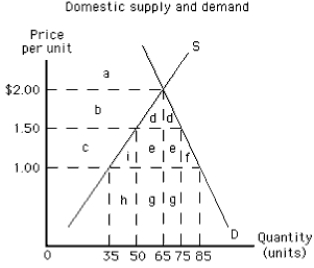
If the country illustrated in Exhibit 19-4 is initially trading without restrictions at a world price of $1.00, the loss of consumer surplus as a result of a tariff of $0.50 per unit is represented by area
A) a
B) b + d
C) c + i + e + f
D) c
E) d
Exhibit 19-4
If the country illustrated in Exhibit 19-4 is initially trading without restrictions at a world price of $1.00, the loss of consumer surplus as a result of a tariff of $0.50 per unit is represented by area
A) a
B) b + d
C) c + i + e + f
D) c
E) d
سؤال
سؤال
NARRBEGIN: Exhibit 32-3
Exhibit 19-4
If the country illustrated in Exhibit 19-4 is initially trading without restrictions at a world price of $1.00, the government revenue from a tariff of $0.50 per unit is represented by area
A) c
B) e + g
C) i + e + f
D) d + e
E) e
Exhibit 19-4
If the country illustrated in Exhibit 19-4 is initially trading without restrictions at a world price of $1.00, the government revenue from a tariff of $0.50 per unit is represented by area
A) c
B) e + g
C) i + e + f
D) d + e
E) e
سؤال
NARRBEGIN: Exhibit 32-3
Exhibit 19-4
If the country illustrated in Exhibit 19-4 is initially trading without restrictions at a world price of $1.00, the gain in producer surplus as a result of a tariff of $0.50 per unit is represented by area
A) c + h
B) h
C) c
D) c + g
E) g
Exhibit 19-4
If the country illustrated in Exhibit 19-4 is initially trading without restrictions at a world price of $1.00, the gain in producer surplus as a result of a tariff of $0.50 per unit is represented by area
A) c + h
B) h
C) c
D) c + g
E) g
سؤال
سؤال
سؤال
سؤال
NARRBEGIN: Exhibit 32-1
Exhibit 19-2
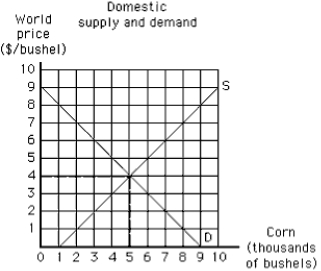
In Exhibit 19-2, if the world price of corn is $2 and there are no trade restrictions, the United States will
A) produce 3,000, consume 7,000, and export 2,000 bushels of corn
B) have an excess supply of corn
C) be a net exporter of corn
D) not produce any corn
E) consume all of the corn that it produces
Exhibit 19-2
In Exhibit 19-2, if the world price of corn is $2 and there are no trade restrictions, the United States will
A) produce 3,000, consume 7,000, and export 2,000 bushels of corn
B) have an excess supply of corn
C) be a net exporter of corn
D) not produce any corn
E) consume all of the corn that it produces
سؤال
NARRBEGIN: Exhibit 32-2
Exhibit 19-3

In Exhibit 19-3, if the world price of tulips is $4 and there are no trade restrictions, The Netherlands will
A) produce 10,000, consume 4,000, and import 6,000 tulips
B) produce 10,000, consume 4,000, and export 6,000 tulips
C) produce 4,000, consume 10,000, and import 6,000 tulips
D) produce no tulips
E) import all of the tulips that it consumes
Exhibit 19-3
In Exhibit 19-3, if the world price of tulips is $4 and there are no trade restrictions, The Netherlands will
A) produce 10,000, consume 4,000, and import 6,000 tulips
B) produce 10,000, consume 4,000, and export 6,000 tulips
C) produce 4,000, consume 10,000, and import 6,000 tulips
D) produce no tulips
E) import all of the tulips that it consumes
سؤال
سؤال
NARRBEGIN: Exhibit 32-2
Exhibit 19-3
In Exhibit 19-3, if the world price of tulips is $1 and there are no trade restrictions, The Netherlands will
A) produce 7,000, consume 10,000, and export 3,000 tulips
B) produce 10,000 and consume 10,000 tulips
C) produce no tulips
D) import all of the tulips that it consumes
E) consume all of the tulips that it produces
Exhibit 19-3
In Exhibit 19-3, if the world price of tulips is $1 and there are no trade restrictions, The Netherlands will
A) produce 7,000, consume 10,000, and export 3,000 tulips
B) produce 10,000 and consume 10,000 tulips
C) produce no tulips
D) import all of the tulips that it consumes
E) consume all of the tulips that it produces
سؤال
سؤال
سؤال
NARRBEGIN: Exhibit 32-1
Exhibit 19-2
In Exhibit 19-2, if the world price of corn is $6 and there are no trade restrictions, the United States will
A) produce 7,000, consume 3,000, and import 4,000 bushels of corn
B) produce 7,000, consume 3,000, and export 4,000 bushels of corn
C) have an excess demand for corn
D) be a net importer of corn
E) not produce any corn
Exhibit 19-2
In Exhibit 19-2, if the world price of corn is $6 and there are no trade restrictions, the United States will
A) produce 7,000, consume 3,000, and import 4,000 bushels of corn
B) produce 7,000, consume 3,000, and export 4,000 bushels of corn
C) have an excess demand for corn
D) be a net importer of corn
E) not produce any corn
سؤال
NARRBEGIN: Exhibit 32-1
Exhibit 19-2
In Exhibit 19-2, if the world price of corn is $6 and there are no trade restrictions, the United States will
A) produce 7,000, consume 3,000, and import 4,000 bushels of corn
B) have an excess demand for corn
C) be a net importer of corn
D) not produce any corn
E) consume only a portion of what is produced
Exhibit 19-2
In Exhibit 19-2, if the world price of corn is $6 and there are no trade restrictions, the United States will
A) produce 7,000, consume 3,000, and import 4,000 bushels of corn
B) have an excess demand for corn
C) be a net importer of corn
D) not produce any corn
E) consume only a portion of what is produced
سؤال
NARRBEGIN: Exhibit 32-3
Exhibit 19-4
In Exhibit 19-4, with a tariff of $0.50 per unit and a world price of $1.00,
A) 25 units will be exported
B) 25 units will be imported
C) 50 units will be exported
D) 50 units will be imported
E) 10 units will be exported
Exhibit 19-4
In Exhibit 19-4, with a tariff of $0.50 per unit and a world price of $1.00,
A) 25 units will be exported
B) 25 units will be imported
C) 50 units will be exported
D) 50 units will be imported
E) 10 units will be exported
سؤال
NARRBEGIN: Exhibit 32-1
Exhibit 19-2
In Exhibit 19-2, if the world price of corn is $2 and there are no trade restrictions, the United States will
A) produce 3,000, consume 7,000, and import 4,000 bushels of corn
B) produce 3,000, consume 7,000, and export 4,000 bushels of corn
C) have an excess supply of corn
D) be a net exporter of corn
E) not produce any corn
Exhibit 19-2
In Exhibit 19-2, if the world price of corn is $2 and there are no trade restrictions, the United States will
A) produce 3,000, consume 7,000, and import 4,000 bushels of corn
B) produce 3,000, consume 7,000, and export 4,000 bushels of corn
C) have an excess supply of corn
D) be a net exporter of corn
E) not produce any corn
سؤال
NARRBEGIN: Exhibit 32-2
Exhibit 19-3
In Exhibit 19-3, if the world price of tulips is $4 and there are no trade restrictions, The Netherlands will
A) produce 10,000, consume 4,000, and import 6,000 tulips
B) produce 10,000 and consume 10,000 tulips
C) produce no tulips
D) import all of the tulips that it consumes
E) consume only some of the tulips it produces
Exhibit 19-3
In Exhibit 19-3, if the world price of tulips is $4 and there are no trade restrictions, The Netherlands will
A) produce 10,000, consume 4,000, and import 6,000 tulips
B) produce 10,000 and consume 10,000 tulips
C) produce no tulips
D) import all of the tulips that it consumes
E) consume only some of the tulips it produces
سؤال
NARRBEGIN: Exhibit 32-3
Exhibit 19-4
At a world price of $1.00 in Exhibit 19-4,
A) 20 units will be exported
B) 20 units will be imported
C) 50 units will be exported
D) 50 units will be imported
E) 10 units will be exported
Exhibit 19-4
At a world price of $1.00 in Exhibit 19-4,
A) 20 units will be exported
B) 20 units will be imported
C) 50 units will be exported
D) 50 units will be imported
E) 10 units will be exported
سؤال

فتح الحزمة
قم بالتسجيل لفتح البطاقات في هذه المجموعة!
Unlock Deck
Unlock Deck
1/163

العب

ملء الشاشة (f)
Deck 19: International Trade
1
The two major trading partners of the United States are
A) Germany and Mexico
B) Mexico and Canada
C) Japan and Canada
D) Canada and Brazil
E) Brazil and Japan
A) Germany and Mexico
B) Mexico and Canada
C) Japan and Canada
D) Canada and Brazil
E) Brazil and Japan
B
2
For which of the following nations does international trade account for the largest percentage of GDP?
A) Japan
B) The Netherlands
C) Germany
D) Great Britain
E) the United States
A) Japan
B) The Netherlands
C) Germany
D) Great Britain
E) the United States
B
3
Which country is the United States' largest trading partner?
A) Canada
B) Japan
C) Great Britain
D) Mexico
E) South Korea
A) Canada
B) Japan
C) Great Britain
D) Mexico
E) South Korea
A
4
Most U.S. imports are
A) manufactured goods
B) agricultural services
C) petroleum and related products
D) minerals such as bauxite and nickel
E) military goods
A) manufactured goods
B) agricultural services
C) petroleum and related products
D) minerals such as bauxite and nickel
E) military goods
فتح الحزمة
افتح القفل للوصول البطاقات البالغ عددها 163 في هذه المجموعة.
فتح الحزمة
k this deck
5
U.S. exports
A) represent approximately 50 percent of GDP
B) represent approximately 35 percent of GDP
C) represent approximately 11 percent of GDP
D) consist primarily of agricultural commodities
E) consist primarily of metals and other raw materials
A) represent approximately 50 percent of GDP
B) represent approximately 35 percent of GDP
C) represent approximately 11 percent of GDP
D) consist primarily of agricultural commodities
E) consist primarily of metals and other raw materials
فتح الحزمة
افتح القفل للوصول البطاقات البالغ عددها 163 في هذه المجموعة.
فتح الحزمة
k this deck
6
The two main categories of U.S. exports are
A) transportation goods and fuel
B) steel and fuel
C) capital goods and industrial supplies and materials
D) fuels and agricultural goods
E) agricultural and transportation goods
A) transportation goods and fuel
B) steel and fuel
C) capital goods and industrial supplies and materials
D) fuels and agricultural goods
E) agricultural and transportation goods
فتح الحزمة
افتح القفل للوصول البطاقات البالغ عددها 163 في هذه المجموعة.
فتح الحزمة
k this deck
7
In determining comparative advantage, cost is measured in terms of
A) foreign currency
B) domestic currency
C) gold only
D) units of weight and measure
E) opportunities forgone
A) foreign currency
B) domestic currency
C) gold only
D) units of weight and measure
E) opportunities forgone
فتح الحزمة
افتح القفل للوصول البطاقات البالغ عددها 163 في هذه المجموعة.
فتح الحزمة
k this deck
8
Exports amount to about 11 percent of U.S. GDP.
فتح الحزمة
افتح القفل للوصول البطاقات البالغ عددها 163 في هذه المجموعة.
فتح الحزمة
k this deck
9
International trade increases world economic efficiency for the same reasons that domestic trade increases national economic efficiency.
فتح الحزمة
افتح القفل للوصول البطاقات البالغ عددها 163 في هذه المجموعة.
فتح الحزمة
k this deck
10
Suppose that workers in Transylvania can produce only two goods -- yo-yos or sweatsocks. The Transylvanian currency is the daler. In what unit is the opportunity cost of yo-yos measured?
A) dalers
B) dalers per yo-yo
C) dalers per sweatsock
D) yo-yos
E) sweatsocks
A) dalers
B) dalers per yo-yo
C) dalers per sweatsock
D) yo-yos
E) sweatsocks
فتح الحزمة
افتح القفل للوصول البطاقات البالغ عددها 163 في هذه المجموعة.
فتح الحزمة
k this deck
11
The United States is a major exporter of
A) diamonds
B) bauxite
C) coffee
D) corn
E) gold
A) diamonds
B) bauxite
C) coffee
D) corn
E) gold
فتح الحزمة
افتح القفل للوصول البطاقات البالغ عددها 163 في هذه المجموعة.
فتح الحزمة
k this deck
12
Exports account for what percent of GDP in the United States?
A) 2 percent
B) 5 percent
C) 11 percent
D) 15 percent
E) 20 percent
A) 2 percent
B) 5 percent
C) 11 percent
D) 15 percent
E) 20 percent
فتح الحزمة
افتح القفل للوصول البطاقات البالغ عددها 163 في هذه المجموعة.
فتح الحزمة
k this deck
13
The United States exports more raw materials than finished products.
فتح الحزمة
افتح القفل للوصول البطاقات البالغ عددها 163 في هذه المجموعة.
فتح الحزمة
k this deck
14
For each watch Denmark produces, it gives up the opportunity to make 50 pounds of cheese. Germany can produce one watch for every 100 pounds of cheese it produces. Which of the following is true with regard to opportunity costs in the two countries?
A) The opportunity cost of producing watches is higher in Denmark.
B) The opportunity cost of producing cheese is higher in Denmark.
C) The opportunity cost of producing cheese is identical in both countries.
D) It is impossible to compare opportunity costs because the two countries use different currencies.
E) In both countries combined, the opportunity cost of one watch is 150 pounds of cheese.
A) The opportunity cost of producing watches is higher in Denmark.
B) The opportunity cost of producing cheese is higher in Denmark.
C) The opportunity cost of producing cheese is identical in both countries.
D) It is impossible to compare opportunity costs because the two countries use different currencies.
E) In both countries combined, the opportunity cost of one watch is 150 pounds of cheese.
فتح الحزمة
افتح القفل للوصول البطاقات البالغ عددها 163 في هذه المجموعة.
فتح الحزمة
k this deck
15
For each watch Denmark produces, it gives up the opportunity to make 50 pounds of cheese. Germany can produce one watch for every 100 pounds of cheese it produces. Which of the following is true concerning comparative advantage between the two countries?
A) Denmark has the comparative advantage in watches and cheese.
B) Germany has the comparative advantage in watches and cheese.
C) Germany has the comparative advantage in watches.
D) Denmark has the comparative advantage in watches.
E) Denmark has the comparative advantage in cheese.
A) Denmark has the comparative advantage in watches and cheese.
B) Germany has the comparative advantage in watches and cheese.
C) Germany has the comparative advantage in watches.
D) Denmark has the comparative advantage in watches.
E) Denmark has the comparative advantage in cheese.
فتح الحزمة
افتح القفل للوصول البطاقات البالغ عددها 163 في هذه المجموعة.
فتح الحزمة
k this deck
16
Which of the following best expresses the benefit from international trade?
A) With trade, each country can concentrate on producing those goods and services that it produces most efficiently.
B) With trade, a country can increase its political involvement on a global scale.
C) Increased U.S. trade would improve high-tech exports but not agricultural exports.
D) Increased trade would increase U.S. exports and decrease U.S. imports.
E) Increased trade implies that exports of goods and services will always equal imports of goods and services.
A) With trade, each country can concentrate on producing those goods and services that it produces most efficiently.
B) With trade, a country can increase its political involvement on a global scale.
C) Increased U.S. trade would improve high-tech exports but not agricultural exports.
D) Increased trade would increase U.S. exports and decrease U.S. imports.
E) Increased trade implies that exports of goods and services will always equal imports of goods and services.
فتح الحزمة
افتح القفل للوصول البطاقات البالغ عددها 163 في هذه المجموعة.
فتح الحزمة
k this deck
17
The term autarky refers to
A) equilibrium after trade begins between two countries
B) the gains received from trade
C) self-sufficiency
D) political isolationism
E) the recognition that mutually beneficial trade is not possible between two countries
A) equilibrium after trade begins between two countries
B) the gains received from trade
C) self-sufficiency
D) political isolationism
E) the recognition that mutually beneficial trade is not possible between two countries
فتح الحزمة
افتح القفل للوصول البطاقات البالغ عددها 163 في هذه المجموعة.
فتح الحزمة
k this deck
18
For each watch Denmark produces, it gives up the opportunity to make 50 pounds of cheese. Germany can produce one watch for every 100 pounds of cheese it produces. Which of the following is true with regard to opportunity costs in the two countries?
A) The opportunity cost of producing watches is lower in Denmark.
B) The opportunity cost of producing cheese is lower in Denmark.
C) The opportunity cost of producing watches is identical in both countries.
D) It is impossible to compare opportunity costs because the two countries use different currencies.
E) In Germany the opportunity cost of producing one pound of cheese is one watch.
A) The opportunity cost of producing watches is lower in Denmark.
B) The opportunity cost of producing cheese is lower in Denmark.
C) The opportunity cost of producing watches is identical in both countries.
D) It is impossible to compare opportunity costs because the two countries use different currencies.
E) In Germany the opportunity cost of producing one pound of cheese is one watch.
فتح الحزمة
افتح القفل للوصول البطاقات البالغ عددها 163 في هذه المجموعة.
فتح الحزمة
k this deck
19
International trade equalizes the opportunity cost of producing any good around the world.
فتح الحزمة
افتح القفل للوصول البطاقات البالغ عددها 163 في هذه المجموعة.
فتح الحزمة
k this deck
20
Japan is generally considered an economy closed to foreign trade.
فتح الحزمة
افتح القفل للوصول البطاقات البالغ عددها 163 في هذه المجموعة.
فتح الحزمة
k this deck
21
In New Zealand one worker can produce 40 walking sticks or 10 boomerangs each hour. What is the opportunity cost of producing one walking stick?
A) 40 boomerangs
B) 10 boomerangs
C) 4 boomerangs
D) 1/4 of a boomerang
E) 1/2 worker
A) 40 boomerangs
B) 10 boomerangs
C) 4 boomerangs
D) 1/4 of a boomerang
E) 1/2 worker
فتح الحزمة
افتح القفل للوصول البطاقات البالغ عددها 163 في هذه المجموعة.
فتح الحزمة
k this deck
22
Which of the following is true?
A) International trade makes it possible for a country's consumption possibilities to exceed its production possibilities.
B) International trade requires that a country's production possibilities exceed its consumption possibilities.
C) A country's production possibilities always equal its consumption possibilities.
D) A country's consumption possibilities can never equal its production possibilities because of leakages in the system.
E) As long as there is full employment of resources, a country's production possibilities will exceed its consumption possibilities even with trade.
A) International trade makes it possible for a country's consumption possibilities to exceed its production possibilities.
B) International trade requires that a country's production possibilities exceed its consumption possibilities.
C) A country's production possibilities always equal its consumption possibilities.
D) A country's consumption possibilities can never equal its production possibilities because of leakages in the system.
E) As long as there is full employment of resources, a country's production possibilities will exceed its consumption possibilities even with trade.
فتح الحزمة
افتح القفل للوصول البطاقات البالغ عددها 163 في هذه المجموعة.
فتح الحزمة
k this deck
23
It is possible for one country to have a comparative advantage in the production of all products.
فتح الحزمة
افتح القفل للوصول البطاقات البالغ عددها 163 في هذه المجموعة.
فتح الحزمة
k this deck
24
Mutually beneficial trade will occur between two countries for all of the following reasons except one. Which is the exception?
A) The opportunity costs of producing two goods differs between the two trading partners.
B) One country is more productive than the other.
C) One country is more efficient than the other.
D) One country has an absolute advantage over the other.
E) Each country has a comparative advantage in producing some good.
A) The opportunity costs of producing two goods differs between the two trading partners.
B) One country is more productive than the other.
C) One country is more efficient than the other.
D) One country has an absolute advantage over the other.
E) Each country has a comparative advantage in producing some good.
فتح الحزمة
افتح القفل للوصول البطاقات البالغ عددها 163 في هذه المجموعة.
فتح الحزمة
k this deck
25
Which of the following is not true of the terms of trade?
A) They are determined by supply and demand factors.
B) They lie somewhere between the opportunity costs of the trading partners.
C) GATT begins negotiations on the terms of trade.
D) They depend on negotiations between trade partners.
E) They often favor one partner more than the other.
A) They are determined by supply and demand factors.
B) They lie somewhere between the opportunity costs of the trading partners.
C) GATT begins negotiations on the terms of trade.
D) They depend on negotiations between trade partners.
E) They often favor one partner more than the other.
فتح الحزمة
افتح القفل للوصول البطاقات البالغ عددها 163 في هذه المجموعة.
فتح الحزمة
k this deck
26
Whenever the opportunity costs of goods are significantly different in different countries, there are gains from specialization and trade.
فتح الحزمة
افتح القفل للوصول البطاقات البالغ عددها 163 في هذه المجموعة.
فتح الحزمة
k this deck
27
The rate at which two countries trade one good for another
A) is known as the foreign exchange rate
B) is known as the terms of trade
C) is known as the export line
D) equals the slope of the import line
E) equals the common slope of the countries' production possibilities frontiers
A) is known as the foreign exchange rate
B) is known as the terms of trade
C) is known as the export line
D) equals the slope of the import line
E) equals the common slope of the countries' production possibilities frontiers
فتح الحزمة
افتح القفل للوصول البطاقات البالغ عددها 163 في هذه المجموعة.
فتح الحزمة
k this deck
28
If a country has an absolute advantage in the production of every good, it cannot benefit from trade with other countries.
فتح الحزمة
افتح القفل للوصول البطاقات البالغ عددها 163 في هذه المجموعة.
فتح الحزمة
k this deck
29
International trade does all the following except
A) allow a country to specialize in producing certain goods and services
B) reduce world output
C) allow a country to move to a higher consumption possibilities frontier
D) allow a country's consumption possibilities frontier to lie outside its production possibilities frontier
E) increase world output
A) allow a country to specialize in producing certain goods and services
B) reduce world output
C) allow a country to move to a higher consumption possibilities frontier
D) allow a country's consumption possibilities frontier to lie outside its production possibilities frontier
E) increase world output
فتح الحزمة
افتح القفل للوصول البطاقات البالغ عددها 163 في هذه المجموعة.
فتح الحزمة
k this deck
30
Which of the following factors is the most significant in determining the pattern of international trade?
A) absolute advantage
B) diplomatic expertise
C) comparative advantage
D) overpowering military strength
E) a country's size relative to another country's
A) absolute advantage
B) diplomatic expertise
C) comparative advantage
D) overpowering military strength
E) a country's size relative to another country's
فتح الحزمة
افتح القفل للوصول البطاقات البالغ عددها 163 في هذه المجموعة.
فتح الحزمة
k this deck
31
U.S. consumers would be better off if they bought only U.S.-produced goods.
فتح الحزمة
افتح القفل للوصول البطاقات البالغ عددها 163 في هذه المجموعة.
فتح الحزمة
k this deck
32
For each watch Denmark produces, it gives up the opportunity to make 50 pounds of cheese. Germany can produce one watch for every 100 pounds of cheese it produces. Which of the following is true concerning production possibilities curves in both countries?
A) The slopes of the countries' production possibilities frontiers cannot be determined unless the number of workers in each country is known.
B) The countries' production possibilities frontiers have the usual bowed-out shape.
C) On a graph with cheese on the vertical axis, the slope of Germany's production possibilities frontier is everywhere equal to 1/100.
D) On a graph with cheese on the vertical axis, the slope of Germany's production possibilities frontier is steeper than Denmark's.
E) On a graph with cheese on the vertical axis, the slope of Germany's production possibilities frontier is everywhere equal to negative 1/100.
A) The slopes of the countries' production possibilities frontiers cannot be determined unless the number of workers in each country is known.
B) The countries' production possibilities frontiers have the usual bowed-out shape.
C) On a graph with cheese on the vertical axis, the slope of Germany's production possibilities frontier is everywhere equal to 1/100.
D) On a graph with cheese on the vertical axis, the slope of Germany's production possibilities frontier is steeper than Denmark's.
E) On a graph with cheese on the vertical axis, the slope of Germany's production possibilities frontier is everywhere equal to negative 1/100.
فتح الحزمة
افتح القفل للوصول البطاقات البالغ عددها 163 في هذه المجموعة.
فتح الحزمة
k this deck
33
The basis for international trade is
A) established trade patterns
B) the size of gold holdings of two countries
C) shipping and transportation costs
D) absolute advantage
E) comparative advantage
A) established trade patterns
B) the size of gold holdings of two countries
C) shipping and transportation costs
D) absolute advantage
E) comparative advantage
فتح الحزمة
افتح القفل للوصول البطاقات البالغ عددها 163 في هذه المجموعة.
فتح الحزمة
k this deck
34
The opportunity cost of producing one car in Germany is 2,000 bushels of wheat, and the opportunity cost of producing one car in Canada is 1,200 bushels of wheat. The two countries can realize mutual gains from trade if they agree on terms of trade that are
A) greater than 2,000 bushels of wheat per car
B) less than 1,200 bushels of wheat per car
C) greater than 1,200 bushels of wheat per car and less than 2,000 bushels of wheat per car, and Germany produces wheat
D) greater than 1,200 bushels of wheat per car and less than 2,000 bushels of wheat per car, and Germany produces cars
E) greater than 1,200 bushels of wheat per car and less than 2,000 bushels of wheat per car, and each country produces both goods
A) greater than 2,000 bushels of wheat per car
B) less than 1,200 bushels of wheat per car
C) greater than 1,200 bushels of wheat per car and less than 2,000 bushels of wheat per car, and Germany produces wheat
D) greater than 1,200 bushels of wheat per car and less than 2,000 bushels of wheat per car, and Germany produces cars
E) greater than 1,200 bushels of wheat per car and less than 2,000 bushels of wheat per car, and each country produces both goods
فتح الحزمة
افتح القفل للوصول البطاقات البالغ عددها 163 في هذه المجموعة.
فتح الحزمة
k this deck
35
In autarky,
A) each country's consumption possibilities are the same as its production possibilities
B) equilibrium is attained with the maximum gains from specialization and trade
C) equilibrium is attained with the maximum amount of international trade
D) a nation has such a high standard of living that there are technically no poor people
E) a nation is governed by an individual with absolute authority
A) each country's consumption possibilities are the same as its production possibilities
B) equilibrium is attained with the maximum gains from specialization and trade
C) equilibrium is attained with the maximum amount of international trade
D) a nation has such a high standard of living that there are technically no poor people
E) a nation is governed by an individual with absolute authority
فتح الحزمة
افتح القفل للوصول البطاقات البالغ عددها 163 في هذه المجموعة.
فتح الحزمة
k this deck
36
International trade is most likely to occur whenever
A) one of the trading nations is self-sufficient
B) all of the trading nations are self-sufficient
C) one of the trading nations gains from trade
D) each of the trading nations gains from trade
E) labor is cheaper abroad
A) one of the trading nations is self-sufficient
B) all of the trading nations are self-sufficient
C) one of the trading nations gains from trade
D) each of the trading nations gains from trade
E) labor is cheaper abroad
فتح الحزمة
افتح القفل للوصول البطاقات البالغ عددها 163 في هذه المجموعة.
فتح الحزمة
k this deck
37
If the United States has an absolute advantage in producing computer components, it should export them worldwide.
فتح الحزمة
افتح القفل للوصول البطاقات البالغ عددها 163 في هذه المجموعة.
فتح الحزمة
k this deck
38
Which of the following is not a basis for trade between two nations?
A) different skill levels of the labor forces
B) one nation's absolute advantage
C) a difference in tastes between countries
D) economies of scale
E) different capital stocks
A) different skill levels of the labor forces
B) one nation's absolute advantage
C) a difference in tastes between countries
D) economies of scale
E) different capital stocks
فتح الحزمة
افتح القفل للوصول البطاقات البالغ عددها 163 في هذه المجموعة.
فتح الحزمة
k this deck
39
The basis of the benefits of specialization is
A) comparative advantage
B) absolute advantage
C) size of country
D) identical production costs between two countries
E) self-sufficiency
A) comparative advantage
B) absolute advantage
C) size of country
D) identical production costs between two countries
E) self-sufficiency
فتح الحزمة
افتح القفل للوصول البطاقات البالغ عددها 163 في هذه المجموعة.
فتح الحزمة
k this deck
40
Absolute advantage
A) is the same as comparative advantage
B) implies autarky
C) means that countries of the same size have the same opportunity cost of producing both goods
D) means that a country can produce more of two goods than another country can
E) means that a country can produce less of two goods than another country can
A) is the same as comparative advantage
B) implies autarky
C) means that countries of the same size have the same opportunity cost of producing both goods
D) means that a country can produce more of two goods than another country can
E) means that a country can produce less of two goods than another country can
فتح الحزمة
افتح القفل للوصول البطاقات البالغ عددها 163 في هذه المجموعة.
فتح الحزمة
k this deck
41
NARRBEGIN: Exhibit 32-8
Exhibit 19-1
In Exhibit 19-1, trade between the United States and Costa Rica will benefit Costa Rica but not the United States.
Exhibit 19-1
In Exhibit 19-1, trade between the United States and Costa Rica will benefit Costa Rica but not the United States.
فتح الحزمة
افتح القفل للوصول البطاقات البالغ عددها 163 في هذه المجموعة.
فتح الحزمة
k this deck
42
NARRBEGIN: Exhibit 32-8
Exhibit 19-1
In Exhibit 19-1, the United States has a comparative advantage in the production of rice.
Exhibit 19-1
In Exhibit 19-1, the United States has a comparative advantage in the production of rice.
فتح الحزمة
افتح القفل للوصول البطاقات البالغ عددها 163 في هذه المجموعة.
فتح الحزمة
k this deck
43
One reason for international specialization in production is
A) a high tariff imposed by a national government
B) a low tariff imposed by a national government
C) diminishing returns to a variable factor of production
D) the different resource endowments throughout the world
E) high fixed costs of production
A) a high tariff imposed by a national government
B) a low tariff imposed by a national government
C) diminishing returns to a variable factor of production
D) the different resource endowments throughout the world
E) high fixed costs of production
فتح الحزمة
افتح القفل للوصول البطاقات البالغ عددها 163 في هذه المجموعة.
فتح الحزمة
k this deck
44
To maximize worldwide gains from trade, the country that should produce a good is the country that
A) has the lowest opportunity cost of producing it
B) can produce that good using the fewest resources
C) will produce that good using the most expensive resources
D) has the most desire for that good
E) has produced that good in the past
A) has the lowest opportunity cost of producing it
B) can produce that good using the fewest resources
C) will produce that good using the most expensive resources
D) has the most desire for that good
E) has produced that good in the past
فتح الحزمة
افتح القفل للوصول البطاقات البالغ عددها 163 في هذه المجموعة.
فتح الحزمة
k this deck
45
NARRBEGIN: Exhibit 32-8
Exhibit 19-1
In Exhibit 19-1, the opportunity cost of a ton of rice in the United States is
A) 0
B) 1/3 of a t-shirt
C) 1/2 of a t-shirt
D) 1 t-shirt
E) 2 t-shirts
Exhibit 19-1
In Exhibit 19-1, the opportunity cost of a ton of rice in the United States is
A) 0
B) 1/3 of a t-shirt
C) 1/2 of a t-shirt
D) 1 t-shirt
E) 2 t-shirts
فتح الحزمة
افتح القفل للوصول البطاقات البالغ عددها 163 في هذه المجموعة.
فتح الحزمة
k this deck
46
The source of gains from trade is
A) tariffs
B) self-sufficiency
C) autarky equilibrium
D) absolute advantage
E) comparative advantage
A) tariffs
B) self-sufficiency
C) autarky equilibrium
D) absolute advantage
E) comparative advantage
فتح الحزمة
افتح القفل للوصول البطاقات البالغ عددها 163 في هذه المجموعة.
فتح الحزمة
k this deck
47
Comparative advantage is determined by
A) the amount of resources needed to produce a good
B) the money cost of producing any good
C) the opportunity cost of producing any good
D) absolute advantage and production possibilities combined
E) the level of demand for a good
A) the amount of resources needed to produce a good
B) the money cost of producing any good
C) the opportunity cost of producing any good
D) absolute advantage and production possibilities combined
E) the level of demand for a good
فتح الحزمة
افتح القفل للوصول البطاقات البالغ عددها 163 في هذه المجموعة.
فتح الحزمة
k this deck
48
Differences in tastes among nations
A) make gains from trade possible even in the absence of differences in resource endowments
B) make gains from trade possible only when there are differences in resource endowments
C) negate any potential gains from trade
D) are caused by differences in resource endowments
E) occur only among countries whose people are of different religions
A) make gains from trade possible even in the absence of differences in resource endowments
B) make gains from trade possible only when there are differences in resource endowments
C) negate any potential gains from trade
D) are caused by differences in resource endowments
E) occur only among countries whose people are of different religions
فتح الحزمة
افتح القفل للوصول البطاقات البالغ عددها 163 في هذه المجموعة.
فتح الحزمة
k this deck
49
NARRBEGIN: Exhibit 32-8
Exhibit 19-1
In Exhibit 19-1, the United States has an absolute advantage in the production of both rice and t-shirts.
Exhibit 19-1
In Exhibit 19-1, the United States has an absolute advantage in the production of both rice and t-shirts.
فتح الحزمة
افتح القفل للوصول البطاقات البالغ عددها 163 في هذه المجموعة.
فتح الحزمة
k this deck
50
A country should export only those goods for which, relative to its trading partners, it has the
A) absolute advantage
B) highest opportunity cost
C) lowest production possibilities
D) strongest demand
E) lowest opportunity cost
A) absolute advantage
B) highest opportunity cost
C) lowest production possibilities
D) strongest demand
E) lowest opportunity cost
فتح الحزمة
افتح القفل للوصول البطاقات البالغ عددها 163 في هذه المجموعة.
فتح الحزمة
k this deck
51
NARRBEGIN: Exhibit 32-8
Exhibit 19-1
In Exhibit 19-1, the opportunity cost of 1 t-shirt in the United States is
A) 0
B) 1/2 ton of rice
C) 3/4 ton of rice
D) 1 ton of rice
E) 2 tons of rice
Exhibit 19-1
In Exhibit 19-1, the opportunity cost of 1 t-shirt in the United States is
A) 0
B) 1/2 ton of rice
C) 3/4 ton of rice
D) 1 ton of rice
E) 2 tons of rice
فتح الحزمة
افتح القفل للوصول البطاقات البالغ عددها 163 في هذه المجموعة.
فتح الحزمة
k this deck
52
NARRBEGIN: Exhibit 32-8
Exhibit 19-1
In Exhibit 19-1, Costa Rica has a comparative advantage in the production of rice.
Exhibit 19-1
In Exhibit 19-1, Costa Rica has a comparative advantage in the production of rice.
فتح الحزمة
افتح القفل للوصول البطاقات البالغ عددها 163 في هذه المجموعة.
فتح الحزمة
k this deck
53
World output will be maximized if each country
A) attempts to be self-sufficient
B) specializes in producing those goods in which it has a comparative advantage
C) specializes in producing those goods in which it has an absolute advantage
D) reduces its consumption possibilities
E) specializes in producing those goods for which it has the lowest demand
A) attempts to be self-sufficient
B) specializes in producing those goods in which it has a comparative advantage
C) specializes in producing those goods in which it has an absolute advantage
D) reduces its consumption possibilities
E) specializes in producing those goods for which it has the lowest demand
فتح الحزمة
افتح القفل للوصول البطاقات البالغ عددها 163 في هذه المجموعة.
فتح الحزمة
k this deck
54
Differences in resource endowments are differences in
A) tariffs charged by each country
B) consumption patterns across nations
C) production patterns across nations
D) the quantity, but not the quality, of resources available in different nations
E) the quality and quantity of resources available in different nations
A) tariffs charged by each country
B) consumption patterns across nations
C) production patterns across nations
D) the quantity, but not the quality, of resources available in different nations
E) the quality and quantity of resources available in different nations
فتح الحزمة
افتح القفل للوصول البطاقات البالغ عددها 163 في هذه المجموعة.
فتح الحزمة
k this deck
55
NARRBEGIN: Exhibit 32-8
Exhibit 19-1
In Exhibit 19-1, the opportunity cost of 1 ton of rice in Costa Rica is
A) 0
B) 10 t-shirts
C) 20 t-shirts
D) 30 t-shirts
E) 40 t-shirts
Exhibit 19-1
In Exhibit 19-1, the opportunity cost of 1 ton of rice in Costa Rica is
A) 0
B) 10 t-shirts
C) 20 t-shirts
D) 30 t-shirts
E) 40 t-shirts
فتح الحزمة
افتح القفل للوصول البطاقات البالغ عددها 163 في هذه المجموعة.
فتح الحزمة
k this deck
56
NARRBEGIN: Exhibit 32-8
Exhibit 19-1
In Exhibit 19-1, the opportunity cost of 1 t-shirt in Costa Rica is
A) 0
B) 1/40 ton of rice
C) 3/4 ton of rice
D) 1 ton of rice
E) 2 tons of rice
Exhibit 19-1
In Exhibit 19-1, the opportunity cost of 1 t-shirt in Costa Rica is
A) 0
B) 1/40 ton of rice
C) 3/4 ton of rice
D) 1 ton of rice
E) 2 tons of rice
فتح الحزمة
افتح القفل للوصول البطاقات البالغ عددها 163 في هذه المجموعة.
فتح الحزمة
k this deck
57
NARRBEGIN: Exhibit 32-8
Exhibit 19-1
In Exhibit 19-1, the United States should produce rice and trade their rice for Costa Rica's t-shirts.
Exhibit 19-1
In Exhibit 19-1, the United States should produce rice and trade their rice for Costa Rica's t-shirts.
فتح الحزمة
افتح القفل للوصول البطاقات البالغ عددها 163 في هذه المجموعة.
فتح الحزمة
k this deck
58
A nation's consumption possibilities frontier is
A) always the same as its production possibilities frontier
B) never the same as its production possibilities frontier
C) the same as its production possibilities frontier only if there is advantageous trade
D) the same as its production possibilities frontier only if there is no international trade
E) usually lower than its production possibilities frontier
A) always the same as its production possibilities frontier
B) never the same as its production possibilities frontier
C) the same as its production possibilities frontier only if there is advantageous trade
D) the same as its production possibilities frontier only if there is no international trade
E) usually lower than its production possibilities frontier
فتح الحزمة
افتح القفل للوصول البطاقات البالغ عددها 163 في هذه المجموعة.
فتح الحزمة
k this deck
59
One reason for international specialization in production is
A) differing national tastes
B) diseconomies of scale in production
C) a high world price for a good
D) resources are plentiful in all nations
E) people have limited wants for domestically produced goods and services
A) differing national tastes
B) diseconomies of scale in production
C) a high world price for a good
D) resources are plentiful in all nations
E) people have limited wants for domestically produced goods and services
فتح الحزمة
افتح القفل للوصول البطاقات البالغ عددها 163 في هذه المجموعة.
فتح الحزمة
k this deck
60
If production is subject to economies of scale,
A) countries can gain from trade if each nation specializes
B) one country will develop an absolute advantage in the production of all goods
C) higher output levels result in higher average production costs
D) one country will develop a comparative advantage in the production of all goods
E) countries cannot gain from trade
A) countries can gain from trade if each nation specializes
B) one country will develop an absolute advantage in the production of all goods
C) higher output levels result in higher average production costs
D) one country will develop a comparative advantage in the production of all goods
E) countries cannot gain from trade
فتح الحزمة
افتح القفل للوصول البطاقات البالغ عددها 163 في هذه المجموعة.
فتح الحزمة
k this deck
61
NARRBEGIN: Exhibit 32-3
Exhibit 19-4
If the country illustrated in Exhibit 19-4 is initially trading without restrictions at a world price of $1.00, the loss of consumer surplus as a result of a tariff of $0.50 per unit is represented by area
A) a
B) b + d
C) c + i + e + f
D) c
E) d
Exhibit 19-4
If the country illustrated in Exhibit 19-4 is initially trading without restrictions at a world price of $1.00, the loss of consumer surplus as a result of a tariff of $0.50 per unit is represented by area
A) a
B) b + d
C) c + i + e + f
D) c
E) d
فتح الحزمة
افتح القفل للوصول البطاقات البالغ عددها 163 في هذه المجموعة.
فتح الحزمة
k this deck
62
A tariff is a tax on either imports or exports.
فتح الحزمة
افتح القفل للوصول البطاقات البالغ عددها 163 في هذه المجموعة.
فتح الحزمة
k this deck
63
NARRBEGIN: Exhibit 32-3
Exhibit 19-4
If the country illustrated in Exhibit 19-4 is initially trading without restrictions at a world price of $1.00, the government revenue from a tariff of $0.50 per unit is represented by area
A) c
B) e + g
C) i + e + f
D) d + e
E) e
Exhibit 19-4
If the country illustrated in Exhibit 19-4 is initially trading without restrictions at a world price of $1.00, the government revenue from a tariff of $0.50 per unit is represented by area
A) c
B) e + g
C) i + e + f
D) d + e
E) e
فتح الحزمة
افتح القفل للوصول البطاقات البالغ عددها 163 في هذه المجموعة.
فتح الحزمة
k this deck
64
NARRBEGIN: Exhibit 32-3
Exhibit 19-4
If the country illustrated in Exhibit 19-4 is initially trading without restrictions at a world price of $1.00, the gain in producer surplus as a result of a tariff of $0.50 per unit is represented by area
A) c + h
B) h
C) c
D) c + g
E) g
Exhibit 19-4
If the country illustrated in Exhibit 19-4 is initially trading without restrictions at a world price of $1.00, the gain in producer surplus as a result of a tariff of $0.50 per unit is represented by area
A) c + h
B) h
C) c
D) c + g
E) g
فتح الحزمة
افتح القفل للوصول البطاقات البالغ عددها 163 في هذه المجموعة.
فتح الحزمة
k this deck
65
Which of the following is not a reason for international specialization?
A) some countries have educated, trained workers, while other countries have unskilled workers
B) tastes and preferences tend to be different in different countries
C) economies of scale can allow larger, specialized producers to operate at lower average cost
D) mineral resources are often concentrated in particular countries
E) the world price of a good is determined by the world supply and demand for it
A) some countries have educated, trained workers, while other countries have unskilled workers
B) tastes and preferences tend to be different in different countries
C) economies of scale can allow larger, specialized producers to operate at lower average cost
D) mineral resources are often concentrated in particular countries
E) the world price of a good is determined by the world supply and demand for it
فتح الحزمة
افتح القفل للوصول البطاقات البالغ عددها 163 في هذه المجموعة.
فتح الحزمة
k this deck
66
If a tariff increases, everybody loses except the government imposing the tariff.
فتح الحزمة
افتح القفل للوصول البطاقات البالغ عددها 163 في هذه المجموعة.
فتح الحزمة
k this deck
67
A country will import a good only if
A) there is excess domestic quantity supplied at the world price
B) domestic quantity supplied is greater than world quantity supplied
C) domestic quantity demanded is less than world quantity demanded
D) domestic quantity demanded is zero at the world price
E) excess quantity demanded is positive at the world price
A) there is excess domestic quantity supplied at the world price
B) domestic quantity supplied is greater than world quantity supplied
C) domestic quantity demanded is less than world quantity demanded
D) domestic quantity demanded is zero at the world price
E) excess quantity demanded is positive at the world price
فتح الحزمة
افتح القفل للوصول البطاقات البالغ عددها 163 في هذه المجموعة.
فتح الحزمة
k this deck
68
NARRBEGIN: Exhibit 32-1
Exhibit 19-2
In Exhibit 19-2, if the world price of corn is $2 and there are no trade restrictions, the United States will
A) produce 3,000, consume 7,000, and export 2,000 bushels of corn
B) have an excess supply of corn
C) be a net exporter of corn
D) not produce any corn
E) consume all of the corn that it produces
Exhibit 19-2
In Exhibit 19-2, if the world price of corn is $2 and there are no trade restrictions, the United States will
A) produce 3,000, consume 7,000, and export 2,000 bushels of corn
B) have an excess supply of corn
C) be a net exporter of corn
D) not produce any corn
E) consume all of the corn that it produces
فتح الحزمة
افتح القفل للوصول البطاقات البالغ عددها 163 في هذه المجموعة.
فتح الحزمة
k this deck
69
NARRBEGIN: Exhibit 32-2
Exhibit 19-3
In Exhibit 19-3, if the world price of tulips is $4 and there are no trade restrictions, The Netherlands will
A) produce 10,000, consume 4,000, and import 6,000 tulips
B) produce 10,000, consume 4,000, and export 6,000 tulips
C) produce 4,000, consume 10,000, and import 6,000 tulips
D) produce no tulips
E) import all of the tulips that it consumes
Exhibit 19-3
In Exhibit 19-3, if the world price of tulips is $4 and there are no trade restrictions, The Netherlands will
A) produce 10,000, consume 4,000, and import 6,000 tulips
B) produce 10,000, consume 4,000, and export 6,000 tulips
C) produce 4,000, consume 10,000, and import 6,000 tulips
D) produce no tulips
E) import all of the tulips that it consumes
فتح الحزمة
افتح القفل للوصول البطاقات البالغ عددها 163 في هذه المجموعة.
فتح الحزمة
k this deck
70
If there are no trade restrictions, a country will import a particular good if
A) domestic quantity supplied equals domestic quantity demanded at the world price
B) there is excess domestic quantity demanded at the world price
C) world quantity supplied is less than world quantity demanded
D) world quantity supplied is greater than world quantity demanded
E) domestic quantity supplied is greater than domestic quantity demanded at the world price
A) domestic quantity supplied equals domestic quantity demanded at the world price
B) there is excess domestic quantity demanded at the world price
C) world quantity supplied is less than world quantity demanded
D) world quantity supplied is greater than world quantity demanded
E) domestic quantity supplied is greater than domestic quantity demanded at the world price
فتح الحزمة
افتح القفل للوصول البطاقات البالغ عددها 163 في هذه المجموعة.
فتح الحزمة
k this deck
71
NARRBEGIN: Exhibit 32-2
Exhibit 19-3
In Exhibit 19-3, if the world price of tulips is $1 and there are no trade restrictions, The Netherlands will
A) produce 7,000, consume 10,000, and export 3,000 tulips
B) produce 10,000 and consume 10,000 tulips
C) produce no tulips
D) import all of the tulips that it consumes
E) consume all of the tulips that it produces
Exhibit 19-3
In Exhibit 19-3, if the world price of tulips is $1 and there are no trade restrictions, The Netherlands will
A) produce 7,000, consume 10,000, and export 3,000 tulips
B) produce 10,000 and consume 10,000 tulips
C) produce no tulips
D) import all of the tulips that it consumes
E) consume all of the tulips that it produces
فتح الحزمة
افتح القفل للوصول البطاقات البالغ عددها 163 في هذه المجموعة.
فتح الحزمة
k this deck
72
As a result of international trade,
A) the gain to producers in the importing country exceeds the loss to consumers in the importing country
B) the loss to producers in the importing country is less than the gain to consumers in the importing country caused by a decrease in price
C) the loss to producers in the importing country exceeds the gain to consumers in the importing country caused by an increase in price
D) the loss to producers in the importing country is equal to the gain to consumers in the importing country because price increases and equilibrium quantity decreases
E) the loss to producers in the importing country is equal to the gain to consumers in the importing country because price decreases and equilibrium quantity increases
A) the gain to producers in the importing country exceeds the loss to consumers in the importing country
B) the loss to producers in the importing country is less than the gain to consumers in the importing country caused by a decrease in price
C) the loss to producers in the importing country exceeds the gain to consumers in the importing country caused by an increase in price
D) the loss to producers in the importing country is equal to the gain to consumers in the importing country because price increases and equilibrium quantity decreases
E) the loss to producers in the importing country is equal to the gain to consumers in the importing country because price decreases and equilibrium quantity increases
فتح الحزمة
افتح القفل للوصول البطاقات البالغ عددها 163 في هذه المجموعة.
فتح الحزمة
k this deck
73
Domestic producers of goods that compete with imports benefit from protectionism in the short run.
فتح الحزمة
افتح القفل للوصول البطاقات البالغ عددها 163 في هذه المجموعة.
فتح الحزمة
k this deck
74
NARRBEGIN: Exhibit 32-1
Exhibit 19-2
In Exhibit 19-2, if the world price of corn is $6 and there are no trade restrictions, the United States will
A) produce 7,000, consume 3,000, and import 4,000 bushels of corn
B) produce 7,000, consume 3,000, and export 4,000 bushels of corn
C) have an excess demand for corn
D) be a net importer of corn
E) not produce any corn
Exhibit 19-2
In Exhibit 19-2, if the world price of corn is $6 and there are no trade restrictions, the United States will
A) produce 7,000, consume 3,000, and import 4,000 bushels of corn
B) produce 7,000, consume 3,000, and export 4,000 bushels of corn
C) have an excess demand for corn
D) be a net importer of corn
E) not produce any corn
فتح الحزمة
افتح القفل للوصول البطاقات البالغ عددها 163 في هذه المجموعة.
فتح الحزمة
k this deck
75
NARRBEGIN: Exhibit 32-1
Exhibit 19-2
In Exhibit 19-2, if the world price of corn is $6 and there are no trade restrictions, the United States will
A) produce 7,000, consume 3,000, and import 4,000 bushels of corn
B) have an excess demand for corn
C) be a net importer of corn
D) not produce any corn
E) consume only a portion of what is produced
Exhibit 19-2
In Exhibit 19-2, if the world price of corn is $6 and there are no trade restrictions, the United States will
A) produce 7,000, consume 3,000, and import 4,000 bushels of corn
B) have an excess demand for corn
C) be a net importer of corn
D) not produce any corn
E) consume only a portion of what is produced
فتح الحزمة
افتح القفل للوصول البطاقات البالغ عددها 163 في هذه المجموعة.
فتح الحزمة
k this deck
76
NARRBEGIN: Exhibit 32-3
Exhibit 19-4
In Exhibit 19-4, with a tariff of $0.50 per unit and a world price of $1.00,
A) 25 units will be exported
B) 25 units will be imported
C) 50 units will be exported
D) 50 units will be imported
E) 10 units will be exported
Exhibit 19-4
In Exhibit 19-4, with a tariff of $0.50 per unit and a world price of $1.00,
A) 25 units will be exported
B) 25 units will be imported
C) 50 units will be exported
D) 50 units will be imported
E) 10 units will be exported
فتح الحزمة
افتح القفل للوصول البطاقات البالغ عددها 163 في هذه المجموعة.
فتح الحزمة
k this deck
77
NARRBEGIN: Exhibit 32-1
Exhibit 19-2
In Exhibit 19-2, if the world price of corn is $2 and there are no trade restrictions, the United States will
A) produce 3,000, consume 7,000, and import 4,000 bushels of corn
B) produce 3,000, consume 7,000, and export 4,000 bushels of corn
C) have an excess supply of corn
D) be a net exporter of corn
E) not produce any corn
Exhibit 19-2
In Exhibit 19-2, if the world price of corn is $2 and there are no trade restrictions, the United States will
A) produce 3,000, consume 7,000, and import 4,000 bushels of corn
B) produce 3,000, consume 7,000, and export 4,000 bushels of corn
C) have an excess supply of corn
D) be a net exporter of corn
E) not produce any corn
فتح الحزمة
افتح القفل للوصول البطاقات البالغ عددها 163 في هذه المجموعة.
فتح الحزمة
k this deck
78
NARRBEGIN: Exhibit 32-2
Exhibit 19-3
In Exhibit 19-3, if the world price of tulips is $4 and there are no trade restrictions, The Netherlands will
A) produce 10,000, consume 4,000, and import 6,000 tulips
B) produce 10,000 and consume 10,000 tulips
C) produce no tulips
D) import all of the tulips that it consumes
E) consume only some of the tulips it produces
Exhibit 19-3
In Exhibit 19-3, if the world price of tulips is $4 and there are no trade restrictions, The Netherlands will
A) produce 10,000, consume 4,000, and import 6,000 tulips
B) produce 10,000 and consume 10,000 tulips
C) produce no tulips
D) import all of the tulips that it consumes
E) consume only some of the tulips it produces
فتح الحزمة
افتح القفل للوصول البطاقات البالغ عددها 163 في هذه المجموعة.
فتح الحزمة
k this deck
79
NARRBEGIN: Exhibit 32-3
Exhibit 19-4
At a world price of $1.00 in Exhibit 19-4,
A) 20 units will be exported
B) 20 units will be imported
C) 50 units will be exported
D) 50 units will be imported
E) 10 units will be exported
Exhibit 19-4
At a world price of $1.00 in Exhibit 19-4,
A) 20 units will be exported
B) 20 units will be imported
C) 50 units will be exported
D) 50 units will be imported
E) 10 units will be exported
فتح الحزمة
افتح القفل للوصول البطاقات البالغ عددها 163 في هذه المجموعة.
فتح الحزمة
k this deck
80
Ad valorem tariffs on imports are based on a percentage of an import's value; specific tariffs are based on a lump sum per physical unit imported.
فتح الحزمة
افتح القفل للوصول البطاقات البالغ عددها 163 في هذه المجموعة.
فتح الحزمة
k this deck
فتح الحزمة
افتح القفل للوصول البطاقات البالغ عددها 163 في هذه المجموعة.






