







 تكلم مع الذكاء الاصطناعي


Deck 7: The Genetics of Populations
ملء الشاشة (f)

سؤال

سؤال
The figure shows the allele frequency trajectories for two populations starting from two different initial frequencies. Which evolutionary processes could produce this result? 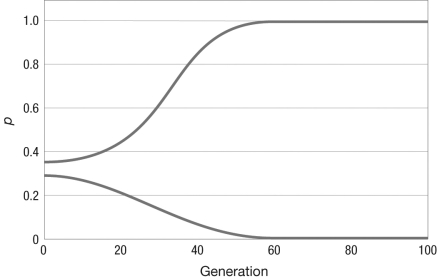
A) underdominance or positive frequency-dependent selection
B) underdominance or overdominance
C) negative frequency-dependent selection or mutation-selection balance
D) directional selection only
A) underdominance or positive frequency-dependent selection
B) underdominance or overdominance
C) negative frequency-dependent selection or mutation-selection balance
D) directional selection only
سؤال
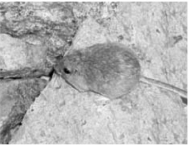
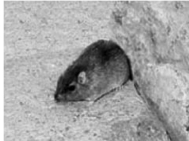
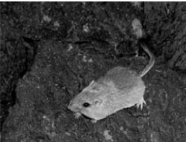
Pocket mice have light- or dark-colored coats and live in dark- or light-colored habitats. Pocket mice whose coat colors match their environment are less susceptible to predation. In the scenarios shown in the figure, which of the following selection coefficients might you expect (on each genotype in each habitat)? A
B
C
D
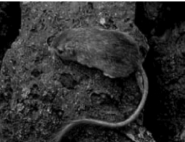
A) A: 1, B: 0, C: 0, D: 1
B) A: 0, B: 0.2, C: 0.1, D: 0
C) A: 0.5, B: 0.2, C: 0, D: 0.5
D) A: 0.1, B: 0, C: 0, D: 0.2
B
C
D
A) A: 1, B: 0, C: 0, D: 1
B) A: 0, B: 0.2, C: 0.1, D: 0
C) A: 0.5, B: 0.2, C: 0, D: 0.5
D) A: 0.1, B: 0, C: 0, D: 0.2
سؤال
سؤال
سؤال
سؤال
سؤال
The table shows the survival and seed production of hybrid and wild sunflowers at three different sites. What do these data demonstrate? 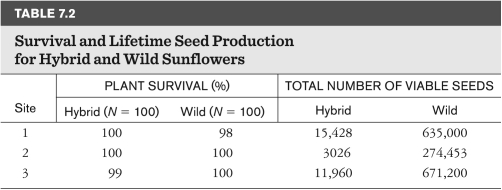
A) Hybrid plants experience reduced fecundity, but similar viability to wild plants.
B) Hybrid plants and wild plants experience no difference in fitness.
C) The fitness of hybrid plants is consistently higher than wild plants across all three sites.
D) Survival and seed production do not affect the fitness of these plants.
A) Hybrid plants experience reduced fecundity, but similar viability to wild plants.
B) Hybrid plants and wild plants experience no difference in fitness.
C) The fitness of hybrid plants is consistently higher than wild plants across all three sites.
D) Survival and seed production do not affect the fitness of these plants.
سؤال
سؤال
سؤال
The figure shows the change in allele frequencies over many generations. What differs between the populations represented by the three colors? 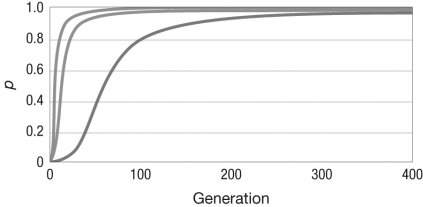
A) the strength of selection
B) whether the allele is dominant or recessive
C) the population size
D) whether selection is frequency dependent or frequency independent
A) the strength of selection
B) whether the allele is dominant or recessive
C) the population size
D) whether selection is frequency dependent or frequency independent
سؤال
سؤال
سؤال
سؤال
سؤال
What type of selection is demonstrated in the figure shown? 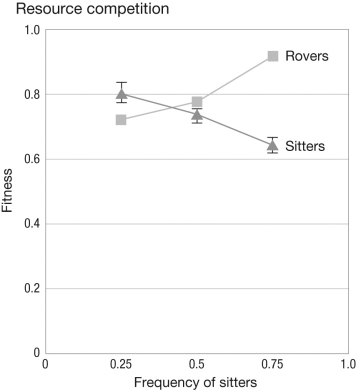
A) overdominance
B) directional selection
C) negative frequency-dependent selection
D) underdominance
A) overdominance
B) directional selection
C) negative frequency-dependent selection
D) underdominance
سؤال
سؤال
سؤال
سؤال
سؤال
سؤال
Consider a locus with two alleles in an island population, where all assumptions of the Hardy-Weinberg model are met except "no migration." The figure shows the change in the frequency of the A1 allele over several generations. What can you say about the population that is the source of migrants to the island? 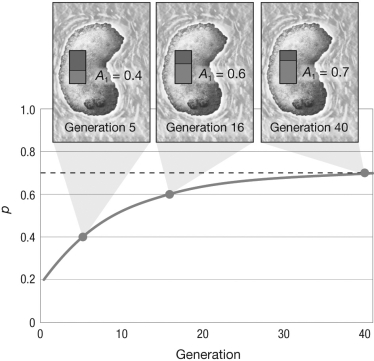
A) The rate of migration in the source population is higher than in the island population.
B) The source population has a higher frequency of the A1 allele at generation zero than the island population.
C) Selection on the A1 allele is stronger in the island population than it is in the source population.
D) The A1 allele is under balancing selection in the source population.
A) The rate of migration in the source population is higher than in the island population.
B) The source population has a higher frequency of the A1 allele at generation zero than the island population.
C) Selection on the A1 allele is stronger in the island population than it is in the source population.
D) The A1 allele is under balancing selection in the source population.
سؤال
سؤال
سؤال
سؤال
سؤال
سؤال
سؤال
The graph shows the relationship between the number of surviving gray wolf pups in a litter and the inbreeding coefficient of those pups. What do these data reveal about the types of alleles present in this population? 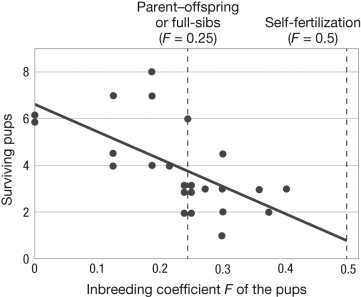
A) There are recessive deleterious alleles present.
B) The population is in Hardy-Weinberg equilibrium.
C) The rate of mutation is very high.
D) Mating is nonrandom with respect to genotype.
A) There are recessive deleterious alleles present.
B) The population is in Hardy-Weinberg equilibrium.
C) The rate of mutation is very high.
D) Mating is nonrandom with respect to genotype.
سؤال
سؤال
سؤال
سؤال
What type of equilibrium does the figure shown represent? If the marble is moved from its current location by a small amount, what will happen to it? 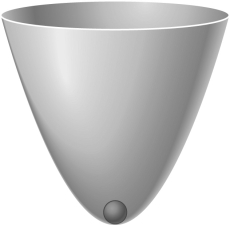
سؤال
سؤال
In the scenario depicted in the figure, what will happen to the allele frequencies on the island? Assume there is no selection or mutation, mating is random, and the population sizes are large. 
A) They will become more similar to those on the mainland.
B) They will remain at their current frequencies.
C) The A2 allele will go to fixation.
D) We cannot predict how the allele frequencies will change.
A) They will become more similar to those on the mainland.
B) They will remain at their current frequencies.
C) The A2 allele will go to fixation.
D) We cannot predict how the allele frequencies will change.
سؤال
سؤال
سؤال
سؤال
سؤال
سؤال
سؤال
سؤال
سؤال
سؤال
سؤال

فتح الحزمة
قم بالتسجيل لفتح البطاقات في هذه المجموعة!
Unlock Deck
Unlock Deck
1/46

العب

ملء الشاشة (f)
Deck 7: The Genetics of Populations
1
Which of the following is an assumption of the Hardy-Weinberg model?
A) Allele frequencies do not change over time.
B) Mating is random with respect to genotype.
C) Variation is introduced to the population by mutation only.
D) Natural selection eliminates deleterious alleles.
A) Allele frequencies do not change over time.
B) Mating is random with respect to genotype.
C) Variation is introduced to the population by mutation only.
D) Natural selection eliminates deleterious alleles.
B
2
The figure shows the allele frequency trajectories for two populations starting from two different initial frequencies. Which evolutionary processes could produce this result?
A) underdominance or positive frequency-dependent selection
B) underdominance or overdominance
C) negative frequency-dependent selection or mutation-selection balance
D) directional selection only
A) underdominance or positive frequency-dependent selection
B) underdominance or overdominance
C) negative frequency-dependent selection or mutation-selection balance
D) directional selection only
A
3
Pocket mice have light- or dark-colored coats and live in dark- or light-colored habitats. Pocket mice whose coat colors match their environment are less susceptible to predation. In the scenarios shown in the figure, which of the following selection coefficients might you expect (on each genotype in each habitat)? A
B
C
D
A) A: 1, B: 0, C: 0, D: 1
B) A: 0, B: 0.2, C: 0.1, D: 0
C) A: 0.5, B: 0.2, C: 0, D: 0.5
D) A: 0.1, B: 0, C: 0, D: 0.2
B
C
D
A) A: 1, B: 0, C: 0, D: 1
B) A: 0, B: 0.2, C: 0.1, D: 0
C) A: 0.5, B: 0.2, C: 0, D: 0.5
D) A: 0.1, B: 0, C: 0, D: 0.2
A: 0, B: 0.2, C: 0.1, D: 0
4
A sample of 2,000 individuals from a human population was scored for MN blood group. The following frequencies were found: 1,600 MM, 250 MN, and 150 NN. How do these numbers compare to those expected under Hardy-Weinberg equilibrium?
A) The genotype frequencies match the expectation.
B) The population has fewer MM homozygotes than expected.
C) The population has more N alleles than expected.
D) The population has fewer MN heterozygotes than expected.
A) The genotype frequencies match the expectation.
B) The population has fewer MM homozygotes than expected.
C) The population has more N alleles than expected.
D) The population has fewer MN heterozygotes than expected.
فتح الحزمة
افتح القفل للوصول البطاقات البالغ عددها 46 في هذه المجموعة.
فتح الحزمة
k this deck
5
What kind of equilibrium does overdominance produce?
A) mixed
B) neutral
C) stable
D) unstable
A) mixed
B) neutral
C) stable
D) unstable
فتح الحزمة
افتح القفل للوصول البطاقات البالغ عددها 46 في هذه المجموعة.
فتح الحزمة
k this deck
6
Stalk height in sunflowers is determined by two alleles at a locus, T and t, which display incomplete dominance. TT individuals are tall, Tt are medium, and tt are short. In a population that is in Hardy-Weinberg equilibrium, we count 1,546 short plants out of 9,666. How many plants do you expect to be tall?
A) 4,640
B) 1,546
C) 3,480
D) 0.36
A) 4,640
B) 1,546
C) 3,480
D) 0.36
فتح الحزمة
افتح القفل للوصول البطاقات البالغ عددها 46 في هذه المجموعة.
فتح الحزمة
k this deck
7
Natural selection can act on both ________, which is the probability of survival, and ________, which is the number of offspring produced.
A) epistasis; epigenetics
B) directional selection, frequency-dependent selection
C) livelihood; income
D) viability; fecundity
A) epistasis; epigenetics
B) directional selection, frequency-dependent selection
C) livelihood; income
D) viability; fecundity
فتح الحزمة
افتح القفل للوصول البطاقات البالغ عددها 46 في هذه المجموعة.
فتح الحزمة
k this deck
8
The table shows the survival and seed production of hybrid and wild sunflowers at three different sites. What do these data demonstrate?
A) Hybrid plants experience reduced fecundity, but similar viability to wild plants.
B) Hybrid plants and wild plants experience no difference in fitness.
C) The fitness of hybrid plants is consistently higher than wild plants across all three sites.
D) Survival and seed production do not affect the fitness of these plants.
A) Hybrid plants experience reduced fecundity, but similar viability to wild plants.
B) Hybrid plants and wild plants experience no difference in fitness.
C) The fitness of hybrid plants is consistently higher than wild plants across all three sites.
D) Survival and seed production do not affect the fitness of these plants.
فتح الحزمة
افتح القفل للوصول البطاقات البالغ عددها 46 في هذه المجموعة.
فتح الحزمة
k this deck
9
Consider a locus with two alleles, A and
A) The fitness of AA and Aa individuals are higher than the fitness of aa individuals.
A) Under which of the following scenarios will the frequency of the A allele increase?
B) The fitness of heterozygotes is higher than the fitness of either homozygote.
C) The fitness of heterozygotes is lower than the fitness of either homozygote.
D) The fitness of aa individuals is higher than the fitness of Aa and AA individuals.
A) The fitness of AA and Aa individuals are higher than the fitness of aa individuals.
A) Under which of the following scenarios will the frequency of the A allele increase?
B) The fitness of heterozygotes is higher than the fitness of either homozygote.
C) The fitness of heterozygotes is lower than the fitness of either homozygote.
D) The fitness of aa individuals is higher than the fitness of Aa and AA individuals.
فتح الحزمة
افتح القفل للوصول البطاقات البالغ عددها 46 في هذه المجموعة.
فتح الحزمة
k this deck
10
Consider two events that are mutually exclusive, that is, if one occurs, the other cannot occur. The probability that either one will occur is ________, and the probability that both will occur is ________.
A) one; zero
B) the product of their probabilities; one
C) one; the product of their probabilities
D) the sum of their probabilities; zero
A) one; zero
B) the product of their probabilities; one
C) one; the product of their probabilities
D) the sum of their probabilities; zero
فتح الحزمة
افتح القفل للوصول البطاقات البالغ عددها 46 في هذه المجموعة.
فتح الحزمة
k this deck
11
The figure shows the change in allele frequencies over many generations. What differs between the populations represented by the three colors?
A) the strength of selection
B) whether the allele is dominant or recessive
C) the population size
D) whether selection is frequency dependent or frequency independent
A) the strength of selection
B) whether the allele is dominant or recessive
C) the population size
D) whether selection is frequency dependent or frequency independent
فتح الحزمة
افتح القفل للوصول البطاقات البالغ عددها 46 في هذه المجموعة.
فتح الحزمة
k this deck
12
Consider a population that is in Hardy-Weinberg equilibrium at a locus with two alleles, A and a, at frequencies of p and q, respectively. Assuming the population remains in Hardy-Weinberg equilibrium, what is the expected frequency of Aa heterozygotes after 100 generations?
A) 1
B) 2pq
C) 0.5
D) p2
A) 1
B) 2pq
C) 0.5
D) p2
فتح الحزمة
افتح القفل للوصول البطاقات البالغ عددها 46 في هذه المجموعة.
فتح الحزمة
k this deck
13
Which of the following genotypic fitness values would result in the most rapid fixation of the beneficial allele, A?
A) AA: 1.0, Aa: 1.0, aa: 0.8
B) AA: 1.0, Aa: 0.9, aa: 0.8
C) AA: 1.0, Aa: 0.8, aa: 0.8
D) AA: 1.0, Aa: 1.0, aa: 1.0
A) AA: 1.0, Aa: 1.0, aa: 0.8
B) AA: 1.0, Aa: 0.9, aa: 0.8
C) AA: 1.0, Aa: 0.8, aa: 0.8
D) AA: 1.0, Aa: 1.0, aa: 1.0
فتح الحزمة
افتح القفل للوصول البطاقات البالغ عددها 46 في هذه المجموعة.
فتح الحزمة
k this deck
14
Population sex ratios, that is, how many males and females there are in a population, are most likely influenced by which process?
A) assortative mating
B) mutation
C) frequency-dependent selection
D) directional selection
A) assortative mating
B) mutation
C) frequency-dependent selection
D) directional selection
فتح الحزمة
افتح القفل للوصول البطاقات البالغ عددها 46 في هذه المجموعة.
فتح الحزمة
k this deck
15
Proponents of eugenics sought to eliminate alleles for so-called undesirable traits by not allowing people with those traits to reproduce. Which of the following scenarios would prevent the elimination of these alleles?
A) Undesirable traits have high heritability.
B) Undesirable traits are caused by rare, recessive alleles.
C) Undesirable traits occur in large populations.
D) Undesirable traits result in decreased fitness.
A) Undesirable traits have high heritability.
B) Undesirable traits are caused by rare, recessive alleles.
C) Undesirable traits occur in large populations.
D) Undesirable traits result in decreased fitness.
فتح الحزمة
افتح القفل للوصول البطاقات البالغ عددها 46 في هذه المجموعة.
فتح الحزمة
k this deck
16
What type of selection is demonstrated in the figure shown?
A) overdominance
B) directional selection
C) negative frequency-dependent selection
D) underdominance
A) overdominance
B) directional selection
C) negative frequency-dependent selection
D) underdominance
فتح الحزمة
افتح القفل للوصول البطاقات البالغ عددها 46 في هذه المجموعة.
فتح الحزمة
k this deck
17
The null model for population genetics is
A) Mendel's first law.
B) the Hardy-Weinberg model.
C) Newton's first law.
D) biological evolution.
A) Mendel's first law.
B) the Hardy-Weinberg model.
C) Newton's first law.
D) biological evolution.
فتح الحزمة
افتح القفل للوصول البطاقات البالغ عددها 46 في هذه المجموعة.
فتح الحزمة
k this deck
18
Why do you need to use a statistical test (e.g., the chi-square test) to compare the observed genotype frequencies in a population to those expected under Hardy-Weinberg equilibrium?
A) to distinguish between natural selection and other factors that could cause a population to deviate from Hardy-Weinberg equilibrium
B) because it is impossible to know what the observed genotype frequencies are in a population
C) to assess whether the deviation of observed from expected frequencies is likely due to chance
D) because the frequencies expected under Hardy-Weinberg equilibrium are not accurate
A) to distinguish between natural selection and other factors that could cause a population to deviate from Hardy-Weinberg equilibrium
B) because it is impossible to know what the observed genotype frequencies are in a population
C) to assess whether the deviation of observed from expected frequencies is likely due to chance
D) because the frequencies expected under Hardy-Weinberg equilibrium are not accurate
فتح الحزمة
افتح القفل للوصول البطاقات البالغ عددها 46 في هذه المجموعة.
فتح الحزمة
k this deck
19
Mathematical descriptions of evolutionary processes allow biologists to make ________ predictions about how genotype frequencies change over time.
A) quantitative
B) qualitative
C) categorical
D) constrained
A) quantitative
B) qualitative
C) categorical
D) constrained
فتح الحزمة
افتح القفل للوصول البطاقات البالغ عددها 46 في هذه المجموعة.
فتح الحزمة
k this deck
20
Which of the following would best help you predict the fate of an allele in a population?
A) calculate the rate of nonrandom mating
B) determine survival rates of individuals of each genotype
C) determine whether individuals mate randomly with respect to genotype
D) calculate the frequency of each genotype in the population
A) calculate the rate of nonrandom mating
B) determine survival rates of individuals of each genotype
C) determine whether individuals mate randomly with respect to genotype
D) calculate the frequency of each genotype in the population
فتح الحزمة
افتح القفل للوصول البطاقات البالغ عددها 46 في هذه المجموعة.
فتح الحزمة
k this deck
21
Under which scenario will the presence of rare recessive deleterious alleles cause the greatest decline in fitness in a population?
A) when the deleterious allele affects viability but not fecundity
B) when there is a high rate of migration from neighboring populations
C) when the rate of forward and back mutation are nearly equal
D) when mating occurs mostly among close genetic relatives
A) when the deleterious allele affects viability but not fecundity
B) when there is a high rate of migration from neighboring populations
C) when the rate of forward and back mutation are nearly equal
D) when mating occurs mostly among close genetic relatives
فتح الحزمة
افتح القفل للوصول البطاقات البالغ عددها 46 في هذه المجموعة.
فتح الحزمة
k this deck
22
Consider a locus with two alleles in an island population, where all assumptions of the Hardy-Weinberg model are met except "no migration." The figure shows the change in the frequency of the A1 allele over several generations. What can you say about the population that is the source of migrants to the island?
A) The rate of migration in the source population is higher than in the island population.
B) The source population has a higher frequency of the A1 allele at generation zero than the island population.
C) Selection on the A1 allele is stronger in the island population than it is in the source population.
D) The A1 allele is under balancing selection in the source population.
A) The rate of migration in the source population is higher than in the island population.
B) The source population has a higher frequency of the A1 allele at generation zero than the island population.
C) Selection on the A1 allele is stronger in the island population than it is in the source population.
D) The A1 allele is under balancing selection in the source population.
فتح الحزمة
افتح القفل للوصول البطاقات البالغ عددها 46 في هذه المجموعة.
فتح الحزمة
k this deck
23
The Hardy-Weinberg model assumes that none of the five important evolutionary processes are operating. What are those processes?
فتح الحزمة
افتح القفل للوصول البطاقات البالغ عددها 46 في هذه المجموعة.
فتح الحزمة
k this deck
24
Which of the following processes will result in more heterozygotes than expected under Hardy-Weinberg?
A) disassortative mating
B) directional selection
C) frequency-dependent selection
D) mutation
A) disassortative mating
B) directional selection
C) frequency-dependent selection
D) mutation
فتح الحزمة
افتح القفل للوصول البطاقات البالغ عددها 46 في هذه المجموعة.
فتح الحزمة
k this deck
25
Consider a locus with two alleles, A and A) If the rate of mutation of A to a is 0.0000025 and the rate of mutation of a to A is 0.0000010, what will be the equilibrium frequency of the A allele? (Recall that the equilibrium allele frequency under mutation is p*= v+ ( v), where p*is the equilibrium frequency of the A allele, is the rate of mutation from A to a, and v is the rate of mutation from a to
A) 0.0407
B) 0.1298
C) 0.2857
D) 0.3869
A) 0.0407
B) 0.1298
C) 0.2857
D) 0.3869
فتح الحزمة
افتح القفل للوصول البطاقات البالغ عددها 46 في هذه المجموعة.
فتح الحزمة
k this deck
26
Which of the following processes can increase genetic variation in a population?
A) mutation and migration
B) directional selection and positive frequency-dependent selection
C) assortative and disassortative mating
D) Hardy-Weinberg equilibrium
A) mutation and migration
B) directional selection and positive frequency-dependent selection
C) assortative and disassortative mating
D) Hardy-Weinberg equilibrium
فتح الحزمة
افتح القفل للوصول البطاقات البالغ عددها 46 في هذه المجموعة.
فتح الحزمة
k this deck
27
Considering any field of science, why is it useful to have a null model, and how is a null model applied?
فتح الحزمة
افتح القفل للوصول البطاقات البالغ عددها 46 في هذه المجموعة.
فتح الحزمة
k this deck
28
Under ________ individuals tend to mate with others of the same genotype. Under ________ individuals tend to mate with others of different genotypes.
A) natural selection; Hardy-Weinberg equilibrium
B) directional selection; balancing selection
C) assortative mating; disassortative mating
D) outbreeding; inbreeding
A) natural selection; Hardy-Weinberg equilibrium
B) directional selection; balancing selection
C) assortative mating; disassortative mating
D) outbreeding; inbreeding
فتح الحزمة
افتح القفل للوصول البطاقات البالغ عددها 46 في هذه المجموعة.
فتح الحزمة
k this deck
29
The graph shows the relationship between the number of surviving gray wolf pups in a litter and the inbreeding coefficient of those pups. What do these data reveal about the types of alleles present in this population?
A) There are recessive deleterious alleles present.
B) The population is in Hardy-Weinberg equilibrium.
C) The rate of mutation is very high.
D) Mating is nonrandom with respect to genotype.
A) There are recessive deleterious alleles present.
B) The population is in Hardy-Weinberg equilibrium.
C) The rate of mutation is very high.
D) Mating is nonrandom with respect to genotype.
فتح الحزمة
افتح القفل للوصول البطاقات البالغ عددها 46 في هذه المجموعة.
فتح الحزمة
k this deck
30
Inbreeding increases the frequency of ________ in a population.
A) heterozygotes
B) the dominant allele
C) homozygotes
D) the recessive allele
A) heterozygotes
B) the dominant allele
C) homozygotes
D) the recessive allele
فتح الحزمة
افتح القفل للوصول البطاقات البالغ عددها 46 في هذه المجموعة.
فتح الحزمة
k this deck
31
Why is underdominance so rare in natural populations?
فتح الحزمة
افتح القفل للوصول البطاقات البالغ عددها 46 في هذه المجموعة.
فتح الحزمة
k this deck
32
The rate of mutation to a recessive lethal allele is 0.000001. What is the equilibrium frequency this allele? (Recall that the equilibrium frequency for a recessive allele under mutation-selection balance is q = /s, where is the rate of mutation to the disease allele and s is the selection coefficient against that allele. In the case of a lethal allele, s = 1.)
A) 0.001
B) 0.000001
C) 0.1
D) 1.0
A) 0.001
B) 0.000001
C) 0.1
D) 1.0
فتح الحزمة
افتح القفل للوصول البطاقات البالغ عددها 46 في هذه المجموعة.
فتح الحزمة
k this deck
33
What type of equilibrium does the figure shown represent? If the marble is moved from its current location by a small amount, what will happen to it?
فتح الحزمة
افتح القفل للوصول البطاقات البالغ عددها 46 في هذه المجموعة.
فتح الحزمة
k this deck
34
Which of the following is a consequence of recessive deleterious alleles in a population?
A) an increase in the frequency of the recessive allele
B) reduced fitness of the population when there is inbreeding
C) an increase in genetic variation due to mutation and migration
D) Mutation-selection balance results in the loss of beneficial alleles.
A) an increase in the frequency of the recessive allele
B) reduced fitness of the population when there is inbreeding
C) an increase in genetic variation due to mutation and migration
D) Mutation-selection balance results in the loss of beneficial alleles.
فتح الحزمة
افتح القفل للوصول البطاقات البالغ عددها 46 في هذه المجموعة.
فتح الحزمة
k this deck
35
In the scenario depicted in the figure, what will happen to the allele frequencies on the island? Assume there is no selection or mutation, mating is random, and the population sizes are large.
A) They will become more similar to those on the mainland.
B) They will remain at their current frequencies.
C) The A2 allele will go to fixation.
D) We cannot predict how the allele frequencies will change.
A) They will become more similar to those on the mainland.
B) They will remain at their current frequencies.
C) The A2 allele will go to fixation.
D) We cannot predict how the allele frequencies will change.
فتح الحزمة
افتح القفل للوصول البطاقات البالغ عددها 46 في هذه المجموعة.
فتح الحزمة
k this deck
36
What is the main difference between transmission genetics and population genetics?
فتح الحزمة
افتح القفل للوصول البطاقات البالغ عددها 46 في هذه المجموعة.
فتح الحزمة
k this deck
37
Five percent of quarter horses in the United States are heterozygous for the recessive lethal allele that causes glycogen branching enzyme deficiency (GBED). Assuming that quarter horses are randomly mated, this means that the frequency of this allele is q = 0.025. If the GBED allele is maintained in the population by mutation-selection balance, what is the mutation rate to the disease allele? (Recall that the equilibrium frequency for a recessive allele under mutation-selection balance is q = /s, where is the rate of mutation to the disease allele and s is the selection coefficient against that allele. In the case of a lethal allele, s =1.)
A) 0.025
B) 0.95
C) 0.00475
D) 0.000625
A) 0.025
B) 0.95
C) 0.00475
D) 0.000625
فتح الحزمة
افتح القفل للوصول البطاقات البالغ عددها 46 في هذه المجموعة.
فتح الحزمة
k this deck
38
In what way is Hardy-Weinberg equilibrium a mixed equilibrium?
فتح الحزمة
افتح القفل للوصول البطاقات البالغ عددها 46 في هذه المجموعة.
فتح الحزمة
k this deck
39
Describe how to determine whether a population is in Hardy-Weinberg equilibrium at a locus with two incompletely dominant alleles. For example, imagine that flower color is controlled by two alleles, R and W. Individuals with the RR genotype have red flowers; those with WW have white flowers; and heterozygotes (RW) have pink flowers.
فتح الحزمة
افتح القفل للوصول البطاقات البالغ عددها 46 في هذه المجموعة.
فتح الحزمة
k this deck
40
Consider a locus with two alleles, A and A. If the rate of mutation from A to a is twice the rate from a to A, what will be the equilibrium frequency of the A allele? (Assume that there are no other evolutionary forces acting on these alleles. Recall that the equilibrium allele frequency under mutation is p*=v( + v), where p* is the equilibrium frequency of the A allele, is the rate of mutation from A to a, and v is the rate of mutation from a to A.
A) 1.0
B) 1/2
C) 1/3
D) 0
A) 1.0
B) 1/2
C) 1/3
D) 0
فتح الحزمة
افتح القفل للوصول البطاقات البالغ عددها 46 في هذه المجموعة.
فتح الحزمة
k this deck
41
Consider a population where individuals preferentially mate with other individuals of the same genotype. If the population starts in Hardy-Weinberg equilibrium, will this mating strategy result in changes in allele frequencies? Why or why not?
فتح الحزمة
افتح القفل للوصول البطاقات البالغ عددها 46 في هذه المجموعة.
فتح الحزمة
k this deck
42
Under mutation-selection balance, even if an allele has a selective advantage it will never be fixed in a population. Explain why this is true.
فتح الحزمة
افتح القفل للوصول البطاقات البالغ عددها 46 في هذه المجموعة.
فتح الحزمة
k this deck
43
Consider a beneficial allele in a population at a frequency of 0.9. Will that allele go to fixation more quickly if it is recessive or dominant? Explain why.
فتح الحزمة
افتح القفل للوصول البطاقات البالغ عددها 46 في هذه المجموعة.
فتح الحزمة
k this deck
44
What are the effects of natural selection, mutation, and migration on the amount of genetic variation within and between populations?
فتح الحزمة
افتح القفل للوصول البطاقات البالغ عددها 46 في هذه المجموعة.
فتح الحزمة
k this deck
45
Does mutation change genotype frequencies from Hardy-Weinberg equilibrium? Why or why not?
فتح الحزمة
افتح القفل للوصول البطاقات البالغ عددها 46 في هذه المجموعة.
فتح الحزمة
k this deck
46
What does it mean for two alleles to be identical by descent?
فتح الحزمة
افتح القفل للوصول البطاقات البالغ عددها 46 في هذه المجموعة.
فتح الحزمة
k this deck
فتح الحزمة
افتح القفل للوصول البطاقات البالغ عددها 46 في هذه المجموعة.






