







 تكلم مع الذكاء الاصطناعي


Deck 4: Inside the Cell
ملء الشاشة (f)

سؤال

سؤال
سؤال
Plant cells can communicate with each other via ________, as indicated by the arrow in the figure. 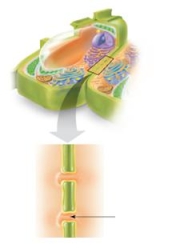
A) plasmodesmata
B) fimbriae
C) centrioles
D) cytoskeleton
E) pili
A) plasmodesmata
B) fimbriae
C) centrioles
D) cytoskeleton
E) pili
سؤال
سؤال
سؤال
سؤال
سؤال
سؤال
سؤال
سؤال
سؤال
سؤال
سؤال
The stack of thylakoids labeled "A" in this figure is called 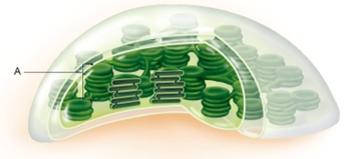
A) chloroplast.
B) thylakoid space.
C) granum.
D) cristae.
E) stroma.
A) chloroplast.
B) thylakoid space.
C) granum.
D) cristae.
E) stroma.
سؤال
Below is a diagram of a bacterium. What structure does Y represent? 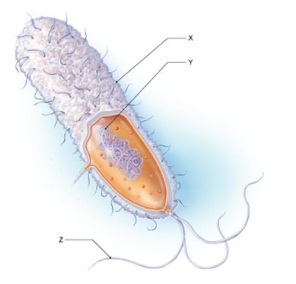
A) capsule
B) flagella
C) nucleoid
D) cell wall
E) fimbriae
A) capsule
B) flagella
C) nucleoid
D) cell wall
E) fimbriae
سؤال
سؤال
سؤال
سؤال
سؤال
سؤال
سؤال
سؤال
سؤال
سؤال
سؤال
سؤال
سؤال
سؤال
What does the folding of the mitochondrial inner membrane, shown here, provide? 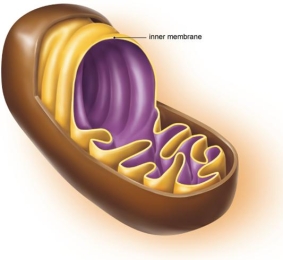
A) greater ability to allow for osmosis
B) increased surface area for photosynthesis
C) greater ability to remove waste from the cell cytosol
D) greater surface area for ATP production
E) increased space for protein synthesis
A) greater ability to allow for osmosis
B) increased surface area for photosynthesis
C) greater ability to remove waste from the cell cytosol
D) greater surface area for ATP production
E) increased space for protein synthesis
سؤال
سؤال
سؤال
سؤال
سؤال
سؤال
سؤال
سؤال
سؤال
سؤال
سؤال
سؤال
سؤال
سؤال
سؤال
سؤال
سؤال
سؤال
سؤال
سؤال
سؤال
سؤال
سؤال
سؤال
سؤال
سؤال
سؤال
سؤال
سؤال
سؤال
سؤال
سؤال
سؤال
سؤال
سؤال

فتح الحزمة
قم بالتسجيل لفتح البطاقات في هذه المجموعة!
Unlock Deck
Unlock Deck
1/64

العب

ملء الشاشة (f)
Deck 4: Inside the Cell
1
Which of the following is not a type of intracellular protein?
A) actin filaments
B) myosin
C) cellulose
D) microtubules
E) kinesin
A) actin filaments
B) myosin
C) cellulose
D) microtubules
E) kinesin
C
Explanation: Intracellular proteins are comprised of an assorted number of protein filaments and tubules including actin, myosin, microtubules, and keratin among others. Cellulose is a polysaccharide form of carbohydrate that is a principle component to cell walls.
Explanation: Intracellular proteins are comprised of an assorted number of protein filaments and tubules including actin, myosin, microtubules, and keratin among others. Cellulose is a polysaccharide form of carbohydrate that is a principle component to cell walls.
2
In which way are vesicles different from vacuoles?
A) They are not made from membranes.
B) They are smaller.
C) Vesicles are more specialized than vacuoles.
D) They are most often involved in storage.
E) They are primarily found in plant cells.
A) They are not made from membranes.
B) They are smaller.
C) Vesicles are more specialized than vacuoles.
D) They are most often involved in storage.
E) They are primarily found in plant cells.
B
Explanation: Vacuoles, like vesicles, are membranous sacs, but vacuoles are larger than vesicles and are often quite specialized. They are most often seen in plant cells.
Explanation: Vacuoles, like vesicles, are membranous sacs, but vacuoles are larger than vesicles and are often quite specialized. They are most often seen in plant cells.
3
Plant cells can communicate with each other via ________, as indicated by the arrow in the figure.
A) plasmodesmata
B) fimbriae
C) centrioles
D) cytoskeleton
E) pili
A) plasmodesmata
B) fimbriae
C) centrioles
D) cytoskeleton
E) pili
A
Explanation: Plasmodesmata are numerous narrow, membrane-lines channels that pass through the cell wall allowing for direct exchange of some materials between adjacent plant cells.
Explanation: Plasmodesmata are numerous narrow, membrane-lines channels that pass through the cell wall allowing for direct exchange of some materials between adjacent plant cells.
4
Some proteins within a cell can be viewed with
A) the human eye.
B) an electron microscope.
C) a light microscope.
D) a magnifying glass.
E) a dissecting microscope.
A) the human eye.
B) an electron microscope.
C) a light microscope.
D) a magnifying glass.
E) a dissecting microscope.
فتح الحزمة
افتح القفل للوصول البطاقات البالغ عددها 64 في هذه المجموعة.
فتح الحزمة
k this deck
5
Both plants and animals need mitochondria to
A) produce glucose.
B) produce ATP.
C) produce lipids.
D) break down proteins.
E) manufacture phospholipids.
A) produce glucose.
B) produce ATP.
C) produce lipids.
D) break down proteins.
E) manufacture phospholipids.
فتح الحزمة
افتح القفل للوصول البطاقات البالغ عددها 64 في هذه المجموعة.
فتح الحزمة
k this deck
6
Where do the vesicles that are being made for secretion from the cell become modified and packaged?
A) smooth ER
B) rough ER
C) Golgi apparatus
D) ribosomes
E) plasma membrane
A) smooth ER
B) rough ER
C) Golgi apparatus
D) ribosomes
E) plasma membrane
فتح الحزمة
افتح القفل للوصول البطاقات البالغ عددها 64 في هذه المجموعة.
فتح الحزمة
k this deck
7
Which of the following is an incorrect match?
A) ribosomes - protein synthesis
B) Golgi apparatus - protein alteration and packaging
C) mitochondria - production of cellular ATP
D) lysosomes - cellular digestion
E) smooth endoplasmic reticulum - storage of water
A) ribosomes - protein synthesis
B) Golgi apparatus - protein alteration and packaging
C) mitochondria - production of cellular ATP
D) lysosomes - cellular digestion
E) smooth endoplasmic reticulum - storage of water
فتح الحزمة
افتح القفل للوصول البطاقات البالغ عددها 64 في هذه المجموعة.
فتح الحزمة
k this deck
8
Without tight junctions in certain tissues,
A) cells would not be able to communicate with each other.
B) fluids may leak out past the barrier the junction would create.
C) the tissues would not be able to expand and stretch without damage.
D) nutrients would not be able to be passed from cell to cell.
E) cells would not be able to migrate during their development.
A) cells would not be able to communicate with each other.
B) fluids may leak out past the barrier the junction would create.
C) the tissues would not be able to expand and stretch without damage.
D) nutrients would not be able to be passed from cell to cell.
E) cells would not be able to migrate during their development.
فتح الحزمة
افتح القفل للوصول البطاقات البالغ عددها 64 في هذه المجموعة.
فتح الحزمة
k this deck
9
Eukaryotic cells move their organelles using
A) the cytoskeleton.
B) the endomembrane system.
C) cilia.
D) the plasma membrane.
E) flagella.
A) the cytoskeleton.
B) the endomembrane system.
C) cilia.
D) the plasma membrane.
E) flagella.
فتح الحزمة
افتح القفل للوصول البطاقات البالغ عددها 64 في هذه المجموعة.
فتح الحزمة
k this deck
10
Which of the following is the correct sequence for an altered protein that is secreted from the cell?
A) rough endoplasmic reticulum - Golgi apparatus - plasma membrane
B) Golgi apparatus - ribosome - plasma membrane
C) nucleus - smooth endoplasmic reticulum - Golgi apparatus
D) Golgi apparatus - smooth endoplasmic reticulum - plasma membrane
E) smooth endoplasmic reticulum - plasma membrane - Golgi apparatus - ribosome
A) rough endoplasmic reticulum - Golgi apparatus - plasma membrane
B) Golgi apparatus - ribosome - plasma membrane
C) nucleus - smooth endoplasmic reticulum - Golgi apparatus
D) Golgi apparatus - smooth endoplasmic reticulum - plasma membrane
E) smooth endoplasmic reticulum - plasma membrane - Golgi apparatus - ribosome
فتح الحزمة
افتح القفل للوصول البطاقات البالغ عددها 64 في هذه المجموعة.
فتح الحزمة
k this deck
11
Which of the following structures would not be found in a prokaryotic cell?
A) cell membrane
B) nucleus
C) ribosomes
D) flagella
E) chromosomes
A) cell membrane
B) nucleus
C) ribosomes
D) flagella
E) chromosomes
فتح الحزمة
افتح القفل للوصول البطاقات البالغ عددها 64 في هذه المجموعة.
فتح الحزمة
k this deck
12
Chromosomes are made from
A) condensed vesicles.
B) expanded ribosomes.
C) expanded polysaccharides.
D) condensed chromatin.
E) cell recognition proteins.
A) condensed vesicles.
B) expanded ribosomes.
C) expanded polysaccharides.
D) condensed chromatin.
E) cell recognition proteins.
فتح الحزمة
افتح القفل للوصول البطاقات البالغ عددها 64 في هذه المجموعة.
فتح الحزمة
k this deck
13
Without receptor proteins, a cell would not be able to
A) transport water into the cytoplasm.
B) bind to signal proteins from other parts of the body.
C) allow the passage of H+ ions into the cell.
D) perform metabolic reactions.
E) divide.
A) transport water into the cytoplasm.
B) bind to signal proteins from other parts of the body.
C) allow the passage of H+ ions into the cell.
D) perform metabolic reactions.
E) divide.
فتح الحزمة
افتح القفل للوصول البطاقات البالغ عددها 64 في هذه المجموعة.
فتح الحزمة
k this deck
14
The stack of thylakoids labeled "A" in this figure is called
A) chloroplast.
B) thylakoid space.
C) granum.
D) cristae.
E) stroma.
A) chloroplast.
B) thylakoid space.
C) granum.
D) cristae.
E) stroma.
فتح الحزمة
افتح القفل للوصول البطاقات البالغ عددها 64 في هذه المجموعة.
فتح الحزمة
k this deck
15
Below is a diagram of a bacterium. What structure does Y represent?
A) capsule
B) flagella
C) nucleoid
D) cell wall
E) fimbriae
A) capsule
B) flagella
C) nucleoid
D) cell wall
E) fimbriae
فتح الحزمة
افتح القفل للوصول البطاقات البالغ عددها 64 في هذه المجموعة.
فتح الحزمة
k this deck
16
Chloroplasts and mitochondria are similar in that they both
A) contain DNA.
B) are involved in protein production for the cell.
C) are involved in cellular waste processing.
D) are membranous sacs involved in storage.
E) are involved in helping to maintain cell shape.
A) contain DNA.
B) are involved in protein production for the cell.
C) are involved in cellular waste processing.
D) are membranous sacs involved in storage.
E) are involved in helping to maintain cell shape.
فتح الحزمة
افتح القفل للوصول البطاقات البالغ عددها 64 في هذه المجموعة.
فتح الحزمة
k this deck
17
Which of the following is a correct matching of an organelle and its function?
A) Golgi apparatus - protein synthesis
B) mitochondrion - cellular respiration
C) lysosome - transport
D) vacuole - control center
E) endoplasmic reticulum - houses DNA
A) Golgi apparatus - protein synthesis
B) mitochondrion - cellular respiration
C) lysosome - transport
D) vacuole - control center
E) endoplasmic reticulum - houses DNA
فتح الحزمة
افتح القفل للوصول البطاقات البالغ عددها 64 في هذه المجموعة.
فتح الحزمة
k this deck
18
Which of the following is an incorrect match of molecule to the location where it is principally used?
A) DNA - nucleus
B) mRNA - nucleus and cytoplasm
C) rRNA - cytoplasm
D) glucose - lysosome
E) proteins - ribosome
A) DNA - nucleus
B) mRNA - nucleus and cytoplasm
C) rRNA - cytoplasm
D) glucose - lysosome
E) proteins - ribosome
فتح الحزمة
افتح القفل للوصول البطاقات البالغ عددها 64 في هذه المجموعة.
فتح الحزمة
k this deck
19
Which of the following is not a possible function of the extracellular matrix in animal cells?
A) enables cells to migrate along intracellular fibers
B) permits communication between the extracellular matrix and the cells
C) creates a variety of consistencies for cells to live in, from flexible cartilage to solid bone
D) helps cells have flexibility
E) produces numerous channels for continuous flow of water from cell to cell
A) enables cells to migrate along intracellular fibers
B) permits communication between the extracellular matrix and the cells
C) creates a variety of consistencies for cells to live in, from flexible cartilage to solid bone
D) helps cells have flexibility
E) produces numerous channels for continuous flow of water from cell to cell
فتح الحزمة
افتح القفل للوصول البطاقات البالغ عددها 64 في هذه المجموعة.
فتح الحزمة
k this deck
20
Which of the following organelles would form a membrane-bound package, also known as a vesicle?
A) Golgi apparatus
B) lysosomes
C) mitochondria
D) ribosomes
E) chloroplasts
A) Golgi apparatus
B) lysosomes
C) mitochondria
D) ribosomes
E) chloroplasts
فتح الحزمة
افتح القفل للوصول البطاقات البالغ عددها 64 في هذه المجموعة.
فتح الحزمة
k this deck
21
There is an antibiotic called streptomycin that doctors prescribe for infection. The antibiotic combines with the bacteria's ribosomes causing them to lose their function. Consequently, the cells die and the person gets better. In other words, the antibiotic destroys bacteria by
A) stopping photosynthesis.
B) preventing them from packaging materials.
C) stopping the production of ATP energy.
D) not allowing them to produce proteins.
E) stopping them from being able to move.
A) stopping photosynthesis.
B) preventing them from packaging materials.
C) stopping the production of ATP energy.
D) not allowing them to produce proteins.
E) stopping them from being able to move.
فتح الحزمة
افتح القفل للوصول البطاقات البالغ عددها 64 في هذه المجموعة.
فتح الحزمة
k this deck
22
Which of the following statements describes the function of a chloroplast?
A) It converts light energy into chemical energy.
B) It aids in intracellular digestion.
C) It manufactures proteins.
D) It converts chemical energy into heat energy.
E) It stores water.
A) It converts light energy into chemical energy.
B) It aids in intracellular digestion.
C) It manufactures proteins.
D) It converts chemical energy into heat energy.
E) It stores water.
فتح الحزمة
افتح القفل للوصول البطاقات البالغ عددها 64 في هذه المجموعة.
فتح الحزمة
k this deck
23
Which organelle is required for producing ATP for cellular work?
A) nucleus
B) vacuole
C) mitochondria
D) Golgi apparatus
E) chloroplast
A) nucleus
B) vacuole
C) mitochondria
D) Golgi apparatus
E) chloroplast
فتح الحزمة
افتح القفل للوصول البطاقات البالغ عددها 64 في هذه المجموعة.
فتح الحزمة
k this deck
24
Mitochondria and chloroplasts are similar in that they both ________, but are different in that mitochondria, but not chloroplasts, ________.
A) are involved in energy conversions; are found in nearly all eukaryotic cells
B) are found in bacteria; are used to capture radiant energy and convert it into chemical energy
C) are organelles involved in the production of proteins; are found in animal cells
D) produce glucose needed for cellular processes; are found in plant cells
E) are responsible for cell movements; help to produce the microtubules seen in cilia
A) are involved in energy conversions; are found in nearly all eukaryotic cells
B) are found in bacteria; are used to capture radiant energy and convert it into chemical energy
C) are organelles involved in the production of proteins; are found in animal cells
D) produce glucose needed for cellular processes; are found in plant cells
E) are responsible for cell movements; help to produce the microtubules seen in cilia
فتح الحزمة
افتح القفل للوصول البطاقات البالغ عددها 64 في هذه المجموعة.
فتح الحزمة
k this deck
25
Which statement below is correct when comparing plant and animal cells?
A) Plant cells only have a cell wall, and animal cells only have a plasma membrane.
B) Plant cells only have a plasma membrane, and animal cells only have a cell wall.
C) Both plant and animal cells have a plasma membrane, and plant cells also have a cell wall.
D) Both plant and animal cells have a plasma membrane and a cell wall.
E) Both plant and animal cells have a cell wall, but only animal cells have a plasma membrane.
A) Plant cells only have a cell wall, and animal cells only have a plasma membrane.
B) Plant cells only have a plasma membrane, and animal cells only have a cell wall.
C) Both plant and animal cells have a plasma membrane, and plant cells also have a cell wall.
D) Both plant and animal cells have a plasma membrane and a cell wall.
E) Both plant and animal cells have a cell wall, but only animal cells have a plasma membrane.
فتح الحزمة
افتح القفل للوصول البطاقات البالغ عددها 64 في هذه المجموعة.
فتح الحزمة
k this deck
26
A cell being observed under a microscope has a cell wall, plasma membrane, ribosomes, and chromosomal material that is not found in a nucleus. Based on this information, the cell could be a
A) cell from a cactus.
B) cell from a mushroom.
C) bacterial cell.
D) cell from a fish.
E) cell from a paramecium.
A) cell from a cactus.
B) cell from a mushroom.
C) bacterial cell.
D) cell from a fish.
E) cell from a paramecium.
فتح الحزمة
افتح القفل للوصول البطاقات البالغ عددها 64 في هذه المجموعة.
فتح الحزمة
k this deck
27
What function does the nucleolus have?
A) houses the chromatin
B) prepares products for export from the cell
C) contains enzymes for intracellular digestion
D) contains the majority of cellular DNA
E) codes for the synthesis of ribosomal RNA
A) houses the chromatin
B) prepares products for export from the cell
C) contains enzymes for intracellular digestion
D) contains the majority of cellular DNA
E) codes for the synthesis of ribosomal RNA
فتح الحزمة
افتح القفل للوصول البطاقات البالغ عددها 64 في هذه المجموعة.
فتح الحزمة
k this deck
28
What must materials pass through to enter or leave a cell?
A) ribosome
B) nucleus
C) plasma membrane
D) lysosome
E) vacuole
A) ribosome
B) nucleus
C) plasma membrane
D) lysosome
E) vacuole
فتح الحزمة
افتح القفل للوصول البطاقات البالغ عددها 64 في هذه المجموعة.
فتح الحزمة
k this deck
29
What does the folding of the mitochondrial inner membrane, shown here, provide?
A) greater ability to allow for osmosis
B) increased surface area for photosynthesis
C) greater ability to remove waste from the cell cytosol
D) greater surface area for ATP production
E) increased space for protein synthesis
A) greater ability to allow for osmosis
B) increased surface area for photosynthesis
C) greater ability to remove waste from the cell cytosol
D) greater surface area for ATP production
E) increased space for protein synthesis
فتح الحزمة
افتح القفل للوصول البطاقات البالغ عددها 64 في هذه المجموعة.
فتح الحزمة
k this deck
30
A general eukaryotic cell is typically in the area of
A) 0-1 mm.
B) 1-10 nm.
C) 1-10 micrometers.
D) 10-100 micrometers.
E) 10-100 mm.
A) 0-1 mm.
B) 1-10 nm.
C) 1-10 micrometers.
D) 10-100 micrometers.
E) 10-100 mm.
فتح الحزمة
افتح القفل للوصول البطاقات البالغ عددها 64 في هذه المجموعة.
فتح الحزمة
k this deck
31
Carrie would like to observe the cilia on the surface of a live paramecium- a single-celled organism. The best device to do this would be a
A) light microscope.
B) electron microscope.
C) magnifying glass.
D) unaided eye.
E) dissecting microscope.
A) light microscope.
B) electron microscope.
C) magnifying glass.
D) unaided eye.
E) dissecting microscope.
فتح الحزمة
افتح القفل للوصول البطاقات البالغ عددها 64 في هذه المجموعة.
فتح الحزمة
k this deck
32
Which of the following organelles is not involved in producing substances needed by a cell?
A) smooth endoplasmic reticulum
B) lysosome
C) ribosome
D) rough endoplasmic reticulum
E) peroxisome
A) smooth endoplasmic reticulum
B) lysosome
C) ribosome
D) rough endoplasmic reticulum
E) peroxisome
فتح الحزمة
افتح القفل للوصول البطاقات البالغ عددها 64 في هذه المجموعة.
فتح الحزمة
k this deck
33
Resolving power is the
A) ability to tell two points apart as separate points.
B) ability to make an object larger.
C) focusing mechanism used to bring objects clearly into view.
D) optimum power used to most clearly view the entire specimen.
E) depth of the specimen clearly in focus.
A) ability to tell two points apart as separate points.
B) ability to make an object larger.
C) focusing mechanism used to bring objects clearly into view.
D) optimum power used to most clearly view the entire specimen.
E) depth of the specimen clearly in focus.
فتح الحزمة
افتح القفل للوصول البطاقات البالغ عددها 64 في هذه المجموعة.
فتح الحزمة
k this deck
34
Which of the following human cells would contain cilia?
A) red blood cell
B) sperm
C) cell from the trachea windpipe)
D) neuron
E) bone cell
A) red blood cell
B) sperm
C) cell from the trachea windpipe)
D) neuron
E) bone cell
فتح الحزمة
افتح القفل للوصول البطاقات البالغ عددها 64 في هذه المجموعة.
فتح الحزمة
k this deck
35
Mitochondria are found in
A) plant cells.
B) animal cells only.
C) both plant cells and animal cells.
D) neither plant cells nor animal cells.
E) animal cells and bacterial cells only.
A) plant cells.
B) animal cells only.
C) both plant cells and animal cells.
D) neither plant cells nor animal cells.
E) animal cells and bacterial cells only.
فتح الحزمة
افتح القفل للوصول البطاقات البالغ عددها 64 في هذه المجموعة.
فتح الحزمة
k this deck
36
Which of the following organelles is not surrounded by a membrane?
A) nucleus
B) chloroplast
C) mitochondrion
D) lysosomes
E) ribosomes
A) nucleus
B) chloroplast
C) mitochondrion
D) lysosomes
E) ribosomes
فتح الحزمة
افتح القفل للوصول البطاقات البالغ عددها 64 في هذه المجموعة.
فتح الحزمة
k this deck
37
Identify the organelle - function pairing that is incorrect.
A) flagella - long, tail-like structure used in motility of some cells
B) ribosomes - capable of producing proteins for the cell
C) plasma membrane - provides strength to plant cell walls
D) lysosomes - contain digestive enzymes that can digest molecules or cellular components
E) nucleus - houses the DNA used for controlling all cell function
A) flagella - long, tail-like structure used in motility of some cells
B) ribosomes - capable of producing proteins for the cell
C) plasma membrane - provides strength to plant cell walls
D) lysosomes - contain digestive enzymes that can digest molecules or cellular components
E) nucleus - houses the DNA used for controlling all cell function
فتح الحزمة
افتح القفل للوصول البطاقات البالغ عددها 64 في هذه المجموعة.
فتح الحزمة
k this deck
38
Which of the following is not a function of the endomembrane system?
A) prepares molecules for export from the cell
B) provides a place for produced cellular materials to be refined
C) manufactures molecules
D) acts as the control center of the cell
E) assists in moving materials from one part of the cell to another
A) prepares molecules for export from the cell
B) provides a place for produced cellular materials to be refined
C) manufactures molecules
D) acts as the control center of the cell
E) assists in moving materials from one part of the cell to another
فتح الحزمة
افتح القفل للوصول البطاقات البالغ عددها 64 في هذه المجموعة.
فتح الحزمة
k this deck
39
A tadpole that is undergoing metamorphosis into a frog and losing the need for a tail would see abundant numbers of which organelle to help assist in the tail loss?
A) smooth endoplasmic reticulum
B) vacuoles
C) centrioles
D) microtubles
E) lysosomes
A) smooth endoplasmic reticulum
B) vacuoles
C) centrioles
D) microtubles
E) lysosomes
فتح الحزمة
افتح القفل للوصول البطاقات البالغ عددها 64 في هذه المجموعة.
فتح الحزمة
k this deck
40
Which of the following organelles would be abundant in a sperm cell that is seeking to fertilize an egg cell?
A) mitochondria
B) lysosomes
C) smooth endoplasmic reticulum
D) Golgi apparatus
E) ribosomes
A) mitochondria
B) lysosomes
C) smooth endoplasmic reticulum
D) Golgi apparatus
E) ribosomes
فتح الحزمة
افتح القفل للوصول البطاقات البالغ عددها 64 في هذه المجموعة.
فتح الحزمة
k this deck
41
The nucleus has a double membrane that encloses the DNA. Inside the nucleus, the DNA acts as the template to produce mRNA and ribosomes. To exit the nucleus, these molecules must
A) diffuse through the double membrane into the cytoplasm.
B) pass through carrier proteins which use ATP to transport the molecules.
C) attach to carrier molecules that carry them through the membrane.
D) pass through pores that span both membranes.
E) be transported across the two membranes by means of vesicles.
A) diffuse through the double membrane into the cytoplasm.
B) pass through carrier proteins which use ATP to transport the molecules.
C) attach to carrier molecules that carry them through the membrane.
D) pass through pores that span both membranes.
E) be transported across the two membranes by means of vesicles.
فتح الحزمة
افتح القفل للوصول البطاقات البالغ عددها 64 في هذه المجموعة.
فتح الحزمة
k this deck
42
The only molecules that can pass freely through the plasma membrane are ones that are
A) positively charged.
B) small and hydrophobic.
C) ones that are polar.
D) small and polar.
E) small and negatively charged.
A) positively charged.
B) small and hydrophobic.
C) ones that are polar.
D) small and polar.
E) small and negatively charged.
فتح الحزمة
افتح القفل للوصول البطاقات البالغ عددها 64 في هذه المجموعة.
فتح الحزمة
k this deck
43
Since the plasma membrane blocks the passage of all but a few molecules with specific traits, it is necessary for other molecules to
A) pass through the membrane via pores made of carbohydrates.
B) be broken down into their constituent atoms to move through the membrane.
C) be converted into other types of molecules so that they meet the specific traits necessary.
D) pass through the membrane via nucleic acids.
E) pass through the membrane via proteins.
A) pass through the membrane via pores made of carbohydrates.
B) be broken down into their constituent atoms to move through the membrane.
C) be converted into other types of molecules so that they meet the specific traits necessary.
D) pass through the membrane via nucleic acids.
E) pass through the membrane via proteins.
فتح الحزمة
افتح القفل للوصول البطاقات البالغ عددها 64 في هذه المجموعة.
فتح الحزمة
k this deck
44
In bacterial cells and plant cells, cell walls function in
A) moving organelles throughout the cell.
B) maintaining cell shape.
C) producing the cytoskeleton.
D) containing DNA.
E) modifying lipids and proteins.
A) moving organelles throughout the cell.
B) maintaining cell shape.
C) producing the cytoskeleton.
D) containing DNA.
E) modifying lipids and proteins.
فتح الحزمة
افتح القفل للوصول البطاقات البالغ عددها 64 في هذه المجموعة.
فتح الحزمة
k this deck
45
The hydrophilic parts of the plasma membrane face the outside of the cell and the cytoplasm.
فتح الحزمة
افتح القفل للوصول البطاقات البالغ عددها 64 في هذه المجموعة.
فتح الحزمة
k this deck
46
Compared with a eukaryotic cell, a prokaryotic cell
A) lacks organelles beyond ribosomes.
B) is larger.
C) does not require energy.
D) is not living.
E) has no method of movement.
A) lacks organelles beyond ribosomes.
B) is larger.
C) does not require energy.
D) is not living.
E) has no method of movement.
فتح الحزمة
افتح القفل للوصول البطاقات البالغ عددها 64 في هذه المجموعة.
فتح الحزمة
k this deck
47
As a molecule moves through the plasma membrane it passes through,
A) a hydrophobic layer of phospholipid heads, then a hydrophilic layer of phospholipid tails, and then another hydrophobic layer of phospholipid heads.
B) a hydrophobic layer of phospholipid tails, then a hydrophilic layer of phospholipid heads, and then another hydrophobic layer of phospholipid tails.
C) a hydrophilic layer of phospholipid heads, then a hydrophobic layer of phospholipid tails.
D) a hydrophilic layer of phospholipid heads, then a hydrophobic layer of phospholipid tails, and then another hydrophilic layer of phospholipid heads.
E) a hydrophobic layer of phospholipid tails, and then a hydrophilic layer of phospholipid heads.
A) a hydrophobic layer of phospholipid heads, then a hydrophilic layer of phospholipid tails, and then another hydrophobic layer of phospholipid heads.
B) a hydrophobic layer of phospholipid tails, then a hydrophilic layer of phospholipid heads, and then another hydrophobic layer of phospholipid tails.
C) a hydrophilic layer of phospholipid heads, then a hydrophobic layer of phospholipid tails.
D) a hydrophilic layer of phospholipid heads, then a hydrophobic layer of phospholipid tails, and then another hydrophilic layer of phospholipid heads.
E) a hydrophobic layer of phospholipid tails, and then a hydrophilic layer of phospholipid heads.
فتح الحزمة
افتح القفل للوصول البطاقات البالغ عددها 64 في هذه المجموعة.
فتح الحزمة
k this deck
48
Cell size is limited because ________ is critical to a cell's function.
A) the number of microvilli
B) the size of the nucleus
C) cilia movement
D) surface-area-to-volume ratio
E) the ability to photosynthesize
A) the number of microvilli
B) the size of the nucleus
C) cilia movement
D) surface-area-to-volume ratio
E) the ability to photosynthesize
فتح الحزمة
افتح القفل للوصول البطاقات البالغ عددها 64 في هذه المجموعة.
فتح الحزمة
k this deck
49
A prokaryotic cell
A) has no DNA.
B) does not have a membrane-bound nucleus.
C) does not have ribosomes.
D) does not have cytoplasm.
E) is typically larger than a eukaryotic cell.
A) has no DNA.
B) does not have a membrane-bound nucleus.
C) does not have ribosomes.
D) does not have cytoplasm.
E) is typically larger than a eukaryotic cell.
فتح الحزمة
افتح القفل للوصول البطاقات البالغ عددها 64 في هذه المجموعة.
فتح الحزمة
k this deck
50
Which of the following is not a function of junction proteins?
A) to stitch cells together so that they do not move apart
B) to allow information to pass between adjacent cells
C) to bind cells together into a functional organ
D) to permit cells to recognize one another
E) to allow cell-to-cell communication
A) to stitch cells together so that they do not move apart
B) to allow information to pass between adjacent cells
C) to bind cells together into a functional organ
D) to permit cells to recognize one another
E) to allow cell-to-cell communication
فتح الحزمة
افتح القفل للوصول البطاقات البالغ عددها 64 في هذه المجموعة.
فتح الحزمة
k this deck
51
All cells have some characteristics in common; both prokaryotic and eukaryotic cells have
A) cytoplasm, a plasma membrane, and DNA.
B) a cell membrane and cytoplasm.
C) a nucleus and a cell membrane.
D) cytoplasm, a plasma membrane, and a nucleus.
E) DNA and a cell membrane.
A) cytoplasm, a plasma membrane, and DNA.
B) a cell membrane and cytoplasm.
C) a nucleus and a cell membrane.
D) cytoplasm, a plasma membrane, and a nucleus.
E) DNA and a cell membrane.
فتح الحزمة
افتح القفل للوصول البطاقات البالغ عددها 64 في هذه المجموعة.
فتح الحزمة
k this deck
52
Eukaryotic cells have DNA enclosed in a double membrane called the nucleus. The nucleus functions to
A) separate the DNA from other activities that occur in the cytoplasm.
B) prevent the DNA from influencing the activities in the cytoplasm.
C) prevent materials associated with the DNA from coming into contact with the cell's cytoplasm.
D) separate the DNA and mRNA from the cytoplasm.
E) separate the DNA from the RNA.
A) separate the DNA from other activities that occur in the cytoplasm.
B) prevent the DNA from influencing the activities in the cytoplasm.
C) prevent materials associated with the DNA from coming into contact with the cell's cytoplasm.
D) separate the DNA and mRNA from the cytoplasm.
E) separate the DNA from the RNA.
فتح الحزمة
افتح القفل للوصول البطاقات البالغ عددها 64 في هذه المجموعة.
فتح الحزمة
k this deck
53
Plant cells have walls but do not have plasma membranes.
فتح الحزمة
افتح القفل للوصول البطاقات البالغ عددها 64 في هذه المجموعة.
فتح الحزمة
k this deck
54
The main structural component of a plant cell wall is
A) cytoskeleton.
B) cellulose.
C) extracellular matrix.
D) plasmodesmata.
E) middle lamella.
A) cytoskeleton.
B) cellulose.
C) extracellular matrix.
D) plasmodesmata.
E) middle lamella.
فتح الحزمة
افتح القفل للوصول البطاقات البالغ عددها 64 في هذه المجموعة.
فتح الحزمة
k this deck
55
Which of the following would be able to pass freely through a plasma membrane?
A) H2O
B) C6H12O6
C) CO2
D) NaOH
E) C10H13N5O4
A) H2O
B) C6H12O6
C) CO2
D) NaOH
E) C10H13N5O4
فتح الحزمة
افتح القفل للوصول البطاقات البالغ عددها 64 في هذه المجموعة.
فتح الحزمة
k this deck
56
The glycoproteins found in the plasma membrane function in what capacity?
A) to transport molecules across the membrane
B) to allow one cell to recognize another of the same type or from the same body
C) to attach to the cytoskeleton on the interior of the cell and maintain the cell in a position relative to other cells
D) to maintain the membrane's fluidity
E) to catalyze reactions that are crucial to the cell's functioning
A) to transport molecules across the membrane
B) to allow one cell to recognize another of the same type or from the same body
C) to attach to the cytoskeleton on the interior of the cell and maintain the cell in a position relative to other cells
D) to maintain the membrane's fluidity
E) to catalyze reactions that are crucial to the cell's functioning
فتح الحزمة
افتح القفل للوصول البطاقات البالغ عددها 64 في هذه المجموعة.
فتح الحزمة
k this deck
57
Surface-to-volume ratio is an important characteristic for cell function; some cells increase their ratio by
A) developing finger-like projections.
B) having multiple membranes surrounding them.
C) growing extremely large to increase their surface area.
D) using amoeboid movement to spread out farther.
E) using phagocytosis to pull the membrane inward.
A) developing finger-like projections.
B) having multiple membranes surrounding them.
C) growing extremely large to increase their surface area.
D) using amoeboid movement to spread out farther.
E) using phagocytosis to pull the membrane inward.
فتح الحزمة
افتح القفل للوصول البطاقات البالغ عددها 64 في هذه المجموعة.
فتح الحزمة
k this deck
58
The nuclear membrane differs from the plasma membrane in that the nuclear membrane is a single layer of phospholipids.
فتح الحزمة
افتح القفل للوصول البطاقات البالغ عددها 64 في هذه المجموعة.
فتح الحزمة
k this deck
59
Receptor proteins
A) receive incoming nutrients and store them until they are needed by the cell.
B) only function in very specific cell types that receive sensory information.
C) transmit information from outside the cell so that the cell can respond to stimuli.
D) are found embedded in the nuclear membrane and transmit information to the cell's cytoplasm on how to make a protein from the DNA.
E) receive large molecules and transmit them through the membrane.
A) receive incoming nutrients and store them until they are needed by the cell.
B) only function in very specific cell types that receive sensory information.
C) transmit information from outside the cell so that the cell can respond to stimuli.
D) are found embedded in the nuclear membrane and transmit information to the cell's cytoplasm on how to make a protein from the DNA.
E) receive large molecules and transmit them through the membrane.
فتح الحزمة
افتح القفل للوصول البطاقات البالغ عددها 64 في هذه المجموعة.
فتح الحزمة
k this deck
60
Plant cells have plasmodesmata that
A) function in photosynthesis.
B) are the sites of starch production.
C) resemble the cytoskeleton of animal cells.
D) take the place of the plasma membrane that would be found in animals.
E) connect the cytoplasm of one cell with that of another.
A) function in photosynthesis.
B) are the sites of starch production.
C) resemble the cytoskeleton of animal cells.
D) take the place of the plasma membrane that would be found in animals.
E) connect the cytoplasm of one cell with that of another.
فتح الحزمة
افتح القفل للوصول البطاقات البالغ عددها 64 في هذه المجموعة.
فتح الحزمة
k this deck
61
Which is the most common type of intercellular junction between cells of the bladder?
A) adhesion junctions
B) gap junctions
C) tight junctions
D) plasmodesmata
E) None of these are found between cells of the bladder.
A) adhesion junctions
B) gap junctions
C) tight junctions
D) plasmodesmata
E) None of these are found between cells of the bladder.
فتح الحزمة
افتح القفل للوصول البطاقات البالغ عددها 64 في هذه المجموعة.
فتح الحزمة
k this deck
62
Proteins within the extracellular matrix play a role in communicating between the matrix and the cytoskeleton.
فتح الحزمة
افتح القفل للوصول البطاقات البالغ عددها 64 في هذه المجموعة.
فتح الحزمة
k this deck
63
Which feature is found in all cells?
A) plasma membrane composed of phospholipids
B) nucleus containing DNA
C) cell wall composed of cellulose
D) flagella
E) nucleoid region that contains DNA
A) plasma membrane composed of phospholipids
B) nucleus containing DNA
C) cell wall composed of cellulose
D) flagella
E) nucleoid region that contains DNA
فتح الحزمة
افتح القفل للوصول البطاقات البالغ عددها 64 في هذه المجموعة.
فتح الحزمة
k this deck
64
Which structures determine the flexibility of the extracellular matrix?
A) proteins
B) lipids
C) carbohydrates
D) phospholipids
E) nucleic acids
A) proteins
B) lipids
C) carbohydrates
D) phospholipids
E) nucleic acids
فتح الحزمة
افتح القفل للوصول البطاقات البالغ عددها 64 في هذه المجموعة.
فتح الحزمة
k this deck
فتح الحزمة
افتح القفل للوصول البطاقات البالغ عددها 64 في هذه المجموعة.






