Deck 22: Chemistry of the Benzene Substituents: Alkylbenzenes,phenols,and Benzenamines

ملء الشاشة (f)
exit full mode
سؤال
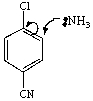
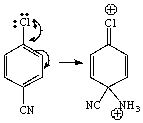
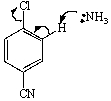
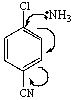
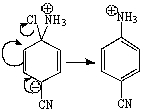
Why does the substitution of ortho or para nitro groups onto chlorobenzene greatly increase the tendency of the chlorine to be displaced by nucleophiles?

A) NO2 groups stabilize the SN1 transition state by resonance.
B) The NO2 groups facilitate removal of a hydrogen α\alpha to chlorine.
C) NO2 groups stabilize the SN2 transition state.
D) NO2 groups stabilize negative charge resulting from addition of a nucleophile.
E) The NO2 groups exert a general inductive effect which is independent of substitution position.
استخدم زر المسافة أو
up arrow
down arrow
لقلب البطاقة.
سؤال
Which of the following resonance structures of the phenoxide anion would be the major contributor to the real structure?

A)
<strong>Which of the following resonance structures of the phenoxide anion would be the major contributor to the real structure?</strong> A)   B)   C)   D)   E) All are equally important. <div style=padding-top: 35px>
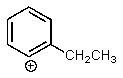
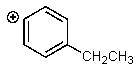
B)
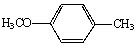
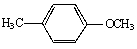
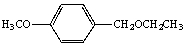
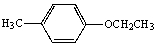
<strong>Which of the following resonance structures of the phenoxide anion would be the major contributor to the real structure?</strong> A)   B)   C)   D)   E) All are equally important. <div style=padding-top: 35px>
C)
<strong>Which of the following resonance structures of the phenoxide anion would be the major contributor to the real structure?</strong> A)   B)   C)   D)   E) All are equally important. <div style=padding-top: 35px>
D)
<strong>Which of the following resonance structures of the phenoxide anion would be the major contributor to the real structure?</strong> A)   B)   C)   D)   E) All are equally important. <div style=padding-top: 35px>
E) All are equally important.
سؤال
What product would you expect from the following reaction? <strong>What product would you expect from the following reaction?  </strong> A)   <sup> </sup> B)   C)   D)   E)   <div style=padding-top: 35px>
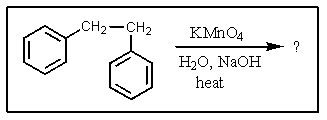
A)
<strong>What product would you expect from the following reaction?  </strong> A)   <sup> </sup> B)   C)   D)   E)   <div style=padding-top: 35px>
B)
<strong>What product would you expect from the following reaction?  </strong> A)   <sup> </sup> B)   C)   D)   E)   <div style=padding-top: 35px>
C)
<strong>What product would you expect from the following reaction?  </strong> A)   <sup> </sup> B)   C)   D)   E)   <div style=padding-top: 35px>
D)
<strong>What product would you expect from the following reaction?  </strong> A)   <sup> </sup> B)   C)   D)   E)   <div style=padding-top: 35px>
E)
<strong>What product would you expect from the following reaction?  </strong> A)   <sup> </sup> B)   C)   D)   E)   <div style=padding-top: 35px>
سؤال
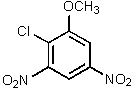
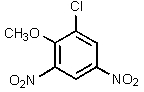
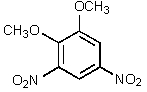
How would you rank the following in decreasing order of reactivity toward nucleophilic aromatic substitution (most reactive on left)? <strong>How would you rank the following in decreasing order of reactivity toward nucleophilic aromatic substitution (most reactive on left)?  </strong> A) 4 > 1 > 3 > 2 B) 2 > 3 > 1 > 4 C) 3 > 2 > 4 > 1 D) 1 > 3 > 2 > 4 E) impossible to predict <div style=padding-top: 35px>
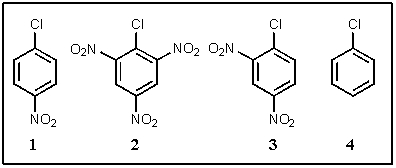
A) 4 > 1 > 3 > 2
B) 2 > 3 > 1 > 4
C) 3 > 2 > 4 > 1
D) 1 > 3 > 2 > 4
E) impossible to predict
سؤال
By which of the following can the N2 group of a benzenediazonium salt not be substituted? <strong>By which of the following can the N<sub>2</sub> group of a benzenediazonium salt not be substituted?  </strong> A) CN B) CH<sub>3</sub> C) H D) F E) OH <div style=padding-top: 35px>
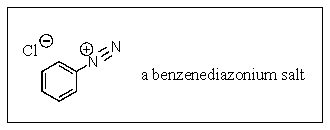
A) CN
B) CH3
C) H
D) F
E) OH
سؤال
What major product would you expect from the following reaction? <strong>What major product would you expect from the following reaction?  </strong> A)   B)   C)   D)   E) both A and D <div style=padding-top: 35px>

A)
<strong>What major product would you expect from the following reaction?  </strong> A)   B)   C)   D)   E) both A and D <div style=padding-top: 35px>
B)
<strong>What major product would you expect from the following reaction?  </strong> A)   B)   C)   D)   E) both A and D <div style=padding-top: 35px>
C)
<strong>What major product would you expect from the following reaction?  </strong> A)   B)   C)   D)   E) both A and D <div style=padding-top: 35px>
D)
<strong>What major product would you expect from the following reaction?  </strong> A)   B)   C)   D)   E) both A and D <div style=padding-top: 35px>
E) both A and D
سؤال
What would be the expected product of the following reaction? <strong>What would be the expected product of the following reaction?  </strong> A)   B)   C)   D)   E)   <div style=padding-top: 35px>
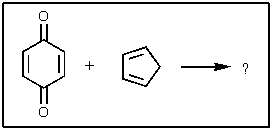
A)
<strong>What would be the expected product of the following reaction?  </strong> A)   B)   C)   D)   E)   <div style=padding-top: 35px>
B)
<strong>What would be the expected product of the following reaction?  </strong> A)   B)   C)   D)   E)   <div style=padding-top: 35px>
C)
<strong>What would be the expected product of the following reaction?  </strong> A)   B)   C)   D)   E)   <div style=padding-top: 35px>
D)
<strong>What would be the expected product of the following reaction?  </strong> A)   B)   C)   D)   E)   <div style=padding-top: 35px>
E)
<strong>What would be the expected product of the following reaction?  </strong> A)   B)   C)   D)   E)   <div style=padding-top: 35px>
سؤال
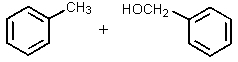
What would be the result of the following? <strong>What would be the result of the following?  </strong> A)   <sup> </sup> B)   C)   D)   E) no reaction <div style=padding-top: 35px>
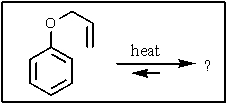
A)
<strong>What would be the result of the following?  </strong> A)   <sup> </sup> B)   C)   D)   E) no reaction <div style=padding-top: 35px>
B)
<strong>What would be the result of the following?  </strong> A)   <sup> </sup> B)   C)   D)   E) no reaction <div style=padding-top: 35px>
C)
<strong>What would be the result of the following?  </strong> A)   <sup> </sup> B)   C)   D)   E) no reaction <div style=padding-top: 35px>
D)
<strong>What would be the result of the following?  </strong> A)   <sup> </sup> B)   C)   D)   E) no reaction <div style=padding-top: 35px>
E) no reaction
سؤال
What material is produced easily by means of the Kolbe reaction? (sodium phenoxide + CO2 + heat/pressure,then H3O+)

A) Phenol
B) Benzaldehyde
C) Succinic acid
D) Cinnamic acid
E) Salicylic acid
سؤال
What would be the proper ranking of the following in order of decreasing acidity (most acidic on left)? <strong>What would be the proper ranking of the following in order of decreasing acidity (most acidic on left)?  </strong> A) 4 > 2 > 1 > 3 B) 3 > 1 > 4 > 2 C) 2 > 4 > 1 > 3 D) 3 > 2 > 4 > 1 E) 2 > 4 > 3 > 1 <div style=padding-top: 35px>
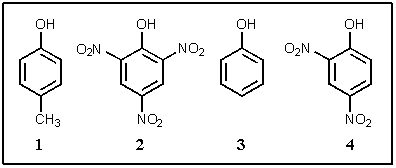
A) 4 > 2 > 1 > 3
B) 3 > 1 > 4 > 2
C) 2 > 4 > 1 > 3
D) 3 > 2 > 4 > 1
E) 2 > 4 > 3 > 1
سؤال
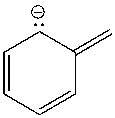
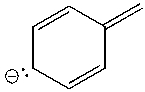
Which of the following is not a valid resonance contributor to the benzyl radical?

A)
<strong>Which of the following is not a valid resonance contributor to the benzyl radical?</strong> A)   B)   C)   D)   E)   <div style=padding-top: 35px>
B)
<strong>Which of the following is not a valid resonance contributor to the benzyl radical?</strong> A)   B)   C)   D)   E)   <div style=padding-top: 35px>
C)
<strong>Which of the following is not a valid resonance contributor to the benzyl radical?</strong> A)   B)   C)   D)   E)   <div style=padding-top: 35px>
D)
<strong>Which of the following is not a valid resonance contributor to the benzyl radical?</strong> A)   B)   C)   D)   E)   <div style=padding-top: 35px>
E)
<strong>Which of the following is not a valid resonance contributor to the benzyl radical?</strong> A)   B)   C)   D)   E)   <div style=padding-top: 35px>
سؤال
To which side (if any)would the following equilibrium lie? <strong>To which side (if any)would the following equilibrium lie?  </strong> A) To the left B) To the right C) Equally to the left and right D) Reaction cannot occur at all E) Equilibrium favors a different product <div style=padding-top: 35px>

A) To the left
B) To the right
C) Equally to the left and right
D) Reaction cannot occur at all
E) Equilibrium favors a different product
سؤال
What would be the proper ranking of the following in order of decreasing acidity (most acidic on left)? <strong>What would be the proper ranking of the following in order of decreasing acidity (most acidic on left)?  </strong> A) A > B > C B) B > C > A C) A > C > B D) B > A > C E) C > B > A <div style=padding-top: 35px>
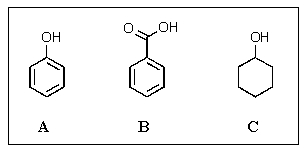
A) A > B > C
B) B > C > A
C) A > C > B
D) B > A > C
E) C > B > A
سؤال
What happens when a secondary amine is treated with nitrous acid?

A) A diazonium salt is formed.
B) It immediately loses nitrogen to form a carbocation.
C) A simple acid-base reaction occurs to give an alkyl ammonium nitrite salt.
D) An N-nitroso amine is formed.
E) A dealkylation occurs to give a primary amine.
سؤال
What would be the expected product of the following reaction? <strong>What would be the expected product of the following reaction?  </strong> A)   <sup> </sup> B)   C)   D)   E) both A and D <div style=padding-top: 35px>
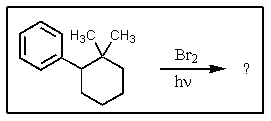
A)
<strong>What would be the expected product of the following reaction?  </strong> A)   <sup> </sup> B)   C)   D)   E) both A and D <div style=padding-top: 35px>
B)
<strong>What would be the expected product of the following reaction?  </strong> A)   <sup> </sup> B)   C)   D)   E) both A and D <div style=padding-top: 35px>
C)
<strong>What would be the expected product of the following reaction?  </strong> A)   <sup> </sup> B)   C)   D)   E) both A and D <div style=padding-top: 35px>
D)
<strong>What would be the expected product of the following reaction?  </strong> A)   <sup> </sup> B)   C)   D)   E) both A and D <div style=padding-top: 35px>
E) both A and D
سؤال
What is the main use of azo compounds in general? <strong>What is the main use of azo compounds in general?  </strong> A) Antibiotic properties B) Fragrances and flavorings C) Chemotherapy agents D) Herbicides and/or pesticides E) Dyes and coloring agents <div style=padding-top: 35px>
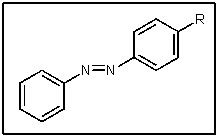
A) Antibiotic properties
B) Fragrances and flavorings
C) Chemotherapy agents
D) Herbicides and/or pesticides
E) Dyes and coloring agents
سؤال
What would be the expected product(s)from the following reaction? <strong>What would be the expected product(s)from the following reaction?  </strong> A)   <sup> </sup> B)   C)   D) both A and B E) All of the above. <div style=padding-top: 35px>
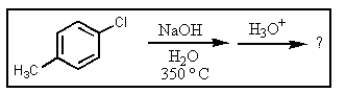
A)
<strong>What would be the expected product(s)from the following reaction?  </strong> A)   <sup> </sup> B)   C)   D) both A and B E) All of the above. <div style=padding-top: 35px>
B)
<strong>What would be the expected product(s)from the following reaction?  </strong> A)   <sup> </sup> B)   C)   D) both A and B E) All of the above. <div style=padding-top: 35px>
C)
<strong>What would be the expected product(s)from the following reaction?  </strong> A)   <sup> </sup> B)   C)   D) both A and B E) All of the above. <div style=padding-top: 35px>
D) both A and B
E) All of the above.
سؤال
Which ion would be most stabilized by resonance?

A)
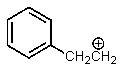
<strong>Which ion would be most stabilized by resonance?</strong> A)   B)   C)   D)   E) All are equally stabilized. <div style=padding-top: 35px>
B)
<strong>Which ion would be most stabilized by resonance?</strong> A)   B)   C)   D)   E) All are equally stabilized. <div style=padding-top: 35px>
C)
<strong>Which ion would be most stabilized by resonance?</strong> A)   B)   C)   D)   E) All are equally stabilized. <div style=padding-top: 35px>
D)
<strong>Which ion would be most stabilized by resonance?</strong> A)   B)   C)   D)   E) All are equally stabilized. <div style=padding-top: 35px>
E) All are equally stabilized.
سؤال
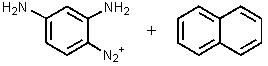
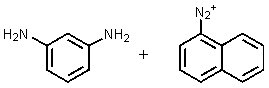
From what starting materials would the following be made? <strong>From what starting materials would the following be made?  </strong> A)   B)   C) Either A or B D) Neither A nor B E) The compound shown is too unstable to isolate. <div style=padding-top: 35px>
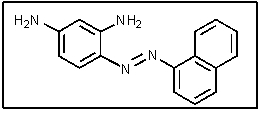
A)
<strong>From what starting materials would the following be made?  </strong> A)   B)   C) Either A or B D) Neither A nor B E) The compound shown is too unstable to isolate. <div style=padding-top: 35px>
B)
<strong>From what starting materials would the following be made?  </strong> A)   B)   C) Either A or B D) Neither A nor B E) The compound shown is too unstable to isolate. <div style=padding-top: 35px>
C) Either A or B
D) Neither A nor B
E) The compound shown is too unstable to isolate.
سؤال
What product would result from the following reaction? <strong>What product would result from the following reaction?  </strong> A)   <sup> </sup> B)   C)   D)   E) None of these. <div style=padding-top: 35px>
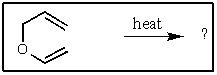
A)
<strong>What product would result from the following reaction?  </strong> A)   <sup> </sup> B)   C)   D)   E) None of these. <div style=padding-top: 35px>
B)
<strong>What product would result from the following reaction?  </strong> A)   <sup> </sup> B)   C)   D)   E) None of these. <div style=padding-top: 35px>
C)
<strong>What product would result from the following reaction?  </strong> A)   <sup> </sup> B)   C)   D)   E) None of these. <div style=padding-top: 35px>
D)
<strong>What product would result from the following reaction?  </strong> A)   <sup> </sup> B)   C)   D)   E) None of these. <div style=padding-top: 35px>
E) None of these.
سؤال
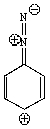
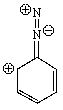
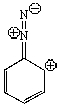
Which of the following is not a valid resonance contributor in the benzenediazonium cation?

A)
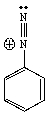
<strong>Which of the following is not a valid resonance contributor in the benzenediazonium cation?</strong> A)   B)   C)   D)   E) All of the above are valid resonance structures. <div style=padding-top: 35px>
B)
<strong>Which of the following is not a valid resonance contributor in the benzenediazonium cation?</strong> A)   B)   C)   D)   E) All of the above are valid resonance structures. <div style=padding-top: 35px>
C)
<strong>Which of the following is not a valid resonance contributor in the benzenediazonium cation?</strong> A)   B)   C)   D)   E) All of the above are valid resonance structures. <div style=padding-top: 35px>
D)
<strong>Which of the following is not a valid resonance contributor in the benzenediazonium cation?</strong> A)   B)   C)   D)   E) All of the above are valid resonance structures. <div style=padding-top: 35px>
E) All of the above are valid resonance structures.
سؤال
Predict the major product of the following solvolysis reaction: <strong>Predict the major product of the following solvolysis reaction:  </strong> A)   B)   C)   D)   E) None of the above. <div style=padding-top: 35px>
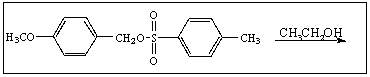
A)
<strong>Predict the major product of the following solvolysis reaction:  </strong> A)   B)   C)   D)   E) None of the above. <div style=padding-top: 35px>
B)
<strong>Predict the major product of the following solvolysis reaction:  </strong> A)   B)   C)   D)   E) None of the above. <div style=padding-top: 35px>
C)
<strong>Predict the major product of the following solvolysis reaction:  </strong> A)   B)   C)   D)   E) None of the above. <div style=padding-top: 35px>
D)
<strong>Predict the major product of the following solvolysis reaction:  </strong> A)   B)   C)   D)   E) None of the above. <div style=padding-top: 35px>
E) None of the above.
سؤال
When considering the mechanism of the reaction shown below,which of the following is most likely an intermediate along the reaction pathway? <strong>When considering the mechanism of the reaction shown below,which of the following is most likely an intermediate along the reaction pathway?  </strong> A)   B)   C)   D)   E)   <div style=padding-top: 35px>
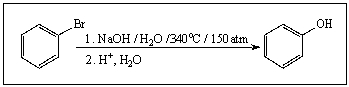
A)
<strong>When considering the mechanism of the reaction shown below,which of the following is most likely an intermediate along the reaction pathway?  </strong> A)   B)   C)   D)   E)   <div style=padding-top: 35px>
B)
<strong>When considering the mechanism of the reaction shown below,which of the following is most likely an intermediate along the reaction pathway?  </strong> A)   B)   C)   D)   E)   <div style=padding-top: 35px>
C)
<strong>When considering the mechanism of the reaction shown below,which of the following is most likely an intermediate along the reaction pathway?  </strong> A)   B)   C)   D)   E)   <div style=padding-top: 35px>
D)
<strong>When considering the mechanism of the reaction shown below,which of the following is most likely an intermediate along the reaction pathway?  </strong> A)   B)   C)   D)   E)   <div style=padding-top: 35px>
E)
<strong>When considering the mechanism of the reaction shown below,which of the following is most likely an intermediate along the reaction pathway?  </strong> A)   B)   C)   D)   E)   <div style=padding-top: 35px>
سؤال
Considering the mechanism for the following reaction,which of the following is most likely the rate determining step (RDS)? <strong>Considering the mechanism for the following reaction,which of the following is most likely the rate determining step (RDS)?  </strong> A)   B)   C)   D)   E)   <div style=padding-top: 35px>
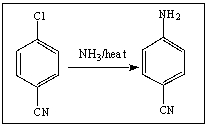
A)
<strong>Considering the mechanism for the following reaction,which of the following is most likely the rate determining step (RDS)?  </strong> A)   B)   C)   D)   E)   <div style=padding-top: 35px>
B)
<strong>Considering the mechanism for the following reaction,which of the following is most likely the rate determining step (RDS)?  </strong> A)   B)   C)   D)   E)   <div style=padding-top: 35px>
C)
<strong>Considering the mechanism for the following reaction,which of the following is most likely the rate determining step (RDS)?  </strong> A)   B)   C)   D)   E)   <div style=padding-top: 35px>
D)
<strong>Considering the mechanism for the following reaction,which of the following is most likely the rate determining step (RDS)?  </strong> A)   B)   C)   D)   E)   <div style=padding-top: 35px>
E)
<strong>Considering the mechanism for the following reaction,which of the following is most likely the rate determining step (RDS)?  </strong> A)   B)   C)   D)   E)   <div style=padding-top: 35px>
سؤال
Arrange the following structures according to decreasing acidity? <strong>Arrange the following structures according to decreasing acidity?  </strong> A) 1 > 3 > 4 > 2 B) 2 > 4 > 3 > 1 C) 4 > 3 > 1 > 2 D) 3 > 2 > 1 > 4 E) 4 > 1 > 3 > 2 <div style=padding-top: 35px>

A) 1 > 3 > 4 > 2
B) 2 > 4 > 3 > 1
C) 4 > 3 > 1 > 2
D) 3 > 2 > 1 > 4
E) 4 > 1 > 3 > 2
سؤال
The following reaction most likely proceeds by what mechanism: <strong>The following reaction most likely proceeds by what mechanism:  </strong> A) S<sub>N</sub>2 B) S<sub>N</sub>1 C) E2 D) E1 E) Free radical halogenation <div style=padding-top: 35px>
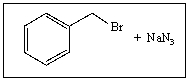
A) SN2
B) SN1
C) E2
D) E1
E) Free radical halogenation
سؤال
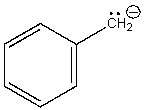
Which of the following is not a valid resonance contributor in the benzylic anion?

A)
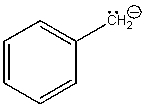
<strong>Which of the following is not a valid resonance contributor in the benzylic anion?</strong> A)   B)   C)   D)   E) All of these are valid resonance structures. <div style=padding-top: 35px>
B)
<strong>Which of the following is not a valid resonance contributor in the benzylic anion?</strong> A)   B)   C)   D)   E) All of these are valid resonance structures. <div style=padding-top: 35px>
C)
<strong>Which of the following is not a valid resonance contributor in the benzylic anion?</strong> A)   B)   C)   D)   E) All of these are valid resonance structures. <div style=padding-top: 35px>
D)
<strong>Which of the following is not a valid resonance contributor in the benzylic anion?</strong> A)   B)   C)   D)   E) All of these are valid resonance structures. <div style=padding-top: 35px>
E) All of these are valid resonance structures.
سؤال
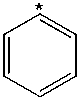
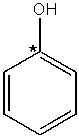
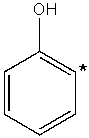
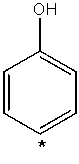
Starting with the labeled chlorobenzene (label indicated by *),what is the product of the following nucleophilic aromatic substitution reaction? <strong>Starting with the labeled chlorobenzene (label indicated by *),what is the product of the following nucleophilic aromatic substitution reaction?  </strong> A)   B)   C)   D)   E) structures B and C <div style=padding-top: 35px>
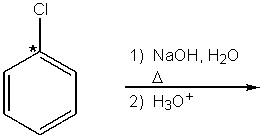
A)
<strong>Starting with the labeled chlorobenzene (label indicated by *),what is the product of the following nucleophilic aromatic substitution reaction?  </strong> A)   B)   C)   D)   E) structures B and C <div style=padding-top: 35px>
B)
<strong>Starting with the labeled chlorobenzene (label indicated by *),what is the product of the following nucleophilic aromatic substitution reaction?  </strong> A)   B)   C)   D)   E) structures B and C <div style=padding-top: 35px>
C)
<strong>Starting with the labeled chlorobenzene (label indicated by *),what is the product of the following nucleophilic aromatic substitution reaction?  </strong> A)   B)   C)   D)   E) structures B and C <div style=padding-top: 35px>
D)
<strong>Starting with the labeled chlorobenzene (label indicated by *),what is the product of the following nucleophilic aromatic substitution reaction?  </strong> A)   B)   C)   D)   E) structures B and C <div style=padding-top: 35px>
E) structures B and C
سؤال
Which of the following represents a hydrogenolysis reaction?

A)
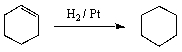
<strong>Which of the following represents a hydrogenolysis reaction?</strong> A)   B)   C)   D)   E) Two or more of these are correct. <div style=padding-top: 35px>
B)
<strong>Which of the following represents a hydrogenolysis reaction?</strong> A)   B)   C)   D)   E) Two or more of these are correct. <div style=padding-top: 35px>
C)
<strong>Which of the following represents a hydrogenolysis reaction?</strong> A)   B)   C)   D)   E) Two or more of these are correct. <div style=padding-top: 35px>
D)
<strong>Which of the following represents a hydrogenolysis reaction?</strong> A)   B)   C)   D)   E) Two or more of these are correct. <div style=padding-top: 35px>
E) Two or more of these are correct.
سؤال
Predict the major product of the following Sandmeyer reaction: <strong>Predict the major product of the following Sandmeyer reaction:  </strong> A)   B)   C)   D)   E)   <div style=padding-top: 35px>
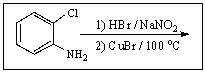
A)
<strong>Predict the major product of the following Sandmeyer reaction:  </strong> A)   B)   C)   D)   E)   <div style=padding-top: 35px>
B)
<strong>Predict the major product of the following Sandmeyer reaction:  </strong> A)   B)   C)   D)   E)   <div style=padding-top: 35px>
C)
<strong>Predict the major product of the following Sandmeyer reaction:  </strong> A)   B)   C)   D)   E)   <div style=padding-top: 35px>
D)
<strong>Predict the major product of the following Sandmeyer reaction:  </strong> A)   B)   C)   D)   E)   <div style=padding-top: 35px>
E)
<strong>Predict the major product of the following Sandmeyer reaction:  </strong> A)   B)   C)   D)   E)   <div style=padding-top: 35px>
سؤال
Predict the major product of the following reaction: <strong>Predict the major product of the following reaction:  </strong> A)   B)   C)   D)   E)   <div style=padding-top: 35px>
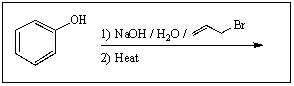
A)
<strong>Predict the major product of the following reaction:  </strong> A)   B)   C)   D)   E)   <div style=padding-top: 35px>
B)
<strong>Predict the major product of the following reaction:  </strong> A)   B)   C)   D)   E)   <div style=padding-top: 35px>
C)
<strong>Predict the major product of the following reaction:  </strong> A)   B)   C)   D)   E)   <div style=padding-top: 35px>
D)
<strong>Predict the major product of the following reaction:  </strong> A)   B)   C)   D)   E)   <div style=padding-top: 35px>
E)
<strong>Predict the major product of the following reaction:  </strong> A)   B)   C)   D)   E)   <div style=padding-top: 35px>
سؤال
Which of the reagents given below would accomplish the reaction shown? <strong>Which of the reagents given below would accomplish the reaction shown?  </strong> A) H<sub>2</sub>O<sub>2</sub>,KOH,heat B) Na<sub>2</sub>Cr<sub>2</sub>O<sub>7</sub>,H<sup>+</sup>,heat C) ClCO<sub>2</sub>H,AlCl<sub>3</sub> D) O<sub>3</sub>,then H<sub>2</sub>O E) None of these. <div style=padding-top: 35px>
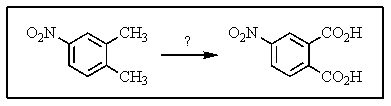
A) H2O2,KOH,heat
B) Na2Cr2O7,H+,heat
C) ClCO2H,AlCl3
D) O3,then H2O
E) None of these.
فتح الحزمة
قم بالتسجيل لفتح البطاقات في هذه المجموعة!
Unlock Deck
Unlock Deck
1/32
auto play flashcards
العب
simple tutorial
ملء الشاشة (f)
exit full mode
Deck 22: Chemistry of the Benzene Substituents: Alkylbenzenes,phenols,and Benzenamines
1
Why does the substitution of ortho or para nitro groups onto chlorobenzene greatly increase the tendency of the chlorine to be displaced by nucleophiles?

A) NO2 groups stabilize the SN1 transition state by resonance.
B) The NO2 groups facilitate removal of a hydrogen α\alpha to chlorine.
C) NO2 groups stabilize the SN2 transition state.
D) NO2 groups stabilize negative charge resulting from addition of a nucleophile.
E) The NO2 groups exert a general inductive effect which is independent of substitution position.
NO2 groups stabilize negative charge resulting from addition of a nucleophile.
2
Which of the following resonance structures of the phenoxide anion would be the major contributor to the real structure?

A)
<strong>Which of the following resonance structures of the phenoxide anion would be the major contributor to the real structure?</strong> A)   B)   C)   D)   E) All are equally important.
B)
<strong>Which of the following resonance structures of the phenoxide anion would be the major contributor to the real structure?</strong> A)   B)   C)   D)   E) All are equally important.
C)
<strong>Which of the following resonance structures of the phenoxide anion would be the major contributor to the real structure?</strong> A)   B)   C)   D)   E) All are equally important.
D)
<strong>Which of the following resonance structures of the phenoxide anion would be the major contributor to the real structure?</strong> A)   B)   C)   D)   E) All are equally important.
E) All are equally important.
3
What product would you expect from the following reaction? <strong>What product would you expect from the following reaction?  </strong> A)   <sup> </sup> B)   C)   D)   E)

A)
<strong>What product would you expect from the following reaction?  </strong> A)   <sup> </sup> B)   C)   D)   E)
B)
<strong>What product would you expect from the following reaction?  </strong> A)   <sup> </sup> B)   C)   D)   E)
C)
<strong>What product would you expect from the following reaction?  </strong> A)   <sup> </sup> B)   C)   D)   E)
D)
<strong>What product would you expect from the following reaction?  </strong> A)   <sup> </sup> B)   C)   D)   E)
E)
<strong>What product would you expect from the following reaction?  </strong> A)   <sup> </sup> B)   C)   D)   E)
4
How would you rank the following in decreasing order of reactivity toward nucleophilic aromatic substitution (most reactive on left)? <strong>How would you rank the following in decreasing order of reactivity toward nucleophilic aromatic substitution (most reactive on left)?  </strong> A) 4 > 1 > 3 > 2 B) 2 > 3 > 1 > 4 C) 3 > 2 > 4 > 1 D) 1 > 3 > 2 > 4 E) impossible to predict

A) 4 > 1 > 3 > 2
B) 2 > 3 > 1 > 4
C) 3 > 2 > 4 > 1
D) 1 > 3 > 2 > 4
E) impossible to predict
فتح الحزمة
افتح القفل للوصول البطاقات البالغ عددها 32 في هذه المجموعة.
فتح الحزمة
k this deck
5
By which of the following can the N2 group of a benzenediazonium salt not be substituted? <strong>By which of the following can the N<sub>2</sub> group of a benzenediazonium salt not be substituted?  </strong> A) CN B) CH<sub>3</sub> C) H D) F E) OH

A) CN
B) CH3
C) H
D) F
E) OH
فتح الحزمة
افتح القفل للوصول البطاقات البالغ عددها 32 في هذه المجموعة.
فتح الحزمة
k this deck
6
What major product would you expect from the following reaction? <strong>What major product would you expect from the following reaction?  </strong> A)   B)   C)   D)   E) both A and D

A)
<strong>What major product would you expect from the following reaction?  </strong> A)   B)   C)   D)   E) both A and D
B)
<strong>What major product would you expect from the following reaction?  </strong> A)   B)   C)   D)   E) both A and D
C)
<strong>What major product would you expect from the following reaction?  </strong> A)   B)   C)   D)   E) both A and D
D)
<strong>What major product would you expect from the following reaction?  </strong> A)   B)   C)   D)   E) both A and D
E) both A and D
فتح الحزمة
افتح القفل للوصول البطاقات البالغ عددها 32 في هذه المجموعة.
فتح الحزمة
k this deck
7
What would be the expected product of the following reaction? <strong>What would be the expected product of the following reaction?  </strong> A)   B)   C)   D)   E)

A)
<strong>What would be the expected product of the following reaction?  </strong> A)   B)   C)   D)   E)
B)
<strong>What would be the expected product of the following reaction?  </strong> A)   B)   C)   D)   E)
C)
<strong>What would be the expected product of the following reaction?  </strong> A)   B)   C)   D)   E)
D)
<strong>What would be the expected product of the following reaction?  </strong> A)   B)   C)   D)   E)
E)
<strong>What would be the expected product of the following reaction?  </strong> A)   B)   C)   D)   E)
فتح الحزمة
افتح القفل للوصول البطاقات البالغ عددها 32 في هذه المجموعة.
فتح الحزمة
k this deck
8
What would be the result of the following? <strong>What would be the result of the following?  </strong> A)   <sup> </sup> B)   C)   D)   E) no reaction

A)
<strong>What would be the result of the following?  </strong> A)   <sup> </sup> B)   C)   D)   E) no reaction
B)
<strong>What would be the result of the following?  </strong> A)   <sup> </sup> B)   C)   D)   E) no reaction
C)
<strong>What would be the result of the following?  </strong> A)   <sup> </sup> B)   C)   D)   E) no reaction
D)
<strong>What would be the result of the following?  </strong> A)   <sup> </sup> B)   C)   D)   E) no reaction
E) no reaction
فتح الحزمة
افتح القفل للوصول البطاقات البالغ عددها 32 في هذه المجموعة.
فتح الحزمة
k this deck
9
What material is produced easily by means of the Kolbe reaction? (sodium phenoxide + CO2 + heat/pressure,then H3O+)

A) Phenol
B) Benzaldehyde
C) Succinic acid
D) Cinnamic acid
E) Salicylic acid
فتح الحزمة
افتح القفل للوصول البطاقات البالغ عددها 32 في هذه المجموعة.
فتح الحزمة
k this deck
10
What would be the proper ranking of the following in order of decreasing acidity (most acidic on left)? <strong>What would be the proper ranking of the following in order of decreasing acidity (most acidic on left)?  </strong> A) 4 > 2 > 1 > 3 B) 3 > 1 > 4 > 2 C) 2 > 4 > 1 > 3 D) 3 > 2 > 4 > 1 E) 2 > 4 > 3 > 1

A) 4 > 2 > 1 > 3
B) 3 > 1 > 4 > 2
C) 2 > 4 > 1 > 3
D) 3 > 2 > 4 > 1
E) 2 > 4 > 3 > 1
فتح الحزمة
افتح القفل للوصول البطاقات البالغ عددها 32 في هذه المجموعة.
فتح الحزمة
k this deck
11
Which of the following is not a valid resonance contributor to the benzyl radical?

A)
<strong>Which of the following is not a valid resonance contributor to the benzyl radical?</strong> A)   B)   C)   D)   E)
B)
<strong>Which of the following is not a valid resonance contributor to the benzyl radical?</strong> A)   B)   C)   D)   E)
C)
<strong>Which of the following is not a valid resonance contributor to the benzyl radical?</strong> A)   B)   C)   D)   E)
D)
<strong>Which of the following is not a valid resonance contributor to the benzyl radical?</strong> A)   B)   C)   D)   E)
E)
<strong>Which of the following is not a valid resonance contributor to the benzyl radical?</strong> A)   B)   C)   D)   E)
فتح الحزمة
افتح القفل للوصول البطاقات البالغ عددها 32 في هذه المجموعة.
فتح الحزمة
k this deck
12
To which side (if any)would the following equilibrium lie? <strong>To which side (if any)would the following equilibrium lie?  </strong> A) To the left B) To the right C) Equally to the left and right D) Reaction cannot occur at all E) Equilibrium favors a different product

A) To the left
B) To the right
C) Equally to the left and right
D) Reaction cannot occur at all
E) Equilibrium favors a different product
فتح الحزمة
افتح القفل للوصول البطاقات البالغ عددها 32 في هذه المجموعة.
فتح الحزمة
k this deck
13
What would be the proper ranking of the following in order of decreasing acidity (most acidic on left)? <strong>What would be the proper ranking of the following in order of decreasing acidity (most acidic on left)?  </strong> A) A > B > C B) B > C > A C) A > C > B D) B > A > C E) C > B > A

A) A > B > C
B) B > C > A
C) A > C > B
D) B > A > C
E) C > B > A
فتح الحزمة
افتح القفل للوصول البطاقات البالغ عددها 32 في هذه المجموعة.
فتح الحزمة
k this deck
14
What happens when a secondary amine is treated with nitrous acid?

A) A diazonium salt is formed.
B) It immediately loses nitrogen to form a carbocation.
C) A simple acid-base reaction occurs to give an alkyl ammonium nitrite salt.
D) An N-nitroso amine is formed.
E) A dealkylation occurs to give a primary amine.
فتح الحزمة
افتح القفل للوصول البطاقات البالغ عددها 32 في هذه المجموعة.
فتح الحزمة
k this deck
15
What would be the expected product of the following reaction? <strong>What would be the expected product of the following reaction?  </strong> A)   <sup> </sup> B)   C)   D)   E) both A and D

A)
<strong>What would be the expected product of the following reaction?  </strong> A)   <sup> </sup> B)   C)   D)   E) both A and D
B)
<strong>What would be the expected product of the following reaction?  </strong> A)   <sup> </sup> B)   C)   D)   E) both A and D
C)
<strong>What would be the expected product of the following reaction?  </strong> A)   <sup> </sup> B)   C)   D)   E) both A and D
D)
<strong>What would be the expected product of the following reaction?  </strong> A)   <sup> </sup> B)   C)   D)   E) both A and D
E) both A and D
فتح الحزمة
افتح القفل للوصول البطاقات البالغ عددها 32 في هذه المجموعة.
فتح الحزمة
k this deck
16
What is the main use of azo compounds in general? <strong>What is the main use of azo compounds in general?  </strong> A) Antibiotic properties B) Fragrances and flavorings C) Chemotherapy agents D) Herbicides and/or pesticides E) Dyes and coloring agents

A) Antibiotic properties
B) Fragrances and flavorings
C) Chemotherapy agents
D) Herbicides and/or pesticides
E) Dyes and coloring agents
فتح الحزمة
افتح القفل للوصول البطاقات البالغ عددها 32 في هذه المجموعة.
فتح الحزمة
k this deck
17
What would be the expected product(s)from the following reaction? <strong>What would be the expected product(s)from the following reaction?  </strong> A)   <sup> </sup> B)   C)   D) both A and B E) All of the above.

A)
<strong>What would be the expected product(s)from the following reaction?  </strong> A)   <sup> </sup> B)   C)   D) both A and B E) All of the above.
B)
<strong>What would be the expected product(s)from the following reaction?  </strong> A)   <sup> </sup> B)   C)   D) both A and B E) All of the above.
C)
<strong>What would be the expected product(s)from the following reaction?  </strong> A)   <sup> </sup> B)   C)   D) both A and B E) All of the above.
D) both A and B
E) All of the above.
فتح الحزمة
افتح القفل للوصول البطاقات البالغ عددها 32 في هذه المجموعة.
فتح الحزمة
k this deck
18
Which ion would be most stabilized by resonance?

A)
<strong>Which ion would be most stabilized by resonance?</strong> A)   B)   C)   D)   E) All are equally stabilized.
B)
<strong>Which ion would be most stabilized by resonance?</strong> A)   B)   C)   D)   E) All are equally stabilized.
C)
<strong>Which ion would be most stabilized by resonance?</strong> A)   B)   C)   D)   E) All are equally stabilized.
D)
<strong>Which ion would be most stabilized by resonance?</strong> A)   B)   C)   D)   E) All are equally stabilized.
E) All are equally stabilized.
فتح الحزمة
افتح القفل للوصول البطاقات البالغ عددها 32 في هذه المجموعة.
فتح الحزمة
k this deck
19
From what starting materials would the following be made? <strong>From what starting materials would the following be made?  </strong> A)   B)   C) Either A or B D) Neither A nor B E) The compound shown is too unstable to isolate.

A)
<strong>From what starting materials would the following be made?  </strong> A)   B)   C) Either A or B D) Neither A nor B E) The compound shown is too unstable to isolate.
B)
<strong>From what starting materials would the following be made?  </strong> A)   B)   C) Either A or B D) Neither A nor B E) The compound shown is too unstable to isolate.
C) Either A or B
D) Neither A nor B
E) The compound shown is too unstable to isolate.
فتح الحزمة
افتح القفل للوصول البطاقات البالغ عددها 32 في هذه المجموعة.
فتح الحزمة
k this deck
20
What product would result from the following reaction? <strong>What product would result from the following reaction?  </strong> A)   <sup> </sup> B)   C)   D)   E) None of these.

A)
<strong>What product would result from the following reaction?  </strong> A)   <sup> </sup> B)   C)   D)   E) None of these.
B)
<strong>What product would result from the following reaction?  </strong> A)   <sup> </sup> B)   C)   D)   E) None of these.
C)
<strong>What product would result from the following reaction?  </strong> A)   <sup> </sup> B)   C)   D)   E) None of these.
D)
<strong>What product would result from the following reaction?  </strong> A)   <sup> </sup> B)   C)   D)   E) None of these.
E) None of these.
فتح الحزمة
افتح القفل للوصول البطاقات البالغ عددها 32 في هذه المجموعة.
فتح الحزمة
k this deck
21
Which of the following is not a valid resonance contributor in the benzenediazonium cation?

A)
<strong>Which of the following is not a valid resonance contributor in the benzenediazonium cation?</strong> A)   B)   C)   D)   E) All of the above are valid resonance structures.
B)
<strong>Which of the following is not a valid resonance contributor in the benzenediazonium cation?</strong> A)   B)   C)   D)   E) All of the above are valid resonance structures.
C)
<strong>Which of the following is not a valid resonance contributor in the benzenediazonium cation?</strong> A)   B)   C)   D)   E) All of the above are valid resonance structures.
D)
<strong>Which of the following is not a valid resonance contributor in the benzenediazonium cation?</strong> A)   B)   C)   D)   E) All of the above are valid resonance structures.
E) All of the above are valid resonance structures.
فتح الحزمة
افتح القفل للوصول البطاقات البالغ عددها 32 في هذه المجموعة.
فتح الحزمة
k this deck
22
Predict the major product of the following solvolysis reaction: <strong>Predict the major product of the following solvolysis reaction:  </strong> A)   B)   C)   D)   E) None of the above.

A)
<strong>Predict the major product of the following solvolysis reaction:  </strong> A)   B)   C)   D)   E) None of the above.
B)
<strong>Predict the major product of the following solvolysis reaction:  </strong> A)   B)   C)   D)   E) None of the above.
C)
<strong>Predict the major product of the following solvolysis reaction:  </strong> A)   B)   C)   D)   E) None of the above.
D)
<strong>Predict the major product of the following solvolysis reaction:  </strong> A)   B)   C)   D)   E) None of the above.
E) None of the above.
فتح الحزمة
افتح القفل للوصول البطاقات البالغ عددها 32 في هذه المجموعة.
فتح الحزمة
k this deck
23
When considering the mechanism of the reaction shown below,which of the following is most likely an intermediate along the reaction pathway? <strong>When considering the mechanism of the reaction shown below,which of the following is most likely an intermediate along the reaction pathway?  </strong> A)   B)   C)   D)   E)

A)
<strong>When considering the mechanism of the reaction shown below,which of the following is most likely an intermediate along the reaction pathway?  </strong> A)   B)   C)   D)   E)
B)
<strong>When considering the mechanism of the reaction shown below,which of the following is most likely an intermediate along the reaction pathway?  </strong> A)   B)   C)   D)   E)
C)
<strong>When considering the mechanism of the reaction shown below,which of the following is most likely an intermediate along the reaction pathway?  </strong> A)   B)   C)   D)   E)
D)
<strong>When considering the mechanism of the reaction shown below,which of the following is most likely an intermediate along the reaction pathway?  </strong> A)   B)   C)   D)   E)
E)
<strong>When considering the mechanism of the reaction shown below,which of the following is most likely an intermediate along the reaction pathway?  </strong> A)   B)   C)   D)   E)
فتح الحزمة
افتح القفل للوصول البطاقات البالغ عددها 32 في هذه المجموعة.
فتح الحزمة
k this deck
24
Considering the mechanism for the following reaction,which of the following is most likely the rate determining step (RDS)? <strong>Considering the mechanism for the following reaction,which of the following is most likely the rate determining step (RDS)?  </strong> A)   B)   C)   D)   E)

A)
<strong>Considering the mechanism for the following reaction,which of the following is most likely the rate determining step (RDS)?  </strong> A)   B)   C)   D)   E)
B)
<strong>Considering the mechanism for the following reaction,which of the following is most likely the rate determining step (RDS)?  </strong> A)   B)   C)   D)   E)
C)
<strong>Considering the mechanism for the following reaction,which of the following is most likely the rate determining step (RDS)?  </strong> A)   B)   C)   D)   E)
D)
<strong>Considering the mechanism for the following reaction,which of the following is most likely the rate determining step (RDS)?  </strong> A)   B)   C)   D)   E)
E)
<strong>Considering the mechanism for the following reaction,which of the following is most likely the rate determining step (RDS)?  </strong> A)   B)   C)   D)   E)
فتح الحزمة
افتح القفل للوصول البطاقات البالغ عددها 32 في هذه المجموعة.
فتح الحزمة
k this deck
25
Arrange the following structures according to decreasing acidity? <strong>Arrange the following structures according to decreasing acidity?  </strong> A) 1 > 3 > 4 > 2 B) 2 > 4 > 3 > 1 C) 4 > 3 > 1 > 2 D) 3 > 2 > 1 > 4 E) 4 > 1 > 3 > 2

A) 1 > 3 > 4 > 2
B) 2 > 4 > 3 > 1
C) 4 > 3 > 1 > 2
D) 3 > 2 > 1 > 4
E) 4 > 1 > 3 > 2
فتح الحزمة
افتح القفل للوصول البطاقات البالغ عددها 32 في هذه المجموعة.
فتح الحزمة
k this deck
26
The following reaction most likely proceeds by what mechanism: <strong>The following reaction most likely proceeds by what mechanism:  </strong> A) S<sub>N</sub>2 B) S<sub>N</sub>1 C) E2 D) E1 E) Free radical halogenation

A) SN2
B) SN1
C) E2
D) E1
E) Free radical halogenation
فتح الحزمة
افتح القفل للوصول البطاقات البالغ عددها 32 في هذه المجموعة.
فتح الحزمة
k this deck
27
Which of the following is not a valid resonance contributor in the benzylic anion?

A)
<strong>Which of the following is not a valid resonance contributor in the benzylic anion?</strong> A)   B)   C)   D)   E) All of these are valid resonance structures.
B)
<strong>Which of the following is not a valid resonance contributor in the benzylic anion?</strong> A)   B)   C)   D)   E) All of these are valid resonance structures.
C)
<strong>Which of the following is not a valid resonance contributor in the benzylic anion?</strong> A)   B)   C)   D)   E) All of these are valid resonance structures.
D)
<strong>Which of the following is not a valid resonance contributor in the benzylic anion?</strong> A)   B)   C)   D)   E) All of these are valid resonance structures.
E) All of these are valid resonance structures.
فتح الحزمة
افتح القفل للوصول البطاقات البالغ عددها 32 في هذه المجموعة.
فتح الحزمة
k this deck
28
Starting with the labeled chlorobenzene (label indicated by *),what is the product of the following nucleophilic aromatic substitution reaction? <strong>Starting with the labeled chlorobenzene (label indicated by *),what is the product of the following nucleophilic aromatic substitution reaction?  </strong> A)   B)   C)   D)   E) structures B and C

A)
<strong>Starting with the labeled chlorobenzene (label indicated by *),what is the product of the following nucleophilic aromatic substitution reaction?  </strong> A)   B)   C)   D)   E) structures B and C
B)
<strong>Starting with the labeled chlorobenzene (label indicated by *),what is the product of the following nucleophilic aromatic substitution reaction?  </strong> A)   B)   C)   D)   E) structures B and C
C)
<strong>Starting with the labeled chlorobenzene (label indicated by *),what is the product of the following nucleophilic aromatic substitution reaction?  </strong> A)   B)   C)   D)   E) structures B and C
D)
<strong>Starting with the labeled chlorobenzene (label indicated by *),what is the product of the following nucleophilic aromatic substitution reaction?  </strong> A)   B)   C)   D)   E) structures B and C
E) structures B and C
فتح الحزمة
افتح القفل للوصول البطاقات البالغ عددها 32 في هذه المجموعة.
فتح الحزمة
k this deck
29
Which of the following represents a hydrogenolysis reaction?

A)
<strong>Which of the following represents a hydrogenolysis reaction?</strong> A)   B)   C)   D)   E) Two or more of these are correct.
B)
<strong>Which of the following represents a hydrogenolysis reaction?</strong> A)   B)   C)   D)   E) Two or more of these are correct.
C)
<strong>Which of the following represents a hydrogenolysis reaction?</strong> A)   B)   C)   D)   E) Two or more of these are correct.
D)
<strong>Which of the following represents a hydrogenolysis reaction?</strong> A)   B)   C)   D)   E) Two or more of these are correct.
E) Two or more of these are correct.
فتح الحزمة
افتح القفل للوصول البطاقات البالغ عددها 32 في هذه المجموعة.
فتح الحزمة
k this deck
30
Predict the major product of the following Sandmeyer reaction: <strong>Predict the major product of the following Sandmeyer reaction:  </strong> A)   B)   C)   D)   E)

A)
<strong>Predict the major product of the following Sandmeyer reaction:  </strong> A)   B)   C)   D)   E)
B)
<strong>Predict the major product of the following Sandmeyer reaction:  </strong> A)   B)   C)   D)   E)
C)
<strong>Predict the major product of the following Sandmeyer reaction:  </strong> A)   B)   C)   D)   E)
D)
<strong>Predict the major product of the following Sandmeyer reaction:  </strong> A)   B)   C)   D)   E)
E)
<strong>Predict the major product of the following Sandmeyer reaction:  </strong> A)   B)   C)   D)   E)
فتح الحزمة
افتح القفل للوصول البطاقات البالغ عددها 32 في هذه المجموعة.
فتح الحزمة
k this deck
31
Predict the major product of the following reaction: <strong>Predict the major product of the following reaction:  </strong> A)   B)   C)   D)   E)

A)
<strong>Predict the major product of the following reaction:  </strong> A)   B)   C)   D)   E)
B)
<strong>Predict the major product of the following reaction:  </strong> A)   B)   C)   D)   E)
C)
<strong>Predict the major product of the following reaction:  </strong> A)   B)   C)   D)   E)
D)
<strong>Predict the major product of the following reaction:  </strong> A)   B)   C)   D)   E)
E)
<strong>Predict the major product of the following reaction:  </strong> A)   B)   C)   D)   E)
فتح الحزمة
افتح القفل للوصول البطاقات البالغ عددها 32 في هذه المجموعة.
فتح الحزمة
k this deck
32
Which of the reagents given below would accomplish the reaction shown? <strong>Which of the reagents given below would accomplish the reaction shown?  </strong> A) H<sub>2</sub>O<sub>2</sub>,KOH,heat B) Na<sub>2</sub>Cr<sub>2</sub>O<sub>7</sub>,H<sup>+</sup>,heat C) ClCO<sub>2</sub>H,AlCl<sub>3</sub> D) O<sub>3</sub>,then H<sub>2</sub>O E) None of these.

A) H2O2,KOH,heat
B) Na2Cr2O7,H+,heat
C) ClCO2H,AlCl3
D) O3,then H2O
E) None of these.
فتح الحزمة
افتح القفل للوصول البطاقات البالغ عددها 32 في هذه المجموعة.
فتح الحزمة
k this deck
locked card icon
فتح الحزمة
افتح القفل للوصول البطاقات البالغ عددها 32 في هذه المجموعة.