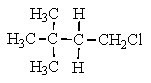
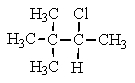
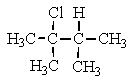
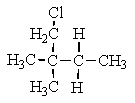
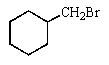
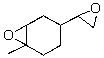
Deck 12: Reactions to Alkenes

ملء الشاشة (f)
exit full mode
سؤال
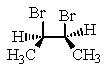
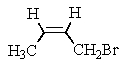
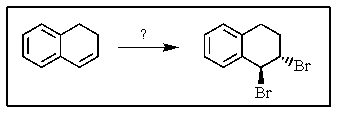
Based on your knowledge of the mechanisms involved,which of the reagents below would you expect to accomplish the following reaction? (Think through the mechanism!) <strong>Based on your knowledge of the mechanisms involved,which of the reagents below would you expect to accomplish the following reaction? (Think through the mechanism!)  </strong> A) HBr B) Br<sub>2</sub> C) PBr<sub>3</sub> D) NaBr E) HBr + peroxides <div style=padding-top: 35px>
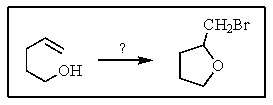
A) HBr
B) Br2
C) PBr3
D) NaBr
E) HBr + peroxides
استخدم زر المسافة أو
up arrow
down arrow
لقلب البطاقة.
سؤال
Which reagents would you expect to accomplish the following transformation? <strong>Which reagents would you expect to accomplish the following transformation?  </strong> A) BH<sub>3</sub> then H<sub>2</sub>O<sub>2</sub>,<sup> -</sup>OH B) Hg(O<sub>2</sub>CCH<sub>3</sub>)<sub>2</sub>, H<sub>2</sub>O then NaBH<sub>4</sub> C) H<sub>2</sub>O,H<sup>+</sup> D) KMnO<sub>4</sub>,H<sub>2</sub>O,cold E) cat.OsO<sub>4</sub>,H<sub>2</sub>O<sub>2</sub> <div style=padding-top: 35px>
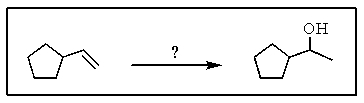
A) BH3 then H2O2, -OH
B) Hg(O2CCH3)2,
H2O then NaBH4
C) H2O,H+
D) KMnO4,H2O,cold
E) cat.OsO4,H2O2
سؤال
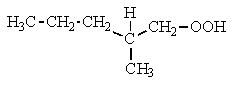
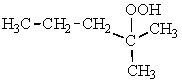
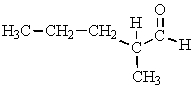
What would be the major organic product of the following reaction? <strong>What would be the major organic product of the following reaction?  </strong> A)   <sup> </sup> B)   C)   D)   E)   <div style=padding-top: 35px>
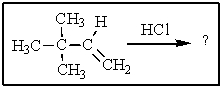
A)
<strong>What would be the major organic product of the following reaction?  </strong> A)   <sup> </sup> B)   C)   D)   E)   <div style=padding-top: 35px>
B)
<strong>What would be the major organic product of the following reaction?  </strong> A)   <sup> </sup> B)   C)   D)   E)   <div style=padding-top: 35px>
C)
<strong>What would be the major organic product of the following reaction?  </strong> A)   <sup> </sup> B)   C)   D)   E)   <div style=padding-top: 35px>
D)
<strong>What would be the major organic product of the following reaction?  </strong> A)   <sup> </sup> B)   C)   D)   E)   <div style=padding-top: 35px>
E)
<strong>What would be the major organic product of the following reaction?  </strong> A)   <sup> </sup> B)   C)   D)   E)   <div style=padding-top: 35px>
سؤال
What would be the product of the following reaction? <strong>What would be the product of the following reaction?  </strong> A)   <sup> </sup> B)   C)   D)   E)   <div style=padding-top: 35px>
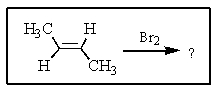
A)
<strong>What would be the product of the following reaction?  </strong> A)   <sup> </sup> B)   C)   D)   E)   <div style=padding-top: 35px>
B)
<strong>What would be the product of the following reaction?  </strong> A)   <sup> </sup> B)   C)   D)   E)   <div style=padding-top: 35px>
C)
<strong>What would be the product of the following reaction?  </strong> A)   <sup> </sup> B)   C)   D)   E)   <div style=padding-top: 35px>
D)
<strong>What would be the product of the following reaction?  </strong> A)   <sup> </sup> B)   C)   D)   E)   <div style=padding-top: 35px>
E)
<strong>What would be the product of the following reaction?  </strong> A)   <sup> </sup> B)   C)   D)   E)   <div style=padding-top: 35px>
سؤال
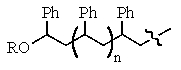
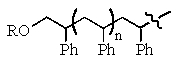
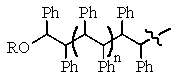
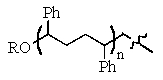
Radical polymerization of styrene produces what polymer? (n = large number) <strong>Radical polymerization of styrene produces what polymer? (n = large number)  </strong> A)   B)   C)   D)   E) None of the above. <div style=padding-top: 35px>
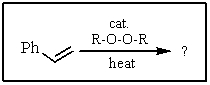
A)
<strong>Radical polymerization of styrene produces what polymer? (n = large number)  </strong> A)   B)   C)   D)   E) None of the above. <div style=padding-top: 35px>
B)
<strong>Radical polymerization of styrene produces what polymer? (n = large number)  </strong> A)   B)   C)   D)   E) None of the above. <div style=padding-top: 35px>
C)
<strong>Radical polymerization of styrene produces what polymer? (n = large number)  </strong> A)   B)   C)   D)   E) None of the above. <div style=padding-top: 35px>
D)
<strong>Radical polymerization of styrene produces what polymer? (n = large number)  </strong> A)   B)   C)   D)   E) None of the above. <div style=padding-top: 35px>
E) None of the above.
سؤال
What would be the expected product of the following reaction? <strong>What would be the expected product of the following reaction?  </strong> A)   B)   C)   D)   E)   <div style=padding-top: 35px>
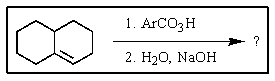
A)
<strong>What would be the expected product of the following reaction?  </strong> A)   B)   C)   D)   E)   <div style=padding-top: 35px>
B)
<strong>What would be the expected product of the following reaction?  </strong> A)   B)   C)   D)   E)   <div style=padding-top: 35px>
C)
<strong>What would be the expected product of the following reaction?  </strong> A)   B)   C)   D)   E)   <div style=padding-top: 35px>
D)
<strong>What would be the expected product of the following reaction?  </strong> A)   B)   C)   D)   E)   <div style=padding-top: 35px>
E)
<strong>What would be the expected product of the following reaction?  </strong> A)   B)   C)   D)   E)   <div style=padding-top: 35px>
سؤال
What reagent(s)would accomplish the following reaction? <strong>What reagent(s)would accomplish the following reaction?  </strong> A) Br<sub>2</sub> B) NBS C) Br<sub>2</sub> + light D) Br<sub>2</sub> + FeBr<sub>3</sub> E) HBr <div style=padding-top: 35px>
A) Br2
B) NBS
C) Br2 + light
D) Br2 + FeBr3
E) HBr
سؤال
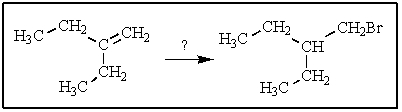
What reagent(s)would accomplish the following transformation?  <strong>What reagent(s)would accomplish the following transformation?  </strong> A) Br<sub>2</sub>,h \nu  B) HBr C) PBr<sub>3</sub> D) HBr + peroxides E) HgBr<sub>2</sub> + NaBH<sub>4</sub> <div style=padding-top: 35px>
A) Br2,h ν\nu
B) HBr
C) PBr3
D) HBr + peroxides
E) HgBr2 + NaBH4
سؤال
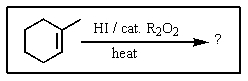
Predict the major product of the following reaction: <strong>Predict the major product of the following reaction:  </strong> A)   B)   C)   D)   E)   <div style=padding-top: 35px>
A)
<strong>Predict the major product of the following reaction:  </strong> A)   B)   C)   D)   E)   <div style=padding-top: 35px>
B)
<strong>Predict the major product of the following reaction:  </strong> A)   B)   C)   D)   E)   <div style=padding-top: 35px>
C)
<strong>Predict the major product of the following reaction:  </strong> A)   B)   C)   D)   E)   <div style=padding-top: 35px>
D)
<strong>Predict the major product of the following reaction:  </strong> A)   B)   C)   D)   E)   <div style=padding-top: 35px>
E)
<strong>Predict the major product of the following reaction:  </strong> A)   B)   C)   D)   E)   <div style=padding-top: 35px>
سؤال
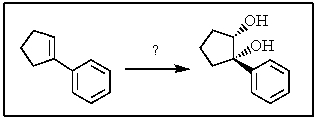
Which of the reagents below would best accomplish the following transformation? <strong>Which of the reagents below would best accomplish the following transformation?  </strong> A) H<sub>2</sub>O + cat.H<sub>2</sub>SO<sub>4</sub> B) CH<sub>3</sub>CO<sub>3</sub>H,then NaOH + H<sub>2</sub>O C) Br<sub>2</sub> + H<sub>2</sub>O D) O<sub>3</sub> then Zn + HCl E) KMnO<sub>4</sub> + <sup>-</sup>OH/ H<sub>2</sub>O <div style=padding-top: 35px>
A) H2O + cat.H2SO4
B) CH3CO3H,then NaOH + H2O
C) Br2 + H2O
D) O3 then Zn + HCl
E) KMnO4 + -OH/ H2O
سؤال
What would be the major organic product of the following reaction? <strong>What would be the major organic product of the following reaction?  </strong> A)   <sup> </sup> B)   C)   D)   E)   <div style=padding-top: 35px>
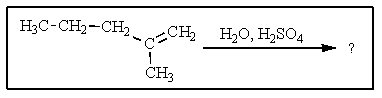
A)
<strong>What would be the major organic product of the following reaction?  </strong> A)   <sup> </sup> B)   C)   D)   E)   <div style=padding-top: 35px>
B)
<strong>What would be the major organic product of the following reaction?  </strong> A)   <sup> </sup> B)   C)   D)   E)   <div style=padding-top: 35px>
C)
<strong>What would be the major organic product of the following reaction?  </strong> A)   <sup> </sup> B)   C)   D)   E)   <div style=padding-top: 35px>
D)
<strong>What would be the major organic product of the following reaction?  </strong> A)   <sup> </sup> B)   C)   D)   E)   <div style=padding-top: 35px>
E)
<strong>What would be the major organic product of the following reaction?  </strong> A)   <sup> </sup> B)   C)   D)   E)   <div style=padding-top: 35px>
سؤال
What reagents would be required to accomplish the following transformation? <strong>What reagents would be required to accomplish the following transformation?  </strong> A) KMnO<sub>4</sub>,<sup> -</sup>OH,H<sub>2</sub>O B) BH<sub>3</sub> then H<sub>2</sub>O<sub>2</sub> C) CH<sub>3</sub>CO<sub>3</sub>H then H<sub>2</sub>O,H<sup>+</sup> D) OsO<sub>4</sub>,<sup>t</sup>BuOOH,H<sub>2</sub>O E) Br<sub>2</sub>,H<sub>2</sub>O <div style=padding-top: 35px>
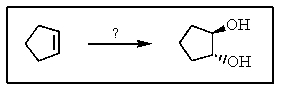
A) KMnO4, -OH,H2O
B) BH3 then H2O2
C) CH3CO3H then H2O,H+
D) OsO4,tBuOOH,H2O
E) Br2,H2O
سؤال
What type of reaction is the following? <strong>What type of reaction is the following?  </strong> A) elimination B) addition C) substitution D) rearrangement E) reduction <div style=padding-top: 35px>

A) elimination
B) addition
C) substitution
D) rearrangement
E) reduction
سؤال
What type of reaction is the following? <strong>What type of reaction is the following?  </strong> A) elimination B) substitution C) addition D) rearrangement E) reduction <div style=padding-top: 35px>
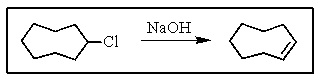
A) elimination
B) substitution
C) addition
D) rearrangement
E) reduction
سؤال
Considering the following reactions,you conclude that the stereochemistry of reactions #1 and #2 is: <strong>Considering the following reactions,you conclude that the stereochemistry of reactions #1 and #2 is:  </strong> A) anti and syn,respectively B) syn and anti,respectively C) anti and anti,respectively D) syn and syn,respectively E) None of the above. <div style=padding-top: 35px>
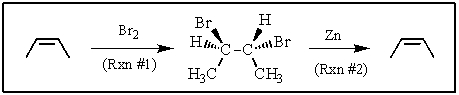
A) anti and syn,respectively
B) syn and anti,respectively
C) anti and anti,respectively
D) syn and syn,respectively
E) None of the above.
سؤال
Polymerization reactions are thermodynamically favorable (exothermic)because

A) large molecules are more stable than small ones.
B) polymers precipitate,which shifts the equilibrium.
C) a sigma bond is more stable than a π\pi bond.
D) crosslinking stabilizes the product.
E) alkenes are too unstable to store.
سؤال
Reaction with ozone,followed by treatment with (CH3)2S,of which of the following would not yield any CH3CHO?

A)
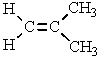
<strong>Reaction with ozone,followed by treatment with (CH<sub>3</sub>)<sub>2</sub>S,of which of the following would not yield any CH<sub>3</sub>CHO?</strong> A)   B)   C)   D)   E) Both B and D <div style=padding-top: 35px>
B)
<strong>Reaction with ozone,followed by treatment with (CH<sub>3</sub>)<sub>2</sub>S,of which of the following would not yield any CH<sub>3</sub>CHO?</strong> A)   B)   C)   D)   E) Both B and D <div style=padding-top: 35px>
C)
<strong>Reaction with ozone,followed by treatment with (CH<sub>3</sub>)<sub>2</sub>S,of which of the following would not yield any CH<sub>3</sub>CHO?</strong> A)   B)   C)   D)   E) Both B and D <div style=padding-top: 35px>
D)
<strong>Reaction with ozone,followed by treatment with (CH<sub>3</sub>)<sub>2</sub>S,of which of the following would not yield any CH<sub>3</sub>CHO?</strong> A)   B)   C)   D)   E) Both B and D <div style=padding-top: 35px>
E) Both B and D
سؤال
Which of the following reagents would best accomplish the following transformation? <strong>Which of the following reagents would best accomplish the following transformation?  </strong> A) NaBH<sub>4</sub> B) LiAlH<sub>4</sub> C) BH<sub>3</sub>,NaBH<sub>4</sub> D) H<sub>2</sub>SO<sub>4</sub> E) H<sub>2</sub>,Pd <div style=padding-top: 35px>
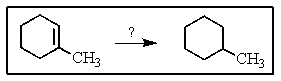
A) NaBH4
B) LiAlH4
C) BH3,NaBH4
D) H2SO4
E) H2,Pd
سؤال
Which of the following rearrangements would you not expect the cation below to undergo to any significant extent? <strong>Which of the following rearrangements would you not expect the cation below to undergo to any significant extent?  </strong> A)   B)   C)   D) None of the above would occur to a significant extent. E) All of the above would be significant. <div style=padding-top: 35px>
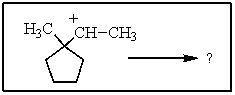
A)
<strong>Which of the following rearrangements would you not expect the cation below to undergo to any significant extent?  </strong> A)   B)   C)   D) None of the above would occur to a significant extent. E) All of the above would be significant. <div style=padding-top: 35px>
B)
<strong>Which of the following rearrangements would you not expect the cation below to undergo to any significant extent?  </strong> A)   B)   C)   D) None of the above would occur to a significant extent. E) All of the above would be significant. <div style=padding-top: 35px>
C)
<strong>Which of the following rearrangements would you not expect the cation below to undergo to any significant extent?  </strong> A)   B)   C)   D) None of the above would occur to a significant extent. E) All of the above would be significant. <div style=padding-top: 35px>
D) None of the above would occur to a significant extent.
E) All of the above would be significant.
سؤال
What is the major product of the following reaction? <strong>What is the major product of the following reaction?  </strong> A)   <sup> </sup> B)   C)   D)   E)   <div style=padding-top: 35px>
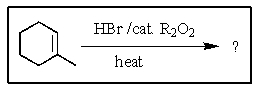
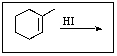
A)
<strong>What is the major product of the following reaction?  </strong> A)   <sup> </sup> B)   C)   D)   E)   <div style=padding-top: 35px>
B)
<strong>What is the major product of the following reaction?  </strong> A)   <sup> </sup> B)   C)   D)   E)   <div style=padding-top: 35px>
C)
<strong>What is the major product of the following reaction?  </strong> A)   <sup> </sup> B)   C)   D)   E)   <div style=padding-top: 35px>
D)
<strong>What is the major product of the following reaction?  </strong> A)   <sup> </sup> B)   C)   D)   E)   <div style=padding-top: 35px>
E)
<strong>What is the major product of the following reaction?  </strong> A)   <sup> </sup> B)   C)   D)   E)   <div style=padding-top: 35px>
سؤال
What is the major product of the following reaction? <strong>What is the major product of the following reaction?  </strong> A)   <sup> </sup> B)   C)   D) There is no reaction. E)   <div style=padding-top: 35px>

A)
<strong>What is the major product of the following reaction?  </strong> A)   <sup> </sup> B)   C)   D) There is no reaction. E)   <div style=padding-top: 35px>
B)
<strong>What is the major product of the following reaction?  </strong> A)   <sup> </sup> B)   C)   D) There is no reaction. E)   <div style=padding-top: 35px>
C)
<strong>What is the major product of the following reaction?  </strong> A)   <sup> </sup> B)   C)   D) There is no reaction. E)   <div style=padding-top: 35px>
D) There is no reaction.
E)
<strong>What is the major product of the following reaction?  </strong> A)   <sup> </sup> B)   C)   D) There is no reaction. E)   <div style=padding-top: 35px>
سؤال
What reactant and product types would be most appropriate for the reagents shown? <strong>What reactant and product types would be most appropriate for the reagents shown?  </strong> A) alkene/Markovnikov alcohol B) alkene/anti-Markovnikov alcohol C) alkene/syn-1,2-diol D) alkyne/anti-1,2-diol E) alkene/epoxide <div style=padding-top: 35px>
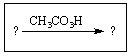
A) alkene/Markovnikov alcohol
B) alkene/anti-Markovnikov alcohol
C) alkene/syn-1,2-diol
D) alkyne/anti-1,2-diol
E) alkene/epoxide
سؤال
Which of the following products is most likely to form under the reaction conditions? <strong>Which of the following products is most likely to form under the reaction conditions?  </strong> A)   B)   C)   D)   E)   <div style=padding-top: 35px>
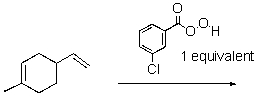
A)
<strong>Which of the following products is most likely to form under the reaction conditions?  </strong> A)   B)   C)   D)   E)   <div style=padding-top: 35px>
B)
<strong>Which of the following products is most likely to form under the reaction conditions?  </strong> A)   B)   C)   D)   E)   <div style=padding-top: 35px>
C)
<strong>Which of the following products is most likely to form under the reaction conditions?  </strong> A)   B)   C)   D)   E)   <div style=padding-top: 35px>
D)
<strong>Which of the following products is most likely to form under the reaction conditions?  </strong> A)   B)   C)   D)   E)   <div style=padding-top: 35px>
E)
<strong>Which of the following products is most likely to form under the reaction conditions?  </strong> A)   B)   C)   D)   E)   <div style=padding-top: 35px>
سؤال
What would be the expected product from the reaction shown? <strong>What would be the expected product from the reaction shown?  </strong> A)   B)   C)   D)   E)   <div style=padding-top: 35px>
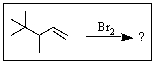
A)
<strong>What would be the expected product from the reaction shown?  </strong> A)   B)   C)   D)   E)   <div style=padding-top: 35px>
B)
<strong>What would be the expected product from the reaction shown?  </strong> A)   B)   C)   D)   E)   <div style=padding-top: 35px>
C)
<strong>What would be the expected product from the reaction shown?  </strong> A)   B)   C)   D)   E)   <div style=padding-top: 35px>
D)
<strong>What would be the expected product from the reaction shown?  </strong> A)   B)   C)   D)   E)   <div style=padding-top: 35px>
E)
<strong>What would be the expected product from the reaction shown?  </strong> A)   B)   C)   D)   E)   <div style=padding-top: 35px>
سؤال
Which of the following products is most likely to form under the reaction conditions? <strong>Which of the following products is most likely to form under the reaction conditions?  </strong> A)   B)   C)   D)   E)   <div style=padding-top: 35px>
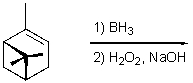
A)
<strong>Which of the following products is most likely to form under the reaction conditions?  </strong> A)   B)   C)   D)   E)   <div style=padding-top: 35px>
B)
<strong>Which of the following products is most likely to form under the reaction conditions?  </strong> A)   B)   C)   D)   E)   <div style=padding-top: 35px>
C)
<strong>Which of the following products is most likely to form under the reaction conditions?  </strong> A)   B)   C)   D)   E)   <div style=padding-top: 35px>
D)
<strong>Which of the following products is most likely to form under the reaction conditions?  </strong> A)   B)   C)   D)   E)   <div style=padding-top: 35px>
E)
<strong>Which of the following products is most likely to form under the reaction conditions?  </strong> A)   B)   C)   D)   E)   <div style=padding-top: 35px>
سؤال
Predict the product of the following reaction: <strong>Predict the product of the following reaction:  </strong> A)   B)   C)   D)   E) Equal amounts of A and B. <div style=padding-top: 35px>
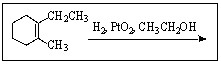
A)
<strong>Predict the product of the following reaction:  </strong> A)   B)   C)   D)   E) Equal amounts of A and B. <div style=padding-top: 35px>
B)
<strong>Predict the product of the following reaction:  </strong> A)   B)   C)   D)   E) Equal amounts of A and B. <div style=padding-top: 35px>
C)
<strong>Predict the product of the following reaction:  </strong> A)   B)   C)   D)   E) Equal amounts of A and B. <div style=padding-top: 35px>
D)
<strong>Predict the product of the following reaction:  </strong> A)   B)   C)   D)   E) Equal amounts of A and B. <div style=padding-top: 35px>
E) Equal amounts of A and B.
سؤال
Based on your knowledge of the mechanisms involved,which of the reagents below would you expect to accomplish the following reaction? (Think through the mechanism!) <strong>Based on your knowledge of the mechanisms involved,which of the reagents below would you expect to accomplish the following reaction? (Think through the mechanism!)  </strong> A) H<sub>2</sub>/Pd B) Br<sub>2</sub> C) PBr<sub>3</sub> D) H<sub>2</sub>SO<sub>4</sub> E) NaBH<sub>4</sub> <div style=padding-top: 35px>
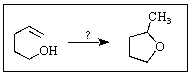
A) H2/Pd
B) Br2
C) PBr3
D) H2SO4
E) NaBH4
سؤال
Which reagents would be appropriate for the chemical transformation shown below? <strong>Which reagents would be appropriate for the chemical transformation shown below?  </strong> A) H<sub>2</sub>O,H<sub>2</sub>SO<sub>4</sub> B) BH<sub>3</sub>,then H<sub>2</sub>O<sub>2</sub>,<sup> -</sup>OH C) Hg(OAc)<sub>2</sub>,H<sub>2</sub>O,then NaBH<sub>4</sub> D) NaBH<sub>4</sub>,CH<sub>3</sub>OH E) PCC <div style=padding-top: 35px>
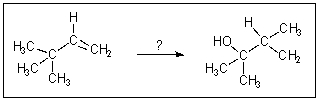
A) H2O,H2SO4
B) BH3,then H2O2, -OH
C) Hg(OAc)2,H2O,then NaBH4
D) NaBH4,CH3OH
E) PCC
سؤال
Which of the following products is most likely to form under the reaction conditions? <strong>Which of the following products is most likely to form under the reaction conditions?  </strong> A)   B)   C)   D)   E) None of the above. <div style=padding-top: 35px>
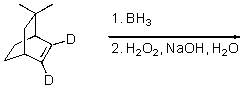
A)
<strong>Which of the following products is most likely to form under the reaction conditions?  </strong> A)   B)   C)   D)   E) None of the above. <div style=padding-top: 35px>
B)
<strong>Which of the following products is most likely to form under the reaction conditions?  </strong> A)   B)   C)   D)   E) None of the above. <div style=padding-top: 35px>
C)
<strong>Which of the following products is most likely to form under the reaction conditions?  </strong> A)   B)   C)   D)   E) None of the above. <div style=padding-top: 35px>
D)
<strong>Which of the following products is most likely to form under the reaction conditions?  </strong> A)   B)   C)   D)   E) None of the above. <div style=padding-top: 35px>
E) None of the above.
سؤال
What reactant and product types would be most appropriate for the reagents shown? <strong>What reactant and product types would be most appropriate for the reagents shown?  </strong> A) alkene/alcohol B) alkene/anti-1,2-diol C) alkene/syn-1,2-diol D) alkyne/ketone E) alkyne/aldehyde <div style=padding-top: 35px>
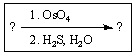
A) alkene/alcohol
B) alkene/anti-1,2-diol
C) alkene/syn-1,2-diol
D) alkyne/ketone
E) alkyne/aldehyde
سؤال
Which of the following starting materials are most likely to give the product under the reaction conditions? <strong>Which of the following starting materials are most likely to give the product under the reaction conditions?  </strong> A)   B)   C)   D)   E)   <div style=padding-top: 35px>
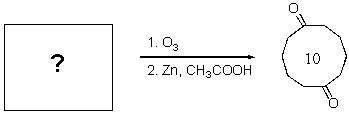
A)
<strong>Which of the following starting materials are most likely to give the product under the reaction conditions?  </strong> A)   B)   C)   D)   E)   <div style=padding-top: 35px>
B)
<strong>Which of the following starting materials are most likely to give the product under the reaction conditions?  </strong> A)   B)   C)   D)   E)   <div style=padding-top: 35px>
C)
<strong>Which of the following starting materials are most likely to give the product under the reaction conditions?  </strong> A)   B)   C)   D)   E)   <div style=padding-top: 35px>
D)
<strong>Which of the following starting materials are most likely to give the product under the reaction conditions?  </strong> A)   B)   C)   D)   E)   <div style=padding-top: 35px>
E)
<strong>Which of the following starting materials are most likely to give the product under the reaction conditions?  </strong> A)   B)   C)   D)   E)   <div style=padding-top: 35px>
سؤال
Predict the major product of the following reaction: <strong>Predict the major product of the following reaction:  </strong> A)   B)   C)   D)   E)   <div style=padding-top: 35px>
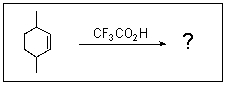
A)
<strong>Predict the major product of the following reaction:  </strong> A)   B)   C)   D)   E)   <div style=padding-top: 35px>
B)
<strong>Predict the major product of the following reaction:  </strong> A)   B)   C)   D)   E)   <div style=padding-top: 35px>
C)
<strong>Predict the major product of the following reaction:  </strong> A)   B)   C)   D)   E)   <div style=padding-top: 35px>
D)
<strong>Predict the major product of the following reaction:  </strong> A)   B)   C)   D)   E)   <div style=padding-top: 35px>
E)
<strong>Predict the major product of the following reaction:  </strong> A)   B)   C)   D)   E)   <div style=padding-top: 35px>
سؤال
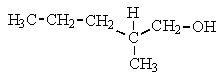
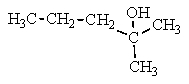
What is the best method to convert alkenes into alcohols following Markovnikov's Rule?

A) PCC
B) H2O
C) hydroboration/oxidation
D) oxymercuration-demercuration
E) None of the above.
سؤال
Which reagents would be appropriate for the chemical transformation shown below? <strong>Which reagents would be appropriate for the chemical transformation shown below?  </strong> A) H<sub>2</sub>O,H<sub>2</sub>SO<sub>4</sub> B) BH<sub>3</sub>,then H<sub>2</sub>O<sub>2</sub>,<sup> -</sup>OH C) Hg(OAc)<sub>2</sub>,H<sub>2</sub>O,then NaBH<sub>4</sub> D) NaBH<sub>4</sub>,CH<sub>3</sub>OH E) PCC <div style=padding-top: 35px>
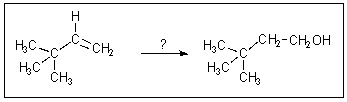
A) H2O,H2SO4
B) BH3,then H2O2, -OH
C) Hg(OAc)2,H2O,then NaBH4
D) NaBH4,CH3OH
E) PCC
سؤال
Which reagents would be appropriate for the chemical transformation shown below? <strong>Which reagents would be appropriate for the chemical transformation shown below?  </strong> A) H<sub>2</sub>O,H<sub>2</sub>SO<sub>4</sub> B) BH<sub>3</sub>,then H<sub>2</sub>O<sub>2</sub>,<sup> -</sup>OH C) Hg(OAc)<sub>2</sub>,H<sub>2</sub>O,then NaBH<sub>4</sub> D) NaBH<sub>4</sub>,CH<sub>3</sub>OH E) PCC <div style=padding-top: 35px>
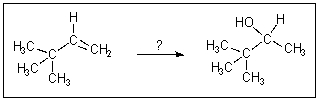
A) H2O,H2SO4
B) BH3,then H2O2, -OH
C) Hg(OAc)2,H2O,then NaBH4
D) NaBH4,CH3OH
E) PCC
سؤال
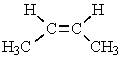
How many products are possible in the reaction of trans-2-butene with Br2?

A) 0
B) 1
C) 2
D) 3
E) 4
سؤال
What reactant and product types would be most appropriate for the reagents shown? <strong>What reactant and product types would be most appropriate for the reagents shown?  </strong> A) alkene/syn-1,2-diol B) alkene/anti-1,2-diol C) alkene/alcohol D) alkene/aldehydes and/or ketones E) alkene/epoxide <div style=padding-top: 35px>
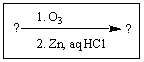
A) alkene/syn-1,2-diol
B) alkene/anti-1,2-diol
C) alkene/alcohol
D) alkene/aldehydes and/or ketones
E) alkene/epoxide
سؤال
What reactant and product types would be most appropriate for the reagents shown? <strong>What reactant and product types would be most appropriate for the reagents shown?  </strong> A) alkene/syn-1,2-dibromide B) alkene/anti-1,2-dibromide C) alkene/2-bromoalcohol D) alkene/1,2-diol E) alkene/epoxide <div style=padding-top: 35px>
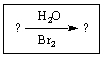
A) alkene/syn-1,2-dibromide
B) alkene/anti-1,2-dibromide
C) alkene/2-bromoalcohol
D) alkene/1,2-diol
E) alkene/epoxide
سؤال
What reactant and product types would be most appropriate for the reagents shown? <strong>What reactant and product types would be most appropriate for the reagents shown?  </strong> A) alkene/Markovnikov alcohol B) alkene/anti-Markovnikov alcohol C) alkene/1,2-diol D) alkyne/1,2-diol E) alcohol/alkene <div style=padding-top: 35px>

A) alkene/Markovnikov alcohol
B) alkene/anti-Markovnikov alcohol
C) alkene/1,2-diol
D) alkyne/1,2-diol
E) alcohol/alkene
سؤال
What reactant and product types would be most appropriate for the reagents shown? <strong>What reactant and product types would be most appropriate for the reagents shown?  </strong> A) alkene/Markovnikov alkyl bromide B) alkene/anti-Markovnikov alkyl bromide C) alkene/syn-1,2-dibromide D) alkyne/anti-1,2-dibromide E) alcohol/alkene <div style=padding-top: 35px>

A) alkene/Markovnikov alkyl bromide
B) alkene/anti-Markovnikov alkyl bromide
C) alkene/syn-1,2-dibromide
D) alkyne/anti-1,2-dibromide
E) alcohol/alkene
سؤال
What product,if any,would result from the reaction shown below? <strong>What product,if any,would result from the reaction shown below?  </strong> A)   B)   C)   D) both A and B E) no reaction occurs <div style=padding-top: 35px>
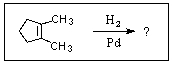
A)
<strong>What product,if any,would result from the reaction shown below?  </strong> A)   B)   C)   D) both A and B E) no reaction occurs <div style=padding-top: 35px>
B)
<strong>What product,if any,would result from the reaction shown below?  </strong> A)   B)   C)   D) both A and B E) no reaction occurs <div style=padding-top: 35px>
C)
<strong>What product,if any,would result from the reaction shown below?  </strong> A)   B)   C)   D) both A and B E) no reaction occurs <div style=padding-top: 35px>
D) both A and B
E) no reaction occurs
سؤال
Select the product for the following reaction. <strong>Select the product for the following reaction.  </strong> A)   B)   C)   D)   E) None of the above. <div style=padding-top: 35px>
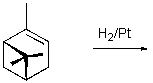
A)
<strong>Select the product for the following reaction.  </strong> A)   B)   C)   D)   E) None of the above. <div style=padding-top: 35px>
B)
<strong>Select the product for the following reaction.  </strong> A)   B)   C)   D)   E) None of the above. <div style=padding-top: 35px>
C)
<strong>Select the product for the following reaction.  </strong> A)   B)   C)   D)   E) None of the above. <div style=padding-top: 35px>
D)
<strong>Select the product for the following reaction.  </strong> A)   B)   C)   D)   E) None of the above. <div style=padding-top: 35px>
E) None of the above.
سؤال
Cholesterol is a major lipid component of atherosclerotic plaques and can be present at such high concentrations that it forms a crystalline phase within a diseased artery.In addition to cholesterol,the 5,6-secosterol compound has also been isolated.5,6-secostereol has been shown to be the product of an unforeseen oxidation reaction in the body.Which one of these reagents could be used convert cholesterol to the 5,6-secosterol? (Science 2003,302,1053) <strong>Cholesterol is a major lipid component of atherosclerotic plaques and can be present at such high concentrations that it forms a crystalline phase within a diseased artery.In addition to cholesterol,the 5,6-secosterol compound has also been isolated.5,6-secostereol has been shown to be the product of an unforeseen oxidation reaction in the body.Which one of these reagents could be used convert cholesterol to the 5,6-secosterol? (Science 2003,302,1053)  </strong> A) K<sub>2</sub>Cr<sub>2</sub>O<sub>7</sub> B) O<sub>3</sub> C) (CH<sub>3</sub>)<sub>2</sub>S D) HOOH E) LiOH <div style=padding-top: 35px>
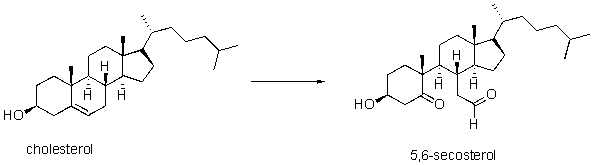
A) K2Cr2O7
B) O3
C) (CH3)2S
D) HOOH
E) LiOH
سؤال
Select the major product of the olefin metathesis reaction ? <strong>Select the major product of the olefin metathesis reaction ?  </strong> A)   B)   C)   D)   E)   <div style=padding-top: 35px>
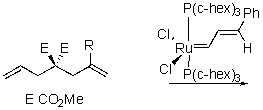
A)
<strong>Select the major product of the olefin metathesis reaction ?  </strong> A)   B)   C)   D)   E)   <div style=padding-top: 35px>
B)
<strong>Select the major product of the olefin metathesis reaction ?  </strong> A)   B)   C)   D)   E)   <div style=padding-top: 35px>
C)
<strong>Select the major product of the olefin metathesis reaction ?  </strong> A)   B)   C)   D)   E)   <div style=padding-top: 35px>
D)
<strong>Select the major product of the olefin metathesis reaction ?  </strong> A)   B)   C)   D)   E)   <div style=padding-top: 35px>
E)
<strong>Select the major product of the olefin metathesis reaction ?  </strong> A)   B)   C)   D)   E)   <div style=padding-top: 35px>
فتح الحزمة
قم بالتسجيل لفتح البطاقات في هذه المجموعة!
Unlock Deck
Unlock Deck
1/44
auto play flashcards
العب
simple tutorial
ملء الشاشة (f)
exit full mode
Deck 12: Reactions to Alkenes
1
Based on your knowledge of the mechanisms involved,which of the reagents below would you expect to accomplish the following reaction? (Think through the mechanism!) <strong>Based on your knowledge of the mechanisms involved,which of the reagents below would you expect to accomplish the following reaction? (Think through the mechanism!)  </strong> A) HBr B) Br<sub>2</sub> C) PBr<sub>3</sub> D) NaBr E) HBr + peroxides

A) HBr
B) Br2
C) PBr3
D) NaBr
E) HBr + peroxides
Br2
2
Which reagents would you expect to accomplish the following transformation? <strong>Which reagents would you expect to accomplish the following transformation?  </strong> A) BH<sub>3</sub> then H<sub>2</sub>O<sub>2</sub>,<sup> -</sup>OH B) Hg(O<sub>2</sub>CCH<sub>3</sub>)<sub>2</sub>, H<sub>2</sub>O then NaBH<sub>4</sub> C) H<sub>2</sub>O,H<sup>+</sup> D) KMnO<sub>4</sub>,H<sub>2</sub>O,cold E) cat.OsO<sub>4</sub>,H<sub>2</sub>O<sub>2</sub>

A) BH3 then H2O2, -OH
B) Hg(O2CCH3)2,
H2O then NaBH4
C) H2O,H+
D) KMnO4,H2O,cold
E) cat.OsO4,H2O2
Hg(O2CCH3)2,
H2O then NaBH4
3
What would be the major organic product of the following reaction? <strong>What would be the major organic product of the following reaction?  </strong> A)   <sup> </sup> B)   C)   D)   E)

A)
<strong>What would be the major organic product of the following reaction?  </strong> A)   <sup> </sup> B)   C)   D)   E)
B)
<strong>What would be the major organic product of the following reaction?  </strong> A)   <sup> </sup> B)   C)   D)   E)
C)
<strong>What would be the major organic product of the following reaction?  </strong> A)   <sup> </sup> B)   C)   D)   E)
D)
<strong>What would be the major organic product of the following reaction?  </strong> A)   <sup> </sup> B)   C)   D)   E)
E)
<strong>What would be the major organic product of the following reaction?  </strong> A)   <sup> </sup> B)   C)   D)   E)
4
What would be the product of the following reaction? <strong>What would be the product of the following reaction?  </strong> A)   <sup> </sup> B)   C)   D)   E)

A)
<strong>What would be the product of the following reaction?  </strong> A)   <sup> </sup> B)   C)   D)   E)
B)
<strong>What would be the product of the following reaction?  </strong> A)   <sup> </sup> B)   C)   D)   E)
C)
<strong>What would be the product of the following reaction?  </strong> A)   <sup> </sup> B)   C)   D)   E)
D)
<strong>What would be the product of the following reaction?  </strong> A)   <sup> </sup> B)   C)   D)   E)
E)
<strong>What would be the product of the following reaction?  </strong> A)   <sup> </sup> B)   C)   D)   E)
فتح الحزمة
افتح القفل للوصول البطاقات البالغ عددها 44 في هذه المجموعة.
فتح الحزمة
k this deck
5
Radical polymerization of styrene produces what polymer? (n = large number) <strong>Radical polymerization of styrene produces what polymer? (n = large number)  </strong> A)   B)   C)   D)   E) None of the above.

A)
<strong>Radical polymerization of styrene produces what polymer? (n = large number)  </strong> A)   B)   C)   D)   E) None of the above.
B)
<strong>Radical polymerization of styrene produces what polymer? (n = large number)  </strong> A)   B)   C)   D)   E) None of the above.
C)
<strong>Radical polymerization of styrene produces what polymer? (n = large number)  </strong> A)   B)   C)   D)   E) None of the above.
D)
<strong>Radical polymerization of styrene produces what polymer? (n = large number)  </strong> A)   B)   C)   D)   E) None of the above.
E) None of the above.
فتح الحزمة
افتح القفل للوصول البطاقات البالغ عددها 44 في هذه المجموعة.
فتح الحزمة
k this deck
6
What would be the expected product of the following reaction? <strong>What would be the expected product of the following reaction?  </strong> A)   B)   C)   D)   E)

A)
<strong>What would be the expected product of the following reaction?  </strong> A)   B)   C)   D)   E)
B)
<strong>What would be the expected product of the following reaction?  </strong> A)   B)   C)   D)   E)
C)
<strong>What would be the expected product of the following reaction?  </strong> A)   B)   C)   D)   E)
D)
<strong>What would be the expected product of the following reaction?  </strong> A)   B)   C)   D)   E)
E)
<strong>What would be the expected product of the following reaction?  </strong> A)   B)   C)   D)   E)
فتح الحزمة
افتح القفل للوصول البطاقات البالغ عددها 44 في هذه المجموعة.
فتح الحزمة
k this deck
7
What reagent(s)would accomplish the following reaction? <strong>What reagent(s)would accomplish the following reaction?  </strong> A) Br<sub>2</sub> B) NBS C) Br<sub>2</sub> + light D) Br<sub>2</sub> + FeBr<sub>3</sub> E) HBr

A) Br2
B) NBS
C) Br2 + light
D) Br2 + FeBr3
E) HBr
فتح الحزمة
افتح القفل للوصول البطاقات البالغ عددها 44 في هذه المجموعة.

فتح الحزمة
k this deck
8
What reagent(s)would accomplish the following transformation?  <strong>What reagent(s)would accomplish the following transformation?  </strong> A) Br<sub>2</sub>,h \nu  B) HBr C) PBr<sub>3</sub> D) HBr + peroxides E) HgBr<sub>2</sub> + NaBH<sub>4</sub>

A) Br2,h ν\nu
B) HBr
C) PBr3
D) HBr + peroxides
E) HgBr2 + NaBH4
فتح الحزمة
افتح القفل للوصول البطاقات البالغ عددها 44 في هذه المجموعة.

فتح الحزمة
k this deck
9
Predict the major product of the following reaction: <strong>Predict the major product of the following reaction:  </strong> A)   B)   C)   D)   E)

A)
<strong>Predict the major product of the following reaction:  </strong> A)   B)   C)   D)   E)
B)
<strong>Predict the major product of the following reaction:  </strong> A)   B)   C)   D)   E)
C)
<strong>Predict the major product of the following reaction:  </strong> A)   B)   C)   D)   E)
D)
<strong>Predict the major product of the following reaction:  </strong> A)   B)   C)   D)   E)
E)
<strong>Predict the major product of the following reaction:  </strong> A)   B)   C)   D)   E)
فتح الحزمة
افتح القفل للوصول البطاقات البالغ عددها 44 في هذه المجموعة.
فتح الحزمة
k this deck
10
Which of the reagents below would best accomplish the following transformation? <strong>Which of the reagents below would best accomplish the following transformation?  </strong> A) H<sub>2</sub>O + cat.H<sub>2</sub>SO<sub>4</sub> B) CH<sub>3</sub>CO<sub>3</sub>H,then NaOH + H<sub>2</sub>O C) Br<sub>2</sub> + H<sub>2</sub>O D) O<sub>3</sub> then Zn + HCl E) KMnO<sub>4</sub> + <sup>-</sup>OH/ H<sub>2</sub>O

A) H2O + cat.H2SO4
B) CH3CO3H,then NaOH + H2O
C) Br2 + H2O
D) O3 then Zn + HCl
E) KMnO4 + -OH/ H2O
فتح الحزمة
افتح القفل للوصول البطاقات البالغ عددها 44 في هذه المجموعة.
فتح الحزمة
k this deck
11
What would be the major organic product of the following reaction? <strong>What would be the major organic product of the following reaction?  </strong> A)   <sup> </sup> B)   C)   D)   E)

A)
<strong>What would be the major organic product of the following reaction?  </strong> A)   <sup> </sup> B)   C)   D)   E)
B)
<strong>What would be the major organic product of the following reaction?  </strong> A)   <sup> </sup> B)   C)   D)   E)
C)
<strong>What would be the major organic product of the following reaction?  </strong> A)   <sup> </sup> B)   C)   D)   E)
D)
<strong>What would be the major organic product of the following reaction?  </strong> A)   <sup> </sup> B)   C)   D)   E)
E)
<strong>What would be the major organic product of the following reaction?  </strong> A)   <sup> </sup> B)   C)   D)   E)
فتح الحزمة
افتح القفل للوصول البطاقات البالغ عددها 44 في هذه المجموعة.
فتح الحزمة
k this deck
12
What reagents would be required to accomplish the following transformation? <strong>What reagents would be required to accomplish the following transformation?  </strong> A) KMnO<sub>4</sub>,<sup> -</sup>OH,H<sub>2</sub>O B) BH<sub>3</sub> then H<sub>2</sub>O<sub>2</sub> C) CH<sub>3</sub>CO<sub>3</sub>H then H<sub>2</sub>O,H<sup>+</sup> D) OsO<sub>4</sub>,<sup>t</sup>BuOOH,H<sub>2</sub>O E) Br<sub>2</sub>,H<sub>2</sub>O

A) KMnO4, -OH,H2O
B) BH3 then H2O2
C) CH3CO3H then H2O,H+
D) OsO4,tBuOOH,H2O
E) Br2,H2O
فتح الحزمة
افتح القفل للوصول البطاقات البالغ عددها 44 في هذه المجموعة.
فتح الحزمة
k this deck
13
What type of reaction is the following? <strong>What type of reaction is the following?  </strong> A) elimination B) addition C) substitution D) rearrangement E) reduction

A) elimination
B) addition
C) substitution
D) rearrangement
E) reduction
فتح الحزمة
افتح القفل للوصول البطاقات البالغ عددها 44 في هذه المجموعة.
فتح الحزمة
k this deck
14
What type of reaction is the following? <strong>What type of reaction is the following?  </strong> A) elimination B) substitution C) addition D) rearrangement E) reduction

A) elimination
B) substitution
C) addition
D) rearrangement
E) reduction
فتح الحزمة
افتح القفل للوصول البطاقات البالغ عددها 44 في هذه المجموعة.
فتح الحزمة
k this deck
15
Considering the following reactions,you conclude that the stereochemistry of reactions #1 and #2 is: <strong>Considering the following reactions,you conclude that the stereochemistry of reactions #1 and #2 is:  </strong> A) anti and syn,respectively B) syn and anti,respectively C) anti and anti,respectively D) syn and syn,respectively E) None of the above.

A) anti and syn,respectively
B) syn and anti,respectively
C) anti and anti,respectively
D) syn and syn,respectively
E) None of the above.
فتح الحزمة
افتح القفل للوصول البطاقات البالغ عددها 44 في هذه المجموعة.
فتح الحزمة
k this deck
16
Polymerization reactions are thermodynamically favorable (exothermic)because

A) large molecules are more stable than small ones.
B) polymers precipitate,which shifts the equilibrium.
C) a sigma bond is more stable than a π\pi bond.
D) crosslinking stabilizes the product.
E) alkenes are too unstable to store.
فتح الحزمة
افتح القفل للوصول البطاقات البالغ عددها 44 في هذه المجموعة.
فتح الحزمة
k this deck
17
Reaction with ozone,followed by treatment with (CH3)2S,of which of the following would not yield any CH3CHO?

A)
<strong>Reaction with ozone,followed by treatment with (CH<sub>3</sub>)<sub>2</sub>S,of which of the following would not yield any CH<sub>3</sub>CHO?</strong> A)   B)   C)   D)   E) Both B and D
B)
<strong>Reaction with ozone,followed by treatment with (CH<sub>3</sub>)<sub>2</sub>S,of which of the following would not yield any CH<sub>3</sub>CHO?</strong> A)   B)   C)   D)   E) Both B and D
C)
<strong>Reaction with ozone,followed by treatment with (CH<sub>3</sub>)<sub>2</sub>S,of which of the following would not yield any CH<sub>3</sub>CHO?</strong> A)   B)   C)   D)   E) Both B and D
D)
<strong>Reaction with ozone,followed by treatment with (CH<sub>3</sub>)<sub>2</sub>S,of which of the following would not yield any CH<sub>3</sub>CHO?</strong> A)   B)   C)   D)   E) Both B and D
E) Both B and D
فتح الحزمة
افتح القفل للوصول البطاقات البالغ عددها 44 في هذه المجموعة.
فتح الحزمة
k this deck
18
Which of the following reagents would best accomplish the following transformation? <strong>Which of the following reagents would best accomplish the following transformation?  </strong> A) NaBH<sub>4</sub> B) LiAlH<sub>4</sub> C) BH<sub>3</sub>,NaBH<sub>4</sub> D) H<sub>2</sub>SO<sub>4</sub> E) H<sub>2</sub>,Pd

A) NaBH4
B) LiAlH4
C) BH3,NaBH4
D) H2SO4
E) H2,Pd
فتح الحزمة
افتح القفل للوصول البطاقات البالغ عددها 44 في هذه المجموعة.
فتح الحزمة
k this deck
19
Which of the following rearrangements would you not expect the cation below to undergo to any significant extent? <strong>Which of the following rearrangements would you not expect the cation below to undergo to any significant extent?  </strong> A)   B)   C)   D) None of the above would occur to a significant extent. E) All of the above would be significant.

A)
<strong>Which of the following rearrangements would you not expect the cation below to undergo to any significant extent?  </strong> A)   B)   C)   D) None of the above would occur to a significant extent. E) All of the above would be significant.
B)
<strong>Which of the following rearrangements would you not expect the cation below to undergo to any significant extent?  </strong> A)   B)   C)   D) None of the above would occur to a significant extent. E) All of the above would be significant.
C)
<strong>Which of the following rearrangements would you not expect the cation below to undergo to any significant extent?  </strong> A)   B)   C)   D) None of the above would occur to a significant extent. E) All of the above would be significant.
D) None of the above would occur to a significant extent.
E) All of the above would be significant.
فتح الحزمة
افتح القفل للوصول البطاقات البالغ عددها 44 في هذه المجموعة.
فتح الحزمة
k this deck
20
What is the major product of the following reaction? <strong>What is the major product of the following reaction?  </strong> A)   <sup> </sup> B)   C)   D)   E)

A)
<strong>What is the major product of the following reaction?  </strong> A)   <sup> </sup> B)   C)   D)   E)
B)
<strong>What is the major product of the following reaction?  </strong> A)   <sup> </sup> B)   C)   D)   E)
C)
<strong>What is the major product of the following reaction?  </strong> A)   <sup> </sup> B)   C)   D)   E)
D)
<strong>What is the major product of the following reaction?  </strong> A)   <sup> </sup> B)   C)   D)   E)
E)
<strong>What is the major product of the following reaction?  </strong> A)   <sup> </sup> B)   C)   D)   E)
فتح الحزمة
افتح القفل للوصول البطاقات البالغ عددها 44 في هذه المجموعة.
فتح الحزمة
k this deck
21
What is the major product of the following reaction? <strong>What is the major product of the following reaction?  </strong> A)   <sup> </sup> B)   C)   D) There is no reaction. E)

A)
<strong>What is the major product of the following reaction?  </strong> A)   <sup> </sup> B)   C)   D) There is no reaction. E)
B)
<strong>What is the major product of the following reaction?  </strong> A)   <sup> </sup> B)   C)   D) There is no reaction. E)
C)
<strong>What is the major product of the following reaction?  </strong> A)   <sup> </sup> B)   C)   D) There is no reaction. E)
D) There is no reaction.
E)
<strong>What is the major product of the following reaction?  </strong> A)   <sup> </sup> B)   C)   D) There is no reaction. E)
فتح الحزمة
افتح القفل للوصول البطاقات البالغ عددها 44 في هذه المجموعة.
فتح الحزمة
k this deck
22
What reactant and product types would be most appropriate for the reagents shown? <strong>What reactant and product types would be most appropriate for the reagents shown?  </strong> A) alkene/Markovnikov alcohol B) alkene/anti-Markovnikov alcohol C) alkene/syn-1,2-diol D) alkyne/anti-1,2-diol E) alkene/epoxide

A) alkene/Markovnikov alcohol
B) alkene/anti-Markovnikov alcohol
C) alkene/syn-1,2-diol
D) alkyne/anti-1,2-diol
E) alkene/epoxide
فتح الحزمة
افتح القفل للوصول البطاقات البالغ عددها 44 في هذه المجموعة.
فتح الحزمة
k this deck
23
Which of the following products is most likely to form under the reaction conditions? <strong>Which of the following products is most likely to form under the reaction conditions?  </strong> A)   B)   C)   D)   E)

A)
<strong>Which of the following products is most likely to form under the reaction conditions?  </strong> A)   B)   C)   D)   E)
B)
<strong>Which of the following products is most likely to form under the reaction conditions?  </strong> A)   B)   C)   D)   E)
C)
<strong>Which of the following products is most likely to form under the reaction conditions?  </strong> A)   B)   C)   D)   E)
D)
<strong>Which of the following products is most likely to form under the reaction conditions?  </strong> A)   B)   C)   D)   E)
E)
<strong>Which of the following products is most likely to form under the reaction conditions?  </strong> A)   B)   C)   D)   E)
فتح الحزمة
افتح القفل للوصول البطاقات البالغ عددها 44 في هذه المجموعة.
فتح الحزمة
k this deck
24
What would be the expected product from the reaction shown? <strong>What would be the expected product from the reaction shown?  </strong> A)   B)   C)   D)   E)

A)
<strong>What would be the expected product from the reaction shown?  </strong> A)   B)   C)   D)   E)
B)
<strong>What would be the expected product from the reaction shown?  </strong> A)   B)   C)   D)   E)
C)
<strong>What would be the expected product from the reaction shown?  </strong> A)   B)   C)   D)   E)
D)
<strong>What would be the expected product from the reaction shown?  </strong> A)   B)   C)   D)   E)
E)
<strong>What would be the expected product from the reaction shown?  </strong> A)   B)   C)   D)   E)
فتح الحزمة
افتح القفل للوصول البطاقات البالغ عددها 44 في هذه المجموعة.
فتح الحزمة
k this deck
25
Which of the following products is most likely to form under the reaction conditions? <strong>Which of the following products is most likely to form under the reaction conditions?  </strong> A)   B)   C)   D)   E)

A)
<strong>Which of the following products is most likely to form under the reaction conditions?  </strong> A)   B)   C)   D)   E)
B)
<strong>Which of the following products is most likely to form under the reaction conditions?  </strong> A)   B)   C)   D)   E)
C)
<strong>Which of the following products is most likely to form under the reaction conditions?  </strong> A)   B)   C)   D)   E)
D)
<strong>Which of the following products is most likely to form under the reaction conditions?  </strong> A)   B)   C)   D)   E)
E)
<strong>Which of the following products is most likely to form under the reaction conditions?  </strong> A)   B)   C)   D)   E)
فتح الحزمة
افتح القفل للوصول البطاقات البالغ عددها 44 في هذه المجموعة.
فتح الحزمة
k this deck
26
Predict the product of the following reaction: <strong>Predict the product of the following reaction:  </strong> A)   B)   C)   D)   E) Equal amounts of A and B.

A)
<strong>Predict the product of the following reaction:  </strong> A)   B)   C)   D)   E) Equal amounts of A and B.
B)
<strong>Predict the product of the following reaction:  </strong> A)   B)   C)   D)   E) Equal amounts of A and B.
C)
<strong>Predict the product of the following reaction:  </strong> A)   B)   C)   D)   E) Equal amounts of A and B.
D)
<strong>Predict the product of the following reaction:  </strong> A)   B)   C)   D)   E) Equal amounts of A and B.
E) Equal amounts of A and B.
فتح الحزمة
افتح القفل للوصول البطاقات البالغ عددها 44 في هذه المجموعة.
فتح الحزمة
k this deck
27
Based on your knowledge of the mechanisms involved,which of the reagents below would you expect to accomplish the following reaction? (Think through the mechanism!) <strong>Based on your knowledge of the mechanisms involved,which of the reagents below would you expect to accomplish the following reaction? (Think through the mechanism!)  </strong> A) H<sub>2</sub>/Pd B) Br<sub>2</sub> C) PBr<sub>3</sub> D) H<sub>2</sub>SO<sub>4</sub> E) NaBH<sub>4</sub>

A) H2/Pd
B) Br2
C) PBr3
D) H2SO4
E) NaBH4
فتح الحزمة
افتح القفل للوصول البطاقات البالغ عددها 44 في هذه المجموعة.
فتح الحزمة
k this deck
28
Which reagents would be appropriate for the chemical transformation shown below? <strong>Which reagents would be appropriate for the chemical transformation shown below?  </strong> A) H<sub>2</sub>O,H<sub>2</sub>SO<sub>4</sub> B) BH<sub>3</sub>,then H<sub>2</sub>O<sub>2</sub>,<sup> -</sup>OH C) Hg(OAc)<sub>2</sub>,H<sub>2</sub>O,then NaBH<sub>4</sub> D) NaBH<sub>4</sub>,CH<sub>3</sub>OH E) PCC

A) H2O,H2SO4
B) BH3,then H2O2, -OH
C) Hg(OAc)2,H2O,then NaBH4
D) NaBH4,CH3OH
E) PCC
فتح الحزمة
افتح القفل للوصول البطاقات البالغ عددها 44 في هذه المجموعة.
فتح الحزمة
k this deck
29
Which of the following products is most likely to form under the reaction conditions? <strong>Which of the following products is most likely to form under the reaction conditions?  </strong> A)   B)   C)   D)   E) None of the above.

A)
<strong>Which of the following products is most likely to form under the reaction conditions?  </strong> A)   B)   C)   D)   E) None of the above.
B)
<strong>Which of the following products is most likely to form under the reaction conditions?  </strong> A)   B)   C)   D)   E) None of the above.
C)
<strong>Which of the following products is most likely to form under the reaction conditions?  </strong> A)   B)   C)   D)   E) None of the above.
D)
<strong>Which of the following products is most likely to form under the reaction conditions?  </strong> A)   B)   C)   D)   E) None of the above.
E) None of the above.
فتح الحزمة
افتح القفل للوصول البطاقات البالغ عددها 44 في هذه المجموعة.
فتح الحزمة
k this deck
30
What reactant and product types would be most appropriate for the reagents shown? <strong>What reactant and product types would be most appropriate for the reagents shown?  </strong> A) alkene/alcohol B) alkene/anti-1,2-diol C) alkene/syn-1,2-diol D) alkyne/ketone E) alkyne/aldehyde

A) alkene/alcohol
B) alkene/anti-1,2-diol
C) alkene/syn-1,2-diol
D) alkyne/ketone
E) alkyne/aldehyde
فتح الحزمة
افتح القفل للوصول البطاقات البالغ عددها 44 في هذه المجموعة.
فتح الحزمة
k this deck
31
Which of the following starting materials are most likely to give the product under the reaction conditions? <strong>Which of the following starting materials are most likely to give the product under the reaction conditions?  </strong> A)   B)   C)   D)   E)

A)
<strong>Which of the following starting materials are most likely to give the product under the reaction conditions?  </strong> A)   B)   C)   D)   E)
B)
<strong>Which of the following starting materials are most likely to give the product under the reaction conditions?  </strong> A)   B)   C)   D)   E)
C)
<strong>Which of the following starting materials are most likely to give the product under the reaction conditions?  </strong> A)   B)   C)   D)   E)
D)
<strong>Which of the following starting materials are most likely to give the product under the reaction conditions?  </strong> A)   B)   C)   D)   E)
E)
<strong>Which of the following starting materials are most likely to give the product under the reaction conditions?  </strong> A)   B)   C)   D)   E)
فتح الحزمة
افتح القفل للوصول البطاقات البالغ عددها 44 في هذه المجموعة.
فتح الحزمة
k this deck
32
Predict the major product of the following reaction: <strong>Predict the major product of the following reaction:  </strong> A)   B)   C)   D)   E)

A)
<strong>Predict the major product of the following reaction:  </strong> A)   B)   C)   D)   E)
B)
<strong>Predict the major product of the following reaction:  </strong> A)   B)   C)   D)   E)
C)
<strong>Predict the major product of the following reaction:  </strong> A)   B)   C)   D)   E)
D)
<strong>Predict the major product of the following reaction:  </strong> A)   B)   C)   D)   E)
E)
<strong>Predict the major product of the following reaction:  </strong> A)   B)   C)   D)   E)
فتح الحزمة
افتح القفل للوصول البطاقات البالغ عددها 44 في هذه المجموعة.
فتح الحزمة
k this deck
33
What is the best method to convert alkenes into alcohols following Markovnikov's Rule?

A) PCC
B) H2O
C) hydroboration/oxidation
D) oxymercuration-demercuration
E) None of the above.
فتح الحزمة
افتح القفل للوصول البطاقات البالغ عددها 44 في هذه المجموعة.
فتح الحزمة
k this deck
34
Which reagents would be appropriate for the chemical transformation shown below? <strong>Which reagents would be appropriate for the chemical transformation shown below?  </strong> A) H<sub>2</sub>O,H<sub>2</sub>SO<sub>4</sub> B) BH<sub>3</sub>,then H<sub>2</sub>O<sub>2</sub>,<sup> -</sup>OH C) Hg(OAc)<sub>2</sub>,H<sub>2</sub>O,then NaBH<sub>4</sub> D) NaBH<sub>4</sub>,CH<sub>3</sub>OH E) PCC

A) H2O,H2SO4
B) BH3,then H2O2, -OH
C) Hg(OAc)2,H2O,then NaBH4
D) NaBH4,CH3OH
E) PCC
فتح الحزمة
افتح القفل للوصول البطاقات البالغ عددها 44 في هذه المجموعة.
فتح الحزمة
k this deck
35
Which reagents would be appropriate for the chemical transformation shown below? <strong>Which reagents would be appropriate for the chemical transformation shown below?  </strong> A) H<sub>2</sub>O,H<sub>2</sub>SO<sub>4</sub> B) BH<sub>3</sub>,then H<sub>2</sub>O<sub>2</sub>,<sup> -</sup>OH C) Hg(OAc)<sub>2</sub>,H<sub>2</sub>O,then NaBH<sub>4</sub> D) NaBH<sub>4</sub>,CH<sub>3</sub>OH E) PCC

A) H2O,H2SO4
B) BH3,then H2O2, -OH
C) Hg(OAc)2,H2O,then NaBH4
D) NaBH4,CH3OH
E) PCC
فتح الحزمة
افتح القفل للوصول البطاقات البالغ عددها 44 في هذه المجموعة.
فتح الحزمة
k this deck
36
How many products are possible in the reaction of trans-2-butene with Br2?

A) 0
B) 1
C) 2
D) 3
E) 4
فتح الحزمة
افتح القفل للوصول البطاقات البالغ عددها 44 في هذه المجموعة.
فتح الحزمة
k this deck
37
What reactant and product types would be most appropriate for the reagents shown? <strong>What reactant and product types would be most appropriate for the reagents shown?  </strong> A) alkene/syn-1,2-diol B) alkene/anti-1,2-diol C) alkene/alcohol D) alkene/aldehydes and/or ketones E) alkene/epoxide

A) alkene/syn-1,2-diol
B) alkene/anti-1,2-diol
C) alkene/alcohol
D) alkene/aldehydes and/or ketones
E) alkene/epoxide
فتح الحزمة
افتح القفل للوصول البطاقات البالغ عددها 44 في هذه المجموعة.
فتح الحزمة
k this deck
38
What reactant and product types would be most appropriate for the reagents shown? <strong>What reactant and product types would be most appropriate for the reagents shown?  </strong> A) alkene/syn-1,2-dibromide B) alkene/anti-1,2-dibromide C) alkene/2-bromoalcohol D) alkene/1,2-diol E) alkene/epoxide

A) alkene/syn-1,2-dibromide
B) alkene/anti-1,2-dibromide
C) alkene/2-bromoalcohol
D) alkene/1,2-diol
E) alkene/epoxide
فتح الحزمة
افتح القفل للوصول البطاقات البالغ عددها 44 في هذه المجموعة.
فتح الحزمة
k this deck
39
What reactant and product types would be most appropriate for the reagents shown? <strong>What reactant and product types would be most appropriate for the reagents shown?  </strong> A) alkene/Markovnikov alcohol B) alkene/anti-Markovnikov alcohol C) alkene/1,2-diol D) alkyne/1,2-diol E) alcohol/alkene

A) alkene/Markovnikov alcohol
B) alkene/anti-Markovnikov alcohol
C) alkene/1,2-diol
D) alkyne/1,2-diol
E) alcohol/alkene
فتح الحزمة
افتح القفل للوصول البطاقات البالغ عددها 44 في هذه المجموعة.
فتح الحزمة
k this deck
40
What reactant and product types would be most appropriate for the reagents shown? <strong>What reactant and product types would be most appropriate for the reagents shown?  </strong> A) alkene/Markovnikov alkyl bromide B) alkene/anti-Markovnikov alkyl bromide C) alkene/syn-1,2-dibromide D) alkyne/anti-1,2-dibromide E) alcohol/alkene

A) alkene/Markovnikov alkyl bromide
B) alkene/anti-Markovnikov alkyl bromide
C) alkene/syn-1,2-dibromide
D) alkyne/anti-1,2-dibromide
E) alcohol/alkene
فتح الحزمة
افتح القفل للوصول البطاقات البالغ عددها 44 في هذه المجموعة.
فتح الحزمة
k this deck
41
What product,if any,would result from the reaction shown below? <strong>What product,if any,would result from the reaction shown below?  </strong> A)   B)   C)   D) both A and B E) no reaction occurs

A)
<strong>What product,if any,would result from the reaction shown below?  </strong> A)   B)   C)   D) both A and B E) no reaction occurs
B)
<strong>What product,if any,would result from the reaction shown below?  </strong> A)   B)   C)   D) both A and B E) no reaction occurs
C)
<strong>What product,if any,would result from the reaction shown below?  </strong> A)   B)   C)   D) both A and B E) no reaction occurs
D) both A and B
E) no reaction occurs
فتح الحزمة
افتح القفل للوصول البطاقات البالغ عددها 44 في هذه المجموعة.
فتح الحزمة
k this deck
42
Select the product for the following reaction. <strong>Select the product for the following reaction.  </strong> A)   B)   C)   D)   E) None of the above.

A)
<strong>Select the product for the following reaction.  </strong> A)   B)   C)   D)   E) None of the above.
B)
<strong>Select the product for the following reaction.  </strong> A)   B)   C)   D)   E) None of the above.
C)
<strong>Select the product for the following reaction.  </strong> A)   B)   C)   D)   E) None of the above.
D)
<strong>Select the product for the following reaction.  </strong> A)   B)   C)   D)   E) None of the above.
E) None of the above.
فتح الحزمة
افتح القفل للوصول البطاقات البالغ عددها 44 في هذه المجموعة.
فتح الحزمة
k this deck
43
Cholesterol is a major lipid component of atherosclerotic plaques and can be present at such high concentrations that it forms a crystalline phase within a diseased artery.In addition to cholesterol,the 5,6-secosterol compound has also been isolated.5,6-secostereol has been shown to be the product of an unforeseen oxidation reaction in the body.Which one of these reagents could be used convert cholesterol to the 5,6-secosterol? (Science 2003,302,1053) <strong>Cholesterol is a major lipid component of atherosclerotic plaques and can be present at such high concentrations that it forms a crystalline phase within a diseased artery.In addition to cholesterol,the 5,6-secosterol compound has also been isolated.5,6-secostereol has been shown to be the product of an unforeseen oxidation reaction in the body.Which one of these reagents could be used convert cholesterol to the 5,6-secosterol? (Science 2003,302,1053)  </strong> A) K<sub>2</sub>Cr<sub>2</sub>O<sub>7</sub> B) O<sub>3</sub> C) (CH<sub>3</sub>)<sub>2</sub>S D) HOOH E) LiOH

A) K2Cr2O7
B) O3
C) (CH3)2S
D) HOOH
E) LiOH
فتح الحزمة
افتح القفل للوصول البطاقات البالغ عددها 44 في هذه المجموعة.
فتح الحزمة
k this deck
44
Select the major product of the olefin metathesis reaction ? <strong>Select the major product of the olefin metathesis reaction ?  </strong> A)   B)   C)   D)   E)

A)
<strong>Select the major product of the olefin metathesis reaction ?  </strong> A)   B)   C)   D)   E)
B)
<strong>Select the major product of the olefin metathesis reaction ?  </strong> A)   B)   C)   D)   E)
C)
<strong>Select the major product of the olefin metathesis reaction ?  </strong> A)   B)   C)   D)   E)
D)
<strong>Select the major product of the olefin metathesis reaction ?  </strong> A)   B)   C)   D)   E)
E)
<strong>Select the major product of the olefin metathesis reaction ?  </strong> A)   B)   C)   D)   E)
فتح الحزمة
افتح القفل للوصول البطاقات البالغ عددها 44 في هذه المجموعة.
فتح الحزمة
k this deck
locked card icon
فتح الحزمة
افتح القفل للوصول البطاقات البالغ عددها 44 في هذه المجموعة.