







 تكلم مع الذكاء الاصطناعي


Deck 15: Carboxylic Acids and Nitriles
ملء الشاشة (f)

سؤال

سؤال
سؤال
Consider the data in the table below to answer the following question(s).
I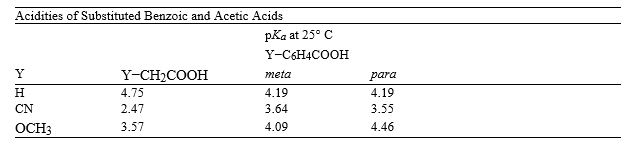
Refer to instructions. Explain why cyanoacetic acid and methoxyacetic acid are more acidic than their correspondingly substituted benzoic acid counterparts.
I
Refer to instructions. Explain why cyanoacetic acid and methoxyacetic acid are more acidic than their correspondingly substituted benzoic acid counterparts.
سؤال
Consider the data in the table below to answer the following question(s).
I
Refer to instructions. Calculate the percent dissociation of 0.100 M solution of m-methoxybenzoic acid.
I
Refer to instructions. Calculate the percent dissociation of 0.100 M solution of m-methoxybenzoic acid.
سؤال
Give the major organic product(s) for each of the following reactions or sequences of reactions. Show all relevant stereochemistry.
Give major product(s):
Give major product(s):
سؤال
Consider the data in the table below to answer the following question(s).
I
Refer to instructions. Which of the acids in the table has the strongest conjugate base?
I
Refer to instructions. Which of the acids in the table has the strongest conjugate base?
سؤال
سؤال
سؤال
سؤال
سؤال
Give the major organic product(s) for each of the following reactions or sequences of reactions. Show all relevant stereochemistry.
Give major product(s):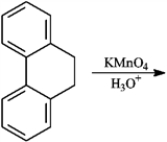
Give major product(s):
سؤال
سؤال
Consider the data below to answer the following question(s).
When CO2 is bubbled through an ether solution of benzylmagnesium bromide and the resulting mixture is acidified, phenylacetic acid is produced. Any unreacted benzylmagnesium bromide is converted to toluene in the acidification step.
What is the order of increasing reactivity for the following compounds in electrophillic aromatic substitution reactions? (least to most reactive)
PKa
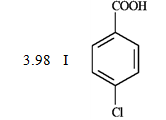
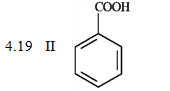
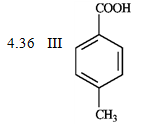
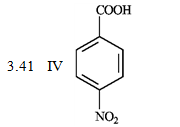
A) IV, I, II, III
B) III, II, I, IV
C) II, III, I, IV
D) III, II, i, IV
When CO2 is bubbled through an ether solution of benzylmagnesium bromide and the resulting mixture is acidified, phenylacetic acid is produced. Any unreacted benzylmagnesium bromide is converted to toluene in the acidification step.
What is the order of increasing reactivity for the following compounds in electrophillic aromatic substitution reactions? (least to most reactive)
PKa
A) IV, I, II, III
B) III, II, I, IV
C) II, III, I, IV
D) III, II, i, IV
سؤال
Give the major organic product(s) for each of the following reactions or sequences of reactions. Show all relevant stereochemistry.
Give major product(s):
Give major product(s):
سؤال
سؤال
Consider the data below to answer the following question(s).
When CO2 is bubbled through an ether solution of benzylmagnesium bromide and the resulting mixture is acidified, phenylacetic acid is produced. Any unreacted benzylmagnesium bromide is converted to toluene in the acidification step.
What is the order of increasing acidity for the following compounds? (least to most)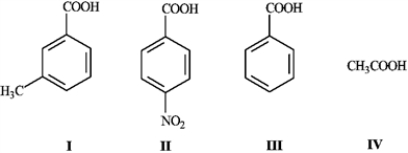
A) IV, I, III, II
B) IV, II, III, I
C) II, III, I, IV
D) I, III, II, IV
When CO2 is bubbled through an ether solution of benzylmagnesium bromide and the resulting mixture is acidified, phenylacetic acid is produced. Any unreacted benzylmagnesium bromide is converted to toluene in the acidification step.
What is the order of increasing acidity for the following compounds? (least to most)
A) IV, I, III, II
B) IV, II, III, I
C) II, III, I, IV
D) I, III, II, IV
سؤال
سؤال
Consider the data in the table below to answer the following question(s).
I
Refer to instructions. Draw the structure of the strongest acid in the table.
I
Refer to instructions. Draw the structure of the strongest acid in the table.
سؤال
سؤال
Give the major organic product(s) for each of the following reactions or sequences of reactions. Show all relevant stereochemistry.
Give major product(s):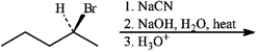
Give major product(s):
سؤال
What is the major organic product obtained from the following reaction? 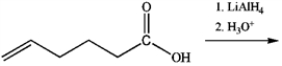
A)

B)

C)

D)
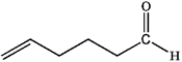
A)
B)
C)
D)
سؤال
Which of the following would represent the correct reaction conditions for the following conversion? 
A) 1) KMnO4, 2) LiAlH4
B) 1) Mg, ether, 2) CO2, 3) LiAlH4
C) 1) NaOH, H2O, 2) LiAlH4
D) 1) SOCl2, benzene, 2) LiAlH4
E) either b or c
A) 1) KMnO4, 2) LiAlH4
B) 1) Mg, ether, 2) CO2, 3) LiAlH4
C) 1) NaOH, H2O, 2) LiAlH4
D) 1) SOCl2, benzene, 2) LiAlH4
E) either b or c
سؤال
Carboxylic acids are synthesized from alkyl halides via Grignard reagent carboxylation or nitrile hydrolysis. Choose the best method for affecting each of the following conversions. Explain each of your choices. If neither method is appropriate, explain.
Complete the following reaction sequence with the missing major organic products.
Complete the following reaction sequence with the missing major organic products.
سؤال
What is the major organic product obtained from the following reaction? 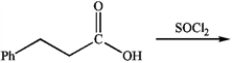
A)
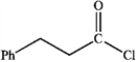
B)
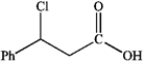
C)
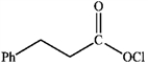
D)
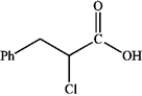
A)
B)
C)
D)
سؤال
The product shown can be synthesized by two different pathways as shown by the reaction conditions. Draw the structure of starting materials that should be placed in each of the boxes. 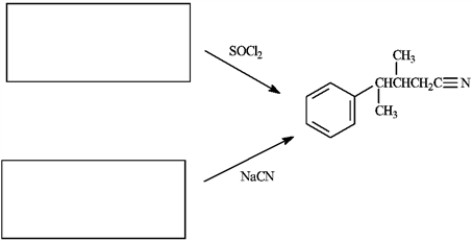
سؤال
What is the major organic product obtained from the following reaction? 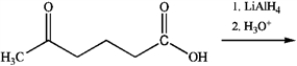
A)
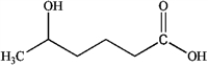
B)
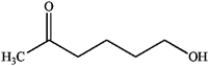
C)
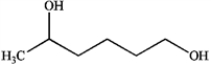
D)
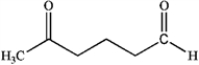
A)
B)
C)
D)
سؤال
سؤال
What is the IUPAC name of the following compound? 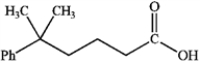
A) 5,5-dimethyl-5-phenylpentanoic acid
B) 5-methyl-5-phenylhexanoic acid
C) 2,2-dimethylphenylpropanoic acid
D) 5,5-dimethyl-5-phenylbutanal
A) 5,5-dimethyl-5-phenylpentanoic acid
B) 5-methyl-5-phenylhexanoic acid
C) 2,2-dimethylphenylpropanoic acid
D) 5,5-dimethyl-5-phenylbutanal
سؤال
سؤال
Consider the following 1H NMR to answer the following question. 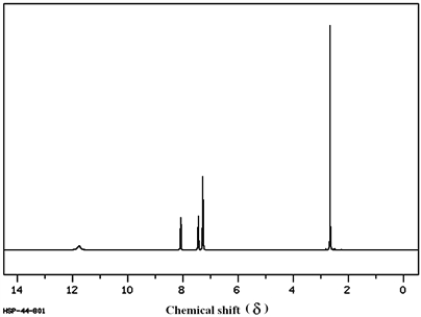
Refer to instructions. This compound is known to contain both a −C=O group and an −OH group. Based on this spectrum, this compound would be classified as:
A) aromatic carboxylic acid
B) aliphatic carboxylic acid
C) carbonyl containing an alcohol functional group
D) either a or b
Refer to instructions. This compound is known to contain both a −C=O group and an −OH group. Based on this spectrum, this compound would be classified as:
A) aromatic carboxylic acid
B) aliphatic carboxylic acid
C) carbonyl containing an alcohol functional group
D) either a or b
سؤال
Carboxylic acids are synthesized from alkyl halides via Grignard reagent carboxylation or nitrile hydrolysis. Choose the best method for affecting each of the following conversions. Explain each of your choices. If neither method is appropriate, explain.
Choose best method:
Choose best method:
سؤال
Give the major organic product(s) for each of the following reactions or sequences of reactions. Show all relevant stereochemistry.
Refer to instructions and answer the following questions.
a)Give major product(s): b)Draw the structure of the intermediate product(s) that form(s).
Refer to instructions and answer the following questions.
a)Give major product(s):
b)Draw the structure of the intermediate product(s) that form(s). سؤال
Carboxylic acids are synthesized from alkyl halides via Grignard reagent carboxylation or nitrile hydrolysis. Choose the best method for affecting each of the following conversions. Explain each of your choices. If neither method is appropriate, explain.
Choose best method: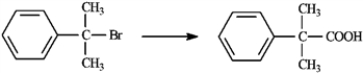
Choose best method:
سؤال
سؤال
سؤال
Based on the following IR spectrum, this compound would be classified as: 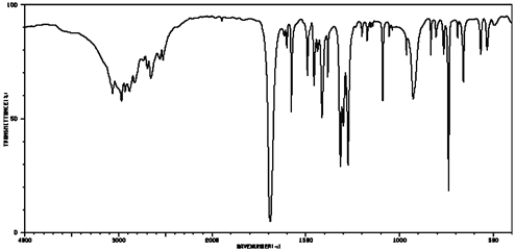
A) aliphatic carboxylic acid
B) aromatic carboxylic acid
C) aliphatic nitrile
D) aromatic nitrile
E) carbonyl containing an alcohol functional group
A) aliphatic carboxylic acid
B) aromatic carboxylic acid
C) aliphatic nitrile
D) aromatic nitrile
E) carbonyl containing an alcohol functional group

فتح الحزمة
قم بالتسجيل لفتح البطاقات في هذه المجموعة!
Unlock Deck
Unlock Deck
1/36

العب

ملء الشاشة (f)
Deck 15: Carboxylic Acids and Nitriles
1
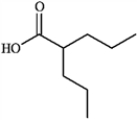
Draw structures corresponding to each of the following IUPAC names.
Draw:
2-propylpentanoic acid
Draw:
2-propylpentanoic acid
2
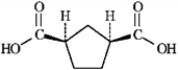
Draw structures corresponding to each of the following IUPAC names.
Draw:
cis-cyclopentane-1,3-dicarboxylic acid
Draw:
cis-cyclopentane-1,3-dicarboxylic acid
3
Consider the data in the table below to answer the following question(s).
I
Refer to instructions. Explain why cyanoacetic acid and methoxyacetic acid are more acidic than their correspondingly substituted benzoic acid counterparts.
I
Refer to instructions. Explain why cyanoacetic acid and methoxyacetic acid are more acidic than their correspondingly substituted benzoic acid counterparts.
Electron-withdrawing groups, like −CN and −OCH3, inductively withdraw electron density, which stabilizes the resulting carboxylate anion and thus increases the acidity of the carboxylic acid. These inductive effects are strongly dependent on distance. The −CN and −OCH3 substituents are closer to the carboxylate in the substituted acetic acids than in the substituted benzoic acids, so their effect is greater.
4
Consider the data in the table below to answer the following question(s).
I
Refer to instructions. Calculate the percent dissociation of 0.100 M solution of m-methoxybenzoic acid.
I
Refer to instructions. Calculate the percent dissociation of 0.100 M solution of m-methoxybenzoic acid.
فتح الحزمة
افتح القفل للوصول البطاقات البالغ عددها 36 في هذه المجموعة.
فتح الحزمة
k this deck
5
Give the major organic product(s) for each of the following reactions or sequences of reactions. Show all relevant stereochemistry.
Give major product(s):
Give major product(s):
فتح الحزمة
افتح القفل للوصول البطاقات البالغ عددها 36 في هذه المجموعة.
فتح الحزمة
k this deck
6
Consider the data in the table below to answer the following question(s).
I
Refer to instructions. Which of the acids in the table has the strongest conjugate base?
I
Refer to instructions. Which of the acids in the table has the strongest conjugate base?
فتح الحزمة
افتح القفل للوصول البطاقات البالغ عددها 36 في هذه المجموعة.
فتح الحزمة
k this deck
7
At pH 3.80 calculate the % in the dissociated and undissociated form in a 0.00200 M solution of pyruvic acid, pKa = 2.39.
فتح الحزمة
افتح القفل للوصول البطاقات البالغ عددها 36 في هذه المجموعة.
فتح الحزمة
k this deck
8
Draw structures corresponding to each of the following IUPAC names.
Draw:
cyanoacetic acid
Draw:
cyanoacetic acid
فتح الحزمة
افتح القفل للوصول البطاقات البالغ عددها 36 في هذه المجموعة.
فتح الحزمة
k this deck
9
Draw structures corresponding to each of the following IUPAC names.
Draw:
2-chlorobenzoic acid
Draw:
2-chlorobenzoic acid
فتح الحزمة
افتح القفل للوصول البطاقات البالغ عددها 36 في هذه المجموعة.
فتح الحزمة
k this deck
10
Consider the data below to answer the following question(s).
When CO2 is bubbled through an ether solution of benzylmagnesium bromide and the resulting mixture is acidified, phenylacetic acid is produced. Any unreacted benzylmagnesium bromide is converted to toluene in the acidification step.
Refer to instructions. This reaction can be described as a _____ process.
A) carbonylation
B) carboxylation
C) carbaniolation
D) cationation
When CO2 is bubbled through an ether solution of benzylmagnesium bromide and the resulting mixture is acidified, phenylacetic acid is produced. Any unreacted benzylmagnesium bromide is converted to toluene in the acidification step.
Refer to instructions. This reaction can be described as a _____ process.
A) carbonylation
B) carboxylation
C) carbaniolation
D) cationation
فتح الحزمة
افتح القفل للوصول البطاقات البالغ عددها 36 في هذه المجموعة.
فتح الحزمة
k this deck
11
Give the major organic product(s) for each of the following reactions or sequences of reactions. Show all relevant stereochemistry.
Give major product(s):
Give major product(s):
فتح الحزمة
افتح القفل للوصول البطاقات البالغ عددها 36 في هذه المجموعة.
فتح الحزمة
k this deck
12
Draw structures corresponding to each of the following IUPAC names.
Draw:
prop-2-enenitrile
Draw:
prop-2-enenitrile
فتح الحزمة
افتح القفل للوصول البطاقات البالغ عددها 36 في هذه المجموعة.
فتح الحزمة
k this deck
13
Consider the data below to answer the following question(s).
When CO2 is bubbled through an ether solution of benzylmagnesium bromide and the resulting mixture is acidified, phenylacetic acid is produced. Any unreacted benzylmagnesium bromide is converted to toluene in the acidification step.
What is the order of increasing reactivity for the following compounds in electrophillic aromatic substitution reactions? (least to most reactive)
PKa
A) IV, I, II, III
B) III, II, I, IV
C) II, III, I, IV
D) III, II, i, IV
When CO2 is bubbled through an ether solution of benzylmagnesium bromide and the resulting mixture is acidified, phenylacetic acid is produced. Any unreacted benzylmagnesium bromide is converted to toluene in the acidification step.
What is the order of increasing reactivity for the following compounds in electrophillic aromatic substitution reactions? (least to most reactive)
PKa
A) IV, I, II, III
B) III, II, I, IV
C) II, III, I, IV
D) III, II, i, IV
فتح الحزمة
افتح القفل للوصول البطاقات البالغ عددها 36 في هذه المجموعة.
فتح الحزمة
k this deck
14
Give the major organic product(s) for each of the following reactions or sequences of reactions. Show all relevant stereochemistry.
Give major product(s):
Give major product(s):
فتح الحزمة
افتح القفل للوصول البطاقات البالغ عددها 36 في هذه المجموعة.
فتح الحزمة
k this deck
15
Consider the data below to answer the following question(s).
When CO2 is bubbled through an ether solution of benzylmagnesium bromide and the resulting mixture is acidified, phenylacetic acid is produced. Any unreacted benzylmagnesium bromide is converted to toluene in the acidification step.
Refer to instructions. Write the complete reaction sequence for the process described above.
When CO2 is bubbled through an ether solution of benzylmagnesium bromide and the resulting mixture is acidified, phenylacetic acid is produced. Any unreacted benzylmagnesium bromide is converted to toluene in the acidification step.
Refer to instructions. Write the complete reaction sequence for the process described above.
فتح الحزمة
افتح القفل للوصول البطاقات البالغ عددها 36 في هذه المجموعة.
فتح الحزمة
k this deck
16
Consider the data below to answer the following question(s).
When CO2 is bubbled through an ether solution of benzylmagnesium bromide and the resulting mixture is acidified, phenylacetic acid is produced. Any unreacted benzylmagnesium bromide is converted to toluene in the acidification step.
What is the order of increasing acidity for the following compounds? (least to most)
A) IV, I, III, II
B) IV, II, III, I
C) II, III, I, IV
D) I, III, II, IV
When CO2 is bubbled through an ether solution of benzylmagnesium bromide and the resulting mixture is acidified, phenylacetic acid is produced. Any unreacted benzylmagnesium bromide is converted to toluene in the acidification step.
What is the order of increasing acidity for the following compounds? (least to most)
A) IV, I, III, II
B) IV, II, III, I
C) II, III, I, IV
D) I, III, II, IV
فتح الحزمة
افتح القفل للوصول البطاقات البالغ عددها 36 في هذه المجموعة.
فتح الحزمة
k this deck
17
An ether solution contains the following components.
2,3,4,5-tetramethylbenzene benzyl alcohol 2-hydroxybenzoic acid
If this solution is extracted with a 5% solution of NaHCO3, that is immiscible with ether, which components end up in the ether layer and which in the NaHCO3 layer?
2,3,4,5-tetramethylbenzene benzyl alcohol 2-hydroxybenzoic acid
If this solution is extracted with a 5% solution of NaHCO3, that is immiscible with ether, which components end up in the ether layer and which in the NaHCO3 layer?
فتح الحزمة
افتح القفل للوصول البطاقات البالغ عددها 36 في هذه المجموعة.
فتح الحزمة
k this deck
18
Consider the data in the table below to answer the following question(s).
I
Refer to instructions. Draw the structure of the strongest acid in the table.
I
Refer to instructions. Draw the structure of the strongest acid in the table.
فتح الحزمة
افتح القفل للوصول البطاقات البالغ عددها 36 في هذه المجموعة.
فتح الحزمة
k this deck
19
Draw structures corresponding to each of the following IUPAC names.
Draw:
phenylacetonitrile or phenylethanenitrile
Draw:
phenylacetonitrile or phenylethanenitrile
فتح الحزمة
افتح القفل للوصول البطاقات البالغ عددها 36 في هذه المجموعة.
فتح الحزمة
k this deck
20
Give the major organic product(s) for each of the following reactions or sequences of reactions. Show all relevant stereochemistry.
Give major product(s):
Give major product(s):
فتح الحزمة
افتح القفل للوصول البطاقات البالغ عددها 36 في هذه المجموعة.
فتح الحزمة
k this deck
21
What is the major organic product obtained from the following reaction?
A)
B)
C)
D)
A)
B)
C)
D)
فتح الحزمة
افتح القفل للوصول البطاقات البالغ عددها 36 في هذه المجموعة.
فتح الحزمة
k this deck
22
Which of the following would represent the correct reaction conditions for the following conversion?
A) 1) KMnO4, 2) LiAlH4
B) 1) Mg, ether, 2) CO2, 3) LiAlH4
C) 1) NaOH, H2O, 2) LiAlH4
D) 1) SOCl2, benzene, 2) LiAlH4
E) either b or c
A) 1) KMnO4, 2) LiAlH4
B) 1) Mg, ether, 2) CO2, 3) LiAlH4
C) 1) NaOH, H2O, 2) LiAlH4
D) 1) SOCl2, benzene, 2) LiAlH4
E) either b or c
فتح الحزمة
افتح القفل للوصول البطاقات البالغ عددها 36 في هذه المجموعة.
فتح الحزمة
k this deck
23
Carboxylic acids are synthesized from alkyl halides via Grignard reagent carboxylation or nitrile hydrolysis. Choose the best method for affecting each of the following conversions. Explain each of your choices. If neither method is appropriate, explain.
Complete the following reaction sequence with the missing major organic products.
Complete the following reaction sequence with the missing major organic products.
فتح الحزمة
افتح القفل للوصول البطاقات البالغ عددها 36 في هذه المجموعة.
فتح الحزمة
k this deck
24
What is the major organic product obtained from the following reaction?
A)
B)
C)
D)
A)
B)
C)
D)
فتح الحزمة
افتح القفل للوصول البطاقات البالغ عددها 36 في هذه المجموعة.
فتح الحزمة
k this deck
25
The product shown can be synthesized by two different pathways as shown by the reaction conditions. Draw the structure of starting materials that should be placed in each of the boxes.
فتح الحزمة
افتح القفل للوصول البطاقات البالغ عددها 36 في هذه المجموعة.
فتح الحزمة
k this deck
26
What is the major organic product obtained from the following reaction?
A)
B)
C)
D)
A)
B)
C)
D)
فتح الحزمة
افتح القفل للوصول البطاقات البالغ عددها 36 في هذه المجموعة.
فتح الحزمة
k this deck
27
Which of the following is the correct order of decreasing acid strength (more acidic > less acidic)?
A) FCH2COOH > CH3COOH > F2CHCOOH
B) FCH2COOH > CH3COOH > CH3OH
C) CH3CH2OH > ClCH2COOH > BrCH2COOH
D) CH3COOH > ClCH2COOH > CH3OH
A) FCH2COOH > CH3COOH > F2CHCOOH
B) FCH2COOH > CH3COOH > CH3OH
C) CH3CH2OH > ClCH2COOH > BrCH2COOH
D) CH3COOH > ClCH2COOH > CH3OH
فتح الحزمة
افتح القفل للوصول البطاقات البالغ عددها 36 في هذه المجموعة.
فتح الحزمة
k this deck
28
What is the IUPAC name of the following compound?
A) 5,5-dimethyl-5-phenylpentanoic acid
B) 5-methyl-5-phenylhexanoic acid
C) 2,2-dimethylphenylpropanoic acid
D) 5,5-dimethyl-5-phenylbutanal
A) 5,5-dimethyl-5-phenylpentanoic acid
B) 5-methyl-5-phenylhexanoic acid
C) 2,2-dimethylphenylpropanoic acid
D) 5,5-dimethyl-5-phenylbutanal
فتح الحزمة
افتح القفل للوصول البطاقات البالغ عددها 36 في هذه المجموعة.
فتح الحزمة
k this deck
29
Which of the following has the highest boiling point?
A) butanoic acid
B) butan-2-ol
C) hexanoic acid
D) heptan-3-one
A) butanoic acid
B) butan-2-ol
C) hexanoic acid
D) heptan-3-one
فتح الحزمة
افتح القفل للوصول البطاقات البالغ عددها 36 في هذه المجموعة.
فتح الحزمة
k this deck
30
Consider the following 1H NMR to answer the following question.
Refer to instructions. This compound is known to contain both a −C=O group and an −OH group. Based on this spectrum, this compound would be classified as:
A) aromatic carboxylic acid
B) aliphatic carboxylic acid
C) carbonyl containing an alcohol functional group
D) either a or b
Refer to instructions. This compound is known to contain both a −C=O group and an −OH group. Based on this spectrum, this compound would be classified as:
A) aromatic carboxylic acid
B) aliphatic carboxylic acid
C) carbonyl containing an alcohol functional group
D) either a or b
فتح الحزمة
افتح القفل للوصول البطاقات البالغ عددها 36 في هذه المجموعة.
فتح الحزمة
k this deck
31
Carboxylic acids are synthesized from alkyl halides via Grignard reagent carboxylation or nitrile hydrolysis. Choose the best method for affecting each of the following conversions. Explain each of your choices. If neither method is appropriate, explain.
Choose best method:
Choose best method:
فتح الحزمة
افتح القفل للوصول البطاقات البالغ عددها 36 في هذه المجموعة.
فتح الحزمة
k this deck
32
Give the major organic product(s) for each of the following reactions or sequences of reactions. Show all relevant stereochemistry.
Refer to instructions and answer the following questions.
a)Give major product(s): b)Draw the structure of the intermediate product(s) that form(s).
Refer to instructions and answer the following questions.
a)Give major product(s):
b)Draw the structure of the intermediate product(s) that form(s). فتح الحزمة
افتح القفل للوصول البطاقات البالغ عددها 36 في هذه المجموعة.
فتح الحزمة
k this deck
33
Carboxylic acids are synthesized from alkyl halides via Grignard reagent carboxylation or nitrile hydrolysis. Choose the best method for affecting each of the following conversions. Explain each of your choices. If neither method is appropriate, explain.
Choose best method:
Choose best method:
فتح الحزمة
افتح القفل للوصول البطاقات البالغ عددها 36 في هذه المجموعة.
فتح الحزمة
k this deck
34
Draw the structure of (Z)-4-methylhex-3-enoic acid.
فتح الحزمة
افتح القفل للوصول البطاقات البالغ عددها 36 في هذه المجموعة.
فتح الحزمة
k this deck
35
Which of the following does not represent a similarity between nitriles and carboxylic acids?
A) contain 3 carbon bonds to an electronegative element
B) contain two π bonds.
C) act as electrophiles
D) undergo nucleophilic substitution reactions
E) all of these are characteristic of both nitriles and carboxylic acids.
A) contain 3 carbon bonds to an electronegative element
B) contain two π bonds.
C) act as electrophiles
D) undergo nucleophilic substitution reactions
E) all of these are characteristic of both nitriles and carboxylic acids.
فتح الحزمة
افتح القفل للوصول البطاقات البالغ عددها 36 في هذه المجموعة.
فتح الحزمة
k this deck
36
Based on the following IR spectrum, this compound would be classified as:
A) aliphatic carboxylic acid
B) aromatic carboxylic acid
C) aliphatic nitrile
D) aromatic nitrile
E) carbonyl containing an alcohol functional group
A) aliphatic carboxylic acid
B) aromatic carboxylic acid
C) aliphatic nitrile
D) aromatic nitrile
E) carbonyl containing an alcohol functional group
فتح الحزمة
افتح القفل للوصول البطاقات البالغ عددها 36 في هذه المجموعة.
فتح الحزمة
k this deck
فتح الحزمة
افتح القفل للوصول البطاقات البالغ عددها 36 في هذه المجموعة.






