







 تكلم مع الذكاء الاصطناعي


Deck 6: An Overview of Organic Reactions
ملء الشاشة (f)

سؤال
Identify the functional groups present in each compound below, and predict the direction of polarity in each.
Identify and predict:
amphetamine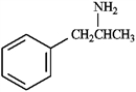
Identify and predict:
amphetamine

سؤال
Classify each structure below as a nucleophile or electrophile, and briefly explain your choice.
Classify and explain:
azide
Classify and explain:
azide
سؤال
سؤال
Use the first step of the reaction of 2-bromo-2-methylpropane with water, shown below, to answer the following question(s). 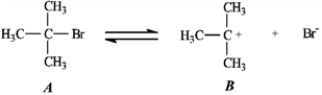
In the following generic reaction between a halogen (X) and an alkane (R), which of the following steps occurs slowly due to low concentration of reactants?
A)X⎯X → 2X∙
B)X∙ + R → HX + R∙
C)R∙ + X⎯X → RX + X∙
D)X∙ + R∙ → RX
E)X∙ + X∙ → X⎯X
F)R∙ + R∙ → R⎯R
In the following generic reaction between a halogen (X) and an alkane (R), which of the following steps occurs slowly due to low concentration of reactants?
A)X⎯X → 2X∙
B)X∙ + R → HX + R∙
C)R∙ + X⎯X → RX + X∙
D)X∙ + R∙ → RX
E)X∙ + X∙ → X⎯X
F)R∙ + R∙ → R⎯R
سؤال
سؤال
Add curved arrows to the following reaction(s) to indicate the flow of electrons in each.
Indicate flow:
Indicate flow:
سؤال
Use the first step of the reaction of 2-bromo-2-methylpropane with water, shown below, to answer the following question(s).
Refer to instructions. Add curved arrows to indicate electron flow in the first step.
Refer to instructions. Add curved arrows to indicate electron flow in the first step.
سؤال
The reaction below is commonly used as a laboratory preparation of cyclohexene. Use this reaction to answer the following question(s). 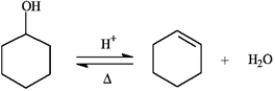
Refer to instructions. If this reaction under a given set of conditions has a Keq value of 5.67, what percent conversion to the product would be expected?
A) 85%
B) 5.67%
C) 17%
D) 15%
E) nearly 100%
Refer to instructions. If this reaction under a given set of conditions has a Keq value of 5.67, what percent conversion to the product would be expected?
A) 85%
B) 5.67%
C) 17%
D) 15%
E) nearly 100%
سؤال
In theory, upon reaction with water in the presence of a strong acid, which of the following will produce more than one isomeric product?
A)

B)

C)

D)

E) Both b and d
A)
B)
C)
D)
E) Both b and d
سؤال
Identify and label the nucleophile and electrophile in each reaction below.
Identify and label:
Identify and label:
سؤال
Use the first step of the reaction of 2-bromo-2-methylpropane with water, shown below, to answer the following question(s).
In the following generic reaction between a halogen (X) and an alkane (R), which of the following steps would be considered a chain termination step?
A)X⎯X → 2X∙
B)X∙ + R → HX + R∙
C)R∙ + X⎯X → RX + X∙
D)X∙ + R∙ → RX
E)X∙ + X∙ → X⎯X
F)R∙ + R∙ → R⎯R
In the following generic reaction between a halogen (X) and an alkane (R), which of the following steps would be considered a chain termination step?
A)X⎯X → 2X∙
B)X∙ + R → HX + R∙
C)R∙ + X⎯X → RX + X∙
D)X∙ + R∙ → RX
E)X∙ + X∙ → X⎯X
F)R∙ + R∙ → R⎯R
سؤال
سؤال
Classify each structure below as a nucleophile or electrophile, and briefly explain your choice.
Classify and explain:
phenol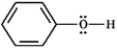
Classify and explain:
phenol
سؤال
سؤال
The reaction below is commonly used as a laboratory preparation of cyclohexene. Use this reaction to answer the following question(s).
Refer to instructions. The forward and reverse reactions are classified, respectively, as:
A) addition, elimination
B) elimination, substitution
C) elimination, addition
D) elimination, rearrangement
E) substitution, addition
Refer to instructions. The forward and reverse reactions are classified, respectively, as:
A) addition, elimination
B) elimination, substitution
C) elimination, addition
D) elimination, rearrangement
E) substitution, addition
سؤال
Use the first step of the reaction of 2-bromo-2-methylpropane with water, shown below, to answer the following question(s).
Refer to instructions. Species B is:
A) a carbocation
B) a radical
C) a carbanion
D) a free radical
Refer to instructions. Species B is:
A) a carbocation
B) a radical
C) a carbanion
D) a free radical
سؤال
Consider the reaction of 2-bromo-2-methylpropane with water, shown below, to answer the following question(s). 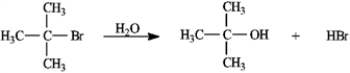
Refer to instructions. This reaction is an example of:
A) a substitution reaction.
B) a rearrangement reaction.
C) an elimination reaction.
D) an addition reaction.
Refer to instructions. This reaction is an example of:
A) a substitution reaction.
B) a rearrangement reaction.
C) an elimination reaction.
D) an addition reaction.
سؤال
سؤال
سؤال
Identify and label the nucleophile and electrophile in each reaction below.
Identify and label:
Identify and label:
سؤال
Add curved arrows to the following reaction(s) to indicate the flow of electrons in each.
The structures below show the stepwise bond making and bond breaking in this reaction. Draw curved arrows to show the electron flow that has occurred in each step.
The structures below show the stepwise bond making and bond breaking in this reaction. Draw curved arrows to show the electron flow that has occurred in each step.
سؤال
Use the second and third steps of the reaction of 2-bromo-2-methylpropane with water, shown below, to answer the following question(s). 
Refer to instructions. Draw arrows on the structures above showing electron flow in steps two and three of this reaction.
Refer to instructions. Draw arrows on the structures above showing electron flow in steps two and three of this reaction.
سؤال
Add curved arrows to the following reaction(s) to indicate the flow of electrons in each.
Indicate flow:
Indicate flow:
سؤال
Use the reaction energy diagram below to answer the following question(s). 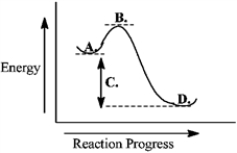
The transition state is found at _____ on the diagram.
A)A
B)B
C)C
D)D
The transition state is found at _____ on the diagram.
A)A
B)B
C)C
D)D
سؤال
In the reaction below:
a)Label the nucleophile (Nu) and the electrophile (E).
b)Draw arrows on the structures showing electron flow in the reaction.
Label and indicate flow:
a)Label the nucleophile (Nu) and the electrophile (E).
b)Draw arrows on the structures showing electron flow in the reaction.
Label and indicate flow:
سؤال
سؤال
سؤال
Use the reaction energy diagram below to answer the following question(s).
The free-energy change for the reaction is indicated at _____ on the diagram.
A)A
B)B
C)C
D)D
The free-energy change for the reaction is indicated at _____ on the diagram.
A)A
B)B
C)C
D)D
سؤال
سؤال
سؤال
Add curved arrows to the following reaction(s) to indicate the flow of electrons in each.
If the yield for the following reaction is 76%, calculate Keq and predict the sign of ΔG°.
If the yield for the following reaction is 76%, calculate Keq and predict the sign of ΔG°.
سؤال
سؤال
In the reaction below:
a)Label the nucleophile (Nu) and the electrophile (E).
b)Draw arrows on the structures showing electron flow in the reaction.
Predict the two alcohol addition products obtained by reaction of the following alkene with aqueous acid.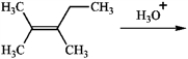
a)Label the nucleophile (Nu) and the electrophile (E).
b)Draw arrows on the structures showing electron flow in the reaction.
Predict the two alcohol addition products obtained by reaction of the following alkene with aqueous acid.
سؤال
In the reaction below:
a)Label the nucleophile (Nu) and the electrophile (E).
b)Draw arrows on the structures showing electron flow in the reaction.
Predict the product of the following reaction of Prostaglandin H2 by interpreting the flow of electrons as indicated by the curved arrows.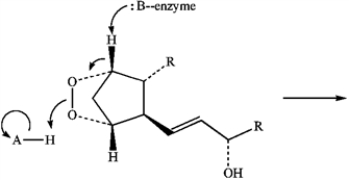
a)Label the nucleophile (Nu) and the electrophile (E).
b)Draw arrows on the structures showing electron flow in the reaction.
Predict the product of the following reaction of Prostaglandin H2 by interpreting the flow of electrons as indicated by the curved arrows.
سؤال
سؤال
Use the reaction energy diagram below to answer the following question(s).
The products are found at _____ on the diagram.
A)A
B)B
C)C
D)D
The products are found at _____ on the diagram.
A)A
B)B
C)C
D)D
سؤال
Add curved arrows to the following reaction(s) to indicate the flow of electrons in each.
Consider the following reaction: a)Assuming that the first step is the slow step, draw and label a qualitative energy diagram for the reaction.
b)If the second step of the reaction were the slow step, briefly explain how the values of ΔG‡1, ΔG‡2, and ΔG° would change.
Consider the following reaction:
a)Assuming that the first step is the slow step, draw and label a qualitative energy diagram for the reaction.b)If the second step of the reaction were the slow step, briefly explain how the values of ΔG‡1, ΔG‡2, and ΔG° would change.
سؤال
Use the second and third steps of the reaction of 2-bromo-2-methylpropane with water, shown below, to answer the following question(s).
Refer to instructions. Label the nucleophile, Nu, and the electrophile, E+, in the blanks provided under the structures.
Refer to instructions. Label the nucleophile, Nu, and the electrophile, E+, in the blanks provided under the structures.
سؤال
Use the reaction energy diagram below to answer the following question(s).
The reactants are found at _____ on the diagram.
A)A
B)B
C)C
D)D
The reactants are found at _____ on the diagram.
A)A
B)B
C)C
D)D

فتح الحزمة
قم بالتسجيل لفتح البطاقات في هذه المجموعة!
Unlock Deck
Unlock Deck
1/39

العب

ملء الشاشة (f)
Deck 6: An Overview of Organic Reactions
1
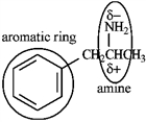
Identify the functional groups present in each compound below, and predict the direction of polarity in each.
Identify and predict:
amphetamine
Identify and predict:
amphetamine
2
Classify each structure below as a nucleophile or electrophile, and briefly explain your choice.
Classify and explain:
azide
Classify and explain:
azide
Azide ion is a nucleophile because it has a net negative charge (and lots of nonbonding electron electron pairs!).
3
Polarizability:
A) explains a nonpolar carbon−sulfur bond participating in polar reaction.
B) indicates the magnitude of a dipole moment.
C) is larger for smaller atoms with few electrons.
D) is the electric field associated with a polar bond.
E) all of these
A) explains a nonpolar carbon−sulfur bond participating in polar reaction.
B) indicates the magnitude of a dipole moment.
C) is larger for smaller atoms with few electrons.
D) is the electric field associated with a polar bond.
E) all of these
explains a nonpolar carbon−sulfur bond participating in polar reaction.
4
Use the first step of the reaction of 2-bromo-2-methylpropane with water, shown below, to answer the following question(s).
In the following generic reaction between a halogen (X) and an alkane (R), which of the following steps occurs slowly due to low concentration of reactants?
A)X⎯X → 2X∙
B)X∙ + R → HX + R∙
C)R∙ + X⎯X → RX + X∙
D)X∙ + R∙ → RX
E)X∙ + X∙ → X⎯X
F)R∙ + R∙ → R⎯R
In the following generic reaction between a halogen (X) and an alkane (R), which of the following steps occurs slowly due to low concentration of reactants?
A)X⎯X → 2X∙
B)X∙ + R → HX + R∙
C)R∙ + X⎯X → RX + X∙
D)X∙ + R∙ → RX
E)X∙ + X∙ → X⎯X
F)R∙ + R∙ → R⎯R
فتح الحزمة
افتح القفل للوصول البطاقات البالغ عددها 39 في هذه المجموعة.
فتح الحزمة
k this deck
5
Which of the following correctly compares the two elements in terms of polarizability?
A) S > O
B) F > Br
C) N > P
D) Cl > I
A) S > O
B) F > Br
C) N > P
D) Cl > I
فتح الحزمة
افتح القفل للوصول البطاقات البالغ عددها 39 في هذه المجموعة.
فتح الحزمة
k this deck
6
Add curved arrows to the following reaction(s) to indicate the flow of electrons in each.
Indicate flow:
Indicate flow:
فتح الحزمة
افتح القفل للوصول البطاقات البالغ عددها 39 في هذه المجموعة.
فتح الحزمة
k this deck
7
Use the first step of the reaction of 2-bromo-2-methylpropane with water, shown below, to answer the following question(s).
Refer to instructions. Add curved arrows to indicate electron flow in the first step.
Refer to instructions. Add curved arrows to indicate electron flow in the first step.
فتح الحزمة
افتح القفل للوصول البطاقات البالغ عددها 39 في هذه المجموعة.
فتح الحزمة
k this deck
8
The reaction below is commonly used as a laboratory preparation of cyclohexene. Use this reaction to answer the following question(s).
Refer to instructions. If this reaction under a given set of conditions has a Keq value of 5.67, what percent conversion to the product would be expected?
A) 85%
B) 5.67%
C) 17%
D) 15%
E) nearly 100%
Refer to instructions. If this reaction under a given set of conditions has a Keq value of 5.67, what percent conversion to the product would be expected?
A) 85%
B) 5.67%
C) 17%
D) 15%
E) nearly 100%
فتح الحزمة
افتح القفل للوصول البطاقات البالغ عددها 39 في هذه المجموعة.
فتح الحزمة
k this deck
9
In theory, upon reaction with water in the presence of a strong acid, which of the following will produce more than one isomeric product?
A)
B)
C)
D)
E) Both b and d
A)
B)
C)
D)
E) Both b and d
فتح الحزمة
افتح القفل للوصول البطاقات البالغ عددها 39 في هذه المجموعة.
فتح الحزمة
k this deck
10
Identify and label the nucleophile and electrophile in each reaction below.
Identify and label:
Identify and label:
فتح الحزمة
افتح القفل للوصول البطاقات البالغ عددها 39 في هذه المجموعة.
فتح الحزمة
k this deck
11
Use the first step of the reaction of 2-bromo-2-methylpropane with water, shown below, to answer the following question(s).
In the following generic reaction between a halogen (X) and an alkane (R), which of the following steps would be considered a chain termination step?
A)X⎯X → 2X∙
B)X∙ + R → HX + R∙
C)R∙ + X⎯X → RX + X∙
D)X∙ + R∙ → RX
E)X∙ + X∙ → X⎯X
F)R∙ + R∙ → R⎯R
In the following generic reaction between a halogen (X) and an alkane (R), which of the following steps would be considered a chain termination step?
A)X⎯X → 2X∙
B)X∙ + R → HX + R∙
C)R∙ + X⎯X → RX + X∙
D)X∙ + R∙ → RX
E)X∙ + X∙ → X⎯X
F)R∙ + R∙ → R⎯R
فتح الحزمة
افتح القفل للوصول البطاقات البالغ عددها 39 في هذه المجموعة.
فتح الحزمة
k this deck
12
How many monochlorosubstitution products are possible for 2,3-dimethylbutane?
A) 1
B) 2
C) 4
D) 5
E) 6
A) 1
B) 2
C) 4
D) 5
E) 6
فتح الحزمة
افتح القفل للوصول البطاقات البالغ عددها 39 في هذه المجموعة.
فتح الحزمة
k this deck
13
Classify each structure below as a nucleophile or electrophile, and briefly explain your choice.
Classify and explain:
phenol
Classify and explain:
phenol
فتح الحزمة
افتح القفل للوصول البطاقات البالغ عددها 39 في هذه المجموعة.
فتح الحزمة
k this deck
14
In an organic reaction, which of the following is most likely to function as only a nucleophile?
A) BF3
B) (CH3)2CH2NH2
C) Fe2+
D) CH3CH2S−
E) both a and c
A) BF3
B) (CH3)2CH2NH2
C) Fe2+
D) CH3CH2S−
E) both a and c
فتح الحزمة
افتح القفل للوصول البطاقات البالغ عددها 39 في هذه المجموعة.
فتح الحزمة
k this deck
15
The reaction below is commonly used as a laboratory preparation of cyclohexene. Use this reaction to answer the following question(s).
Refer to instructions. The forward and reverse reactions are classified, respectively, as:
A) addition, elimination
B) elimination, substitution
C) elimination, addition
D) elimination, rearrangement
E) substitution, addition
Refer to instructions. The forward and reverse reactions are classified, respectively, as:
A) addition, elimination
B) elimination, substitution
C) elimination, addition
D) elimination, rearrangement
E) substitution, addition
فتح الحزمة
افتح القفل للوصول البطاقات البالغ عددها 39 في هذه المجموعة.
فتح الحزمة
k this deck
16
Use the first step of the reaction of 2-bromo-2-methylpropane with water, shown below, to answer the following question(s).
Refer to instructions. Species B is:
A) a carbocation
B) a radical
C) a carbanion
D) a free radical
Refer to instructions. Species B is:
A) a carbocation
B) a radical
C) a carbanion
D) a free radical
فتح الحزمة
افتح القفل للوصول البطاقات البالغ عددها 39 في هذه المجموعة.
فتح الحزمة
k this deck
17
Consider the reaction of 2-bromo-2-methylpropane with water, shown below, to answer the following question(s).
Refer to instructions. This reaction is an example of:
A) a substitution reaction.
B) a rearrangement reaction.
C) an elimination reaction.
D) an addition reaction.
Refer to instructions. This reaction is an example of:
A) a substitution reaction.
B) a rearrangement reaction.
C) an elimination reaction.
D) an addition reaction.
فتح الحزمة
افتح القفل للوصول البطاقات البالغ عددها 39 في هذه المجموعة.
فتح الحزمة
k this deck
18
Which of the following is a characteristic of a polar reaction?
A) symmetrical bond making and breaking
B) one electron from each reactant forms the bond
C) involves a neutral species with an unpaired electron
D) are more common that radical reactions
E) all of these
A) symmetrical bond making and breaking
B) one electron from each reactant forms the bond
C) involves a neutral species with an unpaired electron
D) are more common that radical reactions
E) all of these
فتح الحزمة
افتح القفل للوصول البطاقات البالغ عددها 39 في هذه المجموعة.
فتح الحزمة
k this deck
19
Identify the functional groups present in each compound below, and predict the direction of polarity in each.
Identify and predict:
mustard gas Cl−CH2CH2−S−CH2CH2−Cl
Identify and predict:
mustard gas Cl−CH2CH2−S−CH2CH2−Cl
فتح الحزمة
افتح القفل للوصول البطاقات البالغ عددها 39 في هذه المجموعة.
فتح الحزمة
k this deck
20
Identify and label the nucleophile and electrophile in each reaction below.
Identify and label:
Identify and label:
فتح الحزمة
افتح القفل للوصول البطاقات البالغ عددها 39 في هذه المجموعة.
فتح الحزمة
k this deck
21
Add curved arrows to the following reaction(s) to indicate the flow of electrons in each.
The structures below show the stepwise bond making and bond breaking in this reaction. Draw curved arrows to show the electron flow that has occurred in each step.
The structures below show the stepwise bond making and bond breaking in this reaction. Draw curved arrows to show the electron flow that has occurred in each step.
فتح الحزمة
افتح القفل للوصول البطاقات البالغ عددها 39 في هذه المجموعة.
فتح الحزمة
k this deck
22
Use the second and third steps of the reaction of 2-bromo-2-methylpropane with water, shown below, to answer the following question(s).
Refer to instructions. Draw arrows on the structures above showing electron flow in steps two and three of this reaction.
Refer to instructions. Draw arrows on the structures above showing electron flow in steps two and three of this reaction.
فتح الحزمة
افتح القفل للوصول البطاقات البالغ عددها 39 في هذه المجموعة.
فتح الحزمة
k this deck
23
Add curved arrows to the following reaction(s) to indicate the flow of electrons in each.
Indicate flow:
Indicate flow:
فتح الحزمة
افتح القفل للوصول البطاقات البالغ عددها 39 في هذه المجموعة.
فتح الحزمة
k this deck
24
Use the reaction energy diagram below to answer the following question(s).
The transition state is found at _____ on the diagram.
A)A
B)B
C)C
D)D
The transition state is found at _____ on the diagram.
A)A
B)B
C)C
D)D
فتح الحزمة
افتح القفل للوصول البطاقات البالغ عددها 39 في هذه المجموعة.
فتح الحزمة
k this deck
25
In the reaction below:
a)Label the nucleophile (Nu) and the electrophile (E).
b)Draw arrows on the structures showing electron flow in the reaction.
Label and indicate flow:
a)Label the nucleophile (Nu) and the electrophile (E).
b)Draw arrows on the structures showing electron flow in the reaction.
Label and indicate flow:
فتح الحزمة
افتح القفل للوصول البطاقات البالغ عددها 39 في هذه المجموعة.
فتح الحزمة
k this deck
26
Match each definition to one of the terms below.
The energy needed by reactants to reach the transition state.
A)transition state
B)endergonic reaction
C)activation energy
D)Gibbs free energy change
E)exergonic reaction
F)reaction intermediate
The energy needed by reactants to reach the transition state.
A)transition state
B)endergonic reaction
C)activation energy
D)Gibbs free energy change
E)exergonic reaction
F)reaction intermediate
فتح الحزمة
افتح القفل للوصول البطاقات البالغ عددها 39 في هذه المجموعة.
فتح الحزمة
k this deck
27
Match each definition to one of the terms below.
Another term used for a Lewis acid.
A)polarization
B)addition reaction
C)radical reaction
D)electrophile
E)polar reaction
F)substitution
G)nucleophile
H)elimination reaction
Another term used for a Lewis acid.
A)polarization
B)addition reaction
C)radical reaction
D)electrophile
E)polar reaction
F)substitution
G)nucleophile
H)elimination reaction
فتح الحزمة
افتح القفل للوصول البطاقات البالغ عددها 39 في هذه المجموعة.
فتح الحزمة
k this deck
28
Use the reaction energy diagram below to answer the following question(s).
The free-energy change for the reaction is indicated at _____ on the diagram.
A)A
B)B
C)C
D)D
The free-energy change for the reaction is indicated at _____ on the diagram.
A)A
B)B
C)C
D)D
فتح الحزمة
افتح القفل للوصول البطاقات البالغ عددها 39 في هذه المجموعة.
فتح الحزمة
k this deck
29
Match each definition to one of the terms below.
ΔG° = −RT ln Keq
A)transition state
B)endergonic reaction
C)activation energy
D)Gibbs free energy change
E)exergonic reaction
F)reaction intermediate
ΔG° = −RT ln Keq
A)transition state
B)endergonic reaction
C)activation energy
D)Gibbs free energy change
E)exergonic reaction
F)reaction intermediate
فتح الحزمة
افتح القفل للوصول البطاقات البالغ عددها 39 في هذه المجموعة.
فتح الحزمة
k this deck
30
Match each definition to one of the terms below.
A reaction where ΔG° is positive.
A)transition state
B)endergonic reaction
C)activation energy
D)Gibbs free energy change
E)exergonic reaction
F)reaction intermediate
A reaction where ΔG° is positive.
A)transition state
B)endergonic reaction
C)activation energy
D)Gibbs free energy change
E)exergonic reaction
F)reaction intermediate
فتح الحزمة
افتح القفل للوصول البطاقات البالغ عددها 39 في هذه المجموعة.
فتح الحزمة
k this deck
31
Add curved arrows to the following reaction(s) to indicate the flow of electrons in each.
If the yield for the following reaction is 76%, calculate Keq and predict the sign of ΔG°.
If the yield for the following reaction is 76%, calculate Keq and predict the sign of ΔG°.
فتح الحزمة
افتح القفل للوصول البطاقات البالغ عددها 39 في هذه المجموعة.
فتح الحزمة
k this deck
32
Match each definition to one of the terms below.
A reaction that involves a species with an unpaired electron.
A)polarization
B)addition reaction
C)radical reaction
D)electrophile
E)polar reaction
F)substitution
G)nucleophile
H)elimination reaction
A reaction that involves a species with an unpaired electron.
A)polarization
B)addition reaction
C)radical reaction
D)electrophile
E)polar reaction
F)substitution
G)nucleophile
H)elimination reaction
فتح الحزمة
افتح القفل للوصول البطاقات البالغ عددها 39 في هذه المجموعة.
فتح الحزمة
k this deck
33
In the reaction below:
a)Label the nucleophile (Nu) and the electrophile (E).
b)Draw arrows on the structures showing electron flow in the reaction.
Predict the two alcohol addition products obtained by reaction of the following alkene with aqueous acid.
a)Label the nucleophile (Nu) and the electrophile (E).
b)Draw arrows on the structures showing electron flow in the reaction.
Predict the two alcohol addition products obtained by reaction of the following alkene with aqueous acid.
فتح الحزمة
افتح القفل للوصول البطاقات البالغ عددها 39 في هذه المجموعة.
فتح الحزمة
k this deck
34
In the reaction below:
a)Label the nucleophile (Nu) and the electrophile (E).
b)Draw arrows on the structures showing electron flow in the reaction.
Predict the product of the following reaction of Prostaglandin H2 by interpreting the flow of electrons as indicated by the curved arrows.
a)Label the nucleophile (Nu) and the electrophile (E).
b)Draw arrows on the structures showing electron flow in the reaction.
Predict the product of the following reaction of Prostaglandin H2 by interpreting the flow of electrons as indicated by the curved arrows.
فتح الحزمة
افتح القفل للوصول البطاقات البالغ عددها 39 في هذه المجموعة.
فتح الحزمة
k this deck
35
Match each definition to one of the terms below.
A species that lies at an energy maximum during an individual step in a reaction.
A)transition state
B)endergonic reaction
C)activation energy
D)Gibbs free energy change
E)exergonic reaction
F)reaction intermediate
A species that lies at an energy maximum during an individual step in a reaction.
A)transition state
B)endergonic reaction
C)activation energy
D)Gibbs free energy change
E)exergonic reaction
F)reaction intermediate
فتح الحزمة
افتح القفل للوصول البطاقات البالغ عددها 39 في هذه المجموعة.
فتح الحزمة
k this deck
36
Use the reaction energy diagram below to answer the following question(s).
The products are found at _____ on the diagram.
A)A
B)B
C)C
D)D
The products are found at _____ on the diagram.
A)A
B)B
C)C
D)D
فتح الحزمة
افتح القفل للوصول البطاقات البالغ عددها 39 في هذه المجموعة.
فتح الحزمة
k this deck
37
Add curved arrows to the following reaction(s) to indicate the flow of electrons in each.
Consider the following reaction: a)Assuming that the first step is the slow step, draw and label a qualitative energy diagram for the reaction.
b)If the second step of the reaction were the slow step, briefly explain how the values of ΔG‡1, ΔG‡2, and ΔG° would change.
Consider the following reaction:
a)Assuming that the first step is the slow step, draw and label a qualitative energy diagram for the reaction.b)If the second step of the reaction were the slow step, briefly explain how the values of ΔG‡1, ΔG‡2, and ΔG° would change.
فتح الحزمة
افتح القفل للوصول البطاقات البالغ عددها 39 في هذه المجموعة.
فتح الحزمة
k this deck
38
Use the second and third steps of the reaction of 2-bromo-2-methylpropane with water, shown below, to answer the following question(s).
Refer to instructions. Label the nucleophile, Nu, and the electrophile, E+, in the blanks provided under the structures.
Refer to instructions. Label the nucleophile, Nu, and the electrophile, E+, in the blanks provided under the structures.
فتح الحزمة
افتح القفل للوصول البطاقات البالغ عددها 39 في هذه المجموعة.
فتح الحزمة
k this deck
39
Use the reaction energy diagram below to answer the following question(s).
The reactants are found at _____ on the diagram.
A)A
B)B
C)C
D)D
The reactants are found at _____ on the diagram.
A)A
B)B
C)C
D)D
فتح الحزمة
افتح القفل للوصول البطاقات البالغ عددها 39 في هذه المجموعة.
فتح الحزمة
k this deck
فتح الحزمة
افتح القفل للوصول البطاقات البالغ عددها 39 في هذه المجموعة.






