An 8-year-old boy of Ashkenazi Jewish ancestry is brought to the office after developing reduced sensitivity to pain, impaired tear formation, and orthostatic hypotension. Familial dysautonomia is suspected due to the patient's symptoms and heritage. This disorder is caused by loss of function of the IKAP protein, which is essential for development and survival of sensory and autonomic neurons. IKAP gene sequencing reveals a single nucleotide substitution that causes a guanine residue to be replaced by adenine at the highlighted position in the normal gene sequence shown below. Exon sequences are represented by capital letters and introns by lowercase letters. 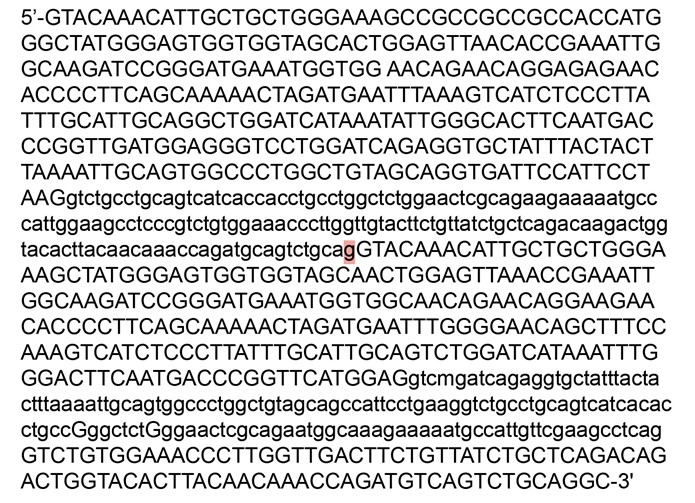 Which of the following is the most likely effect of this mutation?
A) Decreased mRNA export to the cytosol
B) Impaired ribosomal attachment to mRNA
C) Incorrect splicing of pre-mRNA
D) Increased degradation of mRNA by 5' exonucleases
E) Translation of the 3'-untranslated region of mRNA
Correct Answer:

Verified
Q59: A researcher develops 2 functional mRNA sequences
Q60: A 34-year-old woman comes to the office
Q61: In an experiment, erythrocyte precursor cells are
Q62: A 24-year-old African American woman comes to
Q63: A 6-year-old boy is brought to the
Q65: A 16-year-old girl with a history of
Q66: An 18-year-old man comes to the urgent
Q67: A series of experiments is being conducted
Q68: A 12-year-old boy is evaluated in the
Q69: A pharmaceutical researcher is evaluating a nuclear
Unlock this Answer For Free Now!
View this answer and more for free by performing one of the following actions

Scan the QR code to install the App and get 2 free unlocks

Unlock quizzes for free by uploading documents