A 35-year-old woman comes to the hospital due to sudden-onset numbness in her left arm and face. The patient has had generalized headache, dyspnea on exertion, and easy fatigability for several days but no weakness. She has a history of well-controlled asthma. Temperature is 37.7 C (99.9 F) , blood pressure is 110/60 mm Hg, and pulse is 80/min. Light touch sensation is decreased in the left upper extremity and the lower left side of the face. Strength and reflexes are normal. Cardiopulmonary and abdominal examinations are unremarkable. There is no skin rash. Laboratory results are as follows: 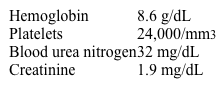 PT and PTT are normal. Peripheral blood smear shows numerous schistocytes. Urinalysis is positive for mild proteinuria. Which of the following is the most likely underlying cause of this patient's current condition?
A) IgA immune complex deposition
B) Impaired cleavage of von Willebrand factor
C) Plasma cell proliferation
D) Rupture of atheromatous plaque
E) Systemic coagulation factor activation
Correct Answer:

Verified
Q418: A 24-year-old, previously healthy woman comes to
Q419: The age-adjusted mortality trends for 5 cancers
Q420: A 23-year-old man comes to the emergency
Q421: A 12-year-old girl is brought to the
Q422: A 9-year-old girl is brought to the
Q424: A 73-year-old woman comes to the emergency
Q425: A 72-year-old man is brought into the hospital
Q426: A 72-year-old man comes to the emergency
Q427: A 29-year-old woman comes to the emergency
Q428: A 32-year-old woman comes to the office
Unlock this Answer For Free Now!
View this answer and more for free by performing one of the following actions

Scan the QR code to install the App and get 2 free unlocks

Unlock quizzes for free by uploading documents