A 43-year-old man with a history of HIV infection who is noncompliant with highly active antiretroviral therapy comes to the office due to progressive memory loss and cognitive decline over the last several years. The patient has problems with attention, concentration, and speech. In the past few months, he has become more apathetic and increasingly lethargic. More recently, he has had difficulty with balance and has fallen on multiple occasions. The patient has had no headache, tremor, change in vision, fever, nausea/vomiting, or urinary incontinence. His brother has a history of severe intellectual disability and epilepsy. Mini-Mental State Examination score is 18/30, and the patient appears emotionally blunted. He also has postural instability and difficulty performing fine motor tasks. Noncontrast head CT scan reveals diffuse cortical atrophy with some enlargement of the ventricles, as shown in the exhibits. 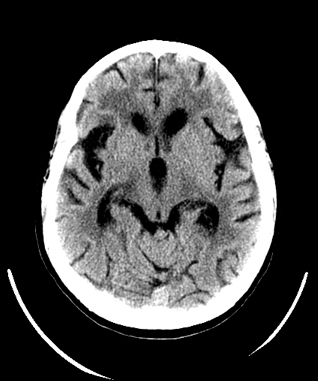
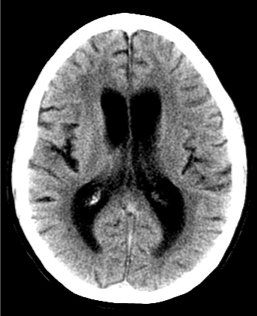 This patient's condition can be best described as which of the following?
A) Communicating hydrocephalus
B) Hydrocephalus ex-vacuo
C) Lissencephaly
D) Noncommunicating hydrocephalus
E) Pseudotumor cerebri
F) Transtentorial (uncal) herniation
Correct Answer:

Verified
Q498: A 9-month-old boy is brought to the
Q499: A 34-year-old man comes to the emergency
Q500: A 55-year-old man comes to the clinic
Q501: A 60-year-old professor is brought to the
Q502: A 44-year-old man with a history of
Q504: A 32-year-old man is brought to the
Q505: Experimental animals are immunized to protein fragments
Q506: A 45-year-old man is brought to the
Q507: A 52-year-old man is brought to the
Q508: A 23-year-old man with no prior history
Unlock this Answer For Free Now!
View this answer and more for free by performing one of the following actions

Scan the QR code to install the App and get 2 free unlocks

Unlock quizzes for free by uploading documents