A 48-year-old man is evaluated in the surgical intensive care unit for tachycardia and hypotension. He underwent a hemicolectomy due to a perforated colonic diverticulum yesterday. The patient has a history of hyperlipidemia but no known history of heart disease. His current medications include piperacillin/tazobactam, famotidine, and benzodiazepines and opioids for sedation.
The patient is intubated and the ventilator is in the assist control mode. His temperature is 39.4 C (103 F) , blood pressure is 86/55 mm Hg, and pulse is 142/min. Oxygen saturation is 99% on 40% FiO2.
Examination shows flat neck veins and tachycardia with an irregular rhythm. Breath sounds are heard bilaterally without wheezes or rhonchi. The abdomen is soft but diffusely tender and the incision is clean. The stoma is pink without any fluid output in the bag. The patient's extremities are warm with 2+ pulses and no peripheral edema. His urine output is 10 mL/hr.
Laboratory results are as follows: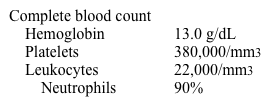
ECG shows atrial fibrillation with rapid ventricular response. There are no significant ST-segment or T wave changes.
Which of the following would be the most appropriate next step in management of this patient?
A) Electrical cardioversion
B) Intravenous (IV) digoxin
C) IV metoprolol
D) IV normal saline
E) Norepinephrine drip
Correct Answer:

Verified
Q9: A 63-year-old man is scheduled for coronary
Q10: A 53-year-old woman is hospitalized with acute
Q11: A 55-year-old construction worker is brought to
Q12: A 74-year-old man with type 2 diabetes
Q13: A 60-year-old man is hospitalized for acute
Q15: A 55-year-old construction worker is brought to
Q16: A 72-year-old woman with a history of
Q17: A 26-year-old primigravid woman at 36 weeks
Q18: A 75-year-old man comes to the emergency
Q19: A 52-year-old woman is undergoing screening colonoscopy
Unlock this Answer For Free Now!
View this answer and more for free by performing one of the following actions

Scan the QR code to install the App and get 2 free unlocks

Unlock quizzes for free by uploading documents