A 60-year-old man comes to the office due to fever, shaking chills, diaphoresis, severe muscle pains, nausea, headache, and dark urine for the past 3 days. His other medical problems include chronic obstructive pulmonary disease (COPD) , hypertension, and hyperlipidemia. The patient was admitted to the hospital 3 weeks ago for COPD exacerbation. His hospital course was complicated by bright red blood per rectum, for which he received 3 units of packed red blood cells. The bleeding stopped spontaneously and was attributed to diverticulosis. The patient's daily medications include hydrochlorothiazide, albuterol, and simvastatin. He just completed a 3-week corticosteroid taper. He lives in Rhode Island.
The patient's temperature is 39.8 C (103.6 F) , blood pressure is 106/64 mm Hg, pulse is 108/min, and respirations are 18/min. Physical examination shows no skin rashes or joint swelling. There is no lymphadenopathy. His lungs are clear to auscultation. Heart sounds are normal. The remainder of the examination is unremarkable.
Laboratory results are as follows: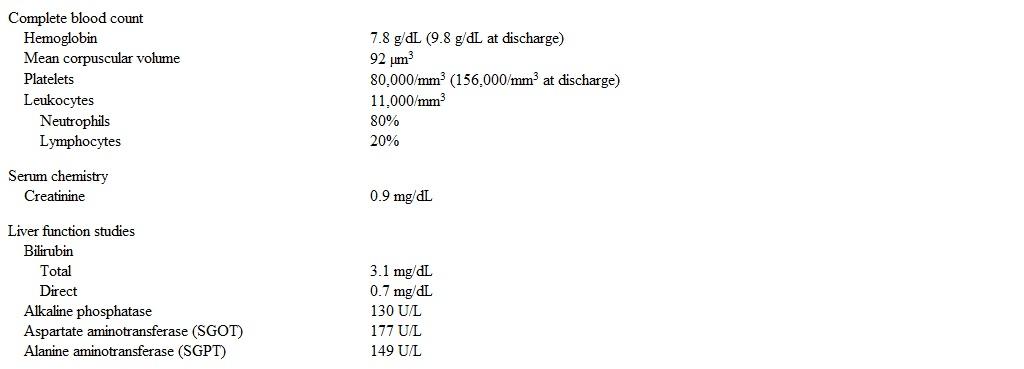 Coagulation studies are normal. Urinalysis and microscopy are positive for urobilinogen and negative for blood and erythrocytes. Chest x-ray reveals no infiltrates.
Which of the following would be the most helpful for making the diagnosis in this patient?
A) Blood culture
B) Coombs test
C) Hemoglobin electrophoresis
D) Peripheral blood smear examination
E) Viral hepatitis serologies
Correct Answer:

Verified
Q466: A 51-year-old man comes to the physician
Q467: A 35-year-old HIV-positive man comes to the
Q468: A 34-year-old man comes to the physician
Q469: A 22-year-old man comes to the physician
Q470: A 29-year-old man comes to the physician
Q472: A 32-year-old man comes to the office
Q473: A 57-year-old woman returns to the physician
Q474: A 35-year-old man underwent PPD/TST (tuberculin skin
Q475: A 37-year-old man comes to the office
Q476: A 42-year-old man comes to the physician
Unlock this Answer For Free Now!
View this answer and more for free by performing one of the following actions

Scan the QR code to install the App and get 2 free unlocks

Unlock quizzes for free by uploading documents