A 62-year-old man comes to the physician with weight loss, fatigue, and dyspnea at rest. He has no increased cough or sputum production. His medical problems include hypothyroidism and chronic obstructive pulmonary disease (forced expiratory volume in 1 second 18% predicted) requiring home oxygen. He has had 2 emergency department visits and 1 hospital admission in the last 6 months for chronic obstructive pulmonary disease exacerbations. He has a 50-pack-year smoking history and does not want to quit. He spends most of his free time sitting on the couch because he is limited by dyspnea. His medications include inhaled albuterol, tiotropium, inhaled mometasone and formoterol, montelukast, megestrol, low-dose oral prednisone, and levothyroxine.
His temperature is 37.2° C (99° F) , blood pressure is 150/80 mm Hg, pulse is 114/min, and respirations are 23/min. His BMI is 18 kg/m2. The patient's pulse oximetry shows 94% on 4 L O2. Physical examination shows pursed lip breathing, decreased breath sounds throughout, loud second heart sound, and 2+ pretibial edema bilaterally.
Laboratory results from his last admission are as follows: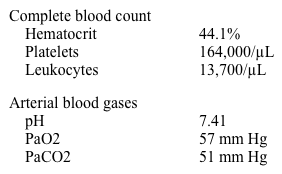
Which of the following is the most appropriate next step in management?
A) Initiate erythropoietin
B) Initiate intravenous corticosteroids
C) Refer for hospice care
D) Refer for lung transplantation
E) Refer for lung volume reduction
Correct Answer:

Verified
Q699: A 76-year-old man comes to the office
Q700: A 48-year-old woman comes to the clinic
Q701: A 74-year-old man comes to the physician
Q702: A 68-year-old man with a past medical
Q703: A 68-year-old woman comes to the emergency
Q705: A 64-year-old man comes to the physician
Q706: A 42-year-old man comes to the physician
Q707: A 24-year-old man comes to the physician
Q708: A 67-year-old woman with moderate chronic obstructive
Q709: A 38-year-old woman comes to the physician
Unlock this Answer For Free Now!
View this answer and more for free by performing one of the following actions

Scan the QR code to install the App and get 2 free unlocks

Unlock quizzes for free by uploading documents