A 27-year-old man is brought to the emergency department after a high-speed motor vehicle collision. On arrival, his blood pressure is 90/52 mm Hg, pulse is 122/min, and respirations are 30/min. The patient is in moderate respiratory distress. There are bruises on the anterior chest wall and abdomen. No breath sounds are heard in the left lung, and initial chest x-ray shows hemopneumothorax. Fluid resuscitation is given, left-sided chest tubes and a nasogastric tube are placed, and the patient is admitted to the trauma floor after stabilization. Four days later, the chest tubes continue to drain appropriate serosanguinous fluid, but the patient still feels short of breath. He has an occasional dry, nonproductive cough. Current temperature is 36.8 C (98.2 F) , blood pressure is 118/78 mm Hg, pulse is 88/min, and respirations are 20/min. A repeat chest x-ray shows the following. 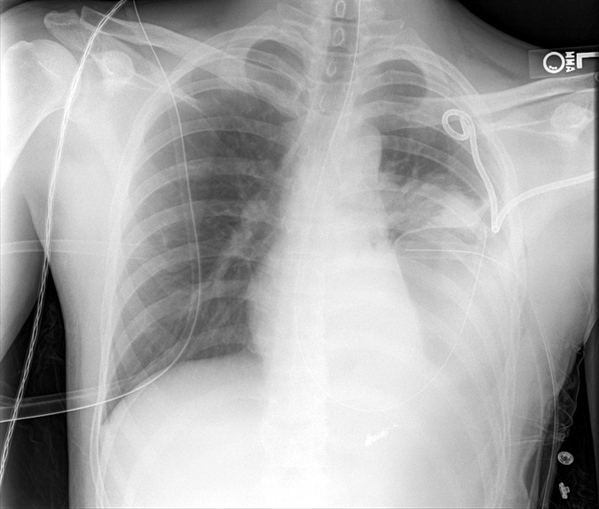 Which of the following is the most likely cause of the patient's continued respiratory distress?
A) Aortic rupture
B) Diaphragmatic injury
C) Flail chest
D) Left lower lobe pneumonia
E) Pulmonary embolism
F) Recurrent pneumothorax
Correct Answer:

Verified
Q462: A 52-year-old man is found to
Q463: A 4-year-old boy is brought to the
Q464: An 18-year-old man is brought to the
Q465: The patient's ECG shows sinus rhythm with
Q466: A 23-year-old man comes to the emergency
Q468: A 22-year-old man is brought to the
Q469: A 63-year-old man with chronic obstructive pulmonary
Q470: A 23-year-old man was extricated from his
Q471: A 59-year-old woman is brought to the
Q472: A 28-year-old man is the unrestrained driver
Unlock this Answer For Free Now!
View this answer and more for free by performing one of the following actions

Scan the QR code to install the App and get 2 free unlocks

Unlock quizzes for free by uploading documents