A 48-year-old woman comes to the office due to a recurrent rash. Six months ago, a rash developed on her legs that she describes as "red patches with raised areas." The rash worsened that night with intense itching that disrupted her sleep. It spontaneously resolved over the next day. Since then, she has had repeated episodes of similar symptoms on her arms, legs, and back, each lasting 8-12 hours and occurring nearly every 2-3 weeks. She reports no trauma, insect bites, travel history, sick contacts, or changes in weight. Medical history is notable for hypertension treated with lisinopril. She does not use tobacco, alcohol, or illicit drugs. Temperature is 36.1 C (97 F) , blood pressure is 138/77 mm Hg, and pulse is 78/min. Physical examination is within normal limits. The patient brings a photo of the rash, shown in the image below, from her most recent episode 2 days ago. Complete blood count, urinalysis, erythrocyte sedimentation rate, and liver function studies are within normal limits.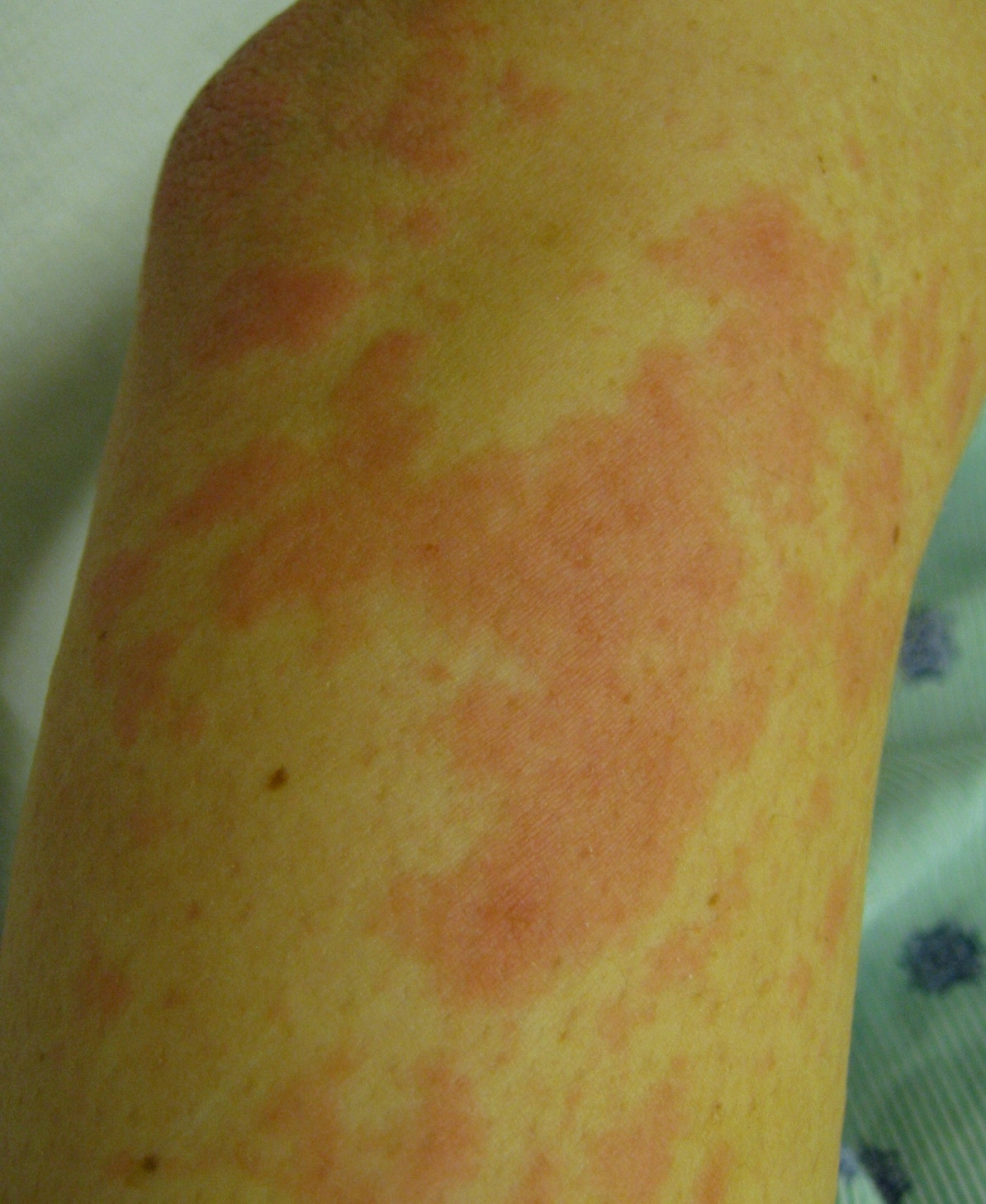 The patient currently has no rash but would like treatment recommendations for possible future episodes. Which of the following is the most appropriate treatment for this patient?
A) Daily cetirizine
B) Daily hydroxyzine
C) Daily montelukast
D) Oral corticosteroids during episodes
E) Topical corticosteroids during episodes
Correct Answer:

Verified
Q193: A 20-year-old college student comes to see
Q194: A 52-year-old homeless man comes to the
Q195: A 47-year-old-man comes to the physician for
Q196: A 16-year-old boy is brought to the
Q197: A 48-year-old woman comes to the office
Q199: An 8-year-old girl is brought to the
Q200: A 47-year-old-man comes to the physician for
Q201: An 8-month-old boy is brought to the
Q202: A 2-week-old girl is admitted to the
Q203: A 72-year-old woman comes to the emergency
Unlock this Answer For Free Now!
View this answer and more for free by performing one of the following actions

Scan the QR code to install the App and get 2 free unlocks

Unlock quizzes for free by uploading documents